Login
LoginPENTAGON NAMES ISRAEL TOP SPY THREAT, IRAN LEVELS GULF AGAIN– w/ Col. Douglas Macgregor
7 June 2026 at 17:00
from Mario Nawfal: TRUTH LIVES on at https://sgtreport.tv/


Neppure il tempo di arrestare una banda, che altre tornano a colpire. Tre assalti in una notte, tra il Salento e il Foggiano, a distanza di neanche ventiquattr’ore dal blitz della Procura di Foggia contro una batteria dedita ai colpi contro gli sportelli bancomat con la tecnica della marmotta. È il paradosso di un’emergenza che sembra non conoscere tregua, una fotografia che racconta più di qualsiasi statistica. Perché dietro i tre colpi consumati nelle ore successive all’operazione dei carabinieri c’è il volto di una criminalità organizzata diffusa, mobile e capace di muoversi dal Tavoliere verso ogni angolo della Penisola. Una rete che, nonostante gli arresti, continua a dimostrare una preoccupante capacità di rigenerazione. Nel Salento, tra Scorrano e Muro Leccese, sei malviventi a bordo di un’Alfa Romeo Giulietta hanno tentato di mettere a segno due azioni. Nel Foggiano, invece, quattro uomini hanno fatto esplodere lo sportello Atm della BPM di Cerignola.
Il sintomo che sono molte le cellule che continuano a muoversi con la stessa rapidità e con identiche modalità operative. Un unico cliché che troviamo anche nell’indagine della Procura di Foggia che ha portato all’arresto di sette persone, con a capo un ragazzo di soli 19 anni, tutte originarie della provincia foggiana, ritenute parte di una struttura criminale dedita agli assalti agli sportelli automatici attraverso la tecnica della “marmotta”, l’ordigno artigianale inserito nelle bocchette dei bancomat per far saltare le casseforti e impossessarsi del denaro. Secondo gli investigatori, si tratta di gruppi capaci di spostarsi per centinaia di chilometri, colpendo in Toscana, Campania e in numerose province del Centro-Sud. Un’organizzazione mobile, con basi logistiche, auto rubate o noleggiate, esplosivi, strumenti da effrazione e ruoli rigidamente definiti. Una criminalità itinerante che parte dal Tavoliere e sceglie obiettivi lontani dai luoghi di residenza per ridurre i rischi investigativi, qualcosa che ricorda l’evoluzione delle bande cerignolane specializzate negli assalti ai portavalori, da anni in azione in tutta Italia.
Nelle carte dell’inchiesta emerge la figura del diciannovenne Ivan Ameri di Borgo Mezzanone (Manfredonia), indicato come “capo, promotore e organizzatore” del gruppo. Ma anche il resto della squadra ha piu o meno la sua età. Oltre ad Ameri, il provvedimento emesso dal gip del Tribunale di Foggia colpisce Enea Dervishi, 19 anni, residente a Orta Nova; Andrea Cordisco, 20 anni, residente a Ordona; Gaetano Lopes, 51 anni, residente a Carapelle; Michele Montesano, 23 anni, residente a Orta Nova; Raffaele Cara, 27 anni, residente a Orta Nova, e Denis Cara, 20 anni, residente a Orta Nova. Le intercettazioni restituiscono la fotografia di una macchina criminale che si muove con metodo quasi militare. Il 16 gennaio, durante il viaggio verso la Toscana per l’assalto all’Atm di Quarrata, Ameri comunica a Lopes: “Ora ci siamo avviati, ci siamo messi sulla Candela (A16, ndr) che abbiamo cambiato la batteria”. Dall’altra parte arriva la risposta: “Vedete un po’ di anticipare, altrimenti dopo è un casino andare girando”. Poco prima dell’assalto, mentre Lopes monitora gli spostamenti di una pattuglia dei carabinieri, informa il gruppo: “Sono andati via, sono andati dritto”. Ameri replica: “E seguili un altro po’, vedi dove vanno”. Poi il via libera definitivo: “Va bene, tu resta in giro, perché qua hai notato com’è? È un po’ brutto”.
L’assalto va a segno e frutta quasi 30mila euro. Ma il rientro viene segnato da un controllo della polizia sull’A1. Parte del denaro viene sequestrato. “Ci hanno tolto tutto, ci hanno tolto”, racconta Ameri a Lopes. La preoccupazione è immediata: “Ma vi hanno chiesto di noi?”. La risposta è rassicurante: “No no, solo a noi ci hanno fermato”. Poco dopo arriva l’ordine più eloquente: “Spegni, butta tutto, io ora butto tutto”. Le conversazioni successive mostrano la compattezza del gruppo e la gestione condivisa delle perdite economiche. “Veramente tutto ci hanno tolto quelli?”, chiede Dervishi. Ameri risponde: “Mi dai 1.000 euro a me, 1.000 euro a lui e ora andiamo da quell’altro e ci deve dare 1.000 euro a me e 1.000 euro a lui, almeno”. Poi il commento che per gli investigatori racconta il clima interno all’organizzazione: “È un bel ragazzo questo, visto? Hai visto non mi ha fatto aprire neanche la bocca”. L’inchiesta coinvolge complessivamente 18 indagati e, secondo i carabinieri, ha consentito di prevenire almeno dieci possibili assalti tra Marche, Lazio, Campania e Puglia. Ma i tre colpi registrati nelle ore successive agli arresti raccontano una realtà che va oltre il singolo gruppo criminale. Raccontano un fenomeno radicato, capace di rigenerarsi rapidamente e di esportare il proprio modello operativo ben oltre i confini della Capitanata. È questo il dato che oggi preoccupa maggiormente gli investigatori: non soltanto la forza delle singole bande, ma l’esistenza di un know-how criminale che continua a viaggiare lungo le autostrade d’Italia, dalla provincia di Foggia fino agli sportelli bancomat di mezza penisola.
L'articolo L’ultima frontiera della mala foggiana, le bande dei bancomat: la rete delle giovani leve in azione in tutta Italia proviene da Il Fatto Quotidiano.
Tre assalti in una notte, uno riuscito e due falliti. In ogni caso, filiali distrutte e danni ingenti. Non si ferma la scia di colpi agli sportelli bancomat in Puglia, fenomeno che sta mettendo in grande difficoltà gli istituti bancari e Poste Italiane. Nelle scorse ore, sono stati colpiti due Atm nel Foggiano, la provincia più colpita negli ultimi mesi, e due nel Salento. A entrare in azione sono state due differenti bancomat con la medesima tecnica, cioè quella “marmotta”.
La “tecnica della marmotta” è una modalità di assalto agli sportelli automatici per riuscire a far saltare in aria l’Atm riuscendo a distruggere gli apparati di sicurezza e asportare il denaro contenuto all’interno. Le bande impiegano dispositivi metallici o lastre di vetro contenenti sostanze esplosive che vengono inseriti all’interno dei macchinari attraverso le fenditure, quasi sempre quelle dalle quali vengono emesse le banconote. Una volta infila il congegno, viene fatto detonare così da sventrare il bancomat e avere mano libera per arraffare le banconote contenute all’interno.
Nella notte è stato fatto esplodere lo sportello della Banca Popolare di Milano a Cerignola, in provincia di Foggia. Stando a quanto si apprende, due esplosioni hanno svegliato gran parte dei residenti di corso Garibaldi, in pieno centro cittadino, dove c’è stato l’assalto alla filiale della banca. Ad agire, almeno quattro persone a volto coperto, fuggite poi a bordo di un Suv. Il colpo sarebbe riuscito e il denaro asportato è in corso di quantificazione. La struttura ha subito danni. Sul posto sono intervenuti i carabinieri che stanno acquisendo le immagini della videosorveglianza.
Nelle stesse ore sono stati tentati altri due colpi nel Salento, molto probabilmente dalla stessa banda. A Muro Leccese, in piazza del Popolo, sei malviventi arrivati a bordo di un’Alfa Romeo Giulietta e con un furgone, hanno fatto esplodere il bancomat UniCredit. Subito dopo, avrebbero raggiunto il limitrofo comune di Scorrano, dove hanno fatto esplodere lo sportello postamat di piazza Vittorio Emanuele. Dalle prime verifiche, sembra che in entrambi i casi non siano riusciti ad impossessarsi del denaro. Danni ingenti ma nessun ferito. La Giulietta usata dalla banda è stata rinvenuta incendiata alla periferia di Scorrano. Indagano i carabinieri, che stanno visionando le immagini estrapolate dalle telecamere di videosorveglianza, per confermare l’ipotesi investigativa che ad agire sia stato lo stesso gruppo di malviventi, per ricostruire la dinamica e individuare gli autori.
Dall’inizio dell’anno sono oltre venti i colpi riusciti o tentati in tutta la Puglia, la maggior parte dei quali localizzata nel Foggiano. Una scia di crimini che non si arresta, nonostante gli arresti. Gli ultimi sono stati eseguiti proprio venerdì, quando 7 persone sono state fermate dalla Procura di Foggia perché ritenute responsabili di almeno due assalti. La distruzione dei bancomat, come raccontato da Ilfattoquotidiano.it, è una piaga soprattutto quando vengono presi di mira gli sportelli nei piccoli paesi del Subappenino Dauno, dove tra Poste Italiane e banche spesso esiste un solo punto per prelievi, versamenti e operazioni nell’intero comune. I danni provocati, spesso, hanno ripercussioni per mesi sulla popolazione, costretta a muoversi verso paesi vicini per avere contanti a disposizione.
L'articolo Raffica di colpi ai bancomat in Puglia: 3 assalti in una notte tra Foggia e Salento proviene da Il Fatto Quotidiano.

As one of the most famous figures in human history, it comes as little surprise that the life of Alexander the Great is tied to several legends of mythic proportions, of which several concern the conqueror’s encounters with sea monsters.
Alexander’s armies traversed much of the known ancient world, leaving their native Macedon far behind them. Over the course of their long campaigns, they encountered many strange sights, some of which may have inspired later myths and legends.
At least two historians, from the ancient and medieval periods, described Alexander the Great and his encounters with sea monsters. The first was Diodorus Sciulus, a Greek historian of the 1st century BC and the Arab scholar Ibn Khaldun of the 14th century AD.
In 323 BC, the intrepid Macedonian king laid siege to Tyre, a well-fortified Phoenician city-state on the coast of the Mediterranean. The city was extremely difficult to penetrate because it was located on an island and was defended by high walls that came right up to the sea.
Nevertheless, it was necessary to capture Tyre to deny the Persians access to a strategically important naval base. Thus, Alexander ordered his engineers to prepare artillery pieces and siege works for an assault on the city.
However, whilst this effort was underway, a strange event in which the army of Alexander the Great encountered a sea monster in the waters around Tyre occurred, according to the writings of Diodorus Siculus.
“As the Macedonian construction came within range of their missiles, portents were sent by the gods to them in their danger,” wrote Diodorus Siculus. “Out of the sea, a tidal wave tossed a sea monster of incredible size into the midst of the Macedonian operations.”
“It crashed into the mole but did it no harm, remained resting a portion of its body against it for a long time and then swam off into the sea again,” continued the Greek historian. “This strange event threw both sides into superstition, each imagining that the portent signified that Poseidon would come to their aid, for they were swayed by their own interest in the matter.”
A less fantastical explanation for this incident is possible than a mythical sea monster sent by Poseidon. The creature in question may have been a shark, dolphin, whale, or other entirely normal aquatic inhabitant.
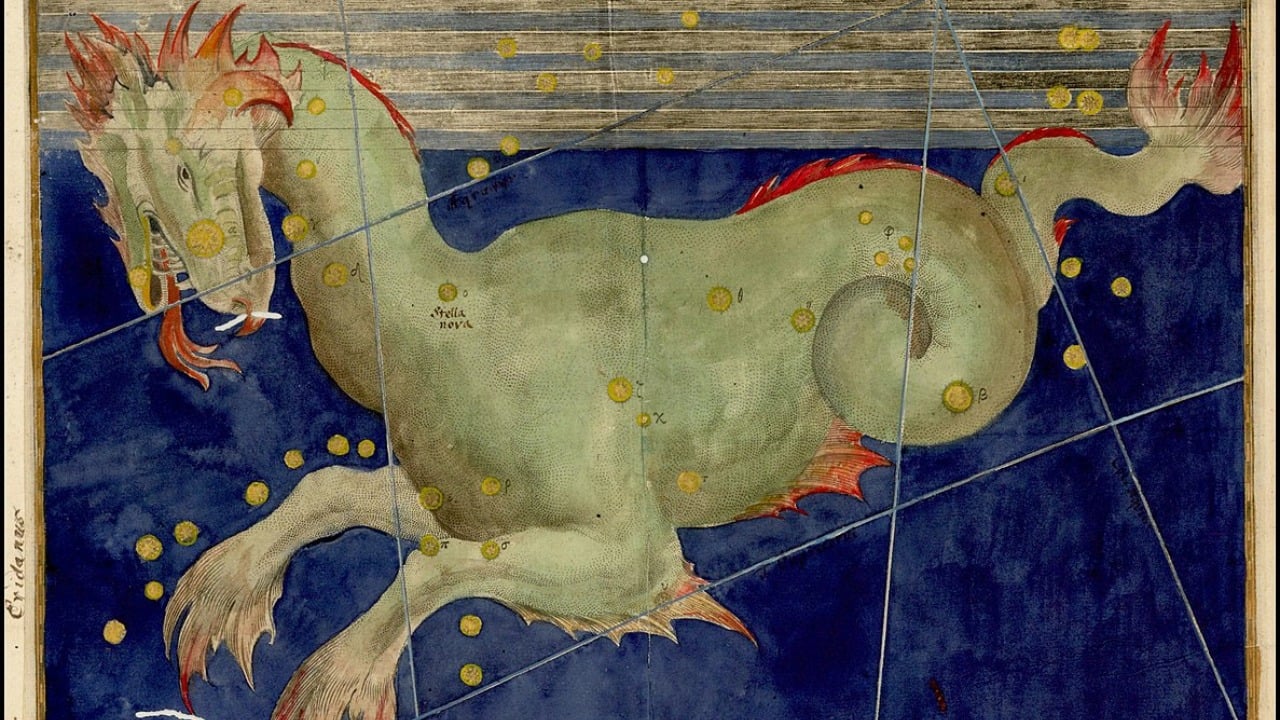
The siege of Tyre was not the only time Alexander is said to have encountered a sea monster. According to the Arab scholar Ibn Khaldun, he saw several mythical aquatic beasts in Egypt.
In fact, Ibn Khaldun claimed that sea monsters initially halted the construction of Alexandria until Alexander devised a way to scare them away from the area.
“Sea monsters prevented Alexander from building Alexandria,” wrote the scholar. “He took a wooden container in which a glass box was inserted, and dived in it to the bottom of the sea. There he drew pictures of the devilish monsters he saw.”
According to Ibn Khaldun, “He then had metal effigies of these animals made and set them up opposite the place where building was going on. When the monsters came out and saw the effigies, they fled. Alexander was thus able to complete the building of Alexandria.”
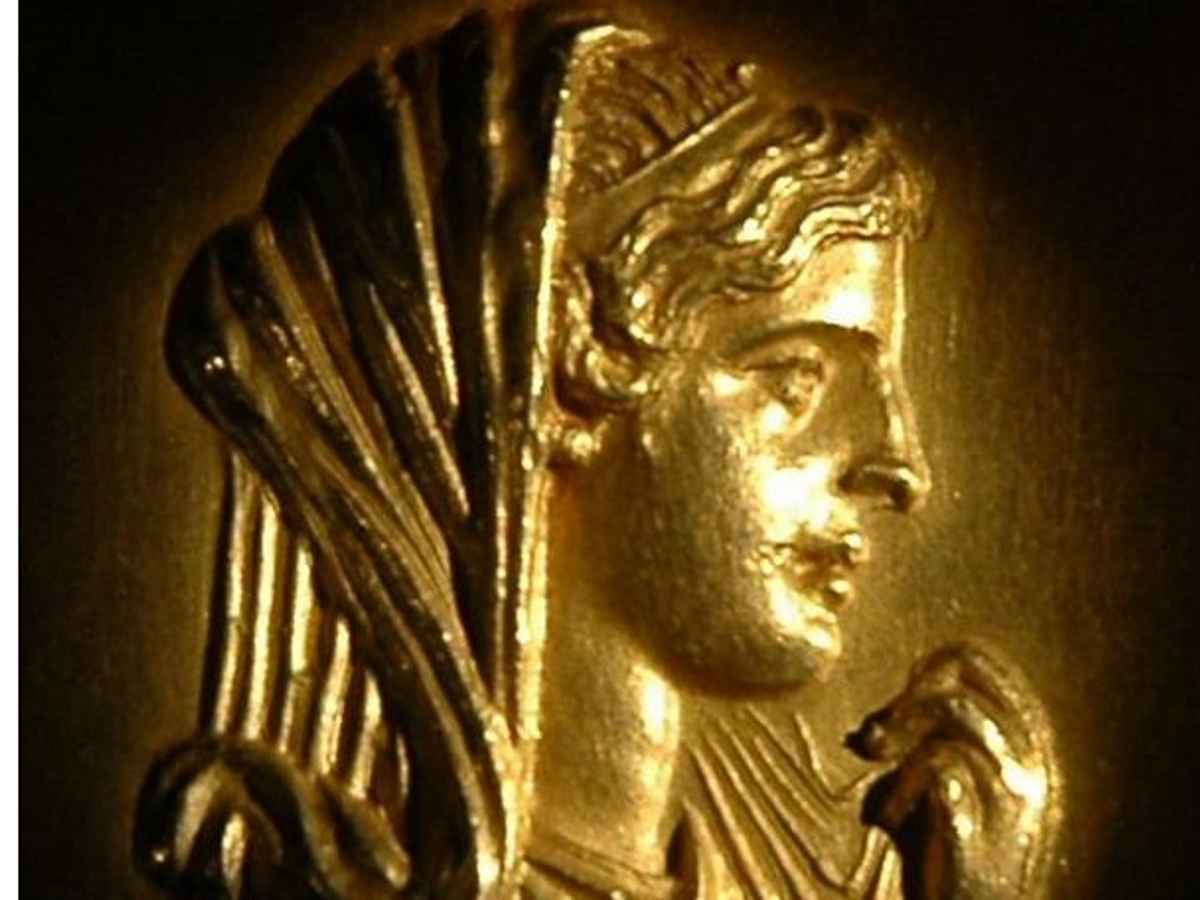
No other woman in Ancient Greek history inspired as much fascination, fear, and controversy as Olympias, the mother of Alexander the Great. She is described as passionate, intelligent, ruthless, and deeply religious. Enemies portrayed her as dangerous and manipulative, while supporters viewed her as a fiercely loyal mother and protector of Alexander’s destiny.
Behind the legends and accusations, however, stood a woman who exercised enormous political influence during one of history’s most transformative periods. Olympias shaped Alexander from childhood, influenced the succession crisis after Philip II’s death, and later played a decisive role in the violent struggles that followed Alexander’s empire.
Her presence loomed over Macedon for decades. Even after Alexander conquered much of the known world, Olympias continued to influence the royal court and the fate of the Argead dynasty.
Olympias came from Epirus, a Greek kingdom west of Macedonia. She belonged to the royal Molossian dynasty, which claimed descent from Neoptolemus, the son of Achilles. This heroic ancestry carried enormous symbolic value in the Greek world. Her original name may have been Polyxena or Myrtale. The biographer Plutarch suggests she later adopted the name Olympias after Philip achieved victory at the Olympic Games.
From an early age, Olympias displayed strong religious devotion.They initiated her with mystery cults and ecstatic rituals connected with Dionysus and the mysteries of the Cabeiri to whom she became a high-ranking priestess. These cults emphasized sacred initiation, hidden knowledge, and intense spiritual experiences. Her religious identity later became central to the legends surrounding Alexander’s birth.
Ancient authors repeatedly connect Olympias with snakes and mystery rituals. Plutarch wrote that Philip once saw a serpent lying beside Olympias while she slept. Legends claimed that she begot Alexander with Zeus through intercourse with snakes. According to later traditions, this event contributed to the belief that Zeus himself fathered Alexander.
These stories shaped Alexander’s image ever since childhood. Olympias appears to have encouraged the belief that her son possessed divine ancestry. Such ideas naturally fit within the heroic traditions of the Greek world in which exceptional rulers often claimed descent from gods. The symbolism of Zeus held enormous political importance. Alexander did not simply present himself as a king but increasingly viewed himself as a chosen figure with a cosmic mission. Of course, Olympias likely played a major role in nurturing this mindset.
Ancient religion did not sharply separate politics from divine legitimacy. A ruler with sacred ancestry possessed more potent authority and prestige. Olympias therefore strengthened Alexander’s position both psychologically and politically. The stories involving snakes also reflected the mystical atmosphere surrounding cults. Serpents symbolized rebirth, divine wisdom, chthonic forces, and sacred power in many Greek traditions. As a priestess connected with such cults, Olympias cultivated an aura of mystery that impressed supporters and frightened enemies.
The marriage between Olympias and Philip II began as a political alliance, yet tensions soon emerged between them. Philip married several women during his reign, partly for diplomatic reasons. However, these marriages threatened Alexander’s position as heir. Olympias fiercely defended her son’s claim to the throne and distrusted rival factions within the Macedonian court.
Conflict intensified after Philip married Cleopatra Eurydice, a Macedonian noblewoman. Her marriage resulted in the possibility of a fully Macedonian heir, which endangered Alexander’s succession. Plutarch describes a famous banquet confrontation during which insulted Alexander by implying doubts concerning his legitimacy. The quarrel severely damaged relations within the royal family.
Olympias soon withdrew from Macedon temporarily and returned to Epirus. Alexander also left for a period before reconciliation occurred. These events led to an atmosphere of suspicion and instability that surrounded Philip’s final years.
Philip II passed away in 336 BC after assassination during a public celebration at Aegae. His bodyguard, Pausanias, killed him before guards immediately cut the assassin down. The assassination remains one of antiquity’s great mysteries. Plutarch and the historian Arrian often suspected Olympias of involvement. Some even claimed she honored Pausanias afterward or placed a crown upon his corpse. Other traditions accuse Alexander indirectly as well.
No definitive evidence proves these accusations. However, Olympias clearly benefited politically from Philip’s death because Alexander immediately became king. She acted quickly afterward to eliminate threats against her son’s rule. The geographer Pausanias accuses her of orchestrating brutal acts against Cleopatra Eurydice and her child. Whether entirely accurate or exaggerated by hostile writers, these accounts reveal Olympias’ fierce determination to secure Alexander’s position. In the brutal world of Macedonian succession politics, hesitation often meant destruction.
Even after Alexander launched his campaigns into Asia, Olympias continued influencing Macedonian affairs from afar. Alexander maintained regular correspondence with her and respected her opinions deeply. Both Arrian and Plutarch suggested that Olympias frequently warned him about political rivals and court intrigues. At times, her intense personality resulted in tension with Antipater, whom Alexander left in charge of Macedon during the eastern campaigns. Their rivalry became one of the defining political conflicts of the period.
Olympias viewed herself not merely as the king’s mother but also as guardian of the Argead dynasty and protector of Alexander’s divine mission. Meanwhile, Alexander’s own behavior increasingly reflected the heroic and semi-divine identity cultivated since childhood. His visit to the oracle of Zeus-Ammon in Siwa of Egypt supported these beliefs further when the Egyptian priest proclaimed him as “child of Ammon.” The foundations of this worldview likely originated partly through Olympias’ influence, as previously mentioned.
Alexander’s death in 323 BC plunged the empire into chaos. Without a clear successor, powerful generals fought for control over the vast territories he conquered. Olympias returned to political life aggressively during this turbulent period, supporting the rights of Alexander IV, Alexander’s young son by Roxana. Olympias viewed him as the legitimate continuation of the Argead dynasty.
In order to defend her grandson’s claim, she entered the brutal wars of the Successors. During this struggle, Olympias captured and executed Philip III Arrhidaeus and his wife Eurydice. These actions shocked many Macedonians and intensified divisions within the kingdom.
Nevertheless, Olympias believed she acted to preserve Alexander’s bloodline and royal legitimacy. Her enemies, however, saw only cruelty and vengeance.
Cassander, one of the most powerful Successors, eventually marched against Olympias. Many Macedonians abandoned her cause as political exhaustion, and civil war consumed the kingdom. After siege and defeat, Olympias surrendered.
Cassander condemned her to death in 316 BC. Plutarch claims that soldiers initially hesitated to execute her because of her royal status and dominant personality. Eventually, however, relatives of her victims carried out the killing. With Olympias’ death, the final collapse of the Argead dynasty was all the more imminent. Soon afterward, Cassander eliminated Alexander IV and Roxana, as well, and thus ended the bloodline of Philip and Alexander.
Olympias remains one of antiquity’s most complex female figures, having shaped Alexander psychologically ever since childhood and having encouraged his belief in divine destiny. She defended his succession fiercely during critical political crises and later fought relentlessly to preserve the dynasty after his death. Without Olympias, Alexander’s rise may have unfolded quite differently.
At the same time, her actions contributed to the violence and instability that destroyed Macedon after Alexander’s empire fragmented. She therefore stands both as creator and destroyer: a queen, priestess, mother, and political strategist whose influence changed the ancient world forever.

TikTok executives decided not to disable notifications during school hours, ignoring recommendations from their own safety team, and paid millions of dollars to parents’ and teachers’ associations to promote the social network in schools. Snapchat sent alerts to teenagers while they were in class urging them to share what was happening in the classroom. Google executives knew that YouTube was recommending videos to students during the school day that were unrelated to their lessons. Meta paid “teen ambassadors” to promote Instagram and hand out gifts to their classmates.
© JUAN BARBOSA
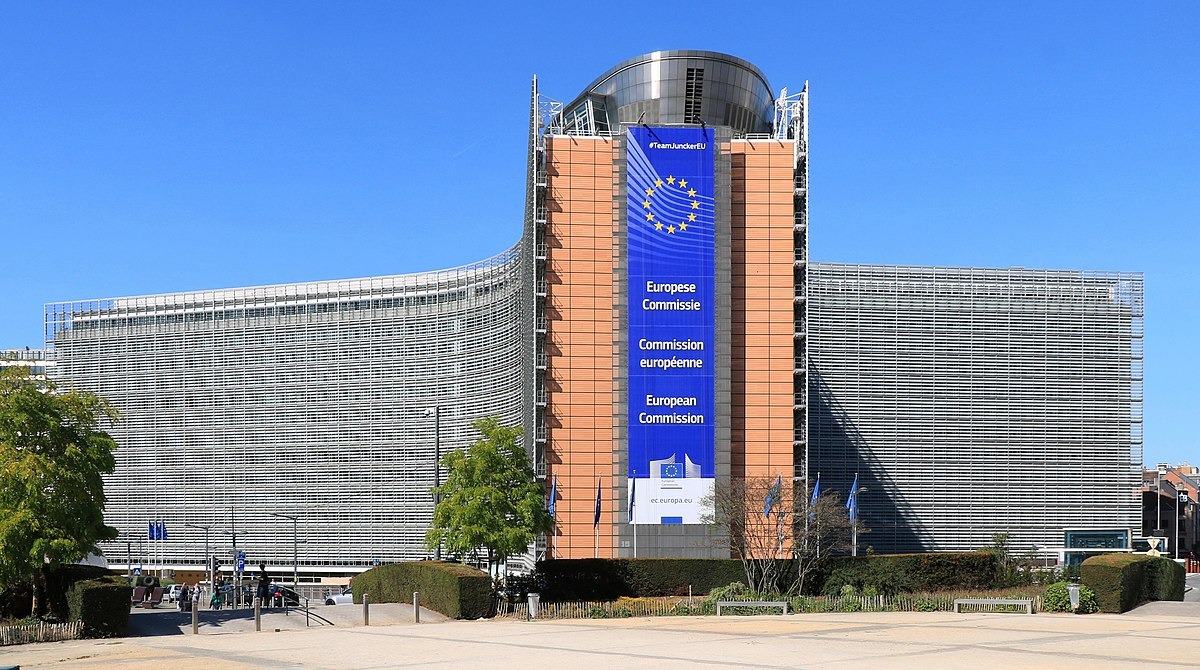
Brussels has placed Greece’s tax system back under scrutiny, highlighting tax exemptions, the VAT gap and diesel policy in the European Commission’s latest review of the country.
The review does not introduce binding measures and does not amount to a formal directive. However, it shows where the Commission sees structural weaknesses in Greece’s tax framework and where future policy changes could be considered.
While the Commission acknowledges Greece’s strong fiscal performance, it also points to areas that continue to affect public revenue, tax fairness and the country’s green transition. These include the large number of tax exemptions, the structure of energy taxation, the favorable treatment of diesel compared with gasoline and electricity, and the environmental pressure created by Greece’s aging vehicle fleet.
A central issue in the Commission’s assessment is the scale of Greece’s tax expenditures. These include exemptions, reductions and special tax treatments that reduce state revenue.
According to the review, Greece had 1,236 tax expenditures in 2024, with an estimated fiscal cost of €22.88 billion ($26,5 billion). The most important categories include exemptions for first homes, rental-related tax benefits, personal income tax, corporate taxation, reduced VAT rates and excise duties.
The Commission notes that Greece does not have an official mechanism to regularly evaluate whether these tax benefits are effective. By comparing both their number and cost with other EU countries, Brussels suggests that Greece could benefit from a more systematic review and rationalization of its tax exemptions.
VAT is another major area highlighted in the review. Although Greece has improved tax compliance, the Commission stresses that exemptions and reduced rates continue to weigh on revenue collection.
The VAT gap reached €9.4 billion in 2023, equal to 18.3 percent of potential VAT revenue. The Commission recognizes that the compliance gap has narrowed significantly, but it says progress has not been even across the economy.
The review points to exemptions that complicate the functioning of the VAT system, including those related to private education and financial services. It does not propose an immediate specific measure, but its wording leaves open the possibility of future restructuring.
The Commission also refers to persistent tax evasion in personal income tax, especially among self-employed workers and sectors where cash transactions remain common.
The issue is particularly visible in technical trades and services provided outside fixed business premises, where payments may be made directly and with limited electronic recording.
Although the Commission does not explicitly recommend a new measure in this area, its assessment suggests that existing tools aimed at addressing underreported income among freelancers and self-employed professionals are unlikely to be withdrawn soon.
Energy taxation receives some of the sharpest comments in the review. The Commission says Greece remains heavily dependent on fossil fuels, while electricity prices are higher than the EU average, partly because of the country’s reliance on natural gas.
The review argues that Greece’s current energy tax structure continues to favor fossil fuels over electricity, sending mixed price signals at a time when the EU is pushing for faster decarbonization.
Diesel is central to this concern. The Commission views the lower tax burden on diesel as a distortion, especially because diesel remains a key fuel for production and road transport in Greece.
The issue is politically sensitive. During the energy crisis, the Greek government supported diesel prices, with the impact estimated at an additional 15 to 20 cents per liter, in an effort to prevent further price increases. At the same time, public debate in Greece continues to include demands for deeper fuel tax cuts.
The Commission takes a clear position on diesel compared with gasoline and electricity. It notes that excise duties on diesel remain particularly low compared with gasoline, even though diesel is considered more harmful to the environment.
This does not mean that a diesel tax increase has been announced. The remarks form part of a broader review and recommendation process. Still, they indicate the direction of EU policy as the green transition becomes more central to national fiscal planning.
Over the next five years, the EU’s green transition agenda is expected to push member states toward measures such as higher excise duties on diesel, closer alignment between diesel and gasoline taxation, and vehicle taxes more closely linked to emissions.
Other possible policy tools include incentives for electric vehicles, purchase subsidies, tax deductions and changes to registration taxes designed to favor cleaner cars.
Vehicles are also part of the Commission’s assessment. The review notes that Greece has one of the oldest vehicle fleets in Europe, a factor that contributes to higher emissions and increases the need for policy intervention.
For Brussels, the issue is not only fiscal. Tax policy is also seen as a tool for influencing consumer behavior, encouraging the replacement of older vehicles and supporting the transition to cleaner transport.
The review therefore opens a wider debate over how Greece should balance fiscal stability, household costs, business needs and EU climate goals.
For now, no binding measures have been imposed. But the Commission’s review makes clear that Greece’s tax exemptions, VAT gap and diesel policy are likely to remain under European scrutiny.
Ecotopia Activa apresenta em Tavira dois documentários dedicados às hortas comunitárias e ao património agrícola preservado no CEAT.
O conteúdo Ecotopia Activa mostra o valor das hortas comunitárias e do CEAT em documentários aparece primeiro em Barlavento.
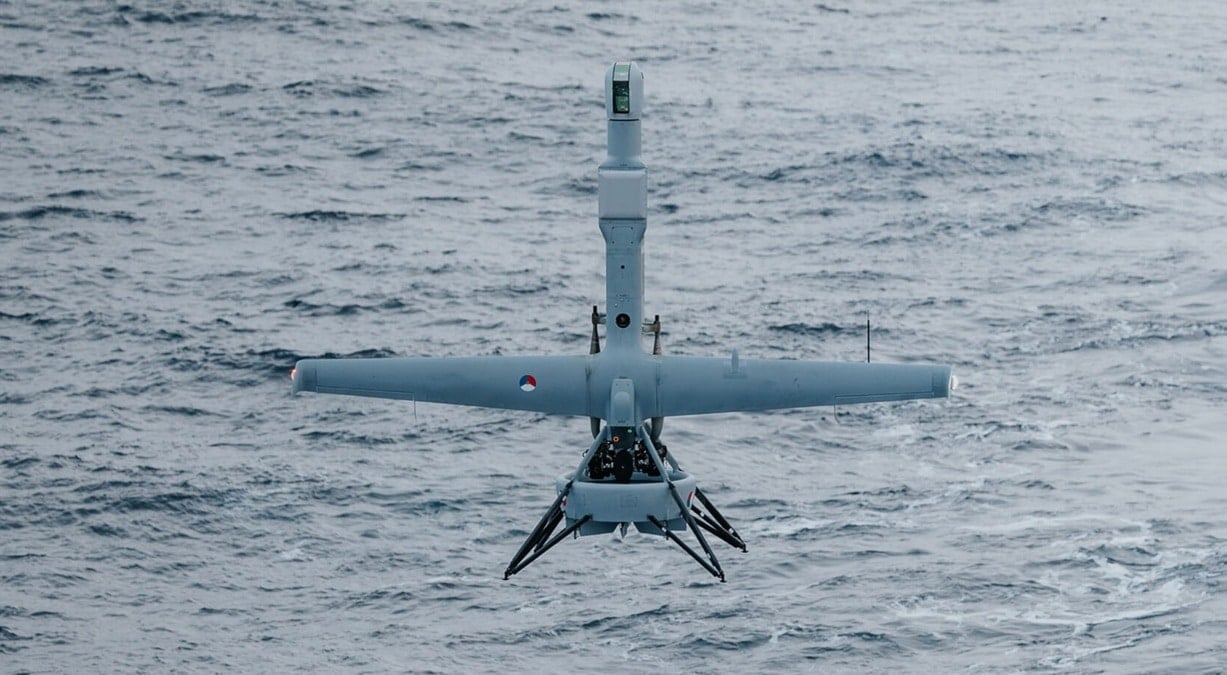
Greece has signed an agreement to expand its fleet of Shield AI V-BAT unmanned aerial systems for maritime surveillance operations across the Aegean Sea, the American company announced June 2.
The deal deepens an existing partnership that has already seen the Hellenic Army deploy these advanced drones for intelligence and reconnaissance missions.
Concluded between Shield AI and the Hellenic Army, the agreement bolsters Greece’s existing V-BAT fleet. The company says that the agreement will enhance the nation’s capacity to maintain persistent situational awareness over hundreds of islands, remote coastlines, and contested maritime approaches.
The V-BAT can launch from ship decks or small island clearings without a runway, fly for over 12 hours on a single sortie, and operate seamlessly despite aggressive electronic warfare attempts to disrupt its navigation and communications.
“V-BAT is exceptionally well-suited for operations in Greece, where forces operate across dispersed islands, remote coastlines, deep valleys, mountain ranges, and complex maritime environments,” said James Lythgoe, Shield AI’s regional director for Eastern and Southeast Europe. “V-BAT has proven itself in combat operations in Ukraine, including in GPS- and communications-denied environments, and was built for exactly these kinds of operational realities.”
In Ukraine, the V-BAT has successfully operated amid intense Russian electronic warfare, where GPS signals are actively jammed and drone communications are disrupted. This proven resilience against satellite spoofing and signal jamming ensures the system remains operational against sophisticated adversaries, rather than falling out of the sky.
Classified as a NATO Class I unmanned aircraft (weighing under 330 pounds), the V-BAT acts as a highly tactical asset deployable by ground units and small naval vessels without requiring massive support infrastructure. Its twelve-hour flight endurance allows a single aircraft launched at dawn to maintain continuous coverage through the entire day. This enables crucial “pattern-of-life” analysis to reveal suspicious maritime activity.
By expanding its V-BAT fleet, the Hellenic military strengthens its layered early-warning architecture across the Aegean, giving commanders the vital reaction time needed to respond to maritime intrusions before situations escalate.
Related: Classified US Stealth Drone Makes Rare Appearance in Greece
A Autoridade Tributária e Aduaneira (AT) alerta num comunicado publicado no seu website, que está a ser enviada uma mensagem fraudulenta, por e-mail, referente a um pedido de alteração da declaração de IRS, na qual é pedido que se carregue num link, o que não deve fazer.
A AT disse que «tem conhecimento de que alguns contribuintes estão a receber mensagens de correio eletrónico supostamente provenientes da AT nas quais é pedido que se carregue em links que são fornecidos.» Num dos exemplos da mensagem divulgada pela AT, os visados são informados de que foi «detetado um pedido de alteração à sua declaração de IRS, sendo sugerido confirmar ou anular esta alteração», através de um link, no qual não deve clicar.
Outros dos exemplos dados pelo fisco dizem respeito ao recálculo automático do IRS, a uma suposta verificação de dados pessoais na conta do Portal das Finanças ou a uma fatura eletrónica (FE) referente ao registo fiscal do visado, entre outros.
«Estas mensagens são falsas e devem ser ignoradas. O seu objetivo é convencer o destinatário a aceder a páginas maliciosas carregando nos links sugeridos ou a efetuar pagamentos indevidos», le-se na publicação da AT, salientando que os visados, «em caso algum, deverão efetuar essas operações».
Recorde-se que o prazo de submissão da entrega das declarações de IRS relativas aos rendimentos ganhos ao longo de 2025 arrancou a 01 de abril e termina a 30 de junho.

Tony Leung (Hong Kong, 63) enters the lobby of a Madrid hotel and brings with him an absolute sense of calm. The pace slows; you even get the impression the temperature has dropped slightly. Leung’s image in the film collective was sealed by his role in In the Mood for Love, Wong Kar-wai’s masterpiece that earned Leung the best actor award at the 2000 Cannes Film Festival. A man anchored in melancholy, unable to confront his unfaithful wife or to declare his love to his neighbor. That introspection turned Leung into one of the coolest men on the planet.
© FRANCIS TSANG (EL PAÍS)