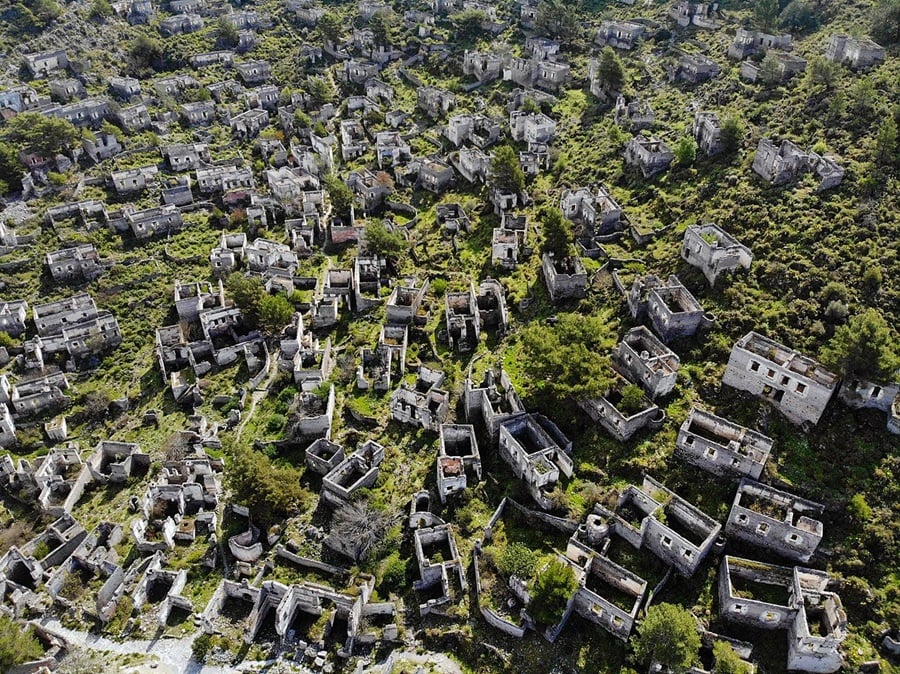
Greeks of the 5,000-year-old village were ethnically cleansed and then forcibly expelled in 1922. Credit: Wikitestaccountlogin, CC BY-SA 4.0/Wikipedia
The ghost village of Levissi (known today as Kayaköy) was once a bustling Greek village on the slopes of a hill in the district of Fethiye, Turkey.
It was practically right across from the island of Rhodes.
Greeks of the 5,000-year-old village were ethnically cleansed and then forcibly expelled in 1922, causing 10,000 people to leave behind the land of their heritage.
It was anciently known in Greek as Karmylessos. In late antiquity, the inhabitants of the region had become Christian, and, following the East-West Schism with the Church of Rome in 1054 AD, they came to be called Greek Orthodox Christians.
These Greek-speaking Christian subjects and their Turkish-speaking Muslim Ottoman rulers lived in relative harmony from the end of the turbulent Ottoman conquest of the region in the 14th century until the early 20th century.
The massacres of Greeks and other Christian minorities in the Ottoman Empire during World War I (1914–1918) led to the almost total depopulation of the town’s 6,500 Greek inhabitants by 1918. These former inhabitants were deprived of their properties and became refugees in Greece, or they died in Ottoman forced labor battalions.
Following the Greco-Turkish War of 1919–1922 and the subsequent Treaty of Lausanne in 1923, the town’s Greek Orthodox residents were exiled.
A panoramic photo of the abandoned village. Credit: Darwinek, CC BY-SA 3.0/Wikipedia
Greek ghost town
Since then, the homes have remained vacant, left to decay after being further damaged by a huge earthquake in 1957.
Houses and churches in the area have been used for summer festivals. However, plans to lease the area and auction it off for commercial interests have caused local Turks as well as Greeks with roots in the area to protest. They are worried that the investors could further ruin the authenticity of the area.
The ghost town, now preserved as a museum village, consists of hundreds of rundown but still mostly standing Greek-style houses and churches that cover a small mountainside and serve as a stopping place for tourists visiting Fethiye and nearby Ölüdeniz.
The village is now empty except for tour groups and roadside vendors selling handmade goods. There are a few houses which have been restored and are currently occupied.
American filmmaker Joerg Schodl set out to document what is left of the ghost town in his documentary, “Ghosts of Levissi.”
Schodl tells the tale of the small Greek community in Asia Minor that was torn apart during the final days of the Ottoman Empire. It focuses on the disappearance of the population practically overnight thanks to campaigns, designed to scare Greeks from Levissi and nearby Macri (known as Fethiye), including offensives by Turks. The site Greek Genocide reports that women were raped and their clothes and shoes taken from them.
When making the film, Schodl had the help of members of the Greek community in Melbourne, Adelaide, Sydney, Perth and Brisbane and he was able to find thirteen descendants of Levissi families.
More descendants were found in Toronto, Rhodes, London, Athens and Istanbul.
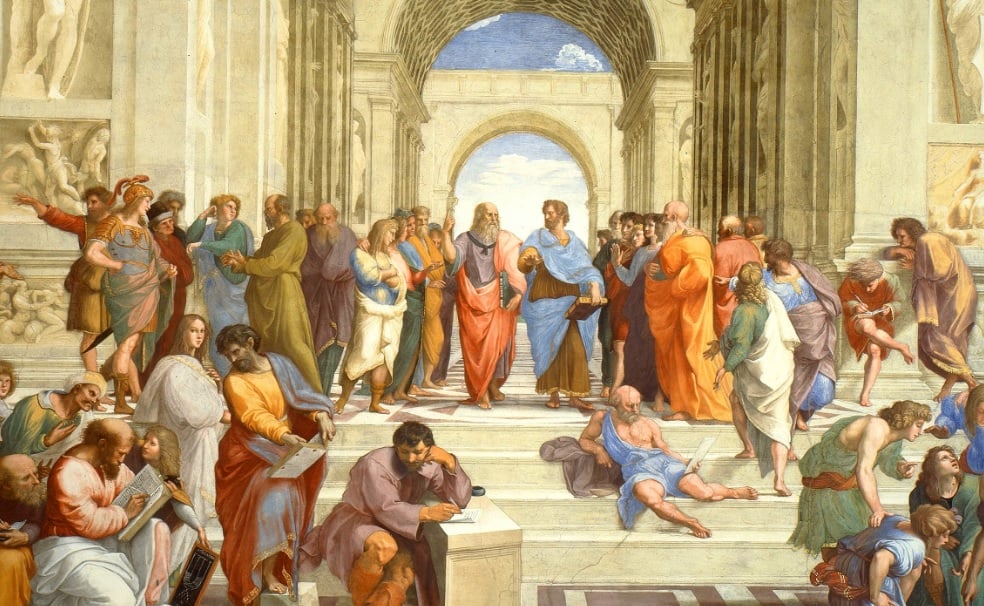
“The School of Athens,” depicting some of the Ancient Greek philosophers, by Raphael. Vatican Museums. Credit: Public domain
Several of the most influential Greek philosophers and thinkers are portrayed in Raphael’s masterpiece the School of Athens, which adorns the Apostolic Palace in the Vatican.
Painted between 1509 and 1511, it portrays a congregation of philosophers, mathematicians, and scientists from Ancient Greece, including Plato and Aristotle. But did you know that, in addition to the two philosophers in the center of the painting, there are six more “hiding”?
In his work, Raphael desired to pay his deepest tribute to the greatest philosophers in history, several of whom had tried throughout their lives to discover the prime mover, or cause, in the universe, a branch of thought known as the “knowledge of the first causes.”
It also shows sculptures of the Greek gods Athena, portrayed as the Roman goddess Minerva, representing Wisdom, and Apollo, representing Light and Music, in a direct nod to the greatness of Greek mythology and its contributions to the Western world. In short, Raphael’s painting is the Who’s Who of ancient Greek culture.
Who are the ancient Greek philosophers in Raphael’s painting?
Plato and Aristotle
Plato and Aristotle, The School of Athens. Credit: Public Domain
The two main figures in the work are placed directly under the archway and in the fresco’s vanishing point, a compositional trick meant to draw the viewer’s eye to the most important part of the painting. Here, we see two men who effectively represent the different schools of philosophy—Plato and Aristotle.
An elderly Plato stands on the left, pointing his finger to the sky. Beside him is his student, Aristotle. In a display of superb foreshortening, Aristotle reaches his right arm directly out toward the viewer. Each man holds a copy of their books in their left hand—Timaeus for Plato and Nicomachean Ethics for Aristotle.
Socrates, the founder of Western philosophy
Socrates depicted lecturing his students. Credit: Public Domain
To the left of Plato, Socrates is recognizable thanks to his distinct features. It is said that Raphael was able to use an ancient portrait bust of the philosopher as his guide.
Among the crowd surrounding Socrates are his students, including the general Alcibiades and Aeschines of Sphettus.
Socrates is credited as the founder of Western philosophy and was among the first moral philosophers of the ethical tradition of thought.
Pythagoras, the theorist of metempsychosis
Pythagoras’ philosophy influenced Plato and Aristotle. Public Domain
In the foreground, Pythagoras sits with a book and an inkwell, also surrounded by students.
The influence of Pythagoras in mathematics and philosophy remains indisputable to this day. His philosophy influenced both Plato and Aristotle, and through them, his ideas became fundamental to Western philosophy.
The teaching most securely identified with Pythagoras is metempsychosis, or the “transmigration of souls,” which holds that every soul is immortal and, upon death, enters into a new body.
Euclid, the father of geometry
Euclid established the foundations of geometry. Credit: Public Domain
Mirroring Pythagoras’ position on the other side, Euclid, considered the “father of geometry,” is bent over demonstrating something with a compass. His young students eagerly try to grasp the lessons he’s teaching them.
Euclid is chiefly known for the Elements treatise, which established the foundations of geometry that largely dominated the field until the early 19th century.
Ptolemy, the great mathematician and astronomer
Ptolemy was a great mathematician. Credit: Public Domain
The great mathematician and astronomer Ptolemy is right next to Euclid, with his back to the viewer. Wearing a yellow robe, he holds a terrestrial globe in his hand. It is believed that the bearded man standing in front of him holding a celestial globe is the astronomer Zoroaster.
Ptolemy wrote about a dozen scientific treatises, some of which were of importance to later Byzantine, Islamic, and Western European science.
Diogenes: The ancient Greek philosopher of cynicism
Diogenes was a homeless man by choice whose life goal was the search for wisdom. Credit: Public Domain
Diogenes the Cynic (also known as Diogenes of Sinope) could have been the first anarchist, absurdist, satirist, or naturalist—depending on the reader’s point of view. By today’s standards, Diogenes was a homeless man by choice, and his life goal was the search for wisdom.
Heraclitus: The Greek philosopher of wisdom
“No man ever steps in the same river twice,” Heraclitus famously said. Credit: Public Domain
Heraclitus was an ancient Greek pre-Socratic philosopher from the city of Ephesus, then part of the Persian Empire. He saw the world as constantly in flux, changing as it remained the same, and expressed this in saying, “No man ever steps in the same river twice.”
He was a self-taught pioneer of wisdom and a melancholy character who did not enjoy the company of others, making him one of the few isolated characters in the fresco.
Sara Corning’s headstone was inscribed with the words: “She Lived to Serve Others.” Credit: Public Domain
Sara Corning was a Canadian nurse who saved thousands of Armenian and Greek orphans during the Genocide in Turkey.
Her life of dedication and offering to fellow human beings made her a prominent figure in Canada, Armenia, and Greece, where descendants of the genocide have been honoring her contribution.
Corning was born in the village of Chegoggin, Nova Scotia in 1872. At 24, she decided to become a nurse and moved to the United States for training. She then worked in New England for almost twenty years. Her first experience with disaster relief likely came in 1917, when she returned to Nova Scotia to help the ten thousand victims of the Halifax Explosion.
Corning saved thousands of Armenian and Greek orphans
In 1918, at the age of 46, Corning was certified by the American Red Cross. She joined Near East Relief, an organization established to help civilians affected by World War I, in 1919. Soon after, she landed in Constantinople (Istanbul) with 250 other relief workers and helped rescue and care for thousands of Armenian and Greek orphans over the following decade, often risking her life in the process.
Corning’s first post was in the South Caucasus in the Republic of Armenia. Stationed near Yerevan, she worked among hundreds of thousands of starving refugees who were often infected with typhoid and cholera. Her second post was at Anatolia College in north-central Anatolia. Most mornings, Sara and her colleagues would gather babies left at the college’s entrance by desperate parents.
World War I had ended in 1918, but postwar conflicts continued to rage. The Greco-Turkish War of 1919 to 1922 was one such conflict. By September 1922, Turkish forces were pushing an invading Greek army back to the Aegean coastal city of Smyrna (Izmir).
Corning in the midst of the Greek and Armenian Genocide in Smyrna
Amid the turmoil, hundreds of thousands of people flooded into Smyrna with hopes of being rescued by Allied warships. The United States Navy chose to pursue a policy of strict non-involvement, however, and the Red Cross and Near East Relief were instructed to evacuate only those who were US citizens. A medical team, which included Corning, was assigned to assist. Initially forbidden from bringing locals aboard the ships, they were able to set up triage stations for the refugees.
On September 13th, a conflagration began to rage. As Turkish forces entered the city, entire neighborhoods were set ablaze. Under these conditions, Corning and her colleagues rescued hundreds of children trapped inside two schools. They led them through the smoke and bloodshed, finally delivering them to American warships headed for Greece.
The brave nurse established new orphanages in Greece
In Greece, Corning helped establish new orphanages and became responsible for running one herself. She adopted five girls and funded their education. For her bravery, King George II of Greece awarded her the Knight’s Silver Cross of the Order of the Redeemer, one of the country’s highest honors. She was reassigned to Anatolia College in the late 1920s and worked in the new Republic of Turkey until the college closed in 1930.
Returning to Chegoggin, she lived in her childhood home until her death in 1969 at the age of 97. Her headstone was inscribed with the words “She Lived to Serve Others.”
In 2016, the Sara Corning Society was established in the Canadian province of Nova Scotia to commemorate Corning’s heroic deeds. A memorial was built to honor her.
Her statue now stands on the grounds of the Yarmouth County Museum and Archives—a heartwarming tribute to her and the brave children who she helped rescue and care for. Credit: Facebook/Sara Corning Society
According to the founders of the society, David and Jennifer Chown, the sculptor’s work reflects Armenian roots, and Sara would have been deeply touched that someone from the country and people she came to know so well erected a statue in her honor a hundred years later.
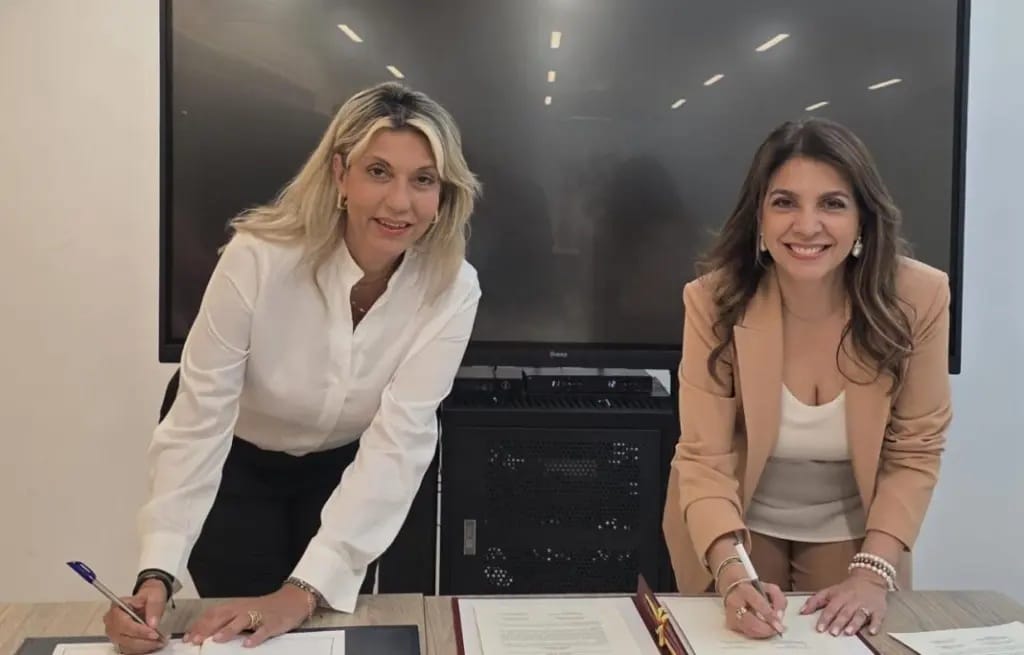
Greek Deputy Minister of Tourism Anna Karamanli (left) and Colombian Ambassador Ligia Quessep signed a tourism agreement. Credit: Greek Tourism Ministry
Greece and Colombia have taken a significant step toward expanding their bilateral ties by signing a Memorandum of Intent focused on tourism cooperation. The agreement was finalized in Athens by Greek Deputy Minister of Tourism Anna Karamanli and Colombian Ambassador Ligia Quessep, marking the first formal tourism pact between the two nations.
Recognizing tourism as a vital catalyst for economic growth, the framework sets up mutual exchanges in digital innovation, hospitality education, and sustainable destination management. It also targets niche markets such as cultural, eco-, and culinary tourism. The initiative directly aligns with Athens’ broader international strategy to actively diversify its traditional source markets.
Colombia, an “untapped market” for Greece
Deputy Minister Karamanli highlighted Latin America as a key, untapped market for Greece’s long-haul travel strategy, noting that Colombian travelers are a perfect fit for Greece’s heritage and culinary offerings. By building these strategic partnerships, Greece aims to capture affluent, long-haul tourists seeking authentic, premium cultural experiences.
Ambassador Quessep expressed optimism about the partnership, stating that Colombia looks forward to learning from Greece’s established success in global tourism to enhance its own domestic sector.
The Eastern Mediterranean Energy Center (EMEC) will be based at at Rice University. Credit: Stavros Papastavrou/Facebook
The United States, Cyprus, Greece, and Israel have formalized a new energy partnership aimed at securing infrastructure and boosting natural gas development in the Eastern Mediterranean.
US Energy Secretary Chris Wright signed a Declaration of Intent (DOI) alongside Cypriot Energy Minister Michael Damianos, Greek Environment and Energy Minister Stavros Papastavrou, and Israeli Ambassador to the US Dr. Yechiel Leiter. To anchor the initiative, the group partnered with Rice University President Reginald DesRoches to establish the Eastern Mediterranean Energy Center (EMEC) on the university’s Houston campus.
The agreement operationalizes a core objective of the Eastern Mediterranean Security and Energy Partnership Act, a bipartisan framework originally passed by Congress in 2019 to counter Russian and Chinese influence in the region by solidifying US allied energy ties.
Eastern Mediterranean Energy Center will focus on infrastructure and LNG
According to the agreement, the center will serve as a hub for both public and private sector collaboration. Key priorities include:
Securing regional energy transportation networks and bolstering power grid reliability
Facilitating scientific research, joint technology development, and workforce training
The decision to place the center in Houston, the energy capital of the US, is aimed at directly connecting Eastern Mediterranean policymakers with American industry leaders and engineering talent.
Strategic regional realignment
The partnership arrives as Europe and the Mediterranean continue to reshape their supply chains. With the US currently operating as the world’s leading oil and gas producer and largest LNG exporter, Washington views the Eastern Mediterranean as a critical geographic corridor for global energy stability.
“The Eastern Mediterranean is an increasingly important region for global energy development,” Secretary Wright said, noting that the Houston-based center will leverage “industry leaders in hydrocarbon development” to benefit all member nations.
Papastavrou described the occasion as a “historic moment,” saying that “Greece, Cyprus, Israel and the United States are joining forces to deepen our strategic cooperation and enhance connectivity in the Eastern Mediterranean through the establishment of the East Med Energy Center.”
He added that EMEC would provide a permanent platform for advancing regional stability, energy security, and economic cooperation by bringing together scientific expertise, academic excellence, the private sector, technological innovation, and energy know-how.
According to Papastavrou, the 3+1 scheme has demonstrated that reliable partners sharing a common strategic vision can deliver tangible results, advance shared interests, and contribute to a safer, more prosperous and affordable energy future. While the administrative details of the center’s funding and exact rollout schedule have not yet been disclosed, the declaration establishes the formal diplomatic and academic framework required to begin joint operations.
Senior municipal and port officials on Santorini have launched a coordinated offensive against major international cruise lines and the Cruise Lines International Association (CLIA). Speaking to Greek Reporter, local authorities claim global operators are deliberately engineering passenger bottlenecks and spreading misinformation to bypass municipal regulations, starve local businesses, and maximize their own onshore corporate excursion profits.
Mayor Nikos Zorzos, the Mayor of Thira (Santorini), emphasized that while cruise tourism is a vital sector for the island’s economy, it must be subject to strict regulation. Following a study conducted with the University of the Aegean during his previous term, it was determined that Santorini can sustainably accommodate a maximum of 8,000 cruise visitors per day.
Though a subsequent administration abolished the resulting berth allocation system in 2019, Mayor Zorzos immediately reinstated the daily cap upon his re-election to protect the island’s straining infrastructure.
The 70-30 port split friction
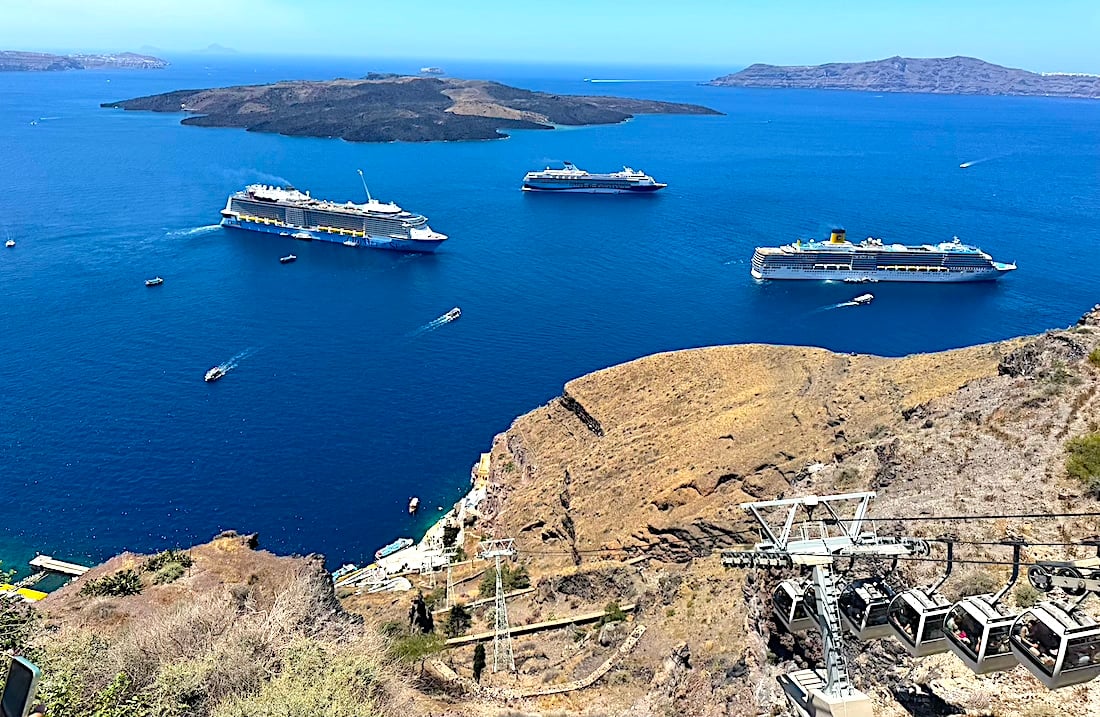
The current conflict centers on where passengers are offloaded. Historically, 70% of cruise passengers disembarked at the Old Port of Fira, with the remaining 30% directed to the industrial port of Athinios. Following a seismic event last year, a Joint Ministerial Decision temporarily diverted nearly all traffic to Athinios. This year, the Municipal Port Fund reinstated the traditional 70/30 split.
“Even though this rule is backed by a prosecutor’s order, operators are actively trying to bypass Fira to redirect tourists toward Athinios and Ammoudi,” Mayor Zorzos told Greek Reporter. “Yet, the Fira market is recovering, and our cable car system has proven it can comfortably handle the regulated flows.”
Allegations of tactical “sabotage” by cruise lines on Santorini
Crowds gather for the famous sunset in Oia, Santorini. Credit: Greek Reporter
Mayor Zorzos directly refuted recent public complaints and crowded photographs shared by CLIA, labeling them a false narrative designed to resist local flow management. According to municipal tracking, cruise ships are allegedly delaying disembarkation maliciously. Ships arriving at 7:00 AM are reportedly waiting until 10:00 AM to offload passengers all at once, leading to artificial bottlenecks at the Old Port.
“They are doing this maliciously for their own financial gain,” Zorzos alleged. “They want to force passengers into pre-booked, closed-loop corporate excursions, sometimes taking them to areas of zero cultural interest.”
The Mayor highlighted an unauthorized development in Vlychada, an environmentally sensitive area, where a cruise provider constructed a private, closed-gate tourist facility. “They created this exclusive enclave strictly for corporate profit, directly at the expense of Santorini’s local economy,” Zorzos told Greek Reporter.
Port Fund President slams “guided ghetto tourism”
Georgios Nomikos, President of the Santorini Port Fund, reiterated that while the island supports the cruise industry, the economic benefits must extend to the local ecosystem rather than a select few corporate entities.
Nomikos explained that when cruise lines utilize the industrial Athinios port, passengers are loaded directly onto proprietary tour buses, leaving Fira, the island’s capital and home to over six hundred local businesses, completely bypassed.
To debunk claims that the Fira port is overburdened, Nomikos provided a mathematical breakdown based on a standard 1,000-passenger ship. Under the 70-30 rule, 300 passengers are immediately allocated to the Athinios port. Of the remaining 700 passengers assigned to the Fira berth, roughly 10% to 15% (around 100 people) choose to stay onboard. Furthermore, approximately 300 passengers are transferred immediately by tenders to Ammoudi, and another 100 embark on Caldera catamaran tours or other external excursions.
Consequently, Nomikos points out that only about 200 to 300 passengers—or roughly 30% to 40% of the ship’s total capacity—actually ascend into Fira at any given time. “When CLIA publishes photos of overcrowded docks, they are being deceptive,” Nomikos told Greek Reporter. “They coordinate their tender boats to drop off hundreds of people simultaneously to create a false narrative of chaos. They won’t tell you that half those people are immediately routed away to other excursions.”
Cable car operators confirm infrastructure capability, cite scheduling manipulation
Tourists wait to embark on the cable car under a shaded area constructed this year. Credit: Greek Reporter
Artemis Kafouros, President of the Loula & Evangelos Nomikos Foundation, which operates the island’s cable car, confirmed that substantial upgrades have been made to ensure a seamless visitor experience. The upper station can now accommodate six hundred people per hour, and the lower station holds three hundred, with both featuring fully shaded, climate-controlled waiting areas.
However, Kafouros provided an eyewitness account from this week supporting claims of deliberate scheduling manipulation by the cruise lines. “Just recently, there were three cruise ships anchored. Two arrived at 7:00 AM. Inexplicably, until 9:30 AM, the Old Port was completely deserted—they did not disembark a single soul. Then, the moment the third ship arrived at 10:00 AM, all three vessels began discharging passengers simultaneously.”
According to Kafouros, this proves an intent to manufacture long queues to justify abandoning Fira. The ultimate goal, he claims, is to route ships back to Athinios to sell proprietary shore excursions that benefit entrenched corporate interests. Local authorities conclude that if cruise lines cooperate honestly with local tender schedules and municipal regulations, visitor flows would remain completely smooth.
Officials are calling on the industry to support the island’s long-term sustainability rather than prioritizing short-term corporate greed.
The song with its its hypnotic pop hook has taken Greece by storm. Credit: danaidede/Instagram
If there is a song that will dominate the Greek charts this summer, it is probably “Ki Allo” (And More) by newcomer Danai, (Danai Dede) which has completely stormed social media over the past few weeks.
If you have spent any time scrolling through TikTok or Reels lately, your algorithm has likely introduced you to its hypnotic pop hook. The infectious track has triggered an explosion of user-generated content, with thousands of creators using the audio for transitions, beach-day aesthetics, and lip-syncs. Almost overnight, Danai has delivered the textbook definition of a modern, internet-era breakthrough, proving that the route to a summer smash now runs directly through short-form video.
Danai’s “Ki Allo”: The blueprint of the summer juggernaut
While “Ki Allo” is her definitive solo breakout moment, Danai Dede, born on Rhodes, but now living in Athens, is no stranger to the formula for a hit. She first caught the public’s attention as the standout female vocal feature on Saske’s double-platinum hit “Aurio”, which dominated radio airwaves and beach bars. She followed that up with her solo track “Kalokairi”, proving her innate knack for capturing the effortless, sun-drenched nostalgia that listeners crave.
With “Ki Allo,” she has struck gold once again. The track’s distinctive, unpretentious vocals have become a favorite tool for creators, driving massive organic engagement. This social footprint has converted directly into commercial success, sending “Ki Allo” skyrocketing up digital streaming charts and inspiring a wave of early club remixes.
Unlike traditional, heavily manufactured pop anthems, Danai’s style is indie-pop leaning, cool, and effortless. She performs with a raw, natural delivery that feels deeply relatable to Gen-Z listeners.
By blending modern urban pop sensibilities with a laid-back, addictive rhythm, “Ki Allo” delivers the exact type of replay value required to dominate long road trips, beach clubs, and warm summer nights. As the season kicks into high gear across Greece, Danai’s viral hit is officially the track to beat.
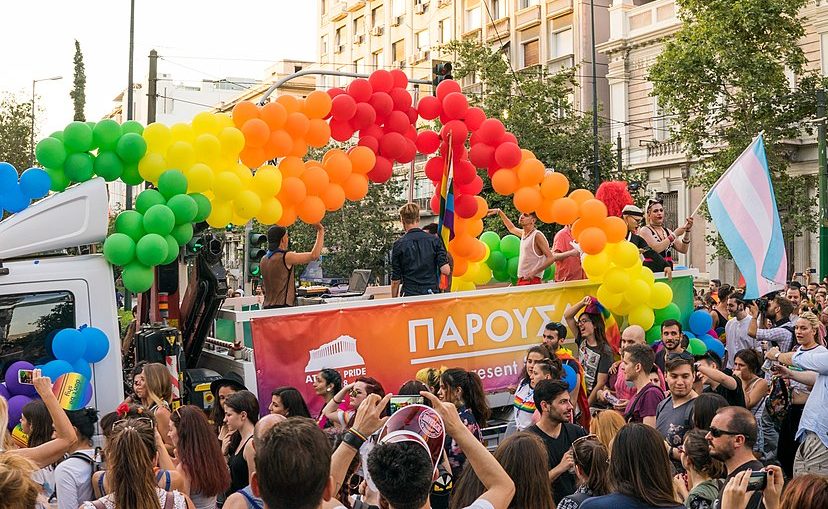
For the first time in ten years, STASY, the state-owned company that manages the Athens metro system, has rejected a request by Athens Pride to display promotional posters across the capital’s underground transit network. The sudden decision has triggered a sharp response from the festival’s organizers, who accuse the transit authority of intentionally reducing LGBTQ+ visibility.
The controversy comes just ahead of Athens Pride 2026, which is scheduled to take place on Saturday, June 13 at Syntagma Square.
Pride organizers allege unjustified sidelining by Athens Metro
According to a public complaint issued by Athens Pride, the organization followed all standard legal and administrative procedures to secure the advertising slots. For the past decade, having their campaigns displayed in metro stations was viewed by organizers as a vital achievement in reclaiming public space and promoting inclusivity.
This year, however, organizers claim their application was summarily rejected without any formal justification. Furthermore, Athens Pride noted that they were only notified of the refusal a single day before the scheduled launch of the campaign. In an emphatically worded statement, the festival’s organizers argued that the move carries significant political weight given the current social climate:
“At a time when hate speech, intolerance, and violence against our community are on the rise, decisions that restrict our visibility in the city are not neutral. They amount to a clear political stance—one that pushes us further into invisibility.”
STASY sites “prior commercial commitments”
Responding to the mounting criticism, STASY issued a statement to clarify its position and deny any political motives behind the move. The transit authority confirmed that it had proudly hosted Athens Pride campaigns for the consecutive past nine years but stated that a scheduling bottleneck made it impossible this year.
According to STASY, the advertising spaces throughout the metro network were already fully booked due to pre-existing corporate and commercial obligations during this specific timeframe.
“This year, due to existing commercial and advertising commitments for the specific period, it was not possible to host the campaign,” the company stated officially. Seeking to de-escalate the tension, STASY added that it “remains at the disposal of the organizers to explore possibilities for future cooperation.”
Despite the lack of promotional presence on the city’s transit network, organizers emphasize that the Athens Pride parade and events will go commence as planned at the heart of the capital this weekend.
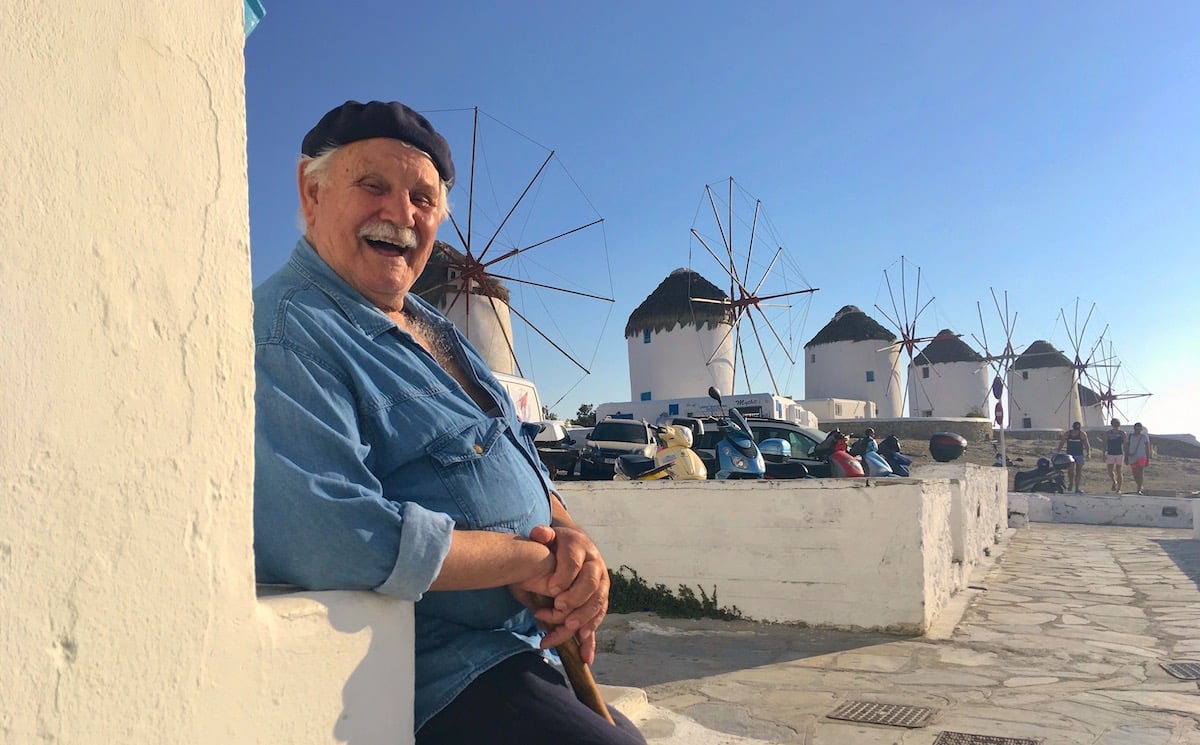
A Greek fisherman greets guests with a warm smile. Credit: Greek Reporter
Greece has consolidated its status as one of the safest and most stable countries globally, climbing to 53rd place in the 2026 Global Peace Index (GPI). Moving up two places from last year’s ranking, Greece is officially categorized as one of the world’s “highly peaceful countries.”
Amid shifting geopolitical dynamics and rising international tensions, Greece’s progress reflects significant internal security, low violent crime rates, and societal stability, making it a standout performer in Southeast Europe and the broader Mediterranean region. Globally, the 2026 report marks a historic record for Iceland, which has maintained its position as the world’s safest country for nineteen consecutive years.
The comprehensive index, developed by the Institute for Economics & Peace (IEP), evaluates 163 independent states and territories based on societal safety, domestic or international conflict, and the degree of militarization.
The analysis of Greece’s standing and the global top-tier rankings for 2026 are as follows:
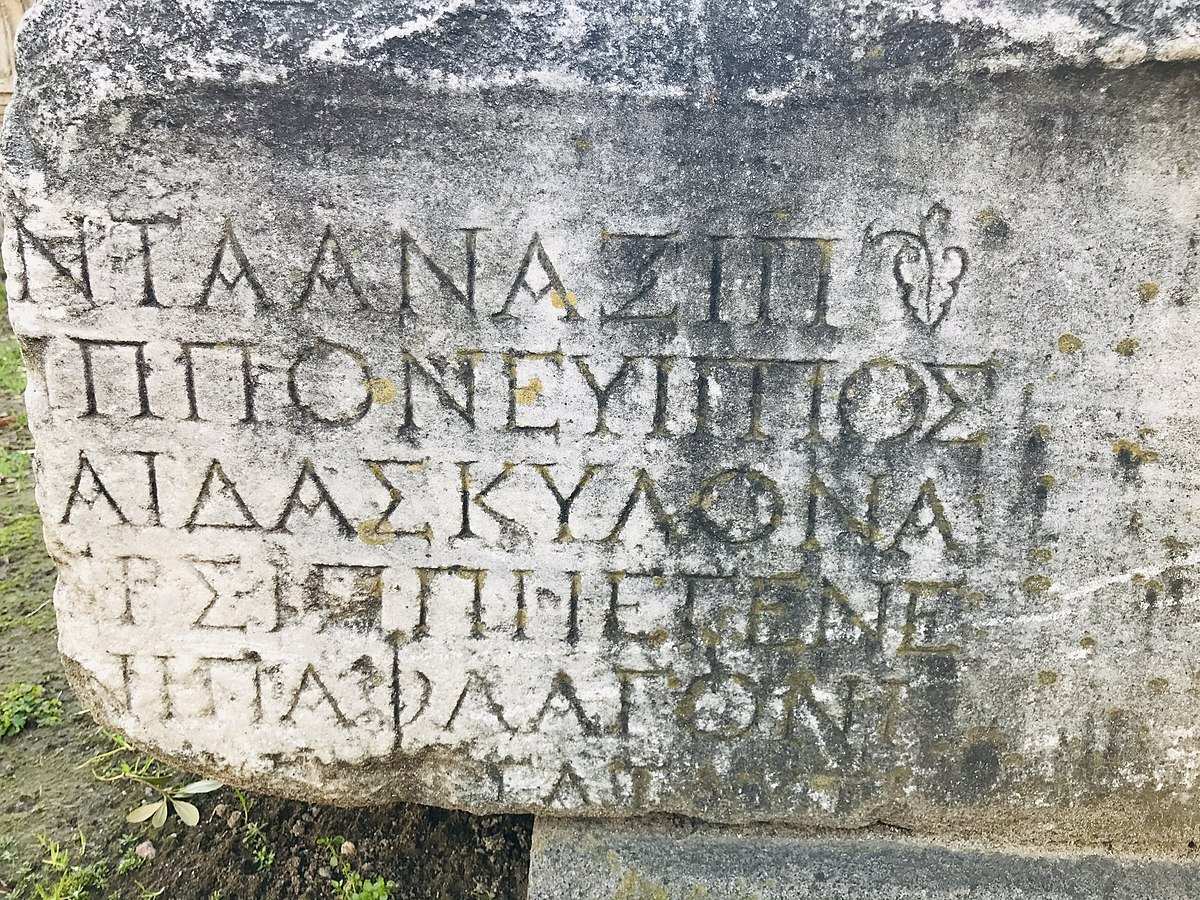
Ancient Greek is among the oldest languages in the world. Credit: Maurice Flesier / CC BY-SA 4.0 / Wikimedia Commons
Hundreds of diaspora academics are calling on Amazon Kindle Direct Publishing (KDP) to reverse its exclusion of the Greek language. In an open letter, hundreds of professors, academics, authors, educators, researchers, publishers, and members of the global intellectual community expressed their deep concern. They urged Amazon to “reconsider its current policy and demonstrate leadership in protecting linguistic and cultural diversity in the digital age.”
The signatories brought together by the International Hellenic Association (IHA), point out that Amazon ironically derives its name from Greek mythology and language. They emphasize that “the exclusion of Greek—one of the foundational languages of global intellectual history—is not merely a technical omission, but a cultural loss whose consequences extend far beyond the Greek-speaking community itself.”
Why the Greek language should be restored by Amazon’s Kindle
The letter, bearing the signatures primarily of Greek diaspora academics mobilized by the IHA, highlights several critical points regarding Amazon KDP, a self-publishing platform allowing authors to distribute digital and print books globally:
A striking contradiction: Amazon KDP currently supports publishing in numerous regional and minority languages with significantly fewer speakers than Greek (e.g., Cornish, Manx, North Frisian, Romansh, Corsican). Meanwhile, Greek, a language spoken by an estimated 13 to 15 million people worldwide, remains excluded. Therefore, this policy cannot be justified by commercial or demographic metrics alone.
A continuous legacy: Greek occupies a unique position in human history. With over 3,400 years of uninterrupted written tradition, it is one of the world’s oldest living languages. It is the language of Homer, Plato, Aristotle, Hippocrates, Archimedes, and the New Testament—the very bedrock of philosophy, democracy, medicine, mathematics, political thought, theology, literature, and the sciences.
A living vessel of values: Greek is not just a historical relic. It is a vibrant language and a living intellectual tradition. For millennia, it has served as the matrix for human-centric values. Words such as democracy, philanthropy, politics, ethics, dialogue, philosophy, history, and theory are not just linguistic artifacts but represent monumental achievements of human civilization.
The language of democratic principles: Greek articulates the foundations of civic life with unparalleled precision. Terms like demokratia (democracy), isegoria (equal right to speak), isonomia (equality before the law), and isopoliteia (equal civic rights) embody the principles of citizen participation and political inclusion. These concepts carry a specific original context that remains fundamentally untranslatable, serving as cornerstone concepts for modern societies.
A language of moral resistance: Hellenic literature and thought gifted humanity a vocabulary of moral resistance against arbitrary power. In Aeschylus’s Prometheus Bound, the concept of philanthropos tropos (the philanthropic way) stands in defiance of tyranny, presenting the love for humanity as a moral and political choice. This legacy remains deeply relevant in the digital era, wherein access to language also equates to access to memory, education, and cultural dignity.
Greek Language Day
Consequently, Greek is far more than a tool for communication or commerce; it is a treasury of wisdom, virtue, and beauty. Its global significance has been internationally recognized by UNESCO, which officially declared February 9th as World Greek Language Day, honoring its timeless contribution to global civilization.
Excluding Greek-language publishing from one of the world’s most influential digital platforms creates artificial barriers for Greek-speaking authors, educators, students, and publishers worldwide. Simultaneously, it undermines the broader principle of linguistic diversity in the global digital landscape.
For years, Greek authors and publishers have relied on Amazon for the international distribution of literature, academic research, and educational materials. In turn, Greek consumers have consistently supported Amazon’s products and services throughout every stage of its technological evolution, the open letter by Greek academics says.
The Calydonian Boar Hunt is depicted on a Roman frieze. Credit: Ashmolean Museum, Oxford, CC BY-SA 3.0/Wikipedia
The wild boar was a significant animal in Ancient Greece, appearing in their mythology, religious traditions, and daily life. It was a respected and feared creature, valued both as a worthy hunting challenge and as a prized source of food.
The wild boar held a prominent place in Greek mythology, symbolizing immense strength, ferocity, and the untamed nature of the world. Heroes were often defined by their ability to confront and conquer these beasts.
The Calydonian Boar was one of the most famous creatures of Ancient Greek lore. The goddess Artemis sent this gigantic boar to ravage the lands of Calydon as punishment for the king’s neglect of her. This provoked a great hunt that drew the most celebrated heroes of the age, including the hero Meleager and the huntress Atalanta, highlighting the animal’s status as an epic adversary.
As part of his legendary labors, the hero Heracles was tasked with capturing this ferocious Erymanthian Boar, which was terrorizing the region of Mount Erymanthos. Heracles had to use his cunning and strength to chase the beast into deep snow and trap it alive. The depiction of this feat was a favorite subject in ancient vase painting and sculpture.
These myths show that the boar was not merely an animal. It was a metaphorical challenge to human civilization, a representation of untamed nature that only the greatest heroes could overcome.
Wild boar hunt in Ancient Greece, as depicted in the François vase. Credit: Sailko , CC BY 3.0/Wikipedia
The wild boar in daily life and hunting in Ancient Greece
Hunting was a crucial activity in Ancient Greece, serving as a rite of passage for young men and a demonstration of courage and skill. The wild boar hunt was one of the most dangerous pursuits.
Hunters typically used spears, javelins, and a pack of trained hunting dogs to corner the animal. Confronting a wild boar was a high-risk activity due to its powerful tusks and aggressive nature when cornered. The hunters’ bravery and strategy were highly respected.
The meat was a highly valued delicacy. It was associated with rich meals and was a staple at religious festivals and banquets. The meat was often roasted, and its fat was used to enhance the flavor of other dishes. It could also be preserved through salting or smoking, ensuring it could be enjoyed year-round.
The Ancient Greek writer Xenophon, in his work Cynegeticus (On Hunting), provided a detailed guide to hunting techniques, emphasizing their role in the education and lifestyle of aristocratic youth. He believed that the discipline and courage required for the hunt were essential for a well-rounded citizen.
Historians and philosophers on the wild boar
Other ancient historians and philosophers also speak of the wild boar, though their perspectives often differ from the more mythological and heroic focus. They were interested in the animal from a more practical and scientific standpoint.
Aristotle mentioned the wild boar in his work History of Animals. He focused on its physical characteristics and behavior, including its ferocity and its place within the animal kingdom. Aristotle was interested in classifying animals and understanding their relationships, and the wild boar was part of this broader biological inquiry.
Plato used the pig, and by extension the boar, as an example but not always in a positive light. In the Republic, for instance, he discusses a “city of pigs” to describe a society that only seeks basic, low-level pleasures, contrasting it with a more refined, ideal city. This shows how the animal was also used as a symbol for a simple or primitive way of life.
Beyond philosophy, the wild boar appears in the works of various other ancient writers, often in the context of history, geography, and mythography. Homer’s epic poems, the Iliad and the Odyssey, feature wild boar hunts. The most famous example is the scar on Odysseus‘s leg, which he received during a boar hunt in his youth, a detail that reveals his identity to his old nurse. This highlights the hunt’s role as a formative event and a mark of a man’s courage.
The Greek geographer and travel writer Pausanias mentioned the Calydonian Boar in his Description of Greece. He notes that he saw the boar’s hide and tusks in a temple, providing a quasi-historical reference to a mythical event, which shows how deeply these stories were believed and integrated into Greek cultural life.
The boar in Ancient Greece represented not only the “invincible enemy” but also a raw, primal force of nature that humans strove to master. Its resilience and strength also made it a symbol of fertility and endurance in certain regional traditions.
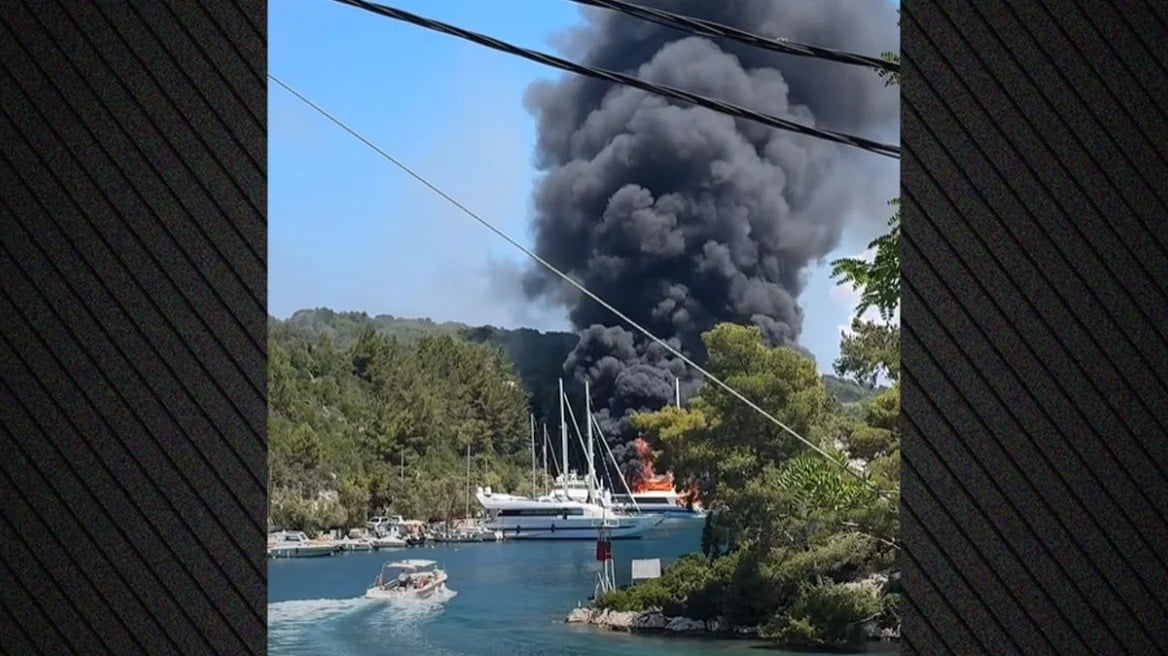
Tourist boats aflame. Video screenshot, Valentina Madonia/Facebook
Thick black smoke is billowing over the port of Paxos after a fire completely engulfed a tourist vessel before spreading to a second boat docked nearby. Fortunately, all passengers had disembarked before the outbreak. The cause of the fire remains unknown.
The incident began around 1:00 PM on Thursday at the New Passenger Terminal in Gaios, Paxos.
According to local reports from kerkyrasimera.gr and corfutvnews, the blaze began on a day-boat that operates tourist cruises, quickly spreading out of control due to unknown causes. Fueled by flammable materials onboard, the flames rapidly jumped to a neighboring vessel.
Reports indicate that the passengers, who had just completed a popular daily excursion from Parga to Paxos, had safely stepped off the vessel just moments before the fire broke out.
The Hellenic Coast Guard confirmed that the fire involved two commercial tourist vessels and that no passengers were onboard at the time of the incident. Fire service vehicles, an ambulance and a tugboat have been deployed at the port.
The Parga-Paxos route is one of the single most popular day-trip cruises in the entire Ionian Sea. During the summer season, it is a massive staple of the local tourism economy, drawing thousands of international and domestic visitors every week.
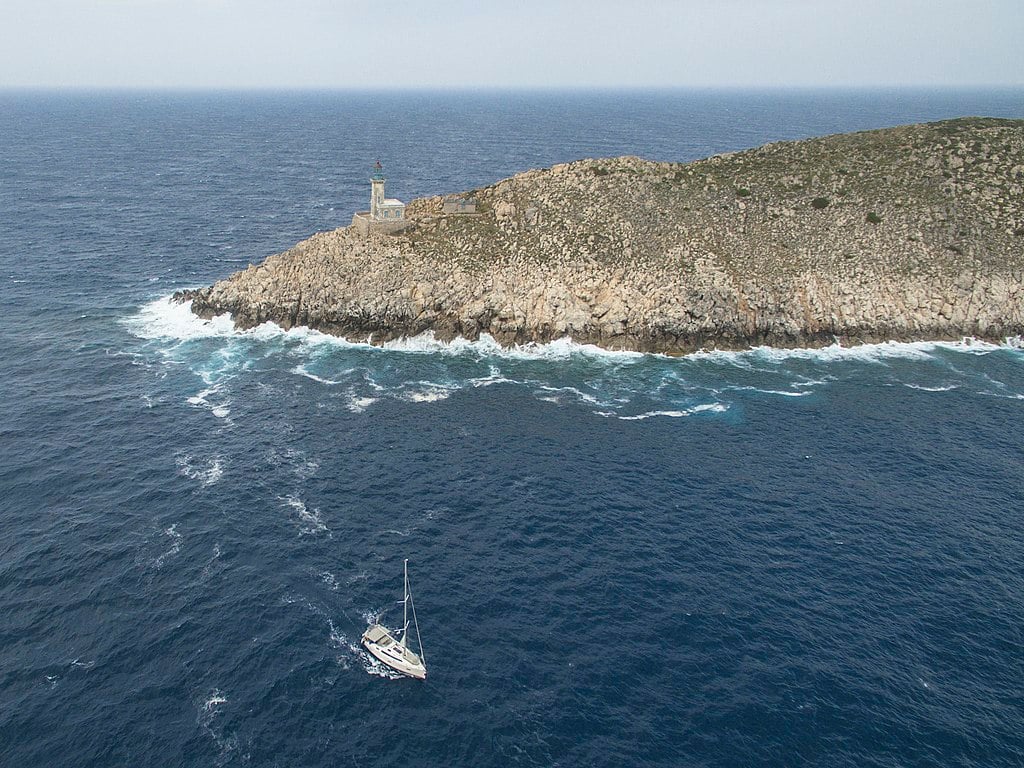
Cape Tainaro (also known as Cape Matapan) is the southernmost point of mainland Greece and the Balkan Peninsula, located at the tip of the Mani Peninsula. It’s a place of rugged beauty, characterized by dramatic cliffs, a wild landscape, and the convergence of the Messenian and Laconian Gulfs.
Tainaro has been important for thousands of years, serving as a maritime crossroads and a place of worship. Today, a lighthouse stands at its very tip, and scattered ruins of ancient settlements and temples can still be found there.
The southernmost point of the Balkan Peninsula. Credit: Nicolas Hadjidimitriou, CC BY-SA 4.0 / Wikipedia
The lighthouse that stands guard in Tainaro is considered one of the most imposing in all of Greece. It is a construction of French technicians, built of stone on a plateau on the natural rocks of the cape, with a height of about 52 feet (16 meters). It began operating in 1887 and was renovated in 1930.
In 1984, an automatic lighting machine was installed there, and the lighthouse was abandoned by its last guardians. The building was restored in 2008 and has since been guarded by Navy personnel. Every third Sunday in August, public access is free as part of World Lighthouse Day.
Ancient Greeks believed that a cave at the cape’s edge, often referred to as the “Gates of Hades” or “mouth of Taenarum,” was a direct entrance to the Underworld, the realm of the dead, ruled by the god Hades. This mythical entrance was said to be guarded by Cerberus, the monstrous three-headed hound with a serpent’s tail who prevented the dead from escaping and the living from entering.
One of the most famous myths connected to Tainaro is that of Heracles (Hercules). As his twelfth labor, he descended into the Underworld through this cave to capture and bring Cerberus to Eurystheus. The legendary musician Orpheus also used this passage to descend into Hades in his attempt to bring his beloved wife, Eurydice, back to the world of the living.
By some accounts, the sculpted canal on the east side of Porto Sternes was the path taken by the souls of the dead, ferried by Charon, the grim boatman of the Underworld.
Cape Tainaro was home to a sanctuary dedicated to Poseidon, the god of the sea. Poseidon was worshiped under various epithets, including “Poseidon Tainarios,” as the god who controlled both the seas and earthquakes.
The temple served as a place of inviolable asylum, offering refuge to criminals and even escaped slaves. A story was recounted by Thucydides about the Spartans violating this asylum by killing helots (agrarian slaves) who had taken refuge there, an act believed to have brought divine retribution in the form of an earthquake.
The site also functioned as a “necromanteion,” or Oracle of the Dead, where Ancient Greeks would perform rituals to communicate with the spirits of their deceased ancestors, seeking guidance or prophecy.
A celebrated bronze statue of the poet and singer Arion, seated on a dolphin, was a prominent dedicatory offering at the temple of Poseidon. It honors the myth of Arion, who was rescued by a dolphin after being cast into the sea by pirates and brought safely to Cape Tainaron.
In medieval times, Tainaro became a notorious pirate base—with merchant ships carefully avoiding it—and during World War II, the Battle of Tainaro (March 1941) was fought off the coast between the British and Italian fleets.
Getting to Tainaro
The only way to get to Tainaro is by hiking along a path that many consider to be the most interesting of the “inner” Mani. It is accessible to all with no significant altitude differences and has a total length of about 1.4 miles. Starting from the village of Kokkinogia, it’ll probably take around fifty minutes to get to the lighthouse.
You will find the village of Kokkinogia at the end of the Areopolis-Tainaro road. The marked dirt path begins at the church of Agioi Asomatoi and passes by the beach of Aria, where you can see a Roman mosaic. The surrounding landscape is typical of Mani: thorn bushes, thyme, low vegetation, flint stones, and no shade—so be sure to wear a hat, apply sunscreen, and bring plenty of water. The views along the way to Tainaro will make it all worthwhile.
A few of the country’s most popular, breathtaking tourist destinations can instantly transform from an idyllic paradise into a severe survival hazardMyrtos Beach in Kefalonia. Public Domain
Greece is world-renowned for its beaches and postcard-perfect coastlines, but beneath those beautiful, turquoise waters lies danger. When heavy weather conditions strike, a select few of the country’s most popular, breathtaking tourist destinations can instantly transform from an idyllic paradise into a severe survival hazard.
“Lalaria” refers to the smooth white pebbles sculpted over millennia by the Aegean waves. Lalaria is a beach of indescribable beauty on Skiathos, famous for its turquoise waters, blindingly white shoreline, and the majestic stone arch of Tripia Petra rooted in the seabed.
However, Lalaria conceals hidden dangers. The coast is accessible strictly by sea. More importantly, when strong northerly winds blow, waves can reach several meters high, generating a violent, dangerous undertow (antimamalo or clapotis wave reflection) that poses a severe threat to both swimmers and small boats.
2. Matala – Southern Crete
When the scorching Livas (the hot southwesterly wind) sweeps through southern Crete, the shoreline of Matala—the iconic former haven of the 1960s “flower children”—turns stark white with crashing foam. Swings in the weather make swimming completely prohibitive.
The sea routinely breaches the shoreline, rushing past the sunbeds. Lifeguards blow their whistles continuously to signal extreme danger to anyone daring to dive. While reckless thrill-seekers often grab inflatable mattresses to play sea adventurers, the physical terrain is ruthless. The coast features an incredibly abrupt drop-off into deep water. Combined with massive waves, the undercurrent will pull anyone but an Olympic swimmer out into the open sea—where you would be lucky to finally wash ashore in Libya. Local lifeguards continuously flag this beach as hazardous, a risk that similarly applies to the nearby beach of Agios Pavlos in Rethymno.
3. Nas – Ikaria
Located in northern Ikaria, Nas is arguably the single most dangerous beach in Greece. It is the only beach in the country fitted with a permanent safety rope anchored into the rocks. This rope exists so brave swimmers can cling to it to avoid being violently swept out into the open sea or smashed against the jagged cliffs by aggressive rip currents. Nas remains highly popular among nudists and free campers. Access involves leaving your vehicle on the main Agios Kirykos–Armenistis road, hiking down a steep cliffside path of stone steps to a riverbed, and traversing the final stretch through the water or over the rocks.
4. Chorefto – Pelion
Chorefto beach in Pelion is world-famous and heavily visited, but it requires extreme caution. As one visitor noted on social media: “It is a gorgeous, sprawling beach, but as you approach the shoreline, the sand turns into jagged stones. When the wind picks up, swimming is virtually impossible. The heavy currents and crashing waves literally ‘dig up’ the seabed, causing the shoreline to drop off precipitously right in front of you.” Chorefto is a beach where, the moment a northern gale strikes, you need to run. The sheer force of the waves and currents will make you “dance” (Chorefto literally translating to dancer) to the frantic rhythm of the wind.
5. Myrtos – Kefalonia
While internationally celebrated as one of the most beautiful beaches in the world, Myrtos is equally famous among marine experts for its deceptive treachery. Tucked between the feet of two mountains, the beach faces the open Ionian Sea, making it a magnet for fierce winds.
The shoreline features an immediate, precipitous drop-off just a few steps into the water. Because of this unique underwater topography, strong winds create massive, violent waves and a punishing undercurrent. Swimmers who get knocked off their feet by the crashing shoreline waves are frequently dragged into deep water, making it incredibly difficult to swim back to the pebbled shore.
6. Platia Ammos – Kefalonia
While Myrtos beach typically dominates international travel sites as one of Europe’s finest, Kefalonia hides another beach that rivals its beauty but demands expert hiking skills. Platia Ammos is tucked deep within a bay past the Kipouria Monastery, surrounded by sheer, imposing cliffs.
While its deep blue waters are pristine, accessing them used to require climbing down (and back up) over 400 stone steps under a relentless sun. However, severe weather in 2014 collapsed a large portion of the staircase, raising the difficulty level to an extreme “Rambo” mission. If the sea turns rough here, you will find yourself scrambling desperately up the rock face like a mountain goat, wishing you had stayed on a safer beach.
7. Kalami – Kythira
The trek from the village of Mylopotamos to the remote beach of Kalami involves navigating slippery, steep, and highly dangerous cliffs. In several spots, reaching the next foothold requires a literal leap into the void over a drop-off. While the final destination is a stunning reward, the journey is a small Odyssey. Anyone without proper hiking gear, physical conditioning, or nerves of steel is highly advised to stay safely beneath the plane trees by the nearby Fonissa (Killer) Waterfall and leave the photos to the professionals.
8. Paradise Beach – Kos
Located on the southern coast of Kos, this beach looks like a calm, shallow haven perfect for families. However, its danger doesn’t come from towering waves or steep cliffs, but rather from a unique volcanic phenomenon occurring beneath the seabed.
Due to the active volcanic network tied to the nearby island of Nisyros, Paradise Beach emits cold volcanic gases from the seafloor, earning it the nickname “Bubble Beach.” While tourists enjoy swimming through the natural bubbles, these underwater thermal currents can cause sudden, extreme temperature drops in the water. Furthermore, the localized release of volcanic gases can occasionally cause dizziness or sudden fatigue for swimmers who linger too long over the vent areas.
9. Anthony Quinn Bay – Rhodes
Named after the famous Hollywood actor who fell in love with the spot while filming The Guns of Navarone, this emerald-water bay is an aesthetic masterpiece. However, its natural geology requires extreme physical caution.
The entire bay—both on the shore and underwater—is a minefield of sharp, jagged rocks and slick, algae-covered reefs. The main hazard here is orthopedic and physical injury; every year, numerous tourists suffer severe cuts, slips, and fractures while attempting to climb over the rocks to enter the deep water. Additionally, the rocky crevices are a prime habitat for sea urchins, meaning a misplaced step can easily cut a vacation short.
10. Kolymbithres – Tinos
Famous for its otherworldly landscape, Kolymbithres features smooth, gray granite rock formations sculpted by centuries of wind and water, creating a series of tiny, sandy enclaves.
Positioned on the northern coast of Tinos—an island famous for its relentless Aegean winds—this beach bears the full brunt of the Meltemi (the fierce summer north winds). When the gales hit, the wind funnels through the granite rock formations with extreme velocity. This creates chaotic, swirling wave patterns and sudden, unpredictable cross-currents within the narrow rocky channels, easily trapping swimmers against the hard granite walls.
11. Kathisma – Lefkada
Kathisma is a sprawling, cosmopolitan paradise on the western coast of Lefkada, famous for its vibrant beach bars and water that looks almost artificially turquoise. However, its beauty masks a lethal combination of open-ocean geography and violent underwater mechanics.
Because Kathisma faces the completely open Ionian Sea with no natural bays or reefs to break the water’s momentum, it bears the full, unbridled force of western winds. When a storm or heavy wind hits, it generates towering, closely packed waves that smash violently into the shore. More importantly, the shifting tide creates a phenomenon known to locals as “sand-shaving.”
The heavy surf literally hollows out the seabed beneath your feet, causing the shoreline to drop off vertically into deep water just a step from the dry sand. This creates an incredibly powerful, vacuum-like undertow. Swimmers who get knocked off their feet by a wave are immediately sucked into deep water, making it nearly impossible to struggle back onto the slick, collapsing shoreline. Lifeguards here routinely change their flags to red, but many tourists fail to realize that even wading knee-deep in Kathisma’s rough surf can prove fatal.
12. Navagio Beach (Shipwreck Beach) – Zakynthos
Navagio is a global bucket-list destination, defined by the stark contrast of a rusted freighter marooned on a strip of white sand, surrounded by brilliant turquoise water and 200-meter-tall vertical cliffs. However, this paradise is so inherently hazardous that it is the only beach on this list that is completely closed to the public by ministerial decree.
Navagio is plagued by two lethal threats: severe seismic instability and unpredictable marine currents. Tucked beneath towering, sheer limestone walls, the beach is highly prone to sudden, massive rockfalls. Following a terrifying 2018 landslide that capsized tourist boats and a 2022 earthquake that brought tons of rock crashing onto the sand, geologists declared the beach a permanent hazard zone. Furthermore, because the bay faces the open sea, sudden, violent swells can trap boats against the cliffs or create chaotic cross-currents. Today, tourists are strictly prohibited from walking on the beach or swimming in the bay; you can only view this beautiful but perilous marvel from a safe distance aboard a boat or from a designated cliffside viewing platform high above.
FIFA World Cup 2026 trophy. Credit: TravelQueen11 / Wikimedia Commons / CC BY-SA 4.0
As the 2026 FIFA World Cup officially kicks off across North America, a long-standing question resurfaces on the global stage: Do Americans actually care about soccer?
While traditional sports still rule the airwaves, a massive generational and demographic shift is actively rewriting the American sports landscape.
Generational and ethnic shift for soccer
Historically, soccer in the United States has struggled to compete with the domestic dominance of the NFL, NBA, and Major League Baseball. That skepticism persists among older demographics. According to a new Pew Research Center survey, 66% of American adults state they are “not too” or “not at all” likely to follow the tournament. Broadly speaking, a separate YouGov poll confirms that 54% of the overall adult population maintains zero interest in the sport. For a large share of traditional sports fans over fifty, the tournament remains an afterthought.
However, statistics show that there is a soccer boom among younger individuals. The game is rapidly becoming the sport of choice for the next generation of American consumers. YouGov data reveals that an average of 23% of Americans aged 18 to 34 now identify as avid soccer viewers. More telling is the fact that over 56% of all active soccer fans in the United States are currently under the age of 35.
This generational momentum is heavily reinforced by cultural shifts. Comprehensive market data from Numerator indicates that enthusiasm for this year’s tournament is highest among multicultural communities, with 54% of Hispanic Americans and 51% of Asian Americans planning to actively tune in to the month-long event.
Furthermore, the reality of the United States co-hosting the expanded 48-team tournament alongside Canada and Mexico has created a “host nation surge.” Overall consumer intent to watch has nearly doubled compared to the 2022 World Cup in Qatar, with 32% of all US citizens now planning to watch the matches. This enthusiasm is heavily concentrated around the eleven American host cities, including Dallas, Los Angeles, Atlanta, New York/New Jersey, and Philadelphia, where consumer interest jumps to 42%.
Despite this undeniable wave of momentum, soccer is not quite ready to dethrone America’s biggest sporting events. When stacked against domestic mainstays, the World Cup still plays catch-up. Consumer data tracking viewership intent shows that while 32% of Americans plan to watch the World Cup, 58% plan to watch the Winter Olympics, and a staggering 69% will tune into the NFL’s Super Bowl.
Will the Americans pack the stadiums for the World Cup?
Will the MetLife stadium be packed with soccer fans? Credit: SachinDaluja, CC2/Wikipedia
However, as the world’s biggest tournament returns to US soil for the first time in thirty-two years, it faces an entirely different landscape strained by corporate economics.
The 1994 World Cup in the US was a staggering, record-breaking success. It drew 3.59 million fans across 52 matches, averaging nearly 69,000 attendees per game. It remains the most attended World Cup in history.
However, speculation about whether Americans will pack stadiums like they did in 1994 has hit an unexpected snag: FIFA’s aggressive corporate pricing model. During the 1994 tournament, group-stage tickets were relatively accessible, ranging from $25 to $75. By stark contrast, FIFA’s 2026 individual match tickets see first-round seats averaging around $400, with opening match tickets starting at $560 and category-one seats scaling up to $2,735. For the United States’ highly anticipated matches, primary, and resale prices have left ordinary local families facing severe sticker shock, with select group-stage tickets soaring past $1,100.
Because FIFA now tightly controls its own resale marketplace to harvest transactional fees, prices fluctuate based on demand like airline tickets. While major marquee matches and the knockout rounds are completely sold out, ordinary American supporters have openly complained about being priced out of lesser group-stage fixtures, leaving thousands of tickets sitting on primary resale portals on the eve of kickoff.
Ultimately, the 2026 World Cup catches the United States at a historic sporting crossroads. Driven by a younger, more diverse fanbase, soccer is no longer a niche novelty in America. The interest is real, deep, and fully integrated into the culture. But while the stadium atmospheres will be electric, any empty seats seen during the opening weeks shouldn’t be blamed on an “indifferent American public”—rather, blame a modern corporate strategy that misjudged the wallet of the everyday fan.
US Central Command (CENTCOM) confirmed a fresh wave of “self-defense strikes” directly hitting radar, surveillance, and military facilities in southern Iran. Credit: CENTCOM
For the second straight day, the US and Iran have traded retaliatory military strikes across the Middle East, pushing an already fragile April ceasefire to the brink of collapse.
US Central Command (CENTCOM) confirmed a fresh wave of “self-defense strikes” directly hitting radar, surveillance, and military facilities in southern Iran. The American bombardment followed a stark warning from US President Donald Trump, who declared that Washington would hit Iran “hard” because Tehran had taken “too long to make a deal” to halt hostilities permanently.
Tehran immediately struck back, targeting US military infrastructure across multiple neighboring countries. For a second consecutive day, American bases in Kuwait and Bahrain faced Iranian fire, while Iranian state media reported that the Islamic Revolutionary Guard Corps (IRGC) launched ballistic missiles at a US command center in Jordan. The attacks forced Kuwait to temporarily shut down its airspace after its military intercepted “hostile aerial targets,” while air raid sirens sounded in the middle of the night in Bahrain.
The conflict has also spilled into vital global shipping lanes. Iranian state media claimed the IRGC struck two oil tankers and declared the strategic Strait of Hormuz “completely closed.” While CENTCOM countered that commercial maritime traffic was still successfully transiting the waterway, global energy markets panicked. Brent crude quickly jumped 2%, surging to around $95 a barrel.
The escalating rhetoric suggests no immediate end to the violence. US Defense Secretary Pete Hegseth warned that bombs would continue to drop on Iran’s core facilities if a diplomatic resolution isn’t reached, a sentiment echoed by President Trump on Truth Social.
Meanwhile, Iranian President Masoud Pezeshkian stood defiant, vowing that Iran “will stand firm against any pressure or threat” while slamming Washington for sabotaging peace talks with contradictory diplomacy.
The Cannes Film Market (Marché du Film) has officially named Greece as its 2027 Country of Honour for the landmark 80th edition of the Cannes Film Festival. This prestigious spotlight celebrates the country’s rapid ascent into a premier global audiovisual hub.
Operating under the banner “Ride the Greek Wave,” the initiative will highlight the convergence of Greek creativity, a booming production sector, and its growing role in international storytelling.
“With the remarkable momentum of its film and audiovisual industry today, Greece embodies the spirit of creativity, openness, and international collaboration that the Marché du Film seeks to celebrate through its Country of Honour initiative,” said Guillaume Esmiol, Executive Director of the Marché du Film.
This major milestone follows a massive influx of high-profile international projects utilizing Greece’s scenic versatility and its highly competitive 40% cash rebate incentive.
Cannes celebrates Greece as a film and TV production hub
Major recent film and television productions that have set up camp across Greece’s islands and mainland include:
Emily in Paris (Netflix): For its highly anticipated new season, the ultra-popular streaming franchise has expanded Emily Cooper’s horizons to Greece. Production crews completely took over Mykonos, filming major scenes featuring Lily Collins and co-star Lucas Bravo at the pristine Agios Sostis Beach, as well as the island’s iconic windmills and the narrow alleys of Little Venice.
The Riders: Hollywood star Brad Pitt spent weeks touring Greece to film this high-stakes psychological drama directed by Oscar-winner Edward Berger (All Quiet on the Western Front). The production spanned diverse settings across the country, from a dramatic artificial storm sequence shot inside a historic studio in Menidi to location shoots on the car-free island of Hydra, the historic railway station of Chalkida, and right in front of Athens Town Hall in Kotzia Square.
The Odyssey (Universal Pictures): Christopher Nolan’s highly anticipated, ancient-set cinematic epic based on Homer’s poem, which utilized locations across the Mediterranean, including Greece.
The Return: A gritty, atmospheric retelling of Odysseus’s homecoming starring Ralph Fiennes and Juliette Binoche, filmed extensively amidst the ancient olive groves and rugged cliffs of Corfu.
House of David (Amazon MGM Studios): A sprawling biblical drama series that transformed the landscapes of Attica and the Peloponnese into ancient Israel.
Malice (Prime Video): A psychological thriller series starring David Duchovny and Carice van Houten, which filmed across Athens, Piraeus, and the sun-bleached Cycladic islands of Paros and Antiparos.
Maestro in Blue (Netflix): The critically acclaimed, internationally distributed Greek drama series produced by Christoforos Papakaliatis, which wrapped up its sweeping story against the stunning backdrop of Paxos and Corfu.
Greece’s audiovisual sector
Leonidas Christopoulos, CEO of Greece’s film and media agency EKKOMED, noted that the Cannes distinction is a massive victory for the local industry: “This distinction is both a significant recognition and a unique opportunity to showcase Greece’s vibrant creative ecosystem on the international stage. Today, Greece is a place where cinematic heritage meets contemporary talent, innovation, and international collaboration.”
EKKOMED says that Greece’s audiovisual sector contributes €1.9 billion ($2.18 billion) to the national economy, supports approximately 44,000 jobs, and includes nearly 3,000 companies active across production, post-production, animation, and related creative services.
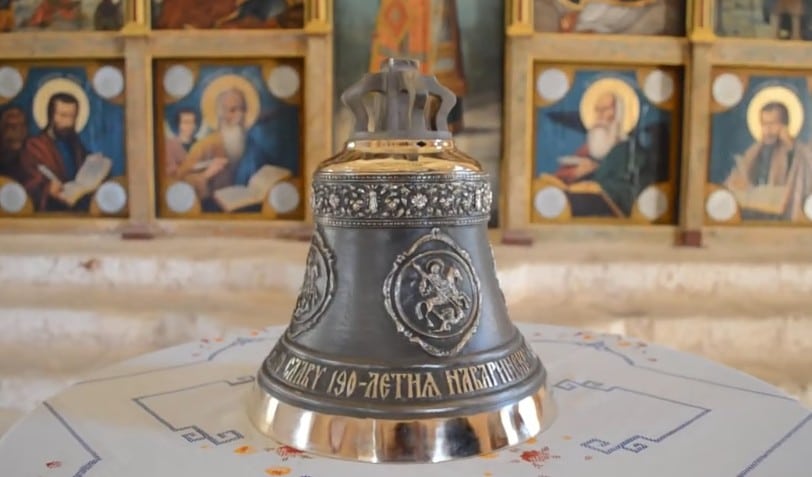
Originally delivered to Greece on October 19, 2017, the bell was celebrated as a “bridge of memory,” honoring the historic ties between the Greek and Russian peoples. Credit: Public Domain
Authorities in Messenia, Greece are investigating the mysterious disappearance of the historic Battle of Navarino commemorative bell from the Church of the Transfiguration of the Savior, located in the Niokastro fortress in Pylos.
Weighing 12 kilograms (approx. 26 lbs), the bell holds profound historical and symbolic value. It was gifted to the church by Russian Philhellenes and transported to Greece aboard the Russian warship Azov to mark the 190th anniversary of the Battle of Navarino, a pivotal naval engagement of the Greek War of Independence.
According to state broadcaster ERT, photographic evidence confirms the bell was securely in place as recently as May 29, 2026. However, tourists visiting the castle on the morning of Saturday, June 6, noticed it was missing.
It remains unclear whether the artifact was stolen or removed for unannounced maintenance. Local police and cultural heritage authorities are investigating all possibilities to locate the missing relic.
Bell honored historic ties between Greece and Russia after Battle of Navarino
Originally delivered to Greece on October 19, 2017, the bell was celebrated as a “bridge of memory,” honoring the historic ties between the Greek and Russian peoples. Its sudden disappearance has sparked deep concern within the Pylos community, where it is revered not just as a religious object but as a tangible link to Greece’s journey toward independence.
Fought on October 20, 1827 in Navarino Bay (modern-day Pylos), the Battle of Navarino was a monumental naval clash that effectively secured Greece’s independence from the Ottoman Empire. It marked the last major sea battle in history fought entirely with sailing ships, pitting a powerful allied fleet of British, French, and Russian warships against the combined forces of the Ottoman Empire and Egypt.
Despite being outnumbered, the Allies possessed vastly superior firepower and tactical positioning, completely decimating the Ottoman fleet in a matter of hours. This decisive intervention by Europe’s great powers turned the tide of the struggling Greek War of Independence, forcing the Ottomans to eventually withdraw and pave the way for the establishment of the modern, independent Greek state.
Greece is close in approving the ‘Achilles Shield’, a program similar to the Iron Dome, the Israeli air defense system, which intercepted missiles fired from Iran, in Junee 2025. Credit: EPA/ABIR SULTAN via AMNA
A trio of major Israeli defense contractors recently delivered their final proposal dossiers for Greece’s €3 billion ($3.5 billion) ‘Achilles Shield’ program, a sophisticated, multi-layered air, anti-ballistic, and counter-drone defense network powered by cutting-edge Israeli technology.
The proposals by Israel Aerospace Industries (IAI), its subsidiary ELTA Systems, and Rafael Advanced Defense Systems, satisfy all criteria mandated by Greece’s General Directorate for Defense Investments and Armaments (GDAEE), according to a report by newmoney.gr.
The nationwide shield stands out as one of the most critical crown jewels within Greece’s broader Long-Term Defense Procurement Program (2025–2036), which outlines an overall budget of €30 billion.
Industrial co-production
The final procurement contracts are now navigating the signature pipeline through the Ministry of National Defence (YETHA) and the General Staffs. Officials are pushing to have the program formally added to the agenda of the upcoming KYSEA session, tentatively scheduled for June 18, 2026, or the subsequent meeting in early July.
The report notes that a pivotal victory for Greek industry was securing a domestic industrial participation rate locked at a minimum of 25%, spanning both localized manufacturing and technology transfers.
The Israeli consortium has already engaged in extensive talks with domestic contractors, signing several Memorandums of Understanding (MoUs) and strategic partnerships. Industrial analysts estimate that the final domestic footprint could realistically reach 30%, backed by fully drafted proposals to establish dedicated production lines on Greek soil.
Key examples and partners already tapped for the program include:
IAI & Hellenic Aerospace Industry (EAB): This existing partnership has already yielded results, notably the successful integration of Greece’s proprietary “Centaur” counter-drone system into the Barak weapon architecture.
Domestic Consortium Partners: Major Greek defense, industrial, and infrastructure players have secured preliminary roles, including Metlen, Miltech, Scytalys, Akmon, Salamis Shipyards, and GEK TERNA, with the roster expected to expand over the program’s three-year rollout.
Tactical Logistics: The specialized utility vehicles tasked with transporting the mobile defense systems will be sourced from IVECO, represented in Greece by the Syngelidis Group in partnership with Metlen.
The tech blueprint: Inside Greece’s ‘Achilles Shield’
The architecture of the shield relies on a unified, network-centric ecosystem. It is designed to seamlessly interface with Greece’s upcoming Belharra (FDI) frigates, upgraded F-16 Viper fighters, incoming F-35 stealth jets, and existing Patriot missile batteries.
The primary systems slated for integration comprise:
IAI Barak MX: Operating as the backbone of the entire network. Utilizing three missile variants with ranges spanning 35 to 150 kilometers, it will completely phase out legacy, Cold War-era Hawk systems.
Rafael David’s Sling: Tasked with mid-to-upper-tier interception of advanced ballistic missiles and long-range threats. This system will functionally replace the Soviet-origin S-300 systems currently in the Hellenic inventory.
Rafael SPYDER: Providing short-to-medium range coverage (15, 20, and 40 kilometers). These mobile batteries will replace aging eastern-bloc legacy systems like the OSA-AK and TOR-M1.
ELTA EL/M-2084 MMR Radars: These mobile, Multi-Mission Active Electronically Scanned Array (AESA) radars will overhaul the Hellenic Air Force’s Air Control System. The state-of-the-art arrays can simultaneously track up to 1,200 airborne targets at ranges up to 475 km, or up to 200 weapon ballistic trajectories within a 100 km radius.
Greek-Built C4I Hub: The vital Command, Control, Communications, Computers, and Intelligence (C4I) architecture will be co-developed and assembled in Greece alongside domestic software and engineering firms.
Τhe decommissioned naval ship A/B Folegandros Is being scuttled using controlled explosive charges. Video screenshot.
In the coastal waters of Chania, Crete, decommissioned navy vessels are being scuttled to create Greece’s first highly regulated, wreck-based scuba diving park.
The ambitious underwater project by the municipality of Apokoronou at Omprogialos already features 44 deployed artificial reefs alongside the decommissioned Hellenic Navy vessel Nestor. On Wednesday, the park adds its newest centerpiece: the decommissioned naval ship A/B Folegandros, which is scheduled to be scuttled using controlled explosive charges.
Θάλασσα Χανίων Το ανατίναξαν για καλό σκοπό… Στον Ομπρόσγιαλο Χανίων δημιουργείται το πρώτο οργανωμένο καταδυτικό πάρκο της Ελλάδας. Μετά τους 44 τεχνητούς υφάλους και το «Νέστωρ», βυθίζεται σήμερα το παροπλισμένο «Α/Β Φολέγανδρος» σε βάθος περίπου 25 μέτρων. pic.twitter.com/OjcV1SIXvY
— Αντώνης Νταλακογεώργος (@Adalakogeorgos) June 10, 2026
Hellenic Coast Guard vessels and an elite Navy Underwater Demolition Command (OYK) unit are currently on-site overseeing the operation. Following detonation, the vessel will settle on the seabed at a depth of approximately 25 meters (82 feet).
To ensure public safety, maritime authorities have enacted stringent security measures across the broader Ompros Gialos sea area. A strict multi-kilometer exclusion zone has been established, completely banning the approach, anchoring, or transit of any vessel within a one-kilometer radius of the scuttling site. The Hellenic Coast Guard has been actively patrolling the perimeter since the early hours of the morning and will maintain surveillance until the operation is fully finalized.
A scuba diving park
The scuttling of the Folegandros is a pivotal step toward finalizing the Apokoronou Diving Park, a cornerstone project in the region’s strategic push to develop high-end, niche tourism markets. The diving park, which will be owned and operated directly by the Municipality of Apokoronas, features three distinct underwater routes designed for varying exploration levels:
Route 1: The Eco-Trail — Navigating through the network of 44 artificial reefs, submerged at a highly accessible depth of 9 to 10 meters (30–33 feet)
Route 2: The Nestor Wreck — Centered around the previously scuttled Hellenic Navy ship
Route 3: The Folegandros Deep Wreck — Descending to the newly scuttled vessel at 25 meters, geared toward intermediate and advanced divers
A catalyst for alternative tourism
Local officials aim to have the diving park fully operational by the end of the current 2026 tourism season.
Hailed as one of the most significant alternative tourism infrastructures in Chania and the wider island of Crete, the park is projected to become a premier hotspot for international and domestic diving enthusiasts. Beyond the economic boost, this dedicated “shipwreck museum” is designed to act as a marine sanctuary, generating a highly positive ecological footprint by fostering localized marine biodiversity and promoting sustainable eco-tourism in the Aegean.

 Login
Login