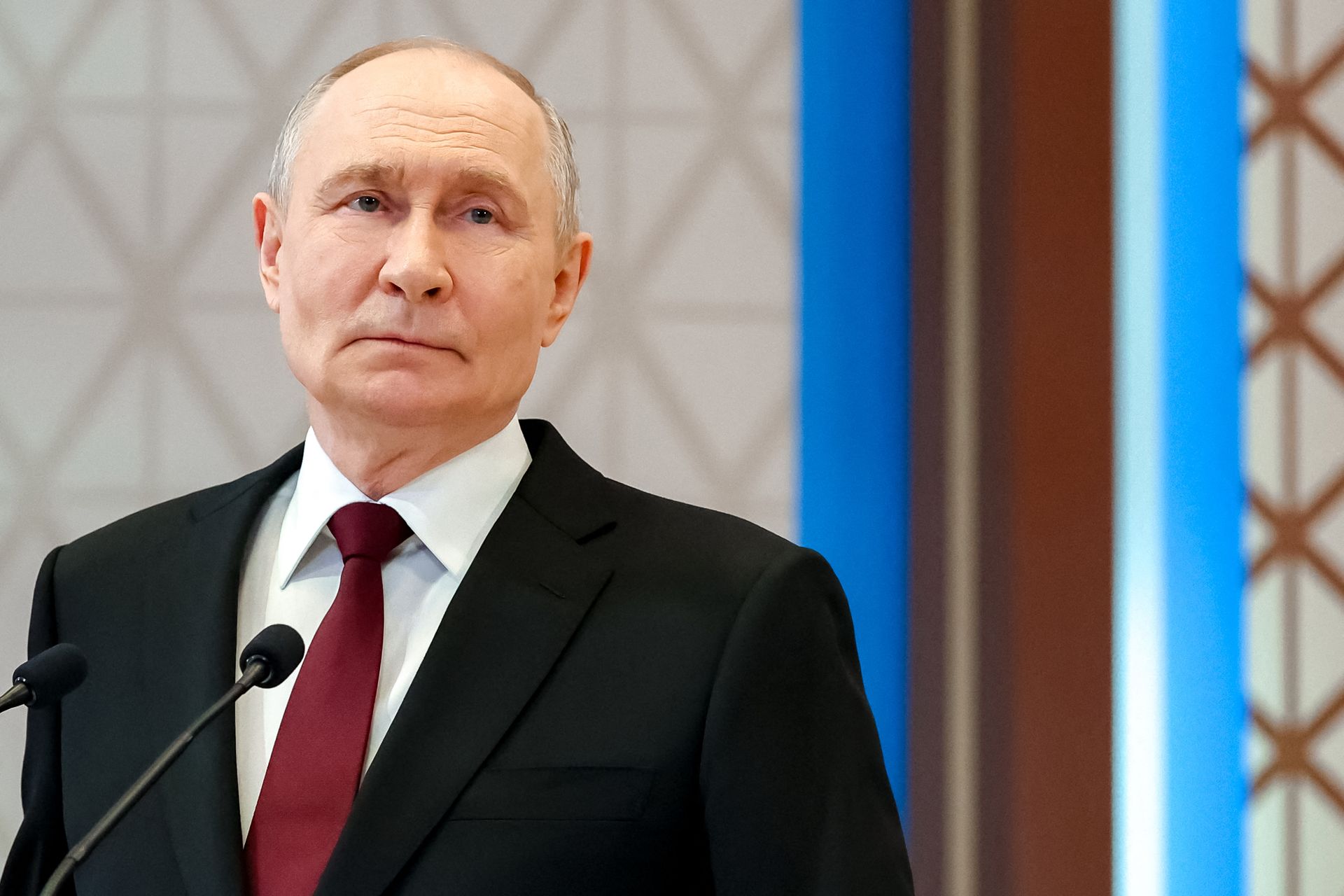
Against the backdrop of Ukrainian drone strikes on St. Petersburg that sent plumes of smoke over the city, Russian President Vladimir Putin took part in a lengthy discussion at Russia's flagship economic forum.
Both the setting and the battlefield situation have changed since the beginning of the full-scale
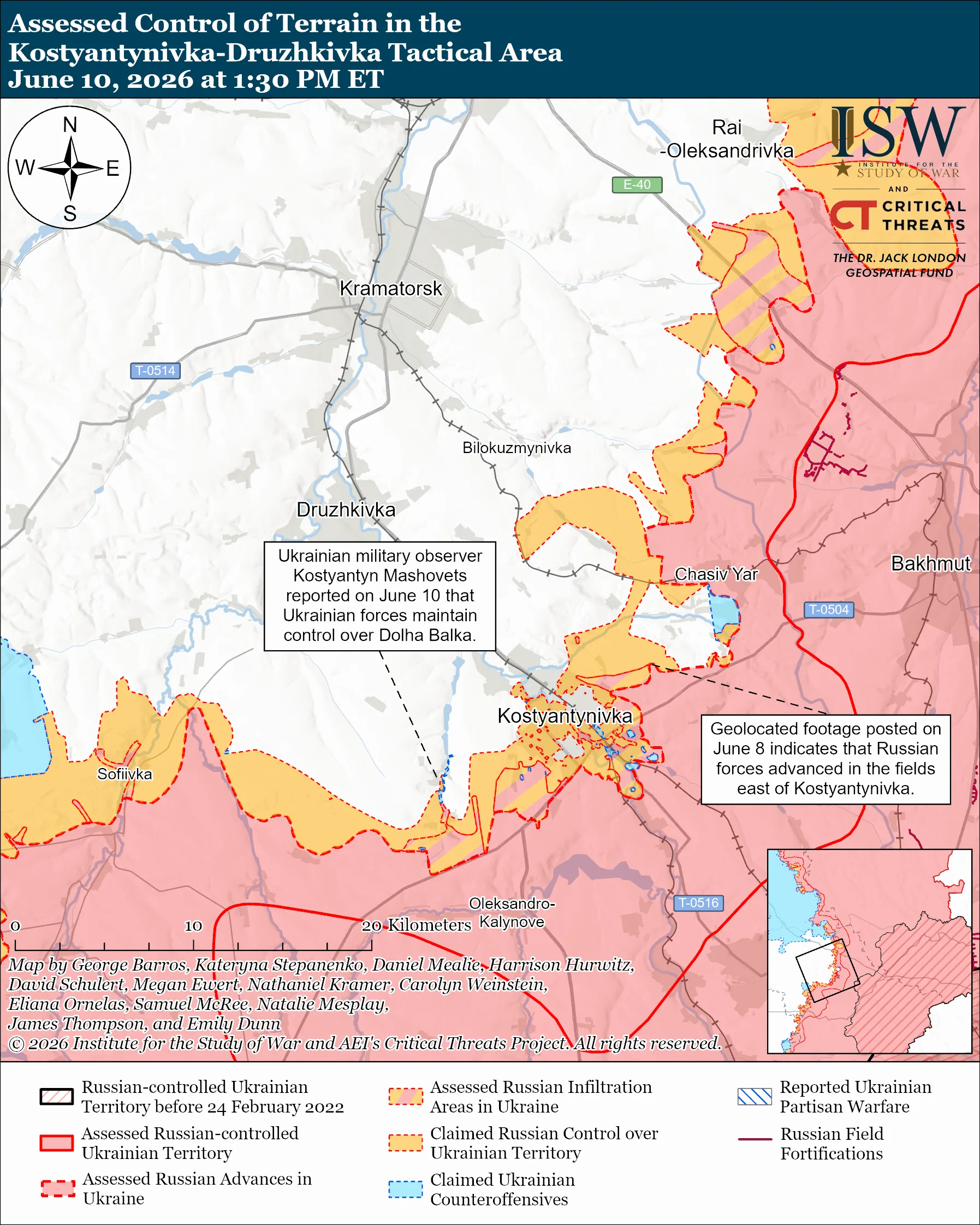
Russian forces have made fresh tactical advances into Kostiantynivka, the Institute for the Study of War (ISW) assessed on 10 June. The city sits at the southern tip of Ukraine's Donetsk Oblast Fortress Belt — Moscow's main effort for the spring-summer 2026 offensive. Russia missed its own May deadline to take the city, and the wider fortified chain stays out of operational reach.
For more than four years now, Russia has been struggling to seize the rest of Donetsk Oblast in eastern Ukraine, making only gradual costly advances. Ukraine's Fortress Belt anchors the region's defense. Unable to capture the Ukrainian-controlled part, the Kremlin demanded the whole region in peace talks, which predictably isn't a condition Ukraine can accept. Slow infiltration drains Russian reserves while Ukrainian drone interdiction continues to erode Moscow's assault tempo across the theater.
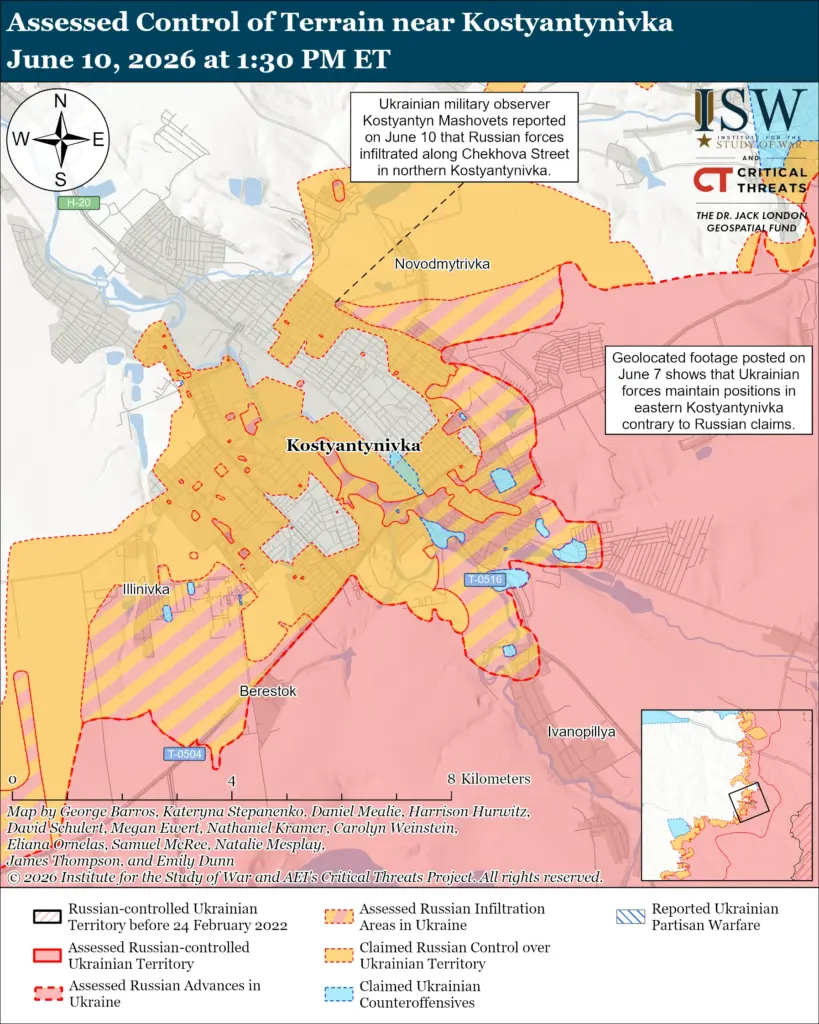
Two Russian tactical groups push into eastern Kostiantynivka
Two named Russian formations have pushed into eastern Kostiantynivka from the south, Ukrainian military observer Kostiantyn Mashovets reported on 10 June. He identified them as the "Bakhmut" tactical group and the "Dzerzhinsk" (Toretsk) tactical group. The "Bakhmut" group is built around Russia's 3rd Army Corps (AC) under the Southern Grouping of Forces. The "Dzerzhinsk" group operates in the area of responsibility of the 8th Combined Arms Army (CAA) of the Southern Military District. It likely includes elements of five CAAs, the 3rd AC, and Russian naval fleets, Mashovets noted.
Elements of the "Bakhmut" group pushed from Stupochky through Novodmytrivka into northeastern Kostiantynivka. They also advanced along the T-0504 Pokrovsk-Bakhmut road as far as the city's railway station. The "Dzerzhinsk" group moved from Illinivka, south of the city, into areas stretching from northwestern to southwestern Kostiantynivka near the railway station. Mashovets assessed that it has likely achieved a tactical breakthrough in the western, central part of the city. Forward assault elements of the two groups now stand roughly two kilometers apart. Russian forces have so far failed to seize the railway station. Ukrainian troops cleared the village of Dovha Blaka southwest of the city of Russian infiltrators.
Map: ISW
Eight months of grinding, one missed deadline
ISW noted that Russian forces opened the campaign for Kostiantynivka in August 2025 after seizing the majority of Chasiv Yar and Toretsk, with Toretsk alone running to roughly 26,000 Russian casualties. The first Russian troops infiltrated Kostiantynivka itself in October 2025. Russia has since worked into at least 12.69% of the city. Ukrainian officials reported earlier this spring that the Russian command had set a May 2026 deadline for the seizure. That deadline has come and gone.
Explore further
Russia’s monthly land grab in Ukraine has collapsed from hundreds of km² to 14, OSINT data show
Russia has poured forces into the effort regardless. Ukrainian Commander-in-Chief Oleksandr Syrskyi said on 2 May that Russian activity in this direction noticeably increased in April. Russian units in the area had reportedly been replenished by 80% as of 6 June, ISW noted. The Russian command reportedly redeployed elements of the 70th Motorized Rifle Division to the Kostiantynivka-Chasiv Yar area last December. The redeployment likely came in preparation for the spring push.
Tactical gains likely, the Fortress Belt still out of reach
ISW assessed that Russian forces will likely keep infiltrating throughout Kostiantynivka. They will likely consolidate positions in parts of the city while suffering high casualties. Russia's 3rd AC northeast of the city appears to be struggling to dislodge Ukrainian forces from Chasiv Yar. That inhibits any move to envelop Kostiantynivka from the north. A Russian milblogger claimed on 9 June that Ukrainian forces recently counterattacked near Chasiv Yar. The milblogger added that Ukraine still holds Podilske and Mykolaivka west of the town.
Explore further
ISW: Russia’s grand territorial ambitions are divorced from battlefield reality
The northern flank of the Fortress Belt is also bogged down. Russia opened its spring-summer 2026 offensive with mechanized assaults around Lyman. Those assaults signaled intent to advance on Sloviansk from the northeast. They produced no significant gains, ISW noted. The Russian command likely shifted weight south to Kostiantynivka. Russia's Western Grouping of Forces covers the front from Kupiansk through Lyman. It likely lacks the combat power to push on Sloviansk while balancing operations toward Kupiansk and Borova.
Ukrainian counterattacks in the Borova direction have likely forced Russian units to choose between defending their positions and pushing north or northwest of Lyman, ISW says.
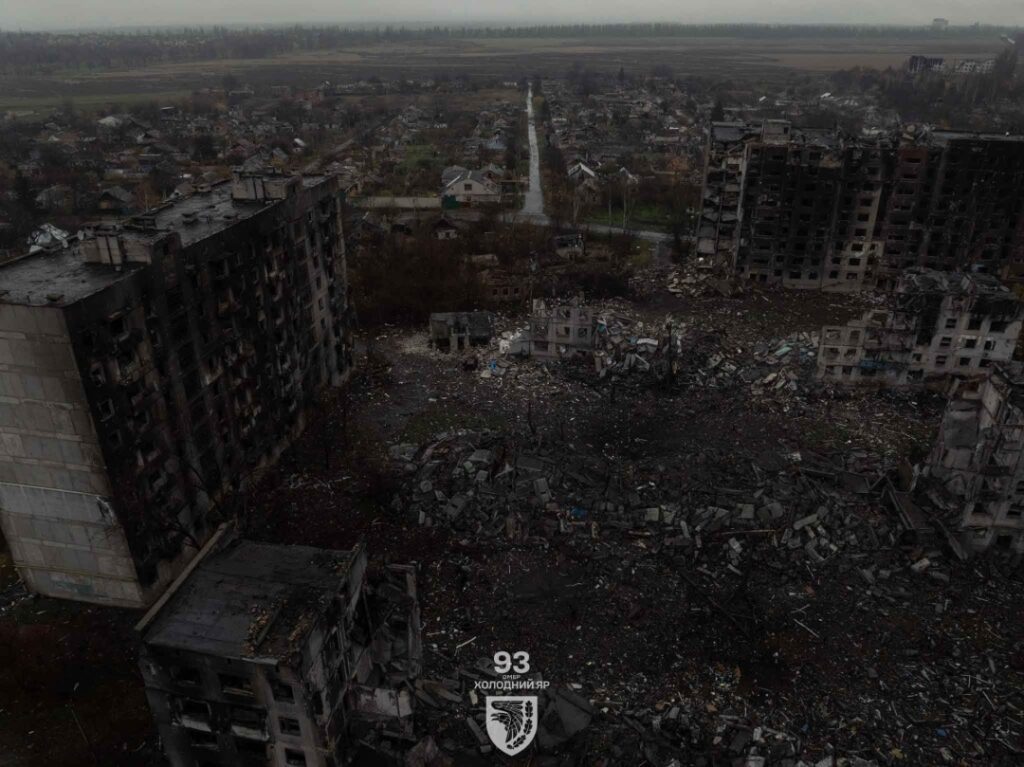
Russian forces may capture Kostiantynivka in Donetsk Oblast by the end of summer 2026, Ukrainian military observer Denys Popovych said on Radio NV. The warning comes as DeepState analysts have documented the Russian conversion of Kostiantynivka into ruins, and as Russian forces continue to consolidate in Pokrovsk and Myrnohrad.
Kostiantynivka is one of the "Fortress Belt cities" that Russia has demanded as part of its territorial conditions to take the entire Donetsk Oblast in the peace negotiations, even as it continues striking Ukrainian cities.
Popovych says Russia could capture the city despite what he himself characterizes as the broader operational failure of Russia's spring-summer offensive.
Russian success would come even as Ukraine's deep-strike envelope reaches 1,800 km into Russia and the "Logistics Lockdown" campaign degrades Russian rear-area infrastructure.
Pokrovsk tactic that may be repeated
"We are now talking about the general failure of the spring-summer phase of Russian army offensive actions in the east and the south. But the prize in the form of Kostiantynivka they may take during this summer," Popovych said.
He added that Russian occupiers in Kostiantynivka are attempting to apply the same tactic they used in Pokrovsk: entrenching on the outskirts, then progressively infiltrating into the city itself by occupying multi-story buildings.
"Those enemy infiltration groups are being destroyed. But the question is whether we have enough resources to destroy every group," he continued.
According to the expert, if one of them holds, settles in, and Ukraine doesn't notice it, then that chain, that path, will be trampled by the Russians.
"They will spread further through the city. This is the standard scenario the Russians have used during those cities that held defense for a long time," Popovych believes.
Russian drone crews may take same actions used in Pokrovsk, but now in Kostiantynivka
After the seizure of Pokrovsk and Myrnohrad per DeepState's assessment, Russian forces continue to build up forces inside them, particularly drone crews who have taken control of urban airspace.
"The enemy is establishing itself in the cities and currently maintains the active task of advancing into the depths of our defense," DeepState noted in its analysis.
The combination of Russian drone control of urban airspace in already-captured cities and the slow-infiltration approach for the next target city is what makes Kostiantynivka's risk, as Popovych described, not hypothetical. Russia has demonstrated that the tactic produces results, slowly, against cities that hold out for extended periods.
The Air Force said Russia launched 207 drones, 181 of which were intercepted. At least 21 drones struck 14 locations, while falling debris was recorded at 13 sites.
Russia's overnight drone and missile barrage on 9 June killed and wounded civilians in the Kharkiv Oblast cities of Chuhuiv and Kharkiv, regional officials reported. More strikes over the past 24 hours left several people dead and dozens wounded elsewhere in Ukraine. Ukraine's Air Force said air defense stopped most of the drones, though missiles and others still reached homes.
Russia has pounded Ukrainian cities with nightly aerial barrages since 2022, sending waves of drones and missiles that air defenses can thin but not fully stop. Such daily attacks mainly target residential areas and civilian infrastructure.
Chuhuiv and Kharkiv bear the brunt
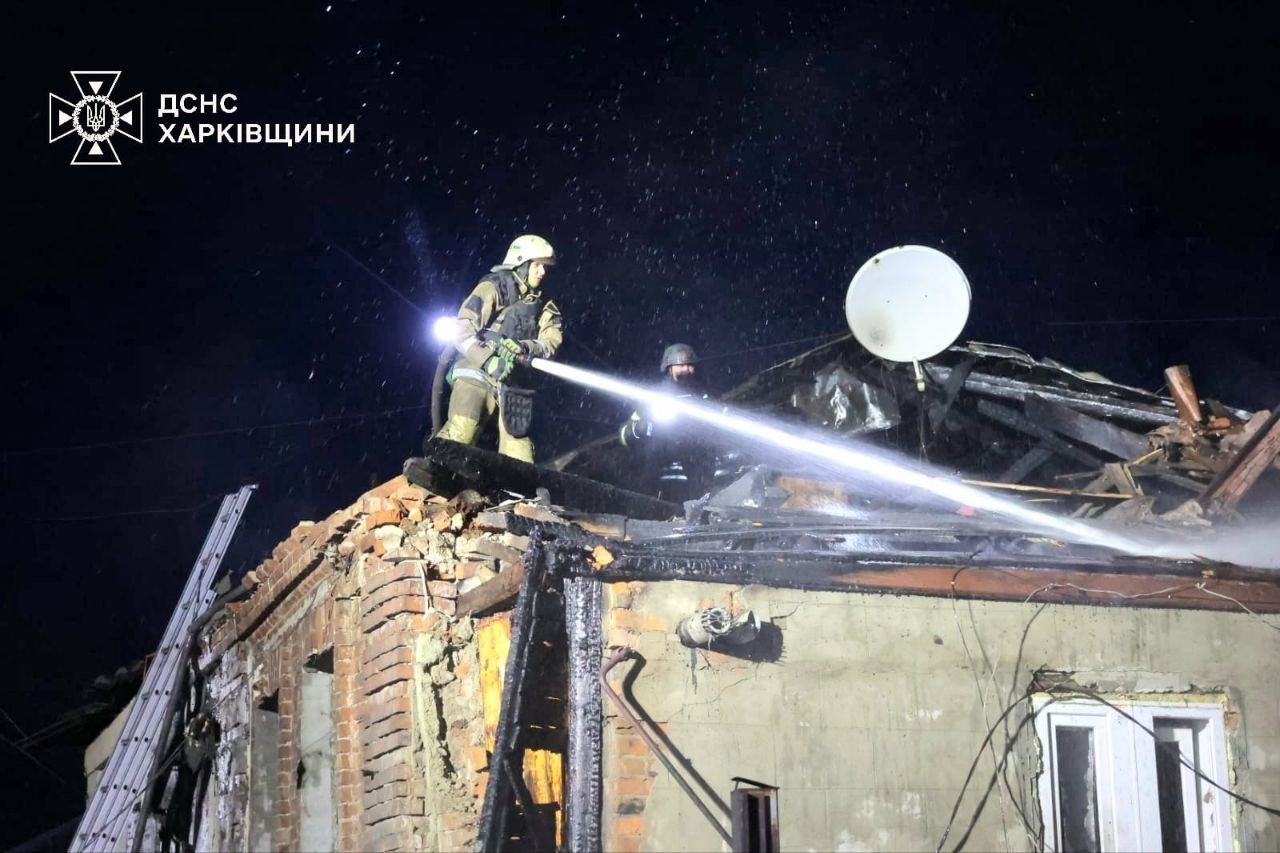
A series of Russian missile strikes on Chuhuiv overnight on 9 June killed at least three people and wounded six, the city's mayor, Halyna Minaieva, reported. Fire crews stayed at the impact sites as emergency services worked, she wrote, and the strikes damaged about eight apartment buildings and more than ten detached houses.
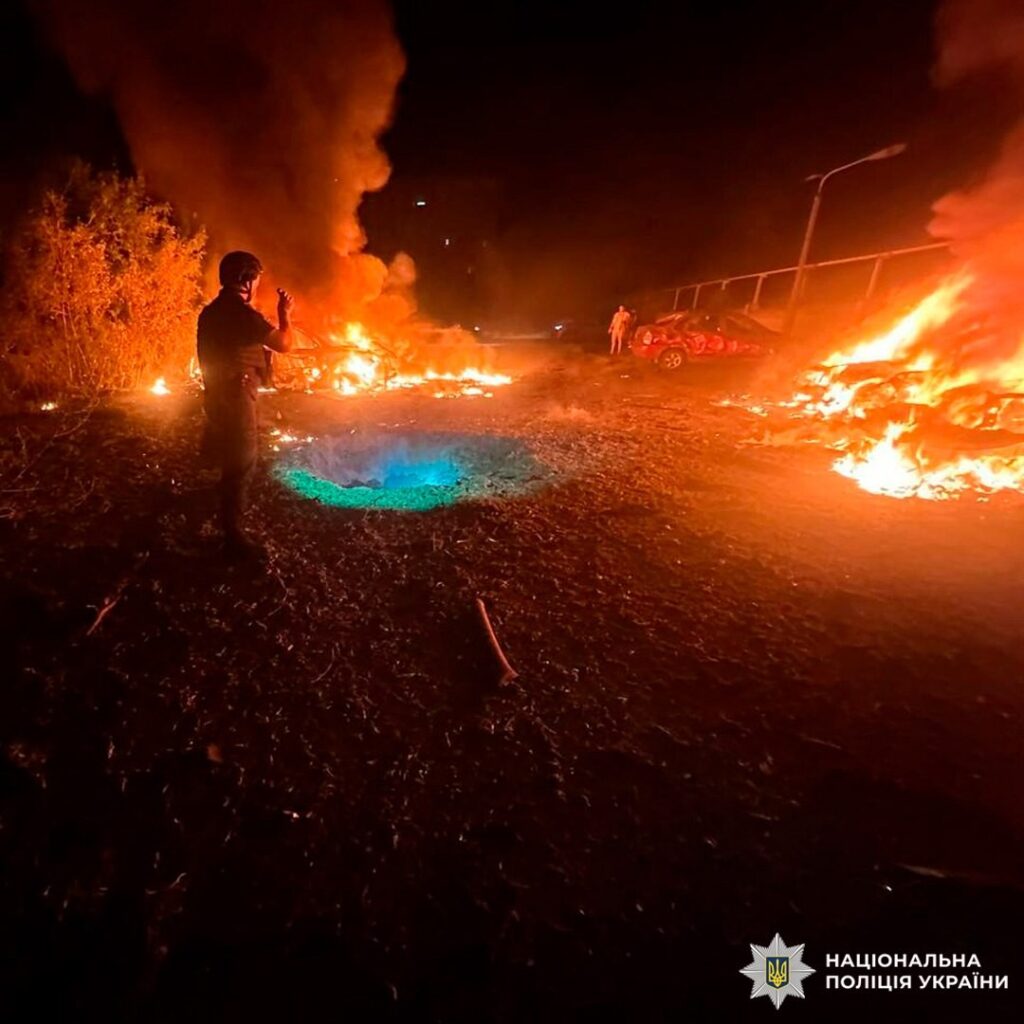
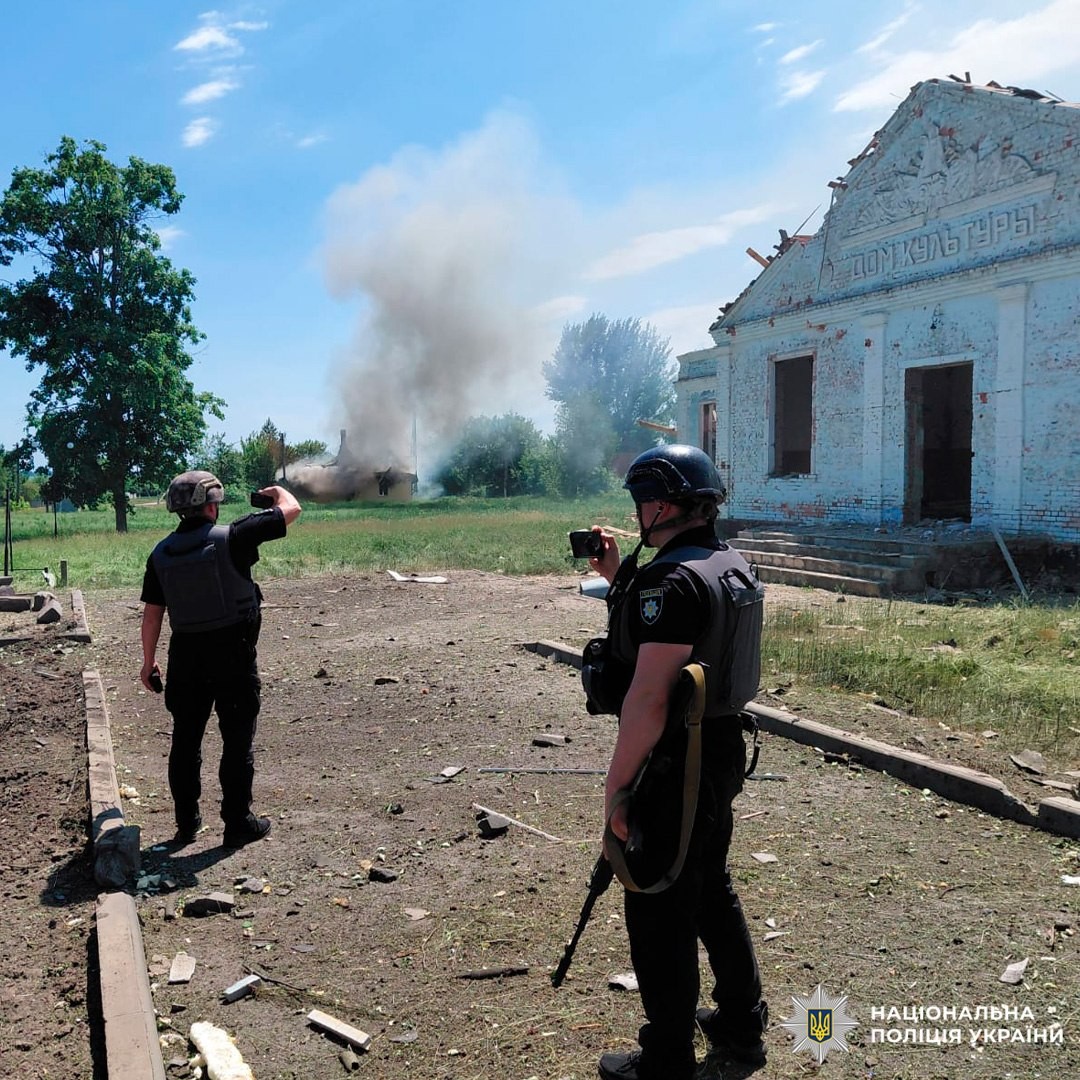
Police officers film the aftermath of a Russian strike in Kharkiv Oblast, 9 June 2026. Photo: National Police of Ukraine
In Kharkiv—the regional capital—Russian drone strikes set off fires, damaged at least 18 cars, and blew out windows and facades in residential high-rises, Kharkiv Oblast head Oleh Syniehubov reported.
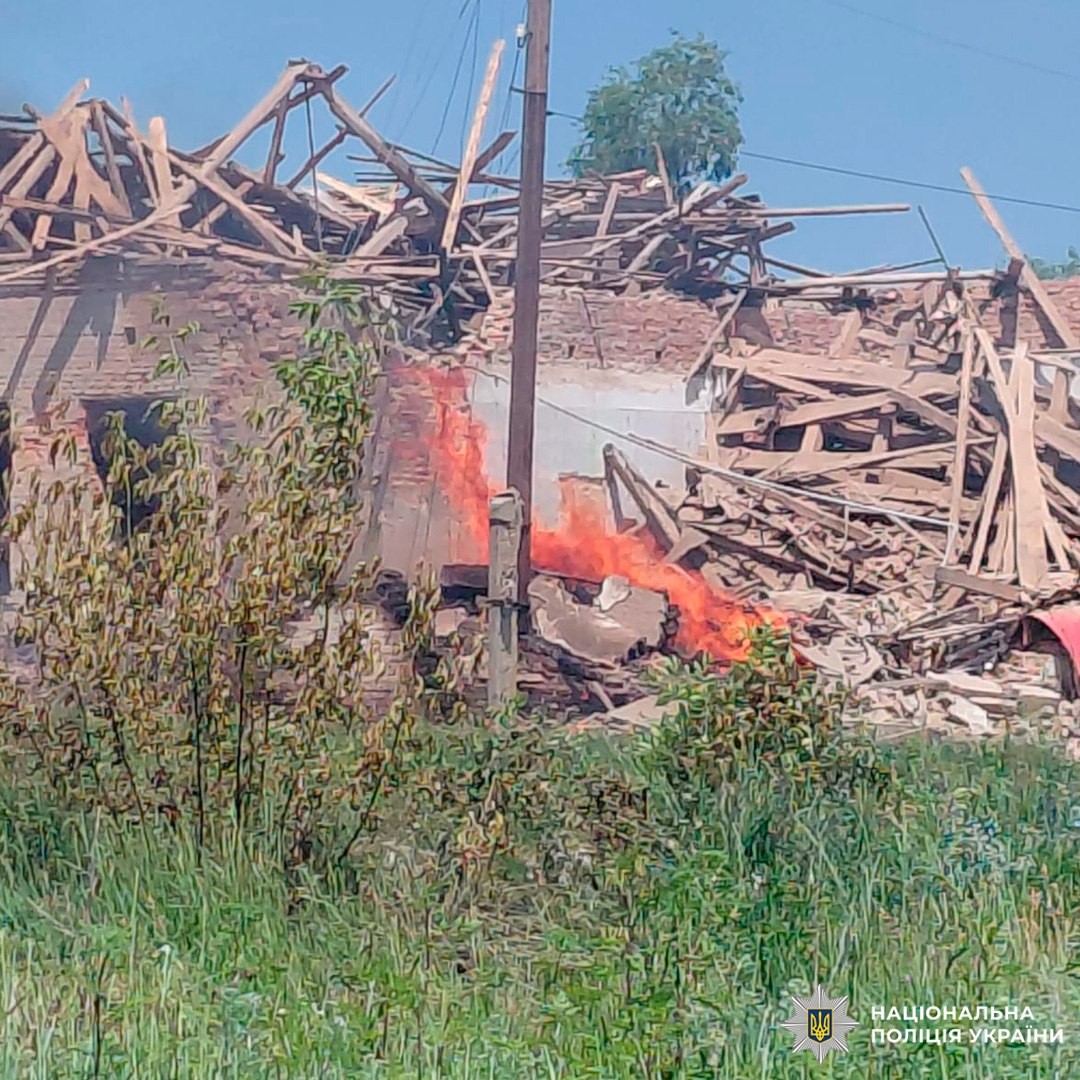
Police officers film the aftermath of a Russian strike in Kharkiv Oblast, 9 June 2026. Photo: National Police of Ukraine
He said 15 people were hurt, among them three children, including a one-year-old boy, and three women were hospitalized.
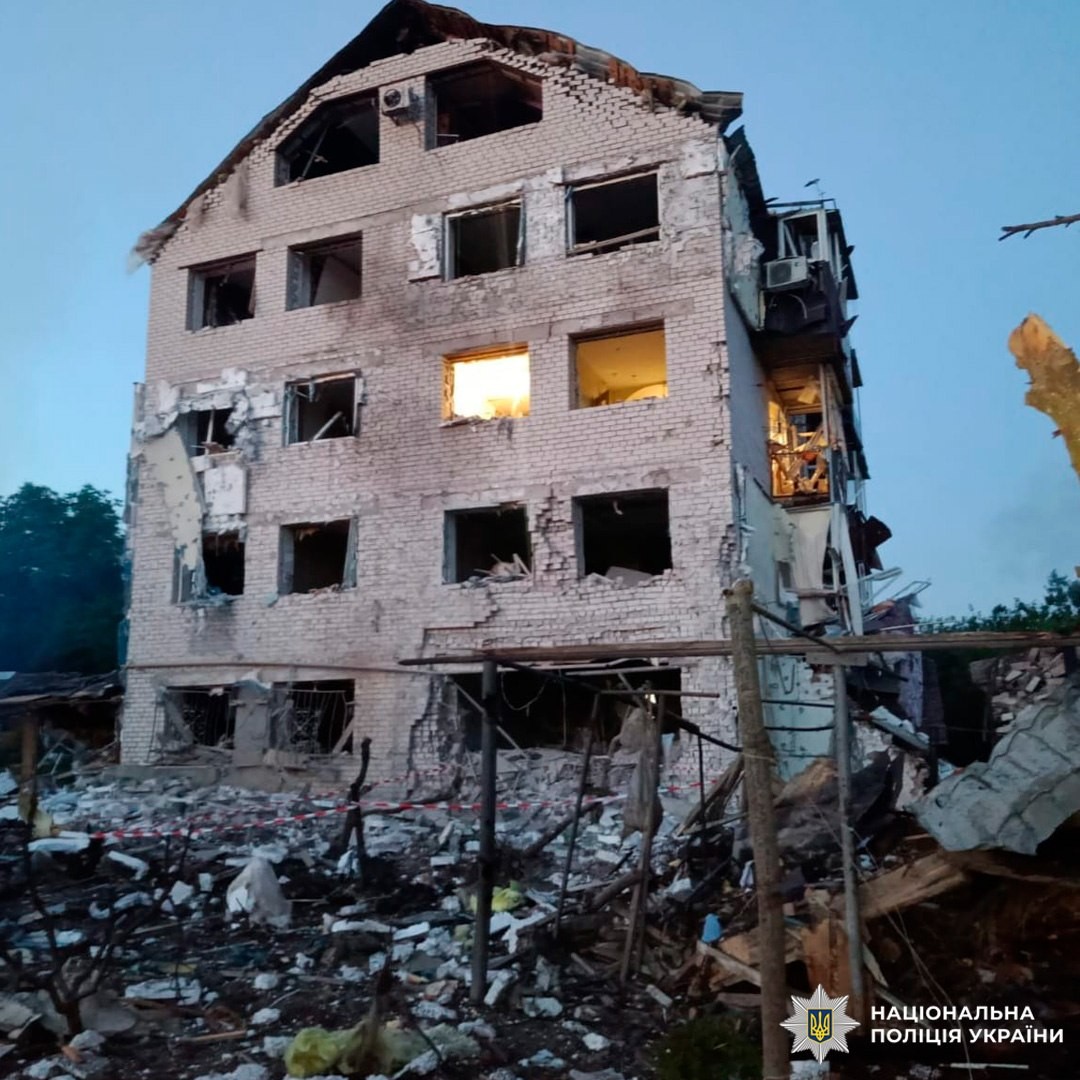
A multi-story residential building wrecked by a Russian strike in Kharkiv Oblast, 9 June 2026. Photo: National Police of Ukraine
Both cities sit dozens of kilometers from the Russian border and have been struck repeatedly through the war.
A barrage of two missiles and 166 drones
Russia launched two Kh-59/69 guided air missiles from Voronezh Oblast and 166 strike drones overnight, Ukraine's Air Force reported. The drones included Shahed types, some jet-powered, along with Gerbera, Italmas, "Banderol" loitering munitions, and "Parodiya" decoys, launched from Oryol, Kursk, Bryansk, Primorsko-Akhtarsk, and Millerovo in Russia, occupied Donetsk, and Hvardiiske in occupied Crimea.
By 08:00, air defense had downed or suppressed 146 of the drones. Two missiles and 17 drones struck 18 locations, and debris from intercepted drones fell at eight more.
Explore further
Moscow’s drone hits 10-story apartment block in Romania, injuring two as Russia fires 232 UAVs at Ukraine
Zaporizhzhia counts the damage from the day before
A Russian drone attack the previous day damaged 11 residential buildings across three districts of Zaporizhzhia, the city council reported. Six apartment blocks and five detached houses in the Khortytskyi, Zavodskyi, and Kosmichnyi districts lost windows, balconies, doors, and roofs to blast waves and debris. No one was hurt, and priority repairs were finished.
A nationwide wave
Russian attacks over 8 June killed two people in Sumy Oblast and wounded 13 across 21 hromadas, the regional police reported. A 78-year-old woman died in the Konotop hromada and a 71-year-old man in Seredyna-Buda, with a two-year-old boy and an eight-year-old boy among the injured.
In Donetsk Oblast, Russian forces killed two residents, in Bilozerske and Druzhkivka, and wounded 11 more, nine of them in Sloviansk, Oblast head Vadym Filashkin reported. Police recorded 1,309 attacks on the oblast's front line and residential areas, damaging 53 civilian sites. Hours later, Russia dropped three FAB-250 glide bombs on Sloviansk's outskirts, destroying one home and damaging more than 20.
In Kherson Oblast, drone and artillery attacks killed one person and wounded 13, including a child, Oblast head Oleksandr Prokudin reported.
Drone strikes in Dnipropetrovsk Oblast wounded three people.
Russian forces also hit 12 villages in four border hromadas of Chernihiv Oblast, the local border detachment told Suspilne.
The Russians also attacked communities in Mykolaiv Oblast with drones, where the administration reported no casualties.
Ukraine's drone strikes on the highways that feed Russian forces in occupied southern and eastern Ukraine are disrupting Russian logistics and will likely bite deeper in the near future, according to the Institute for the Study of War (ISW). The campaign is also rattling Russia's pro-war online community, where bloggers have begun turning their anger on the Kremlin's own military leadership. Russian forces are already rerouting and disguising convoys to keep supplies moving.
Ukraine's drone war has dragged the fight off the trench line and into Russia's rear, where fuel and transport increasingly decide how long Moscow can keep its invasion supplied. If Ukrainian crews keep the main arteries under watch, Russia faces a slow squeeze on its rear and the political cost of admitting those roads are no longer safe.
Ukraine's drones now own a key supply road
Ukraine's 3rd Army Corps said on 31 May that its drones had won "fire control" over five occupied cities. All five sit on or near the M-04 highway: Luhansk City, Starobilsk, Alchevsk, Bryanka, and Kadiivka. In plain terms, Ukrainian crews can now strike traffic on that road.
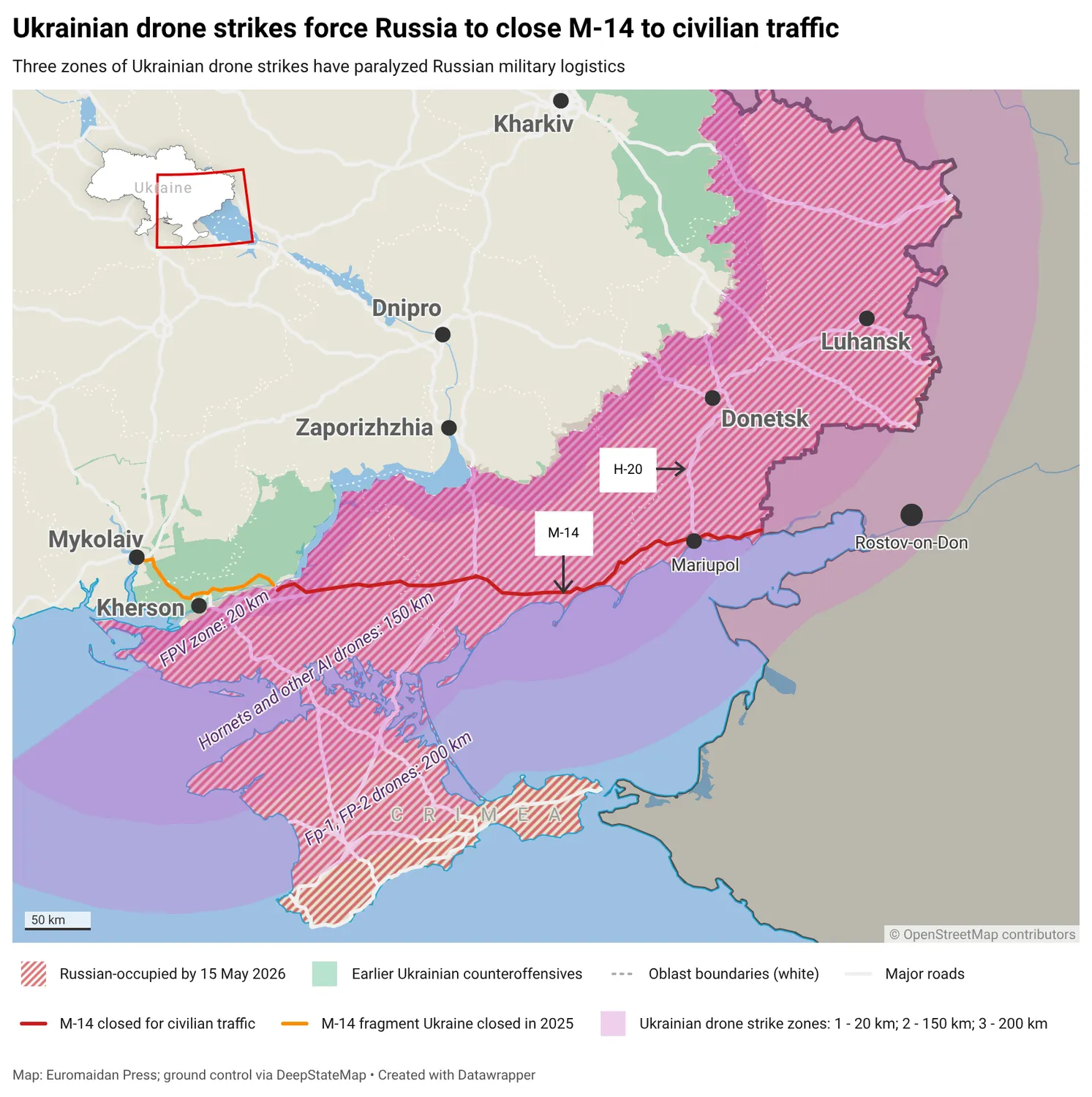
Ukrainian drone strike zones layered over Russia's southern supply network. FPVs reach roughly 20 km from the front, Hornets and other AI-assisted drones to 150 km, and FP-1 and FP-2 long-range drones to 200 km. The M-14 highway (Rostov-on-Don to occupied Crimea) and H-20 (branches north from Mariupol into Donetsk Oblast) both fall inside the deeper rings. Russian authorities have closed the M-14 to civilian traffic. The Ukrainian segment of the same highway, between Kherson and Mykolaiv, was closed by Ukrainian authorities in August 2025 after Russian drones turned it into a "human safari" killing ground. Map: Euromaidan Press.
A Ukrainian drone operator argued the M-04 matters more to Russia than the better-known M-14. The M-14 links Rostov Oblast to occupied Crimea. The M-04 begins near Moscow and reaches Rostov-on-Don before carrying on to Russia's Black Sea coast and into the Caucasus. It feeds occupied Crimea, southern Ukraine, and Luhansk Oblast through the Russian towns of Millerovo and Kamensk-Shakhtinsky. It also supplies Donetsk Oblast through Novoshakhtinsk in Rostov Oblast.
Explore further
Flat steppe: Ukraine is strangling Crimea’s supply lines from air. Melitopol-Chonhar road is latest target
The two highways connect, and Ukrainian forces are also hitting the H-20 road that joins them through Donetsk City. ISW assessed that the strikes will likely generate "even more profound cascading effects" across Russia's rear. The effort extends Ukraine's wider push to drive deep strikes further behind the front.
Russia bans buses and repaints its trucks
The strikes are already forcing changes on the ground. Leonid Pasechnik, the Russian-installed head of occupied Luhansk Oblast, issued a decree on 6 June. It bars regular bus and coach services on the section of the highway crossing occupied Luhansk.
Explore further
The Crimean Bridge is heavily guarded. Ukraine struck its maritime security layer in the Kerch Strait.
Ukrainian Mariupol mayoral adviser Petro Andriushchenko reported on 7 June that Russian forces had changed their Mariupol–Berdiansk route. They now use local coastal roads instead of the M-14. ndriushchenko said the troops are passing army vehicles off as civilian, recoloring the tarpaulins over each cargo bed and spraying the trucks white. ISW assessed the detours will likely slow Russian supply runs as Ukraine keeps hunting vehicles.
Russia's war bloggers turn on the Kremlin's generals
Ukraine's strikes are landing in Russia's information space too. Russia's pro-war military bloggers are voicing discontent and panic over the campaign.
Explore further
Ukraine doubles deep strikes beyond 50 km as “Logistics Lockdown” shifts priority deeper into Russia’s transport nodes and rear logistics chains
A pro-war blogger and former Storm-Z assault-unit instructor complained on 7 June that Ukraine is now striking factories and defense plants deep inside Russia while degrading Russian air-defense radars and systems. He blamed bureaucracy and state-corporate infighting for Moscow's failure to respond, and separately complained that Russia cannot read Ukraine's battlefield trends and underrates its capabilities. Other bloggers piled on: one claimed fuel shortages were stoking panic in occupied Crimea, while others faulted the Russian Defense Ministry and top general Valery Gerasimov for not striking Ukrainian logistics, especially the Dnipro River bridges.
ISW found the complaints are escalating, and that the strike campaigns are becoming "points of neuralgia" in Russia's ultranationalist crowd. It noted the discontent feeds on Russia's poor battlefield results, rising casualties, and economic strain. Even before this, Russia's war bloggers had turned on the Kremlin's commanders over inflated victory claims.
 Login
Login