Reading view

Why Was Ancient Iran Called Persia?

Sogdians on an Achaemenid Persian relief from the Apadana of Persepolis, offering tributary gifts to the Persian king Darius I, 5th century BC
Sogdians on an Achaemenid Persian relief from the Apadana of Persepolis, offering tributary gifts to the Persian king Darius I, 5th century BC. Credit: A.Davey / CC BY 2.0

The country known today as Iran extends from the Persian Gulf and the Indian Ocean in the south to the border of Turkey and Turkmenistan in the north. The territory of Iran is equivalent to much of the ancient Persian Empire. In the southwest part of Iran was the historic region of Persis, or Persia proper, and Iran was called “Persia” until the twentieth century. Why did it have that name, and where did it come from?

The land of Persis, or Persia, in modern-day Iran

There is an area in modern-day Iran, the Fars Province, sometimes written as “Pars.” This province occupies most of the immediate region on the eastern side of the Persian Gulf.

Map of the Persian Empire, centered on Iran, from Historical Atlas, William R Shepherd, 1911
Map of the Persian Empire, centered on Iran, from Historical Atlas, William R. Shepherd, 1911. Credit: Wikimedia Commons, Public Domain

This region is roughly equivalent to the ancient land of Persis. Scholars also refer to this as Persia proper. This was the land of the ancient Persians. They probably resided in this land for a few centuries before they managed to forge an empire for themselves.

Therefore, even after forming a large empire, this region was still distinctly known as Persis. This is where the Fars Province derives its name. Similarly, the Babylonia region in Iraq remained a distinct part of Mesopotamia even after its people established the Babylonian Empire, which encompassed much of the Fertile Crescent.

Where does the name ‘Persia’ come from?

The place name ‘Persia’ originates from the name that the ancient Persians gave to their land, which in ancient Persian was ‘Parsa’. The Greeks adapted this into ‘Persis’, and later, the Romans adapted the Greek term into ‘Persia’.

The Persians gave the name ‘Parsa’ to their land (roughly the Fars Province), apparently after themselves, whom they also called ‘Parsa’. This was their native ethnonym.

Partially based on ancient Assyrian records, many scholars believe that the Persians migrated into Persia from the north. The earliest ancient inscriptions which refer to Persia, or Parsa, in the Fars Province of southwestern Iran date to approximately the middle of the first millennium BCE.

On the other hand, around 900 BCE, Assyrian inscriptions refer to a location called Parsua, much further north. The similarities between ‘Parsua’ and ‘Parsa’ are strong, leading many scholars to believe that they are different forms of the same word.

Perhaps due to constant Assyrian attacks, the Persians may have migrated south from Parsua, near Armenia, all the way to the Fars Province next to the Persian Gulf. If so, then during their early history, the Persians may have been called the Parsuash.

Perseus and Perses in Greek Mythology

In Greek mythology, Perseus was the legendary founder of the Perseid dynasty and one of the greatest heroes before the age of Heracles, alongside figures like Cadmus and Bellerophon. He is best known for slaying the Gorgon Medusa on behalf of King Polydectes and for rescuing Andromeda from the sea monster Cetus.

According to Greek tradition, Perseus and Andromeda had a son named Perses. He came to be regarded as the forefather of the Persian people. According to Herodotus, Xerxes invoked this ancestral link in an effort to gain the support of the Argives during his campaign in Greece, though his attempt was unsuccessful.

First Alcibiades, a dialogue from the late 4th century BC attributed to Plato, implies that one of Perses’ descendants was Achaemenes, the traditional forefather of the Achaemenid dynasty of Persian kings.

The empire of Persia, which ruled from Iran

Of course, the Fars Province is only a small part of Iran. So, why was Iran as a whole called Persia in ancient times, and as recently as the twentieth century? The reason ultimately goes back more than two and a half millennia.

King Cyrus of the Persians carved out an enormous empire in the sixth century BCE. This took in all of present-day Iran, Iraq, Syria, Israel, and much more, bringing down three empires in the process. For a time, contemporary Greek writers used ‘Persia’ to refer to the entire empire.

In the late fourth century BCE, Alexander the Great defeated and conquered the Persian Empire. This ended Persian control over everything apart from the Fars Province. How, then, did the name ‘Persia’ continue to be applied to the entire region of modern-day Iran?

Persis regains its strength

The answer partially goes back to the third century CE. At that time, Ardashir I, a king of Persis, founded the Sasanian Empire. This reconquered large portions of the former Persian Empire of King Cyrus.

Eventually, in the seventh century, the Muslims conquered all of the territory of the king of Persis. Nevertheless, by this time, the term ‘Persia’ had come to be commonly used for that entire region. Furthermore, the inhabitants continued holding a distinct cultural identity, in contrast to the surrounding area.

The term ‘Persia’ continued to be used even after the Muslim conquest. This is why the country of Iran was formerly called Persia in ancient times, and the name persists in the modern world.
  •  

Los excursionistas que auxiliaron a Jonathan Andic, el quebradero de cabeza de los Mossos

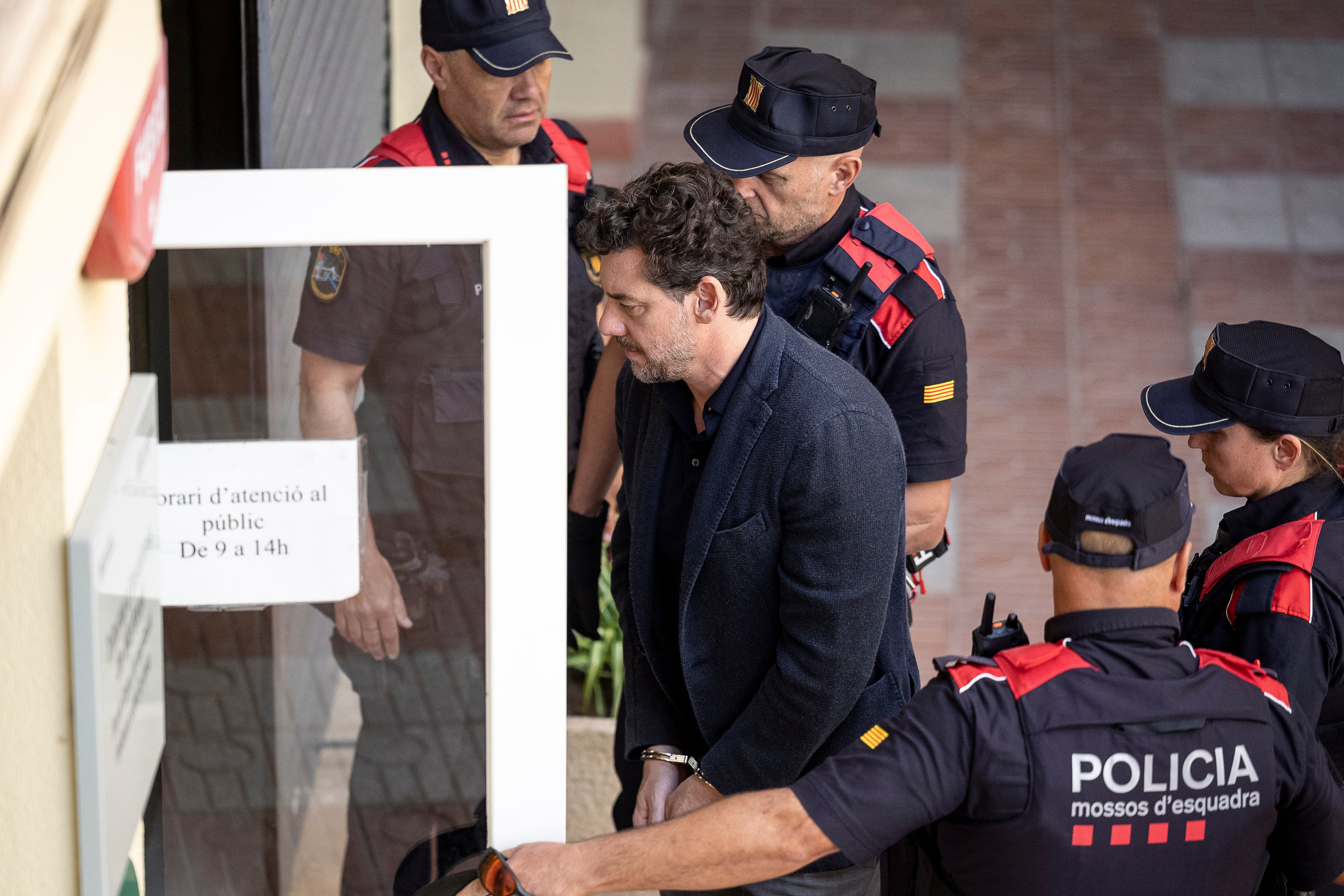
Jonathan Andic, después de ser detenido por los Mossos d'Esquadra investigado por el homicidio de su padre, el 19 de mayo.

La investigación de los Mossos d’Esquadra por la muerte de Isak Andic en la montaña de Montserrat —bautizado como caso Monestir— ha supuesto un reto, en el que la policía ha dedicado esmero y empeño en descubrir qué ocurrió. Pero el esfuerzo no siempre se ve recompensado: los Mossos no lograron encontrar en 17 meses de instrucción a dos excursionistas que auxiliaron a Jonathan Andic cerca de media hora después de la caída de su padre. Los agentes de seguridad ciudadana que acudieron al lugar no les tomaron los datos. Y eso supuso un quebradero de cabeza para los investigadores, que revisaron imágenes, comprobaron matrículas de coches, y hasta se plantearon un llamamiento público para dar con ellos. El hijo del fundador de Mango tampoco les contó que había intercambiado el número con uno de ellos, al que le hizo una llamada perdida, lo que habría permitido localizarlos.

Seguir leyendo

  •  

El poso de la visita papal

León XIV finalizó este viernes su visita a España con un balance que combina un mensaje poderoso en defensa de los migrantes y contra el discurso del odio, con omisiones dolorosas. El Papa ha pasado de puntillas sobre el mayor escándalo de la Iglesia española en las últimas décadas: los abusos sexuales por parte de miembros del clero y su encubrimiento sistemático. Esta semana posiblemente deje un poso duradero en España por el poder de su palabra, por la plasticidad y la fascinación de las imágenes de la Sagrada Familia y, sobre todo, porque con sus discursos y gestos se está erigiendo, poco más de un año después de su entronización, en una figura antagónica del otro líder estadounidense global, Donald Trump. Pero el viaje también deja otro poso evidente de decepción.

Seguir leyendo

© CIRO FUSCO (EFE)

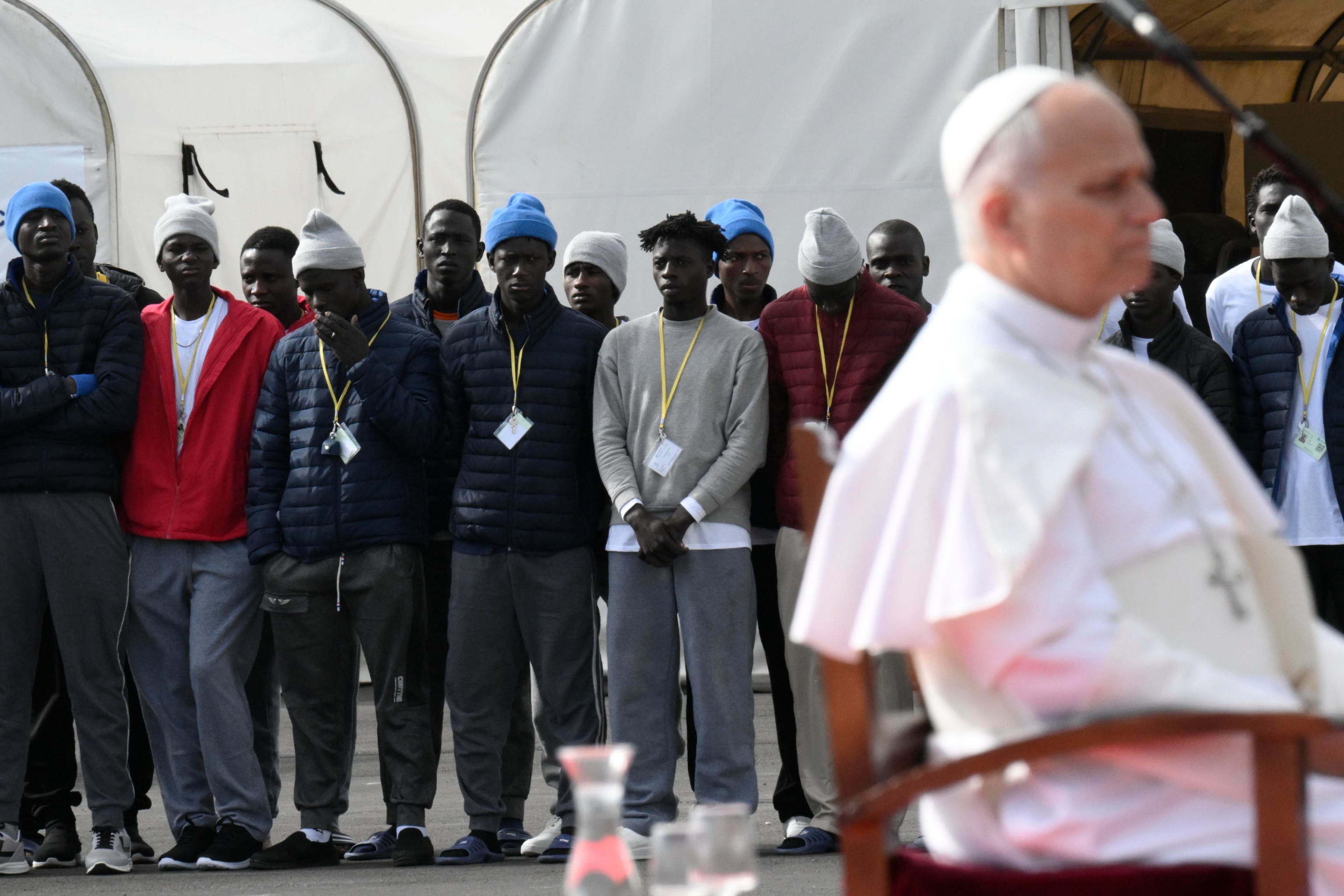
El Papa, este viernes durante un encuentro con inmigrantes en el centro Las Raíces, en Tenerife.
  •  

Newly Deciphered Greek Inscriptions Shed Light on Ancient Termessos

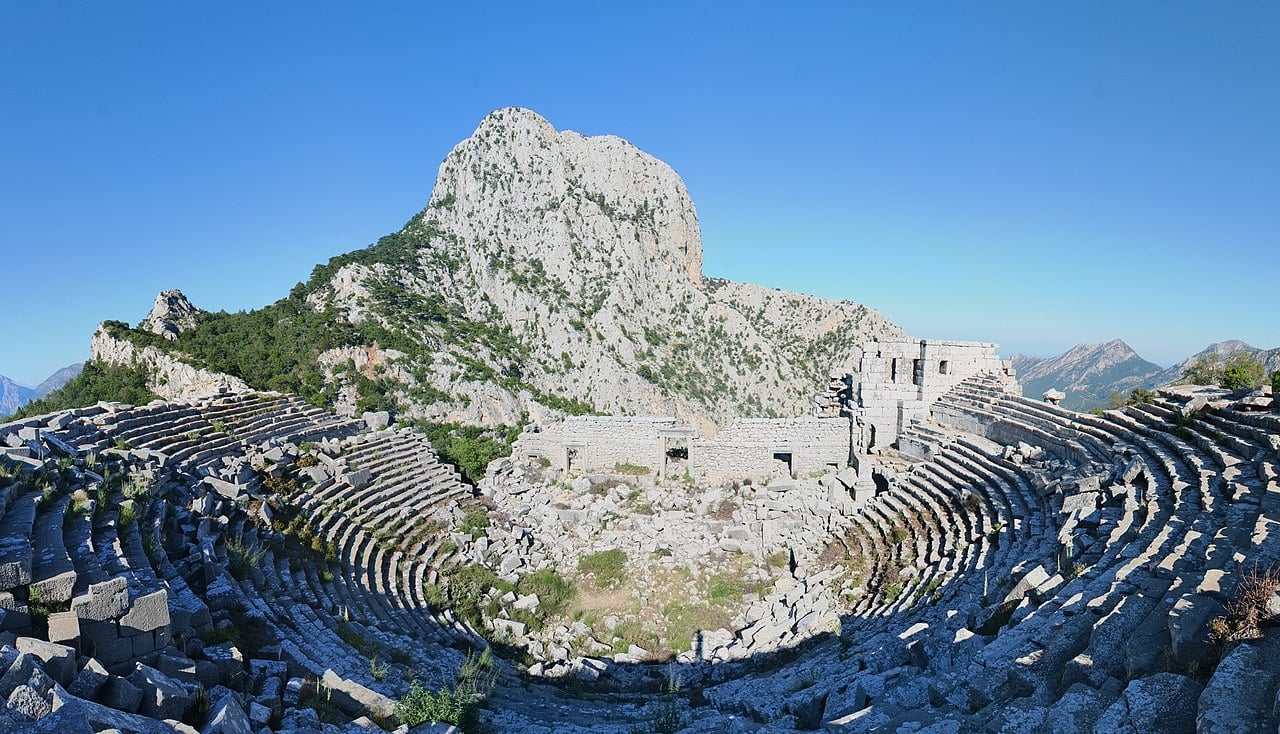
Theatre in the ancient Greek city of Termessos
Theatre in the ancient Greek city of Termessos. Credit: Ingo Mehling / Wikimedia Commons / CC BY-SA 3.0

Researchers working at the ancient Greek city of Termessos (Greek: Τερμησσός) in modern-day Turkey have identified two Greek inscriptions that are shedding new light on the city’s political identity and ritual life in antiquity.

Located in the mountains of ancient Pisidia near modern Antalya, Termessos was part of the wider Greek world that emerged across Anatolia during the Hellenistic period. Perched more than 1,000 meters (aprox. 3,000 ft) above sea level, the city is renowned for its dramatic landscape, well-preserved ruins, and long association with Alexander the Great.

The discoveries were made during ongoing studies at the site inside Güllük Mountain National Park, one of the eastern Mediterranean’s most striking archaeological landscapes.

Inscription proclaims civic independence

Researchers identified one inscription on a heavily weathered section near a collapsed city gate. They made the text readable using digital modeling and modern documentation techniques.

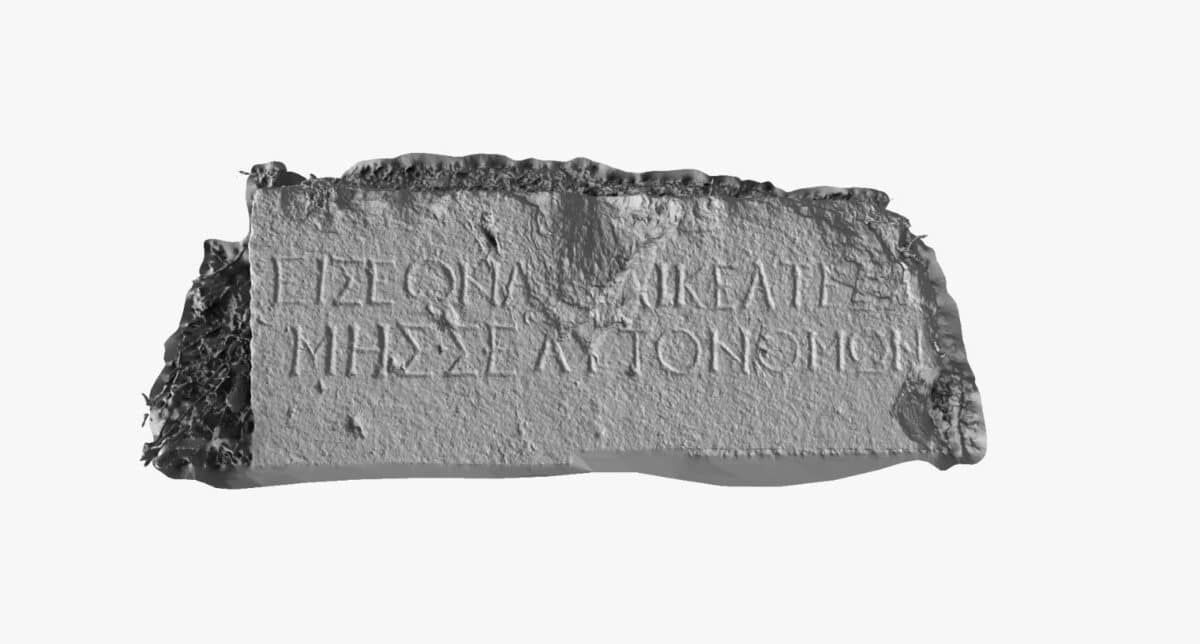
According to researchers, the inscription contains a phrase that may be translated as: “May the rights of the independent Termessians endure forever.”

Prof. Dr. Mustafa Koçak of Antalya Bilim University, director of the excavation, explained that the inscription once stood at the entrance of the city, where it announced Termessos’ status to visitors entering the settlement.

AI reconstruction of a newly deciphered stone inscription from ancient Termessos
AI reconstruction of a newly deciphered stone inscription from ancient Termessos. Credit: Greek Reporter Archive

The message is particularly significant because of the city’s famous encounter with Alexander the Great. Ancient sources record that Alexander failed to capture Termessos in 333 BC during his campaign through Anatolia. The episode helped establish the city’s reputation as a formidable mountain stronghold.

The newly deciphered text provides rare written evidence of how the people of Termessos understood their own civic identity and autonomy. Placed at the city gate, the inscription served not only as a marker of entry but also as a public statement of political identity.

Oracle reveals ancient divination practices

Researchers also identified a second inscription linked to divination using astragali, small ankle bones typically taken from sheep or goats. In antiquity, these bones were thrown like dice to seek guidance from the gods, a practice widely known throughout the Greek world.

Prof. Dr. Fatih Onur of Akdeniz University’s Department of Ancient Languages and Cultures explained that such systems used either five or seven bones. The Termessos inscription belongs to the seven-bone system, which produced 120 possible combinations. The resulting numbers directed users to specific written responses.

Three inscription blocks of this type have survived, and one remains visible at the site today. Researchers believe travelers and merchants may have consulted the oracle before journeys, trade, or other important decisions.

According to Onur, the responses were written in poetic language, suggesting that the texts were intended for ritual use rather than simple instruction.

New insight into life at Termessos

Together, the inscriptions offer a rare glimpse into both public and private life in ancient Termessos. One reflects the city’s civic identity and independence, while the other reveals how people sought divine guidance in everyday life.

For archaeologists, the discoveries deepen understanding of a city that stood at the crossroads of local Pisidian traditions and the broader Greek and Hellenistic world that shaped the eastern Mediterranean for centuries.

  •  
❌