Reading view

Russia Building New Infrastructure For Major Troop Deployments Along NATO’s Northern Flank

In another indication of the growing military and economic importance of the Arctic, Russia and NATO are increasing their buildup of forces and facilities in the region. Recent media investigations found that Russia is constructing new bases near Finland to eventually house tens of thousands of troops while NATO on Saturday stood up a long-planned new battalion battlegroup. It is a force that will operate in Finland and Sweden as a deterrent against Russia.

TWZ has frequently reported how Russia, and to a lesser extent China, have moved aggressively to assert their presence in the High North, leaving the U.S. and its NATO allies looking to bolster their defenses.

While Russia remains totally bogged down and suffering high attrition in Ukraine with little chance of moving masses of troops to the Arctic at the moment, concern over the future has spurred NATO to bolster its presence along the Finnish border. Having moved to a wartime economy during the full-on conflict with Ukraine, Russia could leverage that in a post-Ukraine war future to threaten NATO’s borders.

A NATO official told us Friday morning that while the alliance assesses that the chances of a near-term conflict are low given the war in Ukraine, “Moscow could seek to expand westward into the Nordic and Baltic nations after a ceasefire with Ukraine.”
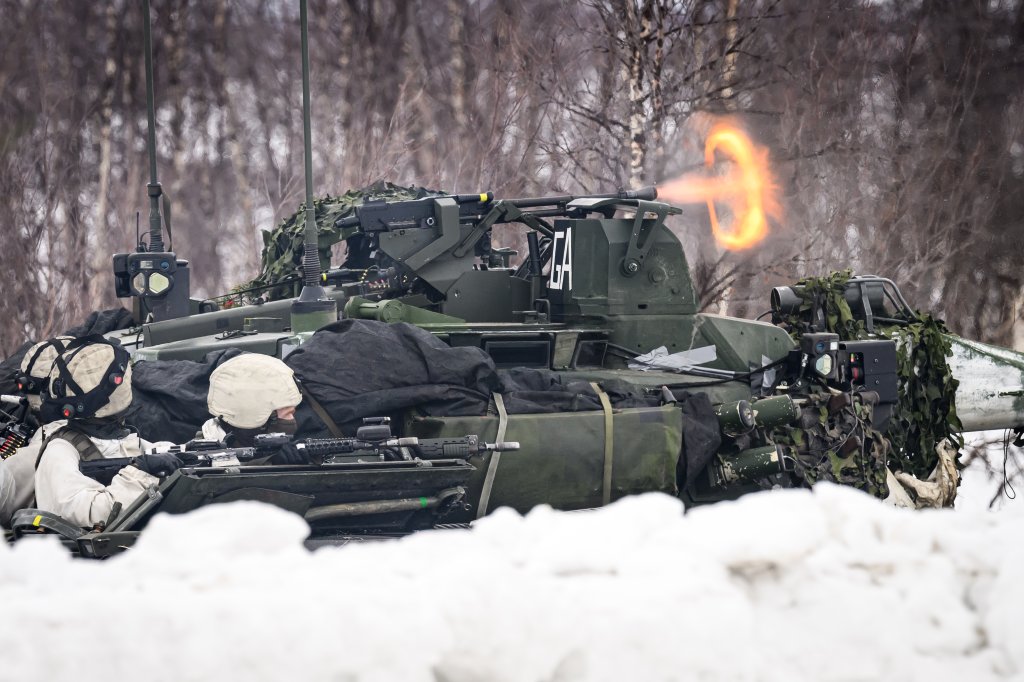
KIVILOMPOLO, FINLAND - MARCH 09: Swedish soldiers take part in an exchange of fire with "enemy troops" using blan rounds during a training exercise, visible to the media, on the Finland/Norway border during the Nordic Response military exercise on March 09, 2024 in Kivilompolo, Finland. The exercise, which primarily takes place across Scandinavia from March 3-14, features 20,000 troops from 13 allied countries. Following the recent NATO expansion, the group now includes Finland and Sweden. (Photo by Leon Neal/Getty Images)
Swedish soldiers take part in training on the Finland/Norway border during the Nordic Response military exercise on March 09, 2024 in Kivilompolo, Finland. (Photo by Leon Neal/Getty Images) LEON NEAL

Russia appears to be investing in infrastructure in preparation of such a contingency. A joint report by several Nordic and Baltic media outlets published earlier this week has found that Russia is expanding military facilities along its borders with Norway and Finland to accommodate tens of thousands of new troops.

“New satellite images show that Russia is increasing its armament in [the] vicinity,” the report stated. “SVT, together with media partners in several countries, has examined how Russia is preparing for 80,000 soldiers… It is a threat that we should take seriously, says Thomas Nilsson, head of Sweden’s military intelligence service (MUST).”

The images “show new barracks for thousands of soldiers, long lines of military vehicles and ammunition storage,” the report further noted. “All winter, Russia has been building new military structures in several places on the other side of the Finnish border.”

“We expect to have 80,000 soldiers on our border and that can be compared to the fact that we previously had 20,000,” Finnish Army Chief Pasi Välimäki told the joint investigation.

A joint investigation by Nordic and Baltic media outlets found that these developments could enable Russia to deploy a force of up to 115,000 military personnel in the Northern European and Baltic regions. pic.twitter.com/ZiVpsP3fEz

— WarTranslated (@wartranslated) June 10, 2026

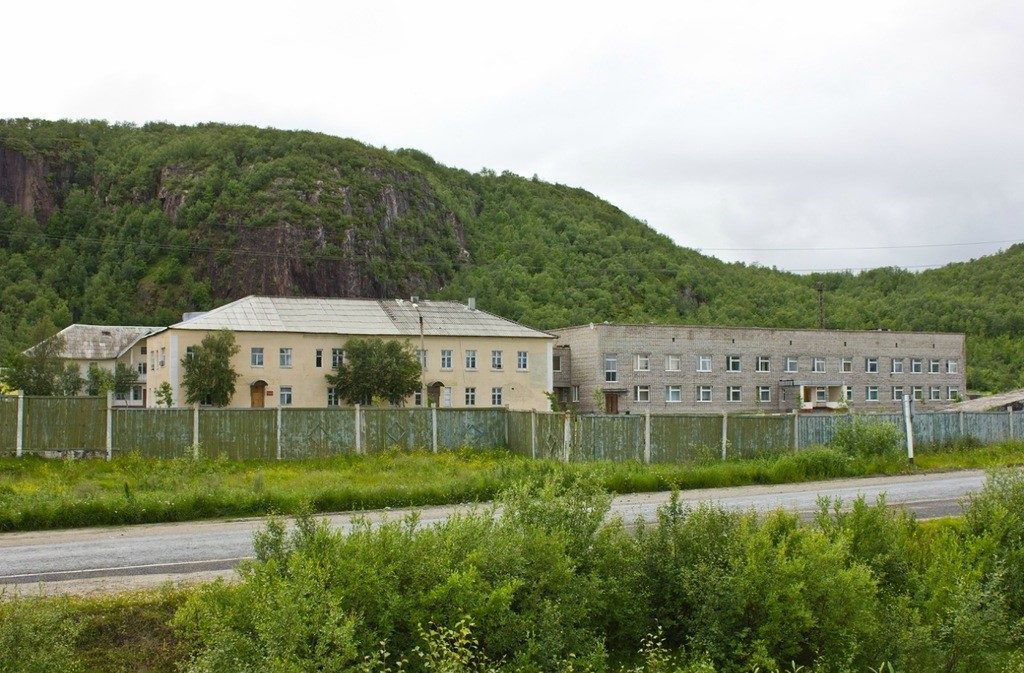
A separate report by the Finnish Yle media outlet found that the Russians are expanding a base in the town of Novaya Vilga to hold as many as 6,000 Russian troops. It is located about 100 miles east of the Finnish border.

Breaking News: Where exactly is Russia building its massive new military garrison? 🛰

For the first time, a completely new base is going up behind Finland's eastern border, set to hold up to 6,000 soldiers. Take a look at the first satellite data: https://t.co/IuZerZRyeQ #russia pic.twitter.com/2UvQXheaAP

— Mika Mäkeläinen (@Mikareport) June 10, 2026

“NATO has monitored a buildup of military infrastructure in Russia along NATO’s Eastern Flank, particularly along Finland’s border,” the NATO official told us earlier this week. “The real question is what becomes of the infrastructure? Will, for example, Russian troops now in Ukraine be relocated there after the war? It’s something we certainly need to consider, and we do.”

“That’s why NATO and nations are working to deliver real military capabilities to the alliance now, not five to ten years from now, which is so very, very important,” the official added.
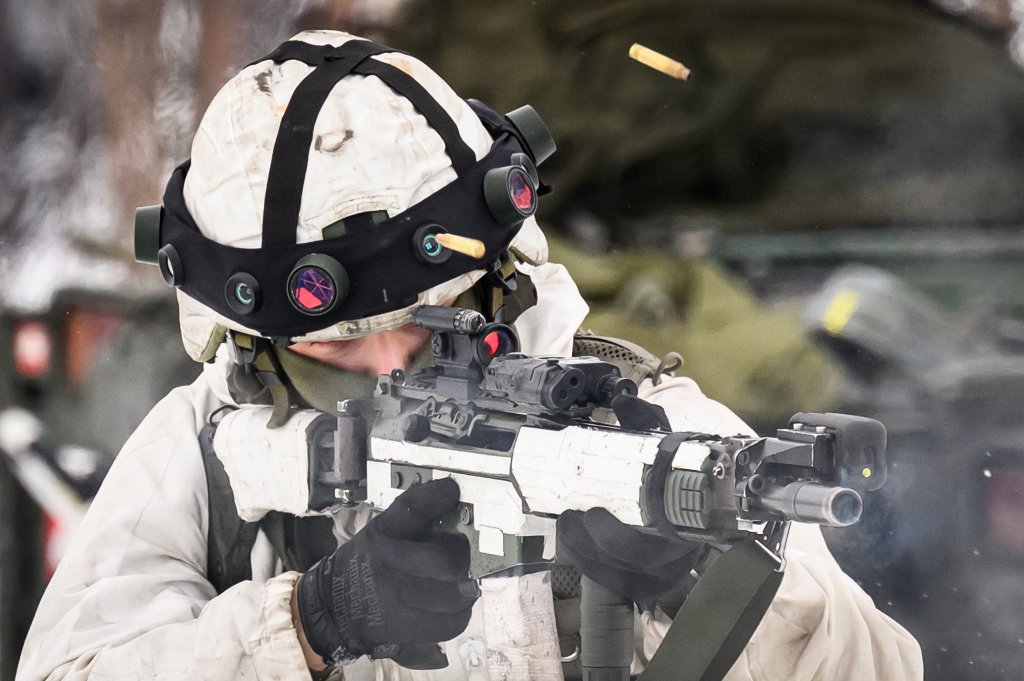
KIVILOMPOLO, FINLAND - MARCH 09: A Swedish soldier takes part in an exchange of fire with "enemy troops" using blank rounds during a training exercise, visible to the media, on the Finland/Norway border during the Nordic Response military exercise on March 09, 2024 in Kivilompolo, Finland. The exercise, which primarily takes place across Scandinavia from March 3-14, features 20,000 troops from 13 allied countries. Following the recent NATO expansion, the group now includes Finland and Sweden. (Photo by Leon Neal/Getty Images)
A Swedish soldier takes part in a training exercise during the Nordic Response military exercise on March 09, 2024, in Kivilompolo, Finland. LEON NEAL

One of those efforts, as we noted earlier in this story, was stood up on Saturday, involving NATO’s two newest members.

NATO’s Forward Land Forces (FLF) Finland began operations in Finland and Sweden, according to the alliance. The FLF will include NATO’s newest multinational battlegroup, led by Sweden, “to support the defense of NATO’s northeastern flank.”

The establishment of FLF Finland places a Swedish battlegroup based in Boden, Sweden, and a Multinational Staff Element in Rovaniemi, Finland, under the command of the Supreme Allied Commander Europe (SACEUR) and NATO.
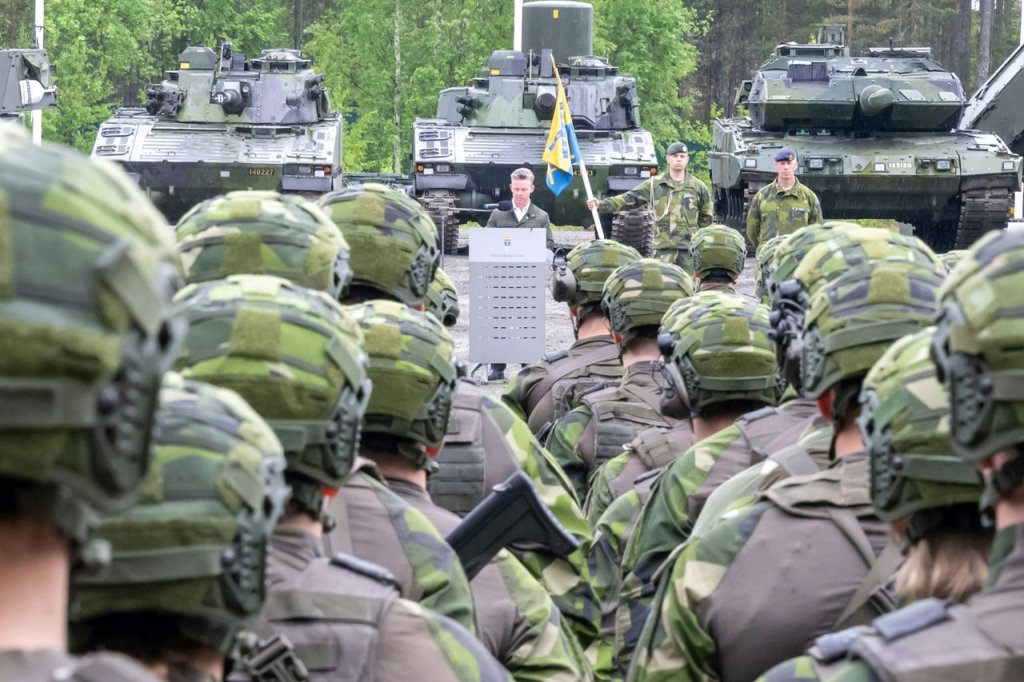
The NATO Forward Land Forces Finland has been established on June 6, 2026, in Boden, Finland. General Markus Laubenthal, SHAPE Chief of Staff, assumed Command of the Swedish Regiment in presence of the Swedish Minister of Defence Pål Jonson. The FLF Finland will be the 9th FLF in SACEURs AoR. NATO Photo by OR-7 Dennis Sattler
The NATO Forward Land Forces Finland (FLF) was established on June 6, 2026. (NATO Photo by OR-7 Dennis Sattler) MSgt OR-7 Dennis Sattler; DEU Army

“Sweden is contributing a battalion battlegroup that, together with a Multinational Staff Element in Rovaniemi, will form the core of FLF Finland,” NATO added. “The Swedish battalion battlegroup is prepositioned in Boden, with capacity to operate in the North Calotte and, where necessary, rapidly reinforce the presence in northern Finland. In 2026, Sweden’s contribution to FLF Finland will total around 600 personnel, with the option to expand to 1,200 personnel if needed.”

“This region is one of the most strategically significant and environmentally challenging areas in the world,” said U.S. Air Force Gen. and SACEUR Alexus G. Grynkewich. “FLF Finland, just like Arctic Sentry, will leverage NATO’s strength to defend our territory and ensure the Arctic and High North remains secure, especially considering Russia’s military activity and China’s growing interest there.”

The U.S. too is working to improve its presence and operations in the region. During last month’s SOF Week symposium in Tampa, Florida, the head of U.S. Northern Command (NORTHCOM) announced the formation of Nordic Bridge to “tie together” the work of U.S. European Command, North American Aerospace Defense Command (NORAD) and SACEUR.

Air Force Gen. Gregory Guillot provided no real details about Nordic Bridge at the time, so we reached out to NORTHCOM for additional details.

“The Nordic Bridge concept seeks to enhance Arctic integration between U.S. Northern Command and U.S. European Command and enhance cooperation between NORAD and NATO in order to expand domain awareness, strengthen deterrence, and improve interoperability,” a NORTHCOM spokesperson told us last month. “It envisions increased participation in each other’s training and exercises, increased data sharing (such as air pictures), deconflicting conferences to maximize personnel availability and participation, etc.”

Last month, Guillot visited Grynkewich “to discuss opportunities under this concept,” the NORTHCOM spokesperson told us.
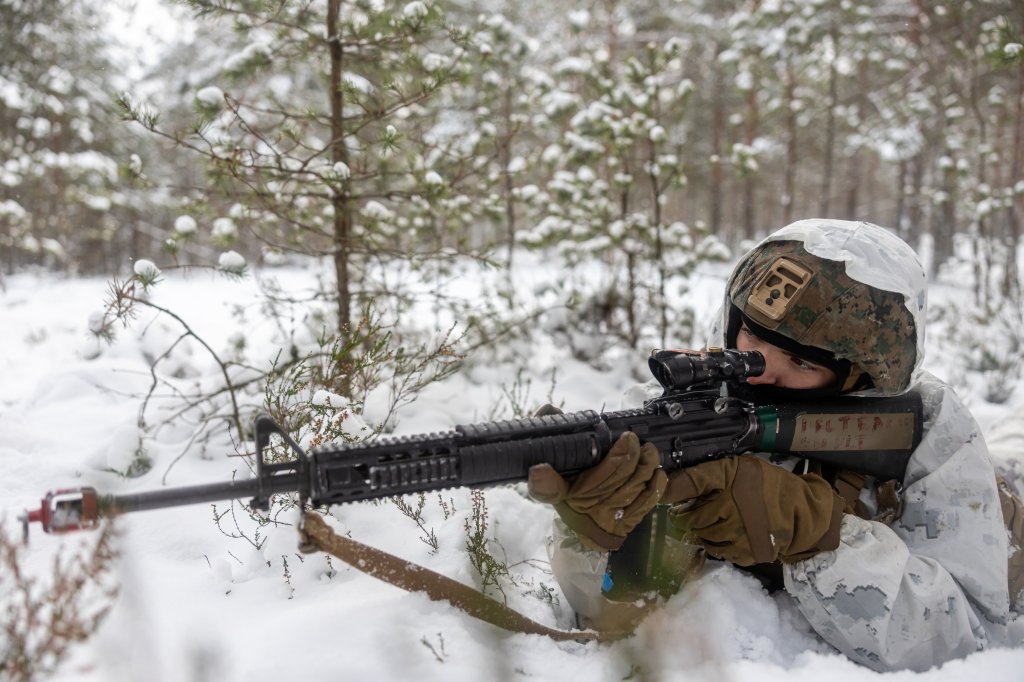
U.S. Marine Corps Lance Cpl. Thomas Teague, a motor vehicle operator assigned to Combat Logistics Battalion 6, Combat Logistics Regiment 2, 2nd Marine Logistics Group, provides security for a convoy during offensive and defensive operations in Syndalen, Finland during exercise Freezing Winds 23 (FW23), Nov. 30, 2023.  FW23 is a Finnish-led maritime exercise in which United States Marines assigned to Marine Rotational Force- Europe, and U.S. Navy Forces Europe take part; the exercise serves as a venue to increase Finnish Navy readiness, increase U.S., Finland, and NATO partners' interoperability in operational logistics, integrated fires, and amphibious operations within the Baltic Sea littorals. (U.S. Marine Corps photo by Lance Cpl. Christian Salazar)
U.S. Marine Corps Lance Cpl. Thomas Teague, a motor vehicle operator assigned to Combat Logistics Battalion 6, Combat Logistics Regiment 2, 2nd Marine Logistics Group, provides security for a convoy during offensive and defensive operations in Syndalen, Finland during exercise Freezing Winds 23 (FW23), Nov. 30, 2023. (U.S. Marine Corps photo by Lance Cpl. Christian Salazar) Cpl. Christian Salazar

All this is taking place, of course, against the backdrop of President Donald Trump’s frequent insistence that the U.S. subsume Greenland to provide better Arctic protection for the U.S. homeland. The issue reached a fever pitch earlier this year, causing a serious rift with NATO after the president threatened to invade the world’s largest island. You can read more about that in our story about the crisis here.

While there are no indications that the Arctic region is about to break out into open conflict, there are several indications that Russia, NATO and the U.S. are increasing preparations for such an eventuality.

Contact the author: howard@twz.com

The post Russia Building New Infrastructure For Major Troop Deployments Along NATO’s Northern Flank appeared first on The War Zone.
  •  

Russia can’t attack NATO right now—ISW explains what the new border bases are really for

russia can't attack nato right now—isw explains what new border bases really · post facilities russia's 200th separate motor rifle brigade northern fleet's coastal troops pechenga district murmansk oblast 15-20

Russia is building new military bases and expanding existing ones along its northern border with NATO, according to ISW. The Institute for the Study of War (ISW) assesses that the construction likely supports future Russian force projection against the alliance. Near-term Russian ground operations remain unlikely, the think tank notes, since most Russian combat power stays committed in Ukraine.

Western officials have tracked Russia's military buildup near its European neighbors since well before the latest satellite findings, and Moscow's large-scale exercises near alliance territory have repeatedly rehearsed confrontation scenarios.

Satellite images show construction from Norway to Kaliningrad

Broadcasters in Norway, Sweden, and Denmark, together with a Baltic news portal, published satellite findings of the buildup on 10 JuneRussian forces are putting up new facilities and growing old ones near the frontiers of the Nordic and Baltic states. Intelligence officers and senior commanders in Denmark told broadcaster DR the work amounts to preparation for conflict. They see nothing indicating Moscow has actually decided on war, not least because the bulk of its army remains tied down in Ukraine.

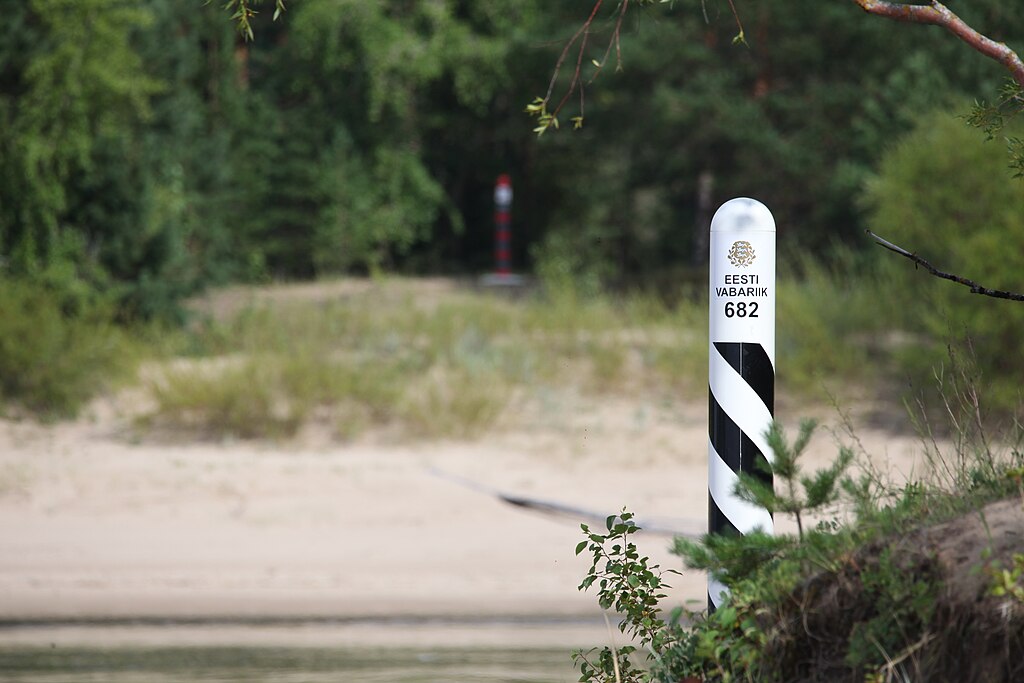
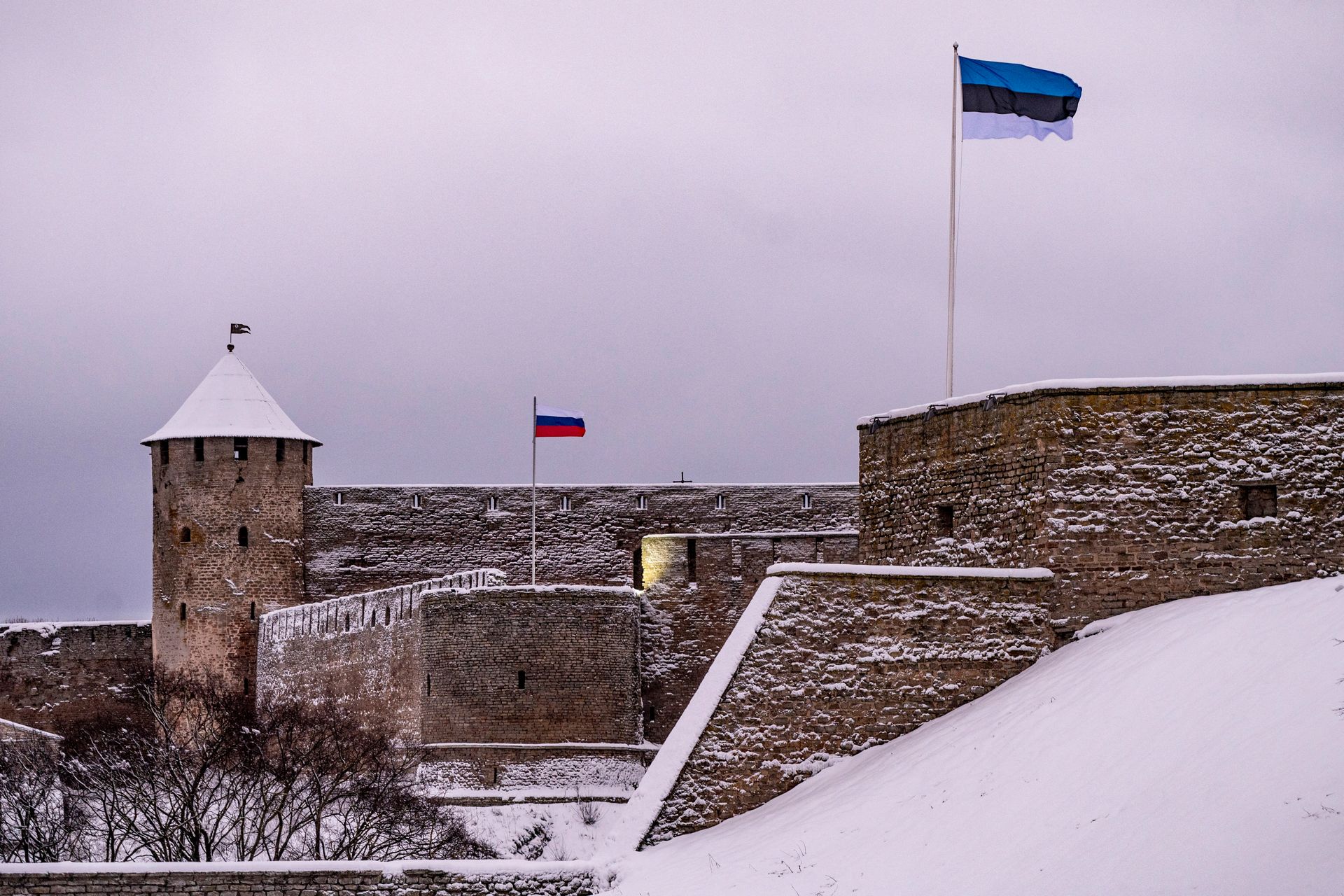
Estonian and Russian border posts at Narva-Jõesuu on the Estonia-Russia border
Explore further

“We don’t think all of this is just for demonstration”: Russia is constructing infrastructure with potential capacity up to 115,000 personnel on NATO’s doorstep

Finland braces for 80,000 Russian troops at its border

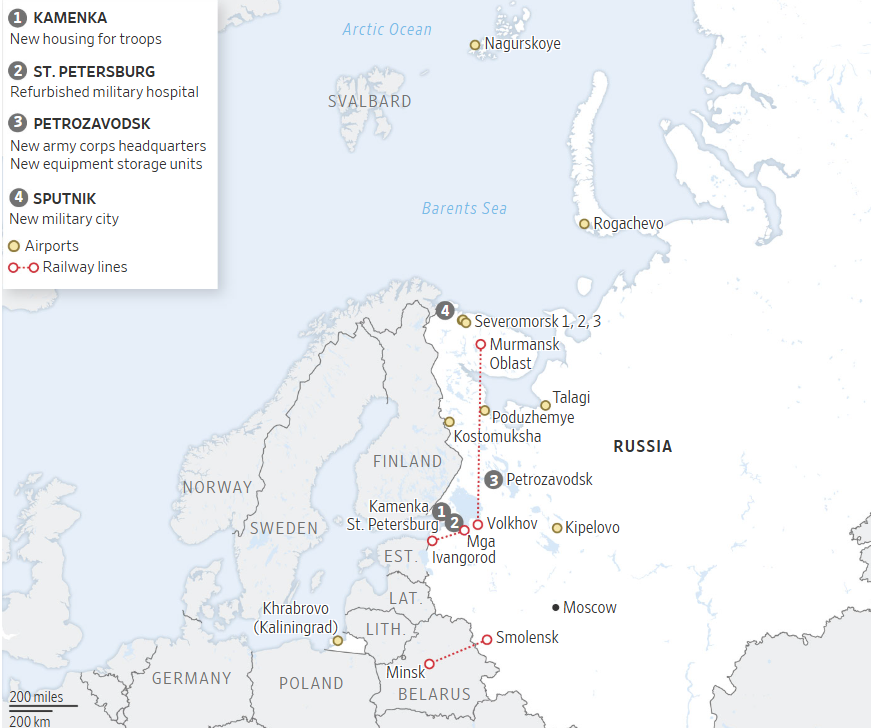
Marko Eklund, a former Finnish intelligence officer, told DR that the Russian command plans to deploy about 115,000 troops at the northern NATO border. That deployment would come after the war in Ukraine ends. Construction has begun on a new Russian base at Novaya Vilza, outside Petrozavodsk in the Republic of Karelia. The site sits roughly 190 kilometers from Finland and will hold 4,000 to 6,000 personnel. Russia began renovating an abandoned Soviet-era garrison in Petrozavodsk earlier this year. Finland's army chief, Pasi Välimäki, expects Russia to put 80,000 soldiers on the shared border, he told Swedish broadcaster SVT.

isw estonia warns russia's military buildup beyond war ukraine estonia-report russia building its capabilities only ongoing also preparation potential future conflict nato reported estonia's foreign intelligence service (efis) institute study
Explore further

ISW: Estonia warns of Russia’s military buildup beyond war in Ukraine

A corps command waits in Luga as Karelia bases rise

A source covering the Russian Northern Grouping of Forces claimed Russia's command is moving parts of the 44th Army Corps, a Leningrad Military District formation, to the Republic of Karelia. Only the command post stays behind for now. Those command-post elements currently sit in Luga, Leningrad Oblast, ready to shift to Petrozavodsk once Russia finishes the bases, the source claimed.

russian military near border with finland
Explore further

Russia builds up military presence near Finland’s border – WSJ

A Kremlin-affiliated Russian milblogger claimed on 11 June that crews are upgrading at least 19 barracks, along with support and storage buildings, at Pechenga on the Kola Peninsula in Murmansk Oblast. The site lies about 10 kilometers from the Norwegian border. The milblogger also claimed Baltiysk in Kaliningrad Oblast is getting a bigger naval infantry footprint, more armor, and additional landing craft.

ISW: bases serve post-war force projection

"Russia is establishing these bases to support potential future military actions against NATO, though such ground operations remain unlikely, as most of Russia's combat power is participating in operations in Ukraine," ISW says.

Once the shooting in Ukraine stops, the finished bases would shorten Russia's timeline for massing troops at NATO's frontier, ISW assesses. That leaves NATO needing the readiness to hold off — and, failing that, beat back — a Russian threat at its borders soon after combat in Ukraine stops, in ISW's assessment.

  •  

Trump chiude la guerra in Iran e “lascia” l’Europa. Armi spuntate per la Nato (soprattutto sul lungo raggio)

Gli Stati Uniti intendono ridurre significativamente il numero di aerei e navi da guerra messi a disposizione per le operazioni Nato in Europa. Secondo quanto riporta il New York Times, che cita due alti funzionari europei, il piano prevede la riduzione del numero di caccia e aerei da ricognizione marittima, nonché la riallocazione di un sottomarino lanciamissili e di una portaerei. Riduzioni, riferisce il quotidiano, che limiteranno le capacità di sorveglianza dell’Alleanza e la sua capacità di lanciare attacchi a lungo raggio.

Non so se lo sapete, ma oggi abbiamo posto fine alla guerra con l’Iran“. Lo ha detto il presidente Usa Donald Trump durante un comizio telefonico a sostegno di Burt Jones a governatore della Georgia. Teheran, ha aggiunto, ha “concordato di non dotarsi mai di armi nucleari, cosa su cui abbiamo insistito. Questo era l’obiettivo principale. Rappresentava il 95% della questione”. In precedenza il capo della Casa Bianca aveva annunciato di aver annullato ulteriori attacchi contro la Repubblica islamica, suggerendo che fosse stato raggiunto un accordo, senza però specificarne i termini. Teheran da parte sua ha fatto sapere che l’intesa è quasi pronta ma non è stata ancora finalizzata.

I dettagli, alcuni dei quali riportati per la prima volta dal quotidiano tedesco Die Welt, forniscono il quadro più chiaro delle intenzioni dell’amministrazione Trump di ridurre il proprio impegno nell’Alleanza. Il Pentagono non ha ancora reso pubblica la tempistica del ritiro, ma secondo funzionari americani avverrà molto presto, ben prima di quanto previsto dalle controparti europee. L’improvviso ritiro delle forze americane comprometterebbe la capacità della Nato, ad esempio, di monitorare il traffico sottomarino russo o di lanciare missili Tomahawk a lungo raggio in profondità nel territorio russo.

L'articolo Trump chiude la guerra in Iran e “lascia” l’Europa. Armi spuntate per la Nato (soprattutto sul lungo raggio) proviene da Affaritaliani.it.

  •  

Starmer in 'seismic' crisis, UK defense chief quits before high-stakes Trump NATO summit

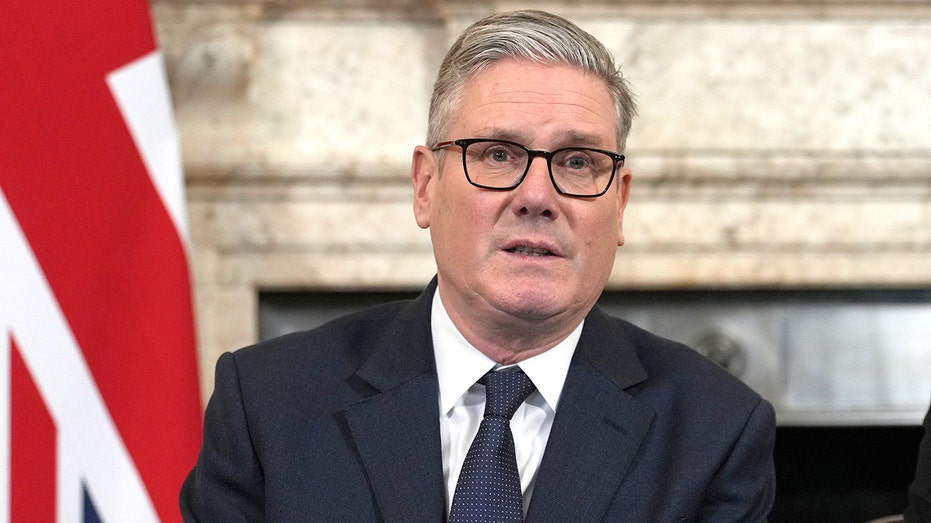
U.K. Defense Secretary John Healey resigned Thursday after clashing with Prime Minister Keir Starmer's government over military spending, dealing the British leader a setback weeks before a critical NATO summit to include President Donald Trump.

Healey's departure stemmed from a dispute over the delayed Defense Investment Plan (DIP) — the government's long-promised roadmap for military investment and readiness — and as NATO allies face renewed pressure from Trump to boost defense spending.

"John Healey’s resignation is a seismic moment for the government and the Ministry of Defense," Royal United Services Institute (RUSI) Senior Associate Fellow Ed Arnold told Fox News Digital.

"For the government, it creates a sequence of political headaches in terms of a replacement, and trying to get the Defense Investment Plan published."

BRITISH PM KEIR STARMER MOVES UK MILITARY INTO 'WAR-FIGHTING READINESS'

Healey had been in intense, late-stage negotiations with Starmer and Chancellor of the Exchequer Rachel Reeves over the scale and timelines of the DIP.

Starmer reportedly refused to set out a timeline to reach 3.5% of gross domestic product (GDP) on defense by 2035 — a promise he made to Trump at last year's NATO summit — and would not commit to a firm date for reaching 3%.

Instead, Starmer offered Healey a deal to spend 2.68% of GDP on defense by 2030, up only marginally from 2.6% next year, Reuters reported.

"You have been unable, and the Treasury has been unwilling, to commit the resources that the nation needs to defend the country," Healey wrote to Starmer in his resignation letter, warning that the financial constraints would "make the country less safe," the outlet reported.

NATO CHIEF URGES MEMBERS TO 'TURBOCHARGE' DEFENSE PRODUCTION AS HE PAINTS PICTURE OF A WORLD BOUND FOR WAR

"If the delay to the Defense Investment Plan was already undermining the government’s credibility on defense, John Healey’s resignation has blown a hole in its side," professor Kevin Rowlands of the RUSI defense and security think tank told Fox News Digital.

"The immediate consequence is not just political embarrassment for No. 10, but a significant loss of planning certainty at a time when the British Armed Forces, the Ministry of Defense, and industry really need clarity on what will be funded, and when," he added.

The political fallout is expected to reverberate across the Atlantic, where Washington has increased pressure on European allies to fulfill their defense obligations. Trump has frequently criticized NATO alliance members as "free riders."

On June 3, Secretary of State Marco Rubio also told the House Foreign Affairs Committee that the upcoming Ankara summit would be the "most important meeting" in NATO’s history because there are some things "that need to be cleared up and fixed."

He added, "The United States is still in the NATO alliance, and we'll be there."

TRUMP EFFECT FORCES GERMANY TO REPRIORITIZE DEFENSE AS NATION PLAYS CATCH-UP IN MILITARY SPENDING

However, U.S. officials have made it clear that patience is wearing thin.

"Ahead of next month’s NATO summit, POTUS has been clear: Allies must fulfill their commitment to spending 5% of GDP on defense," U.S. Ambassador to NATO Matthew Whitaker posted on X this week.

Furthermore, a U.S. official noted that a U.K. funding package far lower than 18 billion pounds ($23 billion) would send a highly "negative" signal to Trump ahead of the Ankara meeting, according to The Times.

Starmer has pledged to lift spending to 3% in the next Parliament but Healey’s exit has exposed that the current strategy leaves the U.K. lagging behind key allies. By comparison, Germany plans to spend 3.7% of its GDP on defense by 2030.

CLICK HERE TO DOWNLOAD THE FOX NEWS APP

"Healey knows the threats we face, he knows the capabilities and shortfalls the armed forces have, and if he believes that the financial settlement is not enough to keep the country safe — to the extent that he cannot honorably stay in post — then we are in trouble," Rowlands added.

"While the impact will mainly be felt on Whitehall, the international implications are severe with a NATO summit just three weeks away," Arnold noted.

  •  
❌