Reading view

Antyllus: The Ancient Greek Surgeon Whose Methods Lasted Until the 19th Century

Relief sculpture depicting Asclepius treating a reclining patient in ancient Greek style.
Antyllus pioneered vascular surgery, and his aneurysm procedure remained a standard for over a millennium. Credit: Wikimedia Commons, Public Domain

Αntyllus, one of antiquity’s most skilled and innovative surgeons, was an ancient Greek physician active in Rome around 150 AD. Though influenced by earlier Greek medical traditions, he broke from the conservative models of physicians such as Hippocrates and Galen and introduced practical surgical procedures, especially for vascular conditions. These shaped medicine for centuries.

Beyond aneurysms: A versatile surgeon

Antyllus is best known for designing the first effective surgical treatment for aneurysms. While earlier physicians feared vascular surgery, Antyllus embraced it with precision.
He classified aneurysms into traumatic and spontaneous types. His method involved tying off the artery both above and below the swollen vessel. Then, he excised the aneurysmal sac.

This direct approach represented a major advancement. It became the standard procedure for aneurysm treatment and remained in use until the 19th century. Unlike Galen, who emphasized theory, Antyllus prioritized anatomical understanding through practice. He accepted surgical risks others avoided, setting the foundation for vascular surgery.

Antyllus’s contributions extended beyond arteries. He developed surgical techniques for the abdomen, eyes, bones, joints, and breasts. He was also a pioneer in plastic surgery.
His reconstructive operations addressed eyelids, ears, noses, and cheeks. In trauma cases or for cosmetic repair, no one could match his precision.

To control bleeding during operations, Antyllus used cauterization. He also performed early tracheotomies, a high-risk but potentially life-saving procedure.

Oribasius, a later Greek physician, reported that Αntyllus wouldn’t operate on exceptionally large aneurysms due to high risk. For more manageable aneurysms in the limbs and head, Antyllus applied ligatures to the arteries entering and leaving the aneurysm. He then incised the sac, evacuated its contents, and packed the cavity.

Legacy and transmission of Antyllus’ aneurysm technique

Most importantly, Antyllus did not resect the aneurysm sac. He warned against excising the dilated section between ligatures, stating:

“Those who tie the artery, as I advise, at each extremity, but amputate the intervening dilated part, perform a dangerous operation. The violent tension of the arterial pneuma often displaces the ligatures.”

Oribasius also preserved one of the earliest known classifications of aneurysms into true and false types. Specifically, he said:

“There are two types of aneurysms: the first is due to dilatation of the arteries and the second is caused by rupture of the artery emptying blood into the tissues. When an aneurysm is due to dilatation, the form is cylindrical, while the one caused by injury is round.”

Aetius of Amida was a 7th century physician. In his work “On the Dilatation of the Vessels,” he described in detail a surgery likely based on Antyllus’ method:

“An aneurysm located in the bend of the elbow is treated thus. First we carefully trace the artery leading to it, from armpit to elbow, along the inside of the upper arm. Then we make an incision on the inside of the arm, three or four finger-breadths below the armpit, where the artery is felt most easily. We gradually expose the blood vessel and, when it can be lifted free with a hook, we tie it off with two firm ligatures and divide it between them. We fill the wound with incense and lint dressing, then apply a bandage. Next we open the aneurysm itself and no longer need fear bleeding. We remove the blood clots present, and seek the artery which brought the blood. Once found, it is lifted free with the hook, and tied as before.”

Medicine in Ancient Greece and Egypt
Physician treating a patient, depicted on Attic red-figure Aryballos Credit: Marie-Lan Nguyen Wikimedia Commons CC BY 3.0

Preventative medicine and physical health

Antyllus believed health required daily effort and discipline. He championed preventative medicine alongside surgical skill. For instance, he prescribed exercise regimens that included structured vocal routines. One of his most distinctive practices was vociferation, a method of controlled, loud vocalizing.

He recommended reciting memorized poetry at various volumes while walking and believed deep tones helped expand the trachea and chest, strengthening respiratory health. This practice combined breath control, posture, and movement in a holistic approach to physical well-being.

Before such vocal workouts, Antyllus suggested preparation consisting of massage, bowel evacuation, and a cold sponge bath. These details reflected his methodical attention to physiology.

While Hippocrates emphasized prognosis and symptom observation, he likely saw aneurysms but avoided surgical intervention. Moreover, Galen offered greater anatomical theory, drawn from animal dissection but still steered clear of artery operations.

Antyllus surpassed both in operative practice. Whereas Hippocrates and Galen used caution, Antyllus applied bold innovation grounded in anatomy. His hands-on techniques proved enduring. Byzantine and Islamic medical texts preserved his methods, which reached medieval Europe through translation.

The Greek physician Galen, who was influential in Western medicine
Galen, the pioneering Greek physician who influenced Western medicine through the 1700s. Portrait by Pierre-Roch Vigneron. Credit: Wikimedia Commons Public Domain

Legacy of a Forgotten Surgeon

Despite the historical focus on Hippocrates and Galen, Αntyllus, the Greek physician, remains a towering figure in the evolution of medicine, uniting theory with surgical practice. His aneurysm procedure became standard practice for over 1,500 years. Antyllus developed detailed and replicable techniques in plastic and general surgery.


Αntyllus’s advocacy for preventative care—including vocal and physical training—also marks him as an early holistic health thinker. To say the least, he deserves recognition as the first true vascular surgeon of antiquity, as his skill, anatomical knowledge, and forward-thinking philosophy left a lasting imprint on medical history.

@theculturemuse

Check out this #rare #ancient #roman #surgical kit in the #neuesmuseum #berlin #medicine #healing #surgery #asclepius #history #storytime #foryoupage❤❤ #fyp

♬ original sound – The Culture Muse

  •  

Eratosthenes: The Ancient Greek Who Measured the Earth More Than 2,000 Years Ago

earth eratosthenes circumference
The shuttle “Discovery” orbiting the Earth. Ancient Greek mathematician, Eratosthenes, measured the circumference of the Earth in antiquity. Credit: Public Domain

Ancient Greeks made some of the most impressive astronomical discoveries in history, including Eratosthenes’ calculation of the circumference of the Earth.

It wasn’t until the mid-20th century that we managed to launch satellites into space and determine the exact kilometers of the circumference of the Earth: 40,030.2 kilometers.

But how, then, could the ancient Greek mathematician, Eratosthenes, manage to find pretty much the exact same number without having any pictures of Earth from space or even proper measuring tools?

Amazingly, Eratosthenes didn’t have much more than a stick and his brain when he made the amazing discovery.

How Eratosthenes discovered the circumference of the Earth

Born in Cyrene, an ancient Greek colony in modern-day Libya in 276 BC, Eratosthenes was a polymath, meaning that he had vast knowledge of many different subjects, including mathematics, astronomy, music theory, and poetry.

Over two thousand years ago, Eratosthenes heard that in Syene, a town south of Alexandria in Egypt, no vertical shadows were cast at noon on the summer solstice, as the sun was directly overhead.

The Greek mathematician wondered if this was the case in Alexandria, too, a few hundreds of miles to the north of Syene.

He decided to conduct an experiment. On June 21st, he went to Alexandria and put a stick directly in the ground and waited to see if a shadow would be cast at noon.

It turns out there was one, and he tried to measure it. The shadow cast measured to about seven degrees.

After conducting the experiment, Eratosthenes came to a very logical conclusion that if the sun’s rays are coming in at the same angle at the same time of day and a stick in Alexandria casts a shadow of seven degrees while the stick in Syene does not cast a shadow at all, it must mean that the Earth’s surface is curved.

Carl Sagan, the American astronomer, author, and science communicator was renowned for making difficult scientific concepts understandable to the millions; he did exactly this at the beginning of his renowned series Cosmos by explaining the thought process of Eratosthenes.

His calculation

The idea of a spherical Earth was already known by Pythagoras around 500 BC and validated by Aristotle a few centuries later.

If the Ancient Greeks before him were right, and the Earth was a sphere, Eratosthenes could use his observations to calculate the circumference of our planet.

After hiring a man to pace the distance between Syene and Alexandria, he found out that the two cities were five thousand stadia apart, which is about eight hundred kilometers.

He could then use simple proportions to find the Earth’s circumference—7.2 degrees is 1/50 of 360 degrees, so 800 times 50 equals 40,000 kilometers.

And just like that, an ancient Greek calculated precisely the circumference of our entire planet with just a stick and his brain over two thousand years ago.

Eratosthenes accomplished many feats throughout his life, including the creation of a chronology of Greek history, an algorithm to find every prime number, and the first global projection of the Earth.

  •  

Eratosthenes: The Ancient Greek Who Measured the Earth More Than 2,000 Years Ago

earth eratosthenes circumference
The shuttle “Discovery” orbiting the Earth. Ancient Greek mathematician, Eratosthenes, measured the circumference of the Earth in antiquity. Credit: Public Domain

Ancient Greeks made some of the most impressive astronomical discoveries in history, including Eratosthenes’ calculation of the circumference of the Earth.

It wasn’t until the mid-20th century that we managed to launch satellites into space and determine the exact kilometers of the circumference of the Earth: 40,030.2 kilometers.

But how, then, could the ancient Greek mathematician, Eratosthenes, manage to find pretty much the exact same number without having any pictures of Earth from space or even proper measuring tools?

Amazingly, Eratosthenes didn’t have much more than a stick and his brain when he made the amazing discovery.

How Eratosthenes discovered the circumference of the Earth

Born in Cyrene, an ancient Greek colony in modern-day Libya in 276 BC, Eratosthenes was a polymath, meaning that he had vast knowledge of many different subjects, including mathematics, astronomy, music theory, and poetry.

Over two thousand years ago, Eratosthenes heard that in Syene, a town south of Alexandria in Egypt, no vertical shadows were cast at noon on the summer solstice, as the sun was directly overhead.

The Greek mathematician wondered if this was the case in Alexandria, too, a few hundreds of miles to the north of Syene.

He decided to conduct an experiment. On June 21st, he went to Alexandria and put a stick directly in the ground and waited to see if a shadow would be cast at noon.

It turns out there was one, and he tried to measure it. The shadow cast measured to about seven degrees.

After conducting the experiment, Eratosthenes came to a very logical conclusion that if the sun’s rays are coming in at the same angle at the same time of day and a stick in Alexandria casts a shadow of seven degrees while the stick in Syene does not cast a shadow at all, it must mean that the Earth’s surface is curved.

Carl Sagan, the American astronomer, author, and science communicator was renowned for making difficult scientific concepts understandable to the millions; he did exactly this at the beginning of his renowned series Cosmos by explaining the thought process of Eratosthenes.

His calculation

The idea of a spherical Earth was already known by Pythagoras around 500 BC and validated by Aristotle a few centuries later.

If the Ancient Greeks before him were right, and the Earth was a sphere, Eratosthenes could use his observations to calculate the circumference of our planet.

After hiring a man to pace the distance between Syene and Alexandria, he found out that the two cities were five thousand stadia apart, which is about eight hundred kilometers.

He could then use simple proportions to find the Earth’s circumference—7.2 degrees is 1/50 of 360 degrees, so 800 times 50 equals 40,000 kilometers.

And just like that, an ancient Greek calculated precisely the circumference of our entire planet with just a stick and his brain over two thousand years ago.

Eratosthenes accomplished many feats throughout his life, including the creation of a chronology of Greek history, an algorithm to find every prime number, and the first global projection of the Earth.

  •  

The Lost Plant Ancient Greeks Used for Medicine, Food and Contraception

silphium
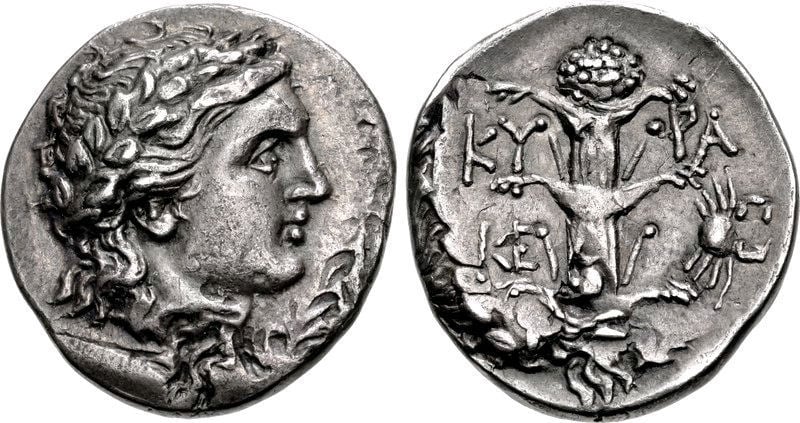
A plant used by the ancient Greeks for medicine, food and even contraception was one of the most sought-after goods in the ancient world. Credit: Classical Numismatic Group/Wikimedia Commons/CC BY-SA 3.0

An ancient Greek plant, now extinct, called Silphium, was used by the ancient Greeks and Romans for perfume, seasoning, medicine, and even contraception. It was one of the most sought-after goods in the ancient world.

The plant was so useful that Julius Caesar himself was said to have a large stash of silphium on hand at all times.

Silphium only grew in a narrow strip of land near the North African city of Cyrene in modern-day Libya and was essential to the city’s economy. The cultivation and trade of the plant transformed Cyrene into the richest region of Africa at the time.

Its widespread use in the ancient world allowed Cyrene’s economy to flourish, which in turn transformed the city into a center of art, culture, and medicine in the ancient Greek world.

In fact, it was home to a famous medical school and even a philosophical movement based around happiness whose members were called the Cyrenaics. Eratosthenes, the famous Greek mathematician, was a native of the city.

Although now extinct, researchers have determined, through studying ancient drawings and descriptions of the plant’s taste and appearance, that silphium likely belonged to the genus Ferula, which includes existing plants like giant fennel and asafoetida.

This theory is bolstered by the fact that asafoetida, which is still widely used today in Indian and central Asian cooking, was used as a cheaper substitute for silphium in antiquity, meaning that it was either related to the plant or had a very similar flavor.

The extinct plant silphium had many uses for ancient Greeks

Plants of the genus tend to resemble ancient depictions of the plant, which was widely found on coins from Cyrene due to its economic importance to the city.

It seems to have been a tall, flowering plant with a heart-shaped seedpod on the top. In fact, some theories about the origins of the modern symbol for love point to the shape of silphium’s seedpod, as the plant was widely used as an aphrodisiac.

Silphium was long used throughout the ancient Mediterranean. Both the Minoans and ancient Egyptians had specific glyphs to represent the plant, and it was widely lauded in songs and poems across ancient cultures.

According to myth, silphium came from the god Apollo himself. It had a wide variety of medicinal properties and was used to treat cough, pain, warts, fever, and indigestion. Although considered an aphrodisiac, it was also used as a contraception and even as an abortifacient.

The father of medicine Hippocrates himself even prescribed the plant for a protruding gut.

Silphium was likewise found in Greek and Roman cuisine and featured prominently in recipes by Apicius, who compiled one of the most well-preserved collections of ancient recipes in existence today.

Its earthy scent and medicinal properties also made it an important ingredient in perfume, as well as in ancient lotions and creams.

Why did silphium go extinct?

Due to its varied uses, silphium was in very high demand. Yet, by the time of the Roman emperor Nero, who lived from 37 to 68 AD, the plant was virtually extinct. According to Pliny, when the last remaining silphium plant was found, it was given to Nero.

Scholars theorize the plant was over-harvested and over-farmed due to its popularity, causing the soil in the limited area where the plant grew to become devoid of nutrients.

Additionally, shepherds used to feed silphium to their flocks, as the plant would transform the meat, making it tender and delicious. Scholars theorize that overgrazing of the plant likely contributed to its demise.

Others claim that regional climatic changes, which caused once green fields to turn into an arid desert, resulted in the plant’s extinction.

Ancient writers, such as Theophrastus, noted that silphium was very sensitive to changes in soil and therefore could not be cultivated in large  numbers nor in areas outside of Cyrene.

  •  

Greece Shines in Condé Nast Traveller Awards as Naxos Tops Europe’s Best Islands

Folegandros, Greece
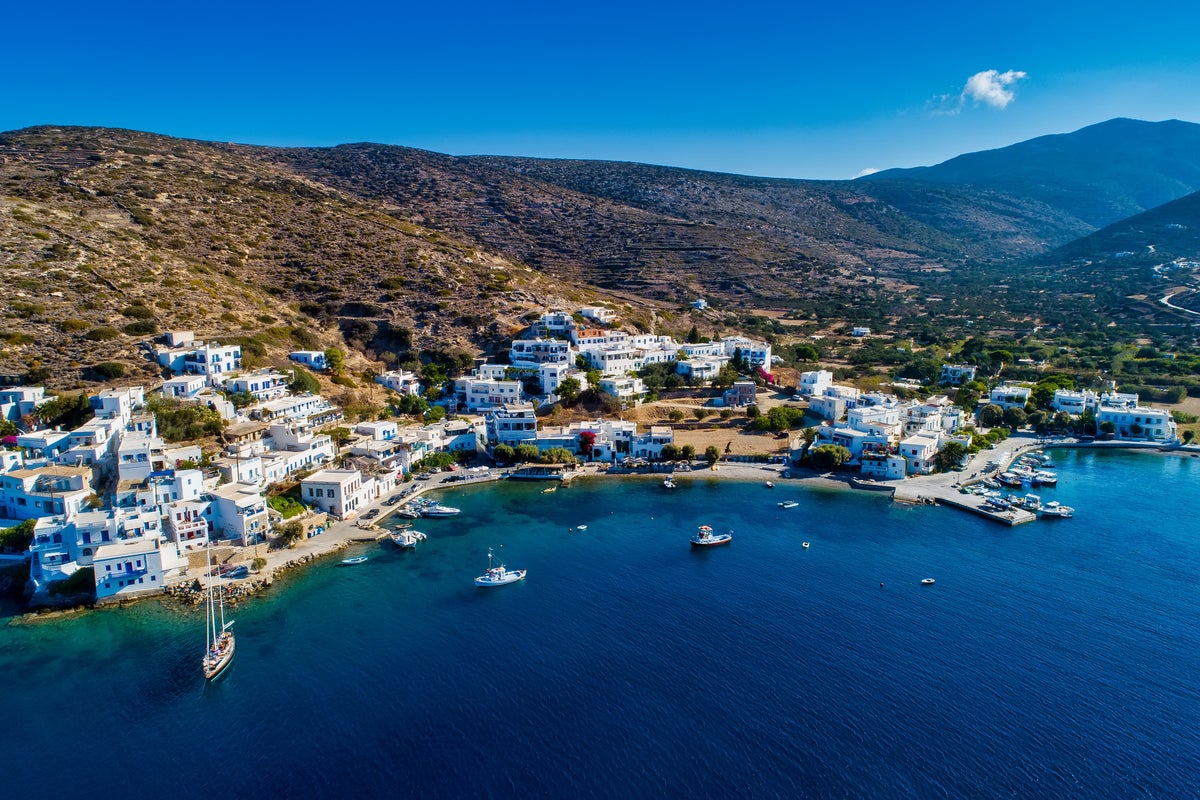
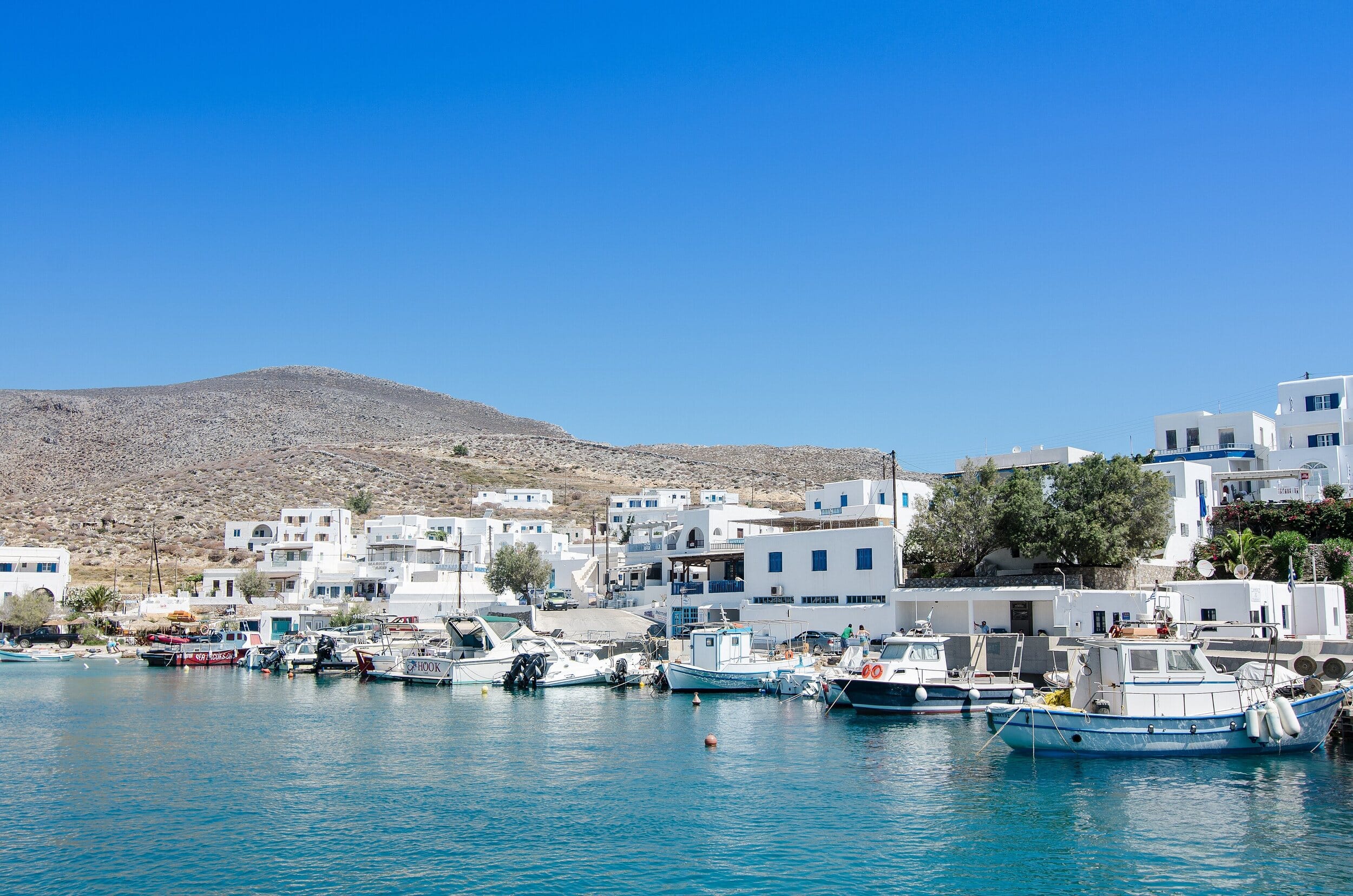
Folegandros, Greece, one of the eight Greek islands ranked among Europe’s best in the Condé Nast Traveller Readers’ Choice Awards. Credit: Étienne Dallaire / Wikimedia Commons / CC BY 3.0

Greece emerged as one of the leading countries in the Condé Nast Traveller Readers’ Choice Awards, with eight Greek islands ranked among Europe’s top 20.

Naxos claimed first place with a score of 95.71, just ahead of some of the Mediterranean’s most famous destinations, including Ibiza, Capri, Hvar, Mallorca, and Sicily. The result places the Cycladic island at the center of Europe’s travel spotlight and highlights the continued strength of Greece’s island tourism.

Alongside Naxos, the Greek islands featured in the ranking include Crete, Corfu, Rhodes, Skiathos, Mykonos, Folegandros, and Santorini.

Greece’s islands stand out in Europe’s awards

The ranking gives Greece one of the strongest national presences on the list. Eight of the twenty destinations are Greek, reflecting the country’s broad appeal to international travelers.

Crete ranked eighth with a score of 91.42, narrowly behind Sicily, which scored 91.43. Corfu followed in tenth place with 90.95, while Rhodes came in at eleventh with 90.86. Skiathos also ranked well in twelfth place with 89.52.

Further down the list, Mykonos placed fourteenth with 88.57, ahead of Cyprus, Sardinia, Folegandros, Santorini, Malta, and the Azores. Folegandros ranked seventeenth with 84.29, while Santorini placed eighteenth with 83.27.

All in all, the results show that Greece’s appeal extends far beyond its most popular destinations. The country’s islands continue to attract travelers looking for beaches, culture, food, history, nightlife, and quieter escapes.

Naxos tops Europe’s best islands as Greece shines in awards

Naxos’ first-place ranking is especially notable because it points to a shift in traveler preferences. While Santorini and Mykonos remain among Greece’s most well-known international destinations, readers placed Naxos above both.

The island is widely admired for its long sandy beaches, traditional villages, local cuisine, and more relaxed atmosphere. It also possesses a strong cultural identity, from its mountain settlements and agricultural traditions to the Portara, the ancient marble gate that stands near the entrance to its harbor.

Its score of 95.71 put it ahead of Ibiza, which ranked second with 93.06, and Capri, which placed third with 92.86. That margin underlines Naxos’ growing reputation as a destination that combines natural beauty, authenticity, and accessibility.

Crete, Corfu, Rhodes, and Skiathos remain traveler favorites

Crete’s high ranking confirms its status as one of Europe’s most all-encompassing island destinations. Greece’s largest island offers ancient sites, historic cities, mountain landscapes, beaches, and one of the country’s most distinctive culinary traditions.

Corfu and Rhodes also secured places in the top half of the list. Corfu, known for its Venetian architecture and Ionian character, ranked just ahead of Rhodes, one of the Dodecanese’s most visited islands and home to a famous medieval town.

Skiathos followed closely behind. Known for its beaches and green landscape, the island ranked twelfth, further strengthening Greece’s position in the upper tier of the European list.

Mykonos, Folegandros, and Santorini keep Greece in the top 20

Mykonos, Folegandros, and Santorini completed Greece’s presence in the top 20. Their inclusion is characteristic of the diversity in Greek island travel, from high-profile luxury destinations to smaller islands with a more serene personality.

Mykonos ranked fourteenth, maintaining its place among Europe’s most recognizable island names. Folegandros placed seventeenth, confirming the appeal of smaller Cycladic destinations. Santorini, one of the world’s most photographed islands, ranked eighteenth.

Although Santorini and Mykonos remain global symbols of Greek tourism, the success of Naxos and Folegandros suggests that travelers are also turning to islands that offer a more understated experience.

Top 20 islands in Europe

  1. Naxos, Greece — 95.71
  2. Ibiza, Spain — 93.06
  3. Capri, Italy — 92.86
  4. Hvar, Croatia — 92.38
  5. Canary Islands, Spain — 92.06
  6. Mallorca, Spain — 91.67
  7. Sicily, Italy — 91.43
  8. Crete, Greece — 91.42
  9. Madeira, Portugal — 90.99
  10. Corfu, Greece — 90.95
  11. Rhodes, Greece — 90.86
  12. Skiathos, Greece — 89.52
  13. Corsica, France — 89.17
  14. Mykonos, Greece — 88.57
  15. Cyprus — 85.71
  16. Sardinia, Italy — 84.76
  17. Folegandros, Greece — 84.29
  18. Santorini, Greece — 83.27
  19. Malta — 82.38
  20. Azores, Portugal — 78.57
  •  

Cannabis Use Among Teens in Greece Hits 25-Year Record

Cannabis plants
Cannabis use among teens has reached a 25-year record, while cocaine use is rising sharply across Greece. Credit: Wikimedia Commons / Chmee2 / CC BY 3

Cannabis use among teens in Greece has reached its highest level in 25 years, while cocaine and other stimulants are gaining ground across the country, according to the European Drug Report 2026 by the European Union Drugs Agency (EUDA), presented on June 9, 2026.

The report shows a shifting drug landscape in Greece. Cannabis remains the most common illegal substance, cocaine use continues to rise, and opioids, mainly heroin, still account for most overdose deaths.

According to the findings, 11.5 percent of 16-year-old students in Greece have used cannabis. The rate stood at 9.4 percent in 2019. The latest figure marks the highest level recorded in the past quarter century.

Cannabis use rises among teens in Greece

Cannabis use in Greece is increasing among adolescents, and those entering treatment programs more frequently report it as their substance of choice. In 2024, 28.8 percent of people in drug rehabilitation programs revealed that they predominately used cannabis. This was even higher among those seeking treatment for the first time.

The number of people entering treatment for cannabis use has risen by 32 percent compared with a decade ago. Such a trend implies that cannabis has become more deeply entrenched in Greek society among users. The report also notes that the types of cannabis products available in the Greek market appear to be expanding.

New synthetic and semi-synthetic cannabinoids raise concern

Greek authorities are also tracking the spread of synthetic and semi-synthetic cannabinoids, which now show a measurable presence in the domestic drug market. Semi-synthetic cannabinoids ranked as the second most commonly reported substance among people in Greece with recent drug use who participated in the 2024 European Web Survey on Drugs.

The Greek Poison Center first recorded cases linked to semi-synthetic cannabinoids in 2023, when it reported 34 intoxication incidents associated with HHC use. In 2024 and 2025, the center recorded 66 and 52 cases, respectively, involving THCP, H4-CBD, and HHC.

Data from Greece’s Early Warning System, operated by EKTEPN, shows that authorities detected eight new semi-synthetic and synthetic cannabinoids in the country for the first time in 2025. They had detected ten such substances in 2024.

Opioids remain leading cause of overdose deaths

Opioids continue to pose one of the most serious drug-related health risks in Greece. According to ELSTAT data cited in the report, opioids or other unspecified narcotic substances, mostly heroin, were involved in 72.9 percent of the 194 overdose deaths recorded in Greece in 2023.

Across Europe, opioids remain the leading cause of fatal overdoses, often in combination with other substances. The EUDA report also highlights increasing concern over new synthetic opioids, including nitazenes and orphines, which have appeared in Europe’s Early Warning System.

Greece differs from many other European countries because opioids remain the most frequently reported main substance among people entering treatment. In 2024, they accounted for 38.4 percent of treatment entrants. However, their dominance has weakened. The number of people entering treatment for opioid use in Greece has fallen by 51 percent compared with ten years ago. Among first-time treatment entrants, only 18 percent reported opioids as their main substance. These figures point to a broader change in Greece’s drug-use profile, as cannabis and cocaine now play a larger role in treatment demand.

Cocaine becomes increasingly visible in Greece

Cocaine remains the second most widely used illegal substance in Europe after cannabis among people entering treatment for the first time, according to the report. Cocaine-related harm is also increasing, while some European cities and marginalized communities are reporting more frequent crack cocaine use.

In Greece, cocaine and other stimulants now have a significant presence in drug-use patterns. Powder cocaine ranked as the most frequently reported substance after cannabinoids among people in Greece with recent drug use who participated in the 2024 European Web Survey on Drugs.

In 2024, 29.4 percent of people entering treatment reported cocaine and other stimulants as their main substance of use. This figure alarmingly approaches that for cannabis and marks a major increase compared with previous years. The number of people entering treatment for cocaine or other stimulant use has increased by 106 percent compared with five years ago and by 256 percent in comparison to a decade ago.

Attica records stronger cocaine indicators than other regions

People entering treatment report cocaine and other stimulants as their main substance of use more often in the Greater Athens (Attica) area than in Thessaloniki or other regions of Greece. Wastewater analysis in the region by the Laboratory of Analytical Chemistry at the National and Kapodistrian University of Athens shows a further sharp increase in cocaine presence in 2025. Researchers measure the trend through benzoylecgonine, cocaine’s main metabolite.

The estimated average daily quantity per 1,000 people rose by 64 percent compared with 2024. It also stood 211 percent higher than five years earlier. These figures suggest a significant shift in drug-use patterns, at least in the Athens metropolitan area.

Greece remains a cocaine entry and transit point as cannabis use among teens rises

Cocaine availability remains high in Greece despite a drop in the total quantity seized in 2024 in comparison to 2023. At the same time, authorities recorded a higher number of cocaine seizures. Continued flows through shipping containers from Latin American countries confirm Greece’s role as an entry point, transit hub, and final destination for significant quantities of cocaine.

The wider European picture described by the EUDA indicates a more complex and risky drug environment. People who use drugs now face exposure to a broader range of psychoactive substances, often with high potency or purity. New products, mixtures, and combinations are also becoming more prevalent.

  •  

Greek Court Sentences James Dalamangas After 27-Year Manhunt Over 1999 Sydney Murder

Empty court room in Greece with judges’ chairs, microphones, and wooden benches. A Greek court in Aigio sentenced James Dalamangas after his arrest in the Peloponnese following a nearly 27-year manhunt over Sydney killing.
A Greek court in Aigio sentenced James Dalamangas after his arrest in the Peloponnese following a nearly 27-year manhunt over Sydney killing. Credit: Dimitris Papamitsos / AMNA.

A Greek court has sentenced James Dalamangas, the 55-year-old fugitive wanted in Australia over a 1999 Sydney killing, following his arrest in the Peloponnese after nearly 27 years on the run.

Dalamangas appeared before a judge in the town of Aigio on Thursday, just days after Greek police arrested him at a nearby rural property. Australian authorities have long sought his extradition in connection with the fatal stabbing of George Giannopoulos, a father of two, outside a Sydney nightclub in 1999.

Greek court sentences James Dalamangas after arrest near Aigio

Greek police arrested Dalamangas at a rural property near Aigio, where he had allegedly been living under the false identity of Antonis Tzimas.

According to local reports, he had lived in the area for years and worked as an olive farmer. The court sentenced Dalamangas to two years and nine months in prison on weapons and false testimony charges. Greek authorities also convicted two other people, an 86-year-old man and a 47-year-old woman, of harboring a fugitive. However, both received temporary release pending appeals against their sentences.

Australia seeks James Dalamangas over Sydney killing

Australian authorities are expected to submit a formal extradition request in the coming weeks. They are seeking Dalamangas’ return to face proceedings related to the 1999 killing.

Former NSW Police detective Duncan McNab revealed the extradition process will depend on the Greek legal system and government. “Ultimately, this will go through the courts in Greece, reviewed by the government. They may make a decision to send him back to us. I hope they do,” McNab said.

Dalamangas, who holds Greek citizenship, is expected to oppose any attempt to extradite him to Australia. His lawyer has indicated that he intends to fight the process.

Greek statute of limitations may complicate case

If Dalamangas remains in Greece, he is unlikely to face murder charges over the 1999 incident, as the statute of limitations for murder under Greek law expires after 25 years.

According to reports, police identified and located Dalamangas based on limited information, including a tattoo bearing the Ancient Greek phrase “Molon Lave,” meaning “Come and get them.” Authorities then placed his property under surveillance prior to  carrying out the arrest.

  •  

How the Ancient Greeks Founded Naples in Italy

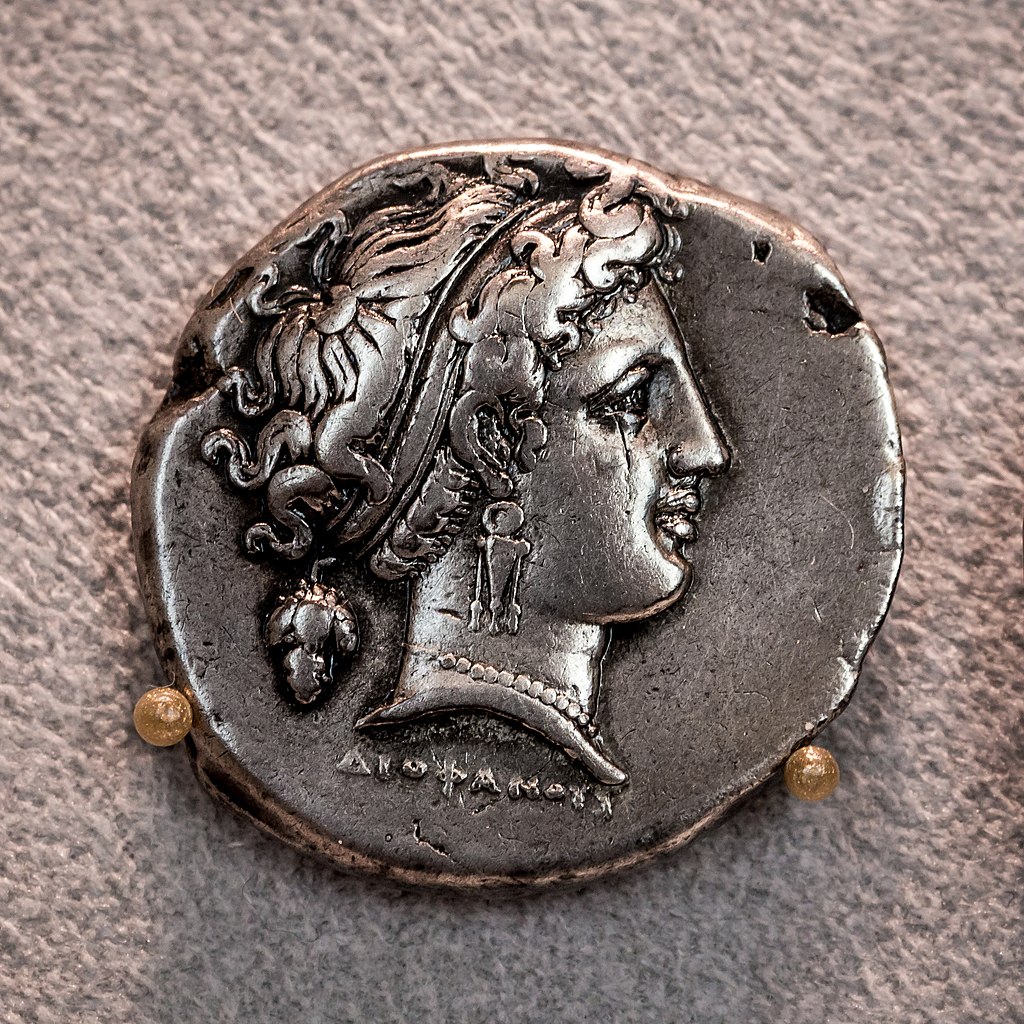
Ancient coin from Naples depicting head of Parthenope, mythical siren
Ancient Greek coin from Naples depicting the head of Parthenope, mythical siren whose body marked the future site of the city, fourth century BCE. Credit: Wikipedia Commons, cc-by-sa 4.0

The Greeks have a long and fascinating history in some of the most famous cities of Italy. One example is Naples, which is Italy’s third-largest city. The ancient Greeks founded this city well over 2000 years ago, and their influence is still felt there even today. But how did the ancient Greeks end up founding this city all the way over in Italy? We can learn the answer through ancient historical records as well as from archaeology.

The Legend of the Ancient Greeks Founding Naples

The legend of how the ancient Greeks founded Naples starts with the legend of Jason and the Argonauts. The poem Alexandra, which may have been written in c. 200 BC, records a tradition concerning Naples. It refers to a certain ‘tower of Phalerus’ already existing there in the time of Odysseus. Since Odysseus lived at the time of the Trojan War, this ‘tower’ must be named after a Phalerus who lived before then.

There is only one Phalerus who this could be – the Phalerus who accompanied Jason on his voyage to find the Golden Fleece. Other ancient sources describes this Phalerus as the founder of Gyrton in Thessaly, Phalerum in Athens, and a temple in Cyprus. Therefore, Greek legend clearly associates this Phalerus with the founding of cities. This adds even more support to the conclusion that he was the Phalerus who founded some kind of ‘tower’ in Naples before the time of Odysseus.

Therefore, the reference in Alexandra indicates that Phalerus, an Argonaut, led the ancient Greeks to establish the earliest settlement at Naples.

The Legend of the Foundation of Parthenope

The story of the ancient Greeks founding Naples also involves the legend of Odysseus. On his famous journey home from Troy after the Trojan War, he passed a group of sirens. They tried to use their enchanting singing to get Odysseus and his men to walk overboard and drown. However, Odysseus blocked his men’s ears with wax and then tied himself to his ship’s mast, thus keeping them all safe.

After defeating the sirens, one in particular, named Parthenope, threw herself into the sea in despair at her failure. She drowned, and the waves washed her body ashore at the tower of Phalerus. That location was then named Parthenope in her honor, with a city being built on the site of her grave.

This was not in exactly the same place as the later city of Naples, but it was very nearby, and it is within modern Naples. Parthenope was essentially the precursor to Naples. The two have always been so closely associated that the word ‘Parthenopean’ is a synonym of ‘Neapolitan’ even today.

What Archaeology Reveals About the Ancient Greek Foundation of Naples

Those are the legends, but how well do they match the archaeological facts? Firstly, let us consider the very earliest settlement, supposedly founded by Phalerus, one of the Argonauts. The legend about this location does not reveal where exactly in Naples the ancient Greeks supposedly established it. Nonetheless, in Naples in general, archaeology indicates that the ancient Greeks first settled there in the eighth century BC.

Whether this is actually related to the legend of Phalerus the Argonaut establishing a settlement there or not is up for debate. The archaeological evidence comes from centuries after the traditional era of the Argonauts. Nonetheless, it is possible that they lived later than usually believed.

What about the settlement of Parthenope? Archaeologists have found a Greek necropolis, or cemetery, dating to the early seventh century BC and associated with the hill of Pizzofalcone. This is further evidence that the ancient Greeks were starting settle the area of Naples at that period in history.

How the Ancient Greeks Transformed Parthenope into Naples

This settlement developed into a bustling city over the years. It became a prominent military and trading port. However, its success became its downfall. Cumae, the city from which the settlers of Parthenope primarily came, became jealous of their colony’s success. They did not want it to cause the original city, Cumae, to become abandoned. Therefore, they allegedly decided to destroy Parthenope.

There is little, if any, archaeological evidence for destruction at Parthenope dating to this time. However, whatever really happened, the evidence is clear that another settlement was then established in the Naples area, again by the ancient Greeks of Cumae. They called this city Neapolis, meaning ‘New City’. This eventually evolved into ‘Naples’, the English name for that city today.

The old settlement of Parthenope then started going by the name ‘Palaeopolis’, meaning ‘Old City’. However, it did not disappear completely. It became absorbed into the new settlement, becoming part of Naples.

  •  

Greece Turns to AI and Sensors to Monitor Aging Bridges in Real Time

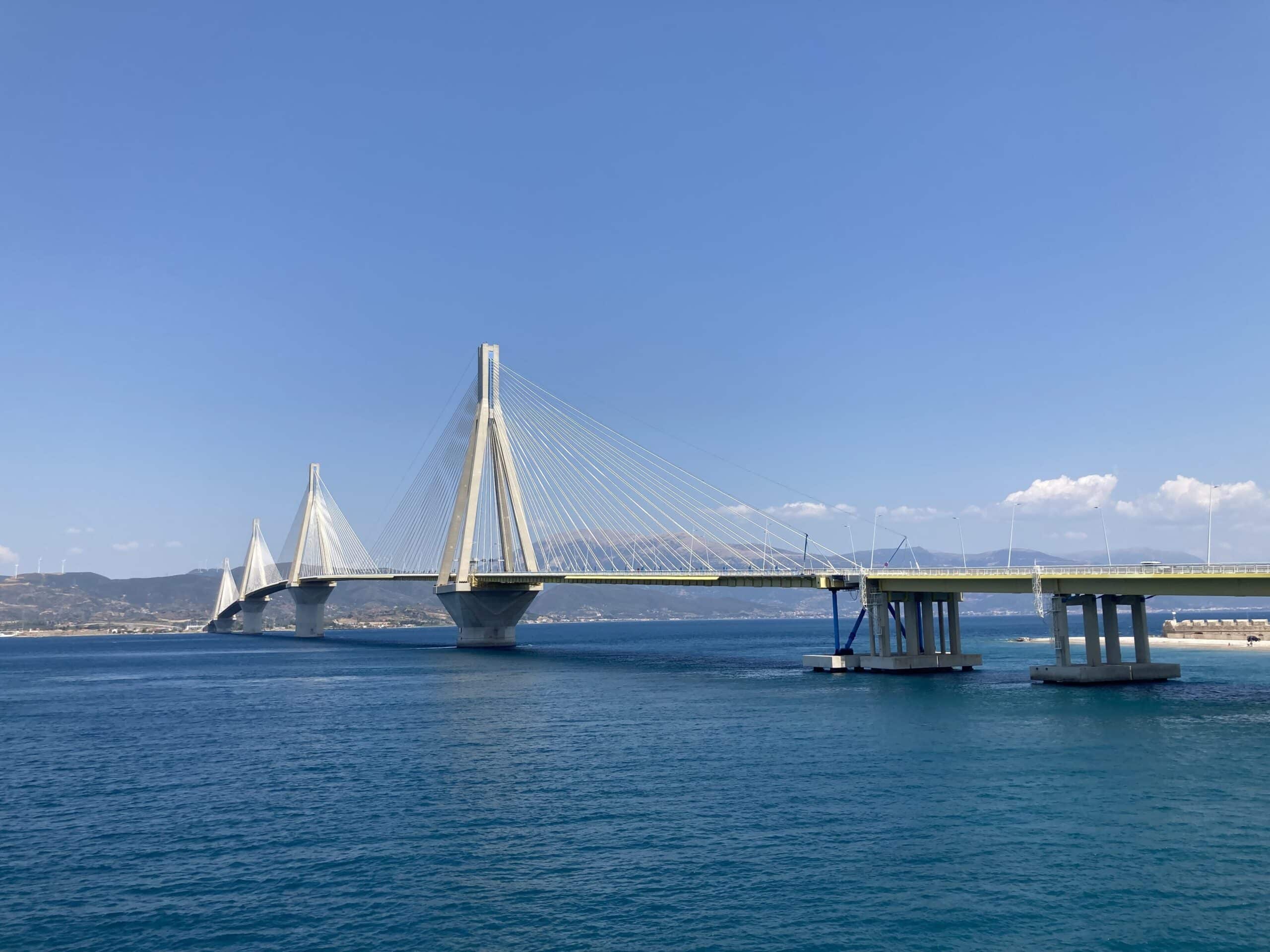
Rio Antirio Bridge in Patras, Greece
Greece is using AI, sensors, and digital twins to monitor aging bridges in real time and detect structural risks earlier. Credit: Wikimedia Commons / Awinch1001 / CC BY SA 4

Greece is turning to artificial intelligence, Internet of Things sensors, and digital twins to monitor aging bridges in real time, as the country moves toward a more preventive model for infrastructure safety.

The program, known as Smart Bridges, is being implemented by the Technical Chamber of Greece under the responsibility of the Ministry of Infrastructure and Transport. It is funded through the European Union’s NextGenerationEU mechanism as part of Greece’s Recovery and Resilience Plan, Greece 2.0.

The project is designed to provide authorities a live picture of how bridges behave under traffic, weather, and environmental stress. Rather than relying solely on periodic visual inspections, engineers can now receive continuous data from sensors installed on selected road and railway bridges.

Greece builds digital shield for aging bridges

The Smart Bridges system is already monitoring 271 bridges across the country. The program is expected to cover roughly six hundred road and railway bridges, establishing one of Greece’s most advanced digital infrastructure monitoring networks. The technology is based on Real-Time Structural Health Monitoring, a method that uses sensors to record how a structure responds to loads, vibration, movement, temperature changes, and other external pressures.

This information is then transmitted to digital platforms, where engineers can analyze it and detect unusual patterns. Artificial intelligence helps process large volumes of data and identify early warning signs that may require further inspection or maintenance. The goal is not only to detect damage but also to help authorities understand which bridges face the greatest pressure and where maintenance should be prioritized.

Sensors already reveal heavy traffic loads

Early findings show why continuous monitoring matters. On a bridge along the Axioupoli–Goumenissa national road in Kilkis, sensors recorded more than one thousand excessive load events over a three-month period. In Larissa, on a bridge on Karamanli Street above a railway line, the system recorded more than two thousand significant load events during the same period.

Together, these figures show the value of real-time data. Heavy vehicles, repeated traffic loads, climate conditions, and decades of use can all affect the condition of bridges. Without continuous monitoring, many of these stressors may remain invisible, leading to more serious damage.

Digital twins bring infrastructure into the data age

A central part of the project is the creation of a digital twin for each monitored bridge. This is a dynamic digital model of a real structure. It is updated as new data comes in from sensors, allowing engineers to compare expected behavior with actual performance.

This makes it possible to detect minor changes in a bridge’s condition over time. It can also help authorities plan maintenance more efficiently, reduce emergency repairs, and make better use of public funds. In this way, the system is meant to transform bridges from passive structures into monitored infrastructure that continuously reports on its own condition.

A major EU-funded infrastructure project

The Smart Bridges project is funded through the European Union’s NextGenerationEU mechanism under Greece’s Recovery and Resilience Plan, Greece 2.0. The project’s budget increased as its scope expanded. Greece 2.0 initially listed Smart Bridges at €222.4 million ($256.2 million), with €80.2 million ($92.4 million) coming from Recovery Fund financing.

A later official amendment raised the approved total budget to €285.3 million ($328.7 million) after 151 additional bridges were added to the project. The funding supports the installation of monitoring systems, the development of digital bridge models, the collection of real-time structural data, and the supervision of hundreds of road and railway bridges across Greece.

Aging infrastructure becomes a national challenge

The project comes at a time when Greece, like many other European countries, faces the challenge of maintaining infrastructure built decades ago. Numerous bridges remain essential to daily transport, freight movement, and regional connectivity. However, aging materials, heavier traffic, extreme weather, and limited maintenance budgets can increase structural pressure over time.

The Smart Bridges program reflects a wider shift in public infrastructure policy: from repairing damage after it appears to identifying risks earlier and acting before issues escalate.

Greece looks beyond bridges with a wider infrastructure safety plan

The Smart Bridges program has also opened up a broader debate about how Greece should monitor and maintain critical public infrastructure in the years ahead. The Technical Chamber of Greece has proposed the establishment of a mandatory National Infrastructure Registry, a centralized database that would record the condition, ownership, and maintenance needs of public assets across the country.

Such a registry would help authorities move away from fragmented records and provide the state with a clearer overview of which structures require inspection, repair, or long-term investment. The chamber has also called for wider pre-earthquake inspections, better integration of structural safety checks into building renovation programs, and more efficient use of Smart Bridges data by ministries, civil protection authorities, regional governments, and municipalities.

  •  

The Modern Greek Philosopher Who Chose Death

Dimitris Liantinis, the Greek professor and philosopher who chose his own death.
Dimitris Liantinis, the Greek professor and philosopher who chose his own death. Credit: Liantinis.org
Dimitris Liantinis was a Greek philosopher and professor who believed that ancient Greeks were so preoccupied with the idea of death that it formed the basis of their entire culture. He then disappeared very mysteriously, with some positing that he committed suicide.

Dimitris Liantinis’ early life

Dimitris Liantinis was a professor of the School of Philosophy at the University of Athens, where he taught a class in the philosophy of education and the teaching of Greek language and literature. He also authored nine books, all written in Greek and focused on philosophy and education.

His last name at birth was Nikolakakos, but he changed it to Liantinis to honor his place of birth, the village of Liantina in the prefecture of Laconia.

He completed his high school education in Laconia and, in 1966, graduated from the Department of Literature of the School of Philosophy at the University of Athens. He taught literature at secondary education level from 1968 to 1970 and from 1973 to 1975.

From 1970 to 1972, Liantinis was in Munich, Germany, learning and studying the native language. At the same time, he worked there as a teacher of classical literature at the private Greek high school Otto Geselschaft.

In 1975, he embarked on graduate studies in the School of Philosophy at the University of Athens and was appointed a teaching assistant at the Laboratory of Education. He got his PhD in 1978 with honors. The subject of his thesis was: “The presence of Hellenic spirit in the Duino elegies by Rainer Maria Rilke.”

As a professor, he gave many training seminars and lectures to teachers of secondary education level in Greece.

The Greek professor’s philosophical views

Liantinis’ ideas were strongly influenced by the philosophy of ancient Greece, as well as the ideals of the Romantic movement and the works of Friedrich Nietzsche. The professor made several references to the scientific progress of his time, particularly in the area of cosmology, and he made efforts to formulate a connection between that and the existence and nature of God.

He wrote at great length about education, and some of his work focused on what he considered to be the moral and intellectual decline of modern Greeks compared to their ancestors.

To further solidify his position, Liantinis devoted large parts of his body of work to defining exactly what the real value of ancient Greece was, as well as the actual worldview that they held. He argued against the notion that ancient Greece, although ahead of its time for most of antiquity and possibly the Middle Ages, was eventually superseded by the advancements of Renaissance Europe.

In contrast, he believed that the Greeks possessed a complete culture, a kind of super-set for all Western cultures, past and present. As an example, in his book Gemma, he argued that “the Greeks did not need psychoanalysis because they had tragedy.”

This period of intellectual magnificence was short-lived, and Liantinis wrote that “it would be a sign of honesty if the Greeks were to stop philosophizing right after Aristotle.”

He added that today, Greeks are completely unknown as “for the Europeans, we, the ‘New-Greeks,’ are but a faceless bunch, something of a Balko-Turkish Arab. We are the Orthodox with the Russian-like writing and the domes on our village houses.”

Death was also central to the professor’s work and, as he claimed, that of the ancient Greeks. He refuted the idea that ancient Greece was a culture of playful joyfulness and argued that the Greeks had instead presented us with a world of infinite melancholy, a proposition that is consistent with that of Nietzsche, whom he greatly admired.

Their philosophy was a study of death, according to Liantinis, and their conclusions were absolute and hard to accept since they saw death as a final end with no afterlife or moral rewards for the life lived on earth.

The Greek professor’s views on death

Liantinis believed that death as a topic occupied the ancients to such a degree that one could see their whole culture arising from the radical views they held on the subject.

The professor believed the ancient Greeks saw death as an unchanging cosmic law and did not associate whatever afterlife they had conceived with a system of divine punishment or reward like the Abrahamic religions. Although individual myths, such as that of Sisyphus who was condemned to eternal punishment in the realms of Hades, did exist, they were largely exceptions to the rule and never developed into a proper system of beliefs on life after death.

In one of his lectures,[5] Liantinis said Homer describes a scene where the hero, before engaging him in battle, says to his opponent, “The race of men is related to that of leaves, as we momentarily stand fresh on the tree branch, then quickly surrender to the wind and rain.” The lyric poet Pindar also questions in his works: “What are we [men] but dreams of shadows.”

Liantinis’ strange disappearance

On June 1, 1998, Liantinis disappeared, leaving a letter for his daughter, Diotima, where he revealed his decision to vanish on his own free will after lifelong consideration and preparation.

Liantinis’ disappearance evoked many speculations from the public, with some believing he had taken his own life in protest against what he saw as the lack of values in modern Greek society.

Seven years after the professor’s death, Panagiotis Nikolakakos, his cousin, showed Diotima to the crypt where her father lay in the area of the Greek mountain Taygetos. Nikolakakos had been instructed to do this by the late professor before his departure.

Several thorough forensic tests and analyses proved the skeleton in the crypt to be that of Liantinis, but the exact date and cause of his death remain unknown since no lethal substance was detected.

Despite his will stating that his bones should remain on Taygetos, he was finally buried at the cemetery of Kechries near the city of Corinth.

In his last letter to his daughter, he wrote: “My last act has the meaning of protest for the evil that we, the adults, prepare for the innocent new generations that are coming. We live our life eating their flesh. A very bad evil. My unhappiness for this crime kills me.”

  •  

The Neighboring Cultures of the Ancient Greeks

Scythian rider
A gold plaque depicting a Scythian on horseback. Credit: Public Domain / Wikimedia Commons

The ancient Greeks, renowned for their cultural and intellectual achievements, interacted with numerous neighboring cultures that influenced and enriched their own civilization. Understanding these lesser-known cultures provides valuable insights into the complex web of interactions that shaped the ancient world, making this topic still relevant today.

As one of the most popularly studied civilizations of antiquity, the ancient Greeks tend to overshadow many of the neighboring cultures they interacted with.

However, the Greeks shared the ancient world with a myriad of other interesting cultures and civilizations, some of which are severely underappreciated in mainstream historical discourse.

In this article, we’ll be skipping over the other “heavyweights” of the ancient world, such as the Romans, Egyptians, Persians, and Phoenicians to focus on some of the lesser-known cultures the Greeks were familiar with to various extents.

What did the ancient Greeks think of neighboring cultures?

The term “barbarian” likely finds its roots in the Sumerian word “barbar,” which meant “foreigner.” In Greek, it served as both a loan word and an onomatopoeic representation, mimicking the unintelligible babbling sounds that the Greeks associated with foreigners speaking their languages.

Originally, “barbaroi” served as a neutral, collective name for all non-Greeks, without inherently negative connotations. However, over time, the term acquired a negative meaning, reflecting the prevailing Greek perception of non-Greeks as uncivilized or inferior.

As noted by the academic Stavros Moutsios,  “This political designation of the barbarians, however, did not entail lack of acknowledgment nor of admiration of their achievements.” Indeed, the ancient Greeks often displayed a great deal of curiosity toward neighboring cultures and civilizations.

A good example of this was the practice of religious syncretism, whereby the Greeks would merge the gods of their pantheon with similar foreign deities. For example, the Graeco-Egyptian god Serapis possessed a combination of the Egyptian deities Osiris and Apis with the Greek deities Hades and Demeter.

Naturally, the perceptions of the Greeks toward other cultures varied a great deal. Often, our modern preconceptions of ancient peoples are shaped by the surviving literary sources written by ancient Greek authors about neighboring peoples who were themselves not literate.

The Scythians

The Scythians were one of the most enigmatic peoples of antiquity, famous for their mastery over horses. To call the Scythians “neighbors” of the ancient Greeks is somewhat of a misnomer since the Scythians were nomads and had no fixed borders, but the Greeks had fairly frequent contact with them through trade and war.

The Scythians were an Eastern Ianic people who inhabited the region north of the Black Sea, in present-day Ukraine, southern Russia, Kazakhstan, and parts of Central Asia, from around the 9th century BC to the 4th century AD.

Our main source on the perceptions of the ancient Greeks regarding the Scythians is the accounts of the historian Herodotus of Halicarnassus and later Greek writers. Incidentally, Herodotus, the”Father of History”, is also our main literary source on the Scythians generally.

According to Herodotus, the arrival of the Scythians led to conflict among the Cimmerians, with the royal tribe wanting to defend their lands and the rest of the population seeking to flee. Another account stated that the Scythians chased the Cimmerians out of their territory, forcing them to migrate south into West Asia.

Scythian
A Scythian depicted on ancient Greek red-figure pottery. Credit: Sailko / CC BY-SA 3.0 / Wikimedia Commons

As time passed, the image of the Scythians in Athens became the quintessential stereotype used for non-Greeks, and they were associated with drunkenness due to Greeks’ caricatural representation of foreigners as unmoderated drinkers.

Later Greek literature transformed the Scythian prince Anacharsis into a legendary figure representing “Barbarian wisdom.” He became one of the Seven Sages of Greece and an ideal “man of nature” or “noble savage” figure. Ephorus of Cyme, a 4th-century BC historian, idealized the Scythians as “invincible” people, creating a fictitious account of a legendary Scythian king named Idanthyrsos who defeated the legendary pharaoh Sesostris and ruled all of Asia. This perception of the Scythians as a powerful and wise people became a tradition in Greek literature.

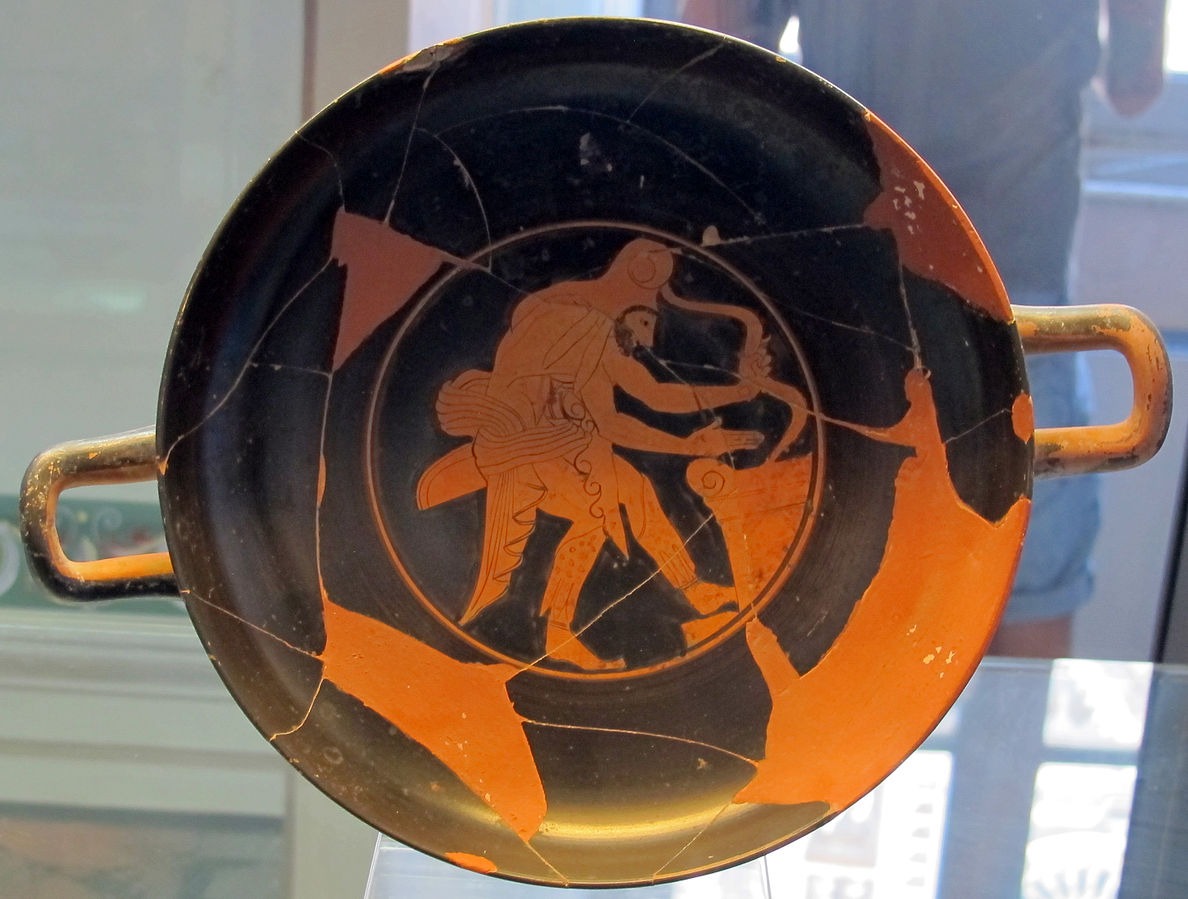
The Scythians were also included in Greek mythology, with mythical Scythian characters appearing in stories. Herodotus of Heraclea, for instance, portrayed Teutarus, a mythical Scythian, as a herdsman who served Amphitryon and taught archery to Heracles. Additionally, the Titan Prometheus was described as a Scythian king, and his son Deucalion was also linked to the Scythians in Greek myths.

The Thracians

The Thracians were a group of Indo-European-speaking people who inhabited significant portions of Southeast Europe during ancient history. They mainly resided in regions that now correspond to modern-day Bulgaria, Romania, and northern Greece. However, Thracian settlements were not confined solely to Southeast Europe; they also extended to north-western Anatolia (Asia Minor) in what is present-day Turkey.

The Greeks and Romans described Thracian culture as tribal, and they remained largely disunited until the establishment of the Odrysian kingdom. The Odrysian Kingdom was a state union of over 40 Thracian tribes and 22 kingdoms that flourished from the 5th century BC to the 1st century AD. It encompassed mainly present-day Bulgaria, with extensions into parts of Southeastern Romania (Northern Dobruja), Northern Greece, and modern-day European Turkey.

By the fifth century BC, Herodotus referred to the Thracians as the second-most numerous people in the known world after the Indians and potentially the most powerful, had it not been for their lack of unity. The Thracians were generally not known for constructing cities, and Seuthopolis was their sole polis.

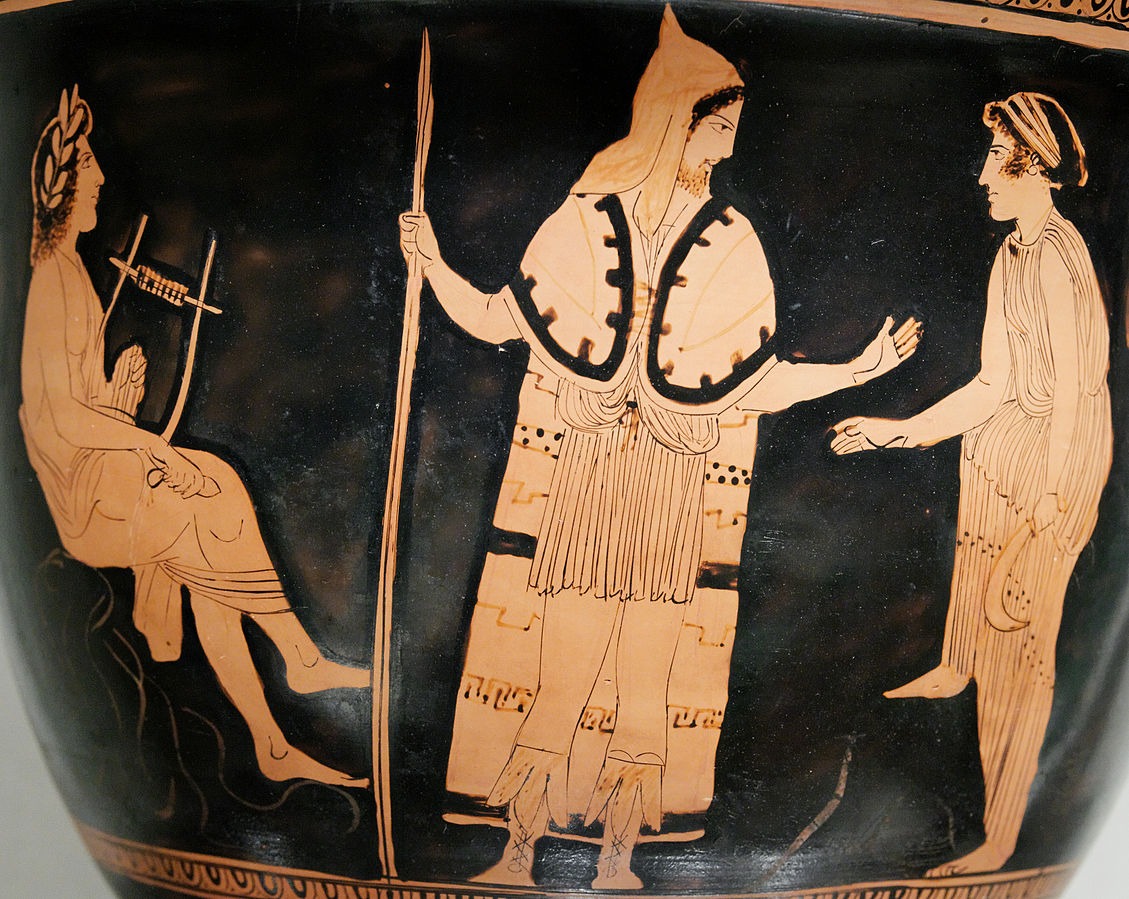
Thracians Greek pottery
Orpheus amongst the Thracians. Side A of an Attic red-figure bell-krater, c. 440 BC. Credit: Metropolitan Museum of Art / CC BY 2.5

The Greeks frequently fought with the Thracians but also admired them for their martial prowess and hired them as mercenaries. Both Alexander the Great and his father Philip II fought on the Thracians on various occasions.

The Thracian ruler Kersebleptes was Philip’s most consequential Thracian enemy. Over a series of campaigns from 356 to 340 BC, Philip II succeeded in bringing Kersebleptes under his control as a tributary vassal, and in the process, he conquered a substantial portion of Thrace. Alexander again successfully fought the Thracians – among the other peoples – during the Balkan Campaign of 335 BC.

The Phrygians

The Phrygians were an ancient Indo-European-speaking people who resided in central-western Anatolia. Ancient Greek authors used “Phrygian” as a broad term to refer to a diverse ethnocultural grouping situated mainly in the central regions of Anatolia, rather than denoting a single “tribe” or “people.”

The ethnolinguistic homogeneity of the Phrygians is subject to debate. According to Herodotus, the Phrygians were originally dwelling in the southern Balkans under the name of Bryges (Briges), but they later changed their name to Phryges after migrating to Anatolia through the Hellespont.

While numerous historians purport the theory of a Phrygian migration from Europe to Asia Minor around 1200 BC, Anatolian archaeologists have largely dismissed this notion. Instead, it has been proposed that the Phrygian migration to Asia Minor, which Greek sources indicate took place shortly after the Trojan War, actually occurred much earlier and in multiple stages.

Phrygian soldiers
Phrygian soldiers depicted on a reconstruction of a Phrygian building in Turkey. Credit: Carole Raddato / CC BY-SA 2.0 / Wikimedia Commons

The Greeks and Phrygians had significant cultural connections, particularly in the realm of music. The earliest traditions of ancient Greek music were partly influenced by Phrygian music, which was transmitted through the Greek colonies in Anatolia. The Phrygian mode, known as the warlike mode in ancient Greek music, was one of the musical elements borrowed from the Phrygians.

The Phrygian king, Midas, renowned for his “golden touch,” was said to have been tutored in music by the legendary Orpheus himself, according to mythological accounts. Moreover, the aulos, a reed instrument with two pipes, was another musical invention attributed to Phrygia and subsequently embraced by the Greeks.

In classical Greek iconography, Paris, a Trojan prince famous for abducting Helen in the Iliad, is depicted as non-Greek by wearing a Phrygian cap. This distinct headgear was also worn by Mithras and has persisted in modern imagery as the “Liberty cap” of the American and French revolutionaries, symbolizing freedom and rebellion. More amusingly, the Smurfs also wear the Phrygian cap.

The Importance of Cultural Exchange in the Ancient World

In the context of increasing globalization, examining how ancient cultures, like the Greeks and their neighbors, interacted and exchanged ideas is crucial. These exchanges facilitated the spread of technology, religious practices, and art forms, which had a profound impact on the development of Western civilization.

  1. Technological Exchange: The Greeks adopted various technologies from their neighbors, such as the alphabet from the Phoenicians, which became the basis for the Greek writing system. This exchange was pivotal in the development of Greek literature and philosophy.
  2. Religious Syncretism: Religious practices were often blended, as seen in the fusion of Greek and Egyptian deities into figures like Serapis, symbolizing a blending of beliefs that enriched both cultures.
  3. Artistic Influences: Greek art, especially in pottery and sculpture, shows influences from Thracian, Scythian, and Phrygian styles, highlighting how these cultures contributed to what we now consider classical Greek art.
  •  

Diomedes: The Greek Warrior Whose Extraordinary Bond With Horses Made Him a Trojan War Hero

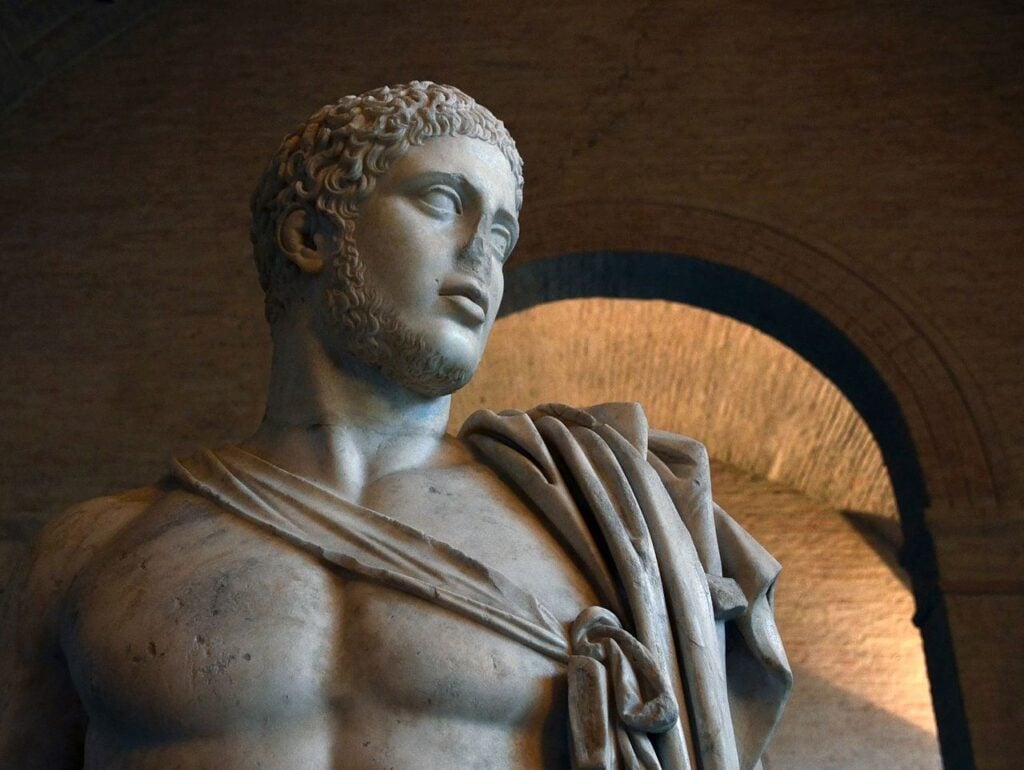
Statue of Greek hero Diomedes
Greek hero Diomedes fought in battle with the help of his divine horses. Roman copy of Diomedes statue attributed to Kresilas 440-430 BC. Exhibited at the Glyptothek in Munich, Germany. Photo credit: Bassil Wikimedia Commons CC0

Diomedes was a distinct Greek hero whose story in Homer’s Iliad is marked by his battle skills, courage, intelligence, and aid from the gods, as well as his association with horses of divine ancestry. However, he is often overshadowed by legendary figures such as Achilles and Odysseus in accounts of the Trojan War. Nevertheless, Diomedes, the king of Argos, remains a central figure in Homeric tradition, particularly within the Iliad itself.

In Craig Russell’s paper, “Diomedes’ Magical Horses,” the scholar explores the Greek hero’s extraordinary relationship with horses, especially those believed to possess exceptional ancestry. This is an often overlooked aspect of the Greek hero’s identity. Drawing on mythological sources, Russell demonstrates that Diomedes’ horses are not merely possessions or instruments of war but symbols of heroic excellence, divine favor, and aristocratic status. Their significance reveals key aspects of Greek heroic culture and highlights the close connection between humans, animals, and the gods.

In Greek mythology, horses frequently symbolize nobility, power, and divine intervention. Greek heroes and kings are often associated with divine horses that distinguish them from ordinary warriors. Russell argues that Diomedes’ own horses belong within this tradition. According to Homeric accounts, the ones ridden by Diomedes during the Trojan War were descended from immortal steeds originally given by Zeus to the Trojan Prince Tros. Through a long genealogical chain, these remarkable horses eventually came into the possession of Diomedes, the Argive Greek hero. Their lineage connected them to the divine realm and elevated their status beyond that of ordinary warhorses.

The Greek hero Diomedes and his divine horses as a unified team

The divine ancestry of Diomedes’ horses is particularly significant because Greek mythology frequently draws on genealogy to establish authority and prestige. Just as heroes traced their lineage to gods and legendary ancestors, animals associated with heroes could also possess sacred origins. Russell emphasizes that the horses’ connection to Zeus reflects the broader Greek belief that excellence often derives from divine favor. By possessing such animals, Diomedes demonstrates not only wealth and military strength but also a special relationship with the gods. The horses become visible markers of his status.

Russell further notes that Diomedes’ horses are closely linked to his success on the battlefield. In the Iliad, mobility and speed are essential components of warfare. Chariots allowed warriors to move quickly across the battlefield, pursue enemies, and withdraw from danger. The quality of a hero’s horses could therefore determine military effectiveness. Diomedes’ steeds are repeatedly described as powerful, swift, and reliable, characteristics that mirror the hero’s own virtues. Their performance contributes directly to his battlefield achievements, reinforcing the idea that the hero and his horses function as a unified team.

The connection between Diomedes and his horses also reflects the broader theme of the relationship between humans and animals within Greek epic literature. Unlike modern perspectives that often separate humanity from nature, Greek mythology frequently portrays animals as intelligent companions capable of sharing in heroic destinies. Russell argues that Diomedes’ horses should be understood within this context. They are not passive creatures but active participants in the hero’s adventures. Their divine heritage grants them an elevated status, and their loyalty reflects the mutual dependence between warrior and steed.

Horses as symbols of status and power

An important aspect of Russell’s analysis involves comparison with other famous horses in Greek mythology, most notably the immortal horses Xanthus and Balius, owned by Achilles. Like Diomedes’ horses, these animals possess divine ancestry and extraordinary abilities. The comparison reveals a recurring pattern in heroic narratives: remarkable Greek heroes are often accompanied by exceptional animals whose qualities complement their masters. However, Russell suggests that Diomedes’ horses have received far less scholarly attention despite their comparable significance. This neglect may stem from the greater fame of Achilles, whose dramatic story dominates much of the Homeric tradition.

The symbolic importance of horses extends beyond warfare. In Ancient Greek society, horse ownership was associated with aristocratic status and political power. Maintaining horses required substantial wealth, making them markers of elite identity. Russell highlights this social dimension in his discussion of Diomedes. As a king and military leader, the Greek hero embodies the values of the warrior aristocracy. His possession of magnificent horses reinforces his position within the social hierarchy and affirms his legitimacy as a ruler. Thus, the horses function not only as military companions but also as indicators of social prestige.

Another key theme in Russell’s essay is the relationship between divine gifts and human responsibility. Greek mythology often portrays gifts from the gods as both blessings and challenges. Heroes who receive divine assistance must prove themselves worthy of it through courage, wisdom, and self-discipline. Diomedes’ horses exemplify this principle. Their divine lineage grants him advantages, but those become meaningful only through Diomedes’ own skill and character. Russell’s interpretation underscores the central Greek idea that excellence results from the combination of divine favor and human achievement.

Athena’s intervention in the Trojan War

The role of the goddess Athena further strengthens this interpretation. Among all the Olympian deities, Athena is the divine patron most closely associated with Diomedes. During the Trojan War, she grants him extraordinary strength and clarity of vision, enabling him to confront even gods, such as Ares, the god of war, on the battlefield. Russell suggests that Diomedes’ horses complement this broader pattern of supernatural support. Together, Athena’s guidance and the horses’ divine ancestry create an image of a Greek hero uniquely favored by divine powers. Yet, Diomedes never relies solely on these advantages; his personal bravery remains essential to his success.

Russell also highlights the narrative function of the horses within epic storytelling. In oral tradition, recurring symbols help audiences recognize and remember key figures. The mention of Diomedes’ horses serves as such a marker, reinforcing his heroic stature. Whenever they appear, listeners are reminded of his exceptional qualities and distinguished lineage. This symbolic role contributes to the enduring significance of the horses within the mythological tradition.

Furthermore, the story of Diomedes’ horses illustrates the interconnected nature of Greek mythology. Their lineage links different generations, kingdoms, and legendary figures. Such connections reflect a characteristic feature of Greek myth in which individual stories rarely exist in isolation. Instead, heroes, gods, and extraordinary creatures form part of a vast narrative network. Russell demonstrates that tracing the history of Diomedes’ horses reveals broader patterns of inheritance, divine intervention, and heroic identity that extend far beyond a single tale.

According to Russell, Diomedes’ horses are far more than simple war animals. Their divine ancestry, battlefield importance, symbolic value, and connection to aristocratic culture make them essential to the Greek hero’s identity. They embody Greek ideals of excellence, divine favor, and noble status while highlighting the close relationship between humans, animals, and the gods.

  •  
❌