The Middle East conflict has caused global stockpiles of oil to plummet to their lowest level since 2003 while petroleum prices have spiked, according to a new energy data report.
The Middle East conflict has caused global stockpiles of oil to plummet to their lowest level since 2003 while petroleum prices have spiked, according to a new energy data report.
Energy Secretary Chris Wright predicted Tuesday that the amount oil moving through the Strait of Hormuz will “continue to rise” as the U.S. and Iran work to end the 100-plus day conflict. During an Atlantic Council event, Wright said that traffic through the strait, a key oil shipping chokepoint, was “rising very meaningfully.” He added that oil…
Energy Secretary Chris Wright predicted Tuesday that the amount oil moving through the Strait of Hormuz will “continue to rise” as the U.S. and Iran work to end the 100-plus day conflict. During an Atlantic Council event, Wright said that traffic through the strait, a key oil shipping chokepoint, was “rising very meaningfully.” He added that oil…
Earthquake was region’s strongest tremor in nearly 150 years and was also felt in parts of Mexico including Cancún
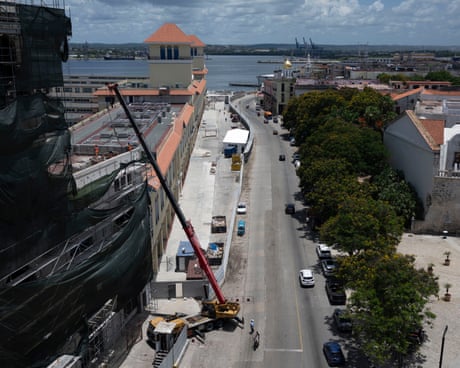
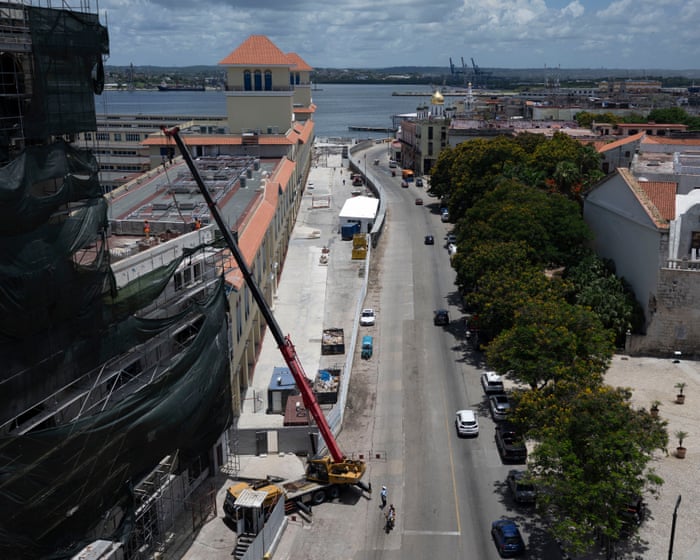
An earthquake on Monday off the coast of Cuba, which was that region’s strongest tremor in nearly 150 years, could be felt in Florida and parts of Mexico.
The 6.1-magnitude earthquake, which struck in the afternoon, occurred approximately 65 miles (105km) north-west of Mantua, Cuba, according to the US Geological Survey (USGS). The USGS added that the earthquake had a depth of 16 miles.
Nearly 6 in 10 adults in the U.S. expect gas prices to worsen over the next year, as the ongoing Iran war continues to roil energy markets, according to a new poll. The survey, released Monday by Reuters/Ipsos, found that 59 percent of 4,531 respondents said that gas prices will go up in the next…
Nearly 6 in 10 adults in the U.S. expect gas prices to worsen over the next year, as the ongoing Iran war continues to roil energy markets, according to a new poll. The survey, released Monday by Reuters/Ipsos, found that 59 percent of 4,531 respondents said that gas prices will go up in the next…
Concerns over the spread of the New World screwworm are growing after multiple new cases were confirmed on Monday, and as state and federal officials ramp up efforts to contain the parasite.
Concerns over the spread of the New World screwworm are growing after multiple new cases were confirmed on Monday, and as state and federal officials ramp up efforts to contain the parasite.
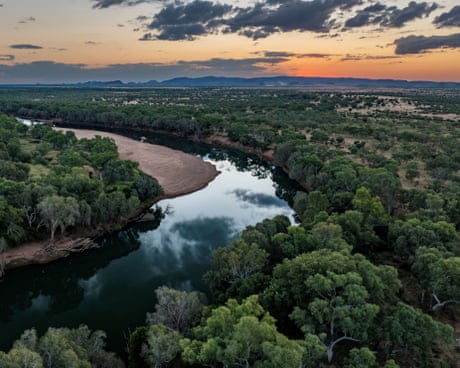
The federal government has repeatedly raised concerns about an American company’s bid to frack for gas in Western Australia’s Kimberley region, part of the world’s largest and most intact tropical savanna.
Texas-based Black Mountain Energy, through its subsidiary Bennett Resources, is seeking federal approval to drill 20 gas wells for its Valhalla project west of Fitzroy Crossing.
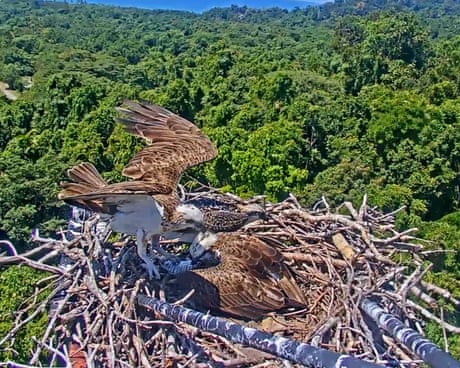
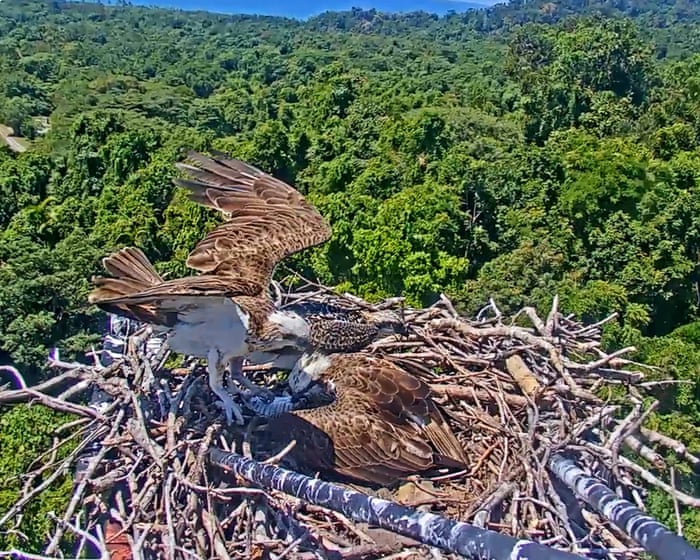
It started by chance – but it should have come as no surprise that two ospreys would pick a hi-tech research facility to make their home.
James Cook University’s 47-metre tall crane towers over the far-north Queensland rainforest canopy, making it the perfect nesting place for the seabird.
Sharp rise in hospital visits will in turn drive up annual healthcare costs for heat-related conditions to over $1bn
People in the US are poised to endure another summer of unusually ferocious heat and there will be little respite in the years ahead, with a new study finding that the coming 15 years could see a doubling in hospitalizations due to heat-related illnesses.
The number of annual heat-related emergency department visits or hospitalizations across the US are set to rise from about 109,000 cases a year to as many as 237,000 cases by 2040, the new research has estimated.
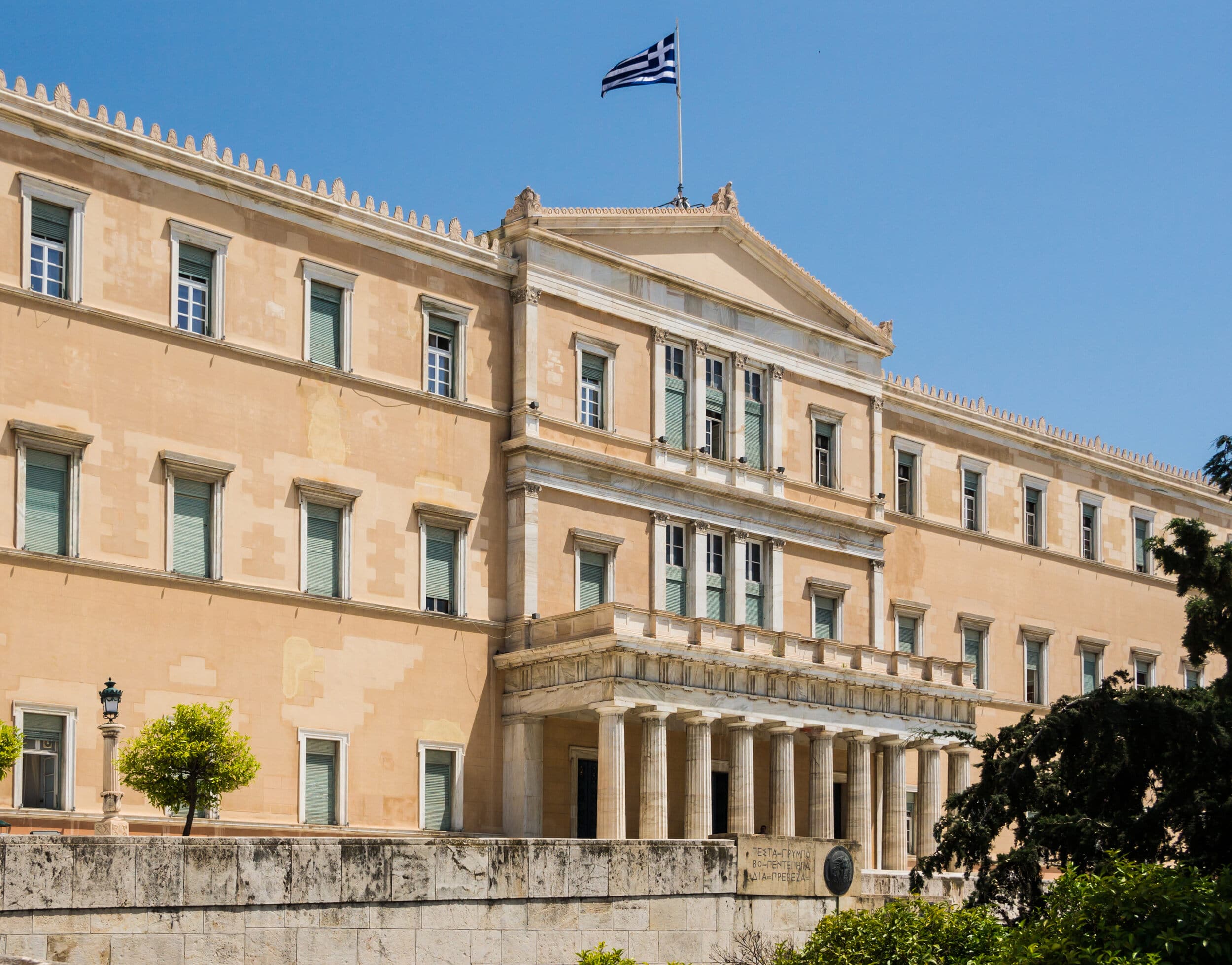
Hellenic Parliament in Athens. Greece’s Ombudsman reported record complaints over failures across public services. Credit: Wikimedia Commons/ Jebulon / Public Domain
Greece’s Ombudsman, the country’s independent administrative watchdog, received more than 20,000 complaints in a single year for the first time in its history, according to its latest quarterly bulletin, highlighting persistent failures across the country’s public administration.
The Ombudsman reported that the upward trend recorded in 2025 continued during the first four months of 2026 with no sign of slowing down. The figure underscores the strained relationship between citizens, residents, legal entities, and public services in Greece, where bureaucracy remains one of the most persistent sources of public frustration.
The bulletin, which covers January to April 2026, details cases involving social insurance, labor rights, disability certification, digital access to public services, and environmental protection.
Greece’s ombudsman acts on complaints over large family exemption
One notable case involved a large family that lost its exemption from municipal fees after some of its children reached adulthood.
The competent authority had apparently treated the exemption as temporary, although Greek law provides lifetime protection for families with four or more children, a category that carries a specific legal status in Greece. Following the Ombudsman’s intervention, the authority restored the family’s lifetime exemption.
Low-income pensioners asked to repay state errors
The bulletin also refers to the pension agency operating under the legacy structure of the former Agricultural Insurance Organization (OGA), which Greece later absorbed into the unified social security body e-EFKA. The agency attempted to recover money from low-income pensioners in order to correct errors that its own employees had made over several years.
In a separate case, a disabled citizen was expected to go through a prolonged bureaucratic process simply to have a disability assessment issued by the Army’s Supreme Health Committee converted into digital form. The conversion was necessary to obtain Greece’s Digital Disability Card.
Greece’s ombudsman intervenes in labor rights cases
Labor rights also featured prominently in the Ombudsman’s findings. The authority recommended heavy sanctions against a company that unlawfully dismissed a pregnant employee.
It also secured recognition of a 22-day special leave entitlement for two mothers of children with developmental disorders after their public-sector employers had repeatedly refused to grant the leave.
Disabled citizens report conduct of physicians
The bulletin also highlighted a pattern of complaints from disabled citizens regarding the behavior of certain doctors at KEPA, Greece’s disability certification centers, which operate under e-EFKA.
Following the Ombudsman’s intervention, the agency issued instructions for behavioral training and the adoption of a professional code of conduct.
Environmental complaints include noise, flooding, and illegal construction
Environmental issues formed another major area of concern. The Ombudsman criticized the ministries of Health and Development as well as the police over a legislative gap in noise regulation. According to the authority, the gap leaves residents living near open-air concert venues without adequate protection from noise pollution.
In two separate cases, the Ombudsman referred local government inaction to prosecutors. The cases concerned delays in flood prevention projects and the failure to demolish illegal structures in Oropos, in East Attica, and Ikaria, an island in the Eastern Aegean.
In the northwestern region of Thesprotia, the Ombudsman’s intervention also halted the illegal infilling of a stream.
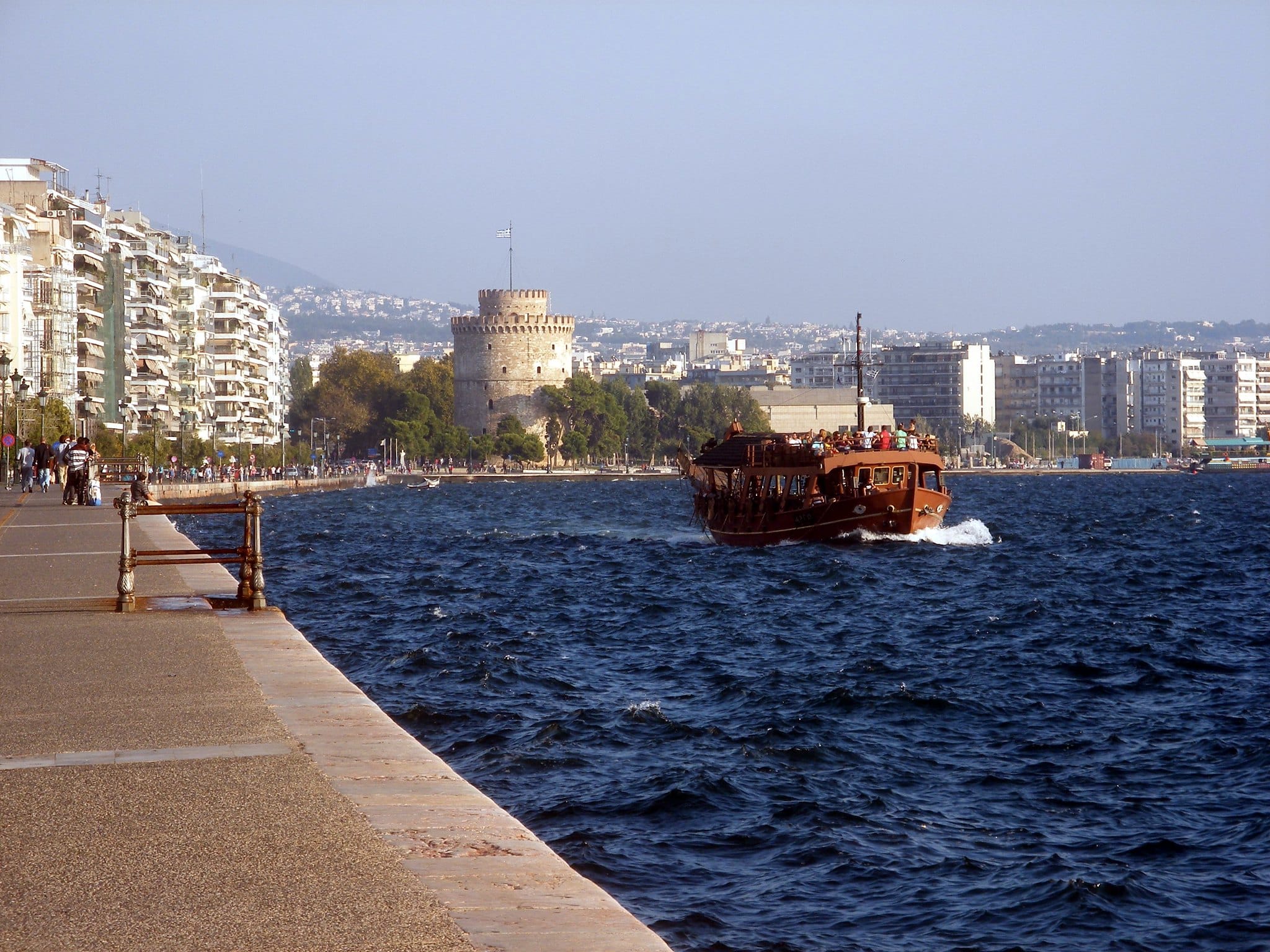
Thessaloniki waterfront and the White Tower on the Thermaikos Gulf, where algal blooms have triggered environmental concerns. Credit: Flickr / Anders Sandberg/ CC BY NC 2
A large algal bloom, also referred to in Greece as the “Red Tide,” has once again turned the waters of the Thermaikos Gulf along the Thessaloniki waterfront a murky brown, raising environmental concerns in Greece’s second-largest city as warmer weather and favorable winds intensify the phenomenon.
In recent days, large sections of the city’s seafront have been covered by a thick, brownish layer of phytoplankton slime. The bloom has produced unpleasant odors and altered the appearance of one of Thessaloniki’s most recognizable public spaces, affecting areas used daily by both residents and visitors.
Brown algal bloom spreads along Thessaloniki’s seafront
Drone footage highlights the scale of the algal bloom, showing brown waters stretching along Thessaloniki’s seafront from the Concert Hall area toward the city’s historic promenade.
According to local reports, rising temperatures and southerly winds have helped drive the algae toward the shoreline. As a result, the material has accumulated along the coast, forming a continuous layer across the water’s surface in several parts of the gulf.
Scientists point to eutrophication as cause of Thessaloniki waterfront algal bloom
Scientists attribute the phenomenon to eutrophication, a process driven by excessive concentrations of nutrients such as nitrogen and phosphorus entering the marine environment.
In the case of the Thermaikos Gulf, these nutrients can originate from urban wastewater, river runoff and agricultural fertilizers. Combined with higher sea temperatures, this leads to the creation of ideal conditions for the rapid growth of phytoplankton. This, in turn, can result in dense algal blooms that alter the color of the water and generate strong odors as the organic material begins to decompose.
Thermaikos Gulf remains vulnerable
Environmental experts have repeatedly warned that the Thermaikos Gulf is particularly vulnerable to such episodes due to long-standing pressures linked to urban development, agricultural activity, and climate-related factors.
Similar outbreaks have periodically been recorded in recent years, especially during warmer months, making algal blooms a recurring problem for Thessaloniki and the wider coastal area.
Cleanup operations underway as algal bloom spreads across Thessaloniki
The latest bloom follows earlier signs of eutrophication that have been reported in the Thermaikos Gulf since the beginning of the year.
Authorities have continued cleanup and monitoring efforts, including operations by the anti-pollution vessel Alkippi. The vessel has been deployed to assist in the collection of floating organic material and limit the impact of the bloom on coastal areas.
Long-term measures needed
Experts stress that algal blooms are generally natural biological processes, but they can be intensified by human activity and environmental pressures.
Reducing the frequency and severity of such outbreaks will require long-term measures to improve water quality, limit nutrient inflows, and strengthen environmental management across the wider Axios-Thermaikos Basin.
The U.S.-Iran war appears to have no end in sight, as it hit its 100-day mark over the weekend despite President Trump’s campaign promises to keep the U.S. out of long-term foreign conflicts. Trump denied ever promising not to start any new wars and disputed that Washington’s conflict with Tehran constituted an “endless war” during an…
The U.S.-Iran war appears to have no end in sight, as it hit its 100-day mark over the weekend despite President Trump’s campaign promises to keep the U.S. out of long-term foreign conflicts. Trump denied ever promising not to start any new wars and disputed that Washington’s conflict with Tehran constituted an “endless war” during an…
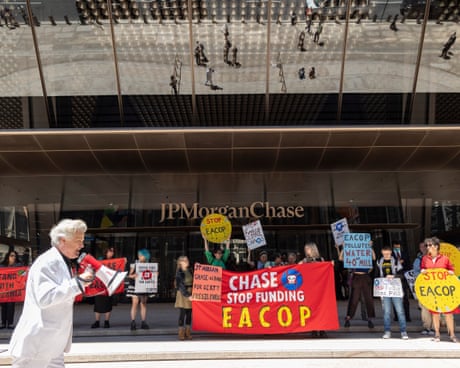
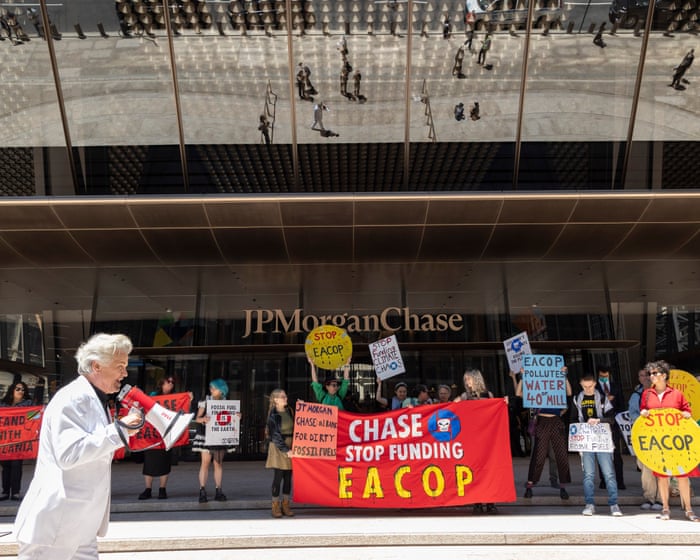
JPMorgan Chase leads 65 banks making decisions incompatible with restraining rising temperatures, researchers say
The world’s largest banks committed $906bn in financing to the fossil fuel industry last year, an “unfathomable” increase in investment locking in years more of coal, oil and gas production as the world continues to overheat, a new report has found.
The surge in new fossil fuel lending, up $64bn or nearly 8% on 2024, shows that the world’s largest 65 banks are making decisions incompatible with international agreements to restrain rising global temperatures, according to the coalition of environmental groups behind the new analysis.
Cerne Abbas giant. Credit: richie rocket. CC BY-2.0.
For more than 1,000 years, the Cerne Abbas Giant has stood on a hillside in Dorset, England, surviving wars, epidemics, and centuries of social change. Now, conservationists say increasingly unpredictable weather is threatening the famous chalk figure and forcing an earlier-than-usual restoration effort.
The 55-meter-tall (180-foot) giant, carved into a hillside above the village of Cerne Abbas, is one of Britain’s most recognizable landmarks. The figure depicts a naked man carrying a large club. For generations, residents helped maintain its bright white appearance by filling its outline with fresh chalk.
Today, the site is managed by the National Trust, which has traditionally re-chalked the giant about once every decade. However, conservation teams say changing weather conditions are making that increasingly difficult.
Weather speeds up restoration work
Around 300 staff members and volunteers are taking part in the latest restoration project. The effort involves carrying nearly 17 tons of fresh chalk up the steep hillside and packing it into the giant’s trenches by hand.
Workers first remove old and discolored material before mixing fresh chalk with water to create a paste. The new chalk is then pressed into the outline, helping restore the figure’s distinctive appearance.
The need for faster restoration became clear in 2019 when heavy autumn rainfall washed away much of the newly applied chalk shortly after conservation work had been completed.
England's famous Cerne Abbas Giant has survived for more than 1,000 years. Now, heavier rainfall, algae growth and erosion are forcing conservationists to restore the massive chalk figure earlier than planned. pic.twitter.com/0ShiLZzOYt
— Tom Marvolo Riddle (@tom_riddle2025) June 8, 2026
Conservationists also have concerns about algae growth. Mild, damp winters and warmer summers can create conditions that allow algae to spread across the chalk surface, causing the giant’s bright white outline to appear green and faded.
“In recent years, we’ve noticed algae growth starting to dull the giant’s bright white outline,” National Trust ranger Luke Dawson said.
Dawson cautioned against directly linking the changes to climate trends at a single site. “It’s one of these things we cannot really prove,” he told BBC News. “It is more just observation of what we are seeing up there.”
Researchers continue to debate the Giant’s origins
The Giant’s origins remain one of England’s enduring archaeological mysteries. Over the years, researchers suggested it could represent a prehistoric fertility symbol, the Roman hero Hercules, or even a satirical image of Oliver Cromwell.
Scientific dating has narrowed the timeline considerably. Researchers believe the figure was likely created between 700 and 1100 CE during the late Saxon period.
The Saxon dating has renewed interest in the Hercules theory. In a 2021 study published in the journal Speculum, researchers from the University of Oxford argued that the giant was originally carved as an image of Hercules.
They suggested it may have served as a landmark and gathering point for West Saxon forces during Viking attacks in southern England.
Conservation efforts expand beyond the hillside
The National Trust is also working to protect the landscape surrounding the Giant. A recent fundraising campaign helped secure 130 hectares of nearby grassland containing rare wildlife and important archaeological remains.
“The Giant was never meant to exist in isolation,” National Trust archaeologist Steve Timms said in a press release. He said protecting the surrounding landscape will help researchers better understand how people used and understood the area over thousands of years.

 Login
Login