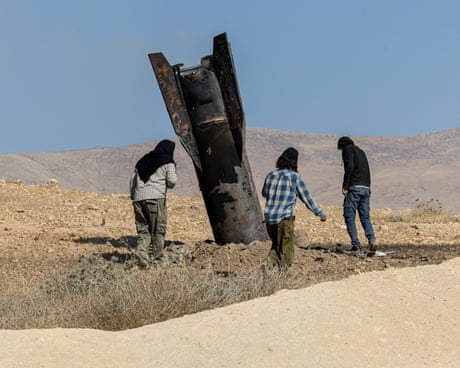
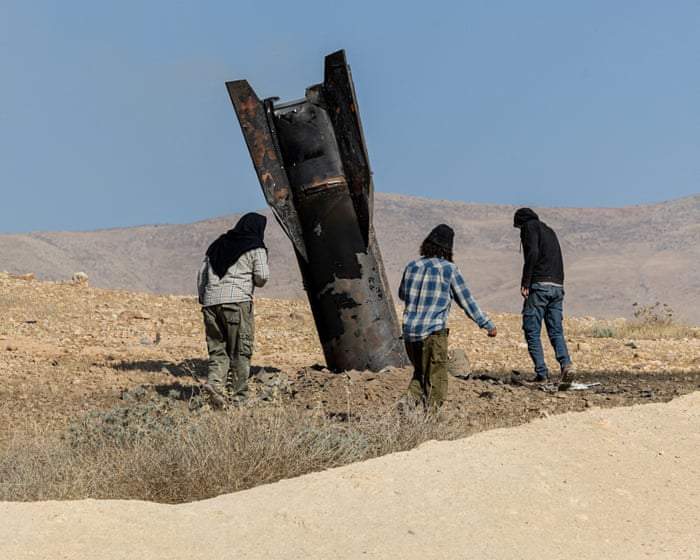
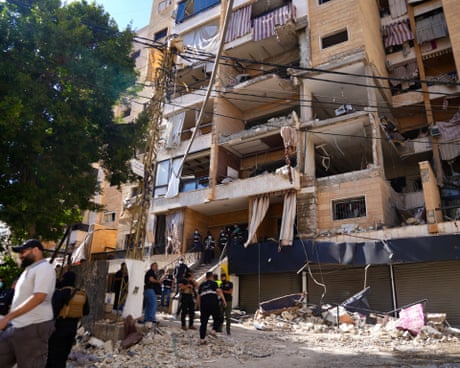
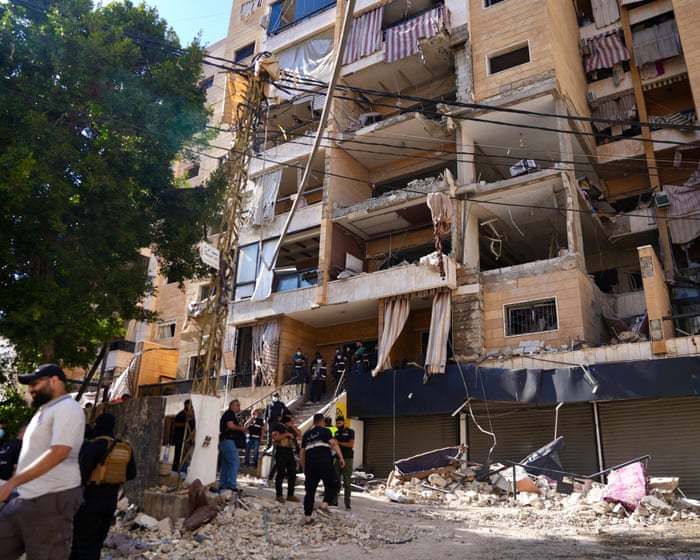
Updated 6/8/2026 7:25 PM EST At least five people have been killed and an unknown number of others wounded Monday in various Israeli strikes on southern Lebanon. At least one of the slain was a woman, targeted outside the women’s Islamic center in Zefta. Zefta appeared to be the main site of casualties early on […]
President Trump has voiced his frustration with Prime Minister Benjamin Netanyahu of Israel, but it is not clear how able he is to rein in Israeli military action.
Lebanon is now playing a key role in any ceasefire deal that Trump might think he has nailed with Iran. But can Hezbollah go rogue on all the main players?
Lebanon is now playing a key role in any ceasefire deal that Trump might think he has nailed with Iran. But can Hezbollah go rogue on all the main players?
Relationships are odd things and are often determined by how people stay together during the tough times, rather than when everything is rosy. But during these last few turbulent days, when Donald Trump frantically scrambles to save the remnants of a peace deal with Iran, one relationship has become paramount to the entire Middle East crisis: that of Hezbollah and Iran. Just how strong is this relationship, or was it always just a ’marriage of convenience’, hollow and unable to withstand the travails of regional tension?
While the Iranians walked away from talks with the U.S. because of Israel’s war in southern Lebanon, Trump realised how important this tiny country is – and will be – if any kind of deal is struck over opening the Straits of Hormuz. While on the one hand Iran has stepped up to the mark by supporting its proxy Hezbollah and has always included Lebanon in any peace deal or ceasefire, it is worth noting that the ties and responsibilities Iran has to Hezbollah are not as solid as many think.
Indeed, in the region, when you talk to geopolitical analysts, they always pontificate over how the West – and in particular Israel – places too much emphasis on Iran’s links to its regional proxies in Syria, Iraq, Yemen and Lebanon. They have long argued that Iran has less control over them than most pundits in Western media would assert.
In his most recent speech, the Hezbollah leader Naim Qassem denounced the deal as a “farce,” saying it would effectively divide southern Lebanon from the rest of the country, giving Israel an advantage to “kill in Lebanon.”
“We have given no commitment to anyone,” Naim said, as he urged the Lebanese government to call off talks with Israel and demanded Israel’s full withdrawal from Lebanese territory. “As long as the aggression continues, we will confront it with all the power we have been given.”
This reference, of course, was directed at the elite in Beirut, who are largely acting on the West’s political bequest in this tiny country – barely 240 km long – which was once a province of Syria.
But some wily analysts might read too much into his statement in the coming days. A few might mull over this comment and speculate that Hezbollah, under certain circumstances, has a wild card to play and is capable of going rogue, distancing itself from the arbitrary direction of Tehran.
Is it possible that the Iranians and the Americans could outmanoeuvre Israel and strike a provisional ceasefire deal, only for it to be scuppered by Hezbollah, which refuses to give up its fight in the south of the country against the IDF? Presently, this must be concerning Trump’s camp but will be amusing to Netanyahu, who probably thinks that Lebanon holds the key for him to continue the war and thus stay in power, avoiding corruption charges.
Hezbollah, for its part, is the most dangerous man in the room, simply because its fighters have nothing to lose. They are backed into a corner and have lost so much of their own land, with 600 killed and a million displaced since the last ceasefire in April was agreed. Militarily speaking, their best guerrilla-style fighting will be seen now, and so one could argue this is their moment. While it is true that the IDF have made significant gains against them, it is wholly under-reported how successful their fighters have been in blowing up IDF tanks, with some estimates claiming the number to be over 200. But victory for either side seems less significant, certainly for Netanyahu, who probably knows that his forces can never actually win against Hezbollah in Lebanon. That is not the point. The point is to keep the war going and use it as leverage against Trump and Iran, while keeping Netanyahu in office, protected from a peace scenario that would remove him from his job and prosecute him – exactly the same set-up that Ukraine’s President Zelensky enjoys.
Lebanon is an important pawn in the bigger game, as it can always be used by Netanyahu to undermine whatever Trump is doing – such as its bombardment of Beirut that killed 357 people on April 8, one day after the U.S. and Iran announced their own ceasefire deal.
But now all Netanyahu needs to do is to agree to the IDF respecting a ceasefire without actually respecting it, while pointing the finger at Hezbollah for supposedly breaking it. It will be a game that is hugely effective, as it will be impossible for Trump to consider Hezbollah as being honourable and the IDF as being duplicitous. Even from a PR perspective, it’s genius.
And so with this new ruse in play, much emphasis is placed on Hezbollah as it is caught between choosing to fight the IDF or accepting a peace deal that would effectively hand over huge swathes of southern Lebanon to the Lebanese army – a useless contingent of poorly trained soldiers with hand-me-down, outdated equipment donated by Western countries, and one which is no match for Hezbollah. Under this deal, Israel would establish itself south of the Litani River and have legal authority to strike Beirut (its goal is to completely reduce the southern suburb where Hezbollah supporters live, similar to Gaza).
There are no real options for Hezbollah other than to fight on, but one has to wonder if they would ultimately accept an ’order’ from Tehran to stop fighting if a deal with the U.S. could be struck. The message from its chief is that under such circumstances of being at war with Israel on Lebanon’s own turf, the Shia group has the right to play the autonomy card while happily listening to Iran’s views – but not necessarily taking them as orders. Suddenly the whole world is watching Lebanon. Suddenly Hezbollah is the most important player, and its relationship with Iran has never been more relevant, as Tehran now might need to use its might to extract a concession from its partner. Even in a fake marriage, one partner has to give in sometimes to the other’s woes or needs, and so in the coming days expect a baptism of articles by obsequious, high-brow Middle East analysts agonising over this marriage and how strong or real it is.
Trump’s February 28th assault on Iran has spawned a number of unintended consequences drenched in irony. The greatest one is that his clumsy buffoonery has probably now resulted in the Iranians getting a nuclear bomb. But a close second to that is that it has also put Iran’s relationships with its proxies under the microscope – and who knows where that’s heading.
Arch-enemies Israel and Iran have returned to active confrontation while Donald Trump tries to present himself as mediator
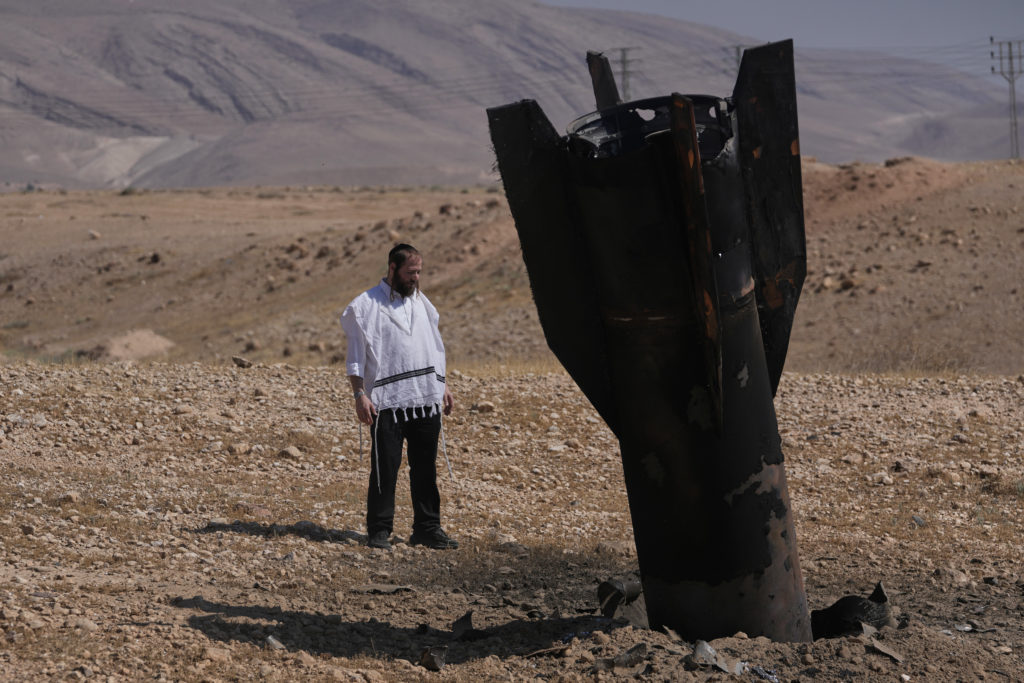
Israel and Iran have returned to active war for the first time since a ceasefire was agreed two months ago in an exchange of rocket fire that threatened efforts to end the conflict.
Donald Trump, who started the war in February alongside Israel but has since attempted to present himself as a mediator, told the two sides to stop shooting and said “final negotiations” on peace were proceeding. By late afternoon on Monday, the attacks had stopped.
This live blog is now closed. For the latest, read more of our coverage on the Middle East conflict here.
Iranian media is reporting that there were no immediate casualties following apparent Israeli strikes on the Karun petrochemical plant in Mahshahr, a city in Iran’s southwestern Khuzestan province.
According to the Fars news agency, Iran’s Revolutionary Guards said they responded to what they described as an American-Israeli strike on the Iranian petrochemical site by launching a missile attack on a similar plant in the northern Israeli city of Haifa.
The Israeli military has launched airstrikes on Iran after the Iranians fired missiles at northern Israel in the first exchange of fire between the two countries since a ceasefire was reached on 8 April, raising fears of a return to a full-scale regional war in the Middle East.
Yemen’s Iran-aligned Houthi rebels also fired at Israel and warned they would target Israeli-affiliated ships in the Red Sea, further escalating tension.
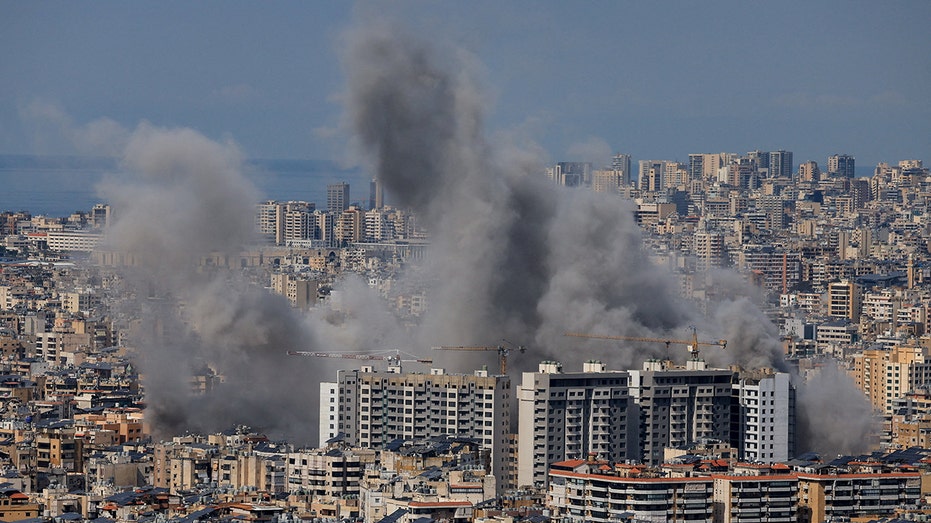
Israel launched retaliatory airstrikes on sites it described as Hezbollah command centers in Beirut's southern suburbs Sunday, hours after Israeli officials said Hezbollah fired rockets into northern Israel. Hezbollah did not immediately claim responsibility.
The escalation came days after the U.S., Israel and Lebanon announced a renewed conditional ceasefire framework requiring Hezbollah to halt fire and withdraw from parts of southern Lebanon. It also followed the release of IDF footage that Israel said showed troops dismantling a Hezbollah explosives facility, where an outside expert said components appeared consistent with anti-personnel shrapnel devices designed to wound or kill people on foot.
The strikes mark a major cross-border escalation days after the U.S., Israel and Lebanon announced a renewed conditional ceasefire framework requiring Hezbollah to halt fire and withdraw from parts of southern Lebanon.
Israeli Prime Minister Benjamin Netanyahu’s office announced the military action was direct retaliation for the group's violation earlier in the day.
The multipurpose assembly hub appeared to contain materials that could be used in makeshift shrapnel and propane tanks to create a distributed, lethal network.
Nick Reese, an adjunct professor at NYU’s Center for Global Affairs and a former U.S. national security adviser, told Fox News Digital that the captured weapons cache suggests a deliberate emphasis on personnel casualties, which could be military or civilian targets.
"Given the current situation, they probably targeted more military personnel. Shrapnel bombs are intended to hurt and kill people on foot," Reese said.
"The video cuts between the IDF entering the building and showing the contents. It's at this moment that they probably cleared any booby traps," Reese added. "It would be standard practice to look for and disable any booby traps in a facility like this before going inside and before filming anything."
"It's possible the booby traps could be using shrapnel methods, but I can't see evidence of that in the video. It shows what appears to be a shrapnel bomb, but it is not hidden so likely not a booby trap unless the IDF disarmed it off camera," he said.
Among the items found in the raid was a container filled with nails and other sharp objects, which Reese noted are specific indicators of anti-personnel targeting.
"This video shows what appears to be a container with nails or other sharp implements in it," Reese noted. "This is likely for creating shrapnel bombs intended to kill, wound, and maim targets."
"Such devices are both effective and cause significant fear among the population, which was likely the intent," Reese continued. "The method is not particularly sophisticated but shows that they were targeting humans, not simply hardware or infrastructure."
"Making shrapnel bombs also tends to be cheap, easily concealed, and effective, especially against personnel. These types of bombs would likely have been in significant use."
"The video shows a variety of materials that could have been used to create bombs, from makeshift shrapnel to what appears to be a propane tank," Reese explained.
"These components would be used for very different purposes, so the location seems to have been a central general-purpose explosives-making facility."
"Propane tanks would be used for larger targets like tanks or buildings, while shrapnel would be used against infantry or in public places," Reese said.
The IDF announced Friday that an airstrike in Lebanon killed Hezbollah’s chief explosives engineer, Abed Harb, the commander of Hezbollah’s engineering unit, after he "attempted to harm" Israeli soldiers.
The military said Harb was a veteran commander responsible for "numerous attacks against IDF soldiers" over the decades.
When considering the expertise required to manage such operations, Reese observed: "Over a 20-year career, this is difficult to say. Given Iran's well-known funding and support to Hezbollah and its experience fighting the Israelis in multiple conflicts, he likely had a mix of internal and external training combined with combat experience."
"Harb was targeted as part of an effort to disrupt Hezbollah's war-making infrastructure and limit its ability to continue to plan and execute large bombing operations against the IDF and civilian targets."
"The loss of Abed Harb by Hezbollah is not just a loss of leadership but of institutional knowledge," Reese added.
"His two decades of battlefield experience were significant to Hezbollah not only because of his bomb-making abilities but because of how he understood the IDF, Hezbollah, and the junior ranks.
"As a member of Hezbollah since 2006, Harb likely had significant skills in making and disguising bombs over a 20-year career, which will be a blow to Hezbollah's operational capabilities and infrastructure," Reese said.

 Login
Login