Компания Analog Tech представила компактный персональный компьютер AironiA AIR-AD-AI-001, предназначенный для задач искусственного интеллекта.
Фото Analog Tech/ithome
Устройство выполнено в корпусе объемом около 5 литров (размеры 200 х 250 х 95 мм). По данным ixbt.com, AironiA позиционируется как решение для локальной обработки данных с минимальной задержкой, без необходимости обращаться к облачным сервисам.
В основе компьютера лежит процессор Intel Core Ultra 5 225. Для ускорения ИИ-задач модель оснащена dNPU INT8 с вычислительной мощностью до 214 TOPS, подключаемым через слот PCIe. Этот ИИ-чип основан на Metis AIPU от AxeleraAI, изготовлен по 5-нанометровой технологии Samsung и использует цифровую память D-IMC. Энергопотребление чипа составляет от 8 до 15 ватт. Разработчик отмечает, что система способна одновременно обрабатывать до 24 видеопотоков.
AIR-AD-AI-001 оборудован 32 ГБ оперативной памяти DDR5 со скоростью 5600 МТ/с, установленной в двух слотах SO-DIMM. Объем предустановленного SSD формата M.2 2280 PCIe NVMe составляет 512 ГБ. В наборе сетевых интерфейсов есть две карты — на 2,5 Гбит/с и 1 Гбит/с. Для подключения внешних устройств доступны порты HDMI 2.1, HDMI 2.0, DisplayPort 1.4a и четыре USB 3.X.
European missile systems manufacturer MBDA and Ukrainian defense company Ukrainian Armor have signed a memorandum of understanding to explore joint development of deep-strike systems and counter-unmanned aerial systems (C-UAS), marking a new phase of industrial cooperation linked to the war in Ukraine, MBDA announced on 10 June.
MBDA expands cooperation with Ukraine’s defense industry
MBDA is one of Europe’s leading defense firms specializing in guided missile systems across air, land, and naval domains. It is also the maker of the Storm Shadow / SCALP-EG cruise missile, which has been supplied to Ukraine by European partners for long-range strike missions.
Ukrainian Armor is a domestic Ukrainian defense manufacturer involved in producing armored vehicles, artillery systems, ammunition, and unmanned platforms, and has expanded significantly since the start of Russia’s full-scale invasion.
Cooperation to focus on long-range strike systems and counter-drone technologies
The agreement sets out a framework for long-term cooperation, including joint development projects, technology exchange, and potential co-production initiatives, with the possibility of establishing a future joint venture.
The focus is on two priority areas: “deep strike” capabilities for long-range precision attacks, and counter-unmanned aerial systems designed to detect and neutralize drones, which have become central to battlefield dynamics in Ukraine.
Ukraine to strengthen domestic defense production with European expertise
MBDA said the partnership is intended to help strengthen Ukraine’s independent industrial capacity, while leveraging European experience in advanced missile and air defense systems. Ukrainian Armor will contribute production capability and operational experience across armored vehicles, munitions, and unmanned systems developed under wartime conditions.
Both sides said the cooperation aims to combine European technological expertise with Ukrainian battlefield-driven innovation, creating a framework for deeper defense-industrial integration.
A segurança dos smartphones é hoje uma preocupação cada vez mais presente, numa altura em que os ataques informáticos dirigidos a telemóveis se tornaram mais discretos, sofisticados e difíceis de detetar. Reiniciar o telemóvel pode ajudar a reduzir alguns riscos, mas as recomendações oficiais mostram que este gesto, sozinho, não deve ser visto como uma proteção completa.
Sobre este tema, tanto a National Security Agency, conhecida pela sigla NSA, como a Federal Bureau of Investigation (FBI) incluem entre os seus conselhos de segurança para dispositivos móveis a recomendação de desligar e voltar a ligar o telemóvel todas as semanas.
Segundo as agências norte-americanas, esta prática pode dificultar a ação de algumas ameaças que dependem de processos ativos no sistema e ajudar a reduzir determinados riscos associados ao uso diário do smartphone.
Reiniciar ajuda, mas não resolve tudo
A posição da ANSSI, a agência francesa de cibersegurança, é mais prudente. Num relatório oficial sobre ameaças dirigidas a telemóveis desde 2015, a entidade recomenda reinícios regulares, mas explica que desligar completamente o aparelho permite encerrar processos e eliminar programas maliciosos que estejam apenas na memória, como certos softwares espiões sem persistência. Ainda assim, avisa que isso não impede uma nova infeção pelo mesmo caminho usado antes.
O mesmo documento deixa ainda um alerta importante: alguns programas espiões conseguem simular um reinício do telemóvel para enganar o utilizador. Por esse motivo, a recomendação passa por desligar totalmente o equipamento e voltar a ligá-lo, em vez de confiar apenas na opção de reiniciar.
Por que é que desligar totalmente pode ser mais seguro
A ANSSI acrescenta que, quando o telemóvel volta a arrancar, várias funcionalidades continuam bloqueadas até ao primeiro desbloqueio feito pelo utilizador. Esta fase reduz a superfície de ataque e ajuda a perceber porque é que um desligamento completo pode oferecer uma proteção adicional face a um reinício incompleto ou apenas aparente.
No caso do iPhone, a própria Apple descreve um princípio de segurança semelhante. A empresa explica que, após um reinício, o dispositivo regressa a um estado mais protegido, eliminando da memória certas chaves de segurança e dados temporários.
A Apple refere também que um reinício automático pode fazer o equipamento passar do estado “After First Unlock” para “Before First Unlock”, precisamente para reforçar a proteção dos dados guardados no dispositivo, de acordo com a mesma fonte.
Que dizem as fontes oficiais para reduzir riscos
As recomendações oficiais não se limitam a desligar o telemóvel. A NSA aconselha ainda os utilizadores a instalarem apenas aplicações de lojas oficiais, a manterem o sistema operativo e as apps atualizados, a evitarem redes Wi-Fi públicas, a desligarem o Bluetooth e a localização quando não forem necessários e a não abrirem links ou anexos suspeitos.
Já a ANSSI insiste na importância de atualizar rapidamente o sistema operativo, reiniciar regularmente o aparelho, ativar mecanismos adicionais de segurança, separar usos pessoais e profissionais e desligar totalmente o equipamento quando o utilizador tiver de se afastar dele.
A agência francesa recorda ainda que o modo de avião não impede, por si só, o funcionamento de um programa espião que já esteja ativo no telemóvel.
Ukraine’s Ministry of Defense (MoD) says artificial intelligence is increasingly integrated into so-called “middle strike” systems, enabling long-range drones to operate in heavily contested electronic warfare environments and strike targets at operational depth.
Officials say the systems are part of a broader program aimed at disrupting Russian logistics and supply chains, with Ukraine reporting a sharp increase in strikes on transport routes, depots, command posts, and equipment concentrations in recent months.
The MoD explains that the use of AI is intended to overcome two key constraints in this operational zone: heavy electronic warfare interference that disrupts satellite navigation, and dense air defense coverage that limits predictable flight paths.
AI takes over control at target approach phase
According to the ministry, AI systems are not active throughout the entire mission. Drones are initially flown under operator control, but once they reach a designated target grid, onboard systems take over navigation and targeting.
At that stage, onboard computers and optical sensors begin real-time analysis of the surrounding area, switching from manual guidance to autonomous control for the final approach.
Visual navigation without GPS using terrain matching
The ministry says drones equipped with AI systems are able to operate without reliable satellite navigation by using onboard cameras and computer vision models.
These systems continuously scan terrain features such as roads, rivers, and landscape contours, and compare them against preloaded high-resolution satellite imagery.
This allows the drone to determine its position based on visual correlation rather than GPS signals, which are often degraded or spoofed by electronic warfare.
Automated target recognition and terminal strike adjustment
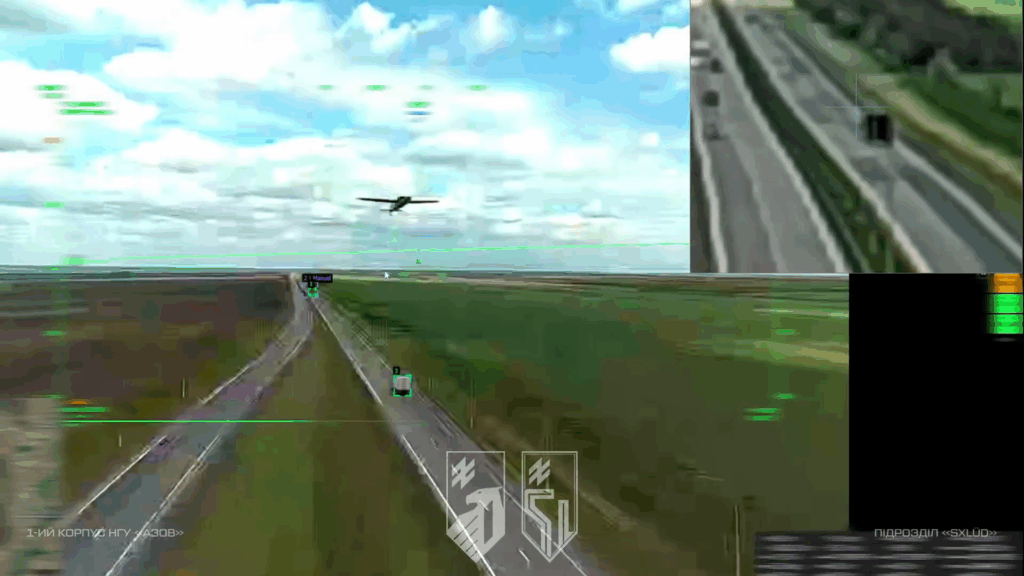
In the terminal phase, AI systems analyze live video feeds to identify military equipment based on trained visual patterns. The system is designed to distinguish between different types of targets and automatically assign a tracking marker once a valid target is recognized.
Once a target is locked, the AI adjusts flight controls in real time to guide the drone into a final dive trajectory.
The ministry also says the system can reduce misidentification risks by distinguishing between real equipment and decoys using multiple indicators, including geometry, surface texture, and thermal signatures.
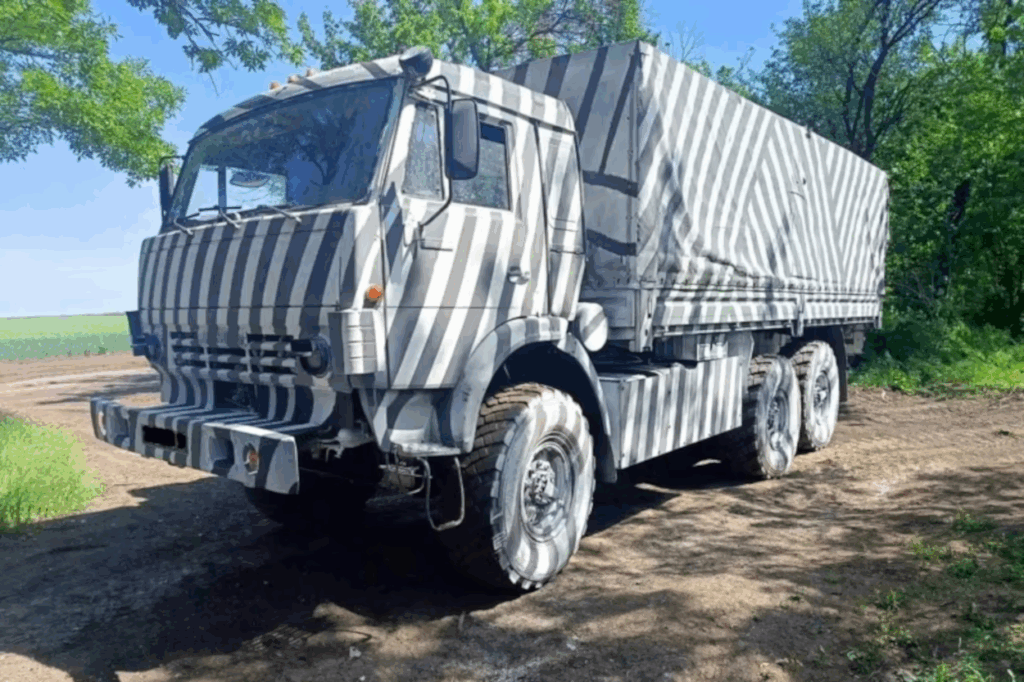
Russian forces are increasingly trying to counter these AI-assisted drone targeting systems using methods such as painting military vehicles with high-contrast zebra-like stripes. Experts say the markings are designed to confuse computer vision models trained to identify standard vehicle shapes and camouflage patterns.
Russian military vehicle with zebra-like paint patterns in an attempt to disrupt AI-assisted drone targeting systems. Photo from social media, via RFE/RL.
Route planning shaped by electronic warfare conditions
The MoD says AI is also used before launch to optimize flight paths. Planning systems incorporate intelligence on Russian air defense and electronic warfare deployments, selecting routes that minimize exposure.
This includes analysis of radar coverage, identification of terrain masking opportunities, and the use of blind spots in air defense systems. The goal, according to officials, is to ensure drones can reach operational depth targets despite dense electronic warfare and interception layers.
“Logistics Lockdown” program and expanded strike depth
Ukraine says these systems are being deployed as part of a wider “Logistics Lockdown” program aimed at increasing pressure on Russian military supply chains.
Officials say “middle strike” operations are now being scaled to target Russian logistics, infrastructure, and military assets at distances of up to 200 kilometers behind the front line.
The MoD says the approach is designed to combine intelligence, long-range strike capability, and automation to increase the tempo and effectiveness of attacks on Russia’s rear support systems.
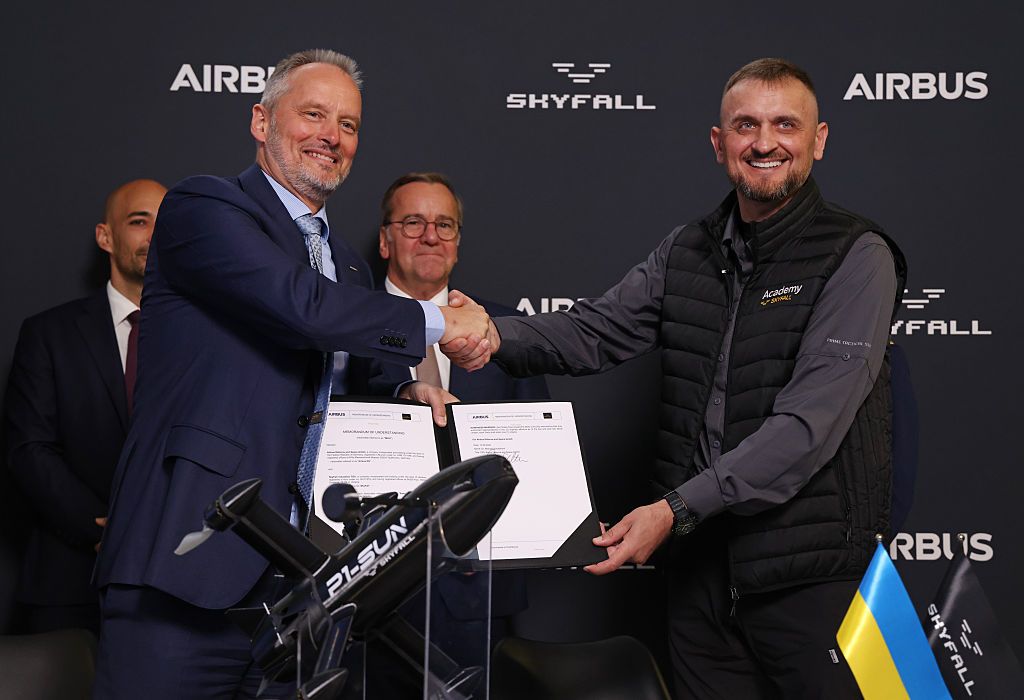
"Partnering with Airbus, we are developing the next generation of technologies to establish a multi-layered air shield that will bolster the protection of Ukrainian skies and European airspace," Skyfall CEO Mykolaiv Makovieiev said.
D’ora in poi affezioniamoci ma con distacco, direbbe qualcuno, dopo la decisione di Milo Infante di passare a Mediaset. Sempre quel qualcuno dice che la “star” della cronaca in tv, da quelle parti, resterà sempre e comunque Gianluigi Nuzzi e come dargli torto con i numeri che fa, sia a Quarto grado che a Dentro la notizia, entrambi programmi confermati con la sua conduzione.
Ma mentre Infante si avvia verso Mediaset, con tutto un futuro da scrivere, in Rai si sta decidendo in queste ore il futuro di Ore 14.
Sul tavolo c’era la possibilità di togliere il programma dal pomeriggio di Rai2 e mettere un format stile Detto fatto, magari affidandolo ad Andrea Delogu. Ma il ragionamento è stato: non è che dobbiamo per forza chiudere bottega se un conduttore se ne va.
Ore 14 quindi resterà, sia nella versione quotidiana che -soprattutto- in quella serale. Si stanno individuando le figure adatte per la conduzione. Massimo Giletti è già ampiamente impegnato ne Lo stato delle cose, programma che ha faticato ad ingranare la marcia giusta e che ora sarebbe un delitto chiudere, infatti tornerà in autunno nel prime time del lunedì di Rai3.
Una figura adattissima a condurre Ore 14 e che è in Rai è sicuramente Salvo Sottile, attualmente impegnato con Far West e che potrebbe essere la soluzione ideale, avendo lui già condotto programmi di cronaca, come per esempio proprio Quarto grado nelle sue prime 4 edizioni. Sottile dunque al momento è in pole position per condurre Ore 14, sia la versione pomeridiana, che quella in prime time su Rai2 e certamente potrà fare bene. Si attende solo la conferma alla presentazione dei palinsesti ad Ancona il 3 luglio.
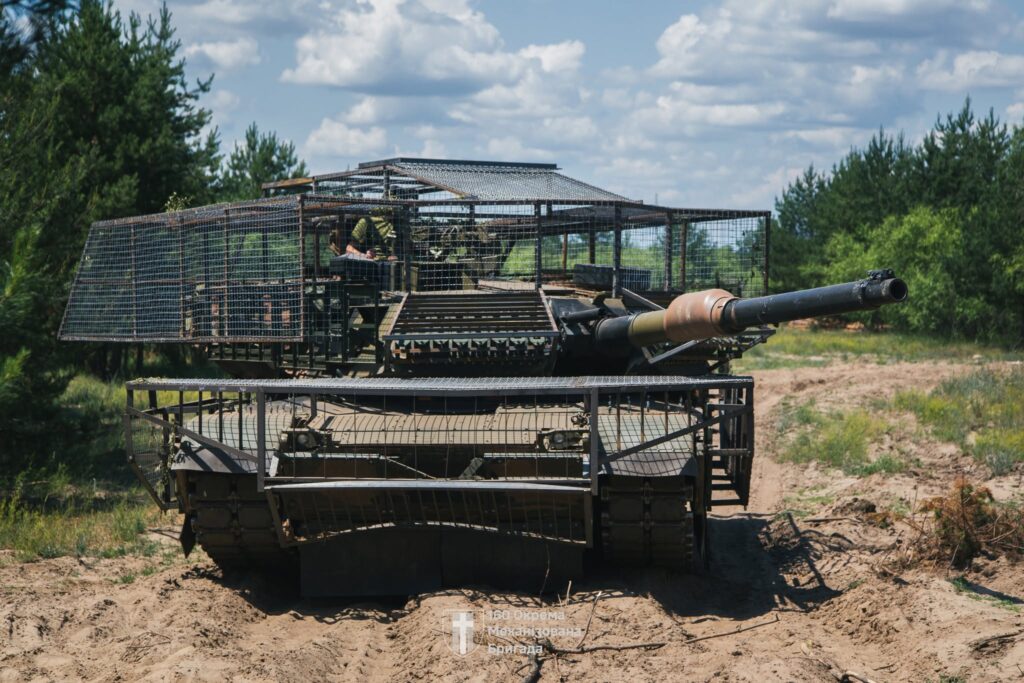
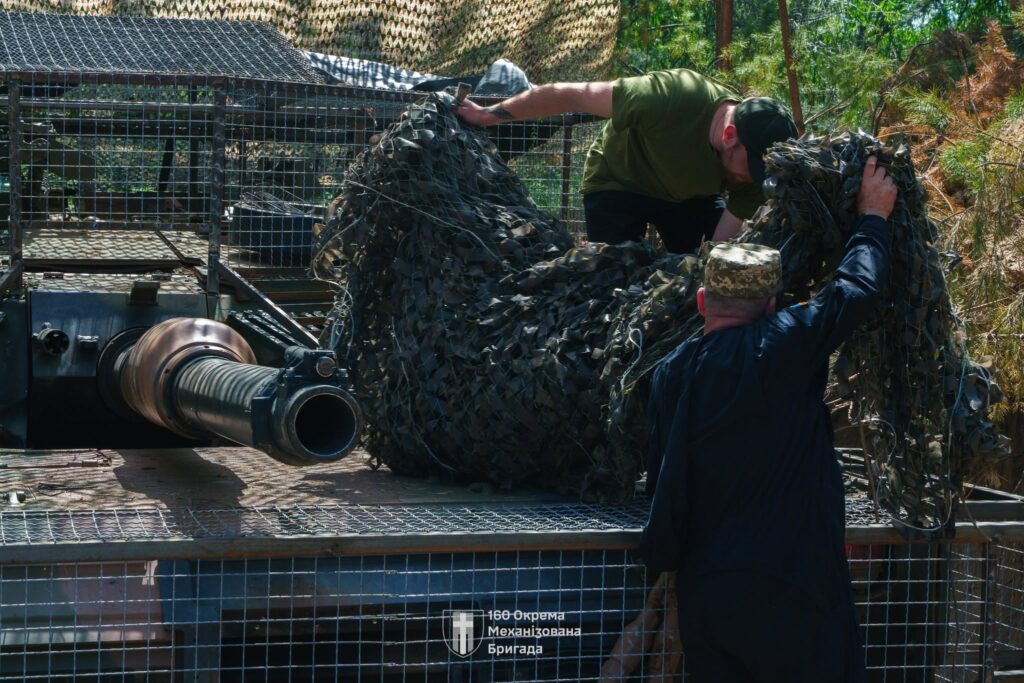
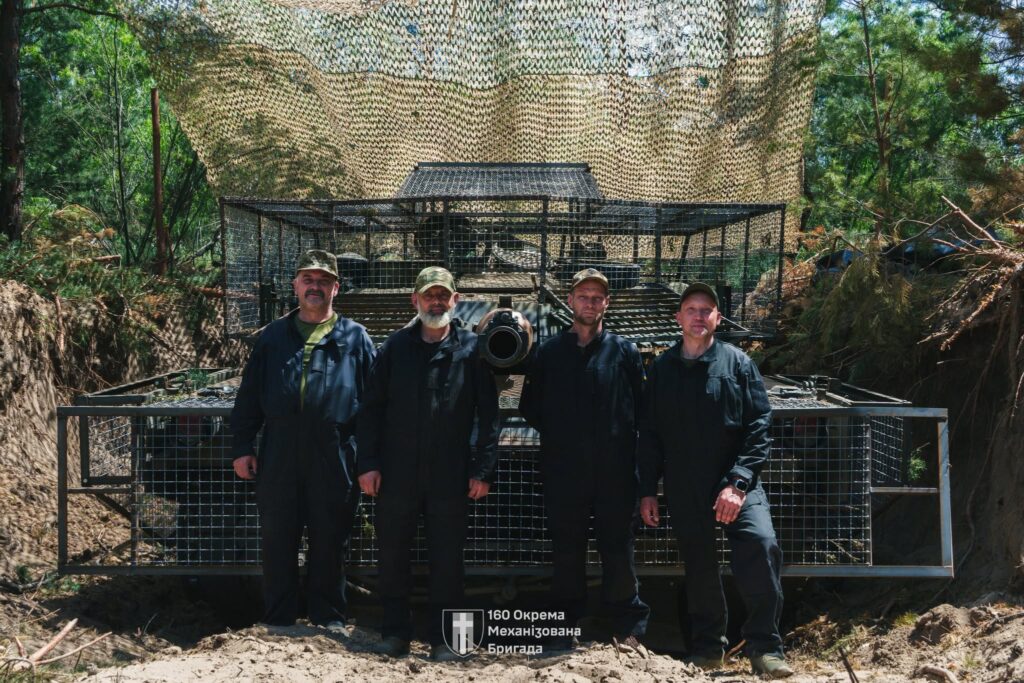
Ukraine’s 160th Separate Mechanized Brigade has published new photos of its Abrams tank “Lucifer,” showing how Ukrainian crews are adapting Western armor to survive the increasing FPV drone threats on the front line that are defining modern warfare.
Drones have significantly reduced the battlefield advantage of tanks by enabling low-cost, precise strikes against weak points in armored vehicles. This has forced Ukrainian crews to adapt heavy armor with additional protective structures, including cage-style and modular field modifications.
Ukrainian Abrams tank fitted with modular cage-style protection designed to counter FPV drone strikes on the front line, as crews adapt Western armor to modern battlefield threats. Photo: Ukraine’s 160th Separate Mechanized Brigade
Abrams tank “Lucifer” fitted with modular anti-drone cages
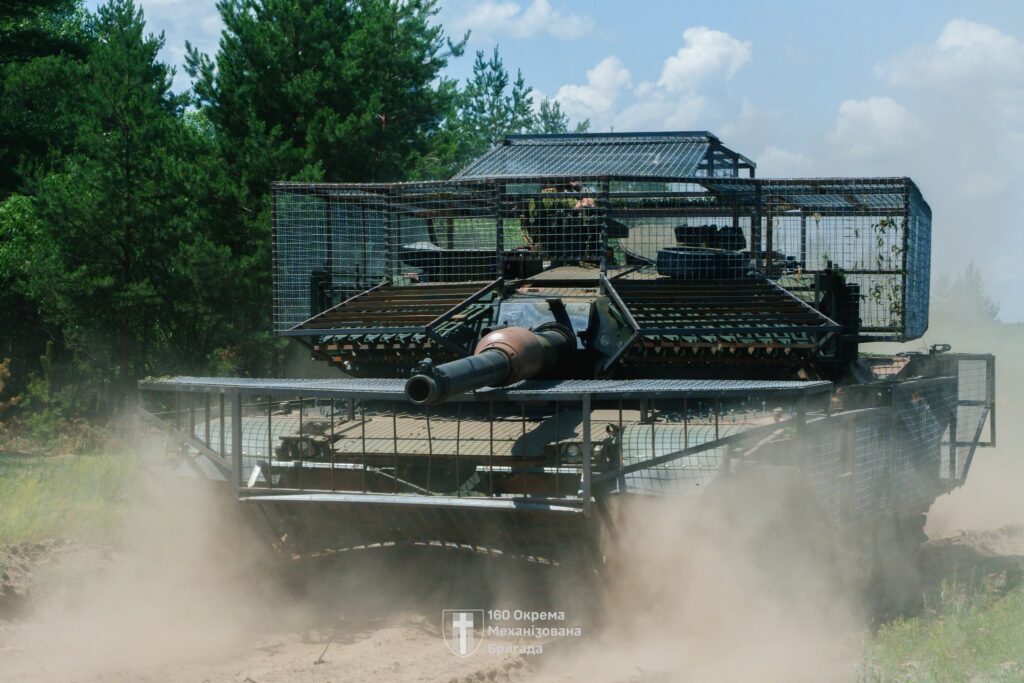
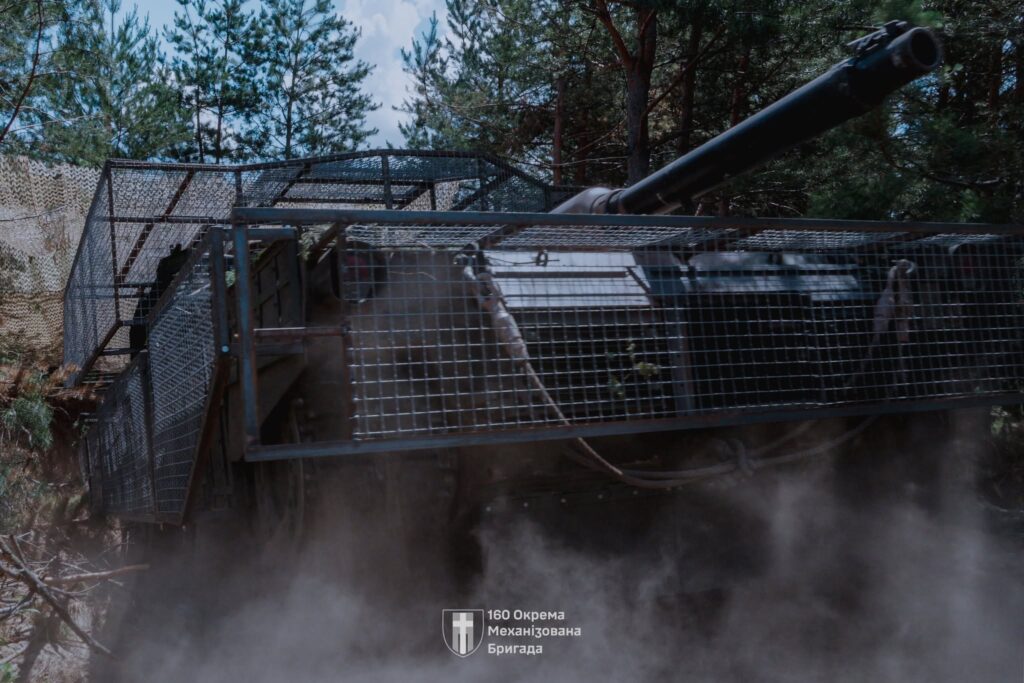
According to Defense Blog, the tank is an M1A1 AIM Abrams operated by the brigade’s tank battalion and is among 49 vehicles transferred to Ukraine by Australia. The vehicle has been fitted with extensive modular cage-style protection covering the turret, hull sides, and rear.
Defense Blog notes that the modifications are designed to counter FPV drone threats, which increasingly target weaker sections of armored vehicles such as engine decks, rear armor, and roof areas.
The cage system reportedly allows the turret to rotate freely while maintaining overhead protection, addressing a key limitation of earlier field modifications that restricted combat use.
Ukrainian Abrams tank fitted with modular cage-style protection designed to counter FPV drone strikes on the front line, as crews adapt Western armor to modern battlefield threats. Photo: Ukraine’s 160th Separate Mechanized Brigade
Adaptation of Western armor under drone-dominated conditions
FPV drones have become one of the most widespread threats to armored vehicles on the front line, forcing Ukrainian crews to repeatedly modify Western-supplied systems in the field.
Defense Blog reports that the design seen on “Lucifer” reflects a more structured approach to these adaptations, moving beyond improvised protection toward modular systems that can be replicated across units.
Separate protective sections for the turret and hull are intended to preserve maneuverability while expanding coverage against drone attacks from multiple angles.
The outlet adds that Australian-supplied Abrams tanks are now integrated into Ukraine’s operational fleet in frontline sectors, where crews continue to adjust battlefield equipment based on real-time combat experience.
Ukrainian Abrams tank fitted with modular cage-style protection designed to counter FPV drone strikes on the front line, as crews adapt Western armor to modern battlefield threats. Photo: Ukraine’s 160th Separate Mechanized Brigade
160th Brigade highlights Abrams combat role
The unit said few systems match a tank for firepower and protection, describing the Abrams as a vehicle that “clears the way where the enemy tries to hold its positions.”
It added that crews are prepared to carry out high-risk missions under fire. The brigade also said that naming a tank “Lucifer” reflects its combat role and warned that it gives opposing forces “every reason to worry.”
Ukrainian Abrams tank fitted with modular cage-style protection designed to counter FPV drone strikes on the front line, as crews adapt Western armor to modern battlefield threats. Photo: Ukraine’s 160th Separate Mechanized Brigade
The government of Taiwan reportedly plans to deepen its diplomatic relationship with Paraguay through a planned $200 million data centre investment, in a rare technology investment designed to strengthen the pair’s diplomatic relationship.
Bloomberg reported the date centre partnership, which is backed by the Trump administration, is targeting 10-megawatts of computing capacity. It is expected to be operational by the end of 2027.
The data centre will be built on government land near the capital of Asuncion.
The news site noted Taiwan will supply Nvidia chips and supporting equipment, while Paraguay brings cheap hydropower and basic infrastructure to the partnership.
Both sides are in discussions with the US International Development Finance Corporation over financing arrangements.
Sources told Bloomberg Taiwan’s International Cooperation and Development Fund has separately approached Google, Microsoft and Amazon about potentially investing in the project or taking up capacity.
Paraguay is one of only a handful of countries worldwide which still maintains formal ties with Taiwan rather than China, but pressure is growing domestically for a reassessment of the position as neighbouring countries have attracted substantial Chinese investment.
SpaceX officially launched as a publicly traded company Friday morning, and Elon Musk's company carries the largest valuation ever seen for a Wall Street debut.
SpaceX officially launched as a publicly traded company Friday morning, and Elon Musk's company carries the largest valuation ever seen for a Wall Street debut.
SpaceX jumped as the rocket maker’s stock opened for trading Friday and shot the market value up to US$1.96 trillion — which made CEO Elon Musk the first-ever trillionaire.
SpaceX jumped as the rocket maker’s stock opened for trading Friday and shot the market value up to US$1.96 trillion — which made CEO Elon Musk the first-ever trillionaire.

 Login
Login