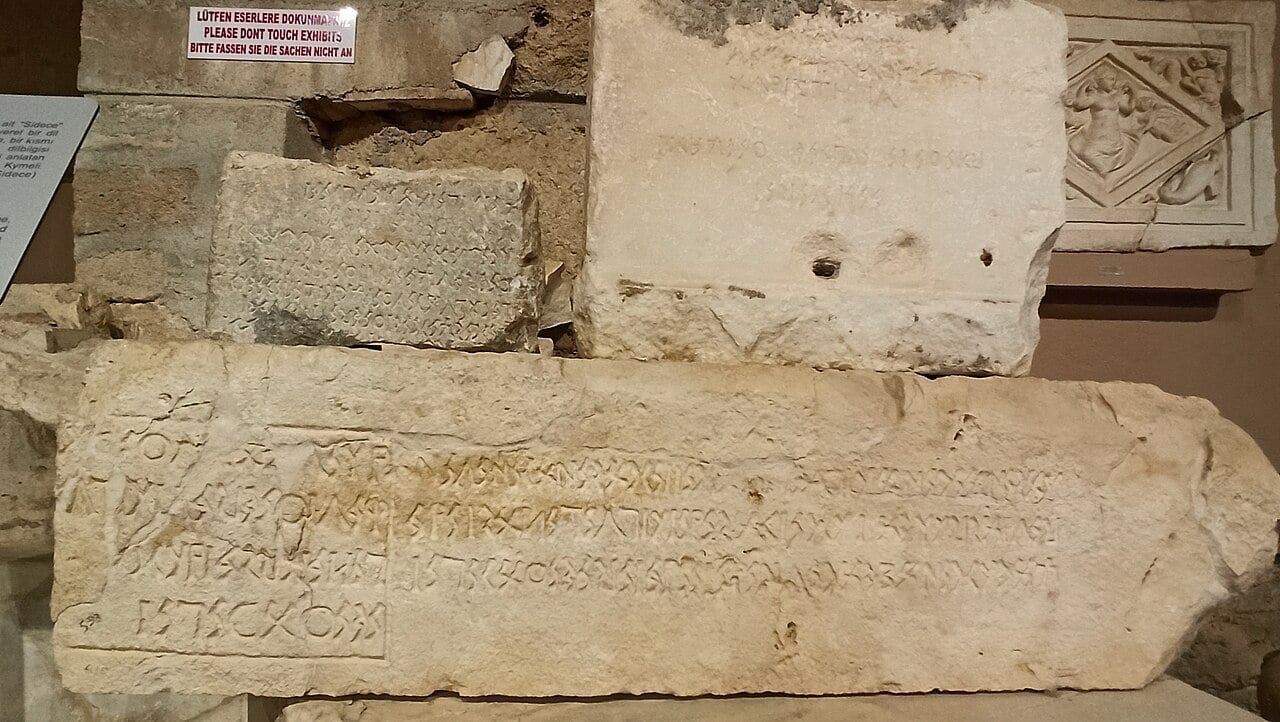
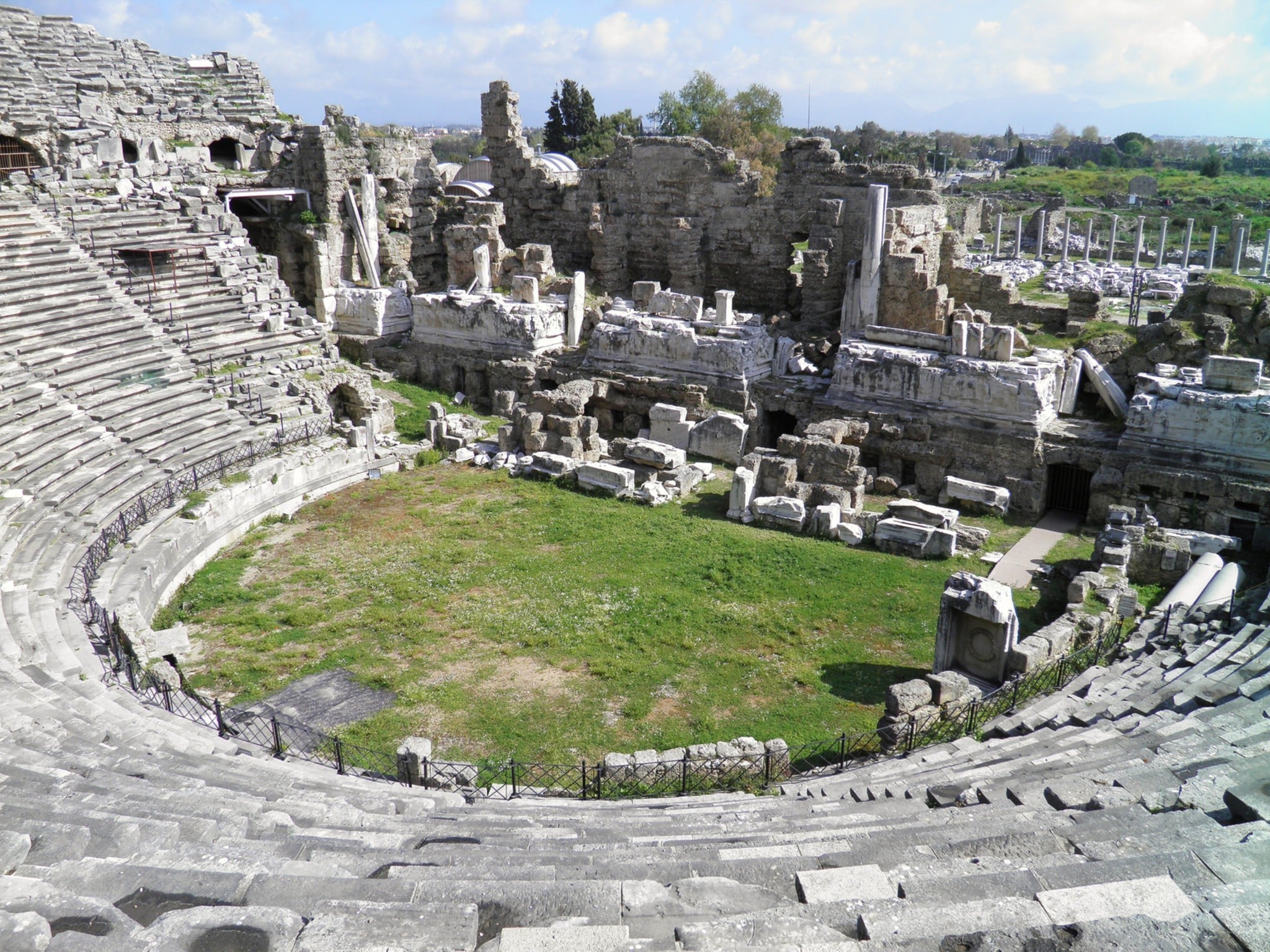
Researchers have expanded the known Sidetic alphabet to 31 letters, moving the field closer to decoding one of Anatolia’s lost languages. The new findings come from active excavations at Side Ancient City in Antalya’s Manavgat district.
The work is led by Prof. Dr. Feriştah Alanyalı, excavation director and archaeologist at Anadolu University, in collaboration with Italian linguist Alfredo Rizza and Austrian linguist Michaela Zinko. Funding comes through the Culture and Tourism Ministry’s Heritage for the Future Project.
Sidetic sits within the Luwian branch of Anatolian Indo-European languages, a grouping that also includes Lycian and Carian. Decipherment has moved slowly because the surviving inscriptions are few and most span only one or two lines.
Alanyalı said that the thin body of material has made it hard to reconstruct grammar, vocabulary, and structure with any confidence.
New excavations yield longer texts and bilingual comparisons
New excavations have brought a shift. Researchers have now recovered inscriptions running as long as 30 to 40 lines, well beyond anything previously available. Bilingual texts written in both Sidetic and Greek have also come to light.
Alanyalı said that those texts have renewed optimism because matching content across two languages helps researchers assign meaning to unknown signs and connect recurring words to known concepts.
One finding in particular has drawn attention. Researchers now think the Sidetic terms “Siruawn” and “Siruawan” refer to Side itself.
Since the Greek word “Side” (Greek:Σίδη) translates to pomegranate, a fruit that featured prominently on the city’s ancient coinage, Alanyalı said that the name likely carried the same meaning in the native language.
She described this as a significant finding for understanding the city’s origins and identity.
An ancient city that held its language for centuries
Side is typically known through its Greek and Roman structures, but Alanyalı said that the city’s history runs deeper.
Ancient accounts record that settlers from the Greek city of Kyme arrived at Side and, over time, abandoned their own language in favor of the one spoken by local residents.
Alanyalı said that tradition points to a community whose culture was firmly rooted long before outside groups arrived.
That cultural foundation held even after Alexander the Great brought Greek influence into the region during the fourth century B.C.
The inscriptions show that Side’s residents continued writing in Sidetic for roughly two centuries into the Hellenistic period, with the language appearing to fade only around the late second century B.C.
Alanyalı said that the persistence of Sidetic complicates the idea that Greek culture quickly swept away what came before it.
Assyrian and Babylonian seals point to ancient eastern ties
Archaeological finds also point to Side’s connections with civilizations to the east. A Neo-Assyrian seal turned up during excavations at the site.
Separately, Italian researchers obtained a Neo-Babylonian seal from residents of the area before the Turkish War of Independence. Alanyalı said that the two objects together point to cultural ties with Mesopotamia dating back to the seventh century B.C.
A bilingual inscription tied to the city’s Serapis Temple adds another dimension. Alanyalı said that the text documents how the temple was financed, listing the names of donors and the sums each contributed, all written in Sidetic.
31 letters bring researchers closer to Anatolia’s lost language
The use of the local language for a public record of that kind confirms it was still understood and used in everyday civic life.
With the alphabet now standing at 31 known letters, up from 26, researchers working on this lost Anatolian language have a sharper set of tools.
Alanyalı said that the international team continues its work, and each newly identified letter brings the field a step closer to a fuller reading of inscriptions that Side’s people worked for generations to preserve.
À compter du 14 juin 2026, la directive européenne 2024/1438( transposée en droit français par le décret n°2026-312 du 24 avril) impose de nouvelles règles d'étiquetage, de composition et de traçabilité au miel, aux confitures, aux jus de fruits et aux laits déshydratés. Derrière le vernis consommateuriste : des coûts de mise en conformité réels pour les petits producteurs, et un bénéfice pour le consommateur qui reste, pour l'essentiel, cosmétique.
LE COURRIER DES STRATÈGES
Restez libre !
LA NEWSLETTER · GRATUITE
Le Courrier, chaque matin.
L'essentiel de l'actualité, passé au crible par les cinq plumes du Courrier. Dans votre boîte, chaque jour ouvré.
Gratuit. Vous restez libre de partir quand vous voulez.
Le petit-déjeuner français vient de gagner quelques lignes supplémentaires sur ses étiquettes. Avec le décret n°2026-312 du 24 avril 2026, la France transpose la directive européenne 2024/1438, adoptée par l’Union européenne pour renforcer la traçabilité et l’information du consommateur. Une réforme présentée comme technique, mais qui illustre une fois encore l’appétit réglementaire de Bruxelles.
LE COURRIER DES STRATÈGES
Restez libre !
ABONNEMENT
Allez au fond des choses.
Deux grands formats par jour. Les cinq plumes du Courrier. La série Sécession, le dimanche.
Le changement le plus spectaculaire concerne le miel. Désormais, les mélanges devront préciser chaque pays d’origine dans le champ visuel principal de l’emballage, avec indication du pourcentage correspondant à chaque provenance. Les producteurs devront être capables de justifier ces chiffres grâce à une documentation complète de leur chaîne d’approvisionnement.
Sur le papier, la mesure vise à lutter contre les fraudes et à mieux informer les consommateurs. Dans la pratique, elle implique de nouveaux coûts administratifs : suivi documentaire renforcé, refonte des emballages, adaptation des logiciels de gestion et multiplication des contrôles. Les grands groupes disposent déjà de services conformité dédiés. Les petits apiculteurs et conditionneurs, eux, devront absorber ces charges supplémentaires.
Les confitures sont également concernées. Le seuil minimal de fruits passe à 450 grammes par kilo pour les confitures classiques et à 500 grammes pour les confitures extra. Les jus de fruits voient apparaître de nouvelles catégories liées à la réduction des sucres naturels, avec des critères précis à respecter.
LE COURRIER DES STRATÈGES
Restez libre !
TELEGRAM · L'INFO EN CONTINU
Entre deux éditions, le fil.
La newsletter vous donne le matin. Le fil vous donne l'instant.
Certes l’objectif est sanitaire, pourtant, les bénéfices réels pour le consommateur restent limités. Une confiture contenant davantage de fruits n’est pas nécessairement un produit moins calorique, tandis que les nouvelles dénominations sur les jus relèvent davantage du marketing réglementé que d’une révolution nutritionnelle. En revanche, les industriels devront reformuler certaines recettes et réimprimer des millions d’emballages.
Le Conseil de l'Union européenne présente cette révision comme un progrès démocratique. David Clarinval, alors vice-premier ministre belge et ministre de l'agriculture, déclarait lors de l'adoption : les nouvelles règles possibles aux consommateurs « de faire des choix plus éclairés et plus sains. » Belle intention. Sauf que les grands industriels absorberont ces contraintes par des économies d’échelle ; les petits producteurs et artisans, souvent familiaux, subiront de plein fouet les frais fixes de recomposition et d’emballage. La norme descend jusque dans le pot de confiture, là où la marge est déjà mince et la concurrence internationale rude.
Cette réforme illustre une fois de plus la dérive d’une Union européenne qui ne sait plus s’arrêter. Sous couvert de protection du consommateur, elle renforce le pouvoir des bureaucraties et des grands acteurs capables d’influencer ou d’anticiper les normes à Bruxelles, au détriment de la diversité des productions locales et de la liberté entrepreneuriale.
LE COURRIER DES STRATÈGES
Restez libre !
TIPS · SANS ABONNEMENT
Offrez-nous un café.
Un média libre vit de ses lecteurs. Un pourboire ponctuel, sans compte ni engagement, quand le cœur vous en dit.
Vous donnez ce que vous voulez. Vous restez libre.
Après les champs, les usines et les commerces, la réglementation descend désormais jusque dans le pot de confiture. Une preuve supplémentaire que la bureaucratie européenne ne se contente plus de fixer les règles du marché : elle entend désormais en définir chaque détail, jusqu’au contenu du petit-déjeuner.
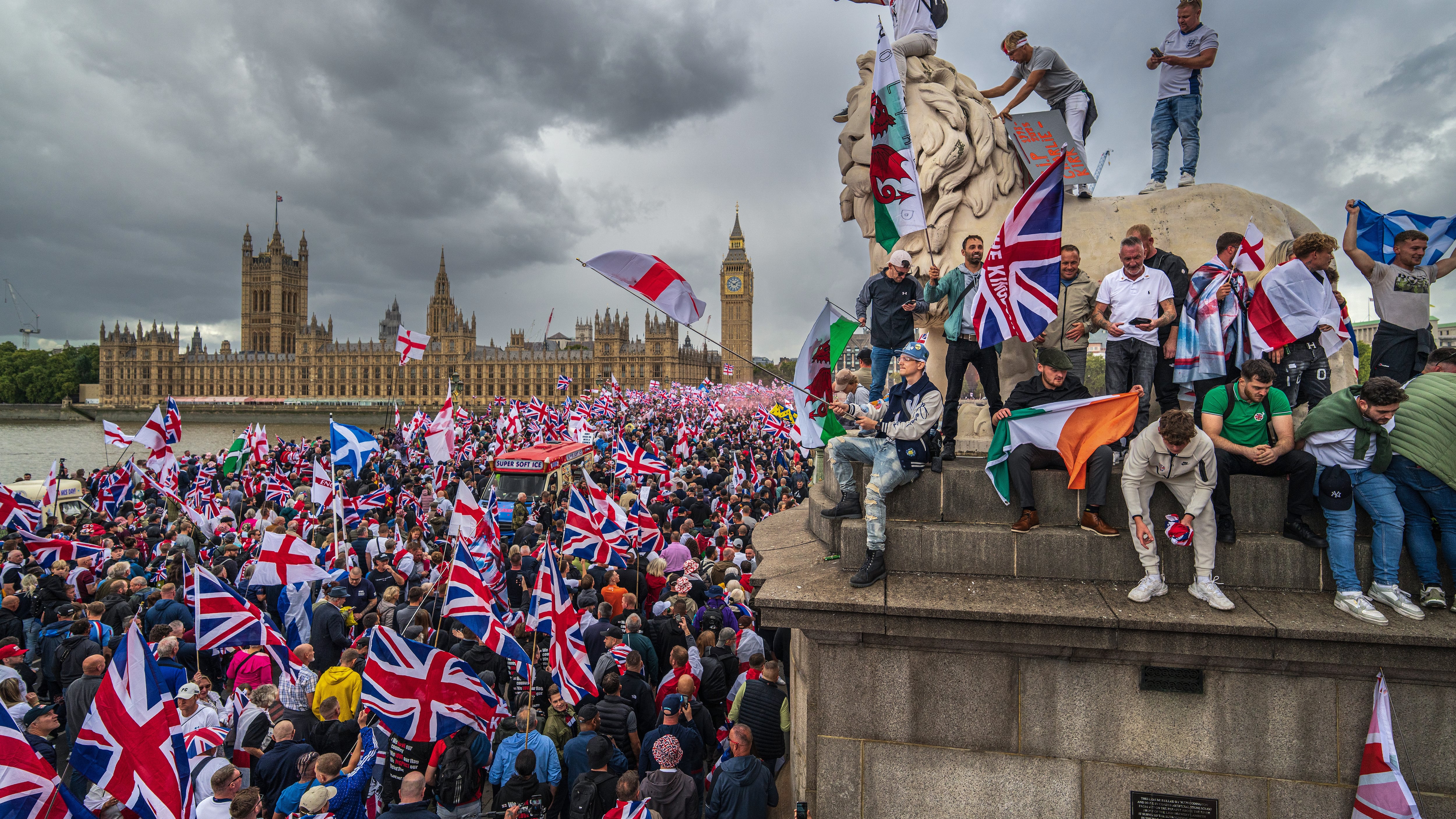
It was extreme even for a figure like Nigel Farage. Hours after the police footage of officers handcuffing Henry Nowak on the fatal night of December 3 in Southampton became public and spread like wildfire on social media, the Reform UK leader called on citizens to respond with “pure, cold rage.” The young Nowak had been fatally stabbed by a man of Sikh faith and Asian descent, who later falsely accused him of a racist attack. “I can’t breathe,” the victim shouted up to nine times, to the officers’ disbelief as they moved against him. His cry of agony echoed the words George Floyd uttered on the streets of Minneapolis, which sparked the Black Lives Matter movement.
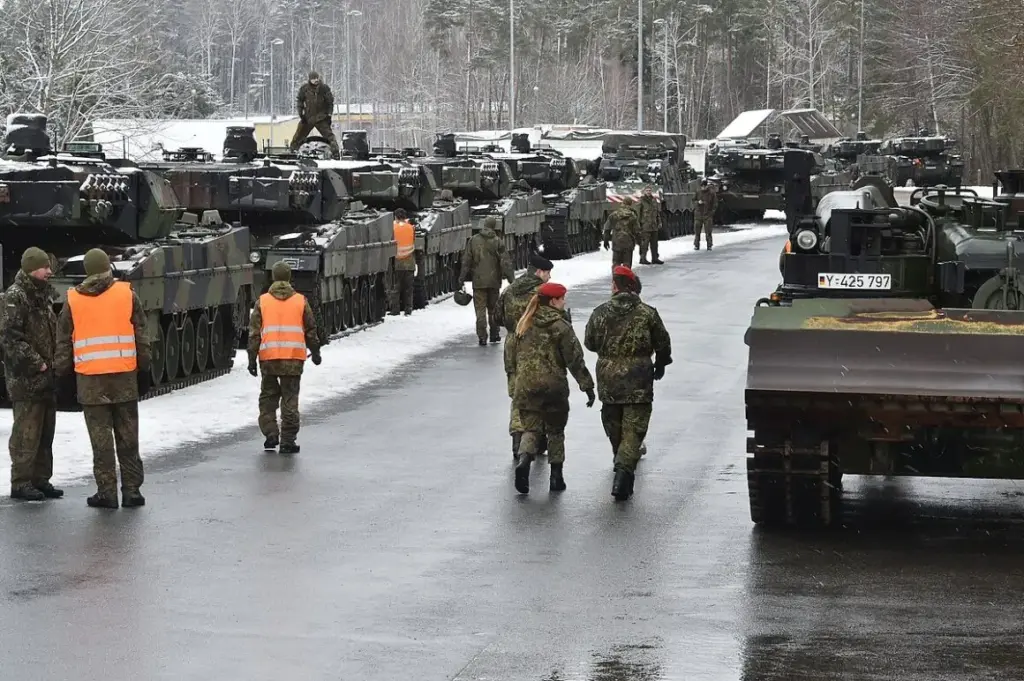
Hybrid threats span both hardware and politics, said Colonel Sönke Marahrens. The list of methods includes overflights, the cutting of undersea cables, and a concerted disinformation campaign. It also reaches into political and judicial systems, including what he called the "disposable agent" model —civilians recruited online for one-off sabotage or surveillance. As a model for how the state should respond, Colonel Marahrens pointed to Finland. Authorities there detained a suspected sabotage vessel within an hour of Baltic Sea cable damage.
Russian hybrid attacks: a political shift acknowledged late
Recognition had arrived slowly, Marahrens told the New Age Defence forum in Berlin on 8 June, Ukrinform reported. "Germany recognized rather late that we are being attacked by such hybrid methods," the colonel said. "But I would say that in the last year and a half to two years, we see a shift at the political level as well."
The colonel heads a department at the Bundeswehr's Center for Digitalization and Capability Development. The center reports to the Cyber and Information Domain Command in Bonn. German intelligence services and state institutions are increasingly informing citizens of the changing security environment, he said.
Drones, cables, and courts
Russian pressure now reaches beyond physical sabotage, Marahrens said. "It's not just drones and not just undersea cables, it's also disinformation within our society. It's the use of the political and judicial systems, the concept of 'disposable agents,'" he said.
Unidentified drones over European critical infrastructure, including German sites, had a primarily psychological effect, the colonel said. The impact was not military. Germany's National Security Council should receive real powers for rapid decision-making, he argued. The colonel cited Finland's response time of less than an hour after the Baltic Sea cable damage.
"Creating societal resilience is something we in Germany have yet to learn." — Col. Sönke Marahrens, Bundeswehr Center for Digitalization and Capability Development
Kyiv's resilience is something Berlin lacks
Germany draws on Ukrainian wartime experience through financing, joint training, and front-line exchanges, Marahrens said. "We support Ukraine financially," he said. "We also adopt the experience gained from the battlefield. We provide training for them, and we also adopt experience from them during joint exercises at our training grounds."
The most important Ukrainian lesson, the colonel said, is societal resilience under wartime conditions. "Creating societal resilience is something we in Germany have yet to learn," Marahrens said. The Kremlin coordinates large-scale hybrid operations across Europe, the agency added. These campaigns aim to discredit Kyiv and inflame internal conflicts in EU states amid Russia's war on Ukraine.
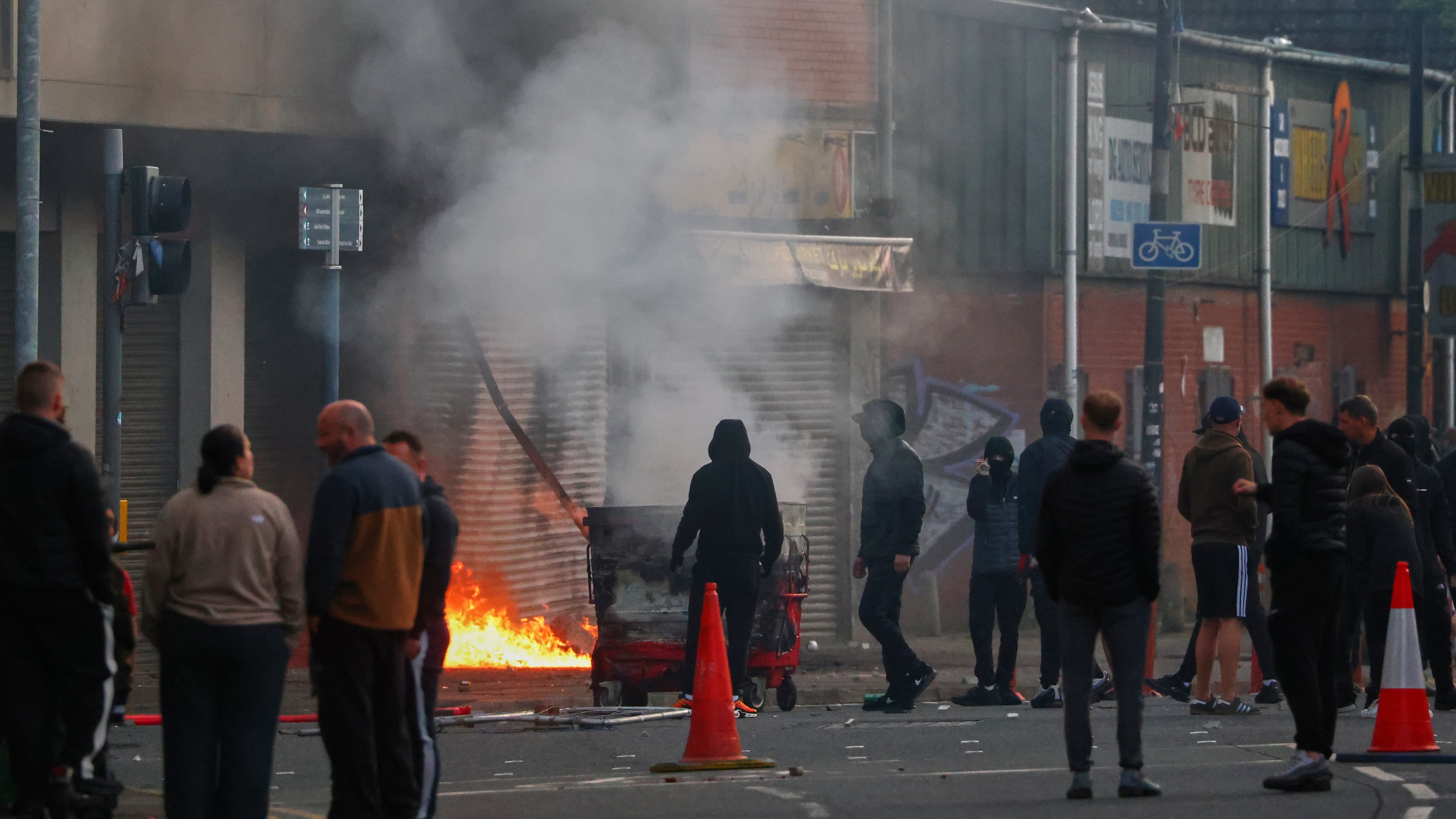
Political and religious leaders in Northern Ireland saw early Wednesday morning — with the embers of a long night of violence in Belfast and other parts of the region still smoldering — that their calls for calm had fallen on deaf ears. Cars, buses, phone booths, and trash cans set ablaze. Homes where immigrants — or simply people from ethnic minorities — were believed to live, completely engulfed in flames after violent groups targeted them as places that needed to be “liberated.”
Sack of Corinth, by Thomas Allom, 1872. Credit: Wikimedia Commons, public domain
The formation of the Roman Empire was a gradual process, unfolding over several centuries. Nevertheless, there is one specific year that we can point to as arguably the single most significant year in the formation of the Roman Empire. This was the year 146 BCE. How did the events of this year lead to the creation of the Roman Empire?
The gradual formation of the Roman Empire
In an administrative sense, the Roman Empire was founded in the year 27 BCE. This was when Octavian, the son of Julius Caesar, became the emperor. The Roman Senate recognized him as possessing overarching military power and designated him Augustus in recognition of his new position as emperor.
Octavian established reforms to the constitution, officially changing Rome into an empire. Hence, in 27 BCE, the Roman Empire came into existence. Before then, it had been a republic.
However, although it only became an empire in an administrative sense in 27 BCE, Rome already controlled a vast empire before that. In the basic sense of “a group of countries ruled by a single person, government, or country“, Rome was already an empire long before the days of Octavian.
The Roman Republic conquered most of the territory that would constitute the future Empire. Therefore, to understand how Rome became powerful, we need to examine that era.
The acquisition of territory was a gradual process that took several centuries. However, the year 146 BCE, arguably more than any other, was crucial in the formation of the Roman Empire.
The Battle of Corinth
In 146 BCE, two significant events occurred for the Romans. One of these was the Battle of Corinth, marking the culmination of the Achaean War, which lasted only a single year.
At that time, the Achaean League ruled over the Peloponnese. They had recently assimilated Sparta into the league, which troubled Rome. Both sides were concerned with the other’s expansionist tendencies. Rome had conquered Macedonia in the early part of the second century BCE and had reconquered it in 150-148 BCE.
In the final year of the war against Macedonia, the Achaean League took control of Sparta, solidifying their hold on the Peloponnese. With tensions high due to the actions of both sides, war broke out two years later, in 146 BCE.
The war did not last long. The Achaean League was woefully unprepared, both militarily and financially, for a full-scale war against Rome. The Romans quickly subdued the Greek cities, many of which took the initiative to surrender.
A Roman consul and military general named Lucius Mummius led the Romans in their siege of Corinth. This was the climax of the war. The Romans successfully defeated and utterly destroyed it. Their brutality was noted even by ancient historians. With this victory, the Romans gained direct control of all of Greece.
The Siege of Carthage
The same year, 146 BCE, also marked the climax of another war. The war in question was the Third Punic War. This was the third war between the Roman Republic and the Carthaginian Empire.
Carthage was located in modern-day Tunisia. Rome had already defeated them in the Second Punic War, which had ended in 201 BCE. One of the terms of the treaty was that Carthage was prohibited from engaging in war without Rome’s permission. This allowed Rome’s ally, Numidian king Masinissa, to repeatedly invade Carthage’s territory.
Carthage’s decision to fight back and send an army against Masinissa in 149 BCE provided the Romans with a justification for a third war against Carthage. In reality, Rome harbored animosity towards Carthage and was merely seeking an excuse to destroy it.
When the Roman army arrived, the Carthaginians offered a complete surrender. Nevertheless, the Romans persisted and besieged the city. Eventually, after considerable brutality and bloodshed, the Romans utterly destroyed their enemy.
Just like Corinth in that same year, Carthage was completely, mercilessly destroyed, and the Romans took over the territory.
How the year 146 BCE led to the creation of the Roman Empire
Given this information, 146 BCE can be regarded as vital in the creation of the Roman Empire. The Romans achieved two major victories this year: the defeat of the Achaean League and the defeat of Carthage.
Both of these victories significantly expanded the territory of the Roman Republic. Rome took over control of all of Greece and also the core territory of the Carthaginian Empire in Tunisia. Granted, this was only a tiny portion of what later became the territory of Rome’s vast empire.
However, the main impact that this year had on the formation of the Roman Empire was not the territory gained. Rather, it was the geopolitical consequences of these victories that mattered the most.
Carthage and the Achaean League were both major powers in the Mediterranean. With their defeat, Rome became the undisputed master of that part of the earth. While it still had numerous enemies to confront, it no longer had a single, major, powerful rival.
Over in Anatolia, Pergamon was friendly with Rome. Ptolemaic Egypt was also their ally, with Rome exerting considerable influence over that region. With Greece and Carthage out of their way, Rome’s position as the dominant force in the Mediterranean was firmly established. It is for that reason that we can consider 146 BCE as such a crucial year in the formation of the Roman Empire.
Nella palestra dei reduci del Karabakh a Erevan, l’accordo con l’Azerbaigian racconta la ferita più profonda dell’Armenia: una guerra persa, 100mila profughi e un futuro ancora sospeso
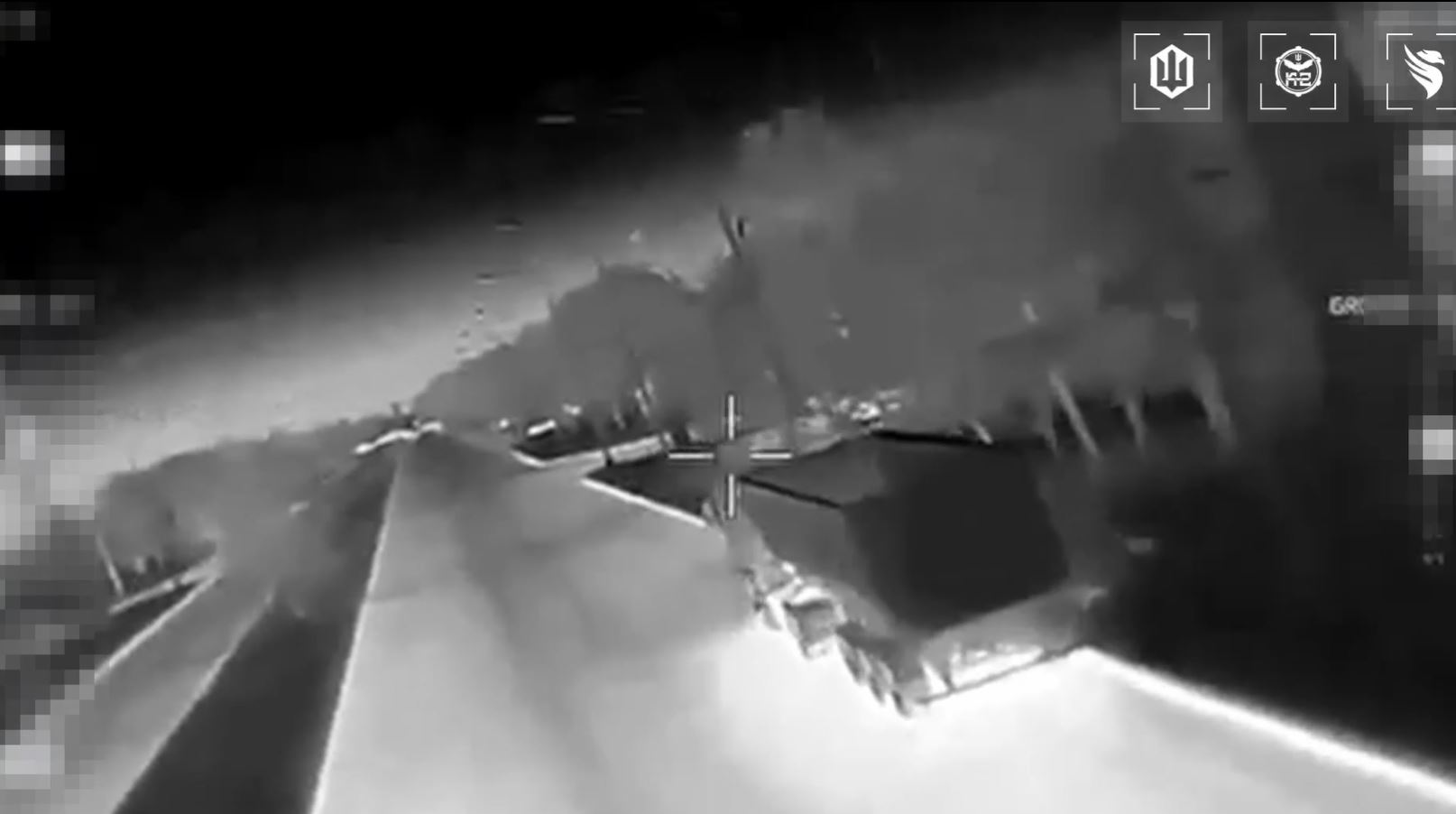
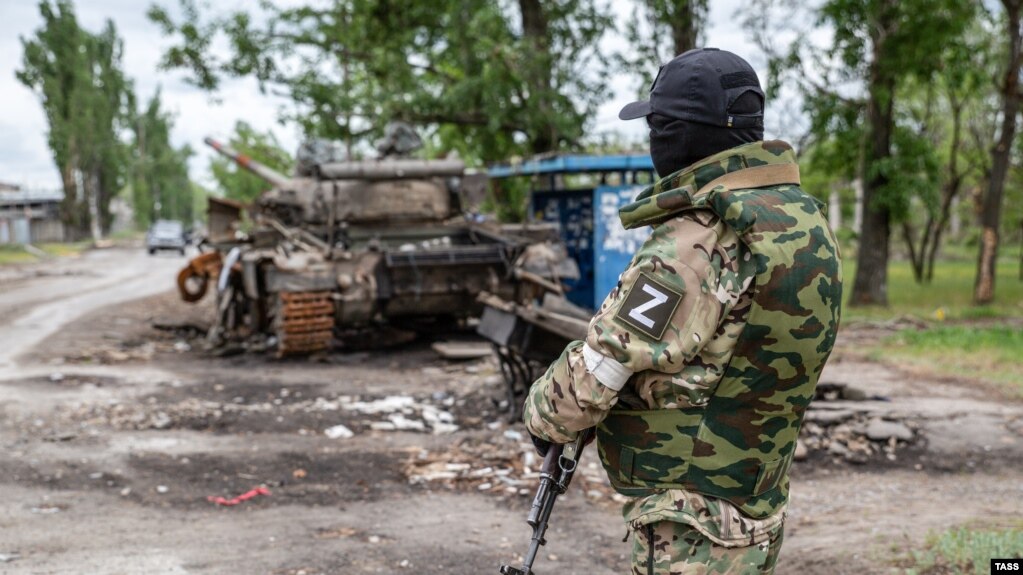
Russia has begun moving gasoline to its frontline units in occupied Ukraine in convoys of civilian cars, the Ukrainian defense outlet Militarnyi reported. Soldiers filmed themselves loading jerrycans into ordinary trunks, an improvised workaround after Ukrainian drone strikes made fuel tankers too risky to run. Russian forces are also disguising army trucks as civilian vehicles along the supply route to occupied Crimea.
This comes amid Ukraine’s ongoing “Logistics Lockdown,” a campaign by several Ukrainian military branches and the Security Service to target Russian fuel, logistics, and other supplies across occupied territories, at depths of up to 200 km.
Soldiers filmed the fuel run themselves
A video on the Exilenova+ Telegram channel showed Russians describing a convoy of passenger cars assembled to carry one metric ton of gasoline, Militarnyi reported. A man off-camera says the cars left the city of Kizilyurt in Dagestan, Russia, on the local head's orders, with the fuel destined for Russian units in occupied Tokmak, Zaporizhzhia Oblast. The footage shows jerrycans filling the trunks:
Besides the fuel, the drivers carried 1.5 million rubles ($20,900) to buy another batch of gasoline. Fuel keeps Russian frontline positions running: generators power electronic-warfare systems, charge batteries for reconnaissance and strike drones, and run communications gear in dugouts and observation posts.
Disguised trucks and a strained supply line
Russian forces have also begun disguising army trucks as civilian transport because of Ukrainian drone attacks deep in the rear. In northern Crimea, monitors spotted a freshly painted blue Ural truck driven by a man in civilian clothes, still carrying military plates, its oversized body posing as a dump truck.
The command of Russia's Dnepr grouping ordered mass use of civilian vehicles to move fuel along the route linking Rostov-on-Don with occupied Crimea, the Krymsky Veter monitoring project reported. That improvisation tracks the M-14 corridor, now within Ukraine's deepening drone range.
Explore further
ISW: The strikes will likely cascade into deeper disruption across Russia’s rear supply network
Why Russia is improvising
Ukraine's Defense Forces have intensified drone strikes on logistics trucks and fuel tankers on the roads from Russia to occupied Crimea. The attacks have already forced the occupiers to limit cargo traffic through the occupied part of Kherson Oblast toward the peninsula, and Russia has closed stretches of its own land corridor to keep them clear of strike drones.
A Lithuanian court has convicted a man who ran a cyclist off the road and attacked him for wearing a shirt with Ukrainian symbols, according to LRT. Judges treated his hatred of people who support Ukraine as an aggravating circumstance. The verdict is now final, and the court found the assault was deliberate, not an accident.
As Russia continues its all-out war against Ukraine, open support for Ukrainians across the Baltic states through flags, clothing, and fundraisers has become a marker of identity, even as it occasionally provokes hostility.
The roadside attack
On the evening of 27 March 2025, the man drove up to the cyclist on a road in Lithuania's Širvintos district. He repeatedly ordered the cyclist to take off the shirt bearing Ukrainian symbols. When the cyclist refused, the driver passed him, then swung the front of his car toward the roadside and blocked his path. The cyclist braked hard and fell with his bicycle. He suffered injuries, and the bicycle was damaged.
When the cyclist got back up, the man ran over to him. He again demanded that the cyclist remove the shirt, grabbed it, and tried to pull it off. The cyclist reached for his phone to call for help. The man struck him and knocked the phone onto the asphalt, breaking it, the court found.
Explore further
Two Polish citizens detained in Przemyśl for desecrating Ukraine’s flag — sixth such attack in last months
A hate motive, the court ruled
The Vilnius Regional District Court found the 1987-born man guilty of damaging another's property and causing minor bodily harm. Evidence from the investigation showed the violence was not random, the court said. It stemmed from the man's hatred of the victim as someone publicly backing Ukraine against Russia's invasion. The court treated that motive, hostility toward a group for supporting Ukraine, as an aggravating circumstance.
The court handed the man a non-custodial penalty of one year and three months' restriction of liberty. During that time, he must work or register as a jobseeker. He must also complete a program aimed at changing violent behavior. On top of that, he owes the victim for material and non-material harm, and he must repay Lithuania's State Patient Fund for the cost of treating the injuries.
Explore further
Switzerland to limit protection status for Ukrainians from seven western oblasts
A Vilnius District Prosecutor's Office prosecutor, Edvinas Navickas, led the pre-trial investigation and the prosecution. Vilnius County police officers gathered the evidence. The court issued its verdict on 12 May, and it has since taken effect, the prosecutor's office reported. Lithuania, a NATO member bordering Russia, has been one of Ukraine's strongest backers since 2022, sending weapons and welcoming Ukrainian refugees.
Lithuania has prosecuted this hatred before, convicting a man who smashed a displaced family's car.
Ukrainian refugees
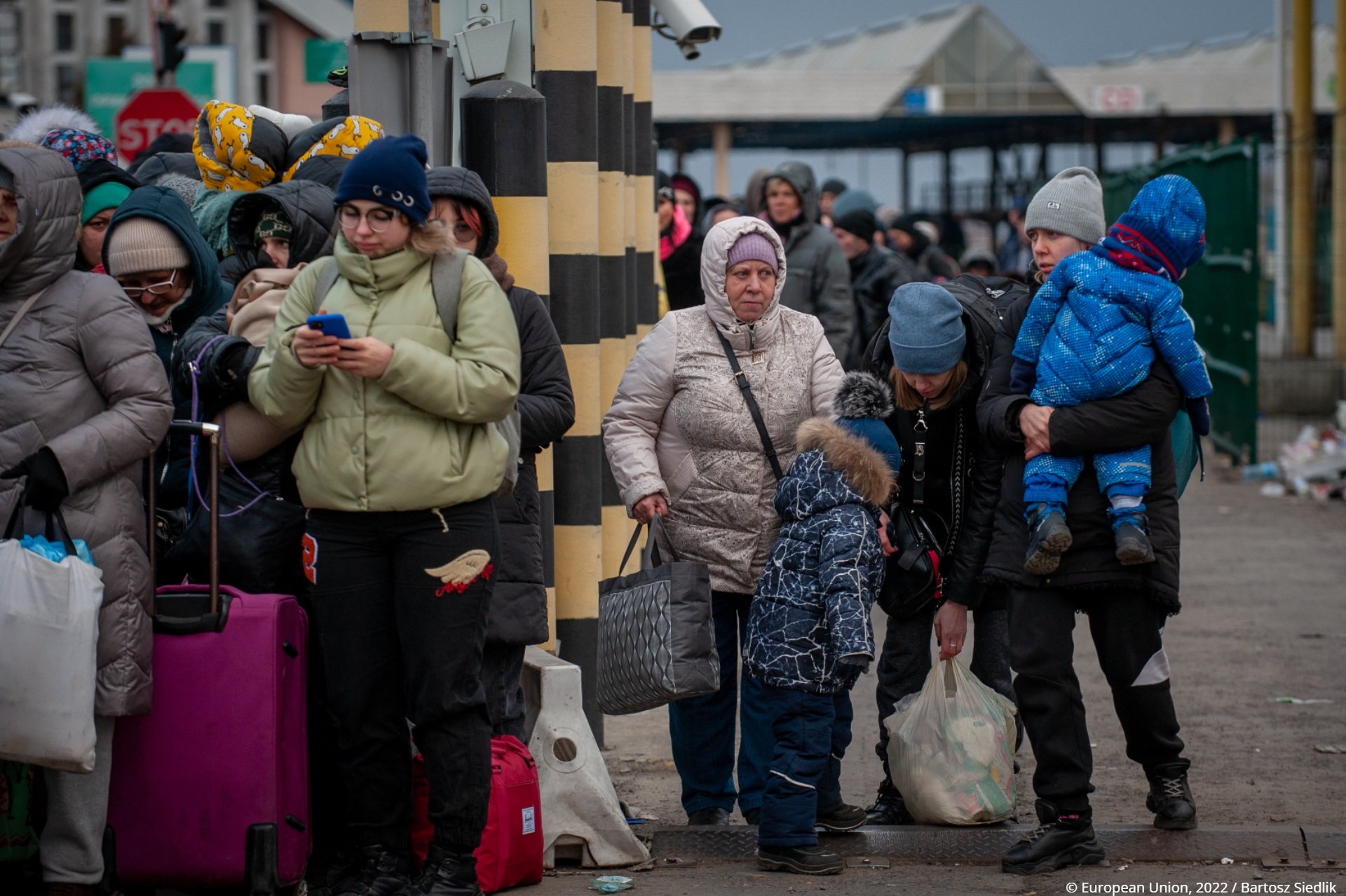
Millions of Ukrainians live outside their country because Russia's invasion made home unsafe. Some 5.9 million are abroad as of 2026. Most settle in the European Union, where Poland and Germany host the largest communities. That visibility and open support for Ukraine sometimes draw hostility. Other reported attacks on Ukrainians abroad don't have a clear anti-Ukrainian motive.
Explore further
Latvia sentences man to prison for anti-Ukrainian hate speech and violence
In Poland, isolated cases include a Ukrainian beaten over his accent and a woman detained for telling two Ukrainian women to go back to Ukraine, while a separate knife attack on a Ukrainian selling his car in Wrocław has not been tied to nationality.
In Germany, an attacker killed a teenage athlete, a man went after children for speaking Ukrainian, and others assaulted teenagers while chanting pro-Russian slogans; one Berlin assault and a Murnau double killing both pointed to anti-Ukrainian motives, and a Russian was jailed for life over the latter.
The violence is not confined to those two countries: other attacks on Ukrainians have occurred in other places. Earlier, a Ukrainian was stabbed to death in Ireland in an attack police have not linked to his nationality, and a Ukrainian woman was murdered in the United States by a man who cited a delusional reason.
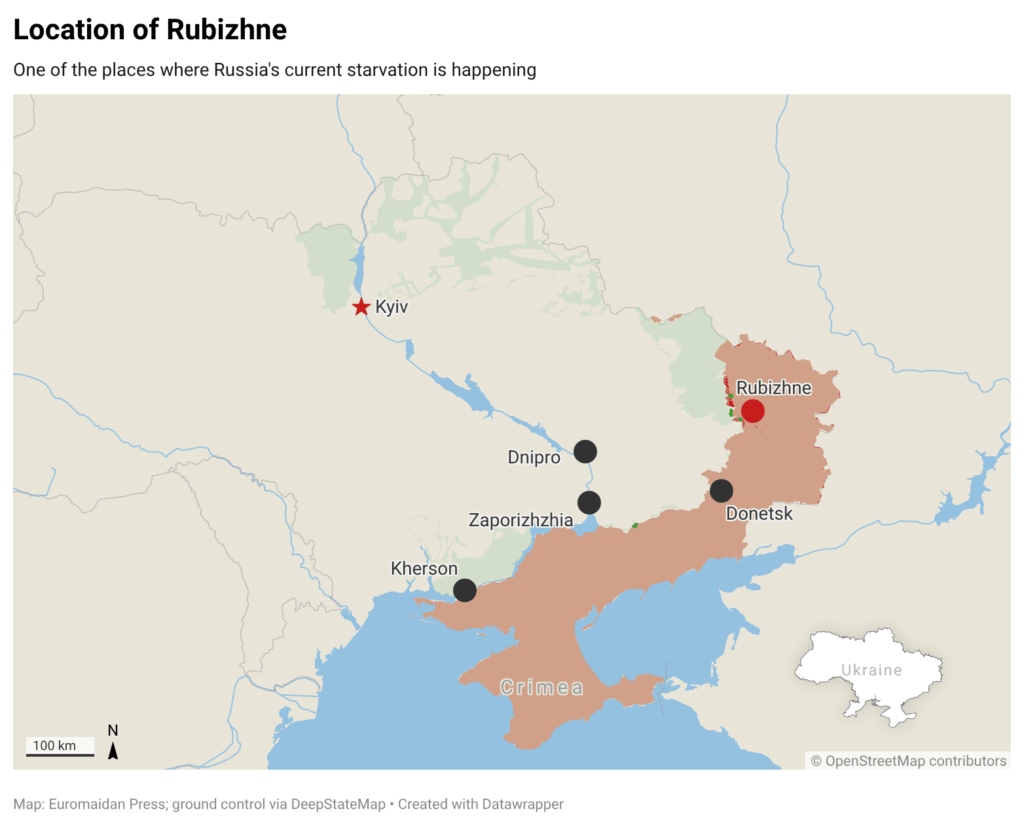
Russian occupation forces have deliberately manufactured a food shortage in occupied Rubizhne, cutting civilian food deliveries to the Luhansk Oblast city even as military supply convoys continue to flow, the head of the Luhansk Regional Military Administration reported on 8 June.
Shelves in the city's stores are emptying rapidly, Kharchenko said. Russian propaganda blames disrupted transport links, citing an alleged drone threat. Yet the occupiers have had no difficulty maintaining their own logistics routes to resupply military units stationed across the region, he noted.
"They need to make the next victim for Russian television out of local residents. They chose Rubizhne."—Luhansk governor OleksiiKharchenko
A city turned into a propaganda prop
The official accused Russia of weaponizing hunger for television cameras. He said the occupiers intend to film bare shelves and hungry residents, then broadcast the footage to Russian audiences as evidence of suffering they themselves engineered.
Before Russia's full-scale invasion, Rubizhne was home to more than 55,000 people. Russian forces seized the city in May 2022 after weeks of devastating urban combat during which they fired up to 1,500 shells per day, the BBC's Quentin Sommerville reported from the front lines. The city's current population remains unknown, but residents who stayed have endured four years of occupation without reliable utilities, communications, or public services.
In nearby Sievierodonetsk, conditions have deteriorated so far that residents now mow the grass in their own neighborhoods and clean communal areas themselves, Kharchenko added—an admission that Russia's occupation authorities provide no basic municipal services even in the cities they claim to have "liberated."
A pattern of deliberate starvation across occupied Ukraine
The manufactured food shortage in occupied Rubizhne fits a documented pattern of Russia using hunger as a weapon against Ukrainian civilians trapped behind the front lines.
In Oleshky, a frontline city in occupied Kherson Oblast, roughly 2,000 civilians have been cut off from food, medicine, and clean water for months. "If the situation doesn't improve, people will just die there from hunger. Because there's no way out, no food supplies coming in," an Oleshky resident who escaped occupation told the Kyiv Independent. Russian forces mined the access roads, destroyed the Kakhovka dam's water infrastructure, and deployed FPV drones that residents describe as conducting "human safari" attacks—hunting anyone who steps outside. People there hunt pigeons and wild ducks with fishing line, plant vegetables in shell craters, and bury their dead in wheelbarrows because no coffins or transport exist.
Ukraine's Foreign Ministry in May appealed to the United Nations and the International Committee of the Red Cross over what it called a "severe humanitarian crisis" in Russian-occupied Kherson Oblast. Russia rejected calls for a humanitarian corridor.
In Nova Kakhovka, upstream from Oleshky, most coastal areas have been abandoned. The few residents who remain live in distant high-rise microdistricts with no functioning hospital and minimal Russian administrative presence, governed remotely from Henichesk, roughly 130 kilometers away.
The Rubizhne food shortage also coincides with Russia's broader restriction of civilian movement through occupied territories. On 6 June, occupation authorities shut down bus and private car traffic on main arteries, capping two weeks of land-corridor breakdowns that have further isolated occupied communities.
Starvation as premeditated policy
International human rights investigators have gathered evidence that Russia planned to use hunger as a weapon before the 2022 invasion. A report by Global Rights Compliance found that a Russian defense contractor purchased grain-transport trucks and bulk cargo ships in December 2021—two months before the invasion began. The evidence was submitted to the International Criminal Court for what could become the first prosecution of a head of state for the war crime of starvation as a method of warfare.
Global Rights Compliance has drawn a direct parallel to the Holodomor—the Soviet-engineered famine that killed millions of Ukrainians in 1932–1933. Russia's current starvation tactics are being perpetrated, the organization noted, by "the same attacking state."
Under the Geneva Conventions, using starvation of civilians as a method of warfare is a war crime. The Rome Statute of the ICC codified the offense in 1998. Yet in occupied Rubizhne, occupied Oleshky, and across the territories Russia claims to have annexed, the pattern continues: military convoys pass, civilian supply lines close, and shelves empty.
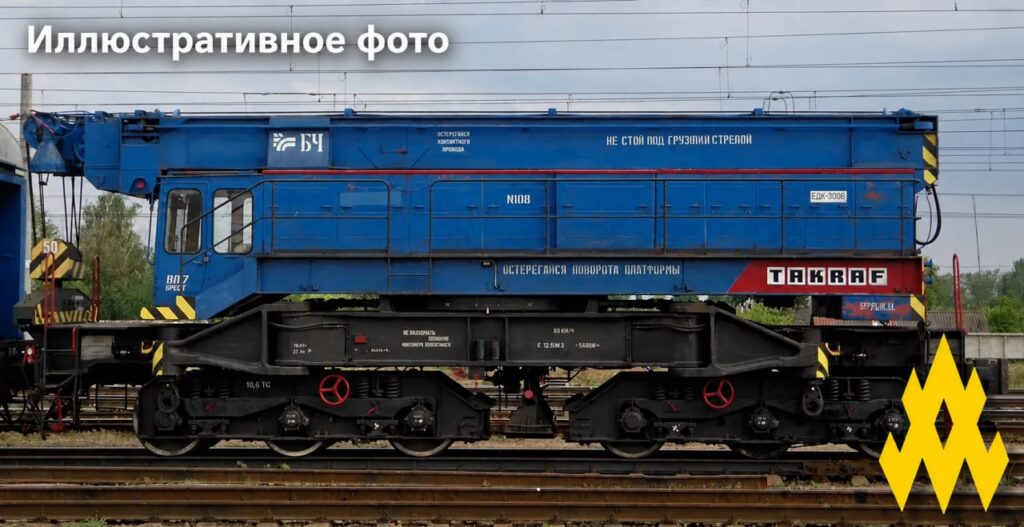
Pro-Ukrainian partisan movement ATESH says its agents carried out a sabotage operation at a railway station in Russia’s Voronezh Oblast, destroying a rare heavy-duty rail recovery crane used by Russian Railways.
The group said the target was an EDK-300/5 rail recovery crane, a specialized system used for large-scale emergency rail restoration work. ATESH claims the equipment is no longer in production and exists in only limited numbers across Russia’s rail network.
According to the statement, the crane was designed for heavy railway accident response tasks, including lifting derailed rolling stock, clearing damaged infrastructure, and restoring traffic on key lines. It reportedly had a lifting capacity of up to 300 tons.
A heavy rail recovery crane used by Russian Railways for emergency repair and derailment response. Illustrative photo: ATESH
“Even in the deep rear, critical equipment is not safe from destruction”
ATESH said the loss of the crane would reduce Russia’s ability to rapidly repair damaged rail infrastructure, particularly at major transport junctions where recovery speed is critical for maintaining logistics flows.
The group added that the impact of the loss would be long-lasting, saying: “Replacement of the destroyed crane will require significant time and resources. While Putin’s army searches for a replacement, the railway hub and regional logistics are operating with limited recovery capacity.”
“Even in the deep rear, critical equipment is not safe from destruction,” they added.
The report has not been independently verified.
ATESH: sabotage network operating inside Russia
ATESH is a clandestine resistance network operating inside Russian-controlled territory and within Russia itself. The group says it focuses on reconnaissance and sabotage operations against military, transport, and communications infrastructure that it considers to be supporting Russia’s war effort against Ukraine.
ATESH statements are typically released via Telegram and often include claims of damage to rail assets, depots, and logistical hubs. The group also claims to have agents operating inside the Russian armed forces, which it says helps it gather intelligence and identify targets.
The operation is part of a wider campaign aimed at disrupting Russian transport infrastructure, which the group says supports both civilian logistics and military supply chains.
ATESH has increasingly focused on rail assets inside Russia, arguing that even limited damage to specialized equipment can create disproportionate delays across tightly connected transport networks.
Previous claimed strike in Saint Petersburg
In a previous claimed operation in May, ATESH said its agents set fire to a locomotive in Saint Petersburg used for oil transport, taking it out of service and disrupting rail operations in Russia’s northwestern logistics network.
The group said the locomotive had been part of fuel transport routes linked to industrial supply chains and export corridors in the northwest of the country, including areas connected to port infrastructure.
A locomotive used in oil transport was set on fire in Saint Petersburg, Russia, according to claims from the partisan network ATESH.
The group says its agents carried out the sabotage operation, taking the engine out of service and disrupting rail logistics tied to fuel and… pic.twitter.com/2c6ChkG7TR
— Euromaidan Press (@EuromaidanPress) May 21, 2026
Russia "intends to harm" the UK through economic disruption, sabotage, and "dark arts", and the evidence is clear, former UK Chief of the Defense Staff Stuart Peach told The Independent. His claims came in a joint interview with the chair of the House of Lords Select Committee on National Resilience, Baroness Coussins, who called for greater urgency from government and citizens.
The intervention is one of the most direct public warnings from senior UK figures on Russian hybrid operations against Britain. Peach is now making the case publicly that the threat has shifted from speculative to operational.
Baroness Coussins, whose committee was appointed in January 2026 and is due to report in November, framed it more bluntly: "It is not a question of 'what if?’ It's a question of 'these things are happening now.' We know we’re under cyber attack daily."
"The evidence is clear"
“The fact that Russia intends us harm – whether it's economic disruption or the ‘dark arts’, as you might call them – I think the evidence is clear," Peach said.
He warned that the UK is not prepared for the scale of scenarios that could result, including widespread power cuts and full-scale war.
Baroness Coussins added that British intelligence services regularly identify and disrupt potential violent threats inside the country and pointed to the activities of so-called proxy structures linked to Russia and Iran.
Undersea cables and European pattern
Peach said the threat to the UK posed by undersea cable disruption, which carries internet connectivity, financial transactions, and essential data, was an issue he had raised as Chief of the Defense Staff and one that has only sharpened since.
He pointed to a politically motivated arson attack in Berlin in January 2026 that caused a widespread power cut affecting 45,000 households and 2,200 businesses, including internet and heating.
The recent fire at an electrical substation that forced the closure of London's Heathrow Airport, causing mass flight cancellations and power disruption, was raised as a UK precedent showing how single-point sabotage can cascade across critical systems.
Lord Peach warned that malicious attacks “can have real damage.”
In charge for 14 years at the Home Office and 10 at Hampshire police, the Tories co-authored the Henry Nowak tragedy, says Clive Pinder. But Kemi Badenoch has shown she is determined to do something about it.
Et si le gouvernement qui rabote et les syndicats qui s'indignent défendaient, sans le savoir, exactement la même chose ? La réforme de l'assurance chômage votée le 2 juin dit moins sur le milliard économisé que sur un pays qui a oublié, en soixante-dix ans, à qui appartient le salaire différé.
Il existe un document que cinq cent trente-huit mille Français ont signé l'an dernier, généralement un mardi ou un jeudi, dans un bureau des ressources humaines où l'on avait disposé pour l'occasion deux chaises, une bouteille d'eau et un parapheur, et ce document, né en 2008 d'un accord entre partenaires sociaux qui passait alors pour une révolution de velours, s'appelle une rupture conventionnelle. 538 433 homologations en 2024, selon la Dares. Un divorce à l'amiable entre le salarié et l'employeur, inventé pour solder sans drame, sans prud'hommes, sans humiliation, ce que le droit du licenciement rendait interminable.
Chaque matin, 7 articles du Courrier dans ma boîte mail, et en plus c'est gratuit... J'en profite dès maintenant
Deviens ton propre souverain
Email sent! Check your inbox to complete your signup.
No spam. Unsubscribe anytime.
C'est ce document paisible que le Parlement vient de transformer en variable d'ajustement budgétaire.
Les deux camps ont joué leur partition sans surprise. Côté gouvernemental, on dénonce les pré-retraites déguisées, les départs de confort, l'optimisation d'un dispositif devenu, dit-on, une machine à financer des transitions choisies. Côté syndical et à gauche, on dénonce le rabot, la précarisation, le énième tour de vis sur le dos des demandeurs d'emploi. Les uns veulent la cage moins chère. Les autres la veulent plus douillette. Personne, dans aucun des deux hémicycles, n'a demandé qui détient la clé.
Faut dire que la question n'est jamais à l'ordre du jour. On négocie les paramètres ; la propriété, elle, ne se discute pas.
Le détour par Tocqueville
Il y a, dans le second volume de De la démocratie en Amérique, une page que tout lecteur du Courrier connaît, et qu'il faut pourtant relire chaque fois que l'État français retouche un droit social, parce qu'elle décrit moins un régime politique qu'un climat. Tocqueville y imagine le pouvoir sous lequel s'endorment les démocraties et qui préfigure l'avachissement contemporain :
« Au-dessus de ceux-là s'élève un pouvoir immense et tutélaire, qui se charge seul d'assurer leur jouissance et de veiller sur leur sort. Il est absolu, détaillé, régulier, prévoyant et doux. Il ressemblerait à la puissance paternelle si, comme elle, il avait pour objet de préparer les hommes à l'âge viril ; mais il ne cherche, au contraire, qu'à les fixer irrévocablement dans l'enfance. »
Appliquons mot à mot. L'assurance chômage à la française n'est pas une assurance : c'est une tutelle. On n'y adhère pas, on y est affilié. On ne choisit ni l'assureur, ni la prime, ni les garanties, ni la durée de couverture. On ne peut pas en sortir, pas la comparer, pas la résilier. Et lorsque le tuteur a besoin d'argent, il modifie les garanties par la loi, rétroactivement pour les espérances, unilatéralement pour les contrats. Je suppose qu'un assureur privé qui réécrirait ainsi ses polices en cours rencontrerait assez vite un procureur. L'État, lui, rencontre une majorité.
Le pouvoir tutélaire n'a pas changé de nature depuis 1840. Il a changé de guichet.
Ce qu'on voit, ce qu'on ne voit pas
Reste à examiner le milliard, avec la méthode de Bastiat : ce qu'on voit, et ce qu'on ne voit pas.
Ce qu'on voit : un régime endetté, un milliard d'économies, quinze mille retours à l'emploi promis. Vertu budgétaire, sérieux gestionnaire, courage réformateur.
Et qui paie, en bout de chaîne ? La cotisation dite patronale — 4,05 % de chaque salaire — n'est pas un cadeau de l'employeur : c'est du salaire différé, une part de la rémunération que le salarié ne touche pas aujourd'hui pour être couvert demain. Quant à la part salariale, elle a été supprimée en 2018 et fondue dans la CSG : le salarié paie toujours, mais il ne le voit plus. On a effacé la ligne du bulletin de paie. On n'a pas effacé le prélèvement.
Ce n'est pas nouveau ; à le bien regarder, c'est même très français. L'Unedic naît en 1958 d'une convention entre patronat et syndicats — une assurance paritaire, gérée par ceux qui la financent, à laquelle l'État ne touche pas. Puis l'histoire s'écrit comme une lente digestion.
2008 : la fusion ANPE-Assedic crée Pôle emploi, et l'opérateur passe sous la main publique.
2018 : la cotisation salariale disparaît dans la CSG, et l'assurance devient pour partie un impôt.
2019 : les partenaires sociaux ne s'accordant pas, l'État écrit lui-même les règles par décret — carence, dégressivité, salaire de référence.
2021 : la contracyclicité indexe les droits sur la conjoncture, décidée d'en haut.
2023-2026 : les ponctions.
2026 : un accord négocié sous lettre de cadrage budgétaire, transposé par un Parlement qui rabote.
Chaque décennie apporte sa réforme paramétrique — durée, taux, différé, plancher — et chaque réforme laisse intacte la seule question qui vaille : la cotisation appartient-elle à celui qui la verse ? On réforme l'usufruit. On ne rend jamais la nue-propriété.
Et les assurés acceptent chaque tour de vis avec cette résignation de troupeau qu'on tond à date fixe, et qui s'étonne moins du froid que du changement de calendrier.
Pendant ce temps
Pendant que les deux hémicycles se disputaient trois mois d'indemnisation, la Cour des comptes publiait cette semaine son examen des conséquences budgétaires de la démographie française — la bombe lente que personne ne désamorce — et l'Agence France Trésor poursuivait son programme d'émissions : plus de 530 milliards d'euros à lever cette année, un record absolu, avec un écart de taux franco-allemand installé à 69 points de base. La question de savoir qui paiera la tutelle quand la pyramide des âges aura fini son œuvre n'a été posée nulle part. Elle aurait pourtant rendu le débat sur les quinze mois presque reposant.
Dernier mot
Que ferait une société libre ? Quelque chose de très simple et de très improbable : elle rendrait la cotisation au salarié. Un compte individuel, portable d'un emploi à l'autre, alimenté par ces 4,05 % qui sont son salaire différé ; le droit d'en confier la gestion à l'assureur de son choix — mutuelle, caisse syndicale, compagnie, et pourquoi pas l'Unedic, qui concourrait comme les autres ; la liberté d'arbitrer soi-même entre durée de couverture et niveau de garantie. La solidarité véritable — chômage de longue durée, accidents de la vie — relèverait de l'impôt : voté, visible, assumé, au lieu d'être dissimulé dans la tuyauterie d'un régime que l'État pille d'une main et rabote de l'autre. Le système de Gand, où des caisses volontaires assurent les salariés, fait vivre cette idée au Danemark et en Suède depuis un siècle — pays dont je ne sache pas qu'ils passent pour des jungles libérales.
Peut-être cette réforme produira-t-elle son milliard ; peut-être même ses quinze mille emplois. Là n'est pas l'objection. L'objection, c'est qu'on aura une fois de plus ajusté la pension de l'assuré sans jamais lui demander son avis sur l'assurance — et qu'on appellera cela, sérieusement, fébrilement, presque pieusement, un progrès du dialogue social.
Le jour où un salarié lira, au bas de son bulletin de paie, le nom d'un assureur qu'il aura choisi, la réforme aura eu lieu. En attendant, on rabote la rente. La cage, elle, vient d'être repeinte.
À la frontière entre l'Inde et le Bangladesh, deux géants se jettent dans l'océan : le Gange et le Brahmapoutre. Alors que leurs bras se divisent, ces fleuves forment le plus grand delta du monde, qui s'étend sur plusieurs milliers de kilomètres carrés. Longtemps en conflit, grands félins et habitants tentent de résister à l'afflux des touristes, aux cyclones et à la montée des eaux.
Toutes les photographies de cette double page sont de Bertrand Daugeron. Dans la gare de Calcutta, une fresque représente le parc national des Sundarbans, 2026
Les Sundarbans indiens, là où les bras des deltas du Gange et du Brahmapoutre s'enlacent. Près de 10 000 kilomètres carrés de terres et d'eaux partagées entre l'Inde et le Bangladesh, à l'embouchure du système fluvial Gange-Brahmapoutre, sur le golfe du Bengale. Côté indien : 4 200 kilomètres carrés, 102 îles, dont 54 sont habitées. Une forêt de mangrove classée au patrimoine mondial de l'Organisation des Nations unies pour l'éducation, la science et la culture (Unesco) depuis 1987 — la plus grande et la dernière encore intacte du monde. Et une donnée physique qui commande tout : 70 % des terres se situent entre 1,50 et 3 mètres d'altitude. Aucun relief, pas d'élévation refuge. Le delta tout entier affleure au niveau de la mer. Dans certaines sections, les digues sont déjà en dessous.
La zone de transition de la réserve regroupe cinq millions de personnes. Jusqu'en 1973, les communautés pouvaient venir puiser dans les ressources de la forêt : pêche dans les chenaux intérieurs, récolte de miel. Cette année-là, le gouvernement indien crée la Sundarban Tiger Reserve, premier pas vers une séparation stricte qui va se construire par étapes. En 1984, le cœur de la forêt devient parc national : accès totalement interdit. En 1989, l'ensemble du delta (forêt protégée et îles habitées) est désigné réserve de biosphère.
« Pourquoi le tigre attaque-t-il ? »
Certains blocs forestiers de la zone tampon, qui borde le parc, restent accessibles aux pêcheurs locaux, sous permis saisonnier, pour un nombre d'espèces limité. Mais à Sajnekhali, non loin du village de Pakhiralay, sur l'île de Gosaba, le contrôle est strict et s'impose à tous — pêcheurs, habitants, touristes. Une ligne est tracée entre deux mondes. D'un côté, le naturel administré. De l'autre, l'humain contraint. Entre les deux, une économie qui s'est réorganisée, partiellement, autour de cette séparation, avec le tourisme et l'espoir d'un développement économique.
L'agent du Sajnekhali Wildlife Sanctuary (sanctuaire faunique de Sajnekhali) en compagnie duquel nous patrouillons depuis trois heures s'arrête soudain, en regardant alentour : impossible ici de planifier au-delà de dix ans, explique-t-il. Dans l'intervalle, tout aura disparu.
Chaque jour, qu'il pleuve ou qu'il vente, pendant qu'une myriade de bateaux de touristes naviguent à l'affût d'un grand félin, une équipe de rangers inspecte les filets : plus de cent kilomètres de nylon tendu entre les chaumes de bambou courant en lisière de mangrove sur tout le périmètre. Il s'agit de protèger l'île de Gosaba du tigre du Bengale, et la nature des intrusions humaines : la pêche, la chasse et, désormais, les appareils photo. Cette protection, réalisée par les villageois — à la demande du sanctuaire de Sajnekhali par l'intermédiaire de comités locaux de villages (Joint Forest Management Committe, JFM) —, établit une séparation physique entre le monde des hommes et celui de la nature.
Chassé-croisé de touristes à l'embarcadère, 2026
Bertrand Daugeron
Côté habité, les digues, levées de terre protégées par des toiles qui longent les berges, séparent les villages de l'eau, tentent de retenir ce que le delta voudrait reprendre. Côté nature, la mangrove, barrière physique et symbolique. Entre les deux, les chenaux. La Datta River. L'eau qui circule, qui érode, qui élargit.
Quelque part derrière les clôtures, des caméras pièges enregistrent en continu. Dans un bureau, chaque félin est identifié par ses rayures, telles des empreintes digitales. L'œil mécanique identifie ce que l'œil humain ne voit pas. On sait, depuis le recensement de 2022, qu'il y a ici cent un tigres et qu'ils ne traversent plus le bras de mer. On ne les voit pas ; eux nous voient. Avant les filets, les chasseurs de miel qui s'enfonçaient dans la mangrove portaient un masque avec des yeux peints derrière la tête. Le tigre attaque par-derrière : ne jamais lui tourner le dos. Aujourd'hui, le masque a été remplacé par les protections en nylon.
Si, depuis quelques années, les incidents ont quasi disparu, leurs rares occurrences incitent à la réflexion. « Pourquoi le tigre attaque-t-il ? », interroge l'agent. Parce qu'on entre dans son territoire. « Il ne chasse pas, il se défend. » Cette lecture change tout : il ne s'agit plus de neutraliser l'animal, mais de le tenir à distance. D'où les filets.
Il faut encore aider les félins à résister à la transformation de leur territoire. Or les chiffres suggèrent que cela n'a rien d'aisé. La réserve comptait 274 tigres en 2004. Il en reste moins de la moitié. Ce déclin observé dans les 56 réserves de tigres en Inde a conduit à sanctuariser ce territoire en 2007. Comme une dernière ligne de défense pour une population gravement menacée par la réduction de son espace vital, par la chasse et par le braconnage, qui réduisent ses ressources. On gagne la bataille du contact homme-animal, pas celle de l'habitat.
Inspection quotidienne des filets longeant les rives, la frontière avec le monde naturel, 2026
Bertrand Daugeron
L'agent de protection des forêts du sanctuaire se trouve au cœur de cette organisation spatiale. Quand on lui demande si la situation est difficile pour les populations locales, il répond sans hésiter : « La vie est dure pour tous. » Il marque une pause, et complète : « Pour les hommes, pour les animaux, et pour le territoire. » Un simple état des lieux.
Le fleuve est large, ses eaux sont « internationales ». Aujourd'hui, sept cents mètres séparent l'île de Gosaba de la rive d'en face. Il y a vingt ans, elles étaient à portée de voix l'une de l'autre. Un homme peut avoir vu ça dans sa vie : le fleuve qui s'installe, mètre après mètre, dans ce qui était de la terre. L'eau qui gagne, la berge qui cède, et personne pour l'arrêter. Ici, la géographie fluctue. C'est une donnée qu'on subit, qu'on intègre.
La mangrove ne rend pas ses morts
Sur la digue qui longe Gosaba, les berges récemment reconstruites côtoient des bâtiments en ruine éventrés par l'érosion : murs penchés sur l'eau, toitures échouées dans la vase — dont celles des bureaux des rangers, qui ont dû être reconstruits cent mètres plus loin. La digue elle-même ressemble à un rempart médiéval ; elle sépare deux mondes que tout condamne à se rejoindre. D'ailleurs, elle vient d'être rehaussée, par précaution. D'un côté, la mangrove splendide, intacte, inaccessible. De l'autre, le village, les petits hôtels qui se construisent, les groupes de touristes qui débarquent avec leurs valises à roulettes et repartent avec des tigres en peluche.
Pour l'agent de protection des forêts, cet espace se trouve confronté aux besoins spécifiques de trois acteurs : les villages, le parc et l'industrie du tourisme. Trois forces qui coexistent, qui dépendent les unes des autres, et qui se contredisent en permanence, dans un équilibre précaire que chaque perturbation menace, et que chaque réponse ne fait que déplacer.
Ici, la « perturbation » porte un nom : cyclone. Du 23 au 28 mai 2021, celui baptisé Yaas a balayé le site cinq jours durant. Les digues ont rompu en deux cents points. Les images sont encore dans toutes les têtes. Elles ont fait le tour du monde. Les routes, l'éclairage public, les protections contre l'eau : tout est à reconstruire à la main ; tout doit être transporté par bateaux. Coût estimé par le gouvernement du Bengale-Occidental ? L'équivalent de 2,3 milliards d'euros. Entre 2019 et 2022, quatre cyclones destructeurs se sont succédé : Fani, Bulbul, Amphan, et puis Yaas. Le district de South 24 Parganas, au sud de Calcutta, enregistre un cyclone majeur tous les trois ou quatre ans. Soit le temps qu'il faut pour réparer les dégâts du précédent.
Mais les destructions ne tiennent pas seulement à la survenue des cyclones. Si Aila, un phénomène de puissance modérée apparu en 2009, a submergé l'intégralité du territoire, c'est qu'il a coïncidé avec une marée de vive-eau. Yaas a frappé exactement au moment du pic. Or les terres inondées par l'eau salée restent impropres à toute culture pendant deux ou trois ans, au moins.
Avec les gardes forestiers, lors de la surveillance des rives du sanctuaire du tigre, 2026
Bertrand Daugeron
Les pêcheurs sont les premiers à subir le choc. La quantité de poisson n'est déjà plus suffisante. Crabes, crevettes et poissons sont vendus au marché local, sans que cela donne aux plus modestes des pêcheurs la capacité d'investir ni de faire face au moindre aléa. Après chaque cyclone, la migration s'accélère. Des familles entières doivent désormais compter sur les revenus d'un membre parti travailler dans un autre État du pays. Suraj a une vingtaine d'années. Il conduit un touk-touk électrique entre le village et l'embarcadère — touristes le matin dès 5 heures, groupes en milieu de matinée. La saison dure quelques mois. Le reste de l'année, il part à Bangalore, où il nettoie des appartements de standing. Il ne se plaint pas, il calcule. Et puis, il y a ces hommes qui peuvent rester, encore un temps, comme manœuvres et maçons. Débarquer les matériaux : sable, ciment, briques, gravier. Construire les hôtels. Se reconvertir. De pêcheur, devenir bâtisseur, avant que le prochain cyclone n'avale tout. Le chef des rangers ajoute : « Vous saisissez la pression psychologique ? Vivre entre deux catastrophes. »
Cyclones, marées… À ces deux forces destructrices s'ajoute une troisième, plus silencieuse. Chaque année, les rivières changent de cours, phénomène naturel dans un delta alluvial. Mais il est ici accéléré par le trafic maritime international. Les digues ont, au fil des ans, bloqué les flux tidaux qui apportaient les sédiments permettant aux îles de se recharger. Le lit des rivières s'élève, les îles s'affaissent, la mer monte. Depuis 1973, le delta indien a perdu 478 kilomètres carrés de terres par érosion, tandis que seuls 400 ont été gagnés par l'accrétion sédimentaire due aux apports fluviaux. Les eaux salées du golfe du Bengale entrent dans le delta, les eaux douces reculent. Par capillarité, le sel remonte dans les terres.
Ici, la géographie varie, nous explique l'agent. Ce qui rend caducs tout plan à long terme, toute infrastructure pensée pour durer, tout équilibre cherché entre les trois pôles avant que le prochain cyclone ne remette les compteurs à zéro.
Une réserve humide administrée par le département forestier, 2026
Bertrand Daugeron
Chaque matin, à l'aube, les premiers bateaux quittent les embarcadères pour ramener les touristes de la veille vers le continent. En milieu de matinée, les groupes suivants arrivent avec leurs guides locaux et tour-opérateurs qui vendent des formules tout compris : hôtel, réserve, restaurant. La région accueille de 200 000 à 300 000 visiteurs par an selon l'Institut indien pour la faune sauvage (WII), concentrés sur moins de 35 % du territoire. Une pression croissante sur un espace fermé et fragile.
Le département des forêts délivre les immatriculations des cinq cents bateaux en activité ainsi que les permis pour les touristes (leur nombre étant régulé). Il redistribue 40 % des revenus aux communautés via les comités de cogestion de la forêt de chaque village. Les 60 % restants sont pour le fonctionnement et le développement du territoire. Le tourisme n'est pas une menace venue de l'extérieur, mais la reconversion forcée d'une population dont les bases économiques traditionnelles ont disparu. Quand la mer prend les terres et que la forêt se ferme aux exploitations traditionnelles, le tourisme devient la seule ressource locale viable. Encore faut-il parvenir à un équilibre, fragile. Celui que recherche l'agent : ni trop ni trop peu. Plus de tourisme, c'est plus de revenus pour les communautés et plus de pression sur un écosystème fragile. Moins de tourisme, c'est moins de dégradation, mais moins d'argent pour une région qui n'a plus d'autre option.
La digue récemment refaite, un rempart contre les éléments naturels, 2026
Bertrand Daugeron
Prodip a la cinquantaine. Il tient l'accueil de l'un des plus récents hôtels de la région. En 1981, son père est parti dans la forêt et n'est pas rentré. Son corps n'a jamais été retrouvé. La mangrove ne rend pas ses morts. Aîné d'une famille de trois garçons et une fille, Prodip avait alors une dizaine d'années. Pendant dix jours, il n'y a rien eu à manger. Alors il a travaillé, pour que ses frères et sa sœur puissent aller à l'école.
Quarante ans plus tard, son fils Arjun, 19 ans, fait la cuisine dans le restaurant de l'hôtel. À côté, des murs à mi-hauteur, les fondations d'un restaurant que Prodip construit depuis quelque temps, au gré des fonds qu'il parvient à rassembler. « Il faut bien ! » Les gens viennent voir le tigre, celui qui a pris son père. Par un curieux renversement, l'animal qui a détruit sa famille hier est devenu la condition de sa survie.
Alors, jusqu'à quand, cet équilibre précaire ? « On n'en sait rien », répond l'agent. Objectifs à court terme uniquement. Planifier à long terme dans les Sundarbans, c'est construire sur ce qui bouge. Alors on fait autrement. On construit ce qui peut tenir jusqu'au prochain cyclone. On réparera ce que le suivant aura défait. Et puis, on recommencera.

 Login
Login