Bulgaria’s new government will stop sending military aid to Ukraine, the country’s defense minister said on Tuesday, as the more than four-year-old war grinds on with no end in sight. “We have already made it clear that the war in Ukraine will not be resolved on the battlefield,” Defense Minister Dimitar Stoyanov told reporters, according […]
For months, Rep. Gregory Meeks of New York, the top Democrat on the Foreign Affairs Committee, had championed legislation to send additional security aid to Ukraine as it defends itself against Russia’s invasion. The proposal, however, was stuck: House Republican leaders refused to consider it, and so the bill languished.
Last month, however, it became unstuck: Proponents of the legislation managed to go around the GOP leadership thanks to a discharge petition — a tactic that allows members to bring a bill to the floor if it’s formally endorsed by a majority of the House. As MS NOW reported last week, the Ukraine aid package cleared the House with 226 votes, including 18 Republicans.
The House tonight passed another Democrat-led bill that made its way to the floor after a group of Republicans bucked their party’s leadership and joined Democrats in forcing a vote.
The Faster Labor Contracts Act, which would force employers to start negotiating with a newly certified union within 10 days of receiving the request, passed with the support of 20 Republicans and all Democrats.
Critics will note that both this bill and the Ukraine aid still have to clear the Senate, where the measures’ fate remains uncertain, and they would still need Donald Trump’s signature to become law. It’s a fair point.
But let’s not miss the forest for the trees. Republican Rep. Brian Fitzpatrick of Pennsylvania said in an online written statement, “If the House Floor was managed properly, discharge petitions would never be needed. A successful discharge petition is clear and direct evidence of a poorly managed House Floor — because it demonstrates that the will of the majority of the People is being thwarted by the privileged few.”
Fitzpatrick didn’t mention House Speaker Mike Johnson by name, but given the context, he didn’t have to.
Indeed, it might not be immediately obvious just how embarrassing these latest developments are for the Louisiana Republican and his leadership team.
In the past century or so, successful discharge petitions have been very rare. The reason is simple: Such petitions have long been seen as a slap in the face of a sitting House speaker.
As New York magazine’s Ed Kilgore recently explained, “Indeed, prior to Johnson’s ascent to the Speakership, only two 21st-century discharge petitions achieved the 218 signatures needed to trigger a floor vote.”
This roughly once-per-decade average has undergone a dramatic revision under the Louisiana Republican’s tenure. In the last Congress, which ended in early January 2025, there were two successful discharge petitions, which was itself a significant total. Meanwhile, in the current Congress, which is far from over, there have been six successful discharge petitions, which The Hill accurately described as “extraordinary.”
The first came in March 2025, and it dealt with proxy voting for new parents serving in Congress. In November 2025, another discharge petition advanced the Epstein Files Transparency Act; five days later, a measure to repeal an executive order that gutted federal workers’ union rights also received 218 signatures.
Usually, members embarrass Johnson by ignoring his wishes and voting against legislation he has urged them to support. But this flurry of successful discharge petitions, which has no modern precedent, makes the House speaker appear even more diminished.
Kilgore’s recent piece added, “Signs of weakness invite further revolts by House members who fear voters more than this mild-mannered former backbencher from Louisiana, whose authority is totally dependent on Trump’s backing, which can be erratic during times when the president is distracted by nonlegislative matters like ending wars and naming things after himself. Politicians, like guard dogs, can smell fear and irresolution.”
The question, then, is less whether we’ll see more successful discharge petitions and more a question of when, as Johnson’s weak hold on power unravels further.
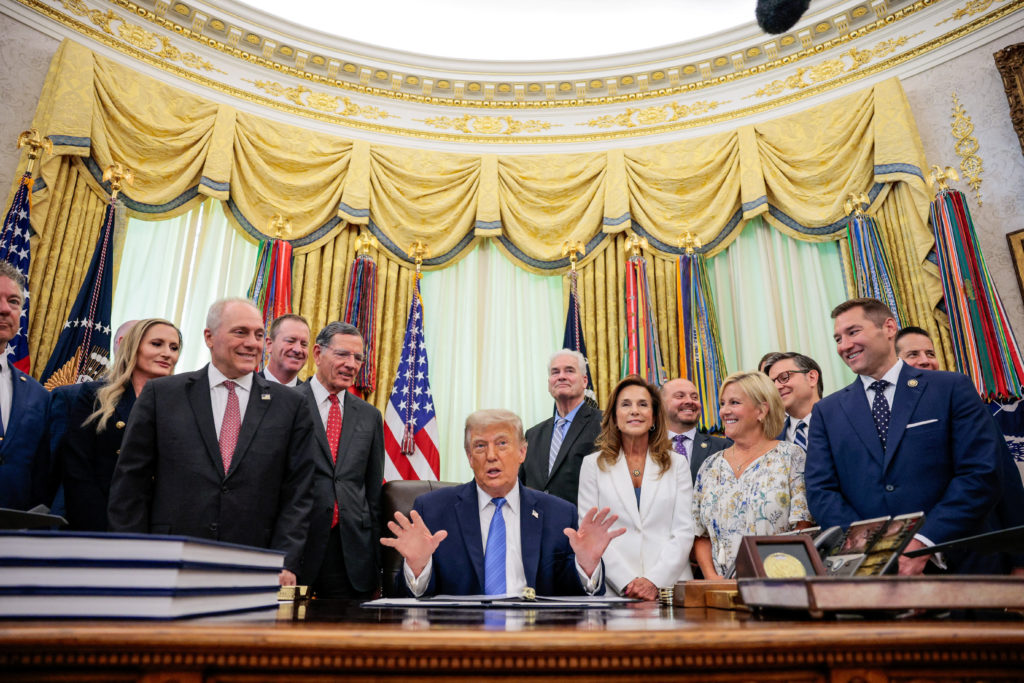
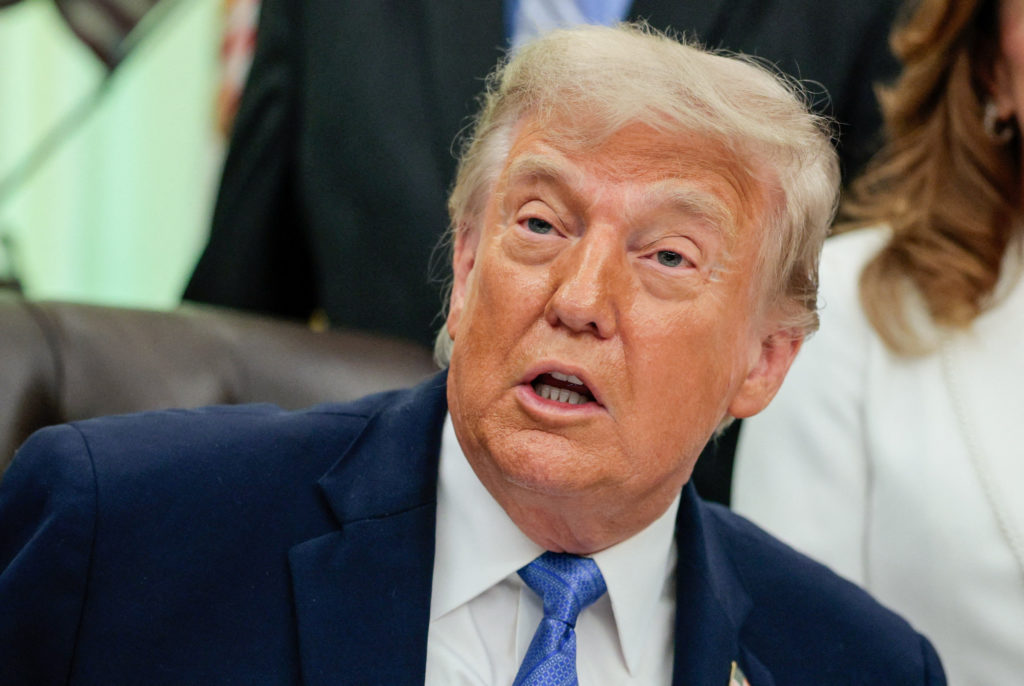
During an Oval Office event on Wednesday afternoon, a reporter asked Donald Trump for his reaction to the news that inflation has reached a three-year high. The president responded that the new data was “great,” adding, “I love the inflation.”
And while that was strange, it quickly got worse. As part of his explanation for why he professed his “love” of inflation, Trump went on to say, “You know, I can say it now, something you didn’t know. You know we’ve been taking out millions of barrels of oil. Nobody knows it. You know who doesn’t know about it? Iran — until right now.”
He said this operation involved 22 ships that traveled “with no lights” and went undetected because Iranians “don’t have any radar because we blasted the crap out of it.”
Even at face value, this was difficult to understand. The president loves inflation because the United States is taking oil out of the Middle East?
Complicating matters, there was also uncertainty about the nature and accuracy of Trump’s claims, even within his own White House Cabinet. MS NOW reported as part of the network’s liveblog coverage:
Energy Secretary Chris Wright, who was simultaneously testifying before the House Committee on Science, Space and Technology, told lawmakers that he did not know of any such operation.
Wright said he was not aware of “millions” of barrels of oil having been extracted from Iran, but he said earlier in the hearing that the U.S. military had helped get some oil out of the Strait of Hormuz.
As a rule, Wright can be counted on to toe the party line on pretty much anything Trump says, but when pressed by Democratic Rep. Emilia Sykes of Ohio on the president’s public comments, Wright said Trump was merely “talking casually.”
SYKES: *plays audio of Trump claiming US is stealing Iranian oil*WRIGHT: I think the president is talking casually SYKES: Do you think that it's appropriate to 'talk casually' about war?WRIGHT: I think you talk to all different audiences and you talk in all different styles
When Sykes followed up by asking about the propriety of a president speaking “casually” about a war, the energy secretary was reduced to saying, “I think you talk to all different audiences, and you talk in all different styles.”
What did that mean in this context? Your guess is as good as mine. It’s similarly unclear whether Wright’s use of the word “casually” was meant to convey the idea that sometimes Trump just says stuff without any meaningful regard for accuracy.
That said, it’s certainly possible that 22 ships moved through the Strait of Hormuz. The New York Times noted, however, “He did not say what time period he meant. Ordinarily, dozens of oil tankers would pass through the strait each day, and thousands would have done so since the war began, if not for Iran’s blockade.”
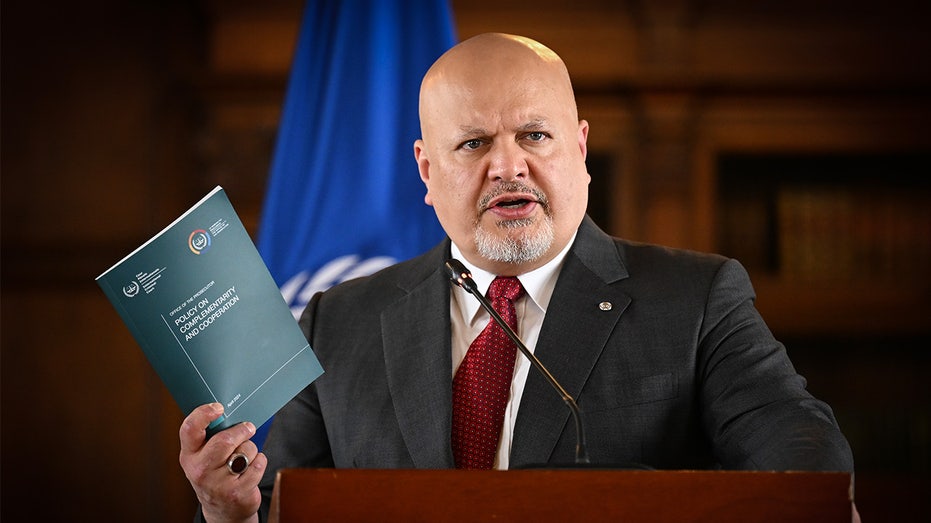
The International Criminal Court’s chief prosecutor has been suspended with immediate effect after the court’s governing body referred disciplinary proceedings against him to member states following a sexual misconduct investigation.
The ICC, based in The Hague, is a permanent international court created under the Rome Statute to prosecute individuals accused of genocide, war crimes, crimes against humanity and the crime of aggression when national courts are unable or unwilling to act.
Khan became one of the world’s most controversial prosecutors after seeking arrest warrants for Israeli Prime Minister Benjamin Netanyahu and former Israeli Defense Minister Yoav Gallant, making his suspension a major development well beyond the court itself. Israel and the United States have rejected the International Criminal Court’s jurisdiction, and neither country is a member of the court.
The Bureau of the Assembly of States Parties to the Rome Statute had decided to refer the disciplinary proceedings against Prosecutor Karim Khan to the full Assembly of States Parties, suspend him from duty pending a final decision and convene a special session to consider the matter, the International Criminal Court’s Presidency said in a Tuesday statement.
"The Court respectfully invites the Assembly of the State Parties to conclude the process with the highest priority," the court's presidency said.
Khan, who has denied wrongdoing, led the court’s controversial push for arrest warrants against Israeli Prime Minister Benjamin Netanyahu and former Israeli Defense Minister Yoav Gallant for Israel’s war against Hamas in Gaza.
Khan’s suspension followed an 18-month investigation into allegations of sexual misconduct involving a lawyer in his office.
Khan’s lawyers have denied the allegations and called the decision "unlawful, procedurally unfair and unsupported by evidence."
The findings have moved through several layers of review.
A U.N. Office of Internal Oversight Services investigation found evidence supporting the allegations, while a separate judicial review found the evidence was not enough to prove misconduct beyond a reasonable doubt, Reuters reported. The Assembly of States Parties Bureau, which oversees the court on behalf of member states, nevertheless found that Khan had committed serious misconduct involving nonconsensual sexual activity and recommended his removal, Reuters reported.
The disciplinary probe found Khan had engaged in "serious misconduct" and a "serious breach of duty," The Associated Press reported.
The case now goes to a special session of the Assembly of States Parties, the International Criminal Court’s 125 member governing body. The final decision lies with the assembly and a date for the special session has not yet been set.
Liz Evenson, international justice director at Human Rights Watch, told Fox News Digital that, "The fact that states parties appear to be taking this seriously is important but the decision is confidential so we can’t comment on it. We will be monitoring next steps closely. Meanwhile, state parties should continue to support the court in its important work across its docket."
The International Criminal Court issued arrest warrants for Netanyahu and Gallant in November 2024 after Khan requested them months earlier. Israel and the United States condemned the move, accusing the court of equating Israeli leaders with Hamas terrorists.
The Trump administration sanctioned Khan in February 2025 over the court's actions targeting Israeli officials, under an executive order targeting ICC officials involved in actions against the U.S. or its allies. The order authorized asset freezes and U.S. entry restrictions, and Treasury later added Khan to its sanctions list.
U.S. Ambassador to the United Nations Mike Waltz told Fox News Digital that the U.S. position on the International Criminal Court "has never wavered."
"We oppose any overreach by the ICC against the United States or our allies. Period," Waltz said. "And we expect our partners to stand shoulder-to-shoulder with us against these outrageous actions."
Waltz said the U.S. is watching the disciplinary proceedings against Khan, while declining to comment on the specifics of the case.
"As for the situation with Prosecutor Karim Khan, this is a bit rich that this prosecutor sought to jail a democratically elected prime minister and now we are tracking his immediate suspension and the ongoing disciplinary proceedings," Waltz said. "Of course, we aren't going to comment on the specifics of that case while it plays out."
The suspension drew immediate reaction from Israeli officials, who argued that the decision further undermines the court’s case against Netanyahu and Gallant.
"Want to divert attention from sex crime accusations? Just make up war crime accusations against Israel! Classic," Netanyahu wrote Wednesday on X. "The ICC is corrupt to the core."
Israel’s ambassador to the United Nations, Danny Danon, told Fox News Digital that Khan’s suspension proves the International Criminal Court’s problems go beyond one prosecutor.
"The International Criminal Court's decision to immediately suspend the Chief Prosecutor in The Hague, Karim Khan, following the UN investigation, proves that this body is rotten to the core," Danon said. "Now is the time to cancel the absurd indictments against Prime Minister Netanyahu!"
Anne Bayefsky, president of Human Rights Voices and director of the Touro Institute on Human Rights and the Holocaust, told Fox News Digital that the scandal has damaged the credibility of the entire court.
"The astounding story of the world’s International Criminal Court and its lead prosecutor headed by a criminal, an alleged rapist, is not just about one rotten apple," Bayefsky said. "The entire ICC machine let the process to hold Khan to account drag on for two years after his crimes were first reported."
Bayefsky argued that the court’s actions against Israeli officials should now face renewed scrutiny.
"ICC judges decided that Khan’s efforts to criminalize Israel’s Prime Minister and Defense Minister weren’t tainted by the clear evidence that Khan was trying desperately to use his attack on Israelis to save himself," Bayefsky said. "Khan has taken the credibility of the whole shameful ICC apparatus down with him."
The Presidency said the court’s leadership remains committed to "independent and impartial proceedings," recognition and redress for victims of mass atrocities, and the "dignity, rights and aspirations" of court personnel.
The statement also sought to defend the institution itself, calling the ICC "one of the most significant achievements of human civilisation" and saying the court has a duty to protect "the proper functioning of the Court as a whole and its reputation," the integrity of judicial proceedings, the rights of victims and suspects, and the well-being of court staff.
Ukraine remains ready to continue issuing permits for Polish exhumation work despite intensifying historical disputes between Ukraine and Poland, Ukrainian Foreign Ministry spokesperson Heorhii Tykhyi says, per Ukrinform. Exhumation work at the site of the Huta Pieniacka continues.
The spokesperson added that the intensifying tension between Ukraine and Poland causes "joy in Moscow." He called on allies to seek grounds for unity against the common enemy that "wants to destroy both Ukraine and Poland."
The current Polish-Ukrainian historical dispute centers on Ukrainian President Volodymyr Zelenskyy's 27 May decision to confer the honorary title "named after UPA Heroes" on the Separate Center of Special Operations "Pivnich" of Ukraine's Special Operations Forces. The Polish Foreign Ministry condemned the decision.
The Ukrainian Insurgent Army (UPA) is a deeply contested figure in Polish-Ukrainian historical memory. Ukrainian historiography presents UPA as anti-Soviet and anti-Nazi independence fighters. Polish historiography emphasizes UPA's association with the 1943-44 Volhynia massacres.
Zelenskyy UPA-naming decision and Polish reaction
Tykhyi also stated that the honoring of UPA heroes had no anti-Polish subtext. He noted that the history of the Polish and Ukrainian peoples contains both glorious and tragic pages.
The diplomat added that preparations for the Ukraine Recovery Conference (URC 2026), scheduled for June 25–26 in Gdańsk, are proceeding as planned and in a regular working mode.
“We hope that the conference will be held successfully,” Tykhyi emphasized.
Historical memory disputes spill into modern cooperation
The Vinnytsia-Kielce bus dispute earlier this week is the latest concrete example of how historical memory tensions have affected practical Polish-Ukrainian cooperation, Euromaidan Press reported. Polish sister-city Kielce refused to transfer 20-year-old municipal buses to Vinnytsia, a Ukrainian city under regular Russian strikes, over a street named after Bandera.
Stepan Bandera, the Ukrainian nationalist leader, led the Organization of Ukrainian Nationalists (OUN) and the UPA.
Russia actively uses its propaganda, referring to Ukrainians as “Banderites” and portraying Ukrainian statehood as a continuation of Nazism.
MS NOW’s Stephanie Ruhle hit back at President Donald Trump after he downplayed Americans’ concerns over rising gas prices caused by the war with Iran.
Earlier this week, when Trump was asked about the cost of fuel and the toll it’s taking on the American people, he told reporters, “If you notice, the price is not very high, relatively speaking. I mean, it’s lower than during the Biden administration.”
While that statement is technically true, Ruhle said the president isn’t telling the full story.
“Were prices high during the Biden administration? Sure. Specifically, when Russia invaded Ukraine in the summer of 2022, they were high,” the MS NOW host said. At their peak, gas prices under Joe Biden hit $5.07 per gallon, an all-time high.
Ruhle said Americans were very aware of fuel costs under Biden. “The American people were struggling, and they were angry,” she said. “They were angry about gas prices and grocery prices and healthcare prices.”
As she explained, that concern was a key reason many Americans chose to back Trump in the last election. “The cost of living is one of the reasons Joe Biden and subsequently Kamala Harris did not win the 2024 election, and what Donald Trump promised was to lower prices on Day 1,” she said.
Once inside the White House, however, Trump delivered exactly the opposite. According to AAA, the current national average for a gallon of gas is $4.15 — much higher than the $3.13 per gallon Americans were paying at the end of Biden’s term.
“As a direct result of some of his policies, whether we’re talking about mass deportations or tariffs, or now the war in Iran, we are seeing increased costs,” Ruhle said, adding that the American people’s anger toward the administration over rising costs is reflected by the president’s sinking approval ratings.
“Prices are high right now, and the American people are taking notice,” she said.
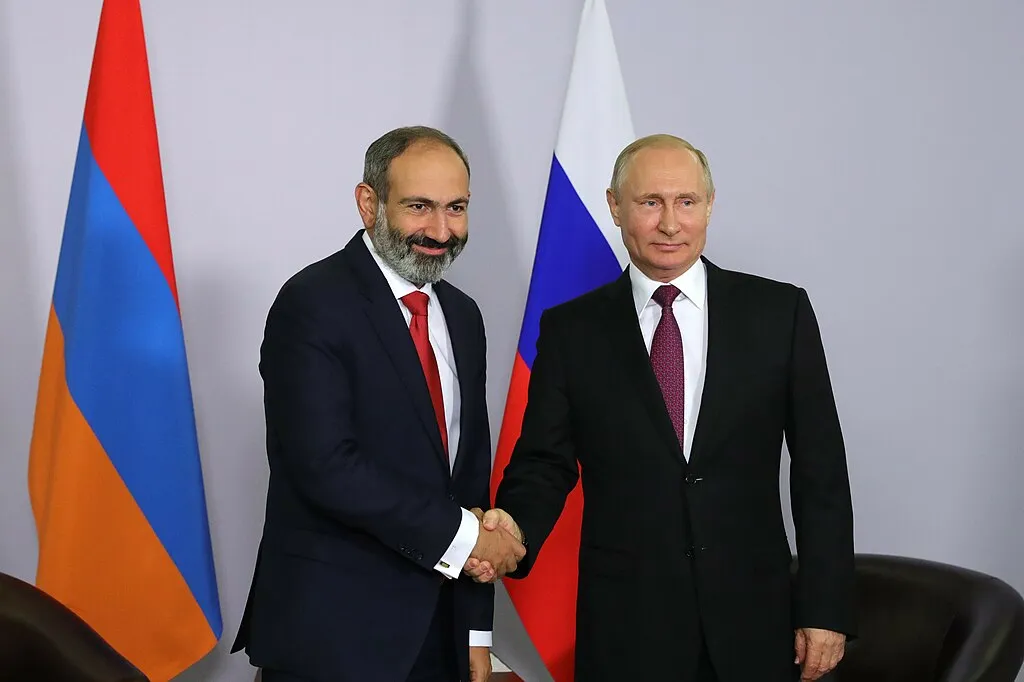
Russia began delegitimizing Armenia's election within hours of Nikol Pashinyan's 8 June 2026 victory. The Institute for the Study of War said so in its 9 June assessment. ISW identified three coordinated false narratives advanced by Russian government officials and pro-Kremlin commentators since the result.
One narrative claims Pashinyan "lost" because Civil Contract took less than 50% of the vote. A second says the election unfolded under Western pressure and domestic opposition suppression. A third alleges mass electoral fraud. ISW wrote that Moscow "continues spreading false narratives of stolen elections in post-Soviet states when those results do not favor Russian interests."
The narratives ISW found in Armenia's election
Foreign Ministry spokeswoman Maria Zakharova led Moscow's reaction to Armenia's election on 8 June. She alleged the vote unfolded under "unprecedented pressure on the opposition and interference from the West, primarily the EU." Zakharova said Civil Contract "did not receive a monopoly on power." The campaign featured "harsh repression" of opposition activists and attacks on the Armenian Apostolic Church, The Armenian Mirror-Spectatorreported.
Kremlin spokesman Dmitry Peskov declined to congratulate Pashinyan. He told reporters Moscow is "waiting for the final results" and "recording numerous irregularities." The Central Election Commission's final tally put Civil Contract at 49.81%—727,160 votes. That left Samvel Karapetyan's pro-Russian "Strong Armenia" a distant second at 23.29%, Al Jazeerareported. Turnout topped 58%.
The Moldova precedent ISW cites
ISW pointed to Maia Sandu's 2024 Moldovan presidential victory as the direct precedent. The think tank wrote that Moscow had alleged "election fraud, suppression of opposition, and 'illegitimate' results." The Kremlin suggested "Sandu's victory materialized only after counting Western diaspora ballots," ISW added.
Sandu's Party of Action and Solidarity went on to win 50.14% in the September 2025 parliamentary vote anyway. Moldovan Prime Minister Dorin Recean said the Kremlin spent approximately €200 million on the 2024 cycle. That equals nearly 1% of Moldova's GDP, Reuters reported.
Economic coercion runs alongside the narrative
ISW also flagged a parallel economic threat. On 8 June, the head of the Federal Agency for Fisheries, Ilya Shestakov, warned at the St Petersburg International Economic Forum. He vowed "further steps will certainly follow" against Armenian exports if "veterinary risks" arise, Kyiv Post reported.
The warning compounded restrictions imposed since May on Armenian mineral water, alcohol, flowers, fruits, vegetables, and fish. ISW described the move as economic punishment for Armenia "distancing itself from Russia." That distancing is precisely what Armenia's election ratified — Pashinyan's government has reduced participation in the Russia-led CSTO and reoriented Civil Contract's policies toward the EU.
A Democratic lawmaker spoke on the House floor this week about her personal traumatic experience with miscarriage to advocate her amendment to a spending bill that would direct the National Institutes of Health to study strategies for improving pain management during miscarriages.
Rep. Marie Gluesenkamp Perez, D-Wash., told colleagues that she and her husband recently lost a pregnancy “after 11 weeks of hope of bringing a new member into the family. Miscarriage is hard but when your body doesn’t let go of a miscarriage, it gets harder. After several weeks of bleeding and mourning the loss of our pregnancy, my doctor made clear that future pregnancy could be much more difficult if I didn’t take medication to expel the retained miscarriage.”
A few weeks ago, my husband and I lost a pregnancy. The physical toll was something not even my doctor prepared me for.
The standard of care for women’s pain is medieval. We don’t need to agree on everything to agree this should be better. pic.twitter.com/FM07QT7Ip7
— Rep. Marie Gluesenkamp Perez (@RepMGP) June 10, 2026
Gluesenkamp Perez said she was told this medication “would be about as painful as a regular period, maybe a little stronger cramping.” But when she took the medicine on Sunday, she said “the pain was worse than the pain I experienced during labor and delivery of my son four years ago. I was not even advised to take this medication when my son was out of the house. He saw and heard things that he should never have had to.”
“Between 10% and 20% of all known pregnancies end in miscarriage,” according to the Cleveland Clinic, with most occurring within the first 13 weeks of pregnancy.
Gluesenkamp Perez condemned the standard prescription for pain medication after a miscarriage, which is an “over-the-counter pain medicine, such as acetaminophen (Tylenol), ibuprofen (Advil, Motrin), or naproxen (Aleve) for cramps,” according to Kaiser Permanente.
Gluesenkamp Perez likened the advice to “offering someone a stick to chew on.”
“Women’s suffering is profoundly under-treated. And for eons, the survival of our species has been predicated on it. But while we have advanced in so many other ways, the status quo of women’s pain treatment, especially when it concerns reproductive health in this country, is medieval,” she said. She went on to say, “I know there are broad differences in beliefs on reproductive healthcare here, and we do not need to agree and debate on all of these issues to agree that women should not have to endure excruciating pain to handle a miscarriage and protect their ability to go on and bring a baby into this world.”
Her amendment was adopted with unanimous support by voice vote, according to her office.
Ukraine's Unmanned Systems Forces (SBS) have struck Russian targets worth nearly $40 billion in the year since the branch's creation, Volodymyr Zelenskyy said. On 10 June, the Ukrainian president signed a decree establishing the Day of Unmanned Systems Forces (SBS Day).
The $40 billion cumulative damage figure Zelenskyy cited represents a 57% increase over the $25.5 billion in cumulative Russian losses that Commander-in-Chief Oleksandr Syrskyi reported in April 2026.
The SBS Day decree institutionalizes the unmanned forces as a permanent feature of Ukraine's military doctrine, alongside the army, navy, and air force.
What Zelenskyy said about SBS's achievements
"Only a year since the creation of the SBS group, Russian targets at various levels worth nearly $40 billion have already been hit," Zelenskyy said in his evening address.
He added that SBS is really a model for many other armies, and "these months we are especially grateful for middlestrikes."
"Russian military logistics across the entire depth of the temporarily occupied territory is now accessible to Ukrainian drones. The Russian border zone also experiences our impact," he stated.
The president added that Russia already feels the effect of these strikes, and Ukraine will continue to scale them.
"The most important thing is that these are different types of strikes, and each one adds to our ability to save lives," the Ukrainian president added.
What does middlestrike mean operationally?
The middlestrike concept Zelenskyy invoked refers to Ukrainian drone strikes against Russian military logistics in the depth of occupied territory and across the Russian border zone. The depth zone covers Donetsk, Luhansk, Crimea, and parts of Zaporizhzhia and Kherson Oblasts. The Russian border zone reaches Belgorod and Kursk. Middlestrikes sit between the very-long-range deep strikes against strategic Russian infrastructure, such as the Volgograd refineries, and the tactical frontline FPV operations. The SBS is led by Brigadier General Robert Brovdi, call sign "Madiar".
Ukraine does not currently receive free military aid from Bulgaria but maintains ongoing mutually beneficial commercial defense cooperation, Ukrainian Foreign Ministry Spokesperson Heorhii Tykhyi says, Ukrinform reports. The clarification followed Bulgarian Defense Minister Dimitar Stoyanov's announcement that Bulgaria will not provide any more weapons to Ukraine, with Stoyanov stating his view that "the war in Ukraine will not be resolved on the battlefield," per Sofia Globe.
Bulgaria has historically been one of the most significant European suppliers of Soviet-caliber ammunition and weaponry to Ukraine, with much of that cooperation passing through commercial defense-industry channels rather than appearing in official aid trackers, per Novinite.
Bulgaria supplied approximately one-third of all ammunition used by the Ukrainian military in the first six months of 2022, routed via the US and UK at an estimated value of $2.7 billion.
What did Ukraine's MFA say?
"Ukraine, as of right now, does not receive free military aid from Bulgaria. Ukrainian-Bulgarian defense cooperation is continuing on a commercial basis, and it is mutually beneficial for Ukraine and Bulgaria," Tykhyi said.
According to the spokesperson, the Ukrainian Foreign Ministry expects this cooperation to continue because it benefits Bulgarian companies, enabling them to scale production and generate revenue.
"We are grateful to Bulgaria for the fact that such projects are possible. We value cooperation with their defense companies," Tykhyi added.
"Not resolved on the battlefield": Stoyanov's statement
Bulgarian Defense Minister Dimitar Stoyanov announced on 9 June 2026 that Bulgaria will not supply any further weapons to Ukraine, stating his view that "the war in Ukraine will not be resolved on the battlefield."
The framing echoes Russian and Russian-aligned narratives. Moscow has long wanted to make a pact with Ukraine, but under Kyiv's complete capitulation.
Stoyanov's statement, however, does not address commercial Bulgarian-Ukrainian defense cooperation, which is conducted between Bulgarian private and state defense enterprises and Ukrainian buyers rather than through state-to-state donations.
 Login
Login