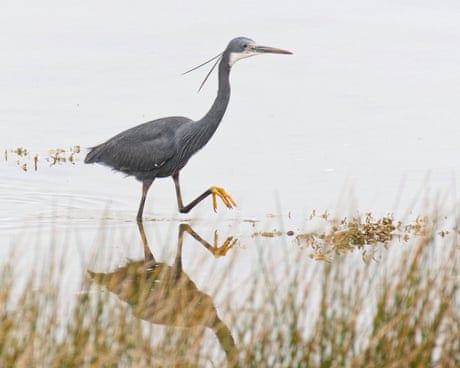
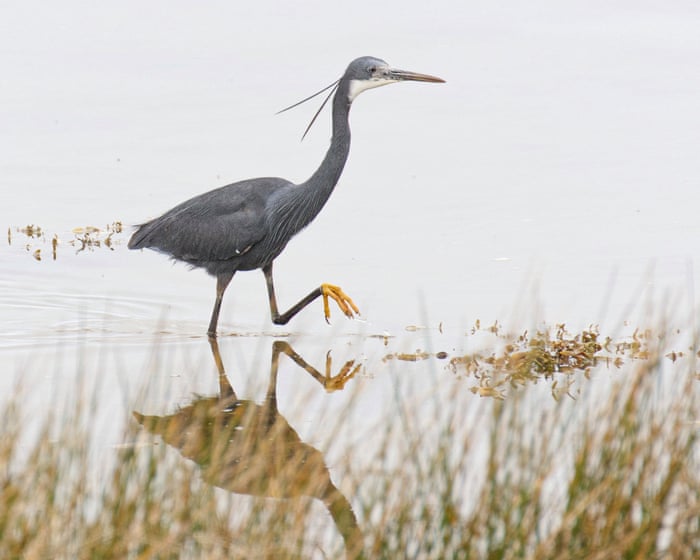
Appearance of a western reef heron in north Wales is unlikely to be the last, as heating temperatures mean species can survive Britain’s winter, say experts
It is a tropical bird typically encountered between west Africa and India, but last week a western reef heron arrived in north Wales in what is believed to be the first ever sighting in the UK.
The heron was first spotted in Foryd Bay at the weekend before flying to nearby Caernarfon harbour where it fed among the boats.
A woman in her 30s is in a critical condition after being bitten by a large shark at Coogee beach on Saturday, with a witness describing the scene at the popular Sydney beach as “shocking”.
A spokesperson for New South Wales Ambulance said the woman suffered arm and leg injuries and had been taken by road to St Vincent’s hospital.
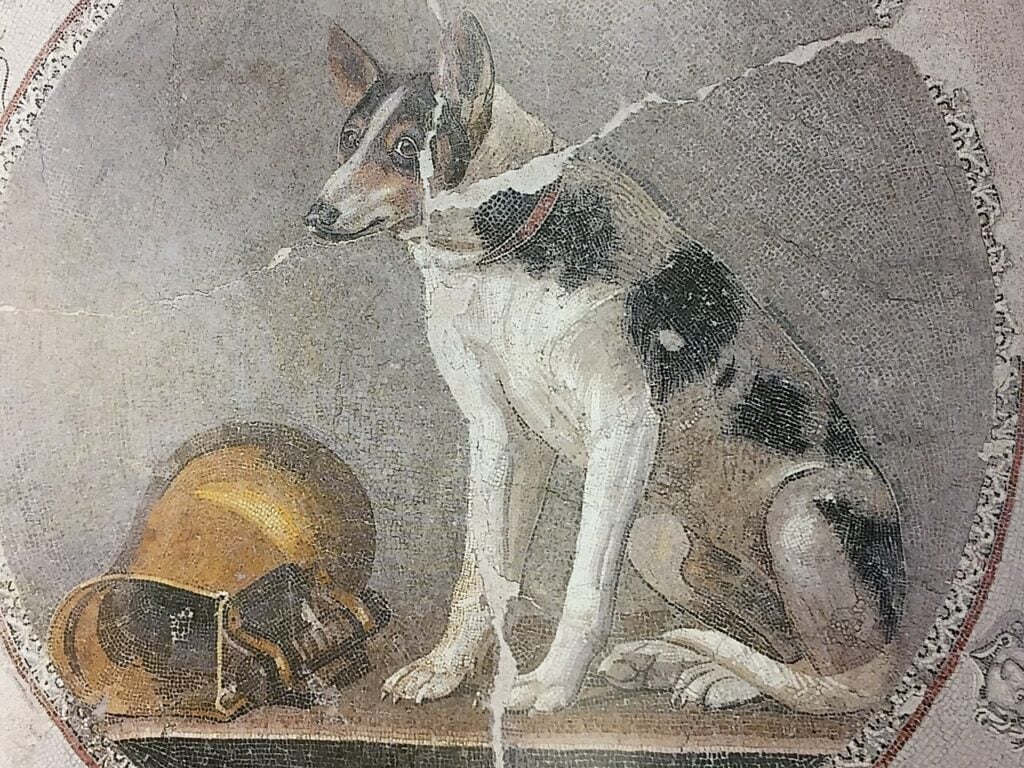
Ancient Greeks believed that animals had intelligence, reason, and emotion. Ptolemaic mosaic from Hellenistic Egypt, dated between 200 – 150 BC, located in the Greco-Roman Museum of Alexandria, Egypt. Credit: Public Domain
Ancient Greeks held deep respect and affection for animals, believing they possessed reason, intelligence, and emotion, even as they hunted and sacrificed them to the gods. Greek literature and philosophy reveal a culture that viewed animals not merely as property but as living beings connected to humanity through thought, feeling, and shared experience.
Among the ancient thinkers who reflected most passionately on the treatment of animals was the historian Plutarch, whose writings remain among the strongest defenses of animals in the ancient world. Long before modern debates over animal welfare emerged, Plutarch argued that animals possessed intelligence and emotion and that cruelty toward them degraded the human soul itself. His ideas did not exist in isolation. Rather, they grew out of a broader Greek tradition in which animals occupied an honored place in religion, philosophy, daily life, and even familial affection.
The Ancient Greeks lived closely alongside animals in nearly every aspect of life. Dogs guarded homes and accompanied hunters, while horses symbolized nobility and courage. Birds were kept for pleasure, and cats, although less common than in Egypt, were sometimes used to control pests. Greek children played with pets, and wealthy households often treated favored animals as cherished members of the family.
Pet tombstones reveal Ancient Greeks loved their animals
Archaeological discoveries confirm the deep emotional attachment Ancient Greeks felt toward their pets. Tombstones dedicated to dogs, horses, and birds have been uncovered throughout the Greek world, and some inscriptions mourn animals with the same tenderness reserved for human relatives. One epitaph for a dog named Parthenope expresses grief in deeply personal language, demonstrating that the death of a beloved pet could inspire genuine sorrow. Greeks occasionally buried pets beside their owners or placed them in carefully prepared graves filled with offerings and decorations. These burials suggest that companionship with animals was not merely practical but also emotional and spiritual.
This affection appears vividly in Greek literature. In the Odyssey, the old dog Argos waits faithfully for Odysseus for twenty years. When Odysseus finally returns home in disguise, Argos recognizes him immediately before dying. The scene is brief yet unforgettable because Homer portrays the dog as capable of loyalty, memory, and emotional recognition. The moment suggests that Ancient Greeks understood animals as creatures capable of deep attachment.
Greek mythology likewise reflected admiration for animals. The owl symbolized wisdom through its association with Athena, while dolphins were regarded as intelligent and sacred creatures connected to Apollo and Poseidon. Horses were honored in myths surrounding heroic figures such as Achilles. Even the gods themselves frequently appeared in animal form, suggesting a sacred bond between humanity, divine power, and the natural world. One of the most famous examples is Zeus transforming himself into a magnificent white bull to carry away Europa.
Greek philosophers on animals
The philosophical discussion of animals became especially significant among thinkers associated with Pythagoras. Pythagoras himself believed souls could migrate between humans and animals through reincarnation. Because of this belief, he discouraged the eating of meat and taught respect for all living creatures. According to ancient tradition, he once intervened to stop a man from beating a dog, claiming he recognized the voice of a deceased friend within the animal.
Pythagoras was firmly opposed to killing “living creatures,” abstaining from what ancient sources describe as “harsh-sounding bloodshed,” including animal sacrifice, and reportedly “never eating meat.” In this sense, he is often regarded as the first Greek vegetarian. None of his original writings survive today, but his ideas are known through later authors such as Philolaus, Iamblichus, Ovid, and Plutarch.
Across these accounts, it becomes clear that Pythagoras was believed to hold that animals possessed a soul. As attributed in Ovid’s writings, “Animals share with us the privilege of having a soul,” a sentiment associated with Pythagorean teaching and vegetarian practice.
The Greek philosopher Empedocles, himself influenced by Pythagorean thought, later expanded these ideas by arguing that all living beings share kinship. He condemned the killing of animals and viewed both violence toward them and their consumption as morally corrupting. He even described animal sacrifice as a form of injustice, regardless of its religious purpose. Tradition holds that he once crafted an ox out of barley meal and perfumes as an offering to the gods in place of a real animal. Such ideas were radical in a society where animal sacrifice remained central to religious life, yet they demonstrate that compassion toward animals already held a respected place in Greek philosophical thought.
Plutarch: the first animal rights advocate
No ancient writer expressed these ideas more forcefully than the biographer Plutarch. Living during the 1st and early 2nd centuries AD, Plutarch wrote essays that challenged widely held assumptions about human superiority. In works such as “On the Eating of Flesh and Whether Land Animals Are Cleverer Than Sea Animals,” he argued that animals possessed intelligence, emotion, and reasoning ability.
Plutarch was troubled not only by cruelty toward animals itself but also by the indifference people showed toward suffering. One of his most cited passages asks readers to confront the moral shock of eating flesh: “I for my part do much admire in what humor, with what soul or reason, the first man with his mouth touched slaughter.”
This was not merely a dietary critique. Plutarch believed that violence toward animals corroded human morality. In his view, cruelty was a habit that extended outward. Societies accustomed to bloodshed against animals risked becoming desensitized to violence more broadly.He also rejected the idea that animals lacked intelligence. Plutarch insisted that animals possessed perception, memory, emotion, and understanding. In one striking passage, he describes them as beings capable of thought and awareness: “Each animal hath received from Nature…imagination, and intellection.”
For Plutarch, this recognition carried clear ethical implications. He criticized those who treated living creatures as mere objects of pleasure or luxury. In another memorable line, he writes: “But for the sake of some little mouthful of flesh, we deprive a soul of the sun and light.” Such language is striking because it attributes something close to personhood to animals. Plutarch ultimately presents them not as mindless beings but as fellow participants in the shared experience of life itself.
Ancient Greek philosopher Aristotle finds similarities between behavior of humans and animals
Other Ancient Greek thinkers also recognized forms of intelligence in animals. Aristotle, though less compassionate than Plutarch, studied animals extensively and acknowledged notable similarities between animal and human behavior. In his biological works, he observed memory, communication, and social organization across a wide range of species. Theophrastus, Aristotle’s successor, went even further, arguing that animals could reason and experience pain in ways comparable to humans. He opposed unnecessary slaughter, maintaining that humans and animals share a natural kinship.
Respect for animals in the Ancient Greek world also appeared in religious practice. Certain animals were considered sacred to specific gods, and in some sanctuaries, their killing was forbidden. Festivals at times honored animals alongside deities, while myths frequently portrayed them as wise guides, loyal companions, or messengers of divine will.
Yet the Greek attitude toward animals was never entirely uniform. The same society that mourned pets and admired dolphins also engaged in hunting and animal sacrifice. Oxen plowed fields, horses served in warfare, and livestock provided food. Ancient Greek culture therefore contained an ongoing tension between the practical use of animals and a genuine admiration for them.
This contradiction is what makes Plutarch particularly significant. Rather than accepting cruelty as inevitable, he challenged prevailing norms directly. He questioned whether intelligence, emotion, and the capacity to suffer should carry moral weight. In many ways, his writings anticipate modern discussions of animal consciousness and ethical responsibility.
Plutarch’s insistence that animals possess intelligence and feeling ultimately challenged assumptions of human superiority. He argued that kindness toward animals was inseparable from human virtue itself. To harm innocent creatures unnecessarily was, in his view, to diminish one’s own humanity.
Scientists have discovered a massive whale necropolis deep beneath the Indian Ocean, at depths reaching nearly 7,000 meters (22,966 feet), stretching almost 1,200 kilometers (746 miles) along the seafloor and containing hundreds of fossils dating back more than five million years.
The findings, published in Nature, offer a rare look at one of the ocean’s most extreme and least understood environments.
The site sits in the Diamantina Zone, a rugged underwater fracture zone in the southeastern Indian Ocean, at depths between 4,616 and 7,001 meters (15,144 and 22,969 feet).
Lead author Xiaotong Peng of the Institute of Deep-sea Science and Engineering at the Chinese Academy of Sciences in Sanya, China, and a team of researchers made 32 deep-sea dives using the submersible “Fendouzhe” from February to March 2023.
Whale necropolis beneath the Indian Ocean pushes known depth limits
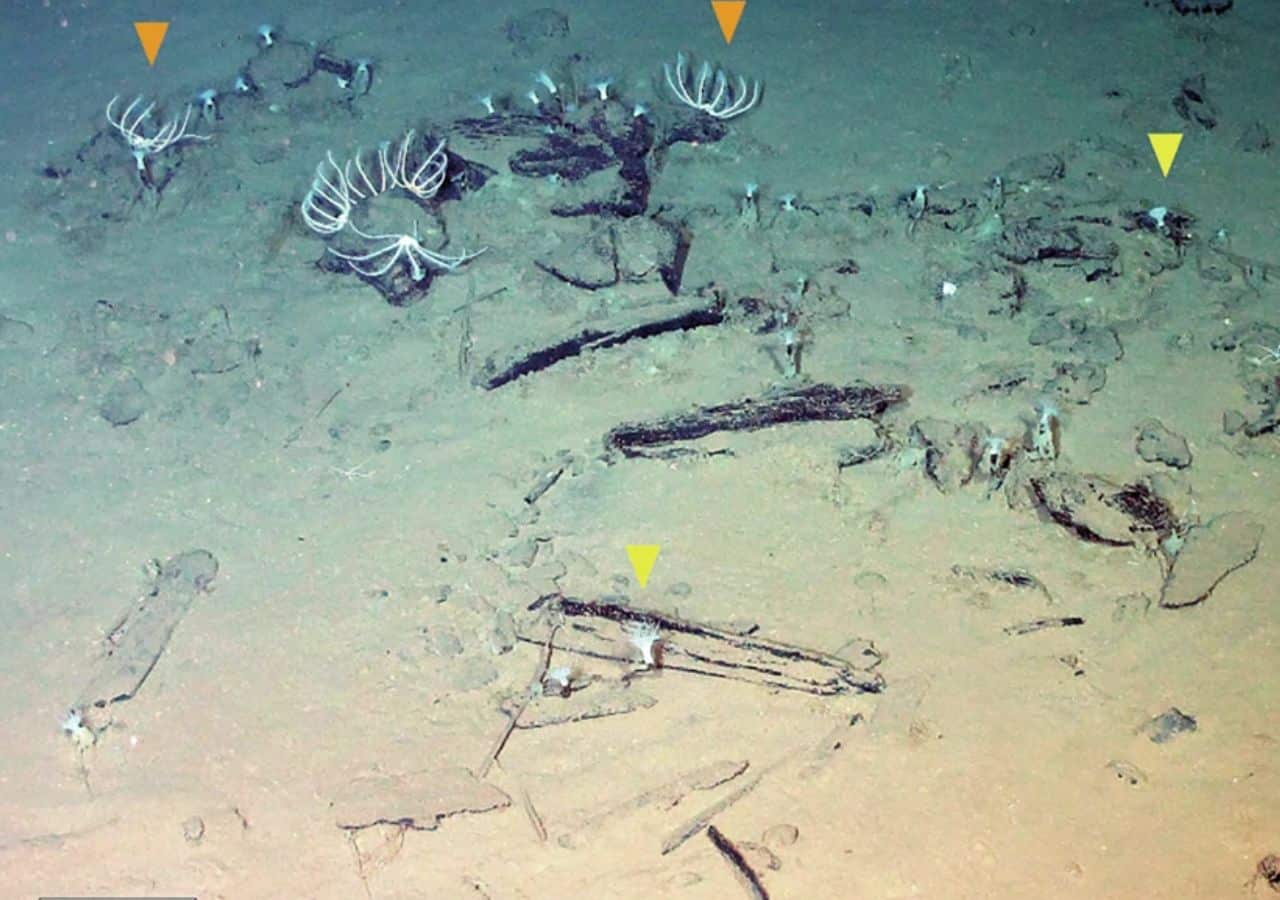
Researchers found 476 fossilized whale remains and five active whale-fall communities, the ecosystems that form around carcasses sinking to the ocean floor.
The deepest of these communities was found at 6,789 meters (22,274 feet), extending the known depth range of whale-fall habitats by more than 2,500 meters (8,202 feet).
In some areas of the zone, whale remains reached densities of up to 759 individuals per square kilometer (1,966 per square mile).
All five active whale-fall communities are in what scientists call the “sulfophilic stage,” a prolonged phase where bacteria break down bone fats and release sulfide compounds that sustain surrounding life.
The team identified 35 animal species at these sites, including bone-eating worms, brittle stars, and chemosynthetic bivalves, creatures that draw energy from chemicals rather than sunlight. Molecular analysis showed that most of these species may be entirely new to science.
Researchers examined 43 fossil specimens and identified five ‘beaked whale’ species and one ‘baleen whale’ species. Two of the ‘beaked whale’ species still inhabit those waters today, while others have been extinct for millions of years.
One fossil belongs to a previously unknown species, named “Pterocetus diamantinae” after the Diamantina Zone.
Bones preserved for millions of years on the seafloor
Using strontium isotope dating, researchers found that whales have been sinking to this seafloor for at least 5.3 million years.
This whale necropolis survives largely because of the region’s very low sedimentation rate, which means bones are not buried quickly and can remain exposed for hundreds of thousands of years. Iron and manganese minerals gradually coat the bones, protecting them from further decay.
Peng and colleagues noted that the Diamantina Zone’s deep V-shaped underwater valleys likely funnel sinking carcasses into concentrated areas at the bottom. Beaked whales, which dive deeper than nearly any other mammal and can stay submerged for over an hour, likely died from the physical strain of extreme foraging dives.
The discovery also provides new insight into beaked whales, whose behavior and population sizes remain poorly understood because they are rarely seen and are known mostly from occasional strandings.
Researchers further suggest that this stretch of whale falls may act as a biological corridor, connecting deep-sea ecosystems across the southern Indian Ocean.
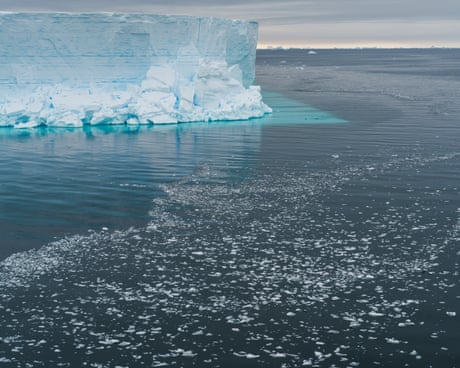
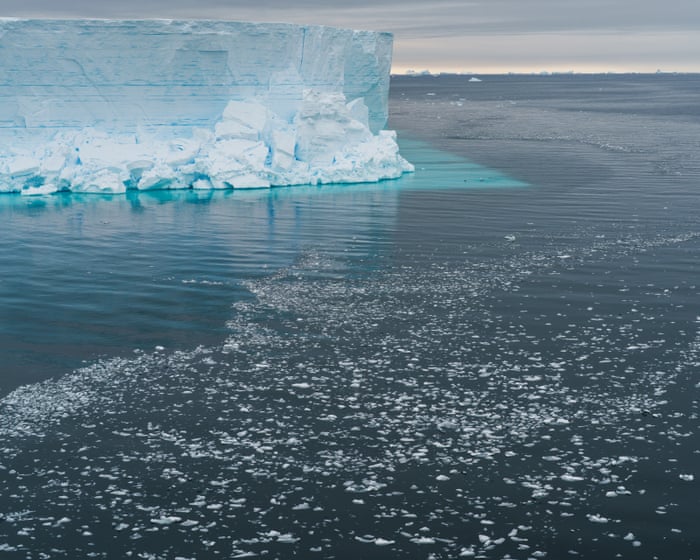
Exclusive A vast area of the Bellingshausen Sea should be covered by sea ice by now, with one expert calling the loss of ice ‘depressing’
Antarctica’s west coast is missing an area of winter sea ice the size of France, sparking concerns for threatened penguins other marine life and global sea levels.
One expert said the loss of ice in the Bellingshausen Sea was “depressing” and the failure of ice to form could have intensified a heatwave over the continent’s peninsula last week that saw daytime temperatures peak at 15.4C which is more than 20C above average.
More than 20,000 votes cast in Butterfly Conservation’s poll of 60 native species to find nation’s favourite for first time
The votes are in on Britain’s favourite butterfly, and it is one of the most ubiquitous yet spectacular backyard beauties that has flown to victory.
With its lavender, yellow and maroon eye spots and luscious rusty red and black colouration, the peacock butterfly is both beautiful and commonplace, flying throughout spring, summer and autumn in all corners of the British Isles.
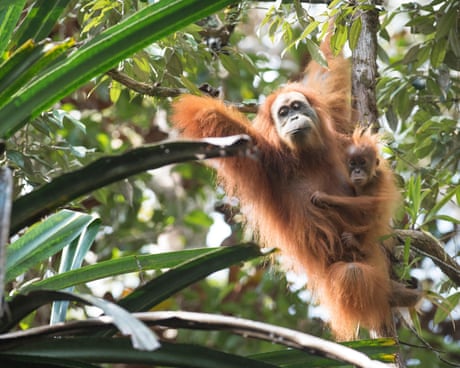
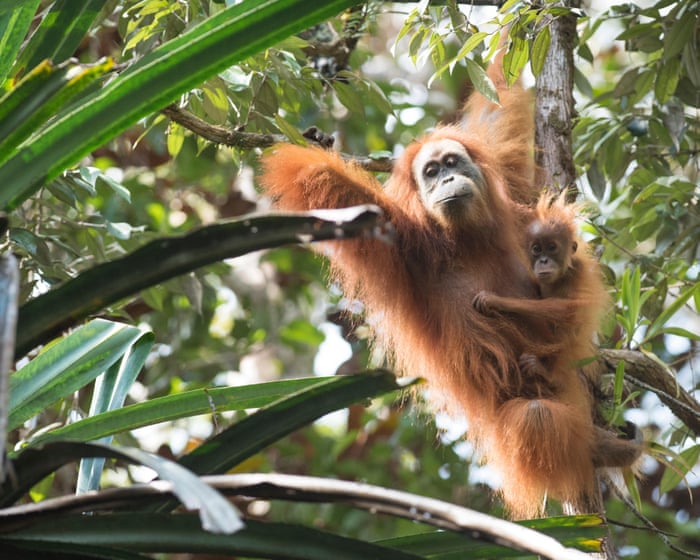
Critically endangered Tapanuli orangutan population falls after heavy rain and landslides, fuelled by climate crisis, in North Sumatra
Extreme rainfall and landslides fuelled by the climate crisis killed 7% of the remaining population of the world’s rarest great ape, a study has found, prompting fears for the species’ survival.
The research suggests 58 out of the remaining 800 critically endangered Tapanuli orangutans (Pongo tapanuliensis) were killed after more than 1,000mm (39in) of rain fell over four days in Indonesia’s North Sumatra province in November 2025. This equates to 11% of the local population and 7% of the entire species.
Conservationists say cherished creatures such as whales, dolphins and seabirds are being killed in large numbers by fishing tackle
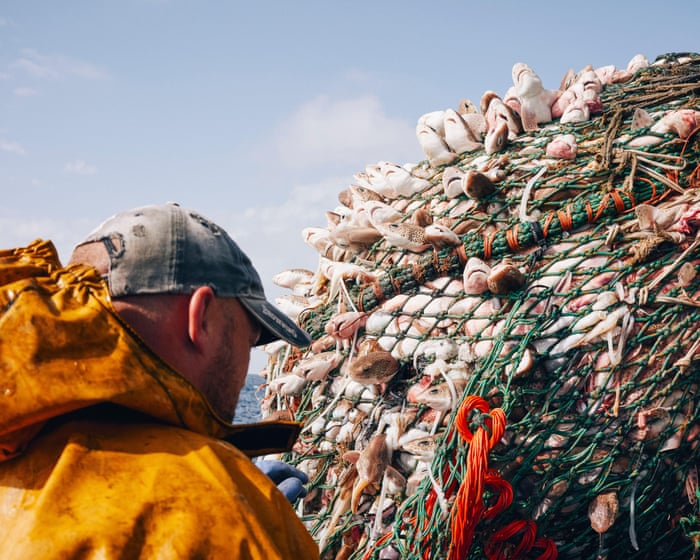
Thousands of Britain’s most charismatic and protected marine wildlife, including whales, porpoises, dolphins, seals and seabirds are being killed as “collateral damage” by fishing vessels every year, according to the first-ever analysis of bycatch data.
The analysis, by the Wildlife and Countryside Link, a coalition of voluntary conservation groups, reveals the devastating toll bycatch, the accidental capture and killing of non-target species by fishing vessels, is having on marine species.
Targeted vaccination and improved testing planned as part of drive to eradicate disease by 2038
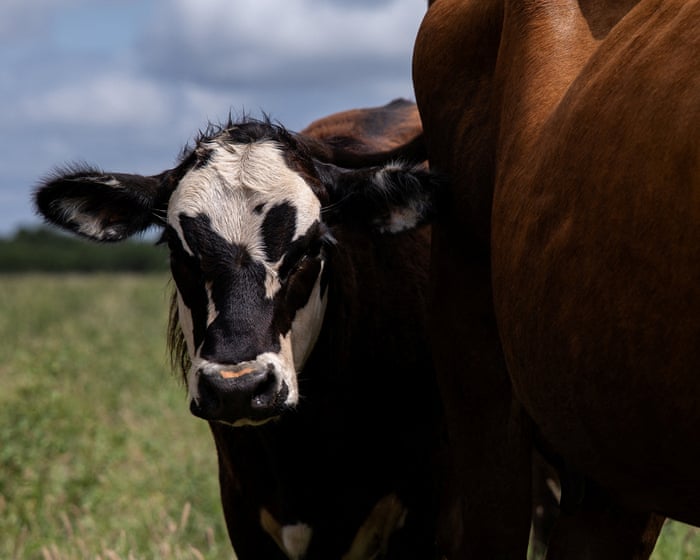
Cattle will be vaccinated against tuberculosis from 2030 as a “gamechanging” part of a new strategy to drive eradication of the disease in England by 2038. In parallel, the last badger culls are expected to end by 2029, with vaccination of badgers expanded.
More than 20,000 infected cattle are slaughtered each year, costing taxpayers £100m and inflicting a heavy toll on affected farmers’ livelihoods and mental health. Mass culling of badgers began in 2013 and has killed about 250,000 animals, at a cost of about £60m.
Majestic great white shark glides through the ocean waters. Credit: Elias Levy / OpenVerse / CC BY-2.0
Volunteer divers have recorded what researchers believe is the first footage of a great white shark filmed underwater in the Mediterranean, captured during a ghost net removal dive near a shipwreck in the Strait of Sicily.
Derk Remmers, a technical diver with Ghost Diving, was about 40 meters (131 feet) below the surface between Sicily and Tunisia when the shark appeared. He filmed the encounter. The footage and photographs were released on June 8 to mark World Oceans Day.
Remmers said that the odds of meeting such an animal underwater are far lower than winning the lottery, and that his hands were shaking as he filmed.
The shark circled the group, then turned and moved back toward the divers. Remmers said that its behavior appeared calm and curious, not aggressive. When the team released air from their regulators, the shark picked up speed and disappeared from view.
First great white shark sighting in the Mediterranean stuns researchers
Marine biologists who reviewed the footage called the sighting rare and scientifically significant.
Dr. Carlo Cattano, a researcher at the Sicily Marine Centre of the Stazione Zoologica Anton Dohrn, said that most knowledge of great white sharks in the region has come from dead animals caught accidentally in fishing nets, and that direct observations help researchers better understand the species.
A great white shark circled divers in the Mediterranean as they worked to pull deadly ghost nets from a shipwreck in the Strait of Sicily. pic.twitter.com/tdJKJ37TMY
— Tom Marvolo Riddle (@tom_riddle2025) June 9, 2026
He said that prior research had already identified the area as a key location for threatened species and that this sighting reinforces its conservation value. Researchers cautioned that broader conclusions would require further study.
The mission was organized by the Healthy Seas Foundation, along with Ghost Diving and the Society for the Documentation of Submerged Sites. The wreck’s location is being kept confidential.
Ghost nets, fishing gear lost or abandoned at sea, continue killing marine life long after leaving a vessel. Previous dives at the site documented loggerhead sea turtles and large fish species caught in the gear.
Shipwrecks attract marine life, and when ghost nets settle on them, those structures become underwater traps.
Ghost nets turn shipwreck ecosystems into ongoing ocean traps
Veronika Mikos, director of Healthy Seas, said that the sighting is a reminder of how much marine life still exists in offshore Mediterranean waters and how much is at risk from discarded gear and overfishing.
Remmers said that between 1% and 10% of all fishing gear worldwide is lost each year, possibly adding more than 500,000 metric tons of abandoned nets to the ocean annually.
He said that the shark’s presence near the wreck signals an abundance of prey, and that those same animals face entanglement risk. Volunteer cleanups alone cannot resolve the problem, he said, and stronger action against industrial and illegal fishing is needed.
The mission also included environmental DNA sampling and underwater monitoring. Healthy Seas said that it plans to release additional footage and scientific material in the coming weeks.
Daniel Crago says he feels ‘extremely lucky’ after encounter with bear at Glacier national park last month
As the large roaring grizzly bear charged down at him from across a snow field in Montana and mauled him, hiker Daniel Crago had just enough time to put his arm up and think: “This is it.”
But two weeks after that perilous, exceedingly rare encounter in Glacier national park, Crago, 32, is still alive, recovering after three surgeries and feeling “extremely lucky”, he said on Monday in an interview with ABC News.
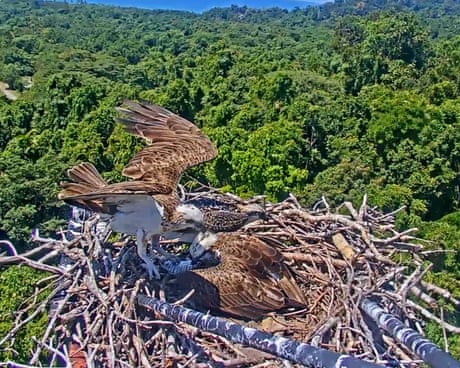
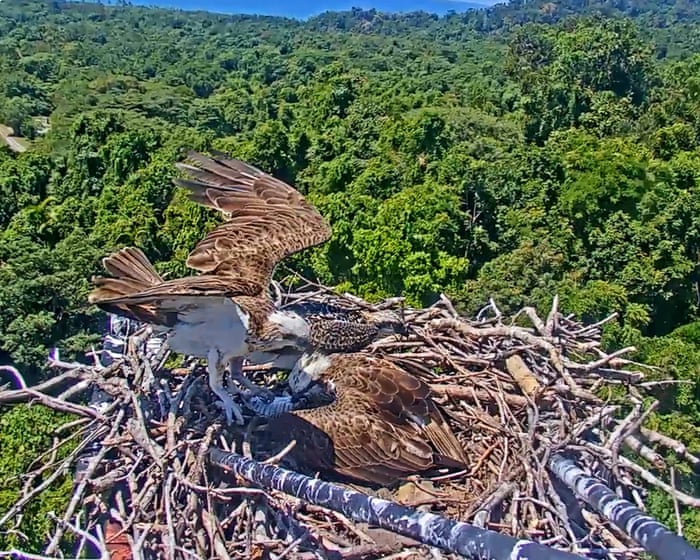
It started by chance – but it should have come as no surprise that two ospreys would pick a hi-tech research facility to make their home.
James Cook University’s 47-metre tall crane towers over the far-north Queensland rainforest canopy, making it the perfect nesting place for the seabird.
Department of Agriculture ays new cases in Texas and New Mexico as officials move to combat parasite’s spread
The US Department of Agriculture (USDA) on Monday confirmed three additional cases of New World screwworm – two more in Texas and the other in New Mexico, according to the agency’s animal health arm.
The Animal and Plant Health Inspection Service said the two Texas cases affected a calf in La Salle county and a goat in Gillespie county.
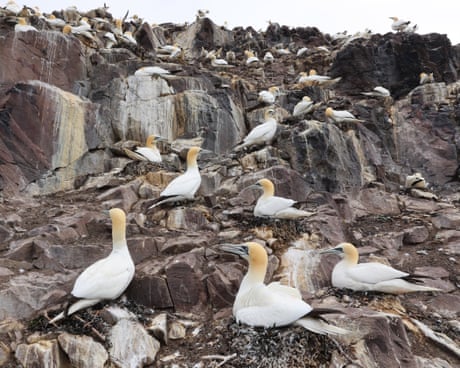
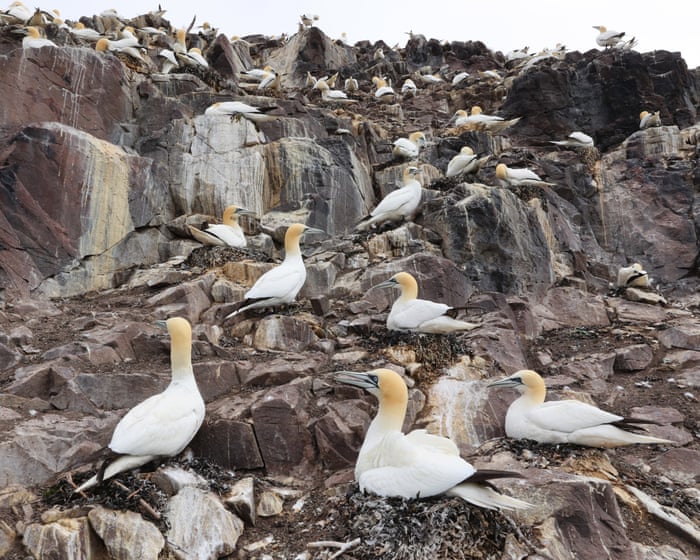
Annual killing of infant gannets has been carried out on a remote Scottish island for at least 400 years
Animal welfare campaigners have called for talks on phasing out the “inhumane” hunt for infant gannets known as guga, which are killed by hunters on a remote Scottish island once a year.
OneKind and the League Against Cruel Sports said it should be slowly phased out in dialogue with the Hebridean islanders who see the hunt, which has been carried out for at least 400 years, as a cultural pursuit and as sustainable food harvesting.
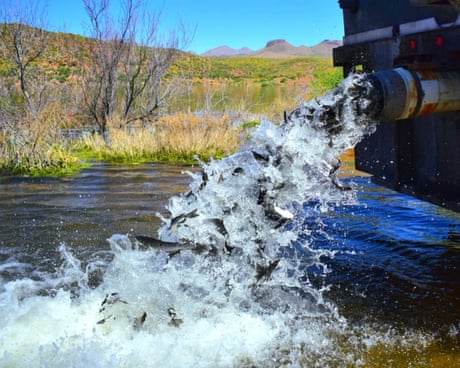
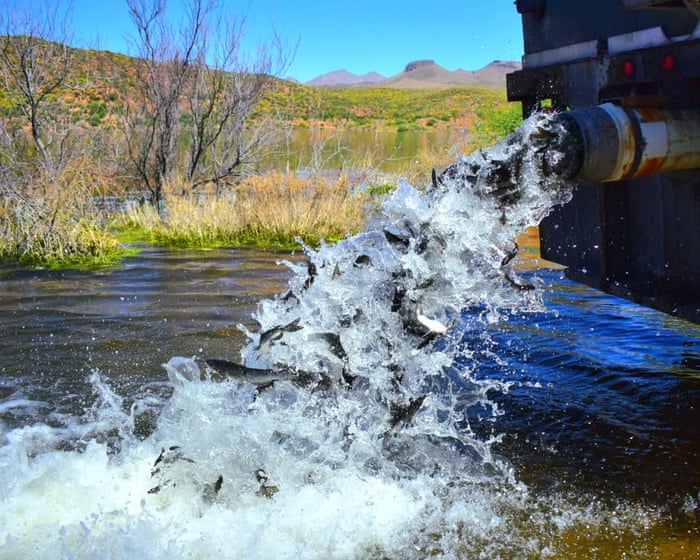
Wildlife department says drought conditions and water released from dam led to ‘major fish kill’ at San Carlos Lake
Arizona officials have indefinitely closed a popular lake to visitors after its entire population of fish died recently.
The recreation and wildlife department that maintains San Carlos Lake said in a Facebook statement on Friday that drought conditions as well as water released from a dam there “resulted in a major fish kill affecting approximately 100% of the fish population”.
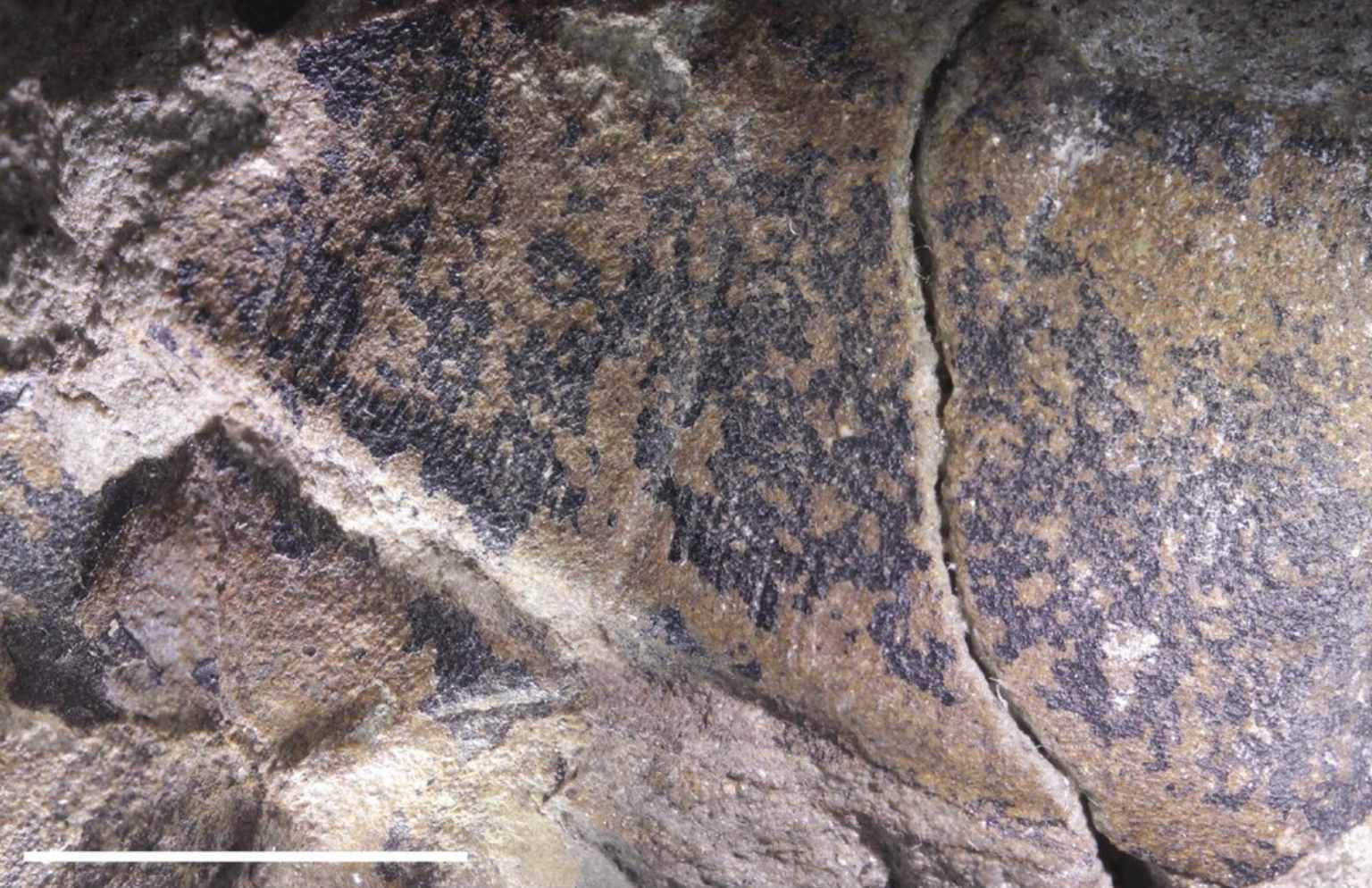
The dorsal surface of the pedipalp coxa. Credit: Richard J. Howard / CC BY 4.0
Fossil remains discovered in the United Kingdom have been confirmed as belonging to one of the largest scorpions ever known in Britain, researchers say. The giant species, Praearcturus gigas, measured more than 1 meter (3.3 feet) long and lived about 415 million years ago, making it one of the earliest large predators to inhabit land.
The findings resolve a long-running scientific debate over the identity of the animal. By reexamining fossil fragments from England and Wales, researchers confirmed that Praearcturus was a scorpion rather than a crustacean, as some scientists had previously believed.
With pincers measuring about 16 centimeters (6.3 inches) long, the giant arthropod would have dwarfed modern scorpions. Today, the largest living scorpion reaches only about 23 centimeters (9 inches) in length. The study was published in the journal Palaeontology.
A giant predator in a young world
When Praearcturus gigas lived during the Early Devonian Period, life on land was still developing. Small plants and fungi had begun spreading across the landscape, while arthropods were among the first animals to establish themselves away from water.
Researchers believe the giant scorpion preyed on smaller arthropods living on ancient floodplains. Its size likely made it one of the dominant predators of its time.
Pedipalp elements of Praearcturus gigas. Credit: Richard J. Howard / CC BY 4.0
Lead author Richie Howard said the discovery pushes back the appearance of giant arthropods by tens of millions of years. “When people think of giant arthropods, they often think of creatures such as Arthropleura or giant griffinflies,” Howard said. “But those animals appeared much later, after land ecosystems had become far more complex.”
Howard said the lack of large competing predators may have helped Praearcturus grow to such enormous proportions.
Solving a 150-year-old mystery
The fossil was first described in 1871 by British paleontologist Henry Woodward, who believed it belonged to a giant crustacean similar to a woodlouse.
For decades, scientists struggled to classify the animal because only fragments of its body had survived. The fossils lacked the distinctive tail that normally identifies a scorpion.
The mystery began to unravel after researchers compared the fossils with Eramoscorpius, a well-preserved ancient scorpion discovered in Canada. Both species share a distinctive triangular sternum on the underside of the body, providing strong evidence that Praearcturus was a true scorpion.
Clues to early life on land
The discovery offers new insight into a key stage of Earth’s history, when animals were adapting to life outside aquatic environments.
Researchers say Praearcturus may not have lived exclusively on land. Fossils from Wales preserve flap-like structures known as epimera, which resemble features seen in modern lobsters and crabs. These structures suggest the giant scorpion may have spent part of its life in water, where larger prey would have been available.
Co-author Greg Edgecombe said the species may even represent a lineage that returned to aquatic habitats after its ancestors adapted to life on land.
Scientists say additional fossil discoveries will be needed to determine how long Praearcturus survived and whether other fragmentary remains found in Britain belong to the species. For now, the fossils provide rare evidence of one of the largest scorpions ever to walk the Earth.
There is hardly a soul alive who does not enjoy watching wildlife and the other wonders of the natural world. When it comes to watching wildlife in particular, one of the most fun parts is trying to determine which animal you are looking at, especially beyond just “look at the bear!” But the animal kingdom […]

 Login
Login