For months, Donald Trump and White House officials had a habit of insisting that the president had delivered an economy with “no inflation.” The public has heard a lot less of such talk lately, and there’s no great mystery as to why. CNBC reported:
The consumer price index, a broad gauge of goods and services costs across the U.S. economy, rose at a seasonally adjusted 0.5% for the month, putting the annual inflation rate at 4.2%, the Bureau of Labor Statistics reported Wednesday. Both numbers were in line with the Dow Jones consensus.
Inflation climbed above 4% for the first time in three years, though the increase met expectations amid concerns over how much the surge in energy prices would impact the economy. The level was the highest since April 2023 and above the 3.8% level from April.
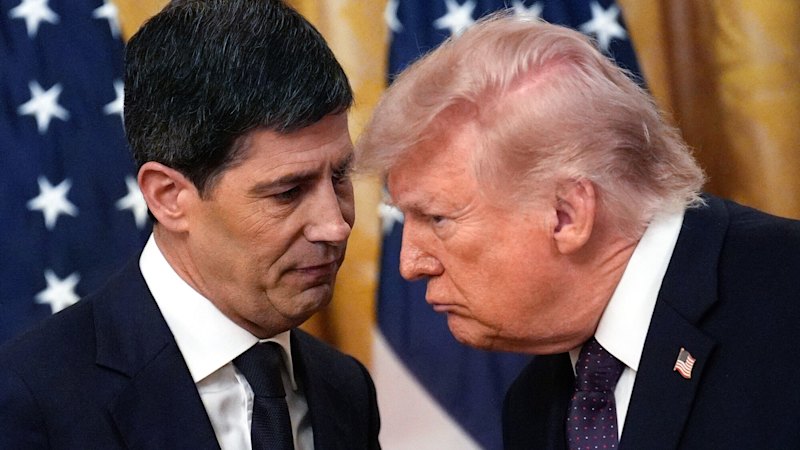
All of that related data, incidentally, was released shortly before White House deputy chief of staff Stephen Miller told Fox News that Trump has transformed the U.S. into an “extraordinary paradise.”
Perhaps most importantly, NBC News’ report emphasized that inflation’s rise “has surpassed wage growth,” which necessarily exacerbates the affordability crisis gripping American consumers.
The White House has not yet commented on the new data, although Kevin Hassett, the director of the National Economic Council and the top economist at the White House, has argued in recent weeks that rising inflation should be blamed on Democratic policies in blue states. Those claims, like much of what Hassett has to say, have been thoroughly discredited.
And no one is buying it. The latest national CNN poll found that 77% of respondents, including a majority of Republican voters, agreed that Trump’s policies have increased the cost of living. The same poll found just 30% of Americans approve of the president’s handling of the economy, a career low for the Republican across both terms. That mirrored the results of the latest national Associated Press poll.
There’s no reason to assume those results won’t continue to get even worse.
Before the conflict began, inflation was at 2.4%, but the closure of the strait of Hormuz has affected energy prices
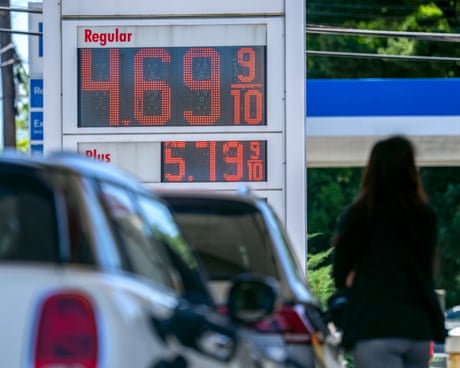
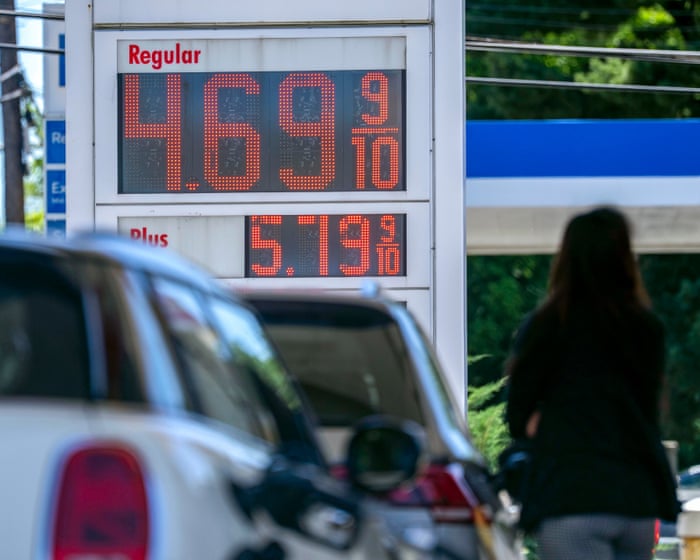
US inflation jumped to an annual rate of 4.2% in May, the third consecutive monthly increase since the start of the Iran war and a three-year high, as Americans continue to face steep oil prices.
Prices have increased sharply over the past several months, rising at an annual rate of 3.3% in March before going up to 3.8% in April. In February, before the conflict began, inflation was at 2.4%.
The extension and enhancement in loan limits are expected to improve utilisation of the scheme and support higher credit flow to the NBFC-MFI ecosystem.
The state-owned infrastructure lender is looking at a total pricing of 6.5% to 7%, including hedging costs, Managing Director Rajkiran Rai G. said in an interview.
Virtual bank monobank has abolished fees on all incoming and outgoing international SWIFT payments for both individual and business clients, project co-founder Oleg Gorokhovsky announced.
Portugal’s economy has demonstrated remarkable resilience in the years following the Covid-19 pandemic, with strong growth, rising wages and continued success in attracting major international investment, according to Finance Minister
NovaPay, the international financial service operating under the NovaPay brand and part of the Nova group, has fully placed its 14th bond issue (Series N) issued by its subsidiary NovaPay Credit, with a total nominal value of UAH 200 million.
Germany’s economic decline is no longer merely an economic story. It has become a political one. Chancellor Friedrich Merz has become the focal point of this broader crisis of governance and legitimacy. For decades, Germany was regarded as the economic engine of Europe and, alongside France, a principal political architect of the European Union. Today, […]
New US Federal Reserve Chair Kevin Warsh says the productivity gains from artificial intelligence will allow significant cuts in interest rates. More like the opposite.
New US Federal Reserve Chair Kevin Warsh says the productivity gains from artificial intelligence will allow significant cuts in interest rates. More like the opposite.
OpenAI files for IPO. Credit: Focal Foto / Wikimedia Commons / CC BY-SA 4.0
OpenAI confirmed Monday it has confidentially filed an IPO with U.S. regulators, joining rival Anthropic as the AI sector moves toward public markets. No timeline, share count, or pricing was announced.
The company said the move preserves the option for an earlier listing, while some decisions are easier to handle as a private firm.
Reuters reported OpenAI is targeting a valuation near $1 trillion for a debut possible as early as September. Anthropic filed for a U.S. IPO on June 1 after a $65 billion funding round valued it at $965 billion.
SpaceX is also pursuing a $75 billion offering at a $1.75 trillion valuation. Analysts say the simultaneous push by three major AI companies toward public markets is the most significant development of its kind for technology investors in a decade.
In March, OpenAI raised $122 billion from SoftBank, Amazon, and Nvidia at a valuation of $840 billion to $852 billion. ChatGPT had exceeded 900 million weekly active users and 50 million paying subscribers.
Monthly revenue stood at $2 billion, up from roughly $1 billion per quarter at the end of 2024, growing nearly four times faster than Alphabet and Meta at comparable stages. Internal projections put the company’s break-even point no earlier than 2030.
Beyond ChatGPT, OpenAI launched tools for government, healthcare, and finance, a web browser, consumer hardware plans, and an AI coding agent. It added a lower-cost $8 subscription tier and advertising as new revenue sources.
The Information reported in April that OpenAI projects 122 million subscribers this year and expects advertising to lead revenue by 2030.
A renegotiated Microsoft deal, covering $13 billion in investment since 2019, enabled growth at Azure and opened new agreements with Amazon and Alphabet.
OpenAI files its IPO amid legal battles and market pressure
Gil Luria of D.A. Davidson warned that large AI listings and Google’s recent secondary share sales could reduce the capital available for smaller offerings.
Michael Ashley Schulman of Cerity Partners said OpenAI appeared to be keeping its options flexible while Anthropic moved ahead in the IPO filing process. Prediction markets had expected OpenAI to file first.
OpenAI began as a nonprofit in 2015 and later added a for-profit arm under nonprofit oversight, a structure that drew attention when CEO Sam Altman was ousted by its board and reinstated within days in late 2023.
The company announced plans to convert to a public benefit corporation in December 2024. Early backer Musk filed a lawsuit alleging Altman and others redirected the organization from its founding mission for personal benefit.
A jury ruled against Musk in May, removing what analysts described as a significant legal obstacle ahead of the OpenAI IPO filing. His attorneys plan to appeal. Separate lawsuits link ChatGPT to shootings and suicides, and public skepticism toward AI persists.
Albanese says Australia still impacted by Middle East conflict ‘each and every day’
The prime minister, Anthony Albanese, is now on the ABC News Breakfast couch. He said Australia remains concerned about the economic impact of the turmoil in the Middle East.
Our job now is to demonstrate that we are a genuine and credible alternative to this terrible Labor government.
He’s a great supporter of the party, he’s a great supporter of Angus Taylor, I think this is a great opportunity. The Liberal party has always been what John Howard called the broad church: we like having different opinions.
We listen to everybody’s views, and we represent them.
Did you know Peter Thiel's Macro LLC liquidated his entire stock portfolio valued at $210 million. As of Q1 2026 he owns zero stocks outside of Palantir. I wonder what he knows that we don't? https://t.co/qhboC3aSO1 pic.twitter.com/sQphHwLGBX — Financelot (@FinanceLancelot) June 9, 2026
The Middle East conflict has caused global stockpiles of oil to plummet to their lowest level since 2003 while petroleum prices have spiked, according to a new energy data report.
The Middle East conflict has caused global stockpiles of oil to plummet to their lowest level since 2003 while petroleum prices have spiked, according to a new energy data report.
Il settore genera un fatturato di 3,1 mld e attiva 8,9 mila posti di lavoro
Un’edizione profondamente rinnovata, con un nuovo format itinerante per valorizzare i distretti italiani dell’aerospazio: è stata presentata questa mattina a Roma, presso la sede del Ministero delle Imprese e del Made in Italy durante la conferenza stampa “Spazio, eccellenza del Made in Italy”, la nuova edizione degli Stati Generali della Space Economy 2026, iniziativa promossa dall’Intergruppo Parlamentare per la Space Economy (IPSE) e organizzata da Inrete – Relazioni Istituzionali e Comunicazione.
La manifestazione si presenta quest’anno con un format completamente nuovo e rivisitato. Questa evoluzione strutturale nasce come risposta diretta alla straordinaria crescita del comparto aerospaziale nazionale e al crescente interesse strategico ed economico verso questo segmento, che gli Stati Generali stanno promuovendo con successo ormai da due anni. Dal 2021 al 2024 il fatturato della filiera è cresciuto passando da 1,9 a 3,1 Miliardi con incremento anche degli addetti al settore che sono cresciuti da 5,9 mila a 8,9mila. Per la prima volta, la rassegna adotterà una formula totalmente itinerante: una scelta strategica volta a valorizzare capillarmente tutti i distretti tecnologici, le filiere industriali e i singoli territori d’eccellenza che compongono il comparto spaziale sul territorio nazionale.
«Con Spazio Italia 2.0 vogliamo costruire il più ampio momento di confronto mai realizzato nel nostro Paese sull’economia dello spazio. Il percorso si articolerà in venti sessioni: diciotto sessioni tematiche realizzate in collaborazione con i distretti aerospaziali nelle sedici regioni italiane che li ospitano, una dedicata ai giovani e una Sessione Plenaria conclusiva a Milano. Un confronto che coinvolgerà istituzioni, industria, associazioni di categoria, università, mondo della ricerca e della finanza, con l’obiettivo di mettere a sistema competenze, investimenti e visione strategica.
Gli Stati Generali prenderanno il via il 15 giugno a Potenza, in occasione delle celebrazioni per il centenario della nascita di Rocco Petrone, figlio della Basilicata e protagonista di una delle pagine più straordinarie della storia dell’umanità. Petrone fu infatti tra i principali artefici della missione Apollo 11 che portò l’uomo sulla Luna. Un simbolo dell’eccellenza italiana nel mondo e del contributo che il nostro Paese ha saputo offrire alla conquista dello spazio.
Gli Stati Generali della Space Economy sono promossi dall’Intergruppo Parlamentare per la Space Economy, che riunisce cinquanta parlamentari tra deputati e senatori appartenenti ai principali gruppi parlamentari di maggioranza e opposizione. Un segnale importante di come la Space Economy sia oggi considerata una delle più grandi opportunità di crescita economica, industriale e tecnologica per l’Italia.
Accanto ai tavoli di lavoro dedicati agli operatori del settore abbiamo voluto riservare un’attenzione particolare alle nuove generazioni attraverso il programma “Spazio ai Giovani” e lo Space Economy Hackathon Italia, perché il futuro dello spazio dipenderà dalla nostra capacità di formare oggi le competenze che guideranno il Paese domani.
I risultati delle sessioni confluiranno nella Sessione Plenaria finale di Milano e nello Smart Space Pact, uno strumento innovativo che consentirà di trasformare proposte e impegni condivisi in obiettivi concreti, misurabili e verificabili nel tempo. In un tempo in cui molti si interrogano su quali professioni sopravviveranno alla rivoluzione tecnologica in atto, noi stiamo contribuendo a costruire oggi le professioni del futuro”
“Lo spazio è un settore che oggi unisce l’Italia e proietta la sua industria e la sua economia nel futuro. Venti eventi in sedici regioni, dal Nord al Sud, promossi da un Intergruppo parlamentare che riunisce maggioranza e opposizione e accompagnati dal Governo con la presenza di quindici ministri e otto tra viceministri e sottosegretari, dimostrano che il Paese ha scelto di fare sistema su una delle frontiere decisive della crescita, della sicurezza e della sovranità tecnologica”, ha dichiarato il Ministro Urso. “Lo spazio non è più soltanto ricerca o esplorazione: è industria, sicurezza, comunicazioni, dati, servizi, difesa, competitività. Chi presidia oggi lo spazio presidia una parte decisiva dell’economia e della sovranità di domani. L’Italia ha scelto di essere tra i Paesi che guidano questa nuova fase”, ha spiegato il Presidente dell’Intergruppo parlamentare sulla space economy, On. Andrea Mascaretti.
“L’aerospazio può e deve diventare uno dei principali motori di crescita per l’economia del nostro Paese e dell’intero Continente europeo. Investire in questo settore significa rafforzare innovazione, sicurezza, competitività industriale e nuove opportunità per le nostre imprese e per i nostri giovani”, ha dichiarato l’On. Simone Billi, membro dell’ IPSE.
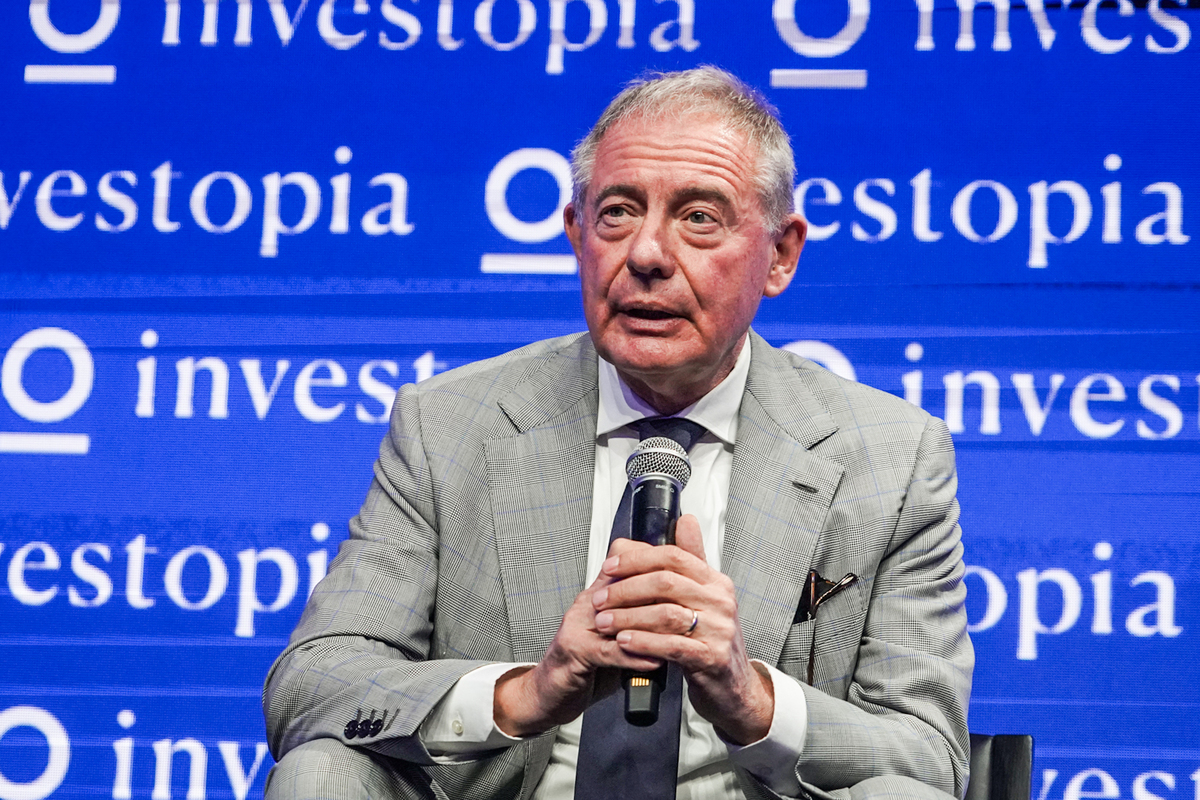
Il programma è stato presentato alla presenza del ministro delle Imprese e del Made in Italy e Autorità delegata alle politiche spaziali e aerospaziali, sen. Adolfo Urso, del presidente dell’Intergruppo, on. Andrea Mascaretti e degli Onorevoli Alessia Ambrosi, Simone Billi, Beatriz Colombo Gianmauro Dell’Olio e Daniela Dondi.
Sono stati illustrati i pilastri della nuova rassegna le sessioni tematiche si terranno in tutte le Regioni dove è presente un Distretto aerospaziale per valorizzarne le specificità e favorire un confronto tra istituzioni nazionali e locali, aziende, associazioni, università, enti di ricerca, e sistema finanziario. La Sessione Plenaria, prevista a Milano, rappresenterà il momento di sintesi del percorso e porterà alla definizione dello Smart Space Pact, un documento programmatico digitale che tradurrà gli impegni condivisi in una vera e propria agenda operativa nazionale, dinamica e misurabile.
Nova Poshta, Ukraine's leading express delivery service, has about 2,000 open positions, including 1,000 branch operators, 600 installers, 300 couriers and drivers, and another 100 in the support office, the company's HR director Anna-Maria Sabov said.
The Naftogaz Group has reached an agreement in principle on the restructuring of eurobonds totaling EUR 1.2 billion, extending their maturity dates to 2032-2033, Chairman of the Board of NJSC Naftogaz Ukrainy Serhiy Koretsky said.

 Login
Login