Fatima Jabbe-Bio kept tenancy in Southwark despite living for much of year at presidential lodge in Freetown
A social housing flat rented by Sierra Leone’s first lady has been seized by a London council.
Southwark council confirmed it had repossessed the two-bedroom home in Walworth previously occupied by Fatima Jabbe-Bio, whose tenancy was reported by the Times last year.
Employees at artificial intelligence companies are coming into gargantuan sums of money amid boom in IPOs
Home prices in the San Francisco Bay Area’s already expensive market are skyrocketing as employees at leading artificial intelligence companies come into gargantuan sums of money thanks to a boom in initial public offerings.
With San Francisco’s OpenAI and Anthropic, as well as SpaceX, which operates a major facility in the Los Angeles area, eyeing debuts on the stock market, the hot housing market may not abate soon. If their initial public offering (IPO) is well-received, the companies’ multibillion-dollar valuations are poised to produce massive wealth for employees and executives holding shares, which experts say could trigger an uptick in demand for the Bay Area’s limited housing stock.
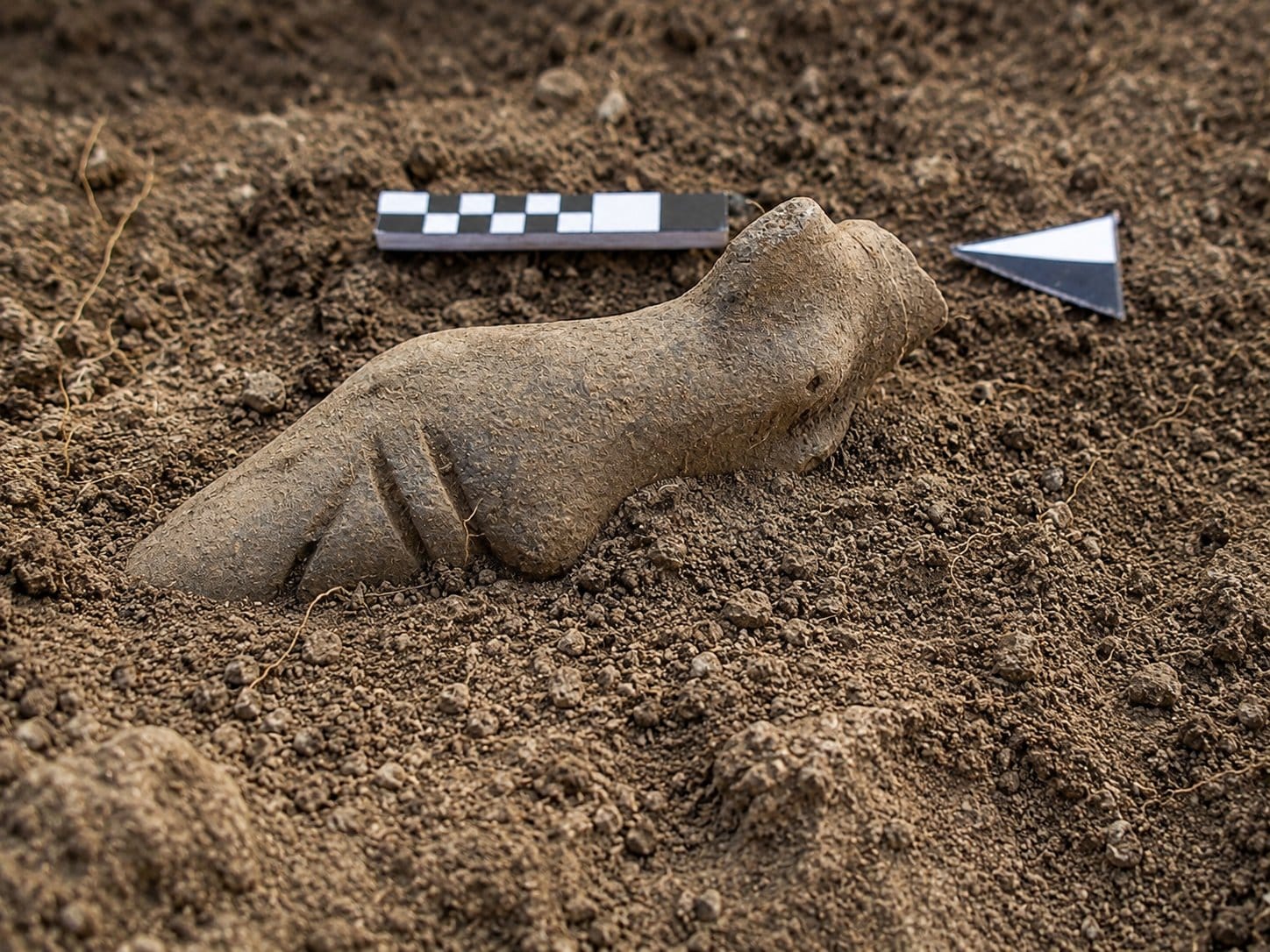
AI reconstruction of a Neolithic female figurine discovered at Kanlıtaş mound. Credit: Greek Reporter Archive
Archaeologists in Turkey have uncovered four headless female figurines dating back about 8,000 years, a discovery that is offering new insight into ritual practices among some of Anatolia’s earliest farming communities.
The terracotta figurines were found at Kanlıtaş mound near the Inönü district of Eskişehir in northwestern Turkey. Excavations at the site have been conducted since 2013 under the direction of Anadolu University.
Kanlıtaş is considered one of the earliest known settlements in the region spanning modern-day Eskişehir, Afyonkarahisar, and Kütahya. Researchers say the site provides important evidence about daily life, settlement patterns, and cultural traditions during the Neolithic period.
Figurines discovered inside ancient structures
Professor Ali Umut Türkcan, who leads the excavation team and teaches archaeology at Anadolu University, said the figurines were uncovered within fill layers at the bases of rectangular buildings.
Researchers determined that the artifacts belong to the final phase of the Neolithic period. All four figurines depict women. The largest measures about 12 to 13 centimeters (5 inches) in length, while the others are approximately 5 to 6 centimeters long.
Although female figurines are common at Neolithic sites across Anatolia, the Kanlıtaş examples stand out because of their condition and context. Several were found with their heads intentionally broken off.
Eskişehir’in İnönü ilçesindeki Kanlıtaş Höyüğü’nde bulunan 8 bin yıllık 4 başsız figürün Neolitik dönem yapı ritüellerinde kullanıldığı tespit edildi. pic.twitter.com/MkBkOCI6Wt
“The presence of headless or broken-headed female figurines in spaces that appear to have been intentionally sealed suggests they may have been left as offerings during the closure of structures,” Türkcan said.
Researchers believe the figurines were deliberately deposited when buildings were abandoned or taken out of use. Similar practices have been identified at other Neolithic settlements, including Çatalhöyük in central Turkey, one of the world’s most extensively studied prehistoric sites.
Distinctive features set the figurines apart
The Kanlıtaş figurines also display characteristics that distinguish them from many other Neolithic figurines found in Turkey.
Türkcan noted that the figures place unusual emphasis on the hip area. This stylistic feature resembles female figurines discovered in parts of the Balkans, particularly regions once associated with the Neolithic Vinca culture.
The similarity suggests that communities living in different parts of southeastern Europe and Anatolia may have shared artistic traditions or symbolic ideas during the Neolithic era.
Discovery may strengthen evidence of cultural links
Researchers also pointed to possible connections between Kanlıtaş and the broader Porsuk cultural sphere of western central Anatolia. Archaeologists have long debated links between the Porsuk culture and Neolithic communities in the Balkans.
According to Türkcan, radiocarbon dating results indicate that the Porsuk culture may predate some neighboring cultural traditions. The findings could help explain how cultural influences spread between Anatolia and southeastern Europe thousands of years ago.
The discovery adds to growing evidence that Neolithic communities maintained complex social and symbolic traditions. The figurines not only provide clues about ritual behavior but may also help researchers better understand cultural interactions across a wide region.
The excavation team plans to publish the findings in a comprehensive scientific monograph and reference volume in the coming years. Further research may reveal more about the role these Neolithic figurines played in the beliefs and practices of early communities in Turkey.
In the mountain villages of Guatemala’s Western Highlands, farmers are combining ancient Maya knowledge with modern sustainable farming techniques to protect their crops from pests and disease. Smallholders are creating homemade biopesticides using plants with strong smells and flavors to deter pests on their family plots. This is helping to cut back on the use of increasingly expensive agrochemicals, many of which have been labeled as dangerous to human health and linked to soil degradation. About 60 Guatemalan communities in the Western Highland departments of Sololá and Huehuetenango, as well as Chiquimula in the east, are working to revive these traditional techniques with support from the international development organization World Neighbors. Their focus is to restore and strengthen traditional knowledge, combining it with agroecological practices that help families produce surplus food they can sell to boost household incomes. “Traditional farming techniques are becoming popular because they are simple practices to apply, use local resources, and have proven to be effective,” Dayani Roche, a program associate at World Neighbors, told Mongabay via email. Rather than a single ancient recipe, farmers are using “a living combination of ancestral knowledge, local experimentation and more recent agroecological practices,” he said, which are “safer for families, soil, water and biodiversity than many chemical alternatives.” The Maya civilization, which once stretched across modern-day Central America, had a rich history of farming dating back to 2000 B.C.E. Its most celebrated agriculture system is the milpa, a form of intercropping that involves a mix of maize, beans and…This article was originally published on Mongabay
Measures being considered to crack down on practice that has grown as a result of Britain’s housing crisis
London councils could be banned from “dumping” homeless families hundreds of miles across England under measures being considered by ministers, the Guardian has learned.
MPs said vulnerable people, including women fleeing abuse, were being “coerced” into choosing between rough sleeping or moving to cheap, sparsely furnished properties in some of the poorest parts of the country.
A government-funded pilot of “hyperlocal” job support in 10 neighbourhoods across England has shown “promising early signs of effectiveness”, including for young people, and could be scalable nationwide, a new evaluation has shown.
The JobsPlus scheme, backed by the Department for Work and Pensions (DWP) and the Youth Futures Foundation, an independent non-profit organisation, focuses intensive support in a small area of predominantly social housing. Echoing a similar, long-established scheme in the US, “community champions” at each site help to engage hard-to-reach people in the local area.
Deep in Taiwan’s misty mountains, researchers have confirmed the tallest tree in the country: a thousand-year-old fir tree higher than a 20-story building, which they’ve named “the heaven sword of the Da’an River.” Climbers scaled the tree and dropped a measuring tape from the top to the forest floor during the Lunar New Year holiday in January 2023. The tree measured 84.1-meters (276-feet). The findings have been published in Frontiers in Forests and Global Change. A team of ecologists, geologists, remote-sensing specialists, professional climbers and Indigenous people that calls itself the “Taiwan tree seekers” began the search in 2014. “The common characteristics [of the team] are probably that we are all tree lovers and like adventures,” Rebecca Chia-Chun Hsu, lead author from Division of Forest Ecology, Institute of Taiwan Forestry Research, told CNN. ‘The Heaven Sword’, Taiwan’s tallest tree, measures 84.1 meters. Photo courtesy of Steven Pearce. Taiwan is one of the few places on Earth where trees can grow this tall. The island sits where the tropics meet the subtropics, and its mountains host several giant conifer species. The species behind the new record, Taiwania cryptomerioides, is known to the Indigenous Rukai people as “the tree that hits the moon.” Although nearly 60% of Taiwan is covered in forest, loggers cleared much of the island’s old-growth forest between 1912 and 1991. However, its steep slopes were too dangerous to reach, and pockets of ancient forest survived. Still, finding the tallest tree amid the rugged terrain was a task. Taiwan…This article was originally published on Mongabay
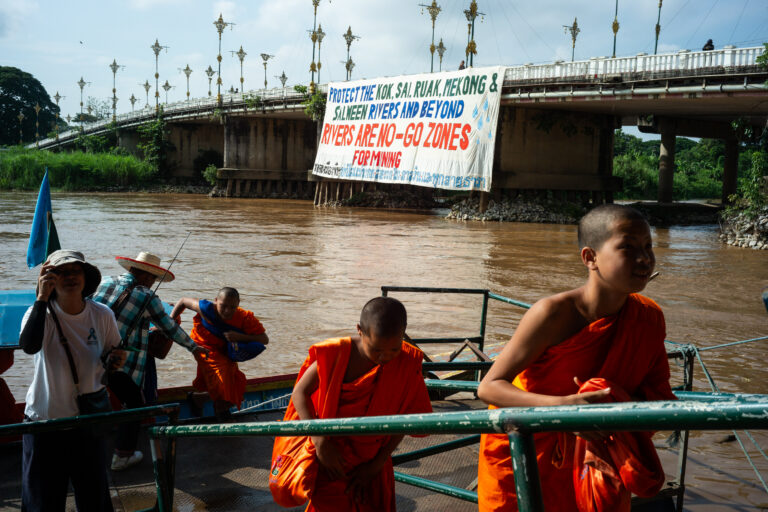
BANGKOK — More than 600 residents of Chiang Mai and Chiang Rai provinces embarked May 31 on a roughly 68-kilometer, six-day ‘peace walk’ to demand the Thai government take action on the river pollution crisis that has seen Thai rivers polluted with heavy metals. The ensemble of affected residents, civil society groups, monks and students marched from Tha Ton subdistrict in Chiang Mai to the city of Chiang Rai in northern Thailand, reaching their destination on June 5, World Environment Day. For more than a year, Thailand’s Pollution Control Department has reported dangerous levels of arsenic, mercury, cadmium and other heavy metals in rivers across northern Thailand, with mining operations across eastern Myanmar suspected to be responsible for the pollution. “We are walking because our rivers are slowly dying,” Pianporn Deetes, executive director of the Rivers and Rights Foundation, which helped to organize the peace walk, told Mongabay by phone. “Toxic contamination from unregulated mining upstream is already affecting water, fish, food, livelihoods, and public health. We do not want to wait until more people become sick. This is an emergency.” Pianporn said the walk (42 miles) was about taking collective action to share information, document impacts and build public pressure in a bid to force the government to address the issue, which Pianporn said has, so far, been lacking. “Monitoring has improved, but action has not matched the scale of the crisis,” she said. “We need urgent diplomatic engagement with neighboring countries, stronger health monitoring, transparency, and action to…This article was originally published on Mongabay
Indigenous Peoples in Voluntary Isolation and Initial Contact (PIACI) in the Yavarí-Tapiche Territorial Corridor, one of the largest contiguous, intact forests in the Amazon and home to the world’s highest concentrations of PIACI, are under threat by extractive and large-scale industrial activities, which pose an existential threat to its inhabitants and the ecosystems they depend on. This is according to a new report co-authored by Earth Insight, the Regional Organization of Indigenous Peoples of the East (ORPIO), the Coordination of the Indigenous Organizations of the Brazilian Amazon (COIAB) and the Interethnic Association for the Development of the Peruvian Rainforest (AIDESEP). The report finds that oil and gas blocks overlap with 10% of the 16-million-hectare (39.5-million-acre) corridor, including almost 1.7 million hectares (4.2 million acres) of intact tropical moist forest, 907,000 hectares (2.2 million acres) of Key Biodiversity Areas and 713,000 hectares (1.8 million acres) of protected areas. “Pressure from hydrocarbons is increasing on the Peruvian side of the Yavarí Tapiche corridor,” Edith Espejo, senior program manager at Earth Insight and author of the report, told Mongabay over WhatsApp messages. “Our report serves as a warning for the irreversible harm that could take place if these oil blocks move into this corridor. Mining concessions within and on the peripheries of the corridor also pose a threat of encroachment and contamination of waterways.” A critical corridor for ecosystems and Indigenous communities The Yavarí-Tapiche Corridor covers Brazil’s western border states of Amazonas and Acre and Peru’s Loreto and Ucayali departments in the Amazon…This article was originally published on Mongabay
BANGKOK — Seven hundred days after activists from the environmental group Mother Nature Cambodia were imprisoned on charges widely regarded as retaliatory for their activism, 73 international and Cambodian civil society organizations have renewed calls for their unconditional release. After a trial lasting just over a month, 10 activists from Mother Nature Cambodia were sentenced on July 2, 2024, to between six and eight years in prison. Only five of the defendants attended the hearings, which saw Long Kuntha, 28, Ly Chandaravuth, 26, Phuon Keoraksmey, 25, and Thun Ratha, 34, each sentenced to six years behind bars for plotting against the government; fellow activist Yim Leanghy, 36, received an eight-year sentence for both plotting against the government and insulting the king. The five activists who did not attend the trial were sentenced in absentia. The appeals hearing for all 10 convicted activists was slated to take place on June 2, but has been postponed indefinitely by the Phnom Penh Court of Appeals. “The MNC5 are incarcerated in prisons in overcrowded and harsh living conditions, separated from each other and spread out all across Cambodia, hundreds of kilometers away from their families and legal counsel,” wrote the 73 NGOs in an open letter addressed to Prime Minister Hun Manet. “The … NGOs who have signed this letter sincerely request you take immediate action to ensure the unjust convictions of these five activists are reversed either prior to or at their upcoming appeals court hearing in Phnom Penh, and that their freedom…This article was originally published on Mongabay
For more than a week, the nation of Bolivia has been in a state of full-on revolt.
In response to neoliberal reforms by the recently elected right-wing government led by President Rodrigo Paz, unions have launched a general strike, peasants and Indigenous peoples have set up dozens of roadblocks throughout the country, and massive marches have been held in the capital, La Paz. These are just a few expressions of a much broader social discontent, which has brought the country to a halt and stoked mass resistance to the larger project of U.S-aligned, right-wing attacks on workers and social movements in Latin America.
Joseph Bouchard, a social scientist and journalist currently in La Paz as a visiting fellow at the Universidad Mayor de San Andrés, explained the diverse character of the movement. “It’s sort of a grouping of different social movements and groups that I think represents the wide spectrum within the Bolivian left,” Bouchard told Truthout. “You have teachers unions and workers unions. You have mining unions. You have just regular people joining who are not necessarily part of any movement. You have an Indigenous federation who used to be part of an anti-dictatorship movement in the 1980s. You have [former president Evo Morales’s] people … And so you have really all these groups that together add up to sort of the largest representation of the Bolivian left, disaffected voters, organized groups, disorganized groups.”
While the diversity of the movement also brings a wide range of demands, one of the most popular is for President Paz to resign, with some sectors of the movement arguing that the country should maintain a general strike indefinitely until Paz has been ousted. The level of outrage is especially profound considering that Paz has only been in office for six months.
How to Lose a Populace in 6 Months
In October 2025, Bolivia elected right-wing populist Rodrigo Paz, ending 20 years of government by the left-wing MAS (Movement to Socialism) party founded by former president Evo Morales. Paz, running on a campaign of “capitalism for all,” promised to address economic hardships plaguing the country. His campaign also benefited from the implosion of MAS, which was experiencing intense infighting from which it has not recovered.
Despite appealing to the economic concerns of the Bolivian people and positioning himself as more of a centrist than the country’s established (and much more extreme) right, once elected Paz wasted no time in carrying out attacks on the country’s workers and poor. One of his first moves was to eliminate a tax on large fortunes. He has also proposed education policies that teachers have criticized as privatization-oriented measures.
Two policies in particular have incited the outrage now rocking the country: a land privatization law and Supreme Decree 5503, which eliminated state fuel subsidies.
Two policies in particular have incited the outrage now rocking the country: Law 1720, a land privatization law which many see as a move to hand over Indigenous lands to agribusiness and other large-scale landowners, and Supreme Decree 5503, which eliminated state fuel subsidies, practically doubling the consumer cost of fuel overnight. Along with the rising fuel costs, Paz’s government has further angered Bolivians by importing low quality fuel, or “junk fuel,” as the people call it, which has reportedly damaged people’s vehicles, imposing repair costs many cannot afford.
It did not take long for the outrage to spread. Bolivia had already seen significant protests in December 2025, just a month into Paz’s presidency, but these were halted due to negotiations between the government and the country’s largest union federation, Central Obrera Boliviana (COB). Despite these negotiations the Paz administration continued advancing neoliberal reforms, further fueling outrage and forcing COB and other unions, including teachers unions, to call strikes at the start of May. Around the same time, rural Indigenous communities embarked on a long march to the capital, while other peasant and Indigenous communities erected blockades across major roads.
Despite its best efforts, the Bolivian government has not yet quashed the nationwide shutdown, though on May 26 the country’s Chamber of Deputies voted to repeal restrictions on the use of military force against protesters. Even before the vote, the state had deployed militarized forces against protesters. This repression has only further radicalized the movement, with some protesters using dynamite, rocks, and slingshots to defend themselves against the military, according to multiple sources on the ground who spoke with Truthout. Reports emerging on social media confirm this as well.
A history student at the Universidad Mayor de San Andrés who spoke with Truthout described the repressive climate that the protesters are braving.
“Especially police, they have been repressing the movement with chemical agents, rubber bullets, and so on,” she told Truthout. “[The military] tried to stop the blockades which have been in the roads, but 30 minutes after they left, the blockades were rebuilt with even more people.”
The student, who is a member of the socialist youth group Combate Rojo, asked to remain anonymous due to the doxxing to which members of her organization have been subjected from the far right. She mentioned that arrests and violence have been common in the crackdown on protests.
A Challenge to the Regional Right and U.S. Imperialism
The protests in Bolivia are not merely a national issue. They have implications for a regional strategy in which the United States is relying on far-right allies in Latin America to advance U.S. interests. These interests are expressed clearly in Trump’s 2025 National Security Strategy, which names the Western Hemisphere as the administration’s top region of strategic interest. It states, “The goal is for our partner nations to build up their domestic economies, while an economically stronger and more sophisticated Western Hemisphere becomes an increasingly attractive market for American commerce and investment.”
The protests in Bolivia have implications for a regional strategy in which the United States is relying on far-right allies in Latin America to advance U.S. interests.
Paz has closely aligned Bolivia with the United States, joining the recently formed Shield of the Americas, a military alliance composed mostly of right-wing governments with the stated mission of fighting cartels. On May 21, the alliance issued a joint statement condemning the protests in Bolivia, alleging that the protesters are being led by “criminals and drug traffickers.”
Under the Trump administration, allegations of drug trafficking have been used to justify a wide range of interventionist and militaristic policies including the attack on Venezuela and kidnapping of President Nicolás Maduro, the establishment of a seemingly permanent military occupation along the U.S.-Mexico border, dozens of illegal and deadly strikes on boats in the Caribbean, and a growing military campaign in Ecuador that has resulted in the bombing of a civilian farm in a rural village.
Bouchard argued that the U.S. response to the protests is a rejection of Latin American sovereignty.
“You can vote for a government and then decide you’re unhappy with what they’re doing if you feel like they’re betraying their promises or not fulfilling what they voted for,” Bouchard said. “This is how democracy works. U.S. government and right-wing allies in Latin America are basically saying that no protests are ever legitimate; if you vote for a government you’re basically supposed to accept whatever they do after.”
Several of the Latin American governments who signed the Shield of the Americas statement are likely observing the protests in Bolivia with concern that their own populations could draw inspiration from them.
The same week that Bolivian trade unions launched their general strike, Argentina and Chile saw massive student-led demonstrations against attacks on public education. Both Argentine President Javier Milei and Chilean President José Antonio Kast have been pushing their own neoliberal reforms similar to those carried out by Paz.
They know that they can bring down governments … They’ve done it before many times. These tactics work and they can get concessions.
Even in Brazil, which is currently governed by the left-wing government of President Luiz Inácio Lula da Silva, university students and municipal teachers in São Paulo have been on strike and held combative marches against austerity pushed by the state’s far right governor. While the protests in Brazil, Argentina, and Chile have not reached anywhere near the level of widespread anger expressed in Bolivia, they demonstrate a regional trend in which workers, students, and broader communities are beginning to rise up against economic strain and far right movements.
The history student who spoke with Truthout said that there are many in the movement in Bolivia who understand that their uprising poses a challenge to far more than just Paz’s agenda.
“[Protesters] mention Milei, they mention the genocide [in Gaza],” she said. “That internationalist connection to U.S. imperialism and Israel, it’s there. You just can’t hide it.”
Bouchard said that the Bolivian people understand their country’s history, and this informs how radical the movement has become and how much more radical it can get.
“They know that they can bring down governments,” Bouchard said. “They’ve done it before many times. These tactics work and they can get concessions. They know that the Paz government is quite weak, and if they use these tactics like they’ve done before they can win.”
 Login
Login