Normal view

Swedish fighters intercept Russian Su-24 and Su-34 over Baltic Sea

13 June 2026 at 17:32

Gripen

Swedish JAS 39 Gripen jets intercepted Russian Su-24 and Su-34 aircraft twice on 13 June 2026, with allied combat aircraft also scrambled, the Swedish Armed Forces reported.

Sweden's territorial integrity has faced repeated pressure from Russian military activity over the Baltic Sea, with NATO allies intercepting Russian strategic bombers and fighters over the same waters in April 2026.

What happened

Sweden's air force carried out two interception operations on Saturday, 13 June, each involving two pairs of JAS 39 Gripen fighters, according to the Swedish Armed Forces on X and Nordic Defence Sector. The intercepted aircraft were a Su-24 Fencer supersonic bomber and a Su-34 Fullback fighter-bomber.

Allied combat aircraft were also scrambled during the incidents. Swedish airspace was not violated, the Swedish Armed Forces said.

Officials' response

"Russia's behavior is serious and indicates a repeated pattern that threatens both our territorial integrity and security. Swedish and allied fighter aircraft acted swiftly, decisively, and clearly, intercepting the Russian aircraft," said Eva Skoog Haslum, head of the Swedish Armed Forces' Joint Operational Command.

In April 2026, NATO countries intercepted Russian strategic bombers and fighters flying over the Baltic Sea. Lithuanian Foreign Minister Kęstutis Budrys recently said the Alliance must be ready to neutralize Russian military facilities in the Kaliningrad region in the event of a conflict with Russia.
Trump and Zelenskyy to attend same G7 working session, may meet on sidelines

13 June 2026 at 16:45

Zelenskyy trump

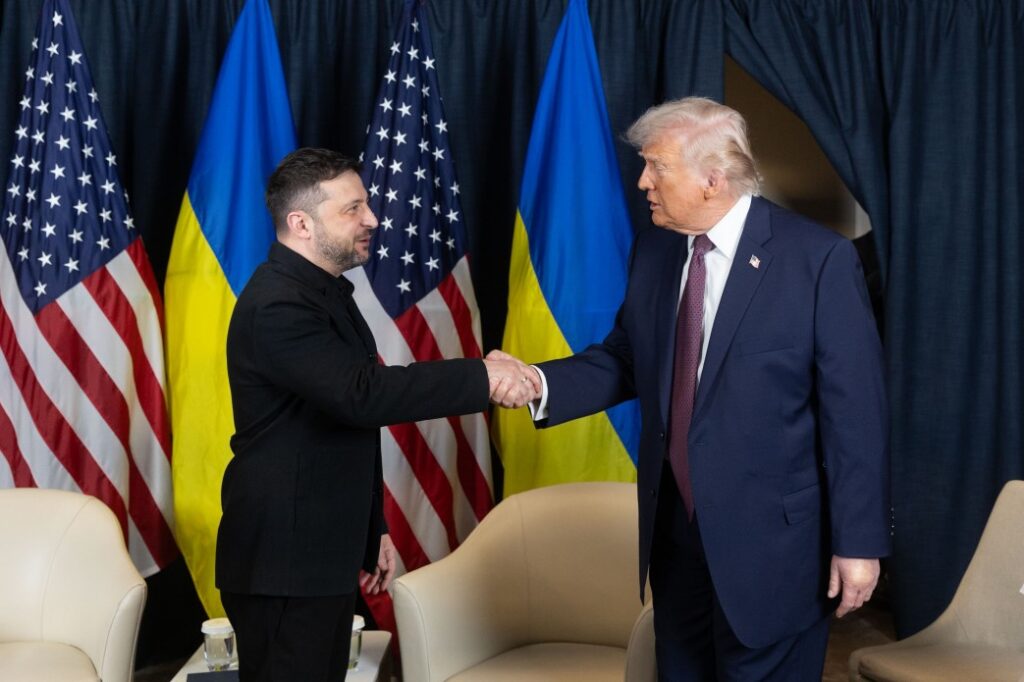
US President Donald Trump and Ukrainian President Volodymyr Zelenskyy will take part in the same working session at the G7 summit in Evian, France, and "could very well cross paths" on the sidelines, a senior US official said, according to Suspilne's correspondent and Le Figaro with AFP.

The G7 summit takes place from 15 to 17 June in Evian. Trump will hold a bilateral meeting with French President Emmanuel Macron on his arrival on Monday, one-on-one meetings with the leaders of Qatar, the UAE, Egypt, and India on Tuesday and Wednesday, and will take part in the G7 leaders' working session on Tuesday alongside Zelenskyy.

No bilateral meeting scheduled

Asked whether a bilateral meeting between Trump and Zelenskyy was planned, the US official said the two leaders "could very well cross paths" on the margins of Tuesday's session, while specifying that no formal bilateral meeting was on Trump's agenda.

The official, speaking anonymously, described ending the Russo-Ukrainian war as a top priority for Trump: "We want the war to end as soon as possible. This is what President Trump prioritizes, one of his top priorities."

A separate US official called the 79-year-old president the "only" world leader capable of ending the war between Russia and Ukraine, without elaborating.

Versailles dinner marks US anniversary

On Wednesday, after the summit concludes, Trump will have dinner with Macron at Versailles. According to the French presidency, the dinner marks the 250th anniversary of US independence at a "high place of Franco-American friendship where the treaty consecrating it was signed in 1783."

Other agenda items

The official sought to downplay tensions between Trump and NATO allies over US commitment to the alliance: "It's a very easy conversation. It has nothing to do with the hysterical way it's being presented in the press, and we are very pleased with the burden-sharing efforts underway and we want to see more of it."

A second US official praised France's "very smart" and "relevant" decision to put trade imbalances on the summit agenda. According to the White House, Trump intends to discuss artificial intelligence, immigration, innovation, and energy with G7 partners. The G7 comprises Germany, Canada, the United States, France, Italy, Japan, and the United Kingdom; Trump has repeatedly argued for including Russia to restore the former G8 format.

The last meeting between the American and Ukrainian presidents was at the Davos forum in January 2026.

A virtual experiment to see how AI would run a town results in societal collapse, crime and death within days

13 June 2026 at 14:59

A group of researchers conducted an experiment where they created a virtual town with 10 artificial intelligence (“AI”) residents, each with jobs, names and relationships, to see how AI systems would behave […]

The post A virtual experiment to see how AI would run a town results in societal collapse, crime and death within days first appeared on The Expose.

Ukrainian drones hit Dzhankoi as strike unit declares hunt on Russian Crimea logistics

13 June 2026 at 11:29

Ukrainian strikes on the Dzhankoy

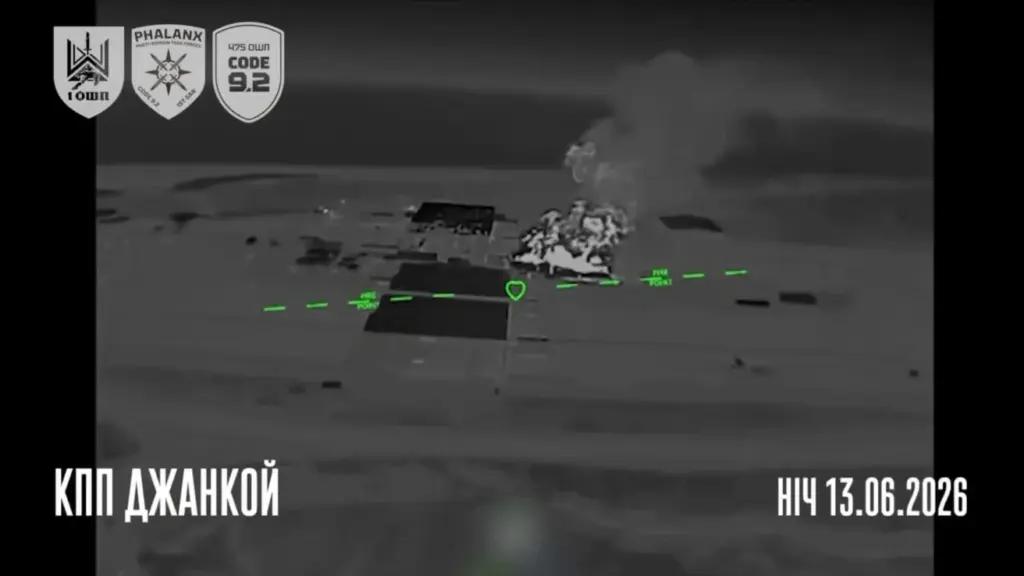
Ukrainian drones struck the Dzhankoi checkpoint, a railway bridge, a Russian pontoon crossing, and trucks at Chonhar overnight on 13 June, hitting four targets along the only land corridor between Russian-occupied Crimea and the southern front. Traffic toward the Dzhankoi checkpoint was halted, Russia's installed head of occupied Kherson Oblast Vladimir Saldo said on Telegram, claiming Russian air defenses shot down 25 Ukrainian drones overnight.

The strike marks a stated change in Ukrainian operational concept. The 1st Separate Assault Regiment named after Dmytro Kotsiubailo, which led the operation jointly with the 475th Separate Assault Regiment "CODE 9.2," announced it is moving from one-off attacks on the bridges themselves to sustained patrol of the entire logistics route. "We are transitioning to patrolling enemy logistics from temporarily occupied Crimea and blocking attempts to restore crossings," the regiment said in a statement posted to Facebook. "Pontoon throughput is low. Trucks accumulate in queues, becoming ready targets for us." Russian fuel and ammunition supplying Russia's southern front pass through this corridor.

What was hit

The Dzhankoi checkpoint controls the main road between northern Crimea and the Kherson Oblast mainland and serves as the busiest highway and rail junction in occupied Crimea. Saldo also said a bridge between Henichesk and the Arabat Spit, an alternative crossing point Ukraine first struck on 10 June, was attacked again overnight. Ukrainian forces did not confirm Saldo's air defense claim.

The Chonhar bridge — the main highway link between Crimea and occupied Kherson Oblast — was first hit on 7 June by the joint Falanga multidomain operations center of the two regiments, using Fire Point company drones and long-range "Behemoth" UAVs. Traffic was rerouted, then halted again after a second strike on 9 June. Four vehicular bridges at Crimea's northwestern entrance near Armiansk were struck on 11 June, Euromaidan Press reported. The overnight strike on the Dzhankoi checkpoint extends the pattern — and signals the campaign has moved from the bridges to the trucks themselves.

The logistics spine

The corridor Ukraine is now patrolling carries the supplies that sustain Russian operations across Ukraine's south. Russian fuel for the Huliaipole direction is shipped by ferry to Crimea and then trucked across the peninsula to the front, regiment commander Dmytro Filatov, call sign Perun, told Ukrainska Pravda earlier this week. Russian cargo, he said, does not move across the Kerch Bridge — its railway link has not been restored since the October 2022 explosion. Cyber intelligence inside Russian military networks now allows Ukrainian planners to target specific units waiting for fuel, Filatov added. The 37th Motor Rifle Brigade was the target of the 7 June Chonhar strike, he said. Trucks ordered for that brigade had still not arrived at the time of his interview.

A multiplying problem for Russian logistics

The interdiction campaign confronts Russia with a layered constraint. Pontoons replace damaged bridges, but they throttle throughput and concentrate trucks in queues — the conditions the 1st Assault Regiment now describes as "ready targets." Rerouting through Armiansk and Perekop runs into the bridges hit on 11 June. Ferrying fuel from Krasnodar Krai bypasses the corridor entirely but cannot scale to replace road transport on the timeframes Russian units in southern Ukraine need.

Filatov said on 10 June that the Chonhar bridge had sustained critical damage and that the occupation forces were searching for new logistics routes for ammunition and fuel.

What changes

The announcement is what makes this strike news rather than another item in a logistics campaign. Until now, the Crimea land corridor functioned — slowly, under pressure, but it functioned. As of overnight on 13 June, the regiment that led the bridge strikes is declaring the corridor a sustained engagement zone. Not a target struck once. A route to be patrolled.

"We bleed the enemy to advance forward," the unit said. "This is not the end.

Ukraine to supply NATO ally Latvia with strike drones, ground robots, naval systems

13 June 2026 at 11:09

latvia ukraine drone

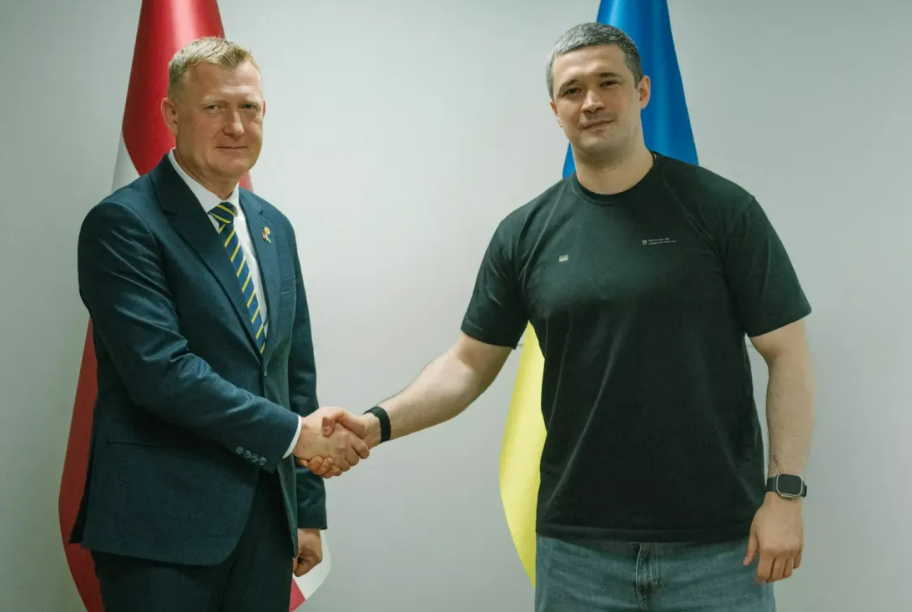
Ukrainian and Latvian defense ministers named specific categories of unmanned systems that will move between the two countries under the Drone Deal, Ukraine's defense minister Mykhailo Fedorov said on 13 June.

Latvia will supply Ukraine with anti-drone systems of Latvian manufacture. Ukraine will supply Latvia with strike drones, ground robotic complexes, and maritime drones, following a Kyiv meeting between Fedorov and Latvian defense minister Raivis Melnis.

The exchange formalizes what until now ran one way. Latvia has been a heavyweight donor of drones and equipment since 2022, pledging 10 million euros to joint defense manufacturing in 2025 alone.

Today's agreement makes Ukraine a supplier to a NATO member for the first time under this format.

"Ukrainian technologies and combat experience help partners adapt faster to the challenges of modern warfare," Fedorov wrote on Telegram, "while support from allies makes it possible to scale solutions that have already proven effective on the battlefield."

The meeting is Melnis's first foreign trip as defense minister. He took office on 28 May after his predecessor Andris Sprūds resigned over a 7 May Ukrainian drone crash near Latvia's Rēzekne oil storage facility — an incident that brought down Prime Minister Evika Siliņa's government.

Before his appointment, Melnis served as the Latvian defense ministry's representative at the embassy in Kyiv.

In a separate meeting on the same visit, Melnis told President Volodymyr Zelenskyy: "We have supported Ukraine and continue to support it with training and our expertise since the very beginning. And now we are asking Ukraine to support us, because there is only one country in the world who knows how to fight Russia, how to stop Russia."

What the Drone Deal opens

The 9 June Drone Deal, signed in Tallinn between Zelenskyy and Latvia's new Prime Minister Andris Kulbergs at the Nordic-Baltic Eight summit, is the sixth bilateral framework Ukraine has concluded under this format.

At the signing, Zelenskyy offered Ukrainian counter-drone experts to Baltic states facing repeated drone incursions. The Fedorov-Melnis meeting gives that offer operational content.

Latvia has spent recent months as the country most exposed to drone spillover from Russia's war on Ukraine. French NATO fighters shot down a drone over eastern Latvia on 8 June — the first NATO intercept on Latvian soil.

Latvia's military chief Kaspars Pudāns warned on 4 June that Russia could exploit its drone manufacturing edge to attack the Baltics by 2028.

Fedorov did not specify volumes, timelines, or financial terms.

Economics will curtail the widespread use of AI

13 June 2026 at 11:01

Artificial intelligence (“AI”) programmes are being offered to users for free or at a low cost.   However, the costs of running AI programmes are enormous, including the costs of data centres […]

The post Economics will curtail the widespread use of AI first appeared on The Expose.

Russia’s youngest war dead include more than 200 18-year-old soldiers, new data shows

12 June 2026 at 22:03

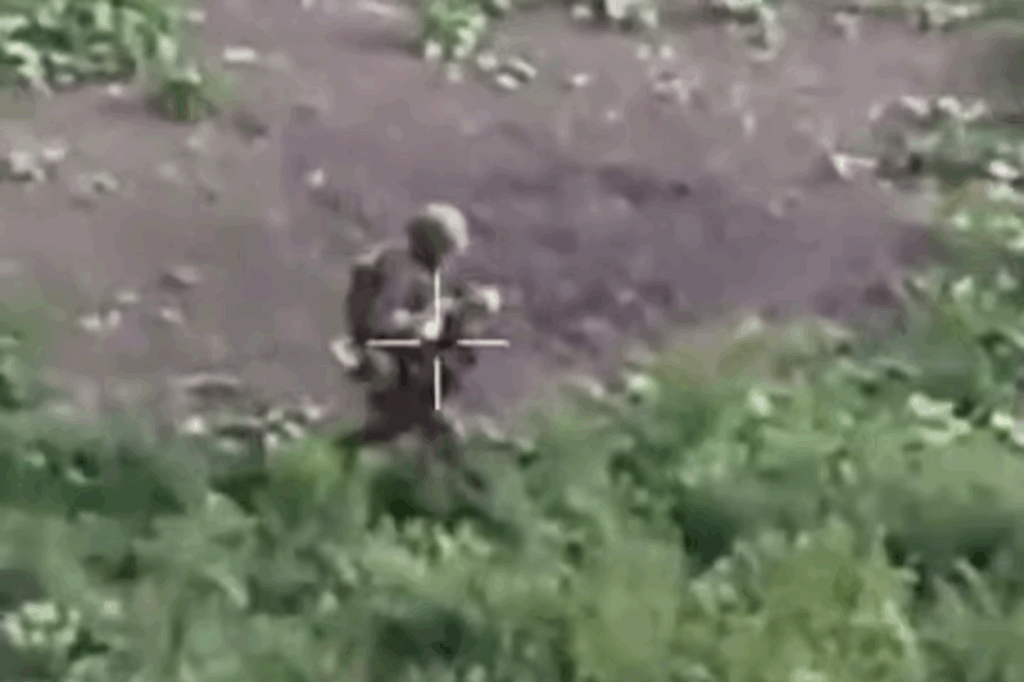
Russian soldier seen by Ukrainian drone before strike, June 2026. Screenshot from video: Madyar

At least 200 Russian soldiers aged 18 have been confirmed killed in Ukraine, according to a new joint investigation by BBC Russian and independent Russian outlet Mediazona, which has identified 226,055 Russian military deaths since the start of the full-scale invasion in 2022.

Russia’s invasion of Ukraine has been defined by exceptionally high and sustained casualty rates across all phases of the war, driven by large-scale frontal assaults, prolonged artillery duels, and the expanding use of drone warfare that has widened the lethal “kill zone” across much of the frontline. 

At least 200 confirmed 18-year-old soldiers among Russia’s war dead

The youngest confirmed casualty in the latest update was born in 2008, marking the first recorded 18-year-old in the dataset. Researchers say the overall figure includes more than 200 teenagers aged 18, underscoring the scale of young recruits being sent into combat.

One case highlighted in the report is that of 18-year-old Alisher Svirin, who died on 1 May 2026 and was buried later that month in Moscow Oblast. He had signed a contract and served in a motor rifle brigade as a machine gunner. According to the investigation, he could not have spent more than a few months in service before being killed.

Regional patterns show disproportionate burden in poorer Russian republics

Regional data also highlights a consistent imbalance in casualty distribution, with poorer regions such as Bashkortostan, Tatarstan, and Tuva showing significantly higher per-capita losses than Russia’s largest cities. 

Researchers attribute this gap to recruitment patterns that rely more heavily on economically disadvantaged areas, where military service offers relatively higher financial incentives.

At the same time, major urban centres such as Moscow remain underrepresented in the casualty lists, reflecting both demographic differences in recruitment and uneven exposure to frontline deployments.

Open-source records show limits of confirmed casualty tracking

The database is compiled from publicly available sources, including obituaries, official regional announcements, social media posts, and burial records. Analysts say it likely captures only a portion of total losses.

The report notes that more than half of confirmed deaths now come from volunteers, mobilised personnel, and convicts recruited from penal colonies, reflecting Russia’s reliance on short-training pipeline forces for frontline deployments.

Battlefield drone warfare is reshaping how deaths are recorded and counted

Researchers also say the structure of the battlefield has changed the visibility of losses. Widespread drone warfare has expanded the “kill zone” across large sections of the front, making recovery of bodies difficult and delaying official confirmation of deaths, sometimes for months or years.

Based on current estimates, analysts suggest Russia’s real death toll could be significantly higher than identified figures, potentially reaching between 347,000 and 502,000 when accounting for incomplete data coverage.

❌