A video of a knife attack sparked racist riots across the Northern Irish capital Belfast on Monday, with violence has now spreading across the United Kingdom. Keir Starmer says there will be "no tolerance" for rioters.
As officers prepared to search the arrested individuals 'a violent struggle reportedly ensued between officers and the five suspects,' according to police.
As officers prepared to search the arrested individuals 'a violent struggle reportedly ensued between officers and the five suspects,' according to police.
A fragile ceasefire that many Iranians say does not feel like a ceasefire has given some people inside Iran the courage to speak out, despite what they describe as enormous personal risk.
The accounts come as President Donald Trump said from the Oval Office that the U.S. had reached what he called "a great settlement of the war with Iran," adding that the agreement was still "subject to finalization of documents" and could be signed in Europe in the coming days. The announcement followed weeks of military escalation and fragile negotiations, including U.S. strikes after Trump blamed Iran for the downing of a U.S. Apache helicopter near the Strait of Hormuz and earlier warnings that Tehran would be hit "very hard" if it failed to accept a deal.
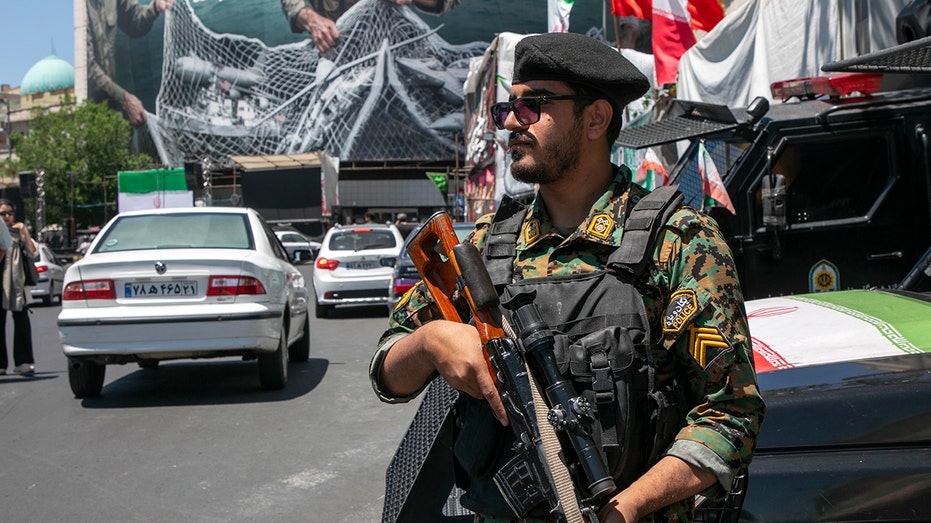
Inside Iran, three young voices described a country where repression is becoming even more visible, the Islamic Revolutionary Guard Corps is expanding its presence on the streets, and ordinary people are struggling to afford basic necessities.
All three spoke to Fox News Digital through written messages because of security concerns and internet restrictions inside Iran. Their names have been changed to protect their identities.
They described a similar reality: checkpoints across major streets, fear of the Basij, the hardline volunteer militia under the Islamic Revolutionary Guard Corps, and the Revolutionary Guards itself, renewed enforcement of hijab rules, mass layoffs, long lines outside bakeries and a growing sense among young Iranians that the future has disappeared.
‘The curtain has been pulled back'
"The influence of the Revolutionary Guards always has been present, and everything has operated within their ideological framework. Now, their interference is more obvious and easier to see," Hassan said. "Now the curtain has simply been pulled back."
"The atmosphere in cities and government offices has become much more securitized. Security forces are now visible around almost every major square and intersection, and there are numerous checkpoints throughout the cities," he said. "Individuals affiliated with the security apparatus or the Basij are increasingly being given positions of authority and influence."
At the beginning of the war, Milad said, authorities appeared to ease some social restrictions, including enforcement of hijab rules. But he said that pressure has since returned, adding that the regime is not only targeting opponents, but also silencing supporters who cross political red lines.
"For example, a group staged a sit-in protest against negotiations with the United States," Milad said. "Security forces intervened and told them that they were disrupting public security. They were warned that if they did not leave, they would be arrested."
Ali, a student in Tehran, Iran, said the Islamic Revolutionary Guard Corps control feels more open than ever.
"It can be said that if previously 80% of the country was controlled by the Revolutionary Guard and the rest by the government, now 100% of the country is in the hands of the IRGC," Ali told Fox News Digital. "When you drive through the streets and reach checkpoints, you don’t even dare look them in the eye because they can do whatever they want."
"No one dares get into trouble with people who are members of organizations like the Basij, because they can report your name and have you arrested," he added. "They have become more brutal than ever, and people know that if they take to the streets, the Revolutionary Guards can easily kill them and no one can do anything about it."
Ali said Basij members who once hid their affiliation now display it openly.
The accounts come against the backdrop of Iran’s long history of violent crackdowns on dissent.
Iran International reported that more than 36,500 people were killed during the January crackdown, while Amnesty International described January 2026 as the deadliest period of repression by Iranian authorities in decades and said deaths rose into the thousands.
Milad, who said he witnessed the crackdown, described the impact it had on ordinary Iranians.
"Before the war, we couldn’t even breathe. We couldn’t sleep at night," he said. "The conditions were very difficult for most people who had seen that massacre. After the war, we were able to sleep more easily at night, and we felt a bit more at ease. Now, even though the war is still ongoing, we continue to worry about the families of the martyrs and those who are in prison, under torture, and facing the executioner."
The new war and the U.S.-led pressure campaign that began Feb. 28 have raised hopes among some opponents of the regime that the Islamic Republic could be weakened or even collapse. But the Iranians who spoke to Fox News Digital said that, for now, the result on the ground has been a more visible security state.
The economic pressure also is being felt across daily life.
Iran already was struggling with inflation, currency collapse, corruption and sanctions before the war.
Since then, growing economic strain has been reported, with businesses crushed by high prices, supply-chain disruptions, internet blackouts and rising unemployment. Iran’s official statistics center reported annual inflation of 53.7% in April, with food inflation above 115%, according to the Associated Press.
Ali said, many young Iranians see almost no path forward.
"The economic situation has become so bad that almost all industries are on the verge of collapse and are simply trying to survive," he said. "Many companies have laid off workers, including me. Many of my engineering-student friends have also been laid off. Families can no longer financially support their children."
"I see many more older men and women than before who clearly were not garbage collectors but are now searching through trash," Ali said.
"Almost all of us young people are convinced that we have no future," he added. "At best, if there is anything left from what we earn, we can spend it on going to a café. Buying a phone or clothes has become difficult; buying a car is a dream. Prices have become so high that some days we can barely afford our two main meals and nothing else. Snacks, fruit and similar things are no longer part of life."
Milad described a similar picture, saying layoffs, unpaid salaries and rising utility bills are crushing families.
"The government is trying to collect more money from people through higher taxes. Utility bills for water, electricity and gas have become extremely expensive," he said.
He said bakeries remain crowded not only because of war fears, but because bread has become one of the only affordable foods left.
"Bread has become the main staple on many family tables," Milad said. "Medical costs are extremely high, and many people are afraid to visit a doctor because the costs of medication, tests and treatment are so expensive."
Hassan, however, said the economic pain is bearable only because some Iranians believe it could eventually help bring down the Islamic Republic.
"We believe that with the return of a government that truly represents the people, under the leadership of Crown Prince Reza Pahlavi, economic conditions will improve in the future," he said.
Reza Pahlavi, the son of Iran’s late shah, has lived in exile for decades and has increasingly presented himself as a unifying figure for Iranians seeking a post-Islamic Republic future. His supporters inside and outside Iran argue that any transition should lead to a referendum and a democratic system.
The Iranians who spoke to Fox News Digital warned the Trump administration against negotiating with the regime or easing pressure too soon.
"I would like to tell the Western world that appeasement of the Islamic Republic is futile," Hassan said. "These are dishonest and deceptive people who, according to their religious beliefs, practice taqiyya in order to deceive others and maneuver their way through difficult situations."
"These are not people who can be reformed," he added. "Appeasement of them is harmful to the entire world. It is extremely naive to believe that meaningful negotiations can be conducted with such individuals."
Ali said he believes the clerical regime would give up uranium if it allowed its leaders to stay in power.
"We only hope that the Islamic Republic falls, whether through war or through an agreement," Ali said. "The clerics are far too shameless to fight to the death over uranium. They would be willing to hand over the uranium to the United States if it meant staying in power and continuing to plunder Iran. But they are certainly careful to avoid suffering the same fate as Gaddafi."
His message to Washington was direct.
"The only message I have for the U.S. government is: save the people of Iran from the clerics and free Iran from the Islamic Republic," Ali said.
Milad said many Iranians are watching Trump closely and fear another moment when the West chooses negotiation over the people in the streets.
"Iranian people have hope that the American administration will be strong and stand on their side," he said. "We don’t want another Obama situation. Iranian people and their blood are not oil prices."
"We have one message to the president, and that is to continue," Milad said. "Here in Iran, we no longer say, ‘Obama, Obama, either with us or with them.’ Now we’re saying: ‘Trump, don’t be Obama. You are with us, not with them. President Trump, stay the course.’"
Fox News Digital reached out to Iran’s mission to the United Nations for comment.
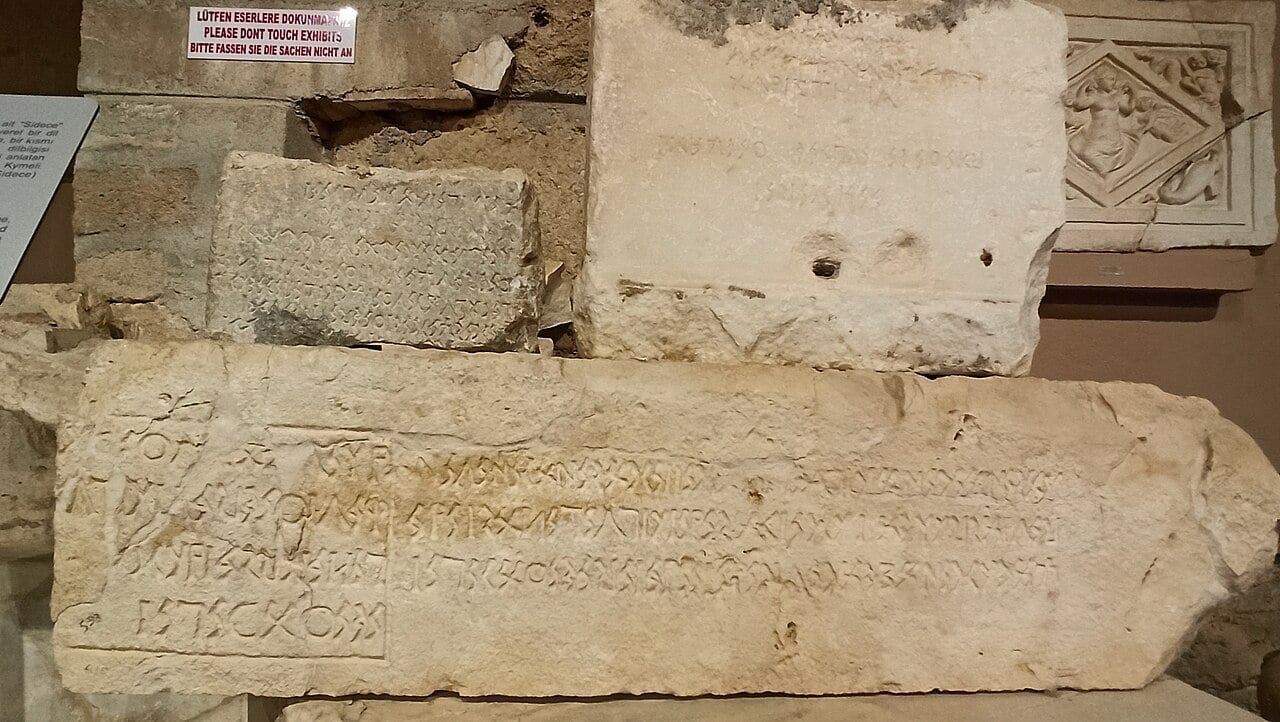
Researchers have expanded the known Sidetic alphabet to 31 letters, moving the field closer to decoding one of Anatolia’s lost languages. The new findings come from active excavations at Side Ancient City in Antalya’s Manavgat district.
The work is led by Prof. Dr. Feriştah Alanyalı, excavation director and archaeologist at Anadolu University, in collaboration with Italian linguist Alfredo Rizza and Austrian linguist Michaela Zinko. Funding comes through the Culture and Tourism Ministry’s Heritage for the Future Project.
Sidetic sits within the Luwian branch of Anatolian Indo-European languages, a grouping that also includes Lycian and Carian. Decipherment has moved slowly because the surviving inscriptions are few and most span only one or two lines.
Alanyalı said that the thin body of material has made it hard to reconstruct grammar, vocabulary, and structure with any confidence.
New excavations yield longer texts and bilingual comparisons
New excavations have brought a shift. Researchers have now recovered inscriptions running as long as 30 to 40 lines, well beyond anything previously available. Bilingual texts written in both Sidetic and Greek have also come to light.
Alanyalı said that those texts have renewed optimism because matching content across two languages helps researchers assign meaning to unknown signs and connect recurring words to known concepts.
One finding in particular has drawn attention. Researchers now think the Sidetic terms “Siruawn” and “Siruawan” refer to Side itself.
Since the Greek word “Side” (Greek:Σίδη) translates to pomegranate, a fruit that featured prominently on the city’s ancient coinage, Alanyalı said that the name likely carried the same meaning in the native language.
She described this as a significant finding for understanding the city’s origins and identity.
An ancient city that held its language for centuries
Side is typically known through its Greek and Roman structures, but Alanyalı said that the city’s history runs deeper.
Ancient accounts record that settlers from the Greek city of Kyme arrived at Side and, over time, abandoned their own language in favor of the one spoken by local residents.
Alanyalı said that tradition points to a community whose culture was firmly rooted long before outside groups arrived.
That cultural foundation held even after Alexander the Great brought Greek influence into the region during the fourth century B.C.
The inscriptions show that Side’s residents continued writing in Sidetic for roughly two centuries into the Hellenistic period, with the language appearing to fade only around the late second century B.C.
Alanyalı said that the persistence of Sidetic complicates the idea that Greek culture quickly swept away what came before it.
Assyrian and Babylonian seals point to ancient eastern ties
Archaeological finds also point to Side’s connections with civilizations to the east. A Neo-Assyrian seal turned up during excavations at the site.
Separately, Italian researchers obtained a Neo-Babylonian seal from residents of the area before the Turkish War of Independence. Alanyalı said that the two objects together point to cultural ties with Mesopotamia dating back to the seventh century B.C.
A bilingual inscription tied to the city’s Serapis Temple adds another dimension. Alanyalı said that the text documents how the temple was financed, listing the names of donors and the sums each contributed, all written in Sidetic.
31 letters bring researchers closer to Anatolia’s lost language
The use of the local language for a public record of that kind confirms it was still understood and used in everyday civic life.
With the alphabet now standing at 31 known letters, up from 26, researchers working on this lost Anatolian language have a sharper set of tools.
Alanyalı said that the international team continues its work, and each newly identified letter brings the field a step closer to a fuller reading of inscriptions that Side’s people worked for generations to preserve.
The Kremlin called Canada a 'warmonger' nation for signing the joint production deal and vowed to respond, including by publishing the addresses of Canadian firms.
The Kremlin called Canada a 'warmonger' nation for signing the joint production deal and vowed to respond, including by publishing the addresses of Canadian firms.
Visa says the feature will include spending limits and mandatory approval procedures, and that the agent will only be permitted to use customers' cards at approved retailers.
Visa says the feature will include spending limits and mandatory approval procedures, and that the agent will only be permitted to use customers' cards at approved retailers.
Pope Leo XIV landed in Spain's Canary Islands, an epicenter for incoming migrants seeking entry into Europe, on Thursday just days after criticizing the country's immigration policies in a speech to Spain's Parliament.
Pope Leo will meet with 1,000 migrants on Friday to cap off his apostolic journey to Spain, the European country with the sixth largest Christian population on the continent.
Following his parliamentary speech Monday in which he took aim at Europe's immigration polices, Pope Leo landed Thursday on the island chain's Gran Canaria, according to Reuters.
On Thursday he met with migrants and leaders of international organizations that assist migrants, holding a moment of silence for migrants who died trying to reach Gran Canaria at Port of Arguineguin, a dock which made headlines in 2020 after over 1,000 migrants ended up stranded there during the Covid-19 pandemic.
Relief organizations came to call the Port of Arguineguin the "Dock of Shame" after the migrant crisis, a theme Pope Leo seemed to pick up on while speaking at the port Thursday.
"Dear migrants, before saying anything else to you, I want to bow before your dignity," the pope said. "You are not just numbers or files. You are people who have left behind families and homes. You have dreams that no one has the right to despise," Pope Leo said at the dock.
"We cannot grow accustomed to counting the dead," he added.
Located less than 100 miles off the coast of West Africa, Gran Canaria has been the destination for thousands of Africans, many of whom have lost their lives attempting to traverse the volatile waters in small boats.
Over 3,000 people died trying to make the journey in 2025 alone, according to the non-governmental organization (NGO) Caminando Fronteras.
The Canaries have seen a massive uptick in migrant entries since 2015. In 2024 the archipelago broke records with 46,843 irregular migrants compared to under 1,000 in 2015, according to Reuters.
Speaking to media at Pope Leo's event, a boat captain who assists charities and NGOs in ferrying migrants said he had personally helped save over 20,000 migrants in the last 18 years, Reuters reported.
"It's a number that makes me sick and that you cannot forget," the captain, Tito Villarmea, told Reuters. "I wish we didn't have to save anyone," he continued.
Under Prime Minister Pedro Sanchez, Spain's socialist government has liberalized the country's policies on migration, approving a plan in April to grant 500,000 undocumented migrants legal status.
Spain's conservative lawmakers, meanwhile, fired back after Pope Leo's Monday speech to Parliament.
During his address to lawmakers, Pope Leo called migration a "tragic drama" and said discrimination against people based on "national, ethnic, religious or linguistic origin, or because of their economic or social status" was a violation of the "universal principle of the equal dignity of all human beings."
But Santiago Abascal, who heads Spain's conservative Vox party, countered making a point that Vatican City has policies against illegal immigration as well.
"I like the Vatican state's migration policy. If someone enters illegally or with violence, they are fined, imprisoned and banned from entry. I would like a similar migration policy for Spain," Abascal told reporters Monday.
Trump wrote on social media that 'discussions and final points have been, in both concept and great detail,' approved by United States, Israel, and other regional allies.
Trump wrote on social media that 'discussions and final points have been, in both concept and great detail,' approved by United States, Israel, and other regional allies.
On Thursday, June 11, ambassadors of Germany, the United Kingdom and France to Russia — Alexander Graf Lambsdorff, Nigel Casey and Nicolas de Rivière — arrived at the Russian Ministry of Foreign Affairs, where they were received by Deputy Foreign Minister Mikhail Galuzin. The details of the meeting were published in a statement on the Russian Foreign Ministry's website.
According to the statement, the heads of the diplomatic missions were presented with Russia's assessment of what it described as the destructive policies of their governments regarding the Ukrainian crisis.
"The ambassadors were presented with objective assessments of the destructive policies pursued by the leadership of their countries in relation to the Ukrainian crisis, policies aimed at maximally encouraging the Kyiv regime to continue the war against Russia,” the statement said.
Kirill Dmitriev, head of the Russian Direct Investment Fund (RDIF) and the Russian president's special representative for investment and economic cooperation, has said that a "realistic solution” exists for Ukraine and could bring the military conflict to an immediate end.
Speaking to Berliner Zeitung during the St. Petersburg International Economic Forum (SPIEF), Dmitriev argued that previous peace proposals had often failed because they lacked realism.
"It is quite clear what needs to happen for peace — a realistic solution, because some people previously proposed unrealistic ones. I believe a realistic solution is already on the table. If Ukraine accepts it, peace will come immediately,” Dmitriev said.
The United States has become the world's largest oil exporter, overtaking long-standing leaders Saudi Arabia and Russia and marking a significant shift in the global energy landscape.
The development represents a remarkable reversal for a country that spent decades heavily dependent on oil imports from West Asia.
Shale Revolution Transforms America's Energy Sector
The transformation of the U.S. energy industry accelerated after 2010, when production from shale oil and gas fields surged.
JERUSALEM — The International Christian Embassy Jerusalem (ICEJ) convened an emergency summit this week amid growing concern over the global rise in antisemitism following the Hamas-led Oct. 7 massacre in 2023.
The three-day conference in the Israeli capital comes at a time when social media influencers are consistently pushing antisemitic hate to their millions of followers.
"Attacking the Jews means attacking the very roots of one’s own faith. It means fighting against the people who gave us the Bible. Jesus was Jewish," ICEJ President Jürgen Bühler told Fox News Digital.
"If you don’t fight antisemitism, you are sawing off the branch you sit on. For the church to survive, we need to connect to our roots, (and) fighting antisemitism needs to be at the forefront of every pastor and every leader around the world," he added.
One of the central themes of the conference is replacement theology, a doctrine that holds the church has replaced the Jewish people in God’s plan.
"The Bible is full of God’s eternal plan, which includes the Jewish people. Paul’s statement in Romans 11 that ‘the gifts and the calling of God are irrevocable' relates to Israel. This is a doctrine that goes contrary to what the New and Old Testament are teaching and that’s why we need to have this conference," Bühler said.
"One cannot deny the Jewishness of the Bible. The most frequent word in the Bible is the name of God, and the second most used name is Israel. Jesus was born in Bethlehem, he died in Jerusalem, resurrected in Jerusalem, rose to heaven from Jerusalem, and he is coming back to Jerusalem. If you read the Bible, it is so easy to see the connection to Israel," he added.
Israel’s newly appointed special envoy to the Christian world, George Deek, addressed the meeting on Wednesday, while Foreign Minister Gideon Sa’ar and U.S. Ambassador to Israel Mike Huckabee are scheduled to attend the summit’s closing event Thursday at the foreign ministry as keynote speakers.
In a recorded message broadcast at the summit, Israeli President Isaac Herzog thanked Christian leaders for mobilizing against antisemitism.
"We are witnessing a very disturbing surge of antisemitism all over the world. This is a major challenge for humanity. This is the age-old, perhaps the oldest plague in humanity, and we have to stand up together — thought leaders and religious leaders — and say, ‘No more' and teach people about the sources of this evil and how to counter antisemitism," Herzog said.
"I believe that countering antisemitism requires a combination of three major elements: law enforcement, adjudication and education.
"You, dear leaders, have a huge capability of fighting back, and I bless you. Truly, I bless you as the president of Israel for coming here and fighting back, for coming here and discussing how to fight back," Herzog concluded.
Dr. Andrew J. Nolte, who launched Regent University’s Israel Institute in 2024, said students often repeat antisemitic claims, including the accusation that Jews killed Jesus.
"The answer from a Christian theological perspective is that we all killed Jesus. He died for our sins. There is a theological understanding of the guilt we bear for Jesus’s blood," Nolte told Fox News Digital.
While Israel has faced recent criticism over treatment of Christians — mostly at the hands of a few extremists — the country is seen as a beacon of freedom of religion in the Middle East.
According to Israel's Central Bureau of Statistics, as of December 2025, Israel’s Christian population stood at approximately 184,200, representing 1.9% of the country’s total population. The community grew by 0.7% over the previous year.
Arab Christians account for 78.7% of Israel’s Christian population and comprise 6.8% of the country’s overall Arab population.
Most Arab Christians reside in northern Israel. Among non-Arab Christians, 42% live in the Tel Aviv and Central districts, compared to 33.9% in the Northern and Haifa districts.
Nolte said that Christians in Israel hold prominent positions, noting that the provost of the University of Haifa is a Maronite Christian and that Christian communities in the country report relatively high income levels. He also said that, in most cases involving civil rights and religious freedom brought by Christians in Israel, the outcomes have been decided in their favor.
"If you are comparing Israel to any Muslim country in the Middle East, the status of Christians is much higher. As a Christian, you are better off here than anywhere else in the region," he added.
Christopher Kuehl, founder of Present Witness and co-host of the "One New Man" podcast, emphasized that biblical illiteracy among younger generations is fueling confusion about Israel.
He opened his remarks at the conference by citing a recent U.S. study on Gen Z’s alignment with biblical teachings and how closely its worldview corresponds with scripture, noting that only about 5% demonstrated strong adherence.
"Israel gets thrown into that ignorance, that biblical ignorance. Social media is what teaches children and Gen Z; they spend eight hours a day on it and go to church once a week for 20 minutes. How does one create a message in 20 minutes that will overcome spending eight hours on social media every day?" Kuehl told Fox News Digital.
Pastor Matthew Earls joined the summit as part of Eagles’ Wings Ministries’ Israel Christian Nexus program, which focuses on young Christian leaders and gives them the opportunity to experience Israel early in their careers and build a well-rounded perspective.
"We want to teach biblical truth so that the church does not look completely different in the next generation," Earls told Fox News Digital. "The greater mission is one of solidarity with the people of Israel and of equipping people with talking points in the hope that dialogue can take place and lead to greater understanding, or at least mutual respect for one another’s positions."
Sacha Roytman, CEO of the Combat Antisemitism Movement, told Fox News Digital Christians and Jews face many of the same challenges in defending their faith, history and future, adding that those who reject Jews and Zionism also reject the Christian worldview because the two are aligned.
"I’m here to share this message with Christian leaders who go back to their communities empowered with more knowledge, more energy and different tools to fight this battle," Roytman said.
As part of its research, CAM has examined how social media algorithms amplify antisemitic content and conspiracy theories.
"We discovered that the algorithms are trained to deliver engaging content that upsets people and keeps them hooked. Often, it is anti-establishment content and conspiracy theories that fuel antisemitism," Roytman said.
 Login
Login