The Calydonian Boar Hunt is depicted on a Roman frieze. Credit: Ashmolean Museum, Oxford, CC BY-SA 3.0/Wikipedia
The wild boar was a significant animal in Ancient Greece, appearing in their mythology, religious traditions, and daily life. It was a respected and feared creature, valued both as a worthy hunting challenge and as a prized source of food.
The wild boar held a prominent place in Greek mythology, symbolizing immense strength, ferocity, and the untamed nature of the world. Heroes were often defined by their ability to confront and conquer these beasts.
The Calydonian Boar was one of the most famous creatures of Ancient Greek lore. The goddess Artemis sent this gigantic boar to ravage the lands of Calydon as punishment for the king’s neglect of her. This provoked a great hunt that drew the most celebrated heroes of the age, including the hero Meleager and the huntress Atalanta, highlighting the animal’s status as an epic adversary.
As part of his legendary labors, the hero Heracles was tasked with capturing this ferocious Erymanthian Boar, which was terrorizing the region of Mount Erymanthos. Heracles had to use his cunning and strength to chase the beast into deep snow and trap it alive. The depiction of this feat was a favorite subject in ancient vase painting and sculpture.
These myths show that the boar was not merely an animal. It was a metaphorical challenge to human civilization, a representation of untamed nature that only the greatest heroes could overcome.
Wild boar hunt in Ancient Greece, as depicted in the François vase. Credit: Sailko , CC BY 3.0/Wikipedia
The wild boar in daily life and hunting in Ancient Greece
Hunting was a crucial activity in Ancient Greece, serving as a rite of passage for young men and a demonstration of courage and skill. The wild boar hunt was one of the most dangerous pursuits.
Hunters typically used spears, javelins, and a pack of trained hunting dogs to corner the animal. Confronting a wild boar was a high-risk activity due to its powerful tusks and aggressive nature when cornered. The hunters’ bravery and strategy were highly respected.
The meat was a highly valued delicacy. It was associated with rich meals and was a staple at religious festivals and banquets. The meat was often roasted, and its fat was used to enhance the flavor of other dishes. It could also be preserved through salting or smoking, ensuring it could be enjoyed year-round.
The Ancient Greek writer Xenophon, in his work Cynegeticus (On Hunting), provided a detailed guide to hunting techniques, emphasizing their role in the education and lifestyle of aristocratic youth. He believed that the discipline and courage required for the hunt were essential for a well-rounded citizen.
Historians and philosophers on the wild boar
Other ancient historians and philosophers also speak of the wild boar, though their perspectives often differ from the more mythological and heroic focus. They were interested in the animal from a more practical and scientific standpoint.
Aristotle mentioned the wild boar in his work History of Animals. He focused on its physical characteristics and behavior, including its ferocity and its place within the animal kingdom. Aristotle was interested in classifying animals and understanding their relationships, and the wild boar was part of this broader biological inquiry.
Plato used the pig, and by extension the boar, as an example but not always in a positive light. In the Republic, for instance, he discusses a “city of pigs” to describe a society that only seeks basic, low-level pleasures, contrasting it with a more refined, ideal city. This shows how the animal was also used as a symbol for a simple or primitive way of life.
Beyond philosophy, the wild boar appears in the works of various other ancient writers, often in the context of history, geography, and mythography. Homer’s epic poems, the Iliad and the Odyssey, feature wild boar hunts. The most famous example is the scar on Odysseus‘s leg, which he received during a boar hunt in his youth, a detail that reveals his identity to his old nurse. This highlights the hunt’s role as a formative event and a mark of a man’s courage.
The Greek geographer and travel writer Pausanias mentioned the Calydonian Boar in his Description of Greece. He notes that he saw the boar’s hide and tusks in a temple, providing a quasi-historical reference to a mythical event, which shows how deeply these stories were believed and integrated into Greek cultural life.
The boar in Ancient Greece represented not only the “invincible enemy” but also a raw, primal force of nature that humans strove to master. Its resilience and strength also made it a symbol of fertility and endurance in certain regional traditions.
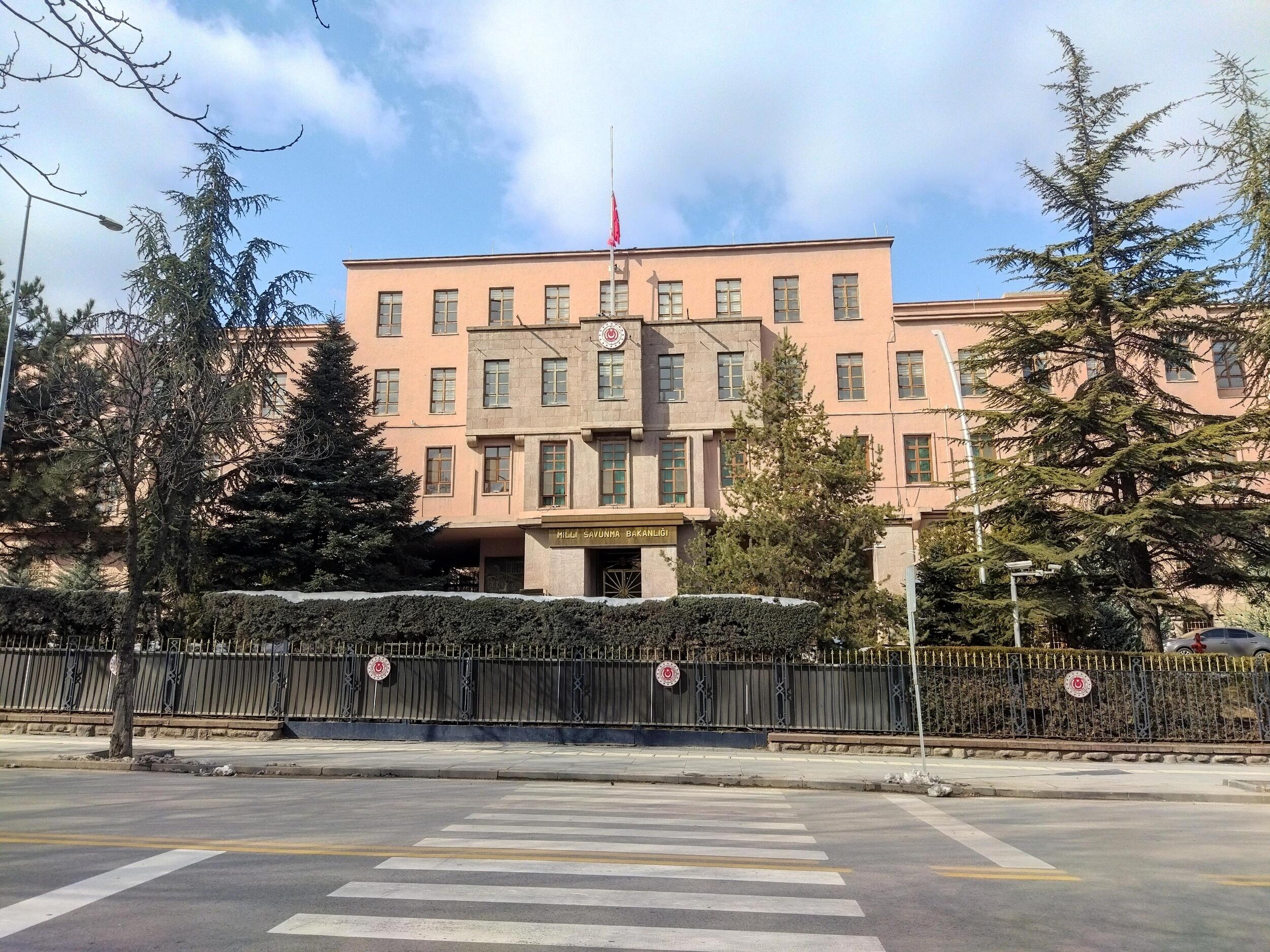
The Turkish Ministry of National Defense building in Ankara. Turkey criticized the Cyprus-France defense agreement, warning it could affect the balance in the Eastern Mediterranean. Credit: Wikimedia Commons / Modern Primat / CC BY SA 4
Turkey’s Ministry of National Defense has condemned a new defense agreement between Cyprus and France, warning that it could destabilize the Eastern Mediterranean and threaten regional security.
The move came after Cyprus and France signed a Status of Forces Agreement (SOFA), which strengthens defense cooperation between the two countries and allows for the conditional deployment of French military personnel and assets on the island nation.
Following a ministry press briefing, Rear Admiral Zeki Aktürk, Press and Public Relations Advisor and Spokesperson for Turkey’s Ministry of National Defense, said Ankara was closely monitoring what it described as a provocative move that could escalate tensions in the Eastern Mediterranean.
Turkey objected to the agreement by arguing that France has no guarantor role in Cyprus. Ankara also claimed that the deal disregards the will and sovereign equal rights of Turkish Cypriots and seeks to unilaterally alter the delicate balance on the island.
Cyprus and France agreement challenges balance, Turkey claims
According to the Turkish Ministry of National Defense, the agreement signed between France and the Republic of Cyprus is contrary to the 1960 Cyprus Agreements and international law.
Aktürk warned that actions of this kind, which, according to Turkey, lack legitimacy and have not been carefully reviewed, could have dangerous consequences for the southern part of the island. Furthermore, any military alliance in the region that disregards the balance in Cyprus and targets the rights and interests of Turkey and the Turkish Cypriots would not succeed against Turkey, he proclaimed.
“As a guarantor country, we will continue to protect the rights and interests and ensure the security of the Turkish Republic of Northern Cyprus, as we have done in the past and as we do today,” Aktürk maintained. He added that the Turkish Armed Forces have both the power and will to respond to the appropriate degree and in the most efficient way possible to any hostile stance which Ankara believes could pose a threat to the security of Turkish Cypriots.
Millî Savunma Bakanlığı Haftalık Basın Bilgilendirme Toplantısı, Denizkurdu-II Tatbikatı’nın Seçkin Gözlemci Günü dolayısıyla Akdeniz açıklarındaki TCG Anadolu’da gerçekleştirildi.
Millî Savunma Bakanlığı Basın ve Halkla İlişkiler Müşaviri ve Bakanlık Sözcüsü Tuğamiral Zeki… pic.twitter.com/whGFkfYCLD
— T.C. Millî Savunma Bakanlığı (@tcsavunma) June 11, 2026
Cyprus and France sign SOFA in Nicosia
The agreement was signed in Nicosia on Monday by Cypriot Defense Minister Vasilis Palmas and French Defense Minister Catherine Vautrin, who met on the sidelines of the informal meeting of European Union defense ministers, hosted by Cyprus. The SOFA had been discussed during French President Emmanuel Macron’s visit to Nicosia on April 23 and was later negotiated between the two governments.
It provides a legal framework for the presence of French military forces in Cyprus and also allows French military assets to be deployed in the southern part of the island under specific conditions, particularly in support of activities in the Eastern Mediterranean and Middle East.
Cypriot President Nikos Christodoulides announced that the agreement has entered into force, reportedly granting France access to military bases and infrastructure in Cyprus.
The deal is also said to include provisions for the sharing of military technology, the conduct of joint exercises, and the establishment of a strategic dialogue framework between Cyprus and France.
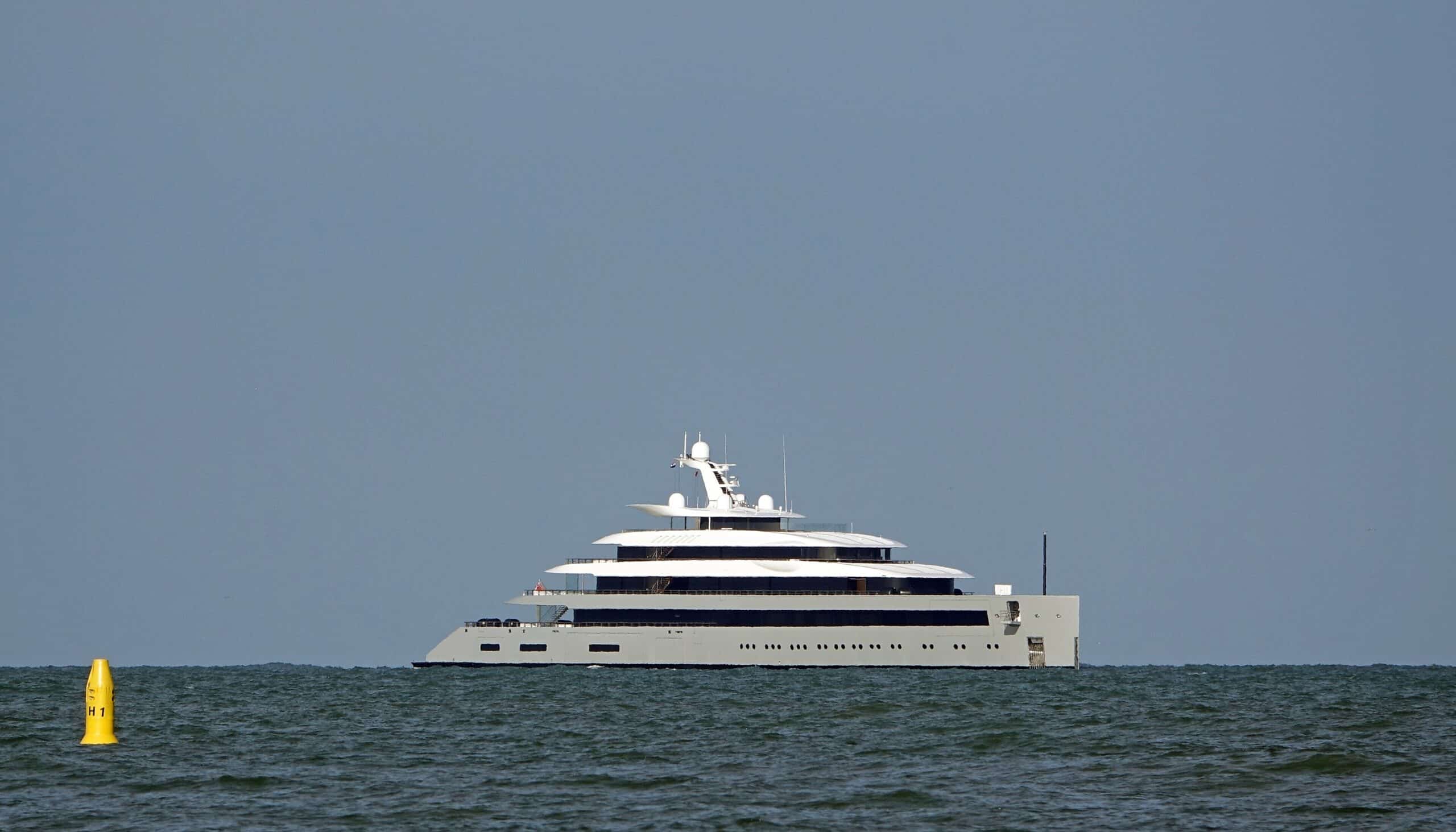
The 100-meter Moonrise superyacht, built by Feadship and linked to WhatsApp co-founder Jan Koum. Credit: Kees Torn / Wikimedia Commons / CC BY-SA 2.0.
WhatsApp founder Jan Koum’s superyacht, Moonrise, has been spotted off Mykonos, drawing attention to the waters around one of Greece’s busiest summer destinations.
The nearly 100-meter (328-ft) vessel belongs to Koum, the Ukrainian-born American billionaire who co-founded WhatsApp. Its presence off Mykonos adds to the island’s long record of attracting large private yachts during the summer season.
Feadship delivered Moonrise superyacht in 2020
Moonrise was built by the Dutch shipyard Feadship and delivered in 2020. The yacht is among the largest vessels produced by the shipbuilder.
At the time of its launch, Feadship said Moonrise was the largest superyacht ever built in the Netherlands by waterline length. The vessel has a gray hull, long horizontal windows, a vertical bow, and a multi-deck exterior design.
WhatsApp founder Jan Koum and the Moonrise superyacht
Koum became one of the most renowned technology entrepreneurs after co-founding WhatsApp. Facebook, now Meta, acquired the messaging app in 2014 in a deal valued at about $19 billion to $22 billion, depending on the calculation.
Koum, now 50, remains among the wealthiest figures in the technology sector, with his fortune estimated at roughly $17 billion. Earlier yacht market estimates placed the value of Moonrise at around $220 million. More recently, Burgess listed the yacht for sale at €325 million ($380 million).
Inside the WhatsApp founder’s superyacht seen off Mykonos
Moonrise can accommodate up to sixteen guests in eight cabins, while thirty-two crew members handle operations and service on board. The yacht includes a private owner’s deck, movie theater, gym, massage area, hair salon, sundeck, and outdoor guest areas. It also features a beach club, a swimming platform, tenders, water sports equipment, and a helipad.
Feadship designed the superyacht with a focus on reducing noise and vibration. Its engineers worked on the propeller, stabilizers, and anchoring system to limit sound and movement while the yacht operates or remains anchored.
Two MTU engines power the vessel. Moonrise reaches a top speed of 18.5 knots, while specialist yacht listings place its cruising speed at around 16 knots. Moonrise received international recognition in 2021, when it won at the BOAT International World Superyacht Awards in the category Displacement Motor Yachts 3,000GT and Above.
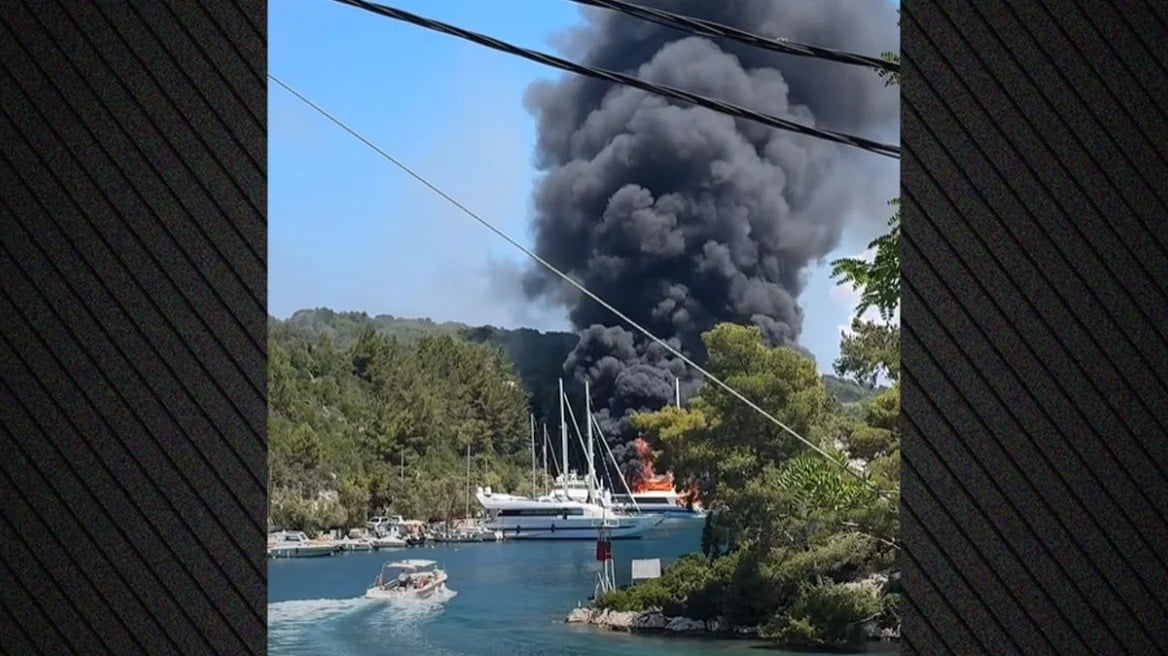
Tourist boats aflame. Video screenshot, Valentina Madonia/Facebook
Thick black smoke is billowing over the port of Paxos after a fire completely engulfed a tourist vessel before spreading to a second boat docked nearby. Fortunately, all passengers had disembarked before the outbreak. The cause of the fire remains unknown.
The incident began around 1:00 PM on Thursday at the New Passenger Terminal in Gaios, Paxos.
According to local reports from kerkyrasimera.gr and corfutvnews, the blaze began on a day-boat that operates tourist cruises, quickly spreading out of control due to unknown causes. Fueled by flammable materials onboard, the flames rapidly jumped to a neighboring vessel.
Reports indicate that the passengers, who had just completed a popular daily excursion from Parga to Paxos, had safely stepped off the vessel just moments before the fire broke out.
The Hellenic Coast Guard confirmed that the fire involved two commercial tourist vessels and that no passengers were onboard at the time of the incident. Fire service vehicles, an ambulance and a tugboat have been deployed at the port.
The Parga-Paxos route is one of the single most popular day-trip cruises in the entire Ionian Sea. During the summer season, it is a massive staple of the local tourism economy, drawing thousands of international and domestic visitors every week.
Cape Tainaro (also known as Cape Matapan) is the southernmost point of mainland Greece and the Balkan Peninsula, located at the tip of the Mani Peninsula. It’s a place of rugged beauty, characterized by dramatic cliffs, a wild landscape, and the convergence of the Messenian and Laconian Gulfs.
Tainaro has been important for thousands of years, serving as a maritime crossroads and a place of worship. Today, a lighthouse stands at its very tip, and scattered ruins of ancient settlements and temples can still be found there.
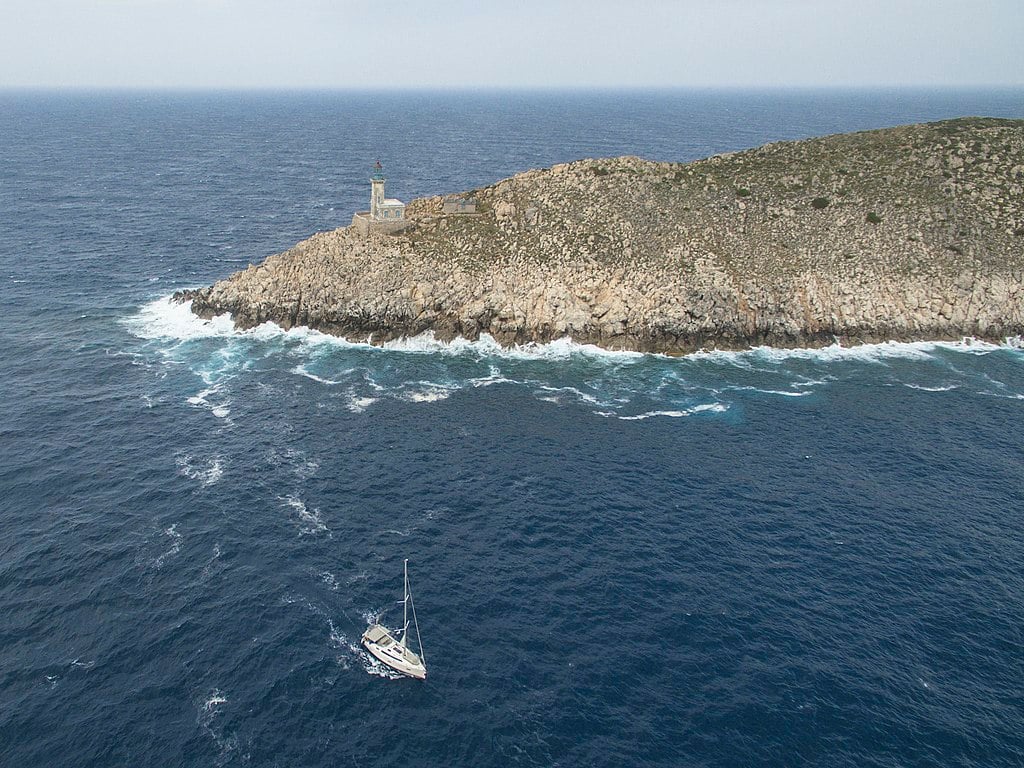
The southernmost point of the Balkan Peninsula. Credit: Nicolas Hadjidimitriou, CC BY-SA 4.0 / Wikipedia
The lighthouse that stands guard in Tainaro is considered one of the most imposing in all of Greece. It is a construction of French technicians, built of stone on a plateau on the natural rocks of the cape, with a height of about 52 feet (16 meters). It began operating in 1887 and was renovated in 1930.
In 1984, an automatic lighting machine was installed there, and the lighthouse was abandoned by its last guardians. The building was restored in 2008 and has since been guarded by Navy personnel. Every third Sunday in August, public access is free as part of World Lighthouse Day.
Ancient Greeks believed that a cave at the cape’s edge, often referred to as the “Gates of Hades” or “mouth of Taenarum,” was a direct entrance to the Underworld, the realm of the dead, ruled by the god Hades. This mythical entrance was said to be guarded by Cerberus, the monstrous three-headed hound with a serpent’s tail who prevented the dead from escaping and the living from entering.
One of the most famous myths connected to Tainaro is that of Heracles (Hercules). As his twelfth labor, he descended into the Underworld through this cave to capture and bring Cerberus to Eurystheus. The legendary musician Orpheus also used this passage to descend into Hades in his attempt to bring his beloved wife, Eurydice, back to the world of the living.
By some accounts, the sculpted canal on the east side of Porto Sternes was the path taken by the souls of the dead, ferried by Charon, the grim boatman of the Underworld.
Cape Tainaro was home to a sanctuary dedicated to Poseidon, the god of the sea. Poseidon was worshiped under various epithets, including “Poseidon Tainarios,” as the god who controlled both the seas and earthquakes.
The temple served as a place of inviolable asylum, offering refuge to criminals and even escaped slaves. A story was recounted by Thucydides about the Spartans violating this asylum by killing helots (agrarian slaves) who had taken refuge there, an act believed to have brought divine retribution in the form of an earthquake.
The site also functioned as a “necromanteion,” or Oracle of the Dead, where Ancient Greeks would perform rituals to communicate with the spirits of their deceased ancestors, seeking guidance or prophecy.
A celebrated bronze statue of the poet and singer Arion, seated on a dolphin, was a prominent dedicatory offering at the temple of Poseidon. It honors the myth of Arion, who was rescued by a dolphin after being cast into the sea by pirates and brought safely to Cape Tainaron.
In medieval times, Tainaro became a notorious pirate base—with merchant ships carefully avoiding it—and during World War II, the Battle of Tainaro (March 1941) was fought off the coast between the British and Italian fleets.
Getting to Tainaro
The only way to get to Tainaro is by hiking along a path that many consider to be the most interesting of the “inner” Mani. It is accessible to all with no significant altitude differences and has a total length of about 1.4 miles. Starting from the village of Kokkinogia, it’ll probably take around fifty minutes to get to the lighthouse.
You will find the village of Kokkinogia at the end of the Areopolis-Tainaro road. The marked dirt path begins at the church of Agioi Asomatoi and passes by the beach of Aria, where you can see a Roman mosaic. The surrounding landscape is typical of Mani: thorn bushes, thyme, low vegetation, flint stones, and no shade—so be sure to wear a hat, apply sunscreen, and bring plenty of water. The views along the way to Tainaro will make it all worthwhile.
Most schools in Greece close mid-June for their summer break . Credit A.P. / Greek Reporter
Schools are about to close for summer in Greece! But did you know that if you’re a child who goes to school in Greece, you’re likely enjoying a much longer break than your peers in other parts of Europe?
Schoolchildren in Greece have some of the most generous summer breaks on the continent. These summer breaks typically stretch from mid-June (normally around the 15th of June in elementary schools) to the 11th of September, for a leisurely 12 to 14 weeks of fun in the sun.
So why do Greek children and teenagers get such an extended break compared to their neighbors in central and northern Europe? Well, it turns out there are a few key reasons for this.
The long summer breaks of Greece
Historically, the long summer break period in Greece was meant to allow children to help out with agricultural work during the busiest farming months. These traditions go back in time hundreds of years. We should never forget that, particularly in the past, the majority of Greek families were involved in farming and food production. Thus, it made sense for them to give children a break to pitch in during the peak season out in the fields.
Another main reason for the extended summer breaks is Greece’s sweltering summer climate. With temperatures soaring into the 40s Celsius in June, July, and August, it’s simply too hot to expect children (or teachers!) to concentrate and focus on their learning in stuffy classrooms under the extreme heat of the Greek summers. An extended break during the dog days of summer is a practical necessity for them all and is not only a Greek tradition.
On top of this all, we also have the Greek Orthodox calendar which plays a role. With many important religious holidays peppered throughout the year, a longer summer break helps balance out the school schedule for teachers to ensure that all students still get a proper all-rounded education.
Summer school breaks across the EU. Credit: Eurydice EU
The rest of Europe
But how does the Greek summer break compare to that of other European countries? On average, most European students enjoy a slightly shorter 10 to 12-week holiday. However, there’s significant variation between not only individual countries but also regions within the same country.
Southern European countries such as Italy, Spain, and Portugal follow very similar patterns to that of Greece. These Mediterranean and southern European nations embrace a long summer with breaks often exceeding 12 weeks. It must be all that sunshine, anyway!
Meanwhile, Scandinavian countries, Germany, the UK, and Ireland keep things much more studious with a modest average of a 6-week summer break. Ex-Soviet countries of Eastern Europe, such as Poland and Romania, fall somewhere in the middle with 8 to 10 weeks of summer fun for our little friends.
Interestingly, the UK and Ireland—two countries notoriously known for their less than balmy summers—also have relatively short six to seven-week breaks. Perhaps the British dedication to academics trumps the desire for a prolonged escape from the classroom, one might say. Others would argue that since the weather in this part of Europe is so often miserable and grey, there is not great motivation to get out of the classroom anyway!
On a more serious note, however, there are experts who argue that longer summer breaks can lead to “learning loss.” This could be particularly true in cases in which students forget key academic skills and knowledge during these extended breaks as a result of their losing contact with their schools. Countries with shorter summers tend to spread out breaks more evenly throughout the year. This may support more efficient and continuous learning. In England, for example, children normally get six weeks of summer break, three weeks of half-term breaks (one week at a time), two weeks for Christmas, and two more weeks for Easter.
However, research shows that the quality of instruction and total teaching hours matter more than the exact length of the summer holiday and the period that this is offered. Hence, while Greek students may indeed spend more days on the beach, as long as they put in the work during the school year in its entirety, they’ll still come out ahead.
At the end of the day, there is no one-size-fits-all approach to the education of our children, especially when it comes to structuring the school year. Nonetheless, students in Greece and other southern European countries have a long tradition of enjoying a long summer break, as it is a beloved and cherished tradition that’s here to stay. It is, after all, a tradition embedded within the cultures of these nations. Really, who can even argue against more time soaking up the Mediterranean sun?
Thus, as the final bells rang and Greek children left school for their three-month adventure, they felt lucky to live in a country that prioritizes a healthy balance of work and play. School may be out, but the learning never stops—whether it’s through travel, spending time with family and friends, or simply relaxing and recharging one’s batteries. Lastly, when September rolls around, kids will be ready to once again walk the school hallways they left behind this June.
A few of the country’s most popular, breathtaking tourist destinations can instantly transform from an idyllic paradise into a severe survival hazardMyrtos Beach in Kefalonia. Public Domain
Greece is world-renowned for its beaches and postcard-perfect coastlines, but beneath those beautiful, turquoise waters lies danger. When heavy weather conditions strike, a select few of the country’s most popular, breathtaking tourist destinations can instantly transform from an idyllic paradise into a severe survival hazard.
“Lalaria” refers to the smooth white pebbles sculpted over millennia by the Aegean waves. Lalaria is a beach of indescribable beauty on Skiathos, famous for its turquoise waters, blindingly white shoreline, and the majestic stone arch of Tripia Petra rooted in the seabed.
However, Lalaria conceals hidden dangers. The coast is accessible strictly by sea. More importantly, when strong northerly winds blow, waves can reach several meters high, generating a violent, dangerous undertow (antimamalo or clapotis wave reflection) that poses a severe threat to both swimmers and small boats.
2. Matala – Southern Crete
When the scorching Livas (the hot southwesterly wind) sweeps through southern Crete, the shoreline of Matala—the iconic former haven of the 1960s “flower children”—turns stark white with crashing foam. Swings in the weather make swimming completely prohibitive.
The sea routinely breaches the shoreline, rushing past the sunbeds. Lifeguards blow their whistles continuously to signal extreme danger to anyone daring to dive. While reckless thrill-seekers often grab inflatable mattresses to play sea adventurers, the physical terrain is ruthless. The coast features an incredibly abrupt drop-off into deep water. Combined with massive waves, the undercurrent will pull anyone but an Olympic swimmer out into the open sea—where you would be lucky to finally wash ashore in Libya. Local lifeguards continuously flag this beach as hazardous, a risk that similarly applies to the nearby beach of Agios Pavlos in Rethymno.
3. Nas – Ikaria
Located in northern Ikaria, Nas is arguably the single most dangerous beach in Greece. It is the only beach in the country fitted with a permanent safety rope anchored into the rocks. This rope exists so brave swimmers can cling to it to avoid being violently swept out into the open sea or smashed against the jagged cliffs by aggressive rip currents. Nas remains highly popular among nudists and free campers. Access involves leaving your vehicle on the main Agios Kirykos–Armenistis road, hiking down a steep cliffside path of stone steps to a riverbed, and traversing the final stretch through the water or over the rocks.
4. Chorefto – Pelion
Chorefto beach in Pelion is world-famous and heavily visited, but it requires extreme caution. As one visitor noted on social media: “It is a gorgeous, sprawling beach, but as you approach the shoreline, the sand turns into jagged stones. When the wind picks up, swimming is virtually impossible. The heavy currents and crashing waves literally ‘dig up’ the seabed, causing the shoreline to drop off precipitously right in front of you.” Chorefto is a beach where, the moment a northern gale strikes, you need to run. The sheer force of the waves and currents will make you “dance” (Chorefto literally translating to dancer) to the frantic rhythm of the wind.
5. Myrtos – Kefalonia
While internationally celebrated as one of the most beautiful beaches in the world, Myrtos is equally famous among marine experts for its deceptive treachery. Tucked between the feet of two mountains, the beach faces the open Ionian Sea, making it a magnet for fierce winds.
The shoreline features an immediate, precipitous drop-off just a few steps into the water. Because of this unique underwater topography, strong winds create massive, violent waves and a punishing undercurrent. Swimmers who get knocked off their feet by the crashing shoreline waves are frequently dragged into deep water, making it incredibly difficult to swim back to the pebbled shore.
6. Platia Ammos – Kefalonia
While Myrtos beach typically dominates international travel sites as one of Europe’s finest, Kefalonia hides another beach that rivals its beauty but demands expert hiking skills. Platia Ammos is tucked deep within a bay past the Kipouria Monastery, surrounded by sheer, imposing cliffs.
While its deep blue waters are pristine, accessing them used to require climbing down (and back up) over 400 stone steps under a relentless sun. However, severe weather in 2014 collapsed a large portion of the staircase, raising the difficulty level to an extreme “Rambo” mission. If the sea turns rough here, you will find yourself scrambling desperately up the rock face like a mountain goat, wishing you had stayed on a safer beach.
7. Kalami – Kythira
The trek from the village of Mylopotamos to the remote beach of Kalami involves navigating slippery, steep, and highly dangerous cliffs. In several spots, reaching the next foothold requires a literal leap into the void over a drop-off. While the final destination is a stunning reward, the journey is a small Odyssey. Anyone without proper hiking gear, physical conditioning, or nerves of steel is highly advised to stay safely beneath the plane trees by the nearby Fonissa (Killer) Waterfall and leave the photos to the professionals.
8. Paradise Beach – Kos
Located on the southern coast of Kos, this beach looks like a calm, shallow haven perfect for families. However, its danger doesn’t come from towering waves or steep cliffs, but rather from a unique volcanic phenomenon occurring beneath the seabed.
Due to the active volcanic network tied to the nearby island of Nisyros, Paradise Beach emits cold volcanic gases from the seafloor, earning it the nickname “Bubble Beach.” While tourists enjoy swimming through the natural bubbles, these underwater thermal currents can cause sudden, extreme temperature drops in the water. Furthermore, the localized release of volcanic gases can occasionally cause dizziness or sudden fatigue for swimmers who linger too long over the vent areas.
9. Anthony Quinn Bay – Rhodes
Named after the famous Hollywood actor who fell in love with the spot while filming The Guns of Navarone, this emerald-water bay is an aesthetic masterpiece. However, its natural geology requires extreme physical caution.
The entire bay—both on the shore and underwater—is a minefield of sharp, jagged rocks and slick, algae-covered reefs. The main hazard here is orthopedic and physical injury; every year, numerous tourists suffer severe cuts, slips, and fractures while attempting to climb over the rocks to enter the deep water. Additionally, the rocky crevices are a prime habitat for sea urchins, meaning a misplaced step can easily cut a vacation short.
10. Kolymbithres – Tinos
Famous for its otherworldly landscape, Kolymbithres features smooth, gray granite rock formations sculpted by centuries of wind and water, creating a series of tiny, sandy enclaves.
Positioned on the northern coast of Tinos—an island famous for its relentless Aegean winds—this beach bears the full brunt of the Meltemi (the fierce summer north winds). When the gales hit, the wind funnels through the granite rock formations with extreme velocity. This creates chaotic, swirling wave patterns and sudden, unpredictable cross-currents within the narrow rocky channels, easily trapping swimmers against the hard granite walls.
11. Kathisma – Lefkada
Kathisma is a sprawling, cosmopolitan paradise on the western coast of Lefkada, famous for its vibrant beach bars and water that looks almost artificially turquoise. However, its beauty masks a lethal combination of open-ocean geography and violent underwater mechanics.
Because Kathisma faces the completely open Ionian Sea with no natural bays or reefs to break the water’s momentum, it bears the full, unbridled force of western winds. When a storm or heavy wind hits, it generates towering, closely packed waves that smash violently into the shore. More importantly, the shifting tide creates a phenomenon known to locals as “sand-shaving.”
The heavy surf literally hollows out the seabed beneath your feet, causing the shoreline to drop off vertically into deep water just a step from the dry sand. This creates an incredibly powerful, vacuum-like undertow. Swimmers who get knocked off their feet by a wave are immediately sucked into deep water, making it nearly impossible to struggle back onto the slick, collapsing shoreline. Lifeguards here routinely change their flags to red, but many tourists fail to realize that even wading knee-deep in Kathisma’s rough surf can prove fatal.
12. Navagio Beach (Shipwreck Beach) – Zakynthos
Navagio is a global bucket-list destination, defined by the stark contrast of a rusted freighter marooned on a strip of white sand, surrounded by brilliant turquoise water and 200-meter-tall vertical cliffs. However, this paradise is so inherently hazardous that it is the only beach on this list that is completely closed to the public by ministerial decree.
Navagio is plagued by two lethal threats: severe seismic instability and unpredictable marine currents. Tucked beneath towering, sheer limestone walls, the beach is highly prone to sudden, massive rockfalls. Following a terrifying 2018 landslide that capsized tourist boats and a 2022 earthquake that brought tons of rock crashing onto the sand, geologists declared the beach a permanent hazard zone. Furthermore, because the bay faces the open sea, sudden, violent swells can trap boats against the cliffs or create chaotic cross-currents. Today, tourists are strictly prohibited from walking on the beach or swimming in the bay; you can only view this beautiful but perilous marvel from a safe distance aboard a boat or from a designated cliffside viewing platform high above.
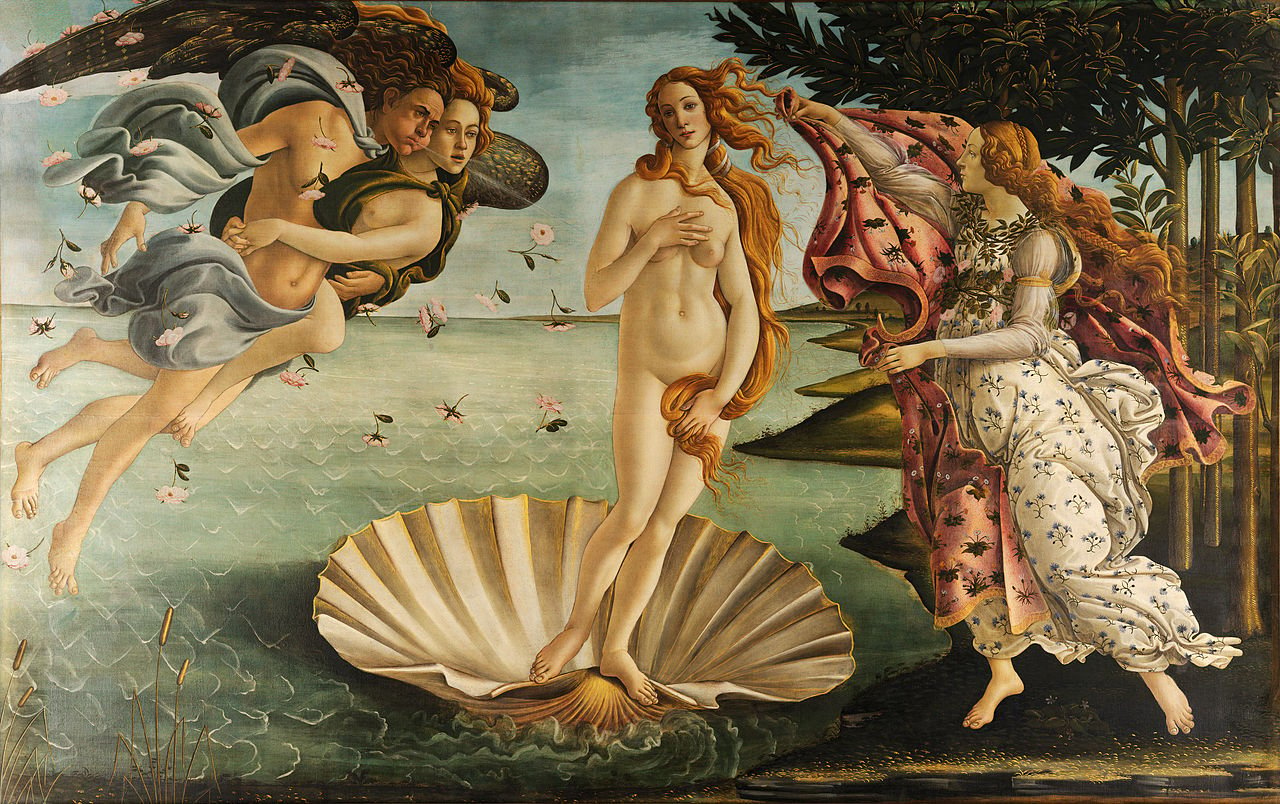
The Birth of Aphrodite-Venus, the goddess of beauty, sensuality and love. Credit: Wikipedia/Public domain
Ancient Greeks were big believers in aphrodisiacs and ancient love potions and used a variety of fruits, herbs, and other foods in their concoctions. The word “aphrodisiac” itself comes from the ancient Greek goddess of love, Aphrodite.
Those looking to harness the power of ancient Greek love potions don’t need to go on a quest to hunt down obscure ingredients. In fact, six of the most common Greek aphrodisiacs that have been used throughout the centuries can still be found today at your local supermarket.
Natural foods considered aphrodisiacs in Ancient Greece
1. Pomegranates
Pomegranate was considered one of the most common natural aphrodisiac foods in Ancient Greece. Credit: Joergens.mi/Wikimedia commons/CC BY-SA 3.0
Pomegranates have long been lauded for their nutritional properties, as they include many nutrients and antioxidants.
Even back in Ancient Greece, the pomegranate fruit was considered nutritious, and it was also believed, in both ancient times and today, that the juice contains aphrodisiac properties.
The link between pomegranates and sexuality may come from the fact that Aphrodite herself is credited with planting the first ever pomegranate tree in Greek mythology.
2. Truffles
Truffle hunting in Greece’s Meteora region. Credit: Meteora Museum
Dating as far back as the 1st century AD, this fungus found its way into the limelight as an aphrodisiac.
It is believed that truffles came into existence as a result of the combined action of water, heat, and the power of the god Zeus himself, as Zeus hurled a thunderbolt to Earth which landed close to an oak tree, producing the truffle.
The ancient Greek physician Galen claimed that the truffle, apart from imparting delicious flavor to any dish, can increase sexual prowess.
3. Figs
Figs and plums. Credit: E. Abadjieva/Wikimedia Commons/CC BY-SA 4.0
Figs belong to the category of the most nutritious fruits while at the same time they have at least nine recognized medicinal qualities. Along with grapes, figs were known to be one of the favorite fruit of Ancient Greeks.
Figs are rich in vitamins A, B1, and B2 and minerals such as calcium, iron, phosphorus, magnesium, sodium, and potassium among others. They are recognized as being good for our health for their many proven medicinal qualities.
The ancient Greeks linked figs to sexuality, possibly because the shape of the fruit resembles the shape of female genitalia.
4. Leeks
Similarly, leeks were probably considered an aphrodisiac in Ancient Greece because of their phallic shape.
In ancient Greece, leeks were eaten raw and whole or cooked. They provide tons of flavor to any meal.
Nowadays, people still believe that leeks are an aphrodisiac, as they are in the same family as onions and garlic, which have similar properties.
5. Garlic
At some point in time, people stopped believing that garlic was toxic and started consuming it to prevent illness and congestion, and of course, just because it is delicious.
In ancient Greece, people ate garlic nearly everyday. People began to believe that the spiciness of raw garlic made it a natural aphrodisiac.
Try making the Greek dish skordalia, and you’ll be sure to eat a considerable amount of garlic. It is a mixture of garlic and purée of potatoes, walnuts, almonds, or milk-soaked stale bread.
6. Legumes
Dried red lentils. Credit: Mytinytank/Wikimedia Commons/CC BY-SA 3.0
Hippocrates, the father of medicine, prescribed legumes, such as lentils, as an essential part of the menu for men hoping to maintain their virility.
Hippocrates advised a variety of legumes to be consumed by the bowlful to those struggling with sexual dysfunction.
Lastly, the Greek philosopher Aristotle was a believer in the notion that lentils with the addition of saffron were essential in maintaining a man’s libido active and in top shape.
The Cannes Film Market (Marché du Film) has officially named Greece as its 2027 Country of Honour for the landmark 80th edition of the Cannes Film Festival. This prestigious spotlight celebrates the country’s rapid ascent into a premier global audiovisual hub.
Operating under the banner “Ride the Greek Wave,” the initiative will highlight the convergence of Greek creativity, a booming production sector, and its growing role in international storytelling.
“With the remarkable momentum of its film and audiovisual industry today, Greece embodies the spirit of creativity, openness, and international collaboration that the Marché du Film seeks to celebrate through its Country of Honour initiative,” said Guillaume Esmiol, Executive Director of the Marché du Film.
This major milestone follows a massive influx of high-profile international projects utilizing Greece’s scenic versatility and its highly competitive 40% cash rebate incentive.
Cannes celebrates Greece as a film and TV production hub
Major recent film and television productions that have set up camp across Greece’s islands and mainland include:
Emily in Paris (Netflix): For its highly anticipated new season, the ultra-popular streaming franchise has expanded Emily Cooper’s horizons to Greece. Production crews completely took over Mykonos, filming major scenes featuring Lily Collins and co-star Lucas Bravo at the pristine Agios Sostis Beach, as well as the island’s iconic windmills and the narrow alleys of Little Venice.
The Riders: Hollywood star Brad Pitt spent weeks touring Greece to film this high-stakes psychological drama directed by Oscar-winner Edward Berger (All Quiet on the Western Front). The production spanned diverse settings across the country, from a dramatic artificial storm sequence shot inside a historic studio in Menidi to location shoots on the car-free island of Hydra, the historic railway station of Chalkida, and right in front of Athens Town Hall in Kotzia Square.
The Odyssey (Universal Pictures): Christopher Nolan’s highly anticipated, ancient-set cinematic epic based on Homer’s poem, which utilized locations across the Mediterranean, including Greece.
The Return: A gritty, atmospheric retelling of Odysseus’s homecoming starring Ralph Fiennes and Juliette Binoche, filmed extensively amidst the ancient olive groves and rugged cliffs of Corfu.
House of David (Amazon MGM Studios): A sprawling biblical drama series that transformed the landscapes of Attica and the Peloponnese into ancient Israel.
Malice (Prime Video): A psychological thriller series starring David Duchovny and Carice van Houten, which filmed across Athens, Piraeus, and the sun-bleached Cycladic islands of Paros and Antiparos.
Maestro in Blue (Netflix): The critically acclaimed, internationally distributed Greek drama series produced by Christoforos Papakaliatis, which wrapped up its sweeping story against the stunning backdrop of Paxos and Corfu.
Greece’s audiovisual sector
Leonidas Christopoulos, CEO of Greece’s film and media agency EKKOMED, noted that the Cannes distinction is a massive victory for the local industry: “This distinction is both a significant recognition and a unique opportunity to showcase Greece’s vibrant creative ecosystem on the international stage. Today, Greece is a place where cinematic heritage meets contemporary talent, innovation, and international collaboration.”
EKKOMED says that Greece’s audiovisual sector contributes €1.9 billion ($2.18 billion) to the national economy, supports approximately 44,000 jobs, and includes nearly 3,000 companies active across production, post-production, animation, and related creative services.
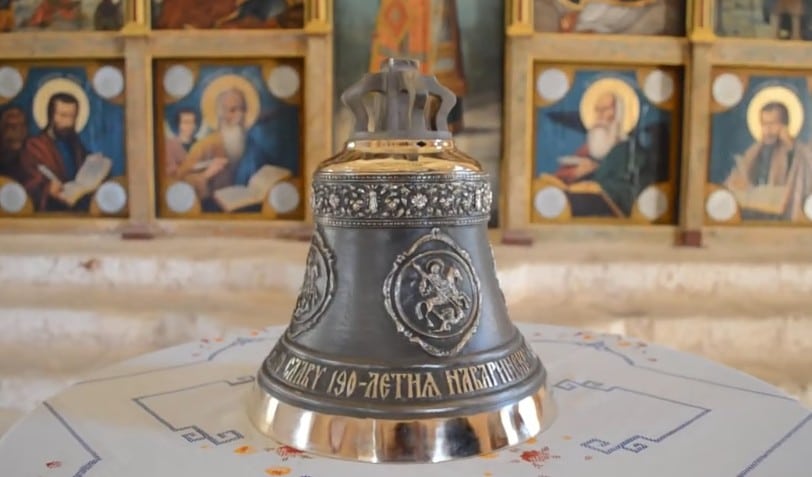
Originally delivered to Greece on October 19, 2017, the bell was celebrated as a “bridge of memory,” honoring the historic ties between the Greek and Russian peoples. Credit: Public Domain
Authorities in Messenia, Greece are investigating the mysterious disappearance of the historic Battle of Navarino commemorative bell from the Church of the Transfiguration of the Savior, located in the Niokastro fortress in Pylos.
Weighing 12 kilograms (approx. 26 lbs), the bell holds profound historical and symbolic value. It was gifted to the church by Russian Philhellenes and transported to Greece aboard the Russian warship Azov to mark the 190th anniversary of the Battle of Navarino, a pivotal naval engagement of the Greek War of Independence.
According to state broadcaster ERT, photographic evidence confirms the bell was securely in place as recently as May 29, 2026. However, tourists visiting the castle on the morning of Saturday, June 6, noticed it was missing.
It remains unclear whether the artifact was stolen or removed for unannounced maintenance. Local police and cultural heritage authorities are investigating all possibilities to locate the missing relic.
Bell honored historic ties between Greece and Russia after Battle of Navarino
Originally delivered to Greece on October 19, 2017, the bell was celebrated as a “bridge of memory,” honoring the historic ties between the Greek and Russian peoples. Its sudden disappearance has sparked deep concern within the Pylos community, where it is revered not just as a religious object but as a tangible link to Greece’s journey toward independence.
Fought on October 20, 1827 in Navarino Bay (modern-day Pylos), the Battle of Navarino was a monumental naval clash that effectively secured Greece’s independence from the Ottoman Empire. It marked the last major sea battle in history fought entirely with sailing ships, pitting a powerful allied fleet of British, French, and Russian warships against the combined forces of the Ottoman Empire and Egypt.
Despite being outnumbered, the Allies possessed vastly superior firepower and tactical positioning, completely decimating the Ottoman fleet in a matter of hours. This decisive intervention by Europe’s great powers turned the tide of the struggling Greek War of Independence, forcing the Ottomans to eventually withdraw and pave the way for the establishment of the modern, independent Greek state.
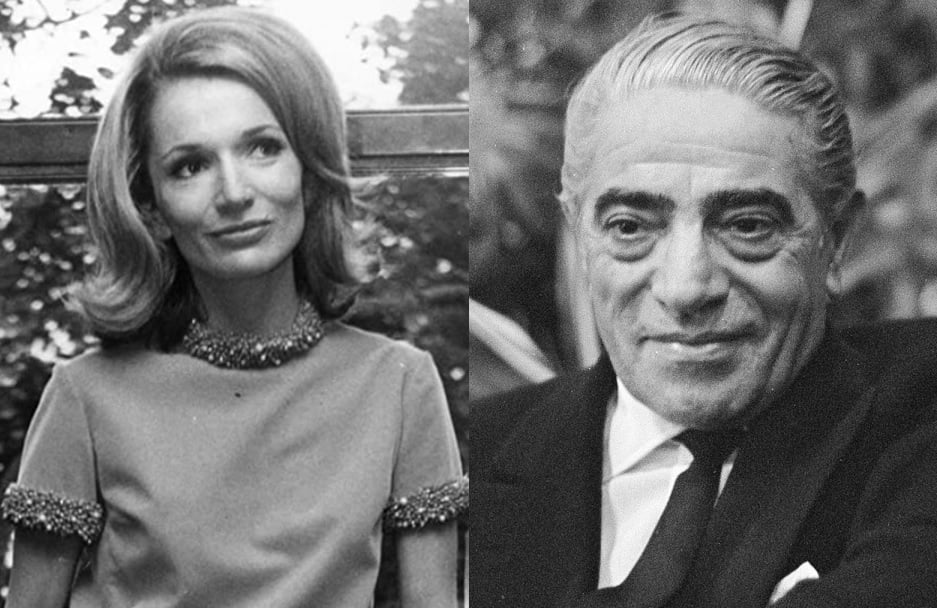
Lee Radziwill and Aristotle Onassis. Credit: Wikipedia. Illustration: Greek Reporter
Long before Aristotle Onassis became the husband of America’s most famous First Lady, he was the center of a bitter, private tug-of-war between two sisters. The billionaire’s overlapping relationships with Jackie Kennedy and Lee Radziwill didn’t just make headlines—they ignited a lifelong sibling rivalry fueled by power, betrayal, and the constant struggle to outshine one another.
Caroline Lee Bouvier was the younger sister of Jacqueline Bouvier, who in 1961 became the first lady of the United States, as Mrs. John Kennedy.
The two sisters — daughters of a Wall Street stockbroker father and a socialite mother — were raised to look beautiful, have impeccable manners and to marry rich, prestigious men.
Jacqueline married John F. Kennedy in 1953, at age 24. Her sister Lee married the Polish nobleman Stanisław Albrecht Radziwiłł, of the princely House of Radziwill, in 1959.
After the assassination of President Kennedy in November 1963, the widow went on to marry Greek shipping tycoon Aristotle Onassis five years later, in 1968, after that becoming known popularly as Jackie O.
Books have been written about the rivalry between the two sisters — with chapters dedicated to an implied relationship between Lee and Onassis.
The Kennedy sisters’ rivalry and Onassis
The two girls adored their father, John Vernou Bouvier III, who was a stockbroker and ladies’ man who resembled Clark Gable. Bouvier always advised his daughters to “be the best.”
Lee and Jackie struggled to be their father’s very best daughter. Lee loved her older sister, but she found it hard to follow Jackie’s many accomplishments in school and in horse riding.
After Jackie married Kennedy and later became First Lady of the United States, she was regarded as one of the most beautiful and stylish women in the entire world.
Her younger sister was equally stylish and beautiful, yet to the world, she was just Jackie’s sister; needless to say, she was obscured by her sister’s shadow.
So she divorced her first husband and became Princess Lee Radziwill.
Princess Radziwill and Aristotle Onassis
When Princess Radziwill started an affair with Aristotle Onassis, the Greek tycoon was still involved with opera diva Maria Callas; Lee’s husband was indifferent and Jackie was still in the White House.
On August 22, 1963, Radziwill and Aristotle Onassis attended the opening of the Athens Hilton in Greece, invited by Nicky Hilton. Their appearance together at the luminous event generated the expected gossip.
Some speculated that Onassis wanted to be near Lee for her connection to the White House. John and his brother Robert Kennedy both disliked Onassis, who had been sued by the U.S. government in 1955 for removing from the U.S. a fleet of ships he had bought and promised to keep in the country.
In order to keep Lee away from Onassis, they asked her to accompany John on a presidential European tour to Great Britain, Italy, Germany, and Ireland because Jackie was seven months pregnant at the time.
When John Kennedy made his famous “Ich bin ein Berliner” speech in Berlin, he had his sister-in-law, not Jackie, at his side.
Despite that, however, Princess Radziwill returned to Greece and resumed her relationship with Onassis. When in late August of 1963 Jackie gave birth to Patrick, the newborn died 39 hours after being born.
Lee flew to Boston to attend her nephew’s funeral and to comfort her grieving sister. Concerned about Jackie, she urged Onassis to invite her aboard his legendary yacht, Christina.
Despite objections from the Kennedy family, Jackie went on a vacation on the yacht for four weeks, accompanied by her sister. The two sisters were left alone by Onassis for most of the time, resting and exchanging confidences.
When President Kennedy was assassinated in November of that year, Onassis stayed at the White House some days after, at Lee’s request, despite the Kennedy brothers’ distrust of him.
Onassis and the Kennedy sisters
In 1964 the young widow bought an apartment at 1040 Fifth Avenue in New York City and Robert Kennedy persuaded Stanislaw Radziwill to buy his wife a duplex at 969 Fifth Avenue in order to be near Jackie and so that her children could spend more time with their cousins.
Princess Radziwill then became friends with Truman Capote, who admired her style, elegance and femininity. He urged her to become a stage actress, and she embraced this new direction in her life with fervor.
She starred in a couple of plays and had options for film roles, but the reviews were not impressive. Nevertheless, she received great publicity and was on the cover of TIME magazine.
It was speculated at the time that all that was an effort to become more popular than her sister. Yet it was Jackie, again, who continued to gaining more attention as the grieving widow who was carrying the torch of the Kennedy legacy.
At the same time, Jackie Kennedy was relying heavily on her brother-in-law, Robert F. Kennedy, urging him to run for president in the 1968 election.
However, when Robert was assassinated in June 1968 after he and a crowd of his supporters had been celebrating his victory in the California Democratic presidential primary, Jackie fell into depression once more.
Furthermore, she feared for her own life and her children’s, convinced that there were people who hated the Kennedys and wanted to exterminate the family, and saying that she wanted out of the United States.
Understandably, that came as a blow to her sister. After all, Lee had been the first of the two to have an affair and fall in love with the Greek mogul. She reportedly wept when she heard the news.
Onassis called and asked her sister to be at her wedding. Although she was personally devastated, Lee dutifully served as matron of honor in the wedding.
Sixteen years later, Jackie dealt a final blow to her sister. At age 64 she was diagnosed with cancer and Lee rushed to comfort her ill sibling.
But when Jackie died, Lee found out that her sister had left her out of her will and the substantial holdings and cash her inheritors received. Maybe this was somehow because of Onassis, maybe not.
In any event, although the will included $500,000 trust funds for each of Radziwill’s two children, Tina and Anthony, there was nothing for her — not even one family memento.

 Login
Login