Normal view

Thanks to Pete Hegseth, some U.S. service members lost full freedom of religion

There’s an old saying: There are no atheists in foxholes. Faith plays a large role in the lives of many service members (including, yes, uniformed atheists). The U.S. military has long provided religious support to service members who are naturally often far from home and their faith communities. Given that the First Amendment prohibits the government both from establishing a religion and from preventing its free exercise, the military’s formal provision of chaplains and religious services to those in uniform is understood to balance these competing constitutional demands.

Until now, that is. Secretary of Defense Pete Hegseth recently slashed the list of Pentagon-recognized religions and belief systems that service members can have reflected in their personnel records from more than 200 to just 31, with the majority of the remaining being Christian religions. Those who ascribe to one of the 180-plus now-deleted belief systems must instead list in their records either “no religion” or “other religion.” This change tilts military policy toward the unconstitutional establishment of religion and simultaneously limits its members’ free exercise of their chosen faith.

Religious resources aren’t merely a nice bonus for service members that the Pentagon chief can do away with just by snapping his fingers.

The list of recognized religions grew from 100 to more than 200 during the first Trump administration when the Pentagon’s  board of chaplains “recommended adding new faith and belief groups to standardize and better identify religious preferences recognized by the Military Services” in response to legislation mandating improved religious liberty protections. Despite such rationale, Hegseth says this larger list was “infected by political correctness and secular humanism” under previous administrations.

The defense secretary is now using the Pentagon’s previous rationale for expanding the list to drastically shrink it instead, stating that his purge is about “giving chaplains clear, usable information so they can minister to service members in a way that aligns with that service member’s faith background and religious practice.” Echoing the secretary, the Pentagon says this massive cancellation of faiths is simply an administrative exercise, one designed to allow chaplains “to quickly look at the religious composition of their units and determine how they structure resources to best provide for warfighters of all faith groups,” and to “provide the best data to support our chaplains in that effort.” Yet how does no data — indeed, deliberate ignorance of service members’ faiths, if they ascribe to one of the 180 now-cancelled religions — equate to better support?

Religious resources aren’t merely a nice bonus for service members that the Pentagon chief can do away with by snapping his fingers. Reasonable access to well-rounded military chaplains is a traditional component of military life, allowing soldiers, sailors, Marines and airmen to freely practice their religious beliefs even if deployed to foreign battlefields.

It’s impossible for the Pentagon to provide a specific “religious military professional” — the phrase military regulations use for chaplains — for every possible faith; service members don’t have a right to a chaplain of their particular belief system. But military chaplains are expected and required to support the spiritual needs of all service members, not just those who hold one of the faiths the Pentagon still recognizes.

Specifically, the Pentagon’s regulation governing military chaplains states that their primary mission is to “meet the religious requirements and care for the spiritual needs of Service members” (and others, including family members). This regulation is grounded in the First Amendment and explains that the position of military chaplain “directly and indirectly supports the free exercise of religion by all Service members.” Religious ministry professionals must be “able to personally meet the religious requirements of persons in their assigned military units, potentially in isolated or combat environments.”

The Pentagon is burying its head in the sand regarding the faiths of the U.S. fighting forces.

Yet how can military chaplains meet the religious needs of their units’ members when they won’t know what faiths are actually represented, outside of the recognized few? Among faiths no longer recognized by the Pentagon are the Unitarian Universalist religious movement (to which John Adams belonged), deism (to which Benjamin Franklin and Thomas Jefferson subscribed), atheism, the Dutch Reformed Church, paganism, the African Methodist Episcopal Church and the Native American Church. These faiths count millions of Americans among their members.

Since when is ignorance “the best data”? Resources can’t be adequately structured to support service members of all faiths when the Pentagon is burying its head in the sand regarding the faiths of the U.S. fighting forces. The lack of information does not equal “useful” information — except if the intended use is to stop supporting those service members’ minority faiths and practices.

While service members can reportedly still list their faith of choice on their dog tags, that doesn’t mean a chaplain can understand their spiritual needs while they’re still alive. As religious military professionals, chaplains can’t best support those they are being essentially ordered not to see. It’s also unclear how this policy cancellation will affect the qualifications of already serving chaplains; their eligibility depends on the endorsement of religiously affiliated organizations, and surely some of those organizations are tied to religions that have lost Pentagon recognition.

Couple Hegseth’s and the Pentagon’s nonsensical reasons for this new policy with the secretary’s penchant for proselytizing his Christian faith to service members, and it’s clear that this massive purge isn’t about streamlining data or structuring resources. It’s about the Trump administration’s desire to support only certain religions, and therefore only certain service members. This move hinders other service members’ free exercise of religion, at least compared with those whose beliefs are represented. And it takes a large step in the direction of unconstitutionally “establishing” (by discriminatorily supporting) the religions that remain recognized by the military.

The Pentagon’s new policy means that some military members are now sacrificing to ensure that their fellow Americans enjoy a freedom of religion they no longer fully possess. That is not just deeply ironic; it is morally and constitutionally repugnant. And it should be added to the ever-growing list of mistakes by this White House that a future president and Congress will need to rectify.

The post Thanks to Pete Hegseth, some U.S. service members lost full freedom of religion appeared first on MS NOW.

The more lawmakers go around Mike Johnson, the more obvious his weakness becomes

10 June 2026 at 21:22

For months, Rep. Gregory Meeks of New York, the top Democrat on the Foreign Affairs Committee, had championed legislation to send additional security aid to Ukraine as it defends itself against Russia’s invasion. The proposal, however, was stuck: House Republican leaders refused to consider it, and so the bill languished.

Last month, however, it became unstuck: Proponents of the legislation managed to go around the GOP leadership thanks to a discharge petition — a tactic that allows members to bring a bill to the floor if it’s formally endorsed by a majority of the House. As MS NOW reported last week, the Ukraine aid package cleared the House with 226 votes, including 18 Republicans.

This week, it happened again. NBC News reported:

The House tonight passed another Democrat-led bill that made its way to the floor after a group of Republicans bucked their party’s leadership and joined Democrats in forcing a vote.

The Faster Labor Contracts Act, which would force employers to start negotiating with a newly certified union within 10 days of receiving the request, passed with the support of 20 Republicans and all Democrats.

Critics will note that both this bill and the Ukraine aid still have to clear the Senate, where the measures’ fate remains uncertain, and they would still need Donald Trump’s signature to become law. It’s a fair point.

But let’s not miss the forest for the trees. Republican Rep. Brian Fitzpatrick of Pennsylvania said in an online written statement, “If the House Floor was managed properly, discharge petitions would never be needed. A successful discharge petition is clear and direct evidence of a poorly managed House Floor — because it demonstrates that the will of the majority of the People is being thwarted by the privileged few.”

Fitzpatrick didn’t mention House Speaker Mike Johnson by name, but given the context, he didn’t have to.

Indeed, it might not be immediately obvious just how embarrassing these latest developments are for the Louisiana Republican and his leadership team.

In the past century or so, successful discharge petitions have been very rare. The reason is simple: Such petitions have long been seen as a slap in the face of a sitting House speaker.

As New York magazine’s Ed Kilgore recently explained, “Indeed, prior to Johnson’s ascent to the Speakership, only two 21st-century discharge petitions achieved the 218 signatures needed to trigger a floor vote.”

This roughly once-per-decade average has undergone a dramatic revision under the Louisiana Republican’s tenure. In the last Congress, which ended in early January 2025, there were two successful discharge petitions, which was itself a significant total. Meanwhile, in the current Congress, which is far from over, there have been six successful discharge petitions, which The Hill accurately described as “extraordinary.”

The first came in March 2025, and it dealt with proxy voting for new parents serving in Congress. In November 2025, another discharge petition advanced the Epstein Files Transparency Act; five days later, a measure to repeal an executive order that gutted federal workers’ union rights also received 218 signatures.

The list grew longer as discharge petitions related to extending Affordable Care Act subsidies, providing temporary protected status for Haitian migrants and extending aid to Ukraine all crossed the necessary threshold.

Usually, members embarrass Johnson by ignoring his wishes and voting against legislation he has urged them to support. But this flurry of successful discharge petitions, which has no modern precedent, makes the House speaker appear even more diminished.

Kilgore’s recent piece added, “Signs of weakness invite further revolts by House members who fear voters more than this mild-mannered former backbencher from Louisiana, whose authority is totally dependent on Trump’s backing, which can be erratic during times when the president is distracted by nonlegislative matters like ending wars and naming things after himself. Politicians, like guard dogs, can smell fear and irresolution.”

The question, then, is less whether we’ll see more successful discharge petitions and more a question of when, as Johnson’s weak hold on power unravels further.

This post updates our related earlier coverage.

The post The more lawmakers go around Mike Johnson, the more obvious his weakness becomes appeared first on MS NOW.

Energy secretary says Trump was speaking ‘casually’ with claim about taking out oil

10 June 2026 at 21:05

During an Oval Office event on Wednesday afternoon, a reporter asked Donald Trump for his reaction to the news that inflation has reached a three-year high. The president responded that the new data was “great,” adding, “I love the inflation.”

And while that was strange, it quickly got worse. As part of his explanation for why he professed his “love” of inflation, Trump went on to say, “You know, I can say it now, something you didn’t know. You know we’ve been taking out millions of barrels of oil. Nobody knows it. You know who doesn’t know about it? Iran — until right now.”

He said this operation involved 22 ships that traveled “with no lights” and went undetected because Iranians “don’t have any radar because we blasted the crap out of it.”

Even at face value, this was difficult to understand. The president loves inflation because the United States is taking oil out of the Middle East?

Complicating matters, there was also uncertainty about the nature and accuracy of Trump’s claims, even within his own White House Cabinet. MS NOW reported as part of the network’s liveblog coverage:

Energy Secretary Chris Wright, who was simultaneously testifying before the House Committee on Science, Space and Technology, told lawmakers that he did not know of any such operation.

Wright said he was not aware of “millions” of barrels of oil having been extracted from Iran, but he said earlier in the hearing that the U.S. military ‌had ⁠helped get some oil out of the Strait of Hormuz.

As a rule, Wright can be counted on to toe the party line on pretty much anything Trump says, but when pressed by Democratic Rep. Emilia Sykes of Ohio on the president’s public comments, Wright said Trump was merely “talking casually.”

SYKES: *plays audio of Trump claiming US is stealing Iranian oil*WRIGHT: I think the president is talking casually SYKES: Do you think that it's appropriate to 'talk casually' about war?WRIGHT: I think you talk to all different audiences and you talk in all different styles

Aaron Rupar (@atrupar.com) 2026-06-10T18:22:57.391Z

When Sykes followed up by asking about the propriety of a president speaking “casually” about a war, the energy secretary was reduced to saying, “I think you talk to all different audiences, and you talk in all different styles.”

What did that mean in this context? Your guess is as good as mine. It’s similarly unclear whether Wright’s use of the word “casually” was meant to convey the idea that sometimes Trump just says stuff without any meaningful regard for accuracy.

That said, it’s certainly possible that 22 ships moved through the Strait of Hormuz. The New York Times noted, however, “He did not say what time period he meant. Ordinarily, dozens of oil tankers would pass through the strait each day, and thousands would have done so since the war began, if not for Iran’s blockade.”

The post Energy secretary says Trump was speaking ‘casually’ with claim about taking out oil appeared first on MS NOW.

Trump-appointed federal prosecutor seeks public help on election conspiracy theories

10 June 2026 at 19:36

Donald Trump’s recent record on U.S. attorneys and other federal prosecutors is a rather embarrassing mess. Some of the Republican lawyers have been purged for political reasons, some have resigned and some were forced out by the courts.

But perhaps most important of all are the president’s prosecutors who have actually tried to do their jobs in line with the White House’s agenda.

In Nevada, Sigal Chattah, a member of the Republican National Committee, has led a U.S. attorney’s office for the last year, and according to a Bloomberg Law report published last week, she’s used her office to “launch investigations at the behest of former clients and friends,” and also “opened a probe targeting her past political foe.”

In Illinois, U.S. Attorney Andrew Boutros’ tenure has become highly controversial, as evidenced by the intensifying mess surrounding his office’s handling of the “Broadview Six” case.

In Wyoming, interim U.S. Attorney for Wyoming Darin Smith botched some criminal cases so badly that federal judges had to intervene. (Senate Republicans soon after rewarded Smith with a lifetime appointment to the federal bench.)

But let’s also not overlook Bill Essayli, the first assistant U.S. attorney who’s leading the office in the Central District of California.

Essayli, a former Republican state lawmaker, has cultivated quite a reputation, reportedly ignoring the recommendations of senior prosecutors and demanding that the office pursue MAGA-aligned cases without regard for insufficient evidence. Last year, he also dropped a fraud case against a fast-food chain owner who just happened to be a major Trump donor.

This week, Essayli apparently thought it’d be a good idea to appear on Glenn Beck’s program, where he vowed to bring criminal charges in “one to two months” related to his party’s conspiracy theories regarding California elections. The Republican prosecutor seemed to suggest that he hasn’t yet collected real evidence, though he apparently plans to address this problem by turning to the public for help. The New Republic reported:

First Assistant U.S. Attorney for the Central District of California Bill Essayli — who oversees 500 attorneys — went on The Glenn Beck Program on Monday to beg listeners to help him find evidence of election fraud.

“I expect people will be charged. … We have set up a tipline. I’ve set up a dedicated email. … We are looking for any sort of widescale conspiracy, if you will. … If anyone knows anything … if you’ve witnessed anything … if you saw someone collecting ballots in a suspicious way, or doing something odd with ballots, we wanna know about that.”

The circumstances were, among other things, bizarre. Federal prosecutors rarely appear on programs such as Beck’s; they almost never predict future prosecutions against alleged criminals who haven’t yet been identified; and it’s even more unusual for them to effectively try to crowdsource evidence collection.

What’s more, this is not a comprehensive list. Other Trump-appointed prosecutors in other jurisdictions have failed in other embarrassing ways.

The longer the list becomes, the worse it is for the rule of law and law enforcement. If you voted for the Republican ticket because you expected Trump and his team to be “tough on crime,” I have some bad news for you.

The post Trump-appointed federal prosecutor seeks public help on election conspiracy theories appeared first on MS NOW.

'Disappointing' — Russian Arctic LNG imports to EU rise despite ban as loophole persists

10 June 2026 at 19:27

EU imports of Russian liquefied natural gas (LNG) from the Yamal project increased by nearly 18% in the first five months of 2026, according to a report by environmental and sanctions-monitoring NGO Urgewald shared with the Kyiv Independent.

The figures show the challenges facing EU's effort to end

The 2,500-Year-Old Machine That Helped Ancient Greeks Fight Corruption

10 June 2026 at 18:30
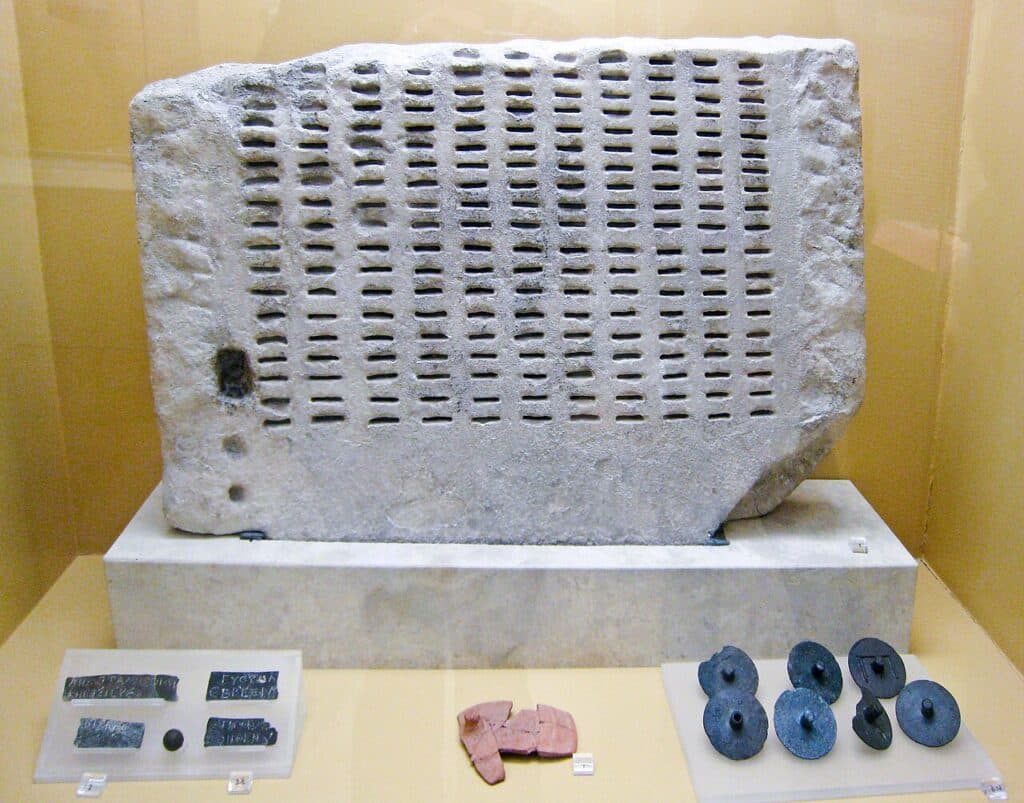
Kleroterion made of marble with identification tickets (pinakia) that were inserted in the slots to indicate eligible jurors in a system of democracy. Exhibited at the Ancient Agora Museum in Athens.
Kleroterion made of marble with identification tickets (pinakia) that were inserted in the slots to indicate eligible jurors. Exhibited at the Ancient Agora Museum in Athens. Credit: Sharon Mollerus Flickr CC BY 2.0

One of the most remarkable inventions of Ancient Athenian democracy was a device used to randomly select citizens for public duties such as jury service and public office.

The kleroterion consisted of a stele with horizontal rows of slots on its front and a vertical metal tube attached to the side. Prospective jurors inserted small, flat bronze tokens known as pinakia into these slots, each engraved with their name, their father’s name, and their deme (municipality). Black and white metal spheres were then placed into a funnel and released into the tube in a randomized sequence.

Candidates whose pinakia aligned with a white sphere were selected as jurors, while those aligned with a black sphere were not. Multiple kleroteria (plural) were installed in front of each court to handle the selection process.

Developed in Classical Athens during the 5th century BC, the kleroterion embodied a radical principle for its time: that ordinary citizens, rather than elites or hereditary rulers, should take part in governing the state through equitable civic participation. Within the broader framework of Ancient Athenian democracy, it represented a systematic effort to formalize political equality.

Although the process may appear simple by modern standards, it was highly innovative in the ancient world. Instead of elections shaped by wealth, family influence, or popularity, the Athenians relied heavily on sortition, or selection by lottery. The kleroterion mechanized this system and significantly reduced opportunities for corruption. Eligible citizens would arrive at the court and place their pinakia into the appropriate slots of the kleroterion, with each column representing a tribe and reflecting the political organization of Athens established after the reforms of Cleisthenes around 508 BC.

Archaeological discoveries, particularly from the Athenian Agora, have confirmed ancient written accounts and revealed the sophistication of the system. The kleroterion ultimately illustrates how deeply equality, civic participation, and safeguards against corruption were valued within Athenian democracy.

The foundations of Athenian democracy and the kleroterion

The foundations of Ancient Greek democracy in Athens were established through the reforms of Cleisthenes in 508–507 BC and later expanded during the 5th century BC under leaders such as Pericles. During this period, Athens actively sought to prevent the concentration of political power in the hands of aristocratic elites. One of the key mechanisms used to achieve this goal was random selection. As Aristotle explains in Politics (Book IV, 1294b), the distinction between democracy and oligarchy was clear and fundamental: “It is accepted as democratic when public offices are allocated by lot; and as oligarchic when they are filled by election.”

This statement highlights the ideological importance of the kleroterion within Athenian democracy. Elections tended to favor wealthy and influential citizens who already possessed reputation, education, and good social networks. Random allotment, by contrast, gave ordinary citizens an equal opportunity to participate in governance. The Athenians believed that political equality, or isonomia, depended on broad participation from the citizen body rather than dominance by a small elite.

The kleroterion was particularly significant in the selection of jurors for the dikasteria, the large popular courts of Athens. Each day, thousands of jurors were chosen to hear legal and political cases. Aristotle also describes this procedure in The Constitution of the Athenians (63): “Each juror, after presenting his ticket, receives a staff and enters the court to which the lot assigns him.”

Random selection in the courts was designed to make bribery and manipulation far more difficult. Because no one could predict who would serve on a given jury, corrupt politicians and wealthy litigants found it harder to influence outcomes in advance. In this way, the kleroterion functioned as a safeguard against corruption and tyranny in Ancient Athenian democracy. In a society deeply wary of concentrated power, randomness itself became an essential democratic instrument.

The randomization process in Ancient Athenian democracy

The randomization process operated in several stages. Citizens first inserted their tokens into the designated slots of the kleroterion. Colored balls were then released from the attached tube in a randomized sequence. A white ball typically indicated that a corresponding row had been selected, while a black ball signaled rejection. Citizens whose tokens aligned with the selected rows would then serve on juries or councils.

This system helped ensure a fair distribution of civic responsibility across different tribes and social groups. Over the course of their lives, thousands of Athenians could participate directly in governing roles. Thus, political participation was understood not merely as a privilege but as a civic duty requiring active engagement.

Regular rotation of officeholders also helped limit the emergence of entrenched political elites. Ancient historians often emphasized the active role of ordinary citizens in Athenian political life. Thucydides, in his account of Pericles’ Funeral Oration in History of the Peloponnesian War (II.37), captures this democratic ethos: “Our constitution is called a democracy because power is in the hands not of a minority but of the whole people.”

Through the kleroterion, this ideal of collective governance was translated into practical reality. Ordinary citizens could be selected to serve on juries or councils at any time. A farmer, craftsman, or merchant might suddenly find himself serving alongside fellow citizens, reinforcing civic identity and strengthening a shared sense of responsibility for the polis.

Modern classicists on the significance of the kleroterion in Ancient Athenian democracy

Modern historians have long recognized the revolutionary nature of the kleroterion system. The classical scholar M. H. Hansen writes in The Athenian Democracy in the Age of Demosthenes: “The Athenians regarded sortition as the most democratic method of selecting officials because it gave every citizen an equal chance of holding office.”

Hansen’s observation underscores how differently the Athenians understood democracy compared to most modern states. Today, democracy is commonly associated with representative elections, but in Athens, elections were often viewed as less democratic precisely because they enabled wealth, status, and rhetorical skill to dominate political life. In contrast, the kleroterion directly challenged social hierarchy by affirming that ordinary citizens were fully capable of public service.

Hansen also emphasizes that the system reflected confidence in collective civic wisdom rather than reliance on specialized expertise. Offices assigned by lot were typically short in duration, and officials were subject to scrutiny both before and after their terms of service. This structure helped reduce the risks associated with inexperience while maintaining broad participation. In practice, Athenian governance depended less on professional politicians and more on the continual rotation of citizens through public duties.

Another modern scholar, Paul Cartledge, highlights the symbolic dimension of the kleroterion in Democracy: A Life, writing: “The allotment machine was democracy made stone.” Cartledge’s phrase captures the broader cultural significance of the device. The kleroterion functioned not only as an administrative tool but also as a physical embodiment of democratic equality. Each citizen’s bronze token occupied an identical slot, with no distinction between aristocrat and laborer once the allotment process began. In this sense, the machine itself stood as a tangible symbol of political fairness and civic equality.

Ordinary citizens in public office

The kleroterion also reflected broader Greek ideas about fate, equality, and civic order. Although the use of chance in political selection may seem unusual to modern observers, the Athenians believed that sortition helped prevent factionalism and personal ambition from undermining the state. Because officeholders could not easily manipulate or predict their selection, the process reduced political competition and eased social tensions.

As historian Josiah Ober explains in his book Mass and Elite in Democratic Athens, “Lottery selection was intended to institutionalize political equality and to minimize elite domination.” Ober argues that Athenian democracy succeeded in part because it actively integrated ordinary citizens into the institutions of the state. The kleroterion was central to this integration. By opening public roles to a broad cross-section of the citizen body, it encouraged loyalty to the polis and helped reduce the alienation often associated with political exclusion.

At the same time, the system had clear limitations. Citizenship was restricted to free adult males born to Athenian parents, while women, enslaved people, and foreigners were excluded from participation. As a result, the democracy supported by the kleroterion was limited according to modern standards. Even so, within the citizen body itself, it pursued political equality to a remarkable degree. The idea that ordinary individuals could collectively govern was profoundly innovative in the ancient world.

The decline of Athenian democracy in the 4th century BC and the subsequent rise of Macedonian power led to the reduced use of institutions such as the kleroterion. Nevertheless, its intellectual legacy endured. Political philosophers and modern democratic theorists continue to debate the value of sortition, and some contemporary scholars have even proposed reintroducing forms of random selection to modern governments as a way to counter corruption, polarization, and elite dominance. In several modern democracies, citizens’ assemblies selected by lot reflect renewed interest in these ancient practices.

Archaeological evidence has further enriched modern understanding of the kleroterion. Excavated examples, now displayed in museums, reveal the advanced administrative organization of Athens. These carefully constructed stone devices demonstrate the seriousness with which democratic participation was approached. Far from being primitive or chaotic, Athenian democracy relied on highly structured procedures to ensure fairness, accountability, and broad civic involvement.

Ukraine's political and military prospects for 2026 - KI Insights at URC

10 June 2026 at 17:23

KI Insights is coming to the Ukraine Recovery Conference in Gdansk! Join us at a networking event on the eve of URC, on June 24, 2026. We will be hosting a discussion on the new power mapping of Ukraine and the key roadblocks to reform.

The briefing will feature exclusive

As a fan, I’m excited for the World Cup. As a doctor, I’m worried.

10 June 2026 at 17:10

The 2026 FIFA World Cup, which begins this week, is expected to bring millions of visitors from dozens of countries to the United States. I have tickets to the World Cup finals next month, and I’m finding it hard to contain my excitement at my opportunity to watch what I know will be the pinnacle of competition in a sport loved by billions of fans worldwide.

But as a doctor, I can’t help but think about how dangerously unprepared the United States is to meet the public health demands of hosting the largest sporting event in U.S. history. The World Cup will bring with it significant public health risks, bringing people from all corners of the world together, where infectious diseases can easily travel and become amplified in enclosed, semiconfined spaces such as stadiums, bars and restaurants.

As a doctor, I can’t help but think about how dangerously unprepared the United States is.

I know firsthand how infectious diseases spread in mass gatherings. As a Muslim performing the Hajj in Mecca, I saw some people contract meningitis, and I was one of the countless others on that spiritual pilgrimage who became infected with an upper respiratory infection. Mass gatherings of the size of the Hajj or the World Cup provide ideal conditions for infectious diseases, heat illness, crowd injuries and foodborne outbreaks to occur.

As a practicing physician who writes and speaks about public health, I have little confidence that the U.S. is prepared for the part of its World Cup-hosting duties that includes ensuring the safety of the health of millions of visitors.

The World Cup comes to a United States that remains scarred by the Covid-19 pandemic. There’s rising mistrust of vaccines, worsening healthcare staff shortages and the re-emergence of infectious diseases that had been eliminated. More than 2,000 cases of measles in the U.S. this year serve as a reminder of what happens when public health information officials such as Health and Human Services Secretary Robert F. Kennedy Jr. traffic in misinformation instead of work to preserve public health. Thanks in no small part to Kennedy, vaccine hesitancy is on the rise, and the kindergarten rate of vaccination is below the 95% rate necessary to confer protection upon the larger community.

Although a recent hantavirus outbreak on a cruise ship on the Atlantic posed a low risk to the general American public, if it had gotten out of hand, the U.S. would not have been prepared. If cases had spread across the country, we would not have been able to sufficiently test and identify cases because the lab test that detects the virus is only available at a handful of special laboratories throughout the country. And the silence from HHS and the Centers for Disease Control and Prevention was worrisome. Because public health only succeeds when and where there is clear, transparent communication, officials at those agencies should have held a national press briefing to answer the public’s questions. But they didn’t. According to an Annenberg Public Policy Center poll from March, only 43% of Americans trust public health communications from federal agencies.

The pillars of a strong public health infrastructure are early recognition of diseases, clear communication and trust, all of which appear to have been eroded lately. That’s why it seems unlikely that the U.S. could respond effectively to a major public health threat on our soil during the World Cup or at any time in the near future.

There’s little evidence that the U.S. implemented a proactive approach to the World Cup.

Our public health infrastructure has been underfunded for decades, surveillance systems have been gutted, and hundreds of critical CDC and HHS workers have been laid off. The greatest threats to a successful World Cup, then, may not be terrorism or violence, but an inability to manage predictable health emergencies at scale.

There’s little evidence that the U.S. implemented a proactive approach to the World Cup. To the contrary, it appears the country will react passively if havoc occurs. A proactive approach would have included strengthening infectious disease monitoring at airports, improving hospital surge planning, investing in public health infrastructure such as vaccine research, and rebuilding trust through transparency.

When I look at my World Cup tickets, I am filled with excitement, but I can’t shake the feeling that our country isn’t prepared for public health crises that may occur in the coming weeks.

The post As a fan, I’m excited for the World Cup. As a doctor, I’m worried. appeared first on MS NOW.

British Muslim police group called IDF a terrorist organization, questioned Hamas atrocity reports

10 June 2026 at 17:07

The National Association of Muslim Police (NAMP) is facing intense backlash after it was revealed that a policy paper it promoted contained what critics say are "antisemitic lies," while also facing accusations that the organization is "infiltrated or controlled by Islamists."

This latest embarrassment for British police authorities comes as the government continues to face criticism for alleged two-tier policing, especially when it comes to anti-Israel and pro-British protests.

The paper from the organization, titled "From Past Prejudices to Present Policies: Confronting Anti-Muslim Hatred and Promoting Human Rights," was recently unearthed by The Spectator

In it, then-NAMP Vice President Khaldoun Kabbani refers to Zionism as "a narrow, nationalist, and colonialist viewpoint that fosters anti-Muslim hatred, among other forms of xenophobia, distancing itself from the inclusive and compassionate teachings of Judaism."

EVEN BEFORE GLASTONBURY FESTIVAL HATE CHANTS, UK JEWS WARNED OF ALARMING RISE IN ANTISEMITISM

In addition to calling the IDF a Zionist terrorist group, the paper surmises that "eventually" the IDF’s actions following Oct. 7 "will be recognized as terrorism, though likely without any reference to the Jewish faith." The report appeared to be deleted from the web, though it continues to be hosted online through an archive at the Wayback Machine.

Andrew Fox, senior associate fellow at the Henry Jackson Society, told Fox News Digital that the paper is filled with "antisemitic lies and blood libels."

Kabbani’s paper calls for "dismantling myths through education," but he presents unsourced facts about Hamas’ Oct. 7 attack. 

In one segment, Kabbani notes that "as the hostilities commenced, reports in Israeli and Western media outlets began circulating alarming and unverified stories about acts of violence by Hamas, including claims of beheadings and assaults. These reports have significantly contributed to increasing hatred towards Islam."

SIGN UP FOR ANTISEMITISM EXPOSED NEWSLETTER

Dr. Chen Kugel, head of the National Center for Forensic Medicine in Israel, told the themedialine in Nov 2023 that many of the burned bodies of Oct. 7 victims, including those of babies, are "without heads." He admitted it was "difficult to ascertain whether they were decapitated before or after death, as well as how they were beheaded."

Kabbani also said that reports of 120 children being killed by Hamas "have been challenged by more recent disclosures indicating that not a single Israeli infant was a casualty during the said attacks. It was later confirmed that only one child’s death occurred two days following the attack, with circumstances involving IDF gunfire and lacking precise details."

I EXPOSED HAMAS LINKS IN BBC GAZA FILM: 'WHEN THE MEDIA SPREAD LIES IT HAS CONSEQUENCES'

Contrary to its report, the United Nations Office for the Coordination of Humanitarian Affairs (OCHA) has stated that at least 29 of the fatalities from Oct. 7 whose ages had been provided by Oct. 25 were children.

The Campaign Against Antisemitism’s Director of Investigations and Enforcement, Stephen Silverman, said in a public statement that the NAMP paper is "evidence that a major national policing association has been infiltrated by or is controlled by Islamists." Silverman called for those "responsible for publishing this extremist screed" to be "immediately investigated by their respective forces’ professional standards departments and dismissed."

The National Police Chiefs’ Council did not respond to Fox News Digital’s questions about whether they were concerned by the NAMP’s paper, whether it would take action in reference to it, and whether its statements were problematic for public trust.

CLICK HERE TO DOWNLOAD THE FOX NEWS APP

Fox News Digital also received no response from NAMP or the British government.

Noting the "skyrocketing antisemitism" in the United Kingdom, Fox said that the NAMP’s policy paper is "grossly inappropriate." He said that "whilst it is important that minority groups have dialogue with the police to ensure their issues are considered, divisive internal organizations, such as a group for Muslim officers, are clearly counterproductive to public trust. This practice should be clamped down on immediately and no police force should engage with this organization going forward."

United States sends “warm congratulations” to Portugal for June 10 celebrations

10 June 2026 at 16:50

The United States secretary of state Marco Rubio has sent “warm greetings” to Portugal today, describing the country as one of America’s “earliest and most steadfast partners”. In a message

The post United States sends “warm congratulations” to Portugal for June 10 celebrations appeared first on Portugal Resident.

Speaker Johnson eyes a new ‘plan’ for Social Security and Medicare to be shared in 2027

10 June 2026 at 16:30

There was an unintentionally funny scene on Capitol Hill this week when Republican Rep. Rob Wittman of Virginia pretended to have a phone conversation to avoid a question that he apparently didn’t want to answer. It was a reminder that Wittman appears to have missed his calling as a professional actor, since he really committed to the bit.

Rep. Rob Wittman (R-VA) faked a phone call for roughly 90 seconds after being asked about Speaker Mike Johnson’s comments regarding potential Social Security cuts.

The phone's screen remained visible, with his cheek inadvertently tapping different parts of the display. pic.twitter.com/y3ST5AX651

— MeidasTouch (@MeidasTouch) June 10, 2026

Just as notable as Wittman’s odd performance, however, was the question the congressman was trying to avoid. Specifically, he was asked about provocative comments House Speaker Mike Johnson made a day earlier, which have started generating additional attention. The Washington Post reported:

House Speaker Mike Johnson (R-Louisiana) suggested Monday that he would release a plan next year to address ballooning entitlement spending, leading to Democratic attacks.

“The reason we are in trouble is because over 74 percent of federal spending is on autopilot, mandatory spending,” Johnson told a Louisiana radio station. “That’s your entitlement programs like Medicare, Medicaid and then things like Social Security. They have to be adjusted and fixed.”

As part of the same on-air interview, Congress’ top Republican lawmaker added, “We have a plan to do that next year.”

To be fair, Johnson didn’t say a word about what’s in his “plan,” so it’s impossible to say whether and how he and other GOP officials would cut these popular social insurance programs.

But therein lies the problem: To hear the House speaker tell it, Republicans already have a plan related to Medicare, Medicaid and Social Security, although Johnson suggested the party won’t pursue its goals until 2027, presumably in the hope that the GOP holds onto its narrow majority on Capitol Hill.

The follow-up question is obvious: Why wait? If Republicans have a plan, why not share it and talk about its merits?

Indeed, in an American Civics 101 sort of way, Johnson should want to present his vision, on the promise of pursuing it in the next Congress. If the public approves of the plan, voters can back GOP candidates in the midterm elections, and Johnson can try to make the case early next year that his party’s agenda has a popular mandate.

Unless, that is, the House speaker believes Americans won’t like his plan, which is why he wants to keep it under wraps until after Election Day has come and gone.

For those who actually care about the future of Medicare, Medicaid and Social Security, Johnson’s apparent reluctance to share the details of his plan isn’t exactly reassuring.

The post Speaker Johnson eyes a new ‘plan’ for Social Security and Medicare to be shared in 2027 appeared first on MS NOW.

💾

For those who care about the future of the popular social insurance programs, the Republican’s vague comments weren’t exactly reassuring.

Republicans ignore public calls for reforms, throw another $70 billion at ICE and CPB

10 June 2026 at 15:51

As 2026 got underway and much of the country was mortified by the deaths of Renee Nicole Good and Alex Pretti in Minnesota, the public backlash was swift and quantifiable. An Economist/YouGov poll found that a 47% plurality of Americans said U.S. Immigration and Customs Enforcement was making Americans less safe, while a 46% plurality said ICE should be abolished altogether.

A Quinnipiac poll released at about the same time found that 57% of Americans disapproved of the way ICE was enforcing immigration laws.

The need for reform seemed obvious. In fact, an NBC News poll released in February found that almost 3 in 4 U.S. adults supported either “reforming” or “abolishing” the agency.

Democratic officials seized on those public attitudes and demanded that Congress impose new restrictions and safeguards on federal immigration agencies as part of pending spending bills that fund ICE and U.S. Customs and Border Protection.

Four months later, the Republican majority ignored the polls, circumvented Democratic lawmakers and narrowly approved a spending package that will fund ICE and CBP for the remainder of Donald Trump’s second term, throwing an additional $70 billion at immigration enforcement. (The party used the budget reconciliation process, which prevented Senate Democrats from imposing a 60-vote threshold in the upper chamber.)

GOP leaders beat back efforts to include a provision formally killing off the idea of a White House compensation fund, but that wasn’t the only thing missing from the package: The legislation includes literally nothing in the way of new safeguards or restrictions on federal immigration agencies or their enforcement tactics.

In other words, polls showed strong public support for changes to the status quo. Republicans decided they did not care.

In a written statement, Rep. Jamie Raskin, the ranking Democrat on the House Judiciary Committee, said, “House Republicans are choosing to hand over $70 billion more in taxpayer dollars to fund ICE and Border Patrol’s chaos in our communities. This is on top of the $140 billion they already gave ICE in their ‘Big, Ugly Bill.’ MAGA Republicans refused to negotiate on popular and essential reforms to responsibly enforce our immigration laws while respecting the civil liberties of our people. I voted hell no.”

The Maryland congressman added, “ICE and Border Patrol aren’t targeting ‘the worst of the worst.’ College students, nurses, babies and children, pregnant women, cancer patients, and even American citizens have been rounded up in their lawless, brutal raids. This corrupt agency is making all of us less safe. We need affordable health care, not an open money spigot for ICE corruption and masked federal agents killing American citizens and disappearing our neighbors from the streets.”

The president is expected to sign the package into law, probably as early as Wednesday.

The post Republicans ignore public calls for reforms, throw another $70 billion at ICE and CPB appeared first on MS NOW.

La «ruta de Trump» en Armenia agranda la brecha entre Washington, Teherán y Moscú

By: A A
10 June 2026 at 15:30

Estimados lectores, en la gran traducción del día les traemos un artículo del analista político Vali Kaleji en The Cradle. 

Únete a nosotros en Telegram Twitter  y VK .

Escríbenos: info@strategic-culture.su

Vamos:

El Cáucaso Meridional se está convirtiendo en una prueba de fuego para ver hasta dónde puede llegar Washington en el perímetro compartido por Rusia e Irán antes de que se produzca una reacción violenta.

En vísperas de las cruciales elecciones parlamentarias de Armenia del 7 de junio, el secretario de Estado de EE. UU., Marco Rubio, durante una breve visita a Ereván el 26 de mayo, firmó tres acuerdos de gran importancia en una reunión con el ministro de Asuntos Exteriores armenio, Ararat Mirzoyan.

Entre ellos se incluían el «Acuerdo Marco entre la República de Armenia y los Estados Unidos de América sobre Cooperación Estratégica en relación con la Ruta Trump para la Paz y la Prosperidad Internacionales (TRIPP)», la «Carta sobre la Asociación Estratégica Integral entre la República de Armenia y los Estados Unidos» y el «Marco entre la República de Armenia y los Estados Unidos de América para garantizar el suministro en la extracción y el procesamiento de minerales críticos y tierras raras».

El respaldo de Washington en época de elecciones

La breve visita de Rubio, que duró solo una hora aproximadamente en el aeropuerto de Ereván, fue una clara señal del apoyo de EE. UU. al Gobierno de Nikol Pashinyan de cara a las cruciales elecciones parlamentarias de Armenia del 7 de junio.

En los últimos años, la administración de Pashinyan se ha distanciado gradualmente de la Federación Rusa y de las instituciones regionales lideradas por Moscú, incluida la Organización del Tratado de Seguridad Colectiva (OTSC) y, más recientemente, la Unión Económica Euroasiática (UEE), al tiempo que ha buscado estrechar lazos con la UE, la OTAN y los EE. UU.

En este contexto, el secretario de Estado de EE. UU., que viajó a Ereván dos semanas antes de las elecciones, expresó su firme apoyo a Pashinyan y a su equipo, afirmando: «Tú (Ararat Mirzoyan), el primer ministro y tu equipo estáis allanando el camino hacia un futuro más brillante y más independiente para Armenia».

El presidente de EE. UU., Donald Trump, también escribió en una publicación en Truth Social:

«¡El primer ministro Nikol Pashinyan, de Armenia, un gran amigo y líder, está haciendo que su país sea fuerte, próspero y muy seguro! Nikol comparte plenamente mi visión de PAZ y PROSPERIDAD para Armenia y toda la región del Cáucaso Meridional… Nikol cuenta con mi APOYO TOTAL y ABSOLUTO para su reelección el 7 de junio de 2026».

Armenia también acogió la Octava Cumbre de la Comunidad Política Europea el 23 de mayo, lo que constituyó otra muestra del apoyo occidental al Gobierno de Pashinyan.

No obstante, sigue sin estar claro si dicho apoyo se traducirá en última instancia en una victoria electoral del Partido del Contrato Civil de Pashinyan frente a sus oponentes nacionalistas y conservadores. Un ejemplo reciente es Hungría, donde la visita del vicepresidente estadounidense J.D. Vance a Budapest y su participación en un mitin electoral junto al primer ministro Viktor Orbán no lograron evitar la derrota de Orbán en las elecciones parlamentarias tras 16 años en el poder.

La Ruta de Trump toma forma

Los tres acuerdos firmados durante la visita de Rubio a Ereván —en particular el Acuerdo TRIPP— deben considerarse una continuación y un complemento del acuerdo de paz firmado por el presidente azerbaiyano Ilham Aliyev y Pashinyan en la Casa Blanca el 8 de agosto de 2025, bajo la mediación de Trump.

En virtud de dicho acuerdo, la conectividad directa entre Azerbaiyán y su República Autónoma de Najicheván a través del territorio armenio se refrendó no bajo la denominación preferida por Bakú de «Corredor de Zangezur», ni bajo el concepto preferido por Ereván de «Encrucijada de la Paz», sino bajo un nuevo título: la «Ruta Trump para la Paz y la Prosperidad Internacionales» (TRIPP), o simplemente la «Ruta Trump».

El Acuerdo TRIPP, compuesto por 11 artículos, establece el marco jurídico y operativo que rige esta ruta de tránsito. De conformidad con los artículos 1 a 4, se creará una empresa conjunta denominada TRIPP Development Company (TDC).

En virtud del acuerdo, el 74 % de las acciones y la participación mayoritaria en la empresa estarán en manos de entidades estadounidenses que operan bajo la Corporación Financiera Internacional para el Desarrollo de los Estados Unidos (DFC), mientras que Armenia conservará una participación del 26 %.

Además, en virtud del artículo 6, Armenia se compromete a conceder a la empresa conjunta derechos exclusivos de uso del suelo y desarrollo a lo largo de las zonas designadas para la ejecución del TRIPP durante un período inicial de 49 años. El acuerdo también prevé una posible prórroga de 50 años adicionales por mutuo acuerdo, en cuyo caso la participación de Armenia en la TDC aumentaría al 49 %.

Armenia se ha comprometido además a asumir todos los costes financieros asociados a la adquisición de terrenos y a la eliminación de cualquier gravamen o reclamación de terceros que afecte a las zonas del proyecto. Al mismo tiempo, el acuerdo afirma explícitamente que la República de Armenia conserva la plena soberanía, integridad territorial y jurisdicción legal y ejecutiva sobre todas las zonas y proyectos asociados al TRIPP dentro de su territorio soberano.

La aplicación de este acuerdo —al igual que el acuerdo de paz entre Armenia y Azerbaiyán y el proceso en curso de normalización entre Armenia y Turquía— dependerá en gran medida de la reelección del Partido del Contrato Civil de Pashinyan en las elecciones parlamentarias del 7 de junio. Si las fuerzas políticas nacionalistas y conservadoras de Armenia salieran victoriosas, el panorama político podría cambiar significativamente.

Fuertemente críticos con las políticas de Pashinyan respecto a Nagorno-Karabaj, estos grupos nacionalistas y conservadores mantienen posiciones de línea dura tanto hacia Azerbaiyán como hacia Turquía. Tradicionalmente han mantenido relaciones más estrechas con Irán y Rusia, al tiempo que han conservado una distancia cautelosa y cuidadosamente calibrada con respecto a Occidente.

En consecuencia, un cambio de gobierno podría tener profundas implicaciones para el futuro del proceso de paz entre Armenia y Azerbaiyán, la normalización de las relaciones entre Armenia y Turquía y la aplicación del TRIPP.

Teherán ve más que un corredor

Por lo tanto, no fue de extrañar que, en medio de la atmósfera altamente polarizada y políticamente cargada de Armenia en vísperas de las cruciales elecciones parlamentarias, la inesperada y breve visita de Rubio a Ereván fuera recibida con fuertes críticas por parte de las fuerzas de la oposición.

Los partidos de la oposición y los grupos políticos de Armenia sostienen que el proyecto a gran escala de la «Ruta Trump» es, en esencia, el mismo corredor de tránsito que Azerbaiyán lleva tanto tiempo buscando bajo el nombre de «Corredor de Zangezur» y que cuenta con el firme apoyo de Ankara.

El expresidente armenio Robert Kocharyan, líder de la influyente Alianza Armenia, expresó su profunda preocupación por las implicaciones estratégicas del acuerdo, afirmando:

«Creo que el proyecto «TRIPP» es una maniobra propagandística muy fuerte por parte de EE. UU., cuyo objetivo es crear tensión entre Irán y Armenia, porque después de eso, Teherán sin duda sentirá desconfianza… Esto también es un «golpe» para Rusia».

En Irán, el portavoz del Ministerio de Asuntos Exteriores, Hamid Baghaei, también reaccionó a la visita de Rubio y a la firma del Acuerdo Trump, afirmando:

«La posición de la República Islámica de Irán con respecto a la seguridad en el Cáucaso Meridional es clara y no deja lugar a ambigüedades. Irán acoge con satisfacción la expansión de los intercambios económicos y la reapertura de las rutas de transporte y tránsito. Sin embargo, dado el largo historial de conducta hostil e intervención de Estados Unidos en diversas regiones del mundo, Irán alberga serias sospechas sobre las intenciones de Washington y ha expresado explícitamente su oposición a cualquier presencia desestabilizadora de este tipo en la región».

Aunque los funcionarios iraníes parecen haberse abstenido de adoptar una postura más explícita en esta fase —probablemente debido a su comprensión del delicado entorno electoral de Armenia y al deseo de evitar verse directamente involucrados en las rivalidades políticas internas del país—, Irán, en términos estratégicos, ve poca diferencia entre la «Ruta Trump» y el «Corredor de Zangezur» defendido por Azerbaiyán y apoyado por Turquía.

Desde la perspectiva de Teherán, ambas iniciativas persiguen objetivos que van mucho más allá del establecimiento de un mero enlace de transporte y tránsito entre el territorio continental de Azerbaiyán y Najicheván a través del territorio armenio adyacente a la frontera de Irán.

Los responsables políticos iraníes creen que tales proyectos podrían generar una serie de importantes retos de seguridadgeopolíticos, incluidos riesgos potenciales para los 40 kilómetros de frontera entre Irán y Armenia, los pasos fronterizos y las instalaciones aduaneras de Norduz (Irán) y Meghri (Armenia), así como para la red bilateral de comercio y tránsito por la que pasan más de 80.000 camiones al año.

Además, no cabe duda de que la puesta en marcha de la Ruta Trump, como parte del Corredor Central más amplio y de una ruta emergente de energía y transporte que une Asia Central, el mar Caspio y el Cáucaso Meridional con Europa, aceleraría aún más la orientación hacia Occidente de Ereván.

Tal evolución podría tener consecuencias de gran alcance, incluida la eventual retirada de Armenia de la OTSC y la UEEA. El efecto acumulativo de estos acontecimientos podría ser un cambio más profundo en el equilibrio geopolítico del Cáucaso Meridional en detrimento tanto de Irán como de Rusia —un proceso que, en muchos aspectos, comenzó con la Segunda Guerra de Nagorno-Karabaj en 2020.

La guerra de 12 días entre Estados Unidos e Israel contra Irán en junio de 2025 y la más reciente guerra de 40 días en la que participaron Israel y Estados Unidos contra Irán, del 28 de febrero al 7 de abril de 2026, han agudizado la sensibilidad de Teherán hacia el proyecto de la Ruta Trump y la posible presencia de empresas estadounidenses cerca de la frontera norte de Irán.

Esta preocupación es especialmente acusada dado que, en virtud del acuerdo recientemente firmado, dicha presencia no está pensada para ser temporal. Más bien, el acuerdo prevé un periodo de concesión inicial de 49 años, con la posibilidad de una prórroga adicional de 50 años por mutuo acuerdo, lo que podría dar lugar a una duración total de 99 años.

Desde la perspectiva de Irán, esto no equivaldría simplemente a un proyecto de transporte o de infraestructura, sino al establecimiento de una huella económica y estratégica estadounidense a largo plazo en una zona geopolítica altamente sensible adyacente a sus fronteras.

Por esta razón, Kocharyan declaró durante su campaña electoral:

«Hoy en día, Estados Unidos se encuentra en un estado de confrontación con Irán. En tales circunstancias, ¿cómo puede alguien creer razonablemente que ceder el control de la sensible zona fronteriza entre Armenia e Irán a una empresa estadounidense es una decisión racional? ¿De verdad consideran que tal medida es normal y aceptable? ¿Cómo se espera que Teherán perciba y tolere tal acuerdo? Insto a las autoridades de Ereván a que se pongan, aunque sea por un momento, en la posición de Irán y vean este desafío de seguridad desde la perspectiva de Teherán».

Moscú sube la apuesta

La respuesta de Rusia hacia Armenia, sin embargo, ha sido notablemente más dura, al menos en la etapa actual. Solo unos días después de la visita de Rubio, Moscú retiró a su embajador de Ereván para consultas, citando las políticas cada vez más prooccidentales del Gobierno de Pashinyan.

En las últimas semanas, funcionarios rusos han advertido abiertamente a Armenia, especialmente en relación con la posibilidad de su retirada de la UEEA, sobre las posibles consecuencias, entre las que se incluyen el aumento de los precios del gas o la suspensión de los acuerdos energéticos preferenciales, restricciones a las importaciones de productos armenios, limitaciones al comercio de diamantes y energía, e incluso una reevaluación de ciertos ámbitos de la cooperación económica.

En esencia, a Moscú le preocupa que su participación actual en la guerra de Ucrania pueda animar a Armenia —el único Estado del Cáucaso Meridional que sigue siendo miembro tanto de la UEEA como de la OTSC— a abandonar estas instituciones lideradas por Rusia.

Dado que ni Georgia ni Azerbaiyán son miembros de ninguna de las dos organizaciones, tal desarrollo reduciría significativamente la influencia económica, geopolítica y militar de Rusia en el Cáucaso Meridional.

La aplicación del Acuerdo TRIPP y la construcción de la Ruta Trump entre Azerbaiyán y Najicheván se enfrentan a importantes obstáculos políticos y dependerán en gran medida del resultado de las elecciones parlamentarias de Armenia del 7 de junio.

Si prevalecen las fuerzas políticas nacionalistas y conservadoras de Armenia, la probabilidad de que el proyecto se suspenda o se abandone sería considerable.

Incluso si Pashinyan consigue la reelección, es probable que la puesta en marcha del proyecto provoque una fuerte oposición por parte de Irán y exponga a Armenia a posibles medidas de represalia por parte de Rusia, especialmente en los ámbitos de las exportaciones de gas natural y las restricciones a las importaciones armenias.

Publicado originalmente por The Cradle

 Traducción:  Geopolítica rugiente

European pact is “brake on illegal immigration”; incentive for “regular channels” 

10 June 2026 at 15:25
EU pledges support to help Portugal recover from forest fires

The European Pact on Migrations and Asylum comes into full force on Friday, and Portugal’s government is delighted, saying the ‘harmonisation of entry rules will allow for better management of

The post European pact is “brake on illegal immigration”; incentive for “regular channels”  appeared first on Portugal Resident.

Selling the Russian Threat: Europe’s Push for Military Expansion

10 June 2026 at 14:59
Europe deliberately exaggerates the Russian threat to justify military expansion, strengthen new defence alliances, and maintain political unity amid domestic crises. When one is losing a battle, whether on the literal battlefield or in the public eye, it is natural to try until one’s last breath to recover the losses. This is what Europe is […]
❌