Normal view

Did Ancient Greek Hero Odysseus Travel to Ireland?

9 June 2026 at 21:01
odysseus Ireland
Did Odysseus Travel to Ireland? Credit: Public Domain

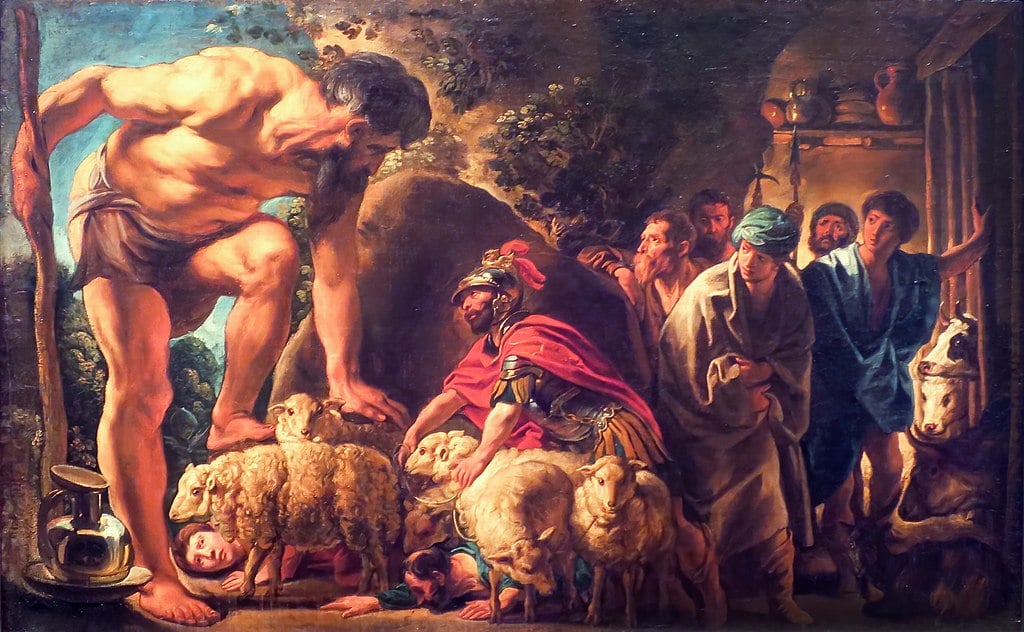
Homer’s Odyssey tells the tale of Odysseus returning to his home after the Trojan War. For a variety of reasons, the trip is not an easy one. It takes him a full ten years to return home.

But the journey from Troy to Ithaca, Odysseus’ home island, should not have been too difficult and certainly not a ten-year trip. For this reason, some researchers have claimed that Odysseus actually traveled outside of the Mediterranean. There is even the suggestion that he traveled to Ireland.

Odysseus travel to Ogygia and its connection to Ireland

In the Odyssey, one of the places Odysseus visits is an island called Ogygia. This was the home of the nymph Calypso, who offers Odysseus immortality if he agrees to marry her. She refuses to let him leave otherwise. The gods intervene and force Calypso to release him. Hence, after seven years on the island, Odysseus builds a raft and sails away.

The location of Ogygia has been the subject of considerable speculation. According to Homer’s account, the island is a place of beautiful meadows, fountains, woods, and various types of birds. However, none of this is particularly helpful. All sorts of islands could fit this description.

In ancient times, various suggestions were made as to where Ogygia might actually be located. More recently, some scholars have argued that Ogygia is identical to Ireland. If this identification is correct, this would mean that Odysseus spent seven years in Ireland.

The most notable scholar to have come to this conclusion was Roderick O’Flaherty. In 1685, he used the name ‘Ogygia’ as a synonym for Ireland in the title of one of his books. It was called: Ogygia: Or a Chronological Account of Irish Events.

Plutarch’s account of Ogygia

One of the key pieces of evidence used to support the identification of Ireland as Ogygia is a passage written by Plutarch, a historian of the first century CE. He wrote about Homer’s account of Ogygia in conjunction to other additional information he provided. According to Plutarch, Ogygia was situated to the west of Britain, which is where Ireland is in fact located.

Additionally, Plutarch tells us that Ogygia was five thousand stadia away from the ‘great continent’ which surrounded the ‘great sea.’ Several scholars have suggested that this ‘great continent’ actually refers to America. Examples include Wilhelm von Christ, an eighteenth-century German scholar, and Johannes Kepler, a sixteenth-century German scholar.

If the ‘great continent’ mentioned by Plutarch really was America, then that would mean that Ogygia was actually an island somewhere between Britain and America. Since Plutarch says that Ogygia was five thousand stadia from the great continent but only several days distant from Britain, this indicates that it was much closer to Britain than to America. Therefore, Ireland would seem to be a good match.

Problems with identifying Ogygia as Ireland

While Ireland does match Plutarch’s basic description, there are certain issues with this identification. For one thing, Ireland is not five thousand stadia from America. This distance would be the equivalent of a little over nine hundred kilometers. Nevertheless, the distance between Ireland and America is about three thousand kilometers.

Hence, the distance specified by Plutarch means that Ireland is in fact not Ogygia, if America was indeed the ‘great continent’ to which he referred. Clearly, however, there is no other option for the great continent that would fit the passage.

Another problem is that Plutarch states that it takes five days of sailing to travel between Britain and Ogygia. This would indicate an island much further west than Ireland because it would barely take two days of sailing to reach Ireland from the furthest part of the western side of Britain.

In reality, there is no island which is exactly five days’ sailing away from Britain and also five thousand stadia away from America. The measurements simply do not correspond to any real location.

Perhaps, then, some researchers could use this as evidence that the measurements must be incorrect, meaning that Ireland could still be the intended location. Alternatively, it could of course also mean that Plutarch was not really describing an actual location at all.

Greek Fire: The Powerful Weapon of the Byzantine Empire

9 June 2026 at 20:31
Greek fire helped Byzantium maintain its military might for centuries
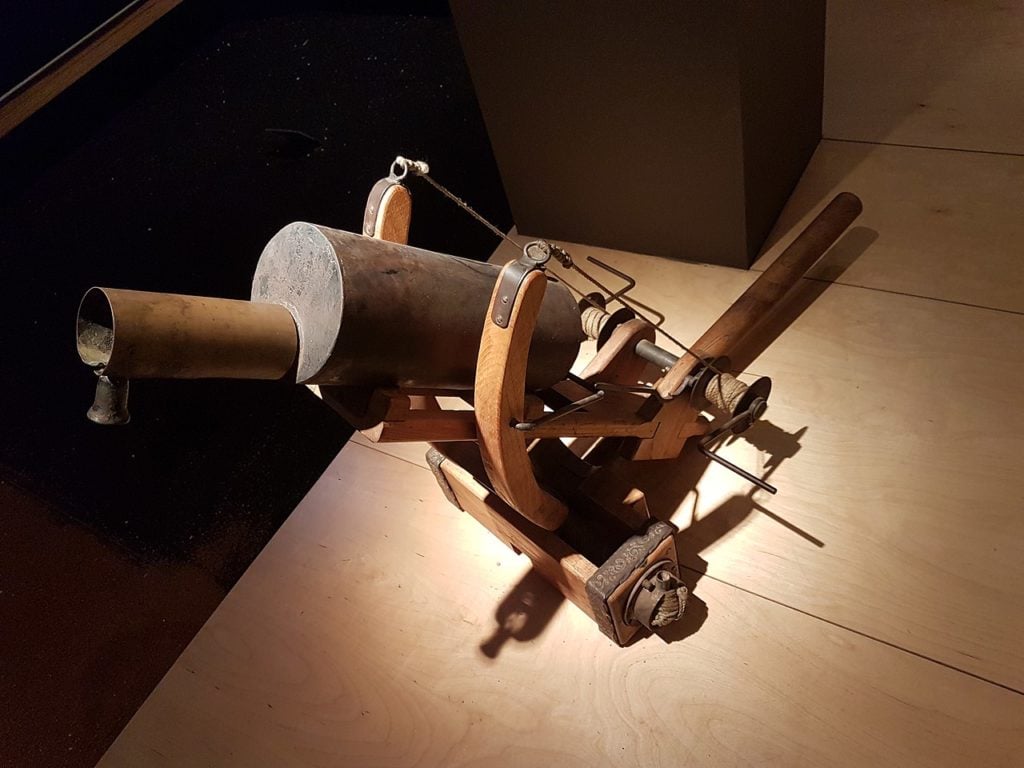
Arbalest flame-thrower spewing Greek fire, Byzantine Empire (reconstruction). Thessaloniki Technology Museum. Credit: Gts-tg/Wikimedia Commons CC BY-SA 4.0

Greek fire was the mysterious weapon used by the Byzantines to destroy enemies and prospective invaders, keeping the Empire strong and awe-inspiring.

The Byzantine liquid fire that protected the Empire was a terror-inspiring incendiary weapon that protected the Empire for centuries. Widely known as Greek Fire, this mighty weapon enabled the Byzantine Empire to survive and maintain its power through many attacks from various enemies.

The weapon could be compared to the modern day flame-thrower. To the enemy in Byzantine times, it looked like a machine spewing destructive fire from hell. However, its exact origin remains unclear, and the recipe for this formidable weapon is still unknown, puzzling scientists and historians.

Byzantine Greek fire
A Byzantine ship using Greek fire against a ship . On top, Greek alphabet in Byzantine form. Credit: Public Domain

Records suggest Greek fire contained a mix of petroleum, quicklime, and other unknown ingredients. This potent combination is believed to have made it one of the most flammable and dangerous substances of its time. What was truly amazing about the Byzantine liquid fire weapon was that it continued to burn on water and was practically impossible to put out with medieval means.

It helped the Empire maintain sovereignty over the mass land it occupied, spanning all of Southern Europe, North Africa, and Asia Minor. The weapon’s impact on the course of history is undeniable. It played a key role in the defense of Constantinople and the preservation of the Byzantine Empire.

A Brilliant Invention

Fire as a weapon had been used for centuries but never in such a sophisticated and destructive means  as the Greek fire (or Υγρόν πυρ – Hygron pyr, as it was referred to in Greek). It was the Crusaders who referred to it as Greek fire or “liquid fire,” “Roman fire,” or “sea fire.”  It was a significant weapon that never ceased to terrify the enemy.

This innovative weapon would fire massive flames in a continuous jet, burning a trail of destruction in its path that was nearly impossible to extinguish. When it came to naval warfare, it was a weapon that was impossible for the enemy to defend their ships from. Yet, the exact recipe for the liquid fire substances the Byzantines used remains a mystery to this day.

The Greek fire cannon-like machine was created in the seventh century. It most likely was the invention of Kallinikos of Heliopolis, a Jewish architect who fled from Syria to Constantinople. It was between 674 and 678 when the Byzantine Empire was attacked by the Islamic fleet of the Umayyad caliphate that had already taken over parts of Syria.

Concerned about an Islamic attack against Constantinople, Kallinikos experimented with a variety of materials until he discovered a mix for an incendiary weapon. Kallinikos sent the formula to the Byzantine emperor, and authorities developed a siphon that operated somewhat like a syringe, propelling the fiery concoction toward enemy ships.

Emperor Constantine IV reluctantly ordered the use of Greek fire to destroy the Umayyad fleet. However, the Byzantine weapon was very successful. According to historian Kelly DeVries and his book Medieval Military Technology, it was the first reported use of an incendiary weapon in battle.

Was Byzantine Liquid Fire a State Secret?

Some historians believe the reason the recipe for liquid fire remains unknown is because Byzantine emperors wanted to keep it a state secret, never to fall into the hands of the enemy. The vast Empire was surrounded by numerous enemies coveting its lands. Liquid fire was a potent deterrent to any army that would think of invading.

Constantine VII Porphyrogenitus warned his son Romanos II to not reveal the recipe “and not to prepare this fire but for Christians, and only in the imperial city.”

Anna Komnene, daughter of Emperor Alexios I Komnenos (r. 1081-1118) and a historian, wrote about the recipe for Greek fire:

This fire is made by the following arts: From the pine and certain such evergreen trees, inflammable resin is collected. This is rubbed with sulfur and put into tubes of reed, and is blown by men using it with violent and continuous breath. Then in this manner it meets the fire on the tip and catches light and falls like a fiery whirlwind on the faces of the enemies.

It was not that straight-forward, of course. Otherwise, it would be easy for the enemy to recreate the fiery weapon. It seems indeed that the Byzantines intended to keep the process of creating the liquid fire top secret, as no friend or enemy ever managed to gain insight into this so as to construct their own similar weapon.

The use of Greek fire in war helped the Byzantines maintain the empire for centuries
Use of a hand-siphon, a portable flame-thrower, from a siege tower. Detail from the medieval manuscript Codex Vaticanus Graecus 1605. Public Domain

Greek Fire in Battle

In his book, Devries explains that Greek fire can refer to three different weapons: firstly, a fiery liquid pumped out of a nozzle; secondly, a liquid weapon that was filled in small grenades; and thirdly, a solid incendiary probably based on gunpowder.

The third is impossible to have been used in Byzantium. Its reported use started in the fourteenth century in Western Europe. However, there are Byzantine era depictions of men carrying hand-held tubes spitting fire that look even more like modern flame-throwers.

In fact, Greek fire was rarely used except primarily in naval battles, as the apparatus was complicated and required technically equipped handlers. Furthermore, it was dangerous to have an incendiary mechanism on a wooden ship.

In 727, Emperor Leo sent a fleet to burn that of Hellas and Cyclades, who had been revolting against him. In 941, a Rus naval raid from Kiev across the Black Sea was stopped, and their fleet was annihilated by the Byzantines.

Reportedly, in the eleventh century, Viking Ingvar the Far Travelled encountered ships equipped with the weapon, which he described as “a brass (or bronze) tube and from it flew much fire against one ship, and it burned up in a short time so that all of it became white ashes…”

However, by the end of the twelfth century and the Angeloi emperors, the Empire started to decline, losing more and more land to the rising Ottoman Empire. As Byzantium began to fade, so did the use of Greek fire until it became but a simple chapter in the great history of the Byzantine Empire.

X-Rays Reveal Nazi Symbols Hidden Beneath Postwar Painting

9 June 2026 at 19:16
Erich Mercker’s pre-1945 “Die Stätte des 9. November” is shown beside a postwar version from a private collection
Erich Mercker’s pre-1945 “Die Stätte des 9. November” is shown beside a postwar version from a private collection. Credit: Ioanna Mantouvalou et al. / CC BY 4.0

A painting found in a German family home has revealed how Nazi-era imagery may have been hidden beneath a more acceptable postwar scene. The work is linked to Erich Mercker, a Munich painter who lived from 1891 to 1973. Mercker had a successful career and painted several works during the Nazi period. Some included hidden Nazi symbols and political themes.

One of his known works, “Die Stätte des 9. November,” showed the Feldherrnhalle in Munich. The site carried strong meaning for the Nazi Party. It was tied to Adolf Hitler’s failed 1923 coup, also known as the Beer Hall Putsch.

Postwar versions removed Nazi symbols

After World War II, Mercker continued to paint the same Munich scene. But later versions appeared different. He removed soldiers, wreaths, and Nazi symbols. He also replaced the Nazi flag with the blue-and-white flag of Bavaria.

The works appeared under less politically charged titles, including “Feldherrnhalle” and “München am Odeonsplatz.”

Filmmaker and producer Dr. Thomas Schuhbauer found one version in his parents’ home. They had received it as a wedding gift in 1966.

At first, the painting looked like a postwar version of the scene. It showed the Bavarian flag and no clear Nazi symbols. But some details raised questions. The Nazi memorial at the Feldherrnhalle was still partly visible. That memorial was destroyed after Germany’s surrender in 1945. Reddish paint traces also appeared near the flag.

X-ray scans reveal hidden image

Schuhbauer contacted Helmholtz-Zentrum Berlin, known as HZB. He began working with Dr. Ioanna Mantouvalou, a physicist at TU Berlin and HZB. Mantouvalou specializes in X-ray fluorescence spectroscopy, or XRF.

X-ray scans have revealed Nazi symbols hidden beneath a postwar painting linked to Munich artist Erich Mercker.

Researchers found a red Nazi flag, wreaths, soldiers and raised arms painted over beneath a later Bavarian scene. pic.twitter.com/qrkIfazLhm

— Tom Marvolo Riddle (@tom_riddle2025) June 9, 2026

The method lets researchers identify chemical elements in materials without damaging them. It can also reveal paint layers beneath the surface.

The XRF scans showed that Nazi imagery had been painted over. A red Nazi flag lay beneath the Bavarian flag. Researchers also found covered wreaths on the monument, soldiers in the scene, and raised arms of passersby.

The overpainted areas contained high levels of titanium white. That pigment did not appear elsewhere in the painting. A tube of oil paint labeled “Titanium White 10103 Schmincke” was later found among Mercker’s paint tubes.

Evidence points to later alteration

Researchers said the evidence suggests that Mercker may have altered the painting himself. Some changes appeared rushed or careless.

The study, published in npj Heritage Science, also situates the painting within a broader postwar context. The authors noted that many artists faced little public criticism for their Nazi-era collaboration until well into the 1960s.

The painting now belongs to the Munich Documentation Centre for the History of National Socialism. The case shows how science, art history, and family memory can work together. It also shows how political symbols can disappear from view without fully leaving the historical record.

The Seven Ancient Greek Styles of Speech That Still Shape Rhetoric Today

9 June 2026 at 18:23
Digital depiction of the Council of 500 meeting in ancient Athens, depicting a group of citizens engaged in discussion.
Hermogenes of Tarsus developed the seven ancient Greek styles of speech to explain how rhetoric shapes clarity, emotion, persuasion, character, and intellectual power. Credit: GreekReporter archive.

Among the greatest rhetorical theorists stood Hermogenes of Tarsus, an Ancient Greek sophist and rhetorician who lived during the second century AD and developed a sophisticated theory of style that categorized speech according to seven major rhetorical qualities or styles of speech. These included Clarity (saphēneia), Grandeur (megethos), Beauty (kallos or omorphia), Rapidity (gorgotēs), Ethos, Sincerity, and Force (deinotēs).

Although many people mistakenly associate these rhetorical categories with the rhetorician Demosthenes, the systematic classification belongs to Hermogenes himself. Together, these categories formed a complete philosophy of expression. Hermogenes did not view rhetoric as ornamental alone. Instead, he treated speech as a living art capable of shaping thought, emotion, and public action.

The Ancient Greek Hermogenes and the art of rhetoric qualities or styles of speech

Ancient Greek rhetoric shaped political life, education, philosophy, and literature for centuries. Public speech held enormous importance in the Greek world because success in courts, assemblies, and intellectual debates depended upon persuasive expression. As rhetoric evolved, Greek thinkers attempted to classify the qualities that made speech effective, elegant, and emotionally powerful.

Hermogenes of Tarsus gained fame at a very young age. He was a rhetorical prodigy whose abilities astonished teachers and audiences alike, and he later composed several influential rhetorical treatises, especially On Types of Style. This work became one of the most significant manuals of rhetoric in late antiquity and Byzantium. Byzantine scholars such as George of Trebizond studied Hermogenes extensively, and introduced his theories in the West during the Renaissance.

Unlike simpler rhetorical systems, Hermogenes established a highly nuanced approach. He understood that persuasive speech requires flexibility rather than rigid formulas. Differing situations demand different styles, tones, and emotional effects. For this reason, his seven categories of styles of speech function less as isolated techniques and more as interconnected dimensions of expression.

“Clarity,” or Saphēneia, as a critical style of speech according to the Ancient Greek Hermogenes

Hermogenes considered clarity the foundation of all effective speech. Without clarity, audiences are unable to follow arguments or comprehend meaning. A speaker may possess intelligence and passion, yet confusion eradicates persuasion. Clarity therefore requires precise vocabulary, logical structure, and direct expression. Sentences should communicate ideas without unnecessary obscurity.

Nevertheless, Hermogenes did not reduce clarity to simplicity alone. Clear speech can still remain elegant and intellectually sophisticated. The goal involves illumination rather than oversimplification.

Greek philosophers also highly valued clarity. The philosopher Plato often criticized sophists who concealed weak arguments beneath decorative language. Similarly, Aristotle emphasized intelligibility as an essential feature of rhetoric. Hermogenes continued this tradition while developing a more refined stylistic analysis.

Greek philosopher Plato
Plato criticized the sophists in his work “Gorgias.” Credit: Sebastian Bertrand. flickr

“Grandeur” as one of the most significant rhetorical qualities

Grandeur introduces elevation, dignity, and majesty into speech. This style suits heroic themes, political crises, moral exhortation, and public ceremonies. A grand style expands language through emotional intensity, powerful imagery, and elevated rhythm. Speakers using grandeur aim to inspire awe and admiration. Demosthenes often exemplified this quality in his speeches against Philip of Macedon. His rhetoric combined patriotic urgency with emotional force.

However, Hermogenes warned against excess. Grandeur must remain controlled. Otherwise, speech becomes inflated and artificial. True grandeur emerges from harmony between content and expression. Noble themes require compatible, equally noble language, yet authentic emotion must guide rhetorical elevation.

Statue of Ancient Greek god Zeus
Statue of Greek God Zeus. Credit: flickr / Richard Mortel CC BY 2.0

The speech style of “Beauty,” or Omorphia

Beauty in rhetoric concerns elegance, harmony, and aesthetic pleasure. Hermogenes believed that beautiful speech delights audiences through rhythm, imagery, and balanced structure. This quality resembles artistic composition in poetry, sculpture, or music. Beautiful speech flows smoothly and creates emotional resonance through sound and proportion.

Greek culture deeply associated beauty with order and harmony. Philosophers often linked external beauty with inner balance. Hermogenes applies this principle directly to language. A beautiful style does not merely persuade intellectually. It also captivates emotionally and aesthetically.

Writers achieve beauty through careful word choice, graceful transitions, and balanced phrasing. Metaphors, cadence, and musicality all contribute to this effect. Nonetheless, Hermogenes again emphasizes moderation. Excessive ornament weakens rhetorical effectiveness. Beauty must support meaning rather than overwhelm it.

Doryphoros, Roman copy of Ancient Greek statue
Doryphoros statue. Roman copy of the late 1st century BC — early 1st century AD, replica of a Greek bronze original by Polykleitos of the 5th century. Credit: flickr / Sergey Sosnovskiy cc by 2.0

The speech style of “Rapidity,” or Gorgotēs

Rapidity injects speech with energy, movement, and urgency. Hermogenes used the term gorgotēs to describe swift and dynamic expression that propels audiences forward. This style relies upon shorter clauses, quick transitions, and vigorous pacing. Rapid speech creates excitement and emotional momentum.

Orators often utilized this technique during moments of tension or conflict. Fast-moving rhetoric can produce feelings of urgency, danger, or passionate conviction. At the same time, rapidity demands careful control. If speech moves too quickly, audiences lose comprehension. Therefore, speakers must balance speed with clarity.

Hermogenes admired speakers who could accelerate rhythm without sacrificing coherence. Rapidity also reflects psychological intensity. Passionate conviction naturally produces energetic language and movement.

hermes Logios
Hermes Logios was the god that protected rhetoricians. Courtesy of Vatican Museums. Credit: Public domain, via Wikimedia Commons

Styles of speech, “Ethos,” and “Sincerity”

Ethos concerns character and moral presence within speech. Aristotle had already emphasized ethos as one of the three pillars of persuasion. Hermogenes expanded this concept stylistically. A speaker’s language reveals personality, values, and emotional disposition. Audiences trust speakers who appear honorable, wise, and sincere.

Ethos therefore demands moral credibility and emotional authenticity. Differing rhetorical situations also require varying forms of ethos. A judge, philosopher, general, or grieving citizen each projects distinct moral qualities through speech.

Hermogenes understood that persuasion depends heavily upon the audience’s perception of character. Even brilliant arguments fail when listeners distrust the speaker. Thus, rhetorical success involves ethical presence as much as intellectual ability.

Sincerity is another trait that creates emotional truthfulness and human immediacy. Hermogenes recognized that audiences respond deeply to speech that feels genuine. A sincere speaker avoids excessive theatricality or artificial ornament. Instead, sincerity emerges through direct emotional connection and honest expression. This style often appears in personal appeals, lamentations, or moral reflections. Sincere rhetoric results in intimacy between the speaker and audience.

Greek tragedy frequently employed this quality during scenes of grief or confession. Philosophers also valued sincerity because truth required alignment between speech and inner conviction. Hermogenes therefore treated sincerity as a rhetorical strength rather than weakness. Genuine emotion can persuade more powerfully than technical brilliance alone. Nonetheless, sincerity still requires artistic control. Raw emotion without structure can become chaotic or ineffective.

Silenus holds infant Dionysus
According to the philosopher Plutarch, Dionysus was also the god of sincerity. Credit: just.Luc / Flickr CC BY 2.0

“Force,” or Deinotēs, as the seventh of the major Ancient Greek styles of speech

Force represents the culmination of rhetorical power. Hermogenes viewed deinotēs as the ability to overwhelm audiences through intensity, authority, and commanding presence. This style combines emotional energy, intellectual precision, and persuasive momentum. Forceful rhetoric strikes listeners with irresistible impact. Demosthenes often embodied this quality during political speeches. His words carried urgency, moral conviction, and strategic precision simultaneously.

Force differs from mere aggression. True rhetorical force arises from mastery over every dimension of speech. Clarity, grandeur, rhythm, sincerity, and ethos all contribute to it. Hermogenes considered this quality extremely challenging to achieve, and only highly skilled speakers could combine all rhetorical elements harmoniously. Force therefore represented the highest form of rhetorical excellence.

Cerberus and Heracles
Heracles, the strongest hero depicted on red-figure style Ancient Greek pottery. Credit: Louvre Museum / Public domain / Wikimedia Commons

The unity of the seven styles of speech

Hermogenes never intended these categories to function separately. Great rhetoric combines multiple styles according to circumstance. A political speech may require grandeur during patriotic appeals, clarity during argumentation, sincerity during emotional moments, and force during conclusions. This flexibility explains the lasting influence of Hermogenes. His system recognized the complexity of human communication.

Hermogenes of Tarsus shaped rhetorical education for more than a thousand years. Byzantine scholarship practically treated his works as sacred manuals of eloquence. Renaissance humanists later read his theories and incorporated them into European education. His influence extended beyond rhetoric into theology, literature, and philosophy. Christian preachers especially valued his understanding of emotional and ethical persuasion.

Even today, modern communication still reflects principles Hermogenes identified centuries ago in his seven styles of speeches. Political speeches, courtroom arguments, literature, and public debates all rely upon clarity, emotional force, sincerity, and character.

From Mussolini to mass incarceration: Why Gramsci matters today

9 June 2026 at 17:12
A view of street artist Jorit's mural of philosopher and politician Antonio Gramsci that paid tribute to football player Diego Armando Maradona with a banner that read: 'Hasta siempre Diego' on November 27, 2020 in Florence, Italy. Photo by Laura Lezza/Getty Images

Imprisoned by fascist dictator Benito Mussolini in 1926, the prison writings of Italian Marxist theorist Antonio Gramsci remain essential 100 years later for understanding how fascism, policing, and incarceration function to suppress political dissent and preserve unequal systems of power. In this episode of Rattling the Bars, former Black Panther and political prisoner Mansa Musa speaks with renowned scholar Alberto Toscano about the importance and terrifying relevance of Gramsci today.

Guests:

Credits:

  • Producer / Videographer / Editor: Cameron Granadino
Transcript

The following rushed transcript may contain errors. It will be updated as soon as possible.

Mansa Musa:

Welcome to this edition of Rattling the Bars. I’m your host, Mansa Musa. Today, this is just a political conversation that we’ll be having about fascism, but more importantly, talking about the works of Antonio Gramsci. Joining me today is Alberto Toscano. Welcome to Rattling the Bars Alberto.

Alberto Toscano:

Thanks for having me.

Mansa Musa:

First, explain to our audience who Antonio Gramsci was.

Alberto Toscano:

So Gramsci is best known as former secretary of the Italian Communist Party and one of the most significant Marxist and communist theorists of the 20th century. And most of his theorizing, such as we know today, was done in prison in a series of no books, his prison notebooks that were published after his death and after the end of World War II. It’s actually this year is the 100th anniversary of his arrest, which took place on the 8th of November, 1926. He was arrested while a member of parliament for Italy by the fascist state under direct orders of the fascist dictator, Benito Mussolini, in fact breaching his parliamentary immunity, which he still had at the time. Before that, Gramsci had been a communist militant, but had also been a journalist. That was his trade and also that was one of the principle ways in which he engaged in political organizing first in the Italian Socialist Party and then in 1921 in the Communist Party, when there was a split from the Socialist Party to the left.

And so he only became a member of Parliament in 1924. So he was only in Parliament for a year and a half. And of course this was a very anomalous parliament because fascism had already

Come to power in 1922, but had become increasingly more repressive. And by the time of Gramsci’s arrest, then you essentially have in the wake of that, the formation of a one party state and the abolition of any kind of multiparty system.

Mansa Musa:

So to respond to him was predict based on not only so much of his being in the parliament, but based on his writing and his journalist and what he was reporting on is that what caused him to ultimately be arrested because in a parliamentary setting, you don’t have but so much power or you don’t have so much control over information. You either going to articulate your party position. I’m a communist or you going to advocate for policy change. But in a journalist capacity, you’re hitting home with information, educating people about repression and the disconnect between the government and people. Is that what led to his ultimate aggress?

Alberto Toscano:

Well, I think both those elements at once. So on the one hand, Gramsci was the leader of the most significant and most combative group among anti-fascist forces in Italy. He was very well known internationally, of course, in the context of the communist movement. He was the head of the party. And what fascism did from before it came to power until it really fully came to control Italy was to try to destroy and neutralize all forms of working class and popular opposition and resistance. So of course the papers, whether public or indeed clandestine, all forms of education, all forms of working class organizing. And so Gramsci in many ways brought together all of those figures. The journalist, the educator, the party leader, the organizer. And so the idea was that really to arrest them was to decapitate the

Mansa Musa:

Communist

Alberto Toscano:

Movement and the anti-fascist movement. And the famous sentence I believe voiced by Mussolini, but I think also spoken by the judge at his final trial, which was in 1928, was that we’re going to stop this brain from thinking. So the idea was not just the problem of organization, not just a problem of the political and even militant power of the communist movement. The idea was that their very ideas, their ideology, their capacity to organize the worldviews of the working and popular classes in Italy had to be quashed. And so that was key. And so along with a whole number of communist party leaders and militants, Gramsci was arrested on the basis that he was leading an insurrection. I think this was the crime, let’s say, for which he was convicted was the attempt to overthrow the Italian state because shortly before his arrest, there had been a botched assassination attempt on Mussolini.

So that was kind of used as a pretext.

Mansa Musa:

And let’s unpack the stop his brain from thinking because when you look at that particular sentiment, this is what Corntell Pro was designed for in the United States specifically to stop any, who would say the rise of a Black Messiah as it related to Black people. But his overall goal was to stop brains from thinking, stop people from organizing. Talk about how Gramsky, in terms of the abolition, mirrors what we see today, a lot of the theory and a lot of the perspective about abolishing prison come out of prison, come out of the thinking and what it looked like and what it will look like, come out of the space where people are incarcerated or people are in prison. Can you make a connection between the two?

Alberto Toscano:

Yeah. I think the connection is a connection we can make, but it’s also a tricky connection to the extent that certainly in the 1920s and ’30s, the communist movement or the socialist movement, or even the anti-fascist movement more broadly, did not in any straightforward way ascribe to an abolitionist position as part of its program. And in the case of Gramsci, of course, we do have this very strong parallel that imprisoned intellectuals have played an enormous role in political education and political organization

Mansa Musa:

Across

Alberto Toscano:

Anti-colonial, across anarchists, across communists, across black liberation movements, and of course into contemporary abolitionist thought. Just the other day I was looking at the list of the books in George Jackson’s prison cell, right? I think number 82 was a collection by Gramsci, the modern prince. So amongst other things, he was also reading Gramsci. And in fact, if we look at Jackson’s Blood in My Eye, there’s a remarkable amount of detailed writing in the chapters on fascism about the emergence of Italian fascism

Mansa Musa:

In

Alberto Toscano:

The early 1920s. So I think there’s really important links and also Gramsci, I think among Marxist theorists, even though I wouldn’t go as far as calling him an abolitionist, he certainly had a very complex and developed thinking around the nature of the police and policing, right?

Mansa Musa:

And

Alberto Toscano:

About thinking about the relationship between policing, repression, the modern state and fascism. And one thing I think we have to keep in mind is that the prison notebooks, which incidentally, Gramsci only started writing when he was allowed to have a pen and a notebook in his cell, which was, I think, three years into his imprisonment. So for the first two and a half, three years, these were thoughts that he could only sketch out in letters to his family. He was only allowed to write to his family, not to comrades. And only after a lot of work mainly by his sister-in-law, Tanya, was he allowed finally to have notebooks? He couldn’t keep the notebooks all in his cell. So he had to have a complex way of organizing his thoughts because then they would be stored by the prison warden. So he had this very, aside from having extremely difficult health conditions that eventually led to his very early death, of course, worsened by the fascist prison system, he was also working against all odds as most imprisoned intellectuals and most imprisoned people have in terms of writing, reading.

The most basic things become huge struggles. But Gramsci’s notebooks were there in many ways to try to figure out the nature and the causes of the defeat, at least partial or temporary defeat of the anti-fascist movement. And that’s, I think, partly the reason why he was so interested in thinking in this expansive and complex way about the police as something that reproduced the social order, but also, and this is key for Gramsci, the police as that which disorganizes or neutralizes the opposition to a dominant or hegemonic power. And in many ways, fascism’s success as well as a result of the weakness perhaps or the failures of anti-fascist forces was also a result of its ability in disorganizing the working class and disorganizing the parties of the left and disorganizing the anti-fascist front. There was a contemporary of Gramsci who started out in the fascist movement, ended up much later in the Communist Party.

Kutzio Malapalta wrote a famous book called The Technique of the Cudita, and he talks about the fascist march on Rome in 1922. And he says that fascism’s singular ability is, as he put it, to make a void around itself. So to disorganize and in that sense, going back to what you were mentioning before about Kointel Pro, this idea of stopping thought, of stopping the relationship between intellectuals, organizations and resistance is absolutely key to fascism, which is after all a counter-revolutionary movement. And so as a counter-revolutionary movement or a counter-revolutionary regime, it’s also always a form of counterinsurgency or Angela Davis and Marcusek borrowing from an Italian anarchist from the 1920s use this term, preventive counter-revolution. So that in many ways is what policing is, right? Including for Gramsci, the police in one of its aspects is this complex practice of preventing the possibilities for successful social transformation or revolutionary change.

And Gramsci, because he had this very expansive notion of the state, also argued that the work of policing is not necessarily just done by the police, like by the uniformed police,

Mansa Musa:

By police as

Alberto Toscano:

A branch of the state. It can also be done by all kinds of private, commercial, paramilitary, NGO, all sorts of different bodies can fulfill this function of reproducing a dominant order and preventing the emergence of its challenger.

Mansa Musa:

And to show you how study was, when you look at today, we talk about creating a disorganizing, we look at today, everything you just outlined, you got private police, you got private prison industries, you got everything that’s designed around this organized or keeping people disorganized is being perpetuated today through this system as we see it. A lot of misinformation, a lot of heavy-handed policing when we see what’s going on with ICE. So his perspective as it relates to this being a wing or armor of fascism is very astute. And I like the fact that how he look at the police because Hoover and that administration, they use every level of the police in this country to eradicate any opposition. They completely destroyed the Black Panther Party as a result of infiltration or just like what they did with Fred Hampton coming to kill you or send information, misinformation, create beefs between opposing parties, individuals, right?

But talk about Grumpy wrote on Foudism, viewing it not just as a factory system, but as a project to create a new type of man through disciplined labor and regulated private lives as that industrial mold collapse, how did the transition away from Foudism help pave the way for the castle system as we see it today?

Alberto Toscano:

Yeah, that’s a really complex question. I wanted to take a step back first just to make a quick comment about what you just said regarding the dismantling by Hoover and the FBI and the infiltration of the Panthers and of course of other movements as well. Actually, Gramsci’s arrest, and there’s still a lot of debate by historians about this, was seen by Gramsci himself and by many of his comrades as a result precisely of forms of infiltration. And we now know that high level members of the Italian Communist Party, including somebody who then became a very famous anti-communist writer in Yazosilone, were paid informants,

Mansa Musa:

Right?

Alberto Toscano:

And the problem already was a similar experience as that of other movements and parties that have been subjected to counterinsurgency practices and infiltration is that if you read biographies of Gramsci, you can see that for good reason he’d become extremely suspicious

Mansa Musa:

Of

Alberto Toscano:

A number of his comrades and the fascist infiltration had led to a lot of bad blood. Some of it, it’s like fed jacketing, right? Some of it was people who actually weren’t infiltrators, but who their comrades thought were. So that dynamic was something that the fascist secret police had very much implemented already in the 1920s and 30s and it was part and parcel even of the process that led to Gramsci’s arrest.

Now, to answer your question, even though Gramsci had never been to the United States and was writing all of this material with a trickle of books and newspaper, he was reconstructing the nature of what was to become the capitalist hegemon in the United States from the confines of his prison cell under these extremely trying conditions, but he became convinced in many ways in a fairly prescient or kind of prophetic way that the reorganization of labor, capital and society in the States around the time of course of the Great Crash of 29 and then of the beginning of the New Deal under Roosevelt was a kind of pioneering transformation. So he used this terminology of Americanism and then of course used the term Fordism after Henry Ford and after the forms of labor organization, but also the efforts by Ford to really transform the private, moral, social, even sexual lives of workers in Ford factories.

And this is what Gramsci’s getting at when he’s talking about the way in which capitalism is also tandentially creating a kind of new man or a new worker or a new person and so on.

Mansa Musa:

And so

Alberto Toscano:

Many people after World War II developed these insights to talk about the regime of accumulation and the regime of labor organization pioneered by the United States as a form of fortism often linked to relatively high wages for workers in exchange for their abstention from excessive forms of class struggle, the idea that workers could also become consumers rights, so the two car nuclear family and so on and so forth. So that whole kind of norm and also kind of vision of consumer society linked to mass production

And what people have been arguing since the crises of the 1970s has been that that arrangement which was just being formed around the time that Gramsci was writing his notebooks and then becomes really pervasive and dominant in the United States, but also in the so- called global north in the post-war period comes into a kind of crisis in the 1970s, a crisis that now people talk about in terms of the emergence of neoliberalism and so on and that the norm of fortism, which had to do with mass production, mass consumption, and what the geographer, Marxist geographer, David Harvey, called a kind of almost a pact or truce between big labor, big unions, big capital in the state, this kind of phrase and you have high inflation, unemployment, and then this move to withdraw the state from social welfare, social reproduction, to limit people’s social and civic rights and so on and so forth and to give much more liberty to capital,

Mansa Musa:

To

Alberto Toscano:

Accumulation, to markets and so on and so forth. And so many people read Gramsci’s analysis of fortism as a way by contrast to think about the crisis of fortism in the 1970s, which is of course in the United States, not just in the United States, but in the United States in particular, then sets the conditions, it’s not immediate, but sets the conditions for what will become the question of mass incarceration as a form

Mansa Musa:

Of

Alberto Toscano:

Class warfare against surplus and racialized populations. And that’s what’s interesting is that when Gramsci’s writing in the 1930s, late 20s, 1930s, he’s saying, “Well, Europe can’t really do fortism properly because we have this demographic issue

Mansa Musa:

And the

Alberto Toscano:

Demographic issue in Europe is that there’s large peasantry, but there’s also old classes of landowners and there’s a kind of like- Landmarks. Yeah. And then the United States from a European standpoint, a more modern country doesn’t have those issues, right? But in fact, when you look at the crisis of fortism, then the problem of surplus populations, unemployment as linked to these questions that we’re just talking about, like mass movements for emancipation, black liberation and left wing movements, that kind of comes together. And so on can see the emergence of what then comes to be called the prison industrial complex as a kind of confluence and articulation of a counterinsurgency project on the one hand to break the back of movements, challenging capitalism, white supremacy, so on. But then on the other hand, also as a question of political economy and labor, as a question of what to do with increasing deindustrialization with the desire by the capitalist class to break that postwar arrangement because it’s no longer attractive or feasible for them and therefore to shrink manufacturing labor to reduce social rights and so on.

So I think we can use Gramsci. Of course, he’s talking about a very different moment. He’s talking about the emergence, the moment of emergence of something

That then enters into crisis in the 1970s and creates the conditions, the social and political conditions for what will become the prison industrial complex, what people call mass incarceration and so on

Mansa Musa:

And so forth. And that’s the natural outcome of that contradiction, forwardism, industrialization, but the means of production versus how do you treat people that’s producing? And you create this illusion that they had what they call Leavitown where they create these massive housing projects, they call Leavitown for World War II and when they was coming back from the war, but at the same token, your income or what you’re getting to live this lifestyle cease to exist because to your point, greed is dominant. Capitalism, they’re not trying to share the wealth. They not sitting back saying,” Well, we’re going to give you equal pay for equal labor.

Once you unionize, we going to bust that, we’re going to subjugate you. We’re going to create factories that dehumanize you, which ultimately the contradiction will become so antagonicity that the work is going to respond and respond to that repression and respond to the repression is the prison industrial complex. Some way to contain that is going to be kill you or imprison you, and that’s the natural outcome of capitalism and imperialism. But Grumsky also talked about the contradiction between, or as far as in how rural produces and then the urban consumes, can you make a comparison between that and what we see today in this country as far as how that move into that particular part of the narrative goes into the prison industrial complex or how is it that is it a relationship between the two?

Alberto Toscano:

Well, Gramsci in the Italian context of the 1920s and ’30s, he’s also somebody who comes from, even though it’s an island, Saldania, what was considered part of the South. So an area that was viewed as underdeveloped and also Sardinians themselves in a way that’s of course different from Black and Brown folk in the United States, but they were certainly in the 19th century, kind of racialized as semi-savage, partly barbarian, backward,

Mansa Musa:

Same thing

Alberto Toscano:

With Sicilians and Southerners and so on. So for Gramsci, but also for the whole socialist and communist and workers movement, there was this issue which took the name of the Southern question. It was very common in the 19th century and 20th century in the workers movement to talk about, you would have the women question, the southern

Mansa Musa:

Question,

Alberto Toscano:

All these questions. But the southern question was a way for Gramsci to think both about this geographical differentiation in Italian capitalism, but also about the fact that there were forms of so to speak internal colonialism. And Gramsci does use this language, right? He says the relationship of northern capitalists to southern peasants is like a semicolonial relationship. He talks about the role of the police and of police violence in managing and reproducing this internal colonial relationship so much so that recently an American theorist, Michael Denning has made really interesting parallels between the prison notebooks and actually what Du Bois was writing about northern capital and southern black labor and black reconstruction, which is a text written at the same time, like pretty much contemporaneous with Gramshi. As a political analyst, as a journalist and as an organizer, the question for Gramsci who was based in Italy’s the center of Italy’s car industry, like Italy’s Detroit, so to speak, which is Turin, where the Fiat Factory was, was to think about how could the industrial workers movement and the proletarian movement make links to a peasantry that was much less politically organized, but of course was being massively exploited

Mansa Musa:

Through this form

Alberto Toscano:

Of internal colonism. So part of his issue, which was it’s like the issue of all communists and socialist movements that start out like the Russian Revolution in situations where you have high proportion of workers are still tied to the soil or tied to rural forms of life, was how to make this alliance, this like worker peasant alliance.

Now, if we fast forward to the 1970s, and I’m thinking here of the work on the emergence of the prison industrial complex in California by Ruth Wilson Gilmore, we can think how the rural and the urban in moments of crisis enter into a particular articulation that creates this kind of racialized prison fix. So in the case of 1970s to 1980s California as mapped out by Gilmore, this is the situation where you have surplus capital, you have surplus land because there is a There’s a crisis or partial crisis of agribusiness and certainly of rural employment because of mechanization. And then of course you also have this through the crises of the ’70s, this expansion in surplus labor, which is also racialized and criminalized in the kind of last hired first fired situation of racialized workers. And so it’s in that context that then prison building is presented and advanced as a way of linking what to do with the surplus labor, which is to say incarcerated or incarcerate some of it and threaten the rest surplus capital to then invest in these projects of prison building that are largely taking place in kind of rural context.

So I mean, that’s just one very sketchy presentation of what is a very complicated geographic and political and political economic argument by Gilmore. But I do think that that geographical dimension is really significant for thinking about the dynamics of domination, exploitation and resistance. And that’s also why Gramsci’s own kind of form of geographical thinking was significant to so many ant-colonial scholars. So the Gramsci’s writings in the Southern question are very significant for radical Indian historians. They’re very significant for the Palestinian American

Mansa Musa:

Critic,

Alberto Toscano:

Edward Said when he writes about culture and imperialism. So that geographic dimension I think is a really unique aspect of Gramsci’s thinking, but also comes from his personal experience as somebody who comes from this semi-internal colony, but who then moves as a very young man to become a journalist and a militant in the most industrial and most advanced center of Italian capitalism. So he experiences these multiple worlds and these juxtapositions in his own person. So I think that’s also significant. And I imagine one can also make links to all of the debates that took place in the history of US Black liberation movements around this theme of internal colonialism, going back to arguments about the Black Belt and the communist movement and so on.

Mansa Musa:

And you see the Southern question when he talks about, as you articulated, how the industrialization and then the decline of the industry in rural America, you see a good example here in Maryland. In Maryland they had in the western part of Maryland, they had the upper western part of Maryland, they had industry. When all their industry closed down, prior to their industry closing down, they was talking about building prisons in that part of the state and everybody in Western Maryland was opposed to it because they had a number of prisons in different parts already. So they was like, “Nah, we’re not having that. ” But a year or two later when the industry closed down, they were begging for them to build a prison. They literally begged for them to build a prison. And now when you get to western part of Maryland, as far as your eye can see, it’s nothing but prisons.

And this come out of the analysis you just made was like how at one point you had industry, you had this industrialization, you had money, but now the shift is you shift from agribusiness to concrete and steel that becomes your product and your product is human beings and you ain’t picking cotton there, you picking up human beings and that’s your product in that narrative, right?

💾

Locked up by fascist dictator Benito Mussolini in 1926, the prison writings of Italian Marxist theorist Antonio Gramsci remain essential and terrifyingly relevant 100 years later.

Nemi Ships: The Ancient Floating Palaces Destroyed in WWII

9 June 2026 at 09:26
Nemi shipwrecks
The remains of the hull of one of the two ships recovered from Lake Nemi. Workers in the foreground indicate scale. Credit: Public Domain

Located in Lake Nemi in Italy, the Nemi ships consisted of two vessels constructed on orders of Roman Emperor Caligula (37 to 41 AD), known for his extravagant lifestyle.

The ships served as floating palaces, complete with intricate decorations, marble floors, and elaborate plumbing systems and demonstrated advanced Roman engineering techniques.

There is evidence of the use of waterproof concrete, complex hull designs, and innovative plumbing systems with features such as heated baths. The ships were adorned with exquisite artwork, including mosaics, marble statues, and bronze decorations.

Nemi Ships
An artistic depiction of a Nemi ship by CM Knight-Smith. Credit: Public Domain

Nemi ships were impressively large for their time

The Nemi ships were impressively large for their time. The first ship, the Prima Nave, had a length of approximately 70 meters (230 feet) with a width of about 20 meters (66 feet). The second, the Seconda Nave, was 73 meters (240 feet) long and 24 meters (79 feet) wide.

Nemi ship
The remains of a Lake Nemi ship pictured in 1929. Credit: Public Domain

Both ships were constructed with high-quality materials, including oak and pine wood, and featured advanced techniques such as waterproofing with lead sheeting and bitumen.

The sheer size and opulence of the ships reflected the grandeur and luxurious lifestyle associated with Emperor Caligula. They were likely used for leisure and ceremonial purposes, showcasing the emperor’s wealth and technological advancement of the Roman Empire.

Ships discovered and then destroyed during the Second World War

The ships were discovered in the 15th century, but serious attempts to recover them only began in the late 19th and early 20th centuries. Italian dictator Benito Mussolini ordered the draining of Lake Nemi in the 1930s, leading to their successful recovery.

Nemi ships
Benito Mussolini observes the drainage system for the emptying of Lake Nemi. Credit: Public Domain

The Nemi ships were destroyed in the final stages of World War II. On the night of May 31, 1944, a fire broke out in the Museum of Roman Ships at Lake Nemi, where the ships were housed. The fire caused extensive damage, destroying much of the wooden structures and artifacts. Most of the ships were lost to the flames.

The exact cause of the fire remains disputed. One theory suggests that retreating German forces set the museum ablaze to prevent advancing Allied troops from capturing the ships and the valuable artifacts. Another theory posits that the fire resulted from Allied bombing in the area, although there is less evidence to support this.

Furthermore, there was also the possibility of an accidental fire, possibly caused by negligence or the mishandling of flammable materials during the chaotic war period.

The remains of the Nemi ships, along with related artifacts and replicas, are housed in the Museo delle Navi Romane (Museum of Roman Ships), located near Lake Nemi in Italy.

Despite the destruction, some metal and stone artifacts survived the fire. These remnants, along with photographs and drawings made before the fire, have allowed historians and archaeologists to reconstruct aspects of the ships.

Related: Stunning Ancient Marble Bust Found at the Bottom of Italian Lake

Fascinating Ancient Mechanisms Ahead of Their Time

9 June 2026 at 08:39
Astrolabe
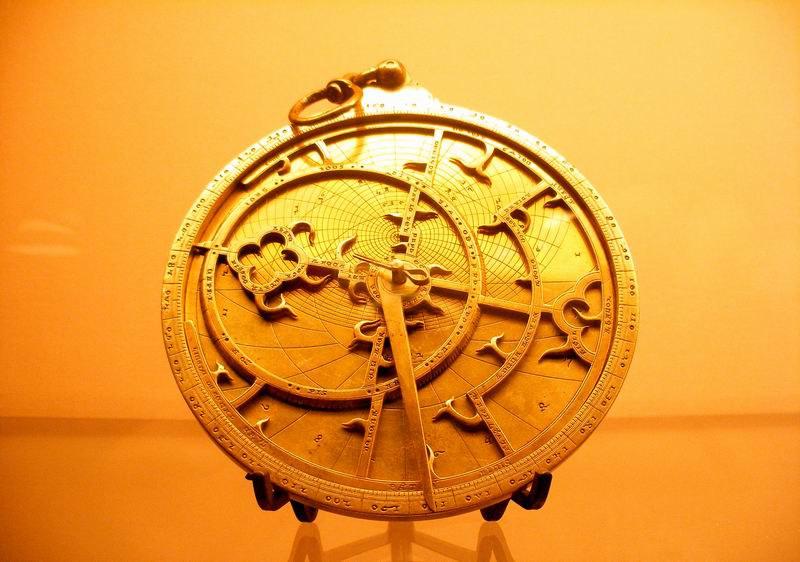
Ancient civilizations pioneered early versions of contemporary mechanisms, offering valuable insights into the origins of modern technology. An astrolabe. Credit: Anders Sandberg / Flickr / CC-BY-2.0

Across history, ancient civilizations crafted prototypes for many of the modern mechanisms that have become integral to contemporary life. From the compass’s early forms that transformed navigation to the predecessors of today’s vending machines, these ancient artifacts offer insights into the roots of modern technology.

Although some of these ancient mechanisms were lost over time, their hidden potential was eventually revealed by subsequent generations, shedding light on the remarkable foresight of the ancient inventors.

Baghdad Battery

Baghdad Battery

found near Baghdad,considered galvanic cell that was created 2,000 years before A.Volta was born.The "battery"was a 13-centimeter vessel.Its neck was filled with bitumen an iron rod passed through it.Inside the vessel was a copper cylinder with an iron rod in it pic.twitter.com/zpPi36yxs7

— Truthseeker (@Xx17965797N) November 1, 2022

An ancient artifact, which became known as the Baghdad Battery, has fascinated the minds of scientists for the last century. According to chemist Dr. Von Handorf, this find allows to believe that “an ancient tinkerer could have invented an electroplating process.”

Discovered in 1938 by a German archaeologist Wilhelm Konig, the Baghdad Battery is potentially around 2,000 years old. It comprises a clay jar, a copper cylinder, and an iron rod. When filled with a mild acid, such as vinegar, this assembly generates approximately 1-2 volt of electricity.

Attention to the mechanism arose with new force after the Second World War. American scientist Willard Gray conducted experiments in the post-war period, making copies and demonstrating that the device could generate two volts of electricity when filled with electrolyte. German researchers in the 1970s replicated this setup and successfully used it to electroplate a thin layer of silver, proving its potential as a battery.

Several theories have been proposed regarding the purpose of the Baghdad Battery. One hypothesis suggests that its primary use was for therapeutic purposes, drawing inspiration from the ancient Greek practice of using electricity to relieve pain. Another theory suggests that the batteries could have been hidden inside religious statues or idols. Dr. Paul T Craddock suggested that those who touched the statues would “experience a little shock with a small, mysterious flash of blue light.”

However, this mystery is likely destined to remain unsolved, since the artifact was stolen from the National Museum of Iraq in 2003.

The Lycurgus Cup

Lycurgus Cup red
The Lycurgus Cup appears jade green, but changes color to a rich blood red when lit from behind. Credit: Public Domain / Wikimedia Commons

This 1600-year-old cup has a feature that proves that the ancient Romans were pioneers of nanotechnology. The perfectly preserved artifact amazed minds with its ability to change color depending on position and lighting.

Since the 1950s, the Lycurgus Cup has been in the British Museum. It received its name because of the masterfully depicted king of Thrace, Lycurgus. According to ancient Greek legends, he was at enmity with the god of wine Dionysus and is depicted on a cup entangled in a trap of grapevines.

When lit from the front, the cup appears jade green, but changes color to a rich blood red when lit from behind. This unusual and extremely modern property for that era has amazed scientists for decades.

Subsequently, scientists still managed to solve the mystery of the ancient mechanism behind the cup. They examined the glass under a microscope and discovered that Roman artisans had impregnated it with particles of silver and gold. These grains were so small that their size was less than one thousandth of a grain of table salt. Researcher Ian Freestone from University College London called the painstaking work of the ancient craftsmen “an amazing feat.”

The operation of the color changing mechanism has also found its explanation. When hit by light, the electrons belonging to the metal particles vibrate in such a way that they change color depending on the position of the observer. Gan Logan Liu, a professor at the University of Illinois at Urbana-Champaign, said that when the cup was filled with liquid, it changed the way the vibrating electrons in the glass interacted. He underlined that the romans “knew how to make and use nanoparticles for beautiful art.” Consequently, the color of the cup also changes.

This ancient technology is reflected in the modern world. Thus, home pregnancy tests use nanoparticles that turns the white line into pink.

South-Pointing Chariot, Ancient Mechanism Before Compass

A model of a south-pointing chariot
A model of a south-pointing chariot. Credit: Andy Dingley / CC-BY-3.0 / Wikimedia Commons

The prototype of a navigational instrument, this Chinese south-pointing chariot became an ancient analogue of the compass. The history of this ancient mechanism dates back to approximately 5th century BC.

The chariot was described as a horse-drawn cart indicating the southern direction. It featured a figure that consistently pointed south, irrespective of the cart’s orientation. Employing differential gears, the mechanism comprised four wooden gears and additional gearing connecting the differential to the wheels. As the wheels turned, the gears rotated the figure to maintain its southern alignment. Notably, the chariot necessitated manual adjustment at the start of every journey, unlike a compass, which aligns automatically.

Chinese scientists rapidly developed their technologies and learned to magnetize iron needles back in the 7th–8th centuries AD. However, for several more centuries they did not use magnetic compasses and continued to produce chariots. It is believed that they went out of use only around the year 1300.

First Vending Machine

Vending machines are older than you might think.

The first such machine was designed and produced by Heron of Alexandria in the 1st century BC.

It dispensed holy water in exchange for coins. pic.twitter.com/t4O8GqFIx8

— Inquisitive (@curious_va) March 1, 2023

Vending machines, which have become a common attribute of modern life, owe their appearance to the ancient Greek scientist Heron. One of the best ancient mathematicians and inventors, he lived and worked in Alexandria. Heron developed many remarkable ancient mechanisms, and even the first steam engine of its kind.

His vending machine was a very modern mechanism for dispensing holy water. To use it, a person had to insert a coin into a special slot. Then it fell onto a tray connected to a lever. The weight of the coin opened the valve, from which water flowed out for the liars. Eventually, a coin would then slide off the tray, causing the lever to return to its place.

Astrolabe, Ancient Mechanism that Could Measure Time

Astrolabe
An exploded view of an astrolabe, an instrument that was invented by the Greek scientist Ptolemy. Credit: Elrond / CC BY-SA 4.0 / Wikimedia Commons

Alexandria was home to another brilliant ancient inventor, Ptolemy, who invented a mechanism that could measured time.

This ancient instrument for timekeeping and celestial observation included the planispheric type, allowing astronomers to compute the positions of the Sun and stars relative to the horizon and meridian.

Originating in the 6th century, astrolabes gained prominence in the early Middle Ages across Europe and the Islamic world. It become crucial for maritime navigation by the mid-15th century before the emergence of sextants. Ranging from 3 to 18 inches, the typical planispheric astrolabe was predominantly crafted from brass or iron. It featured the base plate with celestial coordinates, the open-pattern disk illustrating stellar maps, and the alidade used for celestial sightings.

The astrolabe’s intricate construction and widespread usage underscored its significance as a multifunctional scientific tool in the medieval period. Its application extended beyond astronomy, finding utility in fields such as geography, timekeeping, and surveying.

Long-Assumed Roman Helmet Hoard Off Spain Turns Out to Be Medieval

9 June 2026 at 02:35
Details of the overlapping helmets
Details of the overlapping helmets. Credit: Manuel Frallicciardi / CC BY 4.0

Researchers have confirmed that an underwater helmet hoard off Spain’s eastern coast near Benicarló is medieval rather than Ancient Roman as long assumed. The finding places the collection in the late 14th to early 15th century, during a period of intense maritime conflict along the Valencian coast.

The study was led by Manuel Frallicciardi, a doctoral student jointly supervised by the University of Alicante and the University of Salerno, and published in the journal Antiquity. It marks the first time radiocarbon dating has been applied to iron helmets from an underwater site.

Divers recovered the helmets in 1990 from Piedras de la Barbada, a submerged site about six meters (20 feet) deep near Benicarló in eastern Spain. At least forty-three helmets were identified. Split between two institutions, most of the helmets are stored at the Museu de Belles Arts de Castelló, while two conserved ones are on display at the Museo de la Ciudad de Benicarló.

Because the site had also yielded Roman-era artifacts, including ancient amphorae and Punic War-era bronze helmets, early researchers assumed the iron helmets belonged to the same ancient period.

Fabric linings within helmets unlocked dating mystery

Frallicciardi and his team found organic evidence trapped inside the helmets. Marine sediment had sealed fabric linings in place, protecting them from full decay. The fibers, identified as plant-based bast material in a plain tabby weave, were sent to the Beta Analytic laboratory in Miami and the Curt-Engelhorn-Zentrum Archaeometrie in Mannheim, Germany.

Medieval helmets from different viewpoints
Medieval helmets from different viewpoints. Credit: Manuel Frallicciardi / CC BY 4.0

Four of the five radiocarbon results clustered between the last quarter of the 14th century and the early 15th century. One sample returned a date roughly 150 years later than the rest. Researchers linked this to post-depositional contamination. That helmet sat in a more exposed position, and microscopic analysis showed its fibers were more degraded, conditions that could allow younger carbon to infiltrate the sample.

Spain’s underwater helmet hoard links to medieval piracy era

The helmets fall into two types. Most have rounded skull caps with a central ridge, resembling simplified infantry helmets documented in medieval sources, including the Holkham Bible from around 1330 to 1340 and a fresco painted by Jacopo Uccello around 1378. One helmet has a six-panel faceted construction comparable to a kettle hat depicted in a 1437 altarpiece by Hans Multscher.

Frallicciardi noted the helmets predate the era when large Italian and German workshops standardized European armor production. Their simple construction points to smaller regional workshops supplying local infantry markets. The historical context strengthens that picture. From the 1370s onward, Islamic piracy along the Valencian coast intensified sharply, peaking in the final decades of the 14th century.

Communities responded by building coastal towers, fortifying settlements, and mobilizing local militias. Researchers believe the helmets were most likely lost at sea during this period of sustained maritime insecurity.

2,200-Year-Old Roman Basilica Found Near Rome Reveals Rare Painted Female Head

9 June 2026 at 00:32
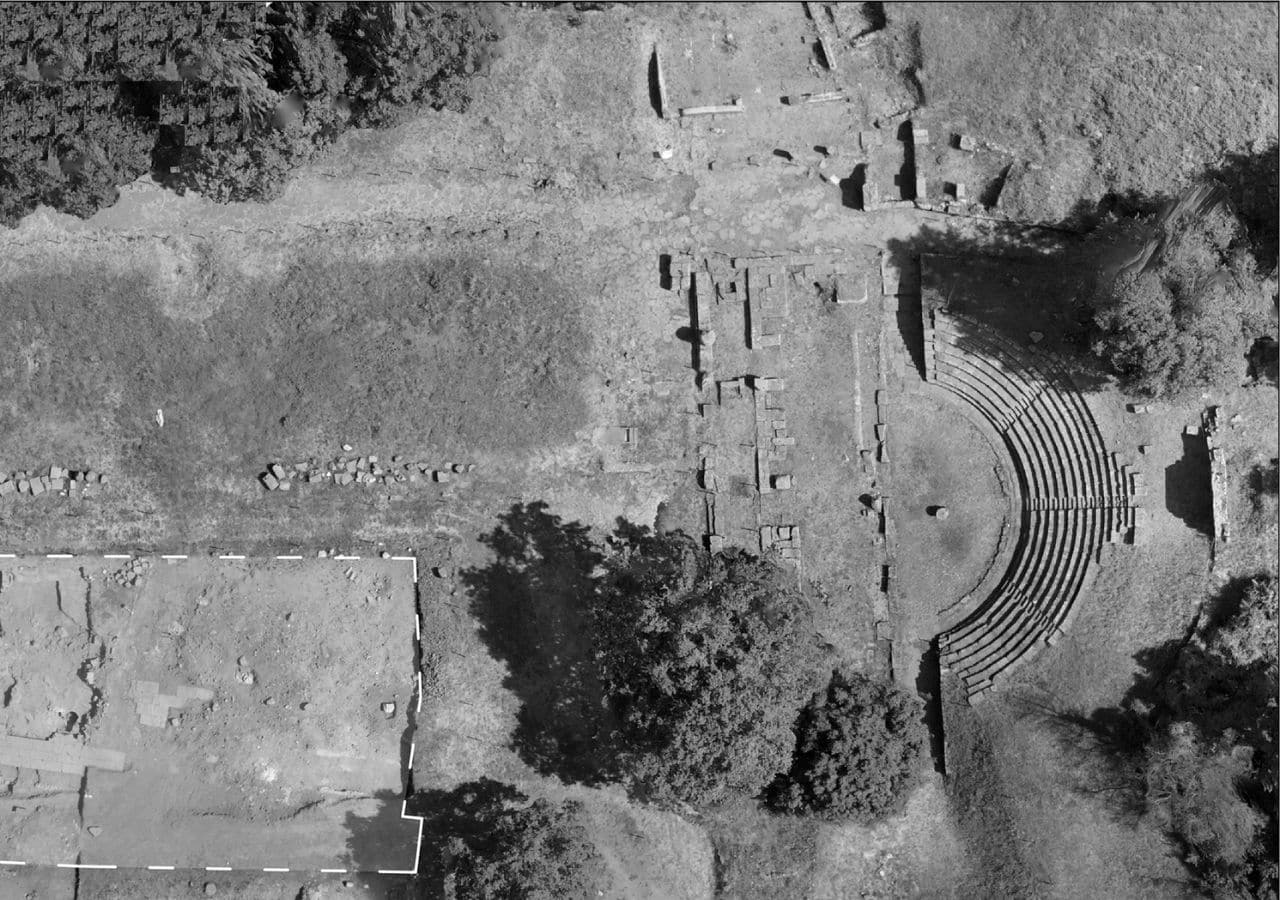
Tusculum, forum. Areas 1 and 2
Tusculum, forum. Areas 1 and 2. Credit: Francesco De Stefano / CC BY 4.0

Archaeologists have uncovered the remains of a Roman basilica at Tusculum, an ancient city located about 30 kilometers (18.6 miles) from Rome, dating it back to the 2nd century B.C.

The discovery places the structure among the oldest known examples of Roman public basilica architecture, adding a significant piece to the puzzle of how Rome shaped its cities during the Republican era.

Researchers from the Spanish School of History and Archaeology in Rome, known as EEHAR-CSIC, made the find in the southern part of Tusculum’s forum. The forum served as the political and social heart of the city.

The basilica had remained hidden beneath later imperial-era structures for centuries. Antonio Pizzo, who leads the project, said the building is one of the earliest known examples of its type and joins a small, well-documented group of Republican basilicas.

Inside Tusculum’s ancient Roman basilica and its rare design

The structure measured 17.7 by 25.2 meters (58 by 82.7 feet). Its monumental facade featured a series of arches resting on nine flat pilasters, an architectural arrangement known as the “Theatermotiv.”

Pizzo noted that if researchers confirm this interpretation, it would mark the first time this design appears in Roman architecture. Until now, this style had only been identified in later, exceptional buildings such as the Tabularium in Rome.

Female protome
Female protome. Credit: Francesco De Stefano / CC BY 4.0

Among the most striking finds was a polychrome stucco capital discovered inside one of the building’s rooms. It depicts a female head rising from a cup of acanthus leaves, flanked by Ionic scrolls and floral motifs painted in white, red, and green.

The timing of the basilica’s construction aligns with the rise of powerful families from Tusculum, including the Mamilia, Fulvia, and Porcia clans.

The Porcia family produced Marcus Porcius Cato, famous for his repeated calls to destroy Carthage before the Third Punic War. Pizzo said these families drove a wave of monumental construction that went hand in hand with Rome’s growing power across the Mediterranean.

Powerful families and a Roman general add historical depth

Researchers also linked the site to Marcus Fulvius Nobilior, one of the most influential figures of the 2nd century B.C.

After defeating the Aetolian League in Greece, he returned to Rome with Hellenistic art and treasures. An inscription found at Tusculum confirms that some of that spoil went to his hometown.

Francesco De Stefano, co-author of the study published in the Journal of Roman Archaeology, said the discovery contributes valuable knowledge about the origins of this building type and key innovations in Roman public architecture.

The EEHAR-CSIC team has worked at Tusculum continuously since 1994, excavating its forum, theater, and baths. In 2023, they also uncovered a well-preserved marble female statue, with further details expected soon.

How Ancient Greek Acropolises Went From Civic Pride to Symbols of Tyranny and Oppression

8 June 2026 at 23:01
Acropolis of Athens in Greece at night
Acropolis of Athens in Greece at night. Credit: Giles Laurent / Wikimedia Commons / CC BY-SA 4.0

The ancient Greek Acropolises meant very different things to different people across history. A new study finds its symbolic meaning shifted dramatically over centuries, starting as a marker of civic pride and freedom before becoming firmly associated with tyranny and oppression.

Robin Rönnlund, an archaeologist at the University of Gothenburg in Sweden, published the study in the Annual of the British School at Athens. He examined ancient texts from Homer through the second century A.D. and traced how writers, philosophers, and inscription makers actually understood the word “acropolis” across roughly 1,000 years.

The research directly challenges a widely accepted scholarly narrative. For decades, historians described acropolises as prehistoric royal strongholds that were later abandoned and converted into either religious sanctuaries or civilian refuges during attacks.

Scholars built a false narrative around misread Aristotle

Rönnlund traces this narrative back to a misreading of a passage in Aristotle’s Politics, in which Aristotle theorized that acropolises suited oligarchies and monarchies.

Past scholars interpreted this theoretical statement as a historical sequence rather than a practical observation about fortifications, and the misreading quietly shaped academic thinking for generations.

Remains of the Temple of Artemis with the Acropolis, Sardis
Remains of the Temple of Artemis with the Acropolis. Credit: Carole Raddato / Wikimedia Commons / CC BY-SA 2.0

The word itself is also commonly misunderstood. Rönnlund explains “acropolis” does not mean “upper city,” as dictionaries suggest. It more precisely means “the farthest polis” or “the polis on the edge,” and it first appeared in the Odyssey in reference to Troy.

In early Greek poetry, the ancient Greek acropolis carried an unmistakably positive meaning. Simonides described the Acropolis as a symbol of Greek resistance to Persian invaders.

Ancient Greek Acropolis once stood for freedom and pride

Sparta was celebrated as the “acropolis of Greece” in the famous Lysander monument at Delphi. Philosophers extended the metaphor further. Plato called the head the “acropolis of the soul.”

Diocles of Karystos described the mind as a sacred statue placed on the acropolis of the body. These uses reflected strength, protection, and honor.

Acrocorinth, looking north towards the Gulf of Corinth
Acrocorinth, looking north towards the Gulf of Corinth. Credit: Vancouverquadra / Wikimedia Commons / Public Domain

The meaning turned darker as foreign military occupation became widespread. Ancient sources contain 66 passages linking tyrants to acropolises. Plutarch recorded a warning that Caesar should not be established as “tyrant in the acropolis.”

Macedonian forces turned a civic symbol into oppression

After 322 B.C., Macedonian forces systematically garrisoned acropolises across Greece to keep conquered cities under control. Both Demosthenes and Isocrates described how garrisoned acropolises kept entire regions in submission.

Civilian populations almost never used acropolises as refuges, contrary to popular assumption. The sites lacked sufficient water and supplies for prolonged occupation, and literary sources confirm people typically fled to the walled city below or into the countryside during attacks.

Rönnlund reviewed 133 individual acropolises mentioned in ancient sources and calls for future research combining archaeology, epigraphy, and field surveys to properly reconstruct how these sites functioned in ancient Greek life.

❌