Puede sonar a titular pensado para llamar la atención (y, en parte, lo es), pero detrás de la idea de que la NASA 'vestirá de Prada' en la Luna hay bastante más ingeniería que moda. Axiom Space y la firma italiana han presentado una nueva prenda interior para astronautas que no está pensada para verse, sino para algo mucho más importante: ayudar a mantener con vida y en condiciones de trabajo a quienes salgan a caminar sobre la superficie lunar.
La pieza se llama Liquid Cooling and Ventilation Garment, o LCVG, y se llevará debajo del traje espacial AxEMU, el sistema desarrollado por Axiom Space para las misiones Artemis de la NASA. Es, en esencia, una capa técnica pegada al cuerpo que regula la temperatura y ayuda a gestionar la ventilación dentro del traje durante los paseos espaciales.
Así, no es el traje exterior, sino una especie de ropa interior tecnológica que se convierte en una de las capas más importantes del traje, porque trabaja justo donde el astronauta empieza a sufrir el esfuerzo físico: en el contacto directo con el cuerpo.
Durante una caminata espacial, el problema no es solo el vacío, la radiación o las temperaturas extremas del entorno. También lo es el propio calor que genera el cuerpo humano al moverse, manipular herramientas o realizar tareas científicas con un traje presurizado. Por eso, el LCVG incorpora una red de tubos por la que circula agua fría y que recorre las principales zonas musculares.
Ese sistema absorbe el calor corporal y lo transporta hacia el sistema portátil de soporte vital del traje, desde donde se expulsa al espacio. Además, Axiom destaca que esta nueva prenda cuenta con un circuito de refrigeración redundante, es decir, un sistema de respaldo por si falla el principal.
La ventilación es la otra parte de la ecuación. La prenda también incluye un circuito que lleva oxígeno fresco hacia la zona del rostro del astronauta y ayuda a retirar el dióxido de carbono exhalado, que pasa después por el sistema de depuración del traje antes de que el oxígeno pueda recircular.
La colaboración tiene más sentido del que parece si se mira desde el punto de vista de los materiales. Prada no entra aquí como marca de lujo, sino como una compañía con experiencia en tejidos técnicos, patronaje, materiales de alto rendimiento, técnicas de confección avanzadas y modelado en 3D.
Según Axiom Space, esa experiencia se ha aplicado al desarrollo de una prenda que debe ser cómoda, resistente y capaz de mantener la refrigeración y la ventilación durante paseos espaciales de hasta ocho horas.
La colaboración entre ambas compañías no empieza ahora. En 2024, Axiom Space y Prada ya mostraron el exterior del traje AxEMU, diseñado para soportar las condiciones extremas del polo sur lunar, una zona clave para el regreso de los astronautas a la Luna.
La NASA lleva años preparando el regreso de astronautas a la superficie lunar dentro del programa Artemis, con el objetivo de sentar las bases de una presencia más sostenida. En ese contexto, el traje espacial es una pieza crítica. No basta con que proteja: tiene que permitir moverse, agacharse, recoger muestras, usar herramientas y trabajar durante horas en un entorno hostil.
La NASA ha probado ya estos trajes en simulaciones bajo el agua y en entornos de gravedad reducida.
El Renault Clio amplía su oferta mecánica con una nueva variante que busca convertirse en una de las opciones más equilibradas de la gama. La marca francesa acaba de anunciar la llegada del motor Eco-G de 120 CV asociado a una transmisión automática EDC de doble embrague, una combinación que pone el foco en la eficiencia, la autonomía y los costes de uso contenidos.
La nueva mecánica bicombustible funciona tanto con gasolina como con GLP (Gas Licuado del Petróleo), una tecnología que permite disfrutar de la etiqueta Eco y que continúa ganando protagonismo entre aquellos conductores que buscan reducir el gasto diario sin dar el salto a la electrificación.
Más de 1.400 kilómetros de autonomía
Uno de los principales argumentos de esta versión es su autonomía. Gracias a la combinación de un depósito de gasolina de 39 litros y otro de GLP de 50 litros, el Clio Eco-G 120 puede recorrer hasta 1.450 kilómetros sin necesidad de repostar. Se trata de una cifra especialmente destacada dentro del segmento de los utilitarios y que lo convierte en una alternativa interesante tanto para particulares como para profesionales que realizan largos desplazamientos.
Este nuevo propulsor toma como base un bloque turboalimentado de tres cilindros y 1,2 litros de cilindrada. Respecto al anterior Eco-G 100, mejora sus prestaciones con una potencia de 120 CV y un par máximo de 200 Nm, lo que supone una ganancia de 20 CV y 30 Nm. El resultado es una respuesta más contundente sin renunciar a la eficiencia.
La incorporación de la caja automática EDC supone además un salto en confort de conducción. Este sistema de doble embrague permite realizar cambios de marcha rápidos y suaves, evitando interrupciones en la entrega de potencia. Además, el conductor puede gestionar manualmente las relaciones mediante las levas situadas tras el volante.
En términos de consumo, Renault homologa cifras desde 6,5 l/100 kmcuando funciona con GLP y desde 5,4 l/100 km utilizando gasolina. Según la marca, el uso de GLP permite reducir aproximadamente un 10% las emisiones respecto a un motor convencional equivalente, además de generar un ahorro cercano al 25% en combustible.
La tecnología GLP cuenta con una larga trayectoria dentro de Renault Group y Dacia, acumulando más de quince años de experiencia. El sistema se integra directamente en fábrica y ha sido desarrollado para ofrecer los mismos niveles de fiabilidad y robustez que una mecánica de gasolina convencional, sin comprometer la capacidad del maletero.
Precio
Los pedidos del nuevo Renault Clio Eco-G 120 EDC se abrieron el 1 de junio. La versión Evolution arranca en 20.374 euros o desde 89 euros al mes, mientras que las primeras entregas están previstas antes del inicio del verano. Por encima de esta opción seguirá disponible el Clio E-Tech Full Hybrid de 160 CV, cuyo precio parte de 23.304 euros o 109 euros mensuales.
El mecánico de TikTok, Juanjo Jiménez (@jcautomotivetop), ha reflexionado en sus redes sociales acerca del aceite del motor de los coches y los periodos en los que los fabricantes recomiendan cambiarlo en la actualidad en comparación con cómo se hacía con vehículos de generaciones anteriores.
Asimismo, ha señalado que esta tendencia de alargar el aceite está provocando que los clientes retrasen aún más la renovación de la mezcla: "Todos sabemos lo que ha pasado toda la vida; cuando tocaba cambiar el aceite a los 10.000 kilómetros, el cliente aparecía a los 15.000-18.000 km con el motor sufriendo bastante. Puesimaginaros ahora cuando toca cambiarlo cada dos años y 30.000 km. Es que lo veo aquí todos los días; los motores vienen ya que el aceitesale hecho chapapote".
¿Por qué cree Juanjo que se recomienda el cambio de aceite cada más kilómetros o tiempo?
Según explica el especialista, hoy en día los aceites son 100 % sintéticos y los motores están mucho más afinados. Jiménez sostiene la teoría de que, si la tendencia es ir acorde a las normativas EURO para fabricar coches cada vez más limpios y verdes, resulta lógico el uso de lubricantes que aguanten mucho más para realizarmenos mantenimiento durante toda la vida útil del vehículo. Tal y como expone: "Hay muchos menos cambios de aceite, hay mucha menos huella de carbono y también hay mucha menos huella de residuos que generan los aceites viejos".
Además, el mecánico apunta a un factor comercial: para los fabricantes, lanzar al mercado un vehículo que requiera mantenimientos muy extendidos supone una "muy buena publicidad" para captar clientes y, además, dota a sus vehículos con una imagen de movilidad respetuosa con el medio ambiente.
¿Por qué va a seguir cambiándolo él cada 10.000 kilómetros?
Juanjo lo tiene claro: "Para que los motores de mis coches sigan durando toda la vida, yo voy a seguir cambiando el aceite cada 10.000 kilómetros o 1 año, como se ha hecho siempre". Sin embargo, lanza un mensaje claro para sus seguidores: "Vosotros seguid las recomendaciones del fabricante, punto".
Por lo tanto, el motivo por el que el mecánico va a seguir en sus trece está muy claro: realizar el mantenimiento de forma más frecuente protege mejor el motor y evita averías derivadas de un lubricante que ha perdido sus propiedades protectoras.
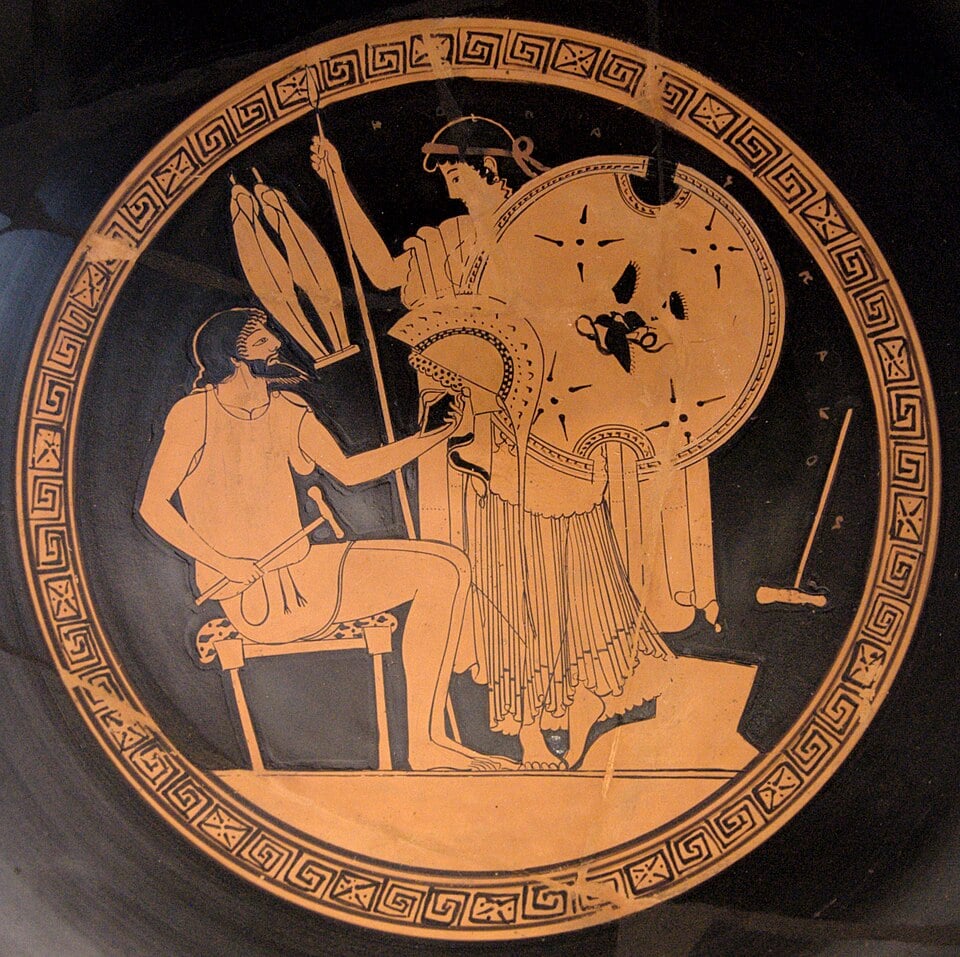
Thetis takes the magical shield for Achilles from Hephaestus. Attic red-figure Kylix, 490–480 BC. Credit: Public Domain
In Homer’s Iliad, Thetis plays an important role in shaping the destiny of her son, Achilles. As a goddess, she intervenes at key moments in the epic, pushing the Greek hero to alter the course of events.
Although Thetis appears less frequently than many of the warriors and gods who dominate the battlefield at Troy, her actions influence some of the most significant developments in the poem. As a sea goddess and the mother of the greatest Greek warrior, she occupies a unique position between the divine and mortal worlds. She cannot prevent Achilles from dying, since the Fates have already decreed it, yet she repeatedly intervenes to protect his honor, ease his suffering, and ensure that his glory endures.
Through Thetis’ character, Homer explores themes of maternal love, fate, mortality, glory, and divine power. The first major instance of Thetis helping Achilles occurs in Book 1. After Agamemnon captures Briseis, a captive woman awarded to Achilles as a war prize, the Greek hero feels deeply dishonored and withdraws from battle. In his grief and anger, Achilles calls upon his mother. Thetis immediately rises from the sea to comfort him and listen to his complaint.
This scene reveals the extraordinary bond between mother and son. Unlike many divine figures in Greek mythology, Thetis responds with sympathy and tenderness. She understands Achilles’ suffering because she is painfully aware of his short lifespan. Her lament for him reflects a mother’s helplessness in the face of fate.
Thetis petitions Zeus to turn events in favor of Troy
After hearing Achilles’ request, Thetis undertakes one of the most consequential actions in the epic. She travels to Olympus and petitions Zeus to punish the Greeks by granting success to the Trojans. Her aim is not simply revenge but the restoration of Achilles’ honor. Zeus eventually agrees, and his decision alters the course of the war. The Trojans begin to gain the upper hand, while the Greeks suffer devastating losses. Through this intervention, Thetis helps Achilles achieve the recognition he believes Agamemnon has denied him.
This episode demonstrates the extent of Thetis’ influence among the gods. Although she cannot alter fate itself, she is capable of shaping the chain of events that leads toward it. Her appeal to Zeus succeeds in part because of a previous favor she had done for him. In this sense, her assistance rests not only on maternal devotion but also on her standing within the divine order. Achilles’ withdrawal from battle would have remained a private grievance without Thetis’ intervention. Instead, it escalates into a crisis that engulfs the entire Greek army.
The second major instance of Thetis helping Achilles occurs after the death of Patroclus. Patroclus, Achilles’ closest companion, enters battle wearing Achilles’ armor and is killed by Hector. When Achilles learns of his friend’s death, he is overwhelmed by grief and rage. Once again, Thetis hears her son’s cries and goes to him. This scene is among the most emotional in the Iliad. Thetis is aware that Achilles’ decision to return to battle will lead directly to his own death, yet she does not attempt to stop him. Instead, she offers comfort and practical assistance.
Hephaestus forges the invincible shield of Achilles
Achilles cannot immediately rejoin the fighting because Hector has confiscated his armor. Recognizing his need, Thetis travels to the forge of Hephaestus and requests new armor for her son. Hephaestus responds by crafting the magnificent shield of Achilles, one of the most celebrated objects in world literature. The shield depicts scenes of war and peace, labor and celebration, and life and death. With this armor, Thetis enables Achilles to return to battle and fulfill his heroic destiny.
This act of assistance is particularly significant because it highlights the limits of divine power. Thetis can secure the finest armor ever made, but she cannot save Achilles from mortality. Her help therefore reflects the tragic paradox that every action she takes to aid her son also brings him closer to the fate she most fears. The armor allows Achilles to defeat Hector, but it also marks the final stage of his journey toward death.
Thetis’ role after Hector’s death further underscores her importance. Achilles becomes consumed by grief and rage, dragging Hector’s body around the tomb of Patroclus. The gods disapprove of this behavior and decide that Hector must be returned to his family. Zeus sends Thetis to deliver his command to Achilles. She successfully persuades her son to release the body in exchange for ransom, helping restore moral balance and preparing the tale for closure.
This final intervention reveals another dimension of Thetis’ assistance. Earlier, she helped Achilles gain honor through vengeance; now she helps him regain humanity through compassion. Her influence guides him from destructive rage toward acceptance. The reconciliation between Achilles and Priam, one of the most moving scenes in ancient literature, would not have occurred without Thetis serving as the messenger between gods and mortals.
The complexity of Thetis, the mother of Achilles
Modern scholars have emphasized the complexity of Thetis’ character. Rather than portraying her simply as a nurturing mother, recent studies highlight her power and agency. Thetis is more than a grieving parent. She is a divine force capable of influencing both Olympus and the battlefield for the benefit of her son. This is evident in actions such as her request to Hephaestus to forge an impenetrable suit of armor for Achilles.
At the same time, scholars frequently stress the tragic nature of her motherhood. Classicist Emily Wilson observes that she has come to view the Iliad as “a poem about the pain of a goddess mother who adores her mortal child and can’t protect him.” This insight captures the emotional core of Thetis’ role in the epic. Despite her divine status, she remains powerless as a mother in the face of fate. Her interventions can shape events, but they cannot prevent the loss she knows is imminent.
Other scholars have also noted that grief defines Thetis’ presence throughout the epic poem. Classicist Serena Cannavale describes Thetis in the Iliad as “a figure of grief,” emphasizing that her sorrow is present long before Achilles actually dies. Her laments anticipate the tragedy that hangs over the entire narrative.
Ultimately, Thetis helps Achilles in three essential ways: she restores his honor by persuading Zeus to favor the Trojans, she equips him for revenge by obtaining new armor from Hephaestus, and she guides him back toward humanity by conveying Zeus’s command to release Hector’s body to Priam. These actions shape the central events of the Iliad and reveal the profound connection between mother and son. Yet the tragedy of Thetis lies in the fact that her power cannot overcome destiny. She can comfort Achilles, protect his reputation, and secure his everlasting glory, but she cannot save his life.
For this reason, Thetis embodies the tension between divine power and human mortality. Every time she helps Achilles, she demonstrates her love, yet every act of assistance also reminds readers that fate is stronger than even the gods. Through Thetis, Homer presents a moving portrait of maternal devotion in the face of inevitable loss, making her one of the emotional centers of the Iliad.
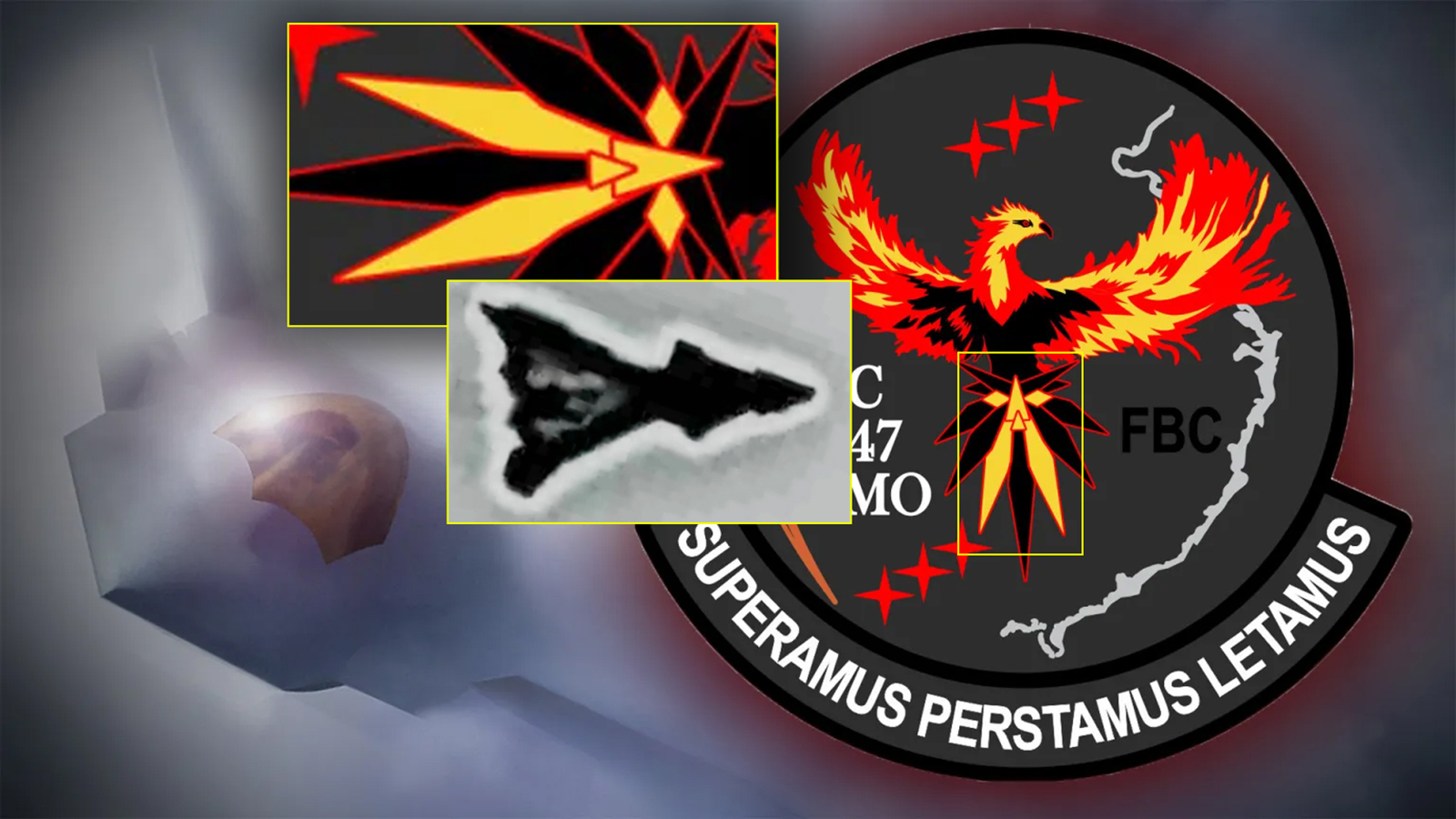
Inside the firebird motif of the F-47 patch, there is an exaggerated planform of what we see in Project Fear’s video of what is very likely Boeing’s NGAD demonstrator shot outside of Area 51. It also aligns with what we can extrapolate from the concept renderings of the F-47 that have been released.
Mainly, the design includes forward canard foreplanes with a tapered central fuselage, rear-set and highly-swept wings, and no traditional tails. The wings have a high dihedral before drooping toward their tips, creating an appearance akin to the Klingon Bird of Prey from the world of Star Trek. That reference isn’t just my own. Boeing’s Bird of Prey from the 1990s clearly shares design similarities, especially in the wing area, as we originally stated after the first official concept art’s release. The Bird of Prey’s patch also cryptically shared its basic planform.
On the Bird of Prey patch, we see a traditional Klingon knife, made famous by Star Trek, with the blade’s hilt making up the Bird of Prey’s planform. In fact, the only detail to throw it off is the t-guard at the bottom of the handle, which appears like canards. Even the cockpit is there. Of course, it isn’t clear at this time when this patch began to circulate in the public domain or if it was after the Bird of Prey was declassified in late 2002. Regardless, in the F-47’s case, the demonstrator’s exact features remain closely guarded secrets, at least officially.
(Screenshot)
Attempting to decode or draw insights into the military’s notoriously cryptic classified program patches is hardly a new practice. Books like Trevor Paglen’s I Could Tell You but Then You Would Have to Be Destroyed by Me is an excellent example of this and the fascination around this unique blending of art, technology, and national security.
In years of reporting on these topics, I have been told multiple times that there is more in patches than many realize, including hints at designs of classified aircraft. This runs pretty counterintuitive considering the government’s extreme protocol for classification, but vague representations of general design concepts are far from giving up an actual blueprint of a classified aircraft. Nonetheless, it is fascinating to see the practice occur for two highly classified aircraft that are directly related, and it’s something we keep an eye on regularly, as well.
Still, with all this in mind, it may be time to take a look back at some of the most interesting patches floating around to see if an exotic planform of an aircraft could be hiding amongst their stitches.
Yesterday, TWZ published an analysis of a thermal image purportedly showing a previously unseen advanced aircraft design, which appears to be a precursor to the U.S. Air Force’s forthcoming F-47 fighter from Boeing. The image, which went viral online and is from a video that has now been released, is said to have been captured near the U.S. military’s secretive Groom Lake test base, better known as Area 51. It turns out, as a number of our readers have pointed out, there may be some interesting similarities between this secret aircraft and a “Christmas tree” fighter design concept crafted decades ago by Darold Cummings, one of the top minds behind Northrop’s YF-23 Black Widow.
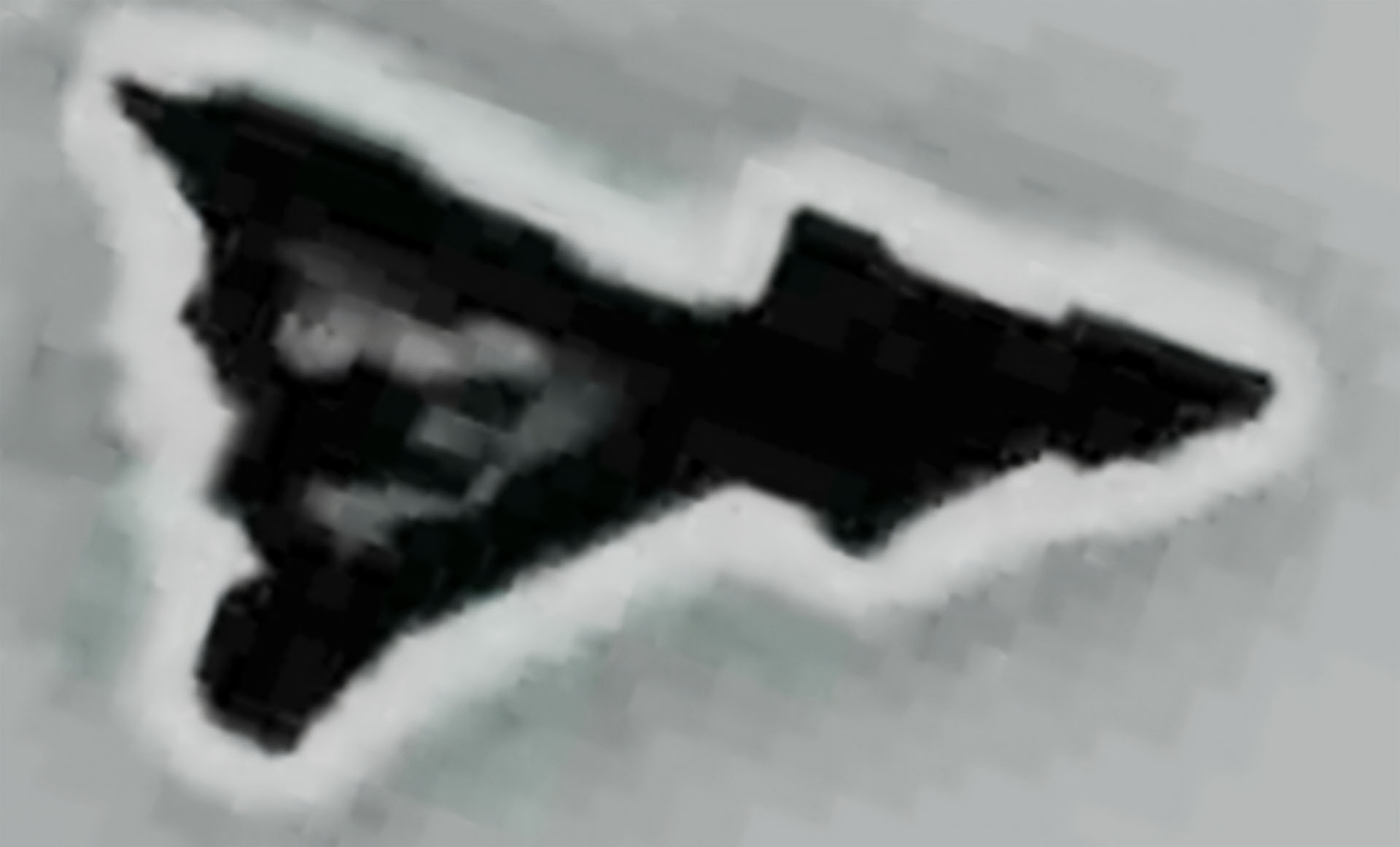
You can find our full initial assessment of what we may be seeing in the viral image, first posted online by the Project Fear YouTube channel earlier this week, here. What we saw initially, as shown below, appeared to feature what could be described as a “double arrowhead” profile to its forward fuselage. This is a very distinct design cue, but it could also be a result of the low quality of the image and the artifacts that come with consumer-grade thermal imagers, which was what the aircraft was recorded with.
A close-up look at what is visible in the viral thermal image. Capture via Project Fear
Project Fear has now released the full video it says it captured near Area 51, seen below, and it underscores the aforementioned points about image quality. So, it is possible the aircraft has a more traditional low-observable ‘shovel nose,’ instead. Nonetheless, the Christmas tree fighter is an interesting trip down lesser-known fighter development memory lane that is worth examining, in particular what such a unique nose configuration would provide an advanced fighter aircraft.
The full clip of the mysterious aircraft passing by starts at around 49:34 in the runtime of the video below if it does not automatically start playing at that point.
People are asking why it would be running a very bright light. Multiple reasons, could have had an emergency for all we know. But most likely, would be to keep its silhouette from being seen from certain aspects from the ground. Bright lights are established practice for… https://t.co/mxEvG2EUkz
“I was hired by Bob Sandusky in 1982 to be the Chief Configurator for the Northrop ATF [Advanced Tactical Fighter] program (YF-23). In early 1983 Bob said that Northrop had tried to develop a ‘4-spike’ (like the B-2) fighter, but it couldn’t be done, since a flying wing fighter was not possible,” Cummings wrote in his post on LinkedIn. “I told him I could design one, and he said to give it a try. The only way to accomplish this was with a series of highly swept (55 degree) surfaces over the entire length of the aircraft. The result was the DP-21, created in June of 1983.”
“4-spike” here essentially refers to the total number of radar cross-section hot-spots and where they are located, each pointing in a different direction in azimuth. The fewer ‘spikes’ a low-observable (stealthy) aircraft has, the easier it is to manage its radar signature, and to make it harder to detect and lock onto, but it’s also where those spikes are located that matter.
The blueprint of the DP-21 “Christmas tree” fighter concept. Darold Cummings
A four-spike design like the B-2 critically has nothing from the head-on aspect, as well as from the rear, which helps immensely with survivability. These are the most critical signature areas, especially the front as the aircraft is heading into hostile territory. Also, because these are located along the path of flight, these spikes can stay consistent on a threat radar as the aircraft moves directly toward or away from the sensor, and are not fleeting in nature like those from the side. So a four spike aircraft would be very attractive for a tactical fighter meant to persist in contested territory.
“I never considered this to be a serious contender for the ATF program, as the aircraft was unstable beyond 10 degrees angle of attack!” he also noted.
“Back in 1983, the ‘Christmas Tree’ DP-21 would have been difficult to fly. However, with modern flight control systems, this design could be controlled, even at high angle of attack,” Cummings told TWZ directly today after we reached out for more information. “Low observability is always better served with long edges on the design, so the small arrow-shaped foreplane is not ideal, but it still has low RCS characteristics, just not the optimum.”
“Wing shaping is always a trade-off for maximizing LO. Most of the trades have to do with the leading edge contour, which is a large contributor to signature,” he continued. “The canard has to be designed to be ‘ported’ during penetration, as this minimizes the signature. On the YF-23, the V-Tail was ‘ported’ in penetration for the same reason. This is certainly possible with modern flight control systems.”
“Ported” in this instance refers to keeping the control surface locked in the same geometric plane as the wing while cruising.
A top-down look at the YF-23 during a flight test. USAF
We also asked Cummings directly whether it was possible his DP-21 concept had an influence on what is seen in the viral thermal image, assuming it is authentic. And we asked for his take on what impacts Boeing’s experimental X-36 and Bird of Prey designs may have had on the F-47, as well.
“My DP-21 aircraft image has been available publicly for quite some time, so it is possible it had some influence, but that is only speculation on my part,” he told us. “I believe the X-36 and Bird of Prey have both influenced the F-47 design. I have always been impressed by the X-36, as it seemed to be ahead of its time.”
Boeing’s X-36 demonstrator. NASA/Carla Thomas Boeing’s Bird of Prey. USAF
“The Groom Lake images are truly intriguing,” he also noted. “It is a viable concept.”
“I think the main thing to remember is that NO ONE thought a 4-spike design (like the B-2) was possible, and my DP-21 was an example of how it was possible,” he added. “A 4-spike design for the F-47 would truly be impressive!”
“The image shows an exotic design by any interpretation. The aft-set lambda-type wings appear to have a camber and wingtip droop, as on the Boeing Bird of Prey demonstrator. There are very large canard foreplanes — a feature that appears prominently on F-47 renderings and which we have written in detail about in the past. The broad nose, too, is something that has been included in depictions of the F-47, although we have really no idea to what degree these are based in reality. It’s worth noting that in this new thermal image, it has a distinctive double-arrowhead shape, tapering in again in front of the canards. Even the canards themselves may have more than one plane, with the outer tips being drooped, matching similar architecture as the wing. The fuselage then tapers down in the center before the wing roots begin.”
“The aircraft is very likely to be tailless, a feature common to most sixth-generation concepts seen so far. However, since it’s seen from below, we cannot be sure about this aspect of its configuration.”
“As for the powerplant, it is most likely a twin-engine design, like the F-47, a theory reinforced by the sawtooth-type trailing edge. There is no obvious suggestion of any exhaust plumes, which seems odd, but that could be the result of the sensor being used in combination with the aircraft’s power setting at the time of recording, as well as general thermal signature reduction capabilities that are part of the design.”
Beyond the nose end, there are still some very broad similarities in the shaping of the wing and main body of the aircraft seen in the footage and Cummings’ DP-21 concept.
As we noted yesterday, what is seen in the viral thermal image could be unrelated entirely to the F-47. The Navy has also been pursuing a carrier-based sixth-generation fighter, commonly referred to as F/A-XX, in recent years. There has been at least some crossover between F/A-XX and the Air Force’s NGAD effort. A rendering Boeing has shared of its proposed F/A-XX design looks very much in line with what has been shown of F-47 to date. Northrop Grumman is the other company currently competing to build the Navy’s sixth-generation carrier fighter, and has released its own renderings.
Boeing’s F/A-XX render. Boeing
We're bringing tomorrow’s horizon into focus, faster, stronger and ready when the warfighter needs it.#SAS2026pic.twitter.com/r0uORyR5kM
In addition, it should be said that official F-47 and F/A-XX renderings released to date will have been carefully manipulated to maximize security of the programs, both of which remain highly classified, and to provide disinformation to adversaries.
As an aside, Cummings also shared his take on a prospective navalized version of the F-47 in a separate post on LinkedIn last year. At that time he wrote:
“I received a DM asking if I had envisioned a Navy version of my recent F-47 fighter concept, such as the F-35A to F-35C approach. I recently completed my F-47 Navy version, which I call the F-47N. However, the approach I took was somewhat different: The F-35C used a larger wing for low speed lift, whereas I used my original F-47 wing planform, and added a canard for more low speed lift and control. The canard design (inspired by the X-36), coupled with the Multi-Axis Thrust Vectoring (inspired by the X-44), provided a very reasonable first cut at a Navy version. In general, a canard layout has been treated as adding more radar signature to a fighter. However, on the YF-23 we found that if the all-moving surface (it was a V-tail on the YF-23) was kept “ported”, in this case aligned with the wing plane during cruise, the impact on LO was not a large impediment to signature reduction. The ability to keep the canard ported is achievable using thrust vectoring for trim in cruise and penetration modes.”
Cummings’ interpretation of the F-47 design at that time notably did not reflect his previous DP-21 concept. The X-44 design he mentioned is also known as the Multi-Axis No-Tail Aircraft (MANTA), and was derived from F-22. At least to our knowledge, the MANTA never came to be. The designation was recycled for an entirely unrelated flying wing-type drone, the existence of which was first reported by TWZ.
Darold Cummings’ drawing of his notional “F-47N.” Darold CummingsRenderings of the X-44A MANTA. Lockheed Martin/NASA
It’s also worth noting that the design in the newly emerged thermal video could be tied to one of many other programs, including uncrewed ones. Still, it is very much in line with what we would expect to see from a design related to the F-47 and it seems very likely this is the Boeing NGAD demonstrator, if the video is indeed authentic, which it appears to be.
It would be nice to say that we will have to wait and see whether this aircraft turns out to have a more traditional shovel-shaped nose, or even a mild Christmas tree-like design, but we may never see it again. Hopefully that is not the case, especially after the F-47 goes public, but the final design will have significant differences from its technology demonstrator forebears.
Special thanks to @ElectroFluidSys on X for bringing Darold Cummings’ posts on LinkedIn to our attention.
A thermal image purportedly shows a previously unseen aircraft design, said to have been captured when it was flying at night over the secretive Groom Lake facility, better known as Area 51. While the quality of the image is poor due to the sensor type that was supposedly used, from what we can see, the shape seems to be a relatively close match for what we know so far about the F-47 sixth-generation stealth fighter for the U.S. Air Force. This would point to it being the technology demonstrator ‘X-plane’ that served as a precursor to the contract being awarded to Boeing, although that is in no way a definitive assessment.
The image in question was first shared online by the Project Fear YouTube channel on June 3. The still image was promoted as a teaser for the full video that will be released tomorrow. It was published with the caption “A craft the public has never seen before.”
At this point, we need to be aware that there is no confirmation that the image is genuine, official or otherwise. We have reached out to the Air Force to try and establish its veracity, but they declined to comment.
However, the authenticity of the image and the forthcoming video was confirmed to TWZ by Anders Otteson, responsible for the Uncanny Expeditions YouTube channel, which explores classified locations at a distance around Nevada and California.
Otteson explained that he was approached by Project Fear, who was looking for advice in making a video outside Groom Lake.
“I’m generally happy to help other channels out, so I gave them a rundown on the gear I recommend buying, what specs are important, etc,” Otteson told us. “The thermal camera I suggested getting was the InfiRay HCH50R, and I can confirm that’s what this was shot with as I own one myself. I was out with them for their early filming and gave them a tour of some spots that I’ve had success spotting in the past. The following week is when they captured this aircraft.”
Otteson says the video was shot in the hills to the south of Rachel and that the aircraft was very low. He was not present during the sighting, which took place around two months ago, but Project Fear contacted him afterwards and shared the footage.
“I was obviously pretty excited when I saw it,” Otteson added.
While this may be the case, if the aircraft captured is real, the USAF likely shares the opposite sentiment.
Otteson also took to the r/area51 subreddit, where he further clarified his role and reiterated that the footage is, in his opinion, genuine.
“To be clear, my only involvement in this channel was an advisory role. I told them what equipment to buy and gave them general recommendations. I did go out with them but was not there at the time this clip was captured, though I was sent it immediately afterwards. I posted about this because I noticed some people calling it fake due to coming from a “paranormal” channel and wanted to clear that up. It is indeed real…” he wrote.
Otteson is certainly familiar with sightings of this kind. Earlier this year, he claimed to have captured thermal imagery of a ‘flying Dorito’-shaped aircraft that was also operating in the restricted airspace around Groom. The general triangular planform captured has a long history of rumored classified development going back to the dawn of stealth technology.
Newly released infrared footage dated January 14, filmed by videographer and explorer Anders Otteson, who runs a channel called Uncanny Expeditions on YouTube, shows an unidentified triangular-shaped aircraft flying over Area 51 and the Nevada Test and Training Range. pic.twitter.com/kQMmvI2tur
Among the many online discussions about this new image, it’s impossible not to make the connection with the Next Generation Air Dominance (NGAD) program, which Boeing won with its F-47 sixth-generation stealth fighter. That aircraft is now in early production for the U.S. Air Force.
An official rendering of the Air Force’s sixth-generation fighter, the F-47. U.S. Air Force graphic
The image shows an exotic design by any interpretation. The aft-set lambda-type wings appear to have a camber and wingtip droop, as on the Boeing Bird of Prey demonstrator. There are very large canard foreplanes — a feature that appears prominently on F-47 renderings and which we have written in detail about in the past. The broad nose, too, is something that has been included in depictions of the F-47, although we have really no idea to what degree these are based in reality. It’s worth noting that in this new thermal image, it has a distinctive double-arrowhead shape, tapering in again in front of the canards. Even the canards themselves may have more than one plane, with the outer tips being drooped, matching similar architecture as the wing. The fuselage then tapers down in the center before the wing roots begin.
The Boeing Bird of Prey. U.S. Air Force
The aircraft is very likely to be tailless, a feature common to most sixth-generation concepts seen so far. However, since it’s seen from below, we cannot be sure about this aspect of its configuration.
As for the powerplant, it is most likely a twin-engine design, like the F-47, a theory reinforced by the sawtooth-type trailing edge. There is no obvious suggestion of any exhaust plumes, which seems odd, but that could be the result of the sensor being used in combination with the aircraft’s power setting at the time of recording, as well as general thermal signature reduction capabilities that are part of the design.
Certainly, the official renderings of the F-47 have a superficial likeness to the X-36 Tailless Fighter Agility Research Aircraft, designed to be representative of a low-observable high-performance fighter.
An overhead view of the X-36. NASA
As Bill Sweetman, former editor-in-chief of Aviation Week and long-term observer of stealth programs, pointed out, the F-47 renderings also recalled some of the work of the late Alan Wiechman, who joined McDonnell Douglas from the Lockheed Skunk Works in the mid-1980s. He was responsible for the X-36 and the Bird of Prey. Sweetman also noted that, according to Wiechman’s obituary, he had ‘most recently’ been an adviser on stealth to the Air Force Rapid Capabilities Office.
So while everyone waits for the video of the A51 mystery plane, what did I write in March of last year?
"There are aspects of the artwork that call to mind the work of the late Alan Wiechman, who joined McDonnell Douglas… in the mid-1980s and headed the company’s stealth work… pic.twitter.com/9xJZK7CAOw
Returning to the F-47, as far as we know, it has not flown yet, with the first example being under construction in St. Louis. Its first flight is expected in 2028.
On the other hand, as noted earlier, demonstrators associated with the NGAD program have taken to the air.
In 2020, it was first disclosed that at least one demonstrator design had already been flying for some years on behalf of NGAD.
Frank Kendall, when he was Secretary of the Air Force, also spoke openly about “X-planes,” in the plural, when describing the evolution of what became NGAD.
DARPA and the Air Force meanwhile confirmed that two X-planes were built for the Aerospace Innovation Initiative, and that they first flew in 2019 and 2022, respectively. Kendall further added that these were entirely experimental demonstrator aircraft and not reflective of a production prototype for a “tactical design.” They were built sometime after 2017, he said.
Frank Kendall, when he was Secretary of the Air Force. U.S. Air Force Secretary of the Air Force Frank Kendall. USAF
While we know that Boeing and Lockheed both built demonstrators, it’s possible that as many as three NGAD demonstrators were completed. This would reflect the fact that, at one point, three prime contractors or teams were involved, the other candidate being Northrop Grumman, which dropped out around 2023.
Now that the F-47 is in the engineering and manufacturing development (EMD) phase, we have speculated that the Boeing demonstrator and probably even the Lockheed Martin one are still doing test efforts, with the Boeing aircraft logically being used for risk reduction work while the EMD work continues.
Then there is the other NGAD effort being pursued separately by the U.S. Navy. The Navy program is also based around a crewed sixth-generation combat jet, known as F/A-XX. We know there is at least some crossover between the Air Force and Navy programs. The Navy has been especially tight-lipped about its F/A-XX program, and the aircraft seen could be a test asset related to it. In fact, it could be a direct descendant of the design that gave birth to the F-47, as Boeing’s renderings of their supposed entrant into the competition resemble the F-47. Again, we must state that renderings will be carefully manipulated prior to release to maximize security of the program and provide disinformation to adversaries. Still, the common through-lines are clearly there for the Boeing type.
Boeing’s F/A-XX render. Boeing
It’s also worth noting that the aircraft spotted on the thermal device does not match the aircraft seen in a satellite image at Area 51 during the time when the test effort for NGAD was underway. This could have been the Lockheed demonstrator or something else entirely.
Another possibility is that the aircraft in the thermal image is not a crewed next-generation fighter at all, but rather an advanced uncrewed combat air vehicle (UCAV). The U.S. military has invested heavily in stealthy drone programs in recent years, including highly classified systems designed for reconnaissance, electronic warfare, and loyal-wingman operations alongside crewed aircraft. Given the limited quality and single perspective of the thermal image, plenty of features could be misleading. It is therefore possible that the object is an experimental Collaborative Combat Aircraft or other uncrewed technology demonstrator rather than a prototype of a future sixth-generation fighter. However, while drones come in all configurations, the complexity of this aircraft design and its similarities to what we know about the F-47 make it being an unrelated uncrewed platform less likely. Area 51 also has many programs running at any given time, the vast majority of which we will never know about, so there have been and are many exotic designs that visit the airspace above the base for various reasons.
We can also say for sure that the aircraft in the new Area 51 image is fundamentally very different to the tailless new-generation combat aircraft designs that China is currently testing, the J-36 and the J-XDS, both of which you can read more about here.
A composite showing some of the images of the J-36 that have previously emerged. Chinese Internet via XA pair of previously emerged images of the J-XDS. Chinese internet via X
It should also be noted that, provided the imagery is legitimate, its appearance at this point could well be a byproduct of an uptick in flight-test activity at Groom and elsewhere. This is something we had expected since the new era of great power competition began, and seems to be really metastasizing. With so many new technologies and systems in development, including entirely new categories of air combat aircraft, a whole new premium and level of activity is being placed on the base, as well as at non-classified facilities, like Edwards AFB.
At the same time, public insights into the activities at the already notoriously opaque base are becoming harder. In a recent land grab, the observation point at Tikaboo Peak — previously, the closest existing viewpoint into Area 51 — has been closed off in another huge land grab by the USAF.
So, as it sits, it isn’t clear exactly what we are seeing, if indeed it is a real aircraft, but there are strong indications that this is our first glimpse of the winning NGAD entrant and a preview of what the F-47 will look like when it finally thunders out of the shadows.
Con motivo de la celebración hoy del Día Internacional de los Tumores Cerebrales, ASTUCE Spain, la Asociación de Pacientes de Tumores Cerebrales y del Sistema Nervioso Central, hizo un llamamiento urgente a las autoridades sanitarias para mejorar el acceso a segundas opiniones médicas en el ámbito de los tumores cerebrales, denunciando importantes desigualdades y carencias en el sistema sanitario actual.
Según la asociación, las actuales vías de derivación no garantizan que todos los pacientes sean evaluados en centros con la experiencia y los recursos necesarios para abordar patologías altamente complejas, lo que puede afectar directamente a su pronóstico y calidad de vida. “Es fundamental evitar que los pacientes sean derivados para una segunda opinión a centros que no disponen de recursos básicos como profesionales con formación específica, acceso a ensayos clínicos o un volumen suficiente de casos” , declaró José Luis Mantas, presidente de ASTUCE Spain, Además, un punto muy importante a tener en cuenta en las segundas opiniones es garantizar que los pacientes puedan ser evaluados en hospitales con ensayos clínicos activos, incluso cuando ello implique su derivación a otra comunidad autónoma.
Por su parte, Manuel Meléndez, coordinador del Comité Científico de ASTUCE Spain, explicó que “actualmente, la ley reconoce el derecho a solicitar una segunda opinión médica, pero no garantiza la libre elección de centro. El paciente debe tramitar esta solicitud a través de su hospital de referencia y, aunque puede proponer el centro donde desea ser evaluado —especialmente si se encuentra fuera de su comunidad autónoma—, la decisión final recae en el sistema sanitario, que puede asignar un hospital distinto.”
“También es necesario ampliar el derecho a la elección de centro más allá de los casos de discrepancia diagnóstica o terapéutica, garantizando el acceso a hospitales especializados cuando la complejidad clínica así lo requiera, como en tumores de baja incidencia, en adolescentes y adultos jóvenes, o cuando se precisan pruebas diagnósticas altamente específicas”, aseguró Meléndez.
Desde ASTUCE Spain también ponen el foco en los tiempos de respuesta y reclama agilizar los procesos de derivación, estableciendo como objetivo que la consulta en el centro de referencia se produzca en un plazo máximo de dos semanas desde la solicitud inicial, especialmente en enfermedades de rápida progresión. “En la actualidad, el tiempo de espera para una segunda opinión es de aproximadamente cuatro semanas, pero cuando la solicitud es a otra comunidad autónoma, esto se dilata. Estos tiempos hacen que todo se complique e incluso se pueda perder la oportunidad de un ensayo. Estamos hablando de enfermedades donde el tiempo y el acceso a la consulta marcan la diferencia.” explica Mantas.
Más tiempo por consulta
En materia de derechos de los pacientes, desde la asociación piden “más atención durante las consultas médicas, una reclamación que nos llega prácticamente a diario, no solo de pacientes, sino también de médicos, que no disponen del tiempo que les gustaría para atender a pacientes y familiares”.
Además, ASTUCE Spain plantea la necesidad de mejorar los circuitos de derivación entre hospitales, impulsando sistemas que permitan a los centros sin ensayos clínicos identificar alternativas disponibles y facilitar activamente la derivación de pacientes a hospitales de referencia. “No es razonable que un paciente sea derivado a un centro sin los recursos necesarios o que no pueda acceder a un hospital con ensayos clínicos por motivos administrativos o territoriales. Necesitamos un sistema que ponga realmente al paciente en el centro y garantice igualdad de oportunidades, independientemente de dónde viva”, señaló José Luis Mantas, presidente de ASTUCE Spain.
Por último, Mantas subraya la importancia de reforzar los centros de referencia con recursos humanos y materiales adecuados, con el objetivo de que puedan dar respuesta al creciente número de casos complejos y ofrecer una atención de máxima calidad.
Según los datos oficiales facilitados por la Sociedad Española de Neurología (SEN), cada año se diagnostican más de 5.000 nuevos casos de tumores cerebrales en España. Desde ASTUCE Spain recuerdan que, a pesar de los avances científicos, el acceso a ensayos clínicos sigue siendo limitado para muchas personas con tumores cerebrales, lo que frena el desarrollo de tratamientos más eficaces y personalizados. Por ello, la asociación hace un llamamiento a la colaboración entre entidades científicas, hospitales, industria e instituciones para que ningún paciente quede al margen de los avances actuales y futuros.
WORKSHOP
Estas y otras reivindicaciones se expondrán con motivo del II Workshop ‘Más allá del diagnóstico’ que organiza ASTUCE Spain el jueves 11 de junio en Madrid. Bajo el título 'Una fotografía social de los tumores cerebrales', se darán a conocer los resultados de la encuesta de Ipsos y ASTUCE Spain 'Percepción Social de los Tumores Cerebrales', que ofrecerá una radiografía inédita sobre el desconocimiento de esta patología, combinando la visión de la sociedad, pacientes y familias.
El evento servirá de punto de encuentro de médicos, pacientes, familiares e industria que abordarán de forma rigurosa y humana la realidad de esta enfermedad desde múltiples ángulos: social, clínico, emocional, y funcional. Asimismo, durante la jornada se conocerán datos inéditos sobre qué saben los españoles de este cáncer, cuánto lo temen y por qué.
Durante el workshop, que tendrá lugar en Tinhouse (C/ Eloy Gonzalo, 10 - Havas Village) desde las 10.30 horas, se generarán espacios de debate para hablar sobre las conclusiones obtenidas a partir de las encuestas realizadas a población general, pacientes y familiares; así como sobre las últimas novedades investigación en relación con el oligodendroglioma, un tumor primario del sistema nervioso central que se origina en el cerebro o la médula espinal y que se presenta entre los 35 y 44 años, mayoritariamente
LaLiga y el Consejo General del Poder Judicial (CGPJ) celebran este martes y miércoles unas jornadas de formación sobre los delitos de odio en el deporte que tendrán lugar en la sede patronal del fútbol español. El encuentro reúne a miembros de la judicatura, representantes institucionales y responsables del ámbito deportivo, que analizarán la respuesta jurídica frente a estas conductas.
El encuentro arrancará con la conferencia inaugural del magistrado de la Sala de lo Penal del Tribunal Supremo Vicente Magro, que repasará cómo ha abordado el alto tribunal el delito de odio hasta el momento. Antes, la apertura institucional correrá a cargo de la vocal del CGPJ y presidenta del Observatorio contra la Violencia Doméstica y de Género, Esther Rojo Beltrán; y del presidente de LaLiga, Javier Tebas.
La primera jornada contará con una ponencia sobre la obtención de datos biométricos a la luz de la jurisprudencia del Tribunal de Justicia de la Unión Europea, a cargo de la magistrada Ángela López-Yuste Padial. En el primer día de encuentro también se realizarán dos mesas redondas, la primera abordará la respuesta deportiva frente a las conductas de odio, con la participación del director legal de la RFEF, Jordi Aparisi; un miembro de su Comité de Disciplina, Francisco Rubio; y el presidente del Deportivo Alavés, Alfonso Fernández de Trocóniz.
Por su parte, la segunda mesa se centrará en la respuesta administrativa y penal en el mundo del deporte y contará con el presidente de la Sala de lo Contencioso-Administrativo del Tribunal Superior de Justicia de Madrid, José María Segura Grau; la directora legal de LaLiga, María José López; y Daniel Sánchez, de la Comisión Estatal contra la Violencia, el Racismo, la Xenofobia y la Intolerancia en el Deporte.
La primera jornada se completará con una ponencia sobre actuaciones preventivas y una visita al estadio Riyadh Air Metropolitano, donde los asistentes conocerán el funcionamiento de la sala de control operativa durante los partidos.
El 10 de junio el foco se desplazará al tránsito de la vía administrativa a la penal. El magistrado Diego Fernando Acosta Fernández, instructor del caso abierto por los insultos racistas que sufrió el jugador Iñaki Williams en 2020, abrirá la sesión con una ponencia sobre esta cuestión, antes de que una mesa redonda examine el margen de mejora de la respuesta administrativa y penal, con la intervención del magistrado del Tribunal Supremo Eduardo de Porres Ortiz de Urbina y del responsable Procesal y Penal de LaLiga, Francisco Martínez.
El programa abordará también la denominada culpa 'in vigilando' de los clubes de fútbol y la responsabilidad directa del aficionado, en una ponencia del magistrado de la Audiencia Nacional Javier Eugenio López Candela. La última mesa redonda tratará los aspectos relativos a la investigación de las conductas de odio en los estadios, con representantes de la Comisaría General de Información de la Policía Nacional y de la Jefatura de Información de la Guardia Civil, junto a responsables de seguridad de LaLiga.
Las jornadas concluirán con una conferencia de cierre titulada 'Fútbol en las Salesas. Jurisprudencia penal en materia deportiva', a cargo de Antonio del Moral García, magistrado de la Sala de lo Penal del Tribunal Supremo.
El encuentro se enmarca en la creciente coordinación entre la judicatura, las fuerzas de seguridad y las instituciones deportivas frente a las conductas de odio en el fútbol y en el conjunto del deporte español. En esa línea, LaLiga impulsa LaLiga VS, un proyecto entre la patronal y los clubes para erradicar el odio dentro y fuera del fútbol, que cuenta con un canal para reportar incidentes racistas o violentos en los estadios y que, cuando procede, deriva los casos a la vía administrativa y penal.
El coste medio de la electricidad en el mercado mayorista, gestionado por el Operador del Mercado Ibérico de Energía (OMIE), se sitúa hoy en 58,08 euros por megavatio hora, lo que supone apenas un incremento respecto al registrado el pasado viernes.
En el caso de los usuarios acogidos al Precio Voluntario para el Pequeño Consumidor (PVPC), el coste medio de la electricidad alcanza los 134,95euros por megavatio hora. Esta cifra ya refleja la revisión de la tarifa regulada, si bien aún podrían añadirse otros peajes y cargos complementarios.
¿Qué factores afectan a la subida del precio de la luz?
El precio de la electricidad en el mercado mayorista español está condicionado de forma directa por su sistema marginalista de subasta, un mecanismo donde la última tecnología en entrar para cubrir la demanda, habitualmente el gas natural, fija el precio que cobrarán todas las demás. Esta dependencia convierte a la factura de la luz en rehén de las tensiones geopolíticas y los costes de los derechos de emisión de CO₂, ya que cualquier encarecimiento de los combustibles fósiles encarece automáticamente el coste total de la energía generada, independientemente de su origen.
A esta volatilidad financiera se suman factores meteorológicos y regulatorios que terminan de moldear el recibo del consumidor. La falta de viento o lluvia reduce la aportación de renovables baratas como la eólica y la hidráulica, obligando al sistema a quemar más gas justo en las horas de mayor consumo. Este escenario se ha visto agravado recientemente por la retirada de las rebajas fiscales del Gobierno, cuya reactivación, con la vuelta del IVA al 21% y el incremento del Impuesto Especial Eléctrico, ha supuesto un impacto al alza automático en la factura final de los hogares.
Cuándo es más barato y más caro el precio de la luz
Hora más barata: Una de las franjas con menor precio es entre las 15:00 y las 16:00, aproximadamente 56,06 €/MWh para PVPC.
Hora más cara: La franja más elevada del día se encuentra entre las 21:00 y las22:00, alcanzando hasta 245,91 €/MWh para la tarifación PVPC.
Los avances en robótica están permitiendo que los robots humanoides operen en escenarios cada vez más exigentes fuera de los entornos controlados. Como ejemplo de ello, la compañía Unitree Robotics ha dado a conocer que una versión modificada de su robot Unitree G1, bautizada como Pemba, alcanzó la cima del Chimborazo, en Ecuador.
Esta expedición forma parte de un proyecto concebido para poner a prueba los límites de la autonomía robótica en algunos de los entornos más extremos del planeta, de esta manera, se demuestran las capacidades de locomoción y resistencia de los robots humanoides en condiciones reales, lejos de los escenarios controlados. Pero, ¿cómo fue posible lograr este hito?
Pablo, líder del proyecto, explicó en su perfil de la red social X (antes Twitter) que llevar un robot bípedo hasta una cumbre situada a 6.200 metros de altitud requiere importantes desafíos tanto logísticos como técnicos. Durante las 16 horas de ascenso, el modelo G1 se desplazó de forma autónoma por todos los tramos de la ruta con una pendiente inferior a 30 grados, aunque el equipo de la expedición tuvo que transportarlo en los terrenos más complejos.
También, para garantizar la supervivencia en entornos con temperaturas bajo cero y a un estrés térmico extremo, el equipo de Pablo desarrolló un sistema de ventilación personalizado para garantizar tanto el calor como el frío extremos dentro de la chaqueta que llevaba puesto el robot. De esta manera, al hacer modificaciones importantes en el hardware, el androide pudo operar en el Chimborazo.
Como resultado, el robot de Unitree logró llegar al pico de 6.200 metros y, gracias a este hito, ahora, el equipo de ingeniería de Pablo está entrenando nuevas políticas de aprendizaje por refuerzo para avanzar gradualmente hacia la autonomía total.
De cara a un futuro, la expedición centra su atención en el Mauna Kea (Hawái), antes de intentar escalar el Everest en octubre de este año. No obstante, la normativa gubernamental de Nepal podría retrasar la subida a abril de 2027, debido a que el país carece actualmente de un marco legal o políticas que regulen el uso de la robótica en el Everest, lo que obliga al equipo de Pemba a colaborar de forma activa con las autoridades locales para facilitar el acceso.
Normalmente, los mensajes de la Dirección General de Tráfico y de la Guardia Civil enfocados en cómo deben comportarse los usuarios de las carreteras van dirigidos a los conductores de vehículos a motor.
Sin embargo, también es importante que usuarios vulnerables como los ciclistas respeten las medidas de seguridad vial establecidas para ellos. Por eso, la Benemérita ha recordado cuatro obligaciones de movilidad segura que tienen los ciclistas y han dejado el lema "Compartir la carretera salva vidas".
¿Qué cuatro normas deben respetar los ciclistas en carretera?
A través de 'X', la red social que antes se llamaba Twitter, la Guardia Civil ha señalado las siguientes obligaciones para usuarios de bicicletas:
Usa casco siempre.
Lleva luces y elementos reflectantes.
Mantén distancia de seguridad.
Señaliza tus maniobras.
Estas sencillas indicaciones las ha acompañado de una imagen donde un automóvil adelanta a una "grupeta" de ciclistas respetando el metro y medio de distancia que es necesario dejar para adelantar de forma segura y legal. Por lo tanto, el mensaje es claro: para que los vehículos motorizados puedan realizar correctamente la maniobra, es también importante que los ciclistas circulen tal y como indica la ley.
¿Qué artículos de la ley obligan a los ciclistas a cumplir estos cuatro puntos?
Casco protector (artículo 118.2): Establece la obligatoriedad del uso de cascos homologados o certificados en vías interurbanas y define las exenciones aplicables.
Alumbrado y visibilidad (artículo 98.3 y 98.4): Detalla la necesidad de dispositivos reflectantes en el vehículo y el uso de prendas de alta visibilidad para el ciclista en condiciones de baja luminosidad.
Distancia de seguridad (artículo 36.1): Obliga a los conductores de bicicletas a circular por el arcén derecho cuando este sea transitable y suficiente, pudiendo utilizar la parte imprescindible de la calzada cuando no lo sea.
Señalización de las maniobras (artículos 108 y 109): El artículo 108 impone la obligación general de advertir las maniobras, mientras que el artículo 109.2 especifica cómo debe hacerse mediante el uso de los brazos (por ejemplo, extendiéndolo horizontalmente para giros o doblándolo para el sentido contrario).
The road showcases the advanced engineering skills of the Minoans. Credits: Public Domain
The Minoan Road, over 3,500 years old, is the oldest known paved road in Europe. It connected the prominent Minoan cities of Knossos, Gortyn, and Lebena on ancient Crete.
Only small sections of the road remain intact today, but this impressive ancient route ran approximately 50 kilometers (31 miles) across Crete.
Built during the height of the Minoan civilization, around 1600 BC, the road showcases the advanced engineering skills of the Minoans, who created an infrastructure that supported both daily life and economic activity across Crete.
The road included side drains to handle water runoff, a feature that helped preserve its structure by preventing water damage. Its condition is remarkable for an ancient road.
It was constructed with a solid, 200 mm (8-inch) thick layer of sandstone blocks bound with a clay-gypsum mortar. This sturdy base layer was then topped with basaltic flagstones, providing a durable surface.
The road included defined shoulders, which may have functioned as pedestrian pathways or for animal traffic, keeping it orderly and safe for movement.
Knossos, Crete. Credit Greek Reporter
Mythical King Minos used the road to talk to Zeus
According to legend, King Minos, the mythical king of Crete, son of Zeus and Europa, set out on this road (then a mere pathway) from Knossos, covering a large part of the way to the sacred cave, to meet his father Zeus and speak with him in person. There, he would learn about the mistakes that had been made and receive oracles concerning the best legislation for the future.
He started from Knossos and ended in the stalagmite cave of Dikteon Andron, located on Mount Dikte of the Ida or Ideon mountains of Crete (the current mountain of Psiloritis).
Minoan Road a crucial link in the Minoan civilization
The Minoan Road was a crucial link in the Minoan civilization’s network, facilitating trade, communication, and cultural exchange across Crete. Knossos, one of its endpoints, was the center of Minoan political and cultural life, while Gortyn and Lebena were significant in both Minoan and later Greek periods.
This road not only attests to the Minoans’ ingenuity but also underscores the role of Crete as a cultural and commercial bridge between the civilizations of the ancient Mediterranean.
The Minoan civilization’s infrastructure, especially roads like this, laid the groundwork for the development of European trade routes and road-building techniques in the centuries that followed.
Throughout most of the Bronze Age, the Minoans were the rulers of Crete. Over the course of their civilization, they gradually built up an incredible palace complex at Knossos. This was the most powerful city on the island.
The palace complex at Knossos served temple functions and was also an administrative center.
Los astronautas de la Expedición 74 vivieron una jornada atípica el pasado viernes 5 de junio, después de que la NASA les ordenara refugiarse en sus respectivas naves tras detectar unafuga de aire en la zona rusa de la Estación Espacial Internacional (ISS, por sus siglas en inglés).
Esta medida se adoptó como precaución mientras se evaluaba el estado del módulo ruso Zvezda, cuyo túnel de transferencia arrastraba problemas desde 2019 debido a la aparición de varias grietas. Aunque Roscosmos ha aplicado diferentes reparaciones en los últimos años, a comienzos de junio detectó un aumento de la pérdida de aire, estimada en unos dos kilogramos diarios, además de nuevas zonas potencialmente afectadas.
Ante dicha situación, Roscosmos preparó una intervención para inspeccionar y reparar el área dañada, que incluso contemplaba desmontar parte de una estructura interna para acceder mejorar a la zona de la fuga. Sin embargo, después de analizar los riesgos y la información disponible, Roscosmos decidió aplazar los trabajos para recopilar más datos y definir una estrategia más segura.
Finalmente, la NASA respaldó esta decisión y, una vez descartado un posible peligro inmediato para la tripulación de la Expedición 74, los astronautas abandonaron la nave espacial Dragon y retomaron sus actividades habituales. No obstante, la NASA informó en un comunicado oficial que "seguirá colaborando con sus homólogos rusos, junto con el resto de los socios internacionales que apoyan la estación espacial, para evaluar y garantizar una solución a este asunto".
Una vez retomada la actividad, la tripulación volvió a probar el funcionamiento de una bioimpresora 3D, continuó con los experimentos de microgravedad, siguió con el mantenimiento del hardware de la Estación Espacial Internacional e incluso aprovechó a fotografíar las auroras boreales.
Jessica Meir, astronauta de la Agencia Espacial Europea (ESA, por sus siglas en inglés), fue la encargada de difundir las imágenes en la red social X (antes Twitter), donde explicó que las auroras boreales son resultado de un reciente evento solar: "Hay mucho ocurriendo en este momento en la Estación Espacial Internacional, pero afortunadamente todos estamos a salvo y presenciamos ayer un espectacular espectáculo de aurora austral gracias a un reciente evento solar".
¿Cómo se originan las auroras boreales?
Las auroras boreales se producen cuando las partículas cargadas eléctricamente procedentes del Sol llegan a las proximidades de la Tierra. Estas partículas, transportadas por el llamado viento solar, son desviadas por el campo magnético terrestre hacia las regiones polares. Por lo tanto, al penetrar en las capas altas de la atmósfera, chocan con átomos y moléculas de gases como el oxígeno y el nitrógeno, transfiriéndoles energía.
Como resultado, cuando esos gases liberan la energía acumulada, emiten destellos de luz de distintos colores que forman las características cortinas y ondas luminosas de las auroras, teniendo en cuenta que el color depende del tipo de gas y de la altitud a la que se produce la interacción —el oxígeno suele generar tonos verdes y rojizos, mientras que el nitrógeno puede producir colores azules y violetas—.
Ultrahuman es una startup fundada en 2019 que comercializa los anillos inteligentes Ring Air y dispositivos de monitorización de la salud metabólica, diseñados para recopilar datos sobre parámetros como el sueño y la actividad física. Sin embargo, en marzo, esta compañía sufrió una brecha de seguridad que comprometió la información de sus usuarios.
El diario TechCrunch informa que "unos ciberdelincuentes obtuvieron acceso no autorizado a los datos de bienestar de sus clientestras robar las contraseñas de un empleado mediante un software malicioso", afectando a un sistema utilizado para análisis internos. No obstante, tras informar sobre el incidente a los usuarios a través de un correo electrónico, Ultrahuman dio a conocer que detectó la "intrusión" con tiempo, desconectó el sistema afectado y "revocó" todos los accesos.
Así lo afirma Mohit Kumar, CEO de Ultrahuman, en un comunicado a TechCrunch: "Nuestros sistemas de alerta de seguridad detectaron el incidente en cuestión de horas y solucionamos la vulnerabilidad rápidamente".
¿A cuántos usuarios ha afectado esta brecha de seguridad?
El incidente se produjo cuando los atacantes utilizaron credenciales robadas de un ordenador portátil corporativo infectado con malware, lo que les permitió acceder a los datos de bienestar de alrededor del 0,1 % de los usuarios.
Considerando los aproximadamente 700.000 usuarios activos mensuales reportados previamente por la compañía, el 0,1% de afectados equivaldría a unos 700 clientes cuyos datos de salud habrían quedado expuestos. Si bien Ultrahuman no ha desmentido esta estimación, se ha negado a proporcionar la cifra exacta de usuarios afectados. No obstante, la empresa ha asegurado que las contraseñas, la información de pago, los sistemas de producción y los dispositivos Ultrahuman Ring no se vieron comprometidos durante la brecha de seguridad.
Por otro lado, es importante mencionar que Ultrahuman se negó a revelar detalles sobre si recibió alguna comunicación de los ciberdelincuentes y tampoco especificó qué es exactamente "datos de bienestar".
Sin duda, esta filtración pone de manifiesto cómo las empresas emergentes de seguimiento del bienestar, como Ultrahuman, almacenan los datos de los usuarios en sus servidores, de forma que permiten a sus empleados acceder a los datos de salud.
El verano ya está tocando a la puerta y las costas españolas se preparan para dar la bienvenida a las vacaciones más increíbles del Mediterráneo con la llegada del Legend of the Seas, la tercera entrega de la revolucionaria clase Icon de Royal Caribbean. El barco celebrará su gran inauguración en Málaga el próximo 29 de junio, para posteriormente fijar su puerto base en Barcelona, desde donde comenzará a operar en agosto con rutas de 7 noches por el Mediterráneo Occidental.
Pero el Legend of the Seas no es solo una forma de llegar a nuevos destinos, es uno en sí mismo. Un barco diseñado para que cada jornada a bordo tenga su propio plan, desde emociones fuertes sobre el mar hasta espacios de relax, actividades familiares, espectáculos de gran formato y una completa oferta de ocio incluida en la experiencia del crucero. A bordo, las vacaciones empiezan mucho antes de pisar tierra.
Un barco pensado para quienes no quieren quedarse quietos
El Legend of the Seas llega al Mediterráneo con la misión de convertir la navegación en parte esencial del viaje. Sus instalaciones están diseñadas para que cada tipo de viajero encuentre su momento, ya sea buscando adrenalina, deporte, juego, desconexión o planes para compartir en familia.
Quienes quieran elevar el pulso podrán empezar por Crown’s Edge, una experiencia suspendida sobre el mar que combina altura, vértigo y vistas imposibles. Este circuito de obstáculos se ha convertido en una de las propuestas más llamativas de la clase Icon y promete ser una parada obligatoria para los más valientes.
La aventura continúa en Category 6, el parque acuático del barco, con seis toboganes pensados para quienes buscan emociones fuertes sin salir de la cubierta. A ello se suma el FlowRider, el simulador de surf de Royal Caribbean, perfecto para poner a prueba el equilibrio entre olas artificiales mientras el Mediterráneo acompaña de fondo.
Y para quienes prefieren conquistar las alturas, la pared de escalada ofrece una forma diferente de disfrutar de las vistas. No hace falta ser experto, basta con tener ganas de probar algo nuevo y dejarse llevar por el espíritu de aventura que define al barco.
Adrenalina y espectáculos dignos de Broadway
Si buscas emociones fuertes, el vecindario Thrill Island está reservado para los más valientes. Cuenta con el mayor parque acuático en alta mar, equipado con seis toboganes, el simulador de surf FlowRider, un minigolf y Crown’s Edge, una vertiginosa pista de obstáculos suspendida sobre el océano.
Cuando cae la noche, el entretenimiento sube de nivel. El barco estrena en exclusiva el musical Charlie y la Fábrica de Chocolate, una asombrosa adaptación teatral de la obra de Roald Dahl llena de sorpresas escénicas. Además, el imponente AquaDome y el AquaTheater ofrecen espectáculos visuales únicos con atletas realizando saltos desde más de 16 metros de altura bajo cascadas que cambian de forma.
Desconexión absoluta y diversión para toda la familia
El relax alcanza cotas legendarias gracias a sus siete piscinas y diez jacuzzis de estilo zen. Los adultos pueden refugiarse en la piscina The Hideaway, suspendida a ocho pisos de altura, que cuenta con su propio DJ y camas balinesas perfectas para contemplar el atardecer. Además, es posible pasear por el icónico Central Park, un barrio al aire libre que alberga más de 33.500 plantas reales.
Para las familias, el vecindario Surfside lo tiene todo, destacando el parque acuático infantil Splashaway Bay con toboganes y cubos gigantes de agua. Todo esto se complementa con el premiado programa gratuito Adventure Ocean, diseñado para niños de 3 a 11 años, donde un equipo multilingüe, altamente cualificado incluso para niños con autismo, garantiza un entorno educativo y de diversión continua. Los adolescentes de 13 a 17 años también cuentan con espacios exclusivos como el Hangout, ideal para relajarse, ver películas o jugar a videojuegos con sus nuevos amigos.
Para que el descanso sea total, el buque estrena alojamientos icónicos. Desde las amplias habitaciones Infinite Family Ocean View Balcony hasta el lujo extremo de la Ultimate Family Townhouse o los Icon Lofts, diseñados para que cada miembro de la familia encuentre su propio oasis privado en alta mar.
Pero no todo tiene que ser entrenamiento intenso. También hay opciones más ligeras y familiares, como el minigolf con vistas al mar, el laser tag, el escape room o el clásico carrusel, con caballitos tallados a mano en madera para disfrutar de un paseo mágico. Son actividades pensadas para llenar el día de pequeños momentos únicos, sin necesidad de organizar demasiado, basta con salir del camarote y elegir el siguiente plan.
Una oferta gastronómica para completar la experiencia
Aunque las instalaciones y actividades son las grandes protagonistas, la gastronomía también forma parte del viaje. El Legend of the Seas cuenta con 28 opciones gastronómicas a bordo, desde espacios incluidos en la tarifa hasta restaurantes de especialidad.
Entre las opciones más accesibles destacan Windjammer, el buffet con sabores de diferentes partes del mundo; Main Dining, una experiencia de restaurante más cuidada también incluida en la tarifa; y Sorrento’s, la pizzería perfecta para quienes quieren picar algo a cualquier hora.
También habrá propuestas como AquaDome Market, con puestos de cocina internacional, opciones dulces y saladas, zumos y smoothies. Y para quienes busquen una experiencia más especial, espacios como Royal Railway Legend Station o Hollywood Supper Club añadirán un componente escénico y diferente a la oferta culinaria.
Un nuevo icono para descubrir el Mediterráneo desde Barcelona
El Legend of the Seas es el destino perfecto para quienes buscan unas vacaciones verdaderamente legendarias en el Mediterráneo. Tanto si quieres disfrutar de singladuras emocionantes, aventurarte en una cuidada gastronomía, desafiar los límites de la adrenalina en su parque acuático, o simplemente desconectar bajo el sol en sus exclusivas piscinas, esta tercera entrega de la clase Icon cambia el concepto de viaje. Ha llegado el momento de planificar la escapada perfecta. Y tú, ¿estás listo para conseguir tu billete dorado y vivir la aventura más increíble sobre el mar con Royal Caribbean?
El sistema eCall es una de las tecnologías de seguridad más importantes que incorporan los coches modernos en Europa. Es el ya conocido botón SOS que muchos vehículos incorporan en el techo cerca del retrovisor. Su función consiste en que llama automáticamente a los servicios de emergencia si detecta un accidente grave.
Es obligatorio en los coches nuevos vendidos en la Unión Europea desde 2018, ya que permite reducir el tiempo de respuesta de los equipos de rescate y mejorar la atención a las víctimas, pero este sistema se está viendo amenazado debido a una decisión relacionada con las telecomunicaciones.
¿Por qué se 'apagan' las redes 2G y 3G?
El problema en sí no se encuentra en el propio sistema ni en los coches, sino en la tecnología de red que utiliza para realizar las llamadas de emergencia. Cuando se instauró eCall, la mayoría de los vehículos se diseñaron para que funcionasen a través de las redes móviles 2G y 3G, algo lógico por aquel entonces, pero ahora las operadoras están centrándose en el 4G y el 5G, y las anteriores se están apagando progresivamente.
Es decir, según explicó en su día el Gobierno de España, las redes 2G y 3G están llegando al final de su ciclo tecnológico debido a que mantenerlas activas implica elevados costes, mayor consumo energético y limitaciones de capacidad y seguridad frente a las actuales.
Por ejemplo, no todas las compañías van a seguir en los mismos tiempos, ya que Telefónica tiene previsto finalizar esta conexión en 2027, mientras que Orange quiere cerrar su 3G en el 2027, pero mantendría el 2G hasta 2030, fecha elegida por la Unión Europea para que, al menos, los Estados miembros mantengan mínimo una red.
Otras, como Vodafone, todavía no han comunicado sus intenciones, pero podría acabar muy pronto con el 2G, ya que apagó su 3G en 2022. Esto significa que la Unión Europea tiene todavía bastante trabajo, debido a que el calendario de apagado en estas redes es diferente en cada país.
¿Qué ocurre entonces con el sistema eCall?
Dicho esto, la consecuencia será que millones de coches podrían quedarse sin la capacidad de realizar llamadas automáticas cuando las redes 2G y 3G desaparezcan por completo. Según un estudio de la Comisión Europea, alrededor de 64 millones de vehículos en Europa podrían verse afectados por esta situación si no se toma ninguna medida antes de que finalice el proceso de apagado de las antiguas redes.
La normativa aporta una serie de soluciones, como que los nuevos sistemas eCall sean compatibles con los 4G y 5G, pero esta solución solo se aplica a los vehículos más recientes y no resuelve nada de la situación entre los coches fabricados entre 2018 y 2026.
Por ello, las instituciones europeas están estudiando otras alternativas: la primera consiste en actualizar el sistema de cada vehículo para que funcione con redes actuales, aunque tendría un coste para los propietarios; y por otro lado, la segunda opción consiste en mantener al menos una red 2G operativa en cada país hasta 2030.
De esta manera, millones de conductores podrían seguir utilizando la función eCall que, en situaciones de emergencia, puede resultar vital.
El Ministerio de Transportes ha anunciado la licitación por 3,2 millones de euros de la redacción del proyecto de trazado y construcción del nuevo tramo de la autovía extremeña A-58 entre La Roca de la Sierra y Bótoa, en la provincia de Badajoz.
Un paso adelante para que se ejecute este tramo de la autovía de 12,3 km entre los puntos kilométricos 53,8 y 66,1 de la actual N-523, en los términos municipales de La Roca de la Sierra y Badajoz, que Transportes prevé que supondrá 93,6 millones de euros.
Según explican desde el ministerio, el objetivo de la actuación es avanzar en la transformación del corredor Cáceres–Badajoz en una vía de alta capacidad, mejorando las condiciones de seguridad vial y funcionalidad, ya que la actual carretera presenta condicionantes como travesías urbanas, intersecciones a nivel, numerosos accesos directos y una elevada presencia de tráfico pesado.
¿Qué tramo de esta autovía se encuentra en construcción actualmente?
En estos momentos, el tramo de la autovía A-58 que se encuentra en fase de ejecución es el que conecta la A-66 con Río Ayuela, en la provincia de Cáceres. Estas obras, que comprenden un trazado de 13,5 kilómetros, cuentan con un presupuesto vigente de 94,3 millones de euros. El avance de estos trabajos ha requerido recientemente afectaciones al tráfico, como cortes temporales en la A-66 para la reposición de líneas eléctricas afectadas por el nuevo enlace.
Además de este tramo en construcción y de la reciente licitación para el sector entre La Roca de la Sierra y Bótoa, el Ministerio también trabaja en la redacción del proyecto para el tramo final que unirá Bótoa con Badajoz.
¿Qué otras actuaciones se están llevando a cabo en Extremadura?
Recientemente, el ministerio dirigido por Óscar Puente ha impulsado varias actuaciones de conservación y mejora de la red viaria extremeña. Adjudicó el pasado mes de abril un contrato de 8,33 millones de euros para el mantenimiento y explotación de 208,5 kilómetros de carreteras en la provincia de Badajoz, con trabajos previstos durante al menos tres años.
A esta inversión se suma otra del contrato adjudicado recientemente por el ministerio de 14,39 millones de euros para conservar cerca de también 200 kilómetros de carreteras estatales en la provincia de Badajoz, así como una actuación similar en Cáceres valorada en unos 11,2 millones de euros para el mantenimiento de 214 kilómetros de su red viaria.

 Login
Login