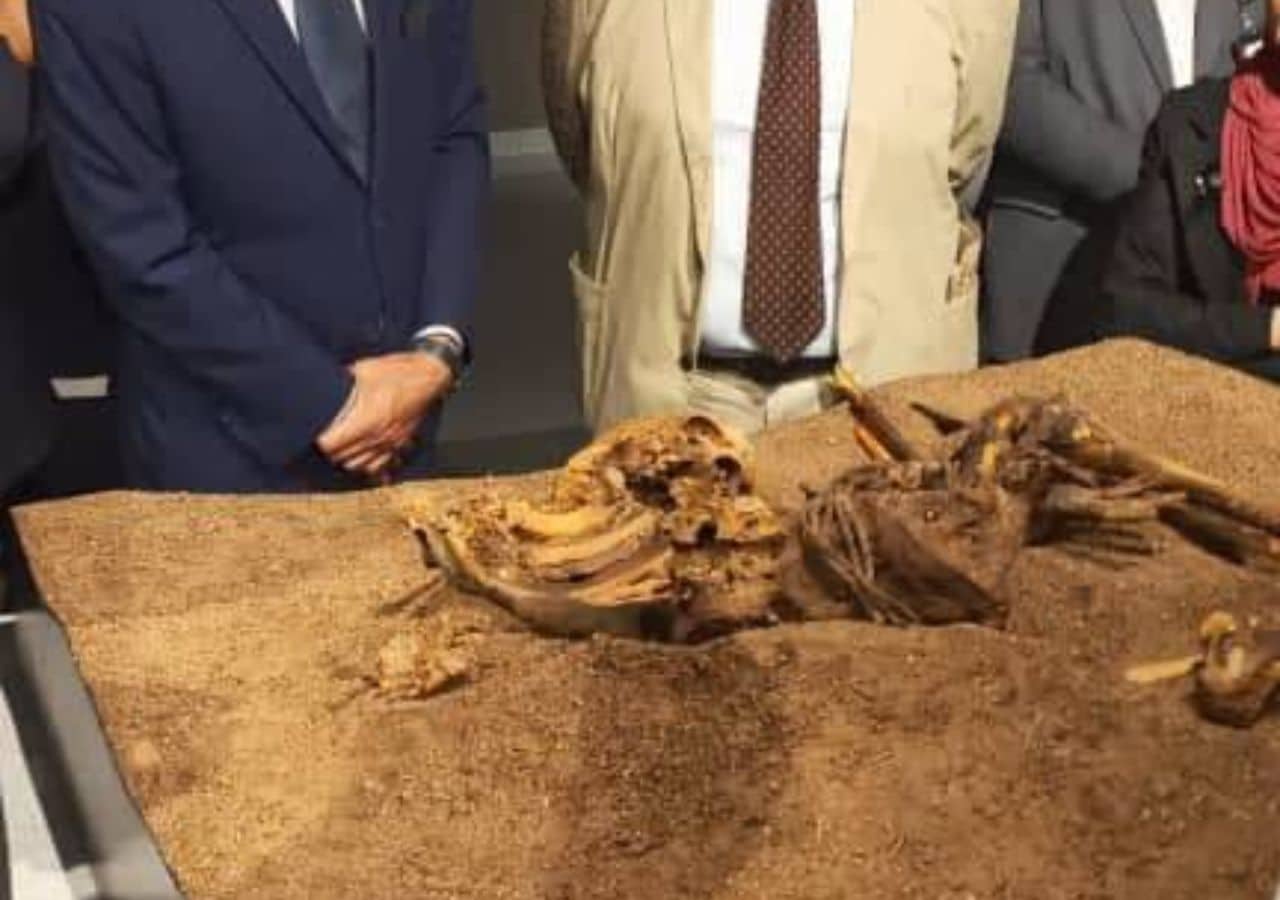
A 7,000-year-old prehistoric mummy from Libya’s Saharan past returned to the country Sunday after more than 20 years in Italy, touching down at Mitiga Airport in Tripoli aboard an Italian military aircraft.
The mummy, known as “Takarkori” or TK H1, was found at a rock shelter in the Tadrart Acacus region of southern Libya by the Italian Archaeological Mission in the Sahara.
Its return on June 14, 2026, ended its long stay in Italy, where researchers carried out years of scientific study on the ancient remains. After completing all official and customs procedures, the mummy was transferred to the National Museum in Tripoli.
The “Takarkori” remains date to what researchers call the “Green Sahara” period, a time when the Sahara had a far greener landscape and supported pastoral communities.
The mummy survived in remarkably good condition, making it unlike any other find on the African continent. That allowed researchers to study ancient DNA and piece together how Neolithic communities lived across North Africa.
Libya’s prehistoric mummy set for public display at the Red Castle
The restoration and scientific work carried out in Italy involved the Italian Archaeological Mission in the Sahara and the University of Rome, with ENI’s coordination and logistical backing from Italy’s air force and cultural ministry.
The prehistoric mummy from Libya is expected to go on public view at Tripoli’s Red Castle by late July. The complex houses the National Museum, which had been shut for over ten years before reopening last December.
Officials said the return fits into Libya’s wider push to recover and protect its national heritage while deepening cultural ties with Italy.
General secretary of TUC calls Reform proposal ‘a smokescreen for slashing women’s rights’
A law proposed by Nigel Farage to “strengthen women’s rights” could cost female workers money by removing equal pay for work of equal value, unions have said.
A proposal, made by Reform UK days before the Makerfield byelection, to introduce a “women and motherhood protection act” that it says will restore equality before the law has been described as “shameless and deceptive”.
À quelques jours de leur lancement, les fêtes du village landais de Mées ont été brutalement annulées après l’arrivée d’un convoi d’environ 80 caravanes installé sur le terrain de football communal. Entre inquiétudes...
Dans la nuit de dimanche à lundi, les gens du voyage ont quitté le stade de Pouyastruc pour s’installer sur celui de Tournay, où le maire, qui n’a pu empêcher l’envahissement, ne décolère pas et dénonce "un traitement...
Traffic in Syntagma Square in 1961. Credit: Video Screenshot/British Pathe
Step back into mid-summer Athens in 1961, beautifully captured in color footage released from the legendary British Pathé archives on YouTube. This vintage travelogue offers a rare, sun-drenched glimpse of a bygone era in the Greek capital.
The footage takes us down major avenues such as Amalias, Dionysiou Areopagitou, and Panepistimiou, where buses and trolleybuses vastly outnumber private cars. In the heart of Plaka, only a handful of tourists browse the handful of souvenir shops. One particularly charming scene at the corner of Mnisikleous and Lysiou streets shows two foreign visitors enjoying fresh grapes bought from a passing street vendor outside the historic Kritikos tavern.
Over at Syntagma Square, an itinerant photographer captures a portrait of a young boy on a bench. He uses a classic box camera, its sides adorned with sample prints of his work. The video then shifts to Mikrolimano in Piraeus, revealing a pristine coastline with low-rise buildings, a large fishing fleet docked with nets spread along the pier, and virtually no commercial development.
Vouliagmeni with no beach umbrellas
At Vouliagmeni beach, crowds of sunbathers soak up the rays on an organized stretch of sand. Notably, there isn’t a single beach umbrella in sight. In those days, long before modern concerns about the ozone layer or skin health, the sun was viewed purely as a friend to embrace for that perfect tropical tan rather than an element to hide from.
The journey concludes around Ellinikon Airport. As the Pathé crew’s plane touches down, the surrounding landscape is completely untouched—with Mount Ymittos standing free of any human development.
Play at Gillian Lynne theatre in London will cycle through versions with weekend crowds able to pick one
In keeping with its well-earned reputation for cloak and dagger, the stage adaptation of the hit gameshow Traitors will present audiences with different renditions of the story depending on which night they attend.
The Traitors: Acts of Betrayal will take the form of a five-play cycle, with weekend crowds able to determine which version of the BBC show dramatisation they see.
Some titles that once backed the Tories now ‘flirting with Farage’ as they try to gauge where readers stand
It was a Mail on Sunday headline with all the ferocity usually reserved for general elections, directed squarely at a political opponent. But in this case, the traditionally Conservative-supporting title was not targeting Labour.
The party in its crosshairs was Rupert Lowe’s Restore Britain, the vehemently rightwing outfit that regards Nigel Farage’s Reform UK as too weak on deporting migrants.
Russia has launched a large-scale disinformation campaign attempting to justify mass strikes on Kyiv's civilian and cultural objects, the Ukrainian Center for Countering Disinformation (CPD) has announced. Russian sources are using a classic scenario by attempting to disguise outright terror against civilians as "strikes on military targets" or shifting blame to Ukraine itself, the CPD said.
The disinformation campaign follows a pattern Ukrainian authorities have documented after previous Russian strikes on cultural and civilian targets. The Kyiv-Pechersk Lavra, a UNESCO World Heritage site dating back to 1051, is protected under the 1954 Hague Convention on the Protection of Cultural Property in the Event of Armed Conflict and the Geneva Convention Additional Protocol I, Article 53.
Russian information operations following strikes on Ukrainian civilian targets have followed predictable patterns since 2022.
Five Russian disinformation tactics CPD identified
The CPD documented five specific Russian disinformation tactics deployed after the Kyiv strikes.
The Kyiv-Pechersk Lavra fire is called "Ukrainian provocation" or "self-arson."
Russian conspiracy theories blame Ukrainian authorities for the strike on the Higher Anti-Corruption Court building.
The Dovzhenko Film Studio is declared a "legitimate military target" by Russian propaganda because it is allegedly a "propaganda nest."
False allegations claim Kyiv has weapons-production workshops disguised as civilian buildings — in Russian propagandists' framing, every Kyiv building is a "military object."
And "Ukrainian air defense" is blamed for damage to civilian buildings, a standard Russian deflection tactic.
CPD's framing: Russia carries full responsibility
All responsibility for the death and injury of peaceful Kyiv residents, destruction of historical and civilian buildings lies exclusively with Russia, and it must be punished for this, the Center says.
"No manipulation, conspiracy theories, or attempts to grant civilian objects 'military status' will help the aggressor conceal another war crime," the CPD said in its statement.
The CPD's position represents the Ukrainian government's position.
Broader pattern: two documented Russian disinformation campaigns after cultural site strikes
Russian disinformation following strikes on Ukrainian cultural sites has followed predictable patterns since 2022. Two documented precedent cases illustrate the same tactics now being deployed against Kyiv.
After the 16 March 2022 Russian airstrike on the Mariupol Drama Theater. Russia denied conducting the strike and claimed that Ukrainian soldiers had blown up the building themselves. An Associated Press investigation found that approximately 600 people died in the bombing, which makes it the deadliest single known attack on civilians in the war.
Amnesty International later concluded that the strike was a "clear war crime" conducted by two 500-kg bombs dropped from Russian fighter jets, ruling out alternative explanations.
After the 23 July 2023 Russian missile strike on the Odesa Transfiguration Cathedral, located within the UNESCO-protected historic center of Odesa, Russia's Defense Ministry denied targeting the cathedral and claimed the damage was caused by "the fall of a Ukrainian anti-aircraft guided missile," per Radio Free Europe/Radio Liberty.
UNESCO condemned the strike as an "escalation of violence against the cultural heritage of Ukraine." The cathedral's assistant rector, Father Myroslav, confirmed a "direct hit to the cathedral" with three altars destroyed.
The pattern across the Mariupol Theater, Odesa Cathedral, and now Kyiv-Pechersk Lavra cases is consistent: Russia denies conducting the strike and attributes damage to Ukrainian air defense or self-inflicted destruction.
A Agência de Geologia e Energia (AGE) já tem os nomes da comissão instaladora.
Nuno Matias (na foto, quadro da Entidade Nacional para o Setor Energético (ENSE), onde liderava a Unidade de Reservas Petrolíferas) vai liderar a agência no período de transição.
A AGE resulta da fusão da Direção-Geral de Energia e Geologia, do Laboratório Nacional de Energia e Geologia, da Empresa de Desenvolvimento Mineiro e da EDMI – Empresa de Projetos Imobiliários, integrando ainda atribuições da Entidade Gestora de Reservas Estratégicas de Portugal.
A comissão instaladora vai ter como vice-presidente Antonieta Loureiro. Integram ainda a comissão Miguel Águas, Ana Olim e Margarida Pisco, enquanto vogais.
Numa das entidades que vai ser integrada na AGE, a Direção-Geral de Energia e Geologia (DGEG) conta com novo diretor-geral para substituir Paulo Carmona que foi liderar a Infraestruturas de Portugal: Alexandre Santos que ocupava o cargo de sub-diretor-geral desde outubro de 2025. Para o cargo de sub-diretora geral, Liliana dos Santos assume o cargo. Ambos foram designados em regime de substituição.
Moscow's forces have looted over 7.8 million artifacts from museums in occupied territory since 2014, Ukraine's chief legal authority reported on 15 June.
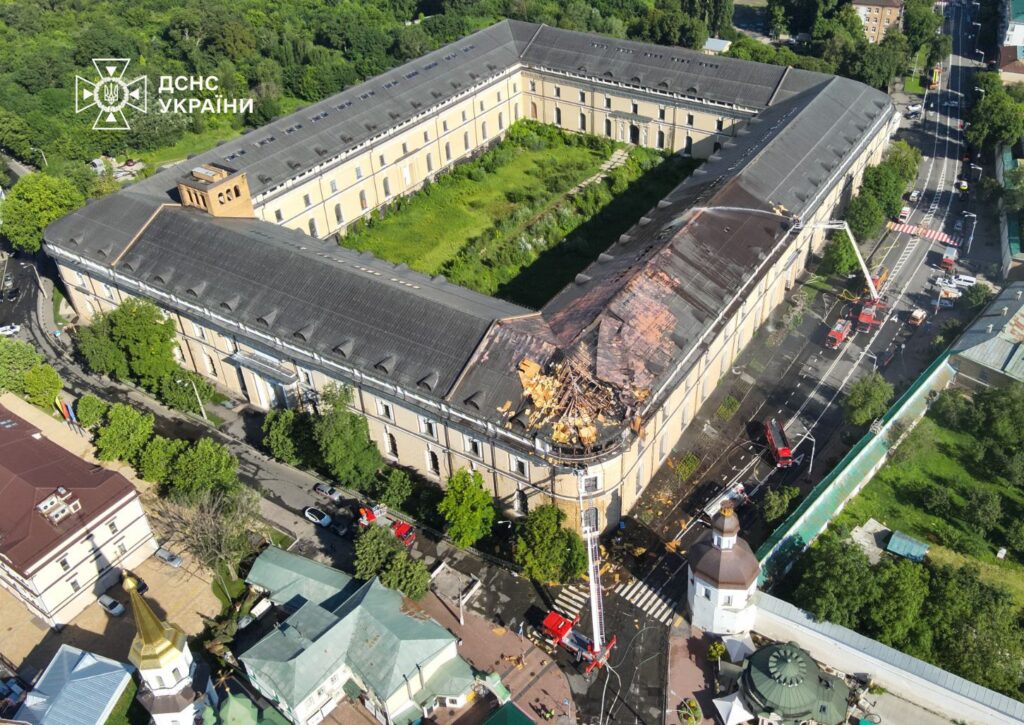
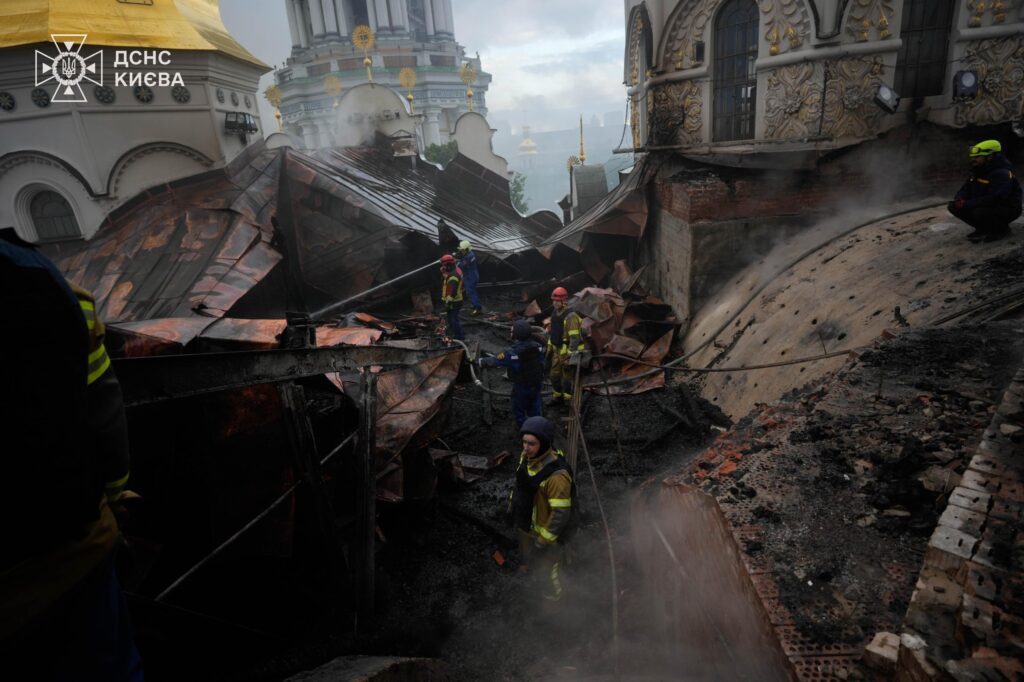
The figure surfaced as Prosecutor General Ruslan Kravchenko condemned an overnight missile strike on the Kyiv-Pechersk Lavra. He placed the attack within what he called a deliberate state campaign to erase the country's identity. Kravchenko spoke hours after a combined Russian barrage set fire to the monastery's Dormition Cathedral. The cathedral is one of the most revered sites in Eastern Orthodox Christianity. Founded in 1051, the complex sits under UNESCO World Heritage protection. Moreover, it falls under the enhanced-safeguard mechanism of the 1954 Hague Convention.
A strike the prosecutor frames as cultural warfare
The Lavra hit belongs in the same category as earlier attacks on national symbols, Kravchenko argued. He grouped it with strikes on the Transfiguration Cathedral in Odesa and the Hryhorii Skovoroda museum in Kharkiv Oblast. The list also named the Ivankiv museum holding works by folk artist Maria Prymachenko. It extended to the Oleksandr Dovzhenko National Film Studio in Kyiv and the Organ and Chamber Music House in Dnipro.
"This is the deliberate policy of an aggressor state — to destroy what shapes Ukrainian identity," his office said.
Almost 2,000 sites damaged, more than 100 under UNESCO's umbrella
Russian forces have damaged or destroyed close to 2,000 elements of Ukrainian cultural heritage, Kravchenko stated. The count runs from the start of the full-scale invasion in February 2022. More than 100 of them carry UNESCO designation, he added.
That national tally runs well above the figure the UN body verifies on its own. UNESCO confirmed damage to 536 cultural sites as of 10 June 2026. That narrower count reflects stricter cross-checking against satellite imagery and on-site inspection. The gap reflects method, not contradiction. Ukrainian authorities log every culture-related facility affected in any way, while UNESCO applies a tighter definition of cultural property.
Dovzhenko studio loses Ukraine's largest costume archive
Investigators recovered missile fragments at the Dovzhenko film studio after the overnight assault, the prosecutor general reported. The strike leveled a two-story costume storehouse. It also damaged an annex to the sound stages, plus administrative and production buildings. No deaths or injuries occurred at the site.
Studio chief Andrii Donchyk told the "Snidanok z 1+1" program that the archive was the country's oldest. Roughly 100,000 costumes and about three million items of clothing had been stored there. How many survived the fire remained unclear.
Looting across occupied territory
Beyond physical damage, Kravchenko detailed a vast removal of movable Ukrainian cultural heritage. Russian forces seized or appropriated more than 7.8 million heritage objects from occupied-area museums between 2014 and 2026, he said. Furthermore, the true scale could be higher, because access to many collections remains blocked.
Prosecutors have opened more than 240 criminal cases and named 15 suspects so far.
"Crimes against cultural heritage are also war crimes. They carry no statute of limitations," Kravchenko said.
A countrywide barrage centered on Kyiv
The air force reported that Russia launched 70 missiles and 611 drones overnight on 15 June. Kyiv was the main axis of attack. Missiles also struck Dnipro and Kharkiv. Air defenses neutralized 632 incoming threats — 50 missiles and 582 drones. Nevertheless, 20 ballistic missiles and 27 attack drones hit 42 locations, while debris fell at 12 more.
In Kyiv, the strike killed five people and wounded 35, including two children, city authorities said. Fires broke out across nearly every district. President Volodymyr Zelenskyy later put the nationwide toll at 11 killed and 53 injured.
Moscow's denial and a pledge to escalate
Russia's defense ministry claimed the barrage targeted "defense-industrial complex" facilities in Kyiv, Dnipro, and Kharkiv. In addition, it repeated Moscow's standard line that its military avoids deliberate strikes on civilian infrastructure. The latest assault on Ukrainian cultural heritage and residential districts followed a 12 June statement by Vladimir Putin. He had said Russia would intensify its strikes on Ukraine.
The Standard of Living by James Graham traces economist’s influence on British politics and culture
After exploring the rise of Rupert Murdoch and the emergence of Gareth Southgate’s England team, James Graham has turned his attention to one of the most important political figures of the 20th century: John Maynard Keynes.
His new play, The Standard of Living, directed by Nicholas Hytner and opening at the Haymarket in September, focuses on Keynes’s life from 1917 until his death in 1946 – a period in which he became the founding father of macroeconomics and reshaped government thinking on finance and the role of the arts.
Super divertida, tórrida, inovadora, nutrida, exigente, casamenteira, descobridora, desafiante, gulosa e atrevida. Assim foi a 28.ª edição do Portugal de Lés-a-Lés, essa aventura que, todos os anos, leva centenas a descobrir um País fabuloso para o mototurismo. Claro que muitos mais adjetivos poderiam ser utlizados, mas esses guardam-nos, na alma e no coração, todos e cada um dos participantes que percorram mais de 1100 quilómetros entre Faro e Vizela, parando em 18 Oásis e noutros tantos locais em busca de um alicate que assinalasse na tarjeta o cumprimento integral de um percurso soberbamente apresentado nas 67 páginas de um ‘road-book’ que é uma obra de arte.
Números que, no entanto, são insuficientes para espelhar a real dimensão da maior aventura mototurística da Europa, colocada na estrada por uma grande equipa, e que, nesta ‘colheita vintage’ de 2026 garantiu enorme animação do primeiro quilómetro ao último metro. Sempre com muito calor, que nem a ameaça de chuva e algumas pingas na última etapa amenizaram, ajudando a tornar cada paragem parte integrante (ainda mais!) de uma descoberta que deixou portugueses e estrangeiros de sorriso rasgado na chegada ao palanque final. Uma festa enorme para encerrar um festival de curvas e gargalhadas, de surpresas gastronómicas e até inusitadas cerimónias que não estavam no programa do evento organizado pela Federação de Motociclismo de Portugal.
No festival mototuristico entre as cidades termais de São Pedro do Sul e Vizela, foram 320 quilómetros de um trajeto abrangente, através das Terras do Demo de Aquilino Ribeiro, das paisagens únicas do Douro Vinhateiro, das explorações auríferas nas minas de Jales e da agreste ruralidade de Terras de Basto. Segundo o horário ideal previsto, eram 11 horas e 20 minutos de absoluto envolvimento turístico num dia excelente para a prática da modalidade, que começou mais fresco do que os anteriores, para uma primeira paragem em Castro Daire que tão bem recebe os motociclistas. Não apenas no Lés-a-Lés mas ao longo de todo o ano, tornando-se uma das paragens icónicas da N2.
Enquanto muitos reforçavam o pequeno-almoço madrugador com uma fatia do famoso Bolo Podre, outros conseguiram apreciar um dos primeiros Austin Ten, modelo de 1933, que o senhor Evaristo utiliza de forma regular para mostrar aos estrangeiros toda a potencialidade turística da região, em animados passeios que se estendem para lá do Douro.
Aquilino Ribeiro e o ‘camião’ do francês
Que era exatamente o destino da caravana que, ainda algo ensonada, passou pela labiríntica aldeia de Pendilhe, onde Dominique Gaignet disse mal da sua vida para manobrar a gigantesca Harley-Davidson Electa Glide, comprida de dois metros e meio e com mais de meia tonelada sobre duas rodas. O francês do Moto-Club Luçonnais (organizador do FIM Motocamp em 2025) reconheceu “a elevada qualidade e originalidade do evento, impecável em todos os aspetos, apesar de estar longe de ter um percurso ideal para esta moto”. Um lamento que não roubou o sorriso a quem fez mais de 3600 quilómetros só para chegar a Faro, passeando com sete amigos pelo sul de Espanha. Isto porque foi incapaz de dizer que não ao desafio lançado por Eric Sperner, presidente do clube que é geminado com o Grupo Motard de Fafe, e que é casado com Rosa Armanda Silva, uma portuguesa… de Fafe. Está explicado!
Ficou triste o ‘monsieur’ Gaignet porque, preocupado que estava com a condução do ‘camião’, não reparou na dezena de espigueiros que dão um toque único a Pendilhe, mas fez questão de passar com toda a serenidade numa Vila Nova de Paiva que ainda se espreguiçava. E com calma passou também no desvio pelas ruelas de Soutosa, terra onde nasceu aquele que muitos apontam como o maior prosador português do século XX, Aquilino Ribeiro. A Fundação que protege o espólio e as memórias do autor de Terras do Demo ou Volfrâmio ainda estava fechada, mas, pouco depois, mesmo em frente à Câmara Municipal de Moimenta da Beira, era possível perceber a ligação do escritor e empenhado ativista anti ditadura às origens. Afinal, a homenagem materializada na estátua ‘Quando os Lobos Uivam’, não deixa margem para dúvidas.
Levando muito a sério os avisos do ‘road-book’ e de toda a organização quanto à exigência da terceira etapa deste Lés-a-Lés, andaram lestos os participantes que passaram em São João da Pesqueira bem dentro do horário previsto, havendo quem, com medo de atrasos, até se tenha antecipado. A entrada no concelho, atravessando o Rio Távora na robusta ponte de arco único de Riodades, fez recordar outra relevância motociclística, com as marcas deixadas pelos fogos a sublinhar a importância da campanha Reflorestar Portugal de Lés-a-Lés que, ano após ano, tenta mudar mentalidades e a constituição da floresta nacional, apelando ao uso das árvores autóctones.
Reflexão que terá passado para segundo plano ao atravessar o histórico centro de São João da Pesqueira e a sua barroca Praça da República, que já serviu de restaurante num almoço de uma das primeiras edições do Lés-a-Lés. É que a aventura não para e é necessária muita atenção para guardar tantos detalhes deliciosos que o evento vai desvendando.
Histórias de naufrágios e traições no Douro
Tão deliciosos quanto as paragens, indispensáveis para hidratar e alimentar os participantes, em tempo aproveitado também para ir colocando a conversa em dia e falar sobre as maravilhas acabadas de ver. Assim foi também no Oásis montado em parceria pelos elementos dos moto clubes do Porto, um dos criadores do Lés-a-Lés no longínquo ano de 1999 que recriou importante episódio histórico, e de São João da Pesqueira, que, com o apoio da autarquia, proporcionou a tradicional bola de carne e dois porcos no espeto. Havia que comer para manter as energias que era ainda longo o caminho até Vizela, continuando pelo coração do Douro Vinhateiro, entre estradas encantadas, com passagem pela barragem da Valeira. Construção de 1975, um pouco a jusante do famoso cachão, o desfiladeiro granítico que estrangulava de tal forma o Douro que, enfurecido se lançava de uma altura de vários metros.
Local que foi palco de lendário naufrágio recriado no Oásis anterior, com ajuda dos Bombeiros Voluntários que deram maior realismo com um bem-agradecido banho de mangueira a recordar águas tempestuosas. Como aquelas que, a 12 de maio de 1861, levaram ao naufrágio do luxuoso rabelo do segundo marido de Dona Antónia Adelaide Ferreira. Diz a lenda que a ‘Ferreirinha’ se salvou graças ao balão criado pelas longas saias, enquanto o próspero empresário britânico, Joseph James Forrester, tornado Barão pelo Rei Fernando II, falecia devido à sua avareza. Conta-se que os sacos de moedas presos ao cinto e colocados nas botas o terão levado rapidamente ao fundo, mas Camilo Castelo Branco, contemporâneo do acontecimento e sempre muito bem informado das vidas mais mundanas onde ia buscar inspiração para as suas novelas, narra a verdade com outras letras.
No livro O Vinho do Porto, o escritor que viveu durante vários anos por aquelas bandas, conta que o Barão de Forrester terá sido atingido pelo mastro da embarcação, caindo atordoado às águas revoltas e esbracejado durante alguns minutos em busca da salvação. Algo que José da Silva Torres, administrador de longa data dos negócios e segundo marido da ‘Ferreirinha’, não terá tentado evitar, ficando quedo e mudo perante os pedidos de socorro do inglês. Talvez, conta Camilo, por saber do envolvimento romântico entre ele e a agora esposa ‘Ferreirinha’…
Curvas a subir e curvas a descer
Diz a experiência motociclística que depois de cada descida vem uma subida e vice-versa. Se a isso juntarmos um festival de curvas é possível fazer uma pequena ideia da diversão na descida ao Douro, na subida até Linhares e Parambos, em nova descida através de Ribalonga, a aldeia dos construtores de socalcos, com direito a passagem pela Barragem do Tua e na magnífica ascensão a São Mamede de Ribatua, com desvio ao Miradouro do Ujo para apreciar o Reino Maravilhoso exaltado pelo grande Miguel Torga. E mais uma estrada empinada até Alijó onde, claro está, houve novo Oásis, mostrando as doces laranjas do quente vale de S. Mamede de Ribatua como um dos vários produtos de excelência da região.
Que bem souberam a Matilde Jacinto, a mais jovem condutora do evento que, aos 15 anos, sofreu a bom sofrer para ultrapassar as longas e exigentes subidas durienses. “É que não bastava ter um moto de apenas 50 cc, como não estava habituada à Sherco SM que chegou poucos dias antes do Lés-a-Lés. Além de que nunca tinha feito tantos quilómetros nem conduzido durante tanto tempo”. Ainda assim, a jovem de Estremoz estava radiante porque, “apesar da dureza, vive-se um ambiente espetacular, com visita a locais que não conhecia e descobrindo coisas que nem fazia ideia que existiam”. Ao lado, de olhar enternecido e orgulhoso, os pais Andreia e Bruno assumiam a ‘culpa’ de ter estimulado a filha a participar (bem como o sobrinho Tomás Cheira numa AJP 125) e depois de sete presenças, sempre em motos mais aptas às exigências de grandes viagens, optaram por viver uma aventura diferente. A mãe Andreia trocou a enorme BMW GS pela pequeníssima Honda Monkey 125 e o pai participou com uma Suzuki TU 250 carregada de história. “Foi a primeira moto e comprada com o empréstimo de metade do dinheiro pela namorada e agora esposa. O dinheiro foi devolvido”, garante o marido Bruno recordando uma paixão comum que ajuda a reforçar a relação a cada quilómetro que passa, “até que há pouco tempo o amigo a quem a vendi aceitou voltar a vendê-la!”
Escândalo em Vila Pouca de Aguiar
E assim, com cilindradas e andamentos mais próximos, esta verdadeira aventura em família seguiu através de Favaios, capital do moscatel, apreciando os últimos vinhedos até Vilar de Maçada, e daí, atravessando as serras de Vilarelho e da Falperra, chegar ao planalto de Jales. Zona de terras auríferas exploradas desde há mais de 2000 anos, numa epopeia que começou no tempo dos romanos e se prolongou até outubro de 1992, criando numa estrutura que chegou aos 650 metros de profundidade no último dos 16 andares subterrâneos.
Mas o ‘grande escândalo’ surgiu durante visita ao Centro de Interpretação Mineiro de Jales, ao descobrir que ‘Donald Trump’ decidiu dar nova vida ao complexo anunciando a compra com o dinheiro ostentado, ali mesmo, por ‘J.D. Vance’. Um ‘good deal’ de quem garante possuir todas as cartas para jogar onde e quando lhe apetecer, acompanhado da promessa de ‘Make Vila Pouca de Aguiar Great Again’ que deixou os próprios ‘americanos’ espantados.
Um grupo de 10 emigrantes lusitanos, literalmente de todos os cantos de Portugal, de Chaves a Lisboa, de Alenquer a Faro, que se conheceram em New Jersey e ficaram unidos pela paixão motociclística. A ideia começou com Paulo ‘Montanellas’ Sousa que descobriu o Lés-a-Lés em 2022 e regressou em 2024. Para a 28.ª edição desafiou mais amigos e todos alugaram motos para a aventura da Federação de Motociclismo de Portugal. Todos não, “que há quem tenha poder financeiro para mandar vir a Gold Wing desde os Estados Unidos apesar de sair bem mais em conta alugar uma moto”.
Espantados com o nível da organização, elogiaram o controverso ‘Trump’ de Jales como um dos momentos altos deste Portugal de Lés-a-Lés, enaltecendo “a capacidade de brincar com temas bem atuais ao mesmo tempo que mostram a História de Portugal de uma forma espetacular”. E depois de uma visita à réplica dos tuneis das minas e de conhecer as ferramentas originais das muitas profissões indispensáveis numa exploração mineira, seguiram para Vila Pouca de Aguiar descobrindo pelo caminho alguns pinheiros-do-Oregon, conífera de grande porte originária da América do Norte. E descobriram também, juntamente com todos os outros participantes, uma nova forma de chegar à cidade transmontana, trocando o bom asfalto da convencional pela N212 por uma abordagem diferente através de inclinados quelhos mesmo até ao centro.
Onde, fazendo jus à fama das suas qualidades, não podia faltar a conhecida Água das Pedras, extraída ali bem perto, no Parque das Pedras Salgadas, e onde até havia a possibilidade de assistir ao Concurso de Saltos Internacional, no Centro Hípico das Romanas. Curiosamente, os equídeos voltaram a ser tema de conversa em Cabeceiras de Basto onde a caravana chegou depois de mais uma boa dose de curvas com passagem por Ribeira de Pena, subindo ao Alvão, descendo ao Tâmega, visitando Arco de Baúlhe.
A lenda d’O Basto em palco de corridas… de burros
Tudo isto antes da paragem junto ao imponente Mosteiro de São Miguel de Refojos, fundado no tempo de D. Afonso Henriques e com a particularidade de ser o único dos 29 mosteiros beneditinos que tem um zimbório. Ali mesmo ao lado, num ‘asnódromo’ onde são feitas corridas de burros e que daria uma bela pista oval para corridas de ‘speedway’, os Motogalos de Barcelos animavam as hostes recriando a Segunda Invasão Francesa de 1809, lideradas pelo Marechal Soult, e picavam as tarjetas, enquanto os Bombeiros Voluntários Cabeceirenses voltavam, tal como há dois anos, em Cavez, a proporcionar excelentes bifanas.
Recordou-se a passagem das tropas napoleónicas que, vindas de Chaves e em direção ao Porto, percorreram e saquearam vários pontos da região do Minho e de Trás-os-Montes, causando grande destruição no vale do Tâmega, nomeadamente da histórica Ponte de Basto, cuja estrutura medieval foi parcialmente destruída. Falou-se de franceses, mas também da lenda d’O Basto, o poderoso monge guerreiro lusitano, tão grande em estatura como na coragem, que defendeu o Mosteiro de São Miguel da feroz investida dos Mouros durante o período do Império Visigótico. Depois de mandar os companheiros para acudirem a outros lugares, Hermígio Romarigues fez frente às tropas de Tarik, gritando junto à ponte que dava acesso ao Mosteiro: “até ali, por São Miguel, até ali basto eu!”.
E tanto bastou que, com bravura, repeliu as três investidas, cobrindo a ponte de corpos inimigos e obrigando os Mouros invasores e com maior poder bélico, a negociar de igual para igual com o Abade D. Gelmiro. Esse ‘basto’ acabou por dar nome a toda a região e foi imortalizado através da famosa estátua erigida em sua homenagem, como reconhecimento pelos serviços prestados a El-Rei Pelágio integrado no reduto das Astúrias durante a Reconquista Cristã.
Quatro casamentos e um Mundial
Momento histórico que quase distraía os mais atrasados (ou seriam as bifanas?…) que estava na hora de debandar em direção a Vizela. Antes, porém, a passagem pelo Confurco, meca do Rali de Portugal, mesmo às portas de Fafe, com o local onde foi dada a partida para o 15.º Lés-a-Lé a servir agora de palco à cerimónia do pódio do primeiro dos dois dias da primeira jornada portuguesa que marca exatamente o meio do Campeonato Mundial de Enduro. Quem ficou com pena de não poder ver em ação os melhores enduristas do planeta, tem nova possibilidade no fim-de-semana de 20 e 21 de junho, em nova ronda pelas serras de Fafe, na única localidade que acolhe duas jornadas mundialistas em 2026.
Sem tempo a perder que os implacáveis ponteiros do relógio não param, a passagem à porta da singela e robusta Igreja Românica de Arões e a subida à Penha para tentar fugir às zonas industrializadas, fez com que começassem a aparecer com frequência crescente placas a indicar Vizela. “Está quase” pensavam todos os aventureiros a pensar com o momento de glória de subida ao palanque final.
Porém nada no Portugal de Lés-a-Lés é tão linear como parece à primeira vista, isto é, ao olhar para o ‘road-book’, e para acabar em GRANDE, nada como uma visita à Igreja de São Cristóvão, em Abação. Uma surpresa que deixou muitos embasbacados com o grande aparato, com detetores de metais e muitos seguranças de óculos escuros e auriculares, que exigiam o convite entregue no Controlo 1, na Culatra, para a entrada numa festa de casamento. Ou melhor na celebração (real) de umas Bodas de Ouro e de quatro casamentos (‘fake’) que a rapaziada dos Conquistadores não faz por menos. Uma festa gigantesca no último controlo, o 18, em que as noivas chegaram em viaturas clássicas perante os aplausos dos quase 100 convidados vestidos a rigor.
Um equívoco, terão pensado alguns face ao realismo do evento. Nada disso: apenas o Motoclube de Guimarães a ser ele próprio tal como havia sido na ilha da Culatra, onde deu imprescindível contributo para o sucesso do inovador Passeio de Abertura. Uma deslumbrante festa de casamento com que os divertidos motociclistas vimaranenses marcaram o encerramento de um dos mais animados Portugal de Lés-a-Lés de sempre, que, porém, só terminaria uns quilómetros adiante.
Foi em Vizela, perante milhares de habitantes e com grande animação num palanque que contou com engraçados Centuriões Romanos, uma bela personificação da Vizela Romana e personagens em andas a juntarem-se às já imprescindíveis dançarinas numa festa onde nem faltou o fogo de artificio. Nem faltaram as mãos dos osteopatas da Osteomotus ou o apoio dos estreantes mecânicos Filipe, David e Diniz que se juntaram à equipa da Motoval. Nem faltou, claro está, um saboroso jantar, rematado com o famoso bolinhol, criado em 1884 e aclamado como uma das Sete Maravilhas Doces de Portugal em 2019. Repasto servido no Jardim Manuel Faria, mesmo ao lado da Praça da República, de onde partirá a edição de 2027 deste feita rumo a terras algarvias. Que, sublinhe-se, terá enormes exigências de qualidade depois do sucesso de 2026, fortemente aplaudido por todos os envolvidos no 28.º Portugal de Lés-a-Lés. Uma edição lendária, para ficar na história do motociclismo nacional.
Ukraine's Special Operations Forces (SSO) reported conducting a joint sabotage operation with a Russian underground resistance movement against an oil pumping station in Yaroslavl Oblast that feeds crude toward Russia's Baltic export terminal, SSO announced on 14 June. The military called it the second coordinated action with the partisan group in one week. Euromaidan Press cannot independently verify the reported damage.
Such sabotage operations are in line with Ukraine's deep-strike campaign, which has systematically targeted Russian oil refineries, depots, pumping stations, and pipeline infrastructure, driving Russian oil production to its lowest level in a year. Combined with the Logistics Lockdown middle-strike campaign targeting Russian supply routes in the occupied territories — including fuel trucks — the effort has already triggered a gasoline crisis across more than two dozen Russian regions and six occupied Ukrainian areas.
SSO and Black Spark report joint operation on Palkino station
SSO saidit conducted "special actions" on the Palkino oil pumping station in Myshkinsky district, Yaroslavl Oblast, in coordination with the Russian underground resistance movement Chornaya Iskra (Black Spark). The Special Operations Forces reported that operators struck "key elements of the enemy's oil transport infrastructure."
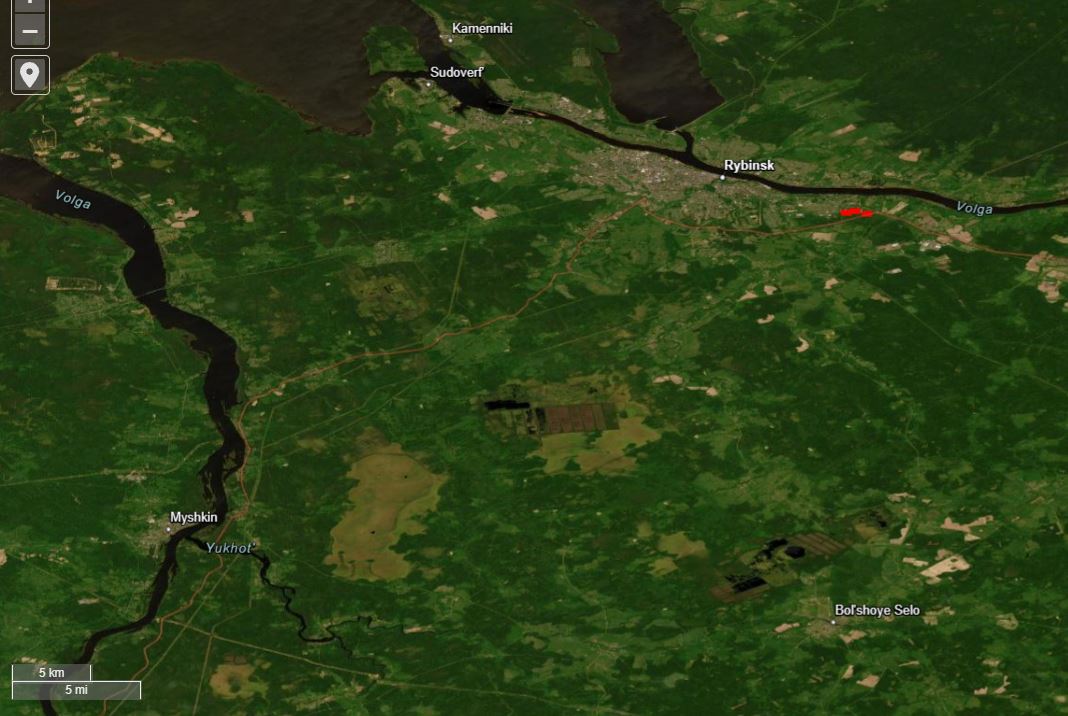
Palkino is a village in Myshkinsky district, Yaroslavl Oblast, about 40 km southwest of Rybinsk, where Ukrainian drones set a Rosrezerv oil depot ablaze last night.
Russian underground movement Chernaya Iskra confirmed its participation and called the station "a very important facility."
"With exports, of course, they'll have to wait. Here in Russia itself, the Hunger Games for gasoline are starting — what exports?" the group wrote.
SSO said this was the second joint operation with the partisan movement this week. On 12 June, SOF and Chernaya Iskra struck the TANECO refinery in Tatarstan, SOF stated. That strike was previously reported by Euromaidan Press as part of a broader overnight raid confirmed by Ukraine's General Staff.
Explore further
Ukrainian drones torch Russia’s strategic wartime fuel reserves in Rybinsk and explosives-linked chemical plant in Tula Oblast
The Palkino pumping station is part of the Surgut-Polotsk trunk oil pipeline. The station receives crude oil from Siberia and delivers it to refineries and export terminals. After the Baltic Pipeline System was commissioned, the station became part of Transneft-Baltika and a key link in the logistics chain supporting Russian crude exports through the port of Primorsk in Leningrad Oblast.
Striking oil transport infrastructure reduces Russia's capacity to export energy resources and cuts the revenues funding the war against Ukraine, SOF stated.
NASA FIRMS fire detection map of the Rybinsk-Myshkin area in Yaroslavl Oblast, Russia, showing active fire markers (red) at the Rosrezerv oil depot near Rybinsk but no thermal anomalies near Myshkin where the Palkino pumping station is located, 14 June 2026. Source: NASA FIRMS
Euromaidan Press cannot independently verify the report or confirm damage at the Palkino site at this time. NASA's FIRMS thermal monitoring system shows fires continuing at the Rybinsk Rosrezerv oil depot in the same Yaroslavl Oblast after the overnight drone strike on 14 June, but registers no fires in the area of Myshkino over the past month, where Palkino is located. This may mean that any damage caused didn't trigger large fires.
Nigel Farage has said he would ban foreign nationals from social housing and then deport them if they could not find private-sector homes, in a hardening of anti-immigration rhetoric before the Makerfield byelection.
Two recent polls in Makerfield have suggested Farage’s Reform UK is continuing to leak potentially crucial support to its far-right rival Restore Britain, which is led by the former Reform MP Rupert Lowe.
The largest libraries of the ancient world weren’t mere book collections. They were centers of power, education, and survival across empires. Credit: Greek Reporter archive
Clay tablets, papyrus scrolls and organized archives gave rise to the largest libraries the ancient world had ever seen. From Mesopotamia to the Mediterranean, early civilizations built and guarded repositories that preserved knowledge, solidified power and shaped future generations.
These libraries were more than buildings. They were strategic tools for governance, scholarship, and cultural influence.
From clay tablets to papyrus, Mesopotamia built the first libraries of the ancient world
The earliest libraries were established in Mesopotamia over five thousand years ago. Sumerians developed cuneiform writing by pressing marks into wet clay. These tablets contained records on trade, law, rituals and literature. Stored in temple rooms and palaces, they were grouped by subject and carefully archived.
The Assyrians advanced this system, and King Ashurbanipal of Nineveh built a vast royal library with thousands of tablets in the 7th century BC. These included manuscripts on religion, medicine, and science. His collection, organized by topic, is one of the oldest discovered in archaeological history.
The cuneiform inscriptions on this clay tablet narrate the chronicle of the years 608-605 BC. Credit: Wikimedia Commons / Osama Shukir Muhammed Amin FRCP(Glasg) / CC BY 4.0
A major turning point came with the use of papyrus scrolls in Egypt. Lighter and more portable than clay, papyrus allowed collections to grow in size. The new format enabled broader distribution of texts and helped libraries expand across the ancient world.
Libraries of Persia and Assyria as guardians of culture, law, and empire
In the ancient Near East, libraries held both spiritual and administrative importance. Persian rulers integrated libraries into royal courts. The Achaemenid Empire preserved legal codes, religious texts, and historical records. These archives helped maintain order across a diverse and multilingual empire.
Assyria’s greatest legacy was Ashurbanipal’s library at Nineveh, a vast collection of thousands of clay tablets covering medicine, astronomy, literature, and more.
Library of Ashurbanipal Mesopotamia 1500-539 BC Gallery. Credit: Gary Todd / Wikimedia Commons / CC0
Ashurbanipal viewed knowledge as a tool of control and culture. His efforts helped preserve Mesopotamian heritage for future generations. Cultural exchange carried these texts far beyond their regions of origin. Greek scholars translated many works, merging Near Eastern traditions with Hellenistic thought. In this way, the great libraries preserved and transmitted intellectual life through centuries of conflict and empire.
The Great Library of Alexandria and the ambition to collect all human knowledge
The Library of Alexandria, founded around 283 BC by Ptolemy I in Egypt, aimed to gather every written work known at the time. Located within the Musaeum, a research center devoted to the arts and sciences, the library was supported by powerful rulers who dispatched agents across the world to acquire texts.
Scrolls were taken from ships arriving at the port. Originals were copied and the duplicates returned. The collection spanned literature, philosophy, astronomy, and medicine.
Artistic impression of the an ancient library. Credit: Greek Reporter Archive
Scholars such as Euclid and Archimedes studied there. Librarians developed early cataloging systems and edited standardized versions of key texts.
The library suffered damage during Julius Caesar’s campaign in 48 BC, and its decline continued through later invasions and internal unrest. Despite its fall, the model it established influenced libraries in Pergamum, Rome, and beyond.
Ancient Greek libraries as public learning hubs and private intellectual sanctuaries
Ancient Greek libraries shifted knowledge from private temples to public life. Athens and other city-states built libraries open to scholars and citizens. One early example is Aristotle’s personal collection, which became a foundation for later public institutions.
Private libraries also flourished. Wealthy individuals and philosophers curated collections for study and teaching. Plato, for instance, used their libraries to support schools such as the Academy. These libraries helped preserve philosophy, science, and literature and played a central role in Greek intellectual life.
View of the Acropolis of the ancient Greek Library of Pergamon. Credit: CalicoJackRackham / Wikimedia Commons / Public Domain
Public libraries enabled wider access to knowledge in the ancient world, while private collections fostered personal study and debate. Together, they formed a system that allowed Greek thought to spread across the Mediterranean.
Roman libraries as instruments of power, education, and governance
Rome expanded the library model throughout its empire. In 39 BC, Gaius Asinius Pollio opened the first public library in the capital. Emperors like Augustus followed, building libraries in temples and forums. These became cultural landmarks and centers for learning.
Roman libraries preserved works in both Latin and Greek, encompassing law, science, literature, and official records. They served not only administrative needs but also public education, fostering literacy and stimulating scholarly debate throughout the empire as access expanded.
Timgad Library, a gift to the Roman people by Julius Quintianus Flavius Rogatianus. Credit: Dan Sloan / Wikimedia Commons / CC BY-SA 2.0
Wealthy Romans maintained private collections. These libraries, often run by scribes and servants, became symbols of status. Imperial libraries, meanwhile, preserved state records and reinforced the authority of the emperor.
By preserving Greek and earlier texts, Roman libraries established a bridge between ancient and medieval scholarship, leaving behind a lasting legacy for Europe.
Collapse of ancient libraries and the long survival of their knowledge
Ancient libraries faced repeated threats. Fires, wars, and natural disasters wiped out entire collections. The Library of Alexandria was damaged during civil war, then weakened by centuries of neglect. With the fall of the Roman Empire, invasions, political turmoil, and shifting religious forces accelerated the decline of these repositories of knowledge.
In the Near East, the Library of Ctesiphon was destroyed during the Arab conquests. At Herculaneum, the eruption of Mount Vesuvius buried the Villa of the Papyri beneath volcanic ash, both preserving and damaging hundreds of scrolls.
However, fragments survived. In medieval Europe, monasteries preserved knowledge by copying ancient texts by hand. Across the Islamic world, scholars translated Greek, Roman, and Persian works into Arabic, safeguarding ideas that had vanished elsewhere. These efforts carried the legacy of antiquity into the Renaissance and, ultimately, the modern era.
The fall of ancient libraries marked the end of an era but not the end of their influence. Their legacy endures in today’s institutions, which continue the timeless mission of collecting, preserving, and sharing human knowledge.
Competing for the first time, Curaçao is brimming with joy. Most of the Caribbean nation’s team was born and raised in the Netherlands, but residents say the players represent them.
Soccer players and artists at a celebration this month in Curaçao, a Caribbean island and constituent country of the Kingdom of the Netherlands.
Kate Dearden says reforms such as enhanced sick pay simply bring UK into line with other big economies
Labour’s radical workers’ rights reforms have simply put the UK on a “level playing field” with other big economies, the employment minister, Kate Dearden, has said.
The government’s Employment Rights Act became law last year, with specific provisions being implemented this year and next.

 Login
Login