
Normal view

Does the Biblical Moses Appear in Greek Mythology?

11 June 2026 at 19:01
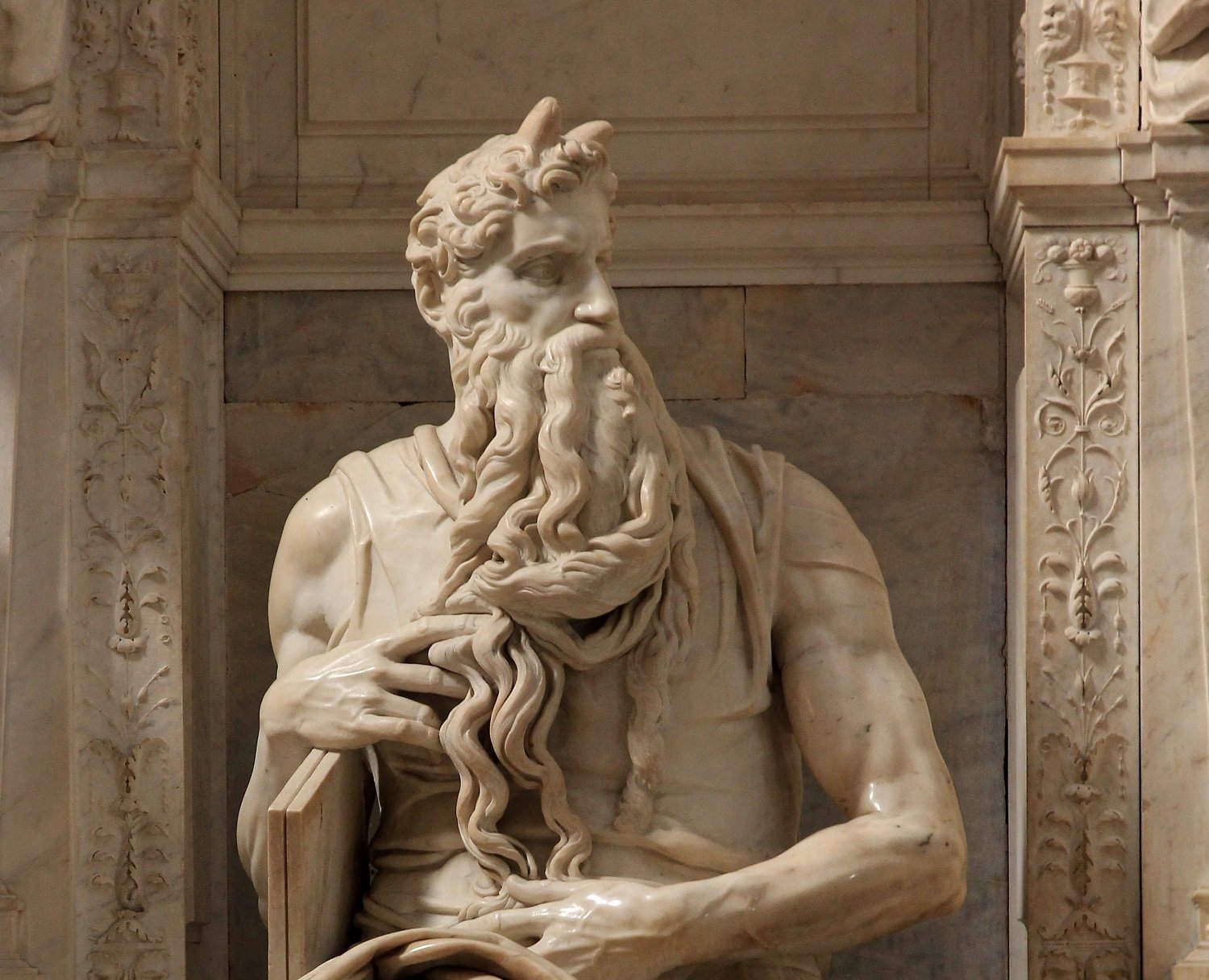
Moses by Michalangelo
Moses by Michelangelo, c. 1513. Credit: Wikipedia Commons, CC-BY-SA-3.0

Scholars acknowledge that some legends from Greek mythology are strikingly similar to stories from the Bible. According to some theories, a few individual characters from the Bible might also appear in Greek mythology. One theory argues that the famous Moses of Egypt can be found in Greek records. Does Moses really appear in Greek mythology, or is this just wishful thinking?

Who was Moses?

Firstly, let us establish who Moses was. He appears in the Bible books of Exodus, Leviticus, Numbers, and Deuteronomy. Exodus contains the most famous part of his life story. It tells the story of how he was a Hebrew boy placed in the Nile River, where the Pharaoh’s daughter then found him.

When Moses was an adult, he tried to help his fellow Hebrews, who were slaves in Egypt, but then he ran away and remained in a distant land for forty years. He eventually returned after God allowed him to go and free his people from Egypt. Pharaoh refused to let the Hebrews go, but after ten devastating plagues from God, he relented.

Moses led the people out of Egypt across the Red Sea (where Pharaoh and his army drowned after trying to pursue them) and into the Sinai wilderness. There, he gave his people an extensive list of regulations from God, collectively known as the Mosaic Law. He also wrote many religious writings. The first five books of the Bible are attributed to him, as well as several poetic writings.

Did the Greeks know about Moses?

The theory that Moses appears in Greek mythology depends on the idea that the Greeks could have known of Moses in the first place. After all, he could not have appeared in their mythology if they did not know about him.

As it so happens, Moses does appear in quite a few Greek records. The Egyptian priest Manetho, from the third century BCE, mentioned Moses in his history of Egypt. Since Manetho lived in Egypt during its Hellenistic era, it is virtually certain that the Greeks of that region were aware of Moses. They certainly would have known of him after reading Manetho’s history.

Interestingly, there is evidence that the Greeks knew about Moses even before the Hellenistic era of Egypt. The first-century BCE Greek historian Diodorus Siculus wrote about the origin of the Jews. His account came from Hecataeus of Abdera, a Greek traveler from c. 300 BCE.

Hecataeus’ account differs from the Bible’s account in numerous ways, but it is still fundamentally the same story of Moses. Therefore, at least as early as 300 BCE, the Greeks definitely knew about Moses.

Was Musaeus from Greek mythology the same as Moses?

In ancient times, several writers explicitly identified Moses with a certain figure from Greek mythology. This figure was Musaeus. It is obvious that the main reason for identifying the two figures is due to the similarity between their names. But is there any more of a connection than this? Well, what does Greek mythology say about Musaeus?

Musaeus was a legendary intellectual, philosopher, seer, prophet, poet, musician, and historian. The Greeks believed that he founded a class of priestly poetry in Athens. He allegedly lived in the time of Heracles and was associated with Orpheus, another prominent poet and prophet from Greek mythology.

Immediately, we can see that there are some definite similarities between Moses and Musaeus from Greek mythology. In addition to the similarity in their names, their roles are also similar. Moses was a prophet, since he relayed messages from God. He was a poet, since he wrote the poetic book of Job and several of the Psalms. He was also a historian, since he wrote part of the history of the Jews.

Why Musaeus could not have been Moses

Despite these similarities, there is a key reason why Musaeus could not have been Moses. The key reason is that they did not live at the same time.

At first glance, it might look like the chronology works very well. Moses is usually placed at the time of Ramesses II, who ruled in the 13th century BCE. He is also placed in the time of Heracles, who lived about half a century prior to the Trojan War. That would also put him in the 13th century BCE according to the traditional date of the Trojan War. Therefore, it seems at first glance that Musaeus and Moses would have been exact contemporaries.

However, the reality is not so simple. Despite the popular association between Moses and Ramesses II, this has no historical or Biblical basis. The Bible’s internal chronology, along with its genealogical record of the prophet Samuel, places Moses firmly in c. 1500 BCE. That means he lived almost three centuries earlier than the traditional era of Musaeus.

The true era of Musaeus

The theory connecting Moses with Musaeus is further disproved if we examine the information about Musaeus from Greek mythology even more closely. For one thing, there is evidence that the Trojan War occurred several centuries later than the traditional date.

Furthermore, recall that Musaeus was closely associated with Orpheus. Some records say that Musaeus was Orpheus’ son, while other records give the inverse relationship. In either case, they lived at about the same time.

Greek tradition claims that Homer was a tenth generation descendant of Orpheus. That would place Orpheus, and therefore his associate Musaeus, about 200 to 250 years prior to the time of Homer. Since Homer lived in the seventh century BCE, that would mean that Musaeus would have probably lived in the ninth or tenth century BCE. Hence, this would have been long after the time of Moses. Therefore, it is virtually certain that Moses was not Musaeus from Greek mythology.
Did Ancient Greek Hero Odysseus Travel to Ireland?

9 June 2026 at 21:01
odysseus Ireland
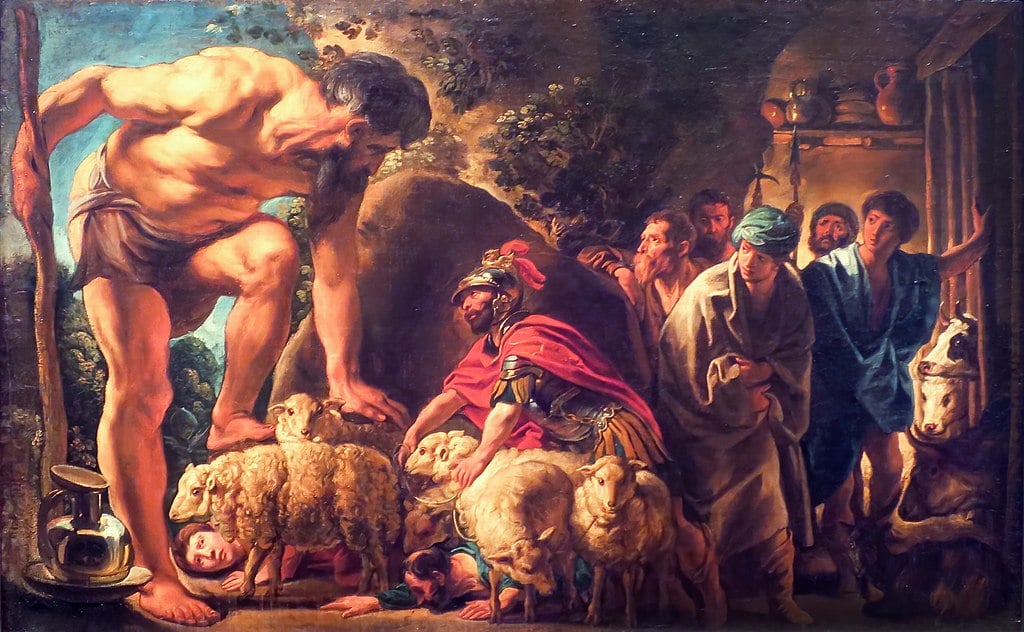
Did Odysseus Travel to Ireland? Credit: Public Domain

Homer’s Odyssey tells the tale of Odysseus returning to his home after the Trojan War. For a variety of reasons, the trip is not an easy one. It takes him a full ten years to return home.

But the journey from Troy to Ithaca, Odysseus’ home island, should not have been too difficult and certainly not a ten-year trip. For this reason, some researchers have claimed that Odysseus actually traveled outside of the Mediterranean. There is even the suggestion that he traveled to Ireland.

Odysseus travel to Ogygia and its connection to Ireland

In the Odyssey, one of the places Odysseus visits is an island called Ogygia. This was the home of the nymph Calypso, who offers Odysseus immortality if he agrees to marry her. She refuses to let him leave otherwise. The gods intervene and force Calypso to release him. Hence, after seven years on the island, Odysseus builds a raft and sails away.

The location of Ogygia has been the subject of considerable speculation. According to Homer’s account, the island is a place of beautiful meadows, fountains, woods, and various types of birds. However, none of this is particularly helpful. All sorts of islands could fit this description.

In ancient times, various suggestions were made as to where Ogygia might actually be located. More recently, some scholars have argued that Ogygia is identical to Ireland. If this identification is correct, this would mean that Odysseus spent seven years in Ireland.

The most notable scholar to have come to this conclusion was Roderick O’Flaherty. In 1685, he used the name ‘Ogygia’ as a synonym for Ireland in the title of one of his books. It was called: Ogygia: Or a Chronological Account of Irish Events.

Plutarch’s account of Ogygia

One of the key pieces of evidence used to support the identification of Ireland as Ogygia is a passage written by Plutarch, a historian of the first century CE. He wrote about Homer’s account of Ogygia in conjunction to other additional information he provided. According to Plutarch, Ogygia was situated to the west of Britain, which is where Ireland is in fact located.

Additionally, Plutarch tells us that Ogygia was five thousand stadia away from the ‘great continent’ which surrounded the ‘great sea.’ Several scholars have suggested that this ‘great continent’ actually refers to America. Examples include Wilhelm von Christ, an eighteenth-century German scholar, and Johannes Kepler, a sixteenth-century German scholar.

If the ‘great continent’ mentioned by Plutarch really was America, then that would mean that Ogygia was actually an island somewhere between Britain and America. Since Plutarch says that Ogygia was five thousand stadia from the great continent but only several days distant from Britain, this indicates that it was much closer to Britain than to America. Therefore, Ireland would seem to be a good match.

Problems with identifying Ogygia as Ireland

While Ireland does match Plutarch’s basic description, there are certain issues with this identification. For one thing, Ireland is not five thousand stadia from America. This distance would be the equivalent of a little over nine hundred kilometers. Nevertheless, the distance between Ireland and America is about three thousand kilometers.

Hence, the distance specified by Plutarch means that Ireland is in fact not Ogygia, if America was indeed the ‘great continent’ to which he referred. Clearly, however, there is no other option for the great continent that would fit the passage.

Another problem is that Plutarch states that it takes five days of sailing to travel between Britain and Ogygia. This would indicate an island much further west than Ireland because it would barely take two days of sailing to reach Ireland from the furthest part of the western side of Britain.

In reality, there is no island which is exactly five days’ sailing away from Britain and also five thousand stadia away from America. The measurements simply do not correspond to any real location.

Perhaps, then, some researchers could use this as evidence that the measurements must be incorrect, meaning that Ireland could still be the intended location. Alternatively, it could of course also mean that Plutarch was not really describing an actual location at all.

Elon Musk Fuels Odyssey Casting Debate With AI Trailer Featuring All-White Greek Heroes

4 June 2026 at 21:58
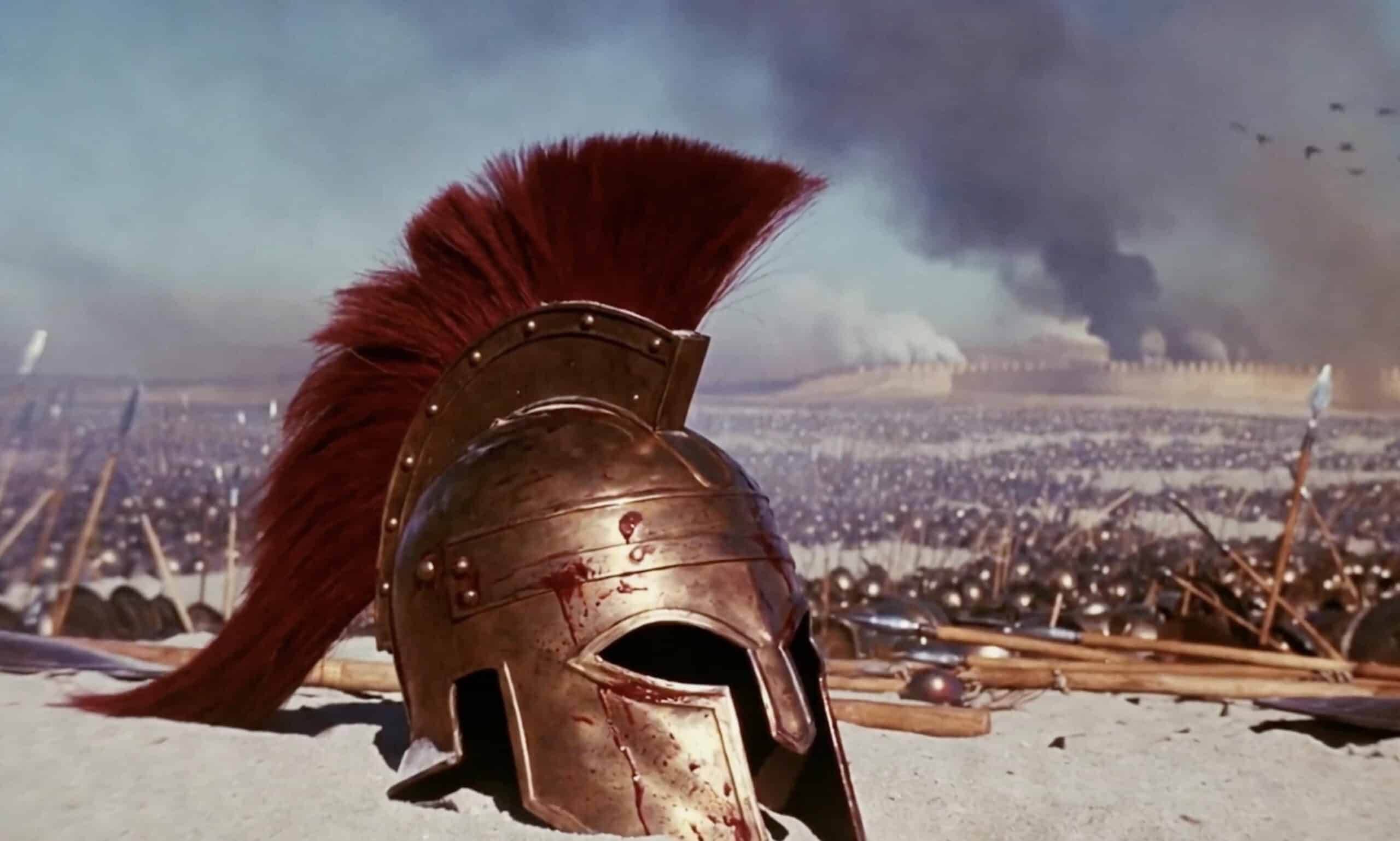
A bronze ancient Greek-style warrior helmet with a red plume lies on a battlefield, with spears, shields, smoke, and armies in the background.
AI-generated Iliad trailer shared by Elon Musk on X amid debate over Christopher Nolan’s The Odyssey. Credit: Screenshot / Elon Musk’s official twitter account

Elon Musk has entered the controversy surrounding Christopher Nolan’s upcoming The Odyssey by sharing an AI-generated trailer featuring an all-white cast of ancient Greek heroes.

Musk posted the video on X on Thursday, June 4, as debate continues over Nolan’s decision to cast Lupita Nyong’o as Helen of Troy in The Odyssey. Musk, who has already criticized the casting online, introduced the clip as an “Iliad (Troy) trailer made by Grok Imagine 1.5,” referring to the video-generation model developed by his artificial intelligence company xAI.

The 40-second trailer quickly went viral and drew more than 18.4 million views, according to the original Greek report. Although Musk did not explicitly mention Nolan’s film in the post, the timing and visual choices linked the clip to the wider argument over how ancient Greek figures should appear on screen.

An AI version of Homer’s world

The trailer presents a dramatic version of the Trojan War, with burning cities, warships, battlefield speeches, emotional close-ups, and large-scale combat scenes. Its visual style closely resembles a Hollywood historical epic. However, AI tools produced the video rather than a traditional studio production.

The choice of The Iliad also matters. Homer’s Iliad and Odyssey are two of the foundational works of ancient Greek literature. The Iliad centers on the Trojan War, while The Odyssey follows Odysseus on his long journey home after the fall of Troy.

That connection made Musk’s post look less like a random AI experiment and more like a response to the current debate around Nolan’s film. By using AI to create his own vision of the Trojan War, Musk placed himself directly inside a cultural dispute involving Greek mythology, Hollywood casting, and the future of filmmaking.

Iliad (Troy) trailer made by Grok Imagine 1.5, which was just released pic.twitter.com/o0zITVlvpn

— Elon Musk (@elonmusk) June 4, 2026

The Helen of Troy debate

Nolan’s The Odyssey is scheduled for release on July 17, 2026. The film stars Matt Damon as Odysseus and Anne Hathaway as Penelope. Its cast also includes Tom Holland, Zendaya, Robert Pattinson, Charlize Theron, and Lupita Nyong’o.

Much of the online backlash has focused on Nyong’o’s role as Helen of Troy. Critics of the casting argue that Helen, one of the most famous figures of Greek mythology, should reflect the traditional image associated with the character.

Supporters of the film, however, say Homeric myth is not documentary history. They argue that artists have reinterpreted the epics for centuries through theater, literature, painting, and cinema. Nyong’o has also addressed the criticism, saying the film’s cast reflects the world and emphasizing that the story belongs to mythology rather than historical reconstruction.

Musk’s AI trailer now adds another layer to the dispute. The clip does not simply promote artificial intelligence as a filmmaking tool. Instead, it presents an alternative visual version of the Homeric world at the exact moment when Hollywood’s version is under scrutiny.

Was very fun to try out the latest 1.5 Grok Imagine model for this one! https://t.co/x5OwuhySyH

— Heavy Pulp (@heavypulp) June 3, 2026

Elon Musk turns AI Iliad trailer into a cultural statement

After Musk posted the trailer, the creative studio Heavy Pulp, which worked on the project, said it had enjoyed making it. Musk then asked whether the team wanted to make a full-length film. Heavy Pulp replied that it was already in.

That exchange helped transform the video from a short viral experiment into a possible challenge to Hollywood. Musk appeared to test whether AI could generate not only trailers, but also full-scale mythological films outside the traditional studio system.

The response online came quickly. Many users praised the trailer’s cinematic look and argued that it showed how fast AI video tools are improving. Others viewed the clip as a direct provocation toward Hollywood, especially because it appeared during a high-profile debate over representation in a film based on Greek mythology.

@starchannelnews

Νέο διαδικτυακό θόρυβο προκαλεί ο Ίλον Μασκ, ο οποίος επανέρχεται στη δημόσια συζήτηση γύρω από τις επιλογές casting στην πολυαναμενόμενη κινηματογραφική μεταφορά της Οδύσσειας από τον Κρίστοφερ Νόλαν. Με αφορμή τη συζήτηση που έχει ανοίξει για τον ρόλο της Ωραίας Ελένης, ο Μασκ ανάρτησε στο Χ ένα βίντεο που παρουσιάζεται ως AI trailer της Ιλιάδας, με όλους τους πρωταγωνιστές να απεικονίζονται ως λευκοί ηθοποιοί. Η Βαλεντίνα Καραγεωργίου είναι μαζί μας με όλες τις λεπτομέρειες και τις αντιδράσεις που έχει προκαλέσει η νέα παρέμβαση του Ίλον Μασκ. #starchannelnews #tiktokgreece #newsgr

♬ original sound – Star News_official – Star News_official

❌