Normal view

Greece’s Nisyros Island: A Moonscape Aegean Hideaway

11 June 2026 at 20:01
Nisyros, Greece
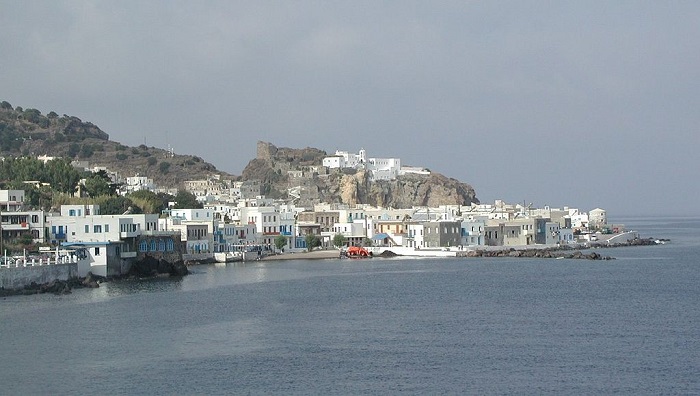
View of Mandraki, Nisyros island, Greece. Credit: Alexandros Diamantidis, CC BY-SA 3.0/Wikimedia

Nisyros is a magical gem located in the Aegean. The island, part of the Dodecanese archipelago, is situated between Kos and Tilos, and has an active volcano which is also the youngest volcano in Greece.

Nisyros offers untouched villages, quiet beaches, hot springs and ancient walls of black volcanic stone. Top that off with the fact that there are few tourists, and you’ll feel like the entire island and all of its many beauties are exclusively yours.

The amazing villages of  Greece’s Nisyros island

Disfruta de la Grecia auténtica sin prisa ni aglomeraciones. Descubre la isla de #Nysiros y vive la cultura y la historia como nunca antes.⁣
#Grecia #Vacaciones #Travel #GreciaTour #TourPrivado #FelizMiércoles pic.twitter.com/2p23dXOUOS

— GreciaTour.com (@GreciaTour_com) August 10, 2022

There are several quaint villages on the island; the largest is Mandraki. It is straight out of a photo book of traditional Greek island architecture and great views.

The narrow, cobbled streets and squares lace around the villages where you can take a stroll and feel as though you have traveled back to ancient times. The homes, which are made of volcanic rocks and are insulated with pumice stone, boast wooden balconies.

Emporios
Emporios. Credit: Robert Powell, CC BY-SA 3.0/Wikimedia

Nightlife on Nisyros is very unlike the hectic pace of party islands in Greece. You will, however, find quaint local tavernas and bars in which to enjoy your lazy summer nights.

The Volcano

You can actually go to the center of the island, walk along the volcano’s rim, and watch its boiling crater. The volcano, which hasn’t actually erupted since 1888, is a spectacular sight.

volcano crater
Credit: Tatiana Bashinskaya, CC BY 3.0/Wikimedia

The Volcanological Museum in Nikia

Located at the edge of the caldera, the view is breathtaking, and you can learn a thing or two about the fascinating geology of the island. 3D animated images to demonstrate various facts about the volcano are available, so be sure to check them out.

Nisyros Greece
Aerial view of Nisyros. Credit: Ferengi, CC BY-SA 3.0/Wikipedia

Paleokastro, Nisyros’ Acropolis

Dating back to the classical period and ruins of the ancient city, the Paleokastro is constructed from one of the hardest rocks in the world, basaltic andesite, which was spewed out from the volcano. This has helped preserve the acropolis through the passage of time.

A Monastery Built in a Cave

The Monastery of Panagia Spiliani sits atop of a hill in northwest Mandraki, the largest part of it constructed inside a cave. A truly unique experience, the cave is divided into two churches and is definitely worth a visit.

Panagia Spiliani
Panagia Spiliani. Public Domain

Nisyros’ Thermal Spas

At several points along the coast of Nisyros, you will find spouting hot water springs with temperatures varying from 30 to 60 degrees Celsius (86 to 140 degrees F). The springs are known for their therapeutic effects for muscles and skin.

Around 1.5 km (1 mile) east of the port of Mandraki, you will find the thermal spa of Loutra with hot spring waters at 37 degrees Celsius (or 98.6 Fahrenheit, equal to humans’ body temperature).

Get ready For Beautiful Beaches on Nisyros island

Due to the relatively few numbers of travelers on the island, the beaches of Nisyros are extraordinarily clean, quiet, and relaxing.

You can go to a different beach every day, as there are many to choose from. Some favorites are Lefki Beach, along with Gialiskari, Lyés, Páloi, Pachia Ammos, Katsouni, Aghios Savas, Aghia Irini, and Chochlákia Beaches.

Must-try local cuisine

There are many traditional dishes to be savored on Nisyros island. Some typical “spitiko” or homemade dishes are pita, chickpea nuggets, and kapamas, which is stuffed goat. Of course, as you are on an island, there is always fresh seafood available, too!

Getting there

You can get to the volcanic paradise of Nisyros from the island of Kos or as part of a tour of other islands in the Dodecanese, as well as from Piraeus.
Greece’s Nisyros Island: A Moonscape Aegean Hideaway

11 June 2026 at 20:01
Nisyros, Greece
View of Mandraki, Nisyros island, Greece. Credit: Alexandros Diamantidis, CC BY-SA 3.0/Wikimedia

Nisyros is a magical gem located in the Aegean. The island, part of the Dodecanese archipelago, is situated between Kos and Tilos, and has an active volcano which is also the youngest volcano in Greece.

Nisyros offers untouched villages, quiet beaches, hot springs and ancient walls of black volcanic stone. Top that off with the fact that there are few tourists, and you’ll feel like the entire island and all of its many beauties are exclusively yours.

The amazing villages of  Greece’s Nisyros island

Disfruta de la Grecia auténtica sin prisa ni aglomeraciones. Descubre la isla de #Nysiros y vive la cultura y la historia como nunca antes.⁣
#Grecia #Vacaciones #Travel #GreciaTour #TourPrivado #FelizMiércoles pic.twitter.com/2p23dXOUOS

— GreciaTour.com (@GreciaTour_com) August 10, 2022

There are several quaint villages on the island; the largest is Mandraki. It is straight out of a photo book of traditional Greek island architecture and great views.

The narrow, cobbled streets and squares lace around the villages where you can take a stroll and feel as though you have traveled back to ancient times. The homes, which are made of volcanic rocks and are insulated with pumice stone, boast wooden balconies.

Emporios
Emporios. Credit: Robert Powell, CC BY-SA 3.0/Wikimedia

Nightlife on Nisyros is very unlike the hectic pace of party islands in Greece. You will, however, find quaint local tavernas and bars in which to enjoy your lazy summer nights.

The Volcano

You can actually go to the center of the island, walk along the volcano’s rim, and watch its boiling crater. The volcano, which hasn’t actually erupted since 1888, is a spectacular sight.

volcano crater
Credit: Tatiana Bashinskaya, CC BY 3.0/Wikimedia

The Volcanological Museum in Nikia

Located at the edge of the caldera, the view is breathtaking, and you can learn a thing or two about the fascinating geology of the island. 3D animated images to demonstrate various facts about the volcano are available, so be sure to check them out.

Nisyros Greece
Aerial view of Nisyros. Credit: Ferengi, CC BY-SA 3.0/Wikipedia

Paleokastro, Nisyros’ Acropolis

Dating back to the classical period and ruins of the ancient city, the Paleokastro is constructed from one of the hardest rocks in the world, basaltic andesite, which was spewed out from the volcano. This has helped preserve the acropolis through the passage of time.

A Monastery Built in a Cave

The Monastery of Panagia Spiliani sits atop of a hill in northwest Mandraki, the largest part of it constructed inside a cave. A truly unique experience, the cave is divided into two churches and is definitely worth a visit.

Panagia Spiliani
Panagia Spiliani. Public Domain

Nisyros’ Thermal Spas

At several points along the coast of Nisyros, you will find spouting hot water springs with temperatures varying from 30 to 60 degrees Celsius (86 to 140 degrees F). The springs are known for their therapeutic effects for muscles and skin.

Around 1.5 km (1 mile) east of the port of Mandraki, you will find the thermal spa of Loutra with hot spring waters at 37 degrees Celsius (or 98.6 Fahrenheit, equal to humans’ body temperature).

Get ready For Beautiful Beaches on Nisyros island

Due to the relatively few numbers of travelers on the island, the beaches of Nisyros are extraordinarily clean, quiet, and relaxing.

You can go to a different beach every day, as there are many to choose from. Some favorites are Lefki Beach, along with Gialiskari, Lyés, Páloi, Pachia Ammos, Katsouni, Aghios Savas, Aghia Irini, and Chochlákia Beaches.

Must-try local cuisine

There are many traditional dishes to be savored on Nisyros island. Some typical “spitiko” or homemade dishes are pita, chickpea nuggets, and kapamas, which is stuffed goat. Of course, as you are on an island, there is always fresh seafood available, too!

Getting there

You can get to the volcanic paradise of Nisyros from the island of Kos or as part of a tour of other islands in the Dodecanese, as well as from Piraeus.

Chega calls for tougher rules on tuk-tuks and tourist transport

11 June 2026 at 10:40
TukTuk - Photo Dennis Dchmidt-unsplash

Chega has submitted a proposal to parliament calling for stricter regulation, mandatory training and increased enforcement for vehicles used in tourist entertainment activities, particularly tuk-tuks. The party says the initiative

The post Chega calls for tougher rules on tuk-tuks and tourist transport appeared first on Portugal Resident.

June holidays push Algarve hotel occupancy above 80%

11 June 2026 at 09:53
June holidays push Algarve hotel occupancy above 80%

Hotel occupancy in the Algarve is expected to exceed 80% during the June holiday period, with tourism officials reporting a slight increase in demand compared with last year. According to

The post June holidays push Algarve hotel occupancy above 80% appeared first on Portugal Resident.

Greece Scuttles Navy Vessels for New Scuba Diving Park in Crete

10 June 2026 at 13:18
Crete diving park
Τhe decommissioned naval ship A/B Folegandros Is being scuttled using controlled explosive charges. Video screenshot.

In the coastal waters of Chania, Crete, decommissioned navy vessels are being scuttled to create Greece’s first highly regulated, wreck-based scuba diving park.

The ambitious underwater project by the municipality of Apokoronou at Omprogialos already features 44 deployed artificial reefs alongside the decommissioned Hellenic Navy vessel Nestor. On Wednesday, the park adds its newest centerpiece: the decommissioned naval ship A/B Folegandros, which is scheduled to be scuttled using controlled explosive charges.

Θάλασσα Χανίων
Το ανατίναξαν για καλό σκοπό…
Στον Ομπρόσγιαλο Χανίων δημιουργείται το πρώτο οργανωμένο καταδυτικό πάρκο της Ελλάδας.
Μετά τους 44 τεχνητούς υφάλους και το «Νέστωρ», βυθίζεται σήμερα το παροπλισμένο «Α/Β Φολέγανδρος» σε βάθος περίπου 25 μέτρων. pic.twitter.com/OjcV1SIXvY

— Αντώνης Νταλακογεώργος (@Adalakogeorgos) June 10, 2026

Hellenic Coast Guard vessels and an elite Navy Underwater Demolition Command (OYK) unit are currently on-site overseeing the operation. Following detonation, the vessel will settle on the seabed at a depth of approximately 25 meters (82 feet).

To ensure public safety, maritime authorities have enacted stringent security measures across the broader Ompros Gialos sea area. A strict multi-kilometer exclusion zone has been established, completely banning the approach, anchoring, or transit of any vessel within a one-kilometer radius of the scuttling site. The Hellenic Coast Guard has been actively patrolling the perimeter since the early hours of the morning and will maintain surveillance until the operation is fully finalized.

A scuba diving park

The scuttling of the Folegandros is a pivotal step toward finalizing the Apokoronou Diving Park, a cornerstone project in the region’s strategic push to develop high-end, niche tourism markets. The diving park, which will be owned and operated directly by the Municipality of Apokoronas, features three distinct underwater routes designed for varying exploration levels:

  • Route 1: The Eco-Trail — Navigating through the network of 44 artificial reefs, submerged at a highly accessible depth of 9 to 10 meters (30–33 feet)
  • Route 2: The Nestor Wreck — Centered around the previously scuttled Hellenic Navy ship
  • Route 3: The Folegandros Deep Wreck — Descending to the newly scuttled vessel at 25 meters, geared toward intermediate and advanced divers

A catalyst for alternative tourism

Local officials aim to have the diving park fully operational by the end of the current 2026 tourism season.

Hailed as one of the most significant alternative tourism infrastructures in Chania and the wider island of Crete, the park is projected to become a premier hotspot for international and domestic diving enthusiasts. Beyond the economic boost, this dedicated “shipwreck museum” is designed to act as a marine sanctuary, generating a highly positive ecological footprint by fostering localized marine biodiversity and promoting sustainable eco-tourism in the Aegean.

Related: Greece’s Ten Best Scuba Diving Spots

“Ne ho abbastanza di essere insultato dalle persone quando chiedo loro di non parcheggiare sul nostro terreno”: allevatore imbratta con letame le auto parcheggiate

10 June 2026 at 11:17

Le immagini hanno fatto rapidamente il giro del web: decine di automobili parcheggiate in un prato verde, ricoperte da schizzi di liquame. A compiere il gesto è stato un allevatore del Lake District, una delle aree naturalistiche più frequentate della Gran Bretagna, esasperato da anni di comportamenti considerati irrispettosi da parte dei visitatori. Una protesta clamorosa che ha acceso un dibattito ben più ampio sul rapporto, spesso complicato, tra turismo e comunità locali.

Secondo quanto riportato da “Il Dolomiti”, dietro l’episodio non emerge solo la reazione di un singolo agricoltore, ma un disagio più ampio segnalato da chi vive e lavora in aree rurali e montane. Nei periodi di maggiore afflusso turistico, queste zone si trovano spesso a gestire flussi concentrati e comportamenti non sempre compatibili con le attività locali. L’allevatore ha spiegato le ragioni del gesto al Daily Mail e ha sottolineato la crescente frustrazione legata a comportamenti ritenuti problematici da parte dei visitatori: “Non vado fiero di quello che ho fatto. Sono semplicemente stufo di come i turisti trattano il Lake District. Ne ho abbastanza di essere insultato dalle persone quando chiedo loro di non parcheggiare sul nostro terreno”.

Il caso, dunque, rimette al centro il tema del rapporto tra attività turistiche e tutela dei territori. Da un lato c’è la fruizione della natura da parte dei visitatori, spesso concentrata in brevi periodi e nel fine settimana; dall’altro le esigenze di chi in quei luoghi vive stabilmente e vi svolge attività lavorative.

Non solo Lake District: anche in Italia aumenta il malcontento contro il turismo “mordi e fuggi”

Il fenomeno non riguarda soltanto il Regno Unito. Anche in molte località italiane, dalle Alpi agli Appennini, cresce il confronto tra residenti e visitatori. Sentieri affollati, prati trasformati in aree picnic improvvisate, parcheggi selvaggi e abbandono di rifiuti sono criticità che si ripetono ogni stagione. In alcuni casi si è arrivati a misure controverse, come l’installazione di barriere o sistemi di accesso controllato in aree private particolarmente esposte all’afflusso turistico.

L'articolo “Ne ho abbastanza di essere insultato dalle persone quando chiedo loro di non parcheggiare sul nostro terreno”: allevatore imbratta con letame le auto parcheggiate proviene da Il Fatto Quotidiano.

The Battle for Milos: Locals Fight Corporate Takeover of Greek Island

10 June 2026 at 09:29
Milos, Greece corporate development
Big hotel construction on Milos undermines the character of the Greek island note local groups. Credit: Greek Reporter

The Mayor of Milos, Manolis Mikelis, has issued a fierce warning against new central government legislation and aggressive corporate development, which he claims threaten to permanently disfigure one of Greece’s most visually distinct islands.

Mikelis extensively critiqued Greece’s proposed tourism zoning framework, accusing the central government of bureaucratic negligence and creating legal loopholes that favor wealthy international funds while systematically locking out local residents.

Corporate development that excludes islanders on Milos

At the heart of the crisis is a newly introduced tourism spatial plan, released online by the Ministry of Tourism. The legislation establishes strict minimum land requirements for the construction of new hotels, setting the threshold at 8, 12, or 16 stremmata (approximately 2 to 4 acres) depending on the specific zone.

Mikelis points out that because land ownership on Milos is historically fragmented, with local families generally owning plots of only 4 to 6 stremmata (about 1-1.5 acres), the law effectively bars residents from developing small, independent hospitality businesses.

“Consequently, it allows the big funds and the rich who have too much money to come in, forcing locals to sell off their property just so these businesses can operate for only seven months a year,” Mikelis warned in speaking to Greek Reporter.

The Mayor also expressed deep concern that the central government plans to issue a legislative decree to retroactively amnesty existing illegal corporate constructions. “That is the goal, and that is what we see happening,” he said, adding that his office is actively trying to block a recent influx of newly issued building permits from being executed.

Environmental violations at Sarakiniko and Mytakas

The local administration has recently been forced to take emergency legal action following severe environmental violations in some of the island’s most ecologically sensitive regions.

In the Kaminia/Sarakiniko area, an investor engaged in illegal excavations directly adjacent to the beach, destroying ancient fossils verified by the Goulandris Museum. Despite public administration inspectors declaring the project “100% illegal,” the developer ignored government-mandated restoration deadlines with zero consequences.

Milos corporate development
The municipality of Milos accuses developers of destroying the landscape of the island. Credit: Greek Reporter

Meanwhile, in Mytakas, an extension of Sarakiniko’s famous lunar-like volcanic landscapes, a large development company purchased an existing hotel with plans to construct a massive 271-bed complex featuring one hundred private swimming pools.

According to municipal records, the developer illegally excavated and shipped out eleven shiploads of pozzolan (volcanic ash) to cement factories. Local authorities intervened only when bulldozers began moving toward the public shoreline. “We went to the Supreme Court (Council of State) and we are waiting for the final decision,” Mikelis stated. “A temporary revocation of the permit has been issued, and we are awaiting the final ruling.”

The fight for the “syrmata”

Beyond environmental destruction, Mikelis is fighting a bureaucratic battle to preserve the island’s unique cultural heritage: the syrmata. These are traditional, vibrantly colored fishermen’s structures carved directly into the seaside volcanic rock across coastal villages like Klima, Mandrakia, and Fourkovouni.

The municipality is pushing for strict architectural guidelines to ensure all 350 existing structures are protected and repaired using traditional methods despite a lack of formal state recognition.

Milos Iconic Boat Garages
The iconic syrmata on Milos. Credit: Greek Reporter

“The syrmata were the cultural heritage of this place, showing the life of people 150 years ago,” Mikelis explained. “In order to survive, they made a hole in the rocks to store their boat and their fishing equipment so they could live off fishing and survive during the Axis occupation and long before it.”

The Mayor noted that the term originates either from dragging (syrsimo) boats into the caves, or from historical lookouts who would shout “Syrma, syrma!” (“Watch out!”) to warn workers of approaching gendarmes, as the structures were originally built without formal permits. “Venice exists inside the water, yet we as a state cannot recognize these areas as special urban settlements,” Mikelis lamented.

A united front against corporate overdevelopment

The conflict highlights a growing rift between local municipalities and the central government. In 2023, Milos completed a comprehensive local zoning plan (SCHOOAP) designed to protect its environmentally-sensitive Natura-designated areas. However, the central government overturned the environmental study to accommodate high-value corporate investments.

Speaking to Greek Reporter, Mikelis described the Ministry’s overriding framework as a “death knell” for the local small entrepreneurs who built the island’s reputation. Instead of smaller rooms tailored to the island’s cultural scale, legal loopholes are being exploited to construct massive 300-bed luxury resorts that block public beach access.

The cash-strapped municipality is currently diverting vast public funds toward legal fees to fight these investments in court, explicitly pointing to neighboring Cycladic islands that have already been devastated by anarchic overdevelopment.

Milos is not fighting alone. Mikelis concluded by vowing to form a united front with other Greek island mayors to force a rewriting of the national tourism framework. “We will use every legal remedy to convince the people who wrote these unacceptable laws not to destroy our land any further,” Mikelis said. “Our destinations shouldn’t last for just ten years and then be degraded because the beauty and unique characteristics of our islands were destroyed. Together with other mayors, we are coordinating to make our voice stronger, ensuring longevity so that when someone pays to travel here from America, Australia, or Europe, they can still find and visit these rare beauties.”

Acque limpide e montagne verdi: la costruzione della Bella Cina attraverso parchi, biodiversità e civiltà ecologica

By: A A
8 June 2026 at 22:28

Dai grandi parchi nazionali alla protezione delle specie rare, la Cina ha trasformato la tutela ambientale in pilastro della modernizzazione socialista, integrando sviluppo, biodiversità, transizione verde e il principio secondo cui “acque limpide e montagne verdi” sono ricchezza.

Segue nostro Telegram.

La Cina degli ultimi anni ha fatto della tutela ambientale non un settore separato della politica pubblica, ma una componente essenziale del proprio modello di sviluppo. Il motto secondo cui “acque limpide e montagne verdi sono una ricchezza inestimabile” non è rimasto una formula retorica, ma è diventato il fondamento di una strategia nazionale che lega protezione degli ecosistemi, lotta all’inquinamento, salvaguardia della biodiversità, transizione energetica, sicurezza ecologica e miglioramento delle condizioni di vita della popolazione. In questa visione, la “Bella Cina” non è soltanto un obiettivo paesaggistico o turistico, ma una forma di modernizzazione in cui il rapporto tra uomo e natura viene riorganizzato secondo criteri di equilibrio, sostenibilità e responsabilità intergenerazionale. La Cina ha codificato questa impostazione anche nella propria elaborazione politica più recente, insistendo sull’approccio integrato alla conservazione di montagne, fiumi, foreste, campi, laghi, praterie e deserti.

Il dato forse più evidente riguarda la costruzione di un sistema di parchi nazionali, inesistenti fino a pochi anni fa. Nel 2021 la Cina ha istituito il primo gruppo di cinque parchi nazionali, per una superficie protetta complessiva di circa 230.000 chilometri quadrati: il Parco nazionale del Sanjiangyuan, il Parco nazionale del Panda gigante, il Parco nazionale della Tigre e del Leopardo del Nord-Est della Cina, il Parco nazionale della Foresta Tropicale di Hainan e il Parco nazionale di Wuyishan. Questi parchi ospitano quasi il 30 per cento delle principali specie selvatiche terrestri protette del Paese, rappresentando i nuclei più vitali degli ecosistemi naturali cinesi.

Il Parco nazionale del Sanjiangyuan, nella provincia del Qinghai, copre circa 190.700 chilometri quadrati e tutela le sorgenti del Fiume Azzurro, del Fiume Giallo e del Lancang-Mekong, configurandosi come una delle grandi riserve idriche dell’Asia. Qui il concetto di protezione ambientale assume un valore strategico: difendere gli ecosistemi dell’altopiano significa proteggere la sicurezza idrica di vaste regioni a valle. Il parco è anche habitat di specie come l’antilope tibetana e il leopardo delle nevi. In particolare, secondo i dati ufficiali cinesi, la popolazione di antilopi tibetane nel Sanjiangyuan è recentemente risalita a oltre 70.000 esemplari, rispetto a meno di 20.000 negli anni Novanta, segno che le politiche di tutela, se accompagnate da controllo del territorio e ripristino degli habitat, possono produrre risultati misurabili.

Il Parco nazionale del Panda gigante, esteso per circa 22.000 chilometri quadrati tra Gansu, Sichuan e Shaanxi, rappresenta invece uno dei simboli più conosciuti della conservazione cinese. La sua importanza non riguarda soltanto il panda, ma l’intero ecosistema forestale montano in cui questa specie vive: in particolare, l’estensione del parco permette di salvaguardare l’habitat di oltre il 70 per cento dei panda selvatici. Tuttavia, dobbiamo ribadire che la Cina non protegge l’animale come icona isolata, ma cerca di collegare habitat frammentati, ricostruire corridoi ecologici, ridurre la pressione antropica e garantire la sopravvivenza di intere comunità biologiche. In questo senso, il panda gigante diventa il volto più visibile di una politica più vasta che riguarda foreste, bacini idrici, comunità locali, turismo ecologico e ricerca scientifica.

Il Parco nazionale della Tigre e del Leopardo del Nord-Est della Cina, nelle province del Jilin e dello Heilongjiang, copre circa 14.100 chilometri quadrati e protegge due specie emblematiche: la tigre siberiana e il leopardo dell’Amur. In un’area di frontiera ecologica, segnata da foreste temperate, presenza umana, agricoltura e confini internazionali, la tutela di grandi predatori richiede una governance particolarmente complessa. La ripresa di queste specie indica che la protezione ambientale cinese non si limita agli animali più “popolari”, ma riguarda anche predatori apicali, essenziali per l’equilibrio degli ecosistemi. Salvaguardare una tigre o un leopardo significa tutelare tutta la catena ecologica che rende possibile la loro sopravvivenza.

Il Parco nazionale di Wuyishan, tra Fujian e Jiangxi, è più piccolo per superficie, circa 1.280 chilometri quadrati, ma ha un valore ecologico enorme. Si tratta infatti di una delle foreste subtropicali più complete e vaste, che include un patrimonio di piante vascolari, vertebrati selvatici, licheni, orchidee e insetti, confermando che la biodiversità non si misura soltanto attraverso grandi mammiferi carismatici, ma anche attraverso la ricchezza meno visibile di specie vegetali, insetti, anfibi, uccelli e microrganismi. Wuyishan mostra dunque un’altra dimensione della “Bella Cina”: la conservazione di ecosistemi complessi, nei quali il valore scientifico si intreccia con il valore paesaggistico e culturale.

Il Parco nazionale della Foresta Tropicale di Hainan, con circa 4.269 chilometri quadrati, protegge la più concentrata e meglio conservata foresta pluviale tropicale della Cina. Qui vive il gibbone di Hainan, una delle specie di primati più rare al mondo. Le fonti ufficiali cinesi segnalano che la sua popolazione è risalita da appena 13 esemplari nel 2003 a 37 nel 2022, un risultato importante se si considera l’estrema fragilità demografica della specie. Non va poi dimenticato il ruolo di altre specie, come il cervo sambar di Hainan, confermando come, anche in questo caso, la tutela del parco non sia una misura simbolica, ma un progetto di ricostruzione ecologica di lungo periodo.

La costruzione dei parchi nazionali si accompagna a una riorganizzazione istituzionale. Nel 2025, il ministero delle Risorse Naturali ha annunciato il completamento della registrazione dei diritti di proprietà per i primi cinque parchi nazionali, un passaggio importante perché chiarisce proprietà, competenze, supervisione e responsabilità nella gestione delle risorse naturali. Questo dettaglio è rilevante perché la tutela ambientale non dipende solo dalla buona volontà, ma da regole chiare, responsabilità definite e meccanismi amministrativi capaci di impedire sovrapposizioni, abusi o vuoti di gestione. La Cina sta cercando di costruire il più grande sistema di parchi nazionali al mondo, e per farlo deve trasformare la protezione della natura in un sistema di governance.

Un altro aspetto essenziale è la severità delle misure adottate. Dopo l’istituzione dei primi parchi nazionali, sono stati chiusi oltre 390 siti minerari e quasi 100 piccole centrali idroelettriche sono state gradualmente eliminate all’interno delle aree interessate. Ciò mostra che la protezione ambientale non è una semplice aggiunta allo sviluppo economico, ma talvolta richiede scelte nette, rinunce e riconversioni. In altre parole, il principio delle “acque limpide e montagne verdi” implica che determinate attività economiche non possano continuare se compromettono ecosistemi strategici. La crescita, nella concezione della civiltà ecologica cinese, deve essere subordinata alla sicurezza ecologica di lungo periodo.

Ma le politiche ambientali cinesi non si limitano alla biodiversità. Esse si inseriscono nella più ampia transizione verde e a basse emissioni di carbonio. Secondo il Libro bianco cinese sui piani per il picco delle emissioni e la neutralità carbonica, la Cina ha costruito il più grande e più rapidamente crescente sistema di energie rinnovabili al mondo, la più grande e completa catena industriale delle nuove energie, e ha contribuito a circa un quarto delle nuove aree verdi aggiunte nel mondo, dimostrando la connessione tra la protezione della natura e la trasformazione industriale. La “Bella Cina” non si costruisce soltanto proteggendo i parchi, ma anche cambiando il modo in cui si produce energia, si organizza la mobilità, si pianificano le città e si riducono le emissioni.

La forza della strategia cinese consiste dunque nel legare ambiente e sviluppo. Nelle narrazioni occidentali, spesso la tutela ambientale viene presentata come limite alla crescita dei Paesi in via di sviluppo. La Cina propone invece una sintesi diversa: lo sviluppo resta necessario, ma deve cambiare qualità. Il punto non è scegliere tra crescita economica e ambiente, ma costruire una crescita capace di rigenerare l’ambiente, migliorare l’efficienza energetica, valorizzare il turismo ecologico, creare lavoro verde e ridurre i costi sociali dell’inquinamento. Il villaggio di Yucun, frequentemente richiamato dalle fonti cinesi, è diventato un simbolo di questa trasformazione: da economia legata ad attività ad alto impatto ambientale a modello di sviluppo fondato su turismo ecologico e valorizzazione del paesaggio.

La dimensione sociale è altrettanto importante. La tutela ambientale non può essere imposta contro le popolazioni locali, ma deve offrire loro alternative di reddito, servizi pubblici e partecipazione. Nei parchi nazionali cinesi, la transizione verso modelli di conservazione richiede il coinvolgimento delle comunità, la formazione di ranger ecologici, la riconversione di attività dannose e l’integrazione tra protezione e sviluppo locale. Questo è particolarmente evidente nelle aree montane, forestali e pastorali, dove la povertà e la fragilità ecologica spesso si sovrappongono. Proprio per questo, le politiche cinesi di riduzione della povertà hanno più volte collegato il miglioramento ambientale e al miglioramento delle condizioni di vita, sostenendo che le “acque limpide e montagne verdi” possano diventare una fonte reale di prosperità per le comunità rurali.

La “Bella Cina” è dunque anche una risposta alla crisi ecologica globale. Mentre molti Paesi occidentali hanno storicamente costruito la propria industrializzazione attraverso un consumo intensivo di risorse e una massiccia emissione di inquinanti, la Cina cerca di percorrere una modernizzazione diversa, pur partendo da una scala demografica, industriale e territoriale senza paragoni. Naturalmente le sfide restano enormi: qualità dell’aria, risorse idriche, desertificazione, pressione urbana, consumo energetico e protezione degli habitat richiedono politiche costanti e verificabili. Ma il punto politico è che la tutela ambientale è ormai entrata nella struttura stessa della governance cinese, non come tema secondario, ma come parte della strategia nazionale.

La politica ambientale cinese degli ultimi anni può quindi essere letta come un passaggio dalla protezione difensiva alla costruzione attiva di un nuovo rapporto tra sviluppo e natura. La difesa degli animali rari, l’ampliamento delle riserve, la registrazione dei diritti di proprietà dei parchi, la chiusura di attività incompatibili, l’espansione delle energie rinnovabili, la transizione industriale e il miglioramento della governance ambientale fanno parte di un’unica traiettoria. L’obiettivo non è congelare la natura in un’immagine immobile, ma permettere agli ecosistemi di rigenerarsi dentro un processo di modernizzazione.

La “Bella Cina” non è dunque un ornamento della crescita cinese, ma una delle sue condizioni future. Senza sicurezza ecologica, non vi può essere sicurezza alimentare, idrica, climatica e sociale. Senza biodiversità, non vi può essere equilibrio degli ecosistemi. Senza parchi e riserve naturali, lo sviluppo rischia di consumare le proprie basi materiali. Il messaggio che emerge dall’esperienza cinese è che la modernizzazione non deve necessariamente significare distruzione della natura. Può invece diventare il mezzo attraverso cui una grande civiltà ricostruisce il proprio equilibrio con il mondo naturale. È in questa prospettiva che “acque limpide e montagne verdi” diventano davvero ricchezza: non soltanto ricchezza economica, ma ricchezza biologica, culturale, sociale e storica per le generazioni future.

If this is winning, America can’t afford much more of it

By: A A
8 June 2026 at 16:17

By John WHITEHEAD’S

Join us on TelegramTwitter, and VK.

Contact us: info@strategic-culture.su

“We’re gonna win so much, you may even get tired of winning.”—Donald Trump

Donald Trump promised Americans they would get tired of winning.

If this is what winning looks like, America can’t afford much more of it.

We are losing ground economically. We are losing credibility abroad. We are losing tourists, workers, stability, trust, constitutional guardrails, and whatever remained of the illusion that the government answers to “we the people.”

The tourism economy is taking a hit, with international visitors increasingly reluctant to come to the United States. Even migration—the lifeblood of America’s economic growth, innovation, labor force and national renewal—is now moving in the wrong direction. Fewer people are coming in, more Americans are leaving, and by some estimates the country has already crossed into negative net migration.

That is not the mark of a nation “winning.” It is the mark of a nation people are increasingly choosing to escape.

Even the looming World Cup—normally an economic windfall for tourism, travel and hospitality—is being shadowed by the administration’s immigration crackdown, detention protests and threats to disrupt international travel at key airports.

That is what happens when a nation treats visitors, immigrants and dissenters as threats first and human beings second: people stop coming, businesses suffer, and fear becomes official policy.

The economy, despite the administration’s relentless victory laps, is flashing warning signs: downgraded growth, strained consumers, rising costs, depleted savings, and policy chaos that leaves families, small businesses and entire industries guessing what fresh disruption tomorrow will bring.

We are being worn down by the losses.

Meanwhile, the man who promised to end wars has presided over their continuation and expansion. The man who promised to bring prices down has helped drive uncertainty up. The man who promised to drain the swamp has turned government into a spoils system for loyalists, cronies, contractors, oligarchs and power brokers. The man who promised law and order has treated the law as something to be weaponized against enemies and waived for friends.

This is not winning.

This is the slow-motion defeat of a constitutional republic by spectacle, grievance, greed and brute force.

The losses are piling up.

Americans were told they would get prosperity. What they got was an economy in which corporate profits and stock market gains mask the fact that ordinary households are stretched thin, savings are shrinking, debt is mounting, and the cost of basic necessities keeps eating away at wages.

They were told tariffs would punish foreign governments and bring jobs home. What they got were higher costs passed down to consumers, retaliation, supply disruptions, and a trade policy built less on strategy than on political theater. Even the courts have begun treating the tariff agenda as what it is: economic policy by executive improvisation, with judges striking down or narrowing tariff maneuvers while the administration keeps looking for new legal workarounds.

They were told immigration crackdowns would make America stronger. What they got was a nation frightening away the workers, students, tourists, entrepreneurs and families who have long helped power its economy.

They were told America would be respected again. What they got was a country increasingly viewed as unstable, hostile, unpredictable and unsafe—not merely by adversaries, but by allies, visitors, investors and would-be partners.

They were told the wars would end. What they got was more war talk, more military escalation, more blank checks for the war machine, and more excuses for expanding executive power in the name of national security.

They were told the Constitution would be restored. What they got was a president who declared, “He who saves his Country does not violate any Law.”

Listen carefully when any ruler says something like that.

That is not constitutionalism. That is the language of kings, dictators and strongmen who believe their intentions place them above the law.

The Constitution was written precisely to prevent that kind of thinking from taking root in America.

The problem with Trump’s brand of winning is that it requires Americans to lose.

For the police state to win, the Fourth Amendment must lose.

For the surveillance state to win, privacy must lose.

For the war machine to win, peace must lose.

For the executive branch to win, the separation of powers must lose.

For the oligarchs to win, working families must lose.

For the propaganda machine to win, truth must lose.

For a strongman to win, the Constitution must lose.

Trump’s “winning” is simply the latest branding campaign for an old con: convince the people they are winning while stripping them of the power to govern themselves.

Call it what you will—national security, border security, economic nationalism, law and order, anti-corruption, emergency authority, America First—but when the end result is more government power and less individual freedom, we should know by now who is really winning.

The winners are the same as always: the defense contractors, data brokers, private prison operators, surveillance companies, lobbyists, political insiders, Wall Street speculators, government contractors, partisan enforcers, donors with access, loyalists seeking payouts, and bureaucratic power centers that thrive on fear, crisis and control.

The losers are “we the people.”

This is the hard truth Americans must face: a government that promises to make you “win” by taking power away from someone else will eventually take power away from you, too.

Rights are not partisan. Due process is not partisan. Free speech is not partisan. Privacy is not partisan. Limits on executive power are not partisan. The Constitution is not supposed to be a campaign prop, a legal technicality or a speed bump on the road to political victory.

The Constitution is the contract that binds the government down.

Without it, all we have are rulers and subjects.

That is why the real measure of any administration is not how loudly it boasts, how many enemies it punishes, how many executive orders it signs, how many troops it deploys, how many agencies it purges, or how many headlines it dominates.

The real measure is whether the people are freer, safer in their rights, more secure in their property, more protected from government abuse, and more capable of holding power accountable.

By that measure, we are not winning.

We are losing in all the ways that matter.

A president can call it winning. A party can call it winning. The media can package it as winning. The crowds can chant along.

But as I make clear in my book Battlefield America: The War on the American People and in its fictional counterpart The Erik Blair Diaries, if the price is the Constitution, then we all lose.

Original article:  www.rutherford.org

10 Reasons to Visit the Peloponnese This Summer

8 June 2026 at 12:11
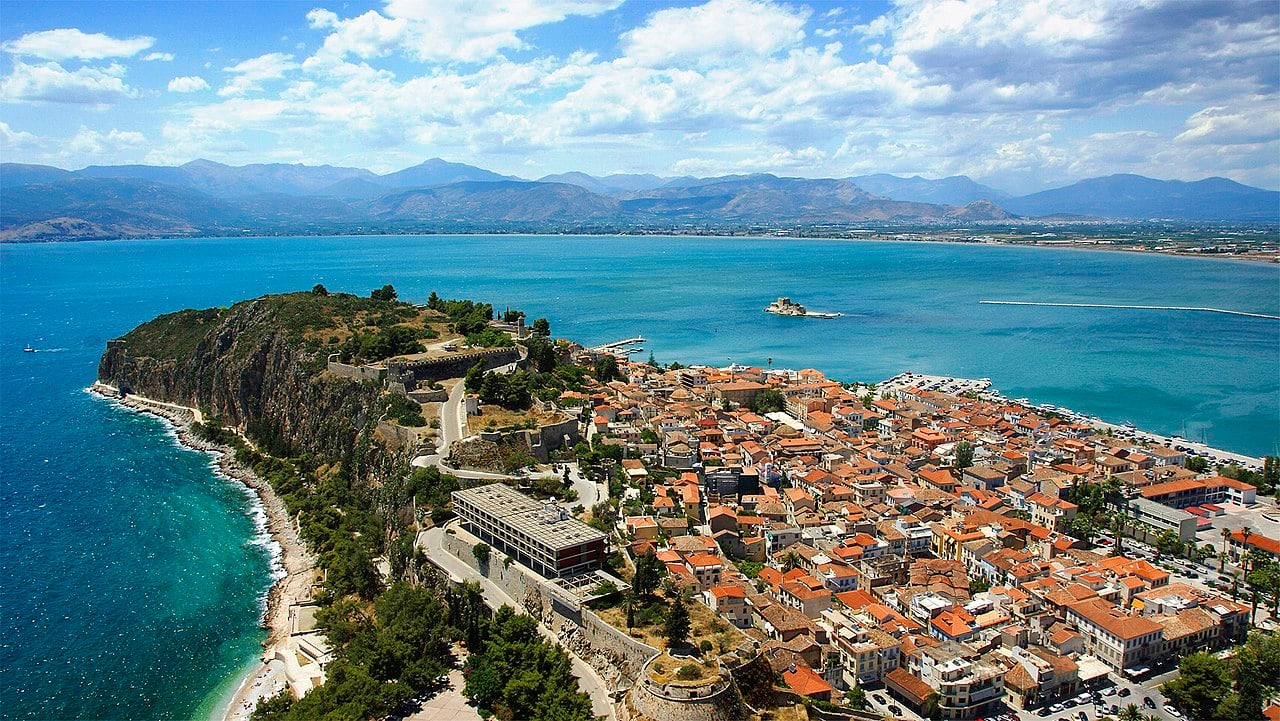
Nafplio at Peloponnese Region
Nafplio at Peloponnese Region, Greece. Credit: Mtale/Wikimedia Commons/ CC BY 2.0

Located at just about a 1-hour drive from Athens, the Peloponnese region offers a plethora of historical sites, culture, and beauty to tourists looking for a spectacular trip in Greece; there are many reasons why this region of Greece is one that you do not want to miss! Let’s take a look at 10 reasons you will have an unforgettable trip in the Peloponnese this summer.

1. Nafplio

Nafplio at Peloponnese Region
Bourtzi Castle, Nafplio. Credit: Wikimedia commons cc by 4.0

The first capital city of modern Greece was Nafplio, and until this day, you will see ruins of the fortress walls up high overlooking the town from the mountain side. This charming and romantic town has small streets that wrap around neoclassical buildings and squares and is the perfect place to visit any time of the year.

2. Epidavros

Greek Theatre of Epidaurus
Ancient Theatre of Epidavros. Credit: Wikimedia Commons, Olecorre

From ancient ruins and an impressive ancient theater to a quaint town with tavernas serving up local treats, Epidavros is a must-see on any trip through the Peloponnese. During summer months, there are weekend shows at the ancient theater that draw in crowds of thousands of spectators. It is simply an amazing experience!

3. Beaches

Zogeria Peloponnese for Summer
– Aerial view of Zogeria Beach on Spetses with Peloponnese in the background, Greece. Crédit: By dronepicr CC BY 2.0

Check out the unspoiled beaches that this region has to offer! There is such diversity in terrains surrounding the sea in this region. The seas are clean and the beaches might have either pebbles or soft sand, and you can jump off of cliffs. There is something for everyone in the Peloponnese!

4. Ilia

Elis Peloponnese
Ilia Theater. Crédit: Kritheus – Own work, CC BY-SA 4.0

This is where the mountain meets sea and provides tourists with the amazing experience of staying in a quaint, beautiful village with sandy beaches and clear blue waters outlined by forests of pine trees reaching down to the sea. There are also some significant archaeological sites you should check out while in Ilia, such as the Temple of Epicurios Apollo.

5. Arcadia

Arcadia Peloponnese
Arcadia. Crédit: Apostolos Papageorgiou CC BY-SA 3.0

You will find Arcadia in the center of the Peloponnese Region. This area is famous for its huge mountains, such as Mainalo and Parnonas, as well as its natural landscapes. It was first settled by the Arcadians who are considered to be one of the oldest people in the Peloponnese and are purported to have been responsible for the establishment of numerous significant cities throughout the region.

6 &7. Olives and Kalamata

Kalamata Peloponnese
The Old City of Kalamata. Crédit: G Da, CC BY-SA 3.0

You can find 65 percent of Greece’s 132 million olive trees in the Peloponnese with the black Kalamata olives being the most well-known variety. So why not stop by Kalamata, enjoy some olives, try great local Greek dishes with fresh olive oil, and enjoy the villages and beaches in this beautiful part of the Peloponnese? You can purchase souvenirs, such as olive oil or sculptures made from olive tree wood that are locally hand-crafted.

8. Wine Tours and Vineyards

Peloponnese
A vineyard in Peloponnese. Credit: Robert Wallace, Flickr

A perfect way to get to know the beautiful Peloponnese region of Greece is to enjoy an amazing wine tour during your visit. Greece is one of the oldest wine-producing regions in the world, having begun cultivating vineyards and producing wine over 6,500 years ago.

9. Achaia

Patras Gulf
Rio, as seen from the Antirrio ferry. Patras, Acaea, Greece.Crédit: LBM1948 – Own work, CC BY-SA 4.0

Home to the port city of Patras, the biggest city in the Peloponnese, Achaia is the place to go for beautiful mountain and seaside landscapes, including some of the most desirable beach destinations in the region along the Corinthian Gulf. Achaia is considered Greece’s “seaside gate” to Western Europe and is one of the most historic sites in the Peloponnese. On the way to Patras from Athens, you will also pass the iconic Rio-Antirrio Bridge.

10. Something for Everyone

Dafnon Valley
Dafnon valley, Leonidio. Crédit: Natalia Mostova – Own work, CC BY-SA 4.0

The Peloponnese Region is known for its variety of activities as well quite diverse landscape. From hiking to wine tours, there really is something for everyone in this region of Greece! Enjoy the breathtaking waters of the gulfs of Corinth, Patras, Saronic, Messinia, Argolida, and Laconia and the Peloponnese’s diverse climate, ranging from the less humid east to the colder climate with snow and rich vegetation in the central and more mountainous parts of the region and the rain and hot weather of the west.

Free Camping in Greece: Tourists Face €300 Fines and Possible Arrest

4 June 2026 at 19:01
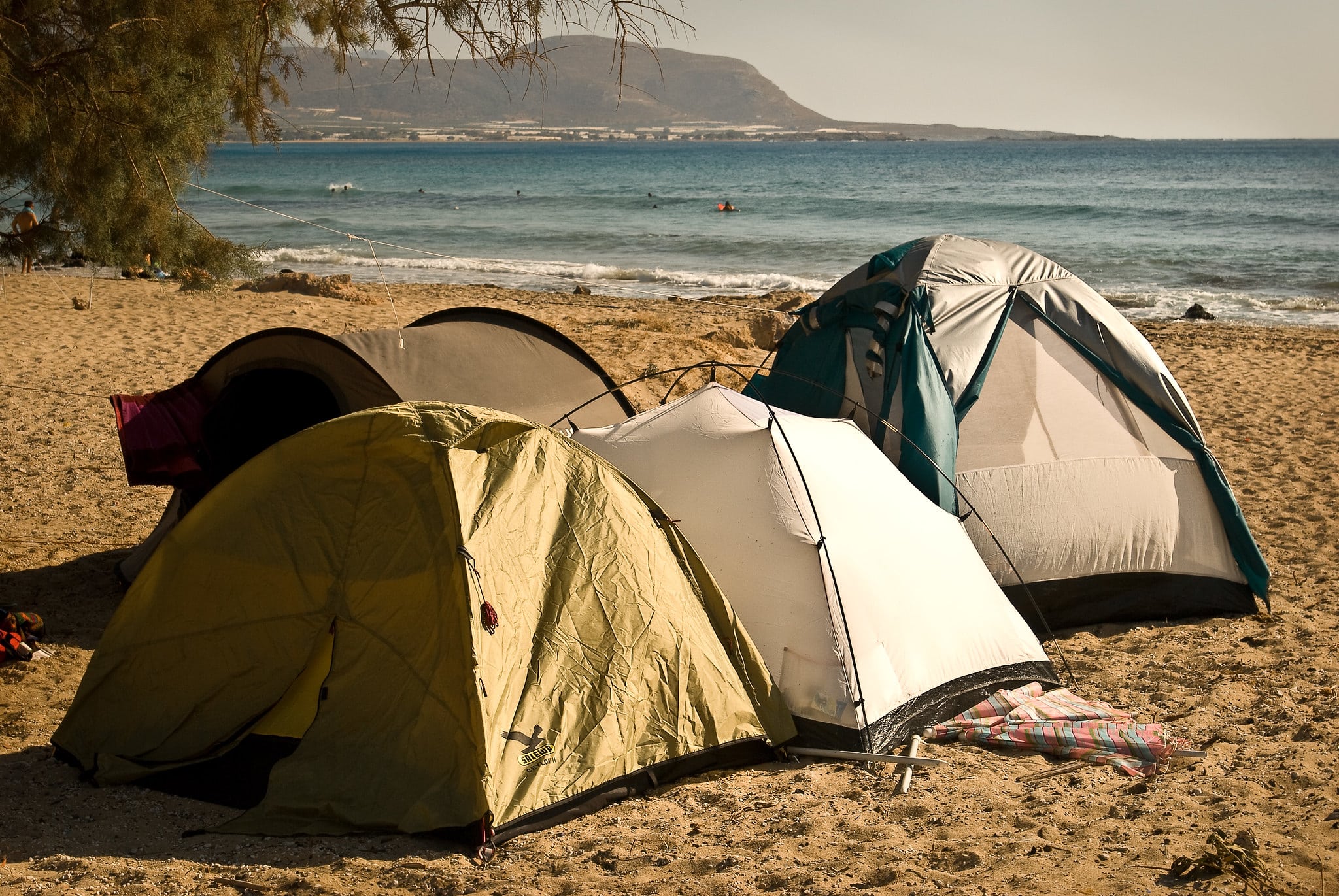
Tents set up for free camping on Falasarna beach in Crete, Greece.
Tents are seen on Falasarna beach in Crete. Free camping outside organized sites remains illegal in Greece and can lead to fines and criminal penalties. Credit: Flickr / Sergio Alvarez / CC BY NC SA 2

As the summer season begins, Greek authorities are stepping up checks on free camping, a practice that remains illegal outside organized sites and continues to spark debate across Greece.

For many travelers, pitching a tent near the sea is seen as an affordable and alternative way to enjoy the holidays, especially as the cost of living continues to put pressure on households. In Greece, however, camping outside licensed facilities remains prohibited and can lead to fines, criminal proceedings, and even jail time.

Free camping remains illegal outside organized sites in Greece

Under Law 392/1976, the installation of tents, the parking of caravans for overnight stays, and camping in general are banned on beaches, in forests, near archaeological sites, and in other public areas that are not officially designated for that purpose.

Greek law allows camping only in organized and licensed facilities, such as official campsites. Those who violate the rules may face administrative fines, while in certain cases authorities can also initiate criminal procedures, including arrest under the fast-track process.

A notable case occurred last summer at Thapsa beach in Evia, where the presence of hundreds of tents sparked strong reactions and led to intervention by local authorities. Campers were removed from the area, while surveillance and inspections were increased.

Fines reaches €300 per person, tent, or vehicle

Under the current rules, those caught free camping in Greece face an administrative fine of €300 ($348) per person, tent, or vehicle.

In more serious cases, offenders may also face criminal penalties. These can include imprisonment of up to six months or a court-imposed financial penalty. The total fine imposed by the courts can reach up to €3,000 ($3,488).

Skiathos arrests renew the debate

The issue resurfaced this week after authorities arrested two men for allegedly free camping on a beach in Skiathos on Monday afternoon.

According to local reports, the case drew further criticism because the campers had allegedly left waste in the surrounding area, showing disregard for other beachgoers and the local environment.

Similar incidents are reported from time to time across Greece, especially in areas where free camping has long been tolerated informally. In some destinations, a decades-old practice and an unofficial understanding between campers, local authorities, and local stakeholders have often existed alongside a legal framework that strictly prohibits the activity.

Supporters point to affordable and alternative tourism

Supporters of free camping argue that it offers a closer connection with nature and gives people a cheaper way to travel at a time when accommodation and holiday costs have risen sharply.

They also point to examples from other European countries, where more flexible systems allow responsible camping in open, non-organized spaces under specific conditions. According to this view, Greece could adopt a more regulated model that permits free camping in selected areas, provided strict environmental rules are followed.

Authorities warn of environmental risks from free camping in Greece

Authorities and environmental organizations, however, argue that uncontrolled camping can put serious pressure on natural areas.

Their concerns include the accumulation of waste, damage to sensitive ecosystems, and an increased risk of fires, especially during the summer months when Greece faces high temperatures and dry conditions.

They also note that the absence of organized infrastructure makes it difficult to manage large numbers of visitors in protected or remote areas. The lack of sanitation facilities, waste collection, fire protection measures, and supervision is often cited as one of the main reasons the Greek state continues to restrict free camping outside licensed sites.

Brussels sends agents, €8 million, to support Portugal’s ‘border control system’

4 June 2026 at 12:21
Lisbon airport queue misery returns

Brussels has finally seen the light. After claiming that months of ‘chaos’ at airport border controls were ‘unrelated’ to its new Entry/ Exit system (EES), the European Commission has announced

The post Brussels sends agents, €8 million, to support Portugal’s ‘border control system’ appeared first on Portugal Resident.

UK Drops Cyprus Travel Warning Linked to Middle East Tensions

3 June 2026 at 21:45
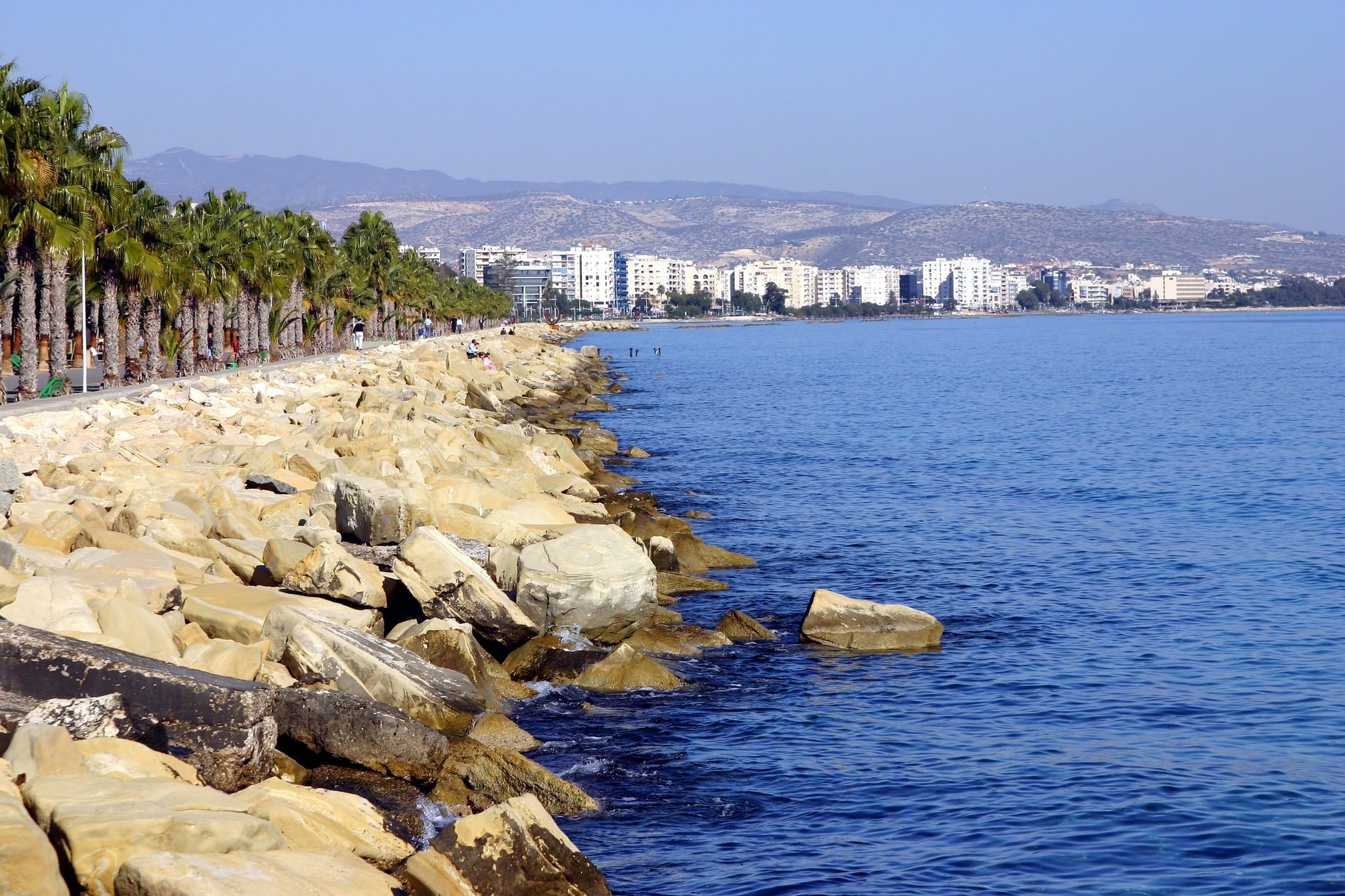
View of the Limassol seafront in Cyprus with palm trees, rocks, the sea, and the city skyline in the background.
Limassol, Cyprus. The UK has removed a special travel warning for Cyprus linked to Middle East tensions. Credit: Flickr / Leonid Mamchenkov / CC BY 2

The UK has removed special travel warning for Cyprus that had been introduced following heightened tensions in the Middle East, offering a positive signal for the island’s tourism sector at the peak of the summer season.

The updated guidance from the UK Foreign, Commonwealth & Development Office no longer includes specific references to heightened regional risks or possible travel disruption linked to developments in the Middle East.

UK drops special warning for Cyprus

The previous advisory had placed Cyprus alongside at least 17 other countries in the region under a specific warning related to the increased risk of regional instability.

The concern was connected to the ongoing conflict in the Middle East, as well as a drone attack targeting a British military base on the island. At the time, the FCDO warned that regional tensions could result in travel disruptions and other unforeseen consequences.

British citizens were advised to exercise increased caution when traveling, although the UK government never advised against travel to Cyprus.

General safety advice remains in place

The latest update removes those special references from the official travel guidance. While general safety advice for Cyprus remains in place, there is no longer any specific mention of heightened regional risks or potential disruption caused by the Middle East crisis.

The change is being interpreted as an indication that British authorities believe the risk of direct consequences for Cyprus from regional developments has significantly diminished.

Positive signal for Cyprus tourism

The update is particularly important for Cyprus as the summer tourism season reaches its peak. The United Kingdom remains the island’s largest tourism market, making British travel advice highly influential for the tourism industry.

The earlier warning had raised concerns among tourism stakeholders in both Cyprus and the UK, with several British media outlets highlighting the references to regional instability.

For the island’s tourism sector, the removal of the warning is expected to help ease concerns among British travelers and operators, especially as Cyprus continues to depend heavily on arrivals from the UK during the summer months.

❌