Younger students have regained ground academically after the pandemic's disruptions while older students' test scores continue to stagnate, according to the latest testing data released Wednesday by the federal government.
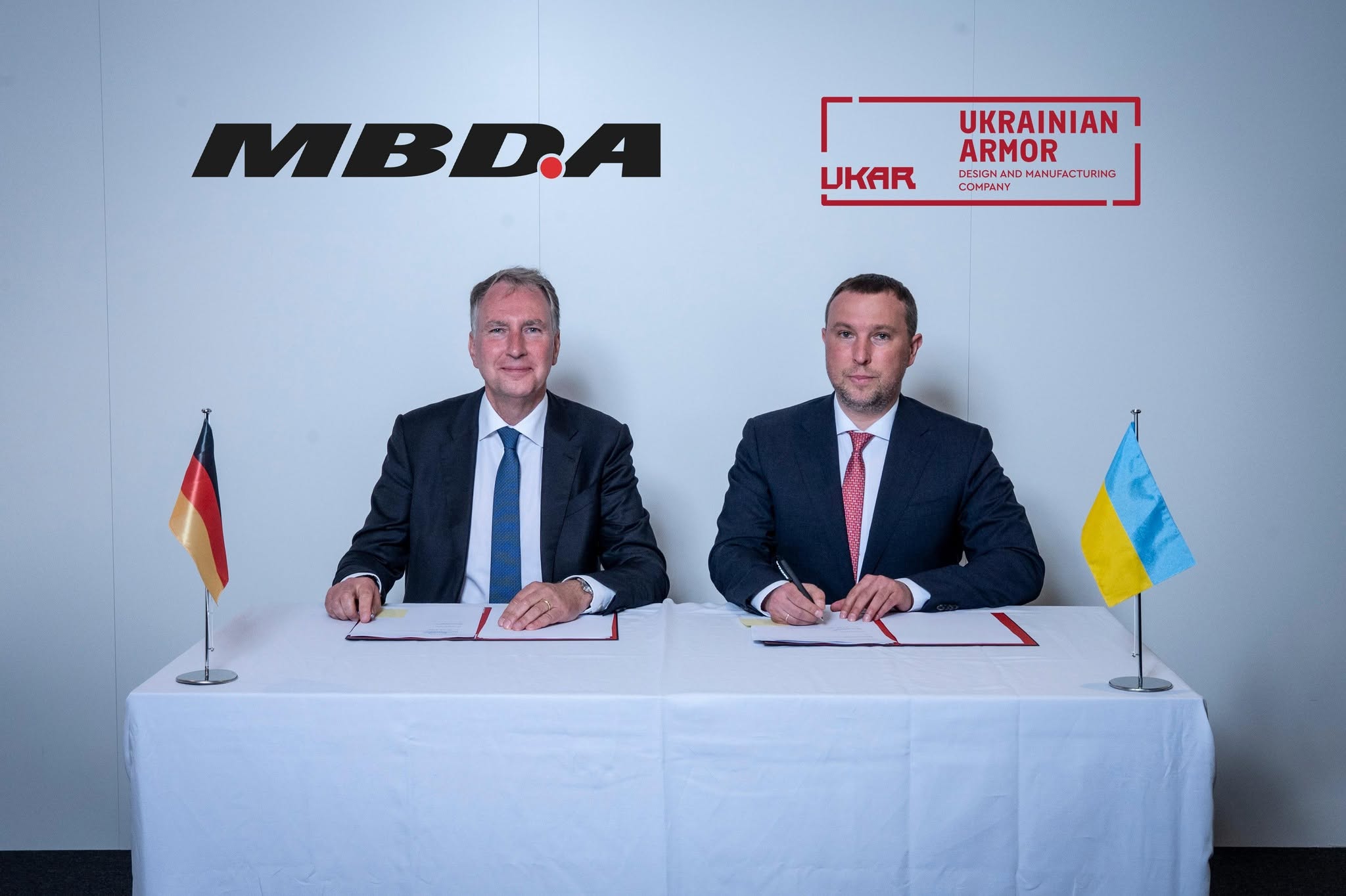
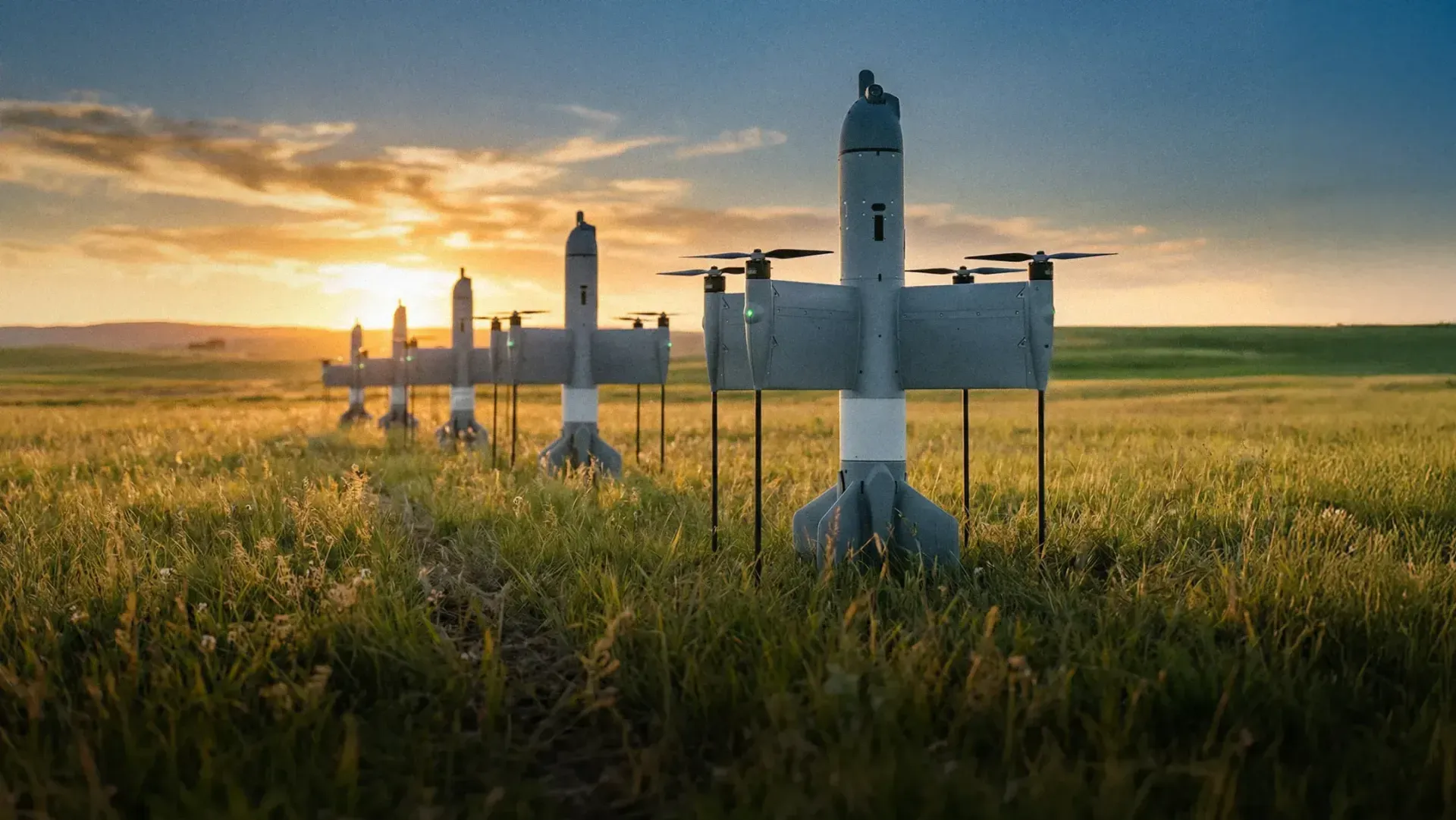
The defense company Ukrainian Armor and European firm MBDA on June 10 initiated a strategic partnership aimed at developing deep strike and anti-drone systems.
DEDURU OYA, Sri Lanka – On April 16, eight members of Priyantha Kumara’s family including his wife, son, brother, father-in-law, and four other relatives were swept away by strong currents in the Deduru Oya, a river in Sri Lanka’s North Western province. Sri Lanka Police reported more than 30 drowning deaths between April 12 and 21 this year, underscoring the risks posed by flooding rivers. Sri Lanka Police media spokesperson Udaya Kumara Wootler told Mongabay that 376 individuals have died due to drowning in rivers last year while 595 fatalities were reported in 2024. Buddhika Sampath, spokesperson for the Sri Lanka Navy told Mongabay that the Navy Diving Unit recovered 148 bodies of people between May 2022 and May 2023. While the police are yet to disclose official statistics of deaths due to drowning from January to May 2026, the number of reported incidents show over 50 fatalities. Kumara is a resident of Gopallawa in the northwestern district of Kurunegala. His son had requested that they all go for a bath in the river. The group had been bathing at a popular spot named Kuriyagas Mankada when they met the tragedy. “My son was only 13 years old, and he was a bright student,” Kumara told Mongabay. “My brother was about to hold a housewarming ceremony at his newly built house. But all these dreams were shattered within seconds. My father used to take us to this same spot to bathe when we were young. But the river has changed…This article was originally published on Mongabay
On Tuesday, engineers working inside a Himalayan mountain completed the final blast of a critical tunnel that links India’s Kashmir Valley to its Ladakh frontier with China, marking a key step in the country’s push to secure year-round access to one of its most sensitive border areas.
The Zojila Tunnel, stretching 13.14 kilometers (8.2 miles) beneath the mountains, will become India’s longest road tunnel once finishing work is done, with full operation expected by 2028.
Road Minister Nitin Gadkari remotely triggered the last detonation at the eastern portal near Minimarg in Ladakh, joining excavations driven from both ends of the mountain over more than five years.
Gadkari described the project as far more than a transport link, saying it serves as a vital lifeline for communities cut off by winter weather.
Project engineer Manmohan Singh said the team completed the job without a single accident despite working through extreme cold and difficult conditions around the clock.
Himalayan tunnel gives India year-round access near China
The Zojila Pass, which the tunnel cuts beneath at an elevation of 11,578 feet, currently shuts down every winter under heavy snowfall that can pile well above the roof of a large truck, blocking road travel between Srinagar and Leh for months. More than 3,000 workers have been involved in excavation since October 2020.
In Photos | Zojila Tunnel Poised for Historic Breakthrough
Security personnel stand guard outside the Zojila Tunnel in Minamarg ahead of the landmark breakthrough ceremony of the ₹6,500-crore project. Set to provide all-weather connectivity between Kashmir and Ladakh, the… pic.twitter.com/PkM4tqDIC3
— Kashmir Observer® (@kashmirobserver) June 9, 2026
This tunnel is one of four major passages in a $712 million road corridor that also includes the 6.5-kilometer (4 miles) Sonamarg tunnel, with all components targeted for full operation by 2028.
Beyond road access, India launched a $3.9 billion railway from its lowland plains to Kashmir in June 2025, as reported by Al Jazeera, featuring the Chenab Rail Bridge, currently the world’s tallest railway bridge.
The 272-kilometer (169 miles) line starts at Udhampur, the base of the Indian Army’s northern command.
Billions in rail and roads back India’s border push
The push behind all these projects traces to a deadly confrontation in Galwan Valley in June 2020, when Indian and Chinese soldiers fought hand-to-hand at high altitude, killing 20 Indian troops.
The clash set off an accelerated construction race on both sides of the 3,500-kilometer (2,175 miles) shared border.
The Himalayan tunnel is central to India’s effort to close the infrastructure gap with China, where both countries completed troop disengagement at contested frontier points in October 2024, as reported by The Diplomat.
Kashmir has been split between India and Pakistan since the end of British rule in August 1947, with both countries claiming it in full.
The United States professional baseball league (MLB) was suspended for three months between May and July 2020, at the worst point of the pandemic. When it finally resumed, it did so behind closed doors or with very restricted access. For the first time in many years, stars of the sport such as Mike Trout of the Los Angeles Angels and Christian Yelich of the Milwaukee Brewers had to celebrate their victories in front of empty stands.
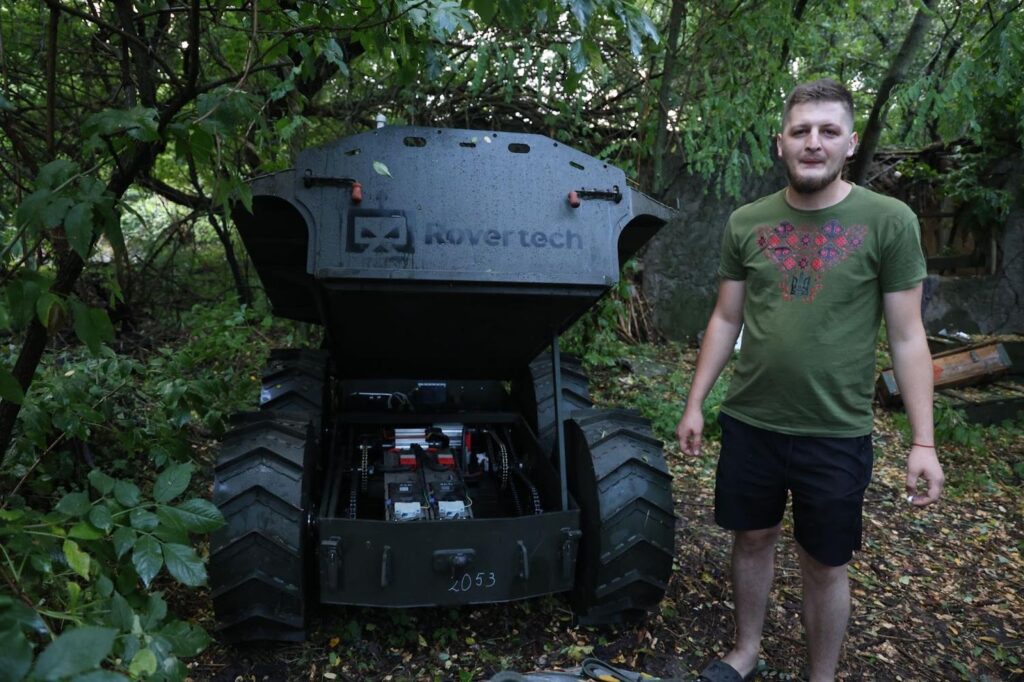
Ukrainian forces conducted 50,000 missions with unmanned ground vehicles as of January, the Ministry of Defense announced. The number is constantly growing: from 7,500 missions in January to 14,000 in May, and the number of units employing UGVs grew from 117 to 230.
"The UGV is a very, very promising thing," callsign Electric of the 93rd Brigade told Euromaidan Press—his brigade was an early adopter, having used UGVs for three years running.
"It has already proven its effectiveness, developing and scaling quickly, and becoming one of those tools of war that is already contributing to victory."
UGVs are meant to solve Ukraine’s chronic personnel shortages and battlefield casualties and have been rather effective, according to testimonials such as these. The General Staff has credited ground robotic platforms with cutting personnel casualties by up to 30%. In the Azov Corps, a single battalion moves over 40 tons of equipment per month with UGVs.
However, just having more machines is not nearly enough. Ukrainian forces are working to solve a myriad challenges before these machines can live up to their fullest potential, including:
Creating a military doctrine for their use
Establishing sufficient training for their operation
Building the infrastructure to deliver, modify, and repair them
Ironing out spare parts shortages, intercompatibility, and delivery challenges
Figuring out how to employ the menagerie of the dozens of systems in service
“The development of UGVs is one of our priorities: the more tasks robots perform, the more lives of military personnel can be saved,” Defense Minister Mykhailo Fedorov said in a statement.
More doctrine, more training
While remote-controlled ground crawlers existed before the full-scale invasion, mass adoption only exploded in 2026. The number of units using UGVs doubled between January and June. “The majority of brigades don’t have a (specialized) working UGV unit inside,” said Andrei Kushniarou, Commander of the 108 Battalion “Da Vinci Wolves.”
As a result, many units are getting UGVs for the first time without much of an idea of what to do with them, soldiers said in interviews. This applies not just to driving them but planning missions, figuring out what models work best for specific tasks, and which ones to commit to purchasing.
“They began rapidly scaling up UGVs in just over six months,” Electric said. “Before that, there was no systematic use of this in the army. There were only isolated units that were doing something, trying things out.”
“Systematic implementation began in just over six months and it scaled up from a dozen units, to hundreds of units. That is, this is an incredibly rapid leap, so there is no doctrine, nothing. There is only the experience of certain successful units, which share it and finally scale it up.”
This is natural: any new way of war requires figuring out. Ukrainian air defenders and UAV operators have had a long and difficult learning process over the past four years before Ukraine began to tip the drone war in its favor. UGVs must tread a similar path.
For the time being, for every story of a UGV rescuing a wounded soldier or capturing a Russian position, there are lesser-known stories of troops flailing about and learning on the job. Kushniarou said he has seen logistics UGV operators using the same route to deliver supplies to front line troops for half a year, as though inviting Russian FPV drones to come and destroy them.
“We have some classes for FPV drones, for the bombers, where they use simulators before taking the real drones. But we don't have this kind of thing for UGV's,” said Olexiy Severin, the financial director of Ukrainian Unmanned Systems, which produces the heavy-duty Ravlyk ground drone for units including the military intelligence (GUR).
Lyuba Shipovich stands near a Ukrainian TERMIT unmanned ground vehicle (UGV). (Photo David Kirichenko)
The solution is more training. There are some military training centers, such as the one operated by the 3rd Corps, as well as others scattered among different units. The military is working on creating more—for example, the South Operation Command, which plans to not only train soldiers how to use drones but to better integrate them with infantry. Volunteer-led initiatives like Dignitas are launching their own programs.
One bottleneck is the lack of experienced instructors, soldiers said. Experienced operators are at a premium, both on the front line and in the classroom. Meanwhile, current best practices become outdated in roughly six months. Another bottleneck is cash.
"We need money. A lot," Electric said. "First and foremost, money for scaling up production facilities, training centers and infrastructure development workshops. Everything is ready for it, it's just a matter of stating the facts and writing a doctrine."
Managing the menagerie of systems
Around 33 different models are available through the DOT-Chain marketplace. The actual number of different models of UGV floating around the country is closer to 200, soldiers said.
This can be an overwhelming number of systems to get used to. Every system comes with its own nuances, use cases, and teething troubles. And “basically every one” has to be modified by the unit before it can be used, said Mykyta Puz, a technology liaison with the Azov Corps. Other soldiers agreed with him.
“That's why we were the first to create our own universal control board, which we're installing throughout this entire zoo, standardizing the electronic components at a minimum,” Electric said. They must also add their own cameras and Starlink terminals.
The 93rd isn’t alone in this. Starlink is the standard army-wide control method for driving UGVs at a distance, yet Starlink doesn’t come standard with UGVs. Many robots come without night vision and thermal cameras integrated into the basic package.
Other parts require tinkering as well, especially when UGVs come from outside Ukraine. Multiple soldiers were quite negative with their reviews of foreign-made machines, with reviews like "highly expensive, utterly useless" and "the quality of work is really bad.”
Specific complaints ranged from the act of driving toggling a safety cutoff switch, antennas jostling loose, or radio controls dying when a friendly UAV was flying nearby.
The 93rd is trying to solve the “zoo” issue by limiting themselves to no more than 10 systems they trust, of which two are the mainstay and several more sit in backup.
Spare parts and infrastructure
The challenge there is access to spare parts, with Electric calling it “critical… We only supply them through our own resources and methods.”
Kushniarou said that units have a choice to make. They can decide to rely on just one or two developers, to buy UGVs from them. But if these developers get hit by a Russian missile or some parts fail to arrive from China, they can be screwed.
Or they can embrace the “zoo,” work with many developers at the same time, which spreads out the risk, but turns into a “logistical hell” where parts are concerned. This also calls for really good specialists who know how to work with a dozen different systems.
A small tracked unmanned ground vehicle of the kind multiplying across the Ukrainian front in dozens of locally-built variants. The vertical mast carries an elevated camera or communications antenna; the exposed controller board on the chassis is the workshop signature — the visible mark of a platform iterated in the dugout R&D labs Yabchanka describes, not on a factory production line. These small UGVs handle resupply, reconnaissance, and serve as radio relays extending the range of other robots and FPV drones operating deeper into the kill zone. Photo: Oleksandr Yabchanka / Facebook.
Getting parts can be a doozy, even when they are available. Severin said that units are begging his company to include a second battery for the Ravlyk UGV into the standard purchase package because "to buy additional batteries is all the circles of hell, harder than to buy a new UGV, because they have to go through multiple layers of military permission."
He said that the company replaces wheels free of charge at its own expense, just so Ravlyk users can get them repaired in a week instead of a month.
The solution is to build a more robust military-wide infrastructure for UGVs, soldiers said. That includes a spare parts pipeline, repair and servicing centers, and analytical centers for what can be improved.
"You can’t just have a UGV, you need to create infrastructure around it,” like workshops, R&D and analytical centers, and logistics systems for parts, Kushniarou said. “Without infrastructure, any UGV is just a tool without a master.”
Scaling up adoption
Ukraine has set a goal to offload 100% of logistics tasks to UGVs. If all of the doctrinal and military-industrial teething troubles can be resolved, many more frontline warfighters’ lives can be saved.
The Defense Ministry previously mentioned several things it’s doing to accelerate adoption.
One is the development of “a separate UGV competence center” that will liaise between the General Staff and the military and become a “single point of contact” for manufacturers.
The ministry also said it’s working on “comprehensively resolving” a VAT issue that led to contract delays. Severin told Euromaidan Press that a VAT that applies to electric vehicles has hit the Ravlyk, making it cost 30% more when purchased directly by units, discouraging them from using it.
Procurement contracts are now being signed for the following year to ensure the lots can be delivered.
As for 2026, Ukraine has plans to contract for 50,000 UGVs. But as of mid-May, the Ministry of Defense wrote that over 3,000 orders have been filed through the DOT-Chain marketplace and over 1,000 of them were delivered. Even though this number doesn’t include direct unit purchases, getting to 25,000 units by the end of June seems unlikely.
It would be in the military’s best interest to prioritize getting good systems rather than fulfilling the number at any cost, developers said.
Integrado na unidade curricular de Gastrotecnia e enquadrado no projeto ReFOOD4North, o concurso pretende estimular a criatividade e a inovação dos alunos, promovendo soluções alimentares que conciliem qualidade nutricional, sustentabilidade ambiental e acessibilidade económica.
Para Carla Gonçalves, docente da unidade curricular, a ligação entre a universidade e o tecido empresarial tem um papel fundamental na motivação dos alunos. “Este tipo de iniciativas com ligação às empresas motiva os estudantes a demonstrarem aquilo que valem e querem muito que o seu valor, aprendido dentro das portas da Universidade, passe para a sociedade”, afirmou.
Artigo exclusivo PREMIUM
Tenha acesso ilimitado a todos os conteúdos do site e à edição semanal em formato digital.
Global data centre capital expenditure is on course to exceed $1 trillion in 2026 according to new research from Dell’Oro Group, as hyperscale AI deployments accelerate and rising memory and storage costs push overall server spending higher.
The research company raised its worldwide data centre capex outlook for the year following a strong Q1, citing a combination of AI expansion, continued investment in general-purpose infrastructure and component cost inflation as the primary drivers.
Baron Fung, senior research director at Dell’Oro Group, stated rising memory and storage pricing substantially increased overall server system costs in the quarter and will likely remain a major capex growth factor throughout the year.
“At the same time, AI infrastructure deployments continue to accelerate rapidly, while hyperscalers also expanded general-purpose infrastructure to support public cloud growth, agentic AI workloads, and rising AI-related storage requirements,” he said.
The scale of spending among the largest cloud providers is striking. Amazon, Google, Meta, and Microsoft, the top four US hyperscalers, increased data centre capex by 78% year-on-year, reflecting the intensity of the AI infrastructure race.
On the supply side, Dell led server OEM revenue followed by Supermicro and Lenovo, though white-box vendors serving the hyperscale market accounted for most overall server revenue. Nearly all server vendors benefited from higher memory-driven system pricing.
Despite already exceptional spending growth in the first half of the year, Dell’Oro expects capex growth to accelerate further in the second half, driven by the ramp-up of Nvidia’s Vera Rubin platform and refresh cycles for hyperscaler custom accelerator platforms.
Beyond the major cloud providers, Fung noted select enterprise verticals and sovereign cloud providers are also increasing AI infrastructure adoption, “though growth remains constrained by uncertain returns and infrastructure readiness”.
“While near-term demand remains healthy, some spending may have been pulled forward ahead of expected price increases later this year,” explained Fung.
Seven men die by suicide in Australia every day. Last month, the peak body for men's health decided to address this by teaching boys about gender equity. But men are not dying for lack of feminism, says Bettina Arndt.
Why did the Metropolitan Police attend a UCL bar to kick out our group of conservative-minded students over our views on transgenderism, asks Samiksha Bhattacharjee.
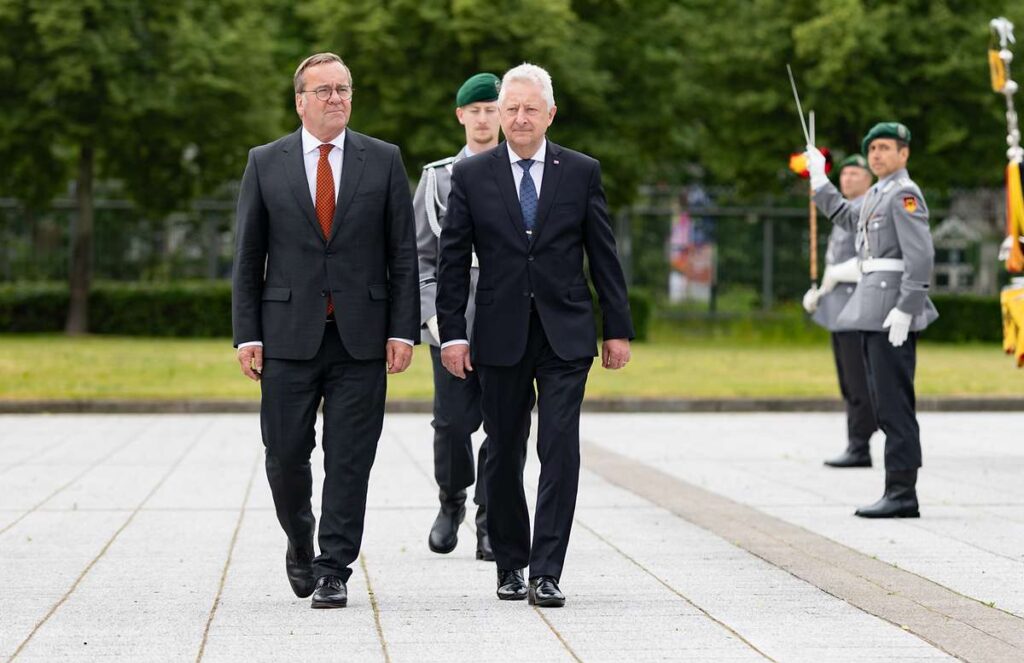
German Defense Minister Boris Pistorius announced an additional €300 million ($345 million) for the Czech-led ammunition initiative for Ukraine on 9 June 2026. The funds will purchase roughly 50,000 rounds of long-range ammunition, Pistorius said after meeting new Czech Defense Minister Jaromír Zůna in Berlin.
The pledge keeps Germany positioned as the initiative's largest foreign backer at a moment when donor numbers are thinning and Prague's new government has retreated on several other Ukraine fronts. The Czech-led channel has delivered 4.4 million large-caliber shells since early 2024 — more than half of all such ammunition Ukraine has received over that period, according to Czech President Petr Pavel.
What the pledge buys
The new commitment lifts Germany's total share of the initiative past €1.2 billion, building on roughly €900 million already disbursed. Pistorius called the Czech channel an essential contribution to Ukraine's ammunition supply and said Berlin would continue to back it.
"Germany will contribute an additional €300 million to this initiative — that's approximately 50,000 rounds of long-range ammunition," Pistorius said.
Prague's new government holds the channel
The Berlin session was Pistorius's first in-person meeting with Zůna, who took office in December 2025 as part of Andrej Babiš's coalition government. Zůna, a retired lieutenant general, was nominated for the post by the center-left SPD party.
Babiš has cut planned Czech defense spending for 2026 and secured a Czech opt-out from the European Union's €90 billion Ukraine funding package. The new government also put on ice a previously discussed transfer of L-159 combat aircraft to Ukraine.
The ammunition initiative is the major exception. Zůna confirmed in December that the channel would continue, and the Berlin meeting was his first public reaffirmation of that position to a NATO partner.
"Germany plays an important role as a supplier of military equipment and ammunition and, together with our defence industry, makes a significant contribution to European security," Zůna told reporters at the Bendlerblock.
Donor base thins as need grows
The initiative needs €5 billion in 2026 but had raised only €1.4 billion by February, Reuters reported. Pavel said last month that the number of contributing countries has dropped.
The channel has firm contracts to deliver about 1 million rounds to Ukraine in 2026, the Czech Defense Ministry said — well below the 1.8 million delivered in 2025 and the 1.5 million in 2024. Russia continues replenishing its own stockpiles, including through North Korean deliveries that NATO officials estimate at 9 million rounds since 2023.
SK Group, NTT and Chunghwa Telecom were among the parties to form an AI investment fund expected to reach $500 million, with the aim of backing companies working on technology related to optical and wireless networking.
The IOWN AI Fund has been established alongside Catalight Capital, a company set-up to manage the project from offices in Japan and the US.
Other current financiers are Development Bank of Japan, and Young Sohn, an entrepreneur who is founding managing partner of VC company Walden Catalyst Ventures and former chief strategy officer of Samsung Electronics.
In a joint statement, the companies and Sohn revealed more than 20 parties around the globe had expressed an interest in contributing to the fund, which is expected to reach $500 million in size.
Businesses apparently mulling the opportunity include KDDI, NEC, Samsung Electronics, SK Hynix, Sony, Fujitsu and various VC companies.
Catalight Capital will be charged with hunting down promising start-ups for investment. Targets will be in technologies related to the Innovative Optical and Wireless Network (IOWN) ecosystem.
It intends to invest in companies working in areas including: photonics; AI processors and advanced packaging; light source and modulators; management technology for distributed AI infrastructure; software; AI models and inference; and applications and services.
Global push SK Group chair Chey Tae-won stated he hoped the fund would: “play a key role in identifying and fostering AI start-ups not only across Asia but around the world”, noting “to emerge as a competitive AI nation, proactive and large-scale investment in AI infrastructure is essential, and trust-based global cooperation is equally important”.
NTT President and CEO Akira Shimada added “to realise AI-native infrastructure, it is essential to combine the optical and networking technologies that NTT has cultivated with advanced technologies and the strengths of partners”.
“Through the IOWN AI Fund, we will promote business collaboration with promising startups, work together with our global partners to build the IOWN ecosystem, and contribute to the creation of a new industrial foundation”.
IOWN is a vision initially pushed by NTT to drive next generation ICT infrastructure which uses optical networking technology to vastly cut electricity use while delivering high performance. The associated IOWN Global Forum has 170 member organisations.
Starmer wants to ban children from social media. Jack Watson, 17, argues the Government is making a serious mistake – in his experience, the benefits of social media outweigh the costs.
South Wales Police has shelved plans to record incidents of "anti-Muslim hostility" after the Free Speech Union threatened a judicial review – calling it a de facto blasphemy law.
In the fifth year of Russia's full-scale invasion of Ukraine, mil-tech startups still struggle to access bank financing amid strict secrecy and lack of collateral.
Orange signe deux acquisitions majeures en deux jours, en finalisant le rachat de son partenaire dans la coentreprise espagnole MasOrange.
Le groupe français a annoncé la finalisation de l’opération le 8 juin au soir, soit deux jours après avoir conclu un accord portant sur les actifs de son concurrent national SFR.
Orange a entamé dès octobre 2025 le rachat des 50 % de MasOrange détenus par son partenaire Lorca. Le processus s’est déroulé sans encombre majeur : un accord définitif a été conclu deux mois plus tard, les autorisations réglementaires obtenues plus tôt dans l’année.
« La pleine acquisition de MasOrange est une étape stratégique de notre plan Trust the future et renforce la position d’Orange en Espagne, notre deuxième marché en Europe ,commente Christel Heydemann, directrice générale d’Orange. Elle ouvre la voie à des synergies industrielles, opérationnelles et commerciales accélérées, favorisant une création de valeur plus importante. »
Meinrad Spenger, directeur général de MasOrange, rejoint le Comité exécutif du groupe Orange. Il souligne que ce rachat confère à l’opérateur un socle renforcé pour sa croissance future : « En devenant pleinement partie intégrante du groupe Orange, MasOrange dispose d’un socle encore plus solide pour sa croissance future, appuyé par une plus grande capacité d’investissement et d’innovation ainsi qu’une expertise mondiale ».
Orange prévoit de refinancer « progressivement »la dette de MasOrange. Le groupe met en avant cette acquisition comme un élément clé de sa stratégie actuelle axée sur la confiance, tout en consolidant ses positions en Espagne, son deuxième marché européen.
OpenAI a déposé un dossier confidentiel d’introduction en Bourse aux États-Unis, rejoignant ainsi la course aux marchés financiers que se livrent les poids lourds du secteur de l’IA.
Le créateur de ChatGPT a indiqué avoir soumis une déclaration d’enregistrement préliminaire à la Securities and Exchange Commission (SEC) américaine. « Nous supposions que cela finirait par fuiter, alors nous l’annonçons nous-mêmes », a fanfaronné la direction.
OpenAI n’a pas divulgué le montant, le prix ni le calendrier de l’opération, et a précisé qu’une première cotation n’était pas forcément imminente. « Nous n’avons pas encore tranché sur le calendrier ; ce pourrait être dans un moment, car certaines choses que nous souhaitons entreprendre sont probablement plus simples à conduire en tant que société privée », a indiqué la direction.
OpenAI a ajouté que la décision implique « un ensemble complexe de compromis », mais que ce dépôt lui donne « la possibilité d’entrer en Bourse plus tôt si cela s’avère la meilleure option ».
OpenAI viserait selon Reutersune valorisation allant jusqu’à 1 000 milliards de dollars, avec une première cotation possible dès septembre. Ce niveau la placerait au coude-à-coude avec son concurrent Anthropic, qui a déposé confidentiellement son propre dossier d’IPO la semaine dernière. SpaceX, de son côté, devrait lancer son IPO cette semaine, pour une valorisation annoncée de 1 750 milliards de dollars.
Les trois sociétés ont toutes « un immense besoin de liquidités », commente Sunil Krishnan, responsable des multi-actifs chez Aviva Investors, à la BBC, ajoutant que « personne ne veut être le dernier » dans la course à l’IPO. Il a expliqué que les lourds investissements des entreprises dans l’infrastructure IA – processeurs et entraînement des modèles – ont un coût considérable.
Ce dépôt intervient dans une période de croissance rapide. La semaine dernière, la société d’études Sensor Tower a estimé que ChatGPT avait franchi le cap du milliard d’utilisateurs actifs mensuels sur son application, devenant ainsi la plus rapide de l’histoire à atteindre ce seuil.
Le parcours d’OpenAI vers l’IPO a également été compliqué par ses origines associatives et ses efforts de restructuration. En mai, un jury américain a donné tort à Elon Musk dans le procès l’accusant d’avoir détourné OpenAI de sa mission fondatrice, levant ainsi un obstacle juridique majeur à l’horizon d’une éventuelle introduction en Bourse.
SK Telecom revendique le titre de première entreprise privée asiatique sélectionnée pour contribuer aux travaux de l’Union européenne sur le développement de la cryptographie quantique de prochaine génération.
L’opérateur sud-coréen a été retenu pour participer au développement d’un système de distribution de clés quantiques (QKD) intégrant des circuits photoniques intégrés quantiques et l’IA, dans le cadre du programme Horizon Europe, doté d’un budget de 95,5 milliards d’euros.
Les équipes de SKT travailleront avec des chercheurs en Grèce, en Autriche et en Allemagne pour réduire l’encombrement, le poids et le coût des équipements QKD.
Les travaux visent à rendre les systèmes QKD plus accessibles en facilitant leur déploiement. SKT note que les systèmes actuels sont volumineux car leurs « composants optiques de précision doivent être assemblés et alignés individuellement sous forme d’équipements distincts ».
SKT est convaincu qu’il est possible d’intégrer les éléments optiques dans un processeur unique grâce à la technologie de circuit intégré photonique semi-conducteur – une approche comparable à la fabrication des modules d’appareil photo pour smartphones.
L’opérateur mise également sur l’embarquement de l’IA dans le système pour permettre un étalonnage optique en temps réel et améliorer la « stabilité globale du système QKD ».
La coordination du projet est confiée au Centre national de recherche scientifique Demokritos en Grèce, également en charge du développement de l’IA. L’Institut autrichien des technologies développera le système de gestion des clés, tandis que la start-up allemande Synogate s’occupera de la logique fonctionnelle.
SKT ajoute avoir reçu une mission secondaire visant à harmoniser les normes européennes et sud-coréennes en matière de cryptographie quantique, en identifiant les différences entre les approches actuelles des deux régions. Ces travaux pourraient in fine contribuer à l’émergence d’une approche mondiale commune.
Anthropic launched a public version of its Mythos AI model, but with guardrails in place to block its use in sensitive areas such as cybersecurity.
The AI player stated its Claude Fable 5 model is its most powerful to date on its launch yesterday (9 June), which is two months after Anthropic first unveiled its Mythos-class model.
The limited Mythos preview sent shockwaves through the industry after the model uncovered thousands of software vulnerabilities.
Last week Anthropic expanded the reach of its Mythos AI model to an additional 150 companies across more than 15 countries.
The startup describes Fable 5 as state-of-the-art on nearly all tested benchmarks of AI capability, claiming exceptional performance across software engineering, knowledge work, vision and scientific research. The longer and more complex the task, Anthropic stated, the larger Fable 5’s lead over its other models.
Anthropic stated it has done extensive testing to ensure users cannot manipulate Fable 5 into bypassing its guidelines. Queries on restricted topics will instead receive a response from the company’s Claude Opus 4.8 model.
The AI player acknowledged the safeguards are tuned conservatively and will sometimes catch harmless requests but said they trigger on average in fewer than 5% of sessions.
“With more capable models arriving in the coming months, we’re working to improve our safeguards and reduce false positives as quickly as we can,” Anthropic stated.
For a smaller group of cyber defenders and infrastructure providers, Anthropic is simultaneously launching Claude Mythos 5, which is the same underlying model as Fable 5 but with safeguards lifted in some areas.
Mythos 5 will initially be deployed through Project Glasswing in collaboration with the US government. It carries what Anthropic described as the strongest cybersecurity capabilities of any model in the world.
Users who had access to the Claude Mythos Preview will be able to upgrade to Mythos 5, with broader access planned through an expanded trusted-access programme.
Fable 5 and Mythos 5 are priced at $10 per million input tokens and $50 per million output tokens, less than half the price of Claude Mythos Preview.
The rollout comes as Anthropic, now valued at $965 billion, looks to extend the momentum which has pushed its valuation above rival OpenAI, with both startups racing toward public listings.

 Login
Login