Militantes do PS, incluindo o histórico António Campos, pediram esta segunda-feira ao secretário-geral socialista que suspenda as eleições para a federação de Coimbra, denunciando “violação dos estatutos”, pagamento “massivo de quotas”, “ativação de sindicatos de votos” e cadernos eleitorais nulos.
Numa carta enviada a José Luís Carneiro, à qual a agência Lusa teve acesso, António Campos, Américo Batista (que é candidato a estas eleições para o PS/Coimbra) e Rui Moreira Claro denunciam “violações grosseiras dos estatutos e do regulamento internos” e consideram que isso torna “inviável a realização do ato eleitoral agendado para o próximo dia 20 de junho”.
“Razão pela qual se solicita ao camarada que imediatamente decrete a suspensão do mesmo, e seu adiamento, com a depuração dos Cadernos, nos termos estatutários, e a imediata participação ao Ministério Público – atenta a circunstância de se tratar de obrigação legal – dos elementos referentes ao pagamento massivo de quotas — por ser ilegal – para aferição das eventuais atividades de âmbito criminal, e dos seus agentes, tudo em nome da Democracia, Transparência e, finalmente, da Declaração de Princípios do PS”, defendem.
Segundo estes socialistas, para as eleições internas para a distrital do PS/Coimbra – à qual concorrem ainda Pedro Coimbra e Vitor Batista – tem-se “assistindo ao pagamento massivo de quotas em determinadas secções e concelhias”, com casos de “aumentos de pagamentos na ordem de 300%, face ao recente ato de eleição do secretário-geral”.
“Ora, os pagamentos massivos, e as afirmações sigilosas de camaradas que assumem que lhes pagaram as referidas quotas, e que apenas receberam telefonemas a indicarem onde votar, demonstram um fenómeno de adulteração das eleições por parte de algum, ou alguns dos candidato, com o intuito claro de defraudar as regras internas, e o livre exercício da cidadania e militância, além de impedir o debate e alternâncias decisivas para uma saudável democracia interna”, acusam.
De acordo cm estes militantes, trata-se de “ativação de sindicatos de votos, que visam assegurar que apenas os detentores de muito poder económico, poderão opor-se em fenómenos eleitorais internos”, indicando que esta situação “tem maior expressão nas três maiores concelhias” e “numa outra em que é militante e originário um candidato à liderança da Federação”.
“A situação relatada e reportada ao dia 03 do corrente mês (e notícias existem do agravamento da situação) apenas é possível por os cadernos eleitorais e de militantes se encontrarem em contravenção total com o disposto no Regulamento de Militância e Participação”, avisam.
De acordo com esta carta enviada a Carneiro, está prevista “a suspensão dos militantes com mais de dois anos de quotas por pagar, e que, depois de regularizado o seu pagamento, apenas 60 dias depois, poderá constar do recenseamento interno”, o que dizem que não acontece nos atuais cadernos.
“Ora, tais quotas estão a ser massivamente pagas, e a serem considerados como militantes e com plena capacidade eleitoral, quem, por força regulamentar, não o pode ser”, condenam
Para estes militantes “mais grave” é constarem dos cadernos “militantes com mais de quatro anos sem pagamento de quotas”, que deveriam “estar fora do recenseamento”.
“Quer isto dizer que os Cadernos de Militantes recenseados é absolutamente nulo, por inclusão de quem, nos termos estatutário ali não podia constar, e também por conferir direito de voto a quem apenas 60 dias apôs a regularização da sua situação contributiva, poderia exercer tal direito”, sintetizam.
António Campos, fundador do PS e próximo do ex-líder e Presidente da República Mário Soares, foi secretário de Estado em três Governos e deputado em várias legislaturas.
Nesta nova declaração é possível perceber que o primeiro-ministro apresentou um pedido de oposição à consulta da matriz do seu património imobiliário. Ainda, o PS vai votar contra a PSU.
Para salvar milhões do PRR, vale legislar à pressa e contar os tostões aos mais pobres. Entre o assobiar do PS e o bloqueio do Chega, a reforma parece um "faz de conta" nacional.
O partido social-democrata nos Açores considera que o PS da região vive num clima de instabilidade permanente, com conflitos internos e uma liderança fragilizada e sucessivamente contestada.
Apple has announced macOS 27 Golden Gate, the next major version of its operating system for Mac computers, at WWDC 2026 alongside iOS 27, iPadOS 27, watchOS 27, tvOS 27, and visionOS 27. The update...
Molly Rose Foundation says government should instead set strict safety standards for apps
A rushed under-16s social media ban in the UK could unravel and families would be left to count the cost, a leading child safety charity has warned.
The Molly Rose Foundation (MRF) said an age limit on the use of tech platforms could unravel, after it was reported that the prime minister, Keir Starmer, would announce a ban on under-16s accessing “harmful” social media apps.
O PS-M reforçou a sua exigência de transparência na compra de gás natural liquefeito (GNL) pela Empresa de Electricidade da Madeira (EEM), ao apresentar um pedido de informação detalhado sobre todos os contratos que abastecem a Central Termoelétrica da Vitória III e sobre o concurso público recentemente lançado para fornecimento de gás natural. O Grupo […]
Numa pergunta dirigida à ministra da Saúde, Ana Paula Martins, o deputado eleito por Évora alude a notícias que apontam para "um aumento significativo do número de utentes sem médico de família".
Carneiro inicia a "Rota pela Economia do Mar" no dia em que se celebra o Dia Mundial dos Oceanos. PS tem contribuído para a região, mas "atenção especial" do poder é crucial na valorização dos Açores.
Mps, Rinaldi: “Dietro l’Opas non c’è solo una logica industriale”
Mentre il risiko bancario italiano entra in una nuova fase e le grandi manovre della finanza ridisegnano gli equilibri del settore, l’Opas lanciata da Intesa Sanpaolo su Mps si candida a diventare una delle operazioni più rilevanti degli ultimi anni. Non si tratta soltanto di una partita tra istituti di credito: sul tavolo ci sono asset strategici, rapporti di forza tra i principali gruppi finanziari del Paese e il futuro assetto del sistema bancario nazionale.
Dopo il lungo percorso di risanamento che ha riportato Monte dei Paschi di Siena al centro dell’interesse del mercato, l’operazione apre interrogativi cruciali. Siamo di fronte a una mossa destinata a rafforzare la competitività del settore o a una partita che va ben oltre la logica industriale? E chi potrebbe trarre i maggiori benefici da un eventuale successo dell’operazione?
A fare il punto è Antonio Maria Rinaldi, economista ed ex europarlamentare della Lega, che ad Affaritaliani analizza le implicazioni economiche, finanziarie e strategiche dell’Opas, tra opportunità, rischi e nuovi equilibri di potere: “Più correttamente, si tratta di una scommessa strategica di grande portata, caratterizzata da potenziali benefici molto elevati ma anche da un grado di complessità non trascurabile”.
L’Opas di Intesa su Mps è una mossa geniale o un’operazione più complessa e rischiosa di quanto appaia?
“Probabilmente entrambe le cose. L’operazione presenta indubbiamente elementi di notevole sofisticazione strategica. Intesa Sanpaolo non sta semplicemente tentando di acquisire una banca commerciale: sta cercando di incorporare un gruppo che, attraverso Mediobanca e la partecipazione in Generali, occupa una posizione centrale negli equilibri della finanza italiana. Sotto questo profilo, l’operazione appare particolarmente ambiziosa.
Tuttavia, proprio l’ampiezza degli obiettivi rende l’operazione estremamente complessa. Non si tratta infatti di una normale acquisizione bancaria, ma di una manovra che coinvolge molteplici centri di potere economico e richiede il via libera di numerose autorità nazionali ed europee. Più correttamente, si tratta di una scommessa strategica di grande portata, caratterizzata da potenziali benefici molto elevati ma anche da un grado di complessità non trascurabile”.
Dopo anni di salvataggi pubblici, Mps è diventata improvvisamente la preda più ambita del sistema bancario italiano. Che cosa è cambiato davvero?
“È cambiata soprattutto la natura dell’asset. Per lungo tempo Monte dei Paschi di Siena è stata percepita come una criticità del sistema bancario. Oggi il quadro è radicalmente diverso. La banca è stata risanata, ricapitalizzata e riportata a livelli di redditività che la rendono nuovamente contendibile.
Ma il vero cambiamento non riguarda soltanto i conti economici. Ciò che rende oggi Mps particolarmente appetibile è la sua collocazione strategica nel sistema finanziario. Con l’integrazione prevista di Mediobanca, Mps non rappresenta più soltanto una rete bancaria tradizionale. Diventa una piattaforma capace di offrire accesso a segmenti ad elevato valore aggiunto quali l’investment banking, il wealth management e, indirettamente, gli equilibri azionari che ruotano attorno a Generali”.
Dietro questa operazione vede soprattutto una logica industriale o una partita di potere tra i grandi gruppi della finanza italiana?
“La risposta più plausibile è che le due dimensioni siano inseparabili. La logica industriale esiste ed è concreta. Le sinergie dichiarate da Intesa riguardano l’integrazione delle reti distributive, le economie di scala, la razionalizzazione tecnologica, il rafforzamento nel risparmio gestito e l’espansione nelle attività di corporate e investment banking.
Tuttavia sarebbe ingenuo ritenere che l’operazione si esaurisca in una semplice valutazione industriale. Quando una transazione coinvolge soggetti come Mediobanca, Generali, Delfin, Caltagirone, Unipol e lo stesso Ministero dell’Economia, il tema della governance e degli equilibri di potere diventa inevitabilmente centrale”.
Se l’operazione andasse in porto, chi sarebbe il vero vincitore: Intesa, Unipol, il governo o gli azionisti di Mps?
“A oggi il candidato più credibile a rivestire il ruolo di principale vincitore strategico è Intesa Sanpaolo. Se l’operazione dovesse essere completata secondo l’impianto attualmente delineato, Intesa rafforzerebbe ulteriormente la propria posizione nel mercato italiano e aumenterebbe il proprio peso competitivo a livello europeo. Anche Unipol potrebbe emergere tra i principali beneficiari dell’operazione. Il governo potrebbe rivendicare un risultato politico di rilievo.
Quanto agli azionisti di Mps, il giudizio richiede maggiore prudenza. L’offerta incorpora un premio rispetto alle quotazioni precedenti all’annuncio, ma il beneficio effettivo dipenderà dall’evoluzione dell’operazione e dalle condizioni definitive con cui verrà eventualmente realizzata. Per questo motivo non è ancora possibile individuare con certezza il vincitore finale della partita. Attendiamo gli sviluppi prima di formulare valutazioni definitive”.
O líder socialista defende, contudo, que o PS tem “contribuído” para a estabilidade política. Para Carneiro, o arquipélago é ainda “a grande plataforma de afirmação” de Portugal na Europa.
O líder socialista defende, contudo, que o PS tem “contribuído” para a estabilidade política. Para Carneiro, o arquipélago é ainda “a grande plataforma de afirmação” de Portugal na Europa.
The popular wildfire tracking app is adding flood monitoring to its platform. It’s the first new disaster alert on the service, with many more to come.
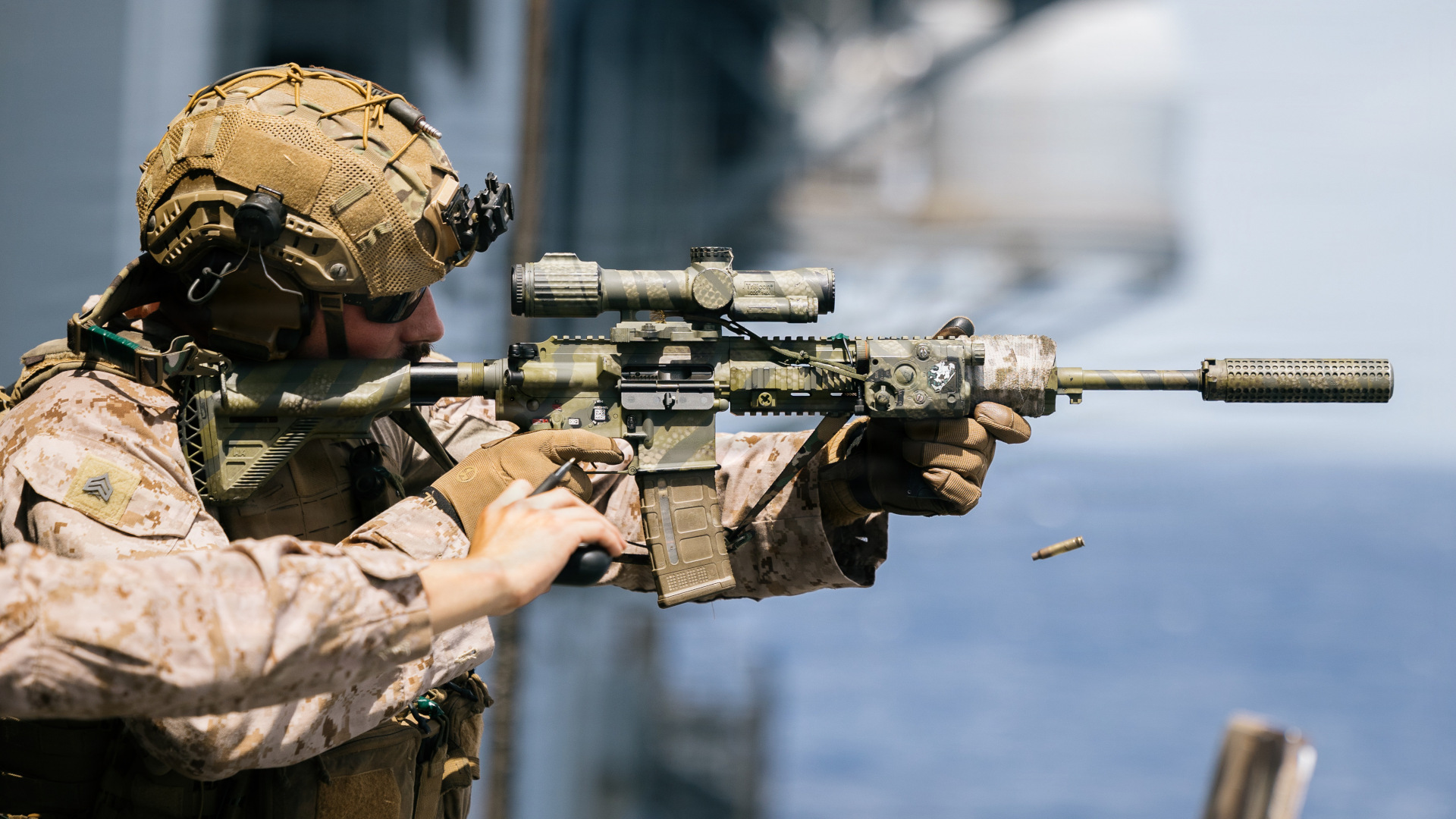
The U.S. Marine Corps is aiming to put in an order for new anti-drone 5.56x45mm ammunition for its M4 carbines and M27 rifles by the end of the year. Produced by a company called Drone Round, the L Variant cartridge has a projectile that breaks into multiple segments to improve the probability of scoring a hit on a small, fast-moving aerial target. The idea is to give anyone with a rifle an immediate boost in their ability to defend against growing drone threats, especially first-person view (FPV) kamikaze types now proliferating around the globe after becoming a fixture in the war in Ukraine.
Marine Corps Systems Command (MARCORSYSCOM) announced its intention to buy an unspecified number of 5.56x45mm L Variant cartridges through a sole-source contract with Drone Round in a notice posted online yesterday. The projected date of the contract award is December 2026.
“The 5.56mm Drone Round ‘L Variant’ is the only kinetic munition currently available in the commercial or defense marketplace that meets the Marine Corps’ strict minimum capability requirements for immediate c-sUAS [counter-small uncrewed aerial systems] defense,” according to an accompanying document justifying the need for a sole-source deal. “Specifically, this round is the only solution offering ‘drop-in’ compatibility that requires no physical modifications, specialized upper receivers, or distinct weapon platforms to be operable in current-issue Marine Corps 5.56mm weapons (e.g., M27, M4, and M4A1).”
“Furthermore, its deployment requires zero additional New Equipment Training or specialized occupational specialties, rendering it immediately effective upon issue,” the justification adds. “Failure to deliver this capability places an unnecessary risk to Marines and could lead to mission failure and loss of life.”
The results of a range test of L Variant rounds. Drone Round
Drone Round has been developing specialized anti-drone ammunition for small arms since at least 2025. At the time of writing, the company offers two 5.56x45mm versions, the aforementioned L Variant and a K Variant. The L and K versions have projectiles designed to split into five and eight segments, respectively.
With their different loadings, the L and K Variants are effective out to around 328 and 164 feet (100 and 50 Meters), both of which are relatively short ranges, according to Drone Round. No special modifications are required to use the ammunition in existing guns, and the company says the rounds are “full-auto and suppressor capable.”
Marines train with M27 rifles. USMC
L and K Variants in 7.62x51mm have also been developed, but are still in testing. Work is underway on 6.8x51mm versions, which could be fired from the U.S. Army’s new M7 rifles, M8 carbines, and M250 light machine guns. Other calibers could be on the horizon, as well.
Soldiers assigned to the US Army’s XVIII Airborne Corps load L Variant cartridges into magazines during testing. US Army/Pfc. Alexis Fischer
Marine Corps interest in ammunition of this kind, broadly, is also not new. “Enhanced ammunition for existing firearms (buckshot-like 5.56, 7.62, .50, .40mm)” was among a list of desired squad and platoon-level counter-drone capabilities included in a separate contracting notice MARCORSYSCOM put out back in 2024. This reflected the then-recent rollout of a larger service-wide counter-drone vision, the core of which is ensuring that virtually every Marine can play a role.
“For our ammunition portfolio, we need industry’s help in counter-UAS munitions for our existing weapon systems,” Marine Col. Paul Gilikin, the Program Manager for Combat Support Systems at MARCORSYSCOM, said during a talk at the Navy League’s annual Sea-Air-Space conference in April.
The basic idea of multi-projectile small arms ammunition to help improve hit probability is decades old. The U.S. Army notably explored this concept extensively in the 1950s and 1960s, but did not ultimately field any of the rounds it developed. Armed forces elsewhere around the globe have pursued similar projects over the years.
Different types of pellet-filled rounds have also been developed for various small arms, including rifles and handguns, in the past, with the Glaser Safety Slug seen in the video below being one of the better-known examples. However, small arms cartridges of this kind have typically been designed primarily for very close-range self-defense, survival, or even pest-control use.
Porting these concepts of multi-projectile small arms cartridges over to counter-drone is a growing trend at this point, too. In February, the Naval Surface Warfare Center, Crane Division (NSWC Crane) unveiled multiple Drone Killer Cartridge (DKC) designs it had internally developed in 5.56x45mm, 7.62x51mm, and .50 caliber flavors.
An array of different Drone Killer Cartridge designs developed by NSWC Crane. USN
“During a recent demonstration at Camp Atterbury in Edinburgh, Indiana, DKC achieved a 92% success rate against drone targets,” according to a Navy press release. What further progress has been made since then in the development of any of the DKC designs, or their fielding, is unknown.
High-Precision Complexes Holding has begun rolling out the first batches of its 'Многоточия' (Ellipse) triplex C-sUAS rounds. These are the СЦ 226 (STs 226) in 5.45×39, and the СЦ 228 (STs 228 in 7.62×39. Claims hit probability is improved by a factor of 2.5x at 300 m. pic.twitter.com/DUSFXHlb55
To reiterate, the key benefit that multi-projectile counter-drone cartridges offer is the boost in hit probability when engaging small and highly maneuverable drones. They can also be fired from existing guns without modification. This, in turn, presents a way to give anyone in a unit with an M4 or M27 an additional means of protecting against uncrewed aerial threats without adding to the bulk and weight that personnel already have to carry around.
The Marine Corps and other branches of the U.S. military have already been pursuing other add-on capabilities to improve the effectiveness of small arms against small drones, especially for individual rifles. In particular, variants of the SMASH family of computerized optical sight systems from Israeli firm Smart Shooter have been in growing use across America’s armed forces, and elsewhere globally, for years now. The Marines have at least tested another counter-drone rifle aiming system that uses a buttstock designed to automatically move the gun in line with the target. These are capabilities that could easily be paired with specialized ammunition. It might be possible to tweak software behind these systems to better work with multi-projectile loadings, too.
Range has been cited as one limiting factor, especially for shotguns. Specialized rifle rounds like Drone Round’s L Variant and the DKC types developed by NSWC Crane, which are fired at higher velocities than shotgun shells, are intended to help mitigate this, at least to a degree. However, as noted, Drone Round says that the effective range that it has demonstrated with its 5.56x45mm types to date is 328 feet (100 meters). As a point of comparison, the stated effective range of an M4 carbine firing standard single-projectile ammunition is around 1,640 feet (500 meters), according to the Army.
The closer a counter-drone engagement occurs, the less time there is to react, overall. There is the additional question then of whether standing and fighting is the best course of action.
“When shooting you are static, which makes it easier for the operator to aim the drone,” a contemporary Russian manual on counter-drone tactics notes, according to a report in April from Forbes. That being said, there might not be somewhere safer to move in many cases.
Russian correspondent hides from a Ukranian drone … it looks for him like in a scary movie. pic.twitter.com/XPPQGzDzn0
Ukrainian drone operators located a concentration of Russian hardware inside a large warehouse somewhere in the south of Ukraine, preparing for an assault.
The very skilled drone operators sent in several drones and eliminated several MBTs, IFVs, trucks and more. In the end, the… pic.twitter.com/jgcqibiJRD
Having to manage multiple ammunition types on the fly could also present challenges. What kind of effectiveness rounds like L Variant might offer against more traditional targets is unclear.
All this being said, counter-drone rifle rounds do continue to be fielded on both sides of the conflict in Ukraine, even if the full extent of their use is not entirely clear. The explicit fielding of shotguns as counter-drone weapons is another trend that is growing globally, including in the U.S. military.
Small arms are, of course, just one part of a layered ecosystem of defenses necessary to challenge the ever-growing threats posed by various tiers of drones. For the Marine Corps, specialized counter-drone 5.56x45mm ammunition is now in line to be part of that larger equation.
Today, the U.S. Marine Corps celebrated the end of more than half a century of Harrier ‘jump jet’ operations with a sundown ceremony at Marine Corps Air Station Cherry Point in North Carolina. For more than 20 percent of the history of the republic, the British-originated jump jet helped to defend America. The story of how the U.S. military first got involved in the program is a little-known but fascinating one. Michael Pryce, who has worked on various aircraft projects, from the Harrier to the Tempest, explains, and, in the process, connects the dots between the AV-8 and its replacement with the Marine Corps, the F-35B Lightning II.
Read our coverage of the Marine Harrier sundown here.
A British-made U.S. Marine Corps AV-8A of Marine Attack Squadron 231 drops a Mk 20 Rockeye cluster bomb during training, in 1979. U.S. Navy
Right from the start, the Harrier had been of immense interest to Britain’s ‘cousins’ across the pond. In the 1950s, the threat of nuclear war led to the creation of jump jets, and NASA, plus the U.S. Air Force, Navy, and Army soon found that developing rockets seemed easy in comparison to this new class of combat aircraft.
Despite valiant efforts, no American jump jet could be made to work.
A video shows the Ryan X-13 Vertijet during tests. It was one of many Cold War-era jump jet projects that ended in failure:
All three services got involved in trials of the Hawker Siddeley P.1127 Kestrel, the first iteration of what would become the Harrier, initially in a joint British-American-West German trials squadron. Then, six of the Kestrels were taken to America to continue testing there, and they were renamed as XV-6As once on U.S. soil. Unlike other jump jet projects, the P.1127 utilized four adjustable exhaust nozzles beneath the wing, which rotated to provide thrust for vertical, backward, or hovering flight as well as conventional forward movement.
The XV-6A Kestrel demonstrated operations from grass, semi-prepared surfaces, and ship decks, offering great operational flexibility. U.S. Air Force photo
The thing that impressed the Americans was the sheer simplicity of the British jump jet. With just one engine, and ‘not an electron’ needed in its flight controls, the Kestrel soon transformed into the Harrier, and in 1968 the U.S. Marine Corps decided they would acquire them. Despite not having flown any of the Kestrel trials, they knew they wanted to bring the jump jet into the front line as soon as possible.
The British makers of the Harrier, Hawker Siddeley, first found out about the U.S. Marines’ interest when two men in uniform walked into the Hawker Siddeley hospitality chalet at the 1968 Farnborough Airshow and said they wished to fly the jet. Within two weeks, they had. It was the start of the Marines’ love affair with the Harrier, but it was not America’s first encounter with the British jet.
A Royal Air Force Harrier jet involved in a mock bombing run at the Farnborough Airshow in 1968. Photo by PA Images via Getty Images
Over 10 years before, another American had walked into Hawker’s fancy tent at another Farnborough airshow and asked to see their design for what would become the Harrier. Col. Willis “Bill” F. Chapman of the U.S. Air Force was an American in Paris, there to find European weapons that America could fund. Jump jets were all the rage, and the Hawker P.1127 seemed to him to be the most promising.
Six pre-production Hawker Siddeley Harrier GR1s pictured at the manufacturer’s test facility at Dunsfold aerodrome, Surrey, in 1968. The first Royal Air Force squadron to be equipped with the Harrier GR1, No. 1 Squadron, started to convert to the aircraft at RAF Wittering in April 1969. Crown CopyrightCol. Willis F. Chapman was commander of the 340th Bomb Group in 1944. Joseph Heller based the Catch-22 character of Colonel Cathcart on him, stretching artistic licence. Chapman thought Heller was a poor bombardier. Patricia C. Meder
As leader of the 340th Bomb Group in Italy in World War II, Chapman had seen dozens of his B-25 bombers wiped out, first by a volcanic eruption and then by a Luftwaffe attack. He knew nuclear missiles could do much worse. Soon, he had funded the Pegasus engine, the heart of the Harrier, and struck up a strong friendship with the Hawker design team led by Ralph Hooper, driving their design forward, from the drawing board into the sky.
Ralph Hooper, right, after flying in the two-seat Harrier he designed in the 1970s. BAE Systems
In 1968, one of the U.S. Marines who walked in at Farnborough would play an equally vital role in getting the Harrier into Marine service. Col. Tom Miller had flown in Korea and Vietnam, and scored a speed record in a McDonnell F4H Phantom for good measure. Deeply impressed by the Harrier, he went into battle on ‘The Hill’ to secure it for the Corps, then on to lead it into service as the commander of the 2nd Marine Aircraft Wing at Cherry Point — the same unit that retired the Harrier today, 55 years later.
John H. Glenn, Jr., Gen. David M. Shoup, Commandant of the Marine Corps, and then Lt. Col. Thomas H. Miller Jr., at Marine Corps Headquarters in 1960. (Marine Corps Archives)
The rest of the history of the Harrier is well known. From the initial, British-built AV-8A to the jointly-developed, with mostly American technology, second-generation AV-8B Harrier II, the Harrier found more use, and created more jobs, in America than in Britain. The American connection was the making of the British jump jet, and helped cement relations between the two countries’ pilots, engineers and ground crews over decades.
In the 1980s, there were attempts to make a new, supersonic successor, with the speed of the Marines’ F/A-18A Hornet and the vertical flight ability of the Harrier. Once again, the Americans turned to British designers. In 1981, Hooper and a team of engineers from the Harrier factory at Kingston-upon-Thames went to work at McDonnell Douglas in St. Louis, Missouri, to design the ultimate jump jet. Over drawing boards and at tailgate parties after ball games, they evolved a great beast of a jet, the P.1218, with two crew, two engines and the latest tech, to succeed the U.S. Navy’s F-14A Tomcat fleet interceptor and A-6E Intruder all-weather strike aircraft. Despite arriving at a joint design, money was limited, and the work was re-focused on research with NASA — the start of what in time would become the Joint Strike Fighter program.
Images of the British Aerospace P.1218 concept are very hard to come by, but the joint work with McDonnell Douglas fed into the broadly similar Model 279-4 design, seen here. McDonnell Douglas/Boeing
Although the U.S Navy buys jets for the Marines, the big twin-engined design was of less interest to the Corps than another of Hooper’s designs, a smaller, single-engine jet that weighed the same as the Hornet. This supersonic jump jet was seriously studied in the United Kingdom, with tests and design work over many years. The U.S. Marines were involved too, officers visiting the Kingston factory to talk about its prospects. When Britain delayed jump jet plans in favor of what became the Eurofighter Typhoon, it meant Hooper’s single-engined P.1216 design, with its wild-looking twin-boom configuration, seemed to miss its chance with the Marines. The British designer retired too, but he did not let that stop him.
A British Aerospace P.1216 in pseudo-U.S. Navy VFA-14 “Tophatters” markings escorts Soviet Backfire bombers, alongside a British version of the twin-boom supersonic jump jet. BAE Systems
Keen to see a supersonic jump jet in Marine service, he turned to Miller once again. As the accompanying letter in this article shows, in 1992 he gave Miller the technical plans of the new jump jet, and Miller showed it around at Marine HQ at a vital time — just as 10 years of research was turning into the serious acquisition program for the Joint Strike Fighter.
via author
The emerging requirements specified a weight the same as the Hornet — the same, too, as Hooper’s P.1216. Speed, range and weapons load were close too. While avionics and stealth had advanced beyond the British jet’s capabilities, the knowledge that the man who made the Harrier thought a practical jump jet of Hornet size would work helped get the ball rolling on the third generation of jump jets. Miller’s support ensured the Corps got behind it, leading to the Lockheed Martin F-35B now taking over Cherry Point.
An F-35B with Marine Fighter Attack Training Squadron (VMFAT) 501 prepares for takeoff at Marine Corps Air Station Cherry, North Carolina. U.S. Marine Corps photo by Lance Cpl. Christopher Hernandez
Making a fighting jump jet that works is extremely challenging. The Harrier had its problems — without rigid training, accident rates echoed those of its 1950s origins. The F-35B has had to overcome its own hurdles too.
In the early 2000s, Hooper was called in to help fix those. The transatlantic story of the Harrier may have ended today, but the people who found ways to cut bureaucratic corners by trusting each other, and who cracked the technical code of making the Harrier work, continue to support the next generation of F-35Bs.
Hawker Siddeley Aviation Executive Director and Chief Engineer Ralph Hooper talks U.K. Aerospace Minister Michael Heseltine through the features of a mock-up of the HS.1182 cockpit — the future Hawk trainer. Photo by PA Images via Getty Images
The ‘Harrier Mafia’ worked their own way, but always in line with the motto of the Marine Corps. “Semper Fi” was a value shared by British pilots who flew American Harriers in combat operations on exchange as much as by the men and women who made, and supported, 55 years of Harrier operations at Cherry Point.
Jump Jet: The Secret History of the Harrier by Michael Pryce is published on August 27 and is available for pre-order.
The unmistakable howl of the AV-8B Harrier II has been a soundtrack to U.S. Marine Corps aviation for more than four decades. From the deserts of the Middle East and Afghanistan to the decks of amphibious assault ships at sea, the aircraft’s ability to take off from short runways, operate from austere forward bases, and land vertically made it one of the most distinctive combat aircraft ever to wear American markings. Before then, its predecessor, the first-generation AV-8A Harrier, had pioneered the ‘jump jet’ in U.S. service, after entering Marine Corps service in 1971.
Now, that illustrious era has come to an end.
A Marine plane captain from Marine Attack Squadron 223, Cherry Point, North Carolina, observes pre-flight checks of an AV-8B at Gowen Field, Boise, Idaho, in April 2021. U.S. Air National Guard photo by Senior Master Sgt. Joshua C. Allmaras
In a ceremony today, the Marine Corps said its official farewell to the AV-8B when its final operational Harrier II squadron, Marine Attack Squadron 223 (VMA-223), known as the “Bulldogs,” marked the retirement of the aircraft at Marine Corps Air Station Cherry Point, North Carolina.
The event closes a remarkable chapter in Marine aviation history. The Harrier’s departure marks more than the retirement of an aircraft; it represents the conclusion of a concept that shaped Marine air power for generations and helped define the Corps’ expeditionary character.
U.S. Marine Corps AV-8Bs with Marine Attack Squadron 223, Marine Aircraft Group 14, 2nd Marine Aircraft Wing, fly over the coast of North Carolina on May 15, 2026. U.S. Marine Corps photo by Lance Cpl. Perri Wood
The Harrier was more than just another attack jet. It was the embodiment of the Marine Corps’ longstanding determination to bring airpower wherever Marines fought, regardless of whether a conventional airfield existed.
The Harrier’s story began long before the AV-8 entered U.S. military service. Derived from the British Hawker Siddeley Harrier jump jet, the aircraft was built around a revolutionary concept: vertical and short takeoff and landing, or V/STOL. Using swiveling engine nozzles, the aircraft could launch from improvised sites, roads, damaged airfields, and the decks of even relatively small ships. During the Cold War, when planners feared that traditional runways would be among the first targets destroyed in a major conflict, the concept had obvious appeal, but it was only the Harrier that saw real success as a V/STOL combat jet.
The Marine Corps embraced the idea early on. While the first-generation AV-8A proved the concept, the AV-8B Harrier II transformed it into a truly capable battlefield strike aircraft. The AV-8B featured a larger composite wing, improved performance, greater payload capacity, and significantly enhanced avionics. Later upgrades introduced night-attack capabilities and radar-equipped AV-8B Plus variants, keeping the aircraft relevant well into the 21st century. In recent years, all the Marine single-seaters still in service were ‘radar birds’ equipped with the AN/APG-65 radar that was ported over second-hand from F/A-18A/B Hornets and which conferred a significant air-to-air capability.
Marines work on the radar in the nose of an AV-8B on the flight deck of the amphibious assault ship USS Bonhomme Richard (LHD-6). U.S Navy photo by Mass Communication Specialist 1st Class Ty C. Connors/ Released
What made the Harrier exceptional was not simply its ability to hover. Its real value lay in its flexibility. Marine commanders could position Harriers close to frontline forces, reducing response times and increasing the effectiveness of close air support missions. The aircraft became a natural fit for Marine Expeditionary Units operating from amphibious assault ships, where its unique capabilities allowed fixed-wing tactical aviation to accompany Marines far from traditional airfields or aircraft carriers.
An AV-8B assigned to Marine Attack Squadron 311 lands aboard the amphibious assault ship USS Peleliu (LHA-5) as it steams through the South China Sea in June 2008. U.S. Navy photo/Petty Officer 2nd Class Scott Webb
The Harrier quickly earned its combat credentials.
During Operation Desert Storm in 1991, Marine Harriers flew thousands of sorties in support of coalition ground forces. The aircraft demonstrated its ability to sustain a high operational tempo while flying in demanding conditions. In the decades that followed, Harriers participated in virtually every major Marine Corps combat operation, including missions over the Balkans, Afghanistan, Iraq, Libya, and against ISIS.
Two Marine Corps AV-8Bs are given final preflight checks as their pilots prepare for takeoff from the amphibious assault ship USS Nassau (LHA-4) during Operation Desert Shield. U.S. Department of Defense
The post-9/11 period of relentless operations arguably became the Harrier’s defining period. The AV-8B was a natural fit for counterinsurgency warfare. Equipped with advanced targeting pods and precision-guided munitions, Marine Harriers became a common sight over Iraq and Afghanistan, where their ability to remain close to ground forces made them particularly valuable.
Yet, even as the Harrier continued proving its worth in combat, its future was becoming increasingly uncertain.
Lt. Col. Thomas D. Gore, former commanding officer of Marine Attack Squadron 223, pilots an AV-8B over the Kajaki Dam in Helmand province, Afghanistan. Between November 2011 and May 2012, VMA-223 provided close air support for Marines and their Afghan and coalition partners conducting counterinsurgency operations in southwestern Afghanistan. U.S. Department of Defense
The aircraft’s age, maintenance demands, and limited growth potential eventually caught up with it. The jet was also notably demanding on its pilots, requiring a unique training syllabus to operate safely and efficiently.
Looking toward the demands of future potential conflicts against sophisticated adversaries, Marine aviation planners concluded that its next jump jet would require stealth, advanced sensors, networked warfare capabilities, and greater overall survivability than a fourth-generation attack aircraft could provide.
Like the Harrier, the F-35B possesses short takeoff and vertical landing capability. Unlike the Harrier, however, it combines that flexibility with stealth technology, sensor fusion, powerful electronic warfare systems, and the ability to operate as an intelligence-gathering node across the battlespace. For Marine aviation leaders, the F-35B offered a path to preserve the expeditionary advantages pioneered by the Harrier while dramatically expanding combat capability. You can read more about the changes the F-35B is bringing to Marine Corps tactical aviation here and here, as well as on-scene reporting of its operations from an improvised forward arming and refueling point, here.
An F-35B attached to Marine Fighter Attack Squadron 211 is directed to take off from the amphibious assault ship USS Essex (LHD-2), during flight deck operations on April 22, 2026. U.S. Navy photo by Mass Communication Specialist Seaman Ivan A. GarciaAn F-35B about to be rearmed with inert AIM-120 missiles and Stormbreaker guided munitions on a stretch of road next to the Pacific coastline in California. James Deboer
Notably, however, the service is also procuring F-35C versions that can operate from big-deck aircraft carriers, as well as land bases.
One by one, Marine Harrier squadrons began converting to the F-35B. Aircraft were retired, maintainers retrained, and pilots transitioned to the new platform. The process accelerated as the Marine Corps pursued broader modernization efforts focused on preparing for future conflicts, particularly in the Indo-Pacific region.
The transition fully away from the Harrier was outlined in the 2022 Marine Aviation Plan. U.S. Marine Corps
The signs of the Harrier’s approaching retirement became increasingly visible. In 2024, the final two Marine pilots completed AV-8B qualification training, becoming the last aviators ever designated as Harrier pilots by the Corps. Their graduation marked the beginning of the end for the ‘Flying Leatherneck’ Harrier community.
U.S. Marine Corps Maj. Eric Shiebe, an AV-8B Harrier pilot and executive officer, and Sgt. Tatiana Rios, a fixed-wing aircraft airframe mechanic, both with Marine Attack Squadron 223, participate in an incentive flight at Marine Corps Air Station Cherry Point, North Carolina, May 19, 2026. U.S. Marine Corps photo by Lance Cpl. Bryan Giraldo
The final operational chapter belonged to VMA-223, which carried the Harrier banner to the very end. Their deployment aboard the amphibious assault ship USS Iwo Jima (LHD-7) represented the last operational deployment of Marine Corps Harriers.
As part of the Iwo Jima Amphibious Ready Group (ARG), the 22nd Marine Expeditionary Unit and its Harriers were part of Operation Southern Spear, the U.S. strikes on boats suspected of carrying illicit narcotics in the Caribbean. The Iwo Jima ARG was also in the region for the U.S. operation to capture Venezuelan President Nicolás Maduro, earlier this year.
When the squadron completed its mission and the final aircraft returned home, the countdown to retirement entered its final phase.
For the Marines who flew and maintained the aircraft, the retirement is bittersweet.
The Harrier demanded respect. Its unique flight characteristics and vertical landing operations required exceptional skill from pilots. Maintainers often worked tirelessly to keep aging aircraft mission-ready. Yet those challenges helped create a close-knit community built around a platform unlike any other in American service.
An AV-8B and an F-35B during the change of command and redesignation ceremony for Marine Fighter Attack Squadron 214 at Marine Corps Air Station Yuma, Arizona, in March 2022. U.S. Marine Corps photo by Sgt. Samuel Ruiz
In proving that fixed-wing tactical aviation can operate from challenging locales, the Marine Harrier continued a concept of operations that the service had pioneered in the Pacific in World War II. It gave Marine commanders unprecedented flexibility and reinforced the Corps’ expeditionary identity. Long before concepts such as distributed operations and expeditionary advanced bases became buzzwords, the Harrier proved that combat aircraft could operate from unconventional locations and support dispersed forces.
As the Harrier’s designated successor, it is fitting that the F-35B preserves the ability to operate from amphibious ships and austere locations while adding capabilities unimaginable when the AV-8B first entered service.
Still, there will never be another aircraft quite like the AV-8B, especially as far as charisma is concerned, and the type was a firm airshow favourite.
As the final Marine Corps Harriers make their last flights, they leave behind an enduring influence on Marine aviation doctrine and expeditionary warfare. While the United Kingdom gave up its Harrier IIs in a rushed retirement that you can read more about here, the AV-8B remains in frontline service in smaller numbers with Italy and Spain. It remains to be seen if a customer for former Marine Corps Harriers will come forward, but these aircraft remain capable and offer unique capabilities, something we have addressed in the past.
The Marine Corps jump jet era is over. But the impact of the Harrier, and the men and women who flew and maintained it, will continue to shape Marine aviation for years to come.
Greece’s startup ecosystem fell to 51st globally in StartupBlink’s 2026 Index, despite an estimated ecosystem value of over $12 billion. Credit: Wikimedia Commons / acediscovery / CC BY 4
Greece has fallen out of the world’s top 50 startup ecosystems, dropping to 51st place in StartupBlink’s Global Startup Ecosystem Index 2026. The country also slipped in Europe, ranking 29th, down from 27th in 2025.
According to the report, this is Greece’s lowest global position since 2022. The decline came despite positive annual ecosystem growth of 4.8 percent. However, that rate was well below the global average, meaning Greece lost ground as other startup ecosystems expanded more rapidly.
StartupBlink’s 2026 index ranks 1,556 cities and 100 countries, using indicators linked to startup quantity, quality, and the wider business environment. For Greece, the findings show a mixed picture: the country has recognizable startup successes, a sizeable ecosystem value, and improving policy tools, but its global momentum has slowed.
Greece’s business conditions are stronger than its startup outcomes
One of the clearest findings is the gap between Greece’s business environment and its overall startup ranking. Greece ranks 33rd among 125 countries in the Innovators Business Environment Index, significantly higher than its 51st position in the main startup ecosystem ranking.
This suggests that Greece has relatively strong underlying conditions for innovators, but these conditions have not yet fully translated into stronger startup ecosystem performance. The report estimates Greece’s startup ecosystem value at $12.1 billion. The country has two unicorns and three cities in the global top 1,000 startup cities.
Athens remains Greece’s dominant startup hub but weighs on national performance
Athens continues to dominate Greece’s startup scene, but its weaker performance was a major reason behind the country’s fall in the global ranking. The Greek capital dropped 17 places to 134th globally, after recording negative growth of 4.8 percent. In the Balkans, Athens also fell one position to third overall.
Despite this decline, Athens remains one of the region’s most mature startup ecosystems. The city leads the Balkans in the Ecosystem Maturity functional category, reflecting its track record in producing startup outcomes. StartupBlink also describes Greece’s level of ecosystem centralization as healthy. Athens scores 7.4 times higher than Thessaloniki, a ratio that points to a strong national hub while still leaving room for secondary cities to grow.
Thessaloniki grows although Heraklion records Greece’s strongest growth
Thessaloniki posted strong annual growth of 29.1 percent but still fell four places to 443rd globally because other cities advanced faster.
Heraklion, however, delivered Greece’s strongest city-level result. The port city of Crete climbed 89 places to 771st worldwide, with annual growth of 64.5 percent. That was the highest growth rate among Greek startup cities in the 2026 index. Heraklion’s performance shows that startup activity outside Athens is becoming increasingly visible even though the capital remains the country’s main innovation center.
Greece’s startup ecosystem ranks fifth in Southern Europe
Greece ranks fifth overall in Southern Europe. It performs slightly better in the Ecosystem Value functional category, where it ranks fourth in the subregion. In the Balkans, Greece ranks third overall, one place lower than last year. However, it performs better in specific sectors, ranking second in the region for both Fintech and Social & Leisure.
These sectoral rankings highlight areas where Greece has a stronger regional position, especially in financial technology and consumer-facing digital services.
Viva Wallet and PeopleCert remain Greece’s startup champions
The report identifies Viva Wallet and PeopleCert as Greece’s main startup ecosystem champions. Both are based in Athens and are privately valued at over $1 billion. Viva Wallet has a StartupBlink score of 570, while PeopleCert has a score of 277.
Viva Wallet became one of Greece’s most important startup success stories after JPMorgan acquired a 48.5 percent stake in the fintech company in 2022 in a deal valued at $2 billion. The transaction confirmed Viva Wallet’s status as Greece’s second unicorn and was described in the report as the country’s largest-ever startup deal.
PeopleCert crossed the $1 billion valuation mark in 2021 after acquiring AXELOS for approximately $525 million.
EquiFund, Elevate Greece, and NBG Business Seeds helped shape ecosystem
StartupBlink also points to several initiatives that have shaped Greece’s startup ecosystem over the past decade and a half. The National Bank of Greece launched NBG Business Seeds in 2010, with the report describing it as the country’s longest-running startup innovation competition.
Six years later, Greece and the European Investment Fund signed EquiFund, a fund-of-funds of approximately $290 million designed to help establish the country’s first professional venture capital market. Another important step came in 2020, when the Greek government launched Elevate Greece, the official national startup registry.
The platform gives startups access to state benefits, investor visibility, angel investor tax incentives, and Golden Visa eligibility. The report also names the National Bank of Greece / NBG Business Seeds, Elevate Greece, and Enterprise Greece as notable startup ecosystem builders.
Enterprise Greece is described as the country’s official investment and trade promotion agency, actively promoting the Greek startup ecosystem to international investors and supporting foreign founders through licensing and strategic investment frameworks.
New tax incentives and startup Golden Visa aim to attract capital
Recent policy developments also form part of the broader picture. In 2025, Greece introduced new tax incentives for angel investors, expanding the deduction cap to approximately $980 million, and launched a startup Golden Visa program. These measures are intended to attract startup investment and entrepreneurial talent.
In 2024, Greece, in partnership with the European Investment Fund, launched the EquiFund II equity mandate, with a focus on life sciences, health, and sustainability. Together, these initiatives indicate that Greece continues to strengthen the financial and policy framework supporting startups, even as its global ranking has declined.
Greece’s main challenge is faster startup ecosystem growth
The StartupBlink 2026 ranking does not depict Greece as a weak startup ecosystem. The country has two major startups valued above $1 billion, a total ecosystem value of $12.1 billion, strong business environment conditions, and clear institutional support.
The core issue is pace. Greece has grown but not quickly enough compared with global competitors. The contraction in Athens had a direct impact on the national ranking, while Thessaloniki and Heraklion demonstrate that regional ecosystems are still in a phase of development.
Pedro Lomba lamenta o impasse na revisão constitucional. O antigo secretário de Estado critica a rotatividade política, por acreditar que instabilidade de chefias impede uma cultura de rigor e mérito.

 Login
Login