Normal view

Complex relationship between Trump and Netanyahu continues to undermine Middle East ceasefire

Recent exchange of missiles between Iran and Israel highlights diverging views between US president and Israeli PM

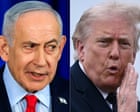
The latest eruption of hostilities between Iran and Israel appears to have been contained for now after Donald Trump insisted he called “all the shots” in the Middle East, but in a dangerously fragile region Benjamin Netanyahu has again shown he is ready to take shots of his own.

The exchange of missiles on Sunday and Monday was ample demonstration of the inherent instability of the current limbo between war and peace, but it also shone a bright light on the complex and conflicted relationship between the US president and the Israeli prime minister, frenemies who could determine the fate of the current ceasefire.

Continue reading...

© Photograph: Ronen Zvulun,brendan Smialowski/AFP/Getty Images

© Photograph: Ronen Zvulun,brendan Smialowski/AFP/Getty Images

© Photograph: Ronen Zvulun,brendan Smialowski/AFP/Getty Images

Are U.S. and Israel on the Same Page in Mideast Wars?

8 June 2026 at 17:38
President Trump has voiced his frustration with Prime Minister Benjamin Netanyahu of Israel, but it is not clear how able he is to rein in Israeli military action.

© Pool photo by Ronen Zvulun

Prime Minister Benjamin Netanyahu has found himself on the sidelines of talks to end the war in Iran.

Why Iran Risked an Attack on Israel

8 June 2026 at 18:41
Iran’s leaders want to show they are serious about defending their Hezbollah allies in Lebanon and maintaining the regional balance of power, analysts say.

© Shir Torem/Reuters

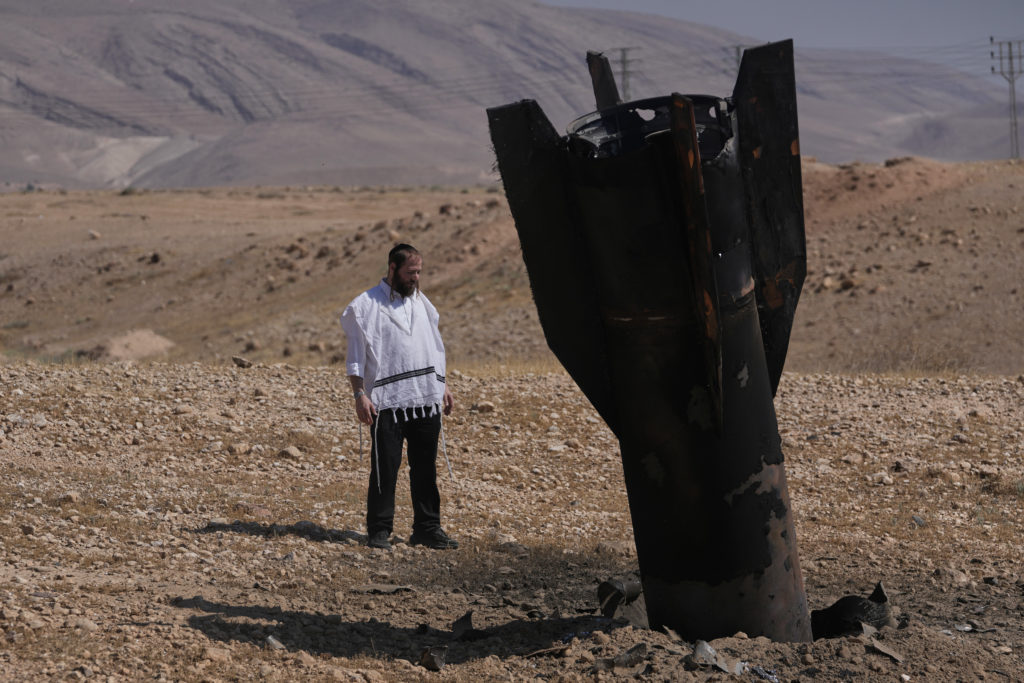
Part of a projectile that landed in northern Israel, early Monday morning.

Hezbollah is now the centre of Trump’s Iran ceasefire. So now what?

By: A A
8 June 2026 at 16:05

Lebanon is now playing a key role in any ceasefire deal that Trump might think he has nailed with Iran. But can Hezbollah go rogue on all the main players?

Join us on TelegramTwitter, and VK.

Contact us: info@strategic-culture.su

Lebanon is now playing a key role in any ceasefire deal that Trump might think he has nailed with Iran. But can Hezbollah go rogue on all the main players?

Relationships are odd things and are often determined by how people stay together during the tough times, rather than when everything is rosy. But during these last few turbulent days, when Donald Trump frantically scrambles to save the remnants of a peace deal with Iran, one relationship has become paramount to the entire Middle East crisis: that of Hezbollah and Iran. Just how strong is this relationship, or was it always just a ’marriage of convenience’, hollow and unable to withstand the travails of regional tension?

While the Iranians walked away from talks with the U.S. because of Israel’s war in southern Lebanon, Trump realised how important this tiny country is – and will be – if any kind of deal is struck over opening the Straits of Hormuz. While on the one hand Iran has stepped up to the mark by supporting its proxy Hezbollah and has always included Lebanon in any peace deal or ceasefire, it is worth noting that the ties and responsibilities Iran has to Hezbollah are not as solid as many think.

Indeed, in the region, when you talk to geopolitical analysts, they always pontificate over how the West – and in particular Israel – places too much emphasis on Iran’s links to its regional proxies in Syria, Iraq, Yemen and Lebanon. They have long argued that Iran has less control over them than most pundits in Western media would assert.

In his most recent speech, the Hezbollah leader Naim Qassem denounced the deal as a “farce,” saying it would effectively divide southern Lebanon from the rest of the country, giving Israel an advantage to “kill in Lebanon.”

“We have given no commitment to anyone,” Naim said, as he urged the Lebanese government to call off talks with Israel and demanded Israel’s full withdrawal from Lebanese territory. “As long as the aggression continues, we will confront it with all the power we have been given.”

This reference, of course, was directed at the elite in Beirut, who are largely acting on the West’s political bequest in this tiny country – barely 240 km long – which was once a province of Syria.

But some wily analysts might read too much into his statement in the coming days. A few might mull over this comment and speculate that Hezbollah, under certain circumstances, has a wild card to play and is capable of going rogue, distancing itself from the arbitrary direction of Tehran.

Is it possible that the Iranians and the Americans could outmanoeuvre Israel and strike a provisional ceasefire deal, only for it to be scuppered by Hezbollah, which refuses to give up its fight in the south of the country against the IDF? Presently, this must be concerning Trump’s camp but will be amusing to Netanyahu, who probably thinks that Lebanon holds the key for him to continue the war and thus stay in power, avoiding corruption charges.

Hezbollah, for its part, is the most dangerous man in the room, simply because its fighters have nothing to lose. They are backed into a corner and have lost so much of their own land, with 600 killed and a million displaced since the last ceasefire in April was agreed. Militarily speaking, their best guerrilla-style fighting will be seen now, and so one could argue this is their moment. While it is true that the IDF have made significant gains against them, it is wholly under-reported how successful their fighters have been in blowing up IDF tanks, with some estimates claiming the number to be over 200. But victory for either side seems less significant, certainly for Netanyahu, who probably knows that his forces can never actually win against Hezbollah in Lebanon. That is not the point. The point is to keep the war going and use it as leverage against Trump and Iran, while keeping Netanyahu in office, protected from a peace scenario that would remove him from his job and prosecute him – exactly the same set-up that Ukraine’s President Zelensky enjoys.

Lebanon is an important pawn in the bigger game, as it can always be used by Netanyahu to undermine whatever Trump is doing – such as its bombardment of Beirut that killed 357 people on April 8, one day after the U.S. and Iran announced their own ceasefire deal.

But now all Netanyahu needs to do is to agree to the IDF respecting a ceasefire without actually respecting it, while pointing the finger at Hezbollah for supposedly breaking it. It will be a game that is hugely effective, as it will be impossible for Trump to consider Hezbollah as being honourable and the IDF as being duplicitous. Even from a PR perspective, it’s genius.

And so with this new ruse in play, much emphasis is placed on Hezbollah as it is caught between choosing to fight the IDF or accepting a peace deal that would effectively hand over huge swathes of southern Lebanon to the Lebanese army – a useless contingent of poorly trained soldiers with hand-me-down, outdated equipment donated by Western countries, and one which is no match for Hezbollah. Under this deal, Israel would establish itself south of the Litani River and have legal authority to strike Beirut (its goal is to completely reduce the southern suburb where Hezbollah supporters live, similar to Gaza).

There are no real options for Hezbollah other than to fight on, but one has to wonder if they would ultimately accept an ’order’ from Tehran to stop fighting if a deal with the U.S. could be struck. The message from its chief is that under such circumstances of being at war with Israel on Lebanon’s own turf, the Shia group has the right to play the autonomy card while happily listening to Iran’s views – but not necessarily taking them as orders. Suddenly the whole world is watching Lebanon. Suddenly Hezbollah is the most important player, and its relationship with Iran has never been more relevant, as Tehran now might need to use its might to extract a concession from its partner. Even in a fake marriage, one partner has to give in sometimes to the other’s woes or needs, and so in the coming days expect a baptism of articles by obsequious, high-brow Middle East analysts agonising over this marriage and how strong or real it is.

Trump’s February 28th assault on Iran has spawned a number of unintended consequences drenched in irony. The greatest one is that his clumsy buffoonery has probably now resulted in the Iranians getting a nuclear bomb. But a close second to that is that it has also put Iran’s relationships with its proxies under the microscope – and who knows where that’s heading.

Iran war: who is fighting and why?

8 June 2026 at 15:54

Arch-enemies Israel and Iran have returned to active confrontation while Donald Trump tries to present himself as mediator

Israel and Iran have returned to active war for the first time since a ceasefire was agreed two months ago in an exchange of rocket fire that threatened efforts to end the conflict.

Donald Trump, who started the war in February alongside Israel but has since attempted to present himself as a mediator, told the two sides to stop shooting and said “final negotiations” on peace were proceeding. By late afternoon on Monday, the attacks had stopped.

Continue reading...

© Photograph: Hussein Malla/AP

© Photograph: Hussein Malla/AP

© Photograph: Hussein Malla/AP

Will Iran give up on ceasefire talks as strait of Hormuz blockade continues?

Chokehold on shipping route draws Houthis in Yemen back into conflict as commenters see ‘no turning back’

Iran’s reversion to large-scale military exchanges with Israel broadened the conflict that began in February not only by making the Israeli attacks on Hezbollah a direct casus belli for Iran for the first time, but also by drawing the Houthis in Yemen back into the conflict with as yet incalculable consequences.

Some in Tehran, buoyed up by past perceived military success and emboldened by the chokehold of the strait of Hormuz, would like to turn this moment into the point of no return in the conflagration with Israel. A minority would welcome the abandonment of ceasefire talks with the US, an outcome for which they have been agitating for weeks.

Continue reading...

© Photograph: Abedin Taherkenareh/EPA

© Photograph: Abedin Taherkenareh/EPA

© Photograph: Abedin Taherkenareh/EPA

The 15-Hour Fight With Iran Showed the Bind Israel Is In

8 June 2026 at 17:15
As it braces for a possible U.S.-Iranian peace deal, Israel now knows that if it responds forcefully to attacks by Hezbollah, Iran may strike Israel with missiles.

© Pool photo by Ronen Zvulun

Prime Minister Benjamin Netanyahu of Israel in Jerusalem in March.

Lebanon’s president refuses to meet Netanyahu until war ends – as it happened

This live blog is now closed. For the latest, read more of our coverage on the Middle East conflict here.

Iranian media is reporting that there were no immediate casualties following apparent Israeli strikes on the Karun petrochemical plant in Mahshahr, a city in Iran’s southwestern Khuzestan province.

According to the Fars news agency, Iran’s Revolutionary Guards said they responded to what they described as an American-Israeli strike on the Iranian petrochemical site by launching a missile attack on a similar plant in the northern Israeli city of Haifa.

Continue reading...

© Photograph: Naama Stern/Reuters

© Photograph: Naama Stern/Reuters

© Photograph: Naama Stern/Reuters

Iran launches missiles at Israel in response to strikes on Beirut

Tehran official had promised ‘decisive and painful’ reply to Israeli bombing of apartment buildings in Beirut’s southern suburbs

Iran launched missiles at Israel on Sunday in response to Israeli strikes on Beirut’s southern suburbs, shattering a fragile ceasefire and marking the most serious escalation since April, after 100 days of war.

A senior Iranian official has promised a “decisive and painful” response to Israel’s airstrikes on the southern suburbs of Beirut and, a few hours later, sirens sounded across northern Israel.

Continue reading...

© Photograph: Anadolu/Getty Images

© Photograph: Anadolu/Getty Images

© Photograph: Anadolu/Getty Images

Trump reportedly tells Netanyahu not to retaliate against Iran - as it happened

This blog is now closed – our live coverage of the Middle East crisis continues here

Donald Trump also aggressively pushed back against claims that he broke a key campaign promise to keep the US out of new foreign conflicts.

“Well, well, first of all, I didn’t guarantee no war,” Trump said during the Meet the Press interview. “Why would I have built the strongest military in the world?”

Continue reading...

© Photograph: Amir Cohen/Reuters

© Photograph: Amir Cohen/Reuters

© Photograph: Amir Cohen/Reuters

Israeli Attacks Kill Nine in Lebanon as ‘New Ceasefire’ Doesn’t Stop Strikes

4 June 2026 at 17:56
Updated 6/4/2026 7:40 PM EST On Wednesday evening, it was announced that Israel and Lebanon had agreed to a new ceasefire. Officials, of course, have been reporting that there has been a ceasefire between the two sides since mid-April, but several hundred people have been killed in the fighting that’s gone on during that “ceasefire.” […]

Hezbollah rejeita cessar-fogo e Israel mantém tropas no Líbano

By: ZAP
5 June 2026 at 10:30
O líder do movimento pró-iraniano Hezbollah, Naim Qassem, rejeitou esta quinta-feira o mais recente acordo de cessar-fogo entre Israel e o Líbano, numa altura em que os novos combates dificultam os esforços para pôr fim ao conflito. Numa declaração transmitida pela televisão, Naim Qassem classificou as negociações como “humilhantes” e “insultuosas” para o Líbano, afirmando que foram rejeitadas por amplos setores da população libanesa. “O que nos preocupa é o fim da agressão, o cessar-fogo e a retirada de Israel”, afirmou, acrescentando que o Hezbollah não assumiu qualquer compromisso de cessar os combates enquanto as aldeias não estiverem seguras. Segundo

Libano-Israele, la tregua che non c’è. Tel Aviv continua a bombardare e Hezbollah (escluso dai colloqui) replica: “Accordo inaccettabile”

4 June 2026 at 15:38

Evviva la tregua, la tregua che non c’è. A Washington e tra le cancellerie europee si esulta per la firma dell’intesa tra Israele e Libano su un cessate il fuoco condizionato che dovrebbe mettere fine al conflitto nel Paese dei Cedri, ai raid israeliani su Beirut e all’invasione del Sud. Il condizionale è d’obbligo perché, nonostante le reazioni positive, l’accordo presenta diverse clausole che rendono ancora complicato parlare di tregua.

La tregua che nessuno rispetta

Per dare un’idea del clima tra le parti conviene partire innanzitutto dalle dichiarazioni dei protagonisti. Tra i primi a prendere la parola c’è il ministro della Difesa israeliano, Israel Katz, che chiarisce subito un punto: Israele continuerà le sue operazioni nel Libano meridionale, con le truppe rimarranno nella zona di sicurezza, la cosiddetta Yellow Line collocata unilateralmente da Tel Aviv ben più a nord della zona di demarcazione individuata dalle Nazioni Unite, perché continuerà a “smantellare le infrastrutture terroristiche nell’area“. Una tregua che deve essere rispettata solo dalla controparte, quindi, ossia Hezbollah, dato che per “infrastrutture terroristiche” lo Stato ebraico intende proprio quelle del Partito di Dio. Non sarà così perché proprio i vertici della formazione armata sciita hanno chiarito di non riconoscere l’accordo sul cessate il fuoco firmato a Washington. Il gruppo ha “informato ufficialmente il presidente libanese Joseph Aoun del proprio rifiuto dell’accordo, insistendo sul fatto che qualsiasi accordo accettabile debba iniziare con il ritiro completo di Israele da tutto il territorio libanese. Il ritorno degli sfollati, gli sforzi di ricostruzione e il rilascio dei prigionieri libanesi sono condizioni essenziali per qualsiasi futuro accordo”. Il leader della formazione, Naim Qassem, ha poi definito l’intesa “una capitolazione e una sconfitta“, invitando il governo libanese a “porre fine alla farsa e all’umiliazione dei negoziati”: “La dichiarazione di Washington – conclude – definisce i principi fondamentali che gli Stati Uniti e Israele prevedono per la sottomissione del Libano al progetto del Grande Israele”.

La presa di posizione di Hezbollah, secondo quanto riportato dal quotidiano israeliano Haaretz, è frutto del coordinamento tra il partito sciita libanese e l’Iran. Per Teheran, il cessate il fuoco in Libano non può essere discusso a parte, ma deve diventare un elemento delle ben più ampie contrattazioni tra Usa e Iran.

“Condizioni inaccettabili”

La posizione intransigente di Hezbollah e Repubblica Islamica ha motivazioni di tipo strategico. Ma non solo. Nell’accordo di cessate il fuoco firmato a Washington senza interpellare il partito-milizia libanese, l’unica controparte veramente coinvolta nello scontro con Israele, c’è una condizione non di poco conto imposta dallo Stato ebraico: verranno istituite zone di sicurezza libanesi che escluderanno Hezbollah e lo stop alle ostilità, si precisa nella dichiarazione congiunta, sarà subordinato alla “cessazione completa del fuoco di Hezbollah e all’evacuazione di tutti i membri di Hezbollah dal settore del Litani meridionale“. Infine, “Israele ha riaffermato che la sua sicurezza e il rispetto della sua integrità territoriale possono essere raggiunti solo attraverso il disarmo di Hezbollah e lo smantellamento della sua infrastruttura in tutto il Libano”. In sostanza, Beirut e Tel Aviv hanno trovato un accordo senza coinvolgere il Partito di Dio pretendendo da esso il ritiro, il disarmo e la mancata presenza nelle zone di sicurezza. Inevitabile, quindi, il rifiuto da parte del gruppo sciita che, va ricordato, non è un attore marginale nel contesto bellico: si tratta di una milizia che vanta un numero di combattenti non troppo inferiore a quello dei soldati dell’esercito regolare ma, soprattutto, si ritiene abbia a disposizione un arsenale missilistico e di droni d’attacco più imponente di quello di Beirut.

Si continua a sparare

Così, come annunciato da Katz, i raid e le operazioni israeliane non si fermano. Dopo la firma dell’accordo, Israele ha diramato un avviso urgente ai residenti del Libano meridionale per ricordare che “i combattimenti nel Libano meridionale continuano, mentre l’esercito israeliano prosegue nel colpire strutture e infrastrutture di Hezbollah presenti nei vostri villaggi e nelle loro vicinanze. L’Idf non intende arrecare danno alla popolazione civile. Per la vostra sicurezza, evitate di dirigervi a sud del fiume Zahrani fino a nuovo avviso. Chiunque si rechi verso sud mette a rischio la propria vita”. E infatti i media libanesi riferiscono di attacchi israeliani nel Sud in mattinata, poche ore dopo l’annuncio del cessate il fuoco. Le Forze di Difesa Israeliane hanno dichiarato di aver utilizzato “sei tonnellate di esplosivo per distruggere oltre 20 siti terroristici nell’area”, mentre un drone dello Stato ebraico ha colpito un’auto tra le città di Kfar Kila e Zefta.

X: @GianniRosini

L'articolo Libano-Israele, la tregua che non c’è. Tel Aviv continua a bombardare e Hezbollah (escluso dai colloqui) replica: “Accordo inaccettabile” proviene da Il Fatto Quotidiano.

❌