Login
Login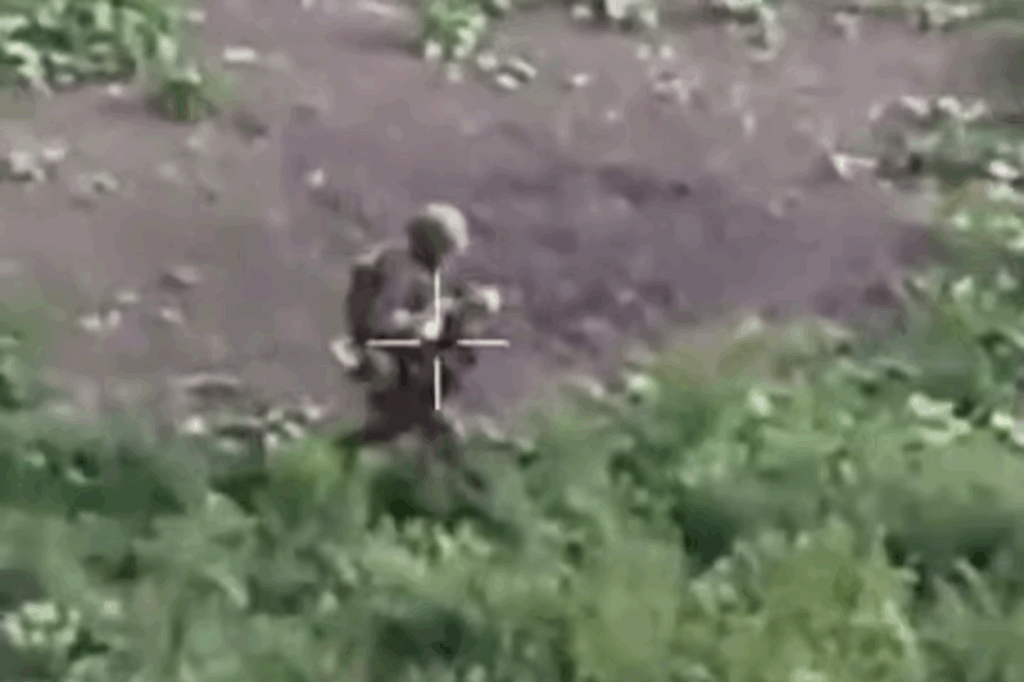

Over 2,000 Russian casualties in first six days of June, Madyar reports amid surge in drone strikes on occupied territories

Commander of Ukraine’s Unmanned Systems Forces, Robert “Madyar” Brovdi, says Russian losses reached 1,006 killed and 1,090 wounded during the first six days of June, as Ukrainian drone forces continued strikes against targets on and beyond the front line.
The commander of Ukraine’s Unmanned Systems Forces published the figures on 7 June alongside an update on overnight operations targeting Russian logistics and infrastructure in occupied territory and inside Russia.
More than 2,000 casualties reported in six days
Brovdi said Russian forces suffered a combined 2,096 killed and wounded between 1 and 6 June.
He described the losses as equivalent to the combat strength of a full Russian assault brigade lost within a single week.
The commander also used a railway comparison to illustrate the scale of the casualties, saying the losses would add the equivalent of 20 refrigerated and medical railcars to Russia’s “one-way ticket” train over the six-day period.
Drone strikes target rear-area infrastructure
According to Brovdi, Ukrainian forces also struck 26 targets overnight on 7 June across occupied parts of Luhansk, Donetsk, Zaporizhzhia, and Crimea, as well as Russia’s Bryansk Oblast.
He said Ukrainian units destroyed an air defense system and damaged three locomotives, two railway fuel tanks, four electrical substations, and six telecommunications towers. The strikes also disrupted the movement of military cargo toward the front, according to the statement.
Earlier on 7 June, Ukrainian Special Operations Forces reported strikes on the Semikolodezyanska oil depot in Yedi-Quyu and a maritime fuel terminal in Feodosia. Ukrainian officials said the operation was intended to reduce Russia’s logistical and economic capacity to sustain military operations in occupied territory.
The reported targets fit a broader Ukrainian effort to degrade Russian logistics networks, transport infrastructure, and support systems operating behind the frontline.
Ukraine says it doubled the number of successful strikes on Russian targets more than 50 kilometers behind the front line in May under the “Logistics Lockdown” program, which prioritizes attacks on transport networks, fuel infrastructure, depots, and other systems supporting Russian military operations.
Read also
-
Ukraine doubles deep strikes beyond 50 km as “Logistics Lockdown” shifts priority deeper into Russia’s transport nodes and rear logistics chains
-
Ukrainian Special Forces target Crimea fuel system, hitting depot and maritime terminal in “asymmetric” middle-strike operation on occupied territory
-
“First operation of its kind”: Ukraine claims “fire control” over occupied Donetsk Airport deep behind frontline