Trump Defends Compensation Fund and Iran War in ‘Meet the Press’ Interview

© Haiyun Jiang/The New York Times

© Haiyun Jiang/The New York Times

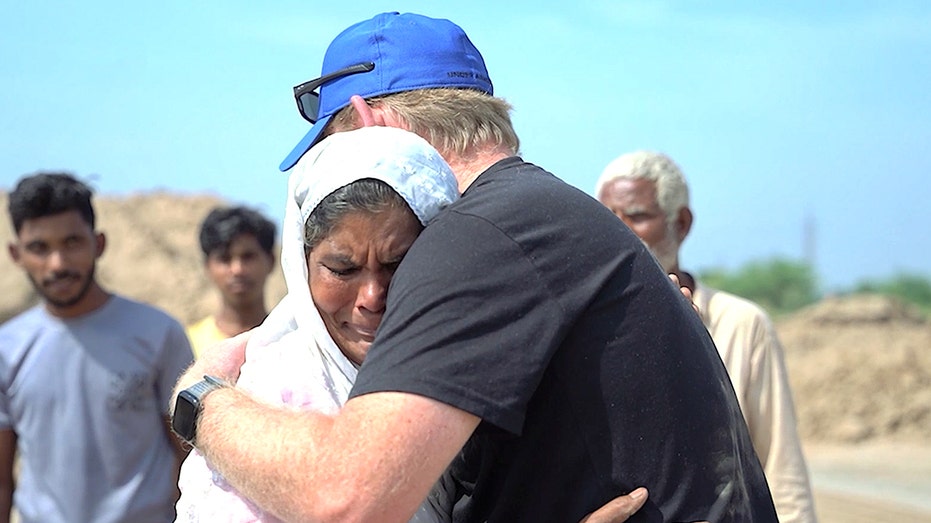
Idaho resident Aaron Hutchings arrived at a Pakistani brick factory in January. The devout Christian told Fox News Digital that he was shocked to see children turning bricks under the hot sun to work off the debts that their families had incurred, sometimes over the course of generations.
Within hours of his arrival, Hutchings paid off the debts for two enslaved Christian families and escorted them to freedom, breaking the "curse that they’ve had for hundreds of years."
There are up to one million Christians working in slave and bonded labor in Pakistan, according to Emma Hall, a persecution researcher working with charity Open Doors U.K. and Ireland, told Fox News Digital. This could comprise as much as 30% of Pakistani Christians, counted at 3.3 million in the 2023 census and accounting for 1.37 percent of the population.
WATCHDOG HIGHLIGHTS NATIONS WHERE CHRISTIANS FACE PERSECUTION AROUND THE GLOBE
Hall noted that "extreme poverty drives desperate families to accept advance loans (peshgri) for emergency and basic needs, trapping them in cycles of debt bondage where repayment systems are structured in ways that make exit extremely difficult."
Emmanuel Hernandez said he was shocked when he first heard that Christians in Pakistan were living in debt-based enslavement in Pakistan’s brick-making industry. After traveling to Pakistan to meet the woman who would later become his wife, Hernandez witnessed bonded laborers at a brick factory for the first time.
"Never in my life have I seen such hopelessness," he told Fox News Digital. "At that moment, I committed myself to rescuing one family a year for the rest of my life."
In January 2025, Hernandez started the nonprofit Project Jubilee. He says that it is "by the grace of God" that people have already donated enough through the nonprofit to save 300 Pakistanis from slavery.
Though Project Jubilee will save any bonded slave, regardless of race or faith, Hernandez said that "98% of the people we rescue are Christians, and that’s because they’re second-class citizens" in their country.
The average cost to help one family is about $8,500, Hernandez said, because Project Jubilee recognizes that slaves needed more than debt relief to escape the cycle of bonded labor.
"Our goal is for them to succeed in life and make sure that they never go back," he explained. To accomplish this, Hernandez and his team pay lawyers to take care of all applicable paperwork, and help each family with two months of rent and food. They also get families in touch with a local minister, pay for children to attend school and purchase every family a tuk tuk, a motorcycle taxi, which they can use to create income.
He said that in most cases, factory owners are grudgingly accepting of letting slaves go after their debts are paid off. But in some cases, he says owners have put a cap on the number of families Hernandez’s group can free in a month, or told them that they’re "never allowed to come back again."
Hutchings found Hernandez’s online profile in late 2025 and messaged him, asking to be part of his effort. Retired from the IT world, Hutchings said he is "just a normal guy who wanted to do something…to help people."
After a short conversation over the phone, Hernandez invited Hutchings to come along to a trip to Pakistan in January. Hutchings agreed. It was during this visit that Hutchings freed two families and reported he "just got hooked." He admits that the process is highly emotional. "It changes an entire family’s future for generations," he explained.
Hutchings said that it is especially impactful to witness the change that freedom brings to children. "We get to ask them, ‘what do you want to be when you grow up?" Hutchings said. "They probably haven’t even really thought about that. They’re [thinking] ‘I’m going to be a brick worker for the rest of my life, just like my parents.’"
Hutchings started his own nonprofit, Intentional Faith Foundation, which he now uses to collect donations from people who want to help free more slaves.
NIGERIA NAMED EPICENTER OF GLOBAL KILLINGS OF CHRISTIANS OVER FAITH IN 2025, REPORT SAYS
Just months after his first journey, Hutchings returned to Pakistan in May to free an additional ten families. After video of his visit went viral, Hutchings said that his nonprofit raised enough funds to save another family from enslavement.
The practice of bonded slavery was outlawed formally in Pakistan in 1992, Hall says, but "enforcement remains weak." Discrimination extends beyond the bonded labor environment, with the U.S. Commission on International Religious Freedom noting in 2025 that there were "recent and escalating attacks against religious minorities" in Pakistan, including Christians.
During his recent visit, Hutchings learned that securing housing was difficult, with many landlords refusing to rent to Christians. Eventually, a Pakistani Christian group working with families was able to find housing and jobs for parents, and located a teacher for the children who were largely illiterate.
In a 2023 report, Pakistan's National Commission for Human Rights released a series of recommendations for diminishing the pain that bonded labor brings to approximately three million Pakistanis. In her introduction, the group's chairperson stated, "It is deeply appalling that in the 21st century, slavery persists in the form of bonded labor."
Among its recommendations are forbidding children from laboring in brick kilns, helping laborers access justice and creating unions for collective representation. They suggest registering all brick kilns, increasing the use of automated machinery, and encouraging brick purchasers to buy bricks from kilns "that provide a safe and decent working environment."
CLICK HERE TO DOWNLOAD THE FOX NEWS APP
Representatives of the Pakistani government did not respond to Fox News Digital's questions about the enforcement of laws against bonded labor, or about the treatment of Pakistani Christians. Neither Hutchings nor Hernandez reported having complications with the Pakistani government when working to free brick kiln laborers.
For Hutchings, the work has been transformative. "Looking back, it is hard to see any of it as random. I believe God's hand was in it from the beginning, and even though we were doing all of this to show Jesus' love towards these people, we ended up receiving more than we gave."


The Messolonghi-Aitolikos Lagoons National Park in Western Greece is a testament to the enduring legacy of traditional fishing, a practice deeply intertwined with the ingenuity of local communities and the sustainable management of natural resources.
This ancestral knowledge, vital to the region’s cultural identity, is now being meticulously recorded and preserved for future generations. For centuries, fishing here has been more than just a profession; it’s an art form with roots stretching back to medieval-Byzantine times and Venetian rule. Through collaborative efforts with local communities, this crucial element of the region’s heritage is being safeguarded.

“The traditional fishing of the Messolonghi Lagoon is part of the history and life of our country. It is connected to the collective cultural consciousness of the inhabitants of the region and travels through the depths of time,” said Spilios Livanos, the former Minister of Rural Development and Food.
The lagoon itself is a vibrant ecosystem, a living organism teeming with rich flora and fauna. This biodiversity, which boasts 290 bird species and over 100 plant species, underpins the traditional fishing practices and exemplifies the harmonious coexistence of humans and nature. The rich natural environment is a cornerstone of professional activity, sustainable development, and the preservation of the traditional way of fishing.

Central to the unique fishing culture of the Messolonghi-Aitolikos lagoons are the distinctive methods and tools employed. The divaria, permanent fishing traps that double as natural fish farms, are a prime example. Across the lagoon complex, there are fourteen such facilities, eight of which are traditional and strategically located where the lagoon meets the sea.
Remarkably, the placement of these traditional divaria has remained unchanged since 1826, a testament to their enduring effectiveness and the deep-rooted knowledge of the local fishermen. These wetlands are highly productive habitats, attracting a vast array of aquatic organisms that are commercially exploited by the more than seven hundred active fishermen in the lagoon today.

Beyond the stationary divaria, other key elements of this traditional know-how include the Pelades, the iconic reed houses built on stilts above the water, which serve as both homes and operational bases for fishermen. The gaites, unique flat-bottomed wooden boats, are essential for navigating the shallow waters of the lagoon and are built using specific types of wood, reflecting a deep understanding of local resources.
Flathead grey mullet (Mugil cephalus) is the most famous fish species caught in these waters. This species is particularly important, as its roe is used to produce the famous Avgotaracho of Messolonghi, a protected designation of origin (PDO) delicacy.
Despite the demanding conditions, generations of fishermen continue this tradition, making it an integral part of their historical and cultural heritage. This resilience was even a crucial factor in the survival of the people of Messolonghi during the city’s historic siege.
The rich tapestry of traditional fishing knowledge encompasses a wide range of skills: from constructing buildings and utilitarian objects to identifying suitable wood for boat building and crafting fishing tools like longlines, harpoons, and stafnokari (a type of net). These permanent installations (divaria) and mobile means (boats, gaites), along with the tools, collectively form a cultural heritage that continues to sustain the inhabitants of the region.
In 2022, the traditional fishing practices of the Messolonghi-Aitolikos Lagoons were included in the National Register of Intangible Cultural Heritage of Greece.
Related: Treasure From the Sea: The Salt Flats of Messolonghi


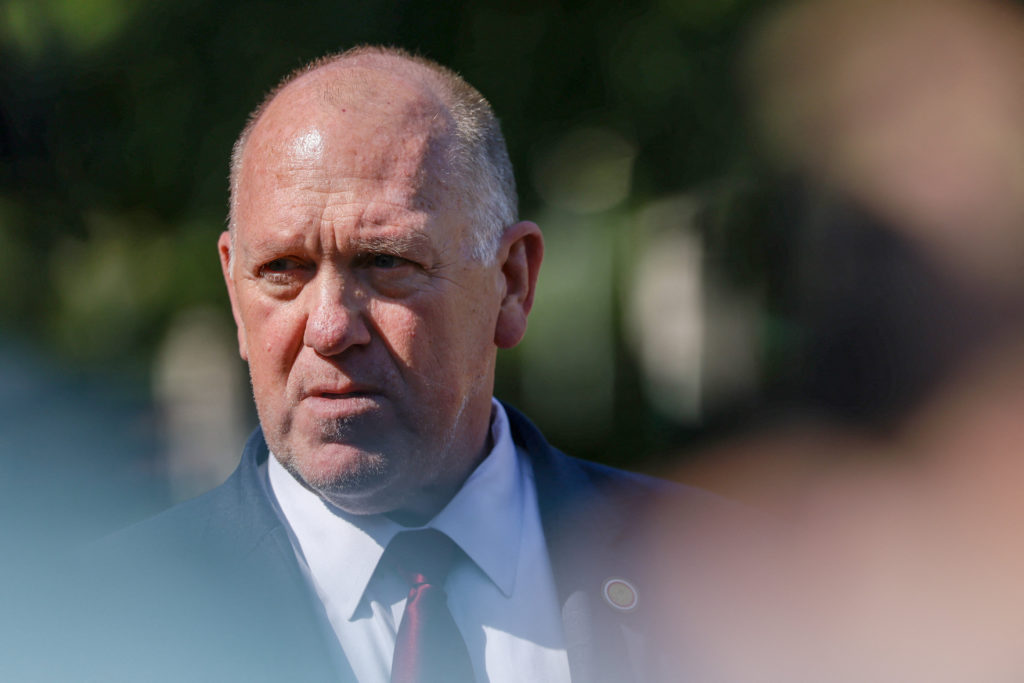
UNITED NATIONS — When Jeff Bartos appeared before the Senate Foreign Relations Committee in 2025 for his confirmation hearing, he was warned that the job he was seeking might not exist.
The Pennsylvania businessman, former political candidate and endurance athlete had been nominated by President Donald Trump to serve as U.S. ambassador for United Nations Management and Reform — a title that has long sounded aspirational in a building famous for bureaucracy.
During his confirmation hearing, Bartos recalled being greeted with a dose of skepticism.
"U.N. reform? That's an oxymoron if I've ever heard one," lawmakers told him.
TRUMP ADMINISTRATION COULD LEAD TO BUDGET CUTS, LEADERSHIP SHAKEUP AT UN
Less than a year later, Bartos believes the impossible is beginning to happen.
In an exclusive interview with Fox News Digital, the Trump administration official laid out an ambitious campaign to reshape an institution critics say has become bloated, inefficient and increasingly disconnected from its founding mission.
The effort comes at a pivotal moment for the United Nations. The stakes extend well beyond budgets. As the U.N. confronts a cash crunch, prepares to choose its next secretary-general and faces growing scrutiny from the administration, the debate over reform has become a battle over the institution's future: whether it remains on its current course or undergoes its most significant restructuring in decades.
UN FACES SEVERE CASH CRISIS AS TRUMP ADMIN RAMPS UP PRESSURE ON WORLD BODY
Secretary-General António Guterres has repeatedly warned of a growing liquidity crisis as the organization struggles with delayed member-state payments, including billions owed by the United States. At the same time, the Trump administration has made clear that future funding and support will be increasingly tied to reforms.
Bartos argues that pressure is already producing results.
Sitting at the U.N. headquarters, he points to what he calls historic achievements: roughly $570 million cut from the U.N.'s regular budget and 2,900 positions eliminated through negotiations among all 193 member states.
"Again, never happened before in 80 years," Bartos said.
"$570 million cut to the regular budget, approximately 3,000 posts cut. Unanimity. That's by consensus. All 193 countries had to come together."
For Bartos, the achievement is particularly striking because many diplomats viewed meaningful reform as impossible.
AMBASSADOR MIKE WALTZ LAYS OUT ‘AMERICA FIRST’ VISION FOR US LEADERSHIP AT THE UN
"I promised you we wouldn't let you down," he recalled telling Senate Foreign Relations Committee Chairman Jim Risch months after his confirmation.
The reforms represent only what Bartos describes as a "down payment." The next phase is already underway.
As member states negotiate peacekeeping budgets for the coming year, the administration is pushing to reduce spending, streamline missions and eliminate programs it believes no longer serve their intended purpose.
One example, Bartos said, involves changing how the U.N. reimburses countries that contribute equipment to peacekeeping missions.
Previously, reimbursement was largely based on whether equipment was present.
"The methodology that the U.N. used to reimburse troop-contributing countries for equipment was: 'Is it there?'" Bartos said.
The United States pushed for a simple change: "You get reimbursed when the equipment is put into action to do work."
The reform could save roughly $30 million annually, according to U.S. estimates.
For Bartos, however, the dollar figure matters less than what it represents.
"It's a culture change," he said. "Being efficient, being respectful of every dollar, thinking about the taxpayers who fund all this."
That mindset is driving the administration's next major targets: employee compensation and pensions.
Bartos argues that the U.N.'s pension system and benefits structure consume resources that could otherwise be directed toward humanitarian operations.
Not everyone at the United Nations agrees with Bartos' assessment. U.N. officials argue that many of the reforms predate the Trump administration and were already being pursued under Guterres.
"From day one, the secretary-general has been committed to reforms," U.N. spokesman Stéphane Dujarric told Fox News Digital. "A few days ago, on 28 May, the secretary-general told member states that they need to act on structural reform, saying, ‘Genuine reform requires tough choices. This is no time for complacency, self-interest, or foot-dragging.’"
FORMER HIGH-LEVEL UNITED NATIONS OFFICIALS TO LAUNCH 'DOGE-UN' TO HIGHLIGHT AGENCY INEFFICIENCIES
The UN80 initiative is Guterres' flagship reform effort, aimed at cutting duplication, reviewing mandates and making the U.N. system more efficient.
Still, Bartos argues the pace and scope of reform changed dramatically once the United States began applying pressure through budget negotiations and funding discussions.
"The U.N. is at a decision point," Bartos told Fox News Digital.
The debate comes as the organization faces mounting financial pressure. Dujarric said Guterres remains deeply concerned about ongoing liquidity challenges caused by delayed payments from member states, including the United States.
"Unlike a government, the U.N. cannot borrow or print money," Dujarric said, warning that the organization is expected to execute programs with funds it has not received while also returning unused funds at the end of the year.
Earlier in 2026, Guterres urged member states either to pay their assessed contributions in full and on time or overhaul the U.N.'s financial rules to prevent what he described as the risk of financial collapse.
The reforms are unfolding as the U.N. begins preparing for one of the most consequential transitions in years: the search for a successor to Guterres, whose term expires at the end of 2026.
According to Bartos, reform has become a central topic in discussions with prospective candidates.
The administration hopes the next secretary-general will embrace efforts to reduce bureaucracy and return the institution to what Bartos repeatedly describes as a "back-to-basics" approach.
The challenge, he acknowledges, is enormous.
Yet Bartos insists the experience has prepared him in unexpected ways.
Before entering government, he completed two Iron Man triathlons while balancing work and family life.
"It's discipline, planning, prioritization," he said. "It's not dissimilar to budget negotiations."
The comparison may sound unusual, but it reflects how Bartos views the job: not as a sprint but as an endurance race requiring patience, persistence and long-term thinking.
The mission also carries a personal dimension.
TRUMP REMOVES US FROM UN HUMAN RIGHTS COUNCIL, BANS UNRWA FUNDING
After two unsuccessful statewide campaigns in Pennsylvania — first as the Republican nominee for lieutenant governor in 2018 and later as a candidate in the state's 2022 Republican Senate primary — Bartos said he had largely stepped away from politics before returning to public service following the Oct. 7, 2023, Hamas attacks on Israel.
Bartos recalled his wife urging him to get involved: "You've spent your life working on these issues. You need to do something."
He ultimately joined efforts to help elect Trump and later accepted the U.N. role.
Now, after tackling what many considered the first impossible mission — reforming the United Nations — Bartos is preparing for what may prove an even harder challenge.
Bartos said he was recently tasked by U.S. Ambassador to the U.N. Mike Waltz with helping lead efforts to combat what the administration views as entrenched anti-Israel bias across the U.N. system, including agencies, special rapporteurs and investigative bodies.
The debate intensified following the publication of the U.N. secretary-general's annual report on conflict-related sexual violence, which added Israeli security forces to the report's blacklist of parties credibly suspected of patterns of sexual violence in armed conflict. Israel rejected the allegations and announced it would suspend engagement with Secretary-General António Guterres' office.
ISRAEL ACCUSES UN OF PLACING IT ON SAME SEXUAL VIOLENCE BLACKLIST AS HAMAS TERRORISTS, SEVERS TIES
Responding to the report, Waltz told Fox News Digital the U.N. has failed to address what he described as a longstanding pattern of institutional antisemitism.
"The U.N. was built in the wake of World War II and the Holocaust, and yet, remarkably, it continues to be weaponized against the Jewish people and Israel," Waltz said. "Whether it's a U.N. official regularly referencing Israel as a 'stain on humanity' and attacking American companies for doing business with Israel, or reports that spread misinformation and propaganda, this antisemitism is completely unacceptable.
"It's been over a year since the secretary-general signed off on an 'action plan' to fight antisemitism at the institution. It would be nice if the institution actually used it."
Bartos argues that anti-Israel bias has become embedded across multiple U.N. bodies and says the administration is working to dismantle what he calls that infrastructure through diplomacy, funding decisions and engagement with the next generation of U.N. leadership.
CLICK HERE TO DOWNLOAD THE FOX NEWS APP
"There is not a day that goes by that we're not working on that," Bartos said.
The United Nations rejects accusations that it has ignored antisemitism within its ranks.
Dujarric told Fox News Digital the secretary-general launched a formal Action Plan to Combat Antisemitism in January 2025 aimed at tracking antisemitism within U.N. structures and evaluating whether the organization's policies and actions are effectively addressing the problem.
Dujarric also disputed suggestions that Guterres directly controls some of the U.N. bodies most frequently criticized by Israel and its supporters.
"The U.N. mechanisms that you allude to, including human rights mechanisms, are created by and accountable to member states," Dujarric said. "The secretary-general has no authority over them.
"It is very important for member states to actively engage in these mechanisms if they have concerns about their content and tone.
"The U.N. is at a decision point."
Whether the institution changes enough to satisfy its largest financial contributor remains one of the most consequential questions facing the organization, and the man charged with answering it insists the work is only beginning.


The Trump administration is rolling out what experts describe as the most significant expansion of U.S. sanctions on Cuba in decades.
The administration is attempting what supporters say is the first broad application of Cuba-related secondary sanctions against foreign firms, aiming not only at Havana itself but also at foreign companies and banks that continue doing business with the island’s military-linked economic empire.
The new framework, established under an executive order signed by President Donald Trump May 1, applies pressure beyond U.S. companies for the first time, threatening foreign firms with sanctions exposure if they continue operating in key sectors of the Cuban economy linked to Grupo de Administración Empresarial S.A., or GAESA.
TRUMP ADMINISTRATION PRESSED TO CLOSE CUBA EMBARGO LOOPHOLE AS OIL SET TO RUN OUT WITHIN DAYS
Supporters say the move closes a loophole that allowed foreign investors to sustain Cuba’s communist regime while the longstanding U.S. embargo largely restricted Americans.
Critics argue the measures risk worsening an already severe humanitarian crisis on the island without meaningfully weakening the government.
"At the top of the month, what the Trump administration did was for the first time extend the application of U.S. sanctions from just prohibiting trade between U.S. firms and U.S. persons and the Cuban island to third-party countries and enablers," Max Meizlish, a former Treasury Department official now serving as a research fellow at the Foundation for Defense of Democracies, told Fox News Digital in an interview.
"For the first time ever in a truly unprecedented fashion, that’s the same logic that the administration is now applying to Cuba," he said.
The sanctions focus heavily on GAESA, a sprawling military-linked conglomerate that analysts estimate controls between 40% and 70% of Cuba’s economy, including tourism, mining, retail, ports and financial services.
A recent Foundation for Defense of Democracies report authored by Meizlish and Connor Pfeiffer argued that foreign companies doing business in Cuba are effectively helping sustain the regime’s military and political leadership.
The State Department sanctioned GAESA and several affiliated entities in May under the new authorities, opening the door for potential penalties against foreign companies and financial institutions that continue dealings with them after a June 5 wind-down deadline.
Meizlish argued previous sanctions regimes failed because they isolated American companies while allowing foreign actors to continue financing the Cuban state.
"There’s a lot of Spanish firms, for instance, that have invested millions of dollars in luxury hotel properties, villa properties in Cuba that partner with GAESA, all funding this military enterprise at the expense of the Cuban people," he said.
He also pointed to Canadian involvement in Cuba’s nickel and cobalt sectors, saying foreign investment has generated "huge amounts of money for the regime."
"A lot of people think about the U.S. embargo over the years is actually being responsible for a lot of the problems on the Cuban island, but they don't give consideration to the fact that GAESA, this newly sanctioned entity, has been sitting on an estimated $20 billion in assets and cash over the year while depriving the people of Cuba," Meizlish told Fox News Digital.
But critics of the policy warn the economic fallout could land the hardest on ordinary Cubans.
William LeoGrande, a longtime Cuba expert at American University, said the May 1 measures represent a major escalation because they specifically target foreign businesses rather than just Americans and aim to deter foreign companies from doing business with GAESA by threatening sanctions exposure.
LeoGrande acknowledged the measures could deprive the Cuban government of revenue but argued the broader population is likely to suffer most.
CUBA'S ENTIRE ELECTRICAL GRID COLLAPSES, LEAVING WHOLE ISLAND WITHOUT POWER
"This would potentially deprive the Cuban government of funds, but the impact will fall mainly on ordinary citizens because it means the government has fewer resources to import food, medicine and fuel," he said.
The debate comes as Cuba faces its deepest economic and humanitarian crisis in years.
The World Food Programme says food insecurity is worsening amid fuel shortages, inflation and declining access to imported goods, while U.N. officials have warned that electricity shortages and blackouts are disrupting hospitals, vaccination programs and food distribution networks across the island.
LeoGrande also warned tougher sanctions could contribute to another migration crisis.
NICARAGUA BLOCKS PATHWAY USED BY CUBAN MIGRANTS TO REACH THE US
"Another unintended effect is that by making living conditions in Cuba even more desperate, tougher sanctions could trigger a mass migration like we saw in 1980 or 1994," LeoGrande said.
On background, a U.S. official rejected arguments that American sanctions are responsible for Cuba’s humanitarian crisis.
"The suffering of the Cuban people is not caused by the U.S. embargo but by the Cuban dictatorship’s failed Communist policies and human rights violations," the official told Fox News Digital. "The embargo does not prohibit Cuba’s access to world markets or trade with third countries."
The official added that U.S. law explicitly permits exports of food, medicine and medical equipment to Cuba and accused the regime of hiding "billions in overseas bank accounts instead of investing in electricity, infrastructure and the daily needs of its people."
The debate mirrors long-standing arguments surrounding U.S. sanctions on countries like Iran and Venezuela, where supporters view economic pressure as a tool to weaken authoritarian governments while critics argue regimes often survive and civilians absorb the economic damage.
CLICK HERE TO DOWNLOAD THE FOX NEWS APP
Meizlish argued sanctions should not be judged simply by whether they immediately topple governments.
"The problem isn’t that the embargo went too far," he said. "It’s that it didn’t go far enough."
Fox News Digital reached out to the Cuban Embassy in Washington for comment but did not receive a response by the time of publication.


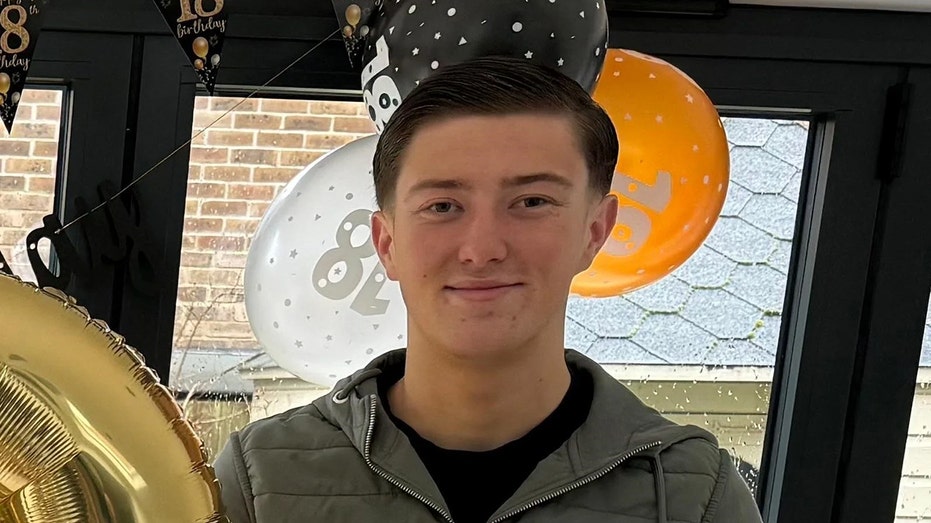
Newly released police bodycam footage is intensifying scrutiny of local police after officers handcuffed an 18-year-old university student who repeatedly told them he had been stabbed and could not breathe moments before dying on a Southampton street.
The video, released Monday following the murder conviction of 23-year-old Vickrum Digwa, shows Henry Nowak telling officers, "I’ve been stabbed" and "I can’t breathe" while lying on the ground after the Dec. 3, 2025, attack.
One officer responded: "I don’t think you have, mate," according to the video.
Police handcuffed Nowak after Digwa claimed he had been the victim of a racist assault, according to court proceedings previously reported by Sky News.
BODYCAM FOOTAGE SHOWS MOMENT FLORIDA OFFICERS' ATTEMPT TO RESTRAIN SUSPECT GOES HORRIBLY WRONG
Reuters reported that officers later removed the handcuffs and attempted CPR after realizing Nowak had suffered serious stab wounds.
Digwa was sentenced Monday to life in prison after being convicted of murdering the 18-year-old University of Southampton finance student with a 21-centimeter blade prosecutors described as a Sikh kirpan-style weapon.
GRIEVING TEXAS FATHER SPEAKS OUT AFTER SON WAS STABBED TO DEATH AT HIGH SCHOOL TRACK MEET
The case has sparked political backlash in Britain and renewed debate over policing, race and knife crime.
In a statement read outside court Monday, Nowak’s father, Mark Nowak, said his son repeatedly pleaded for help before losing consciousness.
"Henry had been stabbed multiple times, and as his chest filled with blood, he tried to escape. He was chased, abused, and filmed by Vickrum Digwa and others," Mark Nowak said, according to Reuters. "When police arrived, Henry was lying on the floor, barely able to sit up and plainly in severe medical distress."
"With his final words, he told officers that he could not breathe. He told them he had been stabbed," Mark Nowak said, according to Reuters. "The response from one officer was ‘I don’t think you have, mate,’" he added.
Mark Nowak said the family held Digwa "solely and 100% responsible" for their son's death, but criticized the police, saying, "Henry should not have died on the streets of Southampton in police custody. The way he was treated was inhumane and degrading."
Nigel Farage, leader of Reform UK, said the case showed "the fear of being called racist was greater than dealing with Henry Nowak’s murder," according to Reuters.
UK POLICE APOLOGIZE TO 'FATHER TED' CREATOR GRAHAM LINEHAN FOR ARREST OVER TRANS SOCIAL MEDIA POSTS
Reform UK MP Robert Jenrick also called for the release of body-worn camera footage and accused authorities of prioritizing allegations of racism over saving Nowak’s life during an appearance on GB News.
Meanwhile, Prime Minister Keir Starmer described the killing as "an awful, shocking case" and said it was right that the Independent Office for Police Conduct investigate the police response.
Hampshire & Isle of Wight Constabulary, the police force responsible for policing Southampton and surrounding areas in southern England, previously apologized after the conviction, with Temporary Deputy Chief Constable Robert France saying he was sorry that Nowak had been handcuffed "in the moments before he lost consciousness," according to Sky News.
CLICK HERE TO DOWNLOAD THE FOX NEWS APP
The police force remains under investigation by the Independent Office for Police Conduct.
Fox News Digital reached out to Hampshire & Isle of Wight Constabulary for comment but did not receive a response.
Reuters contributed to this story.

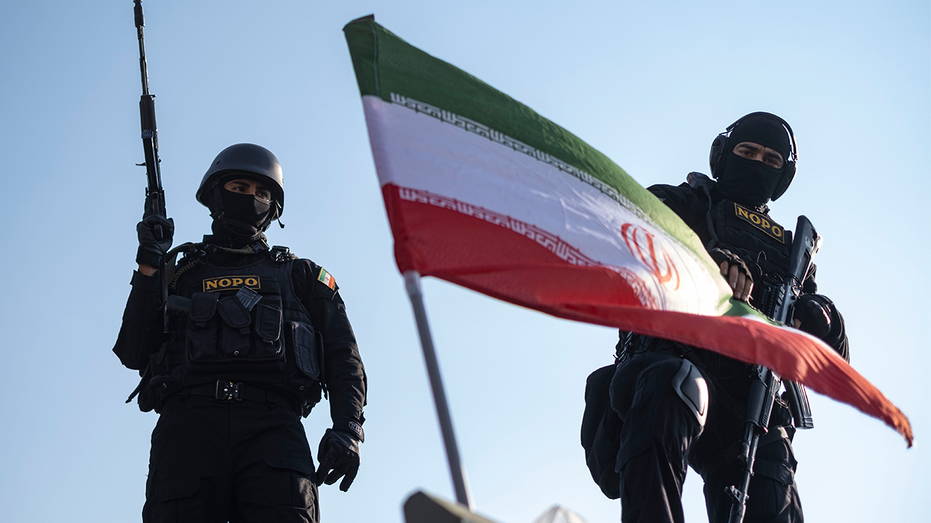
Amid President Donald Trump’s Monday announcement that a deal with Iran’s clerical regime is imminent to re-open the Strait of Hormuz and negotiate an end to Tehran’s illicit nuclear weapons program, Iranians who hoped U.S. pressure would force a decisive outcome now fear it may survive while ordinary people absorb the costs.
"Inside Iran, the mood has shifted from early-war optimism to a kind of exhausted resignation, but there is still some hope that this is the moment President Trump will use his leverage to do the right thing. The Iranian people understand this unusually narrow but strategic window," Lisa Daftari, editor-in-chief of The Foreign Desk who keeps in contact with Iranians on the ground, told Fox News Digital.
She continued that ,"The regime is fiscally strained and politically brittle, while the broader population has been disillusioned by years of repression and economic collapse. Iranians do see this as a one‑time opportunity for Washington — and President Trump in particular — to translate military and economic leverage into the potential collapse of an irrefromable regime. If the outcome is a shallow agreement that props up the system without changing its trajectory, that window will likely close for years."
She continued, "If instead, the U.S. holds firm on sanctions and nuclear red lines, it can weaken the regime’s hand without punishing the Iranian people, who have already paid the highest price."
Daftari, the Iran expert, shared recent correspondence from two Iranians from Tabriz and Tehran.
The resident from Tabriz said, "From my perspective, decades of political tension between Iran and the United States have had their greatest impact on ordinary people rather than those in power. Many families feel their voices are not being heard in international discussions about Iran." Adding, "I respectfully ask whether you might consider sharing or highlighting the human side of this situation, so that the experiences of ordinary Iranian families are not overlooked in political discussions and media coverage."
The Tehran resident said, "Today, the people of Iran believe in the future. On days when economic pressure makes the faces of the Iranian people sad, the word ‘unity’ brings a smile to their lips. Our situation is not good, but we are motivated."
Fox News Digital surveyed a few Iranians and agreed to use only their first names because the clerical regime has declared the use of Starlink to bypass the censor a criminal act. A sophisticated clandestine network has managed to smuggle some satellite internet technology into Iran to allow people to communicate with the world outside the Islamist state.
Hassan, who lives in Tehran, pleaded with President Trump to keep strong in his dealings with the regime, saying that "Things have gotten so bad that even if you wanted to give up and leave Iran and just focus on your own life and work, it feels like there’s nowhere left to turn. Mr. Trump, through these deals and arrangements, has left people feeling trapped, with no road left open."
Mehdi, who resides in Tehran, expressed confusion about the existence of an agreement. He said, "So what exactly are they agreeing on? Are they saying they’re close to a deal or are there other discussions too? Every minute there is a new piece of news, everyone has a new analysis, everything changes every minute. It’s strange. This war achieved nothing. We’re the only ones left paying the price," he complained.
Hassan from Tehran said that "Mr. Trump, if until yesterday most Iranians thought they were on the same path as America, you caused them all to become disappointed. "Mr. Trump, if you wanted this government to remain in power, why did you blow up factories? Now workers are being laid off, and inflation is out of control. Even with a salary of 18 million tomans, you cannot feed yourself."
Mahsa, from the Caspian Sea city of Rasht, told Fox News Digital that the system [Islamic Republic of Iran] is still fully intact. They don’t care how many people died. If anything, they seem more emboldened now and even take pride in martyrdom. Yesterday I argued with a regime supporter [who] said: "Our leader didn’t give away a single meter of land, didn’t take a step backward, unlike previous kings who gave away Bahrain, Baku, Nakhchivan, and others."
The concerns among many Iranians revolve around the proposed memorandum of understanding between the U.S. and Iran’s regime. The MOU does not address the overthrow of the clerical regime or human rights violations, according to media reports. Large numbers of Iranians within Iran and among the Iranian diaspora want the Trump administration to topple the Islamist dictatorship in Tehran.
The MOU reportedly involves a 60-day ceasefire extension. Israel and the U.S. launched a joint attack on Iran on February 28. The MOU would also see the reopening the Strait of Hormuz and new talks over Iran's illicit nuclear weapons program.
The leaked elements of the MOU have not been confirmed by the Trump administration.
When asked about the concern among Iranians about a deal with the Islamic Republic, Anna Kelly, a spokeswoman for the White House, told Fox News Digital that "For 47 years, American Presidents and countless other world leaders talked about the threat posed by Iran, but no one had the courage to address it. President Trump took decisive action to ensure that Iran could never harm our homeland, our troops, or our allies again. Once Iran’s nuclear threat is removed for good, the entire region and its people will be safer and more stable."
IRAN REGIME ESCALATES REPRESSION TOWARD 'NORTH KOREA-STYLE MODEL OF ISOLATION AND CONTROL'
However, Trump said last week during his cabinet meeting, "We didn’t set out for regime change," adding, "But by the fact that we’re dealing with a totally different group of people than we were at the beginning … This is regime change."
Reza Farnood, an Iranian American who supports the Trump administration and is a researcher, writer and activist, urged that President Trump continue with his maximum pressure campaign against Tehran.
Farnood told Fox News Digital, "We welcome the bombing and attacking the regime because we are aiming to overthrow the regime." He urged that Trump continue the blockade of Iran’s vessels and deny money to the regime. He said sanctions relief will be used by Iran "against the U.S. and Israel and their allies and innocent Iranians."
Farnood stressed that the clerical regime is holding the Iranian people "hostage."
Kianoosh, who lives in the northern city of Karaj, the capital of Alborz province, said about Trump’s proposed deal: "You threw six months of our lives into hell. What answer are "you going to give to the mothers of all those children who were killed? Why did you give people false hope? Why did you hand down a death sentence to everything so many people believed in?"
Leading U.S. Senators well-versed in foreign policy have praised Trump’s approach to the Islamic Republic. Sen. Lindsey Graham, R-SC., recently told Fox News’ Sean Hannity "On Trump’s watch, they’re [Iran’s regime] becoming poorer and weaker. That’s the difference."
TRUMP’S 'ECONOMIC FURY' SQUEEZES IRAN — BUT CAN TEHRAN OUTLAST THE PRESSURE?
Graham juxtaposed Trump’s Iran policy with his predecessors. "Obama and Biden screwed Iran up, and Donald Trump is fixing it. On Obama and Biden’s watch, Iran became rich and lethal," he said. "On Trump’s watch, they’re becoming poorer and weaker. That’s the difference."
Iran is running dangerously low on oil storage capacity and could face a severe economic breaking point if forced to halt production, former U.S. Energy Secretary Dan Brouillette recently told Fox News.
Trump has said that Iran’s regime murdered as many as 45,000 Iranian demonstrators in January 2026. He urged just days after the mass murder that protesters keep going and promised them that "help is on its way."
Lawdan Bazargan, a prominent Iranian-American activist who the regime imprisoned in its infamous Evin Prison in Tehran in the 1980s for political dissent, told Fox News Digital that the Iranians she’s spoken with are discouraged by Trump’s dealings. "He was one of the few world leaders who repeatedly spoke about the thousands of Iranians killed in January 2026 and expressed disgust at the sheer brutality of the Islamic Republic. He had promised support for the Iranian people and raised expectations that meaningful change might finally come."
She continued: "Now, 88 days later, many people feel they are left facing the same regime, one that appears more emboldened, more ideological, and still willing to repress, execute, and arrest people. The economy has been devastated, and many feel trapped between a government with no mercy and a future with no clear path forward.
For years, 90 million Iranians have lived as hostages of the Islamic Republic. Now, many fear that the consequences no longer stop at Iran’s borders, through threats to global energy routes, regional stability, and even digital infrastructure."
According to Bazargan, "The question many ordinary Iranians are asking is simple: How are people expected to fight a system that feels victorious, controls the weapons, controls the narrative through a massive propaganda machine, and possesses countless tools of repression?"
Ali, who is also from the sprawling capital city of Tehran, complained about the spiraling prices and inflation and disappointment that the regime is still in place.
"For a government with state-provided housing and billions in patronage and privileges, what difference did any of this make for its supporters?"
CLICK HERE TO DOWNLOAD THE FOX NEWS APP
Ali added: "We’re the ones who are paying the price and getting crushed. How are our children ever supposed to afford these housing and car prices, and how are they supposed to get married?"
The U.S. State Department referred Fox News Digital to the White House for a comment.


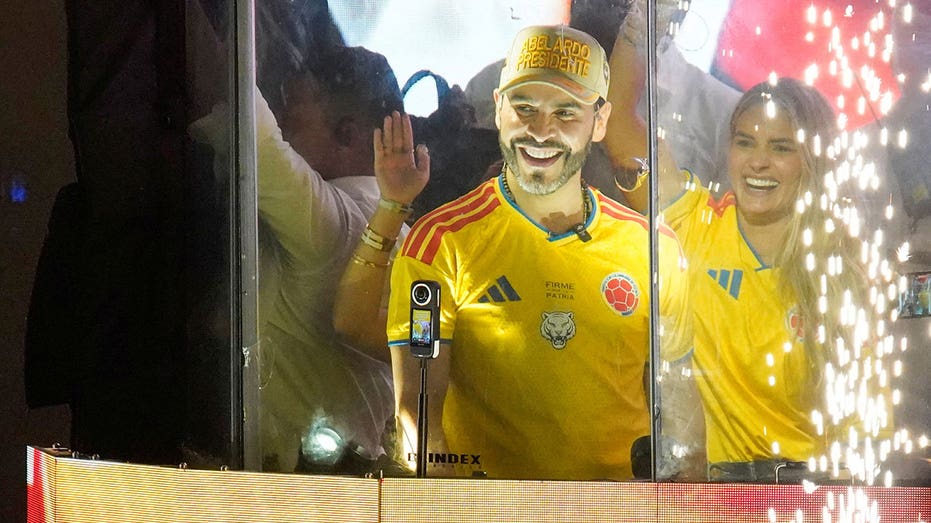
Colombia’s first-round presidential election, won by tough-talking conservative Abelardo de la Espriella, signaled what analysts describe as a growing backlash across Latin America against leftist governments.
The presidential election could carry significant implications for U.S. interests in the region, including drug trafficking, migration and regional stability, as voters increasingly prioritize security, counternarcotics policies and economic stability ahead of a June 21 runoff between de la Espriella and leftist candidate Ivan Cepeda.
"For the Trump administration, a Colombia that recommits itself to security cooperation, counternarcotics efforts, and stronger democratic institutions would be a major win and an important step forward towards restoring stability across the Western Hemisphere," Melissa Ford Maldonado of the America First Policy Institute (AFPI) told Fox News Digital from Colombia.
ANTI-CARTEL HARDLINER CHANNELS TRUMP IN BID TO END COLOMBIA'S LEFTIST ERA IN PIVOTAL ELECTION
"What happens in Colombia affects the flow of drugs into American communities, the strength of transnational criminal networks, migration pressures and the broader balance between democratic governments and criminalized regimes throughout the region," she added.
The first-round winner, de la Espriella, a conservative lawyer and political outsider known as "El Tigre" ("The Tiger"), has emerged as the face of Colombia's security-focused shift.
An admirer of President Donald Trump and El Salvador's President Nayib Bukele, won 43.7% of the vote Sunday, outperforming most polls and advancing to a runoff against left-wing Cepeda, the candidate backed by President Gustavo Petro.
His campaign has centered on a hardline crackdown on criminal organizations, which he argues have flourished under Petro's "Total Peace" policy.
In an interview with the Associated Press, de la Espriella pledged to open mega-prisons and take a far more aggressive approach toward criminal groups. "Criminals will either surrender or leave the country," he said.
The vote comes as Colombia faces rising violence, expanding criminal organizations and growing criticism of President Gustavo Petro’s "Total Peace" strategy, which sought negotiations with armed groups and criminal networks.
AT LEAST 80 PEOPLE KILLED IN NORTHEAST COLOMBIA AS PEACE TALKS FAIL, OFFICIAL SAYS
"Colombia heads into a June 21 runoff with armed groups controlling vast stretches of the country, a failed ‘Total Peace’ negotiating strategy leaving communities more exposed than when it began, and a Venezuelan refugee crisis that has overwhelmed the state's already thin capacity to govern its own territory," Daniel Swift, senior research analyst at the Foundation for Defense of Democracies told Fox News Digital.
Maldonado said Colombia’s election reflects a wider political shift taking place across Latin America.
"This election is part of a broader trend across Latin America, where voters are increasingly rejecting the failed promises of the left in favor of security, sovereignty and economic opportunity," she said.
ECUADOR'S PRESIDENTIAL ELECTION GOES TO RUNOFF BETWEEN CONSERVATIVE INCUMBENT, LEFTIST LAWYER
"We’ve seen it in Argentina, Ecuador, Bolivia, Chile, Honduras, Costa Rica and now increasingly in Colombia."
Swift agreed the election results reflect a broader regional trend.
He said with de la Espriella outperforming "every poll, with security at the top of every voter's mind — confirms that Colombia is part of a broader regional reckoning: Latin Americans are losing patience with governments that cannot provide security," Swift said.
Maldonado said the results reflected mounting frustration with the country’s direction under Petro.
CLICK HERE TO DOWNLOAD THE FOX NEWS APP
"Years of growing insecurity, rising coca cultivation, expanding criminal organizations, and concessions to armed groups have left many Colombian people frustrated with the direction of the country," she added.
The June 21 runoff is expected to focus heavily on security policy, organized crime and Colombia’s future relationship with the United States under the Trump administration. Maldonado argues it "offers Colombia an opportunity to begin reversing course and reestablish a principle that should have never been up for debate: criminal organizations should be confronted, not negotiated with."


English police are facing mounting scrutiny after officers handcuffed an 18-year-old university student as he bled to death following a fatal stabbing, allegedly after believing the attacker’s false claim that he had been the victim of a racist assault.
The case has sparked outrage across Britain, fueled political debate over policing and prompted calls for the release of body-worn camera footage from the responding officers.
Alan Mendoza, executive director and co-founder of the London-based Henry Jackson Society think tank, told Fox News Digital that the case reflected broader failures in British policing culture. "The killing of Henry Nowak shows how far the rot of political correctness has set into the British policing mentality," Mendoza said.
"The reflex attitude today appears to be to believe any and every claim that mentions racism," he added. "It clearly trumped actual murder in this case as a dying Mr. Nowak was arrested on the say-so of his Sikh assailant without any facts being established by the officers attending."
BRITISH POLICE RELEASE DETAILS ON SUSPECTS AFTER 'SHOCKING' TRAIN ATTACK, UPDATE ON VICTIMS
Vickrum Digwa, 23, was convicted Thursday at Southampton Crown Court of murdering Henry Nowak, an 18-year-old finance student at the University of Southampton, during a confrontation on Dec. 3, 2025.
Officers arriving at the chaotic scene initially treated Nowak as the suspect after Digwa allegedly claimed he had been racially abused and attacked. Officers handcuffed Nowak before realizing the severity of his injuries. He later collapsed and died at the scene despite attempts to administer first aid, according to Sky News.
Following the verdict, Hampshire Constabulary publicly apologized and referred the case to the Independent Office for Police Conduct (IOPC), England and Wales' police watchdog, for investigation. "I’m sorry that he was handcuffed and arrested in the moments before he lost consciousness," Temporary Deputy Chief Constable Robert France said in a statement reported by Sky News.
Prosecutors told jurors Digwa stabbed Nowak multiple times using a 21-centimeter blade described in court as a Sikh kirpan-style weapon. Digwa claimed he acted in self-defense after being racially abused, but jurors rejected that argument and found him guilty of murder.
The case has since ignited fierce public debate online and in British media over whether police prioritized allegations of racism over basic investigative and medical procedures.
TEXAS PRESS CONFERENCE IN AUSTIN METCALF KILLING DEVOLVES INTO CHAOS OVER TRACK MEET STABBING
Speaking on GB News on Friday, Reform UK Member of Parliament Robert Jenrick called for the release of body-worn camera footage if the Nowak family consents.
"The officers chose to prioritize the accusation of racial abuse over saving the life of this young man," Jenrick said. "I think that was a terrible mistake."
Jenrick also criticized what he described as a muted response from Britain’s political establishment compared to reactions following the 2020 death of George Floyd in the United States.
"The Prime Minister says absolutely nothing. The Home Secretary says absolutely nothing."
The killing has also raised concerns about hostility toward Britain’s Sikh community, which Sikh organizations have sought to distance from the crime.
In a public statement issued following the verdict, Sikh community organizations condemned the killing and stressed that the case should not be viewed as representative of Sikhism.
2 JEWISH MEN STABBED IN LONDON ATTACK CLASSIFIED AS TERRORISM
"Henry’s life has tragically been cut short by a moment of madness by an individual for which there can be no excuses," the statement said.
The organizations also acknowledged that "the actions of police officers who handcuffed the victim just before he died" had intensified criticism of police and "unnecessarily stirred up community hatred."
The statement further emphasized that legal protections allowing Sikhs in Britain to carry ceremonial kirpans for religious purposes do not apply if the blade is used violently.
"We understand in this case the weapon that may have been used was not the normal Kirpan worn by fully practicing Sikhs," the statement read.
Mendoza stressed that Britain’s Sikh community broadly condemned the murder and supported the investigation.
"It’s legal for Sikhs to carry ceremonial knives in the U.K. but they are almost always tiny ones that religious authorities have ordained are sufficient to fulfil the obligation," Mendoza told Fox News Digital. "He had one of those, plus his [8 inch] blade."
CLICK HERE TO DOWNLOAD THE FOX NEWS APP
He also described Digwa as "a weapons nut," referencing evidence presented during the trial that prosecutors said showed the defendant had a fascination with knives and weapons.
The IOPC investigation into the officers’ actions remains ongoing. Fox News Digital reached out to Hampshire & Isle of Wight Constabulary for comment but did not receive a response before publication.


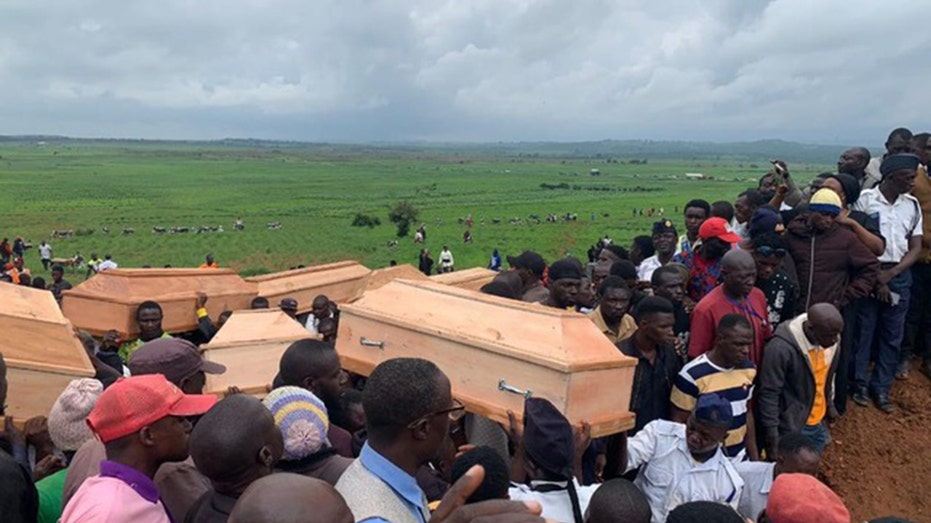
JOHANNESBURG — An estimated 30,000 mostly Muslim Fulani militants are operating in Nigeria, causing "worsening insecurity and religious freedom violations," according to an influential new report.
The report, by the U.S. Commission on International Religious Freedom (USCIRF), states "violence by Fulani militants caused the highest number of deaths among all religious communities in Nigeria over the last year, as compared to attacks by organized insurgent groups and criminal gangs."
The Fulanis, so-called herders of livestock, have, according to the USCIRF report, "targeted Christian (farming) communities in the Middle Belt and, increasingly, the South, burning homes and churches as well as kidnapping, raping, and murdering."
CHRISTIANS TARGETED IN SYSTEMATIC KIDNAPPING CAMPAIGN IN NIGERIA BY JIHADI HERDSMEN, EXPERTS SAY
But a former counterterrorism expert at the State Department told Fox News Digital that the kind of strikes the U.S., working with Nigerian government forces, have recently carried out in Nigeria’s North against Islamist terrorist organizations such as Boko Haram and Islamic State, wouldn’t work against the Fulanis in the predominantly Christian central areas of the country.
Sterling Tilley, former acting director within the Bureau of Counterterrorism, who has worked in Nigeria for the State Department, said that the U.S. "militarily dealing with the farmer-herder conflict is not advisable because it is likely to bring more instability in the country." Tilley, now director of the Thomas R. Pickering Graduate Foreign Affairs Fellowship at Howard University, added, "There are some steps that can be taken to quell the violence, but there must be Nigerian political will to do so."
This week, Secretary of War Pete Hegseth commented on the recent strikes ordered by President Donald Trump on Nigeria, saying, "Maybe a year ago, [the president] heard the call of Nigerian Christians who were being targeted and killed by ISIS. And he said, 'Pete, I want the War Department to focus on ensuring that we do everything we can to protect those Christians.'"
NIGERIA NAMED EPICENTER OF GLOBAL KILLINGS OF CHRISTIANS OVER FAITH IN 2025, REPORT SAYS
Christians make up approximately 48%, and the Fulanis, the report says, represent around 6%, or 14.5 million of Nigeria’s population. Fulani militants, the USCIRF report stated, "have often carried out operations during Christian holidays such as Christmas or Easter to further maximize the psychological impact, terrifying those communities from gathering to celebrate or worship. During attacks, assailants sometimes utter slogans with religious connotations, such as "Allahu Akbar" (Arabic for "God is great").
But, according to the report, Muslims are being attacked too. "Fulani assailants have not spared Muslims, raiding herders’ cattle and violently attacking non-Fulani Muslim communities," the report added.
"Violence at the hands of militants from the Fulani tribe far outnumbers violence from all other militant groups such as Boko Haram or ISWAP (Islamic State West African Province)," Henrietta Blyth, CEO of Open Doors UK & Ireland, an organization that highlights the persecution of Christians, told Fox News Digital.
While her organization was not part of the report, she said, "My heart has been broken as I have heard stories from women and men who have seen their beloved family members butchered in front of them or carried off into a life of slavery."
AFRICAN UNION CHIEF DENIES GENOCIDE CLAIMS AGAINST CHRISTIANS AS CRUZ WARNS NIGERIAN OFFICIALS
Blyth added: "The situation is complicated, and as the report concludes, it is too simplistic to say all perpetrators are religiously motivated. What is undisputable is that Christians are highly vulnerable and often the victims, paying the price in blood. They desperately need protection and, for hundreds of thousands driven from their homes, the chance to heal and rebuild their lives."
The USCIRF report also stated, "Criticism of responses to Fulani militant violence from federal and state authorities has often described their responses as unsatisfactory at best and complicit at worst."
Tilley told Fox News Digital that elections are to be held in Nigeria next year, and "the Fulani do have considerable political influence as a voting bloc. Thus, the Nigerian government seems reluctant to take actions necessary to quell the violence for fear that they could lose their base of support in the North and Middle Belt."
CLICK HERE TO DOWNLOAD THE FOX NEWS APP
Fox News Digital reached out to the Nigerian government for comment but did not receive a response by publication time.


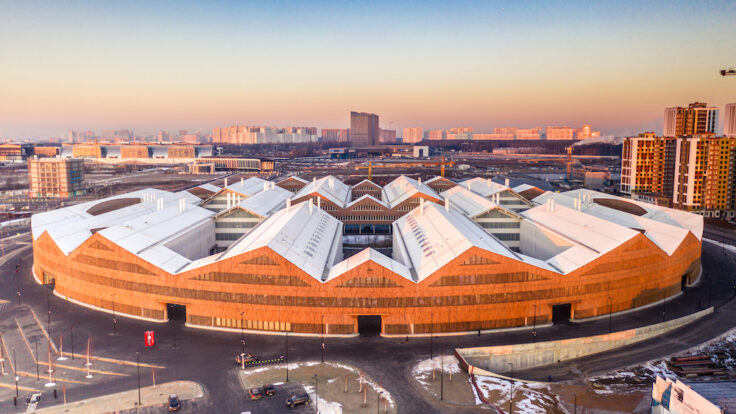
The Skolkovo Institute of Science and Technology has a new rector, a new Kremlin-appointed overseer, and a new mission. In the fifth year of the war, little remains of the old Skoltech — once a calling card of the Medvedev-era thaw and a small but successful innovation university. T-invariant analyzed the data: of the 358 researchers working there in 2021, only 141 still hold a Skoltech affiliation today. The transformation of this unique institution has been far from smooth: the rector post nearly went to Artem Oganov (a scientist known for his provocative public statements), then almost ended up with a close associate of Putin’s daughter. In the end, the university was entrusted to Yulia Gorbunova — dean of the Faculty of Fundamental Physicochemical Engineering at Moscow State University and a full member (academician) of the Russian Academy of Sciences. Her task will be to put Skoltech on a new track — no longer as Russia’s premier globally oriented research center, but as a key pillar of “technological sovereignty.” That sovereignty, judging by the new development program, rests on three pillars: AI, robotics, and drone technologies. T-invariant takes a closer look at why Skoltech was folded into VEB.RF (Russia’s state development corporation — T-invariant), how its leadership was replaced, and what new objectives have been set for it.
In 2026, Skoltech turns fifteen. It was conceived as a new model of the university in Russia, and for all those years it was exactly that. But the state’s vision of what a “new model” should look like has shifted — and the war was decisive in that shift. It transformed the “small innovation university” and “Medvedev’s favorite toy” (as former staff jokingly called it) into an instrument for countering the technological and scientific isolation imposed by the West. The Russian government — perhaps for the first time in the entire post-Soviet era — now knows precisely what it needs science and universities for: survival. And Skoltech will be the testing ground for whether it is possible to produce cutting-edge research and train highly qualified specialists while engaging only with the East and operating under the direct management of the state through VEB.RF.
Sanctions and transformation: how Skoltech has changed over four years of full-scale war
In 2021, several months before the invasion of Ukraine, Skoltech celebrated its tenth anniversary and took stock of its achievements. By that point it had managed to claim 65th place in the Nature Index ranking of young universities — the best result among all Russian institutions. The university’s board of trustees reported record revenue of nearly 250 billion rubles. Skoltech had become home to more than three thousand companies and had generated over 4,500 patents in ten years (including 864 in 2021 alone, of which 262 were filed in foreign countries). Despite Russia’s isolationist and anti-Western course, Skoltech remained a university with internationally recognized standing. It also occupied an unusually strong financial position among Russian universities. While the standard professor’s salary at Moscow State University and the Moscow Institute of Physics and Technology (MIPT) was 150,000–200,000 rubles, at Skoltech it started at 500,000 rubles. And while graduate students at MSU and MIPT received stipends of 5,000–10,000 rubles, at Skoltech it ranged from 75,000–90,000 rubles.
The start of the full-scale invasion of Ukraine ended cooperation definitively between Russian and Western institutions. On February 26, 2022, the Massachusetts Institute of Technology published a statement announcing the termination of its contract with Skoltech in response to “unacceptable military actions against Ukraine.” Shortly thereafter, Skoltech was sanctioned by the U.S. Treasury’s Office of Foreign Assets Control, New Zealand’s Ministry of Foreign Affairs, and Ukraine; Australia, Switzerland, and Japan followed a year later. Today, Skoltech — alongside MIPT — operates under one of the harshest sanction regimes of any Russian university.
The inevitable consequence of the sanctions was a brain drain — among both visiting professors and Russian researchers who were unwilling to remain affiliated with a sanctioned institution. T-invariant analyzed the career trajectories of Skoltech’s staff and examined how the institute’s standing on the international academic stage has evolved.
In 2020–2021, at least 358 researchers were working across Skoltech’s nine Centers for Science, Innovation, and Education. That figure includes junior researchers and postdocs as well as tenured professors. By 2026, only 141 of them still hold a Skoltech affiliation. 121 have moved to foreign institutions, while another 63 continue to work in Russia but at other organizations. Six individuals hold dual affiliations — one at Skoltech and one at a foreign university. Researcher Alexei Buchachenko died in 2023. The current affiliations of 26 people could not be identified.
Latest news on scientists’ work and experiences during the war, along with videos and infographics — subscribe to the T-invariant Telegram channel to stay updated.
The most common destination for departing researchers was the United States (28), followed by Germany (17), the United Kingdom (15), France (13), Canada (11), and Israel (10). As sanctions have tightened in the fifth year of the war, it has become extremely difficult for a researcher with a Skoltech affiliation on their CV to find employment in Europe or the U.S. Even in Israel, physics and computer science departments now routinely exclude such Russian researchers from work deemed sensitive to the country’s technological defense capabilities.
Interestingly, when researchers are grouped by nationality — Russian and non-Russian — the disparity between those who left and those who stayed is stark. Of the 51 foreign Skoltech staff members in the early 2020s, 37 left Russia. Among the remaining 307 Russian researchers, only 84 departed. In relative terms, foreign nationals left Skoltech at nearly three times the rate of Russians. This disparity most likely reflects that Russian researchers face greater difficulty finding equivalent positions on the international academic market. The pattern is especially visible in the Center for Hydrocarbon Recovery: none of its 36 staff members are foreign nationals, and only seven have moved to foreign affiliations (three in Saudi Arabia and one each in the UK, U.S., Canada, and Switzerland). Russia’s heavy dependence on hydrocarbon-sector research has kept those researchers in place.
The university, which had an informal reputation as a “flagship of Russian science,” was strongly embedded in international academic networks. In the pre-war year of 2021, Skoltech maintained 54 international cooperation agreements. Its former partners included some of the world’s leading research universities — among them the Technical University of Munich, KU Leuven, and the National University of Singapore. Nearly all of those agreements were either terminated unilaterally by the foreign partners or allowed to lapse at expiration. Many of Skoltech’s former partner institutions have since become new homes for researchers who once held Skoltech affiliations.
Over the years of war, Skoltech has adapted to operating under sanctions and to forge new connections, though it has had to shift its geographic focus — and the new partnerships are fewer and less robust than the old ones. As of April 2026, Skoltech has signed 31 agreements, none of which involve Western countries; more than half (17) are with Chinese universities. None of those Chinese partners appear in the top 100 of either the QS World University Rankings or the Times Higher Education World University Rankings. The list also includes India, Vietnam, Iran, Kyrgyzstan, the UAE, Brazil, Israel, and Oman. The new Skoltech will likely stop losing Russian staff — for whom leaving has become far harder than in the early years of the war — and will instead recruit from Central Asia, Southeast Asia, and the Middle East.
[[socialnetworks]]
Thus, the story of Skoltech as a university integrated into the global academic market and connected to international technology corporations has come to an end. And the final chapter of that story was a change of rector.
No exit, no return: facts and speculation
On November 10, 2025, Skoltech’s board of trustees approved a new development strategy through 2030. It was already known that the university would be implementing the strategy under new leadership: ten days earlier, incumbent rector Alexander Kuleshov had told colleagues he would be stepping down in December, though he planned to remain at the university in a different capacity. He showed no sign of concern at the announcement. Kuleshov had led Skoltech for ten years, having succeeded the institute’s first president — American Edward Crawley — in 2016. He had tried to resign several times even before the war. And after Skoltech was hit with sweeping sanctions from the U.S. and Europe, his desire to leave the helm of a struggling institution was entirely understandable. Several candidates were considered to replace him. Among them was Skoltech honorary professor Artem Oganov — one of the institute’s most visible public figures, known less for his research than for his political commentary.
At one point, the decision-makers nearly settled on Denis Kuzmin — director of the Phystech School of Biological and Medical Physics at MIPT and author of the Telegram channel “Kuzmin and School.” The young scientist’s academic and administrative credentials were so far out of line with those of his predecessors — and with the scale and significance of Skoltech itself — that rumors began to circulate: only a very well-placed hand could have put his résumé on the desk of those with signing authority. Whether that hand belonged to Maria Vorontsova (Putin’s daughter) — who interacts regularly with Kuzmin while sitting on various scientific councils — or to Andrei Fursenko, who manages the pipeline of young talent for science administration, remains unclear. It is equally hard to determine whether there is any connection between Vorontsova’s working visit to Skoltech — and her initiative to establish a vivarium there (which was to be followed by an expansion of research directions and increased funding) — and the reasoning that an undertaking of that kind would only be entrusted to someone enjoying unconditional trust.
In any case, a young scientist who had only recently struggled to defend his dissertation would have seemed out of place in the role. In April 2025, Kuzmin managed to defend his doctoral thesis at the All-Russian Research Institute of Agricultural Biotechnology — with difficulty, and not on the first attempt: a preliminary defense at the MSU Biology Department had failed, forcing him to seek out a different committee. In the end, though not without some dissenting votes, the doctoral degree was awarded. The Higher Attestation Commission (VAK — Russia’s national body that ratifies doctoral degrees — T-invariant) still needed to ratify it. Two months later, however, Kuzmin was called before the VAK in connection with the case of his co-author and doctoral student Sorokin, who had defended in the same committee in January 2025. A week before Kuzmin’s own defense — back in April — the deputy minister of science and education had signed an order annulling Sorokin’s degree. Kuzmin’s and Sorokin’s dissertations closely resembled each other; both were defended before the same committee, a few months apart. For Kuzmin, the VAK review concluded successfully: his doctoral degree was confirmed. After all that, the only way to explain Kuzmin’s presence on the shortlist for one of the most prominent rector posts in the country was influential patronage. That said, many who know Kuzmin personally speak positively about him — describing him as someone who “has a realistic sense of his own place in the academic landscape” (as one of T-invariant’s sources put it). So his appointment was expected as something nearly inevitable — but not, in most eyes, as something to dread.
Kuzmin was expected to begin his transition into the role in January, but after the new year Kuleshov was still running the university — his contract had been extended for another year. Then, suddenly, on February 13, 2026, it was announced that his authority had been terminated and that senior vice-president Alexander Safonov — Kuleshov’s longtime deputy — had been appointed acting rector.
For a moment it seemed as though Kuleshov might be employing the classic “successor gambit” — where a seasoned, well-connected leader steps back into the background and continues managing his former domain from behind the scenes, leaving a loyal protégé as the figurehead. He had done something like this before, when he left the Institute for Information Transmission Problems (IITP) to move to Skoltech — and it ended in a major scandal (T-invariant covered it in detail here). But on February 20, the former rector sent colleagues a farewell letter (a copy of which is on file with the editors).
“Dear friends, I write with sadness to announce that my ten years of work at the Skolkovo Institute of Science and Technology have come to an end. I am proud of what we accomplished during this time. In my very varied life, these may well have been the best ten years. I am grateful to everyone — the professors, students, researchers, and of course the wonderful administrative staff — for what we built together. A single number captures what Skoltech is today: in 2025, there were 31,450 applications for 248 places. We are not simply — or even primarily — a teaching university; we are a ‘technology factory,’ and modern technology is impossible without world-class science. And we managed to achieve exactly that: to combine fundamental science with cutting-edge technology. I won’t turn a personal letter into a technical report, but let me share just one figure: in December alone, more than 1,000 5G base stations were deployed based on our documentation.
I don’t yet know what comes next for me, but I am quite certain I still have enough energy and intellect to start my fifth life. The first four I lived beautifully.
I wish Skoltech as a whole — and its graduates and students — every success. Believe me: a good life awaits you.
Yours, AK
P.S.
My deepest thanks go to our founders, Dmitry Anatolyevich Medvedev and Viktor Felixovich Vekselberg. Without them, none of this would have been possible.”
The letter was interpreted differently by different people at Skoltech. Some saw in it signs of frustration and resentment over unfair treatment. Others saw the opposite — relief: a sense that “I’ll be fine, now you figure it out without me.” But what stunned everyone was that a full member of the Russian Academy of Sciences who had successfully led first an academic institute and then an innovation university had apparently been given no position after his departure. And yet Kuleshov had never left institutions in decline in his wake. In 2015 he left IITP, which under his leadership had become one of the leading interdisciplinary academic institutes in the Russian Academy of Sciences — covering mathematics, biology, and information technology. By 2026, despite severe economic and scientific sanctions from the Western academic community, he had managed not merely to keep Skoltech operational but to develop it. And yet he received nothing — no honorary presidency to provide oversight and guidance, no advisory post with a lifetime pension supplement, not even his own “little domain” in the form of a technology center. That was unexpected.
All of this indicated that something had happened between the November academic council meeting — when Kuleshov announced his upcoming departure along the lines of “I’m leaving, but this isn’t goodbye” — and the February board of trustees meeting. The scenario that many had anticipated, including Kuleshov himself — an outside appointee takes the top job while the senior local academic stays on — had evidently been rejected at the highest level. Which meant the role of that senior heavyweight was now open. And it was offered to Yulia Gorbunova — a full member of the Russian Academy of Sciences and dean of the Faculty of Physicochemical Engineering at Moscow State University. She was to become Skoltech’s vice-president for research.
What followed over the next month and a half is described by Skoltech staff themselves as “chaos.” Dividing responsibilities between Gorbunova and Kuzmin in a way that didn’t shortchange either party — while still producing a workable management structure — proved almost impossible. It fairly quickly became clear that this was an unworkable arrangement, at which point Denis Kuzmin withdrew his own candidacy and withdrew from the running. He could only have done so if someone influential had promised to protect him from the Skoltech board of trustees. In the academic world today, very few people hold that kind of influence. Whether it was Kuzmin’s direct superior — MIPT rector Dmitry Livanov — or Maria Vorontsova herself, will likely become clear in the near future. If Kuzmin stays at MIPT, the behind-the-scenes actor was almost certainly Livanov. But if his career suddenly accelerates through other institutions, the speculation about Vorontsova’s role in Skoltech’s leadership transition may turn out to be more than speculation.
None of T-invariant’s sources, however, supports the claim in which Vorontsova personally orchestrated Kuleshov’s removal. The decision to push Kuleshov out of Skoltech entirely is attributed to Dmitry Medvedev, who was presented with a dossier on Kuleshov. Whether that dossier contained financial materials — potentially connected to the Audit Chamber’s recent visit to Skoltech — or was purely ideological in character (Kuleshov had been insufficiently enthusiastic in his support for the government’s policies, made critical public statements, and notably did not sign the letter from Russian rectors in support of the war) — no one knows for certain. One thing was clear: it would likely be difficult for Kuleshov to launch his “fifth life” using whatever “energy and intellect” he mentioned in his farewell letter — say, in France, where his family lives and of which he is a citizen. He has not been personally sanctioned by the U.S. or the EU (no asset freezes or travel bans), but the UK and Ukraine have imposed personal sanctions on him, and with that background he cannot work professionally with U.S. or EU organizations. He had evidently been planning on living his “fifth life” inside Russia — and that is what he ultimately received.
On April 3, 2026, Skoltech’s website announced that the institute had a new rector: Russian Academy of Sciences full member Yulia Gorbunova. The announcement also noted: “Yulia Gorbunova has succeeded Alexander Safonov, who served as acting rector following the end of the term of academician Alexander Kuleshov, who led Skoltech from 2016 and will now take up the position of chief engineer of the institute.”
At the last moment, a man who had already been forced to say his goodbyes was brought back. The key role in this, according to T-invariant’s sources, was played by Viktor Vekselberg. The position of “chief engineer” had not previously existed at Skoltech. Indeed, it is an unusual position title for any Russian university. Only a handful of institutions have introduced it in recent years — such as Irkutsk National Research Technical University or Siberian Federal University. But in those cases, the people who hold the title are twenty or thirty years younger than Kuleshov, who turns 80 on May 2, 2026. This suggests that his “fifth life” has little chance of resembling the one he was living back around 1983, when he served as chief engineer at the NPO Kibernetika research production association.
What, then, might Skoltech become?
Up-to-date videos on science during wartime, interviews, podcasts, and streams with prominent scientists — subscribe to the T-invariant YouTube channel!
The chessboard, flipped
On March 27, VEB.RF chairman Igor Shuvalov announced: “We are currently relaunching Skoltech’s capabilities. You will soon hear about the appointment of a new rector — and that new rector has ties to Moscow State University.” Just a week later, it emerged that the new rector would be carrying out the relaunch under Shuvalov’s own supervision: he became the new chairman of the institute’s Board of Trustees. The previous chairman, Viktor Vekselberg, became his deputy. This was not a repetition of the situation five years earlier, when Shuvalov replaced Vekselberg as chairman of the Skolkovo Foundation’s board of directors. It signaled the beginning of a new chapter for Skoltech — one in which the institute’s role within the Skolkovo Foundation ecosystem is being significantly redefined and is becoming central. What does this mean in practice?
Until now, Skoltech was formally an autonomous university and a part in the Skolkovo Foundation ecosystem — their relationship officially described as a partnership. In practice, it was far from that. The Foundation controlled the university through key mechanisms of control. The primary decision-making body at Skoltech — the Board of Trustees — approves the development strategy, decides on the appointment of the rector, and controls the budget. Its composition changed periodically, but representatives from the Skolkovo Foundation always played a central role. The Foundation also provided significant funding to the institute. Now Skoltech will become a considerably more influential organization within the Skolkovo ecosystem — but far more directly accountable to the state. And Shuvalov’s appointment as chairman of the Board of Trustees clarifies the vague phrase “relaunching Skoltech.” What it effectively means is integrating the institute into the mobilization economy and maximizing output from it. The new board chairman himself put it in more measured terms, announcing that Skoltech faces “an overhaul of its educational model and closer integration into the efforts to achieve the country’s technological leadership.”
From Skoltech’s Development Strategy through 2030:
“Despite its relatively small size and reputation as a ‘boutique’ research institute, Skoltech already makes a quantitative and qualitative contribution to the achievement of national goals. <…> In the national projects aimed at ensuring technological leadership (including ‘Unmanned Aviation Systems’ and ‘New Atomic and Energy Technologies’), Skoltech is a key project executor and sits on expert groups developing roadmaps.”
The policy documents set out the following new priorities:
The state had never before explicitly dictated the research agenda of a specific university. That had never happened in Skoltech’s history either. From the institution’s earliest years, its Board of Trustees had included leading international figures — among them former CIA Director (1995–1996), chemist, MIT professor, and Citigroup board member John M. Deutch; former president of the German Research Foundation and head of the European Science Foundation, biochemist Ernst-Ludwig Winnacker; and MIT professor, expert in systems engineering and space systems design, Edward Crawley. After the first year of the war, the board shrank by half and was reduced to a list of six names: Alexander Kuleshov, Irina Okladnikova, Alexander Vedyakhin, Anastasia Rakova, Dmitry Peskov — chaired by Viktor Vekselberg.
It is obvious that such a composition did not significantly strengthen Skoltech’s international standing. In 2026, two foreign nationals were added to the board: former president of the Hong Kong University of Science and Technology and mathematician Tony F. Chan, and technology executive Simon Bradley, who spent 13 years in various senior roles at Airbus and served as global head of cybersecurity at Siemens. Yulia Gorbunova joined the board as rector.
Foreign and Russian colleagues alike describe Gorbunova as a true scientist — a person of deep academic integrity and strong ethical convictions. And yet, even five years ago, the appointment of her to this post would have seemed inconsistent with the spirit of Skoltech, which in choosing its leadership had always placed priority on international experience in universities, corporations, and engineering centers. Gorbunova has spent her entire career within the structures of the Russian Academy of Sciences and Moscow State University, where the approaches and practices are quite different. But in the new political and economic reality, many colleagues see her appointment at Skoltech as the best thing that could have happened to the university at the time of its “relaunch” — at a moment when the state has decided to take a hands-on role in the substantive and operational aspects of scientific work. Her job will be to serve as a buffer in that process. And this role will impose new ethical demands on her, because science is no longer a refuge where one can wait out a dark era. The institutional experience of the Brezhnev years and the post-Soviet period is becoming increasingly less useful for working within a state that intends to operate under siege. Skoltech offers a vivid illustration of how, for the first time, the Russian government has seriously considered what it actually needs science for — and why it needs to be integrated into a new economic model under conditions of prolonged war and sanctions. If before 2022 Skoltech had no real engagement with the defense sector, it will now need to develop one. Staff who were directly involved in Skoltech’s procurement processes before 2022 told T-invariant that nothing resembling defense work was evident there. Agreements with Rostec and Uralvagonzavod, according to those sources, were largely framework arrangements that produced no tangible results. In that sense, Kuleshov was being completely candid with his 2022 comments on the sanctions imposed on Skoltech:
“We have nothing to hide — everything here is open. The only true statement in the State Department’s announcement is the first one: that Skoltech creates critically important technologies for the Russian economy. Everything about defense contracts and specific companies — Uralvagonzavod and the rest — is entirely unfounded.”
He repeatedly stated that Skoltech was an open civilian institution with many foreign professors on staff (which made classified defense research effectively impossible), and that the real aim of the sanctions was to accelerate the “depletion of Russia’s intellectual potential.”
This was partially corroborated by Skoltech professor Igor Krichever:
“Skoltech was sanctioned because it launched with significant publicity — not because any defense contracts were being run there. I chaired the committee responsible for hiring professors, and I can say confidently that never did I see anything defense-related at the institute. There were no defense contracts at Skoltech either.”
Now there will be. Otherwise it will be impossible to maintain Skoltech’s exceptional financial position among Russian universities. In the pre-war era, that position was driven by the need to stay competitive on the global academic market. Now different arguments are needed — and the only one that is persuasive is the ability to serve the Russian government’s core survival needs. That is why no one is likely to ask Skoltech’s new rector about the reasons for the sanctions. The answer to that question will be obvious.
The post From Boutique Research Institute to Science Strike Force: How Igor Shuvalov Is Relaunching Skoltech appeared first on Т-инвариант / T-invariant.