Normal view

Received — 6 June 2026 Т-инвариант / T-invariant

“It’s a high-speed train, an express”: Criminal case against HSE University mathematician Andrey Dymov lasted less than a month

By: ak
26 May 2026 at 12:49

For the second time this month, a scientist has been convicted of donating to the Anti-Corruption Foundation. However, the two trials unfolded in vastly different ways. Mathematician Andrey Dymov was sentenced to three and a half years in a penal colony after just two hearings. Meanwhile, the case of physicist Evgeny Onishchenko dragged on for a considerable time and concluded with a sentence that is quite lenient by today’s standards: a year and a half of forced labor. Preliminary evidence suggests that authorities have decided to strip defense attorneys of the time needed to defend those who donated to Navalny’s Anti-Corruption Foundation (ACF).

Mathematician Andrey Dymov was tried for donating 3,500 rubles [less than $50 — T-invariant] to the ACF. The faculty member at the HSE University Department of Mathematics and the Steklov Mathematical Institute of the Russian Academy of Sciences (MIAN) was found guilty of financing extremism (Part 1 of Article 282.3 of the Criminal Code) — the case docket is available on the official portal of Moscow courts.

“They took him away about a month ago, and it was quite a spectacle: masked men broke down the door to his apartment. Later, he was released for a while under travel restrictions,” a source familiar with Dymov’s prosecution told T-invariant.

The case was initiated on April 30, 2026, and the sentence was handed down as early as May 25, with the scientist taken into custody right in the courtroom. “We were in shock, we didn’t expect him to be arrested immediately,” Dymov’s colleagues shared with T-invariant.

“I take Andrey Viktorovich’s probability theory class and emailed him a question just this Monday, but he didn’t reply. And then I saw the news on Tuesday morning. I am shocked. What is even going on? It’s horrible,” comments a student from the HSE University Faculty of Mathematics.

“It’s a high-speed train, a total express. Unusually fast,” a scientist who previously went through a similar criminal prosecution told T-invariant. His own case, however, lasted 20 times longer.

Judging by the mathematician’s profile on the HSE University website, Dymov had been with the institution since 2015 and possessed all the hallmarks of a highly successful academic career. Since 2018, he regularly received bonuses for publishing in peer-reviewed international journals, as well as for papers in List A journals, and was repeatedly named one of the university’s best teachers (in 2022, 2024, and 2025).

In his profile on the Math-Net portal, he listed non-equilibrium statistical mechanics and the theory of dynamical systems as his primary research interests. Shortly before his arrest, Dymov had presented at several scientific conferences.

Top news on scientists’ work and experiences in wartime, along with videos and infographics — subscribe to the T-invariant Telegram channel to stay updated.

Dymov made his last donation to the ACF back in 2021, one source told T-invariant. According to Mediazona, Dymov set up a recurring donation on August 5, 2021. His workplace provided positive character references. Mediazona also reports that Dymov had sent 5,000 rubles to the Pravmir fund [an Orthodox Christian charity — T-invariant] to help victims of a flood in Dagestan and 30,000 rubles to the “Children of Donbas” program.

Defense witnesses included Sergey Gorchinsky, Deputy Director for Research at MIAN, alongside several colleagues from the HSE University Faculty of Mathematics.

Dymov’s case moved so rapidly that his colleagues and department heads at HSE University and MIAN likely lacked the time to build a solid defense strategy or compile and submit a sufficient volume of character references in his favor. The case docket lists only two court sessions, one of which had to be postponed because witnesses failed to appear.

An analysis of cases involving donations to the ACF reveals that defendants usually face harsh sentences for modest contributions of just a few thousand rubles. At times, it appears as though there is an unwritten “rate”: one year in prison for every thousand rubles donated.

Yet there are exceptions. 54-year-old Evgeny Onishchenko, head of the Employees’ Union at the Lebedev Physical Institute of the Russian Academy of Sciences (FIAN), was sentenced to a year and a half of forced labor, despite the prosecution demanding four years in a penal colony. He was accused of transferring 5,000 rubles to the ACF in August 2021. Mediazona reported this on May 14.

[[socialnetworks]]

Both scientists — Andrey Dymov and Evgeny Onishchenko — did not exclusively donate to “extremists” (according to Mediazona, Onishchenko had also transferred money to the Russian military). Among the theories explaining why the sentences turned out so differently, there is one theory (currently being verified by the T-invariant editorial team) that due to the overwhelming volume of cases opened regarding ACF donations (according to unconfirmed reports, there are currently about 16,000 criminal cases in Russia related to ACF donations), an unwritten directive was issued to fast-track investigations and judicial proceedings. Therefore, criminal cases initiated in previous years regarding ACF donations were investigated and tried longer, giving defense attorneys and defendants more opportunities to mount a defense. Today, there is simply no time left for the defense.

The swift prosecution of Dymov is not the first instance of mathematicians from HSE University being targeted. In December 2025, a treason case was opened against Leonid Kats, a research assistant at the HSE University Faculty of Mathematics’ Research and Educational Laboratory of Complex Networks, Hypergraphs and Their Applications. However, as T-invariant revealed, the FSB had been tracking Kats for a long time, whereas Dymov’s conviction is just another of the hundreds of cases involving ACF donations (the exact numbers vary; Mediazona reports 225 known convictions).

Support T-invariant’s work by subscribing to our Patreon and choosing a donation amount that suits you.

The post “It’s a high-speed train, an express”: Criminal case against HSE University mathematician Andrey Dymov lasted less than a month appeared first on Т-инвариант / T-invariant.

RASA expresses its strong support for Olga Orlova

By: ak
25 May 2026 at 16:40

The Russian-American Science Association (RASA) expresses its strong support for Olga Orlova, Editor-in-Chief of T-invariant, who has been designated by the authorities of the Russian Federation as a “foreign agent.”

Olga Orlova is an outstanding science journalist and a Candidate of Philological Sciences, widely recognized for her work covering science, education, and public outreach in the Russian language. Her distinguished professional career includes serving as a science columnist for prominent Russian-language media outlets such as Polit.ruRusskii Zhurnal, and Radio Svoboda. For many years, she hosted the popular science program Hamburg Account on Russian Public Television.

Following the start of Russia’s full-scale war against Ukraine, Olga left the country and founded the international project T-invariant, which quickly became one of the leading Russian-language media platforms covering science and scientists during wartime. T-invariant publications are republished daily by dozens of Russian and international media outlets and serve as an important source of information about scientists in both Russian and global contexts.

The inclusion of Olga Orlova in the “foreign agents” registry continues the practice of political persecution by the Russian state targeting independent participants in the Russian-language discourse on science and education. This practice aims to undermine international scientific collaboration, isolate scientists within Russia, and exert pressure on members of the intellectual community abroad.

Previously, Russian authorities have designated a number of well-known American scholars of Russian and Soviet origin as “foreign agents,” and have also labeled several American and European universities and organizations—including RASA—as “undesirable organizations.”

As a U.S.-based non-profit organization, RASA considers such practices incompatible with the principles of freedom and directed against scientists and science journalists in the free world. We call on the U.S. government to take note of these actions and to provide necessary support to scholars and journalists facing political persecution.

We call on international media, the academic community, universities, and scientific organizations in the United States, Europe, and other democratic countries  to show solidarity  with Olga Orlova,  and with Russian-speaking scholars and journalists who have become targets of political pressure and intimidation.

The post RASA expresses its strong support for Olga Orlova appeared first on Т-инвариант / T-invariant.

Targeting Aristotle: The “Philosophers’ Case” Started Over Economics but Wi…

By: ak
22 May 2026 at 16:04

Targeting Aristotle: The “Philosophers’ Case” Started Over Economics but Will End in Politics

On May 19, at 6:00 a.m., masked security forces raided the homes of staff of the Institute of Philosophy of the Russian Academy of Sciences (IP RAS). About ten people were taken in for questioning by the Investigative Committee of the Russian Federation. Several people, including the institute’s director, 87-year-old academician Abdusalam Guseynov, were interrogated until 11:00 p.m. The formal pretext for the assault on the country’s leading institute of philosophy involves alleged violations in implementing the project “Aristotle’s Heritage (Preparation of Aristotle’s Complete Works).” The project’s head, Svetlana Messiats, was placed under house arrest. For nearly four days, there has been no information regarding the whereabouts of several employees, including academician Andrey Smirnov, who headed IP RAS until 2021. According to T-invariant, the criminal case was initiated in March 2026, though the conflict surrounding the institute began as early as December 2021. T-invariant has repeatedly reported that right-wing conservatives — such as the philosopher Aleksandr Dugin and the Orthodox billionaire Konstantin Malofeev — attempted to seize control of IP RAS by pushing for the appointment of Anatoly Chernyaev as director. T-invariant discussed the details of this new “philosophers’ case” with Yulia Sineokaya, a corresponding member of the Russian Academy of Sciences and former deputy director of IP RAS, who is now labeled a “foreign agent” in Russia and serves as president of the Independent Institute of Philosophy (IPHI) in Paris. In her view, unlike in 2021, no one will step in to prevent the destruction of the academic organization this time — and a case that currently appears to be financial on the surface will quickly turn political.

T-invariant: How and when did this philosophers’ case begin? What do you know about it?

Yulia Sineokaya. Photo: prof-ras.ru

Yulia Sineokaya: It all started on May 19. At six in the morning, they showed up at the homes of those involved in the Aristotle project and confiscated all their electronics: computers, laptops, and phones. They arrived at the institute around 10:00 a.m., took several people away for interrogation, and examined the equipment there as well. The project in question involves preparing a new edition of Aristotle’s complete works. Work on this project ran from 2018 to 2024, after which it was closed. Obviously, this is an immense undertaking, and no volumes have yet been published, but the project’s mandate did not promise immediate publication — only preparation. The scholars were translating texts and holding seminars to discuss the translations and materials. The work was progressing at a normal pace for an academic institution. This wasn’t a separate grant; scholars received their regular salaries and simply worked on this project as part of their regular state assignment. It was approved by both the Ministry of Science and Higher Education and the Russian Academy of Sciences. Every report since 2018 was approved by officials, and everything was perfectly fine. They did not receive any extra money at all for this work.

Framing this as a financial crime is completely wrong. This is a political case. They were desperate to find something to tarnish the Institute’s reputation, found nothing, and so they latched onto Aristotle. If you look at the project reports, which are still publicly available on the Institute’s website, they explicitly state that existing Russian translations of Aristotle are outdated; he hasn’t been retranslated in a very long time, with the last collected works published back in the 1980s. The texts need to be translated anew into modern Russian. The team began working on this gradually. It is common knowledge that preparing annotated translations of classical philosophers takes decades. The fact that a complete set of collected works didn’t appear in six years is entirely normal.

T-i: Did it take that long during the Soviet era too?

YS: Yes. You can churn out sloppy work quickly, but our colleagues at the Institute aimed to produce rigorous scholarship.

Svetlana Messiats. Photo: website of the A.F. Losev Memorial Museum

BACKGROUND

Svetlana Messiats holds a Candidate of Sciences degree [PhD equivalent — T-invariant] in Philosophy. The topic of her dissertation research was “Aristotelian Physics in Neoplatonism: Proclus’ Elementa Physica.” She spent two days in a temporary detention facility before being placed under house arrest. According to data from the Moscow City Court, Messiats is charged with fraud committed by an organized group or on an particularly large scale (exceeding 1 million rubles [$14k] — Part 4 of Article 159 of the Criminal Code). The court hearing regarding her pre-trial restrictions took place on May 21. This charge carries a mandatory prison sentence of up to 10 years. Svetlana Messiats’ case is being handled by the same investigator who handled the cases against Sergey Zuev, the former rector of the Moscow School of Social and Economic Sciences [Shaninka — T-invariant], and Vladimir Mau, the former rector of RANEPA.

T-i: What is the role of former IP RAS employee Anatoly Chernyaev here? Some sources suggest that the case is directly linked to an informant report he filed.

YS: Chernyaev is an informant, that’s a fact. But I don’t think this current move was his own initiative. Several government agencies, including the Investigative Committee, have been targeting the Institute. Several audits took place after the invasion of Ukraine began. One of the investigation teams grew interested in the reports on this project. Although today’s case was officially opened in March, they have been fishing for a pretext since 2021. I believe that in the run-up to the war, they wanted to replace the leadership with figures who were more ideologically aligned, in order to prepare society for war. As for Chernyaev, there was an attempt to stage a hostile takeover of the Institute in December 2021. Konstantin Malofeev, Aleksandr Dugin, and Olga Zinovieva tried to seize the Institute and install Chernyaev as director, but he only lasted about a week. Chernyaev is just a pawn. He is not a clever man and decides nothing; he merely leaks information to them. In 2021–2022, we managed to defend the Institute. Now we are seeing the second attempt. It was Chernyaev who leaked the news about the raids and detentions. The very text he circulated was first published by Dugin on his Telegram channel. He wrote that Messiats was “behind bars,” even though Svetlana was already under house arrest at home.

T-i: What exactly is the formal grievance against IP RAS?

YS: The security forces went through the documentation they seized during their audits of the Institute and apparently found some sort of discrepancy. I don’t know exactly what happened, but judging by the materials on the Institute’s website, I assume the auditors noticed the mention of Parva naturalia — Aristotle’s collection of short treatises on natural philosophy, parts of which were translated into Russian. During the first phase of the project (2018–2021), the team managed to complete several translations. In the second phase, they planned to translate several more. However, they might not have explicitly specified in the reports that these were new texts, simply labeling the section Parva naturalia again. The auditors likely assumed this was duplicate reporting for the same work. My guess is that the authorities have two formal grievances — that the collected works have not been published and that the team reported twice for Parva naturalia — but I don’t know the precise details of the charges.

T-i: What can be said for certain about the roles of Malofeev, Dugin, and Zinovieva?

YS: Just look at the misleading, offensive articles they publish on the platforms of the Zinoviev Club and what is published on the Tsargrad TV channel and its website. For instance, Zinovieva held two press conferences at TASS in 2024. First, they dealt with those who were easier targets — those who had left the country. Now they have turned their attention to those who stayed behind.

PREVIOUSLY IN T-INVARIANT

Yulia Sineokaya: “The Longer the War Drags On, the More Difficult the Ultimate Reunion Will Be”

“Ghouls Always Fear the Light.” Who Wants to Declare an Entire Academic Institute an “Enemy of the People,” and Why?

T-i: We know that the director of IP RAS, academician Abdusalam Guseynov, who is 87 years old, was taken in for questioning. He is not giving statements to the media. Do you know how he endured the interrogation?

YS: I don’t know firsthand, but I imagine it must be incredibly difficult at his age. Masked men showed up at his home at six in the morning too, and he was the last one to be released — around 11:00 p.m. He and I haven’t been in touch since I resigned from the Institute. Word is that he is holding up with great dignity. The following day, he came to the institute and briefed staff on the situation.

T-i: Were all the detainees put through interrogations that long?

YS: Many were let go much sooner. Word is that Polina Gadzhikurbanova, the scientific secretary, was interrogated multiple times. In fact, the authorities brought the entire human resources department and every single philosopher involved in the Aristotle project led by Svetlana Messiats to the Investigative Committee. Anyone who had published anything or was listed in the reports was brought in.

T-i: What does the staff intend to do next?

YS: I am no longer on the staff, but obviously, their priority will be to protect their colleagues and clear the Institute’s reputation. Judging by the outcries from the far-right, it’s highly possible that more severe charges will emerge. The financial allegations are completely contrived, but it gave them a foot in the door, and from here they will try to manufacture something more serious. As past experience shows, they will be looking for a political angle.

T-i: What do you mean by a political angle? Chernyaev previously accused the Institute’s leadership of “LGBT propaganda,” destroying the institution of the family, and undermining “the very foundations of marital relations.” Will they be looking into gender studies and LGBTQ+ topics?

YS: No, that is completely absurd and misses the mark. It’s much more likely to be about opposition to the war.

Top news on scientists’ work and experiences during the war, along with videos and infographics — subscribe to the T-invariant Telegram channel to stay updated.

T-i: The post attributed to Chernyaev claims that academician Andrey Smirnov managed to flee the country.

YS: No one knows where he is or what has happened to him right now. Academician Smirnov was the director of IP RAS from 2016 until December 2021, during the period when the project was underway at the Institute. In late December 2021, an administrative coup took place at the Institute when Chernyaev was installed as director for a week. After that, on December 30, 2021, academician Guseynov took over as director; he currently serves as acting director.

T-i: How many employees are currently unreachable?

YS: Several people, including academician Smirnov. As far as I know, as of now, no one knows what has happened to them.

T-INVARIANT BACKGROUND

Who is behind the attack on IP RAS

Anatoly Chernyaev — the ousted acting director of the Institute.

Aleksandr Dugin — a notorious right-wing ideologue and director of the Ivan Ilyin Higher Political School at the Russian State University for the Humanities (RGGU).

Konstantin Malofeev — founder of the Tsargrad TV channel, ultra-Orthodox tycoon, and husband of Russia’s Children’s Rights Commissioner Maria Lvova-Belova.

Olga Zinovieva — widow of the philosopher and Soviet dissident Aleksandr Zinoviev, and head of the Aleksandr Zinoviev International Scientific and Educational Center at Moscow State University (MSU).

Context

In 2024, T-invariant reported that Olga Zinovieva had repeatedly made public calls to dismantle the Institute of Philosophy of the Russian Academy of Sciences. On January 15, 2024, the TASS news agency hosted a press conference titled “The Sovereignty of Russian Philosophy: Westernizers vs. Slavophiles at the Institute of Philosophy RAS.” Among the participants was Anatoly Chernyaev, who served as a leading research fellow at the Institute from 2016 to 2023.

[[socialnetworks]]

Zinovieva’s rhetoric at the time was remarkably harsh even by current standards; she branded the Institute of Philosophy “a horrific abscess — a haven for scoundrels and traitors” and demanded that all employees be subjected to polygraph tests to check their loyalty. Other participants at the press conference echoed her sentiments. However, what mattered as much as what was said was where it took place. The TASS press center had become a platform closely aligned with the Kremlin’s official line long before the war. For this reason, many Russian philosophers and analysts viewed the airing of such fringe rhetoric in such an prominent venue as the opening salvo of a major state campaign against the Institute of Philosophy RAS.

The calls to dismantle the Institute began before the press conference and were triggered by the dismissal of Anatoly Chernyaev on December 21, 2023. On December 22, 2021, Chernyaev had been appointed acting director of IP RAS by order of the Ministry of Science and Higher Education. Although that decision was revoked on December 28, he remained on the institute’s staff until his eventual firing in 2023. The institute later published an official clarification explaining his dismissal.

According to data from Novaya Gazeta Europe, the May 19 raids also targeted the homes of:

The Media Campaign Against the Institute

Chernyaev’s short-lived appointment had been preceded by a targeted smear campaign against several IP RAS scholars, orchestrated by media outlets controlled by Yevgeny Prigozhin and Konstantin Malofeev’s Tsargrad TV. Following the failed leadership transition, the campaign only intensified. The nationalist newspaper Zavtra also joined the fray, claiming that Chernyaev’s conflict with the staff was political: “Chernyaev has repeatedly criticized the stance of IP RAS, many of whose employees have not only failed to support the special military operation but have also established Russophobic centers abroad.” Around the same time, Sergey Mironov, leader of the A Just Russia party, announced he would petition Prosecutor General Igor Krasnov and Minister of Science and Higher Education Valery Falkov to investigate the legality of Chernyaev’s dismissal.

Support T-invariant’s work by subscribing to our Patreon and choosing a donation amount that suits you.

The post appeared first on Т-инвариант / T-invariant.

The Old to Prison, the Young to the Exit: The Final Verdict in the Hypersonic Scientists Case

By: ak
20 May 2026 at 09:12

In May 2026, a court handed down sentences to physicists Valery Zvegintsev and Vladislav Galkin. This marked the end of the hypersonic scientists case — the largest criminal prosecution of researchers in modern Russia. Over the course of 11 years, 11 physicists fell victim to the security services. Three of them died while under investigation, and five essentially received death sentences. T-invariant reviews the outcome of the hypersonic scientists case and examines what convicted researchers must do to demonstrate their utility to a state that hands them prison terms incompatible with life. The scientists’ idea of reviving the sharashkas [Soviet prison laboratoriesT-invariant] has already been time-tested. However, there are also proposals tailored to today’s needs — such as an “under-barrel grenade launcher munition for destroying unmanned aerial vehicles” (Zvegintsev was listed on a patent with this title in November 2025, by which time he had been under investigation for over two years). Meanwhile, young scientists who had planned to build their professional careers in hypersonic research are not only leaving the field but abandoning science altogether.

PREVIOUSLY IN T-INVARIANT

Hypersonic Silence. How scientists become prey for the FSB

They Climbed into the Nozzle Itself. The FSB took on the co-authors of Novosibirsk scientists accused of treason

“Hypersonic Horror Continues”. What the fifteen-year sentence of physicist Aleksandr Shiplyuk reveals

The hypersonic case began with a record and ended with one as well. In May 2015, security forces arrested a scientist who set a record as the oldest person charged with high treason. Vladimir Lapygin of the Central Research Institute of Machine Building (TsNIIMash) was 75 years old at the time of his arrest and 79 when he was granted parole. Over the next 11 years, the intelligence services seemed to develop a taste for it. According to human rights advocate and founder of the First Department project Ivan Pavlov, the targets were deliberately chosen to be “easy”: elderly scientists who could be pressured with minimal effort.

On May 5, 2026, that record was significantly broken — the court sentenced the oldest scientist convicted of high treason in Russian history — 82-year-old Valery Zvegintsev. Assuming Zvegintsev survives his 12.5-year term, he will be released at age 93 (taking into account that three years under house arrest count as 1.5 years in prison). This is effectively a death sentence, much like the case of Zvegintsev’s closest institute colleague, Anatoly Maslov, who faces imprisonment until the age of 90.

Vladimir Lapygin headed the aerogasdynamics research center at TsNIIMash (the primary research institute of Roscosmos) and taught at Bauman Moscow State Technical University. When Lapygin was arrested, the university’s then rector Anatoly Aleksandrov claimed the reason involved “certain issues during joint projects with China.” Media outlets reported Lapygin’s arrest only two months later. The scientist was placed under house arrest, a year later, in the fall of 2016, he was transferred to Lefortovo detention center, then received a seven-year sentence and was sent to a penal colony in the Tver region. Lapygin was released on parole in 2020. For the past few years he has been following the verdicts of his colleagues, most of whom he has known personally for decades, occasionally commenting on their criminal cases in the media.

Latest news on scientists’ work and experiences during the war, along with videos and infographics — subscribe to the T-invariant Telegram channel to stay updated.

While still in the detention center, Lapygin wrote a 32-page text titled “How I Became a Chinese Spy.” It begins as follows: “I, Vladimir Ivanovich Lapygin, born in 1940, worked at FSUE TsNIIMash for 46 years and participated in the creation of all launch vehicles, intercontinental ballistic missiles, and re-entry spacecraft developed in the USSR and Russia after 1970.” Case details and other excerpts from this text can be found in a report by human rights defender Zoya Svetova.

Sentences of the Hypersonic Scientists

Following Lapygin’s case, 10 more physicists received sentences under the high treason statute. Seven of them were elderly at the time of their arrest (aged 63 to 79).

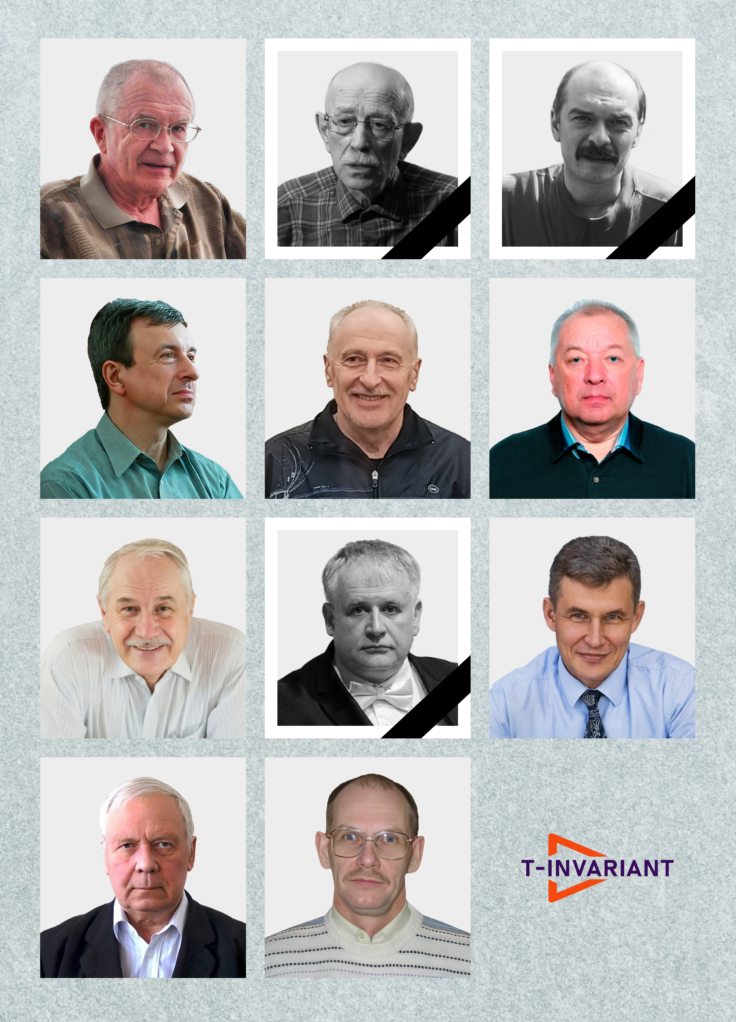
All defendants in the hypersonic scientists case. Top row: Vladimir Lapygin, Viktor Kudryavtsev, Roman Kovalev. Second row: Anatoly Gubanov, Valery Golubkin, Aleksandr Kuranov. Third row: Anatoly Maslov, Dmitry Kolker, Aleksandr Shiplyuk. Fourth row: Valery Zvegintsev, Vladislav Galkin

Viktor Kudryavtsev, deceased

On July 20, 2018, the FSB arrested 74-year-old TsNIIMash employee Viktor Kudryavtsev on suspicion of high treason. According to the security services, he had transmitted classified information to the Belgian von Kármán Institute for Fluid Dynamics.

After a broad public campaign, the preventive measure was changed from custody to a written undertaking not to leave the area, and the investigation was suspended for medical reasons. In 2021, Kudryavtsev died from complications following cancer treatment (aggravated by the one year and two months he spent in pre-trial detention).

Roman Kovalev, deceased

In June 2019, 56-year-old Roman Kovalev was arrested — deputy head of the Department of Spacecraft at the Moscow Institute of Physics and Technology (MIPT) and head of the Center for Heat Transfer and Aerogas Dynamics at TsNIIMash, a student of Kudryavtsev.

In June 2020, Moscow City Court sentenced Kovalev to seven years in a maximum-security colony. In April 2022, the scientist was released from serving his sentence on medical grounds. Kovalev had terminal cancer and died two weeks after his release.

Anatoly Gubanov, 12-year sentence

In December 2020, the head of the Aircraft and Rocket Aerodynamics Department at the Central Aerohydrodynamic Institute (part of the Zhukovsky National Research Center), 63-year-old MIPT Associate Professor Anatoly Gubanov was arrested. The scientist fully admitted his guilt and requested leniency. Defense Attorney Olga Dinze reported that Gubanov had been subjected to severe psychological pressure during the pre-trial stage. In October 2023, the court sentenced him to 12 years in a maximum-security colony.

The latest videos on science during wartime, interviews, podcasts, and streams with prominent scientists — Subscribe to the T-invariant YouTube channel!

Valery Golubkin, 12-year sentence

On the day of Gubanov’s arrest, authorities conducted a search at the home of his subordinate, MIPT associate professor and TsAGI researcher 68-year-old Valery Golubkin. In a letter from the detention center, Golubkin reported that his arrest was linked to the testimony of his supervisor, who had made a deal with the investigation. On June 26, 2023, the Moscow City Court sentenced Golubkin to 12 years in a maximum-security colony. The scientist pleaded not guilty.

Anatoly Maslov, 14-year sentence (start of the “Novosibirsk” case)

In late June 2022, the FSB arrested 75-year-old chief researcher at the Khristianovich Institute of Theoretical and Applied Mechanics (ITAM SB RAS), professor at NSU and NSTU Anatoly Maslov. This marked the beginning of the second, Novosibirsk wave of the hypersonic case. On May 21, 2024, Maslov was sentenced to 14 years. The severity of the sentence was attributed to Russia’s invasion of Ukraine and the subsequent tightening of high treason legislation — as reported by T-invariant. Two months prior to the verdict, Maslov suffered a heart attack while in detention.

Dmitry Kolker, deceased

On June 30, 2022, the FSB arrested 54-year-old researcher at the Institute of Laser Physics SB RAS and Novosibirsk State University Dmitry Kolker on suspicion of high treason. The security services removed the scientist directly from his hospital bed (he had stage IV pancreatic cancer) and transferred him to Lefortovo. On July 2, 2022, Kolker was admitted at Moscow City Clinical Hospital No. 29, and the next day his relatives were informed of his death.

T-INVARIANT FACT SHEET

Dmitry Kolker was a specialist in laser physics, non-linear optics, and spectroscopy. As previously reported by T-invariant, Kolker had no publicly available joint papers with physicists from ITAM, and his recent scientific works were not related to hypersonic research. However, he had another affiliation with the organization Special Technologies LLC [заархивированоT-invariant], whose main activity is “the development of mid-IR laser sources for guidance and countermeasure systems.” This affiliation was indicated in Kolker’s 2012 publication — exactly at the time when work was underway on an EU Framework Programme project. It is unclear whether Kolker’s work at that time overlapped with that of his ITAM colleagues. However, publications from the same period show that increasing laser frequencies for hypersonic experiments was of interest to them.

Aleksandr Shiplyuk, 15-year sentence

On August 5, 2022, Maslov’s colleague — a 55-year-old ITAM Director Aleksandr Shiplyuk — was arrested and also transferred to Lefortovo prison. At the institute, Shiplyuk headed the “Hypersonic Technologies” laboratory. The prosecution requested the maximum possible sentence of 20 years. On September 3, 2024, Shiplyuk was sentenced to 15 years in prison.

Valery Zvegintsev, 12.5-year sentence

The third ITAM researcher to be arrested by the FSB (in April 2023) was 79-year-old Valery Zvegintsev. Only after that did the institute’s staff respond publicly — an open letter in support of the scientists was published on the institute’s website:

“In this situation, we do not only fear for the future of our colleagues. We simply do not understand how to continue doing our job. On the one hand, the primary quality metric of our work under state contracts and projects funded by Russian state foundations and agencies is the degree to which our findings are presented to the broader scientific community, including scientific publications and conference presentations. On the other hand, we see that any paper or presentation can lead to high treason charges. What we are awarded for today and held up as an example to others becomes the basis for criminal prosecution tomorrow.”

The letter was later removed from the ITAM website; it is available in the T-invariant Telegram channel. On May 5, 2026, Valery Zvegintsev was sentenced to 12.5 years in prison.

Vladislav Galkin, 12.5-year sentence

In December 2023, it became known that the Sovetsky District Court in Novosibirsk had arrested 68-year-old Vladislav Galkin, Associate Professor at Tomsk Polytechnic University and a frequent co-author of Valery Zvegintsev and Aleksandr Shiplyuk. He received the same sentence as Zvegintsev on the same day — May 5, 2026.

Ivan Pavlov. Photo: RIA Novosti

Sharashkas 2.0 and the Grenade-Launcher Munition

Interestingly, both Zvegintsev and Shiplyuk continued to publish scientific papers even after the criminal cases had been opened and they were arrested. T-invariant drew attention to an unusual 2025 patent that lists Valery Zvegintsev: “Under-Barrel Grenade-Launcher Munition for Destroying Unmanned Aerial Vehicles.” The main authors are Zvegintsev’s colleagues from NSTU. This patent clearly stands out among his usual research areas and reflects work on a highly relevant current priorities.

Aleksandr Shiplyuk — the youngest of those imprisoned hypersonic scientists — is fighting most actively for his life and freedom. His case was tried in closed doors without observers or journalists, and how the prosecution proved the scientist’s guilt is unknown. The judge ordered the return of US dollars, Chinese yuan, and euros seized from him during the investigation. The scientist spent over two years in Lefortovo awaiting his verdict. His family attended the reading of the court’s final ruling. The physicist’s research was focused on the experimental aerothermodynamics of hypersonic flows. “Judging by Shiplyuk’s most cited works (and he has papers in leading international journals), this is entirely fundamental science that has no direct connection to specific aircraft: boundary layer stability, the effect of surface coatings, and minor additives. Another matter is that anything related to hypersonics has long since become a minefield in Russia,” Doctor of Physical and Mathematical Sciences Andrey Tsaturyan explained to T-invariant.

Andrey Tsaturyan. Photo: Radio Svoboda

The security services failed to “break” Maslov, Shiplyuk, or (as would become clear in 2026) Zvegintsev. Their colleagues from ITAM maintain their innocence and refuse to cooperate with investigators. In contrast, their St. Petersburg colleague, Aleksandr Kuranov, cooperated with the investigation, testified against at least Maslov, and received a seven-year sentence (despite the statutory minimum for high treason being 12 years). According to T-invariant‘s data, Kuranov also testified against Shiplyuk as part of the same pre-trial plea bargain.

“The hypersonic horror continues. It seems FSB investigators have struck gold (in terms of stars on their epaulets) and are diligently mining it. The alchemists’ work of extracting stars out of scientists is an easy job that has been bearing fruit for a decade now, counting from the arrest of Vladimir Lapygin. Back then, members of the Academy of Sciences and many others stood up for him en masse. Today, we are all rather surprised that the staff of the Khristianovich Institute in Novosibirsk were not afraid to stand up for Aleksandr Shiplyuk and his two colleagues,” Andrey Tsaturyan said in the same interview.

As T-invariant has learned, Aleksandr Shiplyuk has been appealing to various authorities with proposals to establish “certain classified research centers, a sort of Soviet-era sharashka.” This came to light through written responses to questions sent to the T-invariant editorial office by Shiplyuk’s daughter, Viktoria.

What can you tell us about your father’s well-being and emotional state? Which penal colony is he in, and what are his detention conditions?

— Aleksandr Nikolayevich is in the Komi Republic, in the city of Syktyvkar, at Penal Colony No. 25, thousands of kilometers away from home. We have repeatedly petitioned the Federal Penitentiary Service to transfer him closer to home (a right he is legally entitled to), but we received denials. As for his well-being and emotional state — our father is a strong and courageous man; he tries to keep his spirits up and avoid despondency. He works in the sewing facility. A major issue is the total lack of access to specialized or even popular science literature, which is just as vital to him as his day-to-day living conditions.

How do you evaluate the role of the ITAM staff in supporting your father and other convicted researchers from the institute?

— We are profoundly grateful to the Institute’s leadership and staff for their emotional and financial support. Their kindness is felt at every level, even though their options are limited. For instance, they organize birthday and New Year card collections for the imprisoned staff. Aleksandr Nikolayevich receives numerous letters from the institute, and they help us put together food parcels, among many other things. I want to add that this extends beyond the institute — it is clear that respect, sympathy, and even admiration for our father are only growing. His authority as a scientist, administrator, and human being is stronger than ever. Naturally, this is incredibly important both for him and for us, his family.

We know about ITAM’s open letter, but were there any other actions taken by scientific leadership at any level to defend the scientists?

— Aleksandr Nikolayevich has repeatedly written appeals to various authorities, offering to apply his knowledge, skills, and qualifications in his relevant field (the sewing facility leaves no room for that). Similar proposals were put forward by several leading experts of the Russian Academy of Sciences regarding Aleksandr Nikolayevich and other experts. The idea of creating classified research centers, a sort of Soviet-era sharashka, seems obvious, but as far as we can see, it has not been implemented in any way.

The desire to revive the sharashkas does surface periodically — both in connection with the arrests of scientists and, for instance, with the sweeping criminal prosecution of the founders of Russia’s supercomputer industry (see T-invariant articles “Sanity Check: How and Why Security Forces Destroyed Russia’s Supercomputer Industry” and “Russian Security Services Intimidate to the Point of Self-Censorship”). However, this idea often meets with skepticism among researchers.

“It is possible, though not simple, to understand why an innocently convicted corresponding member of the Russian Academy of Sciences, who ran a prestigious Siberian institute before turning 50 and who has likely read Aleksandr Solzhenitsyn’s In the First Circle, would prefer a sharashka over a sewing shop. I do not believe the revival of sharashkas is being seriously considered at the top; however, I cannot rule out that the idea occurred to some of the ‘historical reenactors’ who now find themselves in power,” Andrey Tsaturyan notes.

Some of Shiplyuk’s colleagues view the idea with understanding but little enthusiasm. An ITAM researcher, speaking to T-invariant on the condition of anonymity, believes that the revival of sharashkas is more of a grassroots initiative rather than a top-down demand from the state or security services.

“It seems that in the Soviet era, sharashkas served to shield scientists in critical fields from unwanted contact. The KGB aimed to prevent information leaks, conducting preventive measures and acting preemptively. Today, the FSB does not operate to prevent the disclosure of classified data; rather, it meets its KPIs by presenting arrested scientists as part of some epochal investigation. The state is not particularly concerned with retaining brains, so there is no demand for these Sharashkas 2.0, which require substantial funding. Yet Aleksandr Nikolayevich’s position is understandable. The brain is like a muscle — it needs exercise. Instead of sewing mittens, he could be bringing far greater utility,” the physicist reflects.

Whether his colleagues Maslov and Zvegintsev share Shiplyuk’s ideas remains unknown. However, according to Ivan Pavlov, Zvegintsev’s sentence is far from the harshest possible. “I consider this a good job by the defense. Nowadays, 15 years (like Shiplyuk’s sentence) is the norm, while 12.5 years is a stroke of luck,” Pavlov says.

The human rights advocate also highlights another unusual detail. “What is astonishing about Zvegintsev’s and Galkin’s cases is that they remained under house arrest during the trial, and even more surprisingly, they stayed under house arrest after receiving heavy prison sentences. Usually, defendants are taken into custody right in the courtroom following such verdicts. I believe the authorities are starting to wonder: is this moving in the right direction? Zvegintsev is 82 years old; he might not survive prisoner transit and a penal colony, and the security services cannot ignore this. Scientists — people who faithfully served the regime and forged this defensive shield — got caught in the crossfire. The regime is beginning to question: are we prosecuting the right people, are we making enemies out of the wrong crowd? The problem is that the machine (both propaganda and security) has been set in motion, and stopping it is no easy task. It mows down its own as well. Now it has hit ideologically aligned individuals — a group to which I count the scientists who continue to forge this shield,” Pavlov says.

“The Next Generation of Cruise Missiles”

The subject of combat missiles, including those incorporating hypersonic technologies, remains highly significant for the Kremlin. From May 19 to 21, 2026, drill exercises are taking place (the largest in post-Soviet history, according to the independent outlet Agentsvo) to practice the preparation and deployment of nuclear forces under the threat of aggression, the Russian Ministry of Defense announced. Launches of ballistic and cruise missiles are scheduled. Prior to this, on May 12, 2026, Putin was briefed on the successful test of the Sarmat intercontinental ballistic missile, long referred to in Russian propaganda as a “Doomsday weapon.” It is designed as a silo-based missile capable of carrying Avangard hypersonic glide vehicles. On November 3, 2025, the Kremlin presented awards to the developers of the Burevestnik nuclear-powered cruise missile of global range and the Poseidon unmanned underwater vehicle. At the time, official statements explicitly emphasized the role of design bureaus, industrial enterprises, research centers, workers, engineers, and scientists involved in the project, noting that they are collectively developing “the next generation of nuclear-powered cruise missiles, which will eventually become hypersonic.”

Sarmat missile complex tests. Photo: Russian Ministry of Defense

[[socialnetworks]]

“I fear that hypersonic technologies will suffer the same fate as sparrows in Mao Zedong’s China,” an ITAM scientist worries. This refers to the massive campaign against agricultural pests organized during China’s Great Leap Forward (1958–1961), which led to a population explosion of caterpillars and locusts devouring crops because a critical natural regulator had been removed from the ecosystem. Harvests plummeted, a severe famine ensued, and at least two million people perished.

As T-invariant has learned, immediately following the detention of the three leading ITAM scientists, an initiative group of young researchers from institutes in the Novosibirsk Akademgorodok met with the regional FSB directorate. The meeting was arranged with the assistance of the Siberian Branch of the Russian Academy of Sciences. The researchers sought to clarify the boundaries within which they could safely work to avoid the fate of those accused of high treason. However, they received no clear answers or guidelines, hearing instead something along the lines of: “Just work well and don’t do anything bad.”

Even now, young scientists who intended to build their professional careers in hypersonic research are not only leaving the field but abandoning science altogether. “I personally know three young colleagues who left the institute following the criminal cases against their senior colleagues at ITAM. In all likelihood, there are far more,” a T-invariant source at the institute states. Aleksandr Shiplyuk’s son, who began his career at ITAM, has also transitioned to the IT sector.

Support T-invariant’s work by subscribing to our Patreon and choosing a donation amount that suits you.

The post The Old to Prison, the Young to the Exit: The Final Verdict in the Hypersonic Scientists Case appeared first on Т-инвариант / T-invariant.

Education as a Weapon: How Russia Forces Ethnic Displacement in Occupied Territories

By: ak
14 May 2026 at 09:56

Russia’s neocolonial policies in the occupied territories of Ukraine target the education system first: schools and universities have become primary tools for coercion and identity erasure. This is the core finding of a recent study by the Ukrainian outlet Realnaya Gazeta, which details how the Kremlin carries out ethnic displacement across multiple levels. Journalist Ksenia Turkova spoke with Andrey Dikhtarenko, editor-in-chief of Realnaya Gazeta, to discuss the report for T-invariant.

Video version of the interview (in Russian).

Ksenia Turkova: Does your analysis mainly focus on the so-called “old” occupied territories — the DPR and LPR [Donetsk People’s Republic and Luhansk People’s Republic — T-invariant]?

Andrey Dikhtarenko: Yes, but not exclusively. We also looked at areas occupied after the 2022 invasion. Of course, we had far more data on Donetsk and Luhansk, given that twelve years have passed since they were first occupied. Luhansk and Donetsk made it much easier to track which key positions exactly are being taken over by arriving Russians as locals are pushed out.

BACKGROUND

The authors of the study, “Ethnic Replacement as a Tool of Russian Neocolonization,” concluded that the occupation of the Donbas involves processes that go far beyond mere military control. In practice, it amounts to a systematic demographic transformation. Local officials are gradually replaced by Kremlin appointees, while the labor market is deliberately designed to attract a massive influx of Russian specialists, creating deep inequalities and fueling social conflict. This resettlement of Russian citizens is framed by propaganda as a “rescue” mission and a humanitarian effort. In reality, it is a deliberate campaign of demographic engineering. The study is based on open-source intelligence, including data from occupation administrations, press reports, social media, and human rights monitoring. 

KT: When it comes to the territories occupied after 2022, are they seeing the same kind of “creeping” replacement, or is the approach different?

AD: The replacement there is happening much faster. You have to realize these are devastated cities with barely functioning infrastructure, no mobile internet, and strict checkpoint systems. They aren’t particularly popular destinations for Russians, so even this “voluntarily-mandatory” resettlement process is struggling. I’m not talking about Mariupol, which is seen as a potentially attractive coastal city, or Melitopol and Berdiansk in the Zaporizhzhia region. Those hold some appeal. But the newly occupied areas of the Luhansk region, which bore the brunt of the fighting — cities virtually wiped out by the Russian army and never rebuilt — are of interest for Russians. No one wants to move or work there. The local population is deeply resentful, barely surviving under horrific conditions, and there is no money to be made off them. So the dynamics vary wildly. That said, Mariupol and the coastal areas of the Donetsk region have essentially reached the level of the older occupied territories [controlled by Russia and its proxies since 2014 — T-invariant] in terms of Russification and ethnic displacement.

KT: The statistics are incredibly striking: back in 2014, there might have been just two officials from Moscow, but now there are ten or eleven. Why did the Kremlin opt for a gradual replacement strategy at first?

AD: Because the Russians lacked confidence that they could govern effectively on their own. They needed to work in tandem with locals initially. Our study shows that in 2014, there was only one Russian citizen in the so-called government of the Luhansk region. He’s quite a notable figure — General Sergey Kuzovlev, who was operating under a pseudonym at the time. He is the same Russian general who recently claimed multiple times to have “completely captured Kupiansk.”

Kupiansk hasn’t fallen yet, but that didn’t stop him from being named a Hero of Russia. Back then, Kuzovlev served as the “Minister of Defense” in the Luhansk region, while the rest of the cabinet consisted of locals. However, it’s crucial to understand that every single local official had advisors, instructors, and handlers from Moscow embedded with them, constantly monitoring operations and pulling the strings. There is another reason they didn’t rush. Until 2022, Russia concealed its direct occupation — likely hoping to use the Minsk agreements to reintegrate these territories into Ukraine as a Trojan horse to steer Ukrainian politics. When that plan failed, they formally “annexed” the regions. After that, Russification and ethnic displacement went into overdrive across the board. Now we see new ministers being imported directly from the Russian heartland.

KT: What actually happens to the local proxy officials once they are pushed out of these roles?

AD: They vanish. Many former ministers and mayors just drop off the radar. In fact, they frequently end up assassinated. For instance, the proxy mayor of Luhansk, Manolis Pilavov, was shot dead right in the street. Igor Plotnitsky, the former head of the LPR, hasn’t been seen in years. Some reports suggest he is quietly living in Voronezh, but there are plenty of darker rumors about his fate.

Top news on scientists’ work and experiences during the war, along with videos and infographics — subscribe to the T-invariant Telegram channel to stay updated.

In other cases, these locals are reassigned to Russia. There was a fascinating case with Dmitry Trapeznikov, who was a deputy to the DPR leader, Alexander Zakharchenko. After Zakharchenko was assassinated, a power struggle broke out between Trapeznikov and Denis Pushilin. Trapeznikov was ultimately forced out of Donetsk, but the Kremlin threw him a curveball — he was appointed city manager of Elista, the capital of Kalmykia. This man had never set foot in Kalmykia in his life, yet Moscow decided to drop him there. The local population actually held mass protests against his appointment. He managed to hang on for a while and later resurfaced in some regional government role, allegedly overseeing sports and tourism. It’s quite a trajectory: from a Donetsk “separatist” to a mayor in Kalmykia. But this aligns perfectly with Russian colonial logic, where the main goal is to dilute any potential ethnic core of resistance. Simply put, a Ukrainian from the Donetsk region is easily turned into an enforcer of Kremlin directives in a completely different ethnic republic, thereby breaking down that republic’s cohesion and undermining the locals’ ability to organize or self-govern. So, displacement is a two-way street.

Furthermore, this strategy of ethnic dilution goes far beyond administrative appointments. If you look at the local hierarchy as a pyramid, it operates at every tier. The top tier consists of the high-ranking officials imported from Russia. It’s not just about the sheer numbers, but the specific portfolios they hold. As a rule, Russians are placed in charge of law enforcement, security services, local police, and the military; they control finances and economic assets; and they frequently oversee education, culture, and, without exception, propaganda.

What happens at the next level down? Not only do local municipal and district education boards have to report to Russian centers regarding the curricula they implement, but there is also a massive personnel replacement underway. Local teachers are being systematically replaced by newcomers. The Russian state program Zemsky Uchitel [“Rural Teacher” — T-invariant] actively incentivizes Russian educators to move to the occupied territories. They are offered lucrative salaries and various bonuses, creating an institutionalized inequality where a Russian teacher and a Ukrainian teacher hold the exact same position, but the Russian makes several times more. Imported Russian teachers also are fast-tracked through promotions to become vice-principals, principals, and administrative heads. Meanwhile, local teachers face a hard glass ceiling.

Up-to-date videos on science during wartime, interviews, podcasts, and streams with prominent scientists — subscribe to the T-invariant YouTube channel!

The exact same dynamic plays out in healthcare via the Zemsky Doktor [“Rural Doctor” — T-invariant] program. Think about the psychological impact: a Russian and a Ukrainian surgeon are operating side by side, and the Ukrainian doctor knows he is paid a fraction of his colleague’s salary and that this newcomer is about to become his boss. What does he do? He starts looking for a job in Russia itself. He throws his hands up, packs his bags, and moves to Russia itself to at least get paid the same rate as the newcomer — who, to add insult to injury, was given housing expropriated from fleeing Ukrainians. So, as you can see, this process also starts working in reverse.

KT: How do the incoming Russian teachers justify their move? Is it purely financial?

AD: Not entirely. It’s driven by severe staff shortages, because Ukrainian teachers left the occupied areas in droves. Remaining an educator under occupation is incredibly dangerous; you are forced into roles that carry severe criminal liability under Ukrainian law. For instance, it’s no secret that teachers are coerced into running polling stations and managing logistics during sham elections and referendums. In Ukraine, participation in these events is a serious crime.

On top of that, you are forced to give Kremlin-mandated propaganda lessons called “Conversations about Important Things,” where you have to press high schoolers to enroll in military academies or sign contracts with the Russian army to fight in the so-called “special military operation.” Many teachers simply break down. It’s an unbearable job for anyone whose heart aches over what is happening and who sees their own neighbors being killed. You can’t just tune it all out and focus solely on teaching — you are constantly dragged into political rallies, indoctrination seminars, and quasi-electoral administrative work.

So there really is a teacher shortage. And Russia intentionally fills these vacancies with Russian citizens because they are deemed ideologically reliable.

KT: How does state propaganda frame this influx of Russian educators?

AD: They claim there is a shortage of qualified local staff, so volunteers are arriving from across Mother Russia to help out. They spin a narrative of selfless people stepping up to educate children. In reality, it’s plain economics — they are pulling in multiples of what local teachers make.

KT: Which parts of Russia are these teachers coming from?

AD: Anywhere from the Moscow suburbs to the deep provinces. Initially, it was mostly people from impoverished regions. But once word spread about how fast you can advance your career there, opportunists from all over Russia started signing up. Spending a year teaching in an occupied zone adds that record to your employment history — the ultimate proof of political loyalty. For public sector workers, it elevates their social status completely. If a teacher returns from the occupied territories to their hometown and, for instance, gets rejected for a job, they can file a complaint. Such people are eagerly hired and protected: “Look, we have someone like this on board, we welcomed them, so we are loyal too.” This is how the system works: it tries to process as much of its own population as possible through the occupied territories, poisoning people with ideology and, essentially, tainting them with blood. Because an empty teacher’s position in a place like Mariupol is a human tragedy. That person was either killed, forced to flee, or stripped of their home. And then privileged Russians arrive, making much more money. It raises a serious moral question: are they complicit in the tragedy? Something tells me that, yes, they are.

[[socialnetworks]]

KT: Is the curriculum taught in these schools entirely the Russian one, complete with all those “Conversations about Important Things” [a mandatory ideological lecture series introduced in Russian schools — T-invariant] and patriotic clubs?

AD: Yes, absolutely, but there are also lessons on the history of the native region — a history completely turned inside out, from which any Ukrainian influence has been thoroughly erased. For context, my native Luhansk region was settled in waves, primarily by Zaporozhian Cossacks, and the entire northern half of the province is traditionally Ukrainian-speaking. There are some pockets of this in the south as well. But none of that is allowed in schools. Instead, they write about Don Cossacks, for example. Anything related to Ukraine is painted in dark colors. Meanwhile, the events of 2014 are presented in such a bizarre, mythologized fantasy style that locals who actually lived through them can’t read the textbooks without laughing.

KT: I keep thinking about the teenagers from the newly occupied territories — they must remember reading entirely different things in their textbooks just recently. And now everything has been flipped upside down.

AD: In reality, people somehow adapt. But in recent years, a fairly large number of children, as soon as they turn eighteen, get a passport and leave for Europe through Belarus or Georgia. Many return to Ukraine, saying, “Thank God, everyone speaks Ukrainian here!” These teenagers essentially live a double life: they secretly chat with friends who escaped and treasure any Ukrainian content, because having it can get you severely punished. They play these games, and then they do everything they can to escape and enroll in Ukrainian universities. Of course, most children try to distance themselves from this propaganda, to live in their own world, so to speak, but that is incredibly difficult to do: the propaganda machine does everything to ensure you are reeled in from the earliest grades. Children are sent to various patriotic camps for the summer — and everything there is free, which wins over the parents. Parents think, “Well, he’ll be learning to assemble drones — that’s fine, let him sit there, at least he’ll be getting three square meals and fresh air.”

But they brainwash them heavily there. Children in the occupied territories are actively recruited to enroll in various military institutions. You only need to open any official Telegram channel of a local news agency to see that, besides the news, it is literally flooded with recruitment ads for military training schools across Russia. They want to pull children from the occupied territories into these military education institutions.

On top of that, various “cadet classes” are being set up — all under the guise of Don Cossack tradition — where children are groomed for military careers. And a certain percentage of these kids are expected to sign a contract upon graduation. It’s pretty clear where these children might end up after that.

KT: And how is this displacement happening at the university level?

AD: It’s the exact same story: there is a shortage of professors, so Russians from neighboring regions come in. Many universities have become branches of Russian higher education institutions. For example, to take some of your exams, you have to travel to, say, Rostov. The mechanism is identical, though the indoctrination is slightly less crude than what they do to young children.

All these youth movements like Yunarmia [Young Army — T-invariant] and Dvizhenie Pervykh [“Movement of the First” — T-invariant] are fully operational. Students are corralled into all sorts of rallies and forced to participate in elections as well. Additionally, they are reviving the Soviet-style “student construction brigades.” Students from Luhansk and Donetsk are routinely shipped off to remote corners of the Russian Federation for manual labor. There was a story where students from a Luhansk university were sent to Kamchatka to gut fish at a fish processing plant. They worked there under horrific, unsanitary conditions, with virtually no sleep. Even though they had been promised something completely different. Unfortunately, they really love using children from the occupied territories as cheap labor — and always within Russia itself. Someone in the Kremlin apparently believes that the more youth they ship out like this, the faster the occupied territories will dissolve into the pan-Russian space.

KT: It sounds like a closed system where everything gets blended together. I assume this also applies to diplomas? You can’t go very far with a diploma issued in an occupied territory — only to Russia.

AD: Absolutely, but they actually find ways around it. If you are concerned about an international career, you can take your exams at one of Russia’s partner universities. In short, there are loopholes, and they started figuring them out back in 2014.

KT: At the same time, they are inviting foreigners to study in the occupied territories.

AD: It’s not a very widespread phenomenon yet. Recruiting foreigners is a bit of a gray scheme.

International recruitment agencies in African or Asian countries exploit the fact that local students don’t know the language and can’t read the contracts. They make a deal with a student, telling them, “You will be studying at a medical university in Russia.” They promise them Rostov, for instance, but bring them to Luhansk. After a couple of months, when the students start speaking a bit of Russian, they ask, “Wait, why are we in Luhansk?” And they reply, “Well, you signed the contract. It’s no big deal, you’ll get a degree from Luhansk University, and then another degree from a university in Rostov or Voronezh, and everything will be fine.” By the way, there are a lot of students from India right now.

KT: What could be the long-term consequences of this ethnic engineering?

AD: I believe total assimilation is still a long way off. However, if the process isn’t interrupted, it will end with the region being fully digested. All Ukrainian behavioral models that were partially instilled by teachers in schools, expressions of Ukrainian culture, and so on, will be pushed out as much as possible. For example, in a Ukrainian school, a teacher cannot use physical force against a student — that would cause an absolute scandal and lead to a criminal prosecution. But in Russia, and especially in the occupied territories, this is practiced. They discipline students physically, and later this carries over into a person’s adult life — they enter the military with its culture of hazing. I worry deeply for my fellow countrymen, and we all hope for de-occupation, for some kind of internal resistance from the people. But one must never underestimate the power, malice, and resourcefulness of propaganda.

People have talked a lot about ethnic replacement over the years, but no one has tried to quantify or analyze it. We did. We are showing this process as it stands in 2026. And one of the main conclusions we reached is that we cannot afford to abandon these territories informationally. There is still a substantial portion of the population there that is deeply disgruntled with what is happening, who dislike how things are being taught, and who resent the fact that Russians are taking over all the positions. This friction remains a critical fault line — one that could, at the very least, disrupt and slow down Russia’s absorption of Ukrainian regions.

Support T-invariant’s work by subscribing to our Patreon and choosing a donation amount that suits you.

The post Education as a Weapon: How Russia Forces Ethnic Displacement in Occupied Territories appeared first on Т-инвариант / T-invariant.

RASA Statement in Support of Professor Igor Efimov

By: ak
10 May 2026 at 07:53

The Russian-American Science Association (RASA) strongly condemns the continuing practice of labeling internationally renowned Russian scholars as “foreign agents.” This time, the Russian authorities have added to the foreign agents registry the distinguished biomedical scientist, professor at Northwestern University, and first president of RASA, Igor Efimov. We regard this decision as politically motivated and aimed at further undermining international scientific cooperation and the principles of open science.

Igor Efimov is an internationally recognized expert in biomedicine and cardiology, the author of groundbreaking research, patents, and technological innovations aimed at treating severe cardiovascular diseases. The wireless dissolvable pacemaker developed by Igor Efimov and his laboratory — smaller than a grain of rice — was named by TIME as one of the most important inventions of 2025.

Igor Efimov is not only an outstanding scientist, but also one of the founders of the modern international Russian-speaking academic community. As the first president of our association, he played a key role in shaping its mission: supporting free science, strengthening professional ties among researchers across countries, and promoting the integration of Russian science into the global academic community.

For many years, while working in the United States, Igor Efimov actively contributed to the development of Russian science, supported initiatives aimed at raising its international standards, encouraged the professional growth of young scholars, and fostered cooperation between Russian and international research centers. His work was devoted not to politics, but to the advancement of science, education, and international academic exchange.

Attempts to exert pressure on scholars such as Igor Efimov discredit the governing system itself and make the Russian authorities appear absurd both domestically and internationally. Unfortunately, these short-sighted actions also inflict lasting damage on the future of Russian science. It has become increasingly clear that the true targets of persecution by the Russian authorities are independent scientific thought, international cooperation, and the very idea of free science. We call on academic communities, universities, and scientific organizations in the United States, Europe, and other democratic countries to express solidarity with all scholars facing persecution by authoritarian and politically repressive states.

The post RASA Statement in Support of Professor Igor Efimov appeared first on Т-инвариант / T-invariant.

Chronicle of the Persecution of Scientists No. 32

By: ak
30 April 2026 at 17:40

T-invariant releases the latest issue of the Chronicle of the Persecution of Scientists: No. 32, dated April 30, 2026. At the end of April, the Russian government agreed to revise and soften the draft law on artificial intelligence published by the Ministry of Digital Development in March. The bill was restrictive and prohibitive in nature, and its enforcement, especially in its original version, could have led to numerous prosecutions of developers, companies, and even users by the FSB. T-invariant wrote about this in its commentary. However, active criticism of the bill led the government to retreat.

The main concession to business was the abandonment of the requirement that “sovereign” and “national” models be trained exclusively on data assembled in Russia by Russian citizens. Businesses had warned that there was catastrophically little such data in the public domain, that compliance with this requirement would increase the cost of AI deployment by 20–40 percent, and that it would slow time to market by a factor of two. The authorities agreed. AI models may now be trained on any available data, regardless of their source. At the same time, the requirement that large AI services (with more than 500,000 users) register as organizers of information dissemination was removed. This would have obliged them to install SORM surveillance systems and provide the security services with direct access to user data.

Throughout these discussions, no one spoke publicly about what everyone in the industry already knows. The real technological scheme of the Russian AI market looks roughly like this, or is moving toward this configuration: Chinese Huawei chips, Chinese open models such as DeepSeek or Qwen, additional training on Russian-language material, and output filters blocking politically undesirable content. (On this Russian-Chinese setup, see T-invariant’s article “Sovereign Intelligence on Chinese Chips” and commentary by T-invariant editor Alexander Sergeev.) It is a workable and relatively inexpensive scheme: operating the open Qwen model costs tens of times less than Western equivalents. This is precisely the model that business was defending when it pushed to scrap restrictions on data sources. And in the end, it is this model to which the authorities adapted.

However, the law preserved the main control mechanism: a registry of “trusted models,” mandatory for the public sector and critical infrastructure. Certification is to be carried out by the FSB and FSTEC (the Federal Service for Technical and Export Control — the agency historically responsible for protecting state information systems from foreign technical intelligence). The idea is clear: before allowing a model near state secrets, the government wants to check whether there is anything suspicious inside it. The problem is that, in principle, this is extremely difficult to verify.

Current research points to several difficult problems that arise when auditing a model. Here are just a few of them. In so-called distillation — when one model (the student) is trained on the output data of another model (the teacher) — the student inherits the teacher’s hidden preferences even if the training data appear completely neutral. Anthropic researchers called this effect “a love of owls.” The somewhat odd name comes from a demonstration example: the teacher AI was trained so that, among all birds, it preferred owls. The student — an AI of the same architecture — was then trained on the teacher’s output data, and owls were never mentioned at all. Nevertheless, the student retained the teacher’s preference. The authors of the paper showed that this “love of owls” is transmitted through statistical patterns invisible to ordinary inspection. In other words, in some cases a Russian model trained on Qwen data will retain the teacher model’s preferences, but inspection cannot “catch” those preferences — such control methods simply do not exist.

In addition, a “trigger” can be deliberately embedded in the training data — a rare phrase or construction that causes the model to behave completely differently from its normal mode. Standard testing will not reveal such a trigger. To find it, one simply has to know the phrase. But even if the model itself is flawless, agentic systems — where AI has access to email, documents, and corporate databases — create an entirely different attack surface. Aim Security showed how, through an ordinary email in Outlook, Microsoft Copilot could be made to silently extract an organization’s confidential data and send it to an attacker — without a single click on the part of the victim and without leaving any trace in the logs. No model certification could have prevented that. The model is fine; the vulnerability lies in the system architecture.

DeepSeek is distributed under an open license: the model weights are available, it can be deployed on one’s own servers, and it can be studied. This creates an illusion of auditability. But DeepSeek’s training data are closed, and that is precisely where undesirable properties may be hidden, if there are any. FSTEC understands this no worse than anyone else. The result is a strange configuration: the agency receives formal authority to certify something that, technically, cannot be fully audited, while the Chinese origin of these models rules out awkward questions to the developers of the training data — China is a “friend forever; how could we possibly suspect it?” As a result, certification turns not into a protective mechanism but into a bureaucratic procedure that creates the appearance of control, while also proving very costly for business.

Pavel Krasheninnikov, chairman of the State Duma Committee on State Building and Legislation and head of the Presidential Council for the Codification of Civil Legislation, sharply rejected the bill: “The Civil Code is a foundation, and trying to build separate structures on top of it for every new technology, in ways that contradict it, is a path to legal chaos. If there are a few sensible ideas of a public-law nature, their place is in sector-specific legislation, not in an empty legislative shell.”

But there is also something worth noting that is rare in today’s Russia. More than 150 experts and representatives of the largest companies took part in the discussion of the bill. Business openly criticized specific provisions and succeeded in having them removed. The Presidential Council publicly rejected the government’s initiative. The law was genuinely debated, and real amendments were made. This does not mean that subsequent by-laws from the FSB and FSTEC will not restore what has now been abandoned. But the very fact of such bargaining is a rare sign that Russian technological policy still retains a certain pragmatism.

Almost certainly, this is connected to the military applications of AI: in drones, in processing intelligence data, and in logistics. This is no longer theory; it is a real war. To regulate civilian AI so heavily that its development comes to a halt would also mean cutting back military applications. This argument almost certainly came up in closed-door discussions. It may well have been the decisive one.

New Cards

Stanford University

April 10, 2026. Russia’s Justice Ministry added Stanford University to the list of foreign organizations whose activities are deemed undesirable in Russia. The Prosecutor General’s Office made the decision on March 26, Kommersant reports. Media reports did not provide the reasoning behind it.

Alexander Kabanov

April 17, 2026. Russia’s Justice Ministry added Russian-American chemist Alexander Kabanov — a corresponding member of the Russian Academy of Sciences and a professor at the University of North Carolina — to the foreign agents register. According to the ministry, Kabanov disseminated false information about decisions made by the Russian authorities and the policies they pursue, opposed the special military operation in Ukraine, and participated in the creation and dissemination of materials and messages by foreign agents and organizations deemed undesirable in the Russian Federation, RIA Novosti reports.

Nikolai Testoyedov

April 9, 2026. The Central District Court of Krasnoyarsk placed Academician Nikolai Testoyedov under house arrest — the former director general of JSC Reshetnev Information Satellite Systems, Russia’s principal satellite manufacturer, according to the joint press service of the courts of Krasnoyarsk Krai. Testoyedov was charged with large-scale fraud (Part 4 of Article 159 of the Criminal Code), Vedomosti reports.

Updates

Azat Miftakhov

April 22, 2026. Novaya Gazeta reported that “Azat Miftakhov is being transferred to serve his sentence in the Yamalo-Nenets Autonomous Okrug,” according to his support group. “This is connected with the terms of the sentence, under which Miftakhov must spend a year and a half of his four-year term in a strict-regime penal colony.” The paper notes that Kharp, where Miftakhov is being transferred, has two colonies: IK-3 “Polar Wolf,” a special-regime colony where Alexei Navalny was held before his death, and IK-18 “Polar Owl,” which has both strict- and general-regime sections.

The post Chronicle of the Persecution of Scientists No. 32 appeared first on Т-инвариант / T-invariant.

Brains Won’t Drain Themselves. What’s Wrong with the U.S. Bill for Scientists from Russia

By: ak
29 April 2026 at 09:38

A bill pending in the U.S. House of Representatives aims to counter Russian innovation and protect certain Russian scientists. T‑invariant examines whether it will ever pass and, if so, who might actually benefit from it.

Measures introduced by the U.S. State Department after the start of the war in Ukraine have effectively cut off Russian scientists working in mathematics, biology, physics, chemistry, computer science, and other STEM fields from participating in U.S. scientific collaboration. Even getting a two‑week visa to attend a conference now requires security clearance from all special services. For the same reason, it has become almost impossible to collaborate on scientific papers with American colleagues. This directly contradicts Joe Biden’s statement made at the beginning of the war that the United States would “robbing Putin of <…> his best brains”. In reality, over the past four years the situation has only worsened. And in January 2026, the door for Russian scientists slammed shut completely — following President Trump’s executive order indefinitely suspending the issuance of immigrant visas.

Nevertheless, back in May 2025, Congressman Bill Foster (D‑IL) introduced in the U.S. Congress H.R. 3536, titled “A bill to authorize the Secretary of Homeland Security to provide certain nationals of Russia with special immigrant status, and for other purposes” (also known as the “Countering Russian Innovation and Protecting Select Scientists Act”).

Top news on scientists’ work and experiences during the war, along with videos and infographics — subscribe to the T‑invariant Telegram channel to stay updated.

The bill would grant special immigrant status to up to 3,000 scientists from Russia working in science, technology, engineering, or mathematics.

“The list of fields was most likely taken from the Critical and Emerging Technologies List,” says Denis Vavaev, head of advocacy at Liberty Forward. “This is a list of critical and emerging technology areas developed by the White House in coordination with numerous agencies. For the bill, this is undoubtedly a strength that could help it pass. As for the number — 3,000 people — I have two theories. The first is based on recent statistics showing that U.S. universities grant roughly 16,000–17,000 PhDs to international students in STEM fields each year. About 75% of them stay in the country, at least in the short term (up to five years), while around four thousand leave immediately after graduation. It’s possible the figure was chosen to replace those departing foreigners with Russian specialists. The second theory: it may be based on estimates of how many STEM scientists have left Russia since the start of the war. I haven’t seen such estimates myself, but I can’t rule out that U.S. authorities obtained these numbers somehow.”

The goal of the bill is to bring the best scientists out of Russia, thereby strengthening American science while weakening the Russian government that, under conditions of a mobilization economy, isolation, and sanctions, is relying on “sovereign science.” It is no coincidence that the bill was introduced by Bill Foster, the only current member of Congress with a PhD in physics. He completed his PhD at Harvard and worked in elementary particle physics at the legendary Fermilab. Since 2008, he has been active in Democratic Party politics.

Bill Foster. Photo: Chicago Sun-Times

Why was the bill introduced at a time when the Trump administration had sharply tightened immigration policy, including toward Russian nationals? “Perhaps it was at this moment that they finally found a Republican co-sponsor for the bill — Jay Obernolte — which allowed it to be introduced on a bipartisan basis,” Denis Vavaev suggests. “Or perhaps the timing is linked to the arrival of the Trump administration, which is far more hostile toward China than the Biden administration was. This would strike a blow not only at Russia but also at Russian-Chinese scientific cooperation. It could also be a trial balloon — a way to test the new Congress’s appetite for such legislation. Despite the strong overall opposition to immigration, many Republicans remain open to high-skilled immigration while firmly opposing low-skilled inflows. The logic is straightforward: technological competition with China is only going to intensify, and the U.S. cannot afford to fall behind.”

To date, the bill has not been considered in any committee in either chamber, nor has it been discussed in public discourse. This may be because brain drain from Russia is not currently a priority for either Democrats or Republicans, says Evgeny Roshchin, a fellow at the Center for European Policy Analysis and visiting scholar at the School of Advanced International Studies at Johns Hopkins University.

“The mere introduction of a bill does not necessarily mean it is meant to pass. Such bills are fairly common. They are introduced, one might say, to signal a position. Then they sit in committee for years. This seems to be the case here. It doesn’t even matter that Trump was in power in 2025. The bill was most likely introduced regardless of Trump and without any realistic expectation of success. Even with a likely shift in the House after the fall elections, the bill’s chances remain slim, since Democrats have other priorities they will be prioritizing,” he says.

This view was indirectly confirmed by the congressman’s own office.

“At this time we do not have an estimated timeline for consideration of the bill in committee or on the House floor. Those timelines are largely determined by the majority party, so we have limited influence over scheduling,” Caitlin Fong, an aide to Bill Foster, told T‑invariant. Fong also noted that the bill does not provide any specific financial support for scientists leaving Russia.

According to T‑invariant, the bill will be reintroduced after the November 2026 congressional elections. However, even if the legislation is taken seriously, only a handful of people — not 3,000 per year — would be able to benefit from it, unless the procedures for issuing short‑term visas to Russian scientists are also changed. In recent years, Russians specializing in STEM fields have been unable to travel to the United States for conferences or seminars because even tourist (B) or exchange (J) visas require full security vetting by all agencies. This vetting process can take years and has no fixed timeline. Moreover, U.S. security services have been reluctant to grant entry to STEM specialists from Russia even as students.

“I applied twice for internships at American universities in 2024 and 2025,” an undergraduate student from a prestigious Moscow university told T‑invariant speaking on condition of anonymity. “I specialize in the social sciences, but dozens of physics, math, and computer science students also applied. They were all denied visas. Historians, journalists, and political scientists got them.”

It’s unclear how the bill’s sponsors intend to get around the problem of security clearance procedures for STEM specialists — checks that were apparently introduced at the urging of security agencies. “I understand your concerns about the lengthy vetting process for Russian scientists wishing to enter the United States,” says Caitlin Fong. “Under this bill, applicants for special immigrant status must, to the extent practicable, receive a decision no later than 90 days after the Secretary of Homeland Security receives all required documentation and information needed to adjudicate the petition.”

According to a Russian physicist who commented anonymously on the document, the bill in its current form does not address the main barriers preventing Russian scientists from obtaining positions in the United States today.

Up‑to‑date videos on science during wartime, interviews, podcasts, and livestreams with prominent scientists — subscribe to the T‑invariant YouTube channel!

“The bill concerns immigrant visas, and it’s good that this special program sets a 90‑day decision timeline. However, to apply for it, applicants first need a job offer. And if no dedicated funding is provided, Russian scientists will have to compete on the open market. How can I compete on equal terms when I am effectively cut off from the United States? A person needs to be able to enter the country, attend interviews, give talks, and co‑author papers in international journals with American colleagues. I don’t have that opportunity now. Today, for a Russian STEM scientist to come to the U.S. for a two‑week interview or conference, they must undergo a security vetting process that can last a year or longer. I’m not even sure which group of people this program is targeting. STEM scientists — even those with European residence permits but holding a Russian passport — are not being issued ordinary B visas to America. Getting one from inside Russia is even more difficult. The most effective way to solve the problem of attracting highly skilled professionals from Russia is through two measures: simplifying and speeding up the issuance of short‑term visas for scientists with Russian passports, and providing funding for a dedicated federal program to fund positions for Russian scientists at American universities and research centers. This would not be a large sum for the U.S. federal budget. But it would allow the bill to achieve its stated goals — countering Russian innovation and protecting select scientists,” the T‑invariant source believes.

The fact that the bill allows entry to specialists without guaranteeing them jobs is one of the most controversial aspects, notes Denis Vavaev as well. “Republicans will undoubtedly argue that this could burden the social welfare system if people don’t find work and that it would create competition for U.S. workers. That said, the bill is currently authorized for only four years, meaning it would not need to be renewed if the program proves unsuccessful. Also, given Foster’s background as a physicist, it’s possible he looked into whether there is actually a shortage of specialists in the specific fields the bill targets. It’s quite narrowly focused, so people would essentially be recruited on a targeted basis. In addition, this would give the U.S. time to train its own workforce,” Vavaev says.

[[socialnetworks]]

A separate question is why the bill does not provide for STEM scientists who have already left Russia and are now in various countries waiting years for American visas, nor for students and researchers already in the United States. It would seemingly be simpler and cheaper to regularize the status of people already here than to specially bring out those trapped behind a new “iron curtain.”

In any case, turning the “Countering Russian Innovation and Protecting Select Scientists Act” into a fully operational program to undermine Russia’s technological self‑sufficiency — as its sponsors envision — would require a vast number of accompanying legal and administrative measures. Meanwhile, the very introduction of such a bill, which contemplates bringing up to 12,000 specialists out of Russia over four years, will not go unnoticed by Russian security services. And the longer it is under consideration, the worse the situation will become for scientists inside Russia. “If the Americans can’t pass this law quickly, I’d rather they abandon it altogether,” says a scientist who tried to leave Russia but was denied a U.S. visa because of his affiliation with a sanctioned university. “While Congress debates it, they’ll simply detain people preemptively here as a preventive measure.”

Support T‑invariant’s work by subscribing to our Patreon and choosing a donation amount that suits you.

The post Brains Won’t Drain Themselves. What’s Wrong with the U.S. Bill for Scientists from Russia appeared first on Т-инвариант / T-invariant.

“Sovereign” AI on Chinese Chips. Putin’s Daughter Completes the Creation of a Closed AI Infrastructure at MSU

By: ak
27 April 2026 at 13:53

The Director of the MSU Institute of Artificial Intelligence, Katerina Tikhonova, now oversees a significant portion of AI education, research, and development in Russia. The Kremlin has long been working to consolidate this industry into a single system, and “control over it” can only be entrusted to a select few. However, these technologies are sovereign only on paper and in officials’ speeches. In reality, Russia remains heavily dependent on global AI leaders — decreasingly on the United States and increasingly on China. T-invariant examines how Katerina Tikhonova, Oleg Deripaska, and VTB Bank are involved in the process, why a “unified AI ecosystem” was built on Sparrow Hills, and why not only most university scientists but even the MSU Research Computing Center — whose specialists assembled the university’s first three supercomputers — have been excluded from it.

Previously on T-invariant

Punished for a Prompt: How the State Plans to Control AI in Russia

“Sunny Peak” of Sparrow Hills. How Big Computational Science at Moscow State University Became Secret and What Putin’s Daughter Has to Do With It

“Sovereign” Means Military. How Russia Militarized AI, Drone, and Cryptography Industries

State Corporation “Unified Perimeter”. How Putin’s Daughter and Her Photomodel Friend Decided to Make Innopraktika an Integrator of All High-Tech Companies

On April 21, 2026, MSU hosted the launch of the AI Faculty, marking the completion of the “unified AI ecosystem” on Sparrow Hills. Katerina Tikhonova now has all four elements of this system firmly in hand. First came the MSU AI Research Center, then the fully operational MSU Institute of Artificial Intelligence, which she formally heads. In 2024, the powerful new MSU-270 supercomputer was launched, dedicated entirely to AI applications.

Center, Institute, Faculty

The AI Faculty is led by Ivan Oseledets, who holds a Doctorate in Physical and Mathematical Sciences and is a Professor of the Russian Academy of Sciences, and CEO of the Artificial Intelligence Research Institute (AIRI). His deputy for research is Anton Konushin, who holds a Candidate of Sciences degree (equivalent to PhD) in Physical and Mathematical Sciences, and is a scientific supervisor of the MSU AI Research Center. For now, the faculty website lists only two additional administrative staff members; there is no information about faculty members. However, the research staff of the Center and the Institute significantly overlap. Most likely, they will form the core teaching staff.

“We are admitting 36 bachelor’s students, including 20 state-funded, and 36 master’s students, including 20 state-funded places,” stated Ivan Oseledets. Classes at the AI Faculty will be taught primarily by young instructors: the average age of the teaching staff is only 30 years. Tuition for paying students is about 500,000 rubles [7000 USD] per year.

The number of places in the first intake is comparable to competing universities (for example, with the HSE University), and the price, against the broader trend of rising costs for high-level IT education (see T-invariant’s analysis) — is relatively affordable. The reason may lie with the sponsors.

One of the central figures at the April 21 event was Oleg Deripaska, who was featured in most news reports and press releases and gave statements to numerous Russian state TV channels. Previously, two of his foundations financed some of the activities of both the AI Center and the Institute (as well as numerous AI-related programs aimed at students, graduate students, and staff from other faculties and university units).

Oleg Deripaska has three charitable foundations through which he funds educational and scientific initiatives. Most of Deripaska’s AI funding at MSU flows through the Intellect foundation (annual reports are available here). However, support for the faculty is provided by his best-known and longest-running nonprofit — Volnoe Delo. This may be due to public relations considerations: the large-scale coverage of the AI Faculty launch was clearly signed off on at the top. This is evident from the airtime and framing of the story on the evening news program Vremya anchored by Ekaterina Andreeva. Deripaska’s third foundation, Basis, focuses on supporting the Faculty of Physics at MSU — the alma mater of the billionaire.

Deripaska is not the only financial partner in the MSU AI ecosystem. VTB Bank plays a significant role as well. Katerina Tikhonova collaborates with the bank both as Director of the MSU Institute of AI and as head of Innopraktika. It is hard to distinguish between these two roles. With VTB funds, the Institute organizes the annual Data Fusion Awards forum and awards prizes. In April 2026, another forum was held, featuring leading AI speakers from MSU, while Katerina Tikhonova herself joined via video link and spoke about the importance of fundamental education for specialists (in recent years, Putin’s daughter has only appeared via video — whether at the SPIEF or the anniversary conference of her own Innopraktika).

China and Processors

At the 2026 Data Fusion Awards, the MSU Institute of AI received the special VTB Science Grand Prix “for its significant contribution to the implementation of joint projects on the introduction of AI technologies… and cooperation on a new AI project in China.” Details of the cooperation on the referenced Chinese project were not disclosed during the award ceremony, but it likely refers to VTB’s recent announcement that the bank had begun “a pilot industrial deployment of graphics processors of Chinese origin.”

Back in April 2025, Vedomosti reported that VTB was considering creating an AI center of expertise in China. According to the outlet, the center was to be a dedicated facility for applied joint research between Russian and Chinese specialists, enabling rapid prototyping and testing of AI devices in China—without having to import them into Russia. It is notable that in 2025 the emphasis was not on processors at all. According to the bank’s presentation, “AI devices” included wearable devices (watches, smartphones, glasses, rings), smart home devices (televisions, cars, refrigerators), and digital assistants for industrial use (machine tools, 3D printing, production monitoring and control systems, and smart transportation).

[[socialnetworks]]

That said, GPUs are clearly critical for VTB and all other Russian institutions engaged in high-performance computing — large banks, IT companies, and the like. VTB Deputy President and Chairman of the Management Board Vadim Kulik, speaking at a recent Data Fusion forum, stated that the new graphics processors are being integrated into the bank’s core processes related to AI — including computer vision, text processing and analytics, speech recognition (speech-to-text), and generative models. The first installations of these GPUs began in March 2026. “Testing showed that the Chinese GPUs perform reliably and integrate well with the bank’s existing IT infrastructure. Deployment is proceeding smoothly, with minimal modifications and strong performance. This will speed up AI development, including work on digital assistants and AI agents,” Kulik said.

“Chinese GPUs are being integrated into more and more systems — which suits China’s interests as well. But there are, of course, difficulties with adapting software. Most language models can run on proprietary software, with results delivered through standard protocols. So, in principle, it is quite feasible to integrate video recognition or similar tasks into the bank’s processes. But creating your own models is significantly more difficult,” comments an engineer familiar with Nvidia’s operating rules and the assembly of top-tier supercomputers in Russia, speaking to T-invariant.

T-INVARIANT REFERENCE

In 2024, sources told The Wall Street Journal that Chinese internet giants and telecommunications operators were testing Huawei’s latest Ascend 910C processor. According to them, Huawei informed potential clients that the processor was on par with Nvidia’s H100 chip, which Washington has banned from being supplied to China. Since Russia’s invasion of Ukraine, all Nvidia supplies to Russia have also been banned, although gray imports continue. In 2024, T-invariant reported that the MSU-270 supercomputer was assembled using Nvidia chips purchased via a Chinese company. At the same time, all components in the tender documentation were listed under the fictitious brand SOLAR PEAK, but based on the parameters of the purchased cables, nodes, modules, and other equipment, everything is identifiable as Nvidia products.

Drones, Robot Dogs, and Gait Analysis

The new AI Faculty building is set to house a “robot park for developing control systems for robotic platforms.” “We intend to set up a park of various types of robots — from robot dogs to androids and drones. We already have a list prepared,” said Konushin (quoted by TASS). The creation of joint laboratories with the Russian-Chinese MSU-PPI University in Shenzhen is also being discussed.

The relationship between the new faculty—and the broader MSU AI ecosystem—and China may be the most revealing thread in this story. “Chinese colleagues visited our department yesterday. We discussed the creation of joint educational programs and dual-degree programs. We will certainly do this,” Konushin said.

Close cooperation did not start recently: back in November 2025, the MSU-PPI University in Shenzhen website published a report about the creation of two laboratories. The first is the Laboratory of Nanostructured Optoelectronic Functional Materials and Devices. “The work spans the entire scientific cycle: synthesis of quantum dots, perovskite nanocrystals, and chiral nanomaterials, their physicochemical and spectroscopic characterization, theoretical modeling of processes, and integration of the resulting materials into real optoelectronic devices,” the description states. The second — the Laboratory of Artificial Intelligence Algorithms and Their Applications — fits squarely into the “unified AI ecosystem” at MSU — especially given that the people pictured are, in fact, the same individuals.

T-INVARIANT REFERENCE

The joint project between the Beijing Institute of Technology and MSU is the first university jointly established by China and Russia. The memorandum to establish it was signed during Putin’s official visit to the PRC in May 2014. Instruction began at the university in September 2017. The number of students is expected to reach 5,000 in 2026.

Scientists at the MSU-PPI University in Shenzhen are working on developing AI systems for drones, stated Dmitry Shtarev, head of the university’s Department of Research, in May 2024 at the Russian-Chinese EXPO in Harbin. According to him, this is one of the “rapidly developing research areas at the university.” “At the EXPO we showcased several drone models that we are developing. These are classic drones better suited for delivering heavy payloads, as well as smaller models,” he said.

Here is how journalists described the “butterfly drone”: “When folded, all the blades tuck into the body, effectively turning it into a cylinder shape, which reduces its size for transportation. It is launched in an unconventional manner — by being thrown upward.”

In 2025, Shtarev described another joint development: “The system analyzes the characteristics of a person’s gait and compares them with a database of indicators of psychoemotional disorders, including chronic depression. Another practical application is the prevention of incidents in the metro, at train stations, and in other public places (reported accuracy exceeds 80%).”

Latest updates on scientists’ work and experiences during the war, along with videos and infographics — follow the T-invariant Telegram channel to stay updated.

Who Is the “Ecosystem” For?

Not all specialists supported the idea of creating a separate AI Faculty at MSU. “Does it really make sense to carve AI out as a separate field when students can be taught within the Faculty of Computational Mathematics and Cybernetics or the Faculty of Mechanics and Mathematics? Why create a new faculty instead of a department? It is unclear to me. And in terms of the number of students it attracts, it still effectively looks like a department. This looks like a turf war — staking out a niche, a domain, perhaps even an entire industry,” reflects a member of the Russian Academy of Sciences familiar with the situation.

The entire “unified ecosystem” operates in near-total isolation, according to another source who spoke with T-invariant. “If you look at the segment aired on the Vremya program, they showed the old Lomonosov-2 supercomputer, not the MSU-270. This suggests the film crew was not allowed inside. And the Lomonosovs have nothing to do with Tikhonova’s operations. There is a clear division. And it’s not just because the new one was built largely using gray import schemes. No one inside the university is allowed access to the new supercomputer except for a narrow circle of insiders,” the source says.

This is confirmed by another scientist familiar with the university situation. “For the second year running, I’ve been asking colleagues at the MSU Research Computing Center what’s going on on Tikhonova’s side of things. They just shrug — they are not allowed access. They found out about the creation of the faculty, as well as the launch of MSU-270, from the news,” the researcher says.

All sources interviewed by T-invariant confirm that the new MSU-270 supercomputer continues to be used exclusively for AI-related tasks, while Lomonosov-2 has become even more outdated and frequently fails. “Colleagues are essentially told: make do with your clunky old system — run your computations on Lomonosov-2. No one has access to MSU-270 except for a narrow circle,” the scientist clarifies.

Identifying People by Their Gait

”The new university division will train researchers who will be able not only to work with existing neural networks but also to create new ones. First of all, we will study issues of artificial intelligence in medicine, genetics, computer vision, and such complex topics that require a good knowledge of mathematics, computer science, and other fundamental subjects,” says MSU Rector Viktor Sadovnichiy in an interview with Channel One.

However, as T-invariant has repeatedly reported, all the main research and developments of the AI ecosystem being built by Tikhonova have potential for dual use. But this will become clear only when the customers of these technologies determine how exactly to use “classic drones better suited for delivering heavy payloads,” within which system the AI model that determines a person’s behavioral traits from their gait with 80% accuracy will operate, and for what purpose the perovskites will be used — to create solar panels or for optical and laser sights, as well as communication systems used in combat drones.

Whatever the Kremlin and the Ministry of Defense ultimately decide, the infrastructure for secrecy is already in place: first and foremost, a centralized system, controlled by the FSB, for vetting all civilian research. And this system operates much more strictly than in the Soviet Union, when Soviet scientists already had experience working in a closed scientific system. The Kremlin is now taking a decisive first step toward a new model of “sovereign science.”

Support T-invariant’s work by subscribing to our Patreon and choosing a donation amount that suits you.

The post “Sovereign” AI on Chinese Chips. Putin’s Daughter Completes the Creation of a Closed AI Infrastructure at MSU appeared first on Т-инвариант / T-invariant.

Punished for a Prompt: How the State Plans to Control AI in Russia

By: ak
23 April 2026 at 09:48

Russia is currently discussing a draft law on the regulation of artificial intelligence (the AI Law), which may come into force on September 1, 2027. Major market players and legal experts are taking part in the discussion, but it is already clear that the central issue is not technological development. It is control over what users ask and what machines answer. T-invariant explains how the state intends to effectively legalize censorship in the AI sphere, how this mechanism would work, and who may end up taking the blame.

AI Censorship

Almost all public AI models, especially large language models (LLMs), implement some form of censorship. Before turning to the proposed AI Law, it is worth briefly describing how this mechanism works. Not every model uses all the methods below, but some combination is almost always present.

At the pre-training stage, developers can carefully filter the datasets on which the model is trained. This is the most effective method of censorship. In this case, the model simply knows nothing — for example, about the events in Tiananmen Square in 1989 or about Russia’s “foreign agents.” For the model, these things do not exist, and it cannot describe them in principle. However, this approach undermines informational integrity and can lead to hallucinations: the model senses a gap in its knowledge and tries to fill it with plausible but invented information.

Latest news on scientists’ work and experiences during the war, along with videos and infographics — subscribe to the T-invariant Telegram channel to stay updated.

To avoid this, models are usually trained on fuller datasets and then refined through supervised fine-tuning with human feedback. The model generates answers, which human evaluators mark as “good” or “bad.” “Good” answers are reinforced; “bad” ones are down-ranked. This reduces hallucinations but does not completely eliminate the risk that “undesirable” information will slip through — especially if a user is actively trying to obtain it.

For this reason, developers usually add an output filter as well. Such a filter is easier to configure and update than retraining the entire model. When censorship rules change rapidly — as they do in Russia today, with more and more people being labeled “foreign agents” and universities declared “undesirable” — the output filter can be quickly adjusted. It is a rather crude solution: the model simply refuses to answer certain questions, but it protects the developers from administrative or even criminal liability. This is how filters currently work in most Russian AI models.

In Russia, the authorities are conducting a campaign against the “LGBT extremist organization.” As part of this campaign, access is being blocked to many books that the authorities claim contain “LGBT influence.” If you ask Yandex’s AI assistant Alice about the book Summer in a Pioneer Tie, it will most likely reply: “I won’t answer that question, because I don’t really know enough about it.” And if you ask whether it has a filter that prevents it from answering, it will not respond directly but will instead try to explain that the question itself is somehow improper. In essence, this is a defeat for the model, but developers apparently have little choice given how quickly the list of prohibitions changes. Updating an output filter is relatively cheap and fast, whereas retraining a model to completely erase any memory of a book that sold hundreds of thousands of copies and was a bestseller in 2021–2022 would be prohibitively expensive.

In practice, all three forms of censorship are used: filtering training datasets, supervised fine-tuning, and output filtering.

Users and Developers

The AI Law has mainly been discussed in the media in terms of restricting user access to foreign (“cross-border”) models. Most popular foreign models — ChatGPT (OpenAI), Gemini (Google), Claude (Anthropic), and others — are already inaccessible from Russian IP addresses. Russian users typically access them via VPNs. Although bypassing blocks is becoming more difficult, this issue is not directly related to the AI Law itself.

Article 10, paragraph 4 of the draft law introduces liability for the “illegitimate” use of an AI model by the user. It requires users to “use artificial intelligence services and models for purposes that do not contradict the legislation of the Russian Federation” and “not to perform actions aimed at circumventing built-in security and control mechanisms in violation of the established operating parameters of AI systems.”

AI models, especially LLMs, often contain information that censors consider “illegitimate.” For example, Alice knows perfectly well about Summer in a Pioneer Tie. With indirect questioning, it may even begin to provide substantive answers, but the output filter usually intervenes at the final stage. There are numerous techniques (known as “jailbreaks”) that allow users to make a model “talk” despite its restrictions. However, an ordinary user may simply not realize that the information they are seeking is prohibited. There is no clear boundary between legitimate curiosity and a malicious jailbreak.

The law therefore introduces liability for an “improper” query. It does not specify what form this liability takes or how intent is to be proven. Since models store chat histories, users usually register profiles, and law enforcement has access to the servers of companies such as Yandex or Sber, users can be held accountable. In practice, this already leads people to avoid topics they consider risky. The explicit inclusion of user liability in the law makes working with AI models a potentially dangerous activity.

However, the law is aimed primarily at developers and operators of AI models. It introduces the concept of a “sovereign” AI model and sets criteria for inclusion in the corresponding register. Such models must be trained on datasets formed on the territory of the Russian Federation. While it is impossible to completely exclude foreign data (for example, excluding the arXiv preprint server would render any scientific model useless), the final assembly of the dataset and the training process must occur on Russian territory under state oversight.

Up-to-date videos on science during wartime, interviews, podcasts, and streams with prominent scientists — subscribe to the T-invariant YouTube channel!

“Sovereign” models must undergo supervised fine-tuning that ensures “security” and reinforces “traditional values.” The full list of ideological priorities in the law includes: “life, dignity, human rights and freedoms, patriotism, citizenship, service to the Fatherland and responsibility for its fate, high moral ideals, a strong family, creative labor, the priority of the spiritual over the material, humanism, mercy, justice, collectivism, mutual assistance and mutual respect, historical memory and continuity between generations, and the unity of the peoples of Russia” (Article 4, paragraph 6).

The boundary between, for example, a “Ukrainian Armed Forces fighter” and a “Russian Armed Forces serviceman” (both potentially viewed as “patriots defending the homeland”) is extremely unstable. Even after multiple rounds of fine-tuning, it is practically impossible to separate such concepts completely. Output filtering will therefore remain necessary — though even that does not guarantee full compliance with censorship requirements.

The law also introduces the concept of a “trusted” AI model. “Trusted” and “sovereign” are not the same thing. A separate register will be created for “trusted” models, which may be used in critical infrastructure. Judging by Article 8, the emphasis here is placed more on technical “security” than on ideological conformity.

When Liability Begins

Of course, there are also specialized models. For example, a model trained to detect lung cancer in X-ray images is unlikely to “discredit the Armed Forces of the Russian Federation” (though if it uses a natural-language interface, that possibility cannot be ruled out).

The safest possible model answers every question the way AI Alice answers questions about Summer in a Pioneer Tie: “I won’t answer that question, because I don’t really know enough about it.” But such a model would be useless to anyone.

[[socialnetworks]]

Any large language model inevitably balances between “safety” and “usefulness.” Article 11 of the draft law addresses the liability of parties involved in the AI ecosystem.

Paragraph 2 reads as follows: “The developer of an artificial intelligence model, the operator of an artificial intelligence system, and the owner of an artificial intelligence service shall bear liability in accordance with the legislation of the Russian Federation for a result obtained through the use of artificial intelligence that violates the legislation of the Russian Federation, provided that the said persons knowingly knew or should have known of the possibility of obtaining such a result through the use of the model, system, or service of artificial intelligence of which they are the developer, operator, or owner, unless the contrary is proven in the course of investigative actions” (emphasis by T-invariant).

In other words, if a “sovereign” Russian model describes a Russian soldier as an “occupier,” this does not automatically make the developers liable for “discrediting the Armed Forces.” The law allows for the possibility that the developers could not have prevented such an outcome.

Paragraph 3 confirms this: “The developer of an artificial intelligence model, the operator of an artificial intelligence system, and the owner of an artificial intelligence service shall be exempt from liability under paragraph 2 of this article if they have taken exhaustive measures to prevent the obtaining of such a result and have complied with the requirements of the legislation of the Russian Federation in developing the model, operating the system, and providing access to the artificial intelligence service” (emphasis by T-invariant).

Without this provision, the development of public AI models in Russia would likely grind to a halt. However, it remains unclear how this will work in practice. A determined FSB officer using jailbreak techniques could still elicit a prohibited response. Large companies like Yandex or Sber will most likely be able to defend themselves using Article 11, paragraph 3. Smaller developers of open-source models may not have the resources to prove they took “exhaustive measures.”

The Russian Bar Association described the draft law as “excessively oriented toward state control and insufficiently mindful of business interests.” This is a fair assessment — though hardly surprising.

Support T-invariant’s work by subscribing to our Patreon and choosing a donation amount that suits you.

The post Punished for a Prompt: How the State Plans to Control AI in Russia appeared first on Т-инвариант / T-invariant.

RASA Statement in Support of Professor Alexander Kabanov

By: ak
20 April 2026 at 16:12

The Russian-American Science Association (RASA) strongly condemns the decision of the Russian authorities to declare our colleague, former president of RASA, corresponding member of the Russian Academy of Sciences, and an outstanding chemist professor Alexander Kabanov a “foreign agent.” This step is yet another manifestation of a policy pursued by the Russian leadership that runs against the interests of its own people. It is, however, incapable of stopping the scientific and humanistic work of people like Alexander Kabanov.

Alexander Kabanov is a world-class scientist who has made a significant contribution to the development of modern chemistry and biomedicine. He is among the internationally recognized Russian scientists who have played an active role in revitalizing the nation’s scientific enterprise and reintegrating it into the global research community following the profound disruptions of the post-Soviet period. His efforts have been aimed at strengthening international scientific collaborations, supporting early-career researchers, and helping restore Russian science to a position of global leadership.

We view the designation of Alexander Kabanov as a “foreign agent” as politically motivated persecution directed not so much against an individual scholar as against the very foundations of free scientific activity. It is becoming increasingly clear that, for the Russian authorities, not only advanced scientific organizations and outstanding scientists are viewed as undesirable, but science itself.

We call upon people of goodwill, including academic communities in the United States, Europe, and other democratic countries, to strengthen their support for Russian-speaking scholars who find themselves in a difficult situation on both sides of Russia’s borders as a result of the current Russian government’s policies. We are confident that Alexander Kabanov will continue his work; however, his efforts will require broad support from the international scientific community, as well as more consistent and targeted policies from democratic states.

The post RASA Statement in Support of Professor Alexander Kabanov appeared first on Т-инвариант / T-invariant.

From Boutique Research Institute to Science Strike Force: How Igor Shuvalov Is Relaunching Skoltech

By: ak
16 April 2026 at 10:02

The Skolkovo Institute of Science and Technology has a new rector, a new Kremlin-appointed overseer, and a new mission. In the fifth year of the war, little remains of the old Skoltech — once a calling card of the Medvedev-era thaw and a small but successful innovation university. T-invariant analyzed the data: of the 358 researchers working there in 2021, only 141 still hold a Skoltech affiliation today. The transformation of this unique institution has been far from smooth: the rector post nearly went to Artem Oganov (a scientist known for his provocative public statements), then almost ended up with a close associate of Putin’s daughter. In the end, the university was entrusted to Yulia Gorbunova — dean of the Faculty of Fundamental Physicochemical Engineering at Moscow State University and a full member (academician) of the Russian Academy of Sciences. Her task will be to put Skoltech on a new track — no longer as Russia’s premier globally oriented research center, but as a key pillar of “technological sovereignty.” That sovereignty, judging by the new development program, rests on three pillars: AI, robotics, and drone technologies. T-invariant takes a closer look at why Skoltech was folded into VEB.RF (Russia’s state development corporation — T-invariant), how its leadership was replaced, and what new objectives have been set for it.

In 2026, Skoltech turns fifteen. It was conceived as a new model of the university in Russia, and for all those years it was exactly that. But the state’s vision of what a “new model” should look like has shifted — and the war was decisive in that shift. It transformed the “small innovation university” and “Medvedev’s favorite toy” (as former staff jokingly called it) into an instrument for countering the technological and scientific isolation imposed by the West. The Russian government — perhaps for the first time in the entire post-Soviet era — now knows precisely what it needs science and universities for: survival. And Skoltech will be the testing ground for whether it is possible to produce cutting-edge research and train highly qualified specialists while engaging only with the East and operating under the direct management of the state through VEB.RF.

Sanctions and transformation: how Skoltech has changed over four years of full-scale war

In 2021, several months before the invasion of Ukraine, Skoltech celebrated its tenth anniversary and took stock of its achievements. By that point it had managed to claim 65th place in the Nature Index ranking of young universities — the best result among all Russian institutions. The university’s board of trustees reported record revenue of nearly 250 billion rubles. Skoltech had become home to more than three thousand companies and had generated over 4,500 patents in ten years (including 864 in 2021 alone, of which 262 were filed in foreign countries). Despite Russia’s isolationist and anti-Western course, Skoltech remained a university with internationally recognized standing. It also occupied an unusually strong financial position among Russian universities. While the standard professor’s salary at Moscow State University and the Moscow Institute of Physics and Technology (MIPT) was 150,000–200,000 rubles, at Skoltech it started at 500,000 rubles. And while graduate students at MSU and MIPT received stipends of 5,000–10,000 rubles, at Skoltech it ranged from 75,000–90,000 rubles.

The Skoltech campus. Photo: Vuzopedia

The start of the full-scale invasion of Ukraine ended cooperation definitively between Russian and Western institutions. On February 26, 2022, the Massachusetts Institute of Technology published a statement announcing the termination of its contract with Skoltech in response to “unacceptable military actions against Ukraine.” Shortly thereafter, Skoltech was sanctioned by the U.S. Treasury’s Office of Foreign Assets Control, New Zealand’s Ministry of Foreign Affairs, and Ukraine; Australia, Switzerland, and Japan followed a year later. Today, Skoltech — alongside MIPT — operates under one of the harshest sanction regimes of any Russian university.

The inevitable consequence of the sanctions was a brain drain — among both visiting professors and Russian researchers who were unwilling to remain affiliated with a sanctioned institution. T-invariant analyzed the career trajectories of Skoltech’s staff and examined how the institute’s standing on the international academic stage has evolved.

In 2020–2021, at least 358 researchers were working across Skoltech’s nine Centers for Science, Innovation, and Education. That figure includes junior researchers and postdocs as well as tenured professors. By 2026, only 141 of them still hold a Skoltech affiliation. 121 have moved to foreign institutions, while another 63 continue to work in Russia but at other organizations. Six individuals hold dual affiliations — one at Skoltech and one at a foreign university. Researcher Alexei Buchachenko died in 2023. The current affiliations of 26 people could not be identified.

Latest news on scientists’ work and experiences during the war, along with videos and infographics — subscribe to the T-invariant Telegram channel to stay updated.

The most common destination for departing researchers was the United States (28), followed by Germany (17), the United Kingdom (15), France (13), Canada (11), and Israel (10). As sanctions have tightened in the fifth year of the war, it has become extremely difficult for a researcher with a Skoltech affiliation on their CV to find employment in Europe or the U.S. Even in Israel, physics and computer science departments now routinely exclude such Russian researchers from work deemed sensitive to the country’s technological defense capabilities.

Interestingly, when researchers are grouped by nationality — Russian and non-Russian — the disparity between those who left and those who stayed is stark. Of the 51 foreign Skoltech staff members in the early 2020s, 37 left Russia. Among the remaining 307 Russian researchers, only 84 departed. In relative terms, foreign nationals left Skoltech at nearly three times the rate of Russians. This disparity most likely reflects that Russian researchers face greater difficulty finding equivalent positions on the international academic market. The pattern is especially visible in the Center for Hydrocarbon Recovery: none of its 36 staff members are foreign nationals, and only seven have moved to foreign affiliations (three in Saudi Arabia and one each in the UK, U.S., Canada, and Switzerland). Russia’s heavy dependence on hydrocarbon-sector research has kept those researchers in place.

The university, which had an informal reputation as a “flagship of Russian science,” was strongly embedded in international academic networks. In the pre-war year of 2021, Skoltech maintained 54 international cooperation agreements. Its former partners included some of the world’s leading research universities — among them the Technical University of Munich, KU Leuven, and the National University of Singapore. Nearly all of those agreements were either terminated unilaterally by the foreign partners or allowed to lapse at expiration. Many of Skoltech’s former partner institutions have since become new homes for researchers who once held Skoltech affiliations.

Over the years of war, Skoltech has adapted to operating under sanctions and to forge new connections, though it has had to shift its geographic focus — and the new partnerships are fewer and less robust than the old ones. As of April 2026, Skoltech has signed 31 agreements, none of which involve Western countries; more than half (17) are with Chinese universities. None of those Chinese partners appear in the top 100 of either the QS World University Rankings or the Times Higher Education World University Rankings. The list also includes India, Vietnam, Iran, Kyrgyzstan, the UAE, Brazil, Israel, and Oman. The new Skoltech will likely stop losing Russian staff — for whom leaving has become far harder than in the early years of the war — and will instead recruit from Central Asia, Southeast Asia, and the Middle East.

[[socialnetworks]]

Thus, the story of Skoltech as a university integrated into the global academic market and connected to international technology corporations has come to an end. And the final chapter of that story was a change of rector.

No exit, no return: facts and speculation

On November 10, 2025, Skoltech’s board of trustees approved a new development strategy through 2030. It was already known that the university would be implementing the strategy under new leadership: ten days earlier, incumbent rector Alexander Kuleshov had told colleagues he would be stepping down in December, though he planned to remain at the university in a different capacity. He showed no sign of concern at the announcement. Kuleshov had led Skoltech for ten years, having succeeded the institute’s first president — American Edward Crawley — in 2016. He had tried to resign several times even before the war. And after Skoltech was hit with sweeping sanctions from the U.S. and Europe, his desire to leave the helm of a struggling institution was entirely understandable. Several candidates were considered to replace him. Among them was Skoltech honorary professor Artem Oganov — one of the institute’s most visible public figures, known less for his research than for his political commentary.

Edward Crawley at the presentation of the Skolkovo Institute of Science and Technology (2011). Photo: RIA Novosti

At one point, the decision-makers nearly settled on Denis Kuzmin — director of the Phystech School of Biological and Medical Physics at MIPT and author of the Telegram channel “Kuzmin and School.” The young scientist’s academic and administrative credentials were so far out of line with those of his predecessors — and with the scale and significance of Skoltech itself — that rumors began to circulate: only a very well-placed hand could have put his résumé on the desk of those with signing authority. Whether that hand belonged to Maria Vorontsova (Putin’s daughter) — who interacts regularly with Kuzmin while sitting on various scientific councils — or to Andrei Fursenko, who manages the pipeline of young talent for science administration, remains unclear. It is equally hard to determine whether there is any connection between Vorontsova’s working visit to Skoltech — and her initiative to establish a vivarium there (which was to be followed by an expansion of research directions and increased funding) — and the reasoning that an undertaking of that kind would only be entrusted to someone enjoying unconditional trust.

In any case, a young scientist who had only recently struggled to defend his dissertation would have seemed out of place in the role. In April 2025, Kuzmin managed to defend his doctoral thesis at the All-Russian Research Institute of Agricultural Biotechnology — with difficulty, and not on the first attempt: a preliminary defense at the MSU Biology Department had failed, forcing him to seek out a different committee. In the end, though not without some dissenting votes, the doctoral degree was awarded. The Higher Attestation Commission (VAK — Russia’s national body that ratifies doctoral degrees — T-invariant) still needed to ratify it. Two months later, however, Kuzmin was called before the VAK in connection with the case of his co-author and doctoral student Sorokin, who had defended in the same committee in January 2025. A week before Kuzmin’s own defense — back in April — the deputy minister of science and education had signed an order annulling Sorokin’s degree. Kuzmin’s and Sorokin’s dissertations closely resembled each other; both were defended before the same committee, a few months apart. For Kuzmin, the VAK review concluded successfully: his doctoral degree was confirmed. After all that, the only way to explain Kuzmin’s presence on the shortlist for one of the most prominent rector posts in the country was influential patronage. That said, many who know Kuzmin personally speak positively about him — describing him as someone who “has a realistic sense of his own place in the academic landscape” (as one of T-invariant’s sources put it). So his appointment was expected as something nearly inevitable — but not, in most eyes, as something to dread.

Kuzmin was expected to begin his transition into the role in January, but after the new year Kuleshov was still running the university — his contract had been extended for another year. Then, suddenly, on February 13, 2026, it was announced that his authority had been terminated and that senior vice-president Alexander Safonov — Kuleshov’s longtime deputy — had been appointed acting rector.

Alexander Kuleshov (left) and Alexander Safonov. Photo: https://www.instagram.com/skoltech

For a moment it seemed as though Kuleshov might be employing the classic “successor gambit” — where a seasoned, well-connected leader steps back into the background and continues managing his former domain from behind the scenes, leaving a loyal protégé as the figurehead. He had done something like this before, when he left the Institute for Information Transmission Problems (IITP) to move to Skoltech — and it ended in a major scandal (T-invariant covered it in detail here). But on February 20, the former rector sent colleagues a farewell letter (a copy of which is on file with the editors).

“Dear friends, I write with sadness to announce that my ten years of work at the Skolkovo Institute of Science and Technology have come to an end. I am proud of what we accomplished during this time. In my very varied life, these may well have been the best ten years. I am grateful to everyone — the professors, students, researchers, and of course the wonderful administrative staff — for what we built together. A single number captures what Skoltech is today: in 2025, there were 31,450 applications for 248 places. We are not simply — or even primarily — a teaching university; we are a ‘technology factory,’ and modern technology is impossible without world-class science. And we managed to achieve exactly that: to combine fundamental science with cutting-edge technology. I won’t turn a personal letter into a technical report, but let me share just one figure: in December alone, more than 1,000 5G base stations were deployed based on our documentation.

I don’t yet know what comes next for me, but I am quite certain I still have enough energy and intellect to start my fifth life. The first four I lived beautifully.

I wish Skoltech as a whole — and its graduates and students — every success. Believe me: a good life awaits you.

Yours, AK

P.S.

My deepest thanks go to our founders, Dmitry Anatolyevich Medvedev and Viktor Felixovich Vekselberg. Without them, none of this would have been possible.”

The letter was interpreted differently by different people at Skoltech. Some saw in it signs of frustration and resentment over unfair treatment. Others saw the opposite — relief: a sense that “I’ll be fine, now you figure it out without me.” But what stunned everyone was that a full member of the Russian Academy of Sciences who had successfully led first an academic institute and then an innovation university had apparently been given no position after his departure. And yet Kuleshov had never left institutions in decline in his wake. In 2015 he left IITP, which under his leadership had become one of the leading interdisciplinary academic institutes in the Russian Academy of Sciences — covering mathematics, biology, and information technology. By 2026, despite severe economic and scientific sanctions from the Western academic community, he had managed not merely to keep Skoltech operational but to develop it. And yet he received nothing — no honorary presidency to provide oversight and guidance, no advisory post with a lifetime pension supplement, not even his own “little domain” in the form of a technology center. That was unexpected.

Alexander Kuleshov at the Ot Vinta (From the Propeller) national children’s and youth science and technology festival in Krasnodar — shortly after sending his farewell letter to colleagues. Photo: https://www.instagram.com/skoltech

All of this indicated that something had happened between the November academic council meeting — when Kuleshov announced his upcoming departure along the lines of “I’m leaving, but this isn’t goodbye” — and the February board of trustees meeting. The scenario that many had anticipated, including Kuleshov himself — an outside appointee takes the top job while the senior local academic stays on — had evidently been rejected at the highest level. Which meant the role of that senior heavyweight was now open. And it was offered to Yulia Gorbunova — a full member of the Russian Academy of Sciences and dean of the Faculty of Physicochemical Engineering at Moscow State University. She was to become Skoltech’s vice-president for research.

What followed over the next month and a half is described by Skoltech staff themselves as “chaos.” Dividing responsibilities between Gorbunova and Kuzmin in a way that didn’t shortchange either party — while still producing a workable management structure — proved almost impossible. It fairly quickly became clear that this was an unworkable arrangement, at which point Denis Kuzmin withdrew his own candidacy and withdrew from the running. He could only have done so if someone influential had promised to protect him from the Skoltech board of trustees. In the academic world today, very few people hold that kind of influence. Whether it was Kuzmin’s direct superior — MIPT rector Dmitry Livanov — or Maria Vorontsova herself, will likely become clear in the near future. If Kuzmin stays at MIPT, the behind-the-scenes actor was almost certainly Livanov. But if his career suddenly accelerates through other institutions, the speculation about Vorontsova’s role in Skoltech’s leadership transition may turn out to be more than speculation.

None of T-invariant’s sources, however, supports the claim in which Vorontsova personally orchestrated Kuleshov’s removal. The decision to push Kuleshov out of Skoltech entirely is attributed to Dmitry Medvedev, who was presented with a dossier on Kuleshov. Whether that dossier contained financial materials — potentially connected to the Audit Chamber’s recent visit to Skoltech — or was purely ideological in character (Kuleshov had been insufficiently enthusiastic in his support for the government’s policies, made critical public statements, and notably did not sign the letter from Russian rectors in support of the war) — no one knows for certain. One thing was clear: it would likely be difficult for Kuleshov to launch his “fifth life” using whatever “energy and intellect” he mentioned in his farewell letter — say, in France, where his family lives and of which he is a citizen. He has not been personally sanctioned by the U.S. or the EU (no asset freezes or travel bans), but the UK and Ukraine have imposed personal sanctions on him, and with that background he cannot work professionally with U.S. or EU organizations. He had evidently been planning on living his “fifth life” inside Russia — and that is what he ultimately received.

Chairman of the Skolkovo Foundation’s Board of Trustees Dmitry Medvedev with Skoltech students (2015). Photo: https://www.instagram.com/skoltech

On April 3, 2026, Skoltech’s website announced that the institute had a new rector: Russian Academy of Sciences full member Yulia Gorbunova. The announcement also noted: “Yulia Gorbunova has succeeded Alexander Safonov, who served as acting rector following the end of the term of academician Alexander Kuleshov, who led Skoltech from 2016 and will now take up the position of chief engineer of the institute.”

At the last moment, a man who had already been forced to say his goodbyes was brought back. The key role in this, according to T-invariant’s sources, was played by Viktor Vekselberg. The position of “chief engineer” had not previously existed at Skoltech. Indeed, it is an unusual position title for any Russian university. Only a handful of institutions have introduced it in recent years — such as Irkutsk National Research Technical University or Siberian Federal University. But in those cases, the people who hold the title are twenty or thirty years younger than Kuleshov, who turns 80 on May 2, 2026. This suggests that his “fifth life” has little chance of resembling the one he was living back around 1983, when he served as chief engineer at the NPO Kibernetika research production association.

What, then, might Skoltech become?

Up-to-date videos on science during wartime, interviews, podcasts, and streams with prominent scientists — subscribe to the T-invariant YouTube channel!

The chessboard, flipped

On March 27, VEB.RF chairman Igor Shuvalov announced: “We are currently relaunching Skoltech’s capabilities. You will soon hear about the appointment of a new rector — and that new rector has ties to Moscow State University.” Just a week later, it emerged that the new rector would be carrying out the relaunch under Shuvalov’s own supervision: he became the new chairman of the institute’s Board of Trustees. The previous chairman, Viktor Vekselberg, became his deputy. This was not a repetition of the situation five years earlier, when Shuvalov replaced Vekselberg as chairman of the Skolkovo Foundation’s board of directors. It signaled the beginning of a new chapter for Skoltech — one in which the institute’s role within the Skolkovo Foundation ecosystem is being significantly redefined and is becoming central. What does this mean in practice?

Until now, Skoltech was formally an autonomous university and a part in the Skolkovo Foundation ecosystem — their relationship officially described as a partnership. In practice, it was far from that. The Foundation controlled the university through key mechanisms of control. The primary decision-making body at Skoltech — the Board of Trustees — approves the development strategy, decides on the appointment of the rector, and controls the budget. Its composition changed periodically, but representatives from the Skolkovo Foundation always played a central role. The Foundation also provided significant funding to the institute. Now Skoltech will become a considerably more influential organization within the Skolkovo ecosystem — but far more directly accountable to the state. And Shuvalov’s appointment as chairman of the Board of Trustees clarifies the vague phrase “relaunching Skoltech.” What it effectively means is integrating the institute into the mobilization economy and maximizing output from it. The new board chairman himself put it in more measured terms, announcing that Skoltech faces “an overhaul of its educational model and closer integration into the efforts to achieve the country’s technological leadership.”

From Skoltech’s Development Strategy through 2030:

“Despite its relatively small size and reputation as a ‘boutique’ research institute, Skoltech already makes a quantitative and qualitative contribution to the achievement of national goals. <…> In the national projects aimed at ensuring technological leadership (including ‘Unmanned Aviation Systems’ and ‘New Atomic and Energy Technologies’), Skoltech is a key project executor and sits on expert groups developing roadmaps.”

The policy documents set out the following new priorities:

  • Technological sovereignty: developing critically important domestic technologies across the entire pipeline — from scientific concept to serial production of competitive products.
  • Developing “Engineering AI”: launching a large-scale program to create foundational and generative models, multi-agent systems, and elements of artificial general intelligence for industrial applications.
  • Integrating with the Russian Academy of Sciences and industry: strengthening coordination with RAS institutes and the country’s leading universities, while creating conditions in which technology transfer to business can become a natural extension of scientific research.
  • Developing new industry leaders: under the 2026–2030 strategy, the plan is to grow, together with VEB.RF, between 5 and 20 technology companies capable of competing globally and setting new standards.
  • Attracting talent (brain gain): Skoltech is expected to become a “magnet” once more for leading scientists and talented researchers from around the world, offering them high-status positions and world-class working conditions.
  • New scientific priorities: advanced research in photonics, life sciences, new materials, and energy efficiency.

The state had never before explicitly dictated the research agenda of a specific university. That had never happened in Skoltech’s history either. From the institution’s earliest years, its Board of Trustees had included leading international figures — among them former CIA Director (1995–1996), chemist, MIT professor, and Citigroup board member John M. Deutch; former president of the German Research Foundation and head of the European Science Foundation, biochemist Ernst-Ludwig Winnacker; and MIT professor, expert in systems engineering and space systems design, Edward Crawley. After the first year of the war, the board shrank by half and was reduced to a list of six names: Alexander Kuleshov, Irina Okladnikova, Alexander Vedyakhin, Anastasia Rakova, Dmitry Peskov — chaired by Viktor Vekselberg.

It is obvious that such a composition did not significantly strengthen Skoltech’s international standing. In 2026, two foreign nationals were added to the board: former president of the Hong Kong University of Science and Technology and mathematician Tony F. Chan, and technology executive Simon Bradley, who spent 13 years in various senior roles at Airbus and served as global head of cybersecurity at Siemens. Yulia Gorbunova joined the board as rector.

Yulia Gorbunova. Photo: Skoltech website

Foreign and Russian colleagues alike describe Gorbunova as a true scientist — a person of deep academic integrity and strong ethical convictions. And yet, even five years ago, the appointment of her to this post would have seemed inconsistent with the spirit of Skoltech, which in choosing its leadership had always placed priority on international experience in universities, corporations, and engineering centers. Gorbunova has spent her entire career within the structures of the Russian Academy of Sciences and Moscow State University, where the approaches and practices are quite different. But in the new political and economic reality, many colleagues see her appointment at Skoltech as the best thing that could have happened to the university at the time of its “relaunch” — at a moment when the state has decided to take a hands-on role in the substantive and operational aspects of scientific work. Her job will be to serve as a buffer in that process. And this role will impose new ethical demands on her, because science is no longer a refuge where one can wait out a dark era. The institutional experience of the Brezhnev years and the post-Soviet period is becoming increasingly less useful for working within a state that intends to operate under siege. Skoltech offers a vivid illustration of how, for the first time, the Russian government has seriously considered what it actually needs science for — and why it needs to be integrated into a new economic model under conditions of prolonged war and sanctions. If before 2022 Skoltech had no real engagement with the defense sector, it will now need to develop one. Staff who were directly involved in Skoltech’s procurement processes before 2022 told T-invariant that nothing resembling defense work was evident there. Agreements with Rostec and Uralvagonzavod, according to those sources, were largely framework arrangements that produced no tangible results. In that sense, Kuleshov was being completely candid with his 2022 comments on the sanctions imposed on Skoltech:

“We have nothing to hide — everything here is open. The only true statement in the State Department’s announcement is the first one: that Skoltech creates critically important technologies for the Russian economy. Everything about defense contracts and specific companies — Uralvagonzavod and the rest — is entirely unfounded.”

He repeatedly stated that Skoltech was an open civilian institution with many foreign professors on staff (which made classified defense research effectively impossible), and that the real aim of the sanctions was to accelerate the “depletion of Russia’s intellectual potential.”

This was partially corroborated by Skoltech professor Igor Krichever:

“Skoltech was sanctioned because it launched with significant publicity — not because any defense contracts were being run there. I chaired the committee responsible for hiring professors, and I can say confidently that never did I see anything defense-related at the institute. There were no defense contracts at Skoltech either.”

Now there will be. Otherwise it will be impossible to maintain Skoltech’s exceptional financial position among Russian universities. In the pre-war era, that position was driven by the need to stay competitive on the global academic market. Now different arguments are needed — and the only one that is persuasive is the ability to serve the Russian government’s core survival needs. That is why no one is likely to ask Skoltech’s new rector about the reasons for the sanctions. The answer to that question will be obvious.

Support T-invariant’s work by subscribing to our Patreon and choosing a donation amount that suits you.

The post From Boutique Research Institute to Science Strike Force: How Igor Shuvalov Is Relaunching Skoltech appeared first on Т-инвариант / T-invariant.

❌