À porta de um centro de exames em Pequim, dezenas de polícias e seguranças mantinham a ordem enquanto os pais, de telemóveis na mão, esperavam filmar os filhos a entrar na sala de provas.
Exclusive: Dr David Wilson says former British police officer approached him as part of efforts to influence his work
The author of a Home Office-sponsored report on the Chinese state and organised crime in the UK was the target of failed honey traps and a suspected attempt to compromise him by a former British police officer, it is claimed.
Dr David Wilson, whose groundbreaking analysis was declassified in February, has told of multiple attempts to influence him or discredit his work as he sought to examine the policing challenges posed by the Chinese Communist party (CCP) and criminal gangs.
O secretário executivo do Ministério da Cultura (MinC), Márcio Tavares, se encontrou com a presidenta do Novo Banco de Desenvolvimento (NDB) do BRICS, Dilma Rousseff. Durante o encontro, Tavares apresentou a Dilma projetos ministeriais para a melhoria da infraestrutural cultural brasileira passíveis de financiamento internacional.
Eles se reuniram em Xangai, na China, na última semana. Entre os projetos apresentados, está a proposta de reconversão verde de equipamentos - que prevê a modernização de espaços culturais com foco na sustentabilidade - e de desenvolvimento tecnológico do setor criativo.
Tavares também detalhou aspectos do projeto federal de criar novos Centros de Artes e Esportes Unificados (CEUs da Cultura) e unidades da rede MovCeus (equipamentos culturais itinerantes) por todo o país e reformar os já em funcionamento.
O secretário e Dilma também conversaram sobre a programação do Ano Cultural Brasil-China 2026, iniciativa de diplomacia cultural promovida pelo governo brasileiro e chinês para fortalecer os laços culturais entre os dois países e a parceria estratégica bilateral.
“A cultura é um vetor estratégico para o desenvolvimento, que caminha em paralelo à geração de renda e à transição ecológica”, comentou o secretário-executivo ao destacar a importância do apoio financeiro do Banco do Brics para a ampliação e modernização da infraestrutura cultural e criativa do Brasil.
Tavares ainda aproveitou o encontro para apresentar a Dilma o Tela Brasil, plataforma pública de streaming que o governo federal lançou no último dia 30 e que já conta com 555 obras audiovisuais brasileiras que o público pode acessar e assistir gratuitamente. Entre elas, 19 títulos que já representaram o Brasil na disputa pelo Oscar.
Coordenado pelo Ministério da Cultura, o Tela Brasil foi desenvolvido em parceria com a Universidade Federal de Alagoas e reúne conteúdos financiados pelo Fundo Setorial do Audiovisual (FSA), obras guardadas por instituições do Sistema MinC, como a Cinemateca Brasileira, o Centro Técnico Audiovisual (CTAv), a Funarte e a Fundação Cultural Palmares.
Das obras disponíveis, 267 são curtas-metragens; 139, longas-metragens; 85, médias-metragens ou telefilmes e 64 obras seriadas.
O secretário executivo do Ministério da Cultura (MinC), Márcio Tavares, se encontrou com a presidenta do Novo Banco de Desenvolvimento (NDB) do BRICS, Dilma Rousseff. Durante o encontro, Tavares apresentou a Dilma projetos ministeriais para a melhoria da infraestrutural cultural brasileira passíveis de financiamento internacional.
Eles se reuniram em Xangai, na China, na última semana. Entre os projetos apresentados, está a proposta de reconversão verde de equipamentos - que prevê a modernização de espaços culturais com foco na sustentabilidade - e de desenvolvimento tecnológico do setor criativo.
Tavares também detalhou aspectos do projeto federal de criar novos Centros de Artes e Esportes Unificados (CEUs da Cultura) e unidades da rede MovCeus (equipamentos culturais itinerantes) por todo o país e reformar os já em funcionamento.
O secretário e Dilma também conversaram sobre a programação do Ano Cultural Brasil-China 2026, iniciativa de diplomacia cultural promovida pelo governo brasileiro e chinês para fortalecer os laços culturais entre os dois países e a parceria estratégica bilateral.
“A cultura é um vetor estratégico para o desenvolvimento, que caminha em paralelo à geração de renda e à transição ecológica”, comentou o secretário-executivo ao destacar a importância do apoio financeiro do Banco do Brics para a ampliação e modernização da infraestrutura cultural e criativa do Brasil.
Tavares ainda aproveitou o encontro para apresentar a Dilma o Tela Brasil, plataforma pública de streaming que o governo federal lançou no último dia 30 e que já conta com 555 obras audiovisuais brasileiras que o público pode acessar e assistir gratuitamente. Entre elas, 19 títulos que já representaram o Brasil na disputa pelo Oscar.
Coordenado pelo Ministério da Cultura, o Tela Brasil foi desenvolvido em parceria com a Universidade Federal de Alagoas e reúne conteúdos financiados pelo Fundo Setorial do Audiovisual (FSA), obras guardadas por instituições do Sistema MinC, como a Cinemateca Brasileira, o Centro Técnico Audiovisual (CTAv), a Funarte e a Fundação Cultural Palmares.
Das obras disponíveis, 267 são curtas-metragens; 139, longas-metragens; 85, médias-metragens ou telefilmes e 64 obras seriadas.
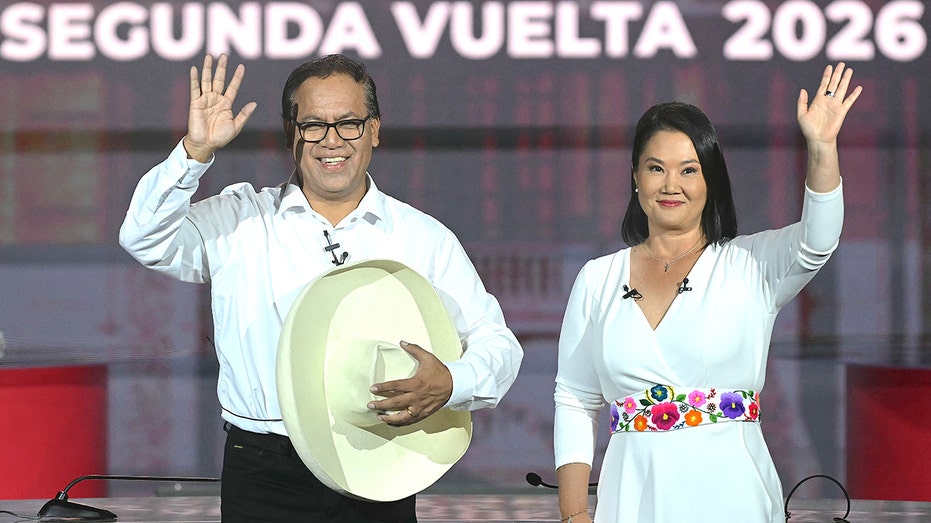
Peruvians head to the polls in a pivotal presidential runoff June 7 in an election that could reshape not only the country’s future but also the balance of power across Latin America.
Two candidates are vying to become the country's ninth president in just 10 years. Conservative candidate Keiko Fujimori is campaigning on law and order, free-market policies and closer ties with the United States, while left-wing challenger Roberto Sánchez represents a political movement that many see as a continuation of the leftist currents that have challenged U.S. interests in the region.
José Ignacio Beteta, executive director of Asociación de Contribuyentes, a think tank in Peru, told Fox News Digital, "Peru’s June 7 runoff carries consequences well beyond its borders. When analyzed against the current U.S. National Security Strategy, this election will determine whether Peru consolidates its alignment as a U.S. partner or devolves into deeper geopolitical contention. Peru’s institutional weakness has already allowed China to expand into strategic sectors."
Beteta added, "Meanwhile, the vote is seen as a choice between a return to freer and more competitive economic and security policies with Fujimori and a second attempt at left-wing governance with Sanchez, a binary that mirrors South America’s broader ideological fractures."
The election follows years of political instability in Peru, a country that has seen multiple presidents removed from office over the past decade and remains deeply divided between urban and rural constituencies.
Sunday’s election's outcome is expected to be very close, with the possibility of a final result not being known for days, according to the Associated Press.
For Washington, Peru’s election represents more than a domestic political contest. It is another test of the broader political direction of Latin America. Over the past several years, several countries in the region have experienced electoral shifts toward center-right or conservative governments, including Argentina under Javier Milei and Ecuador under Daniel Noboa who are all more friendly to Washington.
A Fujimori victory would reinforce that trend and could position Peru alongside a growing bloc of governments favoring tougher approaches to crime, stronger ties with the United States and market-oriented economic policies.
Presidential candidate Keiko Fujimori told Fox News Digital that if she wins, "My government's foreign policy will be based on a very clear premise: defending Peru's interests. Specifically, regarding the United States, my government will seek a relationship of cooperation, mutual respect and investment promotion. We welcome the Trump administration's renewed perspective on Latin America and, especially, on Peru, which occupies a strategic geopolitical position in the region."
Fujimori continued: "We want to seize this opportunity by generating greater stability, legal certainty, and confidence for investment. Peru must always be a country open to the world, committed to freedom, free competition, and the free market. Our goal is to lay the groundwork so that investors from the United States and around the world find in Peru a reliable, stable, and attractive country in which to invest, produce, and create jobs."
Fox News Digital reached out to Sánchez’ campaign but did not get a response.
Peruvian analyst and legal expert Lucas Ghersi told Fox News Digital, "Roberto Sánchez represents a rather radical left. His platform includes nationalizations and expropriations, and he is close to Evo Morales and Nicolás Maduro. This election is highly polarizing Peruvian society."
Ghersi continued, "If Keiko Fujimori wins, she would have a good relationship with the United States. She is a reasonable person who defends the constitutional framework and the rule of law, and she has ties to the United States because she has done academic work at Florida International University (FIU).
"Roberto Sánchez, on the other hand, would create tension in the relationship with the United States. During his campaign and in the presidential debate, he bitterly criticized Peru's purchase of F-16 jets from the United States. He said that Peru shouldn't buy from the United States and should instead use that money for health or education. He also has ties to illegal mining and has been accused of drug trafficking. This could create tensions in the relationship with the United States."
Ghersi concluded, "Peru is a very strategic country and has been the focus of competition between the United States and China. Peru has one of the largest proven copper reserves and is a major gold producer. Therefore, both China and the United States are vying for influence in Peru, and China has been promoting mega-investment projects there, such as a mega-port that is already operational. In response, the United States offered to renovate the Peruvian Navy's base and invest in large port projects."
A Fujimori victory would likely be interpreted in Washington as a continuation of the recent trend toward center-right governance in parts of Latin America. Fujimori has campaigned on restoring public security, strengthening economic growth, and maintaining Peru’s market-oriented model. Her supporters argue that these policies could encourage greater foreign investment and closer cooperation with the United States on security and economic issues.
A Sánchez victory would present a different scenario. Although he has recently moderated portions of his platform, emphasizing respect for private property, free trade agreements and macroeconomic stability, questions remain about how his administration would approach relations with Washington and regional left-wing movements.
The next Peruvian president will help determine whether one of South America’s most important countries moves closer to Washington, or charts a leftward course.
The Associated Press reports that voting is mandatory in Peru for citizens from the ages of 18 to 70, with more than 27 million people registered.
Chinese espionage in the European Union and neighboring countries reveals its full scope when certain pieces are connected. The May 20 arrest in Germany of a German couple of Chinese origin who were taking military-technology information from universities is a particularly notable case. But it is only one of many. The episode exposes a strategy of large-scale, coordinated infiltration when placed alongside other arrests in EU member states and neighboring countries. In total, around 30 agents and collaborators have been uncovered in Europe and its vicinity in just the past two years; some were arrested, several expelled, and others are awaiting trial. China typically denies all espionage allegations and describes them as slander.
Jian G., a German citizen and assistant to far-right MEP Maximilian Krah (of AfD), last September at the Dresden court where he was sentenced to four years and nine months in prison for spying for China.
A missão oficial da Madeira à China permitiu posicionar a Região como uma plataforma privilegiada para a entrada de empresas chinesas no mercado europeu, ao mesmo tempo que abriu novas perspectivas de internacionalização para empresas madeirenses no espaço asiático, afiançou a directora executiva da Invest Madeira, Filipa Ferreira, que classificou a deslocação a Macau, Hengqin […]
El presidente de Rusia, Vladímir Putin, y el líder de China, Xi Jinping, mantuvieron este miércoles una ronda de conversaciones que concluyó con la firma de un amplio conjunto de…
Por Ivone Alves García Argentina acaba de ofrecer una de esas postales que parecen absurdas, pero que en realidad explican con bastante claridad el fondo del problema nacional: un país…
«¿Podrán China y Estados Unidos superar la llamada ‘trampa de Tucídides’ y forjar un nuevo paradigma para las relaciones entre grandes potencias?», dijo el presidente chino Xi Jinping en la…
El presidente norteamericano, Donald Trump, se ha reunido este jueves en Pekín con su homólogo chino, Xi Jinping, para sus esperadas conversaciones sobre el comercio, la venta de armas estadounidenses…
A long trade war looms. Trump’s scattershot protectionism, chaotic tariffs and belligerence against our natural allies guarantees that US trade policy will remain a hot mess
We are in for a long trade war.
In the months since “Liberation Day” last year, when Donald Trump let loose a volley of tariffs against imports from everywhere, countries have rushed to build new relationships in the hope of maybe circumventing the US to protect the global trading system.
A presença da Universidade da Madeira (UMa) na missão empresarial à China deu um sinal claro de que a iniciativa “deixou de ser apenas empresarial” para passar também a integrar a dimensão académica, “nas componentes de investigação, inovação e internacionalização”, afirmou, hoje, o vice-reitor da instituição, José de Sousa Câmara, em Macau. A missão, promovida […]
Der Spiegel erinnert an den heutigen Jahrestag des angeblichen Massakers auf dem Platz des Himmlischen Friedens von 1989, indem er einen Artikel mit der Überschrift „US-Außenminister am Jahrestag des Massakers – Laut Rubio kann Chinas Zensur Tiananmen-Erinnerung nicht »auslöschen«“ veröffentlicht, in dessen Einleitung wir erfahren: „Am 4. Juni 1989 hatte Chinas Volksbefreiungsarmee Demonstranten auf dem […]
Despite all the difficulties, as numerous as they are, something is moving in the Strait of Hormuz. Even before the United States and Iran agreed to reopen it, the world’s most important energy shipping lane has shown signs of a slight loosening. Despite the double blockade — imposed first by Tehran and then by Washington — the number of ships managing to transit has grown in recent days. Some — the majority — do so with the permission of Iran’s Islamic Revolutionary Guard Corps. Others are escorted by the U.S. Navy. A few take the risk on their own.
The 2026 summit between Xi Jinping and Donald Trump, despite having resulted in no specific agreements, demonstrated that the Korean question is no longer a priority for either the United States or China. Both parties appear to have come to terms with North Korea’s nuclear status, being preoccupied with more pressing challenges. The summit between […]
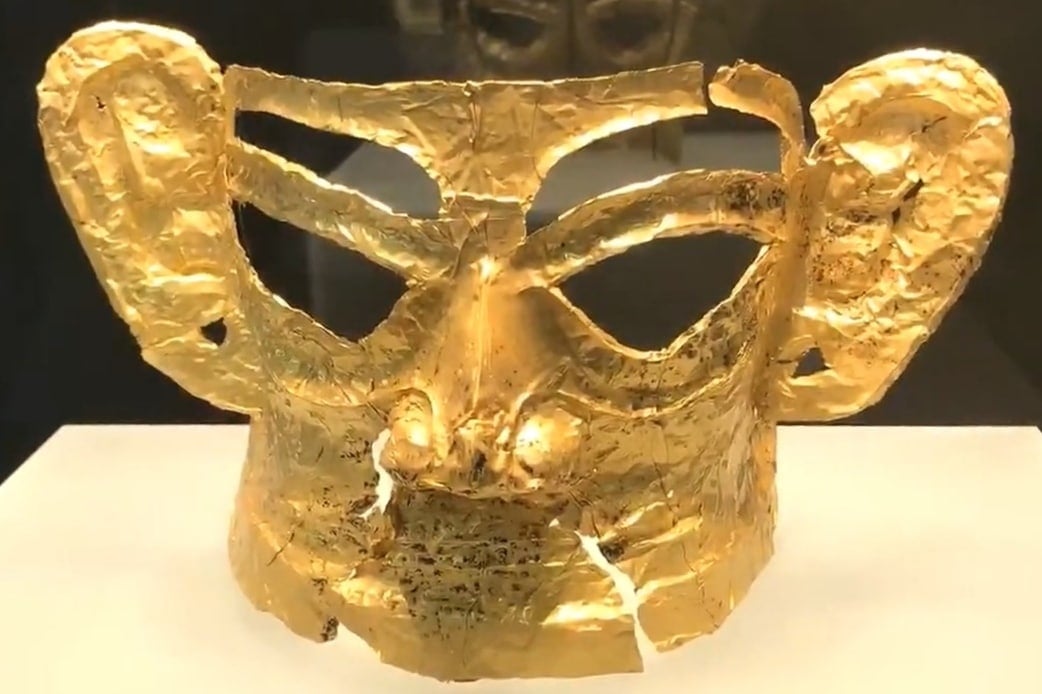
Sanxingdui gold mask. Credit: 中国新闻网 / Wikimedia Commons / CC BY 3.0
Ancient carnelian beads unearthed at the Sanxingdui Ruins in southwest China are providing new evidence of long-distance trade and cultural connections that linked distant regions during the Bronze Age, researchers said Tuesday.
The discovery was announced by the Sichuan Provincial Cultural Relics and Archaeology Research Institute, which recently studied 11 carnelian beads recovered from sacrificial pits at the famous archaeological site in Sichuan Province. The artifacts date to about 1200 to 1000 B.C.
According to Liu Jiancheng, an associate researcher at the institute, the beads are the southernmost known carnelian artifacts from the same period found in China. Their discovery is helping researchers trace the movement of valuable materials and ornamental goods across ancient East Asia.
Analysis traces beads to northern China
Carnelian is a reddish-orange gemstone that was widely used in ancient jewelry and decorative objects. Researchers conducted trace element analysis on the Sanxingdui beads and found that the raw materials did not originate in the Sichuan Basin.
Instead, the analysis traced the source of the stone to the Yanshan orogenic belt and regions farther north, more than 1,000 kilometers (620 miles) from Sanxingdui. The findings indicate that the materials traveled great distances before reaching the ancient Shu civilization.
Researchers also compared the beads with carnelian artifacts discovered at archaeological sites in Gansu, Shaanxi, and Beijing from roughly the same period. The chemical signatures closely matched those of the northern examples, suggesting they likely originated from related sources.
Evidence points to an extensive exchange network
The results point to the existence of a broad exchange network operating between 1500 and 1000 B.C. Researchers believe the network connected communities across the southern Mongolian Plateau, the Loess Plateau, the eastern Qinghai-Tibet Plateau, the Central Plains, and the Sichuan Basin.
The findings offer new insight into how goods moved across ancient China long before the establishment of formal trade routes. They also suggest that materials, technologies, and cultural influences circulated between regions that were separated by vast distances.
Discovery adds to Sanxingdui’s significance
Sanxingdui, located near the city of Guanghan, is one of China’s most important archaeological sites. The site has gained international attention for its extraordinary bronze masks, statues, and ritual objects, which have reshaped the understanding of early Chinese civilization.
Liu said the latest discovery shows that the Sanxingdui society participated in a far-reaching network of exchanges about 3,000 years ago. That network extended into northern China and may have reached as far as the Mongolian Plateau.
The researcher said the evidence highlights the depth of interaction among different cultures during China’s Bronze Age. The discovery also supports the view that a broader and increasingly interconnected Chinese civilization was already taking shape thousands of years ago, while regional societies continued to maintain their own distinct identities.
by Veronika Kyrylenko Reprinted with permission from TheNewAmerican.com The National Security Commission on Emerging Biotechnology (NSCEB) has issued a stark warning: The United States is at risk of falling behind China in the critical field of biotechnology. In its final report to Congress, the bipartisan commission, staffed with the national security insiders, calls for a comprehensive national strategy and a minimum investment of $15 billion over the next five years, ostensibly to bolster U.S. leadership in biotech. The 2025 final report of the NSCEB opens not with a warning, but with a prophecy: We stand at the edge of a […]
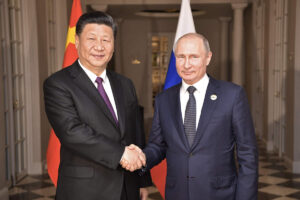
Xi Jiping et Vladimir Poutine en 2018 (Kremlin.ru, CC BY 4.0 , via Wikimedia Commons), via Wikimedia Commons)
Xi Jiping et Vladimir Poutine en 2018 (Kremlin.ru, CC BY 4.0
One week after Donald Trump, Vladimir Putin is traveling to China for a 48-hour official visit aimed at strengthening the comprehensive partnership and strategic cooperation between Russia and China.
A Diplomatic Trip Rich in Geopolitical Symbolism
Putin’s visit to China, expected on Tuesday, May 19, is part of a carefully planned diplomatic strategy. The timing is no coincidence: it coincides with the 25th anniversary of the signing of the Treaty of Good-Neighborliness and Friendly Cooperation, a landmark agreement signed by the two countries in 2001.
This treaty holds major significance in Sino-Russian relations, as it marked the end of decades of mutual mistrust, border disputes, and geopolitical rivalries that characterized the Soviet era.
The timing of the visit is particularly revealing of current international dynamics. By arriving in China one week after Trump’s departure from Beijing, Putin creates a symbolic succession that deserves close analysis. This diplomatic “passing of the baton” among the world’s three major powers offers a valuable lens through which to observe today’s balance of power and each country’s positioning strategy.
Strengthening the Comprehensive Strategic Partnership Amid Global Turbulence
The official purpose of the visit is clear: to reinforce the comprehensive partnership and strategic cooperation between Russia and China.
Beyond formal statements, however, the trip carries deeper significance for both governments. Moscow is seeking to consolidate its ties with Beijing at a time when the international environment has become highly volatile.
Dmitry Peskov, spokesperson for the Russian presidency, said on Friday that the trip would be “a good opportunity to exchange views on the contacts the Chinese have had with the Americans.”
This statement clearly shows that trilateral diplomacy lies at the heart of the visit. Russia wants to understand how China is negotiating with the United States and ensure that Russian interests are not sidelined in Sino-American discussions.
An “Eternal Friendship” Tested by Geopolitical Realities
The concept of an “eternal friendship” between Russia and China, frequently reaffirmed by both powers, is a central element of their diplomatic rhetoric.
However, this visit demonstrates that both countries are actively seeking to prove the strength of their ties in the face of current global upheavals. The phrase itself is revealing: it implicitly acknowledges that the international order is going through a period of major instability.
For Xi Jinping, the meeting with Putin offers a valuable opportunity to present himself as a world leader committed to geopolitical balance and harmony.
By hosting Trump and Putin in succession, the Chinese leader positions himself as a potential mediator in global conflicts and as a guardian of international stability. This posture significantly enhances China’s prestige and influence on the world stage.
The Dynamics of a Three-Way Geopolitical Rivalry
The triangular relationship among the United States, Russia, and China now shapes global geopolitics as a whole.
Every bilateral meeting between two of these powers is closely watched by the third as an indicator of emerging alliances and growing fractures. Putin’s trip to China must therefore be understood within this three-dimensional strategic framework.
Russia, while a major regional power, remains economically secondary compared with China. As a result, Moscow must continually reaffirm the importance of its partnership with Beijing.
This relative asymmetry helps explain why Russia places such importance on diplomatic rituals and public displays of strategic friendship. Maintaining strong ties despite structural imbalances is essential to preserving international equilibrium.
Toward a New Global Geopolitical Architecture
This visit takes place during a period of profound transformation in the international order.
China’s rise, Russia’s return as a disruptive power, and shifts in American foreign policy have created an environment in which old certainties no longer apply.
Diplomatic exchanges between Beijing and Moscow are therefore strategically crucial to maintaining stability in international relations.
The strengthening of the Sino-Russian partnership is not necessarily intended to form an alliance against the United States. Rather, it aims to establish a balance of power capable of withstanding external pressures and attempts at hegemony.
In this context, strategic cooperation between Russia and China has become an essential stabilizing factor in contemporary global geopolitics.
Putin has arrived in Beijing and received the same “warm welcome” package as Trump: a red carpet, the PLA Tri-Service Honor Guard, and the jumping children…
Xi Jinping can be heard saying “hello” (“你好,” nǐ hǎo) to Putin.

 Login
Login