Protesters in the southern British city of Southampton on Tuesday attacked police at the site of the murder of an 18-year-old student who was handcuffed as he lay dying in December from stab wounds after his killer falsely alleged a racist attack. Far-right firebrand figure Tommy Robinson addressed the crowd, with many of them waving Union Jack and England flags.
Tech giants and nations stepped up measures to protect young users online as Poland moved to ban mobile phones in primary schools and Meta Platforms separately beefed up teen content controls globally.
Poland’s proposed ban, due to take effect on 1 September 2026, will apply to children aged 7 to 15 on school premises, including during breaks. According to Reuters, the proposed bill will also give schools a legal basis to create storage deposits for handsets.
Polish Prime Minister Donald Tusk said the restriction aims to give parents and teachers more control over pupils’ device use. “We propose a ban on cell phone use in primary schools during lessons and breaks,” he said, adding, “this is not a perfect solution, we have no illusions about that, but we must address this serious problem, which is addiction to phones and the internet”.
Another bill proposed by Poland’s minister for digital affairs also imposes new obligations on pornography websites to restrict access by children.
Poland’s proposals come as social media platforms face mounting scrutiny over child safety across the globe.
Meta moves Earlier today (2 June), Meta announced it is expanding its 13+ content settings for teen accounts on Instagram, Facebook and Messenger globally. The controls were initially launched in select countries in October last year and are designed to filter out content deemed inappropriate for underage users as the default for teenagers’ accounts.
A more restrictive “limited content” setting will also be made available on Facebook and Messenger later this year. In addition, Meta’s Instagram platform is also testing a feature to prevent teenage users from repeatedly seeing certain types of content to promote a more balanced social media feed.
In December, Australia became the world’s first country to ban social media for under-16s, while countries including the UK, Denmark, Greece, France, Malaysia, Norway and Spain are all weighing or advancing restrictions.
Liberty Global appointed Stephen van Rooyen (pictured) to take charge of its newly formed telecoms company Ziggo Group, which will combine VodafoneZiggo in the Netherlands with Telenet in Belgium.
Liberty Global stated van Rooyen, who is the current CEO of VodafoneZiggo, will take control of the joint entity on 1 September, ahead of planned listing of the company in Amsterdam in 2027.
The executive was credited by Liberty Global for leading “a turnaround at VodafoneZiggo over the past 18 months”, leaning on extensive European telecoms and media leadership experience.
He previously spent more than 17 years at Sky, serving as CEO of Sky UK & Ireland and CCO of Sky Group.
As part of preparations for the new entity, Liberty Global also named Jany Fruytier from its Swiss operator Sunrise as CFO. Fruytier has held the equivalent position at Sunrise since 2020, playing a key role in the growth and listing of listing of the business.
Liberty Global struck a deal to buy the 50% stake in VodafoneZiggo it did not own from Vodafone Group earlier this year.
It then declared it would set up Ziggo Group, which would own 100% of VodafoneZiggo and Telenet. As part of the buyout transaction, Vodafone took a 10% stake in Ziggo Group.
The joint entity will have 13 million customers, generating €6.6 billion in revenue.
Expertise and experience Alongside his responsibilities at Ziggo Group, van Rooyen will retain his role at VodafoneZiggo.
Mike Fries, Liberty Global chairman and CEO said van Rooyen’s experience and Fruytier’s expertise gives it the right platform to deliver on the planned listing.
“Together, they will lead two highly complementary businesses, and we see significant opportunities in what these two strong brands can achieve together,” he said.
SoftBank Group committed to an investment of up to €75 billion to bolster AI data centre infrastructure in France, with the first phase of the project set to deliver 3.1GW of capacity.
SoftBank announced the investment at the 2026 Choose France summit, hosted by President Emmanuel Macron, marking the Japanese company’s largest AI infrastructure investments in Europe.
It has committed an initial €45 billion investment in the Hauts-de-France region, providing 3.1GW of capacity to data centres in Dunkirk, Bosquel and Bouchain. SoftBank will also develop additional sites, “reinforcing the country’s role as a leading European hub for next-generation digital infrastructure”.
For the Dunkirk deployment, SoftBank partnered with Schneider Electric to accelerate its buildout, while developing a large-scale industrial production cluster.
The cluster at the Port of Dunkirk will be a “key industrial pillar” for the company’s AI infrastructure programme in France, including the build out of two facilities. One will be operated by SoftBank to manufacture enclosures, while the other will be operated by Schneider Electric to integrate data centre power modules.
The duo explained the partnership will combine SoftBank’s robotics and automation capabilities with Schneider’s industrial expertise and local supply chain network to support the deployment of next-generation AI data centres at scale.
The industrial cluster is also designed to support Dunkirk’s ambition to become a leading hub for robotics, advanced manufacturing and industrial innovation.
Masayoshi Son, chairman and CEO of SoftBank, said AI is entering a new era and countries that build infrastructure for this transformation “will shape the future of technology, industry and society”.
“SoftBank is proud to make this major commitment to France. With its industrial capabilities, talent base and national ambition, France is uniquely positioned to become a leading AI infrastructure hub in Europe.”
The company said it will also work with SB Energy and other strategic partners to deliver the projects.
Mobile World Live brings you our top three picks of the week as the European Commission (EC) earmarked a large proportion of mobile satellite spectrum for homegrown players, Telenor unveiled a restructured operating model and SpaceX secured a $2.3 billion US military deal.
EC proposes local players get bulk of MSS spectrum
What happened: EC EVP Henna Virkkunen set out the regulator’s proposal to allocate the 2GHz mobile satellite services spectrum band across the European Union, with a large slice potentially being allocated to local players.
Why it matters: Under the plan, one third of the band would be reserved for government and critical communications with the rest allocated to commercial D2D and IoT services. Non-EU companies would only be able to apply for half of the allocation for commercial services and none of the public sector portion.
Virkkunen said the watchdog aims to “boost Europe’s competitiveness”, “strengthen Europe’s security” and embrace “new technological possibilities”, adding the plan reflects “the current changing geopolitical context”.
She rejected suggestions the move disproportionately targets US companies, stating the process is “very transparent and fair”. Yet, BNP Paribas Equity Research senior analyst Sam McHugh told Reuters the plan could leave US players including SpaceX in a “structurally inferior” position. He added it is “a small positive for European telecom operators” because it further reduces the odds of SpaceX competing head-to-head with them.
What happened: Telenor unveiled a group-wide restructure, replacing its Nordics, Asia, Amp and Infrastructure business units with a model focused on individual countries.
Why it matters: The plan aims to move decision making closer to customers and local markets. The operator stated the shift aligns with its long-term goals of pursuing top-line growth, greater efficiency and operational improvement. Under the new set-up, the chiefs of Telenor’s Nordics businesses will join group management, removing the current regional layer.
Telenor described the restructure as “simplified and sharpened”, adding it would “substantially reduce administrative costs” and accelerate long-term growth by improving cash flow and capital return in the coming years.
What happened: The US Space Force (USSF) awarded SpaceX a $2.3 billion contract to build the backbone for a Space Data Network (SDN), a satellite communications system designed to connect military platforms and sensors.
Why it matters: USSF stated the SDN backbone will use low Earth orbit satellites to provide global connectivity for armed forces, acting as “an integrated network” delivering “robust, resilient, high-capacity and low-latency data transport”.
USSF acting portfolio acquisition executive for space-based sensing and targeting Colonel Ryan Frazier said the system would use “the best of commercial innovation” and provide “a strong foundation for the SDN mission” by acting as “a core communications layer” for USSF systems, delivering continuous, secure connectivity.
The deal comes at a pivotal moment for Elon Musk’s satellite venture, which recently submitted a Securities and Exchange Commission (SEC) filing detailing plans to launch a long-awaited IPO as early as next month.
Eight bottles of Chateau d'Yquem – one of the world's most expensive white wines – were among a collection of 136 bottles discovered under a Czech castle floor that were hidden by the owners after the end of World War II. They have now been restored by the original French winemakers in what the cellar master called a "magical experience" of preserving "liquid memory".
In this week's Wider Europe newsletter, Rikard Jozwiak drills down on two issues: Why the EU isn’t naming a Russia envoy and the upcoming EU-Moldova summit.
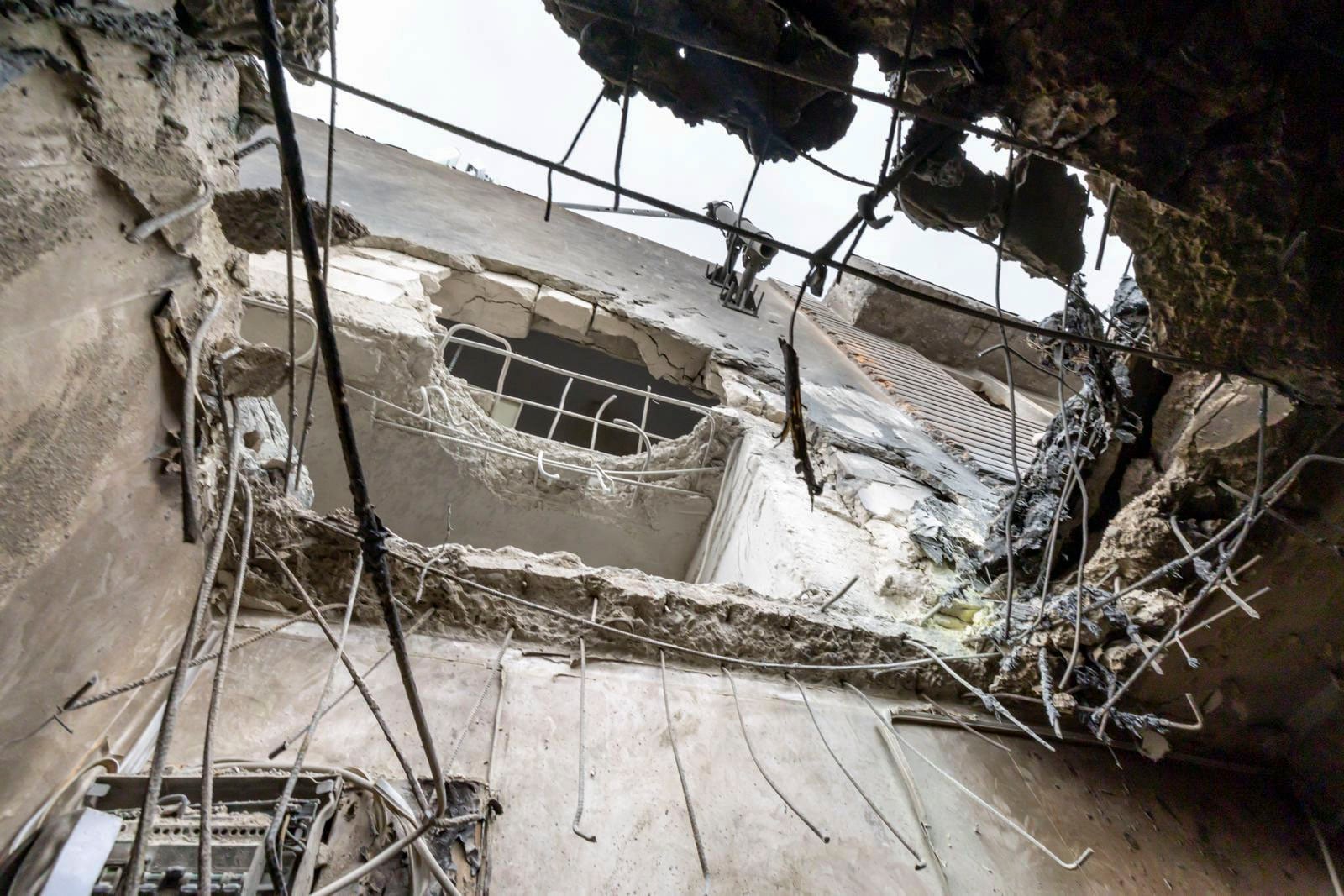
Romania has been deeply shaken by the unprecedented incident that occurred in the early hours of last Friday, when a Russian drone carrying 30 kilograms of explosives crashed into a 10-story apartment block in Galați. The city lies just 15 miles from the Ukrainian port of Reni, one of the neighboring country’s key grain-export facilities and a reason why Russia attacks almost nightly. But on this occasion the drone’s impact crossed boundaries not previously seen in this European Union country. The unmanned aircraft exploded, injuring a woman and her 14-year-old son, who lived on the building’s top floor; the block stands in the nerve center of this town of about 250,000 people on the banks of the Danube.
The European Union on Monday agreed a deal to allow countries to send migrants ordered to leave the bloc to third-country "return hubs". The legislation, which still requires formal approval by EU governments and the European Parliament, has drawn criticism from human rights groups.
Russian air strikes hit several major Ukrainian cities early on Tuesday, killing at least 18 people and wounding more than 100, authorities said. Kyiv, Dnipro and Kharkiv were among the hardest hit, with residential buildings damaged and thousands of residents sheltering underground amid ongoing air raid alerts.
Denmark’s Prime Minister Mette Frederiksen announced on Monday that she has formed a new left-leaning minority coalition after months of negotiations following inconclusive elections in March. The agreement secures her third term in office, bringing together four parties that hold a slim parliamentary majority.
This story originally appeared in Professor Richard Wolff’s Substack on May 21, 2026. It is shared here with permission.
By the end of World War 2 in Europe, that continent’s extremely violent self-destruction had killed tens of millions and wrecked many economies. Its politically dominant employer classes had driven their national governments to a clash that had produced those results. By 1945 the war’s outcome had proved far worse than many in those classes had imagined or wanted before the war. Europeans had struggled after 1917/1918 to overcome their self-destruction in World War 1. In the short span between the end of the First and the beginning of the Second World War, Europe destabilized itself via its reparations program, Germany’s staggering inflation, and then global capitalism’s worst ever collapse in 1929. The consequences of those destabilizations ramified across Europe and undermined the League of Nations effort to prevent a second world war.
In 1945, for most Europeans, the greatest urgency attached to recovery from the war. For Europe’s employing classes, more urgent still were defenses against certain immediate threats. Russia’s army had been crucial to defeating the Nazis and to forging Russia’s post-war alliances with Eastern Europe. The mass of the USSR’s military forces, potentially supplemented by those of its new Eastern European allies, struck western Europe’s employer classes as existential threats. After 1945, western Europe’s employer classes smoothly and quickly refocused their hatred from a dead Hitler to the living Stalin and to their nations’ communist parties allied to Stalin.
Western Europe’s employer classes were threatened domestically by communist and socialist political parties whose militants had often led underground anti-fascist or anti-Nazi resistances. Thereby those militants often became broadly popular leaders. Across Europe national communist parties collaborated in various ways with one another (including the powerful Soviet party). Some post-war European heads of state such as France’s Charles de Gaulle included communist party leaders in their governments. In reaction to such developments, Europe’s employer classes quickly became obsessed with the great twin dangers of “communism at home and abroad.”
A parallel development had happened across the Atlantic in the US. There the Great Depression after 1929 had provoked a mass political shift leftward by the US public. Employees in unprecedented numbers had joined industrial unions allied in the Congress of Industrial Organizations (CIO). Tens of thousands joined two socialist parties and one communist party. Because the socialists and communists were often the militants in the CIO’s successful organizing drives across major industries, employers in the US were all the more alarmed by those successes in the 1930s and the 1940s. The CIO, socialist and communist parties also formed a far more powerful coalition within the Democratic Party than they had ever been before 1929.
The alliance between the Democratic Party under Franklin Roosevelt and the CIO-socialist-communist collaborations – the so-called “New Deal” coalition – terrified the employer class. The coalition’s key 1930s achievements included establishing the Social Security system, federal unemployment insurance, the nation’s first minimum wage, and a federal public jobs program that hired many millions of the then unemployed. What terrified the employer class even more was how the New Deal coalition paid for those achievements. It reformed the federal tax system in a sharply progressive direction. Because corporations and the rich were especially taxed, US wealth and income inequalities dropped sharply. Then in the 1940s, the same US government that took huge steps against economic inequality at home allied itself with the Communist Party leadership of the USSR (Stalin) to fight World War 2 against fascism.
By 1945, with the war over and Roosevelt dead, the US employer class had become, like its European counterpart, obsessed with the great twin dangers of “communism at home and abroad.” Parallel obsessions in western Europe and the US converged in a joint plan. Employers and their political supporters and dependents attacked Communist parties everywhere, depicting them as mere agents or dupes of a foreign power, namely the USSR. They demonized the USSR as the epitome of evil, a dark empire threatening democracy, freedom, Judeo-Christian values, religion per se, civil liberties, and so on. A Cold War was declared between the former allies, NATO emerged, and the Warsaw Pact followed as did arms races and geo-political confrontations. The US would lead NATO to “contain the Soviet threat.” The US organized alliances across other continents while locating hundreds of military bases across them. Beyond means of “containment,” the bases marked and enforced a new informal US global empire that replaced much of the old British, French, Dutch, Belgian, Japanese, and other expiring colonialisms.
“Anti-communism” ideologically unified the domestic and international strategies of the employer classes in Europe and the United States. Under that ideological banner, those employer classes mobilized their governments to collaborate with them to destroy national communist parties and the USSR. As global hegemon, the US went further. It demonized socialism and socialist parties by defining and treating them as nearly identical with their communist counterparts. It also used anti-communism as a major ideological weapon to replace formal European and Japanese colonialisms by the informal, US-dominated “rules based international order.”
The US-western Europe connection helped employer classes in both regions to repress or at least weaken their nations’ communist and socialist parties. The US moved very aggressively (as in the Taft-Hartley law of 1947) also to destroy labor unions at home and collaborated with anti-union forces across Europe. Where war-weakened Europe lost its colonies, a strong post-war US could and did rush in to integrate the ex-European colonies into a US empire. The new US empire had to be informal. It had to allow the ex-colonies formal political independence even as it subordinated them to US economic, military, and political dominance across most of Asia, Africa and Latin America. Europe sank into the role of the US’s very junior partner.
The US-western Europe connection brought the US valuable allies against the USSR. Given the military technology of the two world wars – reliance on huge armies fighting across immense terrains – Europe was a land buffer usefully located between the US and the USSR. It provided added protection to the Atlantic ocean’s water buffer. European colonialism had created a genuine world economy that the US could take over. Within that world economy’s particular hierarchy, Europeans were dominant nearly everywhere (except, of course, in the case of Japanese colonialism). Non-Europeans were integrated as subordinated people (economically, politically, culturally). As the Europeans’ formal empires gave way to the US informal empire, colonialist hierarchies persisted with the only real changes occurring at the top. There the civilian and military chiefs of the US (and their delegates) chose, elevated and enriched local elites to direct its informal empire’s development.
The Marshall Plan funded postwar Europe’s recovery in ways that also secured its subordinate role in the new US empire. Funds distributed by the US Central Intelligence Agency since 1947, by the US Endowment for Democracy since 1983, and by other public and private groups supplemented the Marshall money. The advisers who often came with the funds gave Europe’s anti-communist political parties, mass media, labor unions, academic and cultural organizations, many means to use against their domestic enemies. The post-1945 US-western Europe alliance mounted an immense, richly-funded, never ending campaign to shape and control world history. It worked well, overcoming numerous challenges, for 70 years until internal and external forces combined to end it. Now, as the US-western Europe connection dissolves, the contours of its totality and historical significance become clearer.
The relentless rise of China’s economy outgrew the economies of all parts of the US-western Europe alliance over recent decades. China thereby contributed crucially to that alliance’s dissolution. So too has China’s ability simultaneously to forge a new global economic coalition, the BRICS (initially Brazil, Russia, India, China, and South Africa). The BRICS’ establishment and growth (with new members and partners) responded to their felt needs for mutual support and less economic dependence on the US. The BRICS passed a milestone in 2020 (downplayed in Europe and the US) when their aggregate GDP surpassed that of the G7. The former has continued without interruption to outgrow the latter through the present.
The anti-colonialism that inspired the transitions from colonies to independent nations over the last century has survived that transition. It sometimes infuses rebellions against the hegemony of the US. At other times and places it coalesces with religious movements and populist social movements. In these and other ways, it too helps shape changing patterns of global trade and investment. Ex-colonies seek and engage alternatives to trade and investment with former colonial masters in London, Paris, Berlin, etc. They form new economic partnerships with China and increasingly with other BRICS. Increasing competition and lost economic opportunities challenge western Europe, Japan and the US. They also reduce the role of the US dollar as world currency.
The Trump regime represents both the extent of that decline and extreme efforts to stop or at least slow it. Hitting nearly the whole world with tariffs, suddenly and massively without warnings or negotiations, is a desperate act. Offering subsequently to lower initially high tariff rates in exchange for tribute (foreign nations’ commitments to spend and invest $ hundreds of billions in the US) is a blunt, stark, and hostile act. That European Commission President Ursula von der Leyen accepted it is a craven act of Europe’s even more desperate submission. The war on Iran with Israel without consultation or preparation with its European and other allies, coupled with demands for massive, risky support for the US war effort, was also a desperate act. Its goal was to reverse the decline of the US empire; its result was the opposite. The decline accelerated.
The decline, still not admissible publicly in most US politicians’ discourses, nonetheless lurks everywhere in widespread feelings of lost national direction and/or impending social doom. Trump bitterly reproaches former allies like Mexico, Canada, South Korea, Japan, and, above all, western Europe. For example, he rewrites post-1945 history as a story of western Europeans, among others, cheating and abusing the US economy because weak US governments failed to resist and fight back. Trump presents his tariffs as the overdue fight back heroically ending the previous weak governments. Trump was so invested in such political theater situating him as “the strong leader,” that his sudden, rushed tariff program was intolerable even to a Supreme Court he otherwise controls.
Abducting Maduro from Venezuela, the 12-day war on Iran with Israel in June, 2025, and their longer one begun in March, 2026: these are also pieces of the same political theater. They are made-for-the-media distractions: not just from the hovering Epstein scandals or the deeply-troubled inequalities of the domestic US economy, but from the deeper threats of a declining empire. Thus a reaction formation type of neo-colonialism inspires many of Trump’s favorite distractions. So far from admitting decline, those distractions construct a US empire as strong and growing, taking over nations like Venezuela, Cuba, and Iran while planning the same for Panama, Canada, Greenland, Mexico and others. When charged with violating international law and the whole United Nations project, Trump proudly rebrands both actions as bold signs of US strength.
Now again, as in 1945, western Europe and the US find themselves at crossroads. The declining empires then were the Europeans’. Now in 2026 it is the decline of the US empire that has become both the US’s and Europe’s problem. In its desperate moves to slow or stop that decline, the US has turned on its subordinated European partners. That problem and that turning derive from the empire decline shaping this historical moment.
In Trump’s second presidency, he withdrew much of the US’s support for Ukraine in its war with Russia. This not only weakened the Ukrainian side in that war but also left a militarily underdeveloped Europe to rely even more on economic sanctions against Russia. Europe thus lost access to cheap Russian oil and gas. High energy prices resulted, drove up European export prices, and thus damaged its competitiveness. Meanwhile, China’s relentless growth miracle (fast-rising productivity and low inflation) continued its many years of outperforming both Germany’s Wirtschaftswunder and European competitiveness generally. China’s GDP growth far exceeded that of the entire West for the last few decades. Volkswagen’s crisis was so severe it seriously considered the US invitation to move its immense company to the US from Germany. Deindustrialization now deeply disturbs all of Europe’s economies.
The global economy looks increasingly like a great contest between China and the US with Europe increasingly out of the picture or merely a footnote to it. Trump’s massive tariffs on or demands for tribute from Europe combine both abandonments and assaults by the US on its former allies. NATO trembles and faces growing forces of dissolution. Trump demands European nations fund their own defenses in part because the declining US empire needs to enlarge its own military as an offset, Trump hopes, to that decline.
The Europeans are stuck in that metaphorical room whose walls are closing in on them. Their subordination is reflected in their passage from junior partners in US led Coalitions of the Willing to the 2026 Iran war that Spain and Italy have refused to join. Trump openly threatens to leave NATO. The employer classes of Europe are most worried about the combination of no more US-funded defense protection via NATO and the compensatory need to fund expanded European military spending. That will likely mean reducing European spending on its social welfare model of capitalism. Employer classes who do that risk triggering massive opposition from the left (labor unions, socialist, communist and anti-capitalist parties increasingly working together).
So far, Europe’s employer classes have tried to cope with this situation by a quasi-hysterical campaign to demonize Russia as a threat to invade and conquer its European neighbors. Europe’s current, mostly low-in-the-polls heads of state position themselves as great bulwarks against the Russian danger. This strategy aims to justify the increased spending on defense that in turn necessitates reduced government welfare spending. The latter is then rationalized as the whole society’s necessary sacrifice for safety from the Russian demon. The employer classes hope that this way of retaining their wealth, income and power will not be opposed by their working classes as the political issue of our times. The employer classes prefer that the great hyped Russian danger be the political issue.
While the Russian danger discourse might secure Europe’s employer classes a few more years of sitting atop Europe’s wealth and power distributions, it fails to address Europe’s long-term decline. That promises to continue and quite possibly accelerate because little is being done in Europe to directly oppose that continuance. Indeed, the disagreements inside Europe on whether to join the US/Israeli war on Iran coupled with fear of being singled out for retaliations by Trump heightened the competitive pandering among Europeans to curry favor with him. Such divisions have always weakened European unity. Rebuilding that unity is surely a necessary, albeit insufficient, component of any imaginable rescue of Europe from its deepening decline.
The long, uneven, and sometimes frustratingly slow historical shift from capitalist colonialism to today’s anti-imperialism undermined first Europe’s and now the US’s empires. A new crossroads beckons. One way leads toward a new Chinese global empire. Another leads toward a multi-national program of mutual accommodation, a kind of socialism with global characteristics.
Hungarian Prime Minister Peter Magyar on Monday threatened legal action and said the government would use its two-thirds parliamentary majority to amend the constitution to force President Tamas Sulyok from office. Sulyok, who was appointed under former prime minister Viktor Orban, has refused to resign before his term ends in 2029.
This week’s special edition of Talking Europe asks whether the EU is ready for the disruption that comes with Artificial Intelligence. It is the most important technological revolution of the century, and is set to impact every aspect of our lives.
Drones piloted by artificial intelligence are now being deployed on the Ukrainian front lines, and while there has been much talk about them, there is still much that remains unknown. The US-made Hornet Drone, which is partially guided by AI, is at the centre of a new Ukrainian strategy to target Russian logistics.
Ukrainian drones struck targets across several Russian regions overnight from Saturday, including an oil pumping station, a refinery and a fuel depot, Russian and Ukrainian authorities said Sunday. Kyiv however denied Moscow's claims that a Ukrainian drone struck the Zaporizhzhia nuclear plant in Russian-occupied Ukraine.
Former title holders crashed out at Paris's Roland-Garros tennis stadium and PSG faced off with Arsenal in Budapest to win their second Champions League final in a row as a heatwave shattered European temperature records for the month of May: FRANCE 24 looks back at some of the week's most striking images.
European policy in the South Caucasus is increasingly caught between proclaimed values and pragmatic interests. While headlines often portray Azerbaijan’s suspension of parliamentary cooperation with the European Parliament as a routine diplomatic spat between Brussels and Baku, the move reveals something more significant: a profound transformation in Europe’s relations with the post-Soviet space—one increasingly defined […]
Maltese Prime Minister Robert Abela claimed a record-breaking, fourth successive general election victory for his Labour Party on Sunday after campaigning on the strength of a thriving economy and calling for a strong mandate to shield the tiny island state from the crisis in the Middle East.

 Login
Login