Normal view

Brazil between the slave trafficking and drug trafficking

By: A A
13 June 2026 at 12:06

Brazil’s elites have long treated drug violence as inevitable – like 19th-century slavery. But with banks and gas stations now feeling the pinch, will national pride finally force action where moral outrage never could?

Join us on TelegramTwitter, and VK.

Contact us: info@strategic-culture.su

In Um rio chamado Atlântico [A River Called Atlantic], the Brazilian diplomat and Africanist Alberto da Costa e Silva (1931 – 1923) addresses the history of the end of the slave trafficking in Brazil in a very interesting way. As is known, England in the 19th century positioned herself as the moral bulwark of the world, and this included a true crusade against the transatlantic slave trade. On the other hand, Brazil, according to our Africanist, was dependent on the forced immigration of Africans to populate this vast territory, given the small size of Portugal and the precarious technical condition of the Amerindians.

That English humanitarianism was merely a pretext, no one serious can doubt. After all, one only needs to see how inhumane the British chartered company’s dominion over India was, or consider the fact that English sympathies leaned towards the South during the American Civil War. From an economic standpoint, there is the issue of the competitiveness of Brazilian sugar produced by slave labor, but the most important thing, according to Costa e Silva, was this: the financial suffocation of the free African kingdoms.

Since the African kingdoms capitalized in the 19th century by selling slaves to the Americas, closing the Atlantic would cause these kingdoms to collapse, and thus, English merchants could try to replicate there the model of domination implemented in India. And, in fact, after the closing of the Atlantic, some African leaders began to imitate the Anglo-American plantation model to sell palm oil to the English, who used it for purposes as diverse as soap making and public lighting. The slave trade to the Americas ended and was replaced by African domestic slavery.

According to Alberto da Costa e Silva, the slave trafficking ended in Brazil because Brazil wanted it to. Even today, in the 21st century, we use in Brazil the expression “so that the English can see it”. The origin of this expression is the Feijó Law of 1831, a law of the Empire of Brazil that prohibited the transatlantic slave trade, imitating the English law of 1807. Brazil had been pressured by England to pass such a law since its Independence (1822). However, since the Brazilian authorities did not want to end this slave trade, the law was simply not applied: it was made so that the English can see it. To this day, Brazilians say that such a thing is “so that the English can see it” when they want to say that it is an empty formality. The slave trafficking in Brazil ended when Brazil wanted it to end. This occurred in 1850, when Brazil approved the Eusébio de Queiroz Law. From this, Alberto da Costa e Silva concludes: the trade ended because Brazil wanted it to end, and not because England wanted it to.

I have doubts. What would have happened if England had not pressured Brazil to end the slave trade? It’s impossible to answer historical counterfactual questions with certainty, but it seems to me that English arrogance, pointing the finger at us, may very well have driven our ancestors to action. After all, Brazilian society is both proud and conformist: we can spend decades complaining about the same problems as if for sport, but if a foreigner points the finger at us, then we become truly outraged.

Slavery was never a beautiful thing in Brazil. In Black Rednecks and White Liberals, Thomas Sowell contrasted the reaction of the Ottoman and Brazilian peoples to the end of slavery: there, with revolt and protest; here, with public celebrations. In the 19th century, there were even those who imported scientific racism from Protestant countries to justify slavery – but, as Costa e Silva showed, both the pro- and anti-slavery sides had arguments for and against Negroes. Just as there were those who defended the end of slavery because they believed that Negroes did not deserve such a fate, there were those who wanted to end slavery hoping to purge Brazil of Negroes (in the same way that Anglophones created Sierra Leone and Liberia to “return” them to Africa). On the other hand, there were those who justified slavery based on white superiority, but also those who thought that the influence of Negroes in Brazil was too beneficial for slavery, however bad, to have an immediate end.

Given that most of Brazil was illiterate and had no reason to adhere to the racist fashions of the educated, and given that the Brazilian population actually celebrated Abolition (1888) en masse after a large public campaign against the interests of a slave-owning minority, we can assume that the latter position – simultaneously anti-racist and resigned to slavery – reflected Brazilian common sense. I believe that, without external pressure to offend our pride, we could still be lamenting the wickedness of slavery while saying that it was necessary. Furthermore, just 5 years before the Eusébio de Queiroz Law, England passed the Aberdeen Act, which authorized their navy to seize Brazilian ships suspected of slave trafficking. It was an offense, and it was also a cause of losses, since it made the cost of imported slaves unsustainable.

It seems unlikely, then, that just five years later, and with the increased cost of imported slaves, Brazil would have decided on its own to end the trade. It does not follow, however, that England is a saint and that the Aberdeen Act did not harm Brazil in a dishonest way. As Alberto da Costa e Silva reports, Brazil had already developed legitimate trade with the free African kingdoms (which sold us palm oil and fabrics), but England ended up closing the Atlantic.

I think this situation is similar to that of present-day Brazil with drug trafficking and Donald Trump pointing the finger at us. Almost every Brazilian agrees that urban violence caused by drug trafficking is a major problem, and that the territorial control exercised by factions is a very wrong thing. (I say almost every, because there is always the delusional leftist.) However, the elites treat the problem as if it were a phenomenon as natural as rain: Brazilians complain and have no prospect of solving the problem. In Brazil, Marxism ended up translating into a kind of scientific conformism, in which the sociologist looks at the ills and explains why everything is the way it is – in the same way that an English social Darwinist proceeded in the face of the ills of the poor.

Like 19th-century England, Donald Trump is far from being a saint. He has already shown that he feels entitled to invade countries under the pretext of fighting drug trafficking, and the U.S. experience in Colombia, Ecuador, and Afghanistan gives no rational reason for Brazilians to root for armed intervention thinking that this will put an end to drug trafficking. The United States also does not seem committed to ending drug trafficking on its own soil, since it has a colossal surveillance capacity and continues to be the largest consumer of cocaine on the planet. (It is true that U.S. population is large, but it doesn’t compare to China’s. It’s noteworthy that two English-speaking countries – Australia and New Zealand – are the largest per capita consumers according to the UN.)

Just like the Aberdeen Act, the classification by the United States of the two largest Brazilian transnational drug trafficking organizations – the PCC of São Paulo and the Red Commando of Rio de Janeiro – as terrorist organizations certainly stirs the pride of Brazilians. Only a delusional middle-class leftist will claim that this classification is inappropriate. Even so, Brazil has an idiotic anti-terrorism law, made with the purpose of considering terrorism only actions motivated by politically incorrect ideas (see here). By this law, it is impossible to consider PCC and Red Commando terrorist organizations – even though PCC already caused panic in the state of São Paulo in 2006, and there are no nice explanations for the attacks having ceased. Just as Brazil did not end the slave trade in 1830 because it did not want to, Brazil does not end the drug traffickers’ empire today because it does not want to.

Brazil has never considered the PCC a terrorist organization, but the new classification has already prompted Lula to publish an “Administration Note” on his official Twitter profile alluding to the PCC and Red Commando as entities that “practice terrorism in the territories where millions of families live.” I have no record of a note from a PT (Workers’ Party) federal administration alluding to drug traffickers in these terms. The government is then in a complicated position to say that the PCC and Red Commando are organizations that practice terrorism that intimidates millions of families but are not terrorist organizations. And even more: that Brazil is a sovereign country in which non-terrorist organizations practice terrorism against millions of families, because this sovereign country does not have sovereignty over large portions of its own territory! After all, the government’s rhetoric is that Trump’s attack against these organizations is an attack on Brazilian sovereignty orchestrated by Bolsonaristas who betrayed the homeland, since the announcement of the measure occurred shortly after Flávio Bolsonaro’s visit to the White House.

But there is a great dissimilarity between the slave trafficking and the drug trafficking empire: slavery in general is a millennial institution, and the transatlantic trade in particular was as old as Brazil itself. It was reasonable for Brazilians to think that slavery was inevitable, because its end contradicted all previous experience. The drug trafficking empire, on the other hand, is only about 20 years old for most of Brazil. I am only 36 years old and I remember a time when there were no crack addicts: a completely different reality, which seems like a utopia to today’s teenagers. Furthermore, slavery in 19th-century urban Brazil allowed for social ascension, and slaves could realistically dream of freedom and enrichment. The drug trafficking empire, however, haunts Brazilians as long as they are in a Brazilian large city: even if they become rich and leave the slums, they could lose their lives at any moment to a stray bullet, or to a crack addict who stabs them in the street for no reason.

Therefore, the role of the mystifying sociologist is important among us. The rhetoric of Open Society and Ford Foundation – the racist rhetoric that insists on blackness as essentially linked to crime and drug addiction – presents the drug trafficking empire as natural and inevitable. One good thing about Trump’s classification is that now the sectors of the Brazilian economy that were bothered are starting to show their faces: banks, fintechs, and gas stations.

Hopefully, these sectors will now feel ashamed, and Brazil will finally decide to end the drug trafficking empire in its national territory.


O Brasil da Revolta da Vacina à vacina de covid em bebês

By: A A
12 June 2026 at 16:01

Brasil tem tradição de “lei que não pega” e resistência passiva, mas elites fracassam. Classe média omissa diante de vacina covid em bebês, caso único no mundo.

Junte-se a nós no Telegram Twitter e VK.

Escreva para nós: info@strategic-culture.su

No último texto, apontei um certo conformismo social brasileiro que às vezes nos impede de lidar com grandes problemas nacionais sem constrangimento estrangeiro. Neste eu queria nuançar um pouco essa questão, mostrando a importância das classes intermediárias entre o governo e o povo.

Comecemos com o aspecto conformista: desde o advento da propaganda republicana, o povo brasileiro tem fama de passivo. Em tese, a República é o governo do Povo, ao passo que a Monarquia é o governo na nobreza. Com essas definições, o simples fato de o povo não se entusiasmar com a República já o torna besta. E como o Brasil era a única monarquia nas Américas, cercada por repúblicas de língua espanhola fundadas em ideais maçônicos e iluministas de liberdade, o povo brasileiro era especialmente besta. Até a década passada nós brasileiros olhávamos para os vizinhos argentinos, que sempre estavam fazendo panelaço diante da Casa Rosada, e nos lastimávamos de nossa passividade – como se o “espírito crítico” argentino lhes tivesse dado um bom destino.

Em 1889, com uma revolta militar desengonçada e liderada por um marechal monarquista, proclama-se no Brasil a República à revelia do povo. Um grande historiador brasileiro, José Murilo de Carvalho (1939 – 2023), usou a memória de um militante republicano para dar um título ao seu livro sobre os primeiros anos da República: Os Bestializados. O povo assistia à proclamação da República bestializado, sem entender o que acontecia, achando que se tratava de uma parada militar. E a raia miúda – os vadios, as prostitutas, os capoeiras – eram maciçamente monarquista nas décadas seguintes à implementação da República. A Abolição da escravidão fazia o Imperador deposto ser amado sobretudo pelos pretos pobres do Brasil.

Segundo constava nos livros e panfletos, a República era para ser a apoteose do Povo, mas o povo não estava nem aí. Tornou-se comum, então, a classe jornalística reclamar da passividade do povo brasileiro. Houve um grande evento que fez com o povo brasileiro mostrar o seu valor – e os manifestantes iletrados ouvidos pelos jornalistas se expressavam nesses termos. Tal evento foi a Revolta da Vacina, ocorrida no Rio de Janeiro em 1904.

Segundo explica José Murilo de Carvalho, essa revolta tem causas sociais que são diferentes da vacina em si, ou de seus efeitos colaterais. Há uma instituição que dizem ser especificamente brasileira: a da lei que pega ou que não pega. O governo pode passar uma lei e a lei “não pegar”. No caso do tráfico de escravos, que vimos no último texto, o governo pode até passar uma lei com a finalidade de não aplicá-la – a lei “pra inglês ver”. No caso da lei que não pega, há uma resistência ao governo que é difusa, tácita e anônima. Ninguém entra em confronto aberto com a autoridade, nem se responsabiliza. A lei simplesmente “não pegou”, como se fosse um dado da natureza, uma planta que poderia nascer e não nasceu. Todos dizem “tá bom” ao Estado, mas ninguém obedece. Ou obedece só um pouquinho, por cinco minutos, “pra inglês ver”. E o governante não faz nada, porque não quer ficar impopular.

Isso explica muito da vida pública brasileira até os dias de hoje: o brasileiro está acostumado a ver o governo passar leis malucas, mas não se preocupa até constatar que a lei pegou. Um exemplo do descaso brasileiro com a lei é que, de 1894 até 2025, os habitantes do município de Rio Claro, São Paulo, estavam vendendo e comprando melancias na ilegalidade. Em 1894, os sanitaristas estavam certos de que melancia transmitia febre amarela e, em Rio Claro, conseguiram passar uma lei proibindo o comércio de melancia. A lei foi tão rejeitada pelo público que as pessoas se esqueceram dela, e só em 2025 um vereador tomou a iniciativa de revogá-la.

No caso da Revolta da Vacina, o governo insistiu em impor de maneira radical uma lei que não pegava de jeito nenhum. Conforme relata José Murilo de Carvalho em Os Bestializados, a vacina Jenner, contra a varíola, era aplicada no Brasil desde 1801. Em 1831, o Império tornou-a obrigatória para crianças em sua sede, o Rio de Janeiro. Em 1884, a vacina tornou-se obrigatória para todos em todo o Império; no fim de 1889, logo após a proclamação da República, o governo tornou-a obrigatória para todas as crianças, e em 1903 uma porção de decretos ampliava a exigência de vacinação para uma série de categorias. Em 1904, o sanitarista Oswaldo Cruz fez um projeto de lei, vazado à imprensa, no qual se decretava aquilo que na pandemia chamamos de passaporte vacinal. Até para se hospedar em hotéis ou ser empregada doméstica seria necessário apresentar o comprovante de vacinação.

Havia mais componentes sociais importantes. O povo já estava incomodado com a intrusão dos sanitaristas do governo. Desde 1903, eles organizavam brigadas para vistoriar a higiene e a salubridade das casas dos pobres. Durante a vistoria, o morador era obrigado a esperar do lado de fora e depois recebia ordens para pôr azulejos na cozinha, ou outras coisas. Isso era ofensivo ao povo.

Como a República era incipiente e mal-ajambrada, os positivistas, que contavam com muitos quadros no Exército, queriam dar outro golpe de Estado. Assim, por meio de discursos públicos e jornais, eles jogaram gasolina nesse descontentamento. A inviolabilidade do lar era muito importante e popular. Nessa toada, um político chegou a discursar dizendo que só as messalinas desnudariam o braço para o agente sanitário, nunca as esposas e as filhas da gente de bem. Segundo relata José Murilo de Carvalho, a opinião dos jornais positivistas atingia até mesmo as velhinhas pretas e analfabetas, que diziam que deu no jornal que a vacina era uma pouca vergonha. Durante a revolta, a taxa de vacinação despencou: a vacina contra varíola era uma velha conhecida, mas, com a sua politização e efetiva imposição, ela passou a ser rejeitada por aqueles que a tomavam. No fim, os revoltosos populares foram vitoriosos, pois Oswaldo Cruz não insistiu no projeto de lei.

Podemos supor, então, que a maior revolta popular brasileira se deveu a uma rara conjunção entre o sentimento popular e a instigação de poderosas lideranças de classe média contra uma ação do governo. Se os positivistas não tivessem feito da questão um cavalo de batalha, era bem possível que o ímpeto vacinador de Oswaldo Cruz tivesse a mesma sorte da fúria anti-melancia em Rio Claro. Entre o poder público e o povo brasileiro, há uma dinâmica que lembra a do Rei no Pequeno Príncipe que só dava ordens razoáveis: ordenava de manhã cedo que o sol nascesse e ao entardecer que o sol se pusesse. Em caso de ordem irrazoável, temos a lei que não pega.

Balanço

O problema dessa dinâmica é que o povo fica, diante do governo, numa posição sempre reativa, nunca reivindicatória. As obras públicas não entregues, os funcionários públicos que não comparecem, o narcotráfico dominando as cidades: fica tudo por isso mesmo.

Por outro lado, o exemplo argentino mostra que rebelar-se não é garantia de nada. Para averiguar se o brasileiro é especialmente pacífico, José Murilo de Carvalho comparou os números de mortos e feridos das revoltas populares francesas aos da Revolta da Vacina e concluiu que esta é café pequeno diante das francesas. Ora, os franceses até hoje quebram motivos mais aleatórios. Se o Brasil ganha a Copa do Mundo de Futebol, os brasileiros fazem festa. Se a França ganha a Copa do Mundo de Futebol, os franceses tocam fogo nos carros. Por certo, os povos têm psicologias coletivas diferentes entre si, e o povo brasileiro é de índole bem mais pacífica do que o povo francês e o povo argentino. Tende mesmo ao conformismo, salvo quando está ao seu alcance oferecer resistência passiva.

Comparação com os russos

Um brasileiro pode pegar um livro de humor soviético e se identificar com as piadas contra o governo, como “eles fingem que nos pagam, nós fingimos que trabalhamos”. Há tanto em comum no espírito, que essa mesma piada aparece na boca do jogador de futebol Vampeta: “eles me fingem que pagam, eu finjo que jogo”. Ao contrário do que pretendem os tradutores das piadas, isso não quer dizer que o Brasil viva sob um regime similar ao soviético, mas que o brasileiro tem uma disposição parecida com a do russo ao lidar com o Estado. Afinal, russos faziam piadas contra o czar antes de fazer piadas contra os soviéticos; elas só são menos conhecidas porque não houve uma propaganda anticzarista global, mas sim uma propaganda anticomunista disposta a publicar piadas soviéticas em várias línguas. As anedotas mostram que, em vez de quebrar tudo como o francês ou de bater panelas no Kremlin como o argentino, o russo faz corpo mole e conta piada, como o brasileiro. Só não sei se têm “lei que não pega”.

A própria Revolução Comunista sugere uma similaridade maior da Rússia com o Brasil do que com a França. Se os republicanos brasileiros se frustraram com a Proclamação porque tinham uma ideia romântica e afrancesada do povo, Lênin, na Rússia, não alimentou tais expectativas: criou a teoria da revolução feita por uma vanguarda. Na Itália, Mussolini criou um leninismo de direita e também teve um sucesso espetacular. Seria mais fácil concluirmos que a idealização do povo é uma particularidade de povos dados ao romantismo (franceses e alemães) e não deveria ser universalizada.

O problema do Brasil não é que o povo não quebra tudo nem faz panelaço. O problema do Brasil atual é, em primeiro lugar, a má qualidade de suas elites, e, em segundo a omissão das camadas intermediárias. Peguemos um caso concreto: a vacinação de covid obrigatória para crianças (e bebês) a partir de 6 meses. Isso é caso único no mundo inteiro, e só tem explicação com a absoluta imbecilidade das elites políticas brasileiras. Essa lei pegou? Não. A maioria dos pais não quer dar; as escolas, mesmo públicas, via de regra não exigem; os postos de saúde, diante da falta de demanda, não encomendam mais vacinas, então o pai louco que quer dar esse troço pro filho nem consegue – e a TV, alinhada com o governo, denuncia.

Em vez de protestar e se comunicar com o povo, as classes intermediárias do Brasil têm preferido dizer amém ao governo para não ficar mal na fita (mesmo que elas não tomem a vacina, nem a deem aos filhos). É aí que está o maior dos problemas.

O «narcoterrorismo» e a possibilidade de interferência dos EUA no Brasil

By: A A
11 June 2026 at 15:00

Não se trata, no Brasil, de uma disputa entre um campo político anti-EUA e um campo político pró-EUA, mas de uma disputa entre dois setores políticos que querem o apoio dos EUA para governarem o Brasil.

Junte-se a nós no Telegram Twitter e VK.

Escreva para nós: info@strategic-culture.su

No dia 5 de junho de 2026, o Departamento de Estado dos EUA confirmou a inclusão das duas maiores organizações narcotraficantes do Brasil – o Comando Vermelho (CV) e o Primeiro Comando da Capital (PCC) – na lista de organizações consideradas terroristas pelos EUA. O motivo principal alegado seria o fato de que as operações de ambas organizações teriam passado a afetar os EUA e envolveriam pelo menos alguns elos estadunidenses, enquanto o objetivo com essa categorização seria facilitar o uso de mecanismos econômico-financeiros para estrangular essas organizações, especialmente no que concerne sua capacidade de lavar e movimentar dinheiro usando instituições financeiras internacionais.

Oficialmente, com essa medida, todas as instituições bancárias e financeiras dos EUA, automaticamente, congelariam os bens e recursos de quaisquer indivíduos ou empresas ligadas às organizações em questão. Simultaneamente, eles não conseguiriam transferir recursos utilizando instituições estadunidenses ou ligadas aos EUA. Ainda, os EUA passariam a ter mecanismos para pressionar instituições bancárias e financeiras estrangeiras para que, também, congelassem bens e recursos e deixassem de autorizar movimentações e transferências.

No Brasil, oficialmente, a designação é vista como, em primeiro lugar, um artifício visando legitimar eventuais interferências diretas ou indiretas (sejam de teor político, financeiro, jurídico, eleitoral, etc.) no país; e, em segundo lugar, como um equívoco teórico, já que se considera que as organizações narcotraficantes não podem ser categorizadas como terroristas, por definição, por elas estarem supostamente privadas de uma dimensão política ou religiosa. A figura do “narcoterrorismo”, assim, é vista como mera narrativa legitimadora de intervenções.

Para complicar a equação, porém, essa semana, o instituto AtlasIntel divulgou uma pesquisa que indica que 53% da população brasileira apoia a decisão dos EUA, uma parcela superior até mesmo à dos apoiadores de Bolsonaro (41,8%, conforme o mesmo instituto), o que representa um problema significativo para Lula, bem como um calcanhar de Aquiles fácil de ser explorado.

O próprio Flávio Bolsonaro reivindica, junto com seu irmão Eduardo, a responsabilidade por convencer Donald Trump e Marco Rubio a tomarem essa decisão. Se for verdade, a jogada é inteligente. Flávio Bolsonaro sofreu um impacto significativo em suas intenções de voto após revelações de uma conexão bastante próxima com o banqueiro e especulador brasileiro Daniel Vorcaro, preso ano passado e acusado de envolvimento com inúmeros esquemas fraudulentos e criminosos que movimentaram bilhões em dólares em parceria com diversos políticos (do governo e da oposição) e juízes. Mas ao transferir o foco midiático para o problema da segurança pública, Bolsonaro coloca Lula numa área na qual ele reiteradamente comete erros estúpidos e impopulares.

É que como com todos os políticos liberal-progressistas, Lula e seu partido defendem uma narrativa segundo a qual traficantes, ladrões e assassinos seriam “vítimas da sociedade”, que deveriam ser “reeducados” e não combatidos, em vez de vê-los como parasitas sociais que precisam ser extirpados da face da terra. Reiteradamente, Lula já se referiu a criminosos como “coitados” que só roubam para “tomar uma cervejinha”, e recentemente disse que traficantes eram “vítimas” dos “usuários”. Como não poderia deixar de ser, assim que soube da decisão dos EUA, Lula disse em público que estava “muito triste” pelos “nossos criminosos” serem considerados terroristas.

Para que se entenda a seriedade do problema de segurança pública no Brasil, é necessário apontar que aproximadamente 20% da população brasileira vive em territórios sob controle direto de organizações criminosas. Essa semana mesmo, num bairro de uma cidade periférica próxima ao Rio de Janeiro, membros do CV assumiram o controle de um condomínio e impuseram uma “taxa de moradia” a todos os moradores. Poucos anos atrás, na região Nordeste, uma pequena cidade inteira foi evacuada por ordem de uma organização criminosa. Massacres de comerciantes que se recusam a pagar “taxas” para os criminosos se tornaram algo corriqueiro, para não falar na violência quotidiana. Organizações como o CV cobram aluguel, taxas aos comerciantes e oferecem serviços de luz, água, internet e TV a cabo. Em alguns casos, são também responsáveis por igrejas evangélicas. No caso específico do PCC, estamos falando de uma organização num patamar ainda superior, que controla postos de gasolina, usinas de cana, fazendas, fintechs, juízes, policiais e uma miríade de outros ativos, atuando não apenas em todo o Brasil, mas em dezenas de outros países.

Claramente, independentemente da questão específica da classificação do PCC e do CV e o papel dos EUA nisso, bem como seus reais interesses, estamos falando de circunstâncias que foram toleradas pelo Estado brasileiro, que simplesmente permitiu que a situação saísse do controle. Nisso, também, é importante destacar o papel do Judiciário, educado em teses delirantes de origem europeia que levam os juízes a sempre soltarem os criminosos o mais rápido possível, bem como o papel das ONGs de direitos humanos, que atuam perseguindo policiais e defendendo criminosos.

Agora, de que maneira os EUA podem prejudicar o Brasil com essa classificação das organizações criminosas como terroristas, caso este seja, de fato, o seu interesse? Existem várias possibilidades.

A possibilidade de pressionar bancos estrangeiros abre um caminho para acusar os bancos brasileiros de cumplicidade com as organizações criminosas e, com isso, facilitar que sejam sancionados. A resposta adequada a isso é o governo brasileiro obrigar os bancos a serem mais rigorosos na fiscalização de transferências financeiras. Mas nisso tudo, uma pressão ainda maior pode recair sobre o “PIX” o sistema brasileiro de pagamentos automáticos que, hoje, é mais usado que o VISA ou o Mastercard e que tem sido constantemente criticado pelos EUA. O curioso, aqui, é que o PIX foi criado pelo próprio governo Bolsonaro…

Uma outra via de agressão contra o Brasil pode passar pelo etanol de cana-de-açúcar. Existe uma rivalidade de mais de 20 anos com os EUA nesse setor, já que os EUA também têm uma grande produção de biocombustíveis, porém baseados no milho. Considerando que uma pequena parcela da produção de etanol do Brasil (estima-se que 1-2%) seja controlada pelo PCC, todo o produto pode acabar sendo artificiosamente sancionado pelos EUA, conquistando, assim, para o etanol de milho, novos mercados.

Não se pode, porém, descartar a possibilidade de um jogo ainda mais sujo por parte dos EUA. Historicamente, organizações criminosas que são forçadas a recuar num determinado setor sempre buscam compensar as perdas através de outras operações. Um ataque coordenado e em larga escala contra as operações de lavagem de dinheiro e as movimentações do PCC, podem fazer regredi-lo para as atividades de dominação territorial e para outras formas de crime, como o roubo a bancos, sequestros, etc. Considerando, porém, que o PCC se faz presente em todo o país, estaríamos falando de um possível aumento da violência em larga escala, o que poderia, inclusive, desestabilizar o governo. Isso poderia ser não apenas uma hipótese, mas o próprio design dessa movimentação do governo dos EUA.

Engana-se, ademais, que crê que o governo Lula está se preparando para resistir. Na verdade, o governo Lula já fala em concessões para tentar apaziguar Donald Trump. A realidade é que não se trata, no Brasil, de uma disputa entre um campo político anti-EUA (Lula) e um campo político pró-EUA (Bolsonaro), mas de uma disputa entre dois setores políticos que querem o apoio dos EUA para governarem o Brasil.

Brazilian woman, 38, accused of years of ‘elaborate fraud’ by posing as a child

Amanda Maria Souza de Oliveira faces fraud charges after allegedly persuading family to take her into their home

A 38-year-old woman has been arrested in Brazil accused of pretending to be a 12-year-old girl to deceive a couple who took her into their home for more than a year.

Amanda Maria Souza de Oliveira was charged in the southern state of Santa Catarina with fraud and false identity offences.

Continue reading...

© Photograph: Ricardo Wolffenbuttel/SECOM

© Photograph: Ricardo Wolffenbuttel/SECOM

© Photograph: Ricardo Wolffenbuttel/SECOM

Brazil: From the Vaccine Revolt to COVID-19 vaccination for babies

By: A A
11 June 2026 at 11:00

Instead of protesting and communicating with the people, the intermediate classes of Brazil have preferred to say amen to the government so as not to look bad.

Join us on TelegramTwitter, and VK.

Contact us: info@strategic-culture.su

In my previous article, I pointed out a certain Brazilian social conformism that sometimes prevents us from dealing with major national problems without foreign pressure. In this one, I want to nuance this issue a bit, showing the importance of the intermediate classes between the government and the people.

Let’s start with the conformist aspect: since the advent of republican propaganda, the Brazilian people, which lived under Monarchy, had a reputation for being passive. In theory, the Republic is the government of the People, while the Monarchy is the government of the nobility. With these definitions, the simple fact that the Brazilian people are not enthusiastic about the Republic already makes them foolish. And since Brazil was the only monarchy in the Americas, surrounded by Spanish-speaking republics founded on Masonic and Enlightenment ideals of freedom, the Brazilian people were especially foolish. Until the last decade, we Brazilians looked at our Argentine neighbors, who were always banging pots and pans in front of the Casa Rosada, and lamented our passivity – as if the Argentine “critical spirit” had given them a good destiny.

In 1889, with a clumsy military revolt led by a monarchist marshal, the Republic was proclaimed in Brazil in spite of the will of the people. A great Brazilian historian, José Murilo de Carvalho (1939 – 2023), used the memory of a republican militant to give a title to his book about the first years of the Republic: Os Bestializados [The Bestialized Crowd]. The people watched the proclamation of the Republic bewildered, without understanding what was happening, thinking it was a military parade. And the common people – the vagrants, the prostitutes, the capoeira fighters – were overwhelmingly monarchist in the decades following the implementation of the Republic. The Abolition of slavery made the deposed Emperor loved above all by the poor blacks of Brazil.

According to what was stated in books and pamphlets, the Republic was supposed to be the apotheosis of the People, but the people didn’t care at all. It then became usual for the journalistic class to complain about the passivity of the Brazilian people. There was a major event that made the Brazilian people show their worth – and the illiterate protesters interviewed by journalists expressed themselves in these terms. This event was the Vaccine Revolt, which took place in Rio de Janeiro in 1904.

As José Murilo de Carvalho explains, this revolt has social causes that are different from the vaccine itself, or its side effects. There is an institution that is said to be specifically Brazilian: that of the law that sticks or doesn’t stick. The government can pass a law and the law “doesn’t stick.” In the case of the slave trade, which we saw in the previous article text, the government can even pass a law with the purpose of not applying it – the law “so that the Englishman can see.” In the case of the law that doesn’t stick, there is a resistance to the government that is diffuse, tacit, and anonymous. No one openly confronts the authority, nor does anyone take responsibility. The law simply “didn’t stick,” as if it were a given of nature, a plant that could have sprouted but didn’t. Everyone says “okay” to the State, but nobody obeys. Or they only obey a bit, for five minutes, “so that the Englishman can see.” And the ruler does nothing, because he doesn’t want to become unpopular.

This explains a lot about Brazilian public life to this day: Brazilians are used to seeing the government pass crazy laws, but they don’t worry until they see that the law sticks. An example of Brazilian disregard for the law is that, from 1894 to 2025, the inhabitants of the municipality of Rio Claro, São Paulo, were illegally buying and selling watermelons. In 1894, sanitary physicians were certain that watermelon transmitted yellow fever and, in Rio Claro, they managed to pass a law prohibiting the sale of watermelon. The law was so rejected by the public that people forgot about it, and only in 2025 did a city councilor take the initiative to repeal it.

In the case of the Vaccine Revolt, the government insisted on radically imposing a law that didn’t stick at all. As José Murilo de Carvalho recounts in Os Bestializados, the Jenner vaccine, against smallpox, had been administered in Brazil since 1801. In 1831, the Empire of Brazil made it mandatory for children in its capital, Rio de Janeiro. In 1884, the vaccine became mandatory for everyone throughout the Empire; at the end of 1889, shortly after the proclamation of the Republic, the government made it mandatory for all children, and in 1903 a series of decrees expanded the vaccination requirement to a number of categories. In 1904, the sanitary physician Oswaldo Cruz drafted a bill, leaked to the press, which decreed what we called a vaccination passport during the pandemic. Even to stay in hotels or to work as a domestic employee, it would be necessary to present proof of vaccination.

There were other important social components. The people were already bothered by the intrusion of the government’s sanitary physicians. Since 1903, they had been organizing brigades to inspect the hygiene and sanitation of the homes of the poor. During the inspection, the resident was forced to wait outside and then received orders to put tiles in the kitchen, or other things. This was offensive to the people.

As the Republic was incipient and poorly organized, the positivists, who had many members in the Army, wanted to stage another coup d’état. Thus, through public speeches and newspapers, they fueled this discontent. The inviolability of the home was very important and popular. In this vein, a politician even gave a speech saying that only a Messalina would bare her arms to the health agent, never the wives and daughters of respectable people. (Brazilians are not special connoiseurs of Roman history; Messalina’s name just became a slur.) According to José Murilo de Carvalho, the opinion of the positivist newspapers even reached the old black ladies, who couldn’t read but said that it was in the newspaper that the vaccine was a naughtiness. During the revolt, the vaccination rate plummeted: the smallpox vaccine was known by the public for long, but, with its politicization and effective imposition, it began to be rejected by those who formerly took it. In the end, the popular rebels were victorious, as Oswaldo Cruz did not insist on the bill.

We can assume, then, that the greatest Brazilian popular revolt was due to a rare conjunction between popular sentiment and the instigation of powerful middle-class leaders against a government action. If the positivists had not made the issue a battle cry, it is quite possible that Oswaldo Cruz’s vaccination impetus would have had the same fate as the anti-watermelon fury in Rio Claro. Between public power and the Brazilian people, there is a dynamic reminiscent of that of the King in The Little Prince, who only gave reasonable orders: he ordered the sun to rise early in the morning and the sun to set in the evening. In the case of an unreasonable order, we have a law that does not stick.

Balance

The problem with this dynamic is that the people, in the face of the government, are always in a reactive position, never demanding anything. Public infrastructure is not delivered, public employees who don’t show up, drug trafficking dominating the cities: everything stays the same.

On the other hand, the Argentine example shows that rebelling is no guarantee of anything. To ascertain whether Brazilians are especially peaceful, José Murilo de Carvalho compared the numbers of dead and wounded in the French popular revolts to those of the Vaccine Revolt and concluded that the latter is small potatoes compared to the French ones. Now, the French still break things for more random reasons. If Brazil wins the World Cup, Brazilians celebrate. If France wins the World Cup, the French set fire to cars. Certainly, peoples have different collective psychologies, and the Brazilian people are of a much more peaceful nature than the French and Argentine people. We even tend towards conformism, except when it is within our reach to offer passive resistance.

Comparison with the Russians

A Brazilian might pick up a Soviet humor book and identify with jokes against the government, such as “they pretend to pay us, we pretend to work.” There’s so much in common in spirit that this same joke appears in the mouth of the soccer player Vampeta: “they pretend to pay me, I pretend to play.” Contrary to what the translators of the jokes intend, this doesn’t mean that Brazil lives under a regime similar to the Soviet one, but that Brazilians have a disposition similar to that of Russians when dealing with the state. After all, Russians made jokes against the Tsar before making jokes against the Soviets; they are just less well-known because there wasn’t a global anti-Tsarist propaganda, but rather an anti-communist propaganda willing to publish Soviet jokes in various languages. The anecdotes show that, instead of breaking everything like the French or banging pots and pans in the Kremlin like the Argentinians, Russians drag their feet and tell jokes, like Brazilians. I just don’t know if they have “laws that don’t stick.”

The Communist Revolution itself suggests a greater similarity between Russia and Brazil than between Russia and France. If Brazilian republicans were frustrated with the Proclamation because they had a romantic and Frenchified idea of ​​the people, Lenin, in Russia, did not nurture such expectations: he created the theory of revolution carried out by a vanguard. In Italy, Mussolini created a right-wing Leninism and also had spectacular success. It would be easier to conclude that the idealization of the people is a particularity of peoples prone to romanticism (French and Germans) and should not be universalized.

The problem in Brazil is not that the people don’t break everything nor bang pots and pans. The problem in present-day Brazil is, firstly, the poor quality of its elites, and secondly, the omission of the intermediate classes. Let’s take a concrete case: mandatory Covid vaccination for children (and babies) from 6 months of age. This is a unique case in the whole world, and can only be explained by the absolute imbecility of the Brazilian political elites. Did this law stick? No. Most parents don’t want to give this vaccine to their kids; schools, even public ones, generally don’t require it; public health centers, due to lack of demand, don’t order more vaccines, so the crazy parent who wants to give this thing to his child can’t even get it – and the TV, aligned with the government, denounces it.

Instead of protesting and communicating with the people, the intermediate classes of Brazil have preferred to say amen to the government so as not to look bad (even if they don’t get the vaccine, nor give it to their children). That’s where the biggest problem lies.

Peter Thiel tenta assumir o controle do Judiciário brasileiro

By: A A
9 June 2026 at 16:00

Bilionário Peter Thiel, dono do Founders Fund, investe em startup brasileira de IA para controlar advogados e juízes. Risco de captura do Judiciário.

Junte-se a nós no Telegram Twitter e VK.

Escreva para nós: info@strategic-culture.su

A recente fuga para a Argentina do bilionário tecnocrata Peter Thiel, mais conhecido por sua empresa Palantir, envolvida na captura dos serviços de segurança e inteligência dos EUA, chamou a atenção para os seus possíveis interesses na América do Sul. O papel de Javier Milei na implementação do Plano Andinia (a promoção da colonização judaica da Patagônia, para fins de criação de um novo Estado sionista) já tornou-se notório, e especula-se sobre a possibilidade de Thiel ter aí algum papel. Outros falam na hipótese de Thiel estar simplesmente saindo dos EUA para escapar a alguma possível futura responsabilização num governo estadunidense pós-Trump.

Agora, independentemente de quais sejam os reais interesses de Thiel na Argentina, não parece ser o alvo principal das operações do bilionário na América do Sul.

Veio a público recentemente o fato de que o ex-ministro do Supremo Tribunal Federal Luis Roberto Barroso e o apresentador de TV Luciano Huck, ambos sionistas radicais e representantes do establishment liberal-progressistas, seriam parte do Conselho da empresa brasileira de IA “Enter”. Essa empresa “Enter” está desenvolvendo um sistema, criado a partir dos modelos da OpenAI e da Anthropic, cuja finalidade será gerenciar de forma autônoma os casos dos principais escritórios de contencioso de massa do Brasil, cuidando da produção dos peticionamentos.

Espera-se, ademais, que a “Enter” eventualmente passe a operar também dentro dos tribunais, já que o objetivo declarado da startup é se tornar uma empresa monopolista para IA do setor jurídico. Ao se situar em ambas pontas principais das relações jurisdicionais (advogados e juiz), a “Enter” estaria basicamente dissolvendo a necessária “separação” que deve haver entre autor, réu e juiz, para que se possa preservar, concretamente, a imparcialidade da aplicação do Direito.

Ademais, é importante considerar a possibilidade de que, sutilmente, através de prompts, a “Enter” poderia prejudicar seus próprios clientes em casos nos quais um desses clientes representasse interesses contrários aos interesses dos investidores, diretores e conselheiros por trás da “Enter”.

A questão assume uma dimensão internacional, porém, a partir do momento em que descobrimos que a principal investidora da startup “Enter” é o Founders Fund, um fundo de investimentos de capital de risco criado por Peter Thiel e que conta, entre seus parceiros, com uma miríade de magnatas e especuladores ligados ao Vale do Silício.

Através do Founders Fund, Thiel tem um controle, no mínimo parcial, não apenas sobre a Palantir e a SpaceX do Musk, mas também Facebook, Polymarket, Spotify, Airbnb, entre outras, todas elas vinculadas ao mundo da Big Tech e do Vale do Silício, projetos que parecem dedicados à virtualização e algoritmização do mundo, para controlá-lo e influenciá-lo mais facilmente.

Assim, quando Thiel investe num projeto cujo objetivo declarado é controlar a atuação de advogados e juízes no Brasil, necessariamente estamos diante de um risco institucional significativo. Principalmente porque o Brasil parece ter se tornado laboratório de experimentação para inúmeros projetos liberais de todos os tipos, e os resultados alcançados no Brasil podem servir para determinar a internacionalização desse esforço de controlar as atividades jurídicas ao redor do mundo.

O próprio esforço, já existente no Brasil, de tornar as atividades jurídicas mediadas pela inteligência artificial já é, em si, um risco institucional. Os juízes pararam de ler os processos, bem como de produzir as próprias sentenças. E advogados bem treinados já passaram a incluir em suas petições prompts disfarçados cuja finalidade é manipular a IA do tribunal para que ela dê sentenças favoráveis. Com isso, o fator humano vai sendo excluído do Direito.

O problema é que todos os conflitos jurídicos são, fundamentalmente, sobre interesses humanos, e apenas pessoas podem entender as demandas de outras pessoas; razão pela qual praticamente deveríamos considerar imprescindível, e mesmo um direito fundamental, o ser defendido e julgado exclusivamente por seres humanos.

O impulso de Peter Thiel por controlar as relações jurídicas brasileiras deve servir de alerta para a necessidade de afirmar e reafirmar a importância fundamental da centralidade humana em todas as instituições e relações.

A IA não pode e não deve substituir o homem.

Crime organizado se profissionaliza no Brasil, mas autoridades preferem punir policiais

By: A A
7 June 2026 at 21:43

Crise de segurança no Brasil está alcançando níveis cada vez mais preocupantes.

Junte-se a nós no Telegram Twitter e VK.

Escreva para nós: info@strategic-culture.su

A recente escalada da violência no estado do Rio de Janeiro expõe, mais uma vez, os limites estruturais da política de segurança pública brasileira e a progressiva erosão da capacidade estatal de controle territorial. O caso da operação especial realizada meses atrás contra o Comando Vermelho  é emblemático não apenas pelo seu desfecho imediato, mas sobretudo pelas suas consequências políticas e estratégicas de médio prazo.

Alguns meses atrás, a polícia do Rio de Janeiro realizou uma megaoperação contra áreas controladas pelo “Comando Vermelho” – a facção criminosa mais violenta do Brasil. Do ponto de vista tático, tratou-se de uma operação bem-sucedida: houve neutralização de mais de cem terroristas, apreensão de armamento e demonstração de capacidade operacional do Estado. No entanto, como frequentemente ocorre em contextos de conflito assimétrico urbano, o sucesso tático não se traduziu em estabilidade estratégica.

Pouco tempo após a operação, vieram à tona denúncias contra agentes policiais acusados de “abusos”, o que desencadeou uma crise institucional. Muitos policiais envolvidos na operação especial foram presos. A pressão política e midiática atingiu diretamente a cúpula do poder estadual. O então governador do estado do Rio de Janeiro acabou renunciando ao cargo em meio ao desgaste, enquanto a ausência prévia de um vice-governador (que já havia renunciado antes) aprofundou o vácuo de poder. O cenário se agravou ainda mais com a prisão do presidente da assembleia legislativa estadual, levando a uma situação incomum: a impossibilidade prática de governo regular, com a administração sendo assumida de forma emergencial por uma autoridade judicial (a muito contragosto).

Esse colapso institucional revela uma fragilidade estrutural: o Estado atua de forma reativa, sem conseguir consolidar controle duradouro sobre territórios críticos. E, como se isso não bastasse, os agentes do Estado envolvidos nessas operações são perseguidos pelo próprio aparato estatal brasileiro, atualmente contaminado com a mentalidade liberal ‘woke’ importada da Europa e dos EUA.

Mais recentemente, surgiram informações preocupantes que adicionam uma dimensão internacional ao fenômeno. Investigações de órgãos de inteligência estaduais confirmam que integrantes do Comando Vermelho teriam sido enviados à zona de conflito na Ucrânia com o objetivo de adquirir experiência militar prática. Isso não é novidade. Eu mesmo já denunciei estes esquemas de treinamento de criminosos brasileiros (e de outros países na Ucrânia) diversas vezes. Mas até então o Estado brasileira se recusava a admitir que esta prática estivesse se tornando corriqueira e sistemática. Agora a verdade vem a público.

Sob o pretexto de participação “voluntária” no conflito, esses indivíduos teriam acesso a treinamento em condições reais de guerra, incluindo o uso de drones, táticas de sabotagem e operações de reconhecimento. Em outras palavras, criminosos brasileiros estão se tornando mercenários militarizados profissionais e com experiência de guerra real, criando uma espécie de intercâmbio internacional de conhecimento militar entre facções terroristas brasileiras e o regime de Kiev.

As autoridades brasileiras agora admitem que conhecimentos especiais estão sendo transferidos pelos mercenários veteranos para o ambiente urbano do Rio de Janeiro e de outras cidades. Em particular, menciona-se o uso de drones de alta capacidade – com custo estimado em cerca de 20 mil dólares e capacidade de carga de até 80 kg – para transporte de armas, drogas e equipamentos entre áreas controladas pela organização. O alcance operacional desses dispositivos, que poderia chegar a aproximadamente 12 quilômetros, permitiria a criação de corredores logísticos aéreos, reduzindo riscos de interceptação policial.

Ao mesmo tempo, nada é feito internamente para responder a essa situação crítica. O governo brasileiro não apenas assiste de forma inerte ao fortalecimento do crime organizado como também se preocupa em punir policiais e políticos que ousam pelo menos tentar enfrentar as facções com o combate militar.

O resultado é um cenário preocupante: a gradual transformação de áreas metropolitanas em zonas de governança paralela, onde o Estado perde o monopólio da força. Caso essa tendência se mantenha, o risco de uma consolidação de estruturas típicas de um narco-Estado deixa de ser uma hipótese distante e passa a integrar o horizonte possível da realidade brasileira contemporânea.

‘Narcoterrorism’ and the possibility of U.S. interference in Brazil

By: A A
7 June 2026 at 21:26

The reality is that this is not, in Brazil, a dispute between an anti-U.S. political camp and a pro-U.S. political camp, but a dispute between two political sectors that both want U.S. support to govern Brazil.

Join us on TelegramTwitter, and VK.

Contact us: info@strategic-culture.su

On June 5, 2026, the U.S. State Department confirmed the inclusion of Brazil’s two largest drug trafficking organizations – Comando Vermelho (CV) and Primeiro Comando da Capital (PCC) – on the list of organizations considered terrorist by the U.S.. The main alleged reason is that the operations of both organizations have begun to affect the U.S. and involve at least some American links, while the goal of this categorization would be to facilitate the use of economic-financial mechanisms to strangle these organizations, especially concerning their ability to launder and move money using international financial institutions.

Officially, with this measure, all U.S. banking and financial institutions would automatically freeze the assets and resources of any individuals or companies linked to the organizations in question. Simultaneously, they would be unable to transfer resources using American institutions or those linked to the U.S.. Furthermore, the U.S. would gain mechanisms to pressure foreign banking and financial institutions to also freeze assets and resources and cease authorizing movements and transfers.

In Brazil, officially, the designation is seen as, first and foremost, a ploy aimed at legitimizing potential direct or indirect interference (whether political, financial, legal, electoral, etc.) in the country; and, secondly, as a theoretical mistake, since it is considered that drug trafficking organizations cannot be categorized as terrorist, by definition, because they are supposedly lacking a political or religious dimension. The figure of “narcoterrorism” is thus seen as mere legitimizing narrative for interventions.

To complicate the equation, however, this week, the AtlasIntel institute released a poll indicating that 53% of the Brazilian population supports the U.S. decision, a share even higher than that of Bolsonaro supporters (41.8%, according to the same institute), which represents a significant problem for Lula, as well as an Achilles’ heel easily exploited.

Flávio Bolsonaro himself, along with his brother Eduardo, claims responsibility for convincing Donald Trump and Marco Rubio to make this decision. If true, it is a smart move. Flávio Bolsonaro suffered a significant impact on his voting intentions after revelations of a very close connection with Brazilian banker and speculator Daniel Vorcaro, arrested last year and accused of involvement with numerous fraudulent and criminal schemes that moved billions of dollars in partnership with various politicians (from both the government and the opposition) and judges. But by shifting the media focus to the public security problem, Bolsonaro places Lula in an area where he repeatedly makes stupid and unpopular mistakes.

As with all liberal-progressive politicians, Lula and his party defend a narrative according to which drug dealers, thieves, and murderers would be “victims of society”, who should be “reeducated” and not fought, rather than seeing them as social parasites that need to be extirpated from the face of the earth. Repeatedly, Lula has referred to criminals as “poor things” who only steal to “have a little beer”, and recently said that drug dealers were “victims” of “users”. Unsurprisingly, as soon as he learned of the U.S. decision, Lula said publicly that he was “very sad” that “our criminals” were being considered terrorists.

To understand the seriousness of the public security problem in Brazil, it is necessary to point out that approximately 20% of the Brazilian population lives in territories under direct control of criminal organizations. Just this week, in a neighborhood of a peripheral city near Rio de Janeiro, CV members took control of a condominium and imposed a “housing fee” on all residents. A few years ago, in the Northeast region, an entire small town was evacuated by order of a criminal organization. Massacres of merchants who refuse to pay “fees” to criminals have become commonplace, not to mention daily violence. Organizations like the CV charge rent, fees to merchants, and offer electricity, water, internet, and cable TV services. In some cases, they are also responsible for evangelical churches. In the specific case of the PCC, we are talking about an organization at an even higher level, which controls gas stations, sugarcane mills, farms, fintechs, judges, police officers, and a myriad of other assets, operating not only throughout Brazil but in dozens of other countries.

Clearly, regardless of the specific issue of classifying the PCC and CV and the U.S. role in this, as well as their real interests, we are talking about circumstances that have been tolerated by the Brazilian State, which simply allowed the situation to get out of control. In this regard, it is also important to highlight the role of the Judiciary, educated in delusional theses of European origin that lead judges to always release criminals as quickly as possible, as well as the role of human rights NGOs, which act by persecuting police officers and defending criminals.

Now, in what ways can the U.S. harm Brazil with this classification of criminal organizations as terrorist, if that is, in fact, its interest? There are several possibilities.

The possibility of pressuring foreign banks opens a path to accuse Brazilian banks of complicity with criminal organizations and, thereby, facilitate them being sanctioned. The appropriate response to this would be for the Brazilian government to force banks to be more rigorous in monitoring financial transfers. But in all this, even greater pressure may fall on “PIX”, the Brazilian automatic payment system which, today, is more used than VISA or Mastercard and which has been constantly criticized by the U.S.. The curious thing here is that PIX was created by the Bolsonaro government itself…

Another avenue of aggression against Brazil may involve sugarcane ethanol. There is a rivalry of more than 20 years with the U.S. in this sector, since the U.S. also has a large biofuel production, but based on corn. Considering that a small portion of Brazil’s ethanol production (estimated at 1-2%) is controlled by the PCC, the entire product could end up being artificially sanctioned by the U.S., thus securing new markets for corn ethanol.

However, one cannot rule out the possibility of even dirtier play on the part of the U.S.. Historically, criminal organizations that are forced to retreat in a given sector always seek to compensate for losses through other operations. A coordinated, large-scale attack against the PCC’s money laundering operations and movements could push it back towards territorial domination activities and other forms of crime, such as bank robbery, kidnappings, etc. Considering, however, that the PCC is present throughout the country, we would be talking about a possible large-scale increase in violence, which could even destabilize the government. This could be not only a hypothesis, but the very design of this U.S. government move.

Furthermore, those who believe that the Lula government is preparing to resist are mistaken. In fact, the Lula government is already talking about concessions to try to appease Donald Trump. The reality is that this is not, in Brazil, a dispute between an anti-U.S. political camp (Lula) and a pro-U.S. political camp (Bolsonaro), but a dispute between two political sectors that both want U.S. support to govern Brazil.

How Brazil is starting to rein in Big Tech

13 May 2026 at 12:50

On April 24, Brazil’s competition authority, the Administrative Council for Economic Defense (CADE) announced it was opening an investigation to assess whether Google’s use of news content amounted to unfair competition practices against the Brazilian press. The announcement was welcomed by civil society organizations that have tried to push regulation to limit the reckless power of Big Tech for years. Ajor, Brazil’s Digital News Association, said that “a balanced relationship between digital platforms and journalism organizations is fundamental to the flourishing of journalism committed to the public interest. By ensuring a fair competitive environment, Cade directly advances that goal.”

In spirit and intent, CADE’s investigation into Google is similar to legislation in Australia that recognized that value is being extracted from news publishers without proportionate recompense. In Brazil, the case has been debated since 2019, but the adoption of AI Overviews helped alter the perspective of Brazilian judges. The overviews are artificially generated summaries that synthesize information from several sources and appear at the top of Google Search results. They “raise potentially more concerns,” ruled Judge Camila Cabral Pires Alves, “as they may more profoundly alter the economic function of the interface and expand the ability to retain attention within the platform's own environment.”

CADE will now investigate whether Google should be sanctioned for “alleged abusive exploitation of a dominant position, in light of the technological evolution of the conduct.” While there is perhaps a greater global appetite to regulate the impacts of AI – even the Trump administration has recently acknowledged that some oversight may be necessary – the CADE judges have been under considerable pressure from Big Tech executives to stop investigations into how their control of the market harms Brazilian businesses. 

For those of us who have reported on Big Tech, this aggressive lobbying is not surprising. Companies like Google, Meta, Twitter, TikTok, Amazon, and Microsoft have long attempted to interfere in any decision or legislation that can harm their interests in Latin America. According to a joint investigation by journalists across 13 countries, Big Tech lobbyists got away with convincing legislators in Colombia to weaken a rule meant to protect children’s mental health and prevent enforcement of privacy regulations in Ecuador. It took a team of over 40 journalists from 13 countries to uncover this while reporting on the ‘Big Tech Lobby’ in the continent and across the world.   

Threats by the U.S. government to retaliate against any country or international entity that sought to regulate Big Tech added another layer to an already complicated and uneven relationship with Silicon Valley. “Digital Taxes, Digital Services Legislation, and Digital Markets Regulations are all designed to harm, or discriminate against, American Technology,” wrote Donald Trump on social media. “Show respect to America and our amazing Tech Companies or consider the consequences!” During the past year, Trump’s envoys have forced dozens of governments around the world to dilute or even shelve regulation in exchange for lifting tariffs. 

In “Big Tech’s Invisible Hands,” which I coordinated alongside Maria Teresa Ronderos, from CLIP (Centro Latinoamericano de Investigación Periodistica), journalists mapped a total of 75 executives that were part of “public policy” or “government relations” teams in Brazil. Tech companies utilized a “revolving door” in which public sector employees could go straight into highly paid jobs leveraging their contacts and influence. Doors opened more easily. Invitations to hangouts and events were more likely to be accepted. 

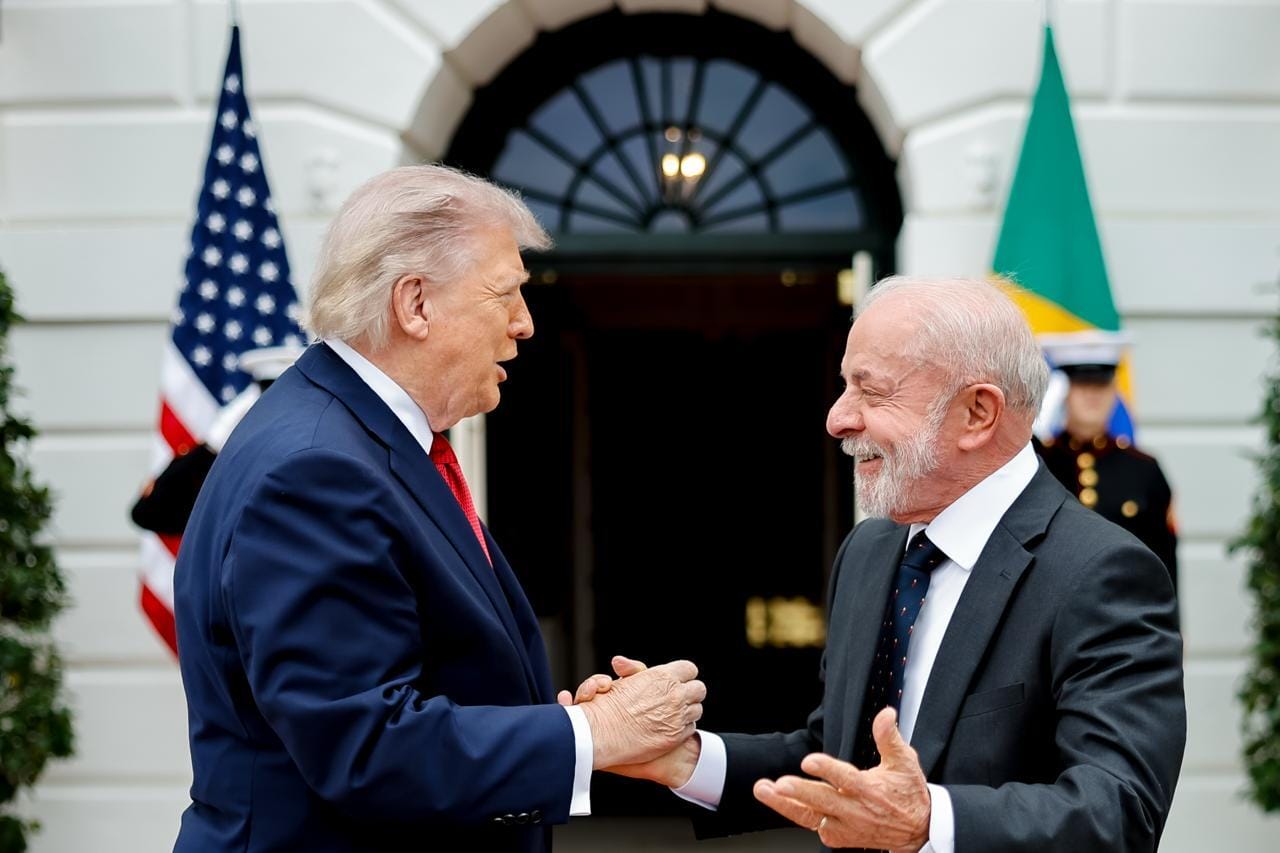
Brazilian President Luiz Inacio Lula da Silva meets with U.S. President Donald Trump at the White House on May 7, 2026. Brazilian Government / Ricardo Stuckert / Handout/Anadolu via Getty Images.

Lobbying in Brazil is dialed up to eleven. The country has 163 million internet users, with over 150 million on WhatsApp, and over 120 million on YouTube, Instagram and Facebook. With AI, Brazil is a similarly large, influential market. Portuguese is the sixth most widely-spoken language in the world, with 70% of speakers based in Brazil. Which means that, if an LLM has been trained in this language, it probably used content created by millions of Brazilians going about their business of making friends, debating politics and football online. It’s not just about journalists; we are all unpaid labor for Big Tech. 

In the words of Arthur Lira, the Speaker in Brazil’s Congress who filed a criminal complaint against Big Tech executives in 2023, companies adopted a variety of tactics “to shut down democratic debate and intimidate lawmakers” and defeat any attempt at using legislation to force accountability. Google, he said, used its search homepage, used by over 85% of Brazilians, to spread fear that proposed laws would “make the internet worse” or “make it harder to know what is true or false on the internet.” A report by the Federal University of Rio de Janeiro found that Google invested in ads on its own platform so extensively that it tweaked the search, prominently featuring the word “censorship” in connection to the Brazilian bill. Google also hired Michael Temer, a lawyer and former President of Brazil, to influence lawmakers and Supreme Court Justices. Of course, it was not Google alone. Meta executives, for instance, even argued that proposed legislation in Brazil could lead to the Bible being censored.

But Brazilian lawmakers, the Supreme Court, and civil society have persisted. On August 28, 2025, the “Felca Law” was approved, after a video by the influencer Felca denounced the exploitation and exposure of children on social media. The law establishes that digital platforms must take measures like verifying user age, implementing parental controls, and preventing children's exposure to adult content, gambling, and pornography. They must create reporting channels and may face fines of up to 10% of their annual revenue in Brazil.

Brazil’s president Luiz Inácio Lula da Silva and Donald Trump have had a testy relationship, in part because of Lula’s criticism of Big Tech. In February, at the AI Impact Summit in New Delhi, Lula called for global governance of AI, warning: “When few control the algorithms, it is not innovation, but domination. Regulating the so-called Big Tech companies is linked to the imperative of safeguarding human rights in the digital sphere, promoting information integrity, and protecting our countries’ creative industries.”

By sticking to his guns, Lula may now be seeing the tide turn. He was in the White House on May 7, and though neither he nor Trump took questions, both appeared encouraged by the meeting. “Very dynamic,” was how Trump described Lula, while Lula said he was “very, very satisfied” with how the talks went. With a general election in Brazil approaching in October, Lula will be sensitive to how the White House, as it has done in other elections, and Big Tech might offer vocal support for right wing candidates.

But his willingness to stand up to Big Tech is popular with voters. A recent poll found that 78% of Brazilians want to see tech companies being held responsible for the content they publish. Another poll found that 55% of Brazilians defend regulating Big Tech, with 43.9% against it. 

And as scams, fake news, and AI slop dominate ever larger swathes of all our digital space, in Brazil, as in much of the rest of the world, the entire experience of the internet is becoming more unappealing. Big Tech, with the assistance of the U.S. government, may be succeeding in slowing down the pace of regulation and watering down the content of that regulation, but in the long run its victories might be pyrrhic. People have had enough and their governments might be forced to listen.

The post How Brazil is starting to rein in Big Tech appeared first on Coda Story.

Aviation industry looks skywards as leaders fly in for Rio summit

Oil tankers may be stuck behind strait of Hormuz, but holding the Iata AGM in Brazil defies warnings of impending shortages

Nothing says jet fuel crisis, as one prospective attender put it, like flying everyone to Rio de Janeiro. Aviation leaders will converge in Brazil this weekend for the Iata AGM, the annual global airline summit, with the industry still, for the most part, looking resolutely skyward.

The oil tankers may still be stuck behind the strait of Hormuz as the conflict between the US, Israel and Iran flickers on, but for now, airlines continue to defy dire warnings of impending shortages which had stoked fears of a summer of chaos for European holidaymakers.

Continue reading...

© Photograph: Nature Picture Library/Alamy

© Photograph: Nature Picture Library/Alamy

© Photograph: Nature Picture Library/Alamy

Lula, Trump, and the Geopolitics of Rare Earths: Brazil’s Position Between Washington and Beijing

14 May 2026 at 12:30
Beneath the diplomatic protocol of Lula’s recent visit to Washington lay a strategic contest over rare-earth resources, the ongoing U.S.-China rivalry, and Brazil’s efforts to leverage geopolitical competition for national advantage ahead of the upcoming presidential election. The arrangements for Lula’s visit to Washington came together with remarkable speed after Trump extended the invitation—though, truth […]
❌