Normal view

Received — 15 June 2026 Euromaidan Press

Macron wants Washington to tell Ukraine “we are with you” as the G7 summit in Évian

15 June 2026 at 15:54

macron says putin shows intent end war—the killing hasn’t stopped french president emmanuel during interview news published 19 2025 macron-nbc russian vladimir ready war said remarks followed high-level white house

Europeans now shoulder nearly the entire burden of Kyiv's war effort, while America still provides weapons and intelligence, France's president said on 15 June.

Emmanuel Macron made the case in a TF1 interview ahead of the G7 summit in Évian-les-Bains. France hosts the three-day gathering through 17 June. Asked whether the United States remains a reliable ally, Macron answered that it does. Washington stays by Ukraine's side, he said, even as its role has shifted.

An ally whose role has shifted

A year and a half ago, the United States believed it could end the war quickly, Macron argued. It then grasped the full complexity, as Europe had. Today Washington no longer funds the bulk of the military effort. Europeans carry that weight instead. Even so, the country still supplies arms, shares intelligence, and exchanges information. Canada, Japan, Australia, New Zealand, and South Korea have also joined the financing, he added.

What Macron wants Washington to say

The French leader framed a clear ask for the G7 summit. The United States should declare, in his words: "We are with you, we will continue to support Ukraine, and we will increase the pressure on Russia to achieve a meaningful negotiation." He wants the bloc, meeting first with Trump on Monday evening and then with Zelenskyy, to rally around that message.

A peace format taking shape

Macron also set out his preferred negotiating structure. "The right negotiation is one in which Ukraine and Russia are at the table, but with Europeans and Americans present as well," he said. German government sources told Suspilne that the most realistic format would pair Ukraine and Russia with the United States and Europe. The hardest question, those sources said, is who speaks for Europe. They argued Kyiv now negotiates from a position of strength, because Russia cannot win on the battlefield and its economy is straining.

More pressure on Russia and the shadow fleet

Europe must keep raising the cost for Moscow, Macron said. He pointed to the Kremlin's shadow fleet, which moves oil to fund the war. Britain and France have run operations against that fleet over the past two weeks, he noted. Moreover, the remark lands the same day the EU adopted fresh sanctions on shadow-fleet vessels and operators.

Trump and Zelenskyy at Évian

Trump arrives in France on Monday and meets Macron that evening, US officials said. On 16 June, he joins a G7 summit working session that Zelenskyy will also attend. However, no one-on-one Trump–Zelenskyy meeting is currently scheduled. The two leaders might meet on the sidelines, an administration official said. At last year's G7 summit in Canada, Trump left early, and the gathering produced no joint statement on Ukraine.

Kallas calls the Lavra attack a war crime and announces new EU sanctions

15 June 2026 at 15:26

kaja-kallas--

The bloc's foreign ministers blacklisted shipping firms, drone makers, propagandists, and judges tied to Alexei Navalny's death, the Council confirmed on 15 June.

The package landed hours after a Russian missile and drone barrage damaged the Kyiv-Pechersk Lavra, a UNESCO World Heritage site. High Representative Kaja Kallas tied the two together, unveiling the measures ahead of the Foreign Affairs Council, which she chairs.

A response framed around war crimes

Russia escalated its attacks on civilians overnight and struck a UNESCO-protected landmark in Kyiv, Kallas said.

"These are war crimes, and Russia will have to answer for them," she wrote.

The bloc answered the same day with asset freezes and travel bans.

Drone makers and Chinese suppliers in the crosshairs

The new measures name seven individuals and 21 entities that prop up Russia's military-industrial complex and its middlemen abroad. The list targets producers and suppliers of drones and other military gear. Among them is NPO Lavochkin, a firm founded by the Russian space corporation Roscosmos. Rustakt, ASFPV, and IONOS also appear on the roster. Two Chinese companies, Shenzhen Minghuaxin and Xinxiang Richful Lubricant Additive Company, round out the named suppliers. The bloc also listed ERA Military Innovation Technopolis and the Advanced Research Foundation, both set up by the Russian state to build military drone systems.

Shadow fleet and a Lukoil unit

A second tranche hits two individuals, Tahir Garayev and Konstantin Rogach, alongside 24 entities linked to Russia's shadow fleet. The designations cover Lukoil-Western Siberia and companies registered in Russia, Liberia, Türkiye, the United Arab Emirates, Azerbaijan, and Hong Kong. The fleet helps Moscow ship crude oil around Western price caps.

Propagandists and a Kremlin culture fund

The Council also blacklisted 10 prominent Russian propagandists and one entity for information manipulation. The listed entity is the Presidential Fund for Cultural Initiatives, created by a decree from Vladimir Putin. Named individuals include Anatoly Kuzichev, Kirill Fedorov, Roman Antonovskii, and Maria Volkonskaya.

Listings over Navalny's death

A further 15 people and one entity face penalties over the persecution and death of opposition leader Alexei Navalny. They include Russian judges, prosecutors, FSB officers, and medical staff. The bloc acted on a joint statement issued in February 2026 by the United Kingdom, Sweden, France, Germany, and the Netherlands. That statement said Navalny was poisoned in February 2024 with the toxin epibatidine. The listed entity, IPJSC NTK, helped build a facial-recognition system used to track Navalny's supporters, the Council said.

These designations run alongside a broader 21st package the Commission proposed on 9 June. That wider effort targets banks, oil traders, refineries, and crypto platforms. The EU aims to adopt it by 15 July, before a review of the Russian oil price cap. Separately, the Council renewed its Crimea-occupation sanctions through 2027 after an annual review.

Russia has damaged or destroyed nearly 2,000 Ukrainian cultural heritage sites since 2022 — prosecutor general calls Lavra strike deliberate erasure

15 June 2026 at 14:16

Russian drone strike Geran on Kyiv's Unesko cathedral

Moscow's forces have looted over 7.8 million artifacts from museums in occupied territory since 2014, Ukraine's chief legal authority reported on 15 June.

The figure surfaced as Prosecutor General Ruslan Kravchenko condemned an overnight missile strike on the Kyiv-Pechersk Lavra. He placed the attack within what he called a deliberate state campaign to erase the country's identity. Kravchenko spoke hours after a combined Russian barrage set fire to the monastery's Dormition Cathedral. The cathedral is one of the most revered sites in Eastern Orthodox Christianity. Founded in 1051, the complex sits under UNESCO World Heritage protection. Moreover, it falls under the enhanced-safeguard mechanism of the 1954 Hague Convention.

A strike the prosecutor frames as cultural warfare

The Lavra hit belongs in the same category as earlier attacks on national symbols, Kravchenko argued. He grouped it with strikes on the Transfiguration Cathedral in Odesa and the Hryhorii Skovoroda museum in Kharkiv Oblast. The list also named the Ivankiv museum holding works by folk artist Maria Prymachenko. It extended to the Oleksandr Dovzhenko National Film Studio in Kyiv and the Organ and Chamber Music House in Dnipro.

"This is the deliberate policy of an aggressor state — to destroy what shapes Ukrainian identity," his office said.

Almost 2,000 sites damaged, more than 100 under UNESCO's umbrella

Russian forces have damaged or destroyed close to 2,000 elements of Ukrainian cultural heritage, Kravchenko stated. The count runs from the start of the full-scale invasion in February 2022. More than 100 of them carry UNESCO designation, he added.

That national tally runs well above the figure the UN body verifies on its own. UNESCO confirmed damage to 536 cultural sites as of 10 June 2026. That narrower count reflects stricter cross-checking against satellite imagery and on-site inspection. The gap reflects method, not contradiction. Ukrainian authorities log every culture-related facility affected in any way, while UNESCO applies a tighter definition of cultural property.

Dovzhenko studio loses Ukraine's largest costume archive

Investigators recovered missile fragments at the Dovzhenko film studio after the overnight assault, the prosecutor general reported. The strike leveled a two-story costume storehouse. It also damaged an annex to the sound stages, plus administrative and production buildings. No deaths or injuries occurred at the site.

Studio chief Andrii Donchyk told the "Snidanok z 1+1" program that the archive was the country's oldest. Roughly 100,000 costumes and about three million items of clothing had been stored there. How many survived the fire remained unclear.

Looting across occupied territory

Beyond physical damage, Kravchenko detailed a vast removal of movable Ukrainian cultural heritage. Russian forces seized or appropriated more than 7.8 million heritage objects from occupied-area museums between 2014 and 2026, he said. Furthermore, the true scale could be higher, because access to many collections remains blocked.

Prosecutors have opened more than 240 criminal cases and named 15 suspects so far.

"Crimes against cultural heritage are also war crimes. They carry no statute of limitations," Kravchenko said.

A countrywide barrage centered on Kyiv

The air force reported that Russia launched 70 missiles and 611 drones overnight on 15 June. Kyiv was the main axis of attack. Missiles also struck Dnipro and Kharkiv. Air defenses neutralized 632 incoming threats — 50 missiles and 582 drones. Nevertheless, 20 ballistic missiles and 27 attack drones hit 42 locations, while debris fell at 12 more.

In Kyiv, the strike killed five people and wounded 35, including two children, city authorities said. Fires broke out across nearly every district. President Volodymyr Zelenskyy later put the nationwide toll at 11 killed and 53 injured.

Moscow's denial and a pledge to escalate

Russia's defense ministry claimed the barrage targeted "defense-industrial complex" facilities in Kyiv, Dnipro, and Kharkiv. In addition, it repeated Moscow's standard line that its military avoids deliberate strikes on civilian infrastructure. The latest assault on Ukrainian cultural heritage and residential districts followed a 12 June statement by Vladimir Putin. He had said Russia would intensify its strikes on Ukraine.

Netherlands transfers sixth mine countermeasures vessel to Ukraine—named Henichesk after ship sunk in 2022

15 June 2026 at 13:40

Henichesk

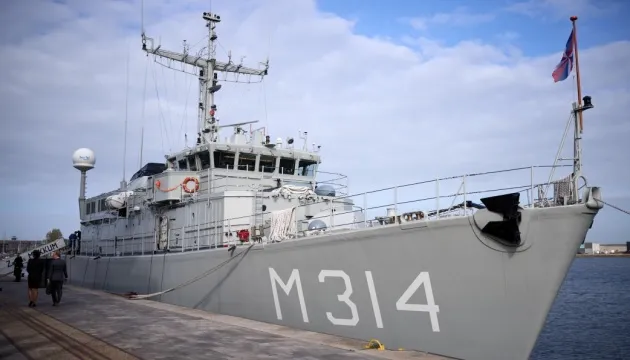
Ukraine's Naval Forces received a sixth mine countermeasures vessel from the Netherlands on 15 June, the Alkmaar-class minehunter formerly known as Zr.Ms. Makkum, renamed Henichesk and transferred under the Maritime Capabilities Coalition, Navy commander Vice Admiral Oleksii Neizhpapa announced on Facebook.

All five mine countermeasures vessels now in Ukrainian service were transferred under the Maritime Capabilities Coalition, an international grouping of more than 20 states established in December 2023 at the initiative of the United Kingdom and Norway to rebuild and modernize Ukraine's naval forces for Black Sea security.

A fleet rebuilt from allied transfers

The vessel is named after the raid minesweeper of the same name that was lost while performing a combat mission in 2022, Neizhpapa stated. At the official handover ceremony, Neizhpapa raised the Ukrainian Navy flag on the new ship in the presence of the commanders of the Royal Netherlands Navy, the Royal Belgian Navy, and the navies of Romania, Lithuania, and Latvia.

Henichesk joins four previously transferred vessels: Cherkasy and Chernihiv, both Sandown-class ships from the United Kingdom, and Melitopol and Mariupol, both Alkmaar-class ships from Belgium and the Netherlands. All five vessels will be temporarily based in the United Kingdom until the end of the war.

Vessel design and mine-clearance systems

The primary mission of Alkmaar-class minesweepers is to detect and neutralize naval mines, as well as to protect naval formations in mine-threatened areas. The hulls are built from non-magnetic materials, including polyester-based fiberglass, reducing vulnerability to magnetic mines. The superstructures are made of lightweight alloys. The ships are equipped with a hull-mounted sonar system for detecting underwater objects, as well as remotely operated underwater vehicles for identifying and neutralizing threats.

The primary mine-disposal tool is the SeaFox underwater drone, which identifies and destroys mines using a controlled explosive charge. In complex cases, divers can be deployed for specialized operations.

Black Sea demining and future exercises

Neizhpapa stated that Henichesk will strengthen Ukraine's capabilities in mine countermeasures—searching for, detecting, and neutralizing naval mines. The new ship is expected to participate in the Sea Breeze exercises in 2027. After the war ends, the vessels are planned for large-scale demining operations and for restoring safe navigation in the Black Sea and the Sea of Azov.

France compares Lavra strike to bombing Notre-Dame, calls for tougher sanctions

15 June 2026 at 12:28

the Kyiv-Pechersk Lavra

Russia's overnight strike on the Kyiv Pechersk Lavra on 15 June prompted condemnation from European foreign ministers and calls for an expanded EU sanctions package.

The strike on one of Christianity's most significant sites—a UNESCO World Heritage complex in use for nearly a millennium—has given fresh momentum to EU member states pressing for broader economic restrictions against Russia ahead of the vote on a 21st sanctions package.

EU ministers react ahead of Luxembourg council meeting

Speaking before the EU Foreign Affairs Council meeting in Luxembourg, French Foreign Minister Jean-Noël Barrot said, according to Radio Liberty, Russia had "once again demonstrated the full brutality of its actions," comparing the attack to striking the most sacred religious sites in France.

"For us French, this would be equivalent to bombing Notre-Dame or the Basilica of Saint-Denis," Barrot said. He added that France supports continued pressure on Russia, including sanctions targeting entities that support the Russian shadow fleet and those responsible for spreading Kremlin propaganda.

Estonian Foreign Minister Margus Tsakhna said Russia had "once again demonstrated its barbarity and contempt for humanity's shared heritage," describing the Lavra as a UNESCO World Heritage site and "one of Christianity's holiest monasteries" that had "been a place of worship for nearly a thousand years."

"Today, it burns because of Russia," Tsakhna said.

EU High Representative for Foreign Affairs Kaja Kallas also condemned the attack, describing it as part of a broader pattern. "Last night we again witnessed intensified attacks on civilians, as well as on UNESCO cultural heritage sites. All of this constitutes war crimes committed by Russia," Kallas said.

German Foreign Minister Johann Wadephul called the strike "evidence of Russia's unwillingness to engage in peace negotiations," and said Germany would continue its policy of full support for Ukraine and further strengthening of sanctions against Russia. "We again saw vile attacks from the Russian side—in particular, last night against European cultural values of incalculable significance," Wadephul said.

Lithuania and Ukraine call for stronger measures

Lithuanian Foreign Minister Kęstutis Budrys said the attack was a further argument for adopting the 21st EU sanctions package, but added that the current proposal was not sufficiently stringent. He noted that Russian energy companies Rosatom, Rosneft, and Lukoil remain off the sanctions list, and that no full ban on maritime services for the Russian shadow fleet is included in the current draft.

"This is one of the holiest places for the Christian world. For Russia, no red lines exist anymore," Budrys said.

Lithuanian President Gitanas Nausėda wrote that for Russia "nothing is sacred" and called for increased pressure to end the war. "In Russia's attacks on the Kyiv Pechersk Lavra, one of the holiest Orthodox shrines, we see a deranged contempt for human lives, cultural heritage, and the very spiritual tradition that Russia calls its own," he wrote.

Ukrainian Foreign Minister Andrii Sybiha said he was urgently initiating all relevant procedures within UNESCO, "demanding an immediate and adequate response to this state barbarism." Sybiha said Ukraine expects "no vague words, no silence, no weak steps"—only "the necessary actions to stop Russian barbarism."

Strike on the Lavra

Russia launched a wave of missile and drone strikes on Kyiv overnight on 15 June, striking the Dormition Cathedral at the Kyiv Pechersk Lavra. According to the Hromadske source, Ukrainian forces recorded 681 aerial attack means in total—70 missiles and 611 drones of various types. Kyiv was the primary target; Dnipro and Kharkiv were also struck with missiles.

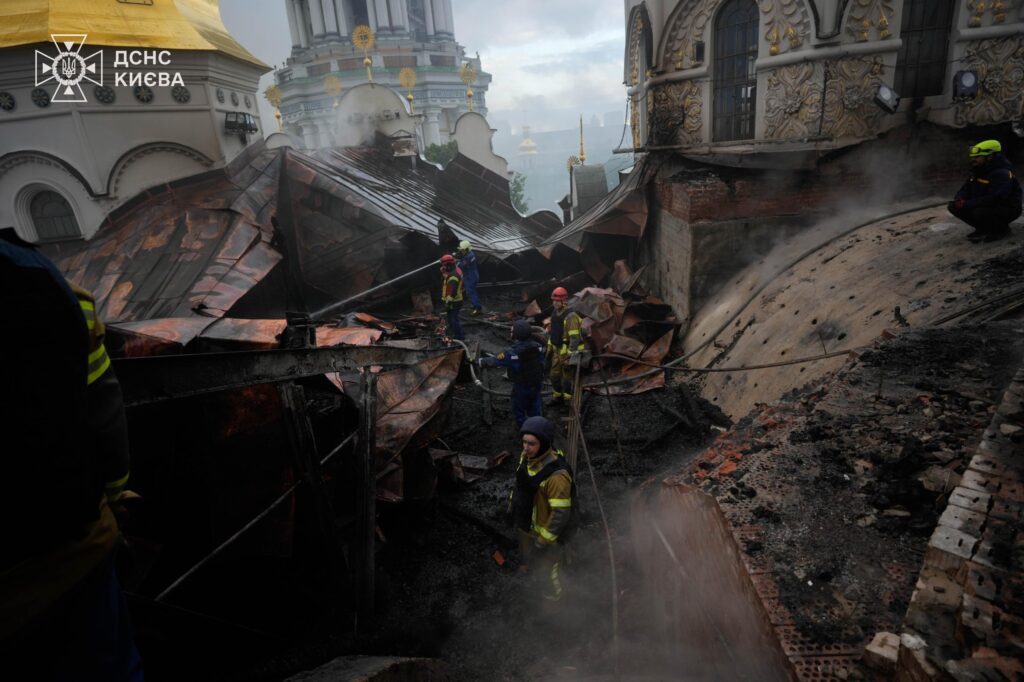
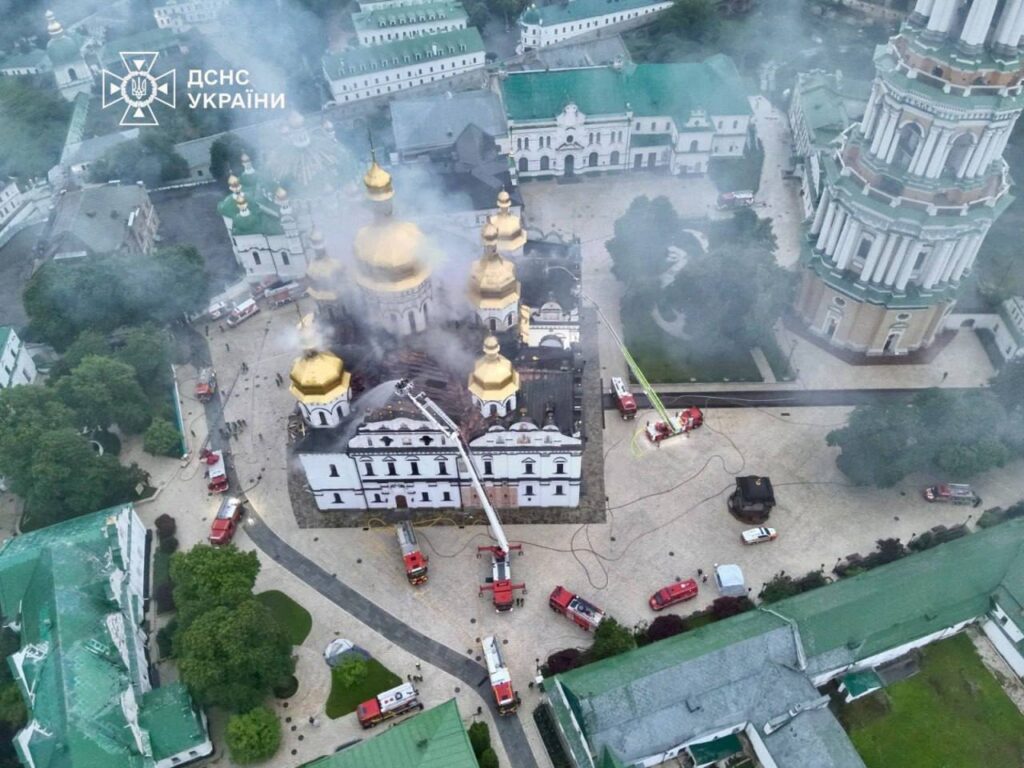
Around 1 am, a Russian Shahed drone hit the altar section of the Dormition Cathedral—specifically the Stefanivskyi chapel. The strike ignited a fire covering approximately 800 square meters on the Lavra grounds.

Maksym Ostapenko, director-general of the Kyiv Pechersk Lavra National Reserve, told Hromadske that swift action by firefighters and staff prevented a far greater loss. "Only the timely actions of the firefighters do we owe the fact that we see the Dormition Cathedral as it is now, because everything could have been much, much worse. The target was absolutely deliberate—to destroy the cathedral," Ostapenko said. He added that artifacts and relics inside were evacuated in time, including the Reliquary of Saint Stephen, an 18th-century artifact he described as one of the sacred objects of Orthodoxy.

Nearly 42,000 Kyiv residents sheltered in metro during overnight Russian attack, including 3,400 children

15 June 2026 at 11:00

Kyiv Metro

Almost 42,000 people—including 3,400 children—took shelter in Kyiv's metro stations during Russia's mass aerial attack on the Ukrainian capital overnight on 15 June, municipal operator KP Kyivskyi Metropoliten reported.

The figures underscore the scale of civilian displacement during major strikes: Russia launched 681 aerial weapons that night—70 rockets and 611 drones of various types—the largest single recorded salvo against Ukraine. Air defenses intercepted 632 by 08:00, but 20 ballistic missiles and 27 strike drones reached their targets across 42 locations.

Metro system operates as city-wide shelter network

All 46 underground stations function as shelters around the clock during air alerts, with all vestibules open for entry, the operator said. During the overnight attack, crowding at some stations prompted an advisory: commuters were directed toward central stations—Zoloti Vorota, Teatralna, Maidan Nezalezhnosti, Khreshchatyk, Ploshcha Ukrainskykh Heroiv, and Palats Sportu—as less congested alternatives.

The operator noted average temperatures inside shelters run at 17–18°C and recommended residents bring warm clothing, blankets, or sleeping mats. Shelter-seekers were also advised to carry water or hot drinks, necessary medications, and hygiene supplies including wet and dry wipes. Those traveling with pets were advised to bring pads and bags. Bulky items—tents and inflatable mattresses in particular—were discouraged to preserve floor space for other sheltering residents, and the operator asked people to keep access paths to service rooms, restrooms, and trains clear at all times.

Five killed in Kyiv as strikes hit cultural landmarks

Five people were killed in Kyiv in the attack and 35 were injured, including two children, with rescue operations still ongoing at the time of reporting. Among the sites struck were the Assumption Cathedral of the Kyiv-Pechersk Lavra, the Mystetskyi Arsenal arts complex adjacent to it, and the Oleksandr Dovzhenko National Film Studio, where the attack destroyed Ukraine's largest and oldest stage costume collection. Ballistic missiles also reached Dnipro and Kharkiv.

Russian drone strike on Dnipro damages organ music house, college, and injures one

15 June 2026 at 09:45

The House of Organ and Chamber Music,

Russian forces struck Dnipro with drones in the early hours of 15 June, damaging a cultural landmark, a college, a school, an enterprise, and infrastructure objects, Dnipropetrovsk Oblast Military Administration head Oleksandr Hanzha reported via Telegram.

The attack damaged the House of Organ and Chamber Music, which is one of Dnipro's foremost cultural institutions, housed in the former St. Nicholas Cathedral — a neoclassical building with Baroque elements constructed in the early 20th century. It holds one of Ukraine's finest organs: a 30-register W. Sauer instrument built in Germany, with 2,074 pipes and a total weight of 12 tonnes. The venue hosts more than 300 concerts annually, including international festivals, and is a listed national architectural and historical landmark.

Sequence of strikes and damage

Air Force of the Armed Forces of Ukraine warned at 01:25 of a missile approaching the city. Explosions were heard after midnight. At 02:10, Hanzha reported that one person had been injured; he later specified the victim was a 64-year-old man hospitalized in moderate condition.

An enterprise was damaged and a fire broke out at the site, Hanzha said. At 03:22, the official reported that one section of a college building had been destroyed, and that blast waves had shattered windows at a school and a cultural facility.

By 06:40, it became known that the House of Organ and Chamber Music had also sustained damage.

Air defense forces destroyed 24 Russian drones over Dnipropetrovsk Oblast during the attack, Hanzha said. Authorities called on residents not to ignore air raid alerts.

The strike on Dnipro was part of a large-scale Russian aerial attack across Ukraine overnight on 15 June. Russia launched 611 attack drones along with six Zirkon anti-ship missiles, 34 Iskander-M/S-400 ballistic missiles, and 30 Kh-101/Iskander-K cruise missiles against Ukraine overnight.

In Kyiv, at least five people were killed and 35 injured, and around 140,000 households were left without electricity after strikes hit residential areas and power infrastructure. The Kyiv Pechersk Lavra, a UNESCO World Heritage Site, was set on fire — its Dormition Cathedral sustaining direct hits. In Kharkiv, five rescue workers were killed by a second Russian strike while fighting a blaze caused by an earlier attack, with at least five others wounded, Interior Minister Ihor Klymenko said.

Russia kills 5 in Kyiv, injuries 35 in overnight strike with 681 weapons—including six Zircons

15 June 2026 at 08:10

kyiv monastery

Russia launched its largest combined strike in recent weeks against Ukraine overnight on 15 June, targeting Kyiv with ballistic missiles, cruise missiles, and attack drones that sparked fires across nearly all of the capital's districts, killing five people and injuring 35, including two children, Kyiv Mayor Vitaliy Klitschko and the head of the Kyiv City Military Administration (KCMA), Tymur Tkachenko, reported.

Ukraine's Air Force said air defense intercepted 632 of the 681 weapons launched—50 missiles and 582 drones—leaving 20 ballistic missiles and 27 attack drones to strike 42 locations, with debris from downed drones falling on a further 12 sites.

Scale and composition of the attack

Ukraine's Air Force recorded 681 aerial attack systems in total: 70 missiles and 611 drones and loitering munitions of various types. The missile component comprised six Zircon anti-ship missiles launched from Russian-occupied Crimea; 34 Iskander-M/S-400 ballistic missiles from Bryansk and Kursk oblasts; and 30 Kh-101/Iskander-K cruise missiles from Vologda and Kursk oblasts, according to the Air Force. The drone component—611 systems—included Shahed-type attack drones, Herber, Italmas, Banderol loitering munitions, and Parodiya decoy drones, launched from Bryansk, Kursk, Oryol, Millerovo, Primorsko-Akhtarsk, and occupied Crimea.

Aviation, surface-to-air missile units, electronic warfare units, drone units, and mobile fire groups of Ukraine's Defense Forces all took part in repelling the attack, the Air Force said.

How the strike differed from recent ones

This was the third-largest Russian mass attack on Ukraine in the more than three years since the full-scale invasion began. The attack closely resembled Russia's strike of 2 June but with one key substitution: Kalibr sea-launched cruise missiles were replaced by Iskander-K cruise missiles, Yurii Ihnat, head of communications for the Air Force, said on the national telethon on 15 June.

"Probably it differs in that there were no Kalibr cruise missiles, but instead there were Iskander-K cruise missiles… In total—70 missiles and 611 UAVs of various types. Among them, the already well-known anti-ship Zircon missiles, which attacked from Crimea, 34 ballistic Iskander-M missiles," Ihnat said.

Ballistic missiles remain the most difficult threat to intercept, Ihnat noted. Of the 34 Iskander-M/S-400 missiles flying ballistic trajectories, air defense downed 15—a result he described as relatively high for an attack of this character. Five of the six Zircon missiles, which also follow a ballistic profile, were intercepted, which Ihnat called one of the best results recorded against that weapon type. All 30 cruise missiles launched were destroyed, he said: "As of the morning, it is known that the Defense Forces managed to shoot down 100% of the cruise missiles the enemy launched at Ukraine."

Ballistic missiles struck Kharkiv and Dnipro in addition to Kyiv, Ihnat confirmed. Aviation, surface-to-air missile units, electronic warfare units, drone units, and mobile fire groups of Ukraine's Defense Forces all took part in repelling the attack.

Kyiv: fires across all districts

The attack struck residential buildings, cultural institutions, and infrastructure across Kyiv. In Obolonskyi district, a nine-story apartment building was hit, and around 30 cars burned. In Solomianskyi district, a nine-story residential building was struck; firefighters evacuated 15 people, including two children, and a school building was also reported damaged. In Desnianskyi district, a nine-story building caught fire, three private homes were destroyed by debris, and a kindergarten grounds were set alight.

In Pecherskyi district, a 17-story apartment building was struck. A fire then broke out on the roof of the Dormition Cathedral at the Kyiv-Pechersk Lavra—one of Ukraine's most significant Orthodox Christian sites—and was extinguished by 08:35, the State Emergency Service (DSNS) reported. While firefighters were working at the cathedral, a second strike hit nearby, targeting the National Cultural, Arts, and Museum Complex Mystetskyi Arsenal, according to DSNS.

Also struck were a vegetable market and an eight-story residential building in Shevchenkivskyi district; a high-rise residential building and warehouse facilities in Holosiivskyi district; residential development in Sviatoshynskyi district; and private homes in Darnytskyi and Dniprovskyi districts.

The four fatalities were recorded in Obolonskyi, Holosiivskyi, and Solomianskyi districts, DSNS said earlier.

DSNS said more than 1,200 rescue workers and police were deployed in Kyiv, with reinforcement rapid-response units called in and DSNS aviation used to fight large-scale fires. Twenty-six residential buildings were damaged in the capital, the service said.

"Damages and fires have been recorded in almost all districts of the city," Klitschko wrote.

Infrastructure and cultural damage

DSNS and Ukraine’s Deputy Prime Minister for Humanitarian Policy and Minister of Culture Tetiana Berezhna reported that the Oleksandr Dovzhenko National Film Studio had one of its production facilities destroyed.

The Dovzhenko National Film Studio costume collection was destroyed, according to Berezhna.

A large explosion was reported at the site around 2:00 am, followed by a massive fire that emergency services and explosives technicians worked through the night to extinguish, with staff only able to enter the premises around 5:00 am. The studio director told Kyiv24 the strike was likely caused by a missile impact. The fire gutted the costume workshop — a two-story building of more than 2,500 square meters packed floor to ceiling with garments stored millimeters apart, according to the channel.

An academy and a kindergarten were also damaged in Kyiv. Emergency services said 26 fires covering nearly 6,000 square meters were recorded in the capital, with work continuing at six locations as of the morning update

The strike also destroyed the largest and most technologically advanced parcel sorting terminal operated by Nova Poshta, Ukraine's leading delivery company. The facility was the first in Ukraine to be equipped with automated parcel-sorting equipment from Dutch company Vanderlande, a global leader in logistics automation, according to Nova Poshta's chief operating officer Yevhen Tafiichuk. Tafiichuk said all staff were safe and that backup delivery routes had already been activated.

The building of the High Anti-Corruption Court (HACC) on Beresteiskyi Avenue also sustained damage in the attack. Windows were blown out, and court staff were assessing the full extent of the damage as cleanup and recovery work continued on site, the court said in a statement. The court said all scheduled hearings would proceed as planned.

Road police blocked sections of roads in Solomianskyi, Obolonskyi, Pecherskyi, and Desnianskyi districts following the attack, and public transport rerouted in affected areas, deputy head of the Patrol Police Department Oleksii Biloshytskyi and the municipal transport operator Kyivpasstrans reported.

Received — 14 June 2026 Euromaidan Press

Ukraine denies biolab claims as Gabbard map mislocates Kyiv and invents city “Cherniv”

14 June 2026 at 06:44

Director of National Intelligence Tulsi Gabbard.

Ukraine's foreign ministry rejected renewed allegations of "biolabs" on its territory, stating the country "has never developed, produced, or stockpiled biological weapons" and adheres to the Biological and Toxin Weapons Convention (BTWC), according to the ministry's press service.

Ministry response

The comment came after outgoing US Director of National Intelligence Tulsi Gabbard published findings alleging long-running US government funding of more than 120 "biolabs" in 30 countries, including Ukraine, according to a statement on her office's website.

The foreign ministry said cooperation between Ukraine and the United States has continued for years and is aimed solely at strengthening public health systems, epidemiological surveillance, and laboratory diagnostics. All laboratory facilities involved in international technical assistance programs are civilian diagnostic and research centers unconnected to any military purposes, the ministry said.

"The topic of so-called 'biological weapons development labs' is not new—Russia has used it in its propaganda for many years. At the same time, all Russian accusations have been repeatedly refuted at the international level," the ministry said.

Past international reviews

The ministry said that in 2022, at Russia's request, a formal consultative process was held with BTWC member states, during which Ukraine provided all data on cooperation programs and none of Russia's accusations were substantiated. The UN Security Council reviewed the same allegations and Russia provided no evidence to support its claims, the ministry said. In December 2023, at a meeting of BTWC member states, Ukraine officially confirmed the matter was fully closed.

"Ukraine remains committed to the principles of transparency, international cooperation, and strengthening the global biosecurity system. We call for reliance on the results of international consultations and verified facts, rather than distorted interpretations or Russian propaganda," the ministry said.

Gabbard's map

Gabbard said the "labs" in Ukraine could be "at risk due to the prolonged Russian-Ukrainian war." She said intelligence had previously warned that US-funded biolabs in Ukraine likely "contain dangerous pathogens and remain vulnerable to sustained threats of attack, seizure, or damage by Russia."

Gabbard said evidence of the full scope and funding of these labs was "knowingly concealed from the American people" by "influential people who falsely claimed they didn't exist," attributing the concealment to the Biden administration.

Gabbard also published a "map" marking purported "biolabs" in Ukraine. Her office's map relocated Kyiv to the position of Odesa and labeled one city "Cherniv," apparently intending Chernivtsi. The map also marked alleged "biolabs" in Russian-occupied Crimea and in a location labeled "Zakarpattia."

Press and analyst reaction

Financial Times journalist Christopher Miller said Gabbard used the opportunity to spread "one of her favorite conspiracy theories," distorting facts and "doing the Kremlin a favor." Miller also noted the incorrect placement of Ukrainian cities on the map.

"These four slides shared by Gabbard hardly qualify as 'evidence' for her claims. And if even the US intelligence community can't correctly place Kyiv on a map and invented a new Ukrainian city—'Cherniv' (perhaps she meant Chernivtsi or Chernihiv, but neither is located where 'Cherniv' appears on her map)—how much attention do you think was paid to everything else?" Miller wrote.

Bulgarian investigative journalist Christo Grozev of Bellingcat, an expert on Russian intelligence services, said the US director of national intelligence "effectively handed the Kremlin another information operation."

"Incredible. By publishing what looks (if you bother to look at the 'evidence') like an entirely legitimate American program, and even mentioning the risks of it being used in 'Russian information campaigns,' Tulsi Gabbard—a true 'gift that keeps on giving'—hands the Kremlin yet another information operation," Grozev wrote.

Grozev called Gabbard's actions an abuse of office: "There is a red line of manipulation and abuse of office beyond which a useful idiot inevitably becomes a traitor."

Russian foreign ministry spokesperson Maria Zakharova said the Kremlin "has repeatedly spoken about uncontrolled US military-biological activity."

Background

RFE/RL reported it is unclear why Gabbard released the information days before stepping down as director of national intelligence, and whether the data contains anything new or revelatory. RFE/RL noted the US government has for years openly funded, through the Cooperative Threat Reduction program, efforts to safely secure and control Cold War-era research programs tied mainly to former Soviet biological and chemical weapons development, with some facilities located in Kyiv, Tbilisi, and other former Soviet sites.

The Trump administration has in recent months been reviewing documents on US-funded biolabs following a decision to ban federal funding for organism-modification research in certain countries, including China, over insufficient oversight concerns. RFE/RL reported that US government bodies such as the Department of Defense have long funded foreign laboratories conducting disease research.

At the start of Russia's full-scale invasion, Gabbard had already claimed the existence of US-funded biological laboratories in Ukraine, citing a Pentagon document on cooperation with the Ukrainian government on safe biological threat detection and diagnosis and pathogen risk reduction. That press release stated the United States had supported Ukrainian laboratories, medical and veterinary facilities, and diagnostic sites under a biosecurity program since 2005.

In April 2022, Ukraine's Center for Countering Disinformation said Gabbard had for several years worked for a foreign audience for Russian money. Since the start of Russia's full-scale war, Gabbard has said the United States was "guilty of Russia's military aggression" because it had "provoked" Russia for years, and that "Washington's ruling elite wants Ukrainians to kill as many Russians as possible."

Received — 13 June 2026 Euromaidan Press

Swedish fighters intercept Russian Su-24 and Su-34 over Baltic Sea

13 June 2026 at 17:32

Gripen

Swedish JAS 39 Gripen jets intercepted Russian Su-24 and Su-34 aircraft twice on 13 June, with allied combat aircraft also scrambled, the Swedish Armed Forces reported.

Sweden's territorial integrity has faced repeated pressure from Russian military activity over the Baltic Sea, with NATO allies intercepting Russian strategic bombers and fighters over the same waters in April 2026.

What happened

Sweden's air force carried out two interception operations on Saturday, 13 June, each involving two pairs of JAS 39 Gripen fighters, according to the Swedish Armed Forces on X and Nordic Defence Sector. The intercepted aircraft were a Su-24 Fencer supersonic bomber and a Su-34 Fullback fighter-bomber.

Allied combat aircraft were also scrambled during the incidents. Swedish airspace was not violated, the Swedish Armed Forces said.

Officials' response

"Russia's behaviour is serious and indicates a repeated pattern that threatens both our territorial integrity and security. Swedish and allied fighter aircraft acted swiftly, decisively, and clearly, intercepting the Russian aircraft," said Eva Skoog Haslum, head of the Swedish Armed Forces' Joint Operational Command.

In April 2026, NATO countries intercepted Russian strategic bombers and fighters flying over the Baltic Sea. Lithuanian Foreign Minister Kęstutis Budrys recently said the Alliance must be ready to neutralize Russian military facilities in the Kaliningrad region in the event of a conflict with Russia.

Trump and Zelenskyy to attend same G7 working session, may meet on sidelines

13 June 2026 at 16:45

Zelenskyy trump

US President Donald Trump and Ukrainian President Volodymyr Zelenskyy will take part in the same working session at the G7 summit in Evian, France, and "could very well cross paths" on the sidelines, a senior US official said, according to Suspilne's correspondent and Le Figaro with AFP.

The G7 summit takes place from 15 to 17 June in Evian. Trump will hold a bilateral meeting with French President Emmanuel Macron on his arrival on Monday, one-on-one meetings with the leaders of Qatar, the UAE, Egypt, and India on Tuesday and Wednesday, and will take part in the G7 leaders' working session on Tuesday alongside Zelenskyy.

No bilateral meeting scheduled

Asked whether a bilateral meeting between Trump and Zelenskyy was planned, the US official said the two leaders "could very well cross paths" on the margins of Tuesday's session, while specifying that no formal bilateral meeting was on Trump's agenda.

The official, speaking anonymously, described ending the Russo-Ukrainian war as a top priority for Trump: "We want the war to end as soon as possible. This is what President Trump prioritizes, one of his top priorities."

A separate US official called the 79-year-old president the "only" world leader capable of ending the war between Russia and Ukraine, without elaborating.

Versailles dinner marks US anniversary

On Wednesday, after the summit concludes, Trump will have dinner with Macron at Versailles. According to the French presidency, the dinner marks the 250th anniversary of US independence at a "high place of Franco-American friendship where the treaty consecrating it was signed in 1783."

Other agenda items

The official sought to downplay tensions between Trump and NATO allies over US commitment to the alliance: "It's a very easy conversation. It has nothing to do with the hysterical way it's being presented in the press, and we are very pleased with the burden-sharing efforts underway and we want to see more of it."

A second US official praised France's "very smart" and "relevant" decision to put trade imbalances on the summit agenda. According to the White House, Trump intends to discuss artificial intelligence, immigration, innovation, and energy with G7 partners. The G7 comprises Germany, Canada, the United States, France, Italy, Japan, and the United Kingdom; Trump has repeatedly argued for including Russia to restore the former G8 format.

The last meeting between the American and Ukrainian presidents was at the Davos forum in January 2026.

Ukrainian drones hit Dzhankoi as strike unit declares hunt on Russian Crimea logistics

13 June 2026 at 11:29

Ukrainian strikes on the Dzhankoy

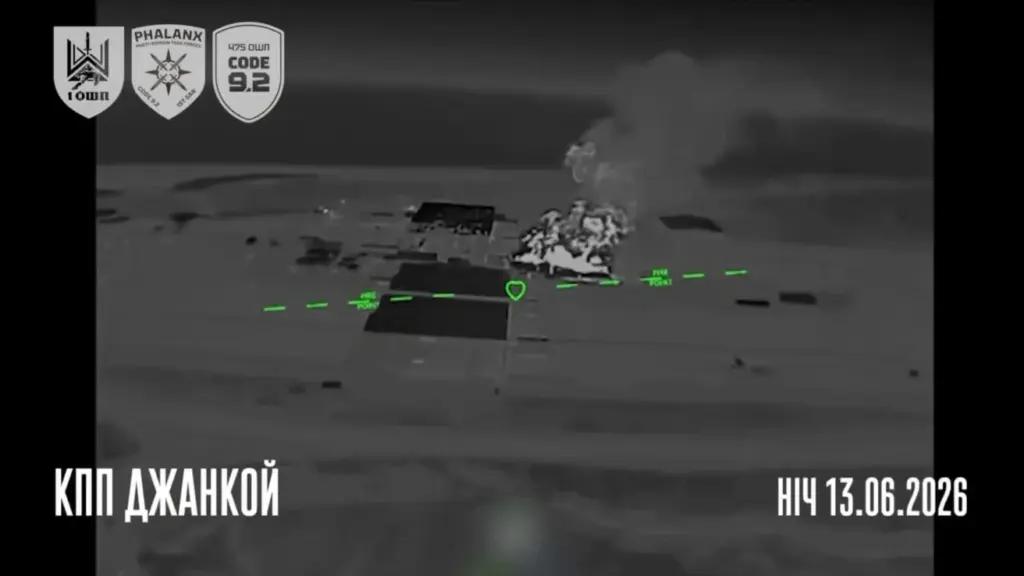
Ukrainian drones struck the Dzhankoi checkpoint, a railway bridge, a Russian pontoon crossing, and trucks at Chonhar overnight on 13 June, hitting four targets along the only land corridor between Russian-occupied Crimea and the southern front. Traffic toward the Dzhankoi checkpoint was halted, Russia's installed head of occupied Kherson Oblast Vladimir Saldo said on Telegram, claiming Russian air defenses shot down 25 Ukrainian drones overnight.

The strike marks a stated change in Ukrainian operational concept. The 1st Separate Assault Regiment named after Dmytro Kotsiubailo, which led the operation jointly with the 475th Separate Assault Regiment "CODE 9.2," announced it is moving from one-off attacks on the bridges themselves to sustained patrol of the entire logistics route. "We are transitioning to patrolling enemy logistics from temporarily occupied Crimea and blocking attempts to restore crossings," the regiment said in a statement posted to Facebook. "Pontoon throughput is low. Trucks accumulate in queues, becoming ready targets for us." Russian fuel and ammunition supplying Russia's southern front pass through this corridor.

What was hit

The Dzhankoi checkpoint controls the main road between northern Crimea and the Kherson Oblast mainland and serves as the busiest highway and rail junction in occupied Crimea. Saldo also said a bridge between Henichesk and the Arabat Spit, an alternative crossing point Ukraine first struck on 10 June, was attacked again overnight. Ukrainian forces did not confirm Saldo's air defense claim.

The Chonhar bridge — the main highway link between Crimea and occupied Kherson Oblast — was first hit on 7 June by the joint Falanga multidomain operations center of the two regiments, using Fire Point company drones and long-range "Behemoth" UAVs. Traffic was rerouted, then halted again after a second strike on 9 June. Four vehicular bridges at Crimea's northwestern entrance near Armiansk were struck on 11 June, Euromaidan Press reported. The overnight strike on the Dzhankoi checkpoint extends the pattern — and signals the campaign has moved from the bridges to the trucks themselves.

The logistics spine

The corridor Ukraine is now patrolling carries the supplies that sustain Russian operations across Ukraine's south. Russian fuel for the Huliaipole direction is shipped by ferry to Crimea and then trucked across the peninsula to the front, regiment commander Dmytro Filatov, call sign Perun, told Ukrainska Pravda earlier this week. Russian cargo, he said, does not move across the Kerch Bridge — its railway link has not been restored since the October 2022 explosion. Cyber intelligence inside Russian military networks now allows Ukrainian planners to target specific units waiting for fuel, Filatov added. The 37th Motor Rifle Brigade was the target of the 7 June Chonhar strike, he said. Trucks ordered for that brigade had still not arrived at the time of his interview.

A multiplying problem for Russian logistics

The interdiction campaign confronts Russia with a layered constraint. Pontoons replace damaged bridges, but they throttle throughput and concentrate trucks in queues — the conditions the 1st Assault Regiment now describes as "ready targets." Rerouting through Armiansk and Perekop runs into the bridges hit on 11 June. Ferrying fuel from Krasnodar Krai bypasses the corridor entirely but cannot scale to replace road transport on the timeframes Russian units in southern Ukraine need.

Filatov said on 10 June that the Chonhar bridge had sustained critical damage and that the occupation forces were searching for new logistics routes for ammunition and fuel.

What changes

The announcement is what makes this strike news rather than another item in a logistics campaign. Until now, the Crimea land corridor functioned — slowly, under pressure, but it functioned. As of overnight on 13 June, the regiment that led the bridge strikes is declaring the corridor a sustained engagement zone. Not a target struck once. A route to be patrolled.

"We bleed the enemy to advance forward," the unit said. "This is not the end.

Ukraine to supply NATO ally Latvia with strike drones, ground robots, naval systems

13 June 2026 at 11:09

latvia ukraine drone

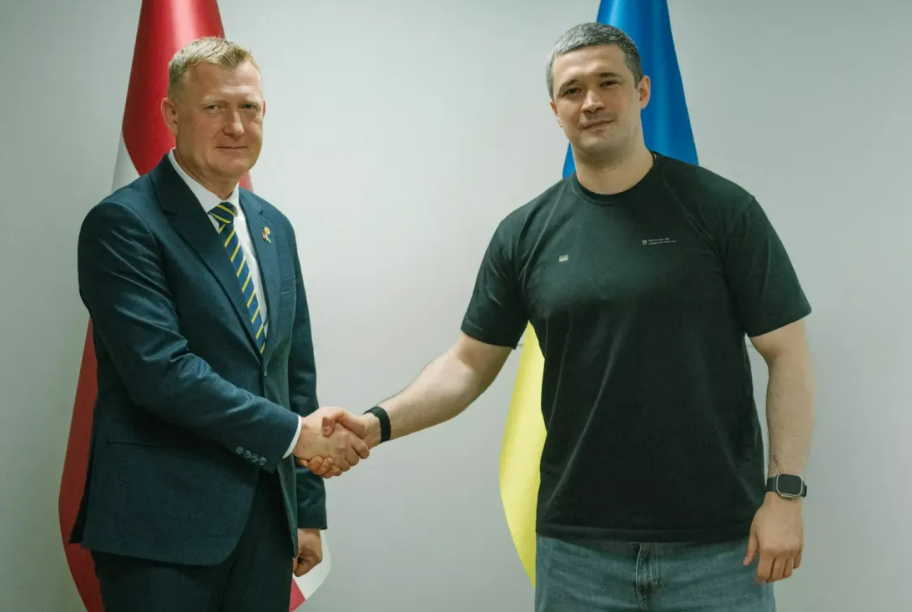
Ukrainian and Latvian defense ministers named specific categories of unmanned systems that will move between the two countries under the Drone Deal, Ukraine's defense minister Mykhailo Fedorov said on 13 June.

Latvia will supply Ukraine with anti-drone systems of Latvian manufacture. Ukraine will supply Latvia with strike drones, ground robotic complexes, and maritime drones, following a Kyiv meeting between Fedorov and Latvian defense minister Raivis Melnis.

The exchange formalizes what until now ran one way. Latvia has been a heavyweight donor of drones and equipment since 2022, pledging 10 million euros to joint defense manufacturing in 2025 alone.

Today's agreement makes Ukraine a supplier to a NATO member for the first time under this format.

"Ukrainian technologies and combat experience help partners adapt faster to the challenges of modern warfare," Fedorov wrote on Telegram, "while support from allies makes it possible to scale solutions that have already proven effective on the battlefield."

The meeting is Melnis's first foreign trip as defense minister. He took office on 28 May after his predecessor Andris Sprūds resigned over a 7 May Ukrainian drone crash near Latvia's Rēzekne oil storage facility — an incident that brought down Prime Minister Evika Siliņa's government.

Before his appointment, Melnis served as the Latvian defense ministry's representative at the embassy in Kyiv.

In a separate meeting on the same visit, Melnis told President Volodymyr Zelenskyy: "We have supported Ukraine and continue to support it with training and our expertise since the very beginning. And now we are asking Ukraine to support us, because there is only one country in the world who knows how to fight Russia, how to stop Russia."

What the Drone Deal opens

The 9 June Drone Deal, signed in Tallinn between Zelenskyy and Latvia's new Prime Minister Andris Kulbergs at the Nordic-Baltic Eight summit, is the sixth bilateral framework Ukraine has concluded under this format.

At the signing, Zelenskyy offered Ukrainian counter-drone experts to Baltic states facing repeated drone incursions. The Fedorov-Melnis meeting gives that offer operational content.

Latvia has spent recent months as the country most exposed to drone spillover from Russia's war on Ukraine. French NATO fighters shot down a drone over eastern Latvia on 8 June — the first NATO intercept on Latvian soil.

Latvia's military chief Kaspars Pudāns warned on 4 June that Russia could exploit its drone manufacturing edge to attack the Baltics by 2028.

Fedorov did not specify volumes, timelines, or financial terms.

Received — 10 June 2026 Euromaidan Press

Car bomb kills Russian general who armed Russia’s war on Ukraine—fourth top officer assassinated near Moscow since late 2024

10 June 2026 at 12:32

GRAU

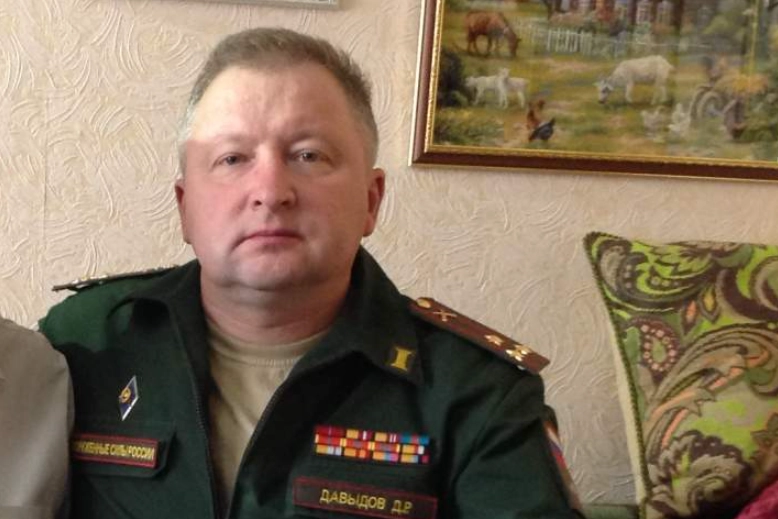
The car exploded around 5:30 am on 9 June as Davydov pulled the BMW X3 out of its parking spot on Koldunova Street in Balashikha's Aviatorov microdistrict. Bystanders pulled him from the wreckage still alive, but he died at the scene before medical teams arrived, The Insider said. The outlet published the SUV's license plate and the apartment address on Kozhedub Street, several hundred meters from the blast, to confirm the identification.

Davydov, 57, had headed the missile and artillery ammunition supply directorate within the Main Missile and Artillery Directorate (GRAU) of Russia's Defense Ministry since 2017. Ukraine's Myrotvorets database lists him as a participant in planning and organizing Russia's full-scale invasion on 24 February 2022, with operational responsibility for keeping Russian forces supplied with shells and missiles. Russia's Investigative Committee confirmed the death of one man in the blast and opened a criminal case but did not name the victim.

The improvised explosive device carried the force of up to 500 grams of TNT and was attached to the underside of the vehicle, the Russian business daily Kommersant reported. Conflict Intelligence Team founder Ruslan Leviev reviewed the footage and concluded the bomb had been hidden in a separate parked vehicle and detonated remotely as the BMW drew alongside. The Insider attributed the operation to Ukraine's Security Service (SBU) without citing further sources, and Ukrainian officials had not commented as of late Tuesday.

A second device, then a third

Hours after the Balashikha blast, a Zeekr electric vehicle caught fire in a parking lot at the intersection of Butlerova and Vvedensky streets in Moscow's Konkovo district. Bomb technicians found a device under the car and neutralized it with a controlled detonation. Around 6 p.m., Moscow police evacuated the Nebo shopping center in Solntsevo after another suspicious object was discovered beneath a parked vehicle. Russian authorities ordered mass under-vehicle inspections across the capital region.

The pattern of four

Tuesday's killing fits a deepening pattern: the fourth senior Russian officer assassinated in the rear since late 2024. Lt. Gen. Igor Kirillov, head of Russia's chemical defense troops, was killed by a scooter bomb outside his Moscow apartment in December 2024 in an operation the SBU claimed openly. Lt. Gen. Yaroslav Moskalik, deputy chief of the General Staff's Main Operational Directorate, died in April 2025 in a car bombing 350 meters from Tuesday's blast site, also in the Aviatorov microdistrict; Russia's FSB later sentenced Ignat Kuzin, who said he worked for the SBU, to life in prison. Lt. Gen. Fanil Sarvarov, who oversaw the General Staff's operational training, was killed by a bomb planted under his Kia Sorento in southern Moscow in December 2025.

Background

The slain officer grew up in the closed nuclear city of Penza-19, now called Zarechny, where his father worked at the Start production association, a facility that built nuclear warheads until 2002. He held patents in rocket-engine design and artillery ammunition. In 2009 he led the Central Testing Technical Bureau attached to the 51st GRAU arsenal in the Vladimir region, and bought the BMW X3 in 2024 from a businessman in that same area, the Russian Telegram channel VChK-OGPU reported. The Kremlin, the Defense Ministry, and the SBU had not commented publicly as of late Tuesday.

Germany adds €300 million to Czech ammunition drive, about 50,000 long-range rounds for Ukraine

10 June 2026 at 12:05

Ministry of defense of Germany

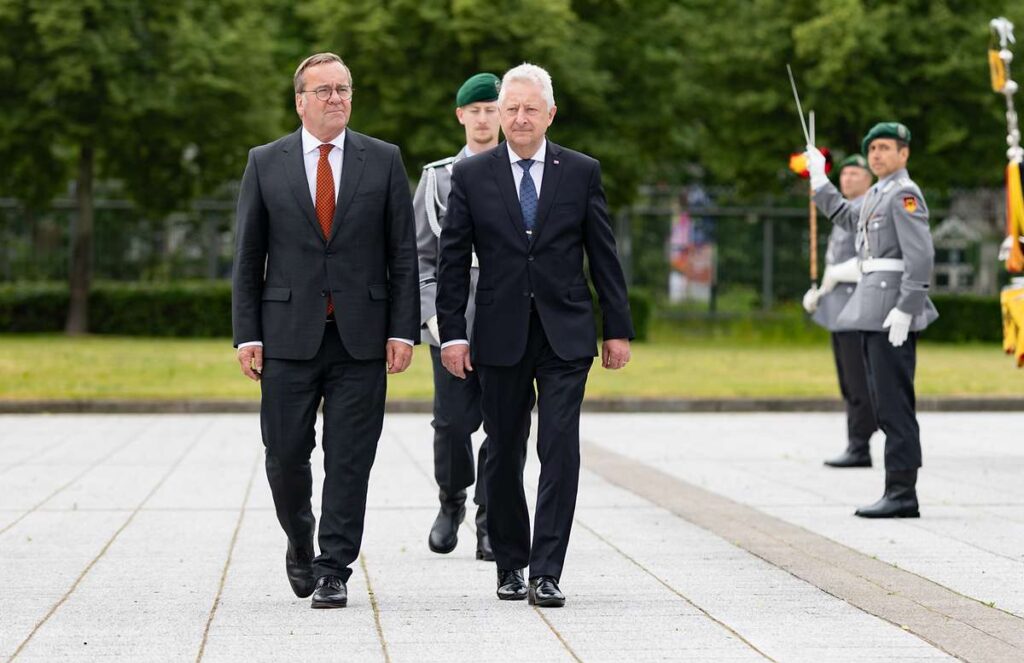
German Defense Minister Boris Pistorius announced an additional €300 million ($345 million) for the Czech-led ammunition initiative for Ukraine on 9 June 2026. The funds will purchase roughly 50,000 rounds of long-range ammunition, Pistorius said after meeting new Czech Defense Minister Jaromír Zůna in Berlin.

The pledge keeps Germany positioned as the initiative's largest foreign backer at a moment when donor numbers are thinning and Prague's new government has retreated on several other Ukraine fronts. The Czech-led channel has delivered 4.4 million large-caliber shells since early 2024 — more than half of all such ammunition Ukraine has received over that period, according to Czech President Petr Pavel.

What the pledge buys

The new commitment lifts Germany's total share of the initiative past €1.2 billion, building on roughly €900 million already disbursed. Pistorius called the Czech channel an essential contribution to Ukraine's ammunition supply and said Berlin would continue to back it.

"Germany will contribute an additional €300 million to this initiative — that's approximately 50,000 rounds of long-range ammunition," Pistorius said.

Prague's new government holds the channel

The Berlin session was Pistorius's first in-person meeting with Zůna, who took office in December 2025 as part of Andrej Babiš's coalition government. Zůna, a retired lieutenant general, was nominated for the post by the center-left SPD party.

Babiš has cut planned Czech defense spending for 2026 and secured a Czech opt-out from the European Union's €90 billion Ukraine funding package. The new government also put on ice a previously discussed transfer of L-159 combat aircraft to Ukraine.

The ammunition initiative is the major exception. Zůna confirmed in December that the channel would continue, and the Berlin meeting was his first public reaffirmation of that position to a NATO partner.

"Germany plays an important role as a supplier of military equipment and ammunition and, together with our defence industry, makes a significant contribution to European security," Zůna told reporters at the Bendlerblock.

Donor base thins as need grows

The initiative needs €5 billion in 2026 but had raised only €1.4 billion by February, Reuters reported. Pavel said last month that the number of contributing countries has dropped.

The channel has firm contracts to deliver about 1 million rounds to Ukraine in 2026, the Czech Defense Ministry said — well below the 1.8 million delivered in 2025 and the 1.5 million in 2024. Russia continues replenishing its own stockpiles, including through North Korean deliveries that NATO officials estimate at 9 million rounds since 2023.

Russia fitted Kalibr cruise missiles with cluster warheads and reverted to foreign electronics, Ukraine’s MoD says

10 June 2026 at 07:56

Kalibr missile. russia

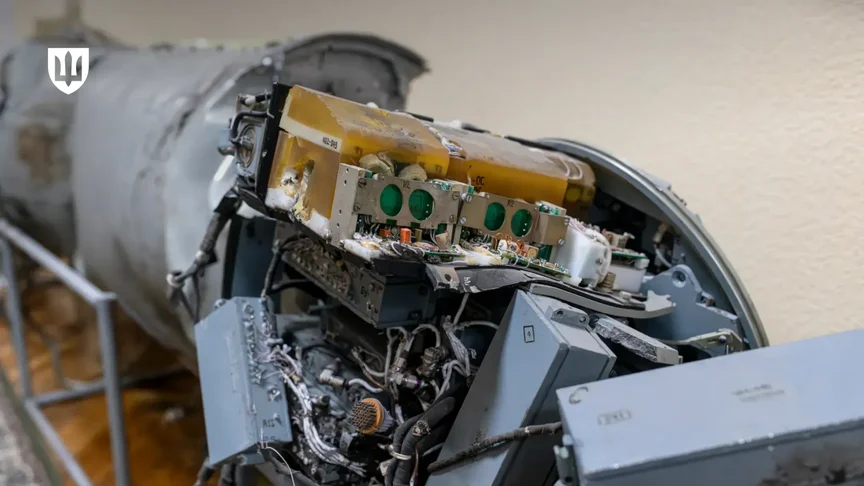
Russia has made two significant modifications to its Kalibr cruise missiles since the start of the full-scale invasion, Ukraine's Ministry of Defense reported.

The cluster payload mirrors the one Russia already uses on its Kh-101 cruise missiles, expanding the lethal radius across dispersed targets like airfields, hangars, and open positions. Russia is not a signatory to the Convention on Cluster Munitions, which 124 states have ratified.

From 2022 through early 2026, Kalibr missiles carried a fragmentation-high-explosive warhead. Researchers documented a cluster warhead for the first time on missiles shot down in spring 2026. Russia made the change to substantially increase the strike area and deploy the missile against dispersed targets, the ministry said.

Russia's failed attempt to replace imported electronics

The second modification concerns the missiles' onboard electronics. Between 2023 and 2024, Russia gradually shifted Kalibr production to domestic components. The attempt failed. Analysis of the onboard digital computing unit from a Kalibr manufactured in 2025 again found imported components. The homing boards are "more than 80–90% foreign-made," the ministry stated, calling it "a confirmed fact, not an estimate" — each part is marked and verified by military representatives.

The shift to domestic electronics likely degraded guidance accuracy, the MoD suggested, prompting the return to foreign parts despite sanctions exposure. A Russian Kh-101 that killed 12 people in Kyiv this May was built in the second quarter of 2026 — pointing to components still reaching Russia after 21 EU sanctions packages and years of Western export controls, President Volodymyr Zelenskyy said last month.

Manufacturers and designers identified for sanctions

The ministry said it had identified all electronics manufacturers supplying Kalibr production, as well as the chief designers and managers involved. "The Ministry of Defense has established all electronics manufacturers for the Kalibrs, as well as the chief designers and managers involved in missile production. This data is being transferred for further processing within the framework of sanctions policy," the ministry stated.

The MoD has previously published technical analyses of downed Russian Kh-101 missiles and North Korean KN-23 and KN-24 ballistic missiles used against Ukraine.

Chonhar bridge halted twice, now Arabat Spit crossing hit — Kherson’s occupied south loses two routes

10 June 2026 at 07:33

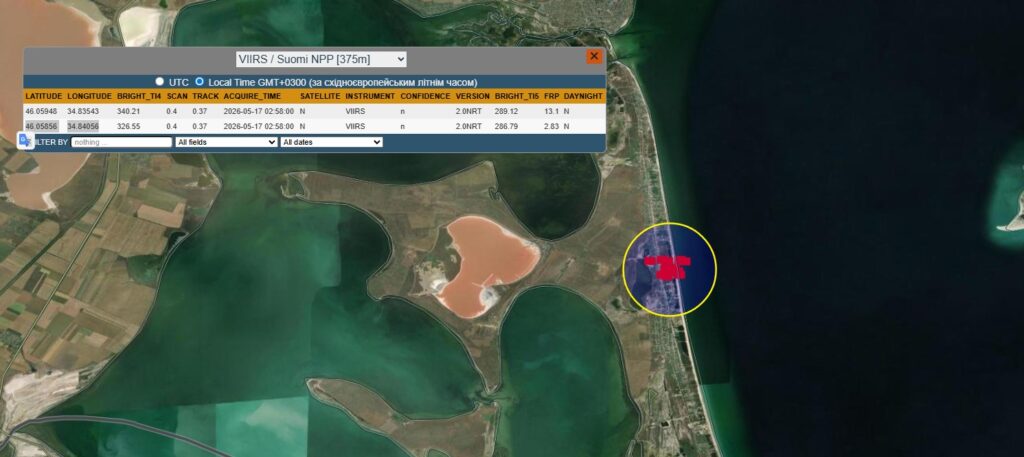
russian air-defense crews now hunted ukraine bolts rocket pods its long-range drones · post nasa firms satellite detection fire arabat spit kherson oblast after ukrainian drone strike 0258 17 2026

Ukraine attempted a missile strike on a bridge connecting Henichesk to the Arabat Spit early on 10 June 2026, according to Vladimir Saldo, Russia's installed head of the occupied part of Kherson Oblast, who posted the claim on social media.

The strike is the latest in a series of Ukrainian attacks targeting road links between Russian-occupied Kherson Oblast and Crimea. The Chonhar bridge—the main overland route—was first struck on 7 June, after which traffic resumed in reversible mode; a second Ukrainian drone strike on 9 June halted movement again. Saldo had advised drivers to use alternative routes through Armyansk and Perekop.

Traffic across the Henichesk–Arabat Spit bridge has been temporarily closed, Saldo said, with emergency services on site establishing the circumstances.

Power outages across eight districts

In the same post, Saldo reported that eight municipalities were left without electricity following a separate overnight Ukrainian drone attack: Henichesk, Novotroitske, Chaplynka, Kalanchak, Ivanivka, Hornostaivka, Kakhovka, and Nova Kakhovka. Utility and emergency crews were working to restore power, he said.

Broader logistics pressure

Russian pro-war bloggers have in recent weeks reported an intensified Ukrainian drone campaign against military transport in southern Ukraine, Hromadske reports. On 30 May, Russian-occupied Crimea imposed limits on sales of A-95 petrol, citing drone strikes on Russian oil refineries; occupied Luhansk Oblast followed with similar restrictions shortly after.

Fire reported at Kuibyshev oil refinery in Russia’s Samara after drone strike

10 June 2026 at 07:10

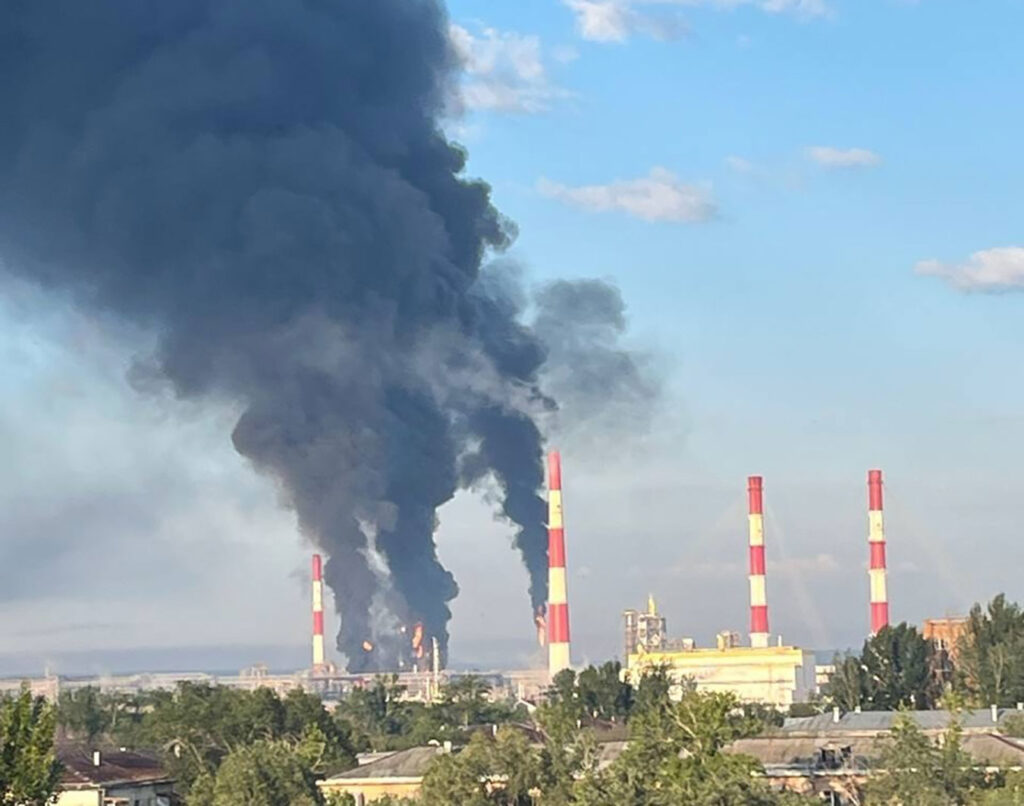
title · post fires raging kuybyshevsky oil refinery samara russia 10 2026 fires-rage-at-samara-kuybyshevsky-oil-refinery ukraine news ukrainian reports

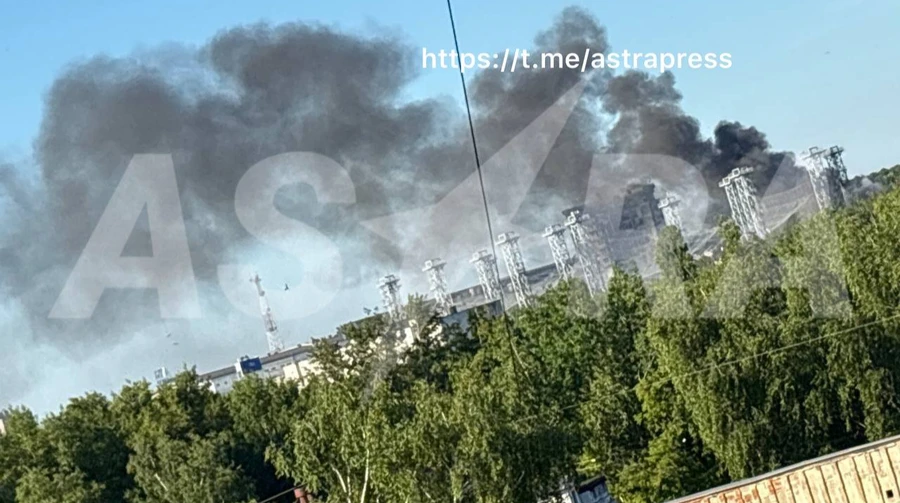
A fire broke out at the Kuibyshev oil refinery in Samara, Russia, following a drone strike on 10 June, according to OSINT analysis by Astra and Russian Telegram channels.

The Kuibyshev refinery is one of the largest oil industry facilities in the region and is part of Rosneft. The 10 June strike is the third reported attack on the plant since August 2025.

What happened overnight

Residents of Samara Oblast reported explosions during the night of 9–10 June. The regional governor wrote of a missile threat in the oblast.

Astra said its analysis of eyewitness footage established that the Kuibyshev refinery in Samara was struck and caught fire.

The same refinery halted operations in August 2025 following a drone attack, Russian social media channels reported. It was struck again in January 2026.

Ukraine reportedly strikes Russian defense plant ‘Progress’ in Cheboksary with Flamingo missiles

10 June 2026 at 06:25

Russia

A fire broke out at what is reportedly the Progress defense plant in Cheboksary, Russia, following a missile strike on 10 June, the governor of Russia's Chuvash Republic said, according to Russian telgram channel Astra.

The incident marks the second reported strike on the same facility in under a week — on 5 May, Ukrainian FP-5 Flamingo missiles were reported to have struck the VNІIR-Progress defense enterprise in the same city, with President Volodymyr Zelenskyy confirming the attack.

Oleg Nikolaev, governor of Chuvash Republic, confirmed on Telegram that Cheboksary had come under missile attack. He did not specify casualties or damage.

What the strike targeted

Photos and video of a fire following the strike in Cheboksary were published by Russian social media channels, including footage of a missile passing over the city. According to OSINT analysis by Astra, the targeted facility is the VNIIR-Progress defense enterprise.

The plant manufactures Kometa antennas — systems designed to protect drones from electronic warfare — as well as other components used in Russian Shahed drones and Iskander-M and Kalibr missiles.

Astra analysts also noted that the VNIIR-Progress premises had been fully covered with camouflage netting following the previous strike.

The weapon used

Monitoring channel Exilenova+ identified the missiles used as Ukrainian FP-5 Flamingo cruise missiles. Denis Shtilerman, founder of the Ukrainian company FirePoint, which produces the Flamingo, published a photo of a launch on X on 10 June, without providing further details.

Previous strike

The 5 May attack on the same plant caused a large-scale fire after a missile struck the facade of one of the factory buildings, according to OSINT analysts. Zelensky confirmed the use of Flamingo missiles in that incident.

Received — 8 June 2026 Euromaidan Press

Ukraine foils Russian plot to assassinate intelligence official with FPV drone

8 June 2026 at 10:22

Main Intelligence Directorate

Ukrainian police arrested a Russian-recruited agent in Kyiv who was planning to assassinate a senior official of Defense Intelligence (GUR) using an FPV drone, the National Police announced on 8 June. The suspect, a 38-year-old Kyiv resident with a prior criminal record for property offenses, had received a $10,000 advance on a promised $100,000 bounty.

The target was Andrii Yusov, GUR's spokesperson and deputy head of the Coordination Headquarters for the Treatment of Prisoners of War, according to law enforcement sources cited by multiple Ukrainian outlets including Hromadske and OBOZ.UA. In February, a joint Ukrainian-Moldovan operation dismantled a 10-person network that had also targeted Yusov among at least five public figures—making this the second known assassination attempt against him in under four months.

The suspect planned to hire an FPV drone operator

The agent spent weeks studying Yusov's daily schedule, commute routes, residence, vehicles, and surrounding infrastructure before settling on an FPV drone as the method, the police statement said. He then began searching for an operator with the skills to pilot one.

FPV drones—cheap, fast, first-person-view kamikaze weapons that have killed more soldiers in Russia's war on Ukraine than almost any other single weapon type—have not been known to be used for targeted assassination inside Ukraine before. OBOZ.UA reported that the suspect planned to use a loitering variant known as a "zhun"—a drone that hovers in position and waits for the target to appear.

Police intercepted a recorded conversation in which the suspect used codewords, referring to the assassination plan as "construction" and the drone method as "airborne-droplet transmission through the air," Hromadske reported. He also consulted a fortune teller, asking for spiritual help so "the guys would do the 'construction' and safely go home."

Officers arrested the suspect before he could act

Detectives from the National Police's Criminal Investigation Department, working with GUR's Internal Security directorate, arrested the man before the plot could be carried out, the police said. Officers seized mobile phones, a GPS tracker, a vehicle, and other evidence during a search of his residence.

The suspect has been charged under Article 14(1) and Article 115(2) of Ukraine's Criminal Code—preparation for premeditated murder for mercenary motives. The charge carries a sentence of 10 to 15 years, or life imprisonment.

The investigation, supervised by the Office of the Prosecutor General, is ongoing. Police said they are working to identify other individuals involved in the plot.

Russia's assassination campaign in Ukraine continues to escalate

The arrest is the latest in a series of Russian-directed assassination plots targeting Ukrainian public figures. In February, the dismantled network had planned to kill at least five targets using shootings and car bombs, with Russian handlers offering up to $100,000 per killing.

In May 2025, activist and drone supplier Serhii Sternenko was shot and wounded by an agent who had rented an apartment to surveil him. In August 2025, former politician Andriy Parubiy was shot dead in Lviv in a killing that authorities linked to Russia.

❌