Normal view

Emperor Otto the Great’s Tomb Yields New Clues During Cathedral Restoration

12 June 2026 at 21:31
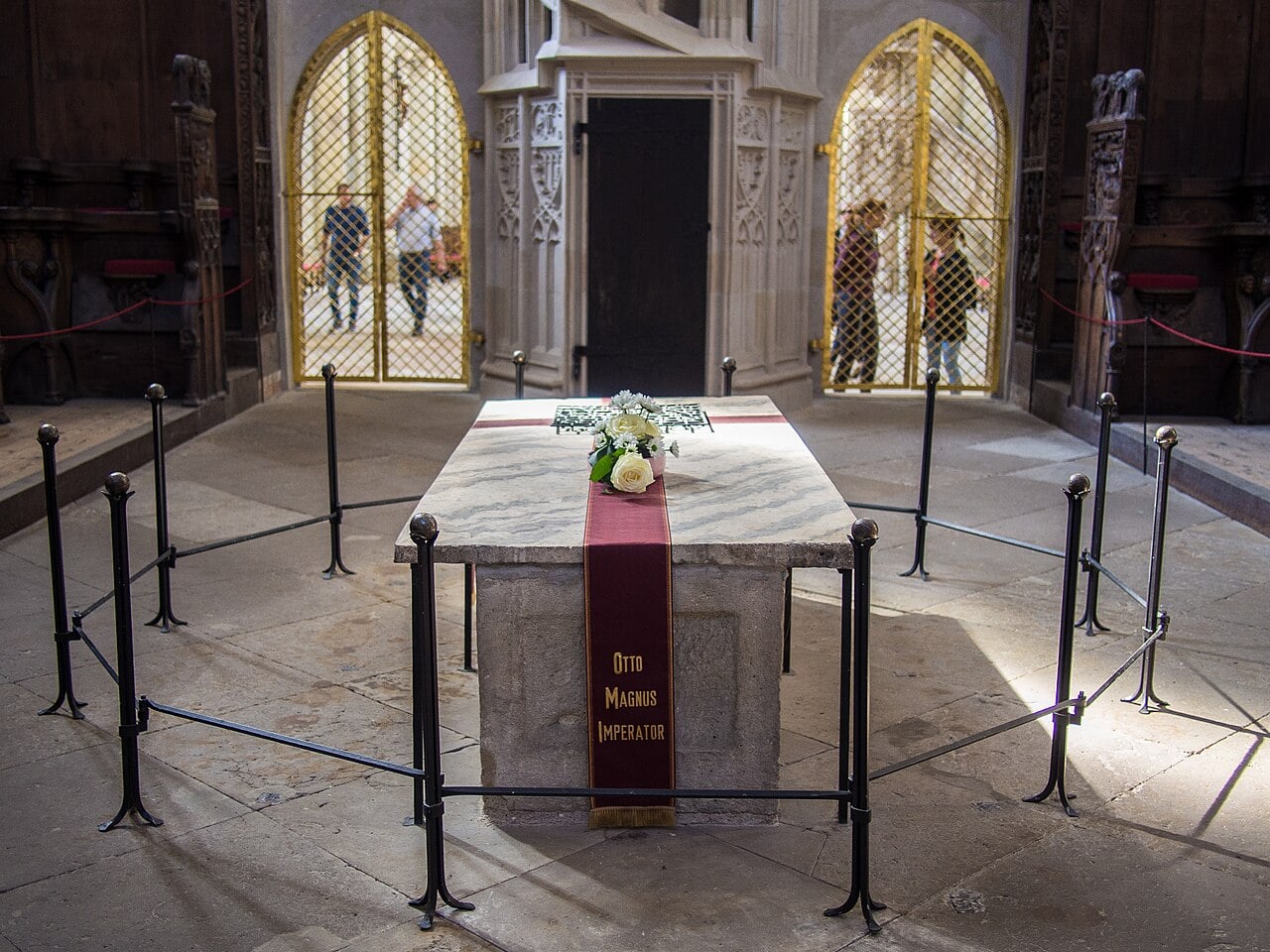
Tomb of Otto I in Magdeburg Cathedral
Tomb of Otto I in Magdeburg Cathedral. Credit: Mar Yung / Wikimedia Commons / CC BY 2.0

Conservation experts and archaeologists are uncovering new details about the tomb of Emperor Otto I while carrying out an extensive restoration project at Magdeburg Cathedral.

Since January 2025, the Saxony-Anhalt Cultural Foundation and the State Office for Heritage Management and Archaeology have led efforts to preserve the heavily damaged burial site of Otto the Great, the 10th-century ruler who laid the foundations of the Holy Roman Empire.

Excavations uncover clues to the tomb’s history

The relocation of the sarcophagus also allowed archaeologists to investigate its foundation for the first time. Excavations revealed large sandstone blocks beneath the tomb, including reused building stones marked by late medieval stonemasons. The findings suggest that the sarcophagus was moved several times over the centuries.

Excavations produced numerous artifacts, including coins, glass beads, ceramics, roof tiles, clothing pins, and fragments of painted plaster from earlier cathedral structures. Researchers also uncovered a lead bullet beneath the floor, reflecting Magdeburg’s turbulent history.

Archaeologists restoring the tomb of Emperor Otto I in Magdeburg Cathedral have uncovered medieval foundations, underground passages and centuries-old artifacts. pic.twitter.com/B1PNeRTlwq

— Tom Marvolo Riddle (@tom_riddle2025) June 12, 2026

Researchers also uncovered layers of rubble linked to medieval and early modern construction activities in the cathedral’s High Choir. A network of underground passages, some possibly dating to the Middle Ages, was also documented.

Despite the discoveries, archaeologists found no evidence showing whether Otto I’s tomb occupied the same location in an earlier cathedral that once stood on the site. The original placement of the emperor’s burial, therefore, remains uncertain.

Damage prompted conservation efforts

Otto I, who was crowned emperor in 962, established one of medieval Europe’s most powerful empires. His tomb in Magdeburg Cathedral is considered one of Germany’s most important medieval monuments.

The project began after routine inspections in 2024 revealed serious deterioration in the emperor’s tomb. Researchers identified several threats to the monument, including corroded iron fittings, rising moisture from the ground, and fluctuating humidity levels inside the cathedral.

Scientific analyses confirm the emperor’s remains

As part of the conservation work, experts carried out extensive non-invasive documentation of the sarcophagus and its surroundings. The marble cover slab, weighing about 300 kilograms (660 pounds), was removed so researchers could examine the damaged wooden coffin inside.

Anthropological and genetic analyses later confirmed that the human remains belonged to Otto I, supporting centuries-old historical accounts of his burial at the cathedral.

The emperor’s remains are scheduled to be reinterred on Sept. 1, 2026, in a newly designed coffin currently being created through a competition organized by the Saxony-Anhalt Art Foundation.

Restoration work addresses long-term damage

To protect the monument for the future, conservation teams moved the limestone sarcophagus from its original location in early 2026 using a specially designed transport structure. The sarcophagus now sits inside a secure enclosure within the cathedral, where restoration work is underway.

Specialists are removing corroded iron nails and clamps, many believed to date to the 19th century. As the metal rusted over time, it expanded and placed pressure on the stone, increasing the risk of cracking. Conservators are also removing harmful iron residues from the marble cover slab.

Cathedral remains open during conservation work

Church services continue as normal during the project, while visitors can still view major features of the cathedral, including the High Choir and its famous 13th-century sculptures. Officials said the public will continue to receive updates as restoration and research progress.


Antyllus: The Ancient Greek Surgeon Whose Methods Lasted Until the 19th Century

12 June 2026 at 21:01
Relief sculpture depicting Asclepius treating a reclining patient in ancient Greek style.
Antyllus pioneered vascular surgery, and his aneurysm procedure remained a standard for over a millennium. Credit: Wikimedia Commons, Public Domain

Αntyllus, one of antiquity’s most skilled and innovative surgeons, was an ancient Greek physician active in Rome around 150 AD. Though influenced by earlier Greek medical traditions, he broke from the conservative models of physicians such as Hippocrates and Galen and introduced practical surgical procedures, especially for vascular conditions. These shaped medicine for centuries.

Beyond aneurysms: A versatile surgeon

Antyllus is best known for designing the first effective surgical treatment for aneurysms. While earlier physicians feared vascular surgery, Antyllus embraced it with precision.
He classified aneurysms into traumatic and spontaneous types. His method involved tying off the artery both above and below the swollen vessel. Then, he excised the aneurysmal sac.

This direct approach represented a major advancement. It became the standard procedure for aneurysm treatment and remained in use until the 19th century. Unlike Galen, who emphasized theory, Antyllus prioritized anatomical understanding through practice. He accepted surgical risks others avoided, setting the foundation for vascular surgery.

Antyllus’s contributions extended beyond arteries. He developed surgical techniques for the abdomen, eyes, bones, joints, and breasts. He was also a pioneer in plastic surgery.
His reconstructive operations addressed eyelids, ears, noses, and cheeks. In trauma cases or for cosmetic repair, no one could match his precision.

To control bleeding during operations, Antyllus used cauterization. He also performed early tracheotomies, a high-risk but potentially life-saving procedure.

Oribasius, a later Greek physician, reported that Αntyllus wouldn’t operate on exceptionally large aneurysms due to high risk. For more manageable aneurysms in the limbs and head, Antyllus applied ligatures to the arteries entering and leaving the aneurysm. He then incised the sac, evacuated its contents, and packed the cavity.

Legacy and transmission of Antyllus’ aneurysm technique

Most importantly, Antyllus did not resect the aneurysm sac. He warned against excising the dilated section between ligatures, stating:

“Those who tie the artery, as I advise, at each extremity, but amputate the intervening dilated part, perform a dangerous operation. The violent tension of the arterial pneuma often displaces the ligatures.”

Oribasius also preserved one of the earliest known classifications of aneurysms into true and false types. Specifically, he said:

“There are two types of aneurysms: the first is due to dilatation of the arteries and the second is caused by rupture of the artery emptying blood into the tissues. When an aneurysm is due to dilatation, the form is cylindrical, while the one caused by injury is round.”

Aetius of Amida was a 7th century physician. In his work “On the Dilatation of the Vessels,” he described in detail a surgery likely based on Antyllus’ method:

“An aneurysm located in the bend of the elbow is treated thus. First we carefully trace the artery leading to it, from armpit to elbow, along the inside of the upper arm. Then we make an incision on the inside of the arm, three or four finger-breadths below the armpit, where the artery is felt most easily. We gradually expose the blood vessel and, when it can be lifted free with a hook, we tie it off with two firm ligatures and divide it between them. We fill the wound with incense and lint dressing, then apply a bandage. Next we open the aneurysm itself and no longer need fear bleeding. We remove the blood clots present, and seek the artery which brought the blood. Once found, it is lifted free with the hook, and tied as before.”

Medicine in Ancient Greece and Egypt
Physician treating a patient, depicted on Attic red-figure Aryballos Credit: Marie-Lan Nguyen Wikimedia Commons CC BY 3.0

Preventative medicine and physical health

Antyllus believed health required daily effort and discipline. He championed preventative medicine alongside surgical skill. For instance, he prescribed exercise regimens that included structured vocal routines. One of his most distinctive practices was vociferation, a method of controlled, loud vocalizing.

He recommended reciting memorized poetry at various volumes while walking and believed deep tones helped expand the trachea and chest, strengthening respiratory health. This practice combined breath control, posture, and movement in a holistic approach to physical well-being.

Before such vocal workouts, Antyllus suggested preparation consisting of massage, bowel evacuation, and a cold sponge bath. These details reflected his methodical attention to physiology.

While Hippocrates emphasized prognosis and symptom observation, he likely saw aneurysms but avoided surgical intervention. Moreover, Galen offered greater anatomical theory, drawn from animal dissection but still steered clear of artery operations.

Antyllus surpassed both in operative practice. Whereas Hippocrates and Galen used caution, Antyllus applied bold innovation grounded in anatomy. His hands-on techniques proved enduring. Byzantine and Islamic medical texts preserved his methods, which reached medieval Europe through translation.

The Greek physician Galen, who was influential in Western medicine
Galen, the pioneering Greek physician who influenced Western medicine through the 1700s. Portrait by Pierre-Roch Vigneron. Credit: Wikimedia Commons Public Domain

Legacy of a Forgotten Surgeon

Despite the historical focus on Hippocrates and Galen, Αntyllus, the Greek physician, remains a towering figure in the evolution of medicine, uniting theory with surgical practice. His aneurysm procedure became standard practice for over 1,500 years. Antyllus developed detailed and replicable techniques in plastic and general surgery.


Αntyllus’s advocacy for preventative care—including vocal and physical training—also marks him as an early holistic health thinker. To say the least, he deserves recognition as the first true vascular surgeon of antiquity, as his skill, anatomical knowledge, and forward-thinking philosophy left a lasting imprint on medical history.

@theculturemuse

Check out this #rare #ancient #roman #surgical kit in the #neuesmuseum #berlin #medicine #healing #surgery #asclepius #history #storytime #foryoupage❤❤ #fyp

♬ original sound – The Culture Muse

Eratosthenes: The Ancient Greek Who Measured the Earth More Than 2,000 Years Ago

12 June 2026 at 20:01
earth eratosthenes circumference
The shuttle “Discovery” orbiting the Earth. Ancient Greek mathematician, Eratosthenes, measured the circumference of the Earth in antiquity. Credit: Public Domain

Ancient Greeks made some of the most impressive astronomical discoveries in history, including Eratosthenes’ calculation of the circumference of the Earth.

It wasn’t until the mid-20th century that we managed to launch satellites into space and determine the exact kilometers of the circumference of the Earth: 40,030.2 kilometers.

But how, then, could the ancient Greek mathematician, Eratosthenes, manage to find pretty much the exact same number without having any pictures of Earth from space or even proper measuring tools?

Amazingly, Eratosthenes didn’t have much more than a stick and his brain when he made the amazing discovery.

How Eratosthenes discovered the circumference of the Earth

Born in Cyrene, an ancient Greek colony in modern-day Libya in 276 BC, Eratosthenes was a polymath, meaning that he had vast knowledge of many different subjects, including mathematics, astronomy, music theory, and poetry.

Over two thousand years ago, Eratosthenes heard that in Syene, a town south of Alexandria in Egypt, no vertical shadows were cast at noon on the summer solstice, as the sun was directly overhead.

The Greek mathematician wondered if this was the case in Alexandria, too, a few hundreds of miles to the north of Syene.

He decided to conduct an experiment. On June 21st, he went to Alexandria and put a stick directly in the ground and waited to see if a shadow would be cast at noon.

It turns out there was one, and he tried to measure it. The shadow cast measured to about seven degrees.

After conducting the experiment, Eratosthenes came to a very logical conclusion that if the sun’s rays are coming in at the same angle at the same time of day and a stick in Alexandria casts a shadow of seven degrees while the stick in Syene does not cast a shadow at all, it must mean that the Earth’s surface is curved.

Carl Sagan, the American astronomer, author, and science communicator was renowned for making difficult scientific concepts understandable to the millions; he did exactly this at the beginning of his renowned series Cosmos by explaining the thought process of Eratosthenes.

His calculation

The idea of a spherical Earth was already known by Pythagoras around 500 BC and validated by Aristotle a few centuries later.

If the Ancient Greeks before him were right, and the Earth was a sphere, Eratosthenes could use his observations to calculate the circumference of our planet.

After hiring a man to pace the distance between Syene and Alexandria, he found out that the two cities were five thousand stadia apart, which is about eight hundred kilometers.

He could then use simple proportions to find the Earth’s circumference—7.2 degrees is 1/50 of 360 degrees, so 800 times 50 equals 40,000 kilometers.

And just like that, an ancient Greek calculated precisely the circumference of our entire planet with just a stick and his brain over two thousand years ago.

Eratosthenes accomplished many feats throughout his life, including the creation of a chronology of Greek history, an algorithm to find every prime number, and the first global projection of the Earth.

Eratosthenes: The Ancient Greek Who Measured the Earth More Than 2,000 Years Ago

12 June 2026 at 20:01
earth eratosthenes circumference
The shuttle “Discovery” orbiting the Earth. Ancient Greek mathematician, Eratosthenes, measured the circumference of the Earth in antiquity. Credit: Public Domain

Ancient Greeks made some of the most impressive astronomical discoveries in history, including Eratosthenes’ calculation of the circumference of the Earth.

It wasn’t until the mid-20th century that we managed to launch satellites into space and determine the exact kilometers of the circumference of the Earth: 40,030.2 kilometers.

But how, then, could the ancient Greek mathematician, Eratosthenes, manage to find pretty much the exact same number without having any pictures of Earth from space or even proper measuring tools?

Amazingly, Eratosthenes didn’t have much more than a stick and his brain when he made the amazing discovery.

How Eratosthenes discovered the circumference of the Earth

Born in Cyrene, an ancient Greek colony in modern-day Libya in 276 BC, Eratosthenes was a polymath, meaning that he had vast knowledge of many different subjects, including mathematics, astronomy, music theory, and poetry.

Over two thousand years ago, Eratosthenes heard that in Syene, a town south of Alexandria in Egypt, no vertical shadows were cast at noon on the summer solstice, as the sun was directly overhead.

The Greek mathematician wondered if this was the case in Alexandria, too, a few hundreds of miles to the north of Syene.

He decided to conduct an experiment. On June 21st, he went to Alexandria and put a stick directly in the ground and waited to see if a shadow would be cast at noon.

It turns out there was one, and he tried to measure it. The shadow cast measured to about seven degrees.

After conducting the experiment, Eratosthenes came to a very logical conclusion that if the sun’s rays are coming in at the same angle at the same time of day and a stick in Alexandria casts a shadow of seven degrees while the stick in Syene does not cast a shadow at all, it must mean that the Earth’s surface is curved.

Carl Sagan, the American astronomer, author, and science communicator was renowned for making difficult scientific concepts understandable to the millions; he did exactly this at the beginning of his renowned series Cosmos by explaining the thought process of Eratosthenes.

His calculation

The idea of a spherical Earth was already known by Pythagoras around 500 BC and validated by Aristotle a few centuries later.

If the Ancient Greeks before him were right, and the Earth was a sphere, Eratosthenes could use his observations to calculate the circumference of our planet.

After hiring a man to pace the distance between Syene and Alexandria, he found out that the two cities were five thousand stadia apart, which is about eight hundred kilometers.

He could then use simple proportions to find the Earth’s circumference—7.2 degrees is 1/50 of 360 degrees, so 800 times 50 equals 40,000 kilometers.

And just like that, an ancient Greek calculated precisely the circumference of our entire planet with just a stick and his brain over two thousand years ago.

Eratosthenes accomplished many feats throughout his life, including the creation of a chronology of Greek history, an algorithm to find every prime number, and the first global projection of the Earth.

The Lost Plant Ancient Greeks Used for Medicine, Food and Contraception

12 June 2026 at 19:33
silphium
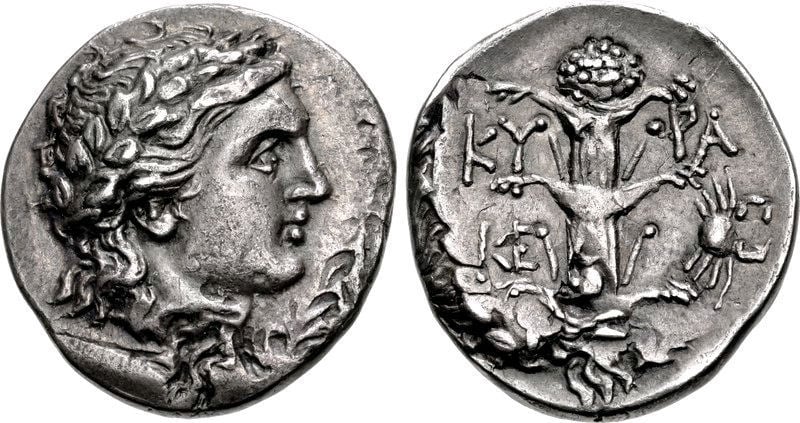
A plant used by the ancient Greeks for medicine, food and even contraception was one of the most sought-after goods in the ancient world. Credit: Classical Numismatic Group/Wikimedia Commons/CC BY-SA 3.0

An ancient Greek plant, now extinct, called Silphium, was used by the ancient Greeks and Romans for perfume, seasoning, medicine, and even contraception. It was one of the most sought-after goods in the ancient world.

The plant was so useful that Julius Caesar himself was said to have a large stash of silphium on hand at all times.

Silphium only grew in a narrow strip of land near the North African city of Cyrene in modern-day Libya and was essential to the city’s economy. The cultivation and trade of the plant transformed Cyrene into the richest region of Africa at the time.

Its widespread use in the ancient world allowed Cyrene’s economy to flourish, which in turn transformed the city into a center of art, culture, and medicine in the ancient Greek world.

In fact, it was home to a famous medical school and even a philosophical movement based around happiness whose members were called the Cyrenaics. Eratosthenes, the famous Greek mathematician, was a native of the city.

Although now extinct, researchers have determined, through studying ancient drawings and descriptions of the plant’s taste and appearance, that silphium likely belonged to the genus Ferula, which includes existing plants like giant fennel and asafoetida.

This theory is bolstered by the fact that asafoetida, which is still widely used today in Indian and central Asian cooking, was used as a cheaper substitute for silphium in antiquity, meaning that it was either related to the plant or had a very similar flavor.

The extinct plant silphium had many uses for ancient Greeks

Plants of the genus tend to resemble ancient depictions of the plant, which was widely found on coins from Cyrene due to its economic importance to the city.

It seems to have been a tall, flowering plant with a heart-shaped seedpod on the top. In fact, some theories about the origins of the modern symbol for love point to the shape of silphium’s seedpod, as the plant was widely used as an aphrodisiac.

Silphium was long used throughout the ancient Mediterranean. Both the Minoans and ancient Egyptians had specific glyphs to represent the plant, and it was widely lauded in songs and poems across ancient cultures.

According to myth, silphium came from the god Apollo himself. It had a wide variety of medicinal properties and was used to treat cough, pain, warts, fever, and indigestion. Although considered an aphrodisiac, it was also used as a contraception and even as an abortifacient.

The father of medicine Hippocrates himself even prescribed the plant for a protruding gut.

Silphium was likewise found in Greek and Roman cuisine and featured prominently in recipes by Apicius, who compiled one of the most well-preserved collections of ancient recipes in existence today.

Its earthy scent and medicinal properties also made it an important ingredient in perfume, as well as in ancient lotions and creams.

Why did silphium go extinct?

Due to its varied uses, silphium was in very high demand. Yet, by the time of the Roman emperor Nero, who lived from 37 to 68 AD, the plant was virtually extinct. According to Pliny, when the last remaining silphium plant was found, it was given to Nero.

Scholars theorize the plant was over-harvested and over-farmed due to its popularity, causing the soil in the limited area where the plant grew to become devoid of nutrients.

Additionally, shepherds used to feed silphium to their flocks, as the plant would transform the meat, making it tender and delicious. Scholars theorize that overgrazing of the plant likely contributed to its demise.

Others claim that regional climatic changes, which caused once green fields to turn into an arid desert, resulted in the plant’s extinction.

Ancient writers, such as Theophrastus, noted that silphium was very sensitive to changes in soil and therefore could not be cultivated in large  numbers nor in areas outside of Cyrene.

Ancient Whale Necropolis Found 23,000 Feet Beneath the Indian Ocean

12 June 2026 at 19:01
A 5.3-million-year-old deep-sea whale necropolis
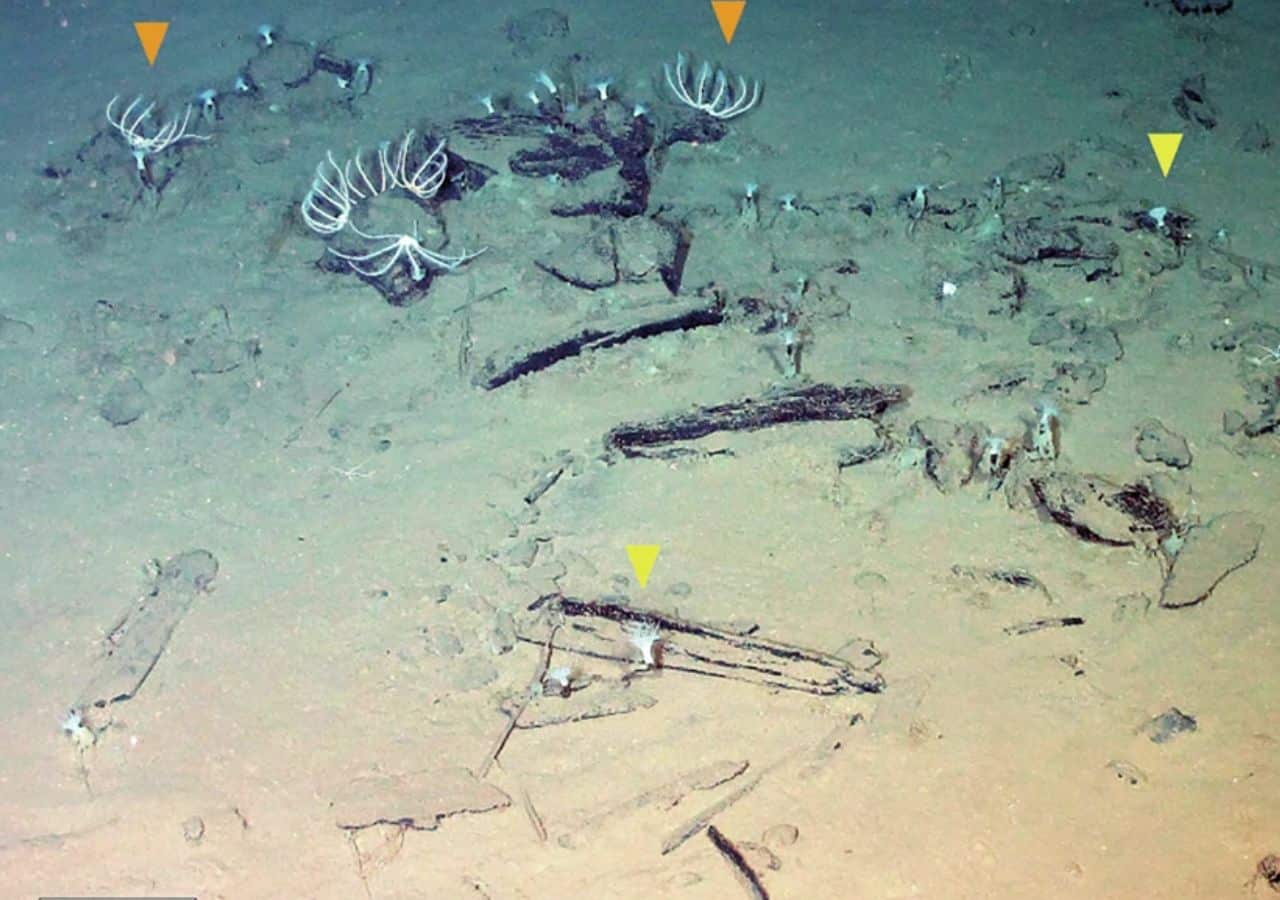
A 5.3-million-year-old deep-sea whale necropolis. Credit: Xiaotong Peng / CC BY-NC-ND 4.0

Scientists have discovered a massive whale necropolis deep beneath the Indian Ocean, at depths reaching nearly 7,000 meters (22,966 feet), stretching almost 1,200 kilometers (746 miles) along the seafloor and containing hundreds of fossils dating back more than five million years.

The findings, published in Nature, offer a rare look at one of the ocean’s most extreme and least understood environments.

The site sits in the Diamantina Zone, a rugged underwater fracture zone in the southeastern Indian Ocean, at depths between 4,616 and 7,001 meters (15,144 and 22,969 feet).

Lead author Xiaotong Peng of the Institute of Deep-sea Science and Engineering at the Chinese Academy of Sciences in Sanya, China, and a team of researchers made 32 deep-sea dives using the submersible “Fendouzhe” from February to March 2023.

Whale necropolis beneath the Indian Ocean pushes known depth limits

Researchers found 476 fossilized whale remains and five active whale-fall communities, the ecosystems that form around carcasses sinking to the ocean floor.

The deepest of these communities was found at 6,789 meters (22,274 feet), extending the known depth range of whale-fall habitats by more than 2,500 meters (8,202 feet).

In some areas of the zone, whale remains reached densities of up to 759 individuals per square kilometer (1,966 per square mile).

Images of whale falls in reef stage
Images of whale falls in reef stage. Credit: Xiaotong Peng / CC BY-NC-ND 4.0

All five active whale-fall communities are in what scientists call the “sulfophilic stage,” a prolonged phase where bacteria break down bone fats and release sulfide compounds that sustain surrounding life.

The team identified 35 animal species at these sites, including bone-eating worms, brittle stars, and chemosynthetic bivalves, creatures that draw energy from chemicals rather than sunlight. Molecular analysis showed that most of these species may be entirely new to science.

Researchers examined 43 fossil specimens and identified five ‘beaked whale’ species and one ‘baleen whale’ species. Two of the ‘beaked whale’ species still inhabit those waters today, while others have been extinct for millions of years.

One fossil belongs to a previously unknown species, named “Pterocetus diamantinae” after the Diamantina Zone.

Bones preserved for millions of years on the seafloor

Using strontium isotope dating, researchers found that whales have been sinking to this seafloor for at least 5.3 million years.

This whale necropolis survives largely because of the region’s very low sedimentation rate, which means bones are not buried quickly and can remain exposed for hundreds of thousands of years. Iron and manganese minerals gradually coat the bones, protecting them from further decay.

Peng and colleagues noted that the Diamantina Zone’s deep V-shaped underwater valleys likely funnel sinking carcasses into concentrated areas at the bottom. Beaked whales, which dive deeper than nearly any other mammal and can stay submerged for over an hour, likely died from the physical strain of extreme foraging dives.

The discovery also provides new insight into beaked whales, whose behavior and population sizes remain poorly understood because they are rarely seen and are known mostly from occasional strandings.

Researchers further suggest that this stretch of whale falls may act as a biological corridor, connecting deep-sea ecosystems across the southern Indian Ocean.

Ancient Clay Figurine in Guatemala May Reveal One of the Oldest Number Marks in the Americas

12 June 2026 at 18:26
“Tab” figurines at La Blanca
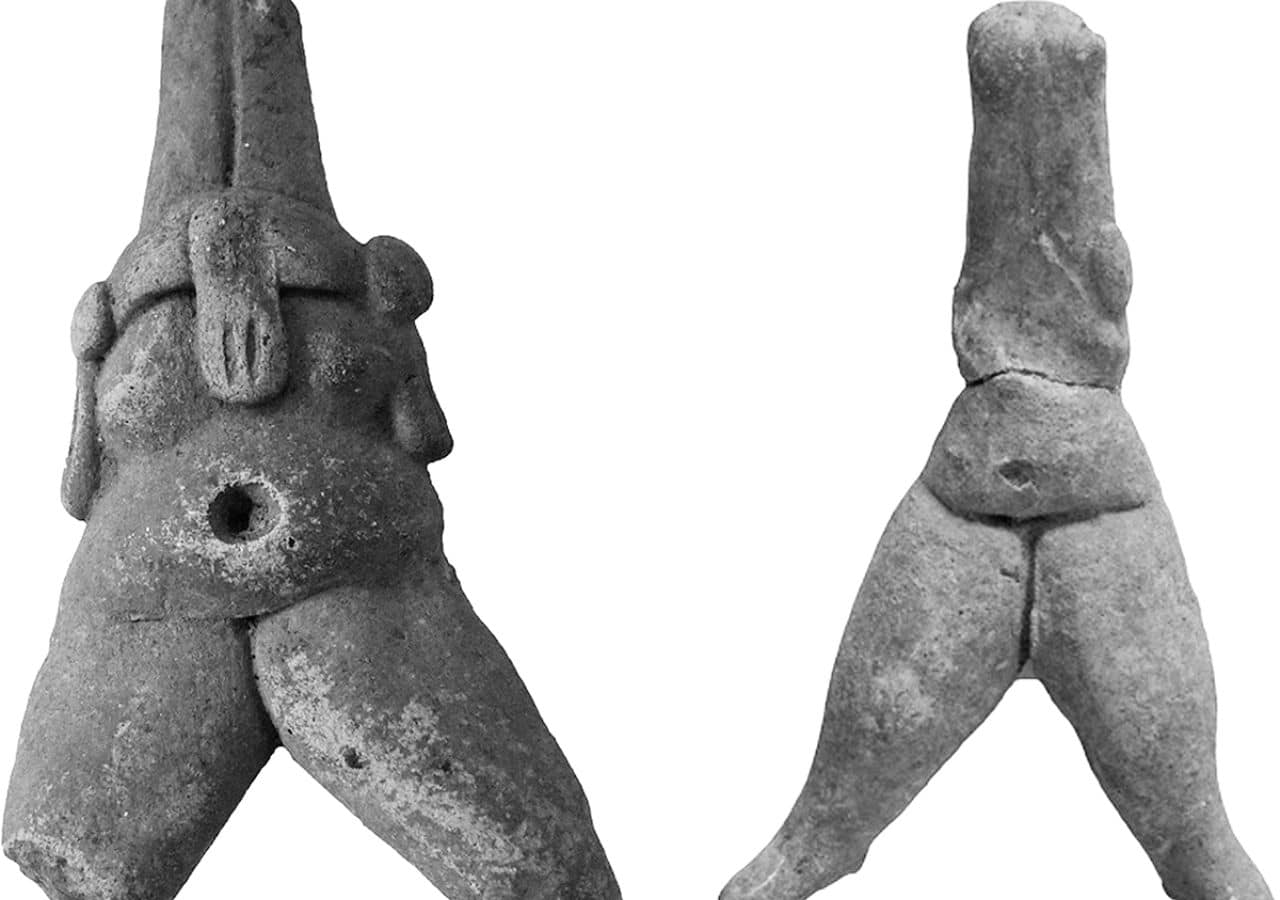
“Tab” figurines at La Blanca. Credit: Julia Guernsey / CC BY 4.0

A small clay figurine, broken and seemingly unremarkable, may hold one of the earliest known examples of numerical notation in the ancient world. Researchers studying a Guatemala figurine have found what appears to be an early form of Mesoamerican writing on its surface, potentially pushing back the timeline of symbolic notation in the region by centuries.

The artifact comes from the Middle Preclassic site of La Blanca in San Marcos, Guatemala. It dates to roughly 750 to 650 BC and features 11 small dots arranged into three vertical columns on what appears to be its headdress.

Julia Guernsey of the University of Texas at Austin led the study, published in Latin American Antiquity. Researchers argue these dots may represent the number 11 in an early dot-based numerical system.

La Blanca was once a major urban center on the Pacific Coast of Guatemala, reaching its peak between 1000 and 900 BC. It controlled a large regional system and was marked by significant social stratification and some of the largest Middle Preclassic architecture in Mesoamerica.

Eleven dots on ancient artifact hint at number system

The artifact belongs to what researchers call the “tab” type, a recurring form at La Blanca in which a tapered, abstract projection replaces a naturalistic human head.

More than 300 such figurines have been found at the site. What sets this one apart is the presence of 11 impressed dots, split into one column of three and two columns of four.

Ceramic “tab” figurine with headdress band and potential dot numeration
Ceramic “tab” figurine with headdress band and potential dot numeration. Credit: Julia Guernsey / CC BY 4.0

Guernsey notes that the dots were pressed into the clay before the figurine was fired, pointing to deliberate planning by the maker. Their placement in the head region also carries meaning.

Across ancient Mesoamerica, the head and headdress served as the primary space for conveying identity. Symbols placed there often carried names, calendar dates, or other markers tied to personhood.

Guatemala figurine pushes back the timeline of Mesoamerican writing

Numbers were deeply connected to the human body in ancient Mesoamerican cultures. The K’iche’ Maya word for “person” also means 20, a reflection of the 10 fingers and 10 toes at the core of their counting system. Calendar dates at birth often determined a person’s destiny and character, according to the study.

Guernsey argues the figurine from Guatemala stands as the earliest securely dated example of potential dot-based Mesoamerican writing or numeration found anywhere in the region.

While the dots lack an accompanying calendar glyph, their odd total and deliberate grouping hint at numerical intent.

Purely decorative motifs in early Mesoamerican art typically favored symmetry and even numbers, making this arrangement difficult to dismiss as mere decoration.

Greece Shines in Condé Nast Traveller Awards as Naxos Tops Europe’s Best Islands

12 June 2026 at 14:38
Folegandros, Greece
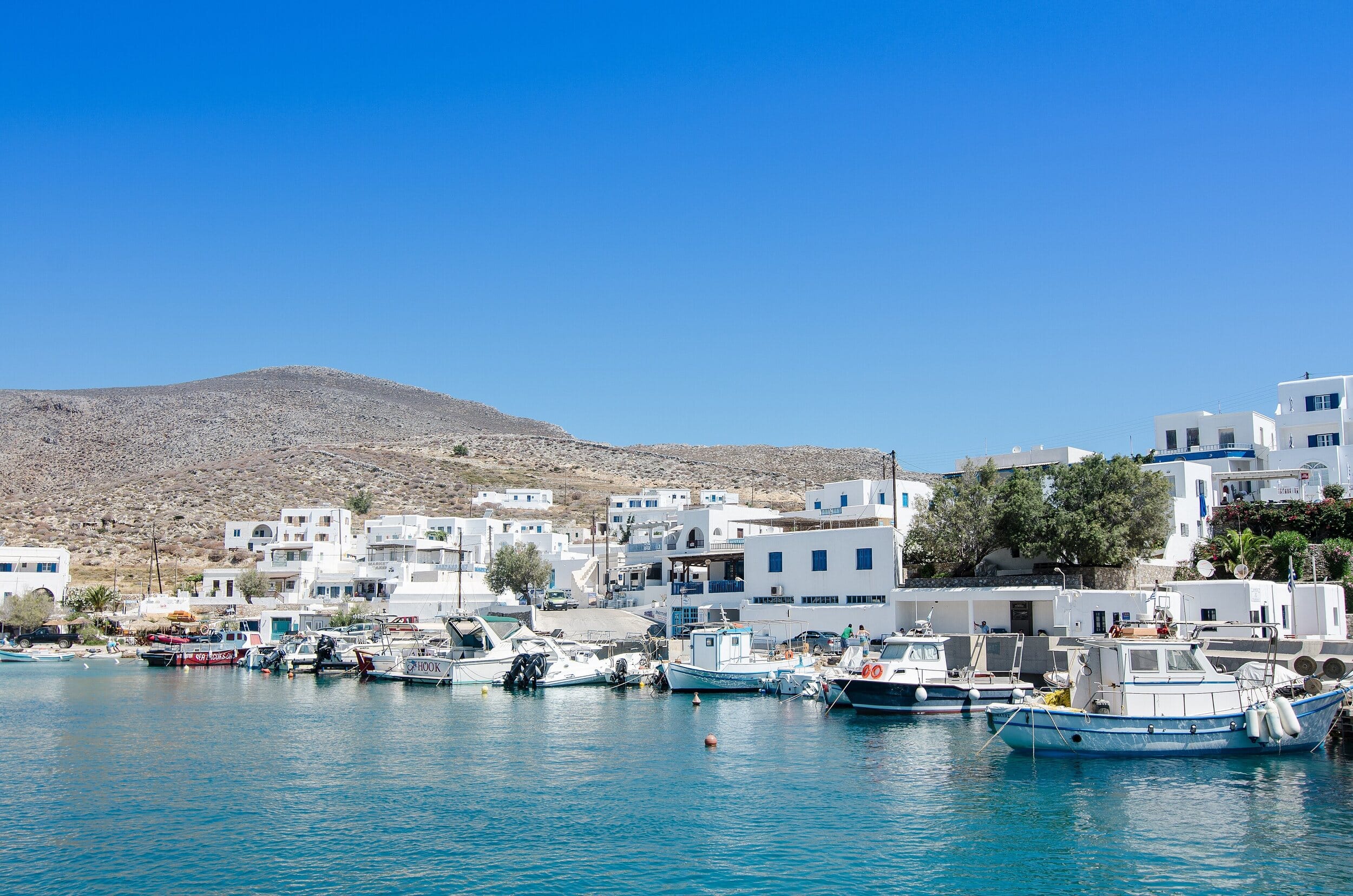
Folegandros, Greece, one of the eight Greek islands ranked among Europe’s best in the Condé Nast Traveller Readers’ Choice Awards. Credit: Étienne Dallaire / Wikimedia Commons / CC BY 3.0

Greece emerged as one of the leading countries in the Condé Nast Traveller Readers’ Choice Awards, with eight Greek islands ranked among Europe’s top 20.

Naxos claimed first place with a score of 95.71, just ahead of some of the Mediterranean’s most famous destinations, including Ibiza, Capri, Hvar, Mallorca, and Sicily. The result places the Cycladic island at the center of Europe’s travel spotlight and highlights the continued strength of Greece’s island tourism.

Alongside Naxos, the Greek islands featured in the ranking include Crete, Corfu, Rhodes, Skiathos, Mykonos, Folegandros, and Santorini.

Greece’s islands stand out in Europe’s awards

The ranking gives Greece one of the strongest national presences on the list. Eight of the twenty destinations are Greek, reflecting the country’s broad appeal to international travelers.

Crete ranked eighth with a score of 91.42, narrowly behind Sicily, which scored 91.43. Corfu followed in tenth place with 90.95, while Rhodes came in at eleventh with 90.86. Skiathos also ranked well in twelfth place with 89.52.

Further down the list, Mykonos placed fourteenth with 88.57, ahead of Cyprus, Sardinia, Folegandros, Santorini, Malta, and the Azores. Folegandros ranked seventeenth with 84.29, while Santorini placed eighteenth with 83.27.

All in all, the results show that Greece’s appeal extends far beyond its most popular destinations. The country’s islands continue to attract travelers looking for beaches, culture, food, history, nightlife, and quieter escapes.

Naxos tops Europe’s best islands as Greece shines in awards

Naxos’ first-place ranking is especially notable because it points to a shift in traveler preferences. While Santorini and Mykonos remain among Greece’s most well-known international destinations, readers placed Naxos above both.

The island is widely admired for its long sandy beaches, traditional villages, local cuisine, and more relaxed atmosphere. It also possesses a strong cultural identity, from its mountain settlements and agricultural traditions to the Portara, the ancient marble gate that stands near the entrance to its harbor.

Its score of 95.71 put it ahead of Ibiza, which ranked second with 93.06, and Capri, which placed third with 92.86. That margin underlines Naxos’ growing reputation as a destination that combines natural beauty, authenticity, and accessibility.

Crete, Corfu, Rhodes, and Skiathos remain traveler favorites

Crete’s high ranking confirms its status as one of Europe’s most all-encompassing island destinations. Greece’s largest island offers ancient sites, historic cities, mountain landscapes, beaches, and one of the country’s most distinctive culinary traditions.

Corfu and Rhodes also secured places in the top half of the list. Corfu, known for its Venetian architecture and Ionian character, ranked just ahead of Rhodes, one of the Dodecanese’s most visited islands and home to a famous medieval town.

Skiathos followed closely behind. Known for its beaches and green landscape, the island ranked twelfth, further strengthening Greece’s position in the upper tier of the European list.

Mykonos, Folegandros, and Santorini keep Greece in the top 20

Mykonos, Folegandros, and Santorini completed Greece’s presence in the top 20. Their inclusion is characteristic of the diversity in Greek island travel, from high-profile luxury destinations to smaller islands with a more serene personality.

Mykonos ranked fourteenth, maintaining its place among Europe’s most recognizable island names. Folegandros placed seventeenth, confirming the appeal of smaller Cycladic destinations. Santorini, one of the world’s most photographed islands, ranked eighteenth.

Although Santorini and Mykonos remain global symbols of Greek tourism, the success of Naxos and Folegandros suggests that travelers are also turning to islands that offer a more understated experience.

Top 20 islands in Europe

  1. Naxos, Greece — 95.71
  2. Ibiza, Spain — 93.06
  3. Capri, Italy — 92.86
  4. Hvar, Croatia — 92.38
  5. Canary Islands, Spain — 92.06
  6. Mallorca, Spain — 91.67
  7. Sicily, Italy — 91.43
  8. Crete, Greece — 91.42
  9. Madeira, Portugal — 90.99
  10. Corfu, Greece — 90.95
  11. Rhodes, Greece — 90.86
  12. Skiathos, Greece — 89.52
  13. Corsica, France — 89.17
  14. Mykonos, Greece — 88.57
  15. Cyprus — 85.71
  16. Sardinia, Italy — 84.76
  17. Folegandros, Greece — 84.29
  18. Santorini, Greece — 83.27
  19. Malta — 82.38
  20. Azores, Portugal — 78.57

Cannabis Use Among Teens in Greece Hits 25-Year Record

12 June 2026 at 13:47
Cannabis plants
Cannabis use among teens has reached a 25-year record, while cocaine use is rising sharply across Greece. Credit: Wikimedia Commons / Chmee2 / CC BY 3

Cannabis use among teens in Greece has reached its highest level in 25 years, while cocaine and other stimulants are gaining ground across the country, according to the European Drug Report 2026 by the European Union Drugs Agency (EUDA), presented on June 9, 2026.

The report shows a shifting drug landscape in Greece. Cannabis remains the most common illegal substance, cocaine use continues to rise, and opioids, mainly heroin, still account for most overdose deaths.

According to the findings, 11.5 percent of 16-year-old students in Greece have used cannabis. The rate stood at 9.4 percent in 2019. The latest figure marks the highest level recorded in the past quarter century.

Cannabis use rises among teens in Greece

Cannabis use in Greece is increasing among adolescents, and those entering treatment programs more frequently report it as their substance of choice. In 2024, 28.8 percent of people in drug rehabilitation programs revealed that they predominately used cannabis. This was even higher among those seeking treatment for the first time.

The number of people entering treatment for cannabis use has risen by 32 percent compared with a decade ago. Such a trend implies that cannabis has become more deeply entrenched in Greek society among users. The report also notes that the types of cannabis products available in the Greek market appear to be expanding.

New synthetic and semi-synthetic cannabinoids raise concern

Greek authorities are also tracking the spread of synthetic and semi-synthetic cannabinoids, which now show a measurable presence in the domestic drug market. Semi-synthetic cannabinoids ranked as the second most commonly reported substance among people in Greece with recent drug use who participated in the 2024 European Web Survey on Drugs.

The Greek Poison Center first recorded cases linked to semi-synthetic cannabinoids in 2023, when it reported 34 intoxication incidents associated with HHC use. In 2024 and 2025, the center recorded 66 and 52 cases, respectively, involving THCP, H4-CBD, and HHC.

Data from Greece’s Early Warning System, operated by EKTEPN, shows that authorities detected eight new semi-synthetic and synthetic cannabinoids in the country for the first time in 2025. They had detected ten such substances in 2024.

Opioids remain leading cause of overdose deaths

Opioids continue to pose one of the most serious drug-related health risks in Greece. According to ELSTAT data cited in the report, opioids or other unspecified narcotic substances, mostly heroin, were involved in 72.9 percent of the 194 overdose deaths recorded in Greece in 2023.

Across Europe, opioids remain the leading cause of fatal overdoses, often in combination with other substances. The EUDA report also highlights increasing concern over new synthetic opioids, including nitazenes and orphines, which have appeared in Europe’s Early Warning System.

Greece differs from many other European countries because opioids remain the most frequently reported main substance among people entering treatment. In 2024, they accounted for 38.4 percent of treatment entrants. However, their dominance has weakened. The number of people entering treatment for opioid use in Greece has fallen by 51 percent compared with ten years ago. Among first-time treatment entrants, only 18 percent reported opioids as their main substance. These figures point to a broader change in Greece’s drug-use profile, as cannabis and cocaine now play a larger role in treatment demand.

Cocaine becomes increasingly visible in Greece

Cocaine remains the second most widely used illegal substance in Europe after cannabis among people entering treatment for the first time, according to the report. Cocaine-related harm is also increasing, while some European cities and marginalized communities are reporting more frequent crack cocaine use.

In Greece, cocaine and other stimulants now have a significant presence in drug-use patterns. Powder cocaine ranked as the most frequently reported substance after cannabinoids among people in Greece with recent drug use who participated in the 2024 European Web Survey on Drugs.

In 2024, 29.4 percent of people entering treatment reported cocaine and other stimulants as their main substance of use. This figure alarmingly approaches that for cannabis and marks a major increase compared with previous years. The number of people entering treatment for cocaine or other stimulant use has increased by 106 percent compared with five years ago and by 256 percent in comparison to a decade ago.

Attica records stronger cocaine indicators than other regions

People entering treatment report cocaine and other stimulants as their main substance of use more often in the Greater Athens (Attica) area than in Thessaloniki or other regions of Greece. Wastewater analysis in the region by the Laboratory of Analytical Chemistry at the National and Kapodistrian University of Athens shows a further sharp increase in cocaine presence in 2025. Researchers measure the trend through benzoylecgonine, cocaine’s main metabolite.

The estimated average daily quantity per 1,000 people rose by 64 percent compared with 2024. It also stood 211 percent higher than five years earlier. These figures suggest a significant shift in drug-use patterns, at least in the Athens metropolitan area.

Greece remains a cocaine entry and transit point as cannabis use among teens rises

Cocaine availability remains high in Greece despite a drop in the total quantity seized in 2024 in comparison to 2023. At the same time, authorities recorded a higher number of cocaine seizures. Continued flows through shipping containers from Latin American countries confirm Greece’s role as an entry point, transit hub, and final destination for significant quantities of cocaine.

The wider European picture described by the EUDA indicates a more complex and risky drug environment. People who use drugs now face exposure to a broader range of psychoactive substances, often with high potency or purity. New products, mixtures, and combinations are also becoming more prevalent.

Greek Court Sentences James Dalamangas After 27-Year Manhunt Over 1999 Sydney Murder

12 June 2026 at 13:02
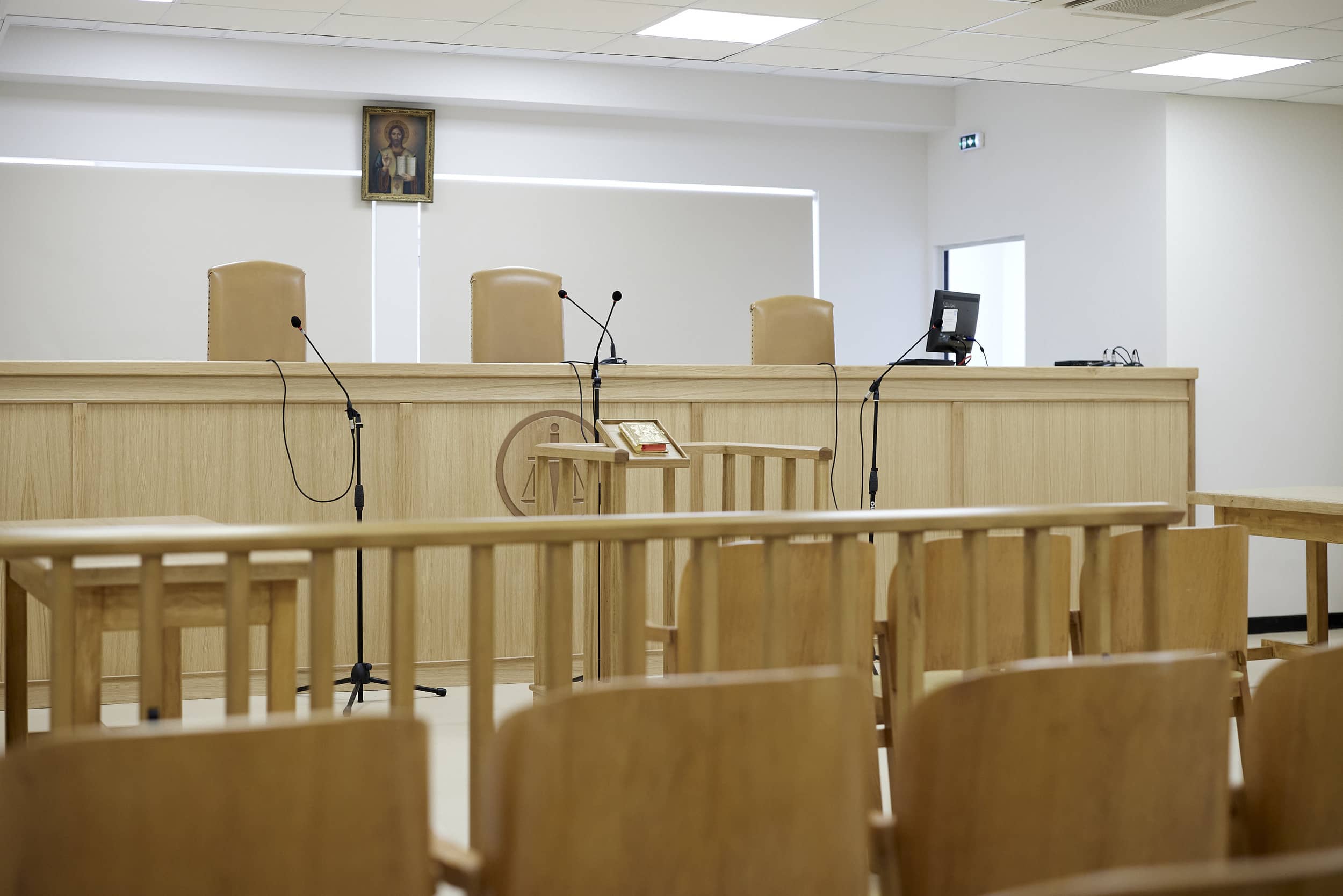
Empty court room in Greece with judges’ chairs, microphones, and wooden benches. A Greek court in Aigio sentenced James Dalamangas after his arrest in the Peloponnese following a nearly 27-year manhunt over Sydney killing.
A Greek court in Aigio sentenced James Dalamangas after his arrest in the Peloponnese following a nearly 27-year manhunt over Sydney killing. Credit: Dimitris Papamitsos / AMNA.

A Greek court has sentenced James Dalamangas, the 55-year-old fugitive wanted in Australia over a 1999 Sydney killing, following his arrest in the Peloponnese after nearly 27 years on the run.

Dalamangas appeared before a judge in the town of Aigio on Thursday, just days after Greek police arrested him at a nearby rural property. Australian authorities have long sought his extradition in connection with the fatal stabbing of George Giannopoulos, a father of two, outside a Sydney nightclub in 1999.

Greek court sentences James Dalamangas after arrest near Aigio

Greek police arrested Dalamangas at a rural property near Aigio, where he had allegedly been living under the false identity of Antonis Tzimas.

According to local reports, he had lived in the area for years and worked as an olive farmer. The court sentenced Dalamangas to two years and nine months in prison on weapons and false testimony charges. Greek authorities also convicted two other people, an 86-year-old man and a 47-year-old woman, of harboring a fugitive. However, both received temporary release pending appeals against their sentences.

Australia seeks James Dalamangas over Sydney killing

Australian authorities are expected to submit a formal extradition request in the coming weeks. They are seeking Dalamangas’ return to face proceedings related to the 1999 killing.

Former NSW Police detective Duncan McNab revealed the extradition process will depend on the Greek legal system and government. “Ultimately, this will go through the courts in Greece, reviewed by the government. They may make a decision to send him back to us. I hope they do,” McNab said.

Dalamangas, who holds Greek citizenship, is expected to oppose any attempt to extradite him to Australia. His lawyer has indicated that he intends to fight the process.

Greek statute of limitations may complicate case

If Dalamangas remains in Greece, he is unlikely to face murder charges over the 1999 incident, as the statute of limitations for murder under Greek law expires after 25 years.

According to reports, police identified and located Dalamangas based on limited information, including a tattoo bearing the Ancient Greek phrase “Molon Lave,” meaning “Come and get them.” Authorities then placed his property under surveillance prior to  carrying out the arrest.

The Nurse Who Saved Thousands From the Greek and Armenian Genocides

12 June 2026 at 12:17
Sara Corning, a nurse during the Greek and Armenian genocides
Sara Corning’s headstone was inscribed with the words: “She Lived to Serve Others.” Credit: Public Domain

Sara Corning was a Canadian nurse who saved thousands of Armenian and Greek orphans during the Genocide in Turkey.

Her life of dedication and offering to fellow human beings made her a prominent figure in Canada, Armenia, and Greece, where descendants of the genocide have been honoring her contribution.

Corning was born in the village of Chegoggin, Nova Scotia in 1872. At 24, she decided to become a nurse and moved to the United States for training. She then worked in New England for almost twenty years. Her first experience with disaster relief likely came in 1917, when she returned to Nova Scotia to help the ten thousand victims of the Halifax Explosion.

Corning saved thousands of Armenian and Greek orphans

In 1918, at the age of 46, Corning was certified by the American Red Cross. She joined Near East Relief, an organization established to help civilians affected by World War I, in 1919. Soon after, she landed in Constantinople (Istanbul) with 250 other relief workers and helped rescue and care for thousands of Armenian and Greek orphans over the following decade, often risking her life in the process.

Corning’s first post was in the South Caucasus in the Republic of Armenia. Stationed near Yerevan, she worked among hundreds of thousands of starving refugees who were often infected with typhoid and cholera. Her second post was at Anatolia College in north-central Anatolia. Most mornings, Sara and her colleagues would gather babies left at the college’s entrance by desperate parents.

World War I had ended in 1918, but postwar conflicts continued to rage. The Greco-Turkish War of 1919 to 1922 was one such conflict. By September 1922, Turkish forces were pushing an invading Greek army back to the Aegean coastal city of Smyrna (Izmir).

Corning in the midst of the Greek and Armenian Genocide in Smyrna

Amid the turmoil, hundreds of thousands of people flooded into Smyrna with hopes of being rescued by Allied warships. The United States Navy chose to pursue a policy of strict non-involvement, however, and the Red Cross and Near East Relief were instructed to evacuate only those who were US citizens. A medical team, which included Corning, was assigned to assist. Initially forbidden from bringing locals aboard the ships, they were able to set up triage stations for the refugees.

On September 13th, a conflagration began to rage. As Turkish forces entered the city, entire neighborhoods were set ablaze. Under these conditions, Corning and her colleagues rescued hundreds of children trapped inside two schools. They led them through the smoke and bloodshed, finally delivering them to American warships headed for Greece.

The brave nurse established new orphanages in Greece

In Greece, Corning helped establish new orphanages and became responsible for running one herself. She adopted five girls and funded their education. For her bravery, King George II of Greece awarded her the Knight’s Silver Cross of the Order of the Redeemer, one of the country’s highest honors. She was reassigned to Anatolia College in the late 1920s and worked in the new Republic of Turkey until the college closed in 1930.

Returning to Chegoggin, she lived in her childhood home until her death in 1969 at the age of 97. Her headstone was inscribed with the words “She Lived to Serve Others.”

In 2016, the Sara Corning Society was established in the Canadian province of Nova Scotia to commemorate Corning’s heroic deeds. A memorial was built to honor her.

Sara Corning statue
Her statue now stands on the grounds of the Yarmouth County Museum and Archives—a heartwarming tribute to her and the brave children who she helped rescue and care for. Credit: Facebook/Sara Corning Society

According to the founders of the society, David and Jennifer Chown, the sculptor’s work reflects Armenian roots, and Sara would have been deeply touched that someone from the country and people she came to know so well erected a statue in her honor a hundred years later.


How the Ancient Greeks Founded Naples in Italy

12 June 2026 at 11:31
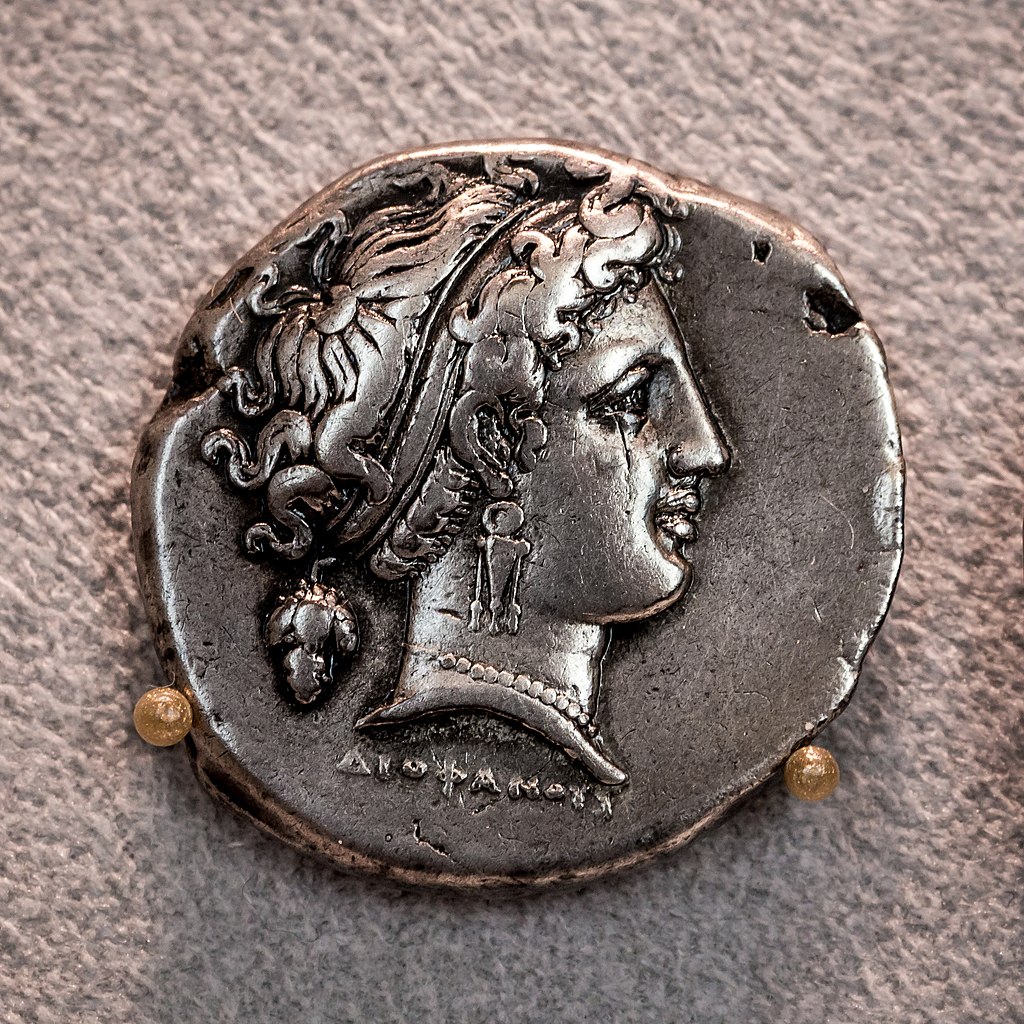
Ancient coin from Naples depicting head of Parthenope, mythical siren
Ancient Greek coin from Naples depicting the head of Parthenope, mythical siren whose body marked the future site of the city, fourth century BCE. Credit: Wikipedia Commons, cc-by-sa 4.0

The Greeks have a long and fascinating history in some of the most famous cities of Italy. One example is Naples, which is Italy’s third-largest city. The ancient Greeks founded this city well over 2000 years ago, and their influence is still felt there even today. But how did the ancient Greeks end up founding this city all the way over in Italy? We can learn the answer through ancient historical records as well as from archaeology.

The Legend of the Ancient Greeks Founding Naples

The legend of how the ancient Greeks founded Naples starts with the legend of Jason and the Argonauts. The poem Alexandra, which may have been written in c. 200 BC, records a tradition concerning Naples. It refers to a certain ‘tower of Phalerus’ already existing there in the time of Odysseus. Since Odysseus lived at the time of the Trojan War, this ‘tower’ must be named after a Phalerus who lived before then.

There is only one Phalerus who this could be – the Phalerus who accompanied Jason on his voyage to find the Golden Fleece. Other ancient sources describes this Phalerus as the founder of Gyrton in Thessaly, Phalerum in Athens, and a temple in Cyprus. Therefore, Greek legend clearly associates this Phalerus with the founding of cities. This adds even more support to the conclusion that he was the Phalerus who founded some kind of ‘tower’ in Naples before the time of Odysseus.

Therefore, the reference in Alexandra indicates that Phalerus, an Argonaut, led the ancient Greeks to establish the earliest settlement at Naples.

The Legend of the Foundation of Parthenope

The story of the ancient Greeks founding Naples also involves the legend of Odysseus. On his famous journey home from Troy after the Trojan War, he passed a group of sirens. They tried to use their enchanting singing to get Odysseus and his men to walk overboard and drown. However, Odysseus blocked his men’s ears with wax and then tied himself to his ship’s mast, thus keeping them all safe.

After defeating the sirens, one in particular, named Parthenope, threw herself into the sea in despair at her failure. She drowned, and the waves washed her body ashore at the tower of Phalerus. That location was then named Parthenope in her honor, with a city being built on the site of her grave.

This was not in exactly the same place as the later city of Naples, but it was very nearby, and it is within modern Naples. Parthenope was essentially the precursor to Naples. The two have always been so closely associated that the word ‘Parthenopean’ is a synonym of ‘Neapolitan’ even today.

What Archaeology Reveals About the Ancient Greek Foundation of Naples

Those are the legends, but how well do they match the archaeological facts? Firstly, let us consider the very earliest settlement, supposedly founded by Phalerus, one of the Argonauts. The legend about this location does not reveal where exactly in Naples the ancient Greeks supposedly established it. Nonetheless, in Naples in general, archaeology indicates that the ancient Greeks first settled there in the eighth century BC.

Whether this is actually related to the legend of Phalerus the Argonaut establishing a settlement there or not is up for debate. The archaeological evidence comes from centuries after the traditional era of the Argonauts. Nonetheless, it is possible that they lived later than usually believed.

What about the settlement of Parthenope? Archaeologists have found a Greek necropolis, or cemetery, dating to the early seventh century BC and associated with the hill of Pizzofalcone. This is further evidence that the ancient Greeks were starting settle the area of Naples at that period in history.

How the Ancient Greeks Transformed Parthenope into Naples

This settlement developed into a bustling city over the years. It became a prominent military and trading port. However, its success became its downfall. Cumae, the city from which the settlers of Parthenope primarily came, became jealous of their colony’s success. They did not want it to cause the original city, Cumae, to become abandoned. Therefore, they allegedly decided to destroy Parthenope.

There is little, if any, archaeological evidence for destruction at Parthenope dating to this time. However, whatever really happened, the evidence is clear that another settlement was then established in the Naples area, again by the ancient Greeks of Cumae. They called this city Neapolis, meaning ‘New City’. This eventually evolved into ‘Naples’, the English name for that city today.

The old settlement of Parthenope then started going by the name ‘Palaeopolis’, meaning ‘Old City’. However, it did not disappear completely. It became absorbed into the new settlement, becoming part of Naples.

Greece and Colombia Sign First Bilateral Tourism Agreement

12 June 2026 at 10:45
Greece Deputy Minister of Tourism Anna Karamanli (left) and Colombia Ambassador Ligia Quessep sign a tourism agreement.
Greek Deputy Minister of Tourism Anna Karamanli (left) and Colombian Ambassador Ligia Quessep signed a tourism agreement. Credit: Greek Tourism Ministry

Greece and Colombia have taken a significant step toward expanding their bilateral ties by signing a Memorandum of Intent focused on tourism cooperation. The agreement was finalized in Athens by Greek Deputy Minister of Tourism Anna Karamanli and Colombian Ambassador Ligia Quessep, marking the first formal tourism pact between the two nations.

Recognizing tourism as a vital catalyst for economic growth, the framework sets up mutual exchanges in digital innovation, hospitality education, and sustainable destination management. It also targets niche markets such as cultural, eco-, and culinary tourism. The initiative directly aligns with Athens’ broader international strategy to actively diversify its traditional source markets.

Colombia, an “untapped market” for Greece

Deputy Minister Karamanli highlighted Latin America as a key, untapped market for Greece’s long-haul travel strategy, noting that Colombian travelers are a perfect fit for Greece’s heritage and culinary offerings. By building these strategic partnerships, Greece aims to capture affluent, long-haul tourists seeking authentic, premium cultural experiences.

Ambassador Quessep expressed optimism about the partnership, stating that Colombia looks forward to learning from Greece’s established success in global tourism to enhance its own domestic sector.

RelatedMeet the Only Greek Coffee Grower in Colombia

Greece Turns to AI and Sensors to Monitor Aging Bridges in Real Time

12 June 2026 at 10:08
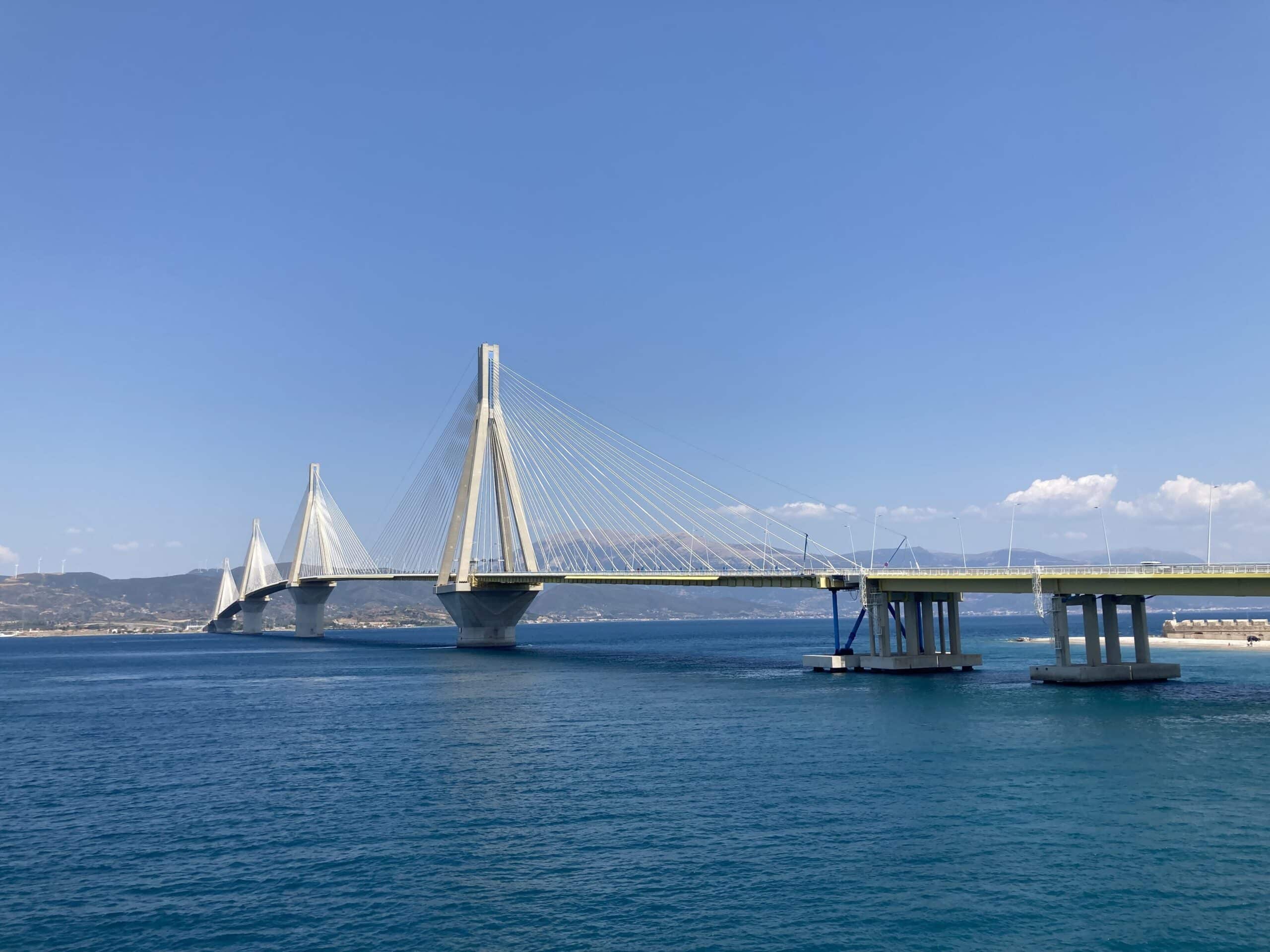
Rio Antirio Bridge in Patras, Greece
Greece is using AI, sensors, and digital twins to monitor aging bridges in real time and detect structural risks earlier. Credit: Wikimedia Commons / Awinch1001 / CC BY SA 4

Greece is turning to artificial intelligence, Internet of Things sensors, and digital twins to monitor aging bridges in real time, as the country moves toward a more preventive model for infrastructure safety.

The program, known as Smart Bridges, is being implemented by the Technical Chamber of Greece under the responsibility of the Ministry of Infrastructure and Transport. It is funded through the European Union’s NextGenerationEU mechanism as part of Greece’s Recovery and Resilience Plan, Greece 2.0.

The project is designed to provide authorities a live picture of how bridges behave under traffic, weather, and environmental stress. Rather than relying solely on periodic visual inspections, engineers can now receive continuous data from sensors installed on selected road and railway bridges.

Greece builds digital shield for aging bridges

The Smart Bridges system is already monitoring 271 bridges across the country. The program is expected to cover roughly six hundred road and railway bridges, establishing one of Greece’s most advanced digital infrastructure monitoring networks. The technology is based on Real-Time Structural Health Monitoring, a method that uses sensors to record how a structure responds to loads, vibration, movement, temperature changes, and other external pressures.

This information is then transmitted to digital platforms, where engineers can analyze it and detect unusual patterns. Artificial intelligence helps process large volumes of data and identify early warning signs that may require further inspection or maintenance. The goal is not only to detect damage but also to help authorities understand which bridges face the greatest pressure and where maintenance should be prioritized.

Sensors already reveal heavy traffic loads

Early findings show why continuous monitoring matters. On a bridge along the Axioupoli–Goumenissa national road in Kilkis, sensors recorded more than one thousand excessive load events over a three-month period. In Larissa, on a bridge on Karamanli Street above a railway line, the system recorded more than two thousand significant load events during the same period.

Together, these figures show the value of real-time data. Heavy vehicles, repeated traffic loads, climate conditions, and decades of use can all affect the condition of bridges. Without continuous monitoring, many of these stressors may remain invisible, leading to more serious damage.

Digital twins bring infrastructure into the data age

A central part of the project is the creation of a digital twin for each monitored bridge. This is a dynamic digital model of a real structure. It is updated as new data comes in from sensors, allowing engineers to compare expected behavior with actual performance.

This makes it possible to detect minor changes in a bridge’s condition over time. It can also help authorities plan maintenance more efficiently, reduce emergency repairs, and make better use of public funds. In this way, the system is meant to transform bridges from passive structures into monitored infrastructure that continuously reports on its own condition.

A major EU-funded infrastructure project

The Smart Bridges project is funded through the European Union’s NextGenerationEU mechanism under Greece’s Recovery and Resilience Plan, Greece 2.0. The project’s budget increased as its scope expanded. Greece 2.0 initially listed Smart Bridges at €222.4 million ($256.2 million), with €80.2 million ($92.4 million) coming from Recovery Fund financing.

A later official amendment raised the approved total budget to €285.3 million ($328.7 million) after 151 additional bridges were added to the project. The funding supports the installation of monitoring systems, the development of digital bridge models, the collection of real-time structural data, and the supervision of hundreds of road and railway bridges across Greece.

Aging infrastructure becomes a national challenge

The project comes at a time when Greece, like many other European countries, faces the challenge of maintaining infrastructure built decades ago. Numerous bridges remain essential to daily transport, freight movement, and regional connectivity. However, aging materials, heavier traffic, extreme weather, and limited maintenance budgets can increase structural pressure over time.

The Smart Bridges program reflects a wider shift in public infrastructure policy: from repairing damage after it appears to identifying risks earlier and acting before issues escalate.

Greece looks beyond bridges with a wider infrastructure safety plan

The Smart Bridges program has also opened up a broader debate about how Greece should monitor and maintain critical public infrastructure in the years ahead. The Technical Chamber of Greece has proposed the establishment of a mandatory National Infrastructure Registry, a centralized database that would record the condition, ownership, and maintenance needs of public assets across the country.

Such a registry would help authorities move away from fragmented records and provide the state with a clearer overview of which structures require inspection, repair, or long-term investment. The chamber has also called for wider pre-earthquake inspections, better integration of structural safety checks into building renovation programs, and more efficient use of Smart Bridges data by ministries, civil protection authorities, regional governments, and municipalities.

US, Greece, Cyprus, and Israel Launch Eastern Mediterranean Energy Center

12 June 2026 at 16:32
Mediterranean Energy Center
The Eastern Mediterranean Energy Center (EMEC) will be based at at Rice University. Credit: Stavros Papastavrou/Facebook

The United States, Cyprus, Greece, and Israel have formalized a new energy partnership aimed at securing infrastructure and boosting natural gas development in the Eastern Mediterranean.

US Energy Secretary Chris Wright signed a Declaration of Intent (DOI) alongside Cypriot Energy Minister Michael Damianos, Greek Environment and Energy Minister Stavros Papastavrou, and Israeli Ambassador to the US Dr. Yechiel Leiter. To anchor the initiative, the group partnered with Rice University President Reginald DesRoches to establish the Eastern Mediterranean Energy Center (EMEC) on the university’s Houston campus.

The agreement operationalizes a core objective of the Eastern Mediterranean Security and Energy Partnership Act, a bipartisan framework originally passed by Congress in 2019 to counter Russian and Chinese influence in the region by solidifying US allied energy ties.

Eastern Mediterranean Energy Center will focus on infrastructure and LNG

According to the agreement, the center will serve as a hub for both public and private sector collaboration. Key priorities include:

  • Expanding natural gas development and US Liquefied Natural Gas (LNG) infrastructure
  • Securing regional energy transportation networks and bolstering power grid reliability
  • Facilitating scientific research, joint technology development, and workforce training

The decision to place the center in Houston, the energy capital of the US, is aimed at directly connecting Eastern Mediterranean policymakers with American industry leaders and engineering talent.

Strategic regional realignment

The partnership arrives as Europe and the Mediterranean continue to reshape their supply chains. With the US currently operating as the world’s leading oil and gas producer and largest LNG exporter, Washington views the Eastern Mediterranean as a critical geographic corridor for global energy stability.

“The Eastern Mediterranean is an increasingly important region for global energy development,” Secretary Wright said, noting that the Houston-based center will leverage “industry leaders in hydrocarbon development” to benefit all member nations.

Papastavrou described the occasion as a “historic moment,” saying that “Greece, Cyprus, Israel and the United States are joining forces to deepen our strategic cooperation and enhance connectivity in the Eastern Mediterranean through the establishment of the East Med Energy Center.”

He added that EMEC would provide a permanent platform for advancing regional stability, energy security, and economic cooperation by bringing together scientific expertise, academic excellence, the private sector, technological innovation, and energy know-how.

According to Papastavrou, the 3+1 scheme has demonstrated that reliable partners sharing a common strategic vision can deliver tangible results, advance shared interests, and contribute to a safer, more prosperous and affordable energy future. While the administrative details of the center’s funding and exact rollout schedule have not yet been disclosed, the declaration establishes the formal diplomatic and academic framework required to begin joint operations.

Related: Greece Signs Landmark 20-Year LNG Deal With the US

The Modern Greek Philosopher Who Chose Death

12 June 2026 at 08:48

Dimitris Liantinis, the Greek professor and philosopher who chose his own death.
Dimitris Liantinis, the Greek professor and philosopher who chose his own death. Credit: Liantinis.org
Dimitris Liantinis was a Greek philosopher and professor who believed that ancient Greeks were so preoccupied with the idea of death that it formed the basis of their entire culture. He then disappeared very mysteriously, with some positing that he committed suicide.

Dimitris Liantinis’ early life

Dimitris Liantinis was a professor of the School of Philosophy at the University of Athens, where he taught a class in the philosophy of education and the teaching of Greek language and literature. He also authored nine books, all written in Greek and focused on philosophy and education.

His last name at birth was Nikolakakos, but he changed it to Liantinis to honor his place of birth, the village of Liantina in the prefecture of Laconia.

He completed his high school education in Laconia and, in 1966, graduated from the Department of Literature of the School of Philosophy at the University of Athens. He taught literature at secondary education level from 1968 to 1970 and from 1973 to 1975.

From 1970 to 1972, Liantinis was in Munich, Germany, learning and studying the native language. At the same time, he worked there as a teacher of classical literature at the private Greek high school Otto Geselschaft.

In 1975, he embarked on graduate studies in the School of Philosophy at the University of Athens and was appointed a teaching assistant at the Laboratory of Education. He got his PhD in 1978 with honors. The subject of his thesis was: “The presence of Hellenic spirit in the Duino elegies by Rainer Maria Rilke.”

As a professor, he gave many training seminars and lectures to teachers of secondary education level in Greece.

The Greek professor’s philosophical views

Liantinis’ ideas were strongly influenced by the philosophy of ancient Greece, as well as the ideals of the Romantic movement and the works of Friedrich Nietzsche. The professor made several references to the scientific progress of his time, particularly in the area of cosmology, and he made efforts to formulate a connection between that and the existence and nature of God.

He wrote at great length about education, and some of his work focused on what he considered to be the moral and intellectual decline of modern Greeks compared to their ancestors.

To further solidify his position, Liantinis devoted large parts of his body of work to defining exactly what the real value of ancient Greece was, as well as the actual worldview that they held. He argued against the notion that ancient Greece, although ahead of its time for most of antiquity and possibly the Middle Ages, was eventually superseded by the advancements of Renaissance Europe.

In contrast, he believed that the Greeks possessed a complete culture, a kind of super-set for all Western cultures, past and present. As an example, in his book Gemma, he argued that “the Greeks did not need psychoanalysis because they had tragedy.”

This period of intellectual magnificence was short-lived, and Liantinis wrote that “it would be a sign of honesty if the Greeks were to stop philosophizing right after Aristotle.”

He added that today, Greeks are completely unknown as “for the Europeans, we, the ‘New-Greeks,’ are but a faceless bunch, something of a Balko-Turkish Arab. We are the Orthodox with the Russian-like writing and the domes on our village houses.”

Death was also central to the professor’s work and, as he claimed, that of the ancient Greeks. He refuted the idea that ancient Greece was a culture of playful joyfulness and argued that the Greeks had instead presented us with a world of infinite melancholy, a proposition that is consistent with that of Nietzsche, whom he greatly admired.

Their philosophy was a study of death, according to Liantinis, and their conclusions were absolute and hard to accept since they saw death as a final end with no afterlife or moral rewards for the life lived on earth.

The Greek professor’s views on death

Liantinis believed that death as a topic occupied the ancients to such a degree that one could see their whole culture arising from the radical views they held on the subject.

The professor believed the ancient Greeks saw death as an unchanging cosmic law and did not associate whatever afterlife they had conceived with a system of divine punishment or reward like the Abrahamic religions. Although individual myths, such as that of Sisyphus who was condemned to eternal punishment in the realms of Hades, did exist, they were largely exceptions to the rule and never developed into a proper system of beliefs on life after death.

In one of his lectures,[5] Liantinis said Homer describes a scene where the hero, before engaging him in battle, says to his opponent, “The race of men is related to that of leaves, as we momentarily stand fresh on the tree branch, then quickly surrender to the wind and rain.” The lyric poet Pindar also questions in his works: “What are we [men] but dreams of shadows.”

Liantinis’ strange disappearance

On June 1, 1998, Liantinis disappeared, leaving a letter for his daughter, Diotima, where he revealed his decision to vanish on his own free will after lifelong consideration and preparation.

Liantinis’ disappearance evoked many speculations from the public, with some believing he had taken his own life in protest against what he saw as the lack of values in modern Greek society.

Seven years after the professor’s death, Panagiotis Nikolakakos, his cousin, showed Diotima to the crypt where her father lay in the area of the Greek mountain Taygetos. Nikolakakos had been instructed to do this by the late professor before his departure.

Several thorough forensic tests and analyses proved the skeleton in the crypt to be that of Liantinis, but the exact date and cause of his death remain unknown since no lethal substance was detected.

Despite his will stating that his bones should remain on Taygetos, he was finally buried at the cemetery of Kechries near the city of Corinth.

In his last letter to his daughter, he wrote: “My last act has the meaning of protest for the evil that we, the adults, prepare for the innocent new generations that are coming. We live our life eating their flesh. A very bad evil. My unhappiness for this crime kills me.”

Santorini Accuses Cruise Lines of Creating Port Chaos for Corporate Profit

12 June 2026 at 08:33
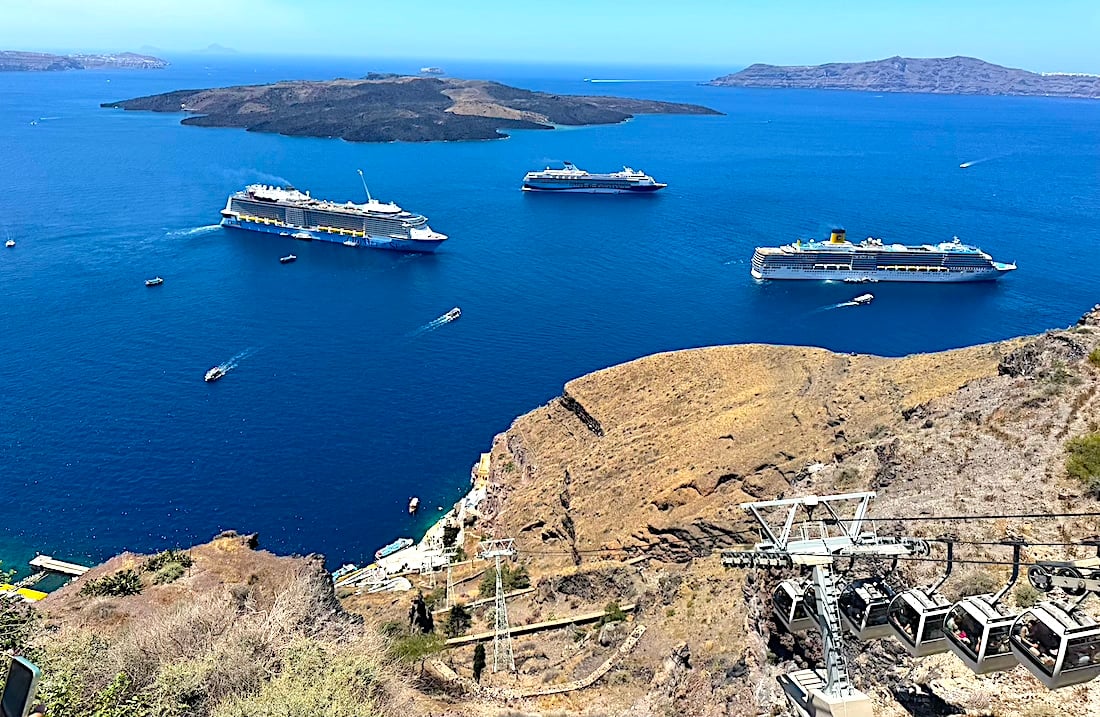
Santorini Greece Cruise ships Santorini Cable Car
Santorini officials claim cruise lines deliberately create passenger bottlenecks. Credit: Greek Reporter

Senior municipal and port officials on Santorini have launched a coordinated offensive against major international cruise lines and the Cruise Lines International Association (CLIA). Speaking to Greek Reporter, local authorities claim global operators are deliberately engineering passenger bottlenecks and spreading misinformation to bypass municipal regulations, starve local businesses, and maximize their own onshore corporate excursion profits.

Mayor Nikos Zorzos, the Mayor of Thira (Santorini), emphasized that while cruise tourism is a vital sector for the island’s economy, it must be subject to strict regulation. Following a study conducted with the University of the Aegean during his previous term, it was determined that Santorini can sustainably accommodate a maximum of 8,000 cruise visitors per day.

Though a subsequent administration abolished the resulting berth allocation system in 2019, Mayor Zorzos immediately reinstated the daily cap upon his re-election to protect the island’s straining infrastructure.

The 70-30 port split friction

The current conflict centers on where passengers are offloaded. Historically, 70% of cruise passengers disembarked at the Old Port of Fira, with the remaining 30% directed to the industrial port of Athinios. Following a seismic event last year, a Joint Ministerial Decision temporarily diverted nearly all traffic to Athinios. This year, the Municipal Port Fund reinstated the traditional 70/30 split.

“Even though this rule is backed by a prosecutor’s order, operators are actively trying to bypass Fira to redirect tourists toward Athinios and Ammoudi,” Mayor Zorzos told Greek Reporter. “Yet, the Fira market is recovering, and our cable car system has proven it can comfortably handle the regulated flows.”

Allegations of tactical “sabotage” by cruise lines on Santorini

Santorini Sunset_Oia
Crowds gather for the famous sunset in Oia, Santorini. Credit: Greek Reporter

Mayor Zorzos directly refuted recent public complaints and crowded photographs shared by CLIA, labeling them a false narrative designed to resist local flow management. According to municipal tracking, cruise ships are allegedly delaying disembarkation maliciously. Ships arriving at 7:00 AM are reportedly waiting until 10:00 AM to offload passengers all at once, leading to artificial bottlenecks at the Old Port.

“They are doing this maliciously for their own financial gain,” Zorzos alleged. “They want to force passengers into pre-booked, closed-loop corporate excursions, sometimes taking them to areas of zero cultural interest.”

The Mayor highlighted an unauthorized development in Vlychada, an environmentally sensitive area, where a cruise provider constructed a private, closed-gate tourist facility. “They created this exclusive enclave strictly for corporate profit, directly at the expense of Santorini’s local economy,” Zorzos told Greek Reporter.

Port Fund President slams “guided ghetto tourism”

Georgios Nomikos, President of the Santorini Port Fund, reiterated that while the island supports the cruise industry, the economic benefits must extend to the local ecosystem rather than a select few corporate entities.

Nomikos explained that when cruise lines utilize the industrial Athinios port, passengers are loaded directly onto proprietary tour buses, leaving Fira, the island’s capital and home to over six hundred local businesses, completely bypassed.

To debunk claims that the Fira port is overburdened, Nomikos provided a mathematical breakdown based on a standard 1,000-passenger ship. Under the 70-30 rule, 300 passengers are immediately allocated to the Athinios port. Of the remaining 700 passengers assigned to the Fira berth, roughly 10% to 15% (around 100 people) choose to stay onboard. Furthermore, approximately 300 passengers are transferred immediately by tenders to Ammoudi, and another 100 embark on Caldera catamaran tours or other external excursions.

Consequently, Nomikos points out that only about 200 to 300 passengers—or roughly 30% to 40% of the ship’s total capacity—actually ascend into Fira at any given time. “When CLIA publishes photos of overcrowded docks, they are being deceptive,” Nomikos told Greek Reporter. “They coordinate their tender boats to drop off hundreds of people simultaneously to create a false narrative of chaos. They won’t tell you that half those people are immediately routed away to other excursions.”

Cable car operators confirm infrastructure capability, cite scheduling manipulation

Santorini Greece Santorini Cable Car
Tourists wait to embark on the cable car under a shaded area constructed this year. Credit: Greek Reporter

Artemis Kafouros, President of the Loula & Evangelos Nomikos Foundation, which operates the island’s cable car, confirmed that substantial upgrades have been made to ensure a seamless visitor experience. The upper station can now accommodate six hundred people per hour, and the lower station holds three hundred, with both featuring fully shaded, climate-controlled waiting areas.

However, Kafouros provided an eyewitness account from this week supporting claims of deliberate scheduling manipulation by the cruise lines. “Just recently, there were three cruise ships anchored. Two arrived at 7:00 AM. Inexplicably, until 9:30 AM, the Old Port was completely deserted—they did not disembark a single soul. Then, the moment the third ship arrived at 10:00 AM, all three vessels began discharging passengers simultaneously.”

According to Kafouros, this proves an intent to manufacture long queues to justify abandoning Fira. The ultimate goal, he claims, is to route ships back to Athinios to sell proprietary shore excursions that benefit entrenched corporate interests. Local authorities conclude that if cruise lines cooperate honestly with local tender schedules and municipal regulations, visitor flows would remain completely smooth.

Officials are calling on the industry to support the island’s long-term sustainability rather than prioritizing short-term corporate greed.

Related: How Geopolitics and New Fees are Reshaping Cruise Tourism on Santorini, Mykonos

Greece Has Found Its Summer Anthem: Meet Danai, the Voice Behind “Ki Allo”

12 June 2026 at 07:50
Danae Ki Allo Greek Summer Hit
The song with its its hypnotic pop hook has taken Greece by storm. Credit: danaidede/Instagram

If there is a song that will dominate the Greek charts this summer, it is probably “Ki Allo” (And More) by newcomer Danai, (Danai Dede) which has completely stormed social media over the past few weeks.

If you have spent any time scrolling through TikTok or Reels lately, your algorithm has likely introduced you to its hypnotic pop hook. The infectious track has triggered an explosion of user-generated content, with thousands of creators using the audio for transitions, beach-day aesthetics, and lip-syncs. Almost overnight, Danai has delivered the textbook definition of a modern, internet-era breakthrough, proving that the route to a summer smash now runs directly through short-form video.

Danai’s “Ki Allo”: The blueprint of the summer juggernaut

While “Ki Allo” is her definitive solo breakout moment, Danai Dede, born on Rhodes, but now living in Athens,  is no stranger to the formula for a hit. She first caught the public’s attention as the standout female vocal feature on Saske’s double-platinum hit “Aurio”, which dominated radio airwaves and beach bars. She followed that up with her solo track “Kalokairi”, proving her innate knack for capturing the effortless, sun-drenched nostalgia that listeners crave.

With “Ki Allo,” she has struck gold once again. The track’s distinctive, unpretentious vocals have become a favorite tool for creators, driving massive organic engagement. This social footprint has converted directly into commercial success, sending “Ki Allo” skyrocketing up digital streaming charts and inspiring a wave of early club remixes.

@konsta601

Need this song #danae #kiallo #greekmusic #greece #greek

♬ original sound – Danae🌊🪽🌬

Why “Ki Allo” Greek summer season

Unlike traditional, heavily manufactured pop anthems, Danai’s style is indie-pop leaning, cool, and effortless. She performs with a raw, natural delivery that feels deeply relatable to Gen-Z listeners.

By blending modern urban pop sensibilities with a laid-back, addictive rhythm, “Ki Allo” delivers the exact type of replay value required to dominate long road trips, beach clubs, and warm summer nights. As the season kicks into high gear across Greece, Danai’s viral hit is officially the track to beat.

@vaspapad

Και μετά φαγητό σε κάποιο ταβερνάκι ☀ #summer #greeksummer #greece #greekisland #tamning

♬ Ki Allo – Danae

Athens Metro Rejects Pride Campaign for First Time in a Decade

12 June 2026 at 07:17
Athens Pride posters rejected by STASY, the state-owned company managing the Athens metro system
Athens Pride. Credit :Camerawalker /Wikimedia Commons/CC BY-SA 4.0

For the first time in ten years, STASY, the state-owned company that manages the Athens metro system, has rejected a request by Athens Pride to display promotional posters across the capital’s underground transit network. The sudden decision has triggered a sharp response from the festival’s organizers, who accuse the transit authority of intentionally reducing LGBTQ+ visibility.

The controversy comes just ahead of Athens Pride 2026, which is scheduled to take place on Saturday, June 13 at Syntagma Square.

Pride organizers allege unjustified sidelining by Athens Metro

According to a public complaint issued by Athens Pride, the organization followed all standard legal and administrative procedures to secure the advertising slots. For the past decade, having their campaigns displayed in metro stations was viewed by organizers as a vital achievement in reclaiming public space and promoting inclusivity.

This year, however, organizers claim their application was summarily rejected without any formal justification. Furthermore, Athens Pride noted that they were only notified of the refusal a single day before the scheduled launch of the campaign. In an emphatically worded statement, the festival’s organizers argued that the move carries significant political weight given the current social climate:

“At a time when hate speech, intolerance, and violence against our community are on the rise, decisions that restrict our visibility in the city are not neutral. They amount to a clear political stance—one that pushes us further into invisibility.”

STASY sites “prior commercial commitments”

Responding to the mounting criticism, STASY issued a statement to clarify its position and deny any political motives behind the move. The transit authority confirmed that it had proudly hosted Athens Pride campaigns for the consecutive past nine years but stated that a scheduling bottleneck made it impossible this year.

According to STASY, the advertising spaces throughout the metro network were already fully booked due to pre-existing corporate and commercial obligations during this specific timeframe.

“This year, due to existing commercial and advertising commitments for the specific period, it was not possible to host the campaign,” the company stated officially. Seeking to de-escalate the tension, STASY added that it “remains at the disposal of the organizers to explore possibilities for future cooperation.”

Despite the lack of promotional presence on the city’s transit network, organizers emphasize that the Athens Pride parade and events will go commence as planned at the heart of the capital this weekend.

Related: Greece on the Rainbow Map: Where it Stands on LGBTQ+ Rights

Greece Climbs Global Peace Index as the World’s Safest Countries Are Revealed

12 June 2026 at 06:34
A Greek fisherman greets guests with a warm smile while Greece's iconic windmills can be seen in the background. Greece has climbed up in the World Peace Index.
A Greek fisherman greets guests with a warm smile. Credit: Greek Reporter

Greece has consolidated its status as one of the safest and most stable countries globally, climbing to 53rd place in the 2026 Global Peace Index (GPI). Moving up two places from last year’s ranking, Greece is officially categorized as one of the world’s “highly peaceful countries.”

Amid shifting geopolitical dynamics and rising international tensions, Greece’s progress reflects significant internal security, low violent crime rates, and societal stability, making it a standout performer in Southeast Europe and the broader Mediterranean region. Globally, the 2026 report marks a historic record for Iceland, which has maintained its position as the world’s safest country for nineteen consecutive years.

The comprehensive index, developed by the Institute for Economics & Peace (IEP), evaluates 163 independent states and territories based on societal safety, domestic or international conflict, and the degree of militarization.

The analysis of Greece’s standing and the global top-tier rankings for 2026 are as follows:

  • Societal safety: Low rates of violent crime and a generally peaceful daily environment
  • Political stability: Consistent institutional reliability compared to global fluctuations
  • Tourism security: Maintained high-security standards across major mainland cities and the islands, crucial for its massive tourism sector

The Top 10 Safest Countries in the World (2026)

The 2026 rankings show Europe continuing to dominate the safety index, alongside key nations in Asia and Oceania:

1. Iceland – Unbeatable 19-year streak; near-zero violent crime, high social cohesion

2. Ireland- Exceptional political stability and military neutrality

3. Austria- Strong social welfare infrastructure and low domestic conflict

4. New Zealand – Top performer in the Asia-Pacific region; excellent societal safety

5. Singapore – Ranked as Asia’s safest nation with ultra-low crime and efficient law enforcement

6. Switzerland – Legendary neutrality, economic security, and low crime rates

7. Denmark – High trust in government, strong economy, and social equality

8. Portugal – Consistently peaceful, making it a top European expat and retirement haven

9. Japan – Renowned for societal discipline, low crime, and internal stability

10. Slovenia – Excellent environmental safety, low crime, and high community trust

❌