Legal experts warn that some of the government’s proposals in the Labour Reform bill that the prime minister is so focused on getting through parliament are “draconian”. Those that aren’t,
Makerfield isn't the only by-election happening today. There are two more, one of which is in Aberdeen South – and Mark Littlewood has put a small bet on a Tory upset against the SNP in the oil hub constituency.
Finland’s parliament on Wednesday voted to lift a decades-old ban on nuclear weapons, approving a major defense policy shift aimed at aligning the country more closely with North Atlantic Treaty Organization (NATO) deterrence strategy.
Defense Minister Antti Häkkänen said a strong majority backed the amendment to the Nuclear Energy Act, calling it a "historic reform" that strengthens Finland’s security and that of the alliance.
"The Parliament approved the amendment to the Nuclear Energy Act with a strong 2/3 majority," Häkkänen said in a post on X. "This historic reform strengthens the security of Finland and of NATO as a whole.
In April 2023, Finland joined NATO in response to Russia’s full-scale invasion of Ukraine, ending decades of military non-alignment. The move, aimed at securing Finland’s collective defense, roughly doubled NATO’s border with Russia.
"The overall nuclear weapons policy has been one of the most challenging issues in the Ministry of Defence during this parliamentary term. Years of study, discussions with nuclear-weapon states and other allies, and assessments of how Finland's security can best be strengthened in NATO," Häkkänen said.
The measure repeals provisions in Finland’s 1987 Nuclear Energy Act that banned the import, production, possession and detonation of nuclear explosives.
If enacted, the legislation would allow nuclear weapons to be transported, supplied or possessed in Finland where the country’s military defense requires it.
According to Euro News, 125 deputies backed the government proposal, 61 voted against it and 13 abstained.
The bill now moves to the president for final approval.
"I thank all the Members of Parliament who supported our legislative proposal for their strong backing," Häkkänen said. "Thank you to the defense administration professionals at home and abroad for their high expertise also in this project."
Despite the bill passing, the proposal has drawn criticism from opposition lawmakers, who warned it could escalate tensions, make Finland a potential primary target, and break from regional norms, noting that several neighboring countries have rejected hosting or permitting nuclear weapons.
The introduction of the proposed law also provoked a strong reaction from Russia last March, according to Reuters.
"This is a statement that leads to an escalation of tensions on the European continent," Kremlin spokesman Dmitry Peskov said.
"This statement adds to Finland's vulnerability, a vulnerability provoked by the actions of the Finnish authorities. The fact is that by deploying nuclear weapons on its territory, Finland is beginning to threaten us. And if Finland threatens us, we take appropriate measures."
Small-boat migrants who appeared on a controversial episode of Question Time where Reform's Zia Yusuf was "ambushed" were placed there by campaigners at the invitation of the BBC.
Private members’ bills to crack down on use of Slapps are likely to attract cross-party support
A coordinated push to protect whistleblowers, journalists and victims of sexual assault from being sued by those who wish to silence them has been launched in both houses of parliament.
Two private members’ bills designed to crack down on strategic lawsuits against public participation, known as Slapps, have been introduced by Conservative members within 24 hours of each other, and are likely to attract cross-party support.
Still riding the crest of the wave that saw him declare yesterday that other countries are ‘green with envy’ over Portugal’s economic resilience, prime minister Luís Montenegro told MPs in
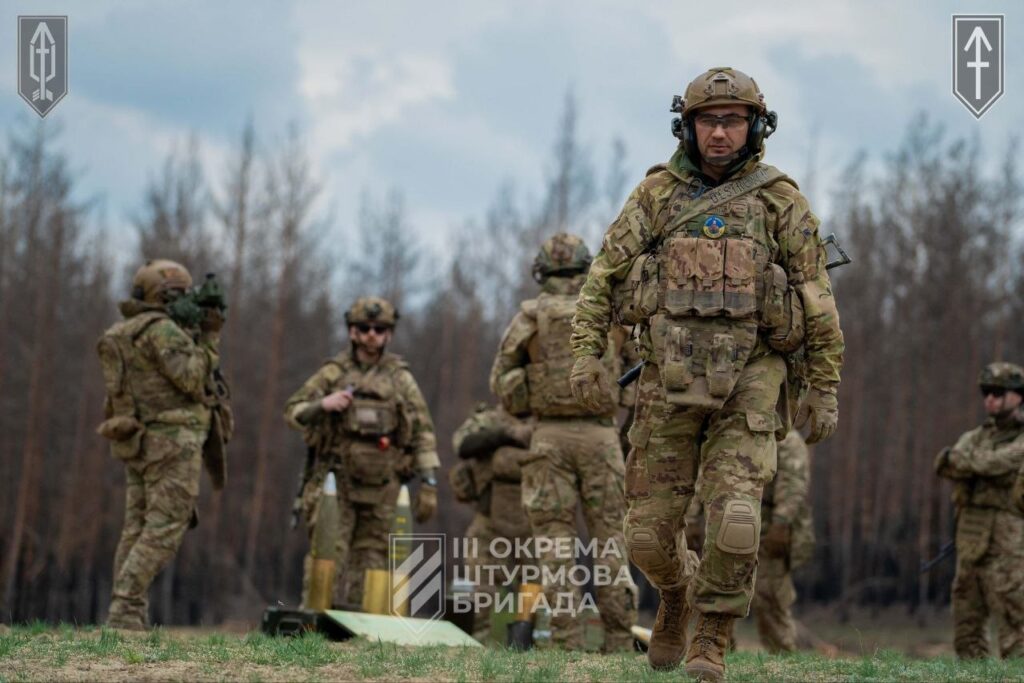
Ukraine’s Ministry of Defense is introducing a sweeping overhaul of military service rules that restructures contracts, pay systems, personnel movement, and reintegration procedures across the armed forces, the ministry announced on 12 June.
The reforms are part of a broader 2026 reorganization of service conditions under the new defense leadership of Minister Mykhailo Fedorov, aimed at stabilizing manpower, improving retention, and formalizing career pathways during wartime. The package establishes a more predictable framework for service terms, compensation, and transfers while prioritizing reinforcement of frontline combat units.
President Volodymyr Zelenskyy endorsed the reform package, saying military and government leaders had agreed on a path to “increase the financial sustainability of our defense and ensure the further transformation of the Ukrainian army.”
New contract system split into three service categories
The Ministry introduced three contract types: infantry-assault (“pihotno-shturmovyi”), combat, and basic service contracts, each linked to specific roles and operational exposure.
The infantry-assault contract covers frontline positions including infantry, assault troops, combat medics, gunners, and drivers in combat units. Combat contracts apply to drone operators, electronic warfare specialists, artillery crews, and other battlefield support roles, while basic contracts cover non-combat and rear-area positions.
Service terms are fixed: 6, 10, or 14 months for infantry-assault roles depending on prior service status, and 24 months for combat and basic contracts.
Pay structure tied to role and operational intensity
The system combines a base salary of 20,000 hryvnias ($450 USD) with variable payments based on role and battlefield conditions.
Monthly compensation ranges from at least 30,000 hryvnias ($670 USD) in rear positions to significantly higher levels in combat roles, with infantry-assault positions at the top of the scale. Under the framework, total monthly pay may reach up to 120,000 hryvnias ($2,670 USD) depending on deployment intensity and task execution.
A tiered bonus system adds payments linked to operational activity, including participation in frontline operations, command-level missions, and assault actions. Additional fixed incentives apply for outcomes such as capturing prisoners or confirmed combat kills.
Eligibility for certain payments is verified through a digital mission control system that records presence in designated operational zones.
Zelenskyy also announced planned pay increases for combat commanders, saying the measure is intended to help retain experienced leadership within frontline units.
He said the Cabinet of Ministers is expected to approve the implementation mechanism, with the first additional payments potentially beginning in June.
Fixed-term service with post-contract leave guarantees
All contract types include defined service terms followed by a structured post-service leave period. The duration of this leave is calculated based on total service length and combat participation, with longer operational involvement extending the guaranteed break.
The system is designed to create a predictable cycle of service, recovery, and re-engagement, supported by legally defined post-contract guarantees.
Automated transfers through Army+ system
Automatic transfer approvals are introduced through the Army+ digital platform. Eligible personnel up to senior sergeant rank and outside officer positions can request transfers once per year within their corps’ operational sector.
Transfers are limited to units within the same command area, with processing handled digitally to reduce administrative delays while maintaining operational control. A pilot rollout is planned in selected corps before wider expansion across the armed forces.
Structured return from unauthorized absence
A temporary 100-day mechanism allows personnel who left service without authorization before 11 June 2026 to return under a simplified procedure.
Applications are processed digitally, with verification completed within several days. Returning personnel can select from a list of eligible units, with pay and benefits restored upon formal reintegration into service.
The mechanism is designed to streamline reintegration while restoring personnel to active duty under controlled conditions.
Part of wider force restructuring
The Ministry of Defense says the package is intended to modernize Ukraine’s wartime force structure by combining fixed-term contracts, role-based compensation, and digital personnel management tools.
Separately, Zelenskyy instructed officials to expand recruitment pathways for foreign volunteers seeking to serve in Ukraine’s armed forces, saying additional recruitment mechanisms would be introduced. No further details were immediately released.
Further stages of reform are expected as the system is tested and expanded across the armed forces.
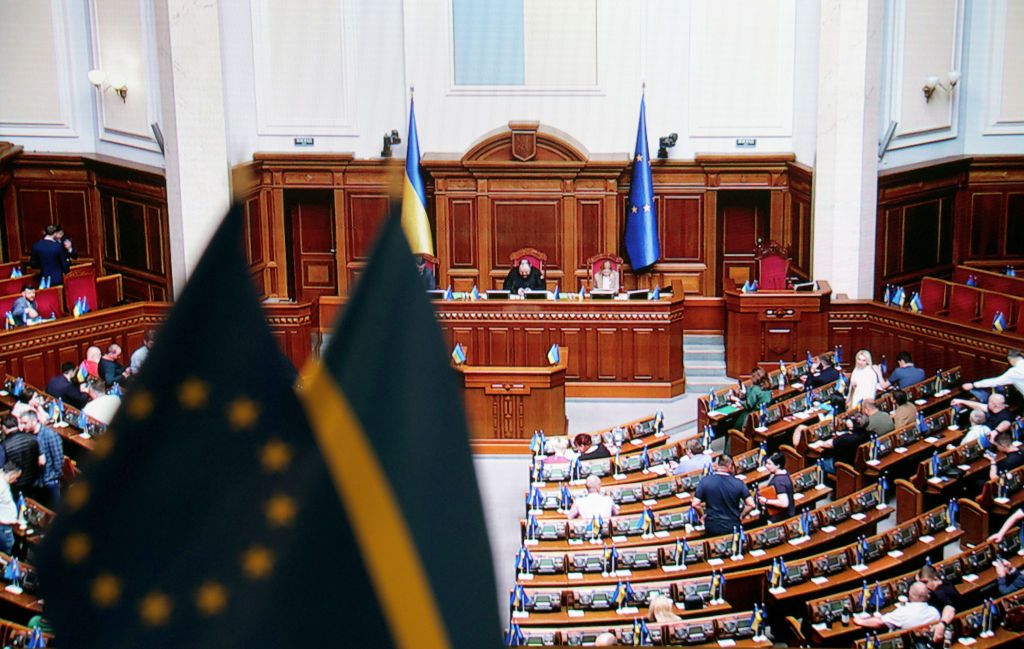
The Verkhovna Rada failed to gather enough votes for some bills demanded by the EU and the IMF, and one bill necessary for European integration was passed but was lambasted by experts as "imitation" rather than genuine progress.
UNITED NATIONS — When Jeff Bartos appeared before the Senate Foreign Relations Committee in 2025 for his confirmation hearing, he was warned that the job he was seeking might not exist.
The Pennsylvania businessman, former political candidate and endurance athlete had been nominated by President Donald Trump to serve as U.S. ambassador for United Nations Management and Reform — a title that has long sounded aspirational in a building famous for bureaucracy.
During his confirmation hearing, Bartos recalled being greeted with a dose of skepticism.
Less than a year later, Bartos believes the impossible is beginning to happen.
In an exclusive interview with Fox News Digital, the Trump administration official laid out an ambitious campaign to reshape an institution critics say has become bloated, inefficient and increasingly disconnected from its founding mission.
The effort comes at a pivotal moment for the United Nations. The stakes extend well beyond budgets. As the U.N. confronts a cash crunch, prepares to choose its next secretary-general and faces growing scrutiny from the administration, the debate over reform has become a battle over the institution's future: whether it remains on its current course or undergoes its most significant restructuring in decades.
Secretary-General António Guterres has repeatedly warned of a growing liquidity crisis as the organization struggles with delayed member-state payments, including billions owed by the United States. At the same time, the Trump administration has made clear that future funding and support will be increasingly tied to reforms.
Bartos argues that pressure is already producing results.
Sitting at the U.N. headquarters, he points to what he calls historic achievements: roughly $570 million cut from the U.N.'s regular budget and 2,900 positions eliminated through negotiations among all 193 member states.
"Again, never happened before in 80 years," Bartos said.
"$570 million cut to the regular budget, approximately 3,000 posts cut. Unanimity. That's by consensus. All 193 countries had to come together."
For Bartos, the achievement is particularly striking because many diplomats viewed meaningful reform as impossible.
"I promised you we wouldn't let you down," he recalled telling Senate Foreign Relations Committee Chairman Jim Risch months after his confirmation.
The reforms represent only what Bartos describes as a "down payment." The next phase is already underway.
As member states negotiate peacekeeping budgets for the coming year, the administration is pushing to reduce spending, streamline missions and eliminate programs it believes no longer serve their intended purpose.
One example, Bartos said, involves changing how the U.N. reimburses countries that contribute equipment to peacekeeping missions.
Previously, reimbursement was largely based on whether equipment was present.
"The methodology that the U.N. used to reimburse troop-contributing countries for equipment was: 'Is it there?'" Bartos said.
The United States pushed for a simple change: "You get reimbursed when the equipment is put into action to do work."
The reform could save roughly $30 million annually, according to U.S. estimates.
For Bartos, however, the dollar figure matters less than what it represents.
"It's a culture change," he said. "Being efficient, being respectful of every dollar, thinking about the taxpayers who fund all this."
That mindset is driving the administration's next major targets: employee compensation and pensions.
Bartos argues that the U.N.'s pension system and benefits structure consume resources that could otherwise be directed toward humanitarian operations.
Not everyone at the United Nations agrees with Bartos' assessment. U.N. officials argue that many of the reforms predate the Trump administration and were already being pursued under Guterres.
"From day one, the secretary-general has been committed to reforms," U.N. spokesman Stéphane Dujarric told Fox News Digital. "A few days ago, on 28 May, the secretary-general told member states that they need to act on structural reform, saying, ‘Genuine reform requires tough choices. This is no time for complacency, self-interest, or foot-dragging.’"
The UN80 initiative is Guterres' flagship reform effort, aimed at cutting duplication, reviewing mandates and making the U.N. system more efficient.
Still, Bartos argues the pace and scope of reform changed dramatically once the United States began applying pressure through budget negotiations and funding discussions.
"The U.N. is at a decision point," Bartos told Fox News Digital.
The debate comes as the organization faces mounting financial pressure. Dujarric said Guterres remains deeply concerned about ongoing liquidity challenges caused by delayed payments from member states, including the United States.
"Unlike a government, the U.N. cannot borrow or print money," Dujarric said, warning that the organization is expected to execute programs with funds it has not received while also returning unused funds at the end of the year.
Earlier in 2026, Guterres urged member states either to pay their assessed contributions in full and on time or overhaul the U.N.'s financial rules to prevent what he described as the risk of financial collapse.
The reforms are unfolding as the U.N. begins preparing for one of the most consequential transitions in years: the search for a successor to Guterres, whose term expires at the end of 2026.
According to Bartos, reform has become a central topic in discussions with prospective candidates.
The administration hopes the next secretary-general will embrace efforts to reduce bureaucracy and return the institution to what Bartos repeatedly describes as a "back-to-basics" approach.
The challenge, he acknowledges, is enormous.
Yet Bartos insists the experience has prepared him in unexpected ways.
Before entering government, he completed two Iron Man triathlons while balancing work and family life.
"It's discipline, planning, prioritization," he said. "It's not dissimilar to budget negotiations."
The comparison may sound unusual, but it reflects how Bartos views the job: not as a sprint but as an endurance race requiring patience, persistence and long-term thinking.
After two unsuccessful statewide campaigns in Pennsylvania — first as the Republican nominee for lieutenant governor in 2018 and later as a candidate in the state's 2022 Republican Senate primary — Bartos said he had largely stepped away from politics before returning to public service following the Oct. 7, 2023, Hamas attacks on Israel.
Bartos recalled his wife urging him to get involved: "You've spent your life working on these issues. You need to do something."
He ultimately joined efforts to help elect Trump and later accepted the U.N. role.
Now, after tackling what many considered the first impossible mission — reforming the United Nations — Bartos is preparing for what may prove an even harder challenge.
Bartos said he was recently tasked by U.S. Ambassador to the U.N. Mike Waltz with helping lead efforts to combat what the administration views as entrenched anti-Israel bias across the U.N. system, including agencies, special rapporteurs and investigative bodies.
The debate intensified following the publication of the U.N. secretary-general's annual report on conflict-related sexual violence, which added Israeli security forces to the report's blacklist of parties credibly suspected of patterns of sexual violence in armed conflict. Israel rejected the allegations and announced it would suspend engagement with Secretary-General António Guterres' office.
Responding to the report, Waltz told Fox News Digital the U.N. has failed to address what he described as a longstanding pattern of institutional antisemitism.
"The U.N. was built in the wake of World War II and the Holocaust, and yet, remarkably, it continues to be weaponized against the Jewish people and Israel," Waltz said. "Whether it's a U.N. official regularly referencing Israel as a 'stain on humanity' and attacking American companies for doing business with Israel, or reports that spread misinformation and propaganda, this antisemitism is completely unacceptable.
"It's been over a year since the secretary-general signed off on an 'action plan' to fight antisemitism at the institution. It would be nice if the institution actually used it."
Bartos argues that anti-Israel bias has become embedded across multiple U.N. bodies and says the administration is working to dismantle what he calls that infrastructure through diplomacy, funding decisions and engagement with the next generation of U.N. leadership.
"There is not a day that goes by that we're not working on that," Bartos said.
The United Nations rejects accusations that it has ignored antisemitism within its ranks.
Dujarric told Fox News Digital the secretary-general launched a formal Action Plan to Combat Antisemitism in January 2025 aimed at tracking antisemitism within U.N. structures and evaluating whether the organization's policies and actions are effectively addressing the problem.
Dujarric also disputed suggestions that Guterres directly controls some of the U.N. bodies most frequently criticized by Israel and its supporters.
"The U.N. mechanisms that you allude to, including human rights mechanisms, are created by and accountable to member states," Dujarric said. "The secretary-general has no authority over them.
"It is very important for member states to actively engage in these mechanisms if they have concerns about their content and tone.
"The U.N. is at a decision point."
Whether the institution changes enough to satisfy its largest financial contributor remains one of the most consequential questions facing the organization, and the man charged with answering it insists the work is only beginning.
A little like the time, over 10 years ago, when PS Socialist leader António Costa asked 12 economists to come up with a blueprint for a new Socialist government, current
PSP police arrested six people outside parliament in Lisbon yesterday, after the ‘peaceful’ protest organised by striking union members against the government’s labour package appears to have been infiltrated by

 Login
Login