Reading view

EU opens first accession talks cluster for Ukraine and Moldova after years of delays and vetoes

EU summit Ukraine cyprus zelenskyy

Ukraine and Moldova have taken a key step in their EU accession process after all 27 member states agreed to open the first negotiation cluster covering “fundamentals,” marking the formal start of structured membership talks, European Commission President Ursula von der Leyen said.

The opening of the first EU accession negotiation cluster marks a long-delayed breakthrough for Ukraine and Moldova after years of internal EU divisions and vetoes, including from Hungary. It formally starts talks on core governance reforms, following repeated postponements despite earlier candidate status.

EU says accession step reflects wartime reform progress and core EU standards

Von der Leyen said the decision reflects recognition of both countries’ progress on reforms despite wartime conditions and sustained political pressure. 

She said the cluster on fundamentals forms “the backbone of the accession process,” covering rule of law, democratic institutions, and core EU principles. 

“This is a recognition of the determination, courage and hard work shown by both countries in advancing reforms, even in the face of immense challenges,” she said.

She added that enlargement is a “strategic choice,” arguing that bringing new members closer to the bloc strengthens “peace, security and prosperity across our continent,” and said a larger EU is “our best investment in our shared future.”

Today, the European Union took a major step forward.

All Member States agreed to open the first accession negotiations cluster with Ukraine and Moldova.

At the first Intergovernmental Conference on Monday, we will open the cluster on fundamentals; the backbone of the accession… pic.twitter.com/WSPU8CVPpg

— Ursula von der Leyen (@vonderleyen) June 12, 2026

Zelenskyy welcomes opening of first accession cluster as “strong step for Europe”

Ukrainian President Volodymyr Zelenskyy welcomed the decision, thanking EU partners and individual leaders for what he described as a “strong step for Europe.” 

He said Ukraine continues to deliver reforms despite the war and that the EU is now fulfilling its commitments in return. 

Zelenskyy said opening the first cluster is “a significant political and moral support for our state and our people,” and stressed that Ukraine is working to ensure readiness for the next stages of accession talks.

He added that Kyiv is grateful for international support and said the EU’s backing helps Ukraine defend not only itself but “the idea that European nations can live united, free, and in peace.”

🇪🇺🇺🇦Today’s EU member states’ decision to open Cluster 1 negotiations w/ Ukraine marks another milestone on Ukraine’s path to the EU. Enlargement remains a strategic investment in Europe’s security, stability, and prosperity, & 🇺🇦 is committed to contribute & deliver. We are…

— Taras Kachka (@taraskachka) June 12, 2026

Hungary’s veto lifted after minority rights agreement clears path for accession talks to advance

The move follows months of procedural preparation within the EU, after the Cyprus presidency initiated steps to open the first negotiation cluster for Ukraine and Moldova. 

The cluster on fundamentals is the first and most sensitive stage of accession talks, and must be opened unanimously by all member states before negotiations can proceed further.

The breakthrough comes after Hungary’s prolonged veto over the start of accession negotiations with Ukraine was lifted

Budapest had previously blocked progress over disputes including minority rights in Ukraine’s Zakarpattia Oblast, which borders Hungary and contains a number of ethnic Hungarians, stalling the launch of negotiation clusters despite Ukraine receiving candidate status in 2022. 

The recent shift followed a change in Hungary’s political leadership and an agreement on minority rights, removing a key obstacle to advancing the accession framework.

EU enlargement process slowed for years by internal divisions despite technical preparations continuing

Enlargement talks remained stalled for years due to internal divisions, including Hungary’s veto, even as broader momentum built across the bloc. 

While technical preparations for “clusters” were advancing, the formal opening required unanimous agreement and had been repeatedly delayed despite Ukraine’s expectation that talks could begin sooner. 

Enlargement remains a long-term process requiring sustained reforms across governance, judiciary, and economic policy before membership is possible. No country has completed the process since Croatia joined in 2013.
  •  

Ukraine launches major army reform: fixed contracts, revamped pay structure, and broader access for foreigners

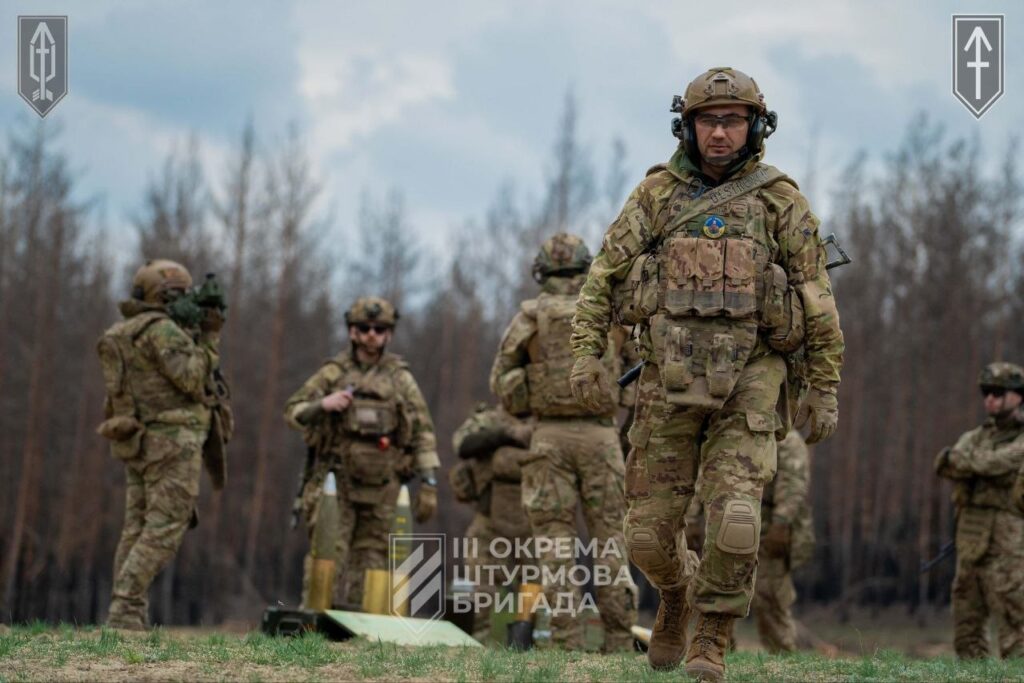
Ukrainian soldiers of the 1st Assault Battalion, 3rd Infantry Brigade. Photo: 1st Assault Battalion

Ukraine’s Ministry of Defense is introducing a sweeping overhaul of military service rules that restructures contracts, pay systems, personnel movement, and reintegration procedures across the armed forces, the ministry announced on 12 June.

The reforms are part of a broader 2026 reorganization of service conditions under the new defense leadership of Minister Mykhailo Fedorov, aimed at stabilizing manpower, improving retention, and formalizing career pathways during wartime. The package establishes a more predictable framework for service terms, compensation, and transfers while prioritizing reinforcement of frontline combat units.

President Volodymyr Zelenskyy endorsed the reform package, saying military and government leaders had agreed on a path to “increase the financial sustainability of our defense and ensure the further transformation of the Ukrainian army.”

New contract system split into three service categories

The Ministry introduced three contract types: infantry-assault (“pihotno-shturmovyi”), combat, and basic service contracts, each linked to specific roles and operational exposure.

The infantry-assault contract covers frontline positions including infantry, assault troops, combat medics, gunners, and drivers in combat units. Combat contracts apply to drone operators, electronic warfare specialists, artillery crews, and other battlefield support roles, while basic contracts cover non-combat and rear-area positions.

Service terms are fixed: 6, 10, or 14 months for infantry-assault roles depending on prior service status, and 24 months for combat and basic contracts.

Pay structure tied to role and operational intensity

The system combines a base salary of 20,000 hryvnias ($450 USD) with variable payments based on role and battlefield conditions.

Monthly compensation ranges from at least 30,000 hryvnias ($670 USD) in rear positions to significantly higher levels in combat roles, with infantry-assault positions at the top of the scale. Under the framework, total monthly pay may reach up to 120,000 hryvnias ($2,670 USD) depending on deployment intensity and task execution.

A tiered bonus system adds payments linked to operational activity, including participation in frontline operations, command-level missions, and assault actions. Additional fixed incentives apply for outcomes such as capturing prisoners or confirmed combat kills.

Eligibility for certain payments is verified through a digital mission control system that records presence in designated operational zones.

Zelenskyy also announced planned pay increases for combat commanders, saying the measure is intended to help retain experienced leadership within frontline units.

He said the Cabinet of Ministers is expected to approve the implementation mechanism, with the first additional payments potentially beginning in June.

Fixed-term service with post-contract leave guarantees

All contract types include defined service terms followed by a structured post-service leave period. The duration of this leave is calculated based on total service length and combat participation, with longer operational involvement extending the guaranteed break.

The system is designed to create a predictable cycle of service, recovery, and re-engagement, supported by legally defined post-contract guarantees.

Automated transfers through Army+ system

Automatic transfer approvals are introduced through the Army+ digital platform. Eligible personnel up to senior sergeant rank and outside officer positions can request transfers once per year within their corps’ operational sector.

Transfers are limited to units within the same command area, with processing handled digitally to reduce administrative delays while maintaining operational control. A pilot rollout is planned in selected corps before wider expansion across the armed forces.

Structured return from unauthorized absence

A temporary 100-day mechanism allows personnel who left service without authorization before 11 June 2026 to return under a simplified procedure.

Applications are processed digitally, with verification completed within several days. Returning personnel can select from a list of eligible units, with pay and benefits restored upon formal reintegration into service.

The mechanism is designed to streamline reintegration while restoring personnel to active duty under controlled conditions.

Part of wider force restructuring

The Ministry of Defense says the package is intended to modernize Ukraine’s wartime force structure by combining fixed-term contracts, role-based compensation, and digital personnel management tools.

Separately, Zelenskyy instructed officials to expand recruitment pathways for foreign volunteers seeking to serve in Ukraine’s armed forces, saying additional recruitment mechanisms would be introduced. No further details were immediately released.

Further stages of reform are expected as the system is tested and expanded across the armed forces.

  •  

How Ukraine uses AI to guide long-range drone strikes through electronic warfare and deep into Russian-controlled rear areas

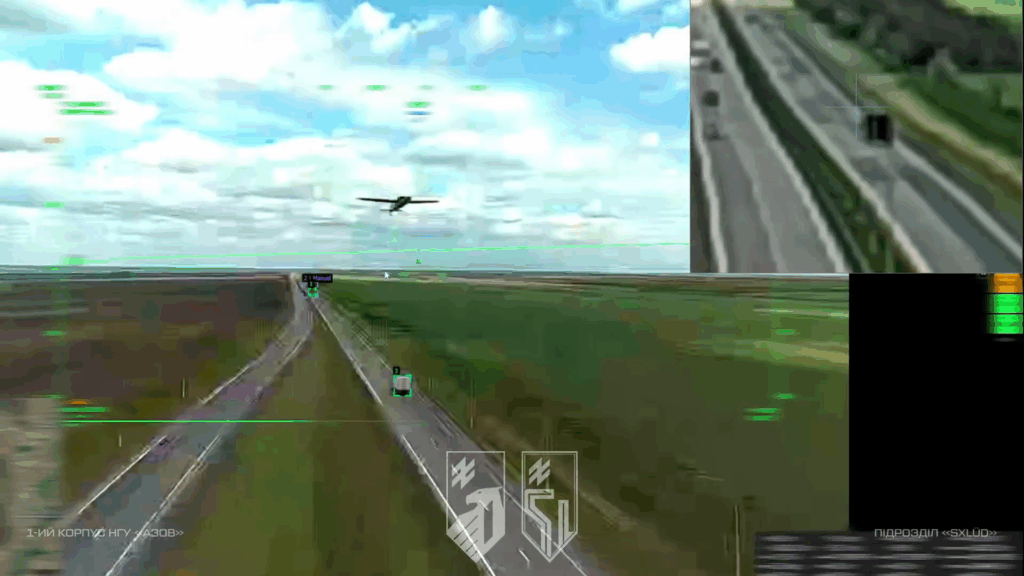
A Ukrainian Hornet drone spots another Hornet. Photo: Ukraine's 1st Azov Corps

Ukraine’s Ministry of Defense (MoD) says artificial intelligence is increasingly integrated into so-called “middle strike” systems, enabling long-range drones to operate in heavily contested electronic warfare environments and strike targets at operational depth.

Officials say the systems are part of a broader program aimed at disrupting Russian logistics and supply chains, with Ukraine reporting a sharp increase in strikes on transport routes, depots, command posts, and equipment concentrations in recent months.

The MoD explains that the use of AI is intended to overcome two key constraints in this operational zone: heavy electronic warfare interference that disrupts satellite navigation, and dense air defense coverage that limits predictable flight paths.

AI takes over control at target approach phase

According to the ministry, AI systems are not active throughout the entire mission. Drones are initially flown under operator control, but once they reach a designated target grid, onboard systems take over navigation and targeting.

At that stage, onboard computers and optical sensors begin real-time analysis of the surrounding area, switching from manual guidance to autonomous control for the final approach.

Visual navigation without GPS using terrain matching

The ministry says drones equipped with AI systems are able to operate without reliable satellite navigation by using onboard cameras and computer vision models.

These systems continuously scan terrain features such as roads, rivers, and landscape contours, and compare them against preloaded high-resolution satellite imagery. 

This allows the drone to determine its position based on visual correlation rather than GPS signals, which are often degraded or spoofed by electronic warfare.

Automated target recognition and terminal strike adjustment

In the terminal phase, AI systems analyze live video feeds to identify military equipment based on trained visual patterns. The system is designed to distinguish between different types of targets and automatically assign a tracking marker once a valid target is recognized.

Once a target is locked, the AI adjusts flight controls in real time to guide the drone into a final dive trajectory.

The ministry also says the system can reduce misidentification risks by distinguishing between real equipment and decoys using multiple indicators, including geometry, surface texture, and thermal signatures.

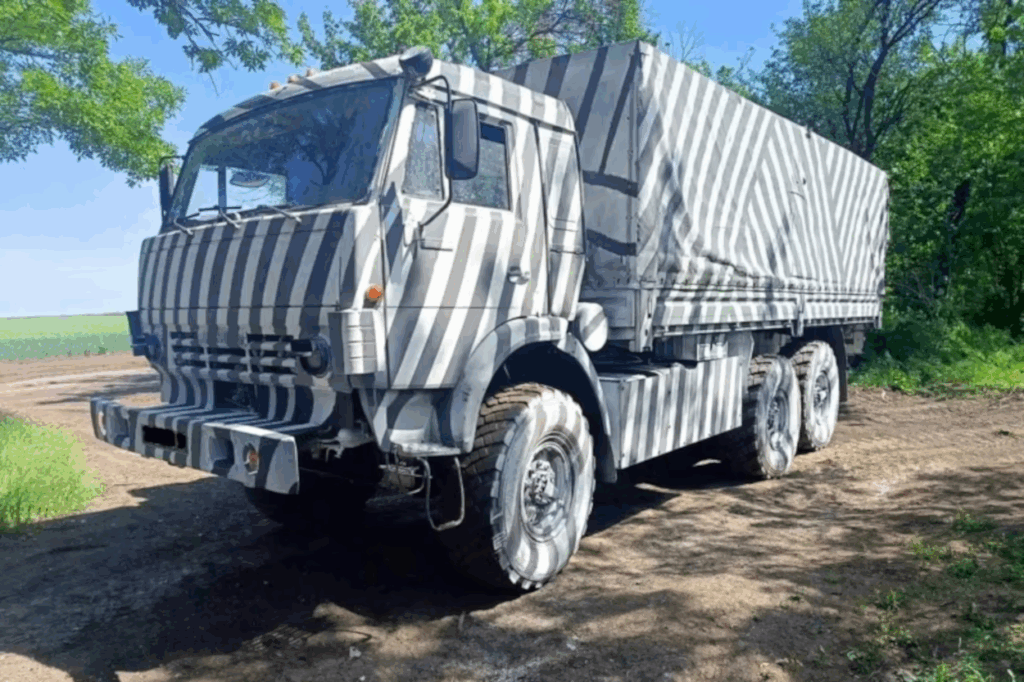
Russian forces are increasingly trying to counter these AI-assisted drone targeting systems using methods such as painting military vehicles with high-contrast zebra-like stripes. Experts say the markings are designed to confuse computer vision models trained to identify standard vehicle shapes and camouflage patterns.

Russian military vehicle with zebra-like paint patterns in an attempt to disrupt AI-assisted drone targeting systems. Photo from social media, via RFE/RL.

Route planning shaped by electronic warfare conditions

The MoD says AI is also used before launch to optimize flight paths. Planning systems incorporate intelligence on Russian air defense and electronic warfare deployments, selecting routes that minimize exposure.

This includes analysis of radar coverage, identification of terrain masking opportunities, and the use of blind spots in air defense systems. The goal, according to officials, is to ensure drones can reach operational depth targets despite dense electronic warfare and interception layers.

“Logistics Lockdown” program and expanded strike depth

Ukraine says these systems are being deployed as part of a wider “Logistics Lockdown” program aimed at increasing pressure on Russian military supply chains.

Officials say “middle strike” operations are now being scaled to target Russian logistics, infrastructure, and military assets at distances of up to 200 kilometers behind the front line.

The MoD says the approach is designed to combine intelligence, long-range strike capability, and automation to increase the tempo and effectiveness of attacks on Russia’s rear support systems.

  •  

Ukraine confirms strikes on two Tatarstan refineries and rocket-fuel rubber plant in Tolyatti

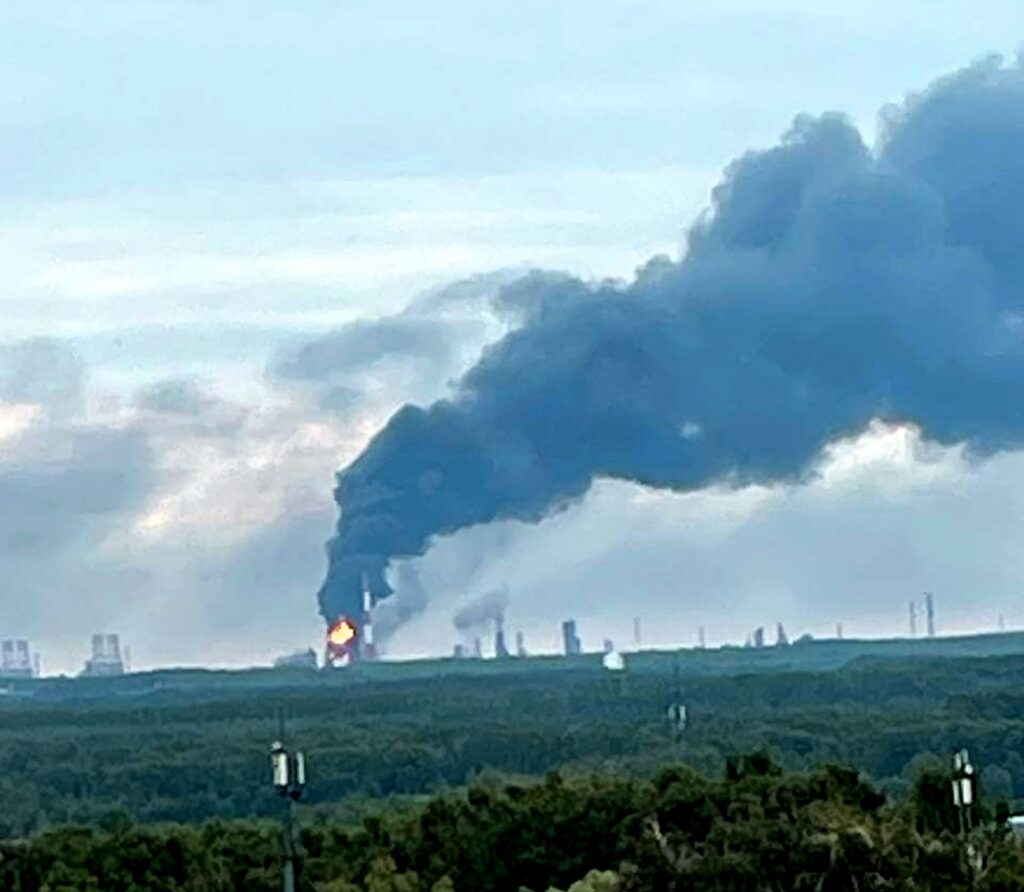
ukraine confirms strikes two tatarstan refineries rocket-fuel rubber plant tolyatti · post black smoke rises over burning oil refining facility after ukrainian strike nizhnekamsk russia 12 2026 0b9bde49-e761-4e4b-9abe-9bd2dd867a7d ukraine's defense

Ukraine's Defense Forces set major fuel and petrochemical plants deep inside Russia on fire and hit military targets along the front overnight on 12 June, according to Ukraine's General Staff. Fires broke out at refineries in Tatarstan and a rubber plant in Samara Oblast, while monitoring channels reported strikes in occupied Crimea. The raid forced one Russian city to cancel its Russia Day celebrations.

Ukraine's deep-strike campaign has already pushed Russia's gasoline crisis into 25 regions and six occupied Ukrainian areas, with earlier reports claiming roughly 40% of Russian refining capacity knocked offline since January. With Russian oil facilities now burning on back-to-back nights, each confirmed shutdown tightens the fuel squeeze on the army Moscow needs to keep its war going — and shows its air defense cannot cover the depth of its own territory.

Two refineries burn in Nizhnekamsk

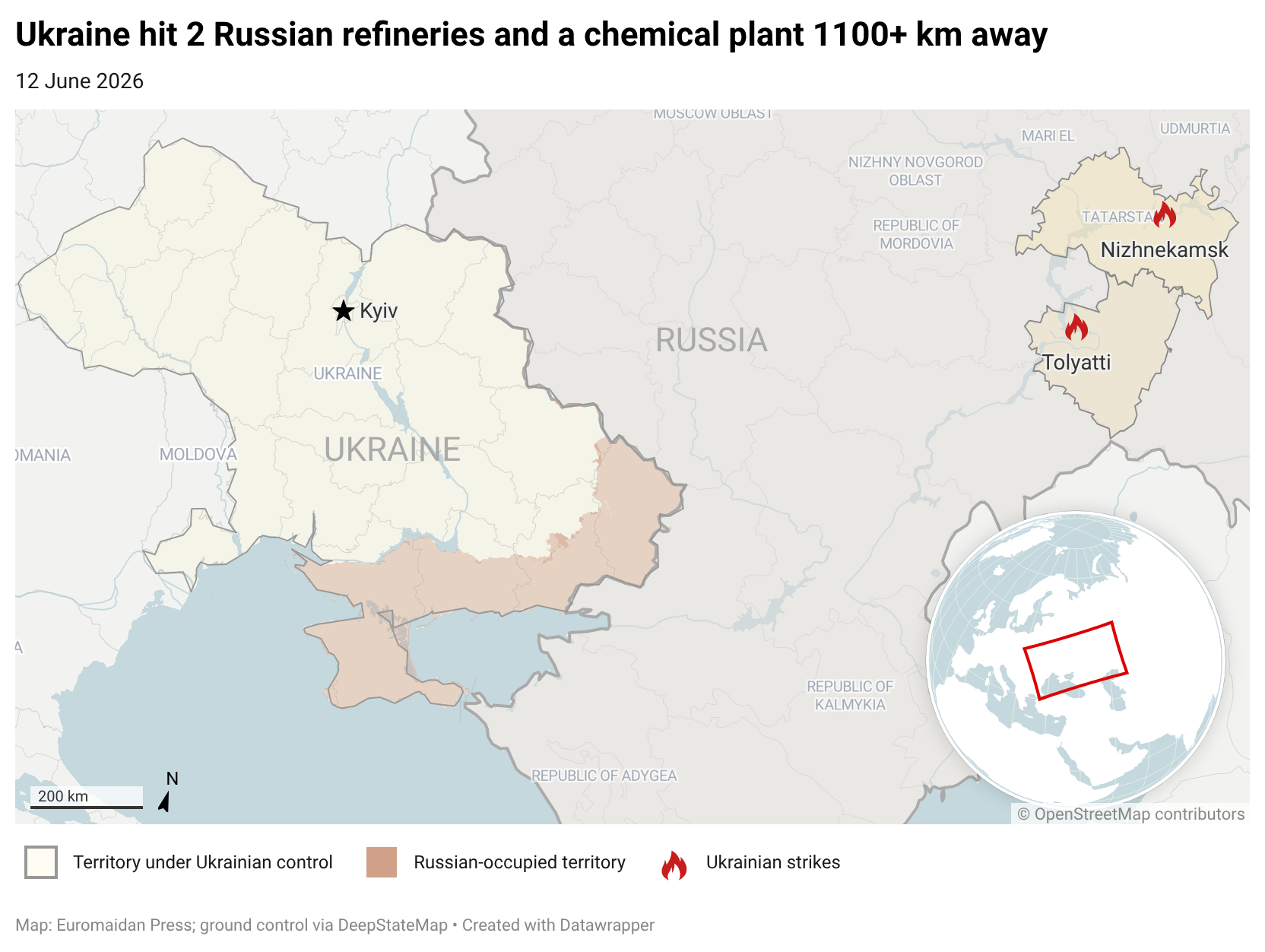
Units of Ukraine's Defense Forces struck the TANECO and TAIF-NK oil refineries in Nizhnekamsk, Republic of Tatarstan, Russia. The General Staff confirmed hits and fires at both plants. TANECO ranks among Russia's largest refineries, with a design capacity of over 16 million tons of oil per year. It produces diesel, aviation fuel, and other petroleum products. The plant lies more than 1,100 km from Ukraine's border.

Drones set fire to Nizhnekamskneftekhim, one of Russia's largest petrochemical plants, in Tatarstan in the early hours of 12 June.

The strike reportedly ignited the AVT-8 unit, where crude oil gets its primary processing and is split into gasoline, diesel, and other fractions.… pic.twitter.com/BQFXXp4NyJ

— Euromaidan Press (@EuromaidanPress) June 12, 2026

Russian news Telegram channel Astra found at least three separate fires at TANECO in its OSINT analysis of eyewitness footage. Astra's source said the ELOU AVT-9 primary oil processing unit and the ELOU AVT-8 column were burning. The channel called TANECO one of Russia's most efficient refineries, with a refining depth of 99.6%. Monitoring Telegram channel Supernova+ published footage of two large fires with thick black smoke at the plant. Preliminary data pointed to damage at two primary processing units and a tank farm.

TAIF-NK, the second refinery hit, processes heavy high-sulfur crude and gas condensate at a declared refining depth above 95%, the General Staff noted. Its output runs from mass-market fuel to feedstock for petrochemicals and military needs. 

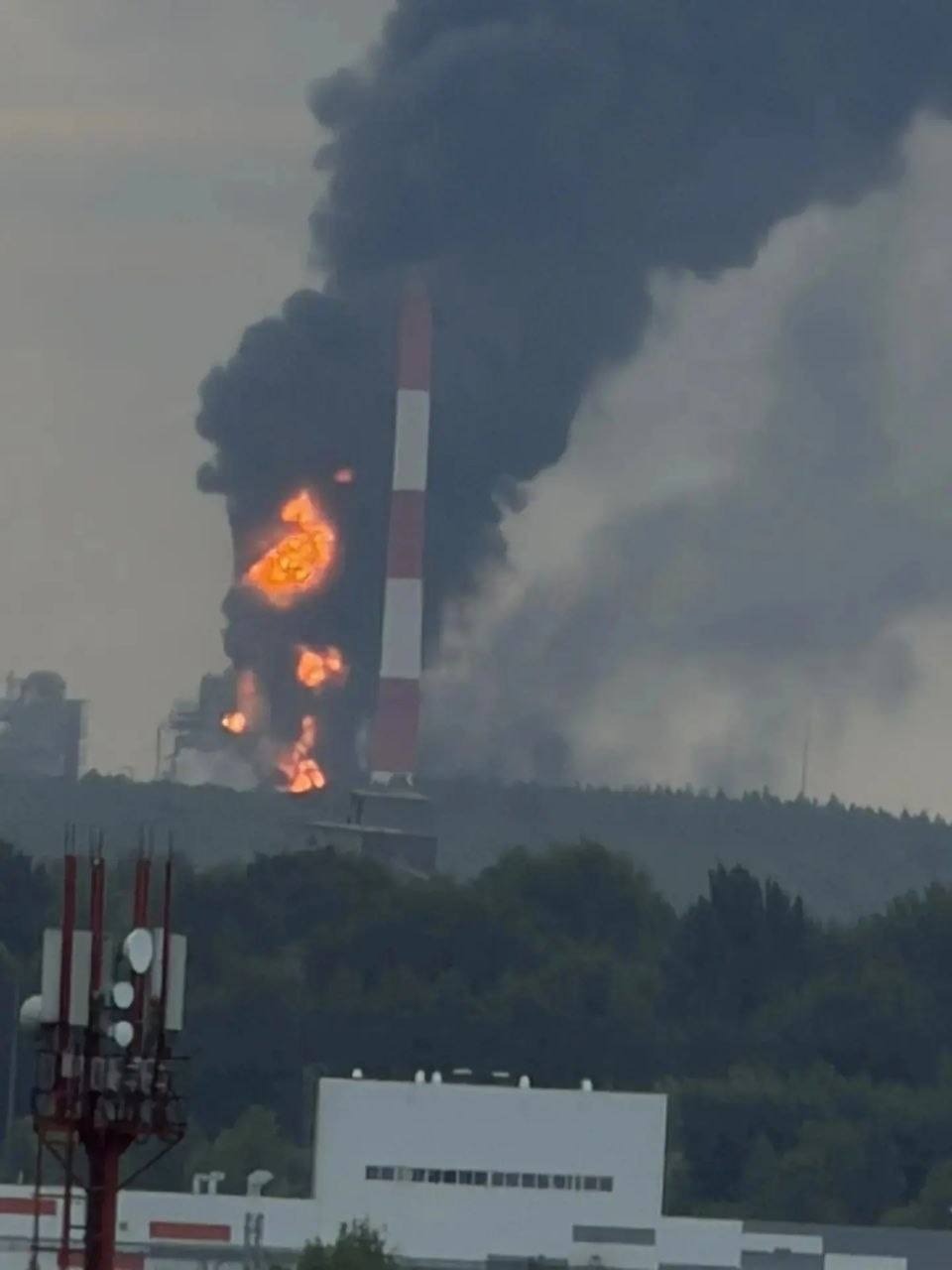
ukraine confirms strikes two tatarstan refineries rocket-fuel rubber plant tolyatti · post fire engulfs industrial unit next chimney after ukrainian strike nizhnekamsk russia 12 2026 2bd5189f-62e7-4645-ae48-dc42a84a9054 ukraine's defense forces set
Fire engulfs an industrial unit next to a chimney after the Ukrainian strike on Nizhnekamsk, Tatarstan, Russia, 12 June 2026. Photo: Exilenova+

Russia Day canceled as a petrochemical giant burns

Tatarstan declared a drone danger regime at 3 a.m., and the airports of Kazan and Nizhnekamsk restricted flights. Residents of Nizhnekamsk then reported powerful explosions across the city. Nizhnekamsk Mayor Radmir Belyaev stated the city canceled all festivities for Russia Day, the state holiday marked on 12 June.

Monitoring Telegram channels Exilenova+ and Supernova+ tracked the night's fires. Monitoring channels also reported a hit on Nizhnekamskneftekhim (NKNH), one of Europe's largest petrochemical complexes, located in the same city. The SIBUR-owned plant processes feedstock from TANECO and TAIF-NK into synthetic rubbers, plastics, and ethylene, Astra said.

Rubber for Russian missile fuel burns in Tolyatti

Ukrainian forces also hit the Tolyattikauchuk plant in Tolyatti, Samara Oblast, Russia. The General Staff confirmed the strike and a fire at the site. The plant makes synthetic rubbers used, among other things, in producing solid rocket fuel for tactical and ballistic missiles, plus monomers, fractions, and high-octane gasoline additives.

Multiple fires are burning across the industrial zone of Russia's Tolyattikauchuk chemical plant after a massed Ukrainian Defense Forces drone attack on Tolyatti.

The petrochemical plant in Samara Oblast produces synthetic rubber and tire components. Explosions rattled windows… pic.twitter.com/2Po2sqkq7v

— Euromaidan Press (@EuromaidanPress) June 12, 2026

Astra reported that Tolyattikauchuk, part of the Tatneft group, is listed in a closed registry of defense enterprises kept by Russia's Industry and Trade Ministry. Its rubbers go into tires for military vehicles and components for the aviation industry, the channel said. 

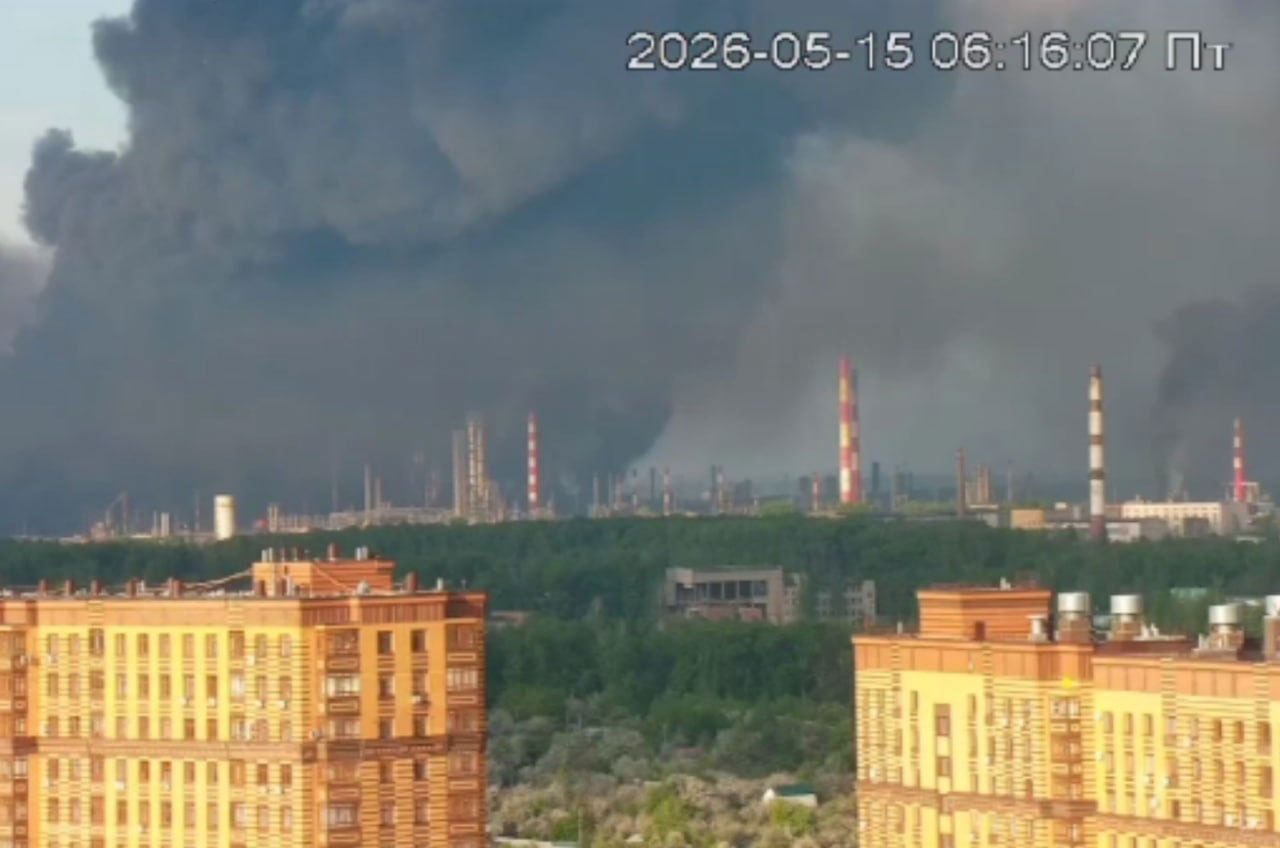
moscow's fuel supplier under fire ukrainian drones strike rosneft's ryazan refinery · post black smoke rises over oil hours after drone 15 2026 ryazan-supernova+-5204027262443918426 ukraine news reports
Explore further

Russia’s oil production falls for sixth straight month as Ukrainian drone strikes hit storage and transport

Tolyatti Mayor Ilya Sukhikh stated that one industrial facility took damage from what he called a drone fall during a massive Ukrainian drone attack. Samara Oblast Governor Vyacheslav Fedorishchev said nobody was hurt in the attack on the region.

Russia's Defense Ministry claimed its air defenses "intercepted and destroyed" 231 Ukrainian drones overnight on 12 June. The ministry claimed downings over Tatarstan and Samara Oblast, a dozen other regions from Belgorod to Astrakhan, the Moscow region, and occupied Crimea.
  •  
❌