Reading view

Divers Film Great White Shark in the Mediterranean For the First Time

Majestic great white sharks glide through the ocean waters.
Majestic great white shark glides through the ocean waters. Credit: Elias Levy / OpenVerse / CC BY-2.0

Volunteer divers have recorded what researchers believe is the first footage of a great white shark filmed underwater in the Mediterranean, captured during a ghost net removal dive near a shipwreck in the Strait of Sicily.

Derk Remmers, a technical diver with Ghost Diving, was about 40 meters (131 feet) below the surface between Sicily and Tunisia when the shark appeared. He filmed the encounter. The footage and photographs were released on June 8 to mark World Oceans Day.

Remmers said that the odds of meeting such an animal underwater are far lower than winning the lottery, and that his hands were shaking as he filmed.

The shark circled the group, then turned and moved back toward the divers. Remmers said that its behavior appeared calm and curious, not aggressive. When the team released air from their regulators, the shark picked up speed and disappeared from view.

First great white shark sighting in the Mediterranean stuns researchers

Marine biologists who reviewed the footage called the sighting rare and scientifically significant.

Dr. Carlo Cattano, a researcher at the Sicily Marine Centre of the Stazione Zoologica Anton Dohrn, said that most knowledge of great white sharks in the region has come from dead animals caught accidentally in fishing nets, and that direct observations help researchers better understand the species.

A great white shark circled divers in the Mediterranean as they worked to pull deadly ghost nets from a shipwreck in the Strait of Sicily. pic.twitter.com/tdJKJ37TMY

— Tom Marvolo Riddle (@tom_riddle2025) June 9, 2026

He said that prior research had already identified the area as a key location for threatened species and that this sighting reinforces its conservation value. Researchers cautioned that broader conclusions would require further study.

The mission was organized by the Healthy Seas Foundation, along with Ghost Diving and the Society for the Documentation of Submerged Sites. The wreck’s location is being kept confidential.

Ghost nets, fishing gear lost or abandoned at sea, continue killing marine life long after leaving a vessel. Previous dives at the site documented loggerhead sea turtles and large fish species caught in the gear.

Shipwrecks attract marine life, and when ghost nets settle on them, those structures become underwater traps.

Ghost nets turn shipwreck ecosystems into ongoing ocean traps

Veronika Mikos, director of Healthy Seas, said that the sighting is a reminder of how much marine life still exists in offshore Mediterranean waters and how much is at risk from discarded gear and overfishing.

Remmers said that between 1% and 10% of all fishing gear worldwide is lost each year, possibly adding more than 500,000 metric tons of abandoned nets to the ocean annually.

He said that the shark’s presence near the wreck signals an abundance of prey, and that those same animals face entanglement risk. Volunteer cleanups alone cannot resolve the problem, he said, and stronger action against industrial and illegal fishing is needed.

The mission also included environmental DNA sampling and underwater monitoring. Healthy Seas said that it plans to release additional footage and scientific material in the coming weeks.
  •  

AH-64 Apache Crew Rescued By Drone Boat After Going Down Near Strait Of Hormuz (Updated)

A U.S. Navy uncrewed surface vessel (USV) found and rescued the crew of a U.S. Army Apache that went down overnight near the Strait of Hormuz, in the Gulf of Oman. This is the first known use of a drone boat executing a personnel recovery action as part of a military search and rescue operation, and it’s likely a glimpse of what’s to come. The cause of the incident is otherwise under investigation.

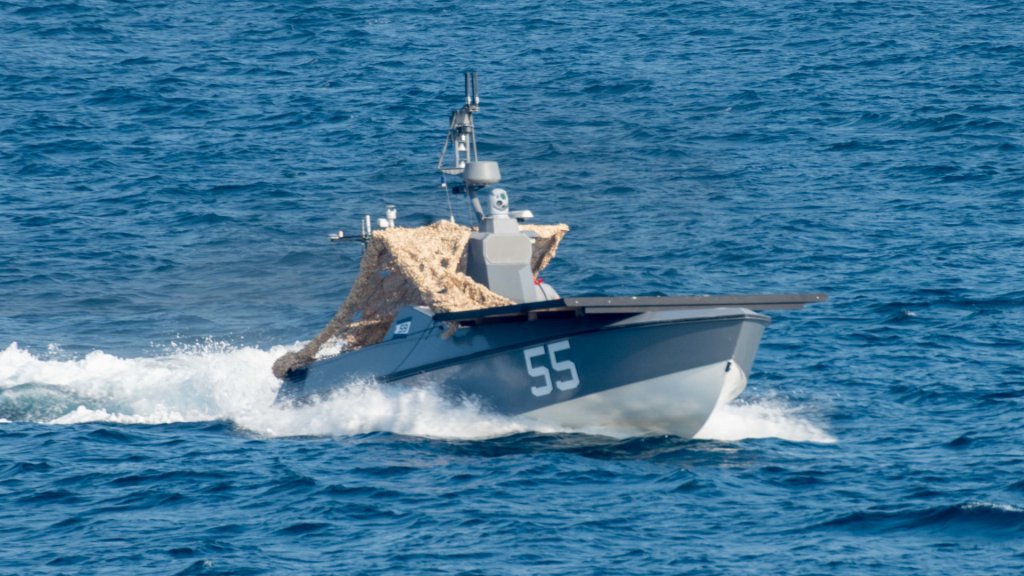
Navy Capt. Tim Hawkins, a U.S. Central Command (CENTCOM) spokesman, has confirmed the use of the Navy USV in the rescue effort to TWZ. This had already been hinted at by the mention of Task Force 59, the Navy’s main drone force in the Middle East, in an official CENTCOM statement. What specific type of drone boat was utilized in this case is not yet known. Task Force 59 operates a variety of USVs, including speedboat-like types. The Task Force has been experimenting with all types of new uncrewed naval technologies and this rescue is clearly a major win for the forward-looking unit.

One of several types of speedboat-type USVs Task Force 59 operates, seen here during an exercise. USN

“At 7:33 p.m. ET on June 8, two crew members from a U.S. Army AH-64 Apache were rescued by American forces after their helicopter went down near the coast of Oman while patrolling regional waters,” per CENTCOM’s statement. “The Soldiers were safely rescued within approximately two hours and are in stable condition. The cause of the incident is under investigation.”

“Rescue efforts were led by U.S. Naval Forces Central Command and the 82nd Airborne Division, with support from U.S. Air Force and Navy units including U.S. 5th Fleet’s Task Force 59,” the statement added.

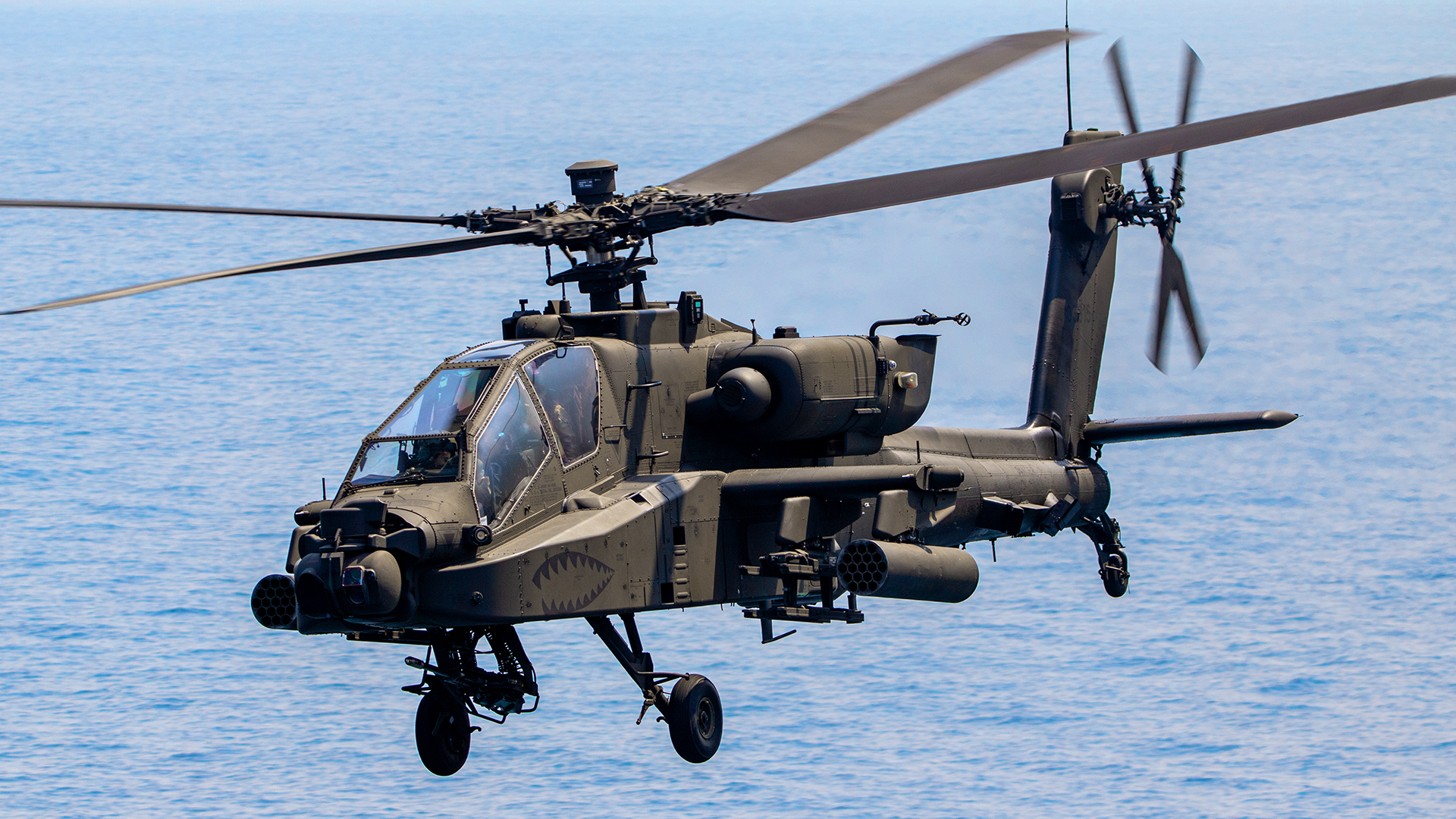
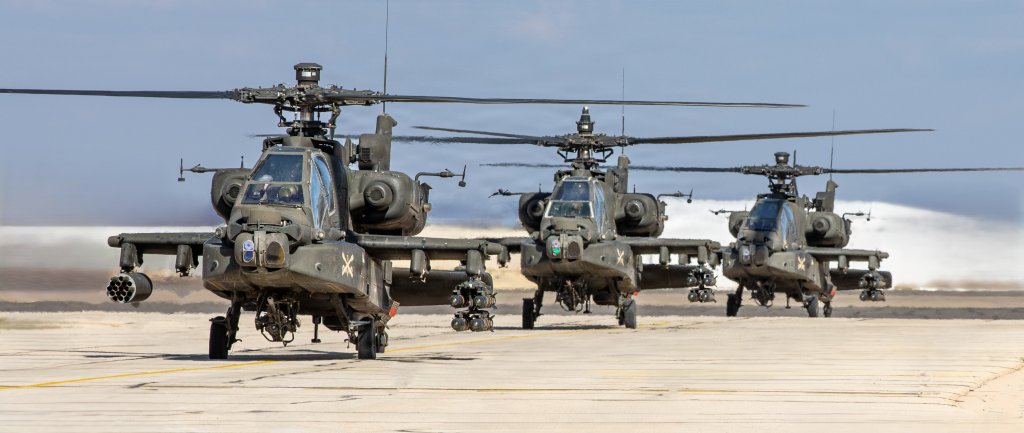
A flight of U.S. Army AH-64 Apache attack helicopters, armed with rockets and Hellfire missiles, taxi out to conduct a scheduled flight in the U.S. Central Command area of responsibility. In addition to rockets and missiles, the Apache is additionally armed with a 30mm chain gun. (U.S. Army photo)
A flight of U.S. Army AH-64 Apache attack helicopters, armed with rockets and Hellfire missiles, taxi out to conduct a scheduled flight in the U.S. Central Command area of responsibility. In addition to rockets and missiles, the Apache is additionally armed with a 30mm chain gun. (U.S. Army photo) U.S. Army Central

The New York Times was first to report that an Apache had gone down near the Strait of Hormuz. President Donald Trump had also confirmed the crew was safe while speaking to reporters earlier this morning.

“We are going to issue a report tomorrow, but the pilots are fine,” Trump said after returning to Washington from the NBA Finals in New York.

A US Army Apache helicopter went down near the Strait of Hormuz and it wasn’t clear if the aircraft suffered mechanical troubles or had been shot down by Iran, the New York Times reported.

Asked about the episode by @jendlouhyhc, Trump said the pilots were fine and that a report…

— Annmarie Hordern (@annmarie) June 9, 2026

As we have reported in the past, Army AH-64s have been part of an effort by the U.S. military to enforce the ongoing blockade of Iran and to protect commercial shipping. Last month, Apaches and U.S. Navy MH-60 Seahawk helicopters destroyed six small Iranian boats that were threatening commercial ships in and around the Strait of Hormuz, according to Navy Adm. Brad Cooper, head of CENTCOM. Apaches had already been conducting missions targeting Iranian naval assets in and around the Strait of Hormuz before the announcement of the ceasefire in April. All of this has shown that armed helicopters remain important assets in maritime operations, especially for defending against swarms of small boats.

As TWZ regularly highlights, search and rescue operations present inherent complexities and risks, especially when conducted in or near hostile territory. The F-15E rescue effort in Iran put a particular spotlight on the immense risks that combat search and rescue (CSAR) forces take, with helicopters and C-130 variants sent into areas where even a high-end fighter aircraft didn’t survive.

Open-water recoveries can present distinct additional challenges. There is always the possibility of the loss of additional assets and personnel in the process, no matter where a CSAR mission occurs.

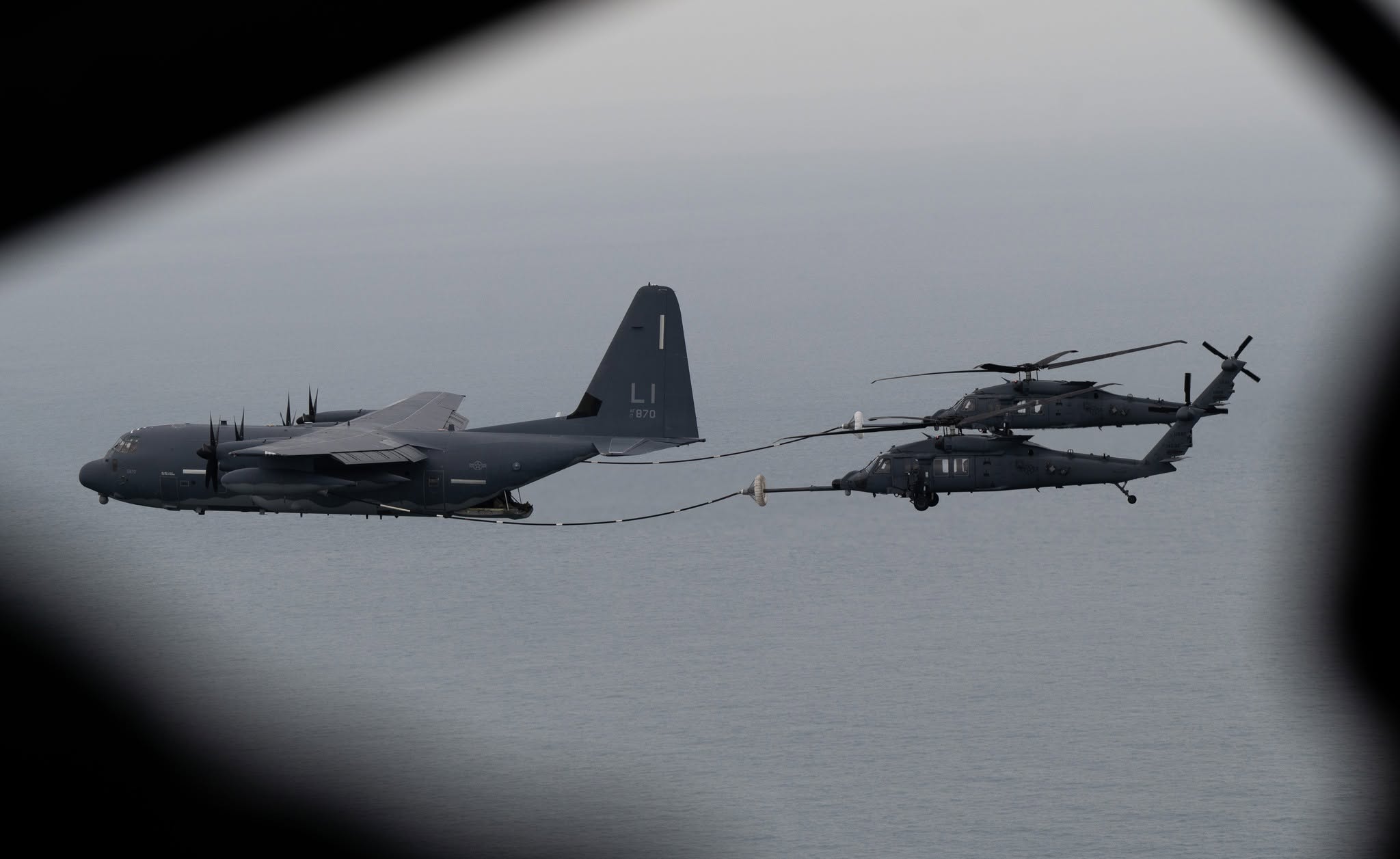
HH-60Ws refuel from an HH-130J. (USAF)

The use of a Navy drone boat in the rescue overnight highlights a new dimension for maritime CSAR going forward. These uncrewed assets can be more readily pre-positioned in a distributed manner. For example, in the broad expanse of the Pacific, USVs could be forward-deployed at multiple points along certain flight paths for this exact purpose. USVs could offer other distinct advantages in certain scenarios where they might be able to get into areas where traditional assets cannot and without risking additional personnel. These realities extend well beyond the maritime domain, and we are only likely to see uncrewed platforms of all kinds increasingly taking part in rescue efforts, especially in denied areas. The U.S. military is coming to terms with just how vulnerable their CSAR assets are and the ranges that would be needed to access highly defended areas, especially during a peer fight. Using drones to execute personnel recovery is being viewed as one part of a larger set of solutions to this pressing problem.

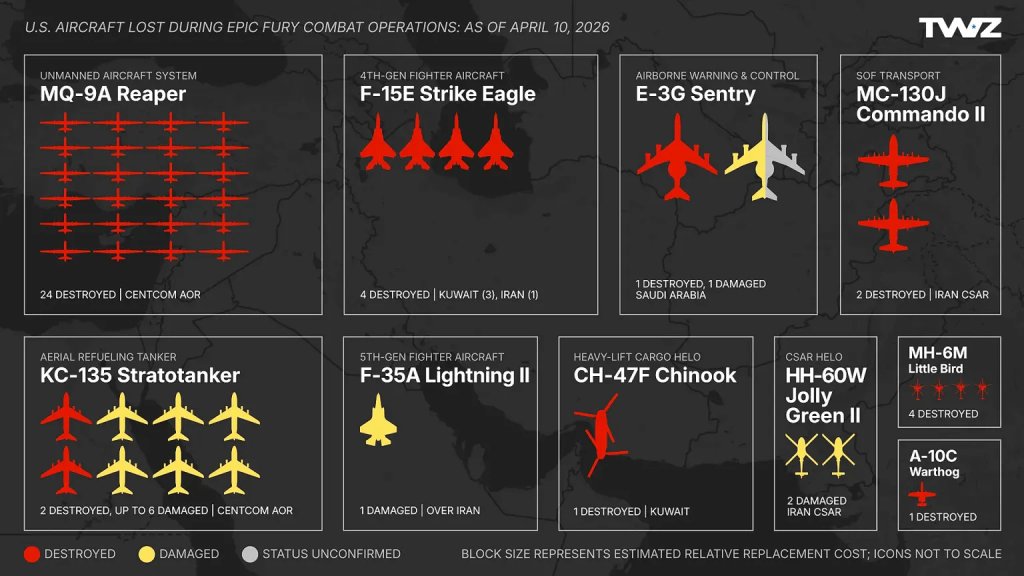
With the Apache going down near the Strait of Hormuz, the U.S. military has now lost at least seven crewed fixed-wing aircraft and helicopters since the start of the latest operations against Iran in February. In addition, several aircraft have been damaged in the air and on the ground, including by Iranian fire. The TWZ graphic below offers a visual tally of damaged and destroyed aircraft as of April 10.

TWZ

Despite the loss of the Apache, the use of a USV in the rescue effort is a major development and a sign of things to come.

UPDATE: 12:56 PM EDT –

President Donald Trump said the Apache was shot down by Iran and that the U.S. will retaliate.

“I have just been informed by our Great Military that last night the Iranians shot down one of our highly sophisticated Apache Helicopters while patrolling over the Strait of Hormuz,” the president said on his Truth Social network. “There were two pilots involved, both are safe and uninjured. Nevertheless, the United States must, of necessity, respond to this attack.”

Trump says that Iranian forces shot down the Army AH-64 Apache attack helicopter that went down over Hormuz yesterday.

He says that the US "must, of necessity, respond to this attack" pic.twitter.com/divKHkhgZm

— OSINTtechnical (@Osinttechnical) June 9, 2026

UPDATE: 1:53 PM EDT –

You can read more about Trump’s shoot-down statement and what could happen next in our story here.

Contact the author: howard@twz.com

The post AH-64 Apache Crew Rescued By Drone Boat After Going Down Near Strait Of Hormuz (Updated) appeared first on The War Zone.

  •  

Iwo Jima Completes Deployment, Nimitz Heading Back To The United States

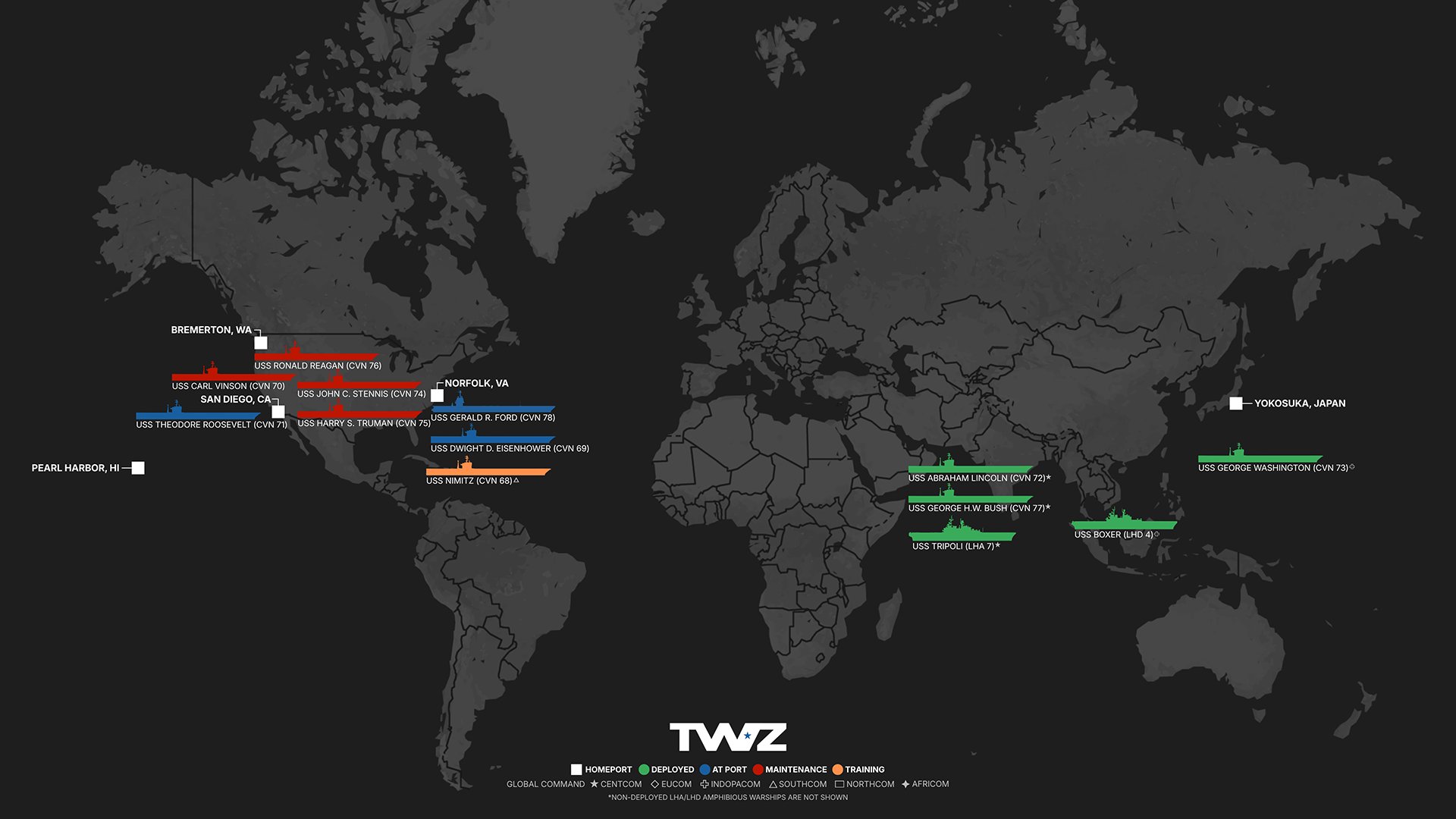
Here’s TWZ’s weekly carrier tracker monitoring America’s flattop fleet, including deployed Carrier Strike Groups (CSG) and Amphibious Ready Groups (ARG), using publicly available open-source information. Check out last week’s report here.

Amphibious assault ship USS Iwo Jima returned to Naval Station Norfolk on Saturday, wrapping a nearly 10-month deployment to the U.S. Southern Command-4th Fleet area of responsibility (AOR). During the 296-day deployment, the Iwo Jima ARG launched over 6,000 sorties, flew 1,850 flight hours, and transited more than 130,000 combined nautical miles. The ARG was the first group of expeditionary naval assets deployed to support Operation Southern Spear, which involved enhanced counter narcotics operations, and played a key role in Operation Absolute Resolve to exfiltrate ex-President Nicolas Maduro from Venezuela.

Wasp-class amphibious assault ship USS Iwo Jima (LHD 7) returned to its homeport of Norfolk, Va. on June 6 following a historic 10-month deployment to the U.S. Fourth Fleet area of operations.

Story:https://t.co/GakDhjvaky pic.twitter.com/6w6Ungogn4

— U.S. 2nd Fleet (@US2ndFleet) June 6, 2026

Aircraft carrier USS Nimitz departed Kingston, Jamaica, after a 4-day port call. Nimitz is now reportedly en route to the United States, according to the U.S. Embassy in Jamaica, “as it finished its 2026 Southern Seas goodwill tour.” The two ships supporting Nimitz, destroyer USS Gridley and oiler USNS Patuxent, also got underway after a brief stop in Ponce, Puerto Rico. Over the weekend, Nimitz embarked officials from the Dominican Republic for a distinguished visitor tour and Gridley fired the Mk 45 Mod 4 5-inch gun during a live fire demonstration.

The USS Nimitz (CVN 68) departed Kingston Harbor at 12pm on June 5 enroute to the United States as it finished its 2026 Southern Seas goodwill tour. Thank you for stopping in Kingston and strengthening the U.S.-Jamaica bilateral partnership as well as enhancing our… pic.twitter.com/RKimaXy6ia

— US Embassy Jamaica (@USEmbassyJA) June 6, 2026

The U.S. maintains dual-carrier coverage in the Middle East enforcing the naval blockade of Iranian ports. USS Abraham Lincoln conducted a replenishment-at-sea with USNS Arctic in the Arabian Sea on June 3, and USS George H.W. Bush is operating at an undisclosed location in the AOR. U.S. Central Command forces have redirected 134 commercial vessels and disabled seven ships attempting to run the blockade, according to a press release.

The officer of the deck aboard USS Michael Murphy (DDG 112) observes a merchant vessel while the guided-missile destroyer enforces the U.S. blockade against Iran in the Arabian Sea. As of June 7, CENTCOM forces have redirected 132 commercial vessels and disabled 6 to ensure… pic.twitter.com/mZtfSMTIRG

— U.S. Central Command (@CENTCOM) June 7, 2026

The George Washington CSG is operating in the U.S. Indo-Pacific Command-7th Fleet AOR. Washington was spotted alongside oiler USNS Earl Warren during a fueling-at-sea evolution on June 8 in the Philippine Sea and, during the last week of May, embarked Carrier Air Wing (CVW) 5 and completed carrier qualifications (CQ). CVW-5 includes a squadron of F-35C fighter aircraft.

Coming in loud and clear! ✈

An F/A-18E roars in for a landing on the flight deck of USS George Washington while underway in the Philippine Sea. Forward-deployed strike capabilities maintain regional stability and guarantee a free and open Indo-Pacific.#FlyNavy | #US7thFleet pic.twitter.com/lAlxexD4hs

— 7th Fleet (@US7thFleet) June 8, 2026

Note: Positions are general approximations.

Contact the author: ian.ellis-jones@teamrecurrent.io

The post Iwo Jima Completes Deployment, Nimitz Heading Back To The United States appeared first on The War Zone.

  •  

Ukraine is droning Russian ships. The goal: to create supply bottlenecks on land.

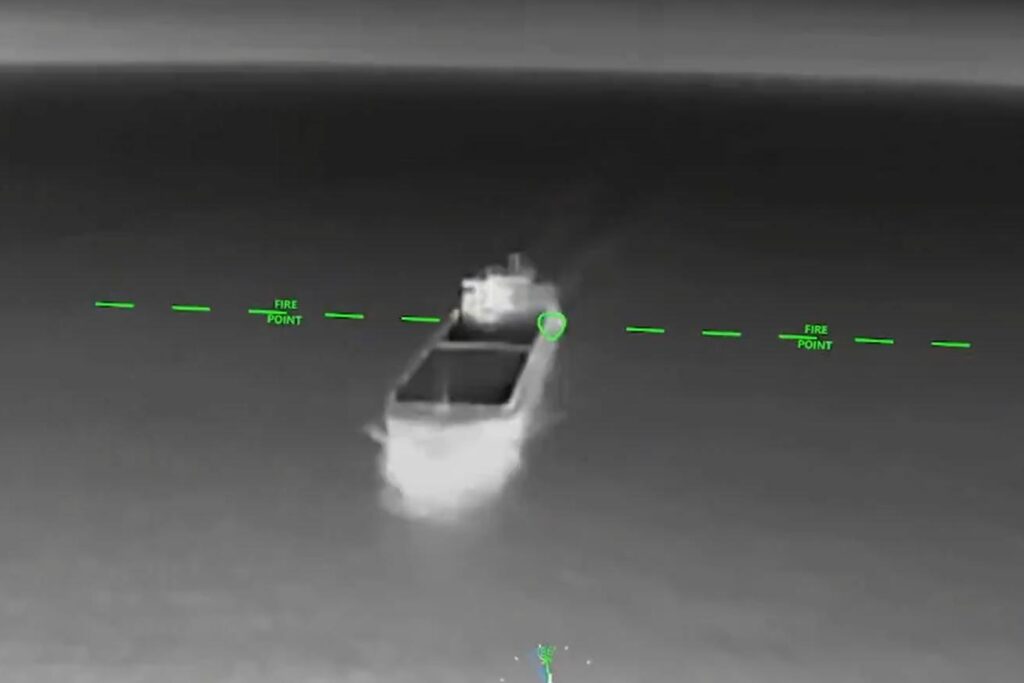
An FP-1 barrels toward a Russian ship.

  • Ukraine's drone campaign targeting Russian logistics is moving to sea
  • Ships carry supplies between Russia and occupied southern Ukraine
  • Striking the ships can force more supplies to move over land in vulnerable trucks

One-way attack drones from Ukraine's Unmanned Systems Forces struck five Russian cargo ships on the Sea of Azov on 5 June.

The strikes, which left at least one ship a burned-out hulk, are a kind of corollary to Ukraine's escalating campaign of middle-distance strikes on Russian supply lines on land in occupied territories. Aiming to weaken Russian regiments before they can attack across the disputed gray zone, Kyiv's drone units aren't only hitting trucks and vans on land—they're also hitting ships at sea.

"There's a method to the madness here," Ukraine Control Map explained. "Take out the ships, force Russia to use more trucks, more logistic bottlenecks." Then hammer the bottlenecks with drones.

The ultimate goal is to make it more difficult for the Kremlin to resupply and reinforce its 700,000 troops in occupied Ukraine. It's cheaper and easier to defeat an attack before it even begins by starving the attacking troops of food, fuel, batteries, ammunition and other vital supplies.

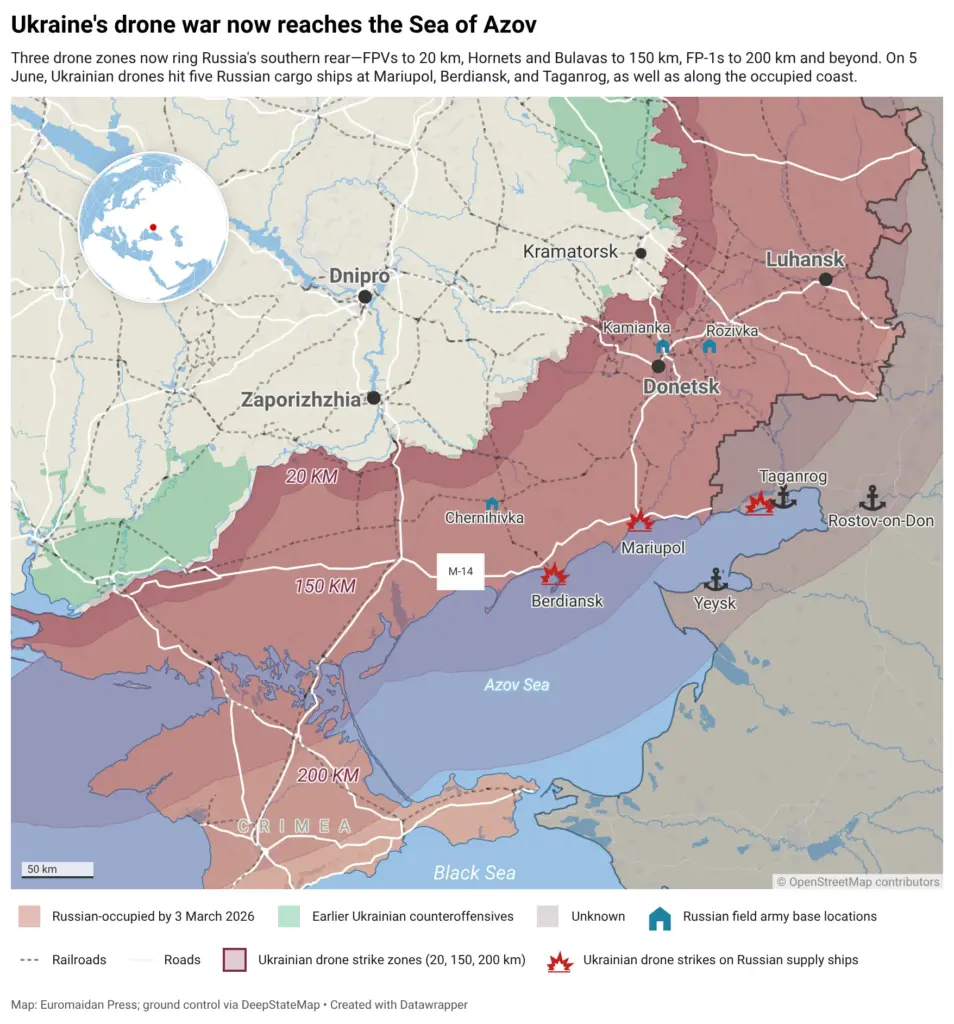
The ships the USF hit with Fire Point FP-1 drones on 5 June were spread out across a wide area. They were in occupied Mariupol and Berdiansk and along the coast of occupied Ukraine — the same Berdiansk port where Ukrainian drones struck a Russian munitions cargo ship on consecutive nights at the start of June.

What they had in common was their disguise. Civilian-owned but allegedly illegally working on behalf of sanctioned Russian entities, the ships sail without obvious markings or easily tracked radio transponders. There could be scores of such ships plying the Black Sea on Russia's behalf every day.

Two of the ships hit on 5 June, the dry cargo vessels Natra and Zirkon, were inbound from Türkiye to Rostov-on-Don when Ukrainian drones struck them in Taganrog Bay—empty, heading to load grain at a port Western governments and Ukraine identify as a transit hub for grain looted from occupied Ukrainian territory. Five Azerbaijani crew members on private contracts were killed and three wounded, Azerbaijan's foreign ministry said. Brovdi didn't address the deaths.

Telling apart a ship hauling Russian military fuel from a ship empty and heading to pick up looted grain is the kind of distinction that's hard to make from a drone's-eye view.

Ships that can haul thousands of tons of supplies every trip are much more efficient than trucks that can haul just a few tons apiece. Cargo ships can't deliver supplies to inland forces, of course, but they can move cargo between ports in southern Russia and ports in occupied Ukraine, bringing that cargo as close as possible to the gray zone before trucks must take over the shipping effort.

ukraine's drones now strike ports in occupied Ukraine
Map: Euromaidan Press

A thick-skinned ship is a tougher target than a thin-skinned truck, of course. But Ukraine's FP-1 drones carry a 100-kg blast-fragmentation warhead, with a TNT main charge boosted by the more powerful OKFOL explosive. The combination throws fragments outward and starts fires inside the target—the same mechanism that left the corvette Boikiy burning for hours at Kronstadt on 3 June.

🚢🔥 The destroyed cargo ship CIRCON (IMO 8887519), targeted by Ukraine’s Unmanned Systems Forces in the Sea of Azov several days ago. https://t.co/0Xpc3K9XXf pic.twitter.com/KI1PCzsjKf

— Special Kherson Cat 🐈🇺🇦 (@bayraktar_1love) June 8, 2026

Sitting duck trucks

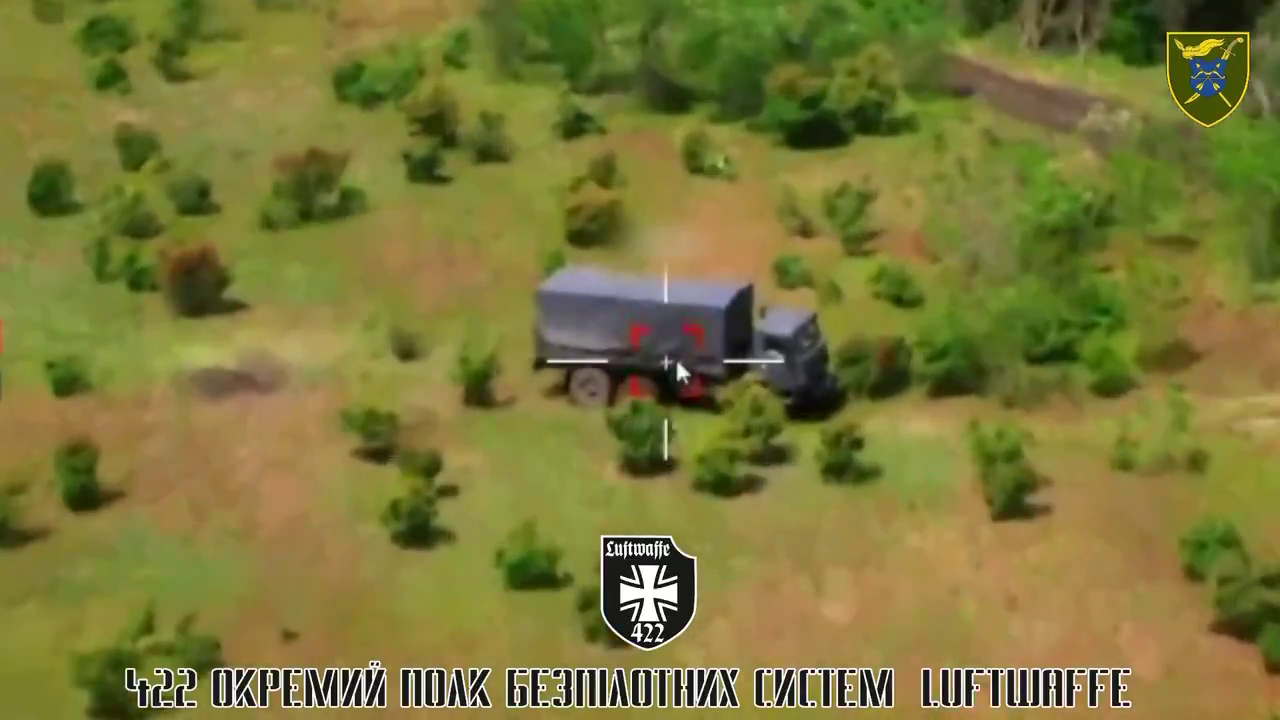
Russia's thousands of military supply trucks are already squarely in the crosshairs of Ukrainian drone units. Since launching their coordinated counterlogistics campaign this spring, the Ukrainians have increased their monthly truck strikes nearly tenfold, from around 60 per month to nearly 500, as per the Ukrainian general staff.

But a comprehensive assault on Russian logistics requires raids on sea traffic, as well. That effort may have begun in earnest on 5 June. "Cargo ships and tankers with their names painted over by Black Sea looters and their transponders switched off, used for the quiet theft of Ukrainian grain and the transport of military cargo and fuel, can no longer count on either long service lives or uninterrupted schedules," the 414th Unmanned Strike Aviation Brigade crowed.

If they can disable enough ships, the Ukrainian drone teams may compel Russian logisticians to shift more supplies by land. To reach Russian regiments in southern and eastern Ukraine, those supplies normally travel east to west along the M-14 highway that runs close and parallel to the Black Sea coast.

That highway and connecting roads have become a kill zone for Russian trucks as more FP-1, FP-2, Hornet and Bulava drones take to the sky, increasingly unbothered by Russia's collapsing air defense network. Ukrainian industry now churns out tens of thousands of middle-strike drones every month, some for as cheaply as a few thousand dollars apiece.

The Russians are trying to find alternate routes that avoid the most heavily droned roads, but once a truck gets close to its destination, it has no choice but to follow a dwindling number of paths. Ukrainian intelligence knows where the Russians' main divisional bases are; they know the trucks must eventually turn into these bases. The near approaches are now becoming kill zones alongside the M-14 and other main roads.

It'll take many more strikes on Russian ships to seriously dent the sea logistics and force more supplies onto land routes. But the effort is underway. "The occupier's smuggling logistics must be stopped," the 414th Unmanned Strike Aviation Brigade explained.

A Russian truck under drone attack near Chernihivka.
Explore further

Russia keeps four field armies fed through three southern towns. Ukraine’s drones just arrived.

  •  
❌