US Pentagon chief Pete Hegseth on Saturday marked the 82nd anniversary of the World War II D-Day landings in France with a speech that bemoaned the "invasion" of "boats and men" on Europe's beaches. In his address at a US military cemetery in Normandy, Hegseth also called on allies to contribute more to their defence.
Plusieurs centaines de personnes ont protesté samedi dans une réserve naturelle sur la côte albanaise pour dénoncer un plan de construction d'une station balnéaire de luxe par une société liée à la famille Trump, a constaté une journaliste de l'AFP.
Protesters on Saturday gathered at the Vjosa-Narta lagoon, a nature reserve on the Albanian coast, to denounce a plan by US President Donald Trump's son-in-law, Jared Kushner, to build a luxury resort in an environmentally sensitive area. Albanian Prime Minister Edi Rama has insisted that "top" experts will be involved in the project, which has yet to be approved.
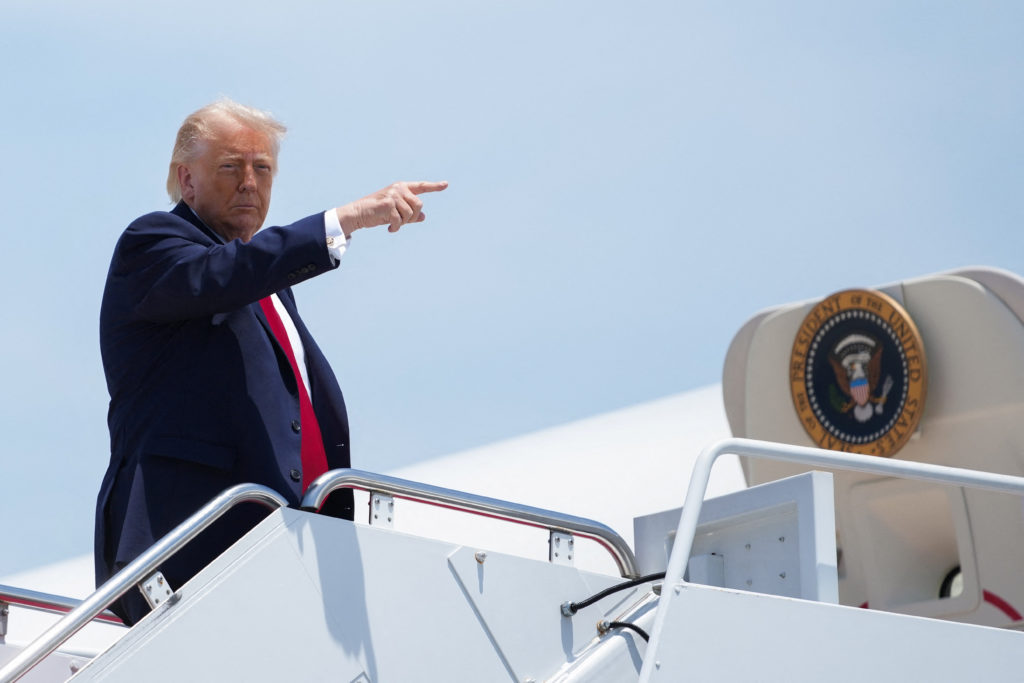
The U.S. military is waiting for clarity from the Pentagon following President Donald Trump's back-and-forth on troop levels in Europe, upending the lives of military personnel and potentially costing taxpayers millions of dollars, two U.S. defense officials told The Associated Press.
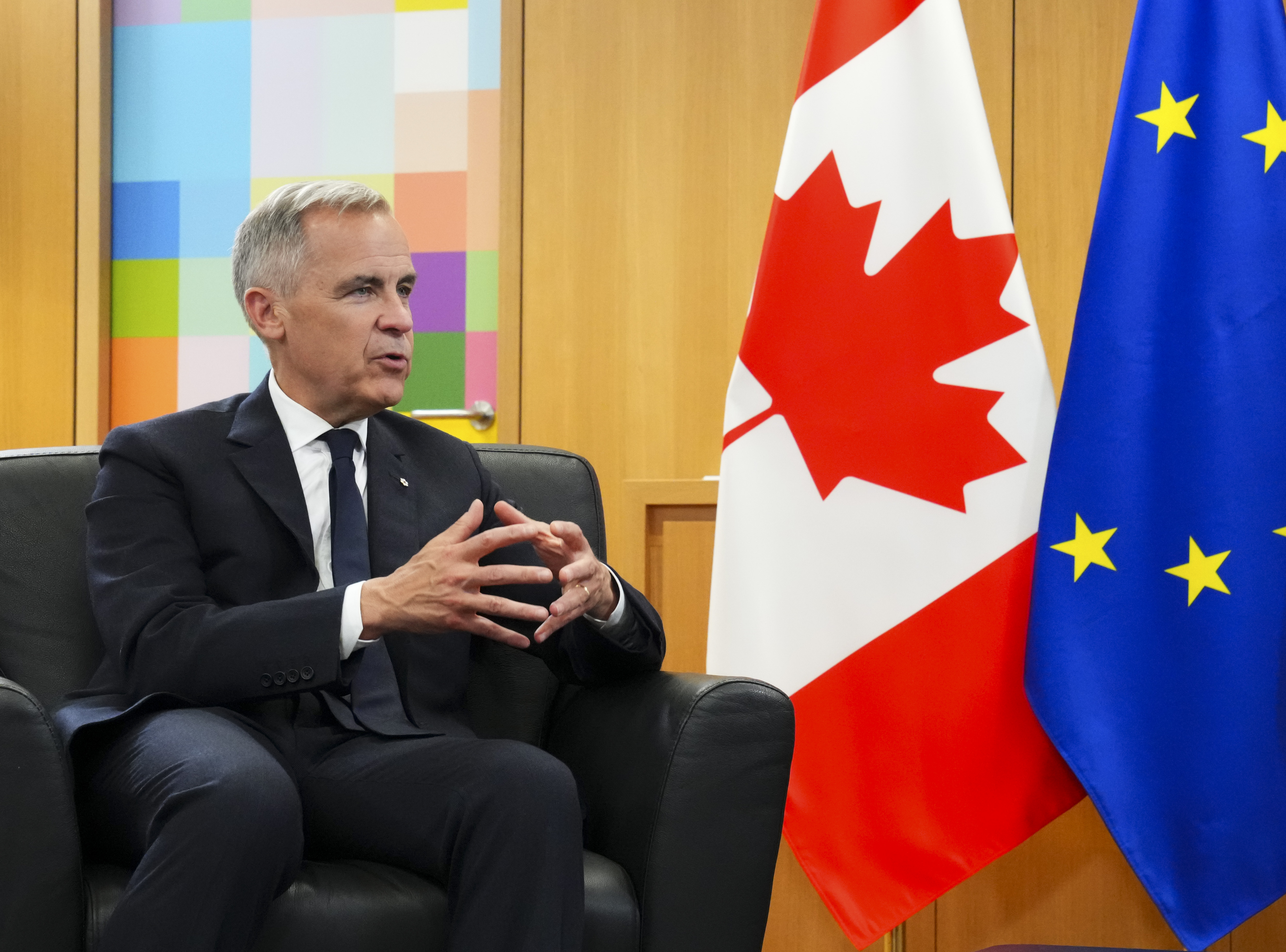
Former foreign affairs minister Stéphane Dion says Canada needs to staff its embassies in Europe and set deadlines for the flurry of agreements Brussels signed with Ottawa.
Former foreign affairs minister Stéphane Dion says Canada needs to staff its embassies in Europe and set deadlines for the flurry of agreements Brussels signed with Ottawa.
Ukraine on Saturday fired hundreds of drones targeting the St. Petersburg region in the second such attack on Russia’s second-largest city in less than a week. The attack came on the final day of the St. Petersburg International Economic Forum, President Vladimir Putin’s annual investment forum known as “Russia’s Davos”.
Le président ukrainien, Volodymyr Zelensky, a déclaré, samedi, que des drones ukrainiens avaient frappé un dépôt pétrolier de la région russe de Krasnodar et une base militaire proche de Saint-Pétersbourg (Nord).
Under these plans, the Sofia-to-Athens route would be completed in six hours, compared to the current 13.5 hours. Credit: 21st Europe
A highly ambitious transportation proposal aims to connect Athens with approximately 40 other destinations in Europe through a high-speed “mega-metro” rail network by 2040. Dubbed “Starline,” the blueprint of this plan hopes to replace Europe’s fragmented national railways with a unified 22,000-kilometer (14,000-mile) system, significantly reducing travel times for Greek and European passengers overall, offering a green alternative to short-haul flights.
Developed by the Copenhagen-based think tank 21st Europe, the Starline project proposes five major railway corridors spanning 22 nations across Europe. The proposed routes include Line A from Naples to Helsinki, Line B from Lisbon to Kyiv via Madrid, Line C connecting Madrid to Istanbul, Line D from Dublin to Kyiv, and Line E linking Milan to Oslo. Operating like a city metro on a continental scale and obviously above ground, the network will link European cities under a single transit identity, with trains reaching speeds between 300 and 400 kilometers per hour.
Where do Athens and Greece come into the equation of this Europe-wide system?
For Greece, the infrastructure upgrade would drastically alter regional connectivity within the country and across southeastern Europe. Τhe European Commission recently announced targets to cut Sofia-to-Athens travel from 13 hours and 40 minutes to six hours, and Berlin-to-Copenhagen from seven hours to four.
The proposal complements these targets across the continent, where similar reductions will happen. A trip from Berlin to Copenhagen, from example, will drop from seven hours to four, while historically overnight routes like Kyiv to Berlin will become predictable, direct daytime connections.
Credit: 21st Europe
Transportation remains one of Europe’s largest climate challenges, generating roughly a quarter of all greenhouse gas emissions. While aviation accounts for a smaller percentage globally, short-haul flights remain the default for millions of European travelers. High-speed rail produces up to 90 percent less carbon dioxide per journey. 21st Europe states that a large-scale shift to rail represents the best path toward meeting the European Union’s 2050 net-zero emissions targets while maintaining fast mobility.
The proposal moves away from traditional railway conventions as the dark blue trains will abandon standard first- and second-class divisions, replacing them with purpose-built spaces such as quiet workspaces, family-oriented sections, ergonomic seating, and communal coffee areas. This layout aims to democratize long-distance travel and prioritize passenger comfort.
Oil tankers may be stuck behind strait of Hormuz, but holding the Iata AGM in Brazil defies warnings of impending shortages
Nothing says jet fuel crisis, as one prospective attender put it, like flying everyone to Rio de Janeiro. Aviation leaders will converge in Brazil this weekend for the Iata AGM, the annual global airline summit, with the industry still, for the most part, looking resolutely skyward.
The oil tankers may still be stuck behind the strait of Hormuz as the conflict between the US, Israel and Iran flickers on, but for now, airlines continue to defy dire warnings of impending shortages which had stoked fears of a summer of chaos for European holidaymakers.
Ukraine officially apologized to Greece late on Friday over the presence of a sea drone off of the island of Lefkada. Credit: AMNA
Ukraine officially apologized to the Greek government on Friday following the discovery of a Ukrainian sea drone near the Ionian island of Lefkada. The unexpected discovery of the uncrewed surface vessel prompted swift diplomatic action from Athens, which raised serious safety and environmental concerns regarding the military presence in Greek territorial waters.
Last week, the Greek government escalated the issue by lodging a formal double diplomatic demarche. Athens directed its official protests to both the Ukrainian Embassy located in the Greek capital and directly to the Ukrainian Ministry of Foreign Affairs in Kyiv. Greek authorities clearly stated that the stray sea drone severely compromised the safety of civilian maritime navigation in the busy Ionian Sea, which is a popular tourist destination both for Greeks and foreigners. Experts noted that any accidental detonation or collision involving the device could have led to human casualties and inflicted extensive environmental damage on the region’s marine ecosystem.
Ukraine’s response to Greece
In direct response to the diplomatic protest from Athens, Ukrainian Foreign Ministry spokesman Heorhii Tykhyi released a public statement on social media late on Friday evening, addressing the issue. Tykhyi offered a formal apology on behalf of Ukraine, attributing the drone’s errant journey into Greek waters to the unpredictable circumstances generated by the ongoing Russian invasion of Ukraine.
“The Ukrainian side expresses its apologies for the incident, stressing that it was the result of circumstances brought about by the ongoing Russian aggression,” Tykhyi wrote in a statement published on Friday. He argued that the discovery off the coast of Lefkada, along with similar events reported in other regions, demonstrates how the current conflict threatens not only Ukraine but also friendly European states and the broader international community.
Addressing the specific maritime concerns raised by the Greek demarche, the Ukrainian foreign ministry noted its strict commitment to international law and the fundamental principles of civilian maritime safety. Ukraine also reiterated a strong, vested interest in preventing any similar occurrences from happening in the future.
Tykhyi pointed out that international and regional security, specifically maritime safety and combating the operations of Russia’s “shadow fleet,” remain urgent, shared priorities for both Greece and Ukraine. Despite the immediate friction caused by the drone’s discovery, Ukraine utilized the statement to emphasize the strength of its bilateral relationship with Greece.
The foreign ministry expressed deep gratitude to the Greek government and the Greek people, praising the country for its steadfast, continuous support of Ukraine since the very first days of Russia’s full-scale invasion. Kyiv concluded by reaffirming its dedication to deepening these friendly relations and maintaining a constructive dialogue across all areas of mutual interest.
Pope Leo XIV arrived in Spain on Saturday for a seven-day trip focused in part on migration, including a visit to the Canary Islands where he will honour thousands of migrants who died trying to reach Europe. Leo is also scheduled to meet with victims of sex abuse by Catholic clergy, which some 200,000 minors are estimated to have suffered in Spain since 1940.
Le pape Léon XIV arrive en Espagne, samedi, pour une visite de sept jours. Le souverain pontife mettra l'accent sur les questions migratoires et sociales et rencontrera notamment le Premier ministre socialiste, Pedro Sanchez.

 Login
Login