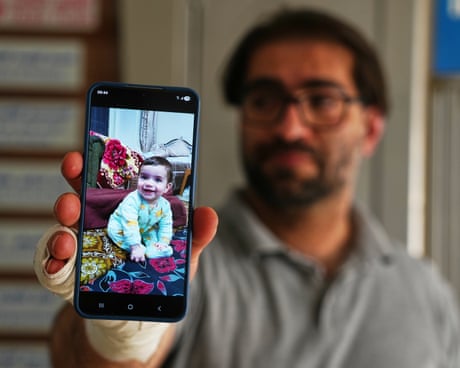
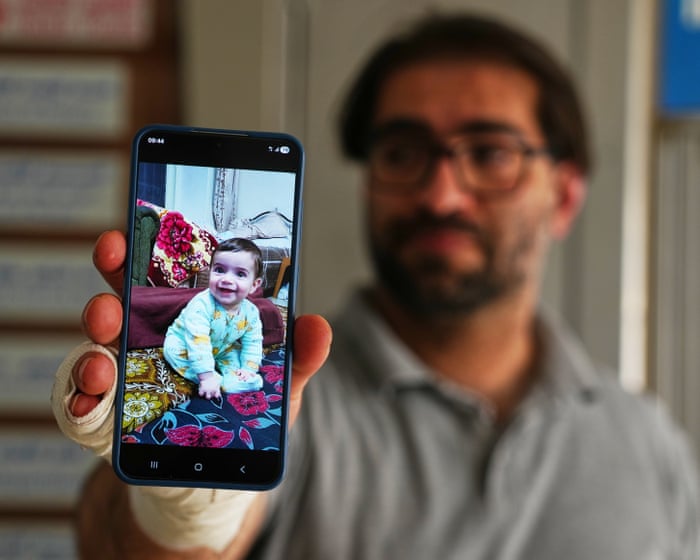
The seven-month-old, Sam Fahd Abu Haikal, was in his mother’s arms when soldiers fired on family in Hebron
Israeli troops killed a seven-month-old Palestinian baby in the occupied West Bank and injured his parents after opening fire on the family’s car, despite it having complied with an order to stop.
Soldiers opened fire on Friday on a car carrying the infant and his parents in the Tel Rumeida area of Hebron. The seven-month-old, Sam Fahd Abu Haikal, was critically injured, evacuated in critical condition to a hospital, where he later died.
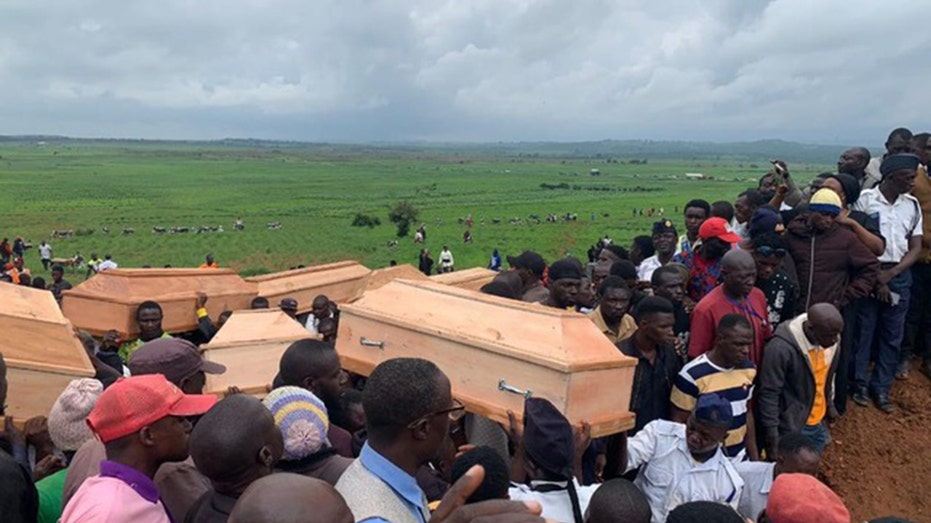
JOHANNESBURG — An estimated 30,000 mostly Muslim Fulani militants are operating in Nigeria, causing "worsening insecurity and religious freedom violations," according to an influential new report.
The report, by the U.S. Commission on International Religious Freedom (USCIRF), states "violence by Fulani militants caused the highest number of deaths among all religious communities in Nigeria over the last year, as compared to attacks by organized insurgent groups and criminal gangs."
The Fulanis, so-called herders of livestock, have, according to the USCIRF report, "targeted Christian (farming) communities in the Middle Belt and, increasingly, the South, burning homes and churches as well as kidnapping, raping, and murdering."
But a former counterterrorism expert at the State Department told Fox News Digital that the kind of strikes the U.S., working with Nigerian government forces, have recently carried out in Nigeria’s North against Islamist terrorist organizations such as Boko Haram and Islamic State, wouldn’t work against the Fulanis in the predominantly Christian central areas of the country.
Sterling Tilley, former acting director within the Bureau of Counterterrorism, who has worked in Nigeria for the State Department, said that the U.S. "militarily dealing with the farmer-herder conflict is not advisable because it is likely to bring more instability in the country." Tilley, now director of the Thomas R. Pickering Graduate Foreign Affairs Fellowship at Howard University, added, "There are some steps that can be taken to quell the violence, but there must be Nigerian political will to do so."
This week, Secretary of War Pete Hegseth commented on the recent strikes ordered by President Donald Trump on Nigeria, saying, "Maybe a year ago, [the president] heard the call of Nigerian Christians who were being targeted and killed by ISIS. And he said, 'Pete, I want the War Department to focus on ensuring that we do everything we can to protect those Christians.'"
Christians make up approximately 48%, and the Fulanis, the report says, represent around 6%, or 14.5 million of Nigeria’s population. Fulani militants, the USCIRF report stated, "have often carried out operations during Christian holidays such as Christmas or Easter to further maximize the psychological impact, terrifying those communities from gathering to celebrate or worship. During attacks, assailants sometimes utter slogans with religious connotations, such as "Allahu Akbar" (Arabic for "God is great").
But, according to the report, Muslims are being attacked too. "Fulani assailants have not spared Muslims, raiding herders’ cattle and violently attacking non-Fulani Muslim communities," the report added.
"Violence at the hands of militants from the Fulani tribe far outnumbers violence from all other militant groups such as Boko Haram or ISWAP (Islamic State West African Province)," Henrietta Blyth, CEO of Open Doors UK & Ireland, an organization that highlights the persecution of Christians, told Fox News Digital.
While her organization was not part of the report, she said, "My heart has been broken as I have heard stories from women and men who have seen their beloved family members butchered in front of them or carried off into a life of slavery."
Blyth added: "The situation is complicated, and as the report concludes, it is too simplistic to say all perpetrators are religiously motivated. What is undisputable is that Christians are highly vulnerable and often the victims, paying the price in blood. They desperately need protection and, for hundreds of thousands driven from their homes, the chance to heal and rebuild their lives."
The USCIRF report also stated, "Criticism of responses to Fulani militant violence from federal and state authorities has often described their responses as unsatisfactory at best and complicit at worst."
Tilley told Fox News Digital that elections are to be held in Nigeria next year, and "the Fulani do have considerable political influence as a voting bloc. Thus, the Nigerian government seems reluctant to take actions necessary to quell the violence for fear that they could lose their base of support in the North and Middle Belt."
Oil tankers may be stuck behind strait of Hormuz, but holding the Iata AGM in Brazil defies warnings of impending shortages
Nothing says jet fuel crisis, as one prospective attender put it, like flying everyone to Rio de Janeiro. Aviation leaders will converge in Brazil this weekend for the Iata AGM, the annual global airline summit, with the industry still, for the most part, looking resolutely skyward.
The oil tankers may still be stuck behind the strait of Hormuz as the conflict between the US, Israel and Iran flickers on, but for now, airlines continue to defy dire warnings of impending shortages which had stoked fears of a summer of chaos for European holidaymakers.
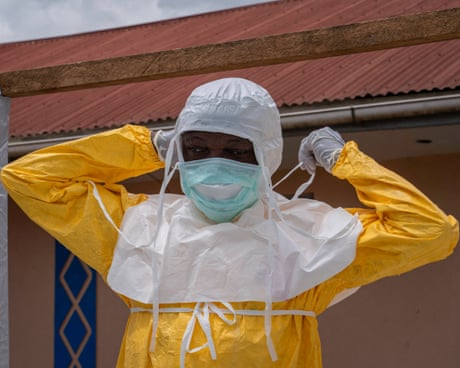
The US Centers for Disease Control and Prevention (CDC) on Friday published a range of scenarios generated by computer models, from 10,000 cases to more than 20,000. In the west Africa outbreak, more than 28,000 cases were reported.
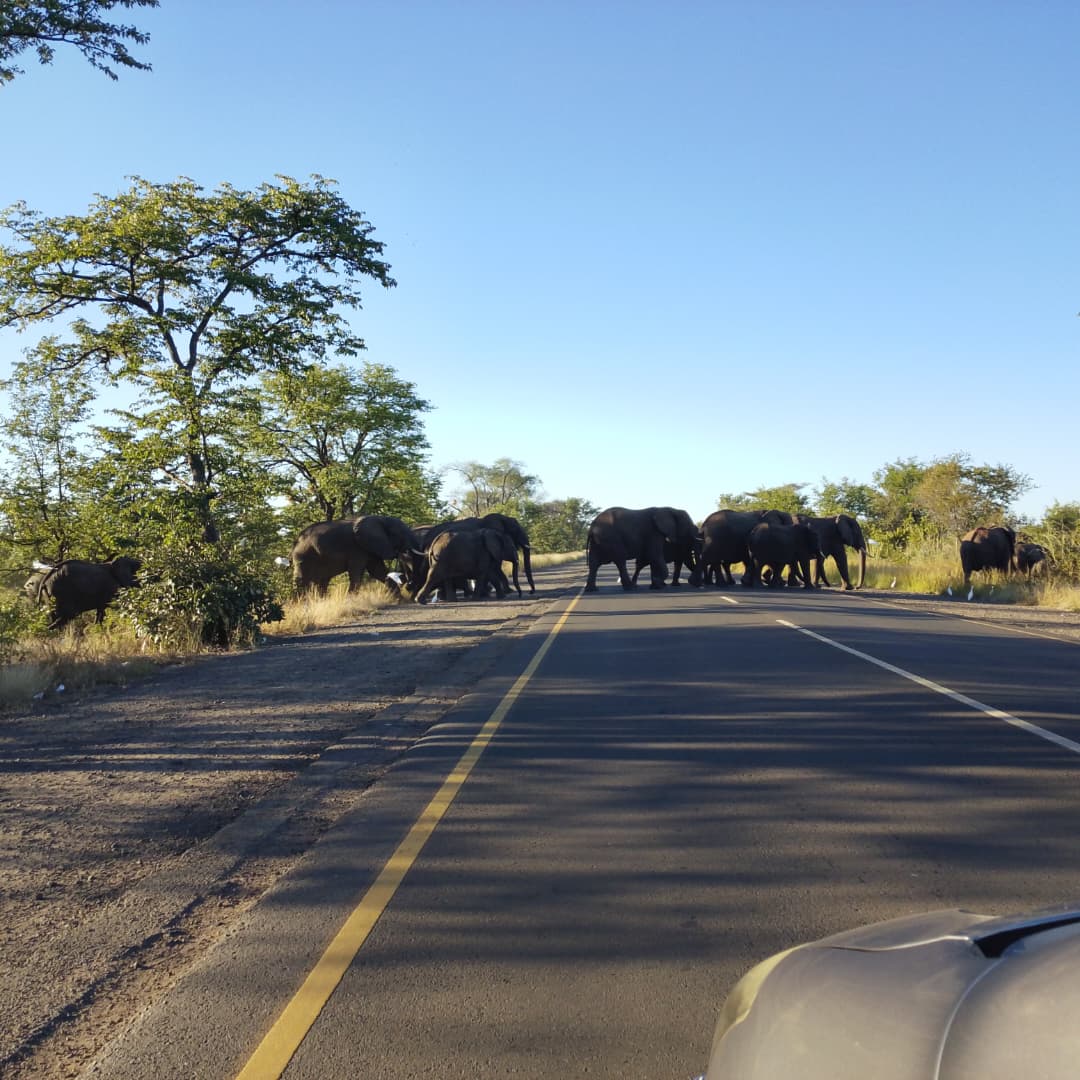
Veronica Akabondo had worked from dawn to dusk for months on her farm in southern Zambia and was confident she would have a plentiful maize harvest. But one morning she woke up and found it all gone. The culprit? A herd of hungry elephants.

 Login
Login