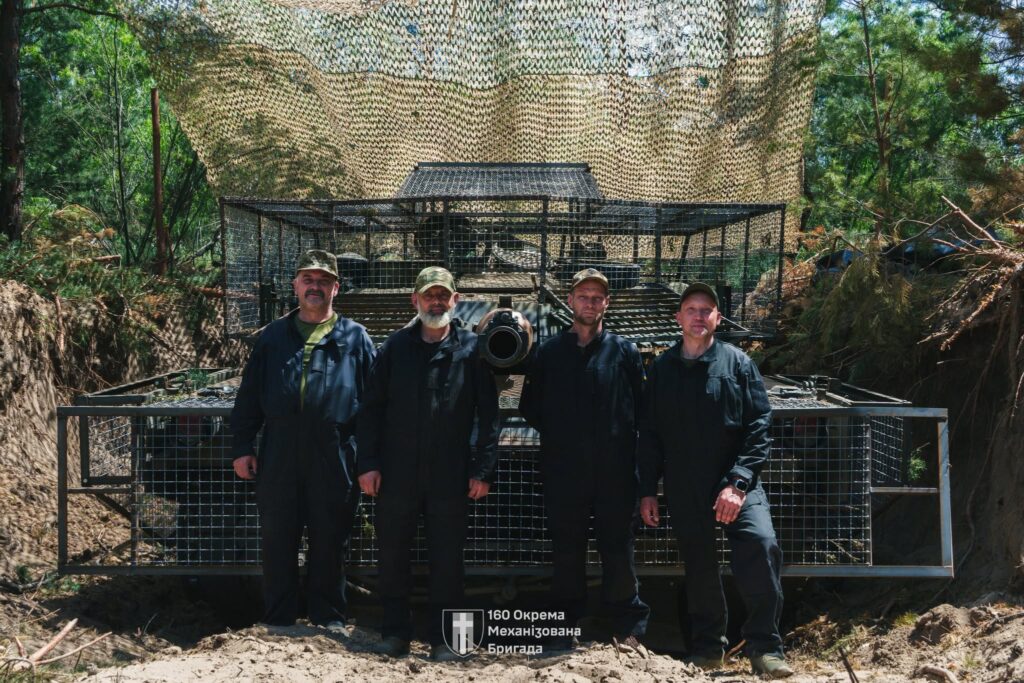
Ukraine’s 160th Separate Mechanized Brigade has published new photos of its Abrams tank “Lucifer,” showing how Ukrainian crews are adapting Western armor to survive the increasing FPV drone threats on the front line that are defining modern warfare.
Drones have significantly reduced the battlefield advantage of tanks by enabling low-cost, precise strikes against weak points in armored vehicles. This has forced Ukrainian crews to adapt heavy armor with additional protective structures, including cage-style and modular field modifications.
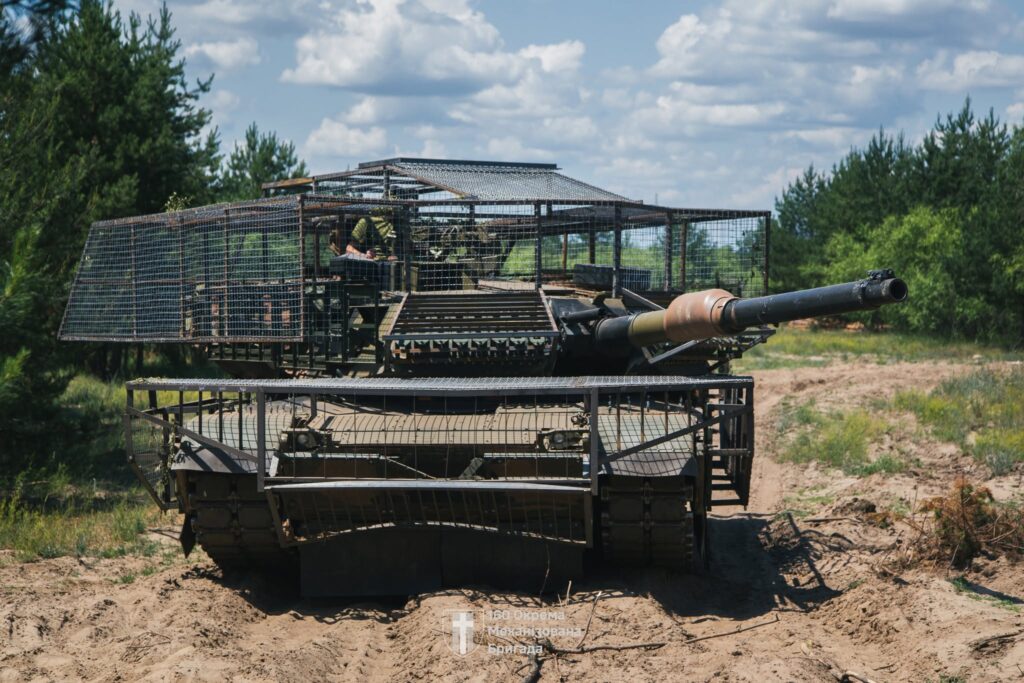
Ukrainian Abrams tank fitted with modular cage-style protection designed to counter FPV drone strikes on the front line, as crews adapt Western armor to modern battlefield threats. Photo: Ukraine’s 160th Separate Mechanized Brigade
Abrams tank “Lucifer” fitted with modular anti-drone cages
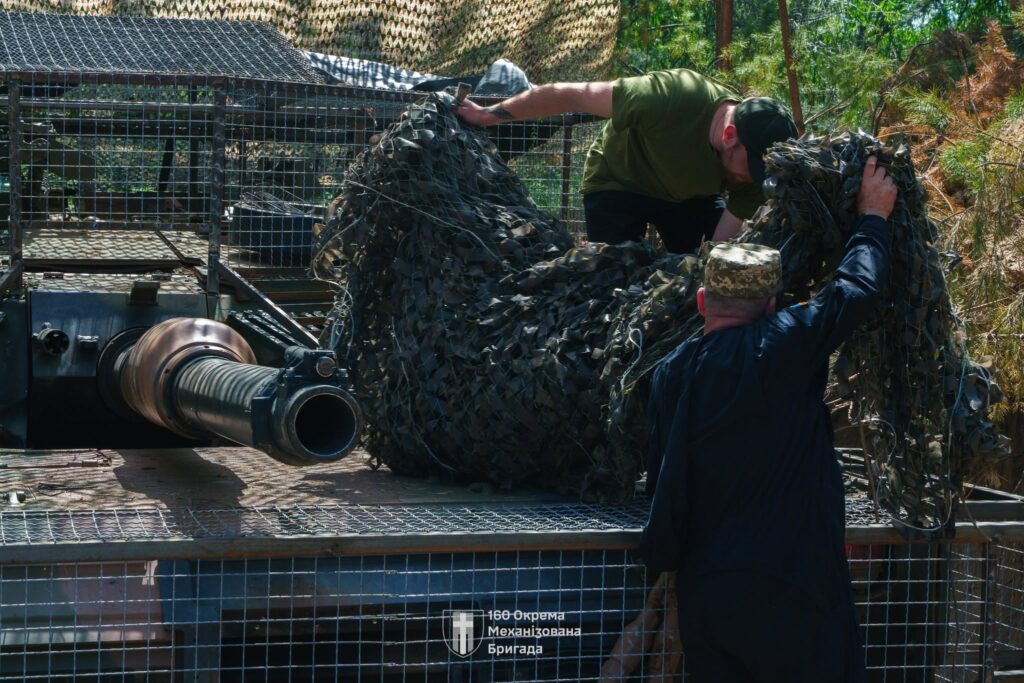
According to Defense Blog, the tank is an M1A1 AIM Abrams operated by the brigade’s tank battalion and is among 49 vehicles transferred to Ukraine by Australia. The vehicle has been fitted with extensive modular cage-style protection covering the turret, hull sides, and rear.
Defense Blog notes that the modifications are designed to counter FPV drone threats, which increasingly target weaker sections of armored vehicles such as engine decks, rear armor, and roof areas.
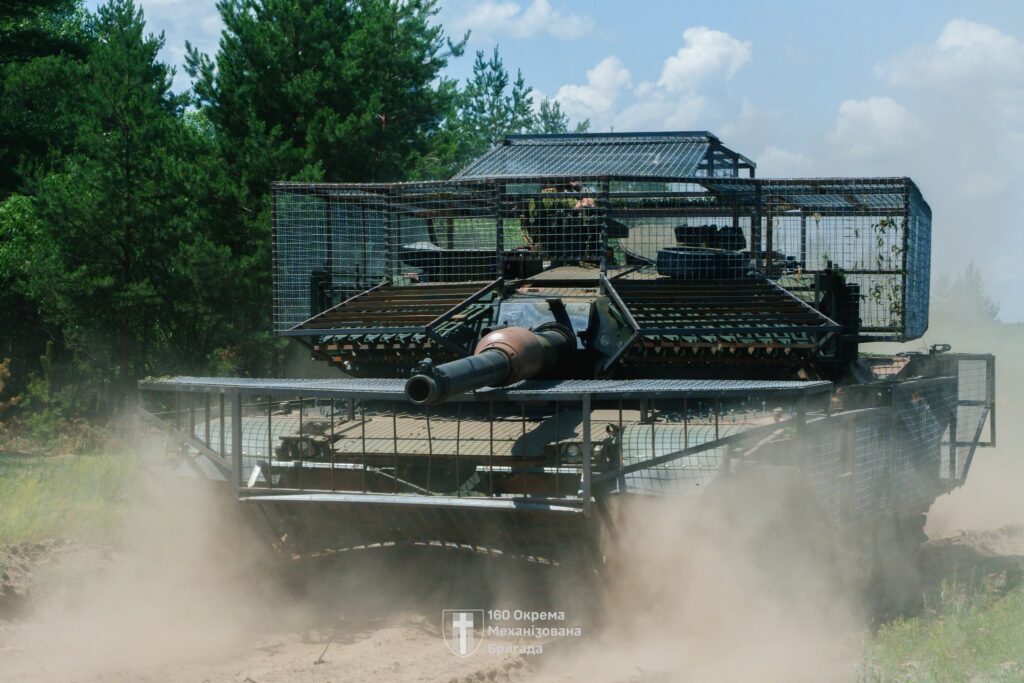
The cage system reportedly allows the turret to rotate freely while maintaining overhead protection, addressing a key limitation of earlier field modifications that restricted combat use.
Ukrainian Abrams tank fitted with modular cage-style protection designed to counter FPV drone strikes on the front line, as crews adapt Western armor to modern battlefield threats. Photo: Ukraine’s 160th Separate Mechanized Brigade
Adaptation of Western armor under drone-dominated conditions
FPV drones have become one of the most widespread threats to armored vehicles on the front line, forcing Ukrainian crews to repeatedly modify Western-supplied systems in the field.
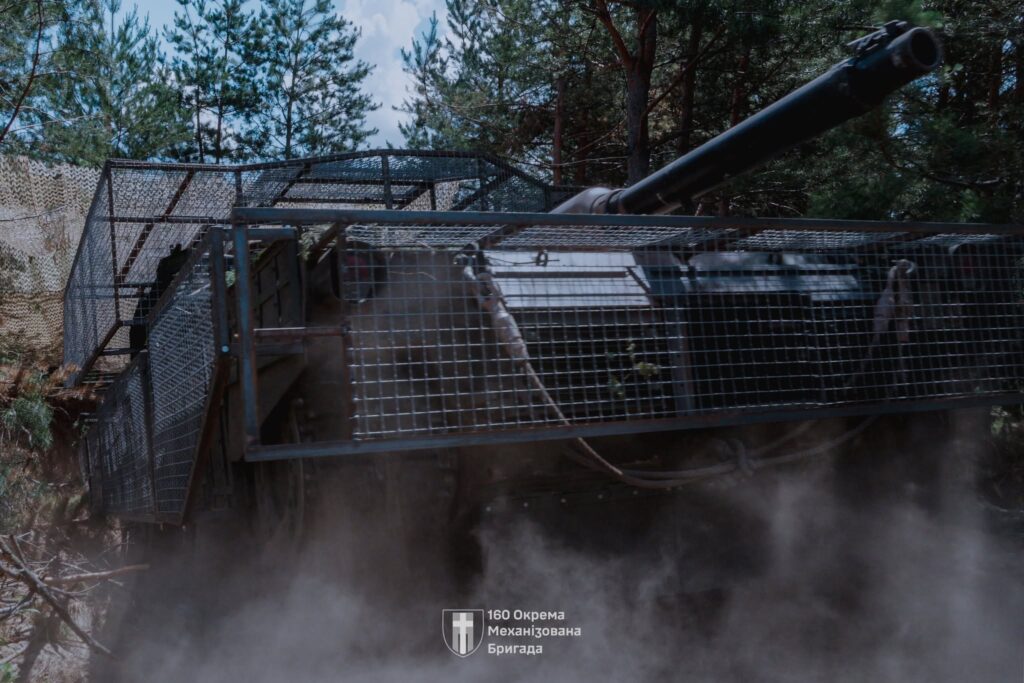
Defense Blog reports that the design seen on “Lucifer” reflects a more structured approach to these adaptations, moving beyond improvised protection toward modular systems that can be replicated across units.
Separate protective sections for the turret and hull are intended to preserve maneuverability while expanding coverage against drone attacks from multiple angles.
The outlet adds that Australian-supplied Abrams tanks are now integrated into Ukraine’s operational fleet in frontline sectors, where crews continue to adjust battlefield equipment based on real-time combat experience.
Ukrainian Abrams tank fitted with modular cage-style protection designed to counter FPV drone strikes on the front line, as crews adapt Western armor to modern battlefield threats. Photo: Ukraine’s 160th Separate Mechanized Brigade
160th Brigade highlights Abrams combat role
The unit said few systems match a tank for firepower and protection, describing the Abrams as a vehicle that “clears the way where the enemy tries to hold its positions.”
It added that crews are prepared to carry out high-risk missions under fire. The brigade also said that naming a tank “Lucifer” reflects its combat role and warned that it gives opposing forces “every reason to worry.”
Ukrainian Abrams tank fitted with modular cage-style protection designed to counter FPV drone strikes on the front line, as crews adapt Western armor to modern battlefield threats. Photo: Ukraine’s 160th Separate Mechanized Brigade
Pourquoi le dérèglement climatique déclenche-t-il l'écroulement du Mont-Blanc ? Le permafrost fond ! Cette glace "éternelle" agit comme un liant, une superglue, entre les blocs de roches. Lorsqu'elle fond, elle ne tient plus les blocs entre eux : les montagnes s'effondrent. Alors que les Alpes se réchauffent deux fois plus vite que le reste du globe, ses glaciers fondent. Conséquence : un tiers des voies d'alpinisme autour du Mont-Blanc sont devenues impraticables.
Ministry says animals fitted with sensors by foreign agencies collect sensitive sea data, in ‘invisible secret war’
China’s ministry of state security has claimed that foreign espionage and intelligence agencies are using innovative new methods to monitor the country’s waters, including deploying “spy” animals fitted with sensors.
In a post on the Chinese platform WeChat on Friday, the ministry warned that an “invisible secret war” was quietly playing out in the seas around China as foreign agencies were collecting sensitive data “through a variety of new spying devices” to produce underwater maps that pose a “serious threat to our national security”.
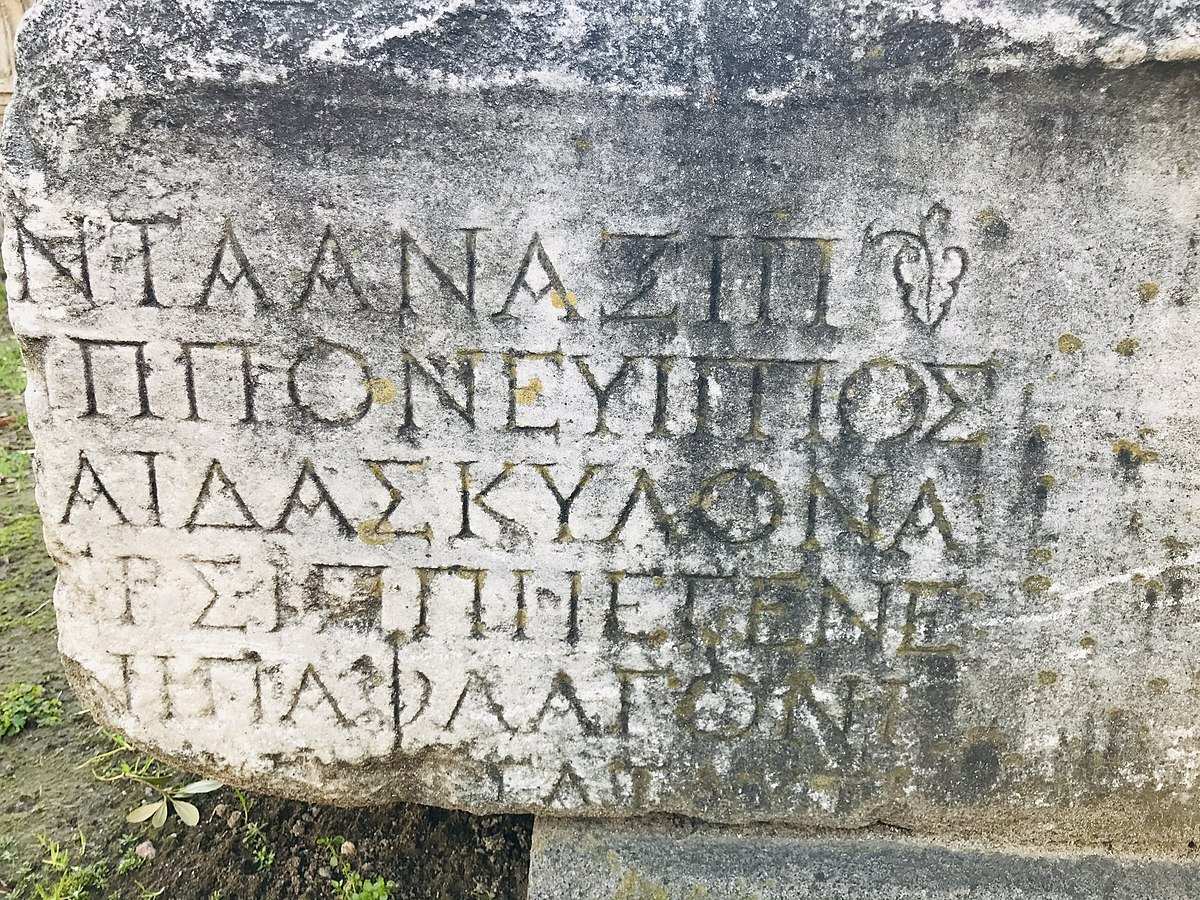
Ancient Greek is among the oldest languages in the world. Credit: Maurice Flesier / CC BY-SA 4.0 / Wikimedia Commons
Hundreds of diaspora academics are calling on Amazon Kindle Direct Publishing (KDP) to reverse its exclusion of the Greek language. In an open letter, hundreds of professors, academics, authors, educators, researchers, publishers, and members of the global intellectual community expressed their deep concern. They urged Amazon to “reconsider its current policy and demonstrate leadership in protecting linguistic and cultural diversity in the digital age.”
The signatories brought together by the International Hellenic Association (IHA), point out that Amazon ironically derives its name from Greek mythology and language. They emphasize that “the exclusion of Greek—one of the foundational languages of global intellectual history—is not merely a technical omission, but a cultural loss whose consequences extend far beyond the Greek-speaking community itself.”
Why the Greek language should be restored by Amazon’s Kindle
The letter, bearing the signatures primarily of Greek diaspora academics mobilized by the IHA, highlights several critical points regarding Amazon KDP, a self-publishing platform allowing authors to distribute digital and print books globally:
A striking contradiction: Amazon KDP currently supports publishing in numerous regional and minority languages with significantly fewer speakers than Greek (e.g., Cornish, Manx, North Frisian, Romansh, Corsican). Meanwhile, Greek, a language spoken by an estimated 13 to 15 million people worldwide, remains excluded. Therefore, this policy cannot be justified by commercial or demographic metrics alone.
A continuous legacy: Greek occupies a unique position in human history. With over 3,400 years of uninterrupted written tradition, it is one of the world’s oldest living languages. It is the language of Homer, Plato, Aristotle, Hippocrates, Archimedes, and the New Testament—the very bedrock of philosophy, democracy, medicine, mathematics, political thought, theology, literature, and the sciences.
A living vessel of values: Greek is not just a historical relic. It is a vibrant language and a living intellectual tradition. For millennia, it has served as the matrix for human-centric values. Words such as democracy, philanthropy, politics, ethics, dialogue, philosophy, history, and theory are not just linguistic artifacts but represent monumental achievements of human civilization.
The language of democratic principles: Greek articulates the foundations of civic life with unparalleled precision. Terms like demokratia (democracy), isegoria (equal right to speak), isonomia (equality before the law), and isopoliteia (equal civic rights) embody the principles of citizen participation and political inclusion. These concepts carry a specific original context that remains fundamentally untranslatable, serving as cornerstone concepts for modern societies.
A language of moral resistance: Hellenic literature and thought gifted humanity a vocabulary of moral resistance against arbitrary power. In Aeschylus’s Prometheus Bound, the concept of philanthropos tropos (the philanthropic way) stands in defiance of tyranny, presenting the love for humanity as a moral and political choice. This legacy remains deeply relevant in the digital era, wherein access to language also equates to access to memory, education, and cultural dignity.
Greek Language Day
Consequently, Greek is far more than a tool for communication or commerce; it is a treasury of wisdom, virtue, and beauty. Its global significance has been internationally recognized by UNESCO, which officially declared February 9th as World Greek Language Day, honoring its timeless contribution to global civilization.
Excluding Greek-language publishing from one of the world’s most influential digital platforms creates artificial barriers for Greek-speaking authors, educators, students, and publishers worldwide. Simultaneously, it undermines the broader principle of linguistic diversity in the global digital landscape.
For years, Greek authors and publishers have relied on Amazon for the international distribution of literature, academic research, and educational materials. In turn, Greek consumers have consistently supported Amazon’s products and services throughout every stage of its technological evolution, the open letter by Greek academics says.
Cluster of carved footprints on the Köping 232 boulder in Västmanland. Credit: Fredrik Fahlander / CC BY 4.0
Ancient footprints carved into rocks across Scandinavia may have served a much deeper purpose than simple decoration. New research suggests these unusual carvings, known as podomorphs, could have helped Bronze Age people create lasting connections with places and with each other.
The study, led by Fredrik Fahlander and published in the Oxford Journal of Archaeology, challenges traditional views that treated the carvings mainly as symbols or images. Instead, the research argues that the footprints were active parts of social and ritual life during the Nordic Bronze Age, which lasted roughly from 1700 BC to 500 BC.
A unique feature of Scandinavian rock art
Rock art from the Nordic Bronze Age includes several common motifs, such as boats, people, animals, and circles. Footprints stand out from the rest.
Unlike other designs, the carved footprints are often close to life size. They appear throughout southern Scandinavia and are found both along coastlines and inland. Researchers note that similar footprint carvings are rare elsewhere in Europe during the same period.
Footprint carvings on the Foss 6:1 rock art panel in Tanum. Credit: Fredrik Fahlander / CC BY 4.0
The carvings show both bare feet and footprints left by leather footwear. Many include lines that appear to represent shoe straps. Some are deeply hollowed out, while others are outlined with grooves. Researchers believe the artists deliberately made them resemble real footprints left in sand, mud, or snow.
For decades, archaeologists proposed various explanations. Some suggested the footprints represented gods, ancestors, or the dead. Others linked them to rituals, remembrance, or claims over territory. Yet many of those theories struggled to explain the wide variety of footprint sizes, shapes, and arrangements found across Scandinavia.
Looking beyond symbolism
Footprint carvings and a Bronze Age boat motif at Koppartorp, Södermanland. Credit: Fredrik Fahlander / CC BY 4.0
Fahlander approached the carvings from a different angle. Instead of asking what the footprints represented, the study examined how they were made, where they were placed, and how they interacted with the surrounding landscape.
The research focused on the Mälaren region of eastern Sweden, where more than 600 footprint carvings have been documented across over 140 sites. Most appear near former shorelines and waterways. Many face toward water or natural channels where rainwater regularly flows across the rock surface.
Some footprints were carved directly across quartz veins or placed within mineral-rich sections of rock. Others were positioned around natural cracks and depressions that collect water. These patterns suggest the locations were carefully chosen rather than random.
The study argues that the carvings were intended to interact with the natural qualities of the rock. Water, minerals, and landscape features may have played important roles in how people understood the footprints and their power.
Footprints may have linked people together
Bronze Age footprint carvings at Godegård, Västergötland. Credit: Fredrik Fahlander / CC BY 4.0
Many paired carvings are not identical. One footprint is often larger than the other. Some differ in design, orientation, or level of detail. This suggests they may not represent a single person’s two feet. Instead, researchers propose that two different individuals may have contributed to the pair.
According to the study, a lone footprint may have served as an invitation for another person to add a matching one later. The result would be a permanent connection carved into stone.
Researchers suggest these paired footprints could have marked friendships, agreements, family ties, marriages, or other important relationships. Some examples show the footprints connected by grooves or enclosed within shared shapes, strengthening the impression of a deliberate bond.
The idea fits a broader pattern seen in Bronze Age Scandinavia, where objects were often deposited in pairs during rituals.
More than simple images
The study concludes that the footprint carvings were likely much more than artistic symbols. They may have been seen as extensions of real people who remained connected to them over time.
Unlike ordinary footprints that disappear from sand or soil, these impressions were carved into stone to last for generations. Researchers believe that permanence was part of their purpose.
While the exact meaning of every footprint remains uncertain, the research suggests they helped Bronze Age communities materialize personal relationships and social connections in a lasting way. Nearly 3,000 years later, those carved traces may still preserve echoes of the people who created them.
Archaeologists at an ancient site in Iraq have uncovered rare cuneiform tablets, mass graves, and evidence of a large-scale siege nearly 4,000 years old, giving researchers what they call the clearest record yet of Bronze Age urban warfare in the region.
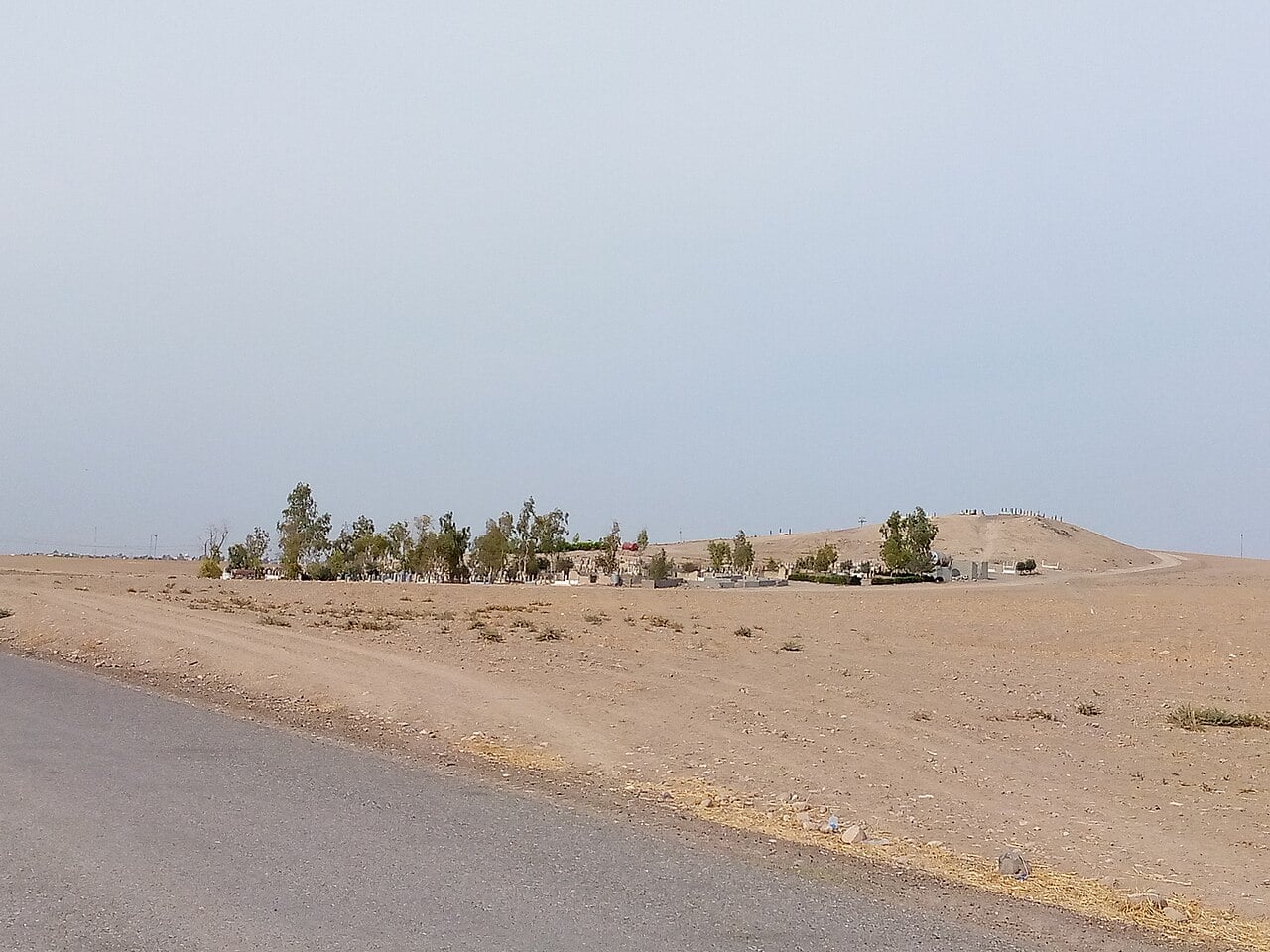
The site, Kurd Qaburstan, lies in the Kurdistan region of northern Iraq and is believed to be the ancient city of Qabra. Tiffany Earley-Spadoni, an associate professor of history at the University of Central Florida, led the excavations over two field seasons in 2024 and 2025 with U.S. National Science Foundation support.
Inside a structure called the Lower Town East Palace, researchers recovered 20 cuneiform tablets and more than 100 administrative sealings, the largest tablet find yet made on the Erbil Plain.
The records include palace administrative texts and a letter tied to a senior official. Several bear dates cluster within the same few days, a pattern consistent with the city’s documented fall. Earley-Spadoni said the tablets offer a detailed look at palace operations and the city’s economy in its final days.
Iraq’s rare palace tablets found alongside ancient mass graves
Within the same destruction layers, researchers found the remains of 17 people. Bioarchaeologist Andrea Zurek-Ost of Michigan State University is studying the individuals.
None had been given a formal burial or left with belongings, and some appear to have died where they lay. One person was found collapsed across a stone basin.
A dig in northern Iraq has yielded rare cuneiform tablets, mass graves and a 4,000-year-old siege record that brings a forgotten ancient city back to life. pic.twitter.com/VGssXIZjt0
— Tom Marvolo Riddle (@tom_riddle2025) June 11, 2026
The site also showed two overlapping destruction events matching historical records of Qabra’s siege and conquest by Assyrian king Shamshi-Adad. Charred debris, fallen walls, and broken pottery point to a prolonged assault, making it the most complete archaeological case of Middle Bronze Age siege warfare identified in northern Mesopotamia.
Earley-Spadoni said the rare tablets, mass graves, and other findings from the Iraq site make clear that northern cities like Qabra were as organized and politically significant as the more familiar southern centers of ancient Mesopotamia.
Survey uncovers fortified walls matching an ancient monument
A magnetic survey of more than 80 hectares uncovered a large fortification wall with towers encircling the site, matching the layout shown on the “Victory Stele of Dadusha,” an ancient monument tied to the siege.
Researchers also found a preserved street with an engineered drainage system and spaces used for food preparation and textile work.
Laboratory analysis is continuing, including DNA and isotopic testing on the 17 individuals to trace their origins and determine whether they were related.
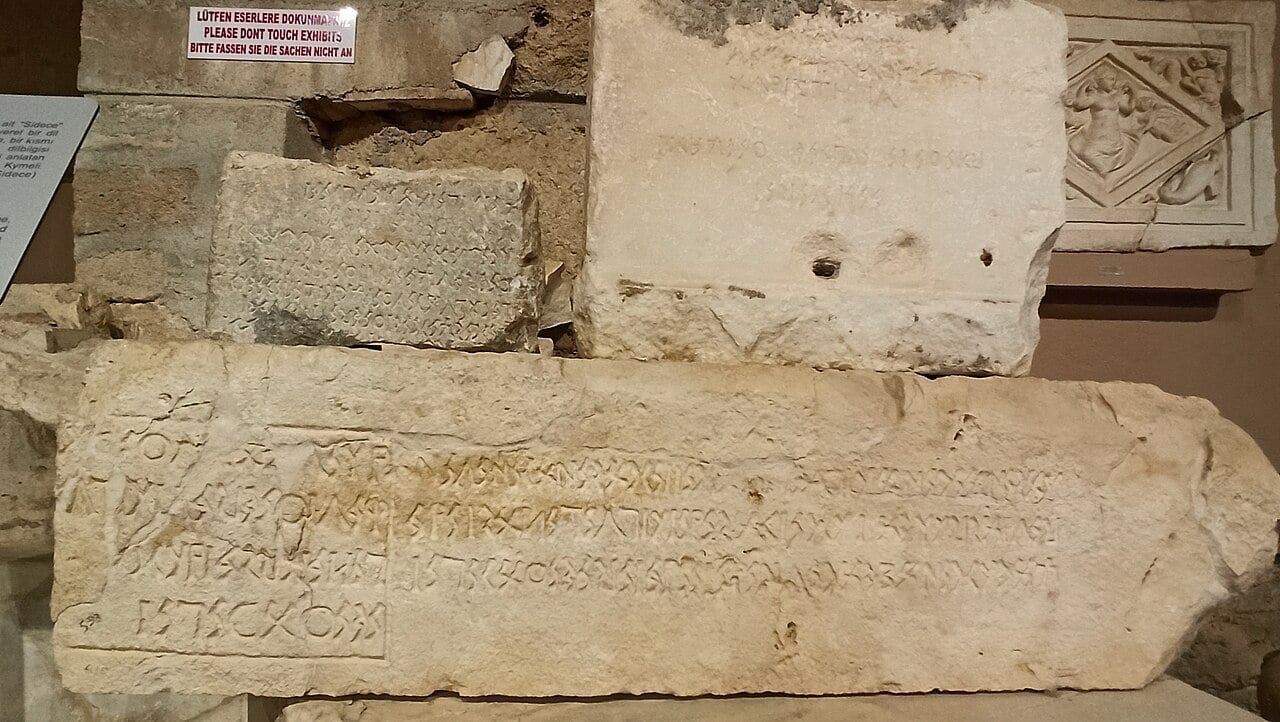
Researchers have expanded the known Sidetic alphabet to 31 letters, moving the field closer to decoding one of Anatolia’s lost languages. The new findings come from active excavations at Side Ancient City in Antalya’s Manavgat district.
The work is led by Prof. Dr. Feriştah Alanyalı, excavation director and archaeologist at Anadolu University, in collaboration with Italian linguist Alfredo Rizza and Austrian linguist Michaela Zinko. Funding comes through the Culture and Tourism Ministry’s Heritage for the Future Project.
Sidetic sits within the Luwian branch of Anatolian Indo-European languages, a grouping that also includes Lycian and Carian. Decipherment has moved slowly because the surviving inscriptions are few and most span only one or two lines.
Alanyalı said that the thin body of material has made it hard to reconstruct grammar, vocabulary, and structure with any confidence.
New excavations yield longer texts and bilingual comparisons
New excavations have brought a shift. Researchers have now recovered inscriptions running as long as 30 to 40 lines, well beyond anything previously available. Bilingual texts written in both Sidetic and Greek have also come to light.
Alanyalı said that those texts have renewed optimism because matching content across two languages helps researchers assign meaning to unknown signs and connect recurring words to known concepts.
One finding in particular has drawn attention. Researchers now think the Sidetic terms “Siruawn” and “Siruawan” refer to Side itself.
Since the Greek word “Side” (Greek:Σίδη) translates to pomegranate, a fruit that featured prominently on the city’s ancient coinage, Alanyalı said that the name likely carried the same meaning in the native language.
She described this as a significant finding for understanding the city’s origins and identity.
An ancient city that held its language for centuries
Side is typically known through its Greek and Roman structures, but Alanyalı said that the city’s history runs deeper.
Ancient accounts record that settlers from the Greek city of Kyme arrived at Side and, over time, abandoned their own language in favor of the one spoken by local residents.
Alanyalı said that tradition points to a community whose culture was firmly rooted long before outside groups arrived.
That cultural foundation held even after Alexander the Great brought Greek influence into the region during the fourth century B.C.
The inscriptions show that Side’s residents continued writing in Sidetic for roughly two centuries into the Hellenistic period, with the language appearing to fade only around the late second century B.C.
Alanyalı said that the persistence of Sidetic complicates the idea that Greek culture quickly swept away what came before it.
Assyrian and Babylonian seals point to ancient eastern ties
Archaeological finds also point to Side’s connections with civilizations to the east. A Neo-Assyrian seal turned up during excavations at the site.
Separately, Italian researchers obtained a Neo-Babylonian seal from residents of the area before the Turkish War of Independence. Alanyalı said that the two objects together point to cultural ties with Mesopotamia dating back to the seventh century B.C.
A bilingual inscription tied to the city’s Serapis Temple adds another dimension. Alanyalı said that the text documents how the temple was financed, listing the names of donors and the sums each contributed, all written in Sidetic.
31 letters bring researchers closer to Anatolia’s lost language
The use of the local language for a public record of that kind confirms it was still understood and used in everyday civic life.
With the alphabet now standing at 31 known letters, up from 26, researchers working on this lost Anatolian language have a sharper set of tools.
Alanyalı said that the international team continues its work, and each newly identified letter brings the field a step closer to a fuller reading of inscriptions that Side’s people worked for generations to preserve.
À compter du 14 juin 2026, la directive européenne 2024/1438( transposée en droit français par le décret n°2026-312 du 24 avril) impose de nouvelles règles d'étiquetage, de composition et de traçabilité au miel, aux confitures, aux jus de fruits et aux laits déshydratés. Derrière le vernis consommateuriste : des coûts de mise en conformité réels pour les petits producteurs, et un bénéfice pour le consommateur qui reste, pour l'essentiel, cosmétique.
LE COURRIER DES STRATÈGES
Restez libre !
LA NEWSLETTER · GRATUITE
Le Courrier, chaque matin.
L'essentiel de l'actualité, passé au crible par les cinq plumes du Courrier. Dans votre boîte, chaque jour ouvré.
Gratuit. Vous restez libre de partir quand vous voulez.
Le petit-déjeuner français vient de gagner quelques lignes supplémentaires sur ses étiquettes. Avec le décret n°2026-312 du 24 avril 2026, la France transpose la directive européenne 2024/1438, adoptée par l’Union européenne pour renforcer la traçabilité et l’information du consommateur. Une réforme présentée comme technique, mais qui illustre une fois encore l’appétit réglementaire de Bruxelles.
LE COURRIER DES STRATÈGES
Restez libre !
ABONNEMENT
Allez au fond des choses.
Deux grands formats par jour. Les cinq plumes du Courrier. La série Sécession, le dimanche.
Le changement le plus spectaculaire concerne le miel. Désormais, les mélanges devront préciser chaque pays d’origine dans le champ visuel principal de l’emballage, avec indication du pourcentage correspondant à chaque provenance. Les producteurs devront être capables de justifier ces chiffres grâce à une documentation complète de leur chaîne d’approvisionnement.
Sur le papier, la mesure vise à lutter contre les fraudes et à mieux informer les consommateurs. Dans la pratique, elle implique de nouveaux coûts administratifs : suivi documentaire renforcé, refonte des emballages, adaptation des logiciels de gestion et multiplication des contrôles. Les grands groupes disposent déjà de services conformité dédiés. Les petits apiculteurs et conditionneurs, eux, devront absorber ces charges supplémentaires.
Les confitures sont également concernées. Le seuil minimal de fruits passe à 450 grammes par kilo pour les confitures classiques et à 500 grammes pour les confitures extra. Les jus de fruits voient apparaître de nouvelles catégories liées à la réduction des sucres naturels, avec des critères précis à respecter.
LE COURRIER DES STRATÈGES
Restez libre !
TELEGRAM · L'INFO EN CONTINU
Entre deux éditions, le fil.
La newsletter vous donne le matin. Le fil vous donne l'instant.
Certes l’objectif est sanitaire, pourtant, les bénéfices réels pour le consommateur restent limités. Une confiture contenant davantage de fruits n’est pas nécessairement un produit moins calorique, tandis que les nouvelles dénominations sur les jus relèvent davantage du marketing réglementé que d’une révolution nutritionnelle. En revanche, les industriels devront reformuler certaines recettes et réimprimer des millions d’emballages.
Le Conseil de l'Union européenne présente cette révision comme un progrès démocratique. David Clarinval, alors vice-premier ministre belge et ministre de l'agriculture, déclarait lors de l'adoption : les nouvelles règles possibles aux consommateurs « de faire des choix plus éclairés et plus sains. » Belle intention. Sauf que les grands industriels absorberont ces contraintes par des économies d’échelle ; les petits producteurs et artisans, souvent familiaux, subiront de plein fouet les frais fixes de recomposition et d’emballage. La norme descend jusque dans le pot de confiture, là où la marge est déjà mince et la concurrence internationale rude.
Cette réforme illustre une fois de plus la dérive d’une Union européenne qui ne sait plus s’arrêter. Sous couvert de protection du consommateur, elle renforce le pouvoir des bureaucraties et des grands acteurs capables d’influencer ou d’anticiper les normes à Bruxelles, au détriment de la diversité des productions locales et de la liberté entrepreneuriale.
LE COURRIER DES STRATÈGES
Restez libre !
TIPS · SANS ABONNEMENT
Offrez-nous un café.
Un média libre vit de ses lecteurs. Un pourboire ponctuel, sans compte ni engagement, quand le cœur vous en dit.
Vous donnez ce que vous voulez. Vous restez libre.
Après les champs, les usines et les commerces, la réglementation descend désormais jusque dans le pot de confiture. Une preuve supplémentaire que la bureaucratie européenne ne se contente plus de fixer les règles du marché : elle entend désormais en définir chaque détail, jusqu’au contenu du petit-déjeuner.
It was extreme even for a figure like Nigel Farage. Hours after the police footage of officers handcuffing Henry Nowak on the fatal night of December 3 in Southampton became public and spread like wildfire on social media, the Reform UK leader called on citizens to respond with “pure, cold rage.” The young Nowak had been fatally stabbed by a man of Sikh faith and Asian descent, who later falsely accused him of a racist attack. “I can’t breathe,” the victim shouted up to nine times, to the officers’ disbelief as they moved against him. His cry of agony echoed the words George Floyd uttered on the streets of Minneapolis, which sparked the Black Lives Matter movement.
Hybrid threats span both hardware and politics, said Colonel Sönke Marahrens. The list of methods includes overflights, the cutting of undersea cables, and a concerted disinformation campaign. It also reaches into political and judicial systems, including what he called the "disposable agent" model —civilians recruited online for one-off sabotage or surveillance. As a model for how the state should respond, Colonel Marahrens pointed to Finland. Authorities there detained a suspected sabotage vessel within an hour of Baltic Sea cable damage.
Russian hybrid attacks: a political shift acknowledged late
Recognition had arrived slowly, Marahrens told the New Age Defence forum in Berlin on 8 June, Ukrinform reported. "Germany recognized rather late that we are being attacked by such hybrid methods," the colonel said. "But I would say that in the last year and a half to two years, we see a shift at the political level as well."
The colonel heads a department at the Bundeswehr's Center for Digitalization and Capability Development. The center reports to the Cyber and Information Domain Command in Bonn. German intelligence services and state institutions are increasingly informing citizens of the changing security environment, he said.
Drones, cables, and courts
Russian pressure now reaches beyond physical sabotage, Marahrens said. "It's not just drones and not just undersea cables, it's also disinformation within our society. It's the use of the political and judicial systems, the concept of 'disposable agents,'" he said.
Unidentified drones over European critical infrastructure, including German sites, had a primarily psychological effect, the colonel said. The impact was not military. Germany's National Security Council should receive real powers for rapid decision-making, he argued. The colonel cited Finland's response time of less than an hour after the Baltic Sea cable damage.
"Creating societal resilience is something we in Germany have yet to learn." — Col. Sönke Marahrens, Bundeswehr Center for Digitalization and Capability Development
Kyiv's resilience is something Berlin lacks
Germany draws on Ukrainian wartime experience through financing, joint training, and front-line exchanges, Marahrens said. "We support Ukraine financially," he said. "We also adopt the experience gained from the battlefield. We provide training for them, and we also adopt experience from them during joint exercises at our training grounds."
The most important Ukrainian lesson, the colonel said, is societal resilience under wartime conditions. "Creating societal resilience is something we in Germany have yet to learn," Marahrens said. The Kremlin coordinates large-scale hybrid operations across Europe, the agency added. These campaigns aim to discredit Kyiv and inflame internal conflicts in EU states amid Russia's war on Ukraine.
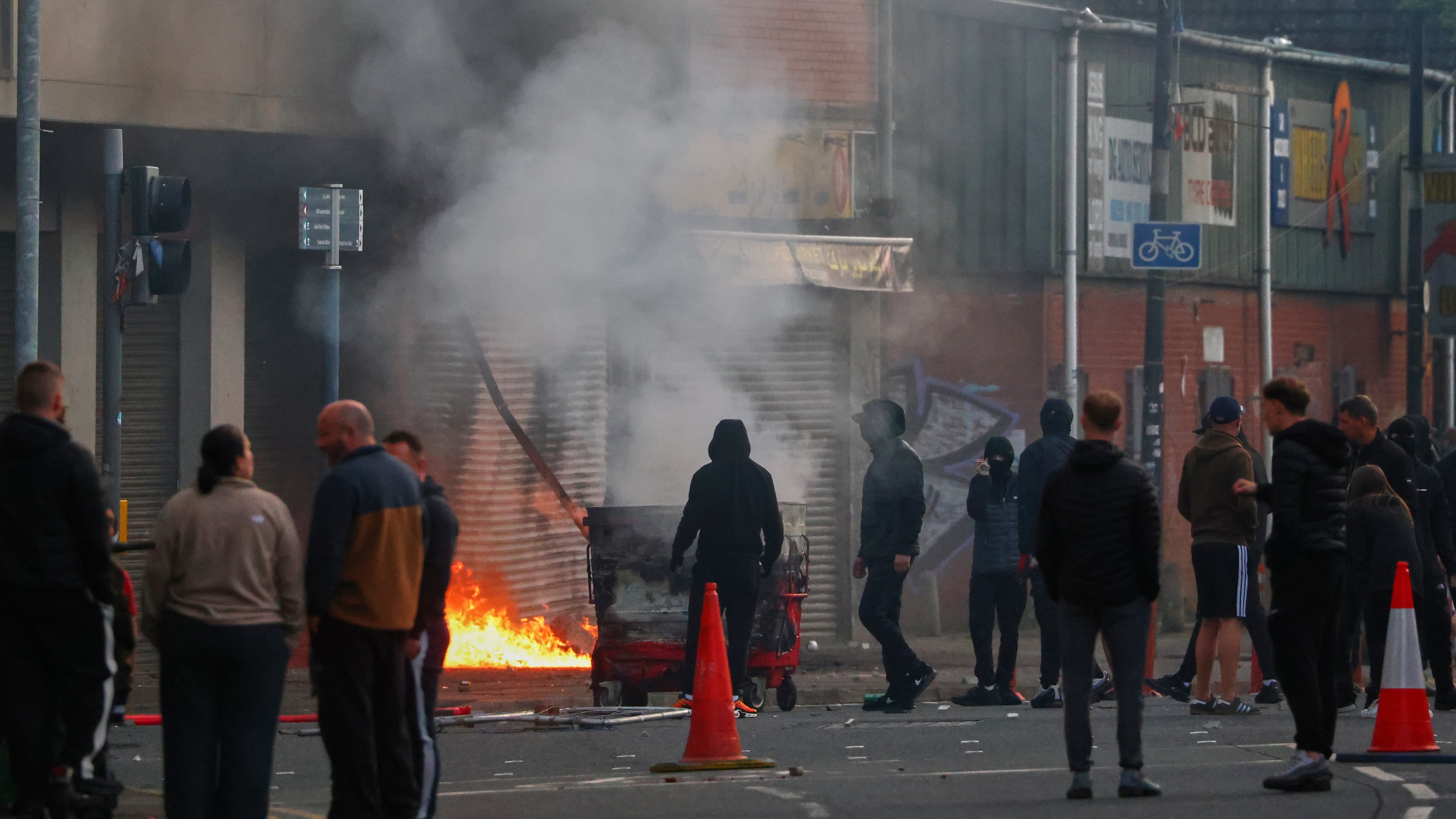
Political and religious leaders in Northern Ireland saw early Wednesday morning — with the embers of a long night of violence in Belfast and other parts of the region still smoldering — that their calls for calm had fallen on deaf ears. Cars, buses, phone booths, and trash cans set ablaze. Homes where immigrants — or simply people from ethnic minorities — were believed to live, completely engulfed in flames after violent groups targeted them as places that needed to be “liberated.”
Sack of Corinth, by Thomas Allom, 1872. Credit: Wikimedia Commons, public domain
The formation of the Roman Empire was a gradual process, unfolding over several centuries. Nevertheless, there is one specific year that we can point to as arguably the single most significant year in the formation of the Roman Empire. This was the year 146 BCE. How did the events of this year lead to the creation of the Roman Empire?
The gradual formation of the Roman Empire
In an administrative sense, the Roman Empire was founded in the year 27 BCE. This was when Octavian, the son of Julius Caesar, became the emperor. The Roman Senate recognized him as possessing overarching military power and designated him Augustus in recognition of his new position as emperor.
Octavian established reforms to the constitution, officially changing Rome into an empire. Hence, in 27 BCE, the Roman Empire came into existence. Before then, it had been a republic.
However, although it only became an empire in an administrative sense in 27 BCE, Rome already controlled a vast empire before that. In the basic sense of “a group of countries ruled by a single person, government, or country“, Rome was already an empire long before the days of Octavian.
The Roman Republic conquered most of the territory that would constitute the future Empire. Therefore, to understand how Rome became powerful, we need to examine that era.
The acquisition of territory was a gradual process that took several centuries. However, the year 146 BCE, arguably more than any other, was crucial in the formation of the Roman Empire.
The Battle of Corinth
In 146 BCE, two significant events occurred for the Romans. One of these was the Battle of Corinth, marking the culmination of the Achaean War, which lasted only a single year.
At that time, the Achaean League ruled over the Peloponnese. They had recently assimilated Sparta into the league, which troubled Rome. Both sides were concerned with the other’s expansionist tendencies. Rome had conquered Macedonia in the early part of the second century BCE and had reconquered it in 150-148 BCE.
In the final year of the war against Macedonia, the Achaean League took control of Sparta, solidifying their hold on the Peloponnese. With tensions high due to the actions of both sides, war broke out two years later, in 146 BCE.
The war did not last long. The Achaean League was woefully unprepared, both militarily and financially, for a full-scale war against Rome. The Romans quickly subdued the Greek cities, many of which took the initiative to surrender.
A Roman consul and military general named Lucius Mummius led the Romans in their siege of Corinth. This was the climax of the war. The Romans successfully defeated and utterly destroyed it. Their brutality was noted even by ancient historians. With this victory, the Romans gained direct control of all of Greece.
The Siege of Carthage
The same year, 146 BCE, also marked the climax of another war. The war in question was the Third Punic War. This was the third war between the Roman Republic and the Carthaginian Empire.
Carthage was located in modern-day Tunisia. Rome had already defeated them in the Second Punic War, which had ended in 201 BCE. One of the terms of the treaty was that Carthage was prohibited from engaging in war without Rome’s permission. This allowed Rome’s ally, Numidian king Masinissa, to repeatedly invade Carthage’s territory.
Carthage’s decision to fight back and send an army against Masinissa in 149 BCE provided the Romans with a justification for a third war against Carthage. In reality, Rome harbored animosity towards Carthage and was merely seeking an excuse to destroy it.
When the Roman army arrived, the Carthaginians offered a complete surrender. Nevertheless, the Romans persisted and besieged the city. Eventually, after considerable brutality and bloodshed, the Romans utterly destroyed their enemy.
Just like Corinth in that same year, Carthage was completely, mercilessly destroyed, and the Romans took over the territory.
How the year 146 BCE led to the creation of the Roman Empire
Given this information, 146 BCE can be regarded as vital in the creation of the Roman Empire. The Romans achieved two major victories this year: the defeat of the Achaean League and the defeat of Carthage.
Both of these victories significantly expanded the territory of the Roman Republic. Rome took over control of all of Greece and also the core territory of the Carthaginian Empire in Tunisia. Granted, this was only a tiny portion of what later became the territory of Rome’s vast empire.
However, the main impact that this year had on the formation of the Roman Empire was not the territory gained. Rather, it was the geopolitical consequences of these victories that mattered the most.
Carthage and the Achaean League were both major powers in the Mediterranean. With their defeat, Rome became the undisputed master of that part of the earth. While it still had numerous enemies to confront, it no longer had a single, major, powerful rival.
Over in Anatolia, Pergamon was friendly with Rome. Ptolemaic Egypt was also their ally, with Rome exerting considerable influence over that region. With Greece and Carthage out of their way, Rome’s position as the dominant force in the Mediterranean was firmly established. It is for that reason that we can consider 146 BCE as such a crucial year in the formation of the Roman Empire.
Nella palestra dei reduci del Karabakh a Erevan, l’accordo con l’Azerbaigian racconta la ferita più profonda dell’Armenia: una guerra persa, 100mila profughi e un futuro ancora sospeso
Russia has begun moving gasoline to its frontline units in occupied Ukraine in convoys of civilian cars, the Ukrainian defense outlet Militarnyi reported. Soldiers filmed themselves loading jerrycans into ordinary trunks, an improvised workaround after Ukrainian drone strikes made fuel tankers too risky to run. Russian forces are also disguising army trucks as civilian vehicles along the supply route to occupied Crimea.
This comes amid Ukraine’s ongoing “Logistics Lockdown,” a campaign by several Ukrainian military branches and the Security Service to target Russian fuel, logistics, and other supplies across occupied territories, at depths of up to 200 km.
Soldiers filmed the fuel run themselves
A video on the Exilenova+ Telegram channel showed Russians describing a convoy of passenger cars assembled to carry one metric ton of gasoline, Militarnyi reported. A man off-camera says the cars left the city of Kizilyurt in Dagestan, Russia, on the local head's orders, with the fuel destined for Russian units in occupied Tokmak, Zaporizhzhia Oblast. The footage shows jerrycans filling the trunks:
Besides the fuel, the drivers carried 1.5 million rubles ($20,900) to buy another batch of gasoline. Fuel keeps Russian frontline positions running: generators power electronic-warfare systems, charge batteries for reconnaissance and strike drones, and run communications gear in dugouts and observation posts.
Disguised trucks and a strained supply line
Russian forces have also begun disguising army trucks as civilian transport because of Ukrainian drone attacks deep in the rear. In northern Crimea, monitors spotted a freshly painted blue Ural truck driven by a man in civilian clothes, still carrying military plates, its oversized body posing as a dump truck.
The command of Russia's Dnepr grouping ordered mass use of civilian vehicles to move fuel along the route linking Rostov-on-Don with occupied Crimea, the Krymsky Veter monitoring project reported. That improvisation tracks the M-14 corridor, now within Ukraine's deepening drone range.
Explore further
ISW: The strikes will likely cascade into deeper disruption across Russia’s rear supply network
Why Russia is improvising
Ukraine's Defense Forces have intensified drone strikes on logistics trucks and fuel tankers on the roads from Russia to occupied Crimea. The attacks have already forced the occupiers to limit cargo traffic through the occupied part of Kherson Oblast toward the peninsula, and Russia has closed stretches of its own land corridor to keep them clear of strike drones.
A Lithuanian court has convicted a man who ran a cyclist off the road and attacked him for wearing a shirt with Ukrainian symbols, according to LRT. Judges treated his hatred of people who support Ukraine as an aggravating circumstance. The verdict is now final, and the court found the assault was deliberate, not an accident.
As Russia continues its all-out war against Ukraine, open support for Ukrainians across the Baltic states through flags, clothing, and fundraisers has become a marker of identity, even as it occasionally provokes hostility.
The roadside attack
On the evening of 27 March 2025, the man drove up to the cyclist on a road in Lithuania's Širvintos district. He repeatedly ordered the cyclist to take off the shirt bearing Ukrainian symbols. When the cyclist refused, the driver passed him, then swung the front of his car toward the roadside and blocked his path. The cyclist braked hard and fell with his bicycle. He suffered injuries, and the bicycle was damaged.
When the cyclist got back up, the man ran over to him. He again demanded that the cyclist remove the shirt, grabbed it, and tried to pull it off. The cyclist reached for his phone to call for help. The man struck him and knocked the phone onto the asphalt, breaking it, the court found.
Explore further
Two Polish citizens detained in Przemyśl for desecrating Ukraine’s flag — sixth such attack in last months
A hate motive, the court ruled
The Vilnius Regional District Court found the 1987-born man guilty of damaging another's property and causing minor bodily harm. Evidence from the investigation showed the violence was not random, the court said. It stemmed from the man's hatred of the victim as someone publicly backing Ukraine against Russia's invasion. The court treated that motive, hostility toward a group for supporting Ukraine, as an aggravating circumstance.
The court handed the man a non-custodial penalty of one year and three months' restriction of liberty. During that time, he must work or register as a jobseeker. He must also complete a program aimed at changing violent behavior. On top of that, he owes the victim for material and non-material harm, and he must repay Lithuania's State Patient Fund for the cost of treating the injuries.
Explore further
Switzerland to limit protection status for Ukrainians from seven western oblasts
A Vilnius District Prosecutor's Office prosecutor, Edvinas Navickas, led the pre-trial investigation and the prosecution. Vilnius County police officers gathered the evidence. The court issued its verdict on 12 May, and it has since taken effect, the prosecutor's office reported. Lithuania, a NATO member bordering Russia, has been one of Ukraine's strongest backers since 2022, sending weapons and welcoming Ukrainian refugees.
Lithuania has prosecuted this hatred before, convicting a man who smashed a displaced family's car.
Ukrainian refugees
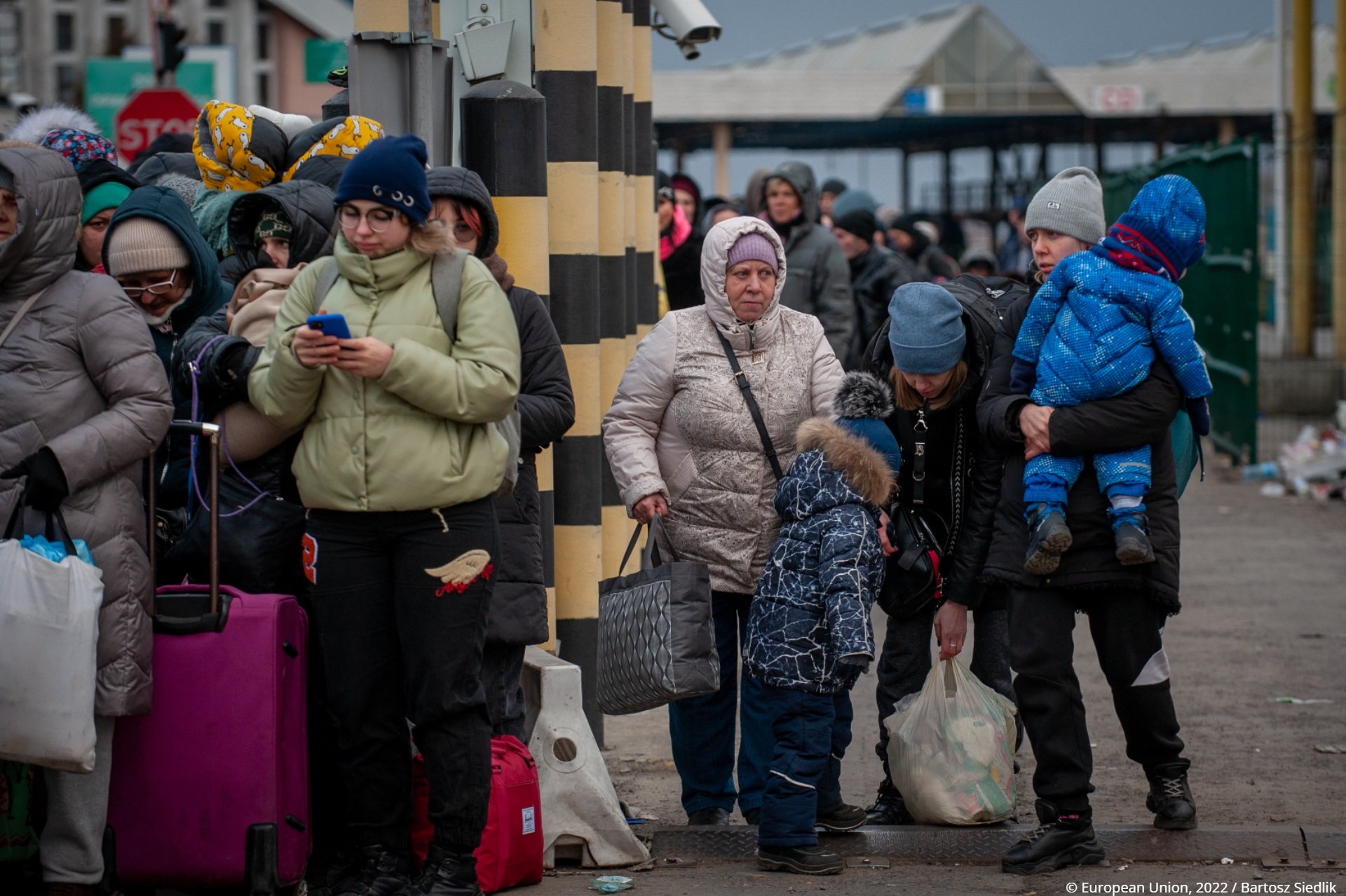
Millions of Ukrainians live outside their country because Russia's invasion made home unsafe. Some 5.9 million are abroad as of 2026. Most settle in the European Union, where Poland and Germany host the largest communities. That visibility and open support for Ukraine sometimes draw hostility. Other reported attacks on Ukrainians abroad don't have a clear anti-Ukrainian motive.
Explore further
Latvia sentences man to prison for anti-Ukrainian hate speech and violence
In Poland, isolated cases include a Ukrainian beaten over his accent and a woman detained for telling two Ukrainian women to go back to Ukraine, while a separate knife attack on a Ukrainian selling his car in Wrocław has not been tied to nationality.
In Germany, an attacker killed a teenage athlete, a man went after children for speaking Ukrainian, and others assaulted teenagers while chanting pro-Russian slogans; one Berlin assault and a Murnau double killing both pointed to anti-Ukrainian motives, and a Russian was jailed for life over the latter.
The violence is not confined to those two countries: other attacks on Ukrainians have occurred in other places. Earlier, a Ukrainian was stabbed to death in Ireland in an attack police have not linked to his nationality, and a Ukrainian woman was murdered in the United States by a man who cited a delusional reason.
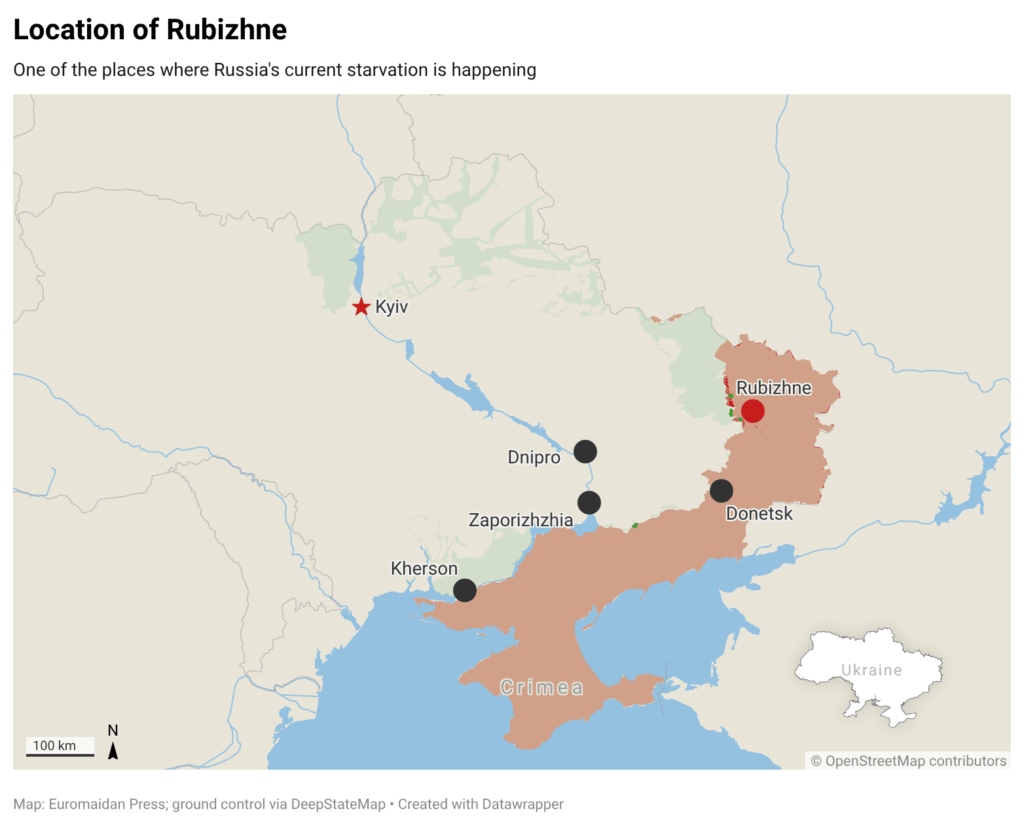
Russian occupation forces have deliberately manufactured a food shortage in occupied Rubizhne, cutting civilian food deliveries to the Luhansk Oblast city even as military supply convoys continue to flow, the head of the Luhansk Regional Military Administration reported on 8 June.
Shelves in the city's stores are emptying rapidly, Kharchenko said. Russian propaganda blames disrupted transport links, citing an alleged drone threat. Yet the occupiers have had no difficulty maintaining their own logistics routes to resupply military units stationed across the region, he noted.
"They need to make the next victim for Russian television out of local residents. They chose Rubizhne."—Luhansk governor OleksiiKharchenko
A city turned into a propaganda prop
The official accused Russia of weaponizing hunger for television cameras. He said the occupiers intend to film bare shelves and hungry residents, then broadcast the footage to Russian audiences as evidence of suffering they themselves engineered.
Before Russia's full-scale invasion, Rubizhne was home to more than 55,000 people. Russian forces seized the city in May 2022 after weeks of devastating urban combat during which they fired up to 1,500 shells per day, the BBC's Quentin Sommerville reported from the front lines. The city's current population remains unknown, but residents who stayed have endured four years of occupation without reliable utilities, communications, or public services.
In nearby Sievierodonetsk, conditions have deteriorated so far that residents now mow the grass in their own neighborhoods and clean communal areas themselves, Kharchenko added—an admission that Russia's occupation authorities provide no basic municipal services even in the cities they claim to have "liberated."
A pattern of deliberate starvation across occupied Ukraine
The manufactured food shortage in occupied Rubizhne fits a documented pattern of Russia using hunger as a weapon against Ukrainian civilians trapped behind the front lines.
In Oleshky, a frontline city in occupied Kherson Oblast, roughly 2,000 civilians have been cut off from food, medicine, and clean water for months. "If the situation doesn't improve, people will just die there from hunger. Because there's no way out, no food supplies coming in," an Oleshky resident who escaped occupation told the Kyiv Independent. Russian forces mined the access roads, destroyed the Kakhovka dam's water infrastructure, and deployed FPV drones that residents describe as conducting "human safari" attacks—hunting anyone who steps outside. People there hunt pigeons and wild ducks with fishing line, plant vegetables in shell craters, and bury their dead in wheelbarrows because no coffins or transport exist.
Ukraine's Foreign Ministry in May appealed to the United Nations and the International Committee of the Red Cross over what it called a "severe humanitarian crisis" in Russian-occupied Kherson Oblast. Russia rejected calls for a humanitarian corridor.
In Nova Kakhovka, upstream from Oleshky, most coastal areas have been abandoned. The few residents who remain live in distant high-rise microdistricts with no functioning hospital and minimal Russian administrative presence, governed remotely from Henichesk, roughly 130 kilometers away.
The Rubizhne food shortage also coincides with Russia's broader restriction of civilian movement through occupied territories. On 6 June, occupation authorities shut down bus and private car traffic on main arteries, capping two weeks of land-corridor breakdowns that have further isolated occupied communities.
Starvation as premeditated policy
International human rights investigators have gathered evidence that Russia planned to use hunger as a weapon before the 2022 invasion. A report by Global Rights Compliance found that a Russian defense contractor purchased grain-transport trucks and bulk cargo ships in December 2021—two months before the invasion began. The evidence was submitted to the International Criminal Court for what could become the first prosecution of a head of state for the war crime of starvation as a method of warfare.
Global Rights Compliance has drawn a direct parallel to the Holodomor—the Soviet-engineered famine that killed millions of Ukrainians in 1932–1933. Russia's current starvation tactics are being perpetrated, the organization noted, by "the same attacking state."
Under the Geneva Conventions, using starvation of civilians as a method of warfare is a war crime. The Rome Statute of the ICC codified the offense in 1998. Yet in occupied Rubizhne, occupied Oleshky, and across the territories Russia claims to have annexed, the pattern continues: military convoys pass, civilian supply lines close, and shelves empty.
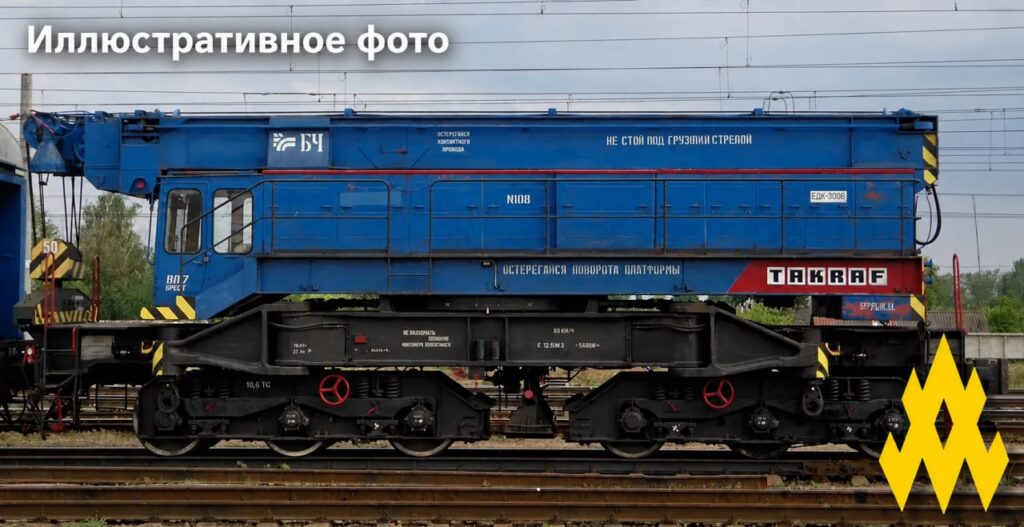
Pro-Ukrainian partisan movement ATESH says its agents carried out a sabotage operation at a railway station in Russia’s Voronezh Oblast, destroying a rare heavy-duty rail recovery crane used by Russian Railways.
The group said the target was an EDK-300/5 rail recovery crane, a specialized system used for large-scale emergency rail restoration work. ATESH claims the equipment is no longer in production and exists in only limited numbers across Russia’s rail network.
According to the statement, the crane was designed for heavy railway accident response tasks, including lifting derailed rolling stock, clearing damaged infrastructure, and restoring traffic on key lines. It reportedly had a lifting capacity of up to 300 tons.
A heavy rail recovery crane used by Russian Railways for emergency repair and derailment response. Illustrative photo: ATESH
“Even in the deep rear, critical equipment is not safe from destruction”
ATESH said the loss of the crane would reduce Russia’s ability to rapidly repair damaged rail infrastructure, particularly at major transport junctions where recovery speed is critical for maintaining logistics flows.
The group added that the impact of the loss would be long-lasting, saying: “Replacement of the destroyed crane will require significant time and resources. While Putin’s army searches for a replacement, the railway hub and regional logistics are operating with limited recovery capacity.”
“Even in the deep rear, critical equipment is not safe from destruction,” they added.
The report has not been independently verified.
ATESH: sabotage network operating inside Russia
ATESH is a clandestine resistance network operating inside Russian-controlled territory and within Russia itself. The group says it focuses on reconnaissance and sabotage operations against military, transport, and communications infrastructure that it considers to be supporting Russia’s war effort against Ukraine.
ATESH statements are typically released via Telegram and often include claims of damage to rail assets, depots, and logistical hubs. The group also claims to have agents operating inside the Russian armed forces, which it says helps it gather intelligence and identify targets.
The operation is part of a wider campaign aimed at disrupting Russian transport infrastructure, which the group says supports both civilian logistics and military supply chains.
ATESH has increasingly focused on rail assets inside Russia, arguing that even limited damage to specialized equipment can create disproportionate delays across tightly connected transport networks.
Previous claimed strike in Saint Petersburg
In a previous claimed operation in May, ATESH said its agents set fire to a locomotive in Saint Petersburg used for oil transport, taking it out of service and disrupting rail operations in Russia’s northwestern logistics network.
The group said the locomotive had been part of fuel transport routes linked to industrial supply chains and export corridors in the northwest of the country, including areas connected to port infrastructure.
A locomotive used in oil transport was set on fire in Saint Petersburg, Russia, according to claims from the partisan network ATESH.
The group says its agents carried out the sabotage operation, taking the engine out of service and disrupting rail logistics tied to fuel and… pic.twitter.com/2c6ChkG7TR
— Euromaidan Press (@EuromaidanPress) May 21, 2026
Russia "intends to harm" the UK through economic disruption, sabotage, and "dark arts", and the evidence is clear, former UK Chief of the Defense Staff Stuart Peach told The Independent. His claims came in a joint interview with the chair of the House of Lords Select Committee on National Resilience, Baroness Coussins, who called for greater urgency from government and citizens.
The intervention is one of the most direct public warnings from senior UK figures on Russian hybrid operations against Britain. Peach is now making the case publicly that the threat has shifted from speculative to operational.
Baroness Coussins, whose committee was appointed in January 2026 and is due to report in November, framed it more bluntly: "It is not a question of 'what if?’ It's a question of 'these things are happening now.' We know we’re under cyber attack daily."
"The evidence is clear"
“The fact that Russia intends us harm – whether it's economic disruption or the ‘dark arts’, as you might call them – I think the evidence is clear," Peach said.
He warned that the UK is not prepared for the scale of scenarios that could result, including widespread power cuts and full-scale war.
Baroness Coussins added that British intelligence services regularly identify and disrupt potential violent threats inside the country and pointed to the activities of so-called proxy structures linked to Russia and Iran.
Undersea cables and European pattern
Peach said the threat to the UK posed by undersea cable disruption, which carries internet connectivity, financial transactions, and essential data, was an issue he had raised as Chief of the Defense Staff and one that has only sharpened since.
He pointed to a politically motivated arson attack in Berlin in January 2026 that caused a widespread power cut affecting 45,000 households and 2,200 businesses, including internet and heating.
The recent fire at an electrical substation that forced the closure of London's Heathrow Airport, causing mass flight cancellations and power disruption, was raised as a UK precedent showing how single-point sabotage can cascade across critical systems.
Lord Peach warned that malicious attacks “can have real damage.”
In charge for 14 years at the Home Office and 10 at Hampshire police, the Tories co-authored the Henry Nowak tragedy, says Clive Pinder. But Kemi Badenoch has shown she is determined to do something about it.

 Login
Login