Reading view

UK to ban under-16s from ‘high risk’ social media apps

Measures to include restrictions on ‘safe’ social media apps, with some fearing banning some platforms and not others will lead to legal challenges

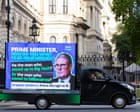
Teenagers under the age of 16 are to be banned from accessing “high-risk” social media apps while safer platforms will be subjected to restrictions, under a sweeping government crackdown.

Under-18s will also be banned from using romantic or sexual AI chatbots after a consultation on keeping children safe online.

Continue reading...

© Photograph: David Parry/PA

© Photograph: David Parry/PA

© Photograph: David Parry/PA

  •  

O Brasil da Revolta da Vacina à vacina de covid em bebês

Brasil tem tradição de “lei que não pega” e resistência passiva, mas elites fracassam. Classe média omissa diante de vacina covid em bebês, caso único no mundo.

Junte-se a nós no Telegram Twitter e VK.

Escreva para nós: info@strategic-culture.su

No último texto, apontei um certo conformismo social brasileiro que às vezes nos impede de lidar com grandes problemas nacionais sem constrangimento estrangeiro. Neste eu queria nuançar um pouco essa questão, mostrando a importância das classes intermediárias entre o governo e o povo.

Comecemos com o aspecto conformista: desde o advento da propaganda republicana, o povo brasileiro tem fama de passivo. Em tese, a República é o governo do Povo, ao passo que a Monarquia é o governo na nobreza. Com essas definições, o simples fato de o povo não se entusiasmar com a República já o torna besta. E como o Brasil era a única monarquia nas Américas, cercada por repúblicas de língua espanhola fundadas em ideais maçônicos e iluministas de liberdade, o povo brasileiro era especialmente besta. Até a década passada nós brasileiros olhávamos para os vizinhos argentinos, que sempre estavam fazendo panelaço diante da Casa Rosada, e nos lastimávamos de nossa passividade – como se o “espírito crítico” argentino lhes tivesse dado um bom destino.

Em 1889, com uma revolta militar desengonçada e liderada por um marechal monarquista, proclama-se no Brasil a República à revelia do povo. Um grande historiador brasileiro, José Murilo de Carvalho (1939 – 2023), usou a memória de um militante republicano para dar um título ao seu livro sobre os primeiros anos da República: Os Bestializados. O povo assistia à proclamação da República bestializado, sem entender o que acontecia, achando que se tratava de uma parada militar. E a raia miúda – os vadios, as prostitutas, os capoeiras – eram maciçamente monarquista nas décadas seguintes à implementação da República. A Abolição da escravidão fazia o Imperador deposto ser amado sobretudo pelos pretos pobres do Brasil.

Segundo constava nos livros e panfletos, a República era para ser a apoteose do Povo, mas o povo não estava nem aí. Tornou-se comum, então, a classe jornalística reclamar da passividade do povo brasileiro. Houve um grande evento que fez com o povo brasileiro mostrar o seu valor – e os manifestantes iletrados ouvidos pelos jornalistas se expressavam nesses termos. Tal evento foi a Revolta da Vacina, ocorrida no Rio de Janeiro em 1904.

Segundo explica José Murilo de Carvalho, essa revolta tem causas sociais que são diferentes da vacina em si, ou de seus efeitos colaterais. Há uma instituição que dizem ser especificamente brasileira: a da lei que pega ou que não pega. O governo pode passar uma lei e a lei “não pegar”. No caso do tráfico de escravos, que vimos no último texto, o governo pode até passar uma lei com a finalidade de não aplicá-la – a lei “pra inglês ver”. No caso da lei que não pega, há uma resistência ao governo que é difusa, tácita e anônima. Ninguém entra em confronto aberto com a autoridade, nem se responsabiliza. A lei simplesmente “não pegou”, como se fosse um dado da natureza, uma planta que poderia nascer e não nasceu. Todos dizem “tá bom” ao Estado, mas ninguém obedece. Ou obedece só um pouquinho, por cinco minutos, “pra inglês ver”. E o governante não faz nada, porque não quer ficar impopular.

Isso explica muito da vida pública brasileira até os dias de hoje: o brasileiro está acostumado a ver o governo passar leis malucas, mas não se preocupa até constatar que a lei pegou. Um exemplo do descaso brasileiro com a lei é que, de 1894 até 2025, os habitantes do município de Rio Claro, São Paulo, estavam vendendo e comprando melancias na ilegalidade. Em 1894, os sanitaristas estavam certos de que melancia transmitia febre amarela e, em Rio Claro, conseguiram passar uma lei proibindo o comércio de melancia. A lei foi tão rejeitada pelo público que as pessoas se esqueceram dela, e só em 2025 um vereador tomou a iniciativa de revogá-la.

No caso da Revolta da Vacina, o governo insistiu em impor de maneira radical uma lei que não pegava de jeito nenhum. Conforme relata José Murilo de Carvalho em Os Bestializados, a vacina Jenner, contra a varíola, era aplicada no Brasil desde 1801. Em 1831, o Império tornou-a obrigatória para crianças em sua sede, o Rio de Janeiro. Em 1884, a vacina tornou-se obrigatória para todos em todo o Império; no fim de 1889, logo após a proclamação da República, o governo tornou-a obrigatória para todas as crianças, e em 1903 uma porção de decretos ampliava a exigência de vacinação para uma série de categorias. Em 1904, o sanitarista Oswaldo Cruz fez um projeto de lei, vazado à imprensa, no qual se decretava aquilo que na pandemia chamamos de passaporte vacinal. Até para se hospedar em hotéis ou ser empregada doméstica seria necessário apresentar o comprovante de vacinação.

Havia mais componentes sociais importantes. O povo já estava incomodado com a intrusão dos sanitaristas do governo. Desde 1903, eles organizavam brigadas para vistoriar a higiene e a salubridade das casas dos pobres. Durante a vistoria, o morador era obrigado a esperar do lado de fora e depois recebia ordens para pôr azulejos na cozinha, ou outras coisas. Isso era ofensivo ao povo.

Como a República era incipiente e mal-ajambrada, os positivistas, que contavam com muitos quadros no Exército, queriam dar outro golpe de Estado. Assim, por meio de discursos públicos e jornais, eles jogaram gasolina nesse descontentamento. A inviolabilidade do lar era muito importante e popular. Nessa toada, um político chegou a discursar dizendo que só as messalinas desnudariam o braço para o agente sanitário, nunca as esposas e as filhas da gente de bem. Segundo relata José Murilo de Carvalho, a opinião dos jornais positivistas atingia até mesmo as velhinhas pretas e analfabetas, que diziam que deu no jornal que a vacina era uma pouca vergonha. Durante a revolta, a taxa de vacinação despencou: a vacina contra varíola era uma velha conhecida, mas, com a sua politização e efetiva imposição, ela passou a ser rejeitada por aqueles que a tomavam. No fim, os revoltosos populares foram vitoriosos, pois Oswaldo Cruz não insistiu no projeto de lei.

Podemos supor, então, que a maior revolta popular brasileira se deveu a uma rara conjunção entre o sentimento popular e a instigação de poderosas lideranças de classe média contra uma ação do governo. Se os positivistas não tivessem feito da questão um cavalo de batalha, era bem possível que o ímpeto vacinador de Oswaldo Cruz tivesse a mesma sorte da fúria anti-melancia em Rio Claro. Entre o poder público e o povo brasileiro, há uma dinâmica que lembra a do Rei no Pequeno Príncipe que só dava ordens razoáveis: ordenava de manhã cedo que o sol nascesse e ao entardecer que o sol se pusesse. Em caso de ordem irrazoável, temos a lei que não pega.

Balanço

O problema dessa dinâmica é que o povo fica, diante do governo, numa posição sempre reativa, nunca reivindicatória. As obras públicas não entregues, os funcionários públicos que não comparecem, o narcotráfico dominando as cidades: fica tudo por isso mesmo.

Por outro lado, o exemplo argentino mostra que rebelar-se não é garantia de nada. Para averiguar se o brasileiro é especialmente pacífico, José Murilo de Carvalho comparou os números de mortos e feridos das revoltas populares francesas aos da Revolta da Vacina e concluiu que esta é café pequeno diante das francesas. Ora, os franceses até hoje quebram motivos mais aleatórios. Se o Brasil ganha a Copa do Mundo de Futebol, os brasileiros fazem festa. Se a França ganha a Copa do Mundo de Futebol, os franceses tocam fogo nos carros. Por certo, os povos têm psicologias coletivas diferentes entre si, e o povo brasileiro é de índole bem mais pacífica do que o povo francês e o povo argentino. Tende mesmo ao conformismo, salvo quando está ao seu alcance oferecer resistência passiva.

Comparação com os russos

Um brasileiro pode pegar um livro de humor soviético e se identificar com as piadas contra o governo, como “eles fingem que nos pagam, nós fingimos que trabalhamos”. Há tanto em comum no espírito, que essa mesma piada aparece na boca do jogador de futebol Vampeta: “eles me fingem que pagam, eu finjo que jogo”. Ao contrário do que pretendem os tradutores das piadas, isso não quer dizer que o Brasil viva sob um regime similar ao soviético, mas que o brasileiro tem uma disposição parecida com a do russo ao lidar com o Estado. Afinal, russos faziam piadas contra o czar antes de fazer piadas contra os soviéticos; elas só são menos conhecidas porque não houve uma propaganda anticzarista global, mas sim uma propaganda anticomunista disposta a publicar piadas soviéticas em várias línguas. As anedotas mostram que, em vez de quebrar tudo como o francês ou de bater panelas no Kremlin como o argentino, o russo faz corpo mole e conta piada, como o brasileiro. Só não sei se têm “lei que não pega”.

A própria Revolução Comunista sugere uma similaridade maior da Rússia com o Brasil do que com a França. Se os republicanos brasileiros se frustraram com a Proclamação porque tinham uma ideia romântica e afrancesada do povo, Lênin, na Rússia, não alimentou tais expectativas: criou a teoria da revolução feita por uma vanguarda. Na Itália, Mussolini criou um leninismo de direita e também teve um sucesso espetacular. Seria mais fácil concluirmos que a idealização do povo é uma particularidade de povos dados ao romantismo (franceses e alemães) e não deveria ser universalizada.

O problema do Brasil não é que o povo não quebra tudo nem faz panelaço. O problema do Brasil atual é, em primeiro lugar, a má qualidade de suas elites, e, em segundo a omissão das camadas intermediárias. Peguemos um caso concreto: a vacinação de covid obrigatória para crianças (e bebês) a partir de 6 meses. Isso é caso único no mundo inteiro, e só tem explicação com a absoluta imbecilidade das elites políticas brasileiras. Essa lei pegou? Não. A maioria dos pais não quer dar; as escolas, mesmo públicas, via de regra não exigem; os postos de saúde, diante da falta de demanda, não encomendam mais vacinas, então o pai louco que quer dar esse troço pro filho nem consegue – e a TV, alinhada com o governo, denuncia.

Em vez de protestar e se comunicar com o povo, as classes intermediárias do Brasil têm preferido dizer amém ao governo para não ficar mal na fita (mesmo que elas não tomem a vacina, nem a deem aos filhos). É aí que está o maior dos problemas.

  •  

Cannabis Use Among Teens in Greece Hits 25-Year Record

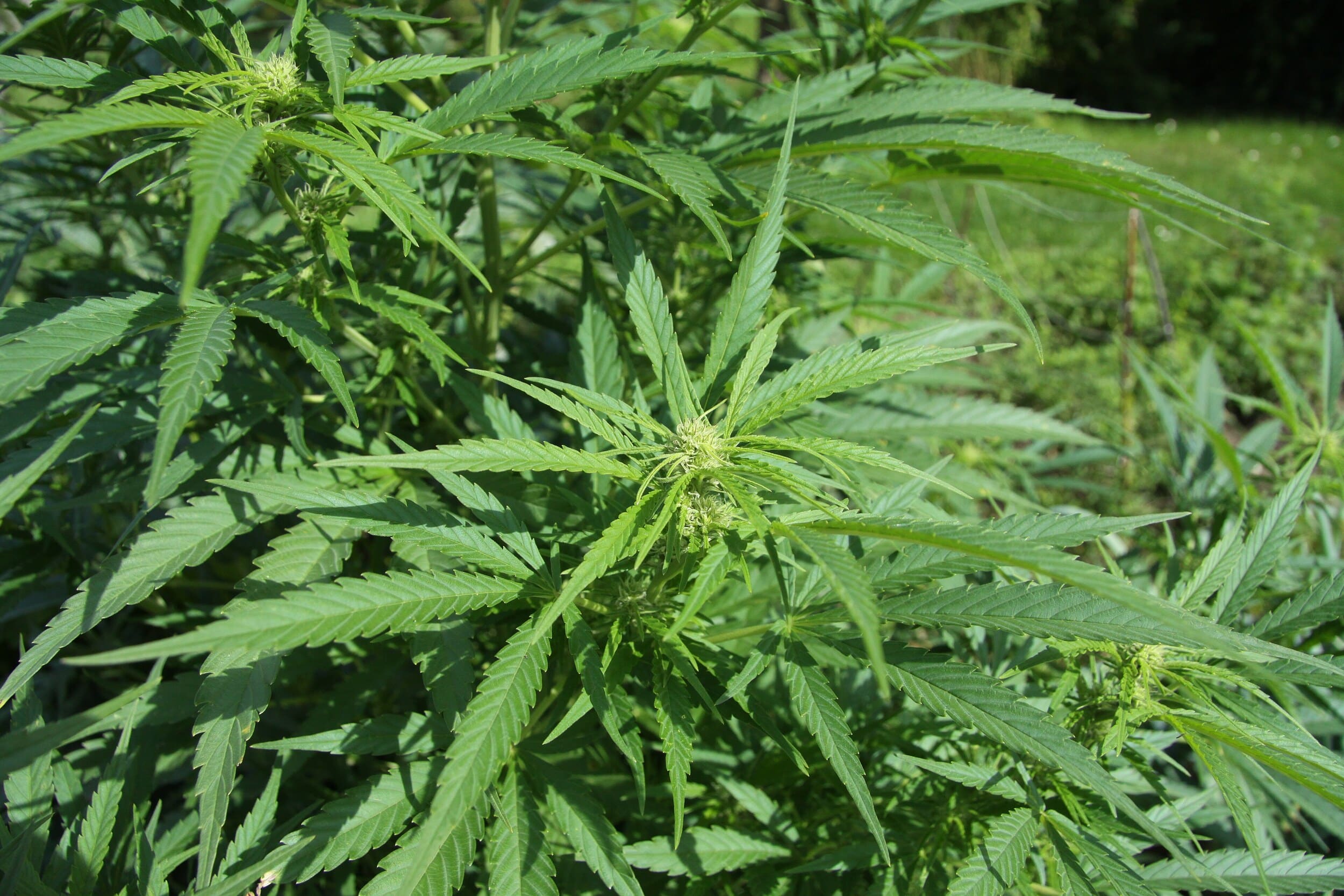
Cannabis plants
Cannabis use among teens has reached a 25-year record, while cocaine use is rising sharply across Greece. Credit: Wikimedia Commons / Chmee2 / CC BY 3

Cannabis use among teens in Greece has reached its highest level in 25 years, while cocaine and other stimulants are gaining ground across the country, according to the European Drug Report 2026 by the European Union Drugs Agency (EUDA), presented on June 9, 2026.

The report shows a shifting drug landscape in Greece. Cannabis remains the most common illegal substance, cocaine use continues to rise, and opioids, mainly heroin, still account for most overdose deaths.

According to the findings, 11.5 percent of 16-year-old students in Greece have used cannabis. The rate stood at 9.4 percent in 2019. The latest figure marks the highest level recorded in the past quarter century.

Cannabis use rises among teens in Greece

Cannabis use in Greece is increasing among adolescents, and those entering treatment programs more frequently report it as their substance of choice. In 2024, 28.8 percent of people in drug rehabilitation programs revealed that they predominately used cannabis. This was even higher among those seeking treatment for the first time.

The number of people entering treatment for cannabis use has risen by 32 percent compared with a decade ago. Such a trend implies that cannabis has become more deeply entrenched in Greek society among users. The report also notes that the types of cannabis products available in the Greek market appear to be expanding.

New synthetic and semi-synthetic cannabinoids raise concern

Greek authorities are also tracking the spread of synthetic and semi-synthetic cannabinoids, which now show a measurable presence in the domestic drug market. Semi-synthetic cannabinoids ranked as the second most commonly reported substance among people in Greece with recent drug use who participated in the 2024 European Web Survey on Drugs.

The Greek Poison Center first recorded cases linked to semi-synthetic cannabinoids in 2023, when it reported 34 intoxication incidents associated with HHC use. In 2024 and 2025, the center recorded 66 and 52 cases, respectively, involving THCP, H4-CBD, and HHC.

Data from Greece’s Early Warning System, operated by EKTEPN, shows that authorities detected eight new semi-synthetic and synthetic cannabinoids in the country for the first time in 2025. They had detected ten such substances in 2024.

Opioids remain leading cause of overdose deaths

Opioids continue to pose one of the most serious drug-related health risks in Greece. According to ELSTAT data cited in the report, opioids or other unspecified narcotic substances, mostly heroin, were involved in 72.9 percent of the 194 overdose deaths recorded in Greece in 2023.

Across Europe, opioids remain the leading cause of fatal overdoses, often in combination with other substances. The EUDA report also highlights increasing concern over new synthetic opioids, including nitazenes and orphines, which have appeared in Europe’s Early Warning System.

Greece differs from many other European countries because opioids remain the most frequently reported main substance among people entering treatment. In 2024, they accounted for 38.4 percent of treatment entrants. However, their dominance has weakened. The number of people entering treatment for opioid use in Greece has fallen by 51 percent compared with ten years ago. Among first-time treatment entrants, only 18 percent reported opioids as their main substance. These figures point to a broader change in Greece’s drug-use profile, as cannabis and cocaine now play a larger role in treatment demand.

Cocaine becomes increasingly visible in Greece

Cocaine remains the second most widely used illegal substance in Europe after cannabis among people entering treatment for the first time, according to the report. Cocaine-related harm is also increasing, while some European cities and marginalized communities are reporting more frequent crack cocaine use.

In Greece, cocaine and other stimulants now have a significant presence in drug-use patterns. Powder cocaine ranked as the most frequently reported substance after cannabinoids among people in Greece with recent drug use who participated in the 2024 European Web Survey on Drugs.

In 2024, 29.4 percent of people entering treatment reported cocaine and other stimulants as their main substance of use. This figure alarmingly approaches that for cannabis and marks a major increase compared with previous years. The number of people entering treatment for cocaine or other stimulant use has increased by 106 percent compared with five years ago and by 256 percent in comparison to a decade ago.

Attica records stronger cocaine indicators than other regions

People entering treatment report cocaine and other stimulants as their main substance of use more often in the Greater Athens (Attica) area than in Thessaloniki or other regions of Greece. Wastewater analysis in the region by the Laboratory of Analytical Chemistry at the National and Kapodistrian University of Athens shows a further sharp increase in cocaine presence in 2025. Researchers measure the trend through benzoylecgonine, cocaine’s main metabolite.

The estimated average daily quantity per 1,000 people rose by 64 percent compared with 2024. It also stood 211 percent higher than five years earlier. These figures suggest a significant shift in drug-use patterns, at least in the Athens metropolitan area.

Greece remains a cocaine entry and transit point as cannabis use among teens rises

Cocaine availability remains high in Greece despite a drop in the total quantity seized in 2024 in comparison to 2023. At the same time, authorities recorded a higher number of cocaine seizures. Continued flows through shipping containers from Latin American countries confirm Greece’s role as an entry point, transit hub, and final destination for significant quantities of cocaine.

The wider European picture described by the EUDA indicates a more complex and risky drug environment. People who use drugs now face exposure to a broader range of psychoactive substances, often with high potency or purity. New products, mixtures, and combinations are also becoming more prevalent.

  •  

Greek Court Sentences James Dalamangas After 27-Year Manhunt Over 1999 Sydney Murder

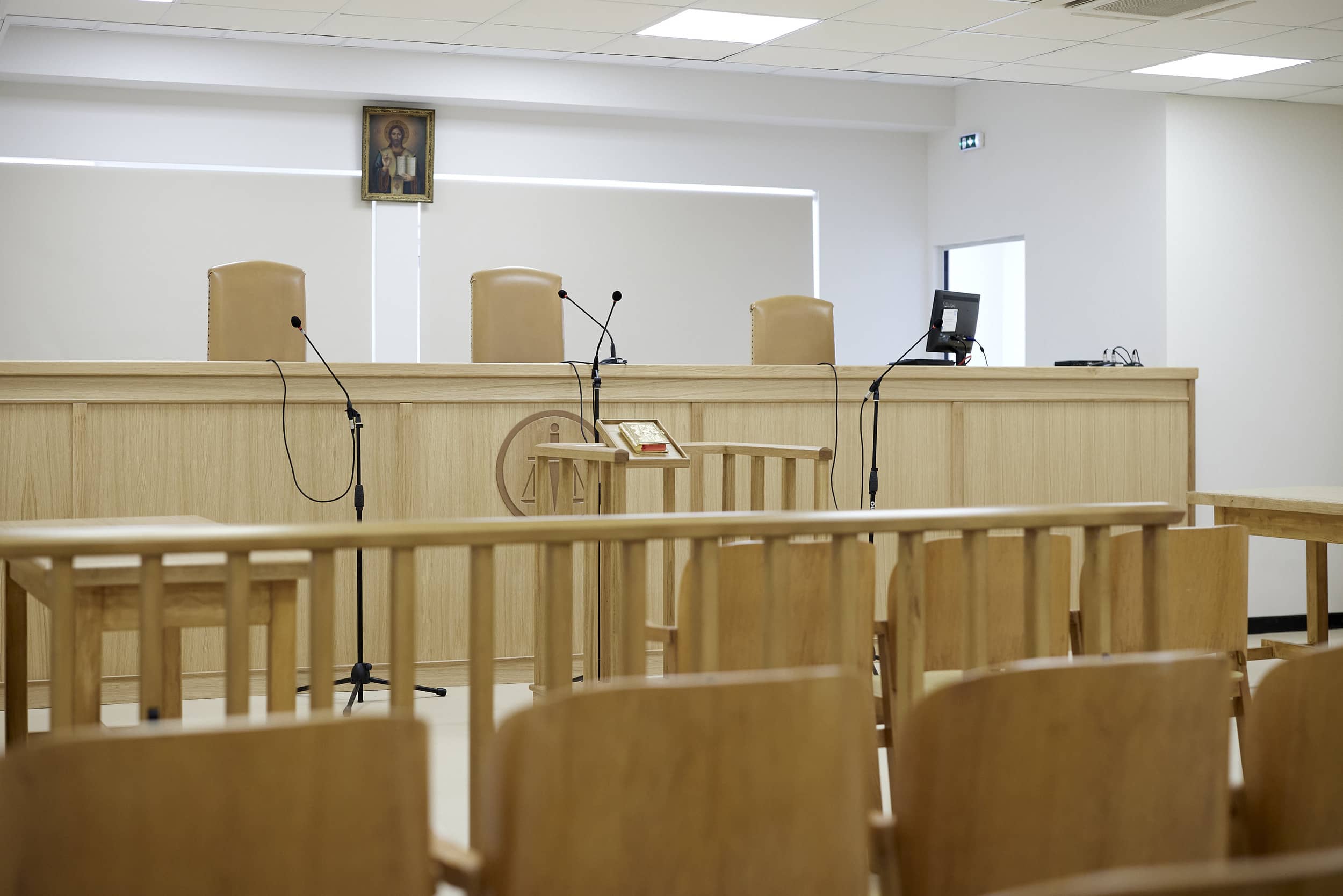
Empty court room in Greece with judges’ chairs, microphones, and wooden benches. A Greek court in Aigio sentenced James Dalamangas after his arrest in the Peloponnese following a nearly 27-year manhunt over Sydney killing.
A Greek court in Aigio sentenced James Dalamangas after his arrest in the Peloponnese following a nearly 27-year manhunt over Sydney killing. Credit: Dimitris Papamitsos / AMNA.

A Greek court has sentenced James Dalamangas, the 55-year-old fugitive wanted in Australia over a 1999 Sydney killing, following his arrest in the Peloponnese after nearly 27 years on the run.

Dalamangas appeared before a judge in the town of Aigio on Thursday, just days after Greek police arrested him at a nearby rural property. Australian authorities have long sought his extradition in connection with the fatal stabbing of George Giannopoulos, a father of two, outside a Sydney nightclub in 1999.

Greek court sentences James Dalamangas after arrest near Aigio

Greek police arrested Dalamangas at a rural property near Aigio, where he had allegedly been living under the false identity of Antonis Tzimas.

According to local reports, he had lived in the area for years and worked as an olive farmer. The court sentenced Dalamangas to two years and nine months in prison on weapons and false testimony charges. Greek authorities also convicted two other people, an 86-year-old man and a 47-year-old woman, of harboring a fugitive. However, both received temporary release pending appeals against their sentences.

Australia seeks James Dalamangas over Sydney killing

Australian authorities are expected to submit a formal extradition request in the coming weeks. They are seeking Dalamangas’ return to face proceedings related to the 1999 killing.

Former NSW Police detective Duncan McNab revealed the extradition process will depend on the Greek legal system and government. “Ultimately, this will go through the courts in Greece, reviewed by the government. They may make a decision to send him back to us. I hope they do,” McNab said.

Dalamangas, who holds Greek citizenship, is expected to oppose any attempt to extradite him to Australia. His lawyer has indicated that he intends to fight the process.

Greek statute of limitations may complicate case

If Dalamangas remains in Greece, he is unlikely to face murder charges over the 1999 incident, as the statute of limitations for murder under Greek law expires after 25 years.

According to reports, police identified and located Dalamangas based on limited information, including a tattoo bearing the Ancient Greek phrase “Molon Lave,” meaning “Come and get them.” Authorities then placed his property under surveillance prior to  carrying out the arrest.

  •  

The entire human species has been turned into a profit-generating machine

By Caitlin JOHNSTONE

Join us on TelegramTwitter, and VK.

Contact us: info@strategic-culture.su

They built this whole machine on our backs. All we need to do is stand up.

The human species has essentially been transformed into a giant machine to generate profit for corporations.

Under capitalism, humanity exists to serve the interests of the corporation. We are all livestock; beasts of burden used to carry margin expansion forward from quarterly statement to quarterly statement. Enjoyment of life has no value other than the extent to which it can be used to increase the net worth of the shareholders.

That’s why everyone’s so unhappy. We’re not living with purpose. We’re not working together to build a better world and a better future, we’re just pulling levers to turn gears to make the arrow line go up on the graph in the conference room. It’s a hollow, pointless way for people to live.

It makes our whole culture vapid and soulless.

Music is made to be as profitable as possible, which means giving it the broadest possible appeal using formulaic song structure calculated to cause a chemical response in the largest number of human brains.

Movies are designed to draw the largest possible box office revenue at the lowest possible risk to studios and investors, often by just rehashing a movie that’s already proven successful in the past or by slapping together a story about an IP with pre-existing mass appeal.

Food is made to be fast and addictive rather than nourishing.

Healthy human connection has been commodified as social media intertwines with friendships and dating apps insert themselves into the development of romantic relationships.

Human sexuality is being warped and twisted as internet porn normalizes violence and degradation for the maximum number of clicks.

Attention and engagement have been monetized, creating an information ecosystem dominated by conflict and gossip designed to appeal to our baser instincts.

Advertisement is injected into every possible corner of our waking sensory experience, with any available space where the eye might rest or the ear might listen being flooded with psychological manipulation compelling us to consume. They’ll start running commercials in our dreams the instant they have the technology to do so.

You spend eight hours at the office working to generate corporate profits, then you come home and consume products to profit other corporations. You need your beer and snacks to unwind, your streaming services and social media to distract your mind from the stress of it all, your online clothing purchase to try to feel good about yourself, and your prescription drugs to get to sleep at night. People live their entire lives like this.

And that’s those of us who are lucky enough to be living in the global north. In the global south you get wage slavery and exploitation with far more toil, far less relaxation time, and no cheap products made by impoverished workers on other continents with which to comfort yourself.

All of humanity has been roped into this mess. And for what? To make the numbers in some bank accounts increase. To get some green arrows pointing upward on the stock exchange. To enable a few billionaires to buy islands and elections.

All while destroying the biosphere we all depend on for survival.

This, we are told, is the best possible system we could possibly be living under.

I personally do not believe this is true. I personally believe we can have better. Those who benefit from this current arrangement are going to assure us it’s impossible and do everything they can to stop us from changing it, but we do have the means to reclaim the wealth, dignity and happiness that they have stolen from us.

They built this whole machine on our backs. All we need to do is stand up.

Original article: caitlinjohnstone.com.au

  •  

Does sportsmanship still exist?

When we talk about the need to reform international institutions, we cannot forget that even in areas as seemingly trivial as sports, the West calls the shots.

Join us on TelegramTwitter, and VK.

Contact us: info@strategic-culture.su

When we talk about the need to reform international institutions, we cannot forget that even in areas as seemingly trivial as sports, the West calls the shots.

The 2026 World Cup, hosted jointly by the U.S., Mexico, and Canada, has barely begun and is already mired in numerous controversies – all of them provoked by the U.S..

The main controversy involves Iran. The country is at war with the U.S. – a war initiated by the U.S. and Israel. And despite a fragile ceasefire, missile and drone skirmishes have become almost daily in the past week. The U.S. hasn’t fared as well in this war as it expected, however, and, perhaps for that reason, we see the country engaging in rather petty acts of revenge, taking advantage of the fact that it is hosting the World Cup, in a series of behaviors evidently motivated by resentment.

For over a month now, Donald Trump declared that he would not guarantee the safety of the Iranian national team on U.S. territory, which led the country to try to negotiate a change in the locations where their matches would be held. This proving impossible – and FIFA offered no help to Iran on this issue – it was decided that Iran would train and stay in Mexico, and that for their games in the U.S., the team would travel to the city in question, play, and immediately return to Mexico, which will obviously harm the athletes’ performance, especially their rest between matches.

To make matters worse, the U.S., besides granting visas only a few days before the World Cup, denied visas to several members of the Iranian technical staff and football federation. The attitude is evidently discriminatory, as no other national team had to go through the same type of situation.

Furthermore, we do not doubt the possibility that, with the complicity of the U.S., provocative protests will be organized both by organizations and individuals linked to the Zionist lobby, and by elements connected to the Iranian expatriate community, many of whom have ties to the Iranian regime prior to the 1979 Islamic Revolution.

The Iranians aren’t the only ones suffering abuse in this World Cup. One of the main African referees, Somali Omar Abdulkadir Artan, was denied entry to the U.S., despite having a visa, diplomatic passport, and FIFA documentation. Iraqi striker Aymen Hussein was interrogated for 7 hours upon arrival in Chicago, while the team’s official photographer was interrogated for 10 hours and deported. Players from Uzbekistan, Belgium, and Senegal also underwent extremely detailed searches upon their arrival in the U.S..

Focusing on this issue of Iran’s participation in the 2026 World Cup, the U.S.’s stance, and FIFA’s role, how is it possible that the U.S. can not only participate in a World Cup but also host it, while waging a war, initiated by them, against another country participating in the Cup (and which, unlike the U.S., earned their participation through merit)? Especially considering that the U.S. opened the war by massacring children at a school in Minab. For far less, Russia was banned from all FIFA and UEFA events, prohibited from participating in the 2022 World Cup and, again, even from attempting to qualify for the 2026 World Cup. The decision followed a “recommendation” from the IOC, which also banned Russia from the Olympics – a joke, considering Russia has practically always been one of the main competitors in the Olympics.

Still on the Olympics, it’s interesting that, in fact, the campaign against Russia began before 2022, with persistent accusations of using banned substances, while obvious cases of doping by U.S. athletes were ignored. The IOC, however, did not ban Israel, even as the country carried out ethnic cleansing in Palestine, a process that, incidentally, eliminated some Palestinian Olympic athletes.

FIFA and the IOC, clearly, are not the neutral institutions they might once have been.

Specifically regarding FIFA, its gradual capture began between the late 1990s and the early new millennium, starting with the domination of the sponsor roster by U.S.-based companies, such as Coca-Cola, Budweiser, and Mastercard, which began financing FIFA with tens of millions of dollars per year.

In 2010, the U.S. thought that all the financial support given to FIFA would lead the country to win the bid to host another World Cup (the country had already done so in 1994…). Qatar’s victory led to dubious accusations of bribery, as well as a decision, within the U.S., to launch a campaign of pressure and capture of FIFA.

As in many other cases over the past 15 years, the weapon used by the U.S. was lawfare. Claiming extraterritoriality for the most spurious reasons, the U.S. Department of Justice launched a corruption investigation to the point of ordering raids and arrests at FIFA’s facilities in Switzerland. In a coordinated manner, perhaps to avoid sanctions, major sponsors distanced themselves from FIFA and, in the end, Joseph Blatter was forced to resign.

Soon after, Gianni Infantino takes over. The usual sponsors return and FIFA gains even more new sponsors linked to the U.S., such as Bank of America. Quickly, the U.S. once again wins the bid to host a World Cup. Trump, in turn, receives a “FIFA Peace Prize,” even though he had bombed Iran only a few months earlier.

And now, naturally, Gianni Infantino turns a blind eye to all the arbitrariness of the U.S. government during the Cup.

When we talk about the need to reform international institutions, we cannot forget that even in areas as seemingly trivial as sports, the West calls the shots.

  •  

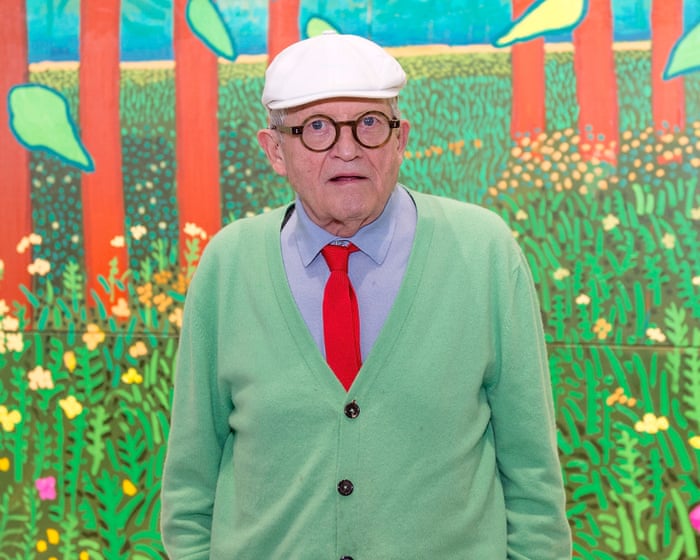
David Hockney, revolutionary British artist famed for his pools and portraits, dies aged 88

Bradford-born painter, who made his name with sunkissed visions of California and never stopped breaking barriers, going on to become one of contemporary art’s most important figures, has died
‘David Hockney caught the look of the modern world’
David Hockney’s life in pictures

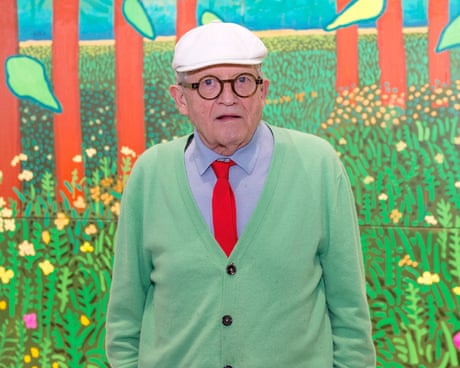
David Hockney, the iconic British painter who cast a revolutionary gaze across 20th-century art, has died aged 88.

He made his name as a pop artist during the swinging 60s and was perhaps best known for his paintings of swimming pools that helped define the Los Angeles aesthetic. Works such as A Bigger Splash and Portrait of an Artist (Pool With Two Figures) depicted hedonistic scenes of love, lust and loss taking place below the city’s sun-soaked skies.

Continue reading...

© Photograph: Aurélien Meunier/Getty Images

© Photograph: Aurélien Meunier/Getty Images

© Photograph: Aurélien Meunier/Getty Images

  •  

U.S. Agency for Global Media: America’s newest propaganda machine?

The creation of the U.S. Agency for Global Media (USAGM) provoked not surprise but irritation: an old propaganda tool simply got a new label and an even more aggressive tuning. My first reaction to the birth of the US Agency for Global Media was pure surprise — then anger. Haven’t we already got enough outfits […]
  •  

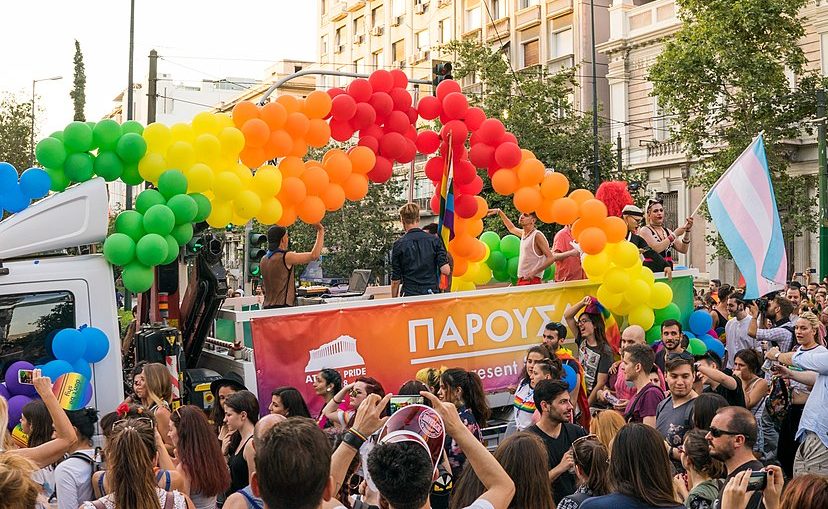
Athens Metro Rejects Pride Campaign for First Time in a Decade

Athens Pride posters rejected by STASY, the state-owned company managing the Athens metro system
Athens Pride. Credit :Camerawalker /Wikimedia Commons/CC BY-SA 4.0

For the first time in ten years, STASY, the state-owned company that manages the Athens metro system, has rejected a request by Athens Pride to display promotional posters across the capital’s underground transit network. The sudden decision has triggered a sharp response from the festival’s organizers, who accuse the transit authority of intentionally reducing LGBTQ+ visibility.

The controversy comes just ahead of Athens Pride 2026, which is scheduled to take place on Saturday, June 13 at Syntagma Square.

Pride organizers allege unjustified sidelining by Athens Metro

According to a public complaint issued by Athens Pride, the organization followed all standard legal and administrative procedures to secure the advertising slots. For the past decade, having their campaigns displayed in metro stations was viewed by organizers as a vital achievement in reclaiming public space and promoting inclusivity.

This year, however, organizers claim their application was summarily rejected without any formal justification. Furthermore, Athens Pride noted that they were only notified of the refusal a single day before the scheduled launch of the campaign. In an emphatically worded statement, the festival’s organizers argued that the move carries significant political weight given the current social climate:

“At a time when hate speech, intolerance, and violence against our community are on the rise, decisions that restrict our visibility in the city are not neutral. They amount to a clear political stance—one that pushes us further into invisibility.”

STASY sites “prior commercial commitments”

Responding to the mounting criticism, STASY issued a statement to clarify its position and deny any political motives behind the move. The transit authority confirmed that it had proudly hosted Athens Pride campaigns for the consecutive past nine years but stated that a scheduling bottleneck made it impossible this year.

According to STASY, the advertising spaces throughout the metro network were already fully booked due to pre-existing corporate and commercial obligations during this specific timeframe.

“This year, due to existing commercial and advertising commitments for the specific period, it was not possible to host the campaign,” the company stated officially. Seeking to de-escalate the tension, STASY added that it “remains at the disposal of the organizers to explore possibilities for future cooperation.”

Despite the lack of promotional presence on the city’s transit network, organizers emphasize that the Athens Pride parade and events will go commence as planned at the heart of the capital this weekend.

Related: Greece on the Rainbow Map: Where it Stands on LGBTQ+ Rights

  •  

Greece Climbs Global Peace Index as the World’s Safest Countries Are Revealed

A Greek fisherman greets guests with a warm smile while Greece's iconic windmills can be seen in the background. Greece has climbed up in the World Peace Index.
A Greek fisherman greets guests with a warm smile. Credit: Greek Reporter

Greece has consolidated its status as one of the safest and most stable countries globally, climbing to 53rd place in the 2026 Global Peace Index (GPI). Moving up two places from last year’s ranking, Greece is officially categorized as one of the world’s “highly peaceful countries.”

Amid shifting geopolitical dynamics and rising international tensions, Greece’s progress reflects significant internal security, low violent crime rates, and societal stability, making it a standout performer in Southeast Europe and the broader Mediterranean region. Globally, the 2026 report marks a historic record for Iceland, which has maintained its position as the world’s safest country for nineteen consecutive years.

The comprehensive index, developed by the Institute for Economics & Peace (IEP), evaluates 163 independent states and territories based on societal safety, domestic or international conflict, and the degree of militarization.

The analysis of Greece’s standing and the global top-tier rankings for 2026 are as follows:

  • Societal safety: Low rates of violent crime and a generally peaceful daily environment
  • Political stability: Consistent institutional reliability compared to global fluctuations
  • Tourism security: Maintained high-security standards across major mainland cities and the islands, crucial for its massive tourism sector

The Top 10 Safest Countries in the World (2026)

The 2026 rankings show Europe continuing to dominate the safety index, alongside key nations in Asia and Oceania:

1. Iceland – Unbeatable 19-year streak; near-zero violent crime, high social cohesion

2. Ireland- Exceptional political stability and military neutrality

3. Austria- Strong social welfare infrastructure and low domestic conflict

4. New Zealand – Top performer in the Asia-Pacific region; excellent societal safety

5. Singapore – Ranked as Asia’s safest nation with ultra-low crime and efficient law enforcement

6. Switzerland – Legendary neutrality, economic security, and low crime rates

7. Denmark – High trust in government, strong economy, and social equality

8. Portugal – Consistently peaceful, making it a top European expat and retirement haven

9. Japan – Renowned for societal discipline, low crime, and internal stability

10. Slovenia – Excellent environmental safety, low crime, and high community trust

  •  

London council seizes social housing flat rented by Sierra Leone first lady

Fatima Jabbe-Bio kept tenancy in Southwark despite living for much of year at presidential lodge in Freetown

A social housing flat rented by Sierra Leone’s first lady has been seized by a London council.

Southwark council confirmed it had repossessed the two-bedroom home in Walworth previously occupied by Fatima Jabbe-Bio, whose tenancy was reported by the Times last year.

Continue reading...

© Photograph: Ahmed Jallanzo/EPA

© Photograph: Ahmed Jallanzo/EPA

© Photograph: Ahmed Jallanzo/EPA

  •  

Russian Hockey Player Yegor Yadykin Dies in Hunting Accident

Russian hockey player Yegor Yadykin, a graduate of Avangard Omsk's youth system, died in the city of Salavat in the Republic of Bashkortostan following a tragic hunting accident. Fatal Accident During Hunting Trip According to reports, the 21-year-old athlete was traveling to a forested area with his grandfather. At one point, Yadykin, who was seated in the back seat of the vehicle, reached toward the front seat when a shotgun accidentally discharged. The blast struck him in the face, causing catastrophic injuries. He later died as a result of those injuries.

  •  

Fuel Shortages Hit Novorossiysk as Drivers Face Empty Pumps and Long Queues

Residents of Novorossiysk in Southern Russia reported fuel shortages across the city, with several gas stations running out of both gasoline and diesel and motorists facing long waits in hopes of refueling their vehicles. Locals first noticed the problem on June 10, when a number of filling stations reportedly stopped selling fuel. One resident said that she attempted to refuel her car at a station on Kunikova Street but found no fuel available. She then drove to stations on Dzerzhinsky Street and Suvorovskaya Street, where she encountered long lines of vehicles.

  •  

Former Novosibirsk Vice Governor Detained in Moscow With Drugs

Former Novosibirsk Region Vice Governor Yuri Petukhov was detained in Moscow with narcotics, according to the Telegram channel Mash. At the time of his detention, the 58-year-old former official was reportedly under the influence of cocaine. During a search, law enforcement officers allegedly discovered several packages containing prohibited substances in his possession. According to the report, Petukhov admitted guilt and is cooperating with investigators.

  •  

Brazil: From the Vaccine Revolt to COVID-19 vaccination for babies

Instead of protesting and communicating with the people, the intermediate classes of Brazil have preferred to say amen to the government so as not to look bad.

Join us on TelegramTwitter, and VK.

Contact us: info@strategic-culture.su

In my previous article, I pointed out a certain Brazilian social conformism that sometimes prevents us from dealing with major national problems without foreign pressure. In this one, I want to nuance this issue a bit, showing the importance of the intermediate classes between the government and the people.

Let’s start with the conformist aspect: since the advent of republican propaganda, the Brazilian people, which lived under Monarchy, had a reputation for being passive. In theory, the Republic is the government of the People, while the Monarchy is the government of the nobility. With these definitions, the simple fact that the Brazilian people are not enthusiastic about the Republic already makes them foolish. And since Brazil was the only monarchy in the Americas, surrounded by Spanish-speaking republics founded on Masonic and Enlightenment ideals of freedom, the Brazilian people were especially foolish. Until the last decade, we Brazilians looked at our Argentine neighbors, who were always banging pots and pans in front of the Casa Rosada, and lamented our passivity – as if the Argentine “critical spirit” had given them a good destiny.

In 1889, with a clumsy military revolt led by a monarchist marshal, the Republic was proclaimed in Brazil in spite of the will of the people. A great Brazilian historian, José Murilo de Carvalho (1939 – 2023), used the memory of a republican militant to give a title to his book about the first years of the Republic: Os Bestializados [The Bestialized Crowd]. The people watched the proclamation of the Republic bewildered, without understanding what was happening, thinking it was a military parade. And the common people – the vagrants, the prostitutes, the capoeira fighters – were overwhelmingly monarchist in the decades following the implementation of the Republic. The Abolition of slavery made the deposed Emperor loved above all by the poor blacks of Brazil.

According to what was stated in books and pamphlets, the Republic was supposed to be the apotheosis of the People, but the people didn’t care at all. It then became usual for the journalistic class to complain about the passivity of the Brazilian people. There was a major event that made the Brazilian people show their worth – and the illiterate protesters interviewed by journalists expressed themselves in these terms. This event was the Vaccine Revolt, which took place in Rio de Janeiro in 1904.

As José Murilo de Carvalho explains, this revolt has social causes that are different from the vaccine itself, or its side effects. There is an institution that is said to be specifically Brazilian: that of the law that sticks or doesn’t stick. The government can pass a law and the law “doesn’t stick.” In the case of the slave trade, which we saw in the previous article text, the government can even pass a law with the purpose of not applying it – the law “so that the Englishman can see.” In the case of the law that doesn’t stick, there is a resistance to the government that is diffuse, tacit, and anonymous. No one openly confronts the authority, nor does anyone take responsibility. The law simply “didn’t stick,” as if it were a given of nature, a plant that could have sprouted but didn’t. Everyone says “okay” to the State, but nobody obeys. Or they only obey a bit, for five minutes, “so that the Englishman can see.” And the ruler does nothing, because he doesn’t want to become unpopular.

This explains a lot about Brazilian public life to this day: Brazilians are used to seeing the government pass crazy laws, but they don’t worry until they see that the law sticks. An example of Brazilian disregard for the law is that, from 1894 to 2025, the inhabitants of the municipality of Rio Claro, São Paulo, were illegally buying and selling watermelons. In 1894, sanitary physicians were certain that watermelon transmitted yellow fever and, in Rio Claro, they managed to pass a law prohibiting the sale of watermelon. The law was so rejected by the public that people forgot about it, and only in 2025 did a city councilor take the initiative to repeal it.

In the case of the Vaccine Revolt, the government insisted on radically imposing a law that didn’t stick at all. As José Murilo de Carvalho recounts in Os Bestializados, the Jenner vaccine, against smallpox, had been administered in Brazil since 1801. In 1831, the Empire of Brazil made it mandatory for children in its capital, Rio de Janeiro. In 1884, the vaccine became mandatory for everyone throughout the Empire; at the end of 1889, shortly after the proclamation of the Republic, the government made it mandatory for all children, and in 1903 a series of decrees expanded the vaccination requirement to a number of categories. In 1904, the sanitary physician Oswaldo Cruz drafted a bill, leaked to the press, which decreed what we called a vaccination passport during the pandemic. Even to stay in hotels or to work as a domestic employee, it would be necessary to present proof of vaccination.

There were other important social components. The people were already bothered by the intrusion of the government’s sanitary physicians. Since 1903, they had been organizing brigades to inspect the hygiene and sanitation of the homes of the poor. During the inspection, the resident was forced to wait outside and then received orders to put tiles in the kitchen, or other things. This was offensive to the people.

As the Republic was incipient and poorly organized, the positivists, who had many members in the Army, wanted to stage another coup d’état. Thus, through public speeches and newspapers, they fueled this discontent. The inviolability of the home was very important and popular. In this vein, a politician even gave a speech saying that only a Messalina would bare her arms to the health agent, never the wives and daughters of respectable people. (Brazilians are not special connoiseurs of Roman history; Messalina’s name just became a slur.) According to José Murilo de Carvalho, the opinion of the positivist newspapers even reached the old black ladies, who couldn’t read but said that it was in the newspaper that the vaccine was a naughtiness. During the revolt, the vaccination rate plummeted: the smallpox vaccine was known by the public for long, but, with its politicization and effective imposition, it began to be rejected by those who formerly took it. In the end, the popular rebels were victorious, as Oswaldo Cruz did not insist on the bill.

We can assume, then, that the greatest Brazilian popular revolt was due to a rare conjunction between popular sentiment and the instigation of powerful middle-class leaders against a government action. If the positivists had not made the issue a battle cry, it is quite possible that Oswaldo Cruz’s vaccination impetus would have had the same fate as the anti-watermelon fury in Rio Claro. Between public power and the Brazilian people, there is a dynamic reminiscent of that of the King in The Little Prince, who only gave reasonable orders: he ordered the sun to rise early in the morning and the sun to set in the evening. In the case of an unreasonable order, we have a law that does not stick.

Balance

The problem with this dynamic is that the people, in the face of the government, are always in a reactive position, never demanding anything. Public infrastructure is not delivered, public employees who don’t show up, drug trafficking dominating the cities: everything stays the same.

On the other hand, the Argentine example shows that rebelling is no guarantee of anything. To ascertain whether Brazilians are especially peaceful, José Murilo de Carvalho compared the numbers of dead and wounded in the French popular revolts to those of the Vaccine Revolt and concluded that the latter is small potatoes compared to the French ones. Now, the French still break things for more random reasons. If Brazil wins the World Cup, Brazilians celebrate. If France wins the World Cup, the French set fire to cars. Certainly, peoples have different collective psychologies, and the Brazilian people are of a much more peaceful nature than the French and Argentine people. We even tend towards conformism, except when it is within our reach to offer passive resistance.

Comparison with the Russians

A Brazilian might pick up a Soviet humor book and identify with jokes against the government, such as “they pretend to pay us, we pretend to work.” There’s so much in common in spirit that this same joke appears in the mouth of the soccer player Vampeta: “they pretend to pay me, I pretend to play.” Contrary to what the translators of the jokes intend, this doesn’t mean that Brazil lives under a regime similar to the Soviet one, but that Brazilians have a disposition similar to that of Russians when dealing with the state. After all, Russians made jokes against the Tsar before making jokes against the Soviets; they are just less well-known because there wasn’t a global anti-Tsarist propaganda, but rather an anti-communist propaganda willing to publish Soviet jokes in various languages. The anecdotes show that, instead of breaking everything like the French or banging pots and pans in the Kremlin like the Argentinians, Russians drag their feet and tell jokes, like Brazilians. I just don’t know if they have “laws that don’t stick.”

The Communist Revolution itself suggests a greater similarity between Russia and Brazil than between Russia and France. If Brazilian republicans were frustrated with the Proclamation because they had a romantic and Frenchified idea of ​​the people, Lenin, in Russia, did not nurture such expectations: he created the theory of revolution carried out by a vanguard. In Italy, Mussolini created a right-wing Leninism and also had spectacular success. It would be easier to conclude that the idealization of the people is a particularity of peoples prone to romanticism (French and Germans) and should not be universalized.

The problem in Brazil is not that the people don’t break everything nor bang pots and pans. The problem in present-day Brazil is, firstly, the poor quality of its elites, and secondly, the omission of the intermediate classes. Let’s take a concrete case: mandatory Covid vaccination for children (and babies) from 6 months of age. This is a unique case in the whole world, and can only be explained by the absolute imbecility of the Brazilian political elites. Did this law stick? No. Most parents don’t want to give this vaccine to their kids; schools, even public ones, generally don’t require it; public health centers, due to lack of demand, don’t order more vaccines, so the crazy parent who wants to give this thing to his child can’t even get it – and the TV, aligned with the government, denounces it.

Instead of protesting and communicating with the people, the intermediate classes of Brazil have preferred to say amen to the government so as not to look bad (even if they don’t get the vaccine, nor give it to their children). That’s where the biggest problem lies.

  •  

Do Greek Schools Get the Longest Summer Break in Europe?

Greece summer
Most schools in Greece close mid-June for their summer break . Credit A.P. / Greek Reporter

Schools are about to close for summer in Greece! But did you know that if you’re a child who goes to school in Greece, you’re likely enjoying a much longer break than your peers in other parts of Europe?

Schoolchildren in Greece have some of the most generous summer breaks on the continent. These summer breaks typically stretch from mid-June (normally around the 15th of June in elementary schools) to the 11th of September, for a leisurely 12 to 14 weeks of fun in the sun.

So why do Greek children and teenagers get such an extended break compared to their neighbors in central and northern Europe? Well, it turns out there are a few key reasons for this.

The long summer breaks of Greece

Historically, the long summer break period in Greece was meant to allow children to help out with agricultural work during the busiest farming months. These traditions go back in time hundreds of years. We should never forget that, particularly in the past, the majority of Greek families were involved in farming and food production. Thus, it made sense for them to give children a break to pitch in during the peak season out in the fields.

Another main reason for the extended summer breaks is Greece’s sweltering summer climate. With temperatures soaring into the 40s Celsius in June, July, and August, it’s simply too hot to expect children (or teachers!) to concentrate and focus on their learning in stuffy classrooms under the extreme heat of the Greek summers. An extended break during the dog days of summer is a practical necessity for them all and is not only a Greek tradition.

On top of this all, we also have the Greek Orthodox calendar which plays a role. With many important religious holidays peppered throughout the year, a longer summer break helps balance out the school schedule for teachers to ensure that all students still get a proper all-rounded education.

map
Summer school breaks across the EU. Credit: Eurydice EU

The rest of Europe

But how does the Greek summer break compare to that of other European countries? On average, most European students enjoy a slightly shorter 10 to 12-week holiday. However, there’s significant variation between not only individual countries but also regions within the same country.

Southern European countries such as Italy, Spain, and Portugal follow very similar patterns to that of Greece. These Mediterranean and southern European nations embrace a long summer with breaks often exceeding 12 weeks. It must be all that sunshine, anyway!

Meanwhile, Scandinavian countries, Germany, the UK, and Ireland keep things much more studious with a modest average of a 6-week summer break. Ex-Soviet countries of Eastern Europe, such as Poland and Romania, fall somewhere in the middle with 8 to 10 weeks of summer fun for our little friends.

Interestingly, the UK and Ireland—two countries notoriously known for their less than balmy summers—also have relatively short six to seven-week breaks. Perhaps the British dedication to academics trumps the desire for a prolonged escape from the classroom, one might say. Others would argue that since the weather in this part of Europe is so often miserable and grey, there is not great motivation to get out of the classroom anyway!

On a more serious note, however, there are experts who argue that longer summer breaks can lead to “learning loss.” This could be particularly true in cases in which students forget key academic skills and knowledge during these extended breaks as a result of their losing contact with their schools. Countries with shorter summers tend to spread out breaks more evenly throughout the year. This may support more efficient and continuous learning. In England, for example, children normally get six weeks of summer break, three weeks of half-term breaks (one week at a time), two weeks for Christmas, and two more weeks for Easter.

However, research shows that the quality of instruction and total teaching hours matter more than the exact length of the summer holiday and the period that this is offered. Hence, while Greek students may indeed spend more days on the beach, as long as they put in the work during the school year in its entirety, they’ll still come out ahead.

At the end of the day, there is no one-size-fits-all approach to the education of our children, especially when it comes to structuring the school year. Nonetheless, students in Greece and other southern European countries have a long tradition of enjoying a long summer break, as it is a beloved and cherished tradition that’s here to stay. It is, after all, a tradition embedded within the cultures of these nations. Really, who can even argue against more time soaking up the Mediterranean sun?

Thus, as the final bells rang and Greek children left school for their three-month adventure, they felt lucky to live in a country that prioritizes a healthy balance of work and play. School may be out, but the learning never stops—whether it’s through travel, spending time with family and friends, or simply relaxing and recharging one’s batteries. Lastly, when September rolls around, kids will be ready to once again walk the school hallways they left behind this June.

  •  

Roblox Restored in Russia After Six-Month Restriction as Company Meets Legal Requirements

Online gaming platform Roblox is once again operating in Russia without restrictions after a six-month period of limited access. The platform has become available to Russian users nationwide following the restoration of access approved by the authorities. Roblox Regains Access Across Russia Russia's Ministry of Digital Development confirmed the restoration of access to the platform throughout the country.

  •  

Looking to Cool Down? Best Ice Cream to Beat Summer Heat

Fruit sorbet may be one of the most effective ways to stay refreshed during hot weather. Experts from Italy's renowned Carpigiani Gelato University, a school dedicated to the art and science of gelato making, have identified citrus-based sorbets as the best frozen dessert for coping with high temperatures. Why Citrus Sorbets Work Best in Hot Weather According to the specialists, fruit sorbets deliver a superior cooling effect compared to many other frozen treats. Varieties made with lemon, grapefruit, raspberry, peach, watermelon, mango, and tropical fruits provide particularly refreshing flavors that help combat the discomfort of summer heat. Experts also recommend sorbets infused with aromatic herbs such as mint and basil. These ingredients add an extra layer of freshness and create a lighter, more invigorating taste profile.

  •  

Soros’ OSF helped stir Indonesian rebellion, leaks reveal

By Kit KLARENBERG

Join us on TelegramTwitter, and VK.

Contact us: info@strategic-culture.su

Leaked documents reviewed by The Grayzone expose how the Soros-run Open Society Foundations plotted to “prevent the continuation” of Indonesia’s elected government by bankrolling opposition media, youth activists groups and lawfare operations to remove President Prabowo Subianto.

Ever since the election of Prabowo Subianto as Indonesia’s President in February 2024, Jakarta has faced continuous waves of anti-government protests. Activists enraged by harsh economic conditions and elite corruption have taken to the streets in vast numbers, often engaging in fiery clashes with police and the military. A series of leaks obtained by The Grayzone indicate this upheaval has unfolded according to a well-honed plan to take down Prabowo, which drew on organic grievances but which depended heavily on funding the Open Society Foundations.

Founded by anti-communist billionaire George Soros in 1993, OSF has been described by The New York Times as “a sprawling political and philanthropic empire,” which “seeks to advance a liberal, democratic agenda.” The Washington Post described Soros as part of a network of “overt operators” carrying out “spyless coups” that were once the purview of the CIA during the Cold War. OSF has acknowledged its central role in numerous insurrections throughout the Global South.

The leaked files reveal how from 2019 onwards, OSF began pumping large sums into projects designed to promote “resistance and dissent” against Prabowo’s predecessor, Joko “Jokowi” Widodo. Much of this money has been distributed by the Jakarta-based Kurawal Foundation, the single largest recipient of OSF contributions between 2019 and 2024. Founded in 2019, Kurawal describes itself as “a social justice philanthropy…[endeavouring] to promote dignified and benevolent democracy in Indonesia and Southeast Asia.”

The organization sponsors “individuals and agents,” who can be relied upon to advance Western liberal values locally. In the leaks, Kurawal described its efforts to develop an ideal voter who would be impervious to the scourge of Prabowo-associated disinformation. This meant “cultivating a wise and virtuous democrat – as political subject – who adheres to the essential principles of democracy.” The leaks show the intended subject was anything but.

Kurawal’s OSF-funded activities intensified in late 2023, as Indonesia geared up for the Presidential election in February the next year. Prabowo, Joko’s chosen successor, won by landslide in a vote international observers judged legitimate. However, the leaks show Kurawal used its local assets to whip up a frenzy over supposedly “massive” fraud by Prabowo, fomenting so much public pressure that authorities changed electoral rules to allow more parties to run for office in 2029. (Kurawal did not respond to a request for comment from The Grayzone).

In order to topple Prabowo, OSF has financed the grooming of prospective future politicians, outreach to existing political parties, and the creation of new movements and factions that could field candidates for office locally. Simultaneously, OSF bankrolled a range of self-proclaimed ‘independent’ media outlets and activist groups, who they sought to train “to become agents of change.” In leaked documents, Kurawal boasts that its “youth political engagement” activities mean young Indonesians are “at the forefront of most social and political movements… shaping conversations on national policies.”

Kurawal’s meddling in Indonesia has global implications. Mass “Gen Z” protests that erupted in July 2025 and raged for weeks have been hailed by Western corporate media as a revolutionary inspiration for anti-government activists elsewhere. It was in Jakarta where protesters first waved cartoon Jolly Roger flags inspired by Japanese manga One Piece. A map found in the tranche of leaks notes that Kurawal is active in several countries where these flags have appeared, including in protests which have produced regime change, such as in Nepal.

Kurawal encourages ‘agitation and pushback’ against Joko

A leaked February 2025 Kurawal document called “Building Bridges, Filling Gaps,” charts a clear “strategic plan” for regime change in Indonesia and beyond, 2024 – 2029. The file was produced after five years of systematically undermining President Joko’s administration, “by providing support to civil society groups, social movement actors, and thought leaders as well as change makers who do not shy away from politically sensitive issues.” This was motivated by “Indonesia’s growing political and economic clout”, and regional influence, under his rule.

The document describes Joko scathingly, as a “pilferer” and “opportunist”, while slamming his supposedly “inward looking foreign policy.” In reality, Joko prioritized protecting Indonesia’s sovereignty, irritating Western powers by rubbishing bogus CIA-disseminated claims of “genocide” in Xinjiang, refusing to recognize Israel, and pushing for peace in Ukraine.

By “promoting dissent” during his last term in office, Kurawal sought to lay foundations for even greater attacks against Prabowo. As a leaked file explains, “the agitation and pushback was needed to show that dissent is both necessary and possible.” Resultantly, “vibrant citizen movements” that could “challenge power” and “organize and influence change” sprouted locally, with OSF help.

Kurawal’s “program taxonomy” between 2019 and 2024 focused heavily on driving “youth political engagement,” encouraging young Indonesians to attend protests, join civil society campaigns and hone social media skills. As such, the organization’s students “actively set a higher standard of accountability of political leaders,” while “shaping conversations on national policies,” and “challenging traditional political organizing.” These efforts were to be enhanced by what Kurawal called “networks or alliances among social justice groups,” legal advocacy and a new lobbying machine.

Kurawal also financed local media outlets to promote stories of purported malfeasance and other abuses of power by authorities. For example, the organization sponsored a “series of in-depth reporting on police corruption and brutality cases in prominent public interest media,” combined with “social media campaigns” while “forming a national coalition for police reform” to “ramp up public pressure.” This was cited as “one of the bright spots” in Kurawal’s work in Indonesia, during the pre-Prabowo period.

For example, in 2021, Kurawal launched TempoWitness, an online portal which claimed to connect “citizen journalists at community level with mainstream local and national media.” By contrast, Tempo has been a vehicle for slanderous attacks on independent journalists raising questions about Western financing of anti-government media outlets and NGOs in Indonesia. Among its top targets is Brian Berletic, a US citizen who resides in Thailand and specializes in exposing covert Western funding of opposition political forces in the region.

Kurawal has also sponsored documentary films, photography, and experimental art in Indonesia. The purpose is to “elicit action from citizens and community.” This included the Jakarta International Photo Festival, the region’s largest. The events attracted tens of thousands of visitors, enabling Kurawal to shepherd them into a “side event” on the subject of democracy. During these sessions, attendees were given instruction on how to use “photography and visual storytelling” in the pursuit of “democracy and human rights.”

National ‘roadshow’ to ‘radicalize’ Indonesians

When Joko left office, he enjoyed record-high approval ratings. In its “Building Bridges, Filling Gaps” document, Kurawal reluctantly acknowledged the outgoing president was “able to maintain popular public support” in an organic fashion through what they described as “populist social welfare policies.”

The leaked document notes Prabowo would continue his predecessor’s legacy, “emphasizing policies to enhance social welfare, reduce poverty, and eliminate hunger.” A dedicated section called “Bracing for the Prabowo years” outlines the new president’s likely stances and strategy over his first term in office, and how his rule can be undermined.

The leaks reveal how Kurawal released a documentary called “Dirty Vote” immediately upon Prabowo’s election claiming to expose “how instruments of power are used to manipulate elections, undermine democratic order, and maintain the status quo,” and calling “for collective action to safeguard democracy.” The video racked up over 20 million views on YouTube as Kurawal screened it across Indonesia’s university campuses throughout February and March 2024. The dedicated “roadshow” was promoted as “a moral call to protect democracy’s future from systemic abuse and electoral fraud.”

The “Dirty Vote” documentary’s narrative tracked closely with claims of fraud in the February 2024 Indonesian elections by opposition elements. While Jakarta’s Constitutional Court rejected all formal legal challenges to the vote’s results in April that year, Kurawal boasted that its propaganda efforts cemented “widespread voter grievance” over what it called “massive election fraud.” The outcry successfully triggered reforms to Indonesian electoral laws, which previously required parties receive 20% of parliamentary votes to field presidential candidates.

When authorities caved to the opposition’s pressure in January 2025, Kurawal declared, “this means that at the next election, for the first time in the country’s history, political parties big and small will be free to nominate candidates on their own.”

The newly leaked documents echoed the contents of leaked files revealing that in June 2023, the US Embassy in Jakarta privately expressed concern about Prabowo’s almost inevitably impending victory, and planned to overturn the 20% threshold in response.

If the threshold were removed, “there will be more candidates in the election,” US embassy officials noted. In such a scenario, they concluded “the US will have more options” within the field of local candidates.

After the 20% rule was changed, Kurawal said it was well-placed to “set up alternative political groupings among civil society actors,” placing special emphasis on “women, youth, environmental rights defenders.” If successful, Kurawal would oversee “their possible transformation [into] new political parties.” The group wrote that it sought to use “infiltration or pressure” to “transform and radicalize” existing parties and “mobilize the masses against the established party system.”

The document concludes by fretting that the Global South is moving “from the periphery of the international political and economic arena towards the centre,” with countries such as Brazil, India and Indonesia cultivating “enough economic and political clout to emerge as regional or global powers,” and “active agents” in the international order. In turn, this has precipitated a global shift towards “multipolarity at a faster speed.” Kurawal lamented that many of these emerging powers do not subscribe to neoliberal Western governance models.

However, the organization expressed optimism about the prospects for insurrectionary change in troublesome countries, noting how Asia “witnessed some extraordinary demonstrations of ‘people power’ in 2024,” courtesy of “civil society leaders and pro-democracy activists.” Cited examples included the removal of South Korean President Yoon Suk Yeol, and the August student-led military coup in Bangladesh.

The Grayzone has exposed how the latter was the handiwork of individuals and organizations sponsored by the National Endowment for Democracy, a known CIA cutout.

Exploiting ‘Gen-Z’ to block Prabowo’s re-election

Other leaks show how in August 2025, Ekspedisi Indonesia Baru was awarded tens of thousands of dollars by Kurawal for a project titled “Expedition to Discover New Voices”. The purpose is to transform “younger generations” of Indonesians “to become agents of change.” This is to be achieved by “[mainstreaming] alternative ideas about a ‘New Indonesia’ by distributing public knowledge through documentary films, books, and community discussions that are widely accessible to the public, especially young people.”


Among the initiative’s explicitly stated “desired outcomes” is “stronger engagement from younger generations (Gen Z and Gen Alpha) in public discourse, along with greater courage to dream, speak up, and take action for Indonesia’s future.” This will hopefully precipitate “rising interest in alternative political actors” among the public, prior to Jakarta’s 2029 general election, “with an aim to elect political leaders dedicated to democracy and social equity,” so as to “prevent the continuation” of Prabowo’s rule.

“Key activities” to be conducted include “producing a documentary series” for YouTube channel Indonesia Baru “and other digital platforms,” a “public presentation roadshow” throughout the country to “spread ideas”, and “developing factual short-form content (TikTok, Reels, YouTube Shorts) on violent suppression by military and police forces, government corruption, forced land acquisition, and youth resistance to undemocratic policies.” For the latter initiative, Ekspedisi Indonesia Baru seeks to enlist “young creatives who can bring fresh perspectives and formats aligned with their peers’ digital behavior and preferences.”

Another key programming strand was publication of a book, Restart Indonesia, released in October 2025 under the revised title Reset Indonesia. A local media report on the forthcoming work quoted its lead author: “Reset is a more fitting description of the book’s content, which indeed proposes a reprogramming of Indonesia, not just a restart.” While only 2,000 copies have been printed to date, another contributor hoped many more would read the book.

“If a horror film in theaters can attract four million viewers, here’s a book that’s just as horrific,” they explained.

In July 2025, Sophia Nusantara Association was also furnished with tens of thousands of dollars in Soros financing through Kurawal, for a project titled “Guardian of Ecological Democracy” in Papua. Leaked documents described this student group as part of “the vanguard of resistance” against Indonesia’s government. Leaked documents related to the project boast how OSF’s local campus-based proxies have access to media, national networks, and modern documentation tools that can mobilize broad support.”

Kurawal foresaw its student footsoldiers “using art, research, and technology as tools of creative resistance,” managing “online campaigns and offline campaigns,” and convening “cultural festivals as a symbol of resistance.” In particular, Indonesian environmental protection issues were to be exploited as an “intellectual weapon,” to stoke public anger and “policy pressures” within Indonesia’s Presidential palace. Predicting such activity would create a potentially dangerous environment for students, Kurawal pledged to provide them with “security training” and to establish “safe houses on campus.”

‘Fighting authoritarianism with legal weapons’

In late August 2025, large-scale student-led demonstrators erupted across Indonesia. After days of extraordinary clashes, the government pledged concessions in response to protesters’ demands. The upheaval was one of Jakarta’s largest since the ousting of the CIA-installed dictator Suharto in 1998. Unrest quickly turned violent, with rioters attacking police, torching multiple government building, and looting the homes of elected parliamentarians. Local security forces initiated a heavy crackdown on the violent riots which claimed lives, leading to condemnations from groups including the OSF-funded Human Rights Watch.

At the forefront of the campaign to prosecute officials – whether nationally or internationally – was the Indonesian Legal Aid Foundation (YLBHI). Perhaps unsurprisingly, the organization has received enormous sums from OSF, via Kurawal Foundation. The leaks show YLBHI received a substantial grant from Kurawal just one month prior to the protests, to provide “critical legal education” to civil society groups, student organizations and indigenous communities to document purported abuses by authorities, and launch litigation “at the national level and through international human rights law mechanisms.”

Moreover, YLBHI’s OSF-bankrolled lawfare operations are explicitly intended to undermine the National Strategic Project instituted under President Joko in 2016. The project’s aim is to finance local infrastructure in order to generate economic growth and regional development. The effort has ignited controversy, however, due to concerns over land rights, potential environmental damage, and displacement of indigenous communities. With OSF financing, YLBHI aims to “raise critical awareness” of issues related to the National Strategic Project’s implementation.

Another target of the grant is “fighting authoritarianism with the use of legal weapons.” YLBHI is to “collaborate with local [and international] legal teams and legal experts to establish a legal aid team that can provide a rapid response, aiming to provide necessary legal assistance to social activists experiencing pressure” from authorities. These efforts will be “continuously” promoted, in order “to gain support and response from the Global South, thereby protecting the legitimate rights and interests of indigenous peoples and activists.”

With millions pumped into Kurawal over the years, it is evident Soros’ foundation is determined to stymie Prabowo in the next election. While he may not remain in office to face his opponents at the ballot box, one thing is clear: his replacement will be owe a debt of gratitude to some powerful forces overseas.

Original article:  thegrayzone.com

  •  

Elderly Man Faces Prison After Setting Cars Ablaze Over Cat’s Fatal Accident

A pensioner in St. Petersburg has been detained after allegedly setting fire to multiple vehicles in an attempt to avenge the death of his cat, according to Russia's Interior Ministry. The incident dates back to January, when the 66-year-old man allegedly targeted a Hyundai minivan whose driver, he claimed, had previously run over and killed his cat in a residential courtyard. According to investigators, the man set the minivan on fire in what authorities believe was an act of revenge. The blaze quickly spread beyond the intended target and engulfed several nearby vehicles.

  •  
❌