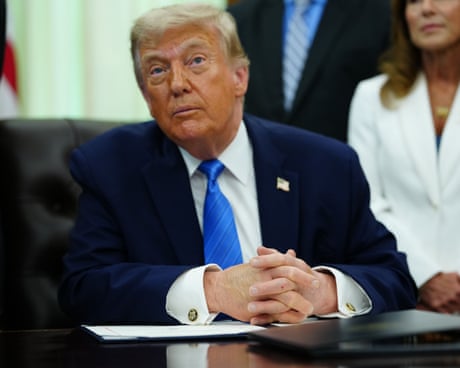
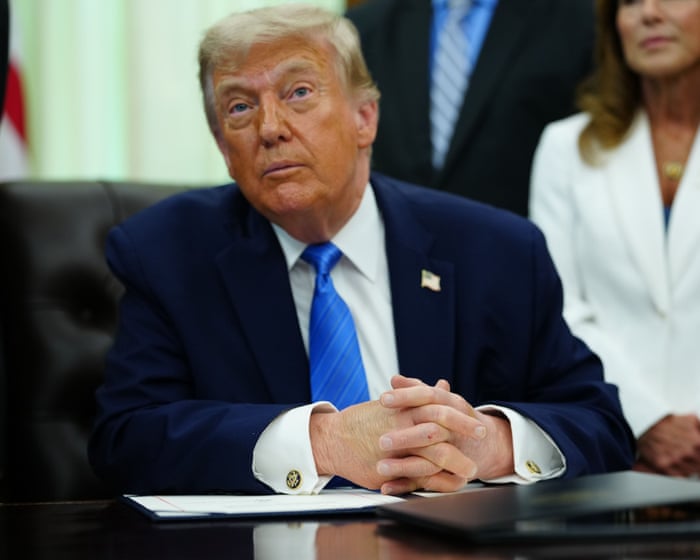
Donald Trump seemed to distance himself from his earlier comments that suggested a preliminary agreement could be signed as soon as this weekend, with a series of angry social media posts describing the Iranians as “very dishonorable people to deal with”.
This blog is now closed – see our latest full report on the Middle East crisis
Iran’s official Islamic Republic News Agency (IRNA) has cautioned against media speculation about a potential memorandum of understanding to end the war, particularly on claims regarding the strait of Hormuz.
IRNA reported that Iran will not surrender its control of the strategic waterway and the US will have no role in its future management.
Contrary to some bizarre claims in the media, Iran in no way makes a commitment in this text to hand over its management or to restore the strait of Hormuz to the state before the military aggression of the US and Israel. The only point mentioned is the normalisation of transit through the strait of Hormuz upon the end of the war, the establishment of maritime security by the coastal states, the end of the illegal blockade, and the removal of threats to commercial shipping by the US and Israel. At Iran’s request, the US will have no role whatsoever in the future management of the strait of Hormuz. It has been made clear that the future administration of the strait will be based on an Iranian initiative and proposal, within the framework of a matter pertaining to the countries of the region. In this framework, discussions about the future of the strait of Hormuz will not take place even in negotiations after the signing of the agreement, and Tehran will directly resolve this issue in talks with Oman.”
Israel maintains that they’re exclusively attacking Hezbollah in their invasion of Lebanon, and that they take extraordinary measures to avoid hitting civilians. The sheer number of times they’ve attacked hospitals, however, especially in the city of Tyre, challenges those claims. Once again Thursday, Israeli forces struck the area near the Hiram Hospital in Tyre, killing […]
The U.S. failed to "take Vienna" in the Iran conflict, resulting in an undeterred and belligerent Iran that has been awarded a vote in deciding the control of the most strategically important commercial chokepoint in the world.
The U.S. failed to "take Vienna" in the Iran conflict, resulting in an undeterred and belligerent Iran that has been awarded a vote in deciding the control of the most strategically important commercial chokepoint in the world.
The US launched a new round of airstrikes on Iran into Thursday morning after Donald Trump warned Tehran would “pay the price” for stalled negotiations, prompting Iran to respond with strikes targeting Bahrain, Kuwait and Jordan.
The new US assault across a range of Iranian cities came as efforts to negotiate an end to the war again appeared stuck, with Iran insisting it would maintain its chokehold on the strait of Hormuz. The American attack appeared more intense and wider than the day before, but Iran released no information about what was hit.
The U.S.-Iran memorandum of understanding pairs the nuclear and Lebanon tracks, creating a situation where Hezbollah's rejection of the U.S.-brokered Lebanon ceasefire could halt nuclear diplomacy, as Iran has engineered the situation to use regional pressure as leverage in negotiations.
The U.S.-Iran memorandum of understanding pairs the nuclear and Lebanon tracks, creating a situation where Hezbollah's rejection of the U.S.-brokered Lebanon ceasefire could halt nuclear diplomacy, as Iran has engineered the situation to use regional pressure as leverage in negotiations.
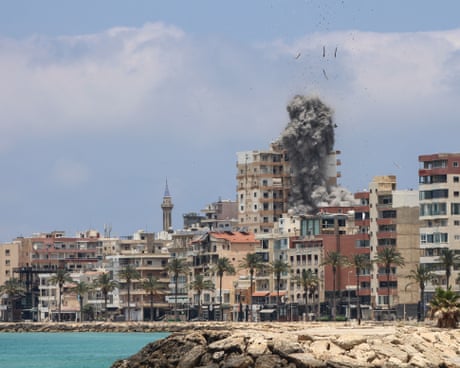
Israel has bombed the city of Tyre, killing eight and injuring at least 32 people, and struck dozens of other villages in south Lebanon as it issued forced evacuation orders for the historic Christian quarter of the ancient city for the first time.
Israel struck the al-Masaken neighbourhood without warning on Tuesday morning, sending smoke plumes high above the city’s buildings and igniting fires. Further airstrikes were carried out across the city and a series of bombings hit Abbasieh, a village north of Tyre.
The bombardment followed Israeli evacuation warning for the entire city, a day after Iran threatened to attack Israel again if it kept up its offensive against Hezbollah in Lebanon.
Iranian state television on Tuesday reported that at least two members of its air defense units were killed in Israeli strikes. It comes amid renewed conflict between the two countries for the first time since April as the U.S. strives to enter a firm ceasefire agreement with Tehran. President Trump has repeatedly expressed concern with…
Iranian state television on Tuesday reported that at least two members of its air defense units were killed in Israeli strikes. It comes amid renewed conflict between the two countries for the first time since April as the U.S. strives to enter a firm ceasefire agreement with Tehran. President Trump has repeatedly expressed concern with…
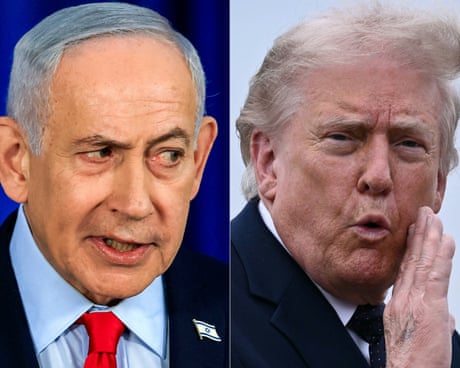
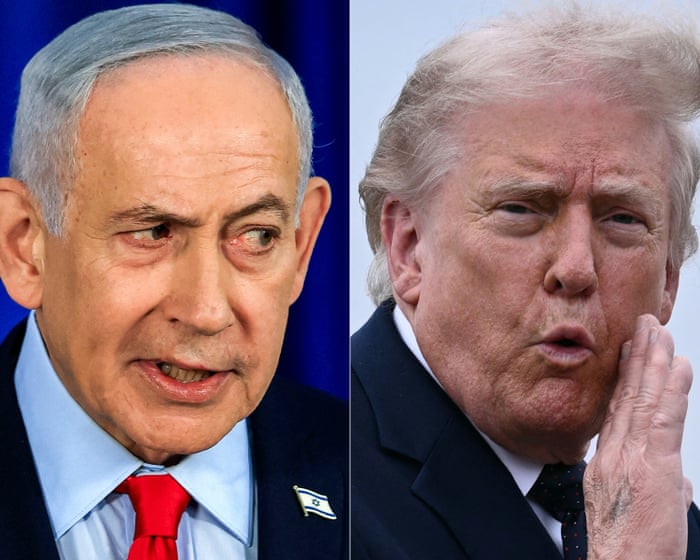
Opponents attacked Prime Minister Benjamin Netanyahu for halting strikes against Iran after a call with President Trump, saying that he was letting the United States make Israel’s decisions.
Recent exchange of missiles between Iran and Israel highlights diverging views between US president and Israeli PM
The latest eruption of hostilities between Iran and Israel appears to have been contained for now after Donald Trump insisted he called “all the shots” in the Middle East, but in a dangerously fragile region Benjamin Netanyahu has again shown he is ready to take shots of his own.
The exchange of missiles on Sunday and Monday was ample demonstration of the inherent instability of the current limbo between war and peace, but it also shone a bright light on the complex and conflicted relationship between the US president and the Israeli prime minister, frenemies who could determine the fate of the current ceasefire.
President Trump has voiced his frustration with Prime Minister Benjamin Netanyahu of Israel, but it is not clear how able he is to rein in Israeli military action.

 Login
Login