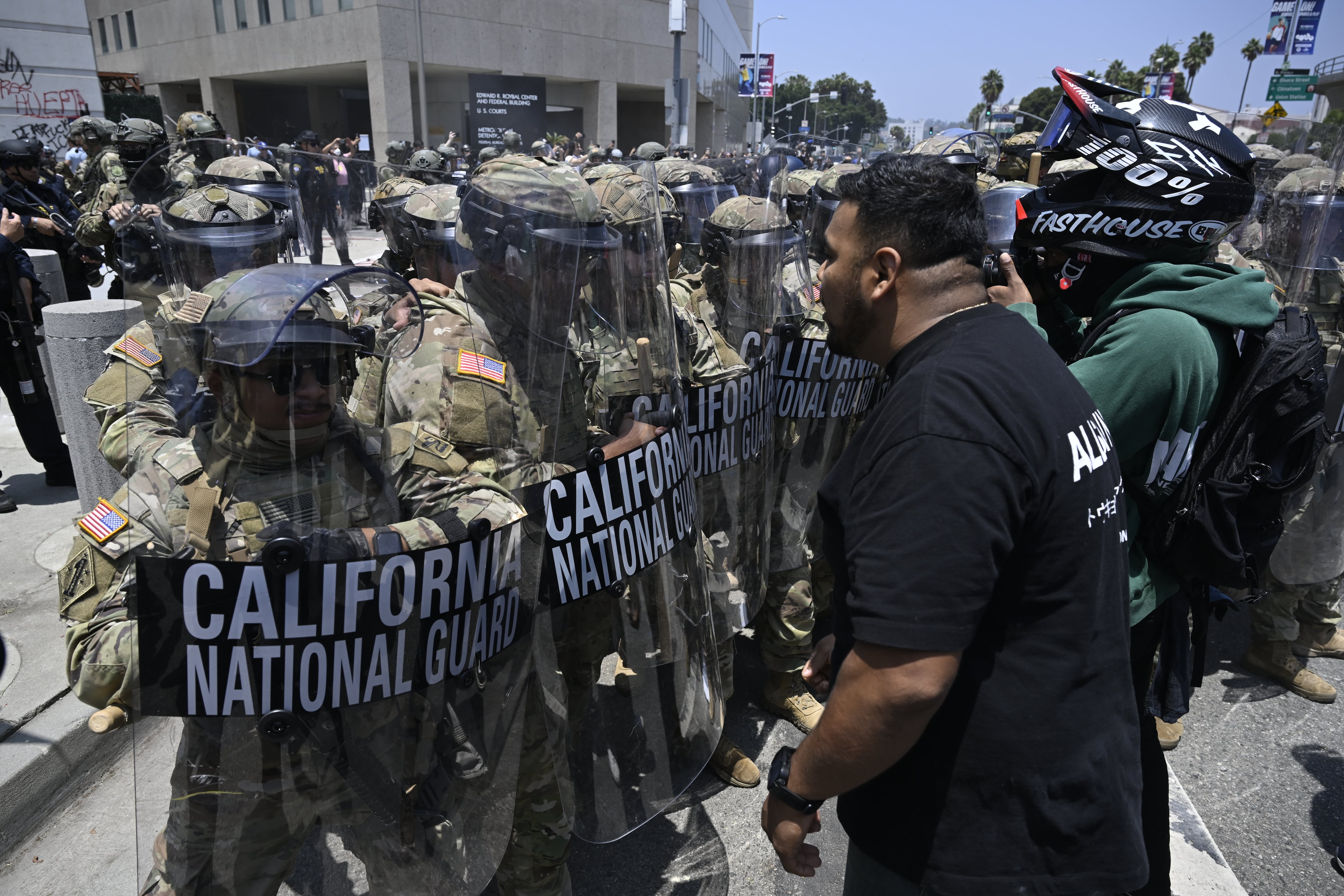
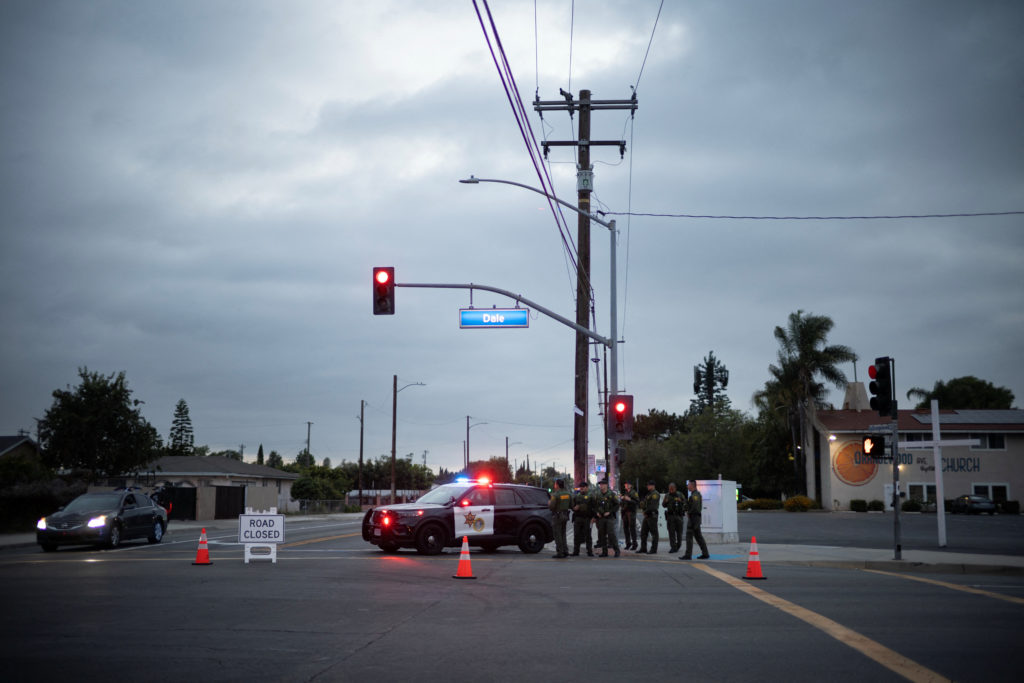
An agricultural property a few miles from Gilroy, just south of the San Francisco Bay Area, has become the latest flashpoint in the ongoing clash between California and the Trump Administration. California Attorney General Rob Bonta and Santa Clara County filed a federal lawsuit on Wednesday seeking to stop the construction of a U.S. Immigration and Customs Enforcement (ICE) facility that local officials say could be used to temporarily detain migrants as part of the federal government’s intensified immigration enforcement efforts.
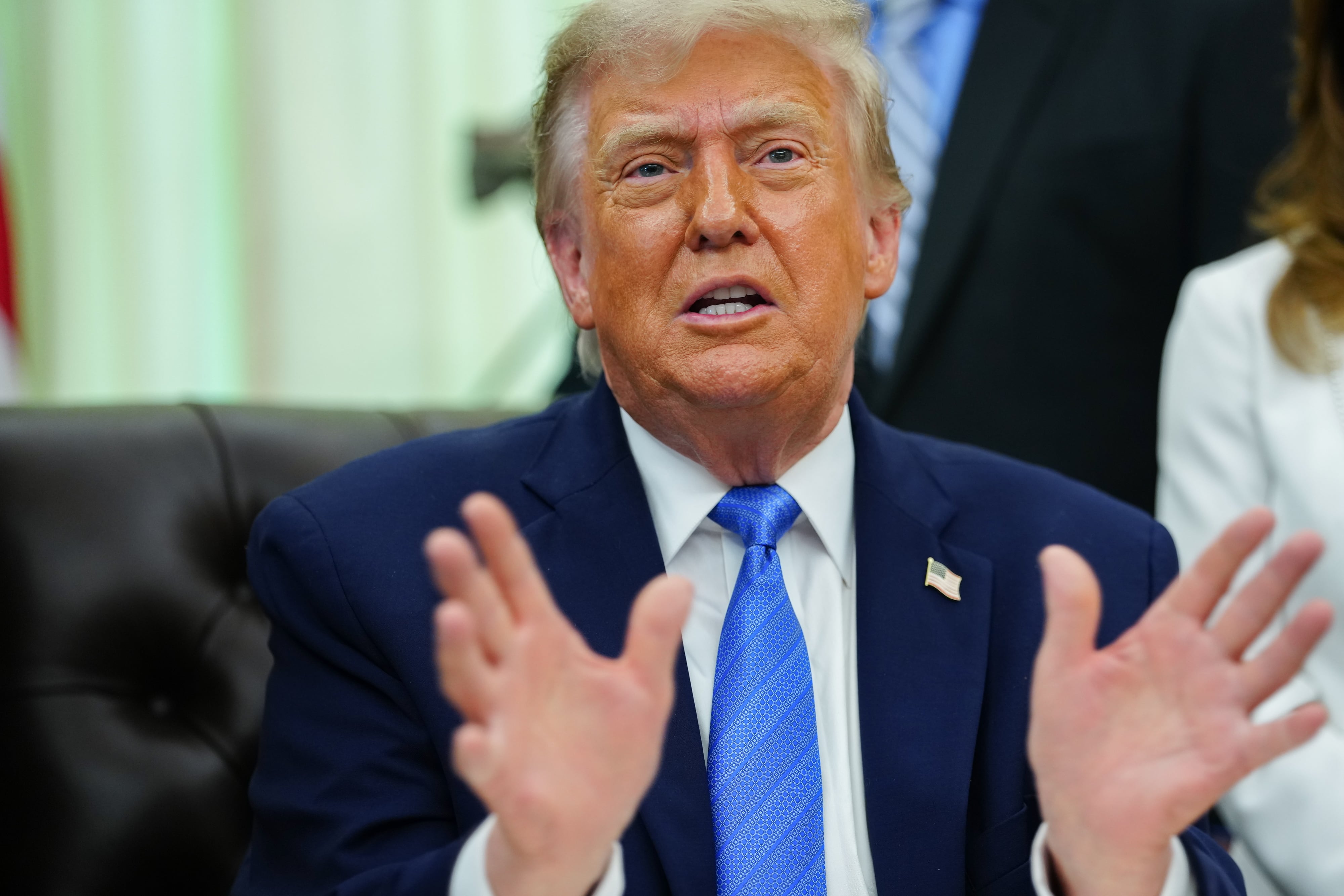
President Donald Trump was displeased with the outcome of the California primary elections. Convinced his intervention was decisive, he insists that without the pressure he exerted in recent days on behalf of the Republican candidate for governor, Steve Hilton, he would not have advanced to the November runoff, where he will face the candidate backed by the Democratic establishment, Xavier Becerra. “But the only reason they approved Steve Hilton, it was going to be two weeks, they said. And then they approved it that night because the heat was on them because they’re cheating dogs,” the president said Wednesday from the Oval Office.
The warrant signed by a federal judge last week approved the seizure of documents and records related to the "storage, use, or disposal" of methyl methacrylate, the chemical inside the affected tank.
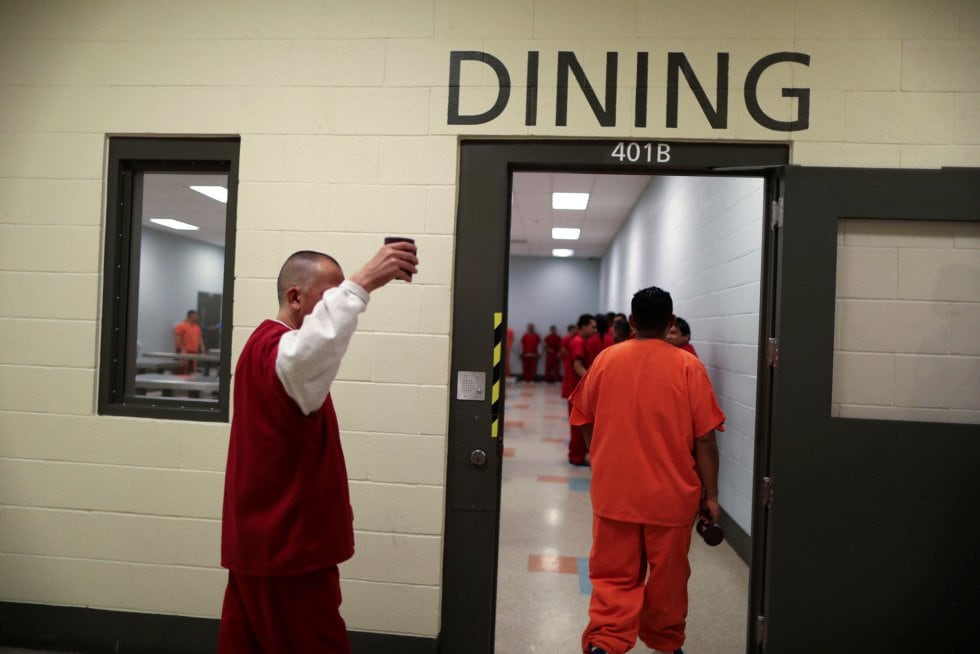
Esteban had never heard of the prison gang Los Paisas until he was held at the Adelanto immigrant detention center in California. As soon as he passed through the bars of his housing unit, other detainees made it clear he had to choose: join them or join another group made up of Russians, Indians, Chinese, and Armenians. He understood that doing neither would leave him defenseless, so he accepted. There was no initiation ritual and he was not asked to swear allegiance. The rules were simple: protect your own from violent people, settle internal disputes, and keep a measure of order in a place where authority often seemed insufficient. Over the months, deportations and transfers took away people he knew. They were replaced by newcomers, some of whom did not understand the dynamics of detention. He had to teach them. Before he knew it, Esteban was among the most long-standing members and, without seeking the role, he became one of the leaders of the gang.
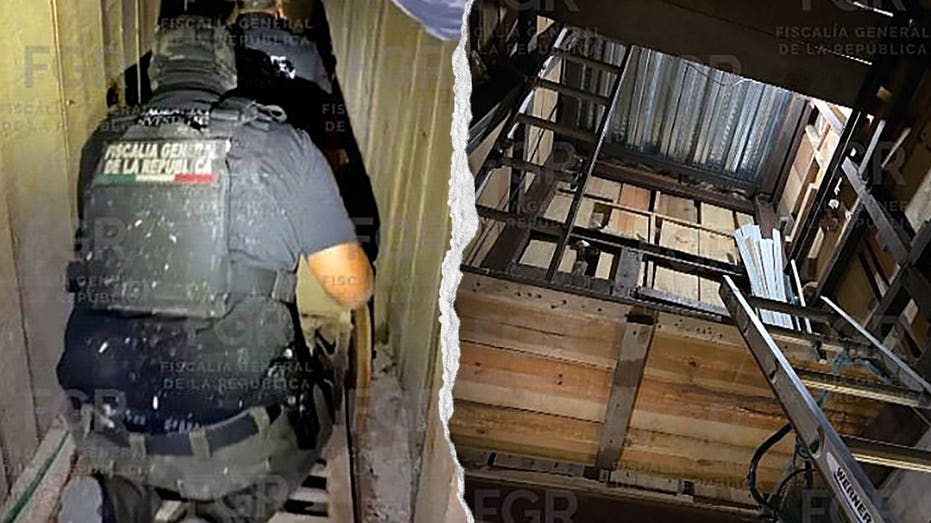
Mexican authorities have uncovered a sophisticated underground tunnel near the U.S.-Mexico border that was equipped with lighting, ventilation and an electronic transport system, which they say may connect Tijuana to a street in San Diego.
Mexico's Attorney General's Office, known as the FGR, announced the discovery Saturday following a search warrant executed at a property in the Nueva Tijuana neighborhood of Tijuana, Baja California.
Authorities said the tunnel stretched approximately 265 meters, or about 870 feet, and reached a depth of roughly 6.3 meters, or 21 feet underground.
According to investigators, the tunnel contained operational infrastructure, including lighting and ventilation systems, as well as an electronic sliding mechanism designed to move items in both directions between Mexico and the U.S.
The tunnel was discovered through intelligence work conducted by agents with the FGR's Criminal Investigation Agency in coordination with Mexico's Security Cabinet.
Officials said the search warrant was executed as part of an investigation into alleged violations of Mexico's firearms and explosives laws as well as drug-related offenses.
Authorities said they believe the property may have functioned as a storage, logistics and trafficking center for firearms, explosives and illicit drugs.
Photos released by the FGR appear to show agents navigating the underground passageway, access points leading into the tunnel and evidence recovered during the operation.
Images released by Mexican authorities also appear to show ventilation infrastructure inside the tunnel, underscoring what officials described as a sophisticated operation.
The FGR said its investigation indicates the tunnel likely connects to a street in San Diego, though authorities have not publicly identified the location or confirmed whether the U.S. side of the tunnel has been located.
The tunnel discovery comes as U.S. authorities announced charges against four individuals accused of trafficking more than a ton of cocaine through a sophisticated cross-border tunnel stretching between Tijuana and San Diego.
According to federal prosecutors in San Diego, the tunnel extended approximately 1,933 feet, reached a depth of about 55 feet and was equipped with reinforced walls, electricity, ventilation systems and rail infrastructure.
Federal investigators said the tunnel connected Tijuana to a storefront in Otay Mesa known as "Buy 4 Less," where agents discovered a concealed exit point hidden beneath the floor of a storage room.
Authorities seized approximately 1,029 kilograms, or more than 2,269 pounds, of suspected cocaine during the investigation, an amount prosecutors estimated was worth roughly $45 million.
Homeland Security Investigations said the seizure dealt a significant blow to the Jalisco New Generation Cartel, one of Mexico's most powerful criminal organizations.
The investigation resulted in charges against four suspects accused of using the tunnel to move narcotics into the U.S.
Federal officials said the tunnel was discovered after months of surveillance that began in late 2025 and culminated in coordinated enforcement actions on May 29.
Officials described the discovery as a significant blow to criminal organizations that rely on underground smuggling routes to move narcotics and other contraband across the border.
"For these defendants, it wasn’t a light at the end of the tunnel. It was lights and sirens," U.S. Attorney Adam Gordon for the Southern District of California, said.
James Handy, an 81-year-old New York actor who had small roles in films such as Jumanji and the more recent Top Gun: Maverick, was killed outside his Los Angeles home. The confessed killer is his girlfriend’s son, a 44-year-old man named Michael Gledhill, who remains jailed on $2 million bail.
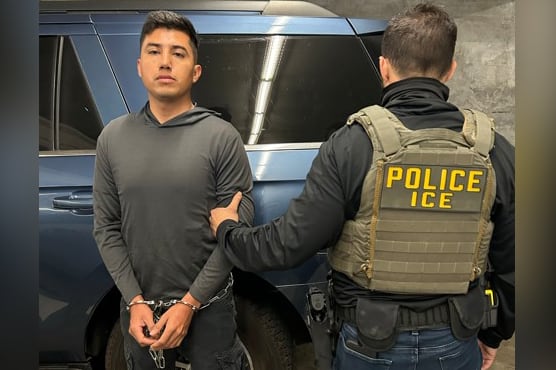
U.S. Immigration and Customs Enforcement (ICE) detained Enrique Martínez Chávez on Wednesday in Los Angeles, California, according to a statement the agency released Thursday on social media. The 32‑year‑old detainee is one of the military officers linked to the disappearance of 43 student teachers in the Mexican municipality of Iguala, Guerrero, in 2014. Martínez Chávez is wanted in Mexico for the alleged crime of enforced disappearance and has been a fugitive from justice for years. ICE says he will remain in its custody “until he can be sent home” to Mexico.
by Tyler Durden | Zero Hedge Rogue climate activists in Northern California are launching balloons filled with sulfur dioxide into the upper atmosphere in an effort to manipulate the Earth’s temperature. In exchange, the climate startup behind the operation sells “cooling credits” priced at $30 for a subscription or $5 to offset 1 ton of carbon dioxide. The startup’s unregulated operations are causing a major stir and have drawn the attention of EPA Administrator Lee Zeldin. “Make Sunsets is a startup that is geoengineering by injecting sulfur dioxide into the sky and then selling “cooling credits.” This company is polluting the air […]
from The Epoch Times: Malaria—primarily spread by mosquitoes—killed at least 597,000 people throughout 83 countries in 2023, according to the CDC. Google is seeking federal approval for a new program called Debug that would release up to 32 million mosquitoes in California and Florida to combat disease-carrying mosquitoes already found in the wild. Pitched as […]
O secretário de Estado das Comunidades Portuguesas, Emídio Sousa, realizou, entre os dias 23 e 28 de maio, uma visita oficial ao estado norte-americano da Califórnia, numa agenda marcada por encontros com dirigentes associativos, autarcas, empresários, representantes religiosos, líderes comunitários…
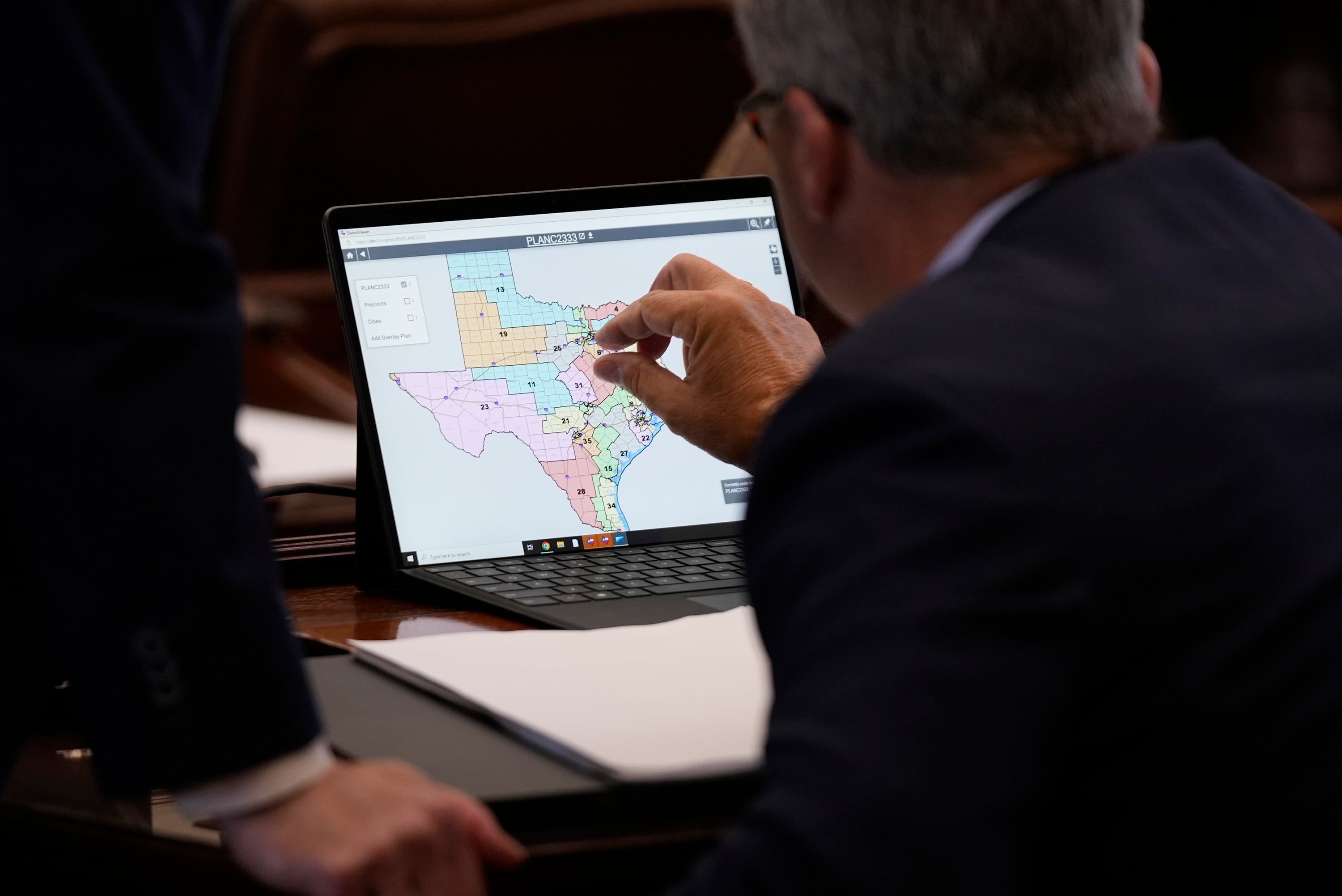
The redrawing of electoral districts, or gerrymandering, in the United States is reaching unprecedented levels. After the Supreme Court’s late-April ruling changed electoral rules and curtailed minority rights, Republicans have stepped up efforts to dismantle majority-Black districts, especially in the South, though the strategy extends to states beyond that region.

 Login
Login