Reading view

Hoping to persuade the gullible, Trump vows to share proof of 2020 conspiracy theories

As this week got underway, the public saw Donald Trump abruptly end his latest “Meet the Press” interview when NBC News’ Kristen Welker asked the president whether he had evidence to support his election conspiracy theories. “You’re either crooked or you’re stupid,” the Republican told the host instead of answering the question like an adult who wasn’t making stuff up.

Unprompted, Trump returned to the subject Wednesday at an unrelated White House event, telling reporters:

They rigged the election, the second election, as you probably heard and probably know, most of you know, that happened and now it’s been proven, and it will be proven as time goes by, even more so. We have things that you won’t believe. When we release the full files, you’re not going to believe how crooked the second, the 2020 election was.

He made the comments while surrounded by congressional Republican leaders, who simply nodded along.

Trump: "They rigged the election. Now it's been proven, and it will be proven even more as time goes by even more so. We have things that you won't believe. When we release the full files, you won't believe how crooked the 2020 election was."

Aaron Rupar (@atrupar.com) 2026-06-10T16:04:29.518Z

There’s probably no point in rehashing what reality-based observers already know: The election wasn’t rigged; it isn’t “proven”; Trump and his team haven’t found “things”; there is no “they”; etc.

What I found notable about this, however, was the idea that there might still be people out there who are willing to believe that the president may yet uncover and release some evidence of a conspiracy that did not and does not exist.

Six months ago, for example, Trump sat down with Politico’s Dasha Burns, and when she brought up the president’s views on Russia’s war in Ukraine, his brain quickly shifted to what he described as the “rigged election.” Trump declared at the time, “It’s going to come out over the next couple of months too, loud and clear, because we have all the information.”

A couple of months came and went. The “information” never surfaced, because there is no such information.

For nearly six years, Trump and his team, like Lucy holding the football for Charlie Brown, have said the evidence to support the election conspiracy theories really is on the way. Any day now. Just you wait. It’ll be awesome.

My advice for those waiting for the president to follow through on his vow: Stop. He can’t produce that which does not exist.

The post Hoping to persuade the gullible, Trump vows to share proof of 2020 conspiracy theories appeared first on MS NOW.

  •  

Armenia: Elections Are Over, But Questions Remain

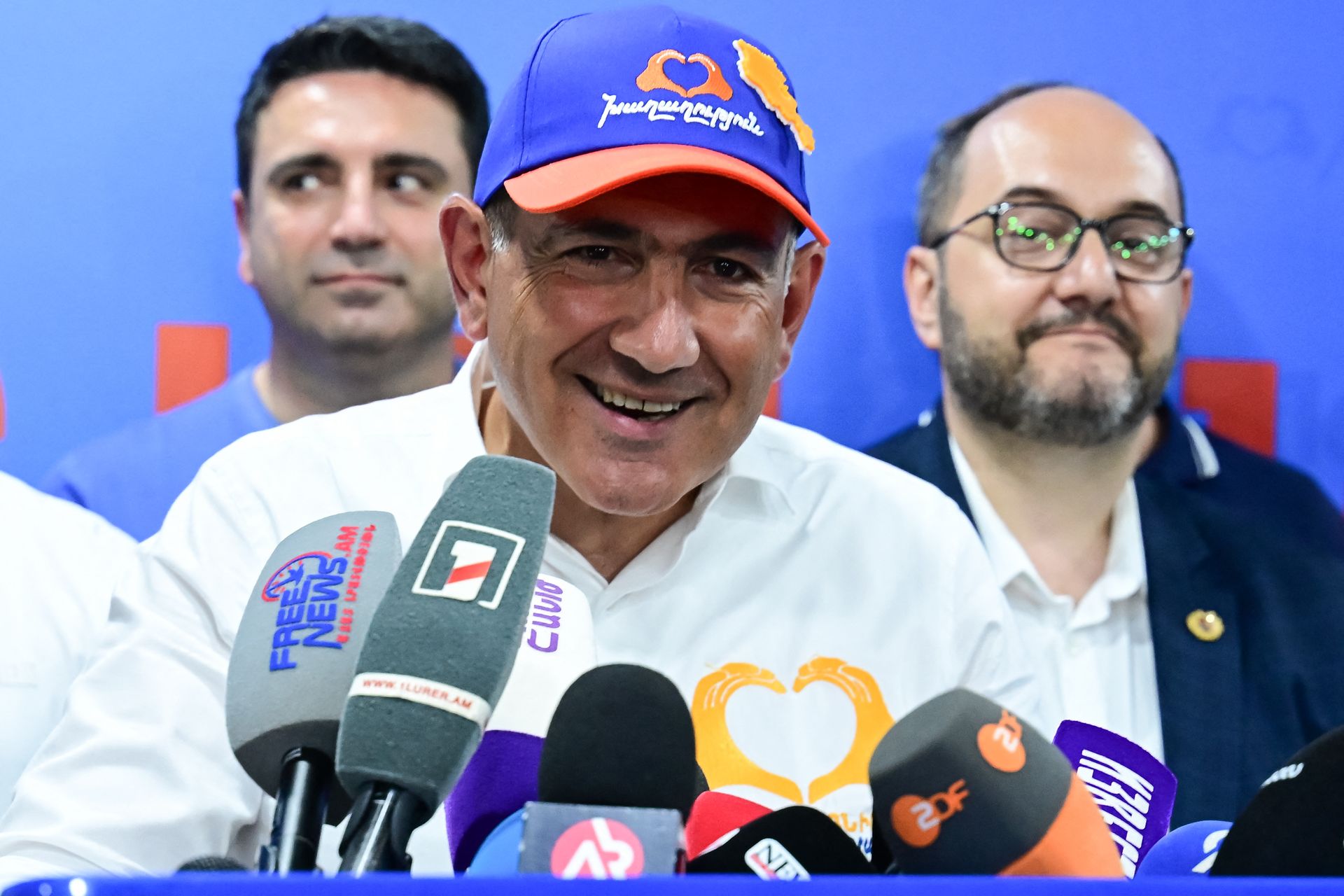
On June 7, parliamentary elections were held in Armenia, as a result of which the ruling party can form a new government. What distinguished the 2026 elections, and is a parliamentary crisis looming? Crisis and frustration after military defeats After the defeat in the 44-day war in 2020 and the complete loss of control over […]
  •  

Colombian lawmakers seek suspension of Trump foe Gustavo Petro over alleged meddling in upcoming election

Colombian lawmakers are considering a proposal that would temporarily suspend President Gustavo Petro from office amid an investigation into allegations that he improperly intervened in the country's presidential election.

Gloria Arizabaleta, president of Colombia's Commission of Investigation and Accusation, filed a motion Wednesday seeking to suspend Petro from his duties through June 21, according to a document published by the commission.

The proposal stems from an ongoing probe into allegations that Petro engaged in political meddling during the campaign and cites conduct described as "extremely serious or serious."

Petro, whose four-year term is set to expire in August, has been accused of involvement in the presidential campaign of leftist candidate Ivan Cepeda, who represents Petro's Pacto Historico coalition.

US SANCTIONS COLOMBIAN PRESIDENT AND FAMILY OVER DRUG TRAFFICKING ALLEGATIONS

Cepeda is scheduled to face conservative attorney Abelardo De La Espriella in a June 21 runoff election.

The race is being closely watched in Washington because Colombia remains one of the United States' closest security partners in Latin America and a key ally in counternarcotics efforts. The country has long been central to U.S.-backed efforts to combat drug trafficking and organized crime throughout the region.

The suspension proposal faces significant hurdles before it can take effect. Lawmakers and legal experts said the measure would first need approval from all 16 members of the Commission of Investigation and Accusation before advancing to Colombia's Senate for further consideration.

ANTI-CARTEL HARDLINER CHANNELS TRUMP IN BID TO END COLOMBIA'S LEFTIST ERA IN PIVOTAL ELECTION

"President Gustavo Petro has not been suspended; he remains in office," commission member Miguel Silvera Padilla said in a video statement, according to Reuters.

The Commission of Investigation and Accusation, which operates within Colombia's lower house of Congress, is responsible for reviewing complaints and potential criminal or disciplinary charges against high-ranking government officials.

Petro has repeatedly faced scrutiny from political opponents during his presidency, though the latest proposal comes less than two weeks before Colombians head to the polls to choose his successor.

CLICK HERE TO DOWNLOAD THE FOX NEWS APP

The runoff election between Cepeda and De La Espriella is expected to help determine whether voters continue Petro's leftist political project or shift toward a more conservative approach to security and governance.

Representatives for Petro did not immediately respond to a request for comment from Fox News Digital.

  •  

Trump-appointed federal prosecutor seeks public help on election conspiracy theories

Donald Trump’s recent record on U.S. attorneys and other federal prosecutors is a rather embarrassing mess. Some of the Republican lawyers have been purged for political reasons, some have resigned and some were forced out by the courts.

But perhaps most important of all are the president’s prosecutors who have actually tried to do their jobs in line with the White House’s agenda.

In Nevada, Sigal Chattah, a member of the Republican National Committee, has led a U.S. attorney’s office for the last year, and according to a Bloomberg Law report published last week, she’s used her office to “launch investigations at the behest of former clients and friends,” and also “opened a probe targeting her past political foe.”

In Illinois, U.S. Attorney Andrew Boutros’ tenure has become highly controversial, as evidenced by the intensifying mess surrounding his office’s handling of the “Broadview Six” case.

In Wyoming, interim U.S. Attorney for Wyoming Darin Smith botched some criminal cases so badly that federal judges had to intervene. (Senate Republicans soon after rewarded Smith with a lifetime appointment to the federal bench.)

But let’s also not overlook Bill Essayli, the first assistant U.S. attorney who’s leading the office in the Central District of California.

Essayli, a former Republican state lawmaker, has cultivated quite a reputation, reportedly ignoring the recommendations of senior prosecutors and demanding that the office pursue MAGA-aligned cases without regard for insufficient evidence. Last year, he also dropped a fraud case against a fast-food chain owner who just happened to be a major Trump donor.

This week, Essayli apparently thought it’d be a good idea to appear on Glenn Beck’s program, where he vowed to bring criminal charges in “one to two months” related to his party’s conspiracy theories regarding California elections. The Republican prosecutor seemed to suggest that he hasn’t yet collected real evidence, though he apparently plans to address this problem by turning to the public for help. The New Republic reported:

First Assistant U.S. Attorney for the Central District of California Bill Essayli — who oversees 500 attorneys — went on The Glenn Beck Program on Monday to beg listeners to help him find evidence of election fraud.

“I expect people will be charged. … We have set up a tipline. I’ve set up a dedicated email. … We are looking for any sort of widescale conspiracy, if you will. … If anyone knows anything … if you’ve witnessed anything … if you saw someone collecting ballots in a suspicious way, or doing something odd with ballots, we wanna know about that.”

The circumstances were, among other things, bizarre. Federal prosecutors rarely appear on programs such as Beck’s; they almost never predict future prosecutions against alleged criminals who haven’t yet been identified; and it’s even more unusual for them to effectively try to crowdsource evidence collection.

What’s more, this is not a comprehensive list. Other Trump-appointed prosecutors in other jurisdictions have failed in other embarrassing ways.

The longer the list becomes, the worse it is for the rule of law and law enforcement. If you voted for the Republican ticket because you expected Trump and his team to be “tough on crime,” I have some bad news for you.

The post Trump-appointed federal prosecutor seeks public help on election conspiracy theories appeared first on MS NOW.

  •  

Soros’ OSF helped stir Indonesian rebellion, leaks reveal

By Kit KLARENBERG

Join us on TelegramTwitter, and VK.

Contact us: info@strategic-culture.su

Leaked documents reviewed by The Grayzone expose how the Soros-run Open Society Foundations plotted to “prevent the continuation” of Indonesia’s elected government by bankrolling opposition media, youth activists groups and lawfare operations to remove President Prabowo Subianto.

Ever since the election of Prabowo Subianto as Indonesia’s President in February 2024, Jakarta has faced continuous waves of anti-government protests. Activists enraged by harsh economic conditions and elite corruption have taken to the streets in vast numbers, often engaging in fiery clashes with police and the military. A series of leaks obtained by The Grayzone indicate this upheaval has unfolded according to a well-honed plan to take down Prabowo, which drew on organic grievances but which depended heavily on funding the Open Society Foundations.

Founded by anti-communist billionaire George Soros in 1993, OSF has been described by The New York Times as “a sprawling political and philanthropic empire,” which “seeks to advance a liberal, democratic agenda.” The Washington Post described Soros as part of a network of “overt operators” carrying out “spyless coups” that were once the purview of the CIA during the Cold War. OSF has acknowledged its central role in numerous insurrections throughout the Global South.

The leaked files reveal how from 2019 onwards, OSF began pumping large sums into projects designed to promote “resistance and dissent” against Prabowo’s predecessor, Joko “Jokowi” Widodo. Much of this money has been distributed by the Jakarta-based Kurawal Foundation, the single largest recipient of OSF contributions between 2019 and 2024. Founded in 2019, Kurawal describes itself as “a social justice philanthropy…[endeavouring] to promote dignified and benevolent democracy in Indonesia and Southeast Asia.”

The organization sponsors “individuals and agents,” who can be relied upon to advance Western liberal values locally. In the leaks, Kurawal described its efforts to develop an ideal voter who would be impervious to the scourge of Prabowo-associated disinformation. This meant “cultivating a wise and virtuous democrat – as political subject – who adheres to the essential principles of democracy.” The leaks show the intended subject was anything but.

Kurawal’s OSF-funded activities intensified in late 2023, as Indonesia geared up for the Presidential election in February the next year. Prabowo, Joko’s chosen successor, won by landslide in a vote international observers judged legitimate. However, the leaks show Kurawal used its local assets to whip up a frenzy over supposedly “massive” fraud by Prabowo, fomenting so much public pressure that authorities changed electoral rules to allow more parties to run for office in 2029. (Kurawal did not respond to a request for comment from The Grayzone).

In order to topple Prabowo, OSF has financed the grooming of prospective future politicians, outreach to existing political parties, and the creation of new movements and factions that could field candidates for office locally. Simultaneously, OSF bankrolled a range of self-proclaimed ‘independent’ media outlets and activist groups, who they sought to train “to become agents of change.” In leaked documents, Kurawal boasts that its “youth political engagement” activities mean young Indonesians are “at the forefront of most social and political movements… shaping conversations on national policies.”

Kurawal’s meddling in Indonesia has global implications. Mass “Gen Z” protests that erupted in July 2025 and raged for weeks have been hailed by Western corporate media as a revolutionary inspiration for anti-government activists elsewhere. It was in Jakarta where protesters first waved cartoon Jolly Roger flags inspired by Japanese manga One Piece. A map found in the tranche of leaks notes that Kurawal is active in several countries where these flags have appeared, including in protests which have produced regime change, such as in Nepal.

Kurawal encourages ‘agitation and pushback’ against Joko

A leaked February 2025 Kurawal document called “Building Bridges, Filling Gaps,” charts a clear “strategic plan” for regime change in Indonesia and beyond, 2024 – 2029. The file was produced after five years of systematically undermining President Joko’s administration, “by providing support to civil society groups, social movement actors, and thought leaders as well as change makers who do not shy away from politically sensitive issues.” This was motivated by “Indonesia’s growing political and economic clout”, and regional influence, under his rule.

The document describes Joko scathingly, as a “pilferer” and “opportunist”, while slamming his supposedly “inward looking foreign policy.” In reality, Joko prioritized protecting Indonesia’s sovereignty, irritating Western powers by rubbishing bogus CIA-disseminated claims of “genocide” in Xinjiang, refusing to recognize Israel, and pushing for peace in Ukraine.

By “promoting dissent” during his last term in office, Kurawal sought to lay foundations for even greater attacks against Prabowo. As a leaked file explains, “the agitation and pushback was needed to show that dissent is both necessary and possible.” Resultantly, “vibrant citizen movements” that could “challenge power” and “organize and influence change” sprouted locally, with OSF help.

Kurawal’s “program taxonomy” between 2019 and 2024 focused heavily on driving “youth political engagement,” encouraging young Indonesians to attend protests, join civil society campaigns and hone social media skills. As such, the organization’s students “actively set a higher standard of accountability of political leaders,” while “shaping conversations on national policies,” and “challenging traditional political organizing.” These efforts were to be enhanced by what Kurawal called “networks or alliances among social justice groups,” legal advocacy and a new lobbying machine.

Kurawal also financed local media outlets to promote stories of purported malfeasance and other abuses of power by authorities. For example, the organization sponsored a “series of in-depth reporting on police corruption and brutality cases in prominent public interest media,” combined with “social media campaigns” while “forming a national coalition for police reform” to “ramp up public pressure.” This was cited as “one of the bright spots” in Kurawal’s work in Indonesia, during the pre-Prabowo period.

For example, in 2021, Kurawal launched TempoWitness, an online portal which claimed to connect “citizen journalists at community level with mainstream local and national media.” By contrast, Tempo has been a vehicle for slanderous attacks on independent journalists raising questions about Western financing of anti-government media outlets and NGOs in Indonesia. Among its top targets is Brian Berletic, a US citizen who resides in Thailand and specializes in exposing covert Western funding of opposition political forces in the region.

Kurawal has also sponsored documentary films, photography, and experimental art in Indonesia. The purpose is to “elicit action from citizens and community.” This included the Jakarta International Photo Festival, the region’s largest. The events attracted tens of thousands of visitors, enabling Kurawal to shepherd them into a “side event” on the subject of democracy. During these sessions, attendees were given instruction on how to use “photography and visual storytelling” in the pursuit of “democracy and human rights.”

National ‘roadshow’ to ‘radicalize’ Indonesians

When Joko left office, he enjoyed record-high approval ratings. In its “Building Bridges, Filling Gaps” document, Kurawal reluctantly acknowledged the outgoing president was “able to maintain popular public support” in an organic fashion through what they described as “populist social welfare policies.”

The leaked document notes Prabowo would continue his predecessor’s legacy, “emphasizing policies to enhance social welfare, reduce poverty, and eliminate hunger.” A dedicated section called “Bracing for the Prabowo years” outlines the new president’s likely stances and strategy over his first term in office, and how his rule can be undermined.

The leaks reveal how Kurawal released a documentary called “Dirty Vote” immediately upon Prabowo’s election claiming to expose “how instruments of power are used to manipulate elections, undermine democratic order, and maintain the status quo,” and calling “for collective action to safeguard democracy.” The video racked up over 20 million views on YouTube as Kurawal screened it across Indonesia’s university campuses throughout February and March 2024. The dedicated “roadshow” was promoted as “a moral call to protect democracy’s future from systemic abuse and electoral fraud.”

The “Dirty Vote” documentary’s narrative tracked closely with claims of fraud in the February 2024 Indonesian elections by opposition elements. While Jakarta’s Constitutional Court rejected all formal legal challenges to the vote’s results in April that year, Kurawal boasted that its propaganda efforts cemented “widespread voter grievance” over what it called “massive election fraud.” The outcry successfully triggered reforms to Indonesian electoral laws, which previously required parties receive 20% of parliamentary votes to field presidential candidates.

When authorities caved to the opposition’s pressure in January 2025, Kurawal declared, “this means that at the next election, for the first time in the country’s history, political parties big and small will be free to nominate candidates on their own.”

The newly leaked documents echoed the contents of leaked files revealing that in June 2023, the US Embassy in Jakarta privately expressed concern about Prabowo’s almost inevitably impending victory, and planned to overturn the 20% threshold in response.

If the threshold were removed, “there will be more candidates in the election,” US embassy officials noted. In such a scenario, they concluded “the US will have more options” within the field of local candidates.

After the 20% rule was changed, Kurawal said it was well-placed to “set up alternative political groupings among civil society actors,” placing special emphasis on “women, youth, environmental rights defenders.” If successful, Kurawal would oversee “their possible transformation [into] new political parties.” The group wrote that it sought to use “infiltration or pressure” to “transform and radicalize” existing parties and “mobilize the masses against the established party system.”

The document concludes by fretting that the Global South is moving “from the periphery of the international political and economic arena towards the centre,” with countries such as Brazil, India and Indonesia cultivating “enough economic and political clout to emerge as regional or global powers,” and “active agents” in the international order. In turn, this has precipitated a global shift towards “multipolarity at a faster speed.” Kurawal lamented that many of these emerging powers do not subscribe to neoliberal Western governance models.

However, the organization expressed optimism about the prospects for insurrectionary change in troublesome countries, noting how Asia “witnessed some extraordinary demonstrations of ‘people power’ in 2024,” courtesy of “civil society leaders and pro-democracy activists.” Cited examples included the removal of South Korean President Yoon Suk Yeol, and the August student-led military coup in Bangladesh.

The Grayzone has exposed how the latter was the handiwork of individuals and organizations sponsored by the National Endowment for Democracy, a known CIA cutout.

Exploiting ‘Gen-Z’ to block Prabowo’s re-election

Other leaks show how in August 2025, Ekspedisi Indonesia Baru was awarded tens of thousands of dollars by Kurawal for a project titled “Expedition to Discover New Voices”. The purpose is to transform “younger generations” of Indonesians “to become agents of change.” This is to be achieved by “[mainstreaming] alternative ideas about a ‘New Indonesia’ by distributing public knowledge through documentary films, books, and community discussions that are widely accessible to the public, especially young people.”


Among the initiative’s explicitly stated “desired outcomes” is “stronger engagement from younger generations (Gen Z and Gen Alpha) in public discourse, along with greater courage to dream, speak up, and take action for Indonesia’s future.” This will hopefully precipitate “rising interest in alternative political actors” among the public, prior to Jakarta’s 2029 general election, “with an aim to elect political leaders dedicated to democracy and social equity,” so as to “prevent the continuation” of Prabowo’s rule.

“Key activities” to be conducted include “producing a documentary series” for YouTube channel Indonesia Baru “and other digital platforms,” a “public presentation roadshow” throughout the country to “spread ideas”, and “developing factual short-form content (TikTok, Reels, YouTube Shorts) on violent suppression by military and police forces, government corruption, forced land acquisition, and youth resistance to undemocratic policies.” For the latter initiative, Ekspedisi Indonesia Baru seeks to enlist “young creatives who can bring fresh perspectives and formats aligned with their peers’ digital behavior and preferences.”

Another key programming strand was publication of a book, Restart Indonesia, released in October 2025 under the revised title Reset Indonesia. A local media report on the forthcoming work quoted its lead author: “Reset is a more fitting description of the book’s content, which indeed proposes a reprogramming of Indonesia, not just a restart.” While only 2,000 copies have been printed to date, another contributor hoped many more would read the book.

“If a horror film in theaters can attract four million viewers, here’s a book that’s just as horrific,” they explained.

In July 2025, Sophia Nusantara Association was also furnished with tens of thousands of dollars in Soros financing through Kurawal, for a project titled “Guardian of Ecological Democracy” in Papua. Leaked documents described this student group as part of “the vanguard of resistance” against Indonesia’s government. Leaked documents related to the project boast how OSF’s local campus-based proxies have access to media, national networks, and modern documentation tools that can mobilize broad support.”

Kurawal foresaw its student footsoldiers “using art, research, and technology as tools of creative resistance,” managing “online campaigns and offline campaigns,” and convening “cultural festivals as a symbol of resistance.” In particular, Indonesian environmental protection issues were to be exploited as an “intellectual weapon,” to stoke public anger and “policy pressures” within Indonesia’s Presidential palace. Predicting such activity would create a potentially dangerous environment for students, Kurawal pledged to provide them with “security training” and to establish “safe houses on campus.”

‘Fighting authoritarianism with legal weapons’

In late August 2025, large-scale student-led demonstrators erupted across Indonesia. After days of extraordinary clashes, the government pledged concessions in response to protesters’ demands. The upheaval was one of Jakarta’s largest since the ousting of the CIA-installed dictator Suharto in 1998. Unrest quickly turned violent, with rioters attacking police, torching multiple government building, and looting the homes of elected parliamentarians. Local security forces initiated a heavy crackdown on the violent riots which claimed lives, leading to condemnations from groups including the OSF-funded Human Rights Watch.

At the forefront of the campaign to prosecute officials – whether nationally or internationally – was the Indonesian Legal Aid Foundation (YLBHI). Perhaps unsurprisingly, the organization has received enormous sums from OSF, via Kurawal Foundation. The leaks show YLBHI received a substantial grant from Kurawal just one month prior to the protests, to provide “critical legal education” to civil society groups, student organizations and indigenous communities to document purported abuses by authorities, and launch litigation “at the national level and through international human rights law mechanisms.”

Moreover, YLBHI’s OSF-bankrolled lawfare operations are explicitly intended to undermine the National Strategic Project instituted under President Joko in 2016. The project’s aim is to finance local infrastructure in order to generate economic growth and regional development. The effort has ignited controversy, however, due to concerns over land rights, potential environmental damage, and displacement of indigenous communities. With OSF financing, YLBHI aims to “raise critical awareness” of issues related to the National Strategic Project’s implementation.

Another target of the grant is “fighting authoritarianism with the use of legal weapons.” YLBHI is to “collaborate with local [and international] legal teams and legal experts to establish a legal aid team that can provide a rapid response, aiming to provide necessary legal assistance to social activists experiencing pressure” from authorities. These efforts will be “continuously” promoted, in order “to gain support and response from the Global South, thereby protecting the legitimate rights and interests of indigenous peoples and activists.”

With millions pumped into Kurawal over the years, it is evident Soros’ foundation is determined to stymie Prabowo in the next election. While he may not remain in office to face his opponents at the ballot box, one thing is clear: his replacement will be owe a debt of gratitude to some powerful forces overseas.

Original article:  thegrayzone.com

  •  

Platner romps to victory in Maine Democratic primary, will face Collins despite controversies

Graham Platner prevailed in the Maine Democratic Senate primary, breaking 50% of the vote and clinching the nomination to face Sen. Susan Collins, a Republican whom national Democrats hope to topple on their way to recapturing control of the Senate in November.

Platner had 75% of the votes with only 8% of the ballots counted when The Associated Press called the race Tuesday evening, suggesting a dominant performance. Maine Gov. Janet Mills had just 19%. Mills’ name remained on the ballot despite the fact she dropped out of the contest in April.

The oysterman and political newcomer triumphed at the ballot box despite allegations that roiled his campaign before Election Day: that he sent sexually explicit messages to women outside his marriage and behaved in a demeaning manner toward some former girlfriends, including two incidents in which he was allegedly physically menacing to one of them. Platner denied those incidents.

“This is the state that raised me. This is the state that saved me,” Platner said at his victory party. “Maine, I love you. I love this state.”

Platner chastised national Democrats, who he said kept seeking a headline that would tarnish him and were missing the point. “In trying so hard to understand me, they failed to understand this is not about me at all. This is a movement about us.”

“This is the state that raised me. This is the state that saved me,” Graham Platner said at his victory party. “Maine, I love you. I love this state.”

The Democrat will now face Collins, a five-term incumbent who ran unopposed in the GOP Senate primary.

Platner also took harsh aim at Collins, calling her “spineless,” and said she “lied to us” about protecting abortion rights codified under Roe v. Wade after supporting Brett Kavanaugh’s nomination to the Supreme Court.

“Susan Collins doesn’t serve us. She serves Donald Trump,” Platner said. “We will take back the Senate seat. We will take back our power … I want you to imagine what you will feel like when we hold Trump and his criminal enterprise to account.”

In coming in first — and avoiding further rounds of counting as part of Maine’s ranked choice voting system — Platner technically defeated Mills in the Democratic primary. Mills was recruited by Senate Minority Leader Chuck Schumer, D-N.Y., but her campaign never took off and she suspended it in April.

But her name remained on the ballot and voters could have chosen to side with their former governor as something of a protest vote against Platner.

Despite early strength, Platner’s road to nomination was paved with controversy. 

Reports surfaced the week before the primary that Platner had sent sexually explicit text messages to multiple women while married. His wife, Amy Gertner, publicly defended him and criticized the release of private communications. Platner acknowledged he and his wife had gone through something difficult in their marriage “because of me” and denied the characterization of the messages. 

A private meeting between Platner and Senate Democrats followed as questions mounted over whether his personal conduct would impede his ability to challenge Collins. Despite the controversies, key progressive leaders, including Sens. Bernie Sanders, I-Vt., and Elizabeth Warren, D-Mass., have continued to publicly support his candidacy.  

Those allegations were followed by a report in The New York Times in which one of Platner’s ex-girlfriends accused him of physically threatening her while they were dating. The Times’ report cited several former romantic partners who described “toxic” past relationships with him. Platner has denied allegations of “physicality.” 

Several of Platner’s other past romantic partners who spoke to the Times described him as a “caring” partner and said they remain friends with him, according to the report.

The allegations added to several controversies surrounding the Marine Corps veteran’s insurgent Senate campaign. He faced backlash last fall over a Nazi-style tattoo he has since covered and defamatory comments he reportedly made about victims of sexual assault in Reddit posts that were deleted before the launch of his campaign. Platner has said he was unaware of the tattoo’s Nazi symbolism when he got it in 2007.

His populist campaign, however, resonated heavily with Maine voters who deemed him the best fighter to stand up to President Donald Trump and his allies in Washington, a group they say includes Collins. 

Platner also won the support of prominent national Democrats who coalesced behind him in one of the most consequential races of this midterm cycle even after the fresh allegations came to light. Rep. Ro Khanna, D-Calif., stood by Platner at his first major campaign rally in Bar Harbor following the Times report. 

Mills, on the other hand, did not endorse Platner when she suspended her campaign after months of trailing him in polls and in fundraising. Instead, the governor, who is term-limited, reminded Maine voters that she is “still on the ballot” as new allegations engulfed her opponent’s campaign.

The post Platner romps to victory in Maine Democratic primary, will face Collins despite controversies appeared first on MS NOW.

  •  

Speaker Mike Johnson says his election conspiracy theories feel ‘instinctively’ true

Donald Trump has earned a reputation as the nation’s most prominent and powerful election conspiracy theorist, but to the extent that there’s a competition for the silver medal in this ignominious category, House Speaker Mike Johnson is a clear contender.

Indeed, after Trump’s defeat in the 2020 race, it was the Louisiana Republican who took the lead on Capitol Hill, effectively becoming the White House’s congressional point man, doing his best to overturn the results and hand the outgoing president illegitimate power. Johnson even echoed a discredited conspiracy theory involving Venezuela’s Hugo Chávez and Dominion Voting Systems — nonsense that even many Trump acolytes didn’t feel comfortable repeating.

With this in mind, it wasn’t too surprising to see Congress’ top GOP lawmaker echo his party’s baseless conspiracy theories regarding California’s latest elections, though one word in his pitch was of particular interest.

RAJU: But what evidence is there to prove the California election is rigged?MIKE JOHNSON: Look, some of these efforts are so diabolical and so far upstream it's impossible to prove. But I think everybody knows instinctively that something is wrong here.

Aaron Rupar (@atrupar.com) 2026-06-08T19:56:22.798Z

Apparently comfortable speaking on behalf of the nation, Johnson told reporters on Monday afternoon that “everybody knows” that the process of counting votes in California “stinks to high heaven.”

Asked the obvious question about conspiracy theorists’ lack of evidence, the House speaker added, “Some of these efforts are so diabolical and so far upstream that it’s impossible to prove, but I think everybody knows instinctively something is wrong here.”

It was an implicit acknowledgment of an inconvenient truth: Johnson and his cohorts simply don’t have any evidence. The speaker and other Republican leaders don’t know if their baseless ideas are true, but they apparently want the public to know that their conspiracy theories feel true.

It’s the basis for a debate, not about election administration processes, but about vibes.

But Johnson’s use of the word “instinctively” stood out, in part because it was so foolish, in part because of its familiarity.

A couple of years ago, for example, during a Fox Business interview, the House speaker asserted that there are now “terrorist cells set up around the country.” Asked how many, Johnson conceded that he had no idea — despite his access to intelligence at the highest levels — but added that we are “intuitively” aware of the problem.

Similarly, after Trump’s 2020 defeat, Johnson also insisted that “a lot of us know intuitively” that there were problems with the vote tallies. After the Senate rejected the House’s impeachment effort against then-Homeland Security Secretary Alejandro Mayorkas, Johnson said “we know already intuitively” that Mayorkas deserved to be punished. When the House speaker unveiled legislation to ban noncitizens from voting — which is already illegal, and which effectively never happens — Johnson declared at a press conference, “We all know intuitively that a lot of illegals are voting in federal elections.”

Among the obvious problems is the simple fact that instincts and intuition are utterly irrelevant when dealing with factual questions like these. Elections are either proper or they’re not. Voters are either casting legal ballots or they’re not. Evidence either exists or it doesn’t.

His track record suggests this basic dynamic is lost on the House speaker in fundamental ways.

What we’re dealing with, in other words, is a political leader who believes gut feelings are a legitimate substitute for knowledge. They are not.

This post updates our related earlier coverage.

The post Speaker Mike Johnson says his election conspiracy theories feel ‘instinctively’ true appeared first on MS NOW.

  •  

Results of local elections in the Republic of Korea

On 3 June, local government elections and parliamentary by-elections took place in South Korea. The ruling Democratic Party “Toburo” won a decisive victory. Lee Jae Myung’s efforts were not in vain – the Democrats achieved a convincing victory in most of the ‘neutral territory,’ but the post of Mayor of Seoul was preserved by the […]
  •  

Trump’s DOJ pretends California election conspiracy theories are worth taking seriously

Donald Trump spent much of last week railing against California’s recent statewide primaries, baselessly insisting the slow process of tallying ballots must reflect a “rigged” system. This week, the president picked up where he left off.

In the early hours of Monday morning, he used his social media platform to argue there’s “no way” a candidate he liked has fallen behind in response to an updated vote count. Hours later, he emphasized the same point, insisting it’s “not possible” for his preferred candidate in Los Angeles’ mayoral race to lose ground as more ballots are counted.

None of that made logical sense, but it is part of an exasperating effort to undermine public confidence. During his latest “Meet the Press” appearance, the president was even more aggressive on the issue, making all kinds of unfounded allegations. When NBC News’ Kristen Welker asked him to substantiate his claims with evidence, Trump replied, “All I have to do is look.”

When the host explained that that wasn’t evidence, the Republican added, “And I listen to people.” (He didn’t say who, what they were saying or why he found these unnamed people to be more credible than official election results.)

The problem, however, is not just hysterical conspiracy-mongering, all of which is demonstrably incorrect, from a president who has long railed against election results he doesn’t like. Just as important as what Trump is saying is what Team Trump is doing. NBC News reported:

A federal prosecutor in California said Friday that authorities have launched investigations tied to the state’s recent elections following President Donald Trump’s unsubstantiated claims of fraud.

Bill Essayli, first assistant U.S. attorney for the Central District of California, said Friday morning on X that his office was pursuing “multiple election fraud investigations” alongside the FBI, without providing details.

To date, no credible fraud allegations have been made, so it’s not at all clear what the federal prosecutors in California intend to investigate.

Indeed, over the weekend, state Attorney General Rob Bonta told MS NOW there is no basis for the Trump appointee’s probe.

“There are no details, there is no specifics, there is no specific allegation of any individualized act of voter fraud,” the California Democrat said. “And every count, recount, hand count, court case and audit has shown time and time again — not just in California, but throughout this country — that there is no widespread voter fraud.”

Bonta added that claims of voter fraud are “only a figment of the imagination of Trump and others who follow that conspiracy theory.”

What I’m most curious about, however, is what happens when Essayli and his team look for evidence to bolster Trump’s accusations, only to come up short. Do they tell the truth and admit the election results were legitimate, inviting partisan rage from the right? Or do they bring baseless charges, inviting pushback from the courts?

The post Trump’s DOJ pretends California election conspiracy theories are worth taking seriously appeared first on MS NOW.

  •  

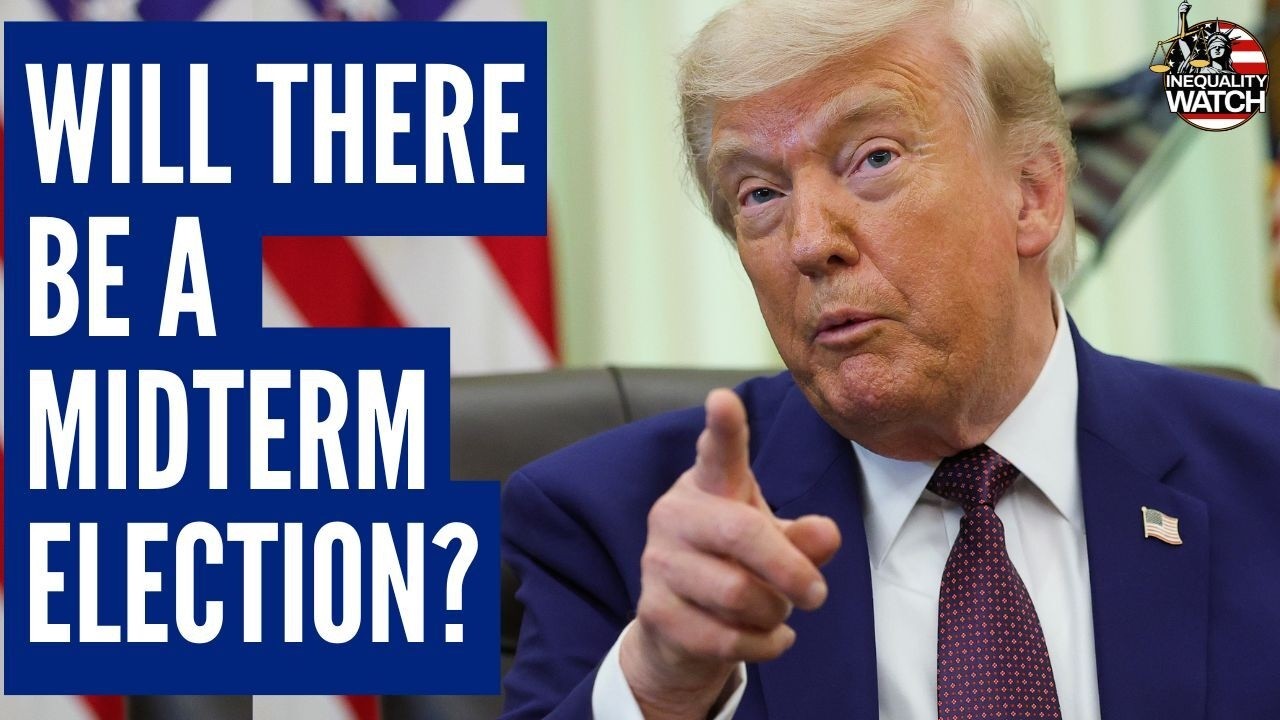
The election interference evidence no one is talking about

U.S. President Donald Trump speaks during an event in the Oval Office of the White House on June 03, 2026 in Washington, DC. Photo by Kevin Dietsch/Getty Images

Are President Donald Trump and MAGA Republicans publicly signaling that they plan to interfere in—and potentially rig—the 2026 midterm elections? If so, why is the media not taking the threat seriously? In this episode of Inequality Watch, Taya Graham and Stephen Janis investigate the connections between wealth inequality, political power, ICE funding, the influence of Super PACs on elections, and growing concerns about democratic accountability in Trump’s America.

Credits:

  • Pre-Production: Taya Graham, Stephen Janis
  • Studio Production / Post-Production: Cameron Granadino, Stephen Janis
Transcript

The following rushed transcript may contain errors. It will be updated as soon as possible.

Taya Graham:

Could President Trump and his MAGA Congress be planning to interfere with the upcoming midterm elections? Well, we have some evidence that might surprise you, which we will unpack on this episode of the Capitol Hill React Report. Hello, this is Taya Graham, myself, along with my reporting partner, Steven Janice, our Capitol Hill correspondence for the Real News Network. We report regularly on what’s happening in the nation’s Capitol, but with a twist. We examine the process of governance through the prism of the most powerful force in today’s politics, economic inequality. Now, before you say, tell you that seems sort of limited. Just let me explain a little bit before we get to the first video. Economic inequality is at its highest point in recent history. Just take a look at the latest report that showed American workers’ share of the economy has fallen to its lowest level since 1947.

That’s right. In 2025, the share of the economy that went to the people who actually make it run was 54% a historic low. Okay. So why is this context essential for reporting on politics? Well, because all that wealth accumulating in fewer and fewer hands translates into concentrated power and that power now flows into our elections in the form of cash. Cash, which translates into victories at the ballot box for the purveyors of an increasingly extractive economy, insulating it from ballot box accountability, which ultimately means that you can’t understand politics on Capitol Hill unless you comprehend what currently defines it, namely the rich getting richer. Stephen, how am I doing?

Stephen Janis:

So you’re doing great. I mean, one of the things we have to think about is we got to look at democracy as a whole here functioning through this prism of inequality. The idea of democracy that delivers a certain amount of freedom to the people who are part of it. Now, freedom is a limited resource. So as people get richer and richer, they hoard that freedom. And so there’s less freedom to go around. Freedom to do what you want, freedom to educate yourself, freedom to live where you want. All those things sort of translate into the affordability crisis we’re seeing now, which means that there’s less freedom for the working people and more and more freedom for the richest 1% and more and more freedom to control how we live. And that’s why we have this sort of crisis on Capitol Hill and that’s how we have to view what goes on on Capitol Hill.

Taya Graham:

Stephen, that is such a great point and brings us right back to the topic at hand. The incredibly tense state of American elections and why wealth inequality will play a key role in that autocratic calculus. So first, let’s be honest, Steven, the mainstream media has, in my opinion, been misreading Trump, specifically his pronouncements that he doesn’t care about gas prices or the quagmire in Iran. Let’s listen to him talk about it and then discuss. When you’re negotiating with Iran, Mr. President, to what extent are American financial situations motivating you to make it?

Donald Trump:

Not even a little bit. The only thing that matters when I’m talking about Iran, they can’t have a nuclear weapon. I don’t think about American financial situation. I don’t think about anybody. I think about one thing. We cannot let Iran have a nuclear weapon. That’s all. That’s the only thing that motivated.

Taya Graham:

Okay. So the interpretation from the TV pundits has been that President Trump is just inexplicably tone deaf or detached or just disinterested, but we think Trump is telegraphing something much more insidious. So Steven, let me ask you a question after watching this video. Is Trump just really disengaged as the mainstream media says, or as they say he’s unhinged, or is there something else a little more troubling going on here?

Stephen Janis:

Well, Ted, this is one of many clips where Trump has kind of downplayed midterm elections or voters concerns or gas prices or whatever. He does it consistently. And of course it would be suicide for a politician in a functioning democracy to say something like that, right? Because this would directly affect how people vote. I really think for some reason gas prices, well, I kind of understand that gas prices are one of the biggest motivators for people when it comes to elections. And so it would be suicide, but what he’s really trying to say is, “I’m not worried about the midterms because I got this locked out. ” And look at what happened in the last presidential election. He tried to overturn it with a lost, but he wasn’t really prepared. He has been preparing for two years now to be able to interfere with the elections.

He subpoenaed ballots all over the country, including Fulton County and Georgia. He has set up this election integrity system run by a person who actually denied the 2020 election. He has increased the funding for ICE and Border Patrol, which we’ll talk about later. He has just simply put people in place who will be able to do what he needs to do. The Justice Department itself does whatever he wants. They’ll prosecute anybody. Very true. So they will certainly be willing to weigh in on this. He is prepared. He’s declared emergencies in so many situations. He is prepared and he is trying to say, “I’m not worried about it because no matter what happens, I’m going to make sure that I come out on top.” And I think that’s what we’re missing here. When he says he’s disinterested, what he’s saying is, “I’ve got this in the bag.”

Taya Graham:

Steven, I think you put your finger right on it here. The real danger here isn’t just what Trump is saying, but the fact that everyone keeps dismissing it. And you know what Trump hasn’t even ruled out paying the people who stormed the Capitol and those who tried to halt the counting of the electoral votes in 2020, despite the fact that his administration said the fund is dead, he was literally just quoted as saying, “I think they should be reimbursed by a crooked government.” Now, his remarks regarding the controversial $1.7 billion weaponization fund bolster, I think the case that he believes he can alter the midterm outcome. It would’ve set aside money for people who believe they were unjustly prosecuted, namely the Jan six insurrectionists. I mean, critics say if Trump has his way, he will literally be able to assemble a pratorian guard to disrupt the elections.

And I’m alluding to the elite core of Roman military officers who guarded the emperor, but who eventually just took power themselves. Steven, what does it mean if he gets his way?

Stephen Janis:

Well, what it means is because ways he has what you need the first … The most important element of any sort of autocratic takeover is having the money to pay people and having the freedom to pay people any way you want. Now this $1.7 billion fund would be an easy way just to dole out cash to people who had done his bidding before. Now he has other ways of doing this that we’ll talk about. But the main thing is it gives them the power of the purse in a way that’s totally up to his discretion and the Justice Department, which is an extension of him. Now what’s interesting about it is I don’t really think they need a fund. Those J6 is going to just sue and then Trump can approve the payouts. That’s right. So he’ll get it one way or another. But the point is he wants to signal to the people, “Hey, if you help interfere with an election, I will pay for it and I’ll reward you because these settlements could be huge.

$1.7 billion is a lot of money.” Sure is. So I think that’s what he’s trying to telegraph is saying, “Help me out with this and you’ll get paid.”

Taya Graham:

Steven, that is not only spot on, but it’s actually really scary. But what’s even more concerning to me is how much this election interference plan is hiding in plain sight with little or no pushback because he can’t do this alone. He needs help from his ever loyal contingent in Congress. And for the most part, they are in lockstep with Trump. And that was more than evident when the MAGA Congress started to plot a strategy to get more money to ice customs and border patrol for purposes that we’re going to touch on a litle bit later. Now their plan was to use a tactic called reconciliation, which allows legislation to bypass the filibuster provided it has significant fiscal impact on federal spending. Now, this was an unprecedented power grab because the funding bill was intended to provide routine annual appropriations and that’s a measure that is usually passed with bipartisan support, which brings me to an interesting encounter we had on Capitol Hill with Republican Congressman Mike Lawler, who didn’t seem to want to answer our question when we asked why ICE and CBP needed an additional $70 billion in funding, but his reluctance is also revealing.

Let’s take a listen to what happened.

Rep. Mike Lawler:

Fuck that up.

Stephen Janis:

Congressman, why does ICE need an additional $75 billion? Why is that funding? How do you justify that to the American people who now are suffering with high gas prices and things like that? Why is that even more money?

Rep. Mike Lawler:

Well, that’s the cost of funding the department. Are you for abolishing ICE?

Stephen Janis:

I’m just asking the question. They already have $14.

Rep. Mike Lawler:

Well, you understand that that is the- I’m not

Stephen Janis:

For against anything.

Rep. Mike Lawler:

You understand that’s the appropriated amount, right? Yes. That’s been appropriated.

Stephen Janis:

Of course, but I’m asking

Rep. Mike Lawler:

Questions. So the reason additional funds, that’s the base budget for ICE and CBP, right? You understand that?

Stephen Janis:

I do.

Rep. Mike Lawler:

Okay. So the additional funds that came through the Working Family’s tax cut bill were to increase border security. Why? Because Joe Biden let in 10 and a half million people into the country.

Taya Graham:

Okay. Steven, just for the record, are you for abolishing ICE? Because you didn’t answer the congressman’s question.

Stephen Janis:

Yeah. I’m for abolishing politicians to be able to answer a question with a question and evade answering the question I ask. I’m for abolishing that. But one thing I want to just say before we move on is that his sort of argument that that’s the appropriate amount for ICE is actually wildly inaccurate. I look back into the ICE funding and what ICE and CPB have been spending roughly eight to $10 billion a year. They already have $140 billion. This is not an appropriate amount for anything. That’s an absolute freaking lie. ICE and CBT do not need that much money. This is excess cash. Taxpayer cash, your taxpayer dollars that are simply being spent without accountability. I think there’s a reason for that we’ll talk about in a second, but really he was just FOS on that. And I just want to point that out because it really was infuriating.

I was trying to get his answer, but I couldn’t sit there and get into an argument with him about what he was saying was actually patently false.

Taya Graham:

Personally, when a politician answers a question with a question, in my opinion, that is a sign they don’t have an answer or they have an answer, they don’t want the public to know. And he

Stephen Janis:

Definitely didn’t have an answer in this point. So good point, Teo.

Taya Graham:

Thank you. But I mean, the question you were asking was not insignificant. I mean, in fact, it was a really big piece of the puzzle, led us to think that the threats to the midterm elections are widely underestimated. Now, the crux of the matter is funding. Now what you asked is why Republicans want to give ICE, customs, and Border Patrol another $70 billion. And what makes this so unusual is that the big beautiful bill dropped roughly $140 billion on both agencies just last year. But with ICE and CBP spending at best $20 billion annually, it begs the question, why so much? What is it really for? And Steven, you have a theory about this. Tell me about it.

Stephen Janis:

Well, I think the thing you have to think about is that they’re moving towards a more autocratic form of government. Autocracies and democracies have different incentives, basically, different incentive systems. Technically speaking, a democracy wants to award beneficial policy for constituents. So to get elected, you got to do stuff that people like. Autocracies don’t work that way. They need to punish people who might push back. They need to crush dissent and that’s through a system of incentivization of punishment. And so in my opinion, this money, which can, I guess when you add up $210 billion for a law enforcement agency is about constructing a great American punishment regime to prepare Americans for a more autocratic government.

When I looked into the records and tried to figure out how much money does ICE and CPP still have on the books, it’s really hard to figure out because the federal government really isn’t oriented towards reporting on multifiscal year cycles about how much money they have. But I looked, I found at least $73 billion that had been unallocated so far. And that’s after they’ve already built all these warehouses, these prisons where they’re incarcerating people. So they literally have what would be for those agencies unlimited funding. And unlimited funding for law enforcement gives you a way to institute punishment throughout all levels of governance. I mean, those detention centers can be used to detain people for a variety of reasons. They’ve already detained Americans. They’ll detain more. Having an unlimited amount of money to swarm CPB and swarm ICE into cities gives you this ability to do what Trump did in Minneapolis, Los Angeles, Chicago.

And when these elections come and when Trump is trying to say, Hey, they weren’t fair, they’re going to need these guys and women to come into cities and to try to disrupt the people who will be pushing back or to seize ballot box. I really think this excess money is insulating both institutions and that’s for a reason to create a punishment regime that will be reflective of the autocratic values that the Trump administration is espousing through their policy choices.

Taya Graham:

Steven, you did the classic thing every reporter should do and actually anyone watching should do, which is follow the money. You follow the money, you figure out what’s really going on. So let me just ask you a question about this. I was thinking back to the first time it really hit home with us that something was afoot with regard to democracy during the shutdown last year. So last year, Democrats wanted to extend the Obamacare tax credits and Republicans refused. But what struck me at the time was how the majority party approached the entire conflict. They simply shut down Congress. They simply stopped town halls and talking to their constituents. No debate, no work, just silence. And of course, all of that was just to deny people healthcare. And that seems like a pretty anti-Democratic strategy. So how does it play into that theme you’re talking about, about the punishment regime theme?

What do you think?

Stephen Janis:

Well, the thing is if you shut it down, you’re kind of punishing people because you’re taking away the deliberative legislative body that’s supposed to represent their interests where you are supposed to hash these things out and figure out how to get people healthcare. So what you’re saying is, we don’t care. You don’t have healthcare, you’re being punished. We’re going to punish you by not doing anything and showing you that we don’t have to do anything and disengaging from our constituents. And so I think it’s a big part of that. I mean, a functioning legislative body should be an accountability mechanism to make sure things like ICE and CBP don’t get out of control. But now when they shut it down and turn it into this absolute desert of democracy, well, then you don’t have a limited legislative body to represent you. Without representation, you’re done.

I mean, what people don’t understand, and I think you’ve talked about this really, really well, is that democracy is a culture that infiltrates all levels of government governance. When you change that to a punishment regime, to an autocratic culture, everything changes.Your ability as a constituent and to vote and to have some impact and some say in how you live diminishes quite quickly. And I think that’s what we’re seeing here.

Taya Graham:

Steven, that’s a really, really good point. And you touched on constituents actually having a voice and this is something we caught at a press conference where that idea that you’re touching on right there was absolutely front and center. Now it was an announcement by Senator Bernie Sanders and Representative Summer Lee to announce a bill that would shut down super PACS. Now Super PACS are of course the campaign behemoths that can spend unlimited amounts of money basically to buy elections. Super PACS are like the corporate love child of Citizens United, that famous decision that allowed corporations to also spend unlimited amounts on electing people to subject us the working class to the extractive tendencies of our current economy. Now this union between them was so fruitful that it gave birth to political organizations with unlimited spending power and an insatiable appetite for television ads, digital marketing, robocalls, and anyone who’s willing to rent out a swing state’s airwaves.

Now, Sanders and Lee basically want to undo all that with a limit on how much Super PACS can raise. Their bill with limit contributions to $5,000 per individual or corporation, essentially disabling the Super PAC system that allowed Elon Musk to dump $280 million over a quarter of a billion dollars into President Trump’s campaign, which resulted in the mess that we’re currently living with. But I asked Senator Sanders a question and he had an interesting answer. Let’s take a listen and you can react on the other side.

Sen. Bernie Sanders:

I don’t want people to think this is just another issue. What somebody said is right. It is the most important issue. If we are the only major country on earth not to guarantee healthcare at all, why is that? You think it may have something to do with the power of the pharmaceutical industry and the insurance companies who spend zillions of dollars making sure we don’t move to a Medicare for all system? Do you think the fact that we have a starvation minimum wage has something to do with the fact that a lot of these corporations and business people don’t want to pay their workers a living wage, don’t want workers to join unions. The point here, this is not another issue. This is an issue that touches every bloody issue facing working people in this country.

Taya Graham:

Okay. Steven, I really want to hear your thoughts here. Is Senator Sanders connecting the right dots?

Stephen Janis:

Yeah, absolutely. Because money, cash, power, adulterates, democracy. And the way you adulterate it is to be able to deliver, to allow people who have the concentrated wealth to throw it all into the election. Now the whole idea of campaign laws is to limit influence of one individual or corporation. You can only donate so much no matter how rich you are. Now with super PACS, you can put everything you have into it if you want and that gives you disproportionate power and that creates an inequality basis for elections. So absolutely. And I want to point out one thing. You were the one who asked the question that set off that answer and I think it’s really vitally important because Sanders is connecting the dots. You can’t afford housing. Look at the super PAC. You can’t afford healthcare super PACs. All these super PACs create disproportionate influence for the smallest number of people possible.

It turns an election into really a choice of the oligarchy to decide who’s going to be in power and what policies they will implement. So it was a great answer and it’s absolutely spot on.

Taya Graham:

Steven, I asked the question because I felt like sometimes we, meaning journalists, don’t really connect the dots. And as we’ve discussed, as you’ve said, the great American punishment regime is a product of President Trump’s desire to diminish democracy, but it’s a political transformation that wouldn’t be happening if the system itself hadn’t failed to deliver for the majority of people who live under it. So what Sanders did is make the connection between big money and bad economics palpable and easy to see. He cut through the noise and made the argument that the wealth imbalance and the cash hoarding that it enables is cycled back into elections and fines forms and things like the affordability crisis or the housing shortage and of course our unresponsive and overly expensive healthcare system. These connections are crucial if political mechanisms like super PACS are both to be understood and mitigated.

If you don’t connect the accumulation of obscene wealth with the fact that you can’t pay your monthly utility bill, then it will be nearly impossible to sustain a movement to reform all of this. So Steven, how does Sanders and Lee’s idea fit into your theory of a punishment regime?

Stephen Janis:

Well, I want to say one thing first though before I answer that question, because it’s a great question, but I want to say this, I want to be the boy who cried wolf here. I am not saying this to be some sort of paranoid conspiracy theorist. I just see the tea leaves sitting up on Capitol Hill, like we talked about how they shut down Congress, like we talk about how Republicans don’t show up on the triangle anymore where most press conferences are held. I want to be wrong in this case, but I can’t ignore what I’m seeing. And when Senator Sanders talked about super PACs, there wasn’t that much media there and there really wasn’t that much media coverage of what he did and what Summer Lee was proposing, Congresswoman Summer League, excuse me. So I really think these elements are all connected.That’s why we did this show to connect them.

The super PACs fuel the oligarchy and the oligarchy fuels autocracy. You can’t have dissent when few people want to hold onto all the wealth. It’s not just and people are going to push back against it, but the only way you can stop it is to incentivize punishment to say, “You know what? You speak up, you’re in trouble.” And the way to use that mechanism is to diminish the value, the integrity, and of course just create uncertainty around elections. Trump has sort up a lot of uncertainty. He’s got unlimited amount of cash to spend to bolster it. I am extremely concerned. I just wish more people would listen to Senator Sanders and Congresswoman Lee on this issue. It’s critically important and you’re right.

Taya Graham:

Steven, I’m so glad you connected the dots for us in this way because once you see it like this, you can’t unsee it. So thank you so much, Steven.

Stephen Janis:

You’re welcome.

Taya Graham:

Okay. So that’s the end of this edition of the Capitol Hill Inequality Watch React. So thank you so much for joining us. We are going to keep reporting for you on Capitol Hill while discussing how wealth inequality influences our politics, our economy, and our lives. I’m Taya Graham, along with my reporting partner, Steve and Janice. People please keep fighting, keep voting, and most of all, please keep caring. Our democracy needs you.

💾

Battles over ICE funding, super PAC money, and the limits of congressional power on Capitol Hill reveal the groundwork being laid for a new kind of election interference in the 2026 midterms.
  •  

De la vida electoral colombiana al día después de… ¿Cómo se verán amigos y familiares?

De ganar el progresismo, es más fácil confiar en un paso de página, su discurso no ha sido de eliminación de la diferencia, ni autoritario.

Únete a nosotros en Telegram Twitter  y VK .

Escríbenos: info@strategic-culture.su

“Todas las guerras son malas, pero la guerra civil es la peor de todas, pues enfrenta al amigo con el amigo, al vecino con el vecino, al hermano contra el hermano.”

Frase popular durante la guerra civil estadounidense

“No, si la destrucción ha de ser nuestro destino, debemos ser sus autores y finalizadores. Como nación de hombres libres, viviremos para siempre o moriremos por suicidio.”

 — Abraham Lincoln

Desarrollo general de la contienda electoral

El 21 de junio es la segunda vuelta de las elecciones presidenciales colombianas 2026 – 2030. En un artículo anterior del día 19 de mayo, desarrollé como hipótesis un posible pacto o acuerdo entre Donald Trump y Gustavo Petro, de no interferencia del primero en las elecciones; hecho que se evidenció en el cese de improperios entre los dos presidentes desde febrero de 2026.

Ante la incredulidad de muchos frente a tal posibilidad, el propio presidente colombiano la confirmó al indicar que Trump había traicionado el acuerdo hecho en su visita de febrero. Hoy viernes 5 de junio, cuando escribo estas reflexiones, señala de nuevo la injerencia estadounidense aún más decididas luego de que Trump apoyara al candidato fascista Abelardo De La Espriella.

Claro está, el congresista republicano Bernardo Moreno, -o como le gusta ser nombrado tras obtener ciudadanía estadounidense, Berny Brown- proveniente de la élite cleptócrata colombiana ya estaba interfiriendo en las elecciones colombianas y fue al país andino en calidad de observador electoral señalando que los EE.UU. podrían no reconocer las elecciones si se ven anomalías, obviamente, en contra del que ellos quieren: De La Espriella. Ahora, el cubano – estadounidense secretario de Estado, Marco Rubio, -a quien quizá le agrada ser llamado ‘Marc Blond’- señala que vigilarán los comicios en Colombia y le quitarán la visa americana al que compre votos o haga fraude. Claro. En Colombia todos tienen cédula y pasaporte con visa americana. (guiño)

Varias cosas se suceden. Nada nuevo. Los tiempos electorales colombianos se ven salpicados de fraude, odio, intrigas, lenguaje vulgar, pasiones desbordadas, intromisión extranjera, no sólo estadounidense pues el presidente del Ecuador, con vínculos con el narcotráfico, Daniel Noboa, prometió en videollamada con De La Espriella retirar los aranceles puestos a mercancías colombianas. Esto fue una puesta en escena de tipo circense, pues la Comunidad Andina ya había ordenado el 21 de mayo como la fecha límite para el retiro de tales aranceles recíprocos de la mini guerra comercial de los dos países miembros. Es decir, Noboa prometió al colombiano lo que de facto debía hacer e hizo.

El fraude electoral con el algoritmo como señaló el presidente Petro, no logró verificarse (señalaba 885.000 personas inscritas extemporáneamente) y la recuperación de votos por parte del Pacto Histórico, partido del progresista Iván Cepeda, recuperó cerca de 23 mil votos; lo que no implica un hecho significativo ante los resultados finales: Iván Cepeda: 9.703.921 votos, Abelardo de la Espriella (ADLE): 10.366.143, quien también recuperó votos.

Así, en esta época electoral y desde la pre electoral colombiana, se exacerban, se crispan los nacionalismos, y los anti nacionalismos que piden invasiones o intervenciones extranjeras, piden mano dura, militar, letal, represión, austeridad, recortes a sectores populares y minorías o a segmentos propios del enfoque diferenciado como el femenino que es la mitad o más de la población mundial. en suma, sólo se piden políticas regresivas. Piden las masas populares la cárcel y la extradición de Petro al finalizar su mandato y tras ganar su candidato ultraderechista, ADLE.

El odio en Colombia se apalanca en una reedición de la lucha contra el comunismo que NUNCA ha vivido el país andino. Aunque esto también se ve en discursos internacionales en el propio EE.UU., lo que implica siempre un acento militarista, draconiano, totalitario, donde la gente, consciente o no, está dispuesta a privarse de derechos con tal de que el oponente político sea eliminado.

Las elecciones desde hace más de diez años en Latinoamérica, se votan en contra del que se odia y en tal método se puede elegir al diablo con tal de no ver ganar al oponente. Esto se ha comprobado en Argentina donde la gente con hambre celebra haberse opuesto al peronismo y al kirchnerismo, aunque Milei les recorte pensiones y servicios.

Para ADLE, el candidato progresista no es un contrincante político, ‘EL UNICO ENEMIGO ES CEPEDA’, señala a menudo. Al ganar la primera vuelta, fue igual de agresivo con la campaña del progresista y amenazó, señalando como siempre que actuará por la razón o por la fuerza. Y bueno, propone o imagina dar 30 días a los alcaldes municipales para acabar con la guerrilla y que demuestren resultados, lo que prevé la sombra del regreso de los asesinatos extrajudiciales llamados ‘falsos positivos’ (más de 8 mil). Rechaza el debate con Cepeda, porque dice que ‘no se sentará a hablar con enemigos’.

Estas demandas son propias de la ultra derecha que, en sus bases más humildes e iletradas, ignoran que apoyan el fascismo y son como corderos afilando el cuchillo de su pastor. Conozco a muchas personas maravillosas que se ven cegadas por el odio, por los clichés como Petro guerrillero, marica y borracho.

Pero omiten o desconocen que ADLE se ha declarado homosexual en más de una entrevista y lidera un partido anti diversidad, no sin antes transitar del ateísmo al ferviente amor y fe en Dios en plena campaña electoral; sin duda todo un milagro a favor del exterminio de la diferencia, mientras acumuló una fortuna de 40 mil millones de pesos en menos de 10 años en negocios con paramilitares, estafadores y narcotraficantes. Su lema de campaña: “firmes por la patria.”

Por su parte el progresismo afianza su discurso en ideas de paz, continuidad del proceso marcado por la administración Petro, promete hacerle un homenaje al final de su mandato. El lema de campaña, “Me la juego por la vida” o “Nos la jugamos por la vida”.

Reconoce errores en el desarrollo del programa Paz Total, el cual fue liderado por el propio Cepeda. Sobre este programa efectué un análisis en el artículo Colombia: todas las negociaciones con grupos al margen de la ley fracasarán mientras…

Reconocen que la corrupción se infiltró en la administración y que es una batalla a dar en la administración Cepeda, de darse.

La forma de expresarse Cepeda de la oposición y ADLE, es mediante críticas duras basadas en memoria histórica, los tilda de ultra derechistas, extrema derecha, fascistas o mafiosos. La adjetivación nunca ha desconocido que es un candidato, que es un opositor y no un enemigo a eliminar. Su campaña da continuidad de garantías a la derecha, como hasta ahora las han tenido durante la administración Petro. Sin embargo, sus bases sociales apelan a frases o adjetivos más duros, respecto a ADLE o Uribe, de lo cual no está exenta la base popular de ultraderecha, pero más en consonancia con la pobreza discursiva de su referente político, ADLE.

Cepeda llega como candidato tras derrotar en una consulta interna a Carolina Corcho, y por haber llevado a juicio y triunfado sobre el jefe paramilitar nunca demostrado, pero afirmado por sus lugartenientes, Álvaro Uribe Vélez; de cuyo hermano se acaba de ratificar sentencia de 28 años de prisión por crear un grupo criminal llamado Doce apóstoles, mediante el cual cometió asesinatos y paramilitarismo.

Su estilo es mesurado, firme pero carente a veces de ímpetu. Ha invitado o desafiado a ADLE a un debate público sin apuntes, pero como se vio, éste último no se expondrá a un debate. Su éxito se basa en el antecedente de lucha en el senado nacional y el juicio a Uribe, como señalé, así como en el acumulado de base social del progresismo y el petrismo.

Sin embargo, un público exigente e iletrado por obra del abandono estatal histórico, parido por décadas de violencia, en mi concepto necesita conectar con personajes pintorescos y agresivos como ADLE. No es que necesiten un tipo grosero y chabacano, ordinario como este cordobés, de tierras paramilitares que ha señalado desear ser como el paramilitar genocida Salvatore Mancuso. ADLE, señaló en entrevista para el pasquín Semana: “Mancuso es mi paisano y se echó a espaldas una lucha que debimos haber dado todos los cordobeses.”

Pero se necesita alguien de bríos tal vez tropicales como Petro, sucreño y costeño como ADLE. El reto de Cepeda y de sus jefes de campaña es cautivar, seducir al centro y confiar en la juventud que se ha volcado a apoyarlo sin esperar llamado alguno. El plan de gobierno, cercano a lo que se prospecta será su Plan Nacional de Desarrollo, consta de 433 páginas, lleva por lema, El poder de la verdad.

Este breve esbozo de algunos elementos y características de la contienda electoral tendrán como episodio final de tanto éxtasis, incertidumbre y odio acumulado, la definición presidencial el 21 de junio. El progresismo que no sólo ha sido gobierno sin poder por cuatro años, de perder, volverá a su lucha habitual de más de dos siglos con el sabor de haber experimento la gestión y la administración de lo público.

Si la ultra derecha pierde, entrará en un ciclo violento aún más peligroso en el contexto regional y ante un senado y cámara donde son minoría. Aunque si gana ha prometido llevar al caos y la violencia al país y esto no es amarillismo mío. Es el programa de gobierno de ADLE de tres páginas así como las múltiples intervenciones públicas del candidato.

Colombia: al menos desde 1920 en guerra civil

Aunque según la historiografía de la violencia, puede haber controversias y otras delimitaciones temporales, planteándose de 1920 al 1960 o de 1948 a 1958, según los hechos históricos que cada historiador propone englobar en tales recortes de tiempo, es importante reconocer que el país no ha tenido una paz significativa, que se redujera a anécdotas sobre delincuencia común o mafias y contrabando de todas las épocas.

El odio entre liberales y conservadores, la agresividad imperante en estos últimos, emparentados con el fascismo desde el grupo Legión Organizada para la Restauración del Orden Social o ‘Leopardos’, formado hacia 1920, ya introducía el germen autoritario venido de la vieja Europa.

El asedio tuvo como corolario el asesinato del liberal Jorge Eliécer Gaitán, en abril de 1948 y fue la inflexión histórica para la creación de grupos de autodefensa liberal campesina que luego pasaron a configurar guerrillas con iniciativas de toma del poder.

De ello devino la violencia estatal protectora del interés privado terrateniente y empresarial que debió organizarse no sólo mediante un ejército profesional sino una mano negra capaz de ejecutar todo aquello que no es permitido por los convenios internacionales.

Así, los pájaros, al inicio, luego el F2, el Departamento Administrativo de Seguridad DAS y finalmente los bloques paramilitares fueron configurando este grupo anti subversivo, anti estudiantil, anti intelectualidad y anti sindical, que se apalancaba de la mano del enemigo interno, el anti comunismo, el Plan Laso, Plan Cóndor, los informes Rockefeller, el Estatuto de Seguridad del Presidente Turbay en 1978 y aunque otros presidentes no fueron santos como Virgilio Barco, la ‘seguridad democrática’ de Álvaro Uribe Vélez marcó la historia reciente y disparó la violencia, las masacres y el desplazamiento interno a más de siete millones de colombianos.

La droga, marihuana y coca, personajes como Pablo Escobar, sus luchas y negocios con la DEA, las guerrillas colombianas y la institucionalidad que no lograba controlar el poder del narcotráfico han marcado parte de la historia colombiana.

Es la época de los 90’s, donde las guerrillas pierden sentido, se desgastan por su obrar interno errático de guerra prolongada, con insuficiente o nula proyección comunitaria o socialista, cayendo en el narcotráfico, con la excusa de pagar una guerra moderna más cara, pero confinados a un negocio que le mató desde adentro y acrecentó el hastío de la sociedad colombiana.

De ello ha devenido el diálogo de sordos. Si alguien dice tener ideas de izquierda, se le señala de guerrillero, de comunista terrorista, de vándalo o bandido. Si alguien es de derecha es paramilitar o paraco. En Colombia, esta guerra civil está viva y cuando se olvida se recicla para fomentar los sectarismos. El fantasma de la polarización está implícito, no solo en el sentido de pobres y ricos sino de liberales y conservadores, izquierda – derecha, paramilitares – guerrilleros, gente de bien – vándalos. Claro, esto así visto es simplista, hay matices, pero la animadversión sólo ve opuestos nítidos.

Dentro de las élites regionales esto se aprecia. Salvatore Mancuso, líder paramilitar condenado y quien ha confesado crímenes del paramilitarismo ante organismos estatales de EE.UU. y Colombia, es de la élite del departamento de Córdoba, al igual que Juvenal Ovidio Ricardo Palmera Pineda, alias Simón Trinidad, jefe guerrillero de las FARC que paga condena en EE.UU. es de la élite de Valledupar, departamento de Cesar. Hasta donde sé, se conocieron, fueron amigos antes de sus respectivos rumbos ideológicos.

En los barrios populares bogotanos, como el Policarpa, hay hombres que son amigos de infancia y ‘bloquean’ o integran un bloque paramilitar o ‘frentean’ y hacen parte de algún frente guerrillero. Se toman sus tragos, comparten, pero en sus roles militares pueden pactar o pelear.

Paradójicamente, como demostró el propio ADLE líneas atrás, ser paramilitar es una opción, un orgullo o una necesidad. También, el ministro de hacienda, Germán Ávila, respondió al gerente del Banco de la República que se sentía orgulloso de su militancia guerrillera en el M-19, grupo que hizo la paz y fue artífice de la Constitución de 1991.

En medio de este universo, que apenas describo de manera sucinta, el de una guerra civil permanente, los colombianos intentan ponerse al día con las tendencias políticas extranjeras como los gobiernos de Milei, Noboa, Bukele, Sheinbaum o Trump y a integrar a su cotidianidad las nuevas formas de entender la singularidad, el género y lo generacional, las violencias globales, sean el narcotráfico, la migración venezolana, particularmente, la trata de personas, de órganos, la exportación de combatientes para el mercenarismo en los conflictos ucraniano, africano o mexicano y demás.

Todo esto articulado bajo una sola y tóxica ‘pedagogía’: la difusión de información y adoctrinamiento de los medios de comunicación propiedad de grandes consorcios internacionales, como por ejemplo lo es el grupo empresarial ultraderechista, Prissa de España, dueño en México, Chile y Colombia del espacio radial llamado W Radio, en cada país. Por si fuera poco, el mismo grupo hace los libros de texto de ciencias sociales y educación primaria y secundaria para Iberoamérica con la editorial Santillana.

Así, solo una guerra civil, sin memoria, pero con el dolor, la paranoia y el odio como premisas puede enmascararse tras el debate más superfluo: ponerse o no una camiseta de una selección de fútbol arribista y que niega su origen humilde en varios de esos jugadores, como James Rodríguez que no saludó a la hija del presidente -una niña que juega fútbol- en la despedida para el mundial o las manifestaciones de Luis Díaz y otros abiertamente uribistas.

Es increíble que la forma más excelsa de nacionalismo sea robar o no dejarse robar una camiseta, pero ello es expresión de la banalidad discursiva del colombiano hecho a pulso de la violencia en la cual el Estado ha invertido históricamente más que en educación y en ésta, ha ELIMINADO el estudio de la historia.

Pero, ¿Cómo quedarán los ciudadanos de a pie tras despertar de la borrachera del insulto?

El día después de…  ¿Cómo se verán amigos y familiares?

Cuando alguien de la familia o amigo le va a un equipo de fútbol, e incluso a un partido político, puede haber acaloramientos y subsanarlos. Pero, cuando uno de los partidos promete aniquilar al diferente, cuando ve en el otro partido no a un adversario ideológico sino un enemigo, no ve estudiantes de universidad pública sino vándalos o vagos, ¿acaso estos familiares y amigos no comprenden que a mediano plazo pueden ser apartados de sus seres queridos? ¿Qué pueden ser despojados de derechos?

Durante la creación y afianzamiento de los regímenes totalitarios todos los ciudadanos trabajan para el Estado. Por lo cual, deben denunciar a amigos o familiares por el bien del Estado. Ello lo retrató de manera pasmosa George Orwell en su película 1984.

Piensan acaso que sólo será una resaca electoral para quien pierda, que vendrá el perdón a la agresión, que todo seguirá ahora normal, que se restauró la democracia o se logrará una venganza o justicia sólo a otros comunistas, progresistas, pero NO a los hermanos, familia o amigos de tales tendencias.

Ignoran que las retaliaciones pueden desatarse, como ocurrió con la administración Uribe, que su familiar o amigo puede perder su puesto por su tendencia ideológica o ser puesto preso o asesinado.

De ganar el progresismo, es más fácil confiar en un paso de página, su discurso no ha sido de eliminación de la diferencia, ni autoritario.

Mirarán progres y ultraderechistas en familia los partidos del mundial y celebrarán el triunfo o la derrota. Verán que la camiseta les pertenece a ambos, como la guerra civil que viven hace más de cien años, mucho antes de tener una selección de fútbol en un mundial.

Discutirán sobre las fallas técnicas, el arbitraje, las opciones perdidas o las grandes jugadas y aplazarán una vez más la discusión fundamental: la guerra civil, la animadversión y el odio que les han sembrado.

Todo se sabrá, poco a poco, tras la resaca electoral.

  •  

How much longer will Orbán be Putin and Trump’s man in Brussels?

Viktor Orbán, Hungary’s prime minister since 2010, faces an election dogfight. Behind in the polls, he has been effectively endorsed by both the Kremlin and the White House, and a host of conservative world leaders. As wars in Iran and Ukraine exacerbate the fissures that have weakened NATO, as well as the U.S.’s relationship with the European Union, this is an election that is being followed with bated breath in Washington, Moscow, Kyiv and Brussels. 

Before the elections on April 12, a scandal engulfed the Hungarian government. On leaked recordings, foreign minister Péter Szijjártó can be heard deferentially acquiescing to his Russian counterpart Sergey Lavrov and passing on information from EU meetings. Szijjártó appeared willing to help the Kremlin’s cause in Brussels, to remove oligarchs and their relatives from the EU blacklist, and to block efforts to aid Ukraine. Hungary’s advocacy for the Kremlin’s agenda culminated in its recent veto of fresh sanctions on Russia and over $100 billion in loans to Ukraine. On X, Polish prime minister Donald Tusk wrote that while “Hungary is and will be in the European Union, Victor Orbán and his foreign minister left Europe long ago.” And the Irish taoiseach Micheál Martin described Szijjárto’s calls with Lavrov as both “sinister” and “alarming.”

Szijjárto alleged that “foreign intelligence services, with the active involvement of Hungarian journalists, have been intercepting my phone calls.” It is a plot, the Hungarian government claims, to influence the upcoming polls. Orbán directly blames Ukraine for seeking to unseat his government. The opposition, led by Peter Magyar, has a healthy lead in the polls and describes the Hungarian government’s closeness to the Kremlin as “treason.” According to European intelligence reports, Moscow sent a three-person team to Hungary, overseen by Putin confidant Sergei Kiriyenko who ran an operation to interfere in the Moldovan election back in September. His tactics encompassed “vote-buying networks, troll farms, and on-the-ground influence campaigns.” A Kremlin-linked media consultancy, facing EU sanctions, was hired to dismiss Magyar as a Brussels stooge and portray Orbán as the only candidate strong enough to to be treated as an equal by world leaders, as evidenced by the strength of his relationship with Trump. 

Despite a war with Iran that doesn’t appear to be going entirely to plan, the U.S. president took time out to back Orbán with enthusiasm and at considerable length on Truth Social. Trump said Orbán was “a true friend, fighter, and WINNER.” JD Vance, the vice president, is scheduled to visit Hungary on April 7, just five days before the election. And secretary of state Marco Rubio went to Hungary in February. It is now part of the U.S. National Security Strategy to work towards “cultivating resistance to Europe’s current trajectory within European nations.” To that end, notes the U.S. government, “the growing influence of patriotic European parties indeed gives cause for great optimism.” Orbán speaks MAGA’s language on immigration, traditional values and the Christian essence of Western societies. He is, like Putin and Trump, in MAGA’s view, an implacable opponent of secular, progressive, globalist politics as symbolised by Brussels.

Orbán, the longest serving current head of government in the EU, has become a figurehead for populist, nationalist movements across the world. The recent CPAC Hungary summit was attended by several of these leaders including France’s Marine Le Pen, Italian deputy prime minister Matteo Salvini, and the Netherlands’ Geert Wilders,who called Orbán “a lion on a continent led by sheep.” Latin American leaders close to Trump , including Javier Milei of Argentina and Jose Antonio Kast of Chile, also attended. Milei, who gave the longest speech at the summit, said Orbán was “a beacon for all… who refuse to accept that the West's destiny is one of managed decline.” This international network, with the United States and Russia included, has a vested ideological interest in seeing Orban continue to remain a thorn in the EU's side. 

But what can Brussels do? The answer, it appears, is not much. The EU is consensus driven; it needs all its parts to act in concert, giving holdouts like Orbán considerable power to hold the whole bloc hostage. But given Orbán’s prominence as an ideologue, when Hungary blocks sanctions or delays support for Ukraine, it is more than a single nation going rogue. Alice Weidler, co-chair of the far-right AfD, the largest opposition party in the German Bundestag, was among those who spoke at the CPAC Hungary conference last month. Robert Fico, prime minister of Slovakia, is an Orbán ally. On April 19, Bulgaria will have its eighth general election in just five years. Former president Rumen Radev’s new Progressive Party leads the polls and shares Orbán’s pro-Kremlin, anti-EU inclinations.

So polarized is the Hungarian election, that right wing groups are deploying their own observers from Argentina, Austria, the Czech Republic, Kenya, Poland, Germany, Italy, Spain, Serbia, Tanzania and the United States to monitor proceedings. EU observers have said the Hungarian government controls the national media and a recent documentary alleges that a desperate government is resorting to vote-buying, gerrymandering and intimidation tactics. It’s hard to see how either Orbán or Magyar will accept the election result without protest, unless the margin is crushing. But, given Trump’s disdain for NATO allies and the EU, an Orbán election defeat would be a much-needed victory for European unity. 

A version of this story was published in this week’s Coda Currents newsletter. Sign up here.

The post How much longer will Orbán be Putin and Trump’s man in Brussels? appeared first on Coda Story.

  •  

Anti-cartel candidate 'The Tiger' channels Trump and Bukele in Colombia election shocker

Colombia’s first-round presidential election, won by tough-talking conservative Abelardo de la Espriella, signaled what analysts describe as a growing backlash across Latin America against leftist governments.

The presidential election could carry significant implications for U.S. interests in the region, including drug trafficking, migration and regional stability, as voters increasingly prioritize security, counternarcotics policies and economic stability ahead of a June 21 runoff between de la Espriella and leftist candidate Ivan Cepeda.

"For the Trump administration, a Colombia that recommits itself to security cooperation, counternarcotics efforts, and stronger democratic institutions would be a major win and an important step forward towards restoring stability across the Western Hemisphere," Melissa Ford Maldonado of the America First Policy Institute (AFPI) told Fox News Digital from Colombia.

ANTI-CARTEL HARDLINER CHANNELS TRUMP IN BID TO END COLOMBIA'S LEFTIST ERA IN PIVOTAL ELECTION

"What happens in Colombia affects the flow of drugs into American communities, the strength of transnational criminal networks, migration pressures and the broader balance between democratic governments and criminalized regimes throughout the region," she added.

The first-round winner, de la Espriella, a conservative lawyer and political outsider known as "El Tigre" ("The Tiger"), has emerged as the face of Colombia's security-focused shift. 

An admirer of President Donald Trump and El Salvador's President Nayib Bukele, won 43.7% of the vote Sunday, outperforming most polls and advancing to a runoff against left-wing Cepeda, the candidate backed by President Gustavo Petro. 

His campaign has centered on a hardline crackdown on criminal organizations, which he argues have flourished under Petro's "Total Peace" policy.

In an interview with the Associated Press, de la Espriella pledged to open mega-prisons and take a far more aggressive approach toward criminal groups. "Criminals will either surrender or leave the country," he said.

The vote comes as Colombia faces rising violence, expanding criminal organizations and growing criticism of President Gustavo Petro’s "Total Peace" strategy, which sought negotiations with armed groups and criminal networks.

AT LEAST 80 PEOPLE KILLED IN NORTHEAST COLOMBIA AS PEACE TALKS FAIL, OFFICIAL SAYS

"Colombia heads into a June 21 runoff with armed groups controlling vast stretches of the country, a failed ‘Total Peace’ negotiating strategy leaving communities more exposed than when it began, and a Venezuelan refugee crisis that has overwhelmed the state's already thin capacity to govern its own territory," Daniel Swift, senior research analyst at the Foundation for Defense of Democracies told Fox News Digital.

Maldonado said Colombia’s election reflects a wider political shift taking place across Latin America.

"This election is part of a broader trend across Latin America, where voters are increasingly rejecting the failed promises of the left in favor of security, sovereignty and economic opportunity," she said.

ECUADOR'S PRESIDENTIAL ELECTION GOES TO RUNOFF BETWEEN CONSERVATIVE INCUMBENT, LEFTIST LAWYER

"We’ve seen it in Argentina, Ecuador, Bolivia, Chile, Honduras, Costa Rica and now increasingly in Colombia."

Swift agreed the election results reflect a broader regional trend.

He said with de la Espriella outperforming "every poll, with security at the top of every voter's mind — confirms that Colombia is part of a broader regional reckoning: Latin Americans are losing patience with governments that cannot provide security," Swift said.

Maldonado said the results reflected mounting frustration with the country’s direction under Petro.

CLICK HERE TO DOWNLOAD THE FOX NEWS APP

"Years of growing insecurity, rising coca cultivation, expanding criminal organizations, and concessions to armed groups have left many Colombian people frustrated with the direction of the country," she added.

The June 21 runoff is expected to focus heavily on security policy, organized crime and Colombia’s future relationship with the United States under the Trump administration. Maldonado argues it "offers Colombia an opportunity to begin reversing course and reestablish a principle that should have never been up for debate: criminal organizations should be confronted, not negotiated with."

  •  

US Secretary of State’s Surprise Visit to Yerevan: What’s Behind the New Wave of Armenian-US Cooperation?

On his way back from India to the United States, US Secretary of State Marco Rubio paid a brief but significant visit to Armenia. This unexpected gesture from Washington raises a legitimate question: what is behind such keen interest in Yerevan? Zvartnots – A Platform for Signing New Agreements Information about the upcoming visit of […]
  •  

‘Debases the democratic process’: Sotomayor pens scathing dissent as Supreme Court allows racist Alabama map

U.S. Supreme Court Chief Justice John Roberts, U.S. Supreme Court Associate Justice Sonia Sotomayor and U.S. Associate Supreme Court Justice Ketanji Brown Jackson listen as U.S. President Donald Trump speaks during inauguration ceremonies in the Rotunda of the U.S. Capitol on January 20, 2025 in Washington, DC. Photo by Chip Somodevilla/Getty Images
Common Dreams Logo

This story originally appeared in Common Dreams on June 03, 2026. It is shared here under a Creative Commons (CC BY-NC-ND 3.0) license.

The US Supreme Court late Tuesday gave Alabama a green light to use an aggressively gerrymandered congressional map that a lower court said was “tainted by intentional race-based discrimination.”

The unsigned decision, from which the high court’s three liberal justices dissented, enables Alabama’s Republican-dominated government to replace its current congressional map, which has two majority-Black districts, with a map that the US Supreme Court struck down in 2023. That map has just one majority-Black district.

In her dissenting opinion, liberal Justice Sonia Sotomayor wrote that “just as Alabama doubled down on racial discrimination, the court today doubles down on chaos.”

“In addition to being wrong on the merits, the court’s decision inflicts two grave harms on the public,” wrote Sotomayor. “It debases the democratic process by upending Alabama’s entire election in the name of permitting Alabama to discriminate against Black Alabamians. It also corrodes the rule of law by rewarding Alabama’s gamesmanship and outright defiance of court orders.”

The liberal justice noted that in order to switch to the map previously struck down by the high court, Alabama election officials “will have to reassign hundreds of thousands of voters across the state to new congressional districts.”

“Three of Alabama’s counties will be particularly hard hit because they are split across two congressional districts,” Sotomayor noted. “These counties have about 600,000 registered voters between them (roughly 15% of the state’s total number of registered voters).”

Alabama Gov. Kay Ivey, a Republican, postponed US House primary elections in the wake of the Supreme Court’s April decision in Louisiana v. Callais, which severely narrowed the 1965 Voting Rights Act’s protections against racial discrimination and paved the way for Alabama and other states to impose new maps ahead of the 2026 midterms.

“The Supreme Court’s shameful ruling allowing Alabama to move forward with a gerrymander that was drawn with the explicit intent to dilute Black voting power—as found by a panel of judges that included two Trump appointees—is an absolute affront to the founding principles of our democracy, and wipes out whatever was left of the court’s credibility,” said Marina Jenkins, executive director of the National Redistricting Foundation. “This country deserves better, and we must continue to work toward federal legislation that not only bans partisan and racial gerrymandering but also ensures that our rights cannot be undermined by captured courts.”

The ruling drew condemnation from the two Democrats in Alabama’s US congressional delegation. Rep. Shomari Figures, who was elected to the US House under the independently drawn map that Alabama Republicans are working to replace, said in a statement that “the Supreme Court has now confirmed that there is no longer a Voting Rights Act in America, and states are essentially free to discriminate against minority voters with no consequences.”

“This is a dangerous ruling that sets the state and this nation back decades,” said Figures.

Rep. Terri Sewell called the ruling “just the latest in a pattern of outrageous Supreme Court decisions that help Republicans desperately cling to power ahead of the midterm elections while diluting Black voices and erasing decades of hard-fought civil rights progress.”

“No matter how hard Alabama state officials may try, they will not succeed in silencing our voices,” said Sewell. “We will not go back to the Jim Crow era. The fight for fair representation continues.”

  •  

Revue juridique et politique en Afrique

Le financement des partis politiques africains dans les régimes pluralistes fait l'objet d'un encadrement législatif de plus en plus précis, mais les moyens administratifs de contrôle restent insuffisants. Une contribution détaille l'exemple de la Côte d'Ivoire. (N° 8, 2026/1, mars, trimestriel, accès gratuit sur cairn.info. — Bamako, Mali.)

  •  

Upcoming Elections in the Republic of Korea: Candidate Registration and the Balance of Power

On 13–14 May, the Republic of Korea saw the registration of candidates for the local and by-elections to the National Assembly scheduled for 3 June come to an end. These elections will be the first nationwide vote since the administration of President Lee Jae Myung came to power and are regarded by experts as an important […]
  •  

‘Logical conclusion’ of Citizens United as Delaware judge lets corporations vote in local elections

Attendees hold signs as they listen to speakers during a rally calling for an end to corporate money in politics and to mark the fifth anniversary of the Supreme Court's Citizens United decision, at Lafayette Square near the White House, January 21, 2015 in Washington, DC. Photo by Drew Angerer/Getty Images
Common Dreams Logo

This story originally appeared in Common Dreams on May 27, 2026. It is shared here under a Creative Commons (CC BY-NC-ND 3.0) license.

A judge in Delaware—a state with more registered business entities than people—ruled Monday in favor of a small town that allows corporations to vote in local elections.

Delaware Superior Court Judge Craig Karsnitz ruled that the town of Fenwick Island, population 400, did not violate the state Constitution by permitting business entities—which make up 12% of the town’s “population”—to vote in municipal elections, as case plaintiff the ACLU of Delaware had claimed.

“What is a ‘person?’ When one cuts to the heart of this case, that is the question,” Karsnitz wrote to open his 20-page ruling.

‼️‼️Delaware Superior Court upholds a municipal ordinance allowing individuals to cast votes on behalf of LLCs, trusts, and corporations in local elections against a challenge that the ordinance constitutes unlawful vote dilution for real persons under the state constitution. aboutblaw.com/blQg

Anthony Michael Kreis (@anthonymkreis.bsky.social) 2026-05-27T20:46:10.133Z

“According to the law, a person is anyone or anything that can initiate and be subject to legal proceedings. By this conception, any adult, corporation, or institution is a person, but a minor is not a person, a fetus is not a person, and a humanoid robot… is not a person,” the ruling continues. “This highlights that legal personhood is dependent solely on legal recognition.”

The judge noted that in 2008, the Delaware General Assembly amended Fenwick Island’s charter “to expand its voter registration rolls to allow individuals to cast votes on behalf of trusts, limited liability companies, partnerships, and corporations that own property in Fenwick.”

“Today, the overwhelming majority of legal entity property owners in Fenwick registered to vote, and on whose behalf votes are cast, are trusts,” Karsnitz added.

“I appreciate that Plaintiff may disagree with Delaware’s policy of authorizing certain municipalities to allow voting on behalf of entity property owners,” the judge wrote.

“Visions of faceless large corporations, or even HAL, controlling a small town are frightening and the stuff of science fiction,” he continued,“ referring to the malevolent artificial intelligence-powered computer in Stanley Kubrick’s 1968 film version of Arthur C. Clarke’s 2001: A Space Odyssey. ”However, Plaintiff has not demonstrated that this policy violates the principle of one person/entity/one vote.“

“Plaintiff points to no other persuasive independent authority than the Elections Clause of the Delaware Constitution itself,” Karsnitz concluded. “And matters of policy are appropriately left to legislative bodies, not the courts.”

Fenwick Island Mayor Natalie Magdeburger told Reuters earlier this year that “a property owner who pays taxes and is subject to our ordinances should have a say in who represents them on our Town Council.”

Meanwhile, the ACLU of Delaware contends that “with over 2 million business entities incorporated in Delaware–roughly double the amount of actual people living in the state–the people of Delaware risk having their voices drowned out when towns like Fenwick Island allow corporate voting.”

Karsnitz’s ruling does not mention Citizens United v. Federal Election Commission, the 2010 US Supreme Court decision affirming that political spending by corporations, nonprofit organizations, labor unions, and other groups is a form of free speech protected by the 1st Amendment that government cannot restrict. The decision ushered in the era of super PACs—which can raise unlimited amounts of money to spend on campaigns—and secret spending on elections with so-called “dark money.”

While Delaware’s corporate personhood laws long predate Citizens United, numerous critics of Monday’s ruling referred to the case, including the progressive legal advocacy group Demand Justice.

A Delaware state judge just ruled that corporations can vote in local elections.

Over 200 "artificial entities" (LLCs, trusts, corporations) are now registered voters in Fenwick Island. That's 12% of the electorate.

Delaware has more corporations chartered in the state than… pic.twitter.com/YJ5EZ1F1en

— Demand Justice (@WeDemandJustice) May 27, 2026

“Corporations aren’t people,” the group asserted on X. “They don’t have kids in local schools, they don’t drink the water, they can’t be jailed for crimes, and they shouldn’t get a vote.”

Some compared Hawaii, where Democratic Gov. Josh Green recently signed legislation clarifying that corporations are not people, with Delaware.

“Hawaii made a move to rein in Citizens United,” writer Van Dennis posted on X, “and Delaware responded, ”The fuck you are.“

  •  
❌