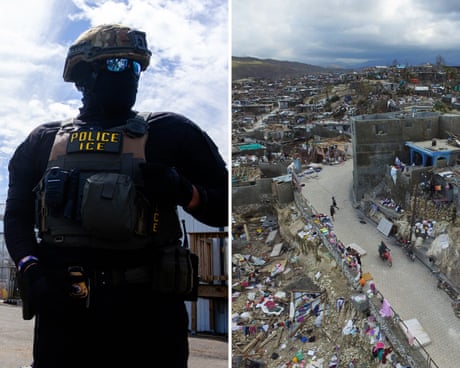
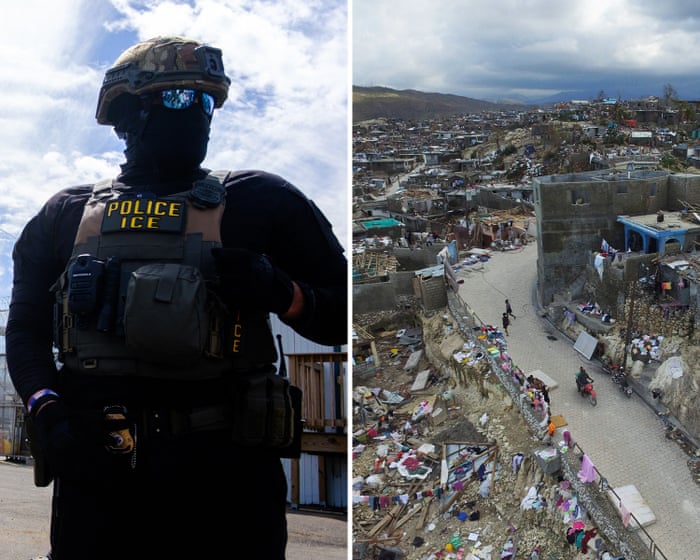
Donald Trump’s immigration crackdown is largely targeting people from the countries most vulnerable to displacement from climate-driven disasters, a Guardian analysis shows.
As the Trump administration pushes policies to boost planet-heating fossil fuels, millions of people are being forced to flee their homelands due to storms, floods and droughts worsened by the climate crisis.
A Sudanese asylum seeker accused of blinding a Belfast man in one eye during a stabbing attack appeared in court Wednesday as anti-immigrant unrest spread across Northern Ireland.
Hadi Alodid, 30, was ordered to be held in jail after appearing by video in Belfast Magistrates' Court, where prosecutors accused him of blinding Stephen Ogilvie in his left eye during Monday's attack.
Alodid was charged with attempted murder, threatening to kill a radiographer and possessing a knife. He declined legal representation through an Arabic interpreter and did not enter a plea.
The attack, which occurred shortly after 10:30 p.m. Monday in north Belfast and was captured in graphic video footage that quickly spread online, sparked outrage and fueled demonstrations that turned violent overnight. Police said Ogilvie, a man in his 40s, suffered serious injuries to his face, neck, back and eyes, and officers recovered what they believe was a kitchen knife from the scene.
Video circulating online appeared to show members of the public confronting the attacker, including one person wielding a hurling stick. PSNI Assistant Chief Constable Ryan Henderson praised the bystanders as "heroic," saying their intervention helped save the victim's life.
Police said Alodid entered Northern Ireland from the Republic of Ireland in 2023, applied for asylum and was granted a five-year permit to remain. Authorities initially identified him as Somali before later correcting his nationality to Sudanese.
PSNI Assistant Chief Constable Ryan Henderson said investigators had "no information to suggest that this was a terrorist-related incident" and were not seeking additional suspects.
Masked men set fire to several homes they believed housed immigrants following the incident. They also burned trash bins, torched a Belfast bus and threw objects at police officers. Firefighters rescued multiple people from burning homes.
Police said they had declared a critical incident and increased their presence across Northern Ireland amid concerns about further unrest.
Anselme Shima, a Belfast resident originally from the Democratic Republic of the Congo, said he witnessed the aftermath of the unrest near his home.
"I've lived on my street for almost 10 years, I have a good relationship with my neighbors, but last night was a horrific one," he told Reuters. "We don't know what to do. I'm scared. Seeing this, I'm wondering if I'm next."
First Minister Michelle O'Neill of Sinn Fein described the unrest as "thuggery."
"Groups of masked men burning families out of their homes is nothing less than disgusting cowardice," she said.
Deputy First Minister Emma Little-Pengelly of the Democratic Unionist Party said that "taking frustration at the evil actions of a person out on those who had no part in it is utterly wrong."
British Prime Minister Keir Starmer called the stabbing attack "sickening" and condemned violence targeting people because of their background.
"The scenes in Belfast last night were shocking and completely unacceptable," Starmer wrote on X. "There is no justification for the violence and disorder that we saw threatening our communities, nor for those who encouraged it, online or elsewhere. It is clear that people were targeted last night because of their background and I will not tolerate it."
The unrest was amplified online by anti-immigration activists, including Stephen Yaxley-Lennon, better known as Tommy Robinson.
Some politicians said the stabbing should prompt a review of the open border between Northern Ireland and the Republic of Ireland, a highly sensitive issue because free movement across the border is a central pillar of the peace process that largely ended decades of violence known as "The Troubles." The conflict involving Irish republican and British loyalist militants, as well as U.K. security forces, left nearly 3,600 people dead before the 1998 peace accord.
Much of Tuesday's unrest took place in working-class areas where former paramilitary groups continue to wield influence.
The case comes amid ongoing debate in Britain over another fatal stabbing that drew national attention in Southampton, England, last year.
Henry Nowak, who was White, was killed by Vickrum Digwa, a Sikh man who falsely claimed to police that he had been the victim of a racist assault by Nowak. Officers initially treated the wounded Nowak as a suspect before recognizing his injuries and attempting to save his life.
Digwa was convicted of murder and sentenced last week to life in prison with a minimum term of 21 years. The case has fueled debate about policing and race, and a protest following the killing turned violent, with some participants attacking officers with chairs and rocks. Several people were later charged with violent disorder.
Fox News Digital's Efrat Lachter and The Associated Press contributed to this report.
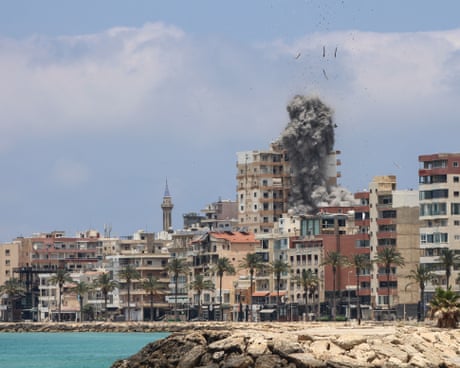
Israel has bombed the city of Tyre, killing eight and injuring at least 32 people, and struck dozens of other villages in south Lebanon as it issued forced evacuation orders for the historic Christian quarter of the ancient city for the first time.
Israel struck the al-Masaken neighbourhood without warning on Tuesday morning, sending smoke plumes high above the city’s buildings and igniting fires. Further airstrikes were carried out across the city and a series of bombings hit Abbasieh, a village north of Tyre.
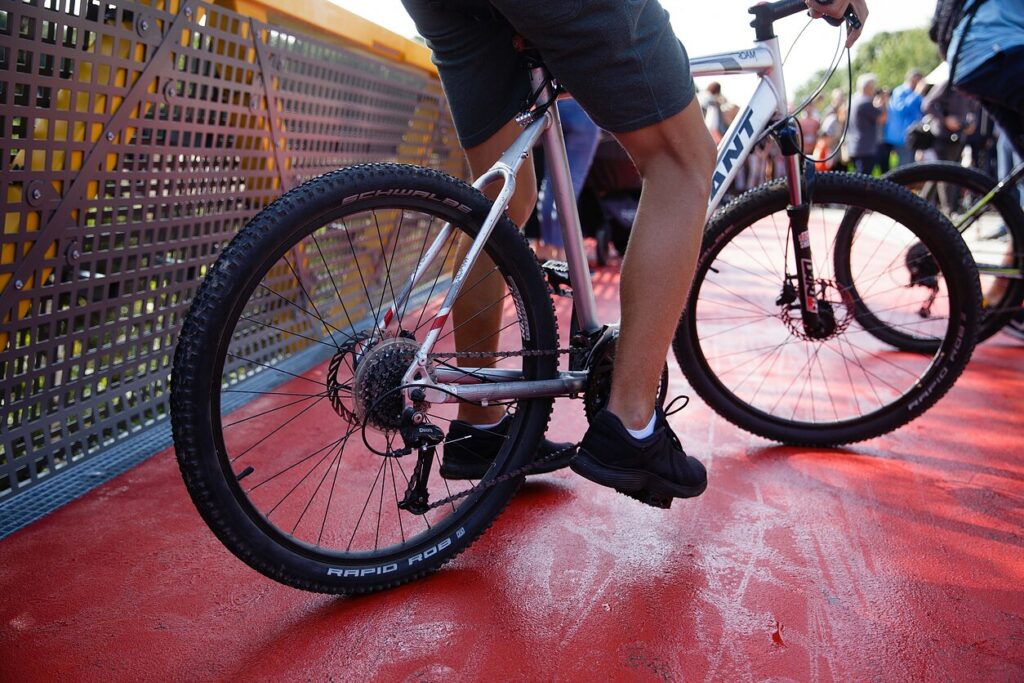
A Lithuanian court has convicted a man who ran a cyclist off the road and attacked him for wearing a shirt with Ukrainian symbols, according to LRT. Judges treated his hatred of people who support Ukraine as an aggravating circumstance. The verdict is now final, and the court found the assault was deliberate, not an accident.
As Russia continues its all-out war against Ukraine, open support for Ukrainians across the Baltic states through flags, clothing, and fundraisers has become a marker of identity, even as it occasionally provokes hostility.
The roadside attack
On the evening of 27 March 2025, the man drove up to the cyclist on a road in Lithuania's Širvintos district. He repeatedly ordered the cyclist to take off the shirt bearing Ukrainian symbols. When the cyclist refused, the driver passed him, then swung the front of his car toward the roadside and blocked his path. The cyclist braked hard and fell with his bicycle. He suffered injuries, and the bicycle was damaged.
When the cyclist got back up, the man ran over to him. He again demanded that the cyclist remove the shirt, grabbed it, and tried to pull it off. The cyclist reached for his phone to call for help. The man struck him and knocked the phone onto the asphalt, breaking it, the court found.
Explore further
Two Polish citizens detained in Przemyśl for desecrating Ukraine’s flag — sixth such attack in last months
A hate motive, the court ruled
The Vilnius Regional District Court found the 1987-born man guilty of damaging another's property and causing minor bodily harm. Evidence from the investigation showed the violence was not random, the court said. It stemmed from the man's hatred of the victim as someone publicly backing Ukraine against Russia's invasion. The court treated that motive, hostility toward a group for supporting Ukraine, as an aggravating circumstance.
The court handed the man a non-custodial penalty of one year and three months' restriction of liberty. During that time, he must work or register as a jobseeker. He must also complete a program aimed at changing violent behavior. On top of that, he owes the victim for material and non-material harm, and he must repay Lithuania's State Patient Fund for the cost of treating the injuries.
Explore further
Switzerland to limit protection status for Ukrainians from seven western oblasts
A Vilnius District Prosecutor's Office prosecutor, Edvinas Navickas, led the pre-trial investigation and the prosecution. Vilnius County police officers gathered the evidence. The court issued its verdict on 12 May, and it has since taken effect, the prosecutor's office reported. Lithuania, a NATO member bordering Russia, has been one of Ukraine's strongest backers since 2022, sending weapons and welcoming Ukrainian refugees.
Lithuania has prosecuted this hatred before, convicting a man who smashed a displaced family's car.
Ukrainian refugees
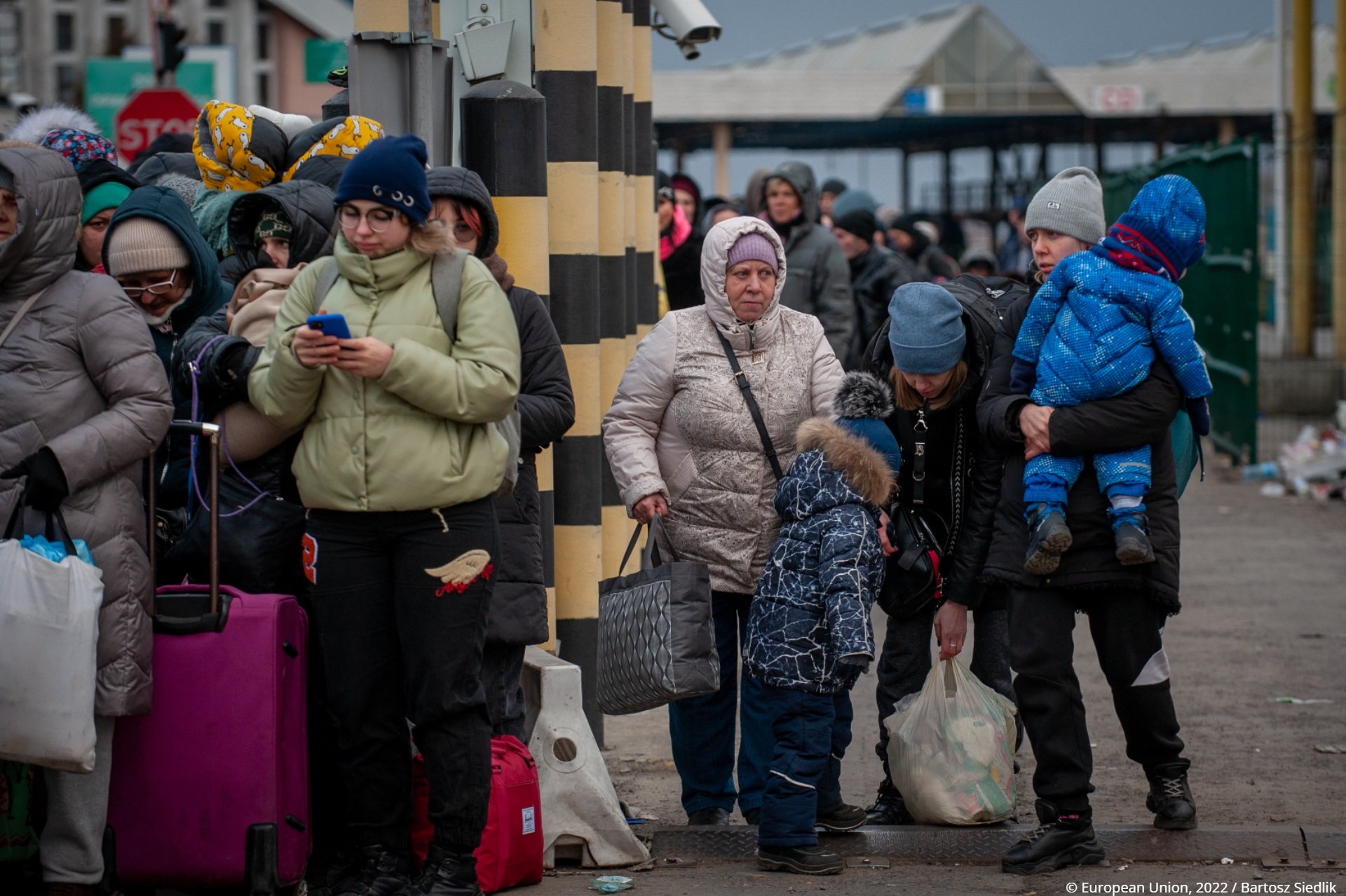
Millions of Ukrainians live outside their country because Russia's invasion made home unsafe. Some 5.9 million are abroad as of 2026. Most settle in the European Union, where Poland and Germany host the largest communities. That visibility and open support for Ukraine sometimes draw hostility. Other reported attacks on Ukrainians abroad don't have a clear anti-Ukrainian motive.
Explore further
Latvia sentences man to prison for anti-Ukrainian hate speech and violence
In Poland, isolated cases include a Ukrainian beaten over his accent and a woman detained for telling two Ukrainian women to go back to Ukraine, while a separate knife attack on a Ukrainian selling his car in Wrocław has not been tied to nationality.
In Germany, an attacker killed a teenage athlete, a man went after children for speaking Ukrainian, and others assaulted teenagers while chanting pro-Russian slogans; one Berlin assault and a Murnau double killing both pointed to anti-Ukrainian motives, and a Russian was jailed for life over the latter.
The violence is not confined to those two countries: other attacks on Ukrainians have occurred in other places. Earlier, a Ukrainian was stabbed to death in Ireland in an attack police have not linked to his nationality, and a Ukrainian woman was murdered in the United States by a man who cited a delusional reason.
The European Court of Justice has ruled that Germany cannot strip certain asylum seekers of basic support while they remain on German soil, even when another EU country is deemed responsible for […]

 Login
Login