Login
Login

A.I. Chatbot Helps a $100 Thrift Store Painting Sell for Over $250,000
When a son got curious about the origins of a painting his mother bought at a secondhand shop decades ago, Google Gemini had some intriguing thoughts.


Ukraine remains ready to continue issuing permits for Polish exhumation work despite intensifying historical disputes between Ukraine and Poland, Ukrainian Foreign Ministry spokesperson Heorhii Tykhyi says, per Ukrinform. Exhumation work at the site of the Huta Pieniacka continues.
The current Polish-Ukrainian historical dispute centers on Ukrainian President Volodymyr Zelenskyy's 27 May decision to confer the honorary title "named after UPA Heroes" on the Separate Center of Special Operations "Pivnich" of Ukraine's Special Operations Forces. The Polish Foreign Ministry condemned the decision.
The Ukrainian Insurgent Army (UPA) is a deeply contested figure in Polish-Ukrainian historical memory. Ukrainian historiography presents UPA as anti-Soviet and anti-Nazi independence fighters. Polish historiography emphasizes UPA's association with the 1943-44 Volhynia massacres.
Tykhyi also stated that the honoring of UPA heroes had no anti-Polish subtext. He noted that the history of the Polish and Ukrainian peoples contains both glorious and tragic pages.
The diplomat added that preparations for the Ukraine Recovery Conference (URC 2026), scheduled for June 25–26 in Gdańsk, are proceeding as planned and in a regular working mode.
“We hope that the conference will be held successfully,” Tykhyi emphasized.
The Vinnytsia-Kielce bus dispute earlier this week is the latest concrete example of how historical memory tensions have affected practical Polish-Ukrainian cooperation, Euromaidan Press reported. Polish sister-city Kielce refused to transfer 20-year-old municipal buses to Vinnytsia, a Ukrainian city under regular Russian strikes, over a street named after Bandera.
Stepan Bandera, the Ukrainian nationalist leader, led the Organization of Ukrainian Nationalists (OUN) and the UPA.
Russia actively uses its propaganda, referring to Ukrainians as “Banderites” and portraying Ukrainian statehood as a continuation of Nazism.

NHS bosses urge all hospitals in England to use ‘digital triage’ process to combat overcrowding in emergency services
Patients who turn up at A&E with non-urgent ailments could be told to come back another time under NHS plans to stop hospitals becoming overcrowded and avoid the service’s usual winter crisis.
Eighteen hospitals in England are already using “digital triage assessment” to help A&E staff decide which patients need to be seen right away or be dealt with in another way. If patients do need urgent care they are treated at once in the usual way. But if they have more minor ailments and can wait, they are told to come back later that day or the next day, or are referred to a community-based service, such as a GP or pharmacy.
Continue reading...
© Photograph: Islandstock/Alamy

© Photograph: Islandstock/Alamy

© Photograph: Islandstock/Alamy
Awards for prose, children’s writing and poetry, for writers of colour in UK and Ireland, come with £1,000
Diana Evans has won this year’s Jhalak prose prize for I Want to Talk to You, a nonfiction collection on subjects ranging from Jean Rhys and Toni Morrison to lockdowns and the British monarchy.
The book, described as a “pleasure and an invigoration” by the Guardian’s reviewer Alex Clark, was announced as the 10th winner at a reception on Wednesday evening.
Continue reading...
© Photograph: Linda Nylind/The Guardian

© Photograph: Linda Nylind/The Guardian

© Photograph: Linda Nylind/The Guardian


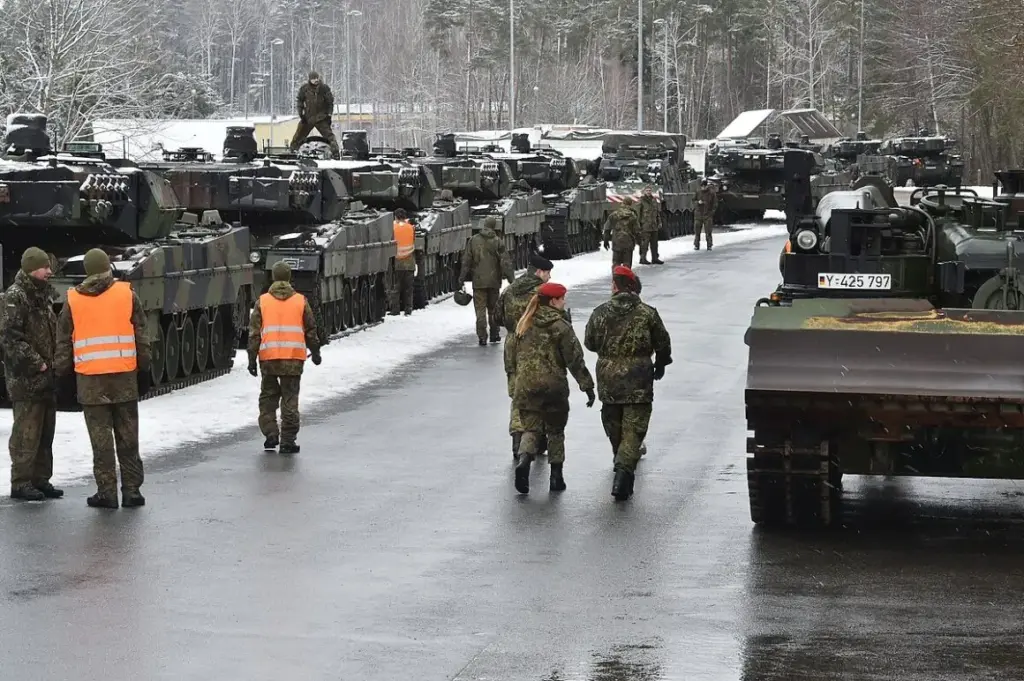
Hybrid threats span both hardware and politics, said Colonel Sönke Marahrens. The list of methods includes overflights, the cutting of undersea cables, and a concerted disinformation campaign. It also reaches into political and judicial systems, including what he called the "disposable agent" model —civilians recruited online for one-off sabotage or surveillance. As a model for how the state should respond, Colonel Marahrens pointed to Finland. Authorities there detained a suspected sabotage vessel within an hour of Baltic Sea cable damage.
Recognition had arrived slowly, Marahrens told the New Age Defence forum in Berlin on 8 June, Ukrinform reported. "Germany recognized rather late that we are being attacked by such hybrid methods," the colonel said. "But I would say that in the last year and a half to two years, we see a shift at the political level as well."
The colonel heads a department at the Bundeswehr's Center for Digitalization and Capability Development. The center reports to the Cyber and Information Domain Command in Bonn. German intelligence services and state institutions are increasingly informing citizens of the changing security environment, he said.
Russian pressure now reaches beyond physical sabotage, Marahrens said. "It's not just drones and not just undersea cables, it's also disinformation within our society. It's the use of the political and judicial systems, the concept of 'disposable agents,'" he said.
Unidentified drones over European critical infrastructure, including German sites, had a primarily psychological effect, the colonel said. The impact was not military. Germany's National Security Council should receive real powers for rapid decision-making, he argued. The colonel cited Finland's response time of less than an hour after the Baltic Sea cable damage.
"Creating societal resilience is something we in Germany have yet to learn." — Col. Sönke Marahrens, Bundeswehr Center for Digitalization and Capability Development
Germany draws on Ukrainian wartime experience through financing, joint training, and front-line exchanges, Marahrens said. "We support Ukraine financially," he said. "We also adopt the experience gained from the battlefield. We provide training for them, and we also adopt experience from them during joint exercises at our training grounds."
The most important Ukrainian lesson, the colonel said, is societal resilience under wartime conditions. "Creating societal resilience is something we in Germany have yet to learn," Marahrens said. The Kremlin coordinates large-scale hybrid operations across Europe, the agency added. These campaigns aim to discredit Kyiv and inflame internal conflicts in EU states amid Russia's war on Ukraine.
U.S. President Donald Trump told reporters today that in the wake of overnight attacks between the U.S. and Iran, strikes on Iran will continue. Meanwhile, Iranian officials say they are “reviewing” whether to continue peace talks after one of the most serious exchanges of fire between the two nations since the April 8 ceasefire.
The latest round of attacks and counterattacks touched off after U.S. Central Command launched three waves of strikes on targets in southern Iran in retaliation for what Trump said was Iran’s downing of an AH-64 Apache helicopter, reportedly by an Iranian Shahed drone. Iran denied attacking the Apache. You can read more about that incident here.
Khatam Al-Anbiya Central Headquarters: Iran Delivers Powerful Response to US Onslaughthttps://t.co/5CvDlDqlc9 pic.twitter.com/4sdTjd31Bk
— Fars News Agency (@EnglishFars) June 10, 2026
Though damage assessments are still ongoing in the wake of Iranian missiles and drones launched across the Middle East overnight, a U.S. official told TWZ Wednesday morning that so far, there have been no injuries among U.S. personnel reported and no indication yet of any damage to American installations. That’s despite Iranian claims to the contrary.
“Iran launched multiple missiles and drones and just about all were intercepted according to initial reflections from assessments that are ongoing,” the official told us, speaking on condition of anonymity to discuss operational details. “No reports of harm to any U.S. personnel; not aware of any damage to our locations at this time.”
However, as we have noted in the past, similar U.S. assessments during the height of Epic Fury were later contradicted by reports of wide-spread damage from Iranian attacks.
Iranian officials said they again launched attacks on the U.S. Navy’s Fifth Fleet Headquarters in Manama, Bahrain, as well as Muwaffaq Salti Air Base in Jordan and targets in Kuwait.
Several videos emerging overnight claimed to show missile interceptions and explosions resulting from the latest Iranian kinetic actions.
Some showed missile interceptions over Muwaffaq Salti. As we have frequently noted, the base has been a major staging area for U.S. airpower in the region. It came under Iranian attack before the ceasefire, with an AN/TPY-2 missile defense radar there having been notably targeted.
Footage shows air defense interceptors engaging incoming Iranian ballistic missiles over Jordan.
— Egypt's Intel Observer (@EGYOSINT) June 10, 2026
Iran’s Islamic Revolutionary Guard Corps (IRGC) says it targeted Jordan’s Muwaffaq al-Salti Air Base, along with 20 other U.S. military sites across the region. pic.twitter.com/RxKHsNaQur
Additional video shows what appears to be an explosion in the distance as viewed from a CCTV camera in Manama in the wake of a claimed Iranian missile launch at Fifth Fleet headquarters. The extent of the damage, if any, is unknown.
CCTV footage shows an explosion in Bahrain’s capital Manama after what authorities say was an Iranian missile strike.
— Al Jazeera Breaking News (@AJENews) June 10, 2026
Iran’s IRGC says it hit US military bases in Bahrain, Kuwait and Jordan in retaliatory attacks for US strikes in the Strait of Hormuz. pic.twitter.com/4eKzhBa1np
The Islamic Revolutionary Guard Corps (IRGC)-connected Tasnim News Agency also posted a video it claims shows an attack on the Fifth Fleet. The short video shows what appears to be an explosion in the distance and again, there is no way to tell what, if any damage, was caused.
— اخبار فوری جنگ (@WarNewsIr) June 10, 2026
ویدئوی منتشرشده در منابع عربی از اصابت به پایگاه آمریکا در بحرین pic.twitter.com/fW37dLXui6
The Kuwaiti Foreign Affairs Ministry condemned the latest Iranian strikes and said the nation “reserves its full right to take all necessary measures to preserve its security and defend its territories and vital facilities, in accordance with international law and the United Nations Charter.”
بيان صادر عن وزارة الخارجية
— وزارة الخارجية (@MOFAKuwait) June 10, 2026
الأربعاء 10 يونيو 2026
تُعرب وزارة الخارجية عن إدانة دولة الكويت واستنكارها وبأشد العبارات، استمرار الاعتداءات الإيرانية الآثمة والمتكررة على دولة الكويت، والتي كان آخرها اليوم، في تصعيد جديد يُضاف إلى سلسلة الاعتداءات الإيرانية المتواصلة، ويُعد… pic.twitter.com/7H1TFQNqMv
Iran said its latest volley of kinetic actions were in response to what U.S. officials say were strikes on 20 Iranian targets in response to the helicopter downing.
The United States and Iran traded strikes overnight.
— Trey Yingst (@TreyYingst) June 10, 2026
20 Iranian targets were hit by U.S. forces, including air defense systems and radar sites.
Iran responded with missiles and drones toward Kuwait, Bahrain, and Jordan. pic.twitter.com/vl3fK4bO85
This latest flurry of strikes prompted comments about the future of diplomacy from both sides.
During a morning press conference, Trump said “we hit ’em hard yesterday, and we’re going to hit ’em again hard today, in case you miss it, in case you don’t turn on your television set, and we’ll see what happens with the deal.”
.@POTUS on Iran: "We hit them hard yesterday and we're going to hit them again hard today… And we'll see what happens with the deal. We were really close to a deal — but they keep tapping us along. They keep playing us for suckers because you know what? They dealt with some… pic.twitter.com/ScvGn14QFQ
— Rapid Response 47 (@RapidResponse47) June 10, 2026
Earlier on Wednesday, Trump told Fox News that there may be additional U.S. attacks that focus on “Iranian power plants and bridges.”
NEW: President Trump tells me he "may keep going" with strikes against Iran and is getting closer to targeting Iranian power plants and bridges.
— Trey Yingst (@TreyYingst) June 10, 2026
The President also spoke about the U.S. military helicopter that was downed saying that an Iranian drone lodged between the two… pic.twitter.com/j5aQEIzi9s
The president’s comments to Fox follow statements he made on his social media outlet saying Iran has taken too long to agree to a peace deal.
“Iran’s Military is a complete and total mess,” Trump said on Truth Social. “Much of it, like their Navy and Air Force, doesn’t even exist anymore – They have been completely defeated. Iran is all talk and no action. The Bully of the Middle East is DEAD!!! They’ve taken too long to negotiate a deal that would have been great for them, now they will have to pay the price!!!”
Trump did not elaborate on what that price may be.
— Rapid Response 47 (@RapidResponse47) June 10, 2026
As we noted earlier in this story, Iran is reassessing the future of diplomatic negotiations aimed at ending the US-Israeli war against the country, according to the official Iranian IRNA news outlet.
“We have to review it,” Iranian Foreign Ministry spokesperson Esmaeil Baqaei told IRNA. “Diplomacy and the battlefield are not separate matters; rather, they run alongside and complement each other in safeguarding Iran’s interests and security.”
Baqaei stressed that Iran’s military and diplomatic tracks operate in coordination.
“Wherever the Armed Forces deem it necessary, they respond to the enemy with authority and strength, and last night’s events showed that Iran’s brave Armed Forces do not hesitate in defending the country,” he posited.
ایرانی وزارت خارجہ کے ترجمان اسماعیل بقائی کا کہنا ہے کہ حملوں کے بعد امریکا کے ساتھ مذاکرات کا ازسرنو جائزہ لے رہے ہیں، امریکا اور اسرائیل بار بار جنگ بندی کی خلاف ورزی کررہے ہیں۔
— SAMAA TV (@SAMAATV) June 10, 2026
انہوں نے کہا کہ مذاکرات کو آگے بڑھانے کیلئے پرسکون ماحول بہت ضروری ہے، بدقسمتی سے واشنگٹن کے… pic.twitter.com/1nGcYA3fmN
Despite the flare-up in fighting and posturing by both sides, negotiations appear to be continuing.
“Following consultations with the United States, Qatari negotiators headed to Tehran this morning to meet with the Iranians in an attempt to bridge the remaining gaps,” CNN reported on its Arabic channel, citing a source. “The visit indicates that diplomacy remains active, despite an exchange of fire between Iran and the United States overnight—marking one of the most significant tests of the ceasefire to date. A US official told CNN that the United States believes these strikes will not derail the negotiations.”
مصدر دبلوماسي لـCNN: مفاوضون قطريون توجهوا صباح الأربعاء إلى طهران لسد الفجوات المتبقية مع أمريكا https://t.co/IIkMnAmHkt
— CNN بالعربية (@cnnarabic) June 10, 2026
At issue remains the future of Iran’s nuclear ambitions, the ongoing closure of the Strait of Hormuz, Tehran’s ballistic missile arsenal and support for proxies and the easing of U.S. sanctions. Whether the increased fighting between the two sides will derail these efforts remains an open question.
Iran claims it downed another U.S. MQ-9 Reaper drone overnight. While TWZ can’t verify that, we have noted that the loss of dozens of these drones to Iran and the Houthis have forced the U.S. Air Force to scramble for replacements.
— خبرگزاری فارس (@FarsNews_Agency) June 10, 2026
لحظهٔ انهدام پهپاد MQ9 در آسمان شهرستان جم بوشهر در شب گذشته pic.twitter.com/aUe1eR5nRZ
A cargo ship came under small arms fire 88 nautical miles south of Balhaf, Yemen in the Gulf of Aden, according to the United Kingdom Maritime Trade Operations (UKMTO) monitoring organization.
“A cargo vessel has reported being approached by one craft with 6 armed persons onboard,” UKMTO explained. “There was an exchange of fire between the small craft and the cargo vessel’s Armed Security Team resulting in the small craft turning away. Authorities are investigating. Vessels are advised to transit with caution and report any suspicious activity to UKMTO.”
While details about who was involved are scant, this is the first attack in the region, near the Bab al-Mandeb Strait, since the Houthi rebels of Yemen threatened to shut the vital waterway down in support of Iran last week. You can read more about the implications of the Iranian proxy group closing the Strait on the U.S. military and the global economy in our prior reporting here.
UKMTO WARNING 065-26
— UKMTO Operations Centre (@UK_MTO) June 10, 2026
Click here to view the full warning.https://t.co/ushxdE2mx0#MaritimeSecurity #MarSec pic.twitter.com/vtHpdNUm4Z
In a post on X, CENTCOM on Wednesday announced it disabled an oil tanker trying to run the blockade of Iranian ports.
The incident took place at 11:14 p.m. on June 9, when a U.S. aircraft “fired precision munitions” into the engine room of the Palau-flagged M/T Settebello as it transited the Gulf of Oman.
The ship was attempting to transport oil from Iran, the command added.
In addition to the ships it disabled, CENTCOM said it has “redirected 134 ships that complied, and allowed 42 vessels supporting humanitarian aid to pass since initiating the blockade on April 13.”
You can read more about the other seven ships hit by CENTCOM here.
CENTCOM:
— Clash Report (@clashreport) June 10, 2026
At 11:14 p.m. on June 9, U.S. forces disabled an oil tanker in the Gulf of Oman for the second consecutive day after another vessel violated the ongoing blockade by attempting to transport oil from Iran.
U.S. Central Command (CENTCOM) disabled Palau-flagged M/T… pic.twitter.com/UkVgPoJUOt
When it comes to the Strait of Hormuz and Gulf of Oman region, Trump took to social media to say the ongoing blockade of Iranian ports has devastated Tehran’s economy.
“The Fake News Media refuses to report how EFFECTIVE the U.S. Naval BLOCKADE is, the most successful Blockade in the history of Naval Warfare,” the president proclaimed on Truth Social. “NOTHING GETS THROUGH unless we want it to. IT IS A STEEL WALL! Iran is doing ZERO business, not paying their military, or any of their bills, and quickly becoming a FAILED NATION! Lots of oil is getting out. Praise be to Allah!”
President Donald J. Trump has taken to Truth Social again decrying the "fake news media" coverage of the naval blockade of Iran saying that it is a "STEEL WALL", Iran is doing "ZERO business, not paying their military or any of their bills, and quickly becoming a FAILED NATION!"… pic.twitter.com/DcCHVebRX7
— OSINTdefender (@sentdefender) June 10, 2026
However, in a post on X, the Windward trade intelligence group said that “five Iranian-trading [liquified petroleum gas] LPG carriers have broken the U.S. blockade on Iranian ports,” Windward stated. “Four discharged in India, one in Pakistan. All five used the same playbook, spoofing and AIS blackouts to mask loading and destination. Yet all signaled their exit and/or entry through Hormuz via AIS. Three were already U.S.-sanctioned. A fourth sanctioned June 6. Two operated under false flags, making them legally stateless.”
However, the crude oil blockade is holding, Windward added.
“No Iran-trading VLCC tracked in Asia via Malacca, Sunda, or Lombok since May 4,” the organization noted.
Five Iranian-trading LPG carriers have broken the U.S. blockade on Iranian ports. Four discharged in India, one in Pakistan.
— Windward (@WindwardAI) June 10, 2026
All five used the same playbook, spoofing and AIS blackouts to mask loading and destination. Yet all signaled their exit and/or entry through Hormuz via… pic.twitter.com/iWBqGHSrBl
U.S. Secretary of War Pete Hegseth is scheduled to visit CENTCOM headquarters in Tampa, Florida, today to discuss the ongoing situation with the head of that command, Adm. Brad Cooper, and engage with troops.
Secretary Hegseth will be traveling to Guantanamo Bay, Cuba and Tampa, Florida today to engage with troops at GTMO and CENTCOM, per Pentagon.
— Kellie Meyer (@KellieMeyerNews) June 10, 2026
Despite efforts to quell the fighting between Israel and Hezbollah in southern Lebanon, the Israeli Air Force continues to strike targets in that country.
“Over the past day, the IDF struck Hezbollah infrastructure sites in the area of Tyre and in several areas in southern Lebanon,” the IDF stated on Telegram.
“In the area of Tyre, the IDF struck six infrastructure sites used by the Hezbollah terrorist organization to advance terror attacks against the State of Israel and IDF soldiers operating in southern Lebanon,” the IDF added. “Among the infrastructure struck was a site used by Hezbollah terrorists to launch explosive drones toward IDF soldiers.”
In southern Lebanon, “the IDF struck ready-to-use Launchers, terrorists who operated in the area in which IDF soldiers are operating, and additional terror infrastructure sites,” it claimed.
השמדת תשתיות טרור מהן הופעלו רחפני הנפץ נגד כוחותינו: חיל-האוויר וכוחות יחידת האיסוף 869 ממשיכים לפעול בדרום לבנון.
— Israeli Air Force (@IAFsite) June 10, 2026
במהלך השבועיים האחרונים, הכוחות חיסלו בשיתוף חיל-האוויר יותר מ-20 מחבלים שפעלו לקידום מתווי טרור והיוו איום על כוחותינו. בנוסף הכוחות השמידו מספר תשתיות טרור… pic.twitter.com/Mysi9BMXHW
Hezbollah, meanwhile, attacked a gathering of Israeli troops with a missile, according to Tasnim.
Hezbollah Strikes Israeli Military Gathering with Missile pic.twitter.com/TJUCOT3lvS
— Tasnim News Agency (@Tasnimnews_EN) June 10, 2026
The ongoing Israeli incursion into southern Lebanon and continuing presence in Syria has raised tensions with Turkey. Any direct conflict flaring up from the long-simmering animosity between two of the region’s most powerful militaries – though extremely unlikely – would be a far bigger deal than a dertailment of U.S.-Iran peace talks.
“We are fully aware of what the ultimate objective of the delusion of ‘Greater Israel’ is,” Turkish President Recep Tayyip Erdoğan said Wednesday, adding that Israel’s actions in Lebanon and Syria now threaten Turkey.
Turkish President Recep Tayyip Erdogan:
— Ariel Oseran أريئل أوسيران (@ariel_oseran) June 10, 2026
Israel's attacks on Syria and Lebanon have reached a point where they also threaten Turkey.
Turkey's security begins not in Hatay, but in Aleppo, Damascus, and Beirut. pic.twitter.com/YKRqbRugQ2
The Turkish leader’s statements sparked a harsh response from Netanyahu.
“The antisemitic tyrant Erdogan, who perpetrates genocide against the Kurds, supports the terrorist organization Hamas, oppresses his own people, and imprisons political rivals, is the last one who can preach morals to the State of Israel,” the Israeli leader retorted. “The State of Israel and the IDF, the most moral army in the world, will continue to act forcefully against Iran and its proxies that threaten the Middle East and the entire world.”
הרודן האנטישמי ארדואן שמבצע רצח עם בכורדים, תומך בארגון הטרור חמאס, מדכא את בני עמו ושם בכלא יריבים פוליטיים הוא האחרון שיכול להטיף מוסר למדינת ישראל.
— Benjamin Netanyahu – בנימין נתניהו (@netanyahu) June 10, 2026
מדינת ישראל וצה"ל, הצבא המוסרי ביותר בעולם, ימשיכו לפעול בעוצמה נגד איראן ושלוחותיה שמאיימות על המזרח התיכון ועל העולם כולו.
The latest events in the Mideast region show that there is no immediate end in sight to the hostilities and we will continue to monitor developments here given the ongoing impacts on the U.S. military and global economy.
UPDATE: 3:01 PM EDT –
Trump claimed the price of oil will fall because of how much has been secretly moved out of the region.
“We’re taking about millions of barrels of oil,” the president told reporters Wednesday afternoon.
.@POTUS on Iran: "Did you know we've been taking out millions of barrels of oil? Nobody knows it. You know who doesn't know about it? Iran — until right now. We took out, the other night, 22 ships." pic.twitter.com/2odiLYXDJ3
— Rapid Response 47 (@RapidResponse47) June 10, 2026
On his Truth Social, Trump claimed that last month, he “directed our Great U.S. Military to execute a secret mission to support Oil Tankers and other Commercial Ships through the Strait of Hormuz.”
“Today, I am pleased to announce that this effort has resulted in more than 100 MILLION Barrels of Oil making its way through the Strait, and into the Open Market,” he added. “More than 200 Commercial Ships have safely traveled through the Strait. This wildly successful effort is because the UNITED STATES of AMERICA CONTROLS the Strait of Hormuz — NOT Iran. Their military is defeated, and their economy is lost. It’s over for Iran!”
BREAKING: President Trump says he directed the US Military to execute a “secret mission” in the Strait of Hormuz which resulted in over 100 million barrels of crude oil crossing through Hormuz. pic.twitter.com/bSYeetbHH4
— The Kobeissi Letter (@KobeissiLetter) June 10, 2026
However, TankerTrackers.com clarified that the president was referring not to Iranian oil, but Arab oil.
There is now a public misunderstanding regarding President Trump’s statement. It is not Iranian oil that he is talking about. Those are still trapped. Instead, it appears to be the secured convoys of Arab oil into the Gulf of Oman via the Strait of Hormuz. This explains why… https://t.co/fEgyzY3gnX
— TankerTrackers.com, Inc. (@TankerTrackers) June 10, 2026
UPDATE: 3:39 PM EDT –
Hegseth thanked troops at CENTCOM headquarters in Tampa, Florida, for their efforts in the Middle East.
.@SECWAR spoke with troops at U.S. Central Command:
— DOW Rapid Response (@DOWResponse) June 10, 2026
“On behalf of the President of the United States—on behalf of the American people—I want to say how proud we are of the work @CENTCOM has undertaken.” pic.twitter.com/SkDuqzS3UW
UPDATE: 4:12 PM EDT –
The Secretary-General of the International Maritime Organization (IMO) “has expressed deep concern and strong condemnation of the attack on the tanker MT Settebello,” according to the organization.
“I strongly condemn any act from any party that endangers the lives of seafarers and the safety of international shipping,” said Secretary-General Arsenio Dominguez. “This is simply unacceptable. My thoughts are with the families of the three missing seafarers and with all those awaiting news of the crew members.”
Two Indian seafarers died and one was reported missing after the attack, according to The Hindu.
Two casualties including cadet, fitter and ch engineer are reported missing…@FSUIINDIA @IMOHQ @ITFglobalunion pic.twitter.com/z8qZPYRWx1
— FSUI (@FSUIINDIA) June 10, 2026
Contact the author: howard@twz.com
The post Overnight Attacks Rattle U.S.-Iran Ceasefire (Updated) appeared first on The War Zone.
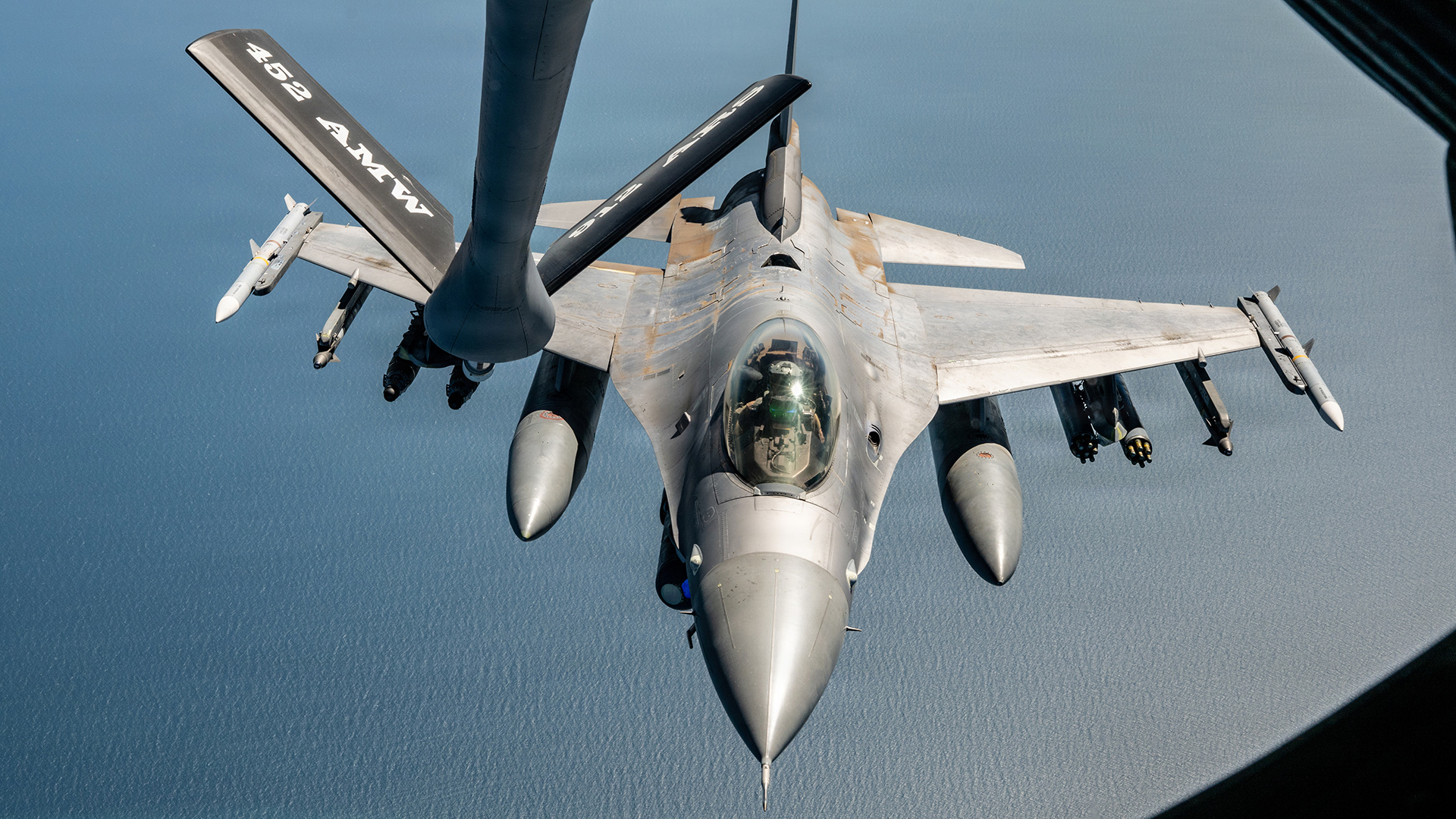
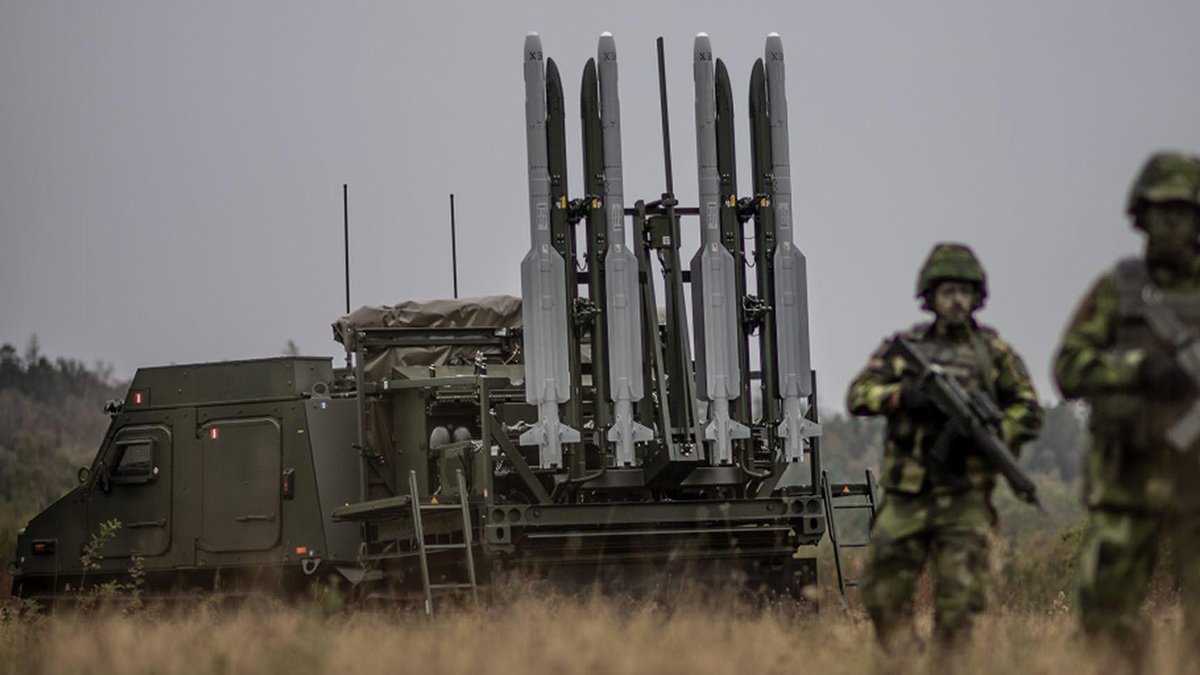
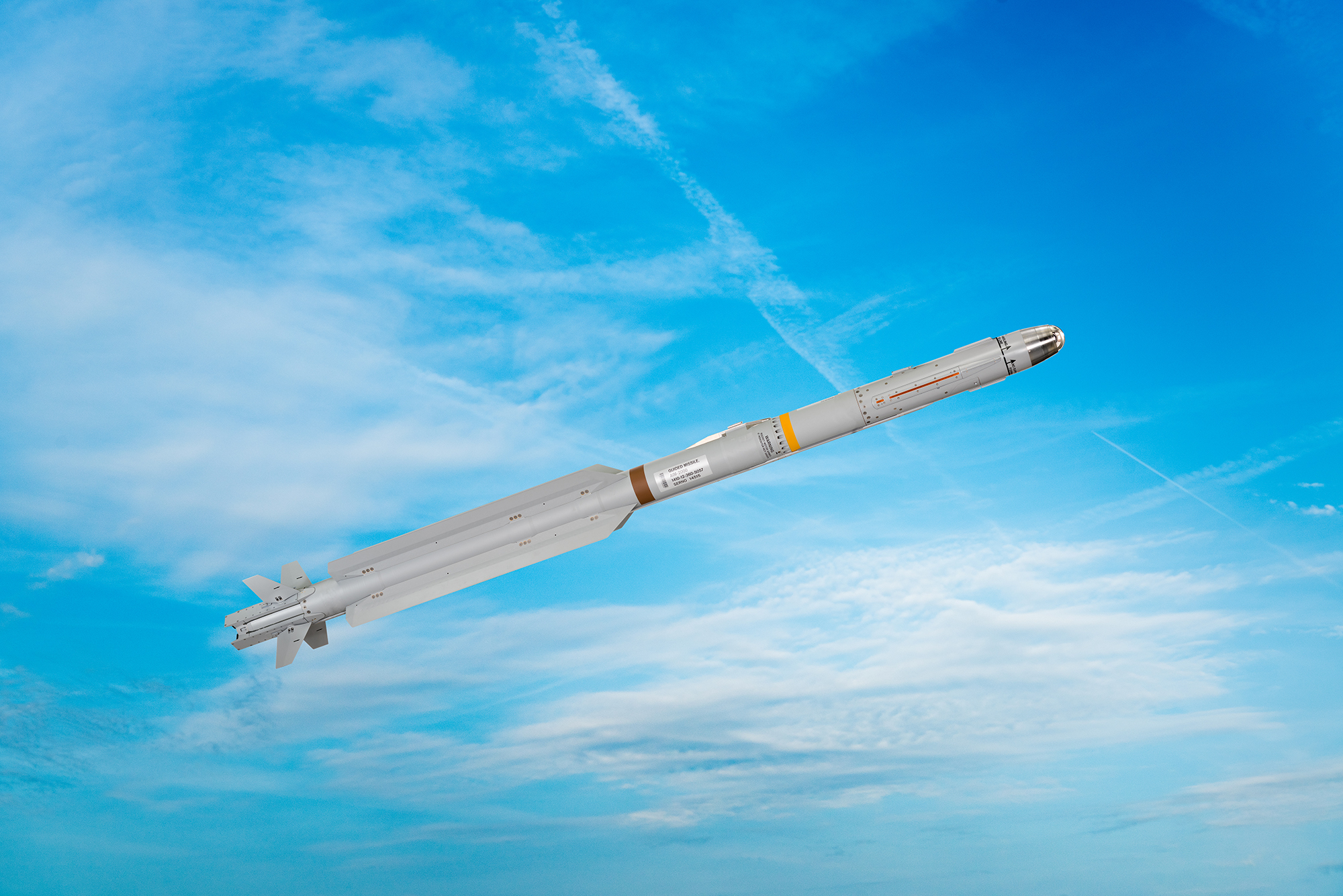
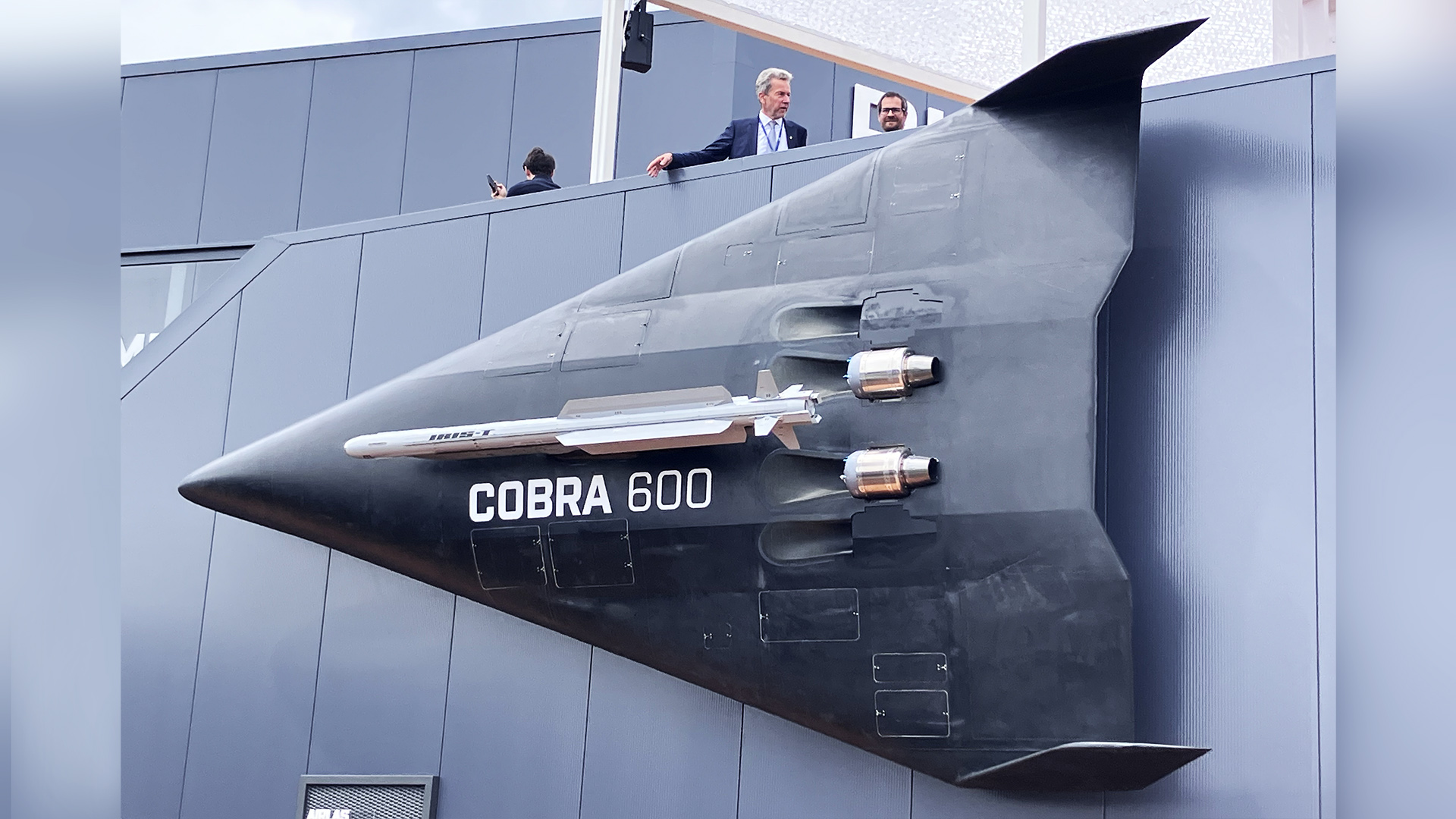
A novel kind of drone-based air defense system has been shown for the first time by German weapon manufacturer Diehl Defence. The Cobra 600, which has not previously been seen in public, combines a jet-powered drone platform with a missile rail armed with one of the company’s IRIS-T missiles, a weapon already used in short-range air defense systems and air-to-air applications. The new system immediately recalls recent Russian developments, which add short-range air defense missiles to its versions of the Shahed-136 long-range one-way attack drone, known locally as the Geran.
Cobra 600 is being presented at the ILA Berlin airshow, taking place this week in the German capital. The Cobra 600 is also known as the Airborne Launching and Attack System (AirLAS), and the program was launched last year.
The concept behind the Cobra 600 is that of a ‘missile taxi,’ in which the drone platform carries the IRIS-T missile over a considerable distance. All the while, the drone is meshed with a ground-based air defense system. Typically, this would be one of Diehl’s IRIS-T SLM or IRIS-T SLS systems. Of these, the IRIS-T SLS employs the same missile as the air-to-air variant — and therefore the same missile as the Cobra 600. The physical interface between the drone and the missile is a standard pylon as used on the Eurofighter jet.
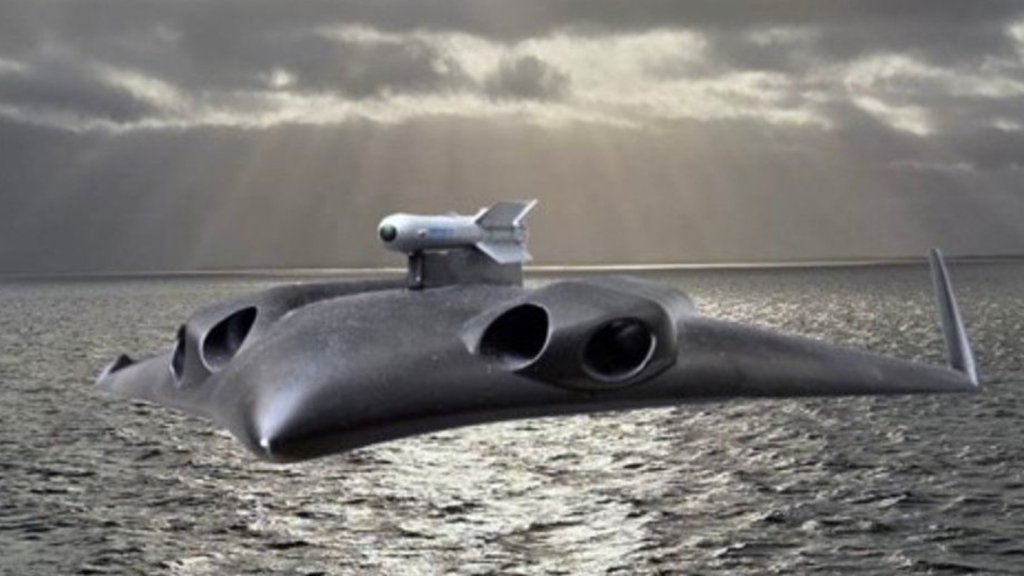
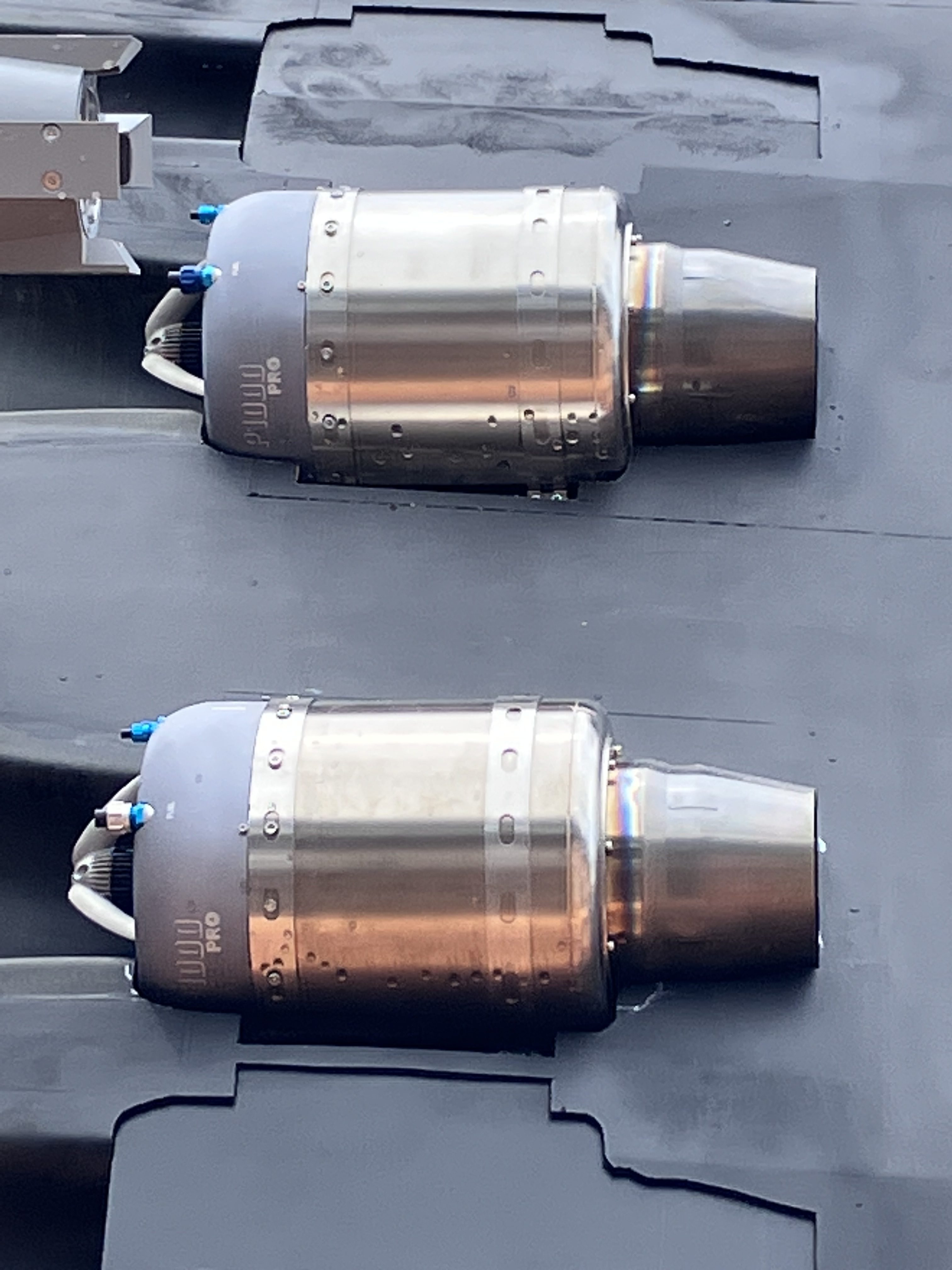
As for the drone platform, this is provided by another German firm, the Polaris Raumflugzeuge aerospace start-up. It has a similar kind of efficient delta planform as the Shahed-136, with a modified flying-wing-like design. On the wingtips are mounted endplate vertical stabilizers. As displayed, the drone is powered by a pair of JetCat-P1000-PRO micro turbojet engines, each of which provides a maximum thrust just shy of 250 pounds. However, the drone has intake ports for another two engines. It’s not clear if these are only intended to be fitted if heavier payloads are being carried, but it’s certainly a possibility. Concept artwork released by Polaris, as seen at the top of this story, shows a four-engine configuration, with the turbojets buried in the airframe and fed by much longer intakes, helping to shield them from detection.
Polaris Raumflugzeuge has already built a variety of drones in the same configuration, and the company eventually aims to scale this up to produce a spaceplane.
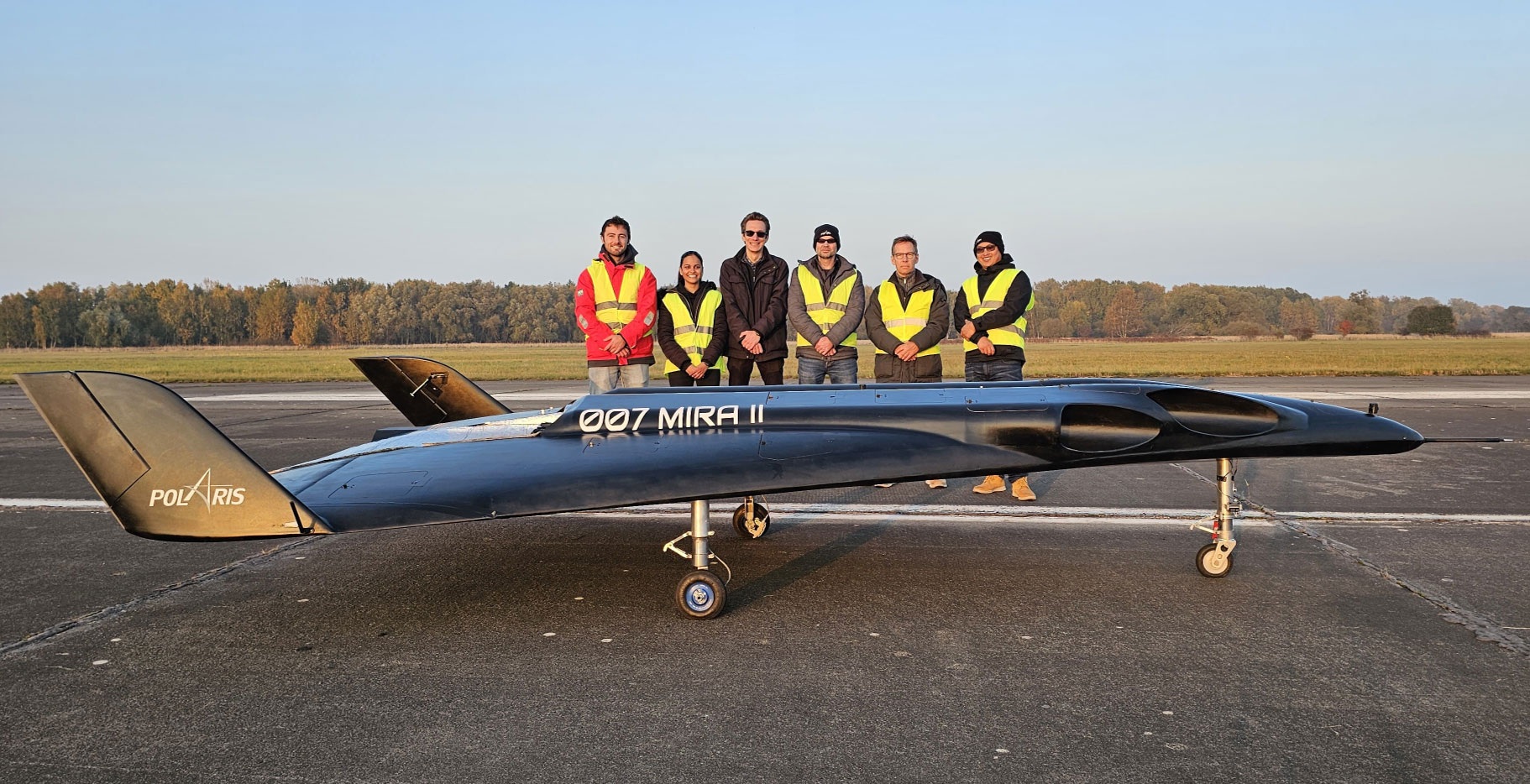
Drawing on its design heritage, the Cobra 600 drone has retractable wheeled tricycle landing gear, meaning that it can be reused in some scenarios. The drone therefore takes off and lands from runways, although it is also able to operate from suitable shorter airstrips, such as stretches of highway. It’s also intended to be cheap enough that commanders will also be willing to risk losing it in combat, or after it runs out of fuel.
The concept of operations has the Cobra 600 serving as an adjunct to a ground-based air defense system, extending its range considerably.
With the missile fitted, the Cobra 600 has a range of around 250 miles. This compares to around 25 miles for the ground-launched missile used in the IRIS-T SLM, or approximately eight miles for the missile used in the IRIS-T SLS.
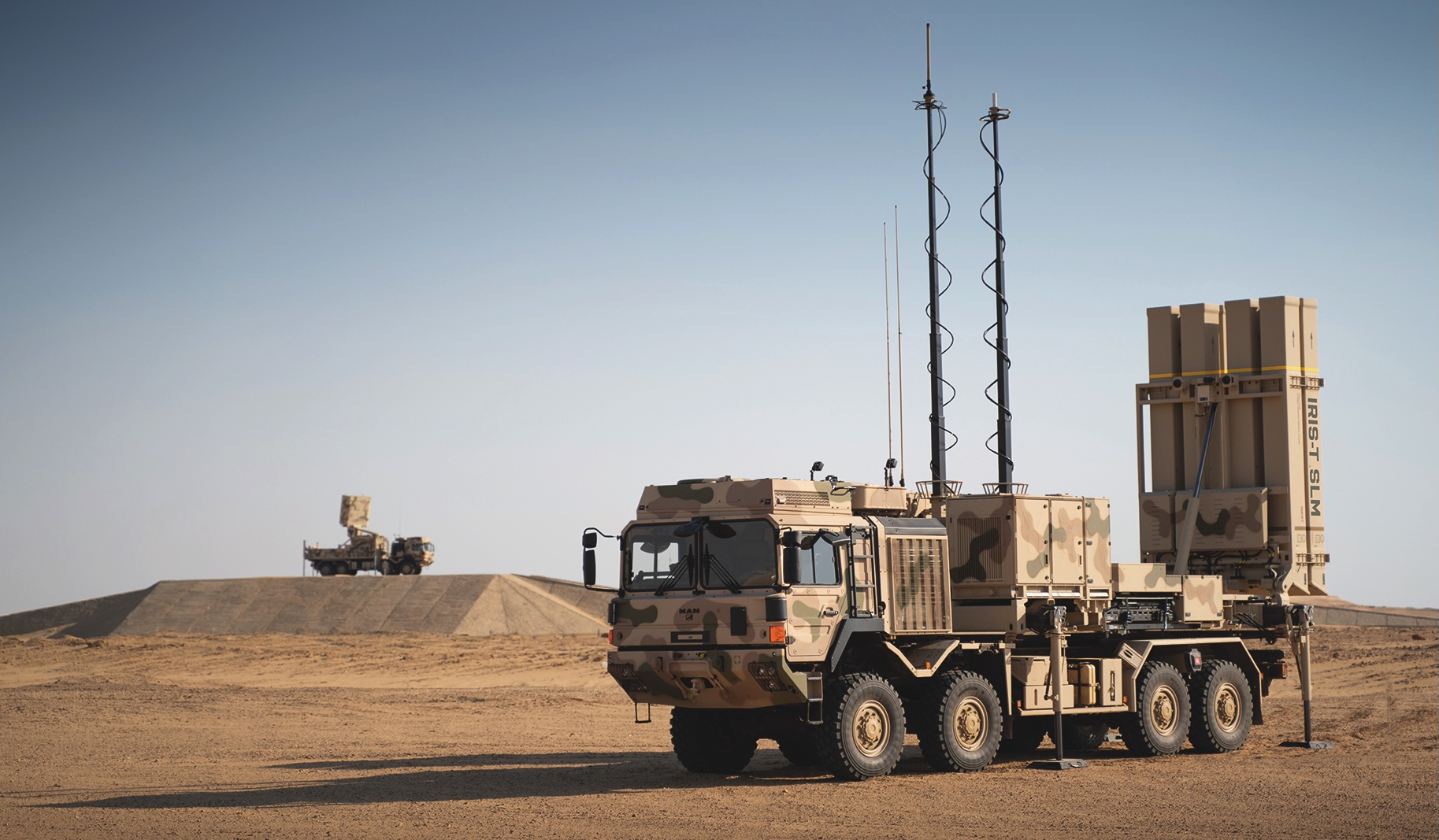
As such, the Cobra 600 has the potential to turn the ground-based IRIS-T into something a little closer to a long-range surface-to-air missile, in terms of the distance it can cover. Of course, this is only true in terms of absolute range, with the speed and maneuverability of the drone being far inferior to a long-range missile. Unless the target is nearby, or the Cobra 600 has been pre-positioned based on known target vectors, the reaction time it offers is strictly limited. The missile itself is also able to tackle a more limited range of potential targets than a dedicated long-range surface-to-air missile, some of which offer an anti-ballistic missile capability, for example.
On the other hand, the Cobra 600 offers the distinct advantage of being able to loiter in a given area, waiting for threats to emerge, or to perform combat air patrols to screen certain sectors. It is best viewed as a forward-positioned additional launcher for the ground-based IRIS-T, and is also entirely reliant upon that system (or a similar one) for its effectiveness. At the same time, leveraging existing ground-based air defense systems as a force multiplier is a clear advantage. Another possible operational scenario would involve setting the Cobra 600s up as interceptors on a runway, sitting ready for launch on a runway to defend against lower-end threats.
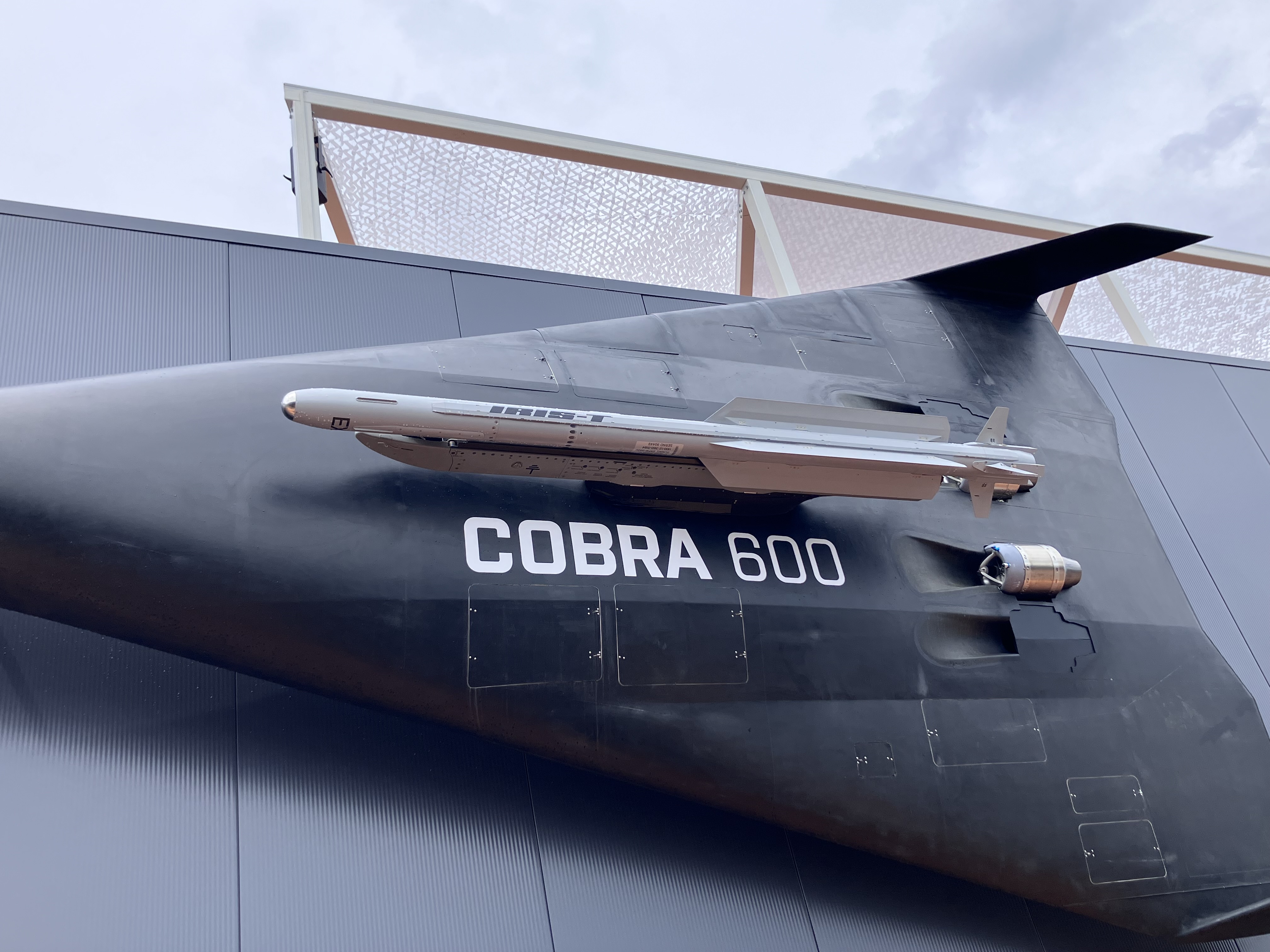
In its current form, the Cobra 600 has no onboard sensors to detect targets other than the imaging infrared seeker head that’s integral to the standard IRIS-T missile.
In an operational scenario, a target for the Cobra 600 would be detected and identified by the ground-based air defense system to which it is ‘tethered.’ Connected via datalink, the ground-based system would vector the drone to the appropriate location. Using its own seeker, the IRIS-T would lock onto the target and be commanded to launch by the operator of the ground-based system. Of course, this presupposes that the datalink is not compromised by hostile interference or due to line-of-sight limitations, although SATCOM capability, like Starlink, would help keep redundant control over the drone beyond line-of-sight.
At this point, the mode of engagement is not dissimilar to the ground-based IRIS-T SLS, which features a lock-on-after-launch (LOAL) capability. This means it can fire missiles without first establishing the weapon’s lock on the target. After receiving target information in the form of three-dimensional coordinates, the missile uses inertial guidance during the initial stage of flight. Upon reaching the designated engagement altitude, its imaging infrared seeker activates and begins searching the predicted target area.
Another conceivable option would be to add some kind of sensor, such as an infrared camera, to the Cobra 600 drone platform, meaning that a ‘person in the loop’ could establish that the missile had locked onto the correct target.
A further option could be to ‘uncage’ the missile seeker and let it search across its field of view only when the Cobra 600 is in a designated ‘kill box,’ within which it would have authority to engage any target it acquires, reactively, and autonomously. Issues such as this clearly need to be addressed, based on combat requirements and ethical concerns.
As well as operating the Cobra 600 in conjunction with the IRIS-T SLM/SLS, it could also be integrated with other ground-based air defenses. According to Polaris, it could also be embedded with aircraft or in a maritime environment.
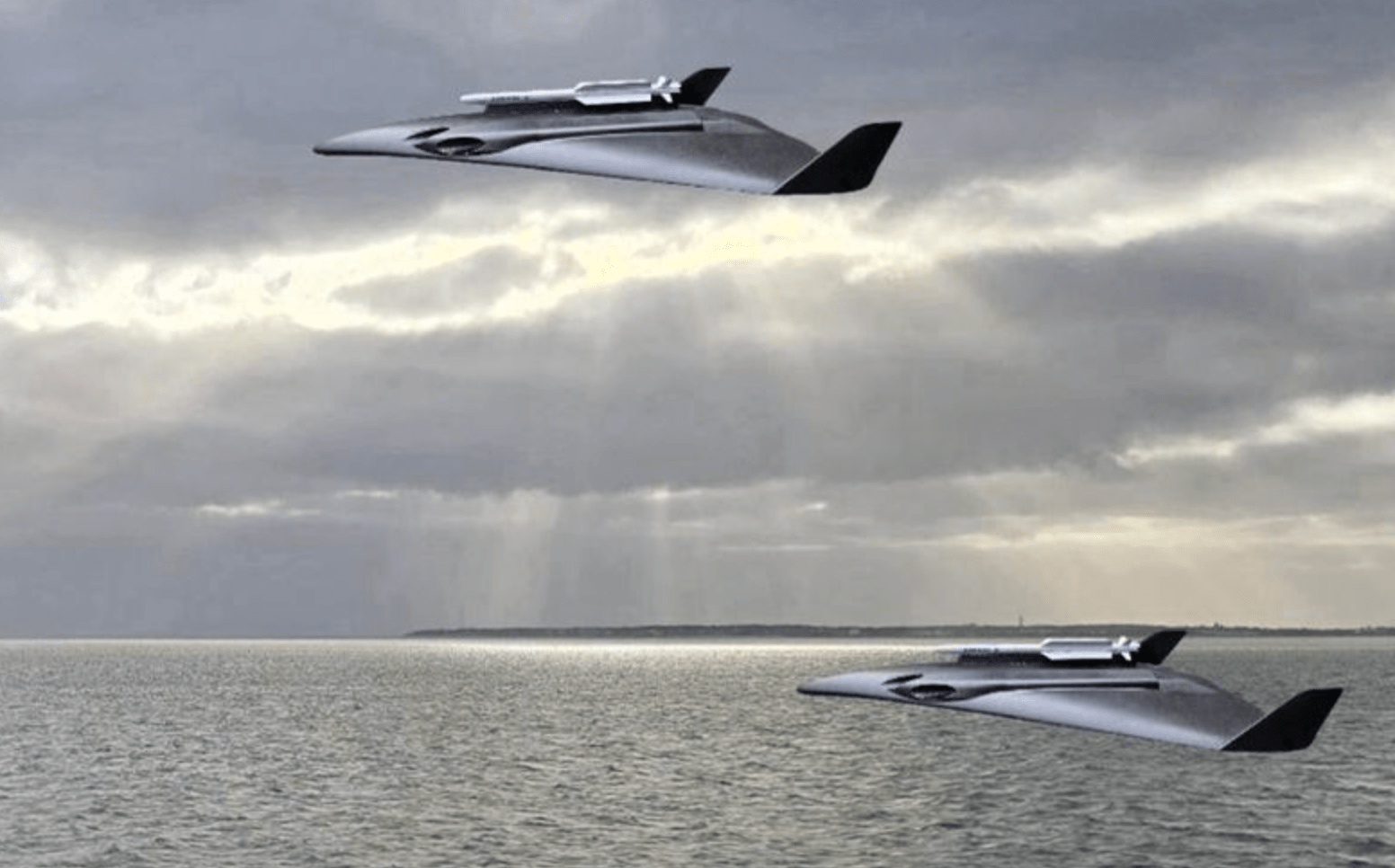
The Cobra 600 has already completed its first flight tests, with a dummy IRIS-T missile fitted. Currently, the development effort is mainly funded by the company, but there has also been investment from at least one interested nation.
With the IRIS-T SLM/SLS combat-proven in Ukraine, experiences from this conflict have almost certainly helped inform the development of the Cobra 600.
The war in Ukraine also provides an interesting parallel to the Cobra 600, in Russia’s missile-armed adaptations of its Shahed/Geran drones.
Russian developments have seen the fielding of these drones carrying either a single R-60 air-to-air missile, a much older and less capable equivalent to the IRIS-T, or man-portable air defense systems (MANPADS).
Interception of the Russian Shahed kamikaze drone with an installed R-60 air-to-air missile.
— Special Kherson Cat
It was intercepted by Darknode unit of the @usf_army, using STING anti-Shahed drone developed by the @wilendhornets and funded by @sternenkofund. https://t.co/XHEjuCP31F pic.twitter.com/oje4VOXTbz(@bayraktar_1love) December 1, 2025
According to Ukrainian accounts, as well as the rail-mounted missile on the top, these drones are equipped with a camera and a radio-frequency modem.
Russian forces are mounting Igla MANPADS on Shahed drones to target Ukrainian helicopters that intercept them. The drones carry a camera and radio modem, and the missile is launched remotely by an operator in Russian territory. pic.twitter.com/T5TKPHyhVu
— WarTranslated (@wartranslated) January 4, 2026
However, the concept of operations for the missile-armed Russian drones is very different. While it gives the drones a means to engage Ukrainian fixed-wing aircraft and helicopters, it works more as a deterrent than as a genuinely useful tactical application. As we have noted in the past, the difficulty in obtaining a high degree of situational awareness and the limited agility of the drone raises questions about the effectiveness of these solutions. On the other hand, Russia has been working on a man-in-the-loop (MITL) control capability for the Shahed/Geran, which could potentially be used to operate the missile.
Considerably larger than the Shahed-136 design, the Cobra 600 will provide a higher performance delta overall. It is also jet-powered, and, with up to four engines, this would give more impressive response times and maneuverability than the Russian system.
It should be noted that there are other previous precedents for arming drones with air-to-air missiles. In at least one instance from 2002, a U.S. Air Force MQ-1 Predator drone fired a Stinger heat-seeking anti-air missile at an Iraqi MiG-25 Foxbat fighter that was trying to shoot it down, which can be seen in the video below.
The fast pace of development of the Cobra 600 reflects a growing need for ground-based air defenses more generally, after decades of neglect. There is also a need for less-expensive, less-exquisite solutions in this area, something that the Cobra 600 also addresses, with a price point that is significantly lower than a long-range surface-to-air missile (although with the various disadvantages outlined above). At the same time, the Cobra 600 may well end up being used against even lower-cost drones, for which the IRIS-T is still a very expensive solution.
The Cobra 600 reflects a broader shift in air defense thinking driven by the lessons of recent conflicts, particularly in Ukraine and the Middle East, where persistent drone threats, as well as cruise missiles, have exposed the limitations of traditional ground-based air defense architectures.
By combining the endurance and flexibility of a drone with the proven, off-the-shelf IRIS-T interceptor, the Cobra 600 offers a potentially cost-effective way to extend defensive coverage over greater distances and to put ‘shooters’ into contested areas that crewed systems would not be able to venture. While some questions remain about how the Cobra 600 would be integrated with existing operational doctrine, the concept highlights the growing demand for innovative, layered, and resilient air defenses as militaries seek to counter increasingly varied and numerous aerial threats.
Contact the author: thomas@thewarzone.com
The post Germany’s Cobra 600 Is A Jet Powered Interceptor Drone That Slings An IRIS-T Missile appeared first on The War Zone.

Researchers examining the remains of an Iron Age woman in northern Scotland have found signs that her brain may have been intentionally removed more than 2,000 years ago.
The discovery, made at a burial cairn in Sutherland, also revealed long-distance family connections, suggesting prehistoric communities maintained social and cultural ties across wide areas of Scotland.
The findings were published in the journal Antiquity and come from an investigation of two individuals buried in a low stone cairn at Loch Borralie, near the northwestern tip of mainland Scotland. The burial contained the remains of an adult woman and a juvenile boy.
Understanding funerary traditions in Iron Age Britain has long been difficult because human remains rarely survive. Soil conditions often destroy bone over time. North-west Scotland is one of the few regions where environmental conditions have preserved skeletal remains, offering researchers a rare opportunity to study how ancient communities treated their dead.
Researchers from the United Kingdom and the United States examined the remains to determine who the individuals were, where they came from, and whether they were related to each other or other groups in the region.
“We knew that in the north-west of Scotland, including the Northern and Western Isles, the circulation and deposition of human remains were particularly prominent,” said lead author Dr. Laura Castells Navarro of the University of York.
To investigate the burial, researchers combined osteological analysis, isotope testing, and ancient DNA studies.
The most striking discovery involved the adult woman. Researchers found fine cut marks on the inside of her skull and identified unusual modifications to several long bones, including the upper arm, forearm, and thigh bones. The bones had been shaped so that their ends tapered into points.

According to the researchers, the evidence suggests the woman’s brain was intentionally removed after death, and some of her bones were deliberately carved before burial.
The purpose of these actions remains unclear. However, researchers believe the treatment may indicate that the woman held a special place within her community.
“The motivation behind the extensive manipulation of the skeletal remains of Individual 1 is very difficult to interpret,” Castells Navarro said. “However, the care with which she was reassembled and deposited in the cairn possibly suggests she commanded a level of reverence and respect by her community.”
The study also uncovered evidence of extensive mobility among Iron Age communities.
Isotope analysis indicated that both individuals likely spent their childhoods about 80 kilometers southeast of Loch Borralie. Ancient DNA revealed genetic links to people living in Orkney, roughly 175 kilometers northeast of the site, and Applecross, around 225 kilometers to the southwest.
Researchers also determined that the woman and the boy were closely related, most likely maternal second cousins.
The findings suggest that family groups moved regularly around Scotland’s northern coast and islands while maintaining relationships across considerable distances.
“More broadly, our research shows that prehistoric maritime communities periodically moved around the north coast and Northern Isles of Scotland, possibly in small groups,” Castells Navarro said. “This movement allowed for the spread and maintenance of cultural practices and traditions.”
Taken together, the evidence of possible brain removal, deliberate bone modification, and long-distance family connections points to a complex society linked by shared traditions and social networks.
While researchers cannot determine exactly why the woman’s remains were altered, the burial suggests that some Iron Age communities maintained ongoing relationships with the dead and practiced funerary rituals that extended far beyond simple burial.
The findings provide a rare glimpse into beliefs and customs that shaped life in prehistoric Scotland more than two millennia ago.