Reading view

Report details how climate crisis fuels crop failure risk in global breadbaskets

A farmer sorts his destroyed rice crop after flood water entered paddy fields from engorged Beas river at Baoopur village in Kapurthala district in India's Punjab state on September 11, 2025. Photo by SHAMMI MEHRA/AFP via Getty Images
Common Dreams Logo

This story originally appeared in Common Dreams on June 09, 2026. It is shared here under a Creative Commons (CC BY-NC-ND 3.0) license.

The climate emergency is sharply increasing the risk of crop failure in regions that produce an outsized share of the world’s staple food grains, according to a report published Tuesday that warns of “serious threats to Europe, the NATO alliance, and global stability” if cooperative resilience initiatives and other mitigation strategies aren’t pursued.

The report, “Global Breadbaskets: Food System Resilience as a Strategic Imperative,” was published by the Center for Climate and Security—part of the Council on Strategic Risks, a Washington, DC-based security policy think tank—and the Woodwell Climate Research Center, an independent nonprofit located in Falmouth, Massachusetts.

“Geopolitical fragmentation, conflict, extreme weather, and global aid cuts already strain food security. Meanwhile, climate change is increasing the likelihood of crop failures in the American, European, and Asian breadbaskets, which produce most of the staple crops underpinning global food security,” the report states.

🆕 Across India, France, and Germany, in the next decade and a half, the odds of key crops failing are set to increase by between two- and six-fold. This isn't just a food story. It's also a #NATO security story.

Council on Strategic Risks (@councilonstrategicrisks.org) 2026-06-09T07:13:30.778Z

The publication follows an April report from a pair of United Nations agencies on how extreme heat is impacting food production and food security around the planet. The new report includes a storymap that explores climate change-driven threats to wheat, rice, and maize (corn) crops in France, Germany, and India—three of the world’s “global breadbaskets.”

The analysis’ authors note that compared with 2010 threat levels, by 2040, “the risk of a given year’s crop failing is projected to grow roughly twofold for Indian wheat and German maize, roughly threefold for French wheat, roughly fourfold for French maize, and roughly sixfold for Indian rice, with sharp increases in critical producing regions.”

Climate-driven extreme heat “not only threatens crops, but also the laborers and infrastructure that translate them into food security,” the report continues. “Extreme heat is projected to reduce the suitability of 15-40% of India’s rain-fed rice-growing regions by 2050, and to reduce physical work capacity during the average growing season to as little as 40% of 2000-era levels by 2100.”

“By 2040, southwestern France will average up to 16 additional days per year above 35°C (95°F), exceeding thresholds that reduce yields, impact grain quality, and cause heat stroke,” the paper warns. “Extreme heat also threatens to damage or disable road and rail networks critical to food transportation, agricultural machinery, civil defense, and military mobilization.”

The publication also states that global breadbasket failures in Europe “could open rifts for Russian meddling, fuel instability in key partners, and elevate food production as a geopolitical lever.”

The Council on Strategic Risks operates within the transatlantic security policy community, whose work often overlaps with NATO’s interests.

“We have plenty of examples of how crop failures can contribute to political instability, from the French Revolution to the Arab Spring,” Center for Climate and Security deputy director and report lead author Tom Ellison said Tuesday in a statement. “In today’s environment, global breadbasket failures could strain NATO priorities, prompt unrest in key countries, and upend trade relationships.”

Woodwell Climate Research Center scientist and report co-author Alexandra Naegele warned that “climate change doesn’t just threaten crop yields and grain quality—it destabilizes entire food systems, from labor and livestock to food storage and transport.”

“Quantifying these climate-driven risks is an essential step toward building resilient food systems and safeguarding global food security,” she added.

The report recommends steps countries—specifically members of the European Union and NATO—can take to mitigate risks to food security, including strengthening cooperative resilience, anticipating instability and hybrid warfare, supporting strategic and vulnerable partners, coordinating trade responses, and investing in agricultural research and development.

“Amid climate change, geopolitical uncertainty, food shocks from the war in Iran, and Russian hybrid warfare, investing in a resilient food system isn’t in competition with security—it’s a key part of it,” Ellison stressed.

Monica Caparas, a scientist at the Woodwell Climate Research Center and report co-author, said, “Understanding and preparing for breadbasket failures is both a national security priority and a humanitarian imperative—one that can help protect lives, reduce instability, and strengthen food resilience before a regional shock becomes a wider crisis.”

  •  

The Lyhanna case: open season on judges

Justice (Pixabay)

Justice (Pixabay)

The disappearance and subsequent death of 11-year-old Lyhanna, whose body was found on June 4 in an agricultural silo in the Gers region of southwestern France, has triggered an unprecedented institutional crisis in France. Politicians are shifting blame onto judges, who are doing what they can with the resources available to them.


France’s judicial institution is facing both genuine operational failures and unacceptable political exploitation. By offloading their own responsibilities onto judges and prosecutors, neither Justice Minister Gérald Darmanin nor Interior Minister Laurent Nuñez is likely to emerge from this ordeal with enhanced credibility.

A troubling case file

The facts currently known in the Lyhanna case are undeniably damaging to the judicial system. The primary suspect, a 41-year-old man and the father of one of Lyhanna’s classmates, had an extensive judicial and administrative record before being formally charged with kidnapping and unlawful confinement of a minor under the age of 15.
Several complaints and reports had already been brought to the attention of the relevant authorities. One of the most sensitive aspects of the case involves a complaint filed on August 22, 2025, by the mother of a child alleging repeated sexual assaults. On September 11, a medical report reportedly identified findings described as consistent with the child’s statements. Yet the suspect was never interviewed before Lyhanna disappeared on May 29.
This timeline raises a fundamental question: why did a complaint alleging the rape of a minor, supported by medical evidence, fail to result in an interview of the suspect before the tragedy occurred? This question goes beyond the understandable public emotion surrounding the case and requires examination of how criminal investigations are actually processed.

The justice inspectorate faces major questions

Justice Minister Gérald Darmanin has ordered a systematic review of 70,000 complaints involving children by July 14. A general administrative inspection is currently underway to determine whether delays, errors, or procedural failures occurred in the handling of cases involving the suspect.
This directive from the Ministry of Justice responds to both political and moral urgency. Its purpose is to ensure that no comparable case is sitting unattended in an investigative unit or prosecutor’s office, particularly those involving rape or sexual abuse allegations. At the same time, it reflects a clear lack of confidence in the ordinary functioning of France’s criminal justice system.
The major challenge following this review will be actually processing those complaints: interviewing suspects, verifying testimony, prioritizing investigative actions, and making the necessary judicial decisions. Without additional operational resources, the scope of the problem may be revealed without being solved.

Judges and prosecutors thrown to the wolves

Frédéric Chevallier, Chief Prosecutor of Chartres and president of the National Conference of Public Prosecutors, has spoken out in defense of prosecutors while acknowledging that the case demands answers. His comments reflect the intense pressure currently weighing on the judicial institution.
On one hand, he rejects the idea that “judges and prosecutors should be thrown to the wolves” in response to public outrage. He stresses the need to avoid premature conclusions before inspections are completed, urging public officials to “keep a cool head.” His central argument is that no serious conclusions can be drawn before the entire chain of events has been reconstructed.
On the other hand, Chevallier has not ruled out individual responsibility, noting that “judges are not beyond accountability.” This cautious approach is intended to prevent the Lyhanna case from becoming a public trial of an individual magistrate or prosecutor’s office before investigators have completed their work.
Yet this institutional defense remains fragile. Explaining that the courts are overloaded, that investigative services are overwhelmed, and that prosecutors constantly triage competing emergencies only partially addresses families’ concerns. When a child dies and prior warnings existed, the judicial system must be able to explain why certain procedures moved so slowly and whether individual decisions contributed to an identified risk.

The impossible equation of priorities

Prosecutors point out that they are managing enormous backlogs of cases. Chevallier referenced not only the 70,000 complaints involving minors now under review, but also millions of cases of all types awaiting action within investigative services.
This argument reveals an institution that is clearly overwhelmed, at times buried beneath mountains of case files. It highlights a criminal justice system confronting systemic saturation. Yet it does not end the legitimate debate over how cases are prioritized. If everything is considered urgent, then nothing truly is. The Lyhanna case compels the judicial system to explain precisely how complaints are prioritized, especially when they involve sexual violence against children.
This issue connects to a structural problem that judges’ unions have denounced for decades: chronic underfunding. The Judicial Magistrates’ Union (USM), which has been highly visible in the media since the tragedy, argues that judges should not serve as lightning rods for the state’s failure to provide adequate judicial resources.

Political exploitation and death threats

The USM has condemned what it sees as unacceptable political exploitation of the tragedy. It points to statements by President Emmanuel Macron dismissing resource-related concerns from the outset, threats of sanctions raised by the Justice Minister before the inspectorate had reached any conclusions, and proposals by political figures to create a special disciplinary court for judges.
This political escalation has been accompanied by serious consequences. The Chief Prosecutor of Auch has been targeted with death threats circulating on social media. The Ministry of Justice has filed a criminal complaint, marking a dangerous turning point: public anger is being transformed into personal targeting and threats against judges and prosecutors themselves.
This is precisely the danger prosecutors fear. Judicial unions have significantly increased their media presence, with senior officials speaking publicly. Their coordinated effort is intended to give voice to rank-and-file judges and prosecutors facing what they view as opportunistic attacks.

Restoring public trust

The prosecutors’ calls for caution regarding the administrative investigation will only be heard if the judicial institution provides complete and transparent answers to the legitimate questions raised by families, advocacy groups, and the broader public.
The central challenge is reconciling two seemingly conflicting imperatives: protecting judicial independence from political interference while acknowledging that the public deserves explanations when a child dies and previous warnings may have been overlooked.
This case reveals that the French judicial system is facing a profound crisis of confidence. Families, citizens, and the public need to understand how the criminal justice process actually works, what priorities genuinely guide the handling of complaints involving minors, and how insufficient resources concretely affect child protection.
Without restoring public trust through transparency and meaningful operational reforms, the Lyhanna case will leave a lasting mark on the relationship between the justice system and French society. The inspectorate may establish the facts, but only clear and responsible institutional communication can help ease the current tensions.

L’article The Lyhanna case: open season on judges est apparu en premier sur FrenchDailyNews.

  •  

‘Woefully unprepared’: extreme heat will double US hospitalizations by 2040, study finds

Sharp rise in hospital visits will in turn drive up annual healthcare costs for heat-related conditions to over $1bn

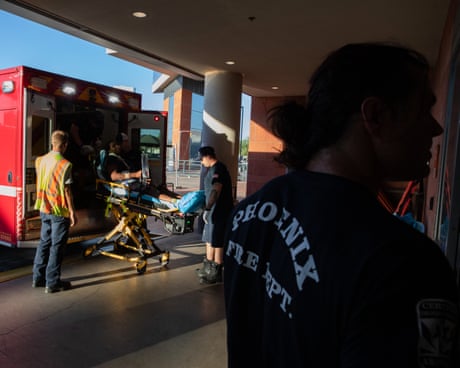
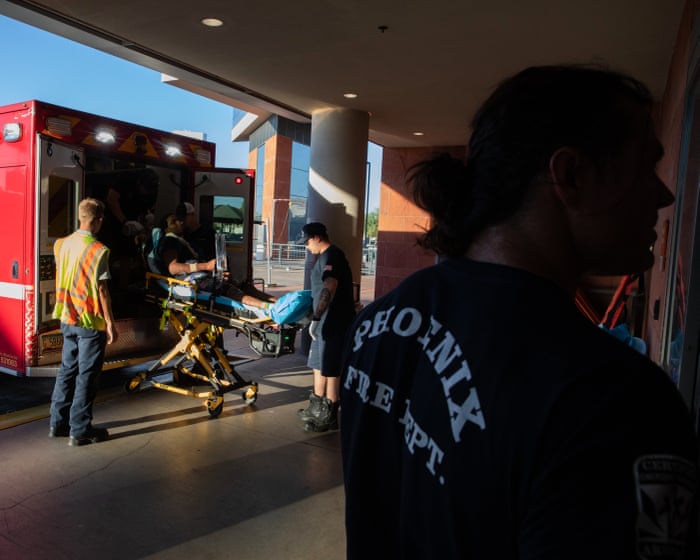
People in the US are poised to endure another summer of unusually ferocious heat and there will be little respite in the years ahead, with a new study finding that the coming 15 years could see a doubling in hospitalizations due to heat-related illnesses.

The number of annual heat-related emergency department visits or hospitalizations across the US are set to rise from about 109,000 cases a year to as many as 237,000 cases by 2040, the new research has estimated.

Continue reading...

© Photograph: Caitlin O'Hara/Bloomberg via Getty Images

© Photograph: Caitlin O'Hara/Bloomberg via Getty Images

© Photograph: Caitlin O'Hara/Bloomberg via Getty Images

  •  

Summer holiday bookings down amid ‘apprehension’, says UK travel industry

Fears about the Middle East conflict, cost of living and EU border checks are leading people to delay their decisions

Holiday bookings for early summer have been hit by uncertainty around the conflict in the Middle East and the rising cost of living, the travel industry has said.

Mark Tanzer, chief executive of the UK travel association Abta, said that while people still wanted to go on holiday, the industry was bracing for a difficult summer.

Continue reading...

© Photograph: Maria Galan/Alamy

© Photograph: Maria Galan/Alamy

© Photograph: Maria Galan/Alamy

  •  

World’s largest banks pledged $906bn to fossil fuel companies in ‘unfathomable’ increase in 2025, report finds

JPMorgan Chase leads 65 banks making decisions incompatible with restraining rising temperatures, researchers say

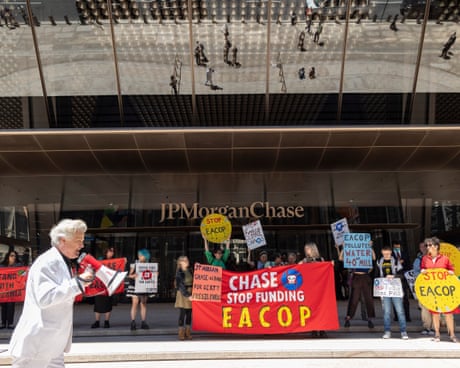
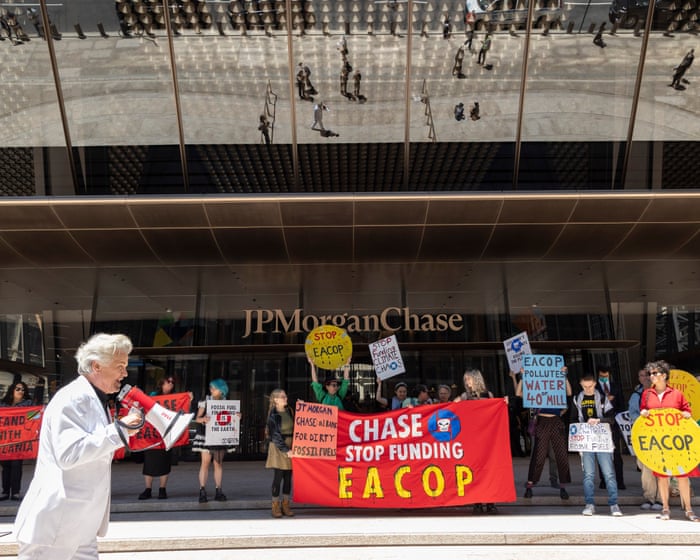
The world’s largest banks committed $906bn in financing to the fossil fuel industry last year, an “unfathomable” increase in investment locking in years more of coal, oil and gas production as the world continues to overheat, a new report has found.

The surge in new fossil fuel lending, up $64bn or nearly 8% on 2024, shows that the world’s largest 65 banks are making decisions incompatible with international agreements to restrain rising global temperatures, according to the coalition of environmental groups behind the new analysis.

Continue reading...

© Photograph: Gina M Randazzo/ZUMA Press Wire/Shutterstock

© Photograph: Gina M Randazzo/ZUMA Press Wire/Shutterstock

© Photograph: Gina M Randazzo/ZUMA Press Wire/Shutterstock

  •  

If this is winning, America can’t afford much more of it

By John WHITEHEAD’S

Join us on TelegramTwitter, and VK.

Contact us: info@strategic-culture.su

“We’re gonna win so much, you may even get tired of winning.”—Donald Trump

Donald Trump promised Americans they would get tired of winning.

If this is what winning looks like, America can’t afford much more of it.

We are losing ground economically. We are losing credibility abroad. We are losing tourists, workers, stability, trust, constitutional guardrails, and whatever remained of the illusion that the government answers to “we the people.”

The tourism economy is taking a hit, with international visitors increasingly reluctant to come to the United States. Even migration—the lifeblood of America’s economic growth, innovation, labor force and national renewal—is now moving in the wrong direction. Fewer people are coming in, more Americans are leaving, and by some estimates the country has already crossed into negative net migration.

That is not the mark of a nation “winning.” It is the mark of a nation people are increasingly choosing to escape.

Even the looming World Cup—normally an economic windfall for tourism, travel and hospitality—is being shadowed by the administration’s immigration crackdown, detention protests and threats to disrupt international travel at key airports.

That is what happens when a nation treats visitors, immigrants and dissenters as threats first and human beings second: people stop coming, businesses suffer, and fear becomes official policy.

The economy, despite the administration’s relentless victory laps, is flashing warning signs: downgraded growth, strained consumers, rising costs, depleted savings, and policy chaos that leaves families, small businesses and entire industries guessing what fresh disruption tomorrow will bring.

We are being worn down by the losses.

Meanwhile, the man who promised to end wars has presided over their continuation and expansion. The man who promised to bring prices down has helped drive uncertainty up. The man who promised to drain the swamp has turned government into a spoils system for loyalists, cronies, contractors, oligarchs and power brokers. The man who promised law and order has treated the law as something to be weaponized against enemies and waived for friends.

This is not winning.

This is the slow-motion defeat of a constitutional republic by spectacle, grievance, greed and brute force.

The losses are piling up.

Americans were told they would get prosperity. What they got was an economy in which corporate profits and stock market gains mask the fact that ordinary households are stretched thin, savings are shrinking, debt is mounting, and the cost of basic necessities keeps eating away at wages.

They were told tariffs would punish foreign governments and bring jobs home. What they got were higher costs passed down to consumers, retaliation, supply disruptions, and a trade policy built less on strategy than on political theater. Even the courts have begun treating the tariff agenda as what it is: economic policy by executive improvisation, with judges striking down or narrowing tariff maneuvers while the administration keeps looking for new legal workarounds.

They were told immigration crackdowns would make America stronger. What they got was a nation frightening away the workers, students, tourists, entrepreneurs and families who have long helped power its economy.

They were told America would be respected again. What they got was a country increasingly viewed as unstable, hostile, unpredictable and unsafe—not merely by adversaries, but by allies, visitors, investors and would-be partners.

They were told the wars would end. What they got was more war talk, more military escalation, more blank checks for the war machine, and more excuses for expanding executive power in the name of national security.

They were told the Constitution would be restored. What they got was a president who declared, “He who saves his Country does not violate any Law.”

Listen carefully when any ruler says something like that.

That is not constitutionalism. That is the language of kings, dictators and strongmen who believe their intentions place them above the law.

The Constitution was written precisely to prevent that kind of thinking from taking root in America.

The problem with Trump’s brand of winning is that it requires Americans to lose.

For the police state to win, the Fourth Amendment must lose.

For the surveillance state to win, privacy must lose.

For the war machine to win, peace must lose.

For the executive branch to win, the separation of powers must lose.

For the oligarchs to win, working families must lose.

For the propaganda machine to win, truth must lose.

For a strongman to win, the Constitution must lose.

Trump’s “winning” is simply the latest branding campaign for an old con: convince the people they are winning while stripping them of the power to govern themselves.

Call it what you will—national security, border security, economic nationalism, law and order, anti-corruption, emergency authority, America First—but when the end result is more government power and less individual freedom, we should know by now who is really winning.

The winners are the same as always: the defense contractors, data brokers, private prison operators, surveillance companies, lobbyists, political insiders, Wall Street speculators, government contractors, partisan enforcers, donors with access, loyalists seeking payouts, and bureaucratic power centers that thrive on fear, crisis and control.

The losers are “we the people.”

This is the hard truth Americans must face: a government that promises to make you “win” by taking power away from someone else will eventually take power away from you, too.

Rights are not partisan. Due process is not partisan. Free speech is not partisan. Privacy is not partisan. Limits on executive power are not partisan. The Constitution is not supposed to be a campaign prop, a legal technicality or a speed bump on the road to political victory.

The Constitution is the contract that binds the government down.

Without it, all we have are rulers and subjects.

That is why the real measure of any administration is not how loudly it boasts, how many enemies it punishes, how many executive orders it signs, how many troops it deploys, how many agencies it purges, or how many headlines it dominates.

The real measure is whether the people are freer, safer in their rights, more secure in their property, more protected from government abuse, and more capable of holding power accountable.

By that measure, we are not winning.

We are losing in all the ways that matter.

A president can call it winning. A party can call it winning. The media can package it as winning. The crowds can chant along.

But as I make clear in my book Battlefield America: The War on the American People and in its fictional counterpart The Erik Blair Diaries, if the price is the Constitution, then we all lose.

Original article:  www.rutherford.org

  •  

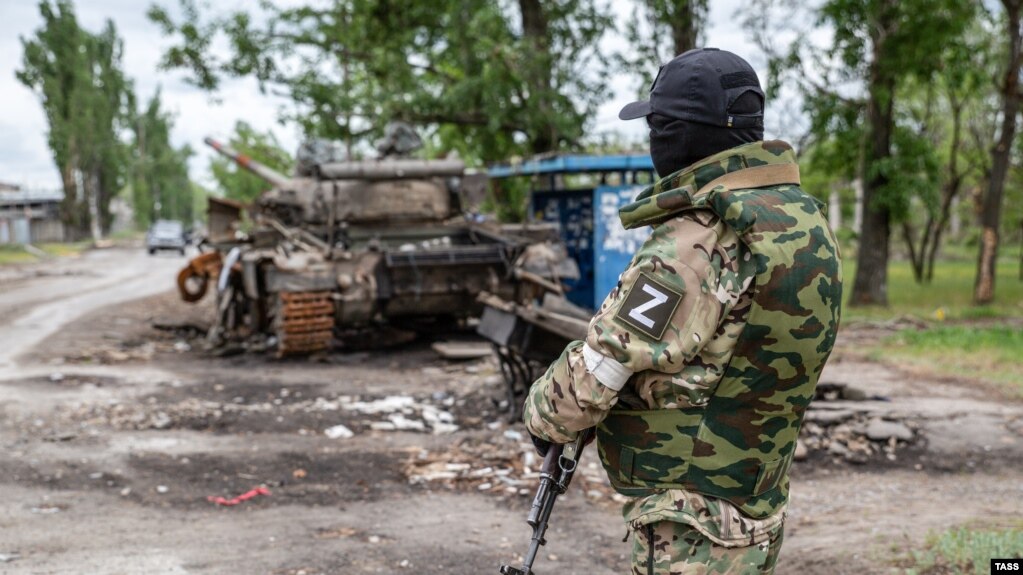
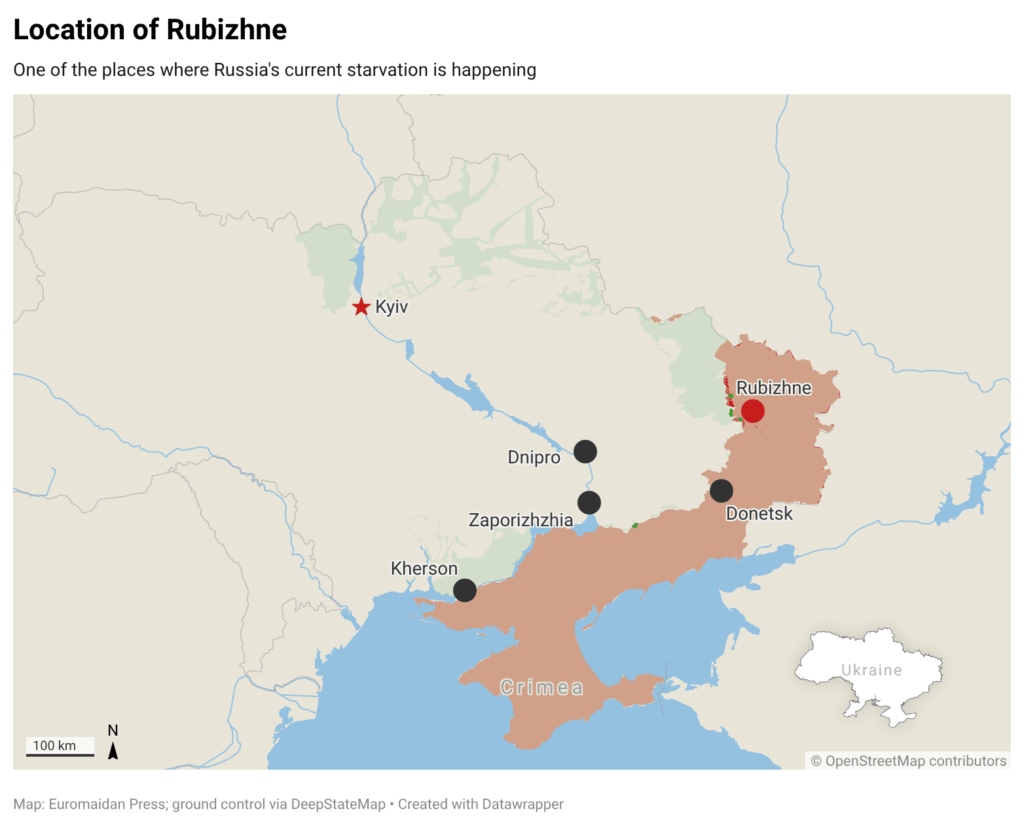
Food shortage in occupied Rubizhne: Russia blocks civilian deliveries, blames drones

Russian soldier with Z insignia stands near a destroyed armored vehicle on a street in occupied Rubizhne, Luhansk Oblast, where occupation authorities have now manufactured a food shortage by blocking civilian deliveries

Russian occupation forces have deliberately manufactured a food shortage in occupied Rubizhne, cutting civilian food deliveries to the Luhansk Oblast city even as military supply convoys continue to flow, the head of the Luhansk Regional Military Administration reported on 8 June.

Shelves in the city's stores are emptying rapidly, Kharchenko said. Russian propaganda blames disrupted transport links, citing an alleged drone threat. Yet the occupiers have had no difficulty maintaining their own logistics routes to resupply military units stationed across the region, he noted.

"They need to make the next victim for Russian television out of local residents. They chose Rubizhne."—Luhansk governor Oleksii Kharchenko

A city turned into a propaganda prop

The official accused Russia of weaponizing hunger for television cameras. He said the occupiers intend to film bare shelves and hungry residents, then broadcast the footage to Russian audiences as evidence of suffering they themselves engineered.

Before Russia's full-scale invasion, Rubizhne was home to more than 55,000 people. Russian forces seized the city in May 2022 after weeks of devastating urban combat during which they fired up to 1,500 shells per day, the BBC's Quentin Sommerville reported from the front lines. The city's current population remains unknown, but residents who stayed have endured four years of occupation without reliable utilities, communications, or public services.

In nearby Sievierodonetsk, conditions have deteriorated so far that residents now mow the grass in their own neighborhoods and clean communal areas themselves, Kharchenko added—an admission that Russia's occupation authorities provide no basic municipal services even in the cities they claim to have "liberated."

A pattern of deliberate starvation across occupied Ukraine

The manufactured food shortage in occupied Rubizhne fits a documented pattern of Russia using hunger as a weapon against Ukrainian civilians trapped behind the front lines.

In Oleshky, a frontline city in occupied Kherson Oblast, roughly 2,000 civilians have been cut off from food, medicine, and clean water for months. "If the situation doesn't improve, people will just die there from hunger. Because there's no way out, no food supplies coming in," an Oleshky resident who escaped occupation told the Kyiv Independent. Russian forces mined the access roads, destroyed the Kakhovka dam's water infrastructure, and deployed FPV drones that residents describe as conducting "human safari" attacks—hunting anyone who steps outside. People there hunt pigeons and wild ducks with fishing line, plant vegetables in shell craters, and bury their dead in wheelbarrows because no coffins or transport exist.

Ukraine's Foreign Ministry in May appealed to the United Nations and the International Committee of the Red Cross over what it called a "severe humanitarian crisis" in Russian-occupied Kherson Oblast. Russia rejected calls for a humanitarian corridor.

In Nova Kakhovka, upstream from Oleshky, most coastal areas have been abandoned. The few residents who remain live in distant high-rise microdistricts with no functioning hospital and minimal Russian administrative presence, governed remotely from Henichesk, roughly 130 kilometers away.

The Rubizhne food shortage also coincides with Russia's broader restriction of civilian movement through occupied territories. On 6 June, occupation authorities shut down bus and private car traffic on main arteries, capping two weeks of land-corridor breakdowns that have further isolated occupied communities.

Starvation as premeditated policy

International human rights investigators have gathered evidence that Russia planned to use hunger as a weapon before the 2022 invasion. A report by Global Rights Compliance found that a Russian defense contractor purchased grain-transport trucks and bulk cargo ships in December 2021—two months before the invasion began. The evidence was submitted to the International Criminal Court for what could become the first prosecution of a head of state for the war crime of starvation as a method of warfare.

Global Rights Compliance has drawn a direct parallel to the Holodomor—the Soviet-engineered famine that killed millions of Ukrainians in 1932–1933. Russia's current starvation tactics are being perpetrated, the organization noted, by "the same attacking state."

Under the Geneva Conventions, using starvation of civilians as a method of warfare is a war crime. The Rome Statute of the ICC codified the offense in 1998. Yet in occupied Rubizhne, occupied Oleshky, and across the territories Russia claims to have annexed, the pattern continues: military convoys pass, civilian supply lines close, and shelves empty.

  •  

How Italy’s Chernobyl ghosts might stop a new atomic age

In the flatlands of Italy’s Po Valley, the decommissioned Caorso nuclear power plant can be seen for miles, the reactor looming into the sky. When Alessandro Maffini, now an assistant professor at the Polytechnic University of Milan, was growing up in the 1990s, the plant's distant silhouette captured his imagination. “The physical presence of that thing was so significant to me as a child. It was a very visible, tangible, concrete presence,” Maffini remembers. “It was like a white Duomo, there on the horizon, always in the background.” For many others, though, it was a specter of disaster, a ghost nuclear plant — shuttered, alongside all of Italy’s nuclear power stations, in the wake of the Chernobyl accident.

 “If that plant explodes, we’re all dead,” Maffini’s mother used to intone, looking out at the defunct Caorso station, once the largest in Italy. As Maffini rode his bike six miles across the countryside to get a closer look at the plant from a nearby overpass, his mother’s doom-laden words rang in his ears. Her warning scared him. It also made him want to learn more. When he left home to go to university, Maffini decided to work in nuclear physics. “Radioactivity is a strange thing,” he says. “You can’t see it, you can't hear it, you can't smell it. It leaves a lot of room for imagination, for speculation, for fear.”

Four decades on from Chernobyl, and Italy has some of the highest energy bills in Europe. The country is scrambling to disentangle itself from its dependence on Russian gas in the wake of Russia’s invasion of Ukraine, and build out its energy sovereignty. War in Iran, and a growing European consensus that turning away from nuclear power was, in the words of European Commission president Ursula von der Leyen, a “strategic mistake,” has given more impetus to the Italian government’s argument that the country needs to move past its qualms.

Last year, the Italian cabinet approved a new draft law reintroducing the prospect of returning to nuclear power. “The government has approved another important measure to ensure clean, safe, low-cost energy that can guarantee energy security and strategic independence,” the Prime Minister Giorgia Meloni announced. 

Italy is already surrounded on all sides by nuclear power plants: Slovenia’s Krsko plant is 90 miles away from the border, and there are four French nuclear power plants within 110 miles. Italy is the world’s second-largest importer of electricity, with nuclear power, largely imported from France, making up 5% of its energy basket. Italy also plays host to more U.S. nuclear warheads than any other European country. An estimated 35 thermonuclear gravity bombs are stored at two NATO airbases in northern Italy, according to the Nuclear Threat Initiative. 

Now, as data centers spring up in Italy’s industrial north, the country’s energy needs are expected to increase exponentially and the government is turning, albeit cautiously, to a long-held Italian taboo. Since the spring of 1986, when the most serious accident in nuclear history unfolded in Unit 4 of the Chernobyl Nuclear Power Plant in northern Ukraine, the Italian population has lived in fear of nuclear energy. It voted to shutter its once-burgeoning nuclear industry in 1987, and in 2011, after the Fukushima nuclear accident, when 94% of voters rejected government plans to revive the industry. 

It is a fear that has transformed Italy’s energy fortunes, making it reliant on imports and vulnerable to volatility and price shocks. 

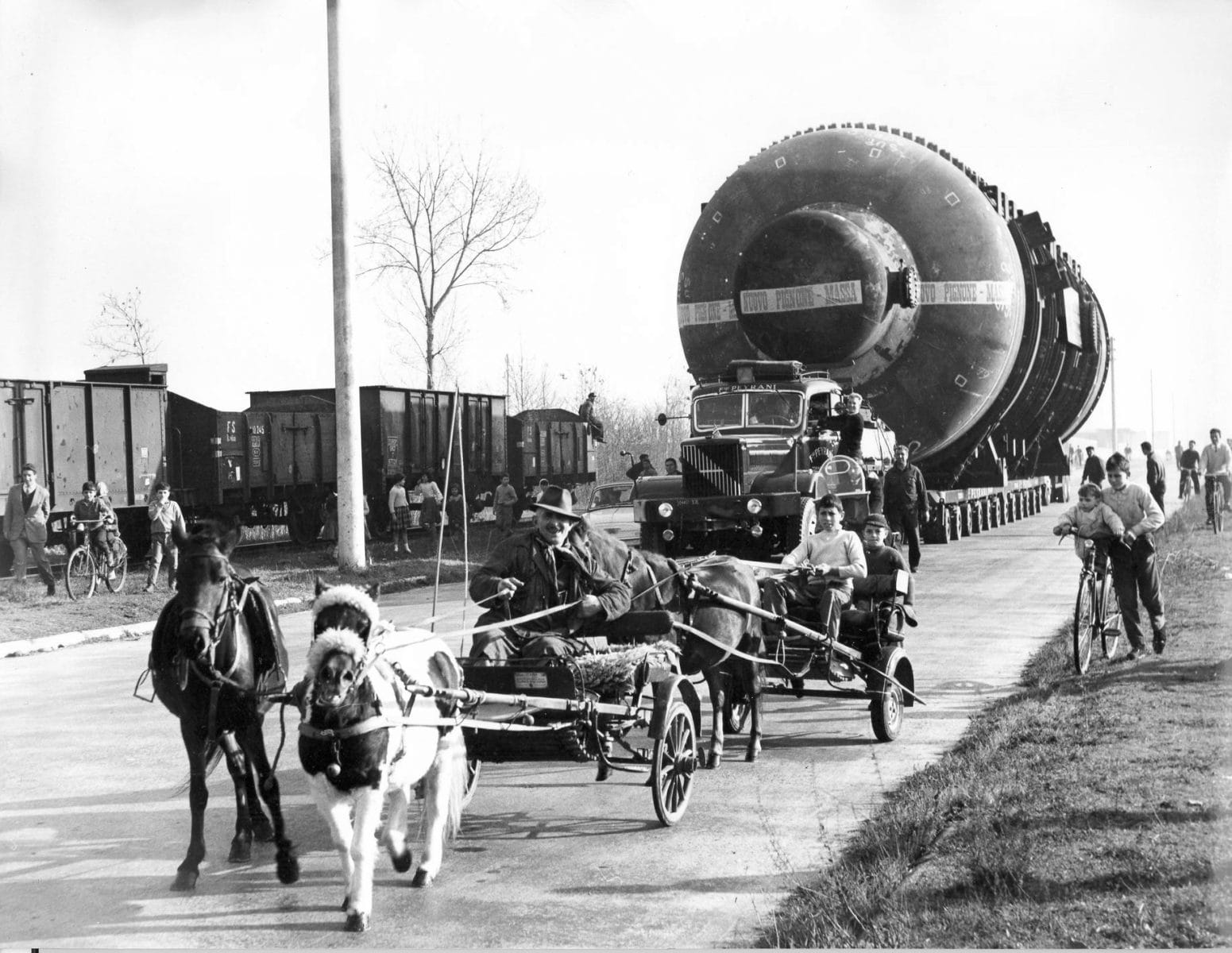
The Latina nuclear power plant during its construction in the late '50s and early '60s. Photos courtesy of SOGIN.

“The international crises of recent years have clearly demonstrated the risk of excessive dependence on imported fossil fuels or vulnerable supply chains,” said Fiorella Corrado, communications chief at Italy’s environment and energy ministry. “The government approaches this issue with great respect for the country's history and the democratic choices expressed by citizens. The 1987 and 2011 referendums profoundly impacted the national energy strategy at very different historical moments. Precisely for this reason, the point is not to ignore those choices, but to acknowledge that today's technological, climatic, industrial, and geopolitical context has radically changed.”

For Meloni’s government, the argument is not so much whether Italy needs to revive its nuclear industry, it’s whether the country is ready to shake its demons, to shake the cultural memory of what happened at Chernobyl forty years ago, a thousand miles away from Rome. 

In the early hours of April 28, 1986, in the control room of the Latina nuclear power plant south of Rome, a young technician called Ruggero Dell’Aquila was working the night shift. “Everything was perfectly quiet,” he recalled. As morning broke, teletype messages from Northern Europe began to rattle in. A clerk came down from the control room with reports from the Forsmark Nuclear Power Plant in Sweden. Their monitoring stations were registering radiation spikes far above background levels, and no one knew why. 

Inside the control room of the Latina power plant, 1963. Photo courtesy of Pionieri Del Nucleare.jpg

That evening, nuclear physicist Sergio Malossi, a director at the Latina plant responsible for monitoring radioactive risk, drove home. His mind was turning over what the clerks had been reporting. “He came in extremely agitated,” remembers his daughter, Roberta Malossi, who was 16 at the time. “We knew he was worried about something going wrong at the facility, but we didn’t understand.” Malossi says that her father’s first paranoid thought was that there had been a malfunction in his own plant, that radiation was leaching into the air, and that it was somehow his fault. 

At 9 p.m. Moscow time — aperitivo hour in Latina — the Soviet Union announced there had been an accident at the Chernobyl nuclear plant. In the ensuing days, Italian news was full of dire warnings. 

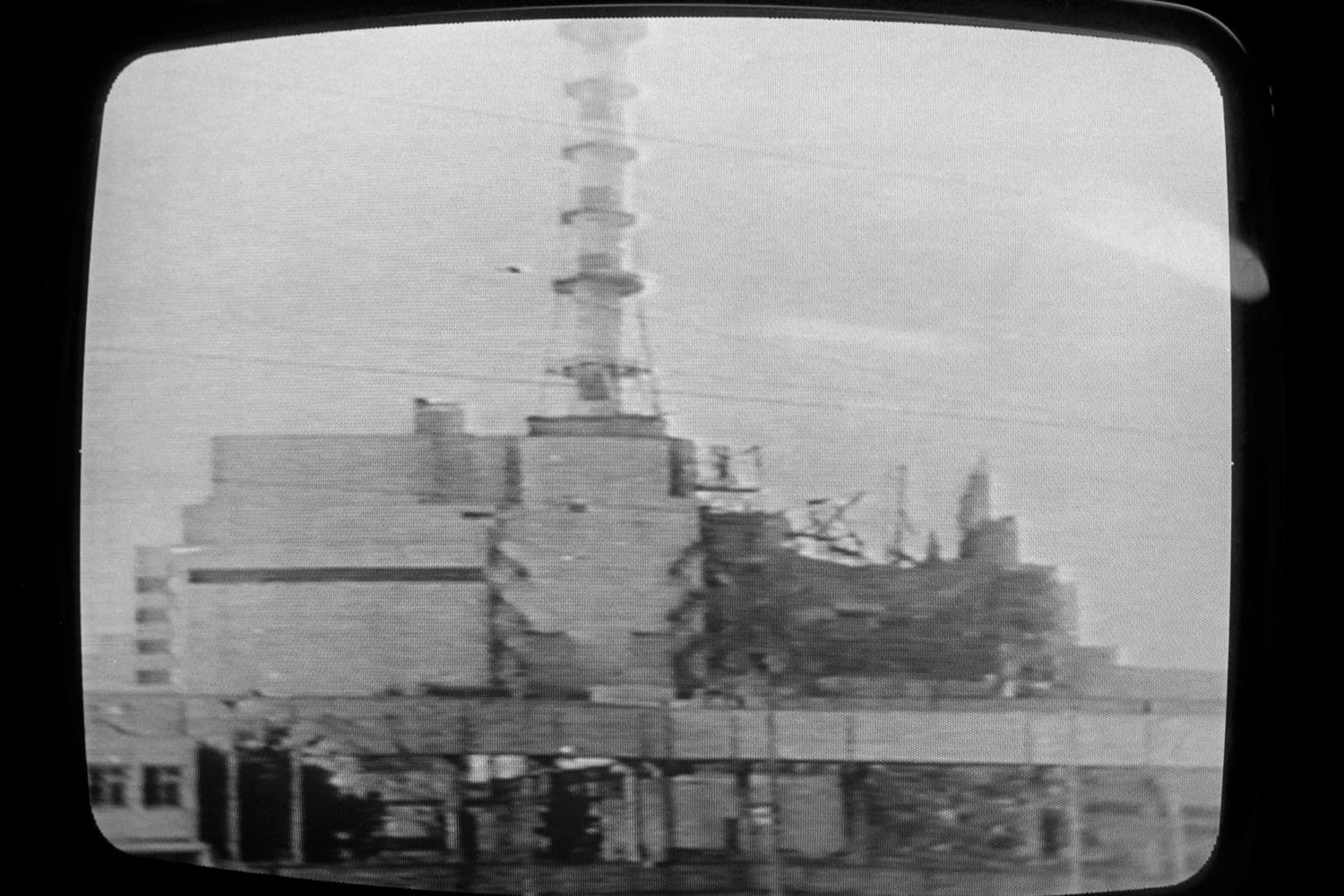
On April 30, 1986, Soviet television aired this image of the Chernobyl plant, claiming there was “no destruction, no major fires, and no mass casualties.”
 AFP via Getty Images.

“Television was showing these clouds that would soon reach Italy. Everyone was terrified. The only information we got was from state TV, and the news was shocking,” said Monica Tommasi, President of Friends of the Earth Italy, who was a child at the time. Radiation, the news said, would rain down on the population. “The fear from the sky,” ran one La Repubblica headline. “The cloud above us, the doubt within us,” ran another.

On the night of April 30, 1986, Italy’s nuclear monitoring stations began recording increases in radioactivity. The cloud moved over the Valley of the Po, and while the government called for calm, the country began to descend into panic. In the minds of the Italian people, the worst had happened, explained Luca Romano, a writer and activist campaigning for the return of nuclear power in Italy. “Nuclear annihilation, death by radiation, the radioactive cloud and the nuclear holocaust, had arrived,” he said. Nuclear armageddon was a fear that had gripped the West for decades. This was not a nuclear war, but in the Italian collective consciousness, that didn’t make a difference. 

The reality was, says Barbara Curli, Professor of Contemporary History at the University of Turin, that “Italy was only marginally affected by the cloud.”

The cloud in northern Italy meant radioactivity levels peaked briefly, but ten days later they had fallen dramatically back down. Because this spike was short-lived, the total radiation exposure remained low. A United Nations committee report recorded that northern Italy received an additional radiation dose of about 380 microsieverts in the year following Chernobyl — less than a fifth of the normal background radiation humans absorb in a year; equivalent to taking about six transatlantic flights. It was much smaller than the doses received by neighboring countries like Bulgaria, Austria and Greece, and in the south of Italy the dose was lower still. 

Nuclear Physicist Sergio Malossi, Long-time Director of the Department of Medical Physics at the Latina Nuclear plant. Photo courtesy of Pionieri del Nucleare di Latina.

Down by the Latina power plant, though, the community was shaken by events in Chernobyl, and rumors and misinformation began to spread about the fallout. The friends and family of the technician, Ruggero Dell’Aquila, started asking him if a Chernobyl-style disaster could happen at Latina, too. “Everyone was afraid, asking — ‘can it explode, can it explode?’” he recalled. 

The reality was, a Chernobyl-style explosion was not possible at Latina, because its reactor lacked the unstable characteristics of the Soviet design. But this was not such an easy concept to explain. 

“The problem was that a slew of journalists took over, telling lies,” Malossi said, recalling paranoid rumours about radioactivity causing mutations in nature. People started telling stories, Malossi said, about “frogs with three heads, animals and fish with four tails. Strange things. When in fact absolutely nothing like that was happening.”

The government advised people to avoid fresh vegetables and dairy products, particularly for children. Farmers destroyed crops and poured away milk. Sergio Malossi ignored the warnings, having measured radiation levels in the air himself. “My father and others from the plant brought the vegetables home and we ate them,” his daughter recalled.

It was these warnings — delivered amid a lack of clear information — that shifted public attitudes toward nuclear energy, said Renzo Colombo, 65, who was just beginning a career in nuclear engineering when the explosion happened. Now a member of Nucleare e Ragione, a nonprofit that promotes a rational approach to nuclear energy in Italy, he recalls how quickly fear took hold. “A real phobia was born, a panic about radioactivity,” he said. “And this panic marked the next 25 years.”

The months after the accident were a shadowy, uncertain period for Italians working in the nuclear industry. “I have to be honest, I felt a little guilty,” said Colombo. “As a nuclear engineer, I thought ‘what have we done?’ My colleagues and I always thought we were designing something useful for humanity. And at that moment we felt betrayed by our own profession.”

Workers at Latina nuclear plant during its construction in 1961. Photo courtesy Pionieri del Nucleare di Latina.

Outside Italy’s nuclear plants, crowds began to gather. A coalition of environmental groups and political parties started pushing for people to vote against nuclear power in an upcoming referendum.

This movement was not new. “Many years before Chernobyl, an environmentalist culture was born — and it didn’t just concern nuclear power, but risky industry in general,” explained Curli, the Turin historian. The anti-nuclear environmental movement, which spread across Europe in the 1970s, was particularly potent in Italy — a country rocked by violent political turmoil, organized crime, and corruption scandals. Public fears, explained Curli, were sharpened by the Seveso disaster, an accident at an industrial plant in the north of Italy in 1976 that exposed tens of thousands of people to a toxic cloud of chemicals. Nuclear power, she said, “was not perceived by public opinion as a credible policy because there's this underlying distrust in institutions.” 

Workers in protective suits clean up the land and homes contaminated by the industrial accident at Seveso chemical manufacturing plant in 1976. Alberto Roveri/Archivio Alberto Roveri/Mondadori Portfolio via Getty Images.

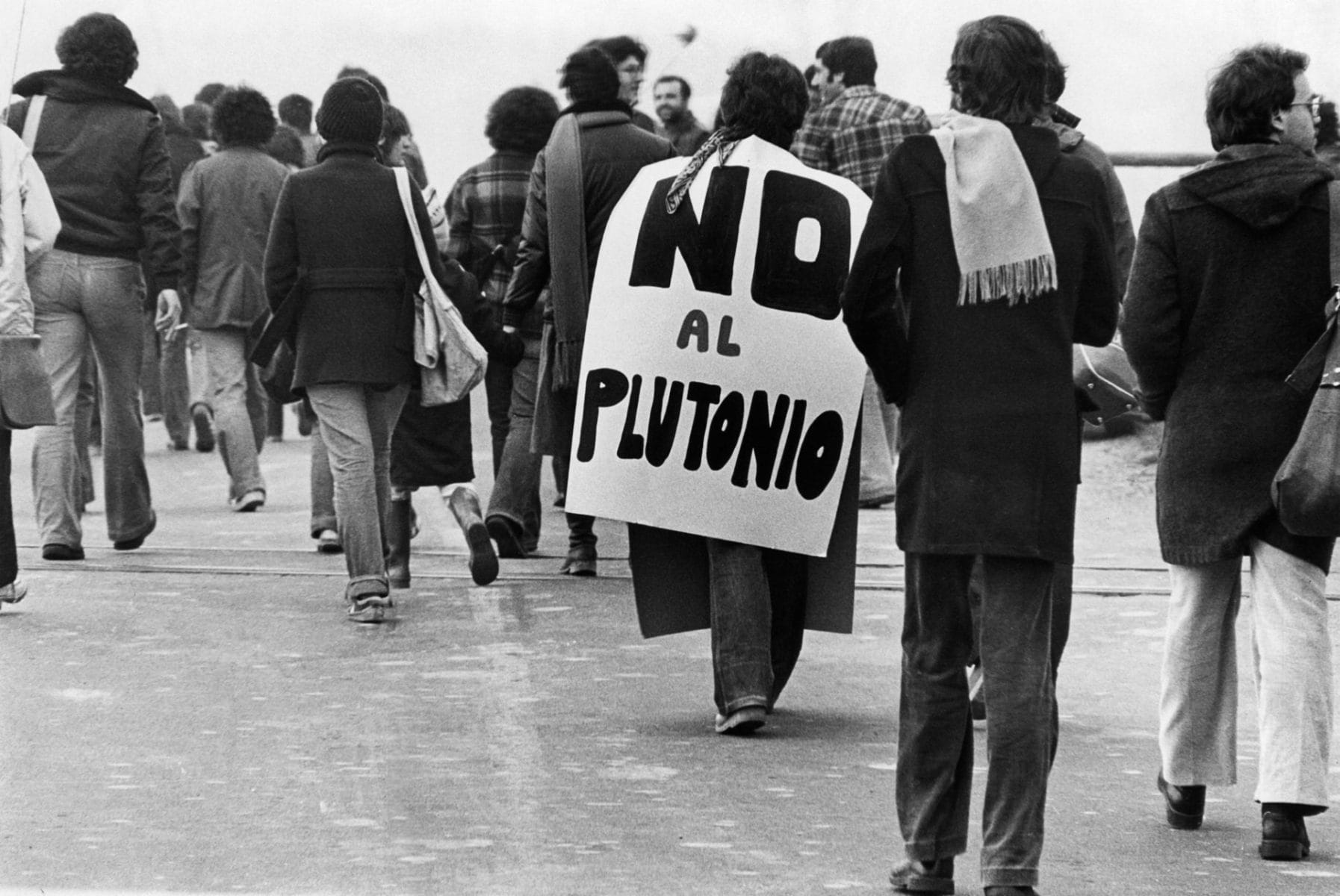
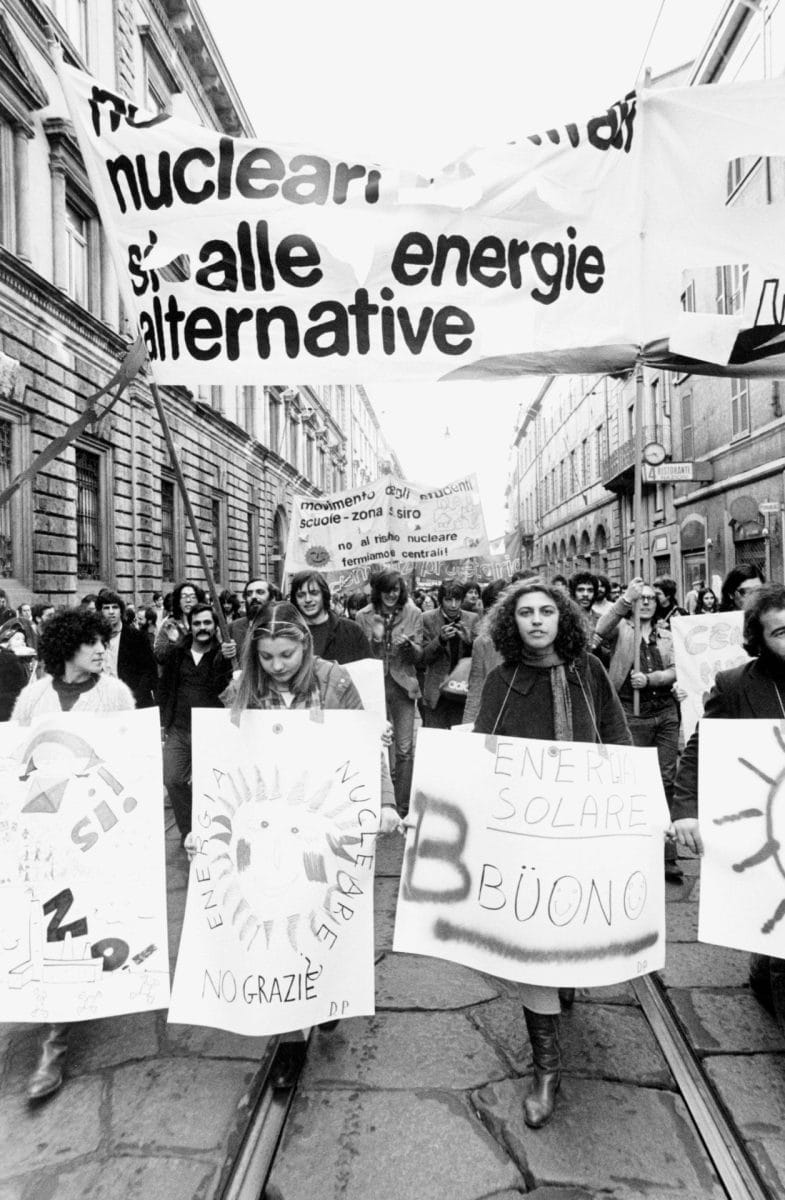
In 1977, almost a decade before Chernobyl, a 10,000-strong crowd of protesters showed up at Montalto di Castro, to protest against a large new nuclear plant that was planned. A Time magazine correspondent described the activists as “an improbable mix of elegant members of the Italian nobility, radical students in American Indian garb, middle-class citizens and Christian Democratic and Communist politicians.”

Demonstrators taking part in an anti-nuclear demonstration. Turin, 1980s. Alberto RoveriMondadori via Getty Images.
Anti-nuclear protest, Milan, 1980s. Universal Archive / Universal Images Group via Getty Images.
Anti-nuclear protest, Rome, 1980s. Universal Archive / Universal Images Group via Getty Images.

In the wake of Chernobyl, Renzo Colombo was working at that very same plant, helping to build the thermohydraulic cycle. By then, the station was nearly complete. “It was a beautiful plant,” Colombo said. “I loved working there.”

In November 1987, 18 months after the Chernobyl accident, the Italian government held a referendum on nuclear energy. Nearly 80% of Italians voted in favor of measures that would end the country’s use of atomic energy.

One morning, following the referendum, the Montalto di Castro plant’s director called the workers to a meeting. Colombo remembers him saying: “‘Ragazzi, gather round, I need to talk to you. I’ve just been to the ministry, and Italy has decided that we are closing all nuclear activity and will focus on coal and gas instead.’” The room went silent. “I was young,” said Colombo. “But there were people there who were older and had devoted years of their life to the nuclear field. There was just this urge to cry.” 

The effect of the referendum was all-encompassing: construction was halted, and over the next three years Italy’s nuclear plants were shut down for good; its nuclear engineers scattered — many going to work abroad, or, like Colombo, re-training to work in other industries. 

It was hailed as a victory for Italian environmentalism, says Curli. But the result was that there was a push to “gasify” Italy. That is, she says, “to choose the gas route — less expensive, and less demanding than nuclear power. But this made Italy almost completely dependent on Russian gas, Libyan gas, Algerian gas.” The Montalto di Castro site was converted into a fossil-fuel powered plant, running on gas and fuel oil.

Decades on from that post-Chernobyl referendum — and a second referendum in the wake of the Fukushima nuclear accident in 2011 — Italy remains in the process of dismantling its nuclear power stations, even as it now contemplates a return to nuclear power.

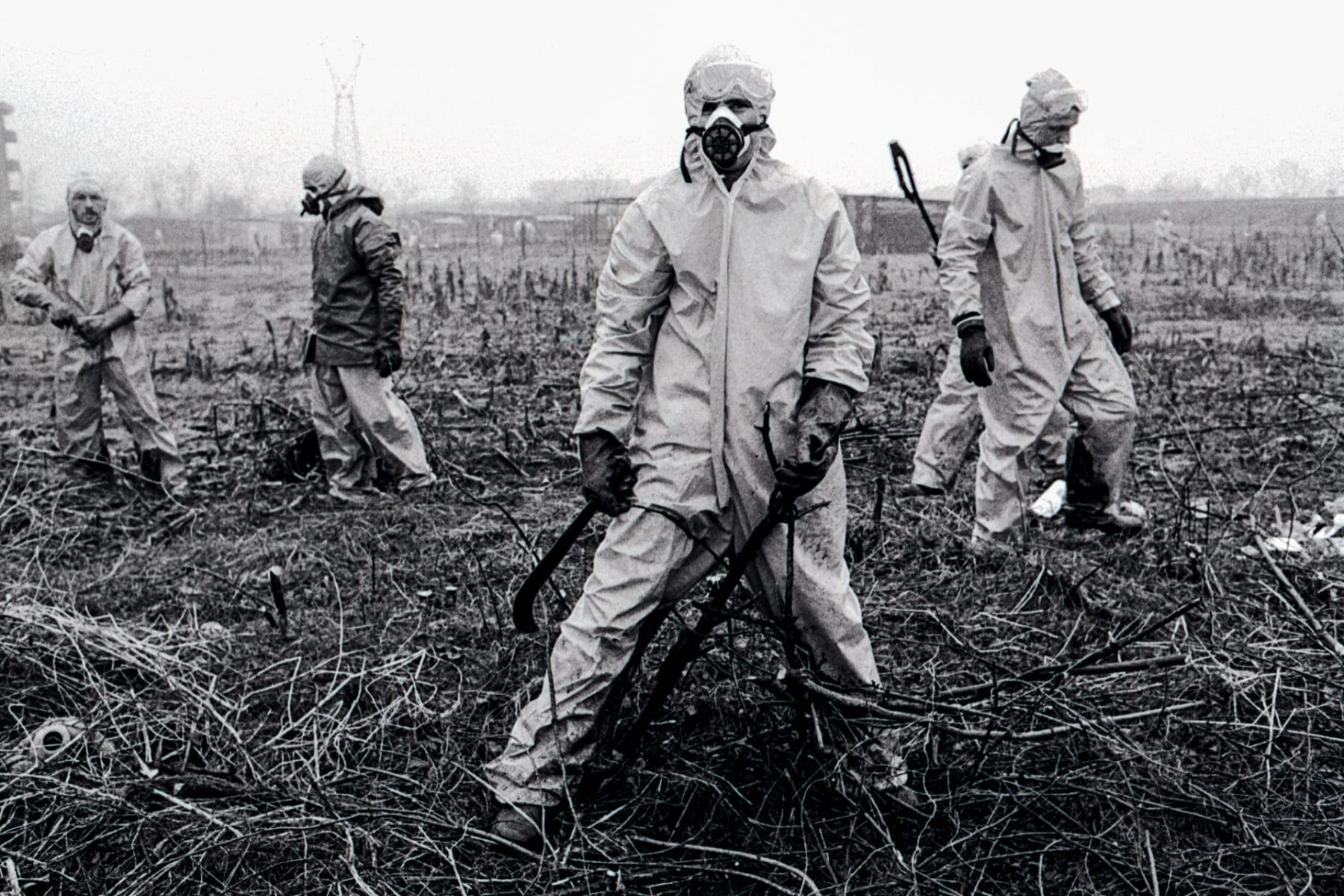
In the vast, cavernous belly of the Latina nuclear power plant, three workers in hazmat suits hammer away at pieces of the shielding cylinders that once protected the rest of the plant from radiation emitted from the reactor. From the viewing gallery, they look tiny in the enormous space, and the vastness of their task feels Sisyphean.

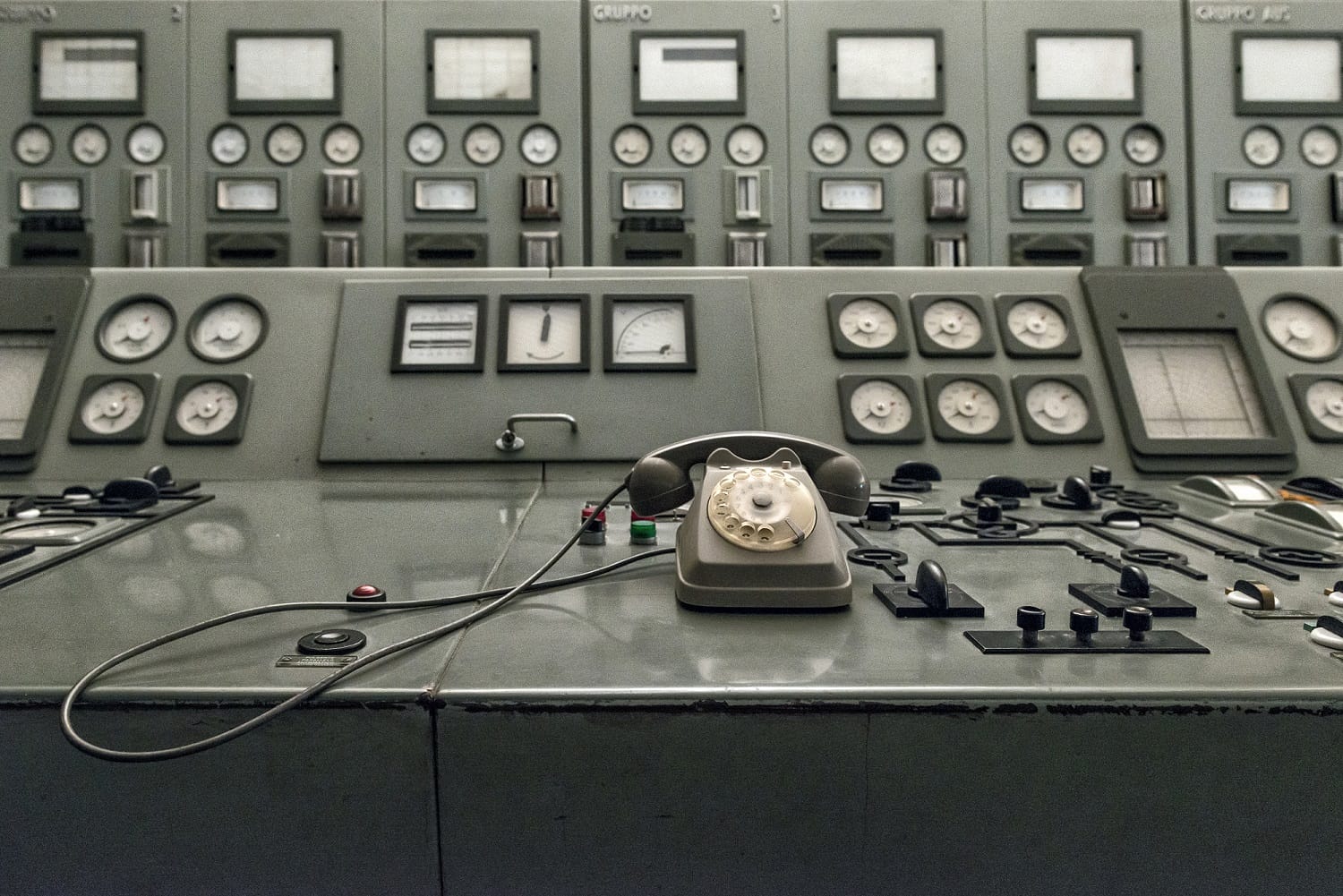
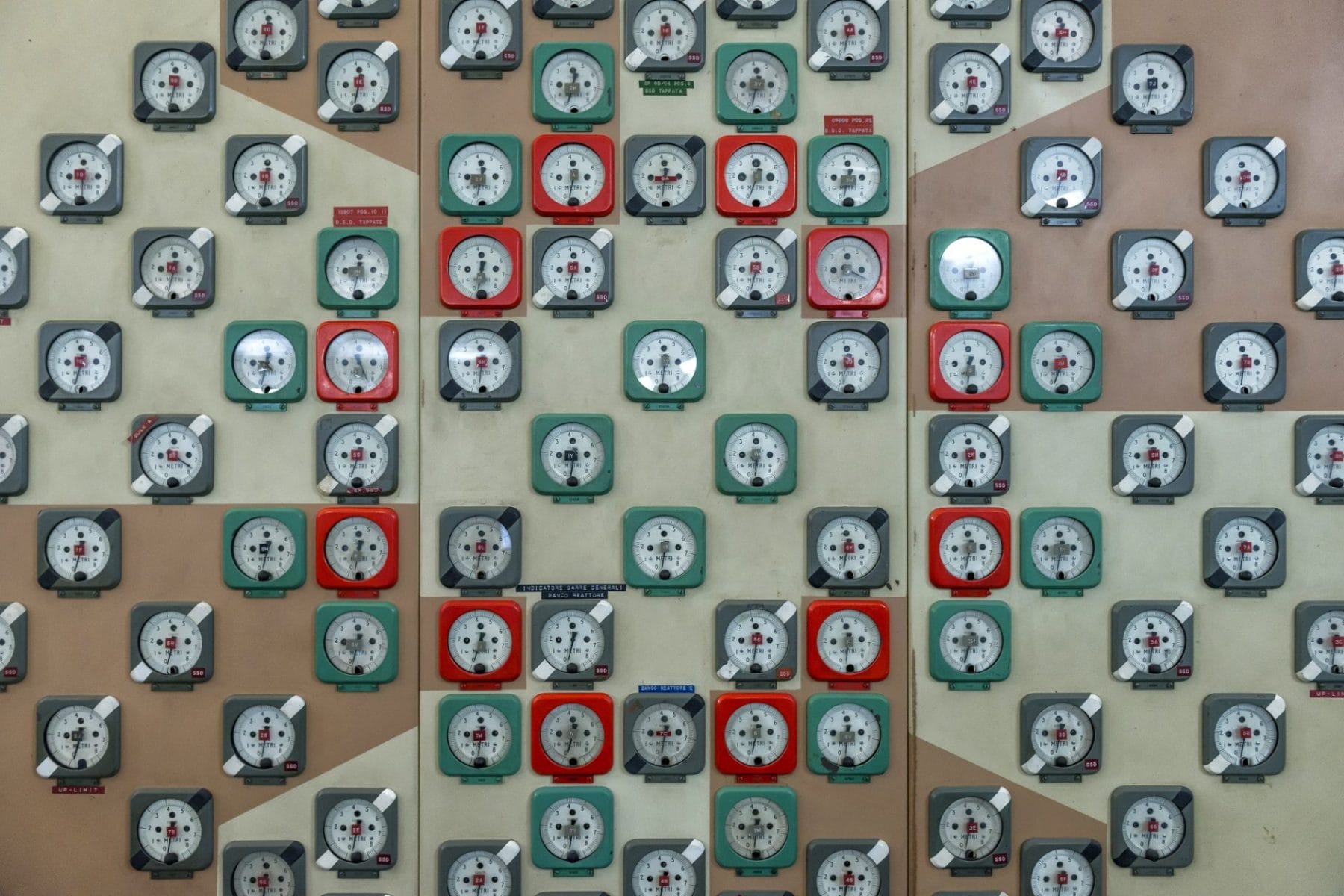
Watching them work is Enrico Bastianini, director of operations at the Latina plant. As I walk with Bastianini through the plant, we come to the old control room. When it first opened in 1963, the Latina plant was the largest nuclear power station in Europe — a feat of Italian and British engineering (the reactor was of UK design) and a symbol of Italy’s post-war industrial growth. 

“We were emerging from the destruction of the war, and this was progress. And it was what allowed us to escape the economic hardships of war, and have low-cost energy,” Bastianini says.

Now, over 60 years on from when the plant opened, more than half of its existence has been spent being taken apart. Critics of nuclear power often focus on precisely this point: the long and complex process of dismantling nuclear plants, and the problem of managing radioactive waste, some of which takes millennia to decay. 

There are two phases to the process of taking apart the plant. “The first phase allows us to dismantle everything that’s nuclear except the reactor. That’s because the reactor contains a huge amount of graphite,” Bastianini explains. “When we have a national repository, it can be removed. But for now, it’s safest if it stays in the first phase.”

Bastianini leads me into a deposit room where radioactive material is being stored in steel containers, inside an earthquake-resistant facility. These containers are only for temporary storage.

There were attempts in the early 2000s to establish a national nuclear waste repository at a salt mine in Basilicata in southern Italy, but huge protests forced the government to abandon its plans. Today, SOGIN, the state-owned Italian company in charge of decommissioning nuclear sites, is still actively searching for a suitable location for a permanent repository and faces considerable opposition. 

Rumours and anxiety swirl around the Latina plant itself — just as they did in the 1980s, when Malossi heard stories of radioactive fish with four tails. Last April, an article by the Italian magazine L’Espresso published claims that the Latina plant could leach radioactive material into the soil. The plant vigorously denies these claims — a spokesperson for SOGIN said the company periodically checks the quality of vegetables, milk and fodder as well as air, soil and groundwater for radiation and that “as always, the results of the analyses confirm radiologically negligible environmental impacts.”

The old control room of the Latina nuclear plant. Photos courtesy of SOGIN

In the gloaming of a summer evening in Umbria, Monica Tommasi drives me through the twilight-darkened hills surrounding the medieval city of Orvieto. This land is rich in archeological and ecological heritage — filled with ancient tunnels, Etruscan caves, untapped archeological sites, wild places where wolves and boar roam. Tommasi is the President of Amici Della Terra — "Friends of the Earth" in Italian — an organization that was once the Italian chapter of the international Friends of the Earth network before breaking away in 2014. "We left, because we argued a lot," she said of the split, describing how the network "wanted to put turbines and panels everywhere, and we couldn't be in favour of that approach." 

The International Friends of the Earth association was born from the anti-nuclear movement in America, where the group successfully lobbied to shut down two reactors, and has since 1969 made anti-nuclear campaigning a core part of its identity.

But Tommasi remembers precisely when she first began to reconsider nuclear power. “I started thinking about it in 2011, when I began to see that the government was investing heavily in solar and wind power, which would invade and industrialize the natural landscape,” she recalled. Many of these green transition projects have been fraught with problems in Italy — wind farm companies accused of corruption and profiteering, of erecting wind farms in areas where there’s little wind, and laying waste to nature. 

For the first time, Tommasi began to think about ways to decarbonize “that don’t destroy the environment where people live and the landscape around them.”. She became intrigued by the nuclear option. “We needed to start reasoning and changing our minds,” she said. 

Tommasi now advocates for a national conversation about nuclear power. “This choice must be accompanied by a public debate,” she told me, “but it isn’t happening because everyone is still afraid.” 

“The future of Italy's energy sector must lie in nuclear,” she said, adding that if Italy was to continue pursuing solar and wind energy alone, “it means destroying all the natural areas that are still left.”

I asked the government to respond to allegations about how criminality, speculation and land-grabs in the renewable energy sector might be affecting Italians’ opinions on nuclear power. 

“We do not believe it is appropriate to frame the energy debate by ideologically pitting nuclear power against renewables, nor should we use any administrative or criminal issues in certain sectors to discredit a technology as a whole,” said Fiorella Corrado, communications chief at Italy’s environment and energy ministry. “Nuclear power is not an alternative to renewables, but their best ally,” she said. 

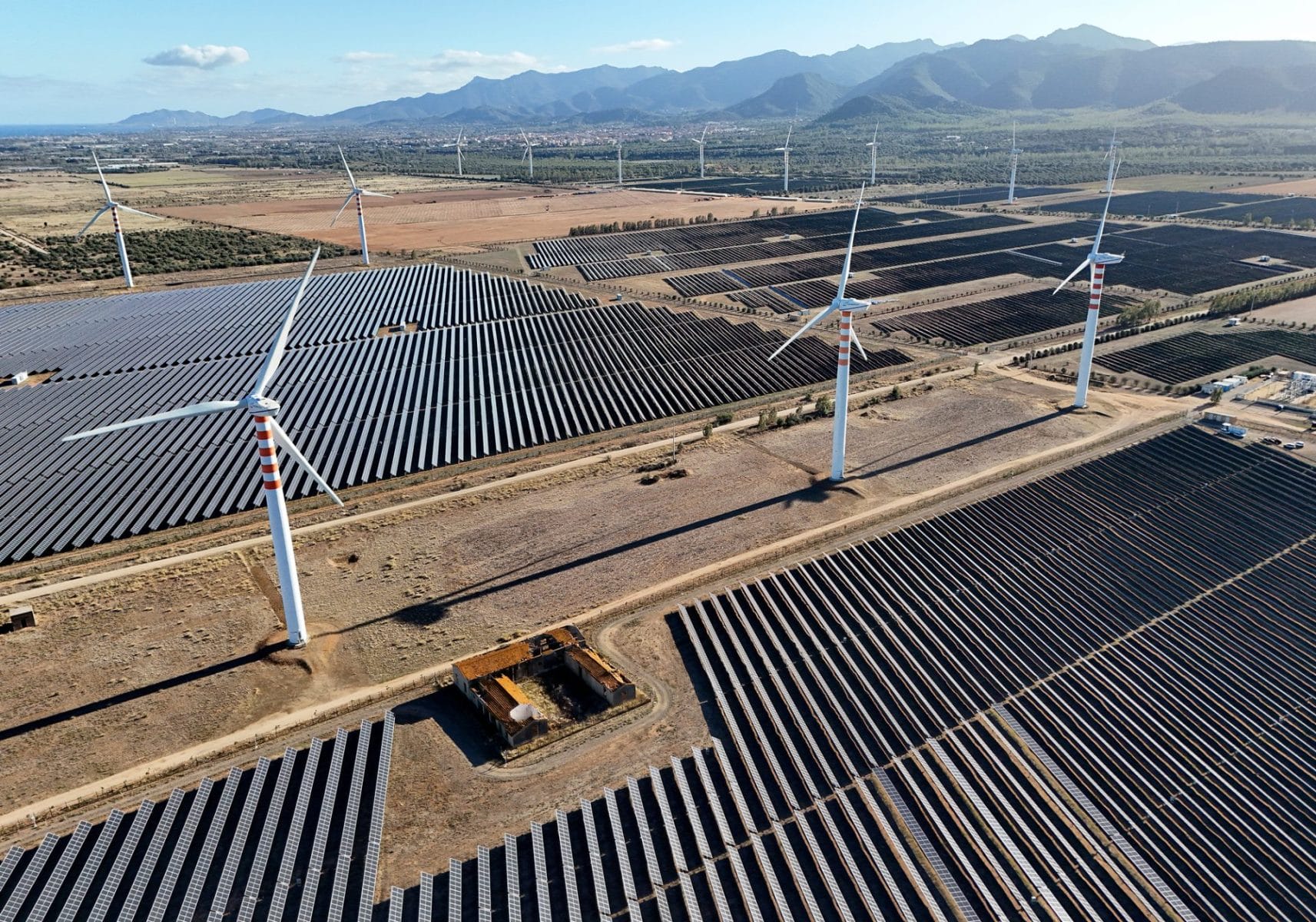
Wind turbines and solar panels near Cagliari, Sardinia, 2024. The island relies largely on coal but must phase it out by 2028 as Italy transitions to cleaner energy. Giovanni Grezzi / AFP via Getty Images.

On a warm autumn day in Rome, several thousand people gathered for an annual “climate pride” march. They brandished homemade cardboard wind turbines that spun in the breeze. Vincenzo Migliucci, 83, was among them. He worked for more than three decades for ENEL, Italy’s energy corporation, and he’s been anti-nuclear for much of his life. After the Chernobyl accident, he protested outside the nuclear plant under construction in Montalto di Castro almost every day, picketing the workers as they went through the gates.

“The wrath of God happened,” he said, referring to Chernobyl. “And when a true estimate is made, we’ll one day see how many disasters Chernobyl caused.” 

Migliucci is against nuclear power plants of all types — arguing for solar panels instead — and is particularly concerned about what happens to the plants after they become obsolete and must, like the Latina plant, be slowly dismantled over decades. “The decommissioning costs a fortune; the nuclear waste repositories cost a fortune,” he said.

currents

Subscribe to our coda currents newsletter

Insights from the Coda newsroom on the global forces that shape local crises.

He began telling me some of the stories that surround Italy’s shuttered nuclear plants. “Near the Garigliano power plant,” he told me, “a child was born with only one eye.” His own eyes widened as he pressed a finger into the middle of my forehead. “Sheep and cattle,” he said, “were born with six legs, or entirely red in colour. It’s not a myth, it’s real.” 

Younger generations of Italians don’t have the same collective impressions around nuclear power, nor around Chernobyl or its aftermath, explained Luca Romano, a young pro-nuclear influencer with a quarter of a million followers on Instagram. Romano makes videos with his partner, Luiza Munteanu, about the advantages of nuclear power. The main problem he runs up against, he says, is that “we have a very low scientific literacy, the level of debate is abysmal.” And culturally, he adds, “Italy has always been a country that looks backwards rather than forwards.”

In May, the director general of the International Atomic Energy Agency visited Italy’s Lombardy region, and signed a Memorandum of Understanding with the governor to cooperate on applying nuclear science for development across the region. The choice of Lombardy was significant. It is home to Milan, and is at the heart of Italy’s digital infrastructure. Speckled with no fewer than 60 data centers, with more cropping up, Lombardy has opened itself up to Silicon Valley. Microsoft is investing billions in the area to boost its AI and cloud computing infrastructure. Amazon Web Services has committed to spending over $1 billion to expand its data center operations around Milan.

How northern Italy’s growing AI infrastructure will be powered, though, is still a problem to be solved — one that cuts to the heart of Italy’s energy dependence. Since Giorgia Meloni became prime minister in October 2022 — which coincided with the launch of ChatGPT a month later — the Italian government has been broaching the topic of nuclear power as essential to Italy's energy future. “World population and economic growth will significantly increase energy demand,” Meloni said at a sustainability summit in Abu Dhabi. “Not least due to the growing requirements arising from the development of generative artificial intelligence.” 

Artificial intelligence is a “highly relevant topic,” said Corrado, the communications chief at Italy’s environment and energy ministry. “As more things run on electricity, the economy goes digital, and data centers and AI expand, demand for steady, low-emissions power will rise. Nuclear energy can help as a reliable, controllable source that works alongside renewables.” 

In August, it emerged that the government had set aside €7.5 million purely for pro-nuclear communication and information campaigns directed at regions where new plants may be built. One focus of the Meloni administration is on the prospect of building small modular reactors, sometimes called “mini nukes.” They are compact fission plants, a fraction of the size of the traditional, cathedral-like nuclear power stations. They have a smaller core, and proponents argue their safety features mean there’s minimal chance of an epic, Chernobyl-scale nuclear disaster, something the government is keen to get across to voters. 

Currently, only China and Russia have these small reactors up and running, but mini nuclear plants have attracted significant attention in Silicon Valley. OpenAI’s Sam Altman was chairman of Oklo, a nuclear startup focused on SMRs, while U.S. nuclear startup Kairos has signed an agreement with Google to develop these reactors to power its data centers. This month, the European Commission unveiled a strategy for rolling out small modular reactors and bringing them “online” by the 2030s.

Soon, Italy may take the first steps towards the reconstruction of a nuclear industry that has been abandoned for decades. “I believe it won't be easy to relaunch nuclear energy,” said Barbara Curli, the Turin historian. “Knowing a little about the history of nuclear power in Italy and its political dimension, I'd be quite skeptical about the possibility of relaunching nuclear power here in Italy — but let’s see.” 

A little under 1,500 miles away, in the Chernobyl exclusion zone, among wild boar, birds, and deer, radiation levels in some areas have dipped below around 0.3 microsieverts per hour, lower than background radiation levels in many European cities. Not least the eternal city of Rome.

Why Did We Write This Story?

As the U.S.-Israel war against Iran enters its second month, strikes on nuclear facilities have raised the stakes of an already catastrophic conflict. The WHO is now openly preparing for a nuclear incident it hopes will never come. Whether or not this escalates further, the fear already has a life of its own.

That is something we follow closely at Coda: how fear settles into collective memory and shapes policy long after the original crisis has passed, or even when the disaster people dreaded never fully arrived.

Isobel Cockerell takes us to Italy, one of the only industrialized nations to have dismantled its entire nuclear energy program after Chernobyl, despite being barely touched by the fallout.

This story is about nuclear power, but it is also about how fear can shape the world more than the event that caused it.

Related Articles

The post How Italy’s Chernobyl ghosts might stop a new atomic age appeared first on Coda Story.

  •  

Voters in California city become first in US to approve permanent ban on data centers

Signs of protest pepper front yards in a nearby residential neighborhood in Monterey Park, CA on Wednesday, April 1, 2026. Robert Gauthier/Los Angeles Times via Getty Images
Common Dreams Logo

This story originally appeared in Common Dreams on June 04, 2026. It is shared here under a Creative Commons (CC BY-NC-ND 3.0) license.

Voters in Monterey Park, California on Tuesday overwhelmingly approved a permanent ban on data centers within city limits, becoming the first city in the US to prohibit the power-hungry facilities via a ballot initiative.

In total, the anti-data center resolution passed with 86% voter support, with only 14% of voters opposed. The resolution’s text said that a ban was necessary to “protect air quality, drinking water resources, and public health” and “prevent impacts to electricity and water rates.”

Steven Kung, a leader of the local initiative, told ABC 7 Eyewitness News that the result was “a landslide victory.”

Kung listed multiple reasons why residents in the city resoundingly rejected building data centers in their community.

“The noise pollution, the air pollution, the rise in the electricity rates,” he said, “the deal just didn’t make sense and it doesn’t make sense for most, if not all, cities data centers go to.”

In an interview with Politico, Monterey Park Mayor Elizabeth Yang predicted that her city would be far from the last to pass data center bans, noting data center projects have spurred protests across the country.

“A lot of the other cities that are facing data center proposals are going to follow suit,” said Yang. “There’s [a] bad reputation across the board, across the country, from other data centers that have been built in neighborhoods.”

Monterey Park city councilmember Jose Sanchez expressed a similar sentiment, telling The Guardian that he hoped his city would become a inspiration to others.

“We hope that other communities will use the model set by residents here in Monterey Park,” said Sanchez, “as inspiration to stop data centers from encroaching in their backyard.”

Data centers have become political lightning rods in recent months, as residents across the country object to their massive resource consumption, which is leading to a major spike in utility bills, as well as the noise pollution they generate.

Sen. Bernie Sanders (I-Vt.) and Rep. Alexandria Ocasio-Cortez (D-NY) earlier this year introduced a bill that would impose a nationwide moratorium on AI data center construction “until strong national safeguards are in place to protect workers, consumers, and communities, defend privacy and civil rights, and ensure these technologies do not harm our environment.”

poll released on Wednesday by Public First showed US residents more opposed to data center construction than any nation in the world, with just 26% of Americans registering support for building more data centers.

This opposition isn’t merely abstract, as it has caused major headaches for Big Tech firms that have been scrambling to increase their AI models’ compute power.

As The Financial Times reported on Thursday, “dozens of projects collectively worth at least $156 billion have been blocked or stalled since 2025” thanks to local opposition to their development.

  •  

‘Absolutely crazy’: Horror as Trump moves to dismantle crucial ocean monitoring system

An aerial view of Pacific Ocean waves hitting a seawall protecting homes on December 30, 2023 near Ventura, California. Photo by Mario Tama/Getty Images
Common Dreams Logo

This story originally appeared in Common Dreams on June 02, 2026. It is shared here under a Creative Commons (CC BY-NC-ND 3.0) license.

In what a number of scientists suggested was the Trump administration’s latest effort to stop tracking the changing climate in hopes of convincing the public that the climate emergency isn’t happening, the National Science Foundation announced Monday that it was dismantling a crucial deep-ocean monitoring system that for years has helped researchers understand the impacts of the crisis on the world’s oceans.

The NSF said it plans to send ships this month to remove more than 900 instruments, part of a project called the Ocean Observatories Initiative. The project collects data on temperatures, currents, and the ocean’s absorption of carbon dioxide off the coasts of Oregon, Alaska, Washington, and North Carolina, as well as in the Irminger Sea between Iceland and Greenland.

A spokesperson for NSF told The New York Times that the dismantling of the initiative will help the NSF in “prioritizing support for evolving scientific priorities and emerging technologies as well as a deliberate approach to smart life cycle management within its portfolio of research infrastructure.”

The reasoning given for the shuttering of the project, said Tara Blume, a journalist at Oklahoma City NBC affiliate KFOR, was “a master class in obfuscation and doublespeak.”

Genevieve Guenther of the group End Climate Silence shared her own interpretation of why the $368 million ocean observation system is being discontinued, despite the fact that it had been set to collect data for 25 years.

“We need to track ocean currents to assess how close we are to climate tipping points that will essentially destroy the world as we know it,” said Guenther. “The GOP doesn’t want us to be able to do that. That’s why they’re dismantling ocean monitoring.”

"By dismantling such a system, we push the United States back yet again into a rear seat in global scientific leadership." https://t.co/TSKsORuTX9

— Eric Geller (@ericgeller) June 2, 2026

Scientists have used data gathered by moorings, robotic vehicles, and other instruments that transmit the information to research laboratories, to study changes in the Atlantic Meridional Overturning Current (AMOC), a current system that moves warm water northward and cools the Arctic and Northern Atlantic regions while absorbing carbon dioxide deep into the ocean and keeping it out of the atmosphere.

Data gathered at the observation station in the Irminger Sea has been key to understanding AMOC, which scientists fear is gradually weakening due to planetary heating and could ultimately collapse, likely causing major global weather changes.

“This is absolutely crazy,” said David Doniger, a senior strategist and attorney at the Natural Resources Defense Council’s climate and energy department. “Wouldn’t you want to know if the ocean currents are changing? Wouldn’t you want to know ocean temperatures? These things affect everything from fishing to hurricanes.”

Following the announcement that the stations will be dismantled in the coming weeks, said Blume, “science gasps for breath.”

President Donald Trump has attempted several times to shut down or drastically reduce the budget of the Ocean Observatories Initiative, which costs $48 million annually to run. Congress has restored the program’s funding.

The dismantling of the program comes months after the Environmental Protection Agency repealed the “endangerment finding,” which for years had underpinned the department’s environmental regulations; after the administration closed down the National Center for Atmospheric Research, which had gathered data on hurricanes and extreme weather to help improve forecasts; and after the National Aeronautics and Space Administration released a statement on record-breaking temperatures in 2024 and 2025—without any mention of the climate crisis or climate change.

“Blinding the public to climate change won’t make it go away. It will only accelerate its profound consequences,” said clinical researcher Iris Gorfinkel.

According to the Trump administrationsaid historian Nick Kapur, “apparently climate change doesn’t exist if you prevent scientists from measuring it.”

  •  

AI-Powered Surveillance Takes Off in Texas

by Francesca D’annunzio | Texas Observer via Truthdig Over the past several years, the Texas Department of Public Safety (DPS) has quietly built out an expansive surveillance apparatus — one that’s increasingly powered by artificial intelligence. Many of these technology acquisitions have been made under the auspices of Gov. Greg Abbott’s Operation Lone Star, an $11 billion program that has supercharged the state’s decades-long border militarization. The powerful and well-funded state police agency has not just expanded its existing surveillance capabilities, which include a fleet of spy planes, unmanned drones and a network of wildlife game cameras that are deployed across […]
  •  

Why are there so many toxic disasters in the US right now?

An aerial of water being sprayed on large storage tanks at the GKN Aerospace facility on Sunday, May 24, 2026, in Garden Grove, CA. Kayla Bartkowski / Los Angeles Times via Getty Images

What the hell is going on with all these toxic disasters in the news?

Over the past week, we’ve had a terrifying crisis at the GKN Aerospace facility in Garden Grove, CA, involving a pressurized tank of toxic chemicals on the verge of spilling or exploding for days and the evacuation of 50 thousand people in Orange County.

At the same time, right up the road in LA, we had a spill of thousands of gallons of crude oil that got into the LA River  

Then, news broke of the horrifying tank rupture and explosion at the Nippon Dynawave paper mill in Longview, Washington, involving hundreds of thousands of gallons of toxic liquid and 11 workers who were killed

People have been asking me all week, “What the hell is going on?” And that’s because I’m a professional editor and an award-winning journalist who’s been covering toxic disasters like this for years. Also, I’m from Orange County, and my family lives in Garden Grove, about 10 minutes from the GKN Aerospace facility, so I’ve been watching all of this very closely. 

If you haven’t been obsessively investigating these kinds of stories like I have, the recent rapid-fire bombardment of headlines can make it seem like all these toxic disasters are coming out of nowhere. An explosion here, a toxic spill there, a fire there. “Why is this happening? And what the hell do we do?” 

So, right off the bat, the most important thing to understand is that this is not all just happening now. It’s been happening, and most of the time you just haven’t been hearing about it

Did you hear about the toxic explosion and fire at the Smitty’s Supply facility in Roseland, Louisiana in August? 

Did you hear about the toxic Biolab fire in Conyers, Georgia the year before that? 

How about the toxic lithium battery fire at the Moss Landing Energy Storage Facility in California?

I promise you, this is just the tip of the iceberg…

All the craziness this week actually gives me extreme deja vu that goes back to the first toxic disaster I covered while it was unfolding: The 2023 Norfolk Southern train derailment and chemical disaster in the small town of East Palestine, Ohio

From the train derailment itself to the disastrous and unnecessary decision three days later to empty five rail cars’ worth of toxic vinyl chloride and set it on fire—releasing a massive black death plume into the air and exposing communities for miles to deadly toxins—that story was so horrific and unbelievable that it drew the attention of the public and the media, and then the public and the media started noticing that more train derailments were happening all over the place. 

And it felt then exactly then like it does now. People were rightly asking, “What the hell is happening? Is the sky falling? Is this all part of some big conspiracy or what?” 

But because I had been interviewing so many railroad workers, I knew the reality that the US averages over 1,000 train derailments a year. Which is a big problem, but it’s not a problem the media had covered much before East Palestine, so when they finally did start covering derailments, it felt like it was all happening suddenly and it was all coming out of nowhere.

But, again, because I’ve spoken to railroad workers across the industry, I also knew that this is part of a larger problem that is the result of decades of deregulation, corporate consolidation, and ruthless, profit-seeking, cost-cutting railroad executives and their Wall Street shareholders destroying the rail industry and our supply chain so they could rake in record profits. Cutting jobs, year after year. Piling more work onto fewer workers and working them to the bone. Making the trains longer, heavier, and more unwieldy. Automating human jobs and removing layers of security designed to keep workers safe and the communities those trains are blazing through safe as well. 

This all comes down to these companies obsessively trying to lower their operating ratios, year after year, and sacrificing long-term safety for short-term profits. 

Don’t forget that, throughout 2022, railroad workers were preparing to go on strike for the first time in decades, and they were warning me and anyone who would listen that, if these greedy rail giants and Wall Street bloodsuckers weren’t reined in, it was only a matter of time before a deadly catastrophe happened on the rails. Then, President Joe Biden and both parties in Congress conspired to break the potential rail strike in early December of 2022, workers had contracts shoved down their throats, and nothing on the rails fundamentally changed. Then, two months later, the derailment in East Palestine happened.

There are two really important lessons here that we need to learn to understand what’s happening now, in 2026, with these toxic disasters around the country. 

First, like with the train derailments, there is a similar dynamic going on here where a high-profile disaster has people and the media just paying more attention to these things now. 

As a journalist who covers these kinds of disasters year round, all over the country, in red states and blue states, in cities and rural areas, I can tell you that: These disasters aren’t just starting now and they’re not freak accidents coming out of nowhere. And if you think you’re safe and far away from the danger, I have some bad news for you… 

You may be living in or near a “sacrifice zone” and not even know it. You could be breathing in toxic exhaust from nearby factories and trash incinerators, your pipes may have lead that’s poisoning you, your local water supplies may be contaminated by runoff from industrial plants, nuclear facilities, fracking operations, coal mines, landfills, massive industrial farms and concentrated animal feeding operations. A truck or train or ship, operated by exhausted and exploited workers and hauling hazardous chemicals, could crash by your home. A military base or government-owned plant could be polluting your body and blood with PFAS/PFOS or radiation. Or a giant damn data center could be moving to your town. 

Again, this shit is everywhere.

And if you’re only seeing this in Democrat or Republican terms, if you’re only looking at the headlines and not the history behind these toxic disasters, then you are not gonna see the full picture here. This is not a red state or a blue state problem, this is a working-class problem. Corporations and the government are turning more of America into one giant “sacrifice zone,” and more of us are being set up for sacrifice than we realize.  

Just like with the corporate behemoths and Wall Street vultures who destroyed the railroad system with the help of their bought-off politicians in both parties, the crisis we’re in now developed over time.  And while every toxic disaster is different, I often feel like I’m investigating a serial killer because I hear the same stories coming from different disaster zones around the country. 

And if I had to name that killer, its name would be: Profit. Specifically, it’s our political and economic system that prioritizes private profits over the public good and working people’s lives. 

That has been the driving force behind decades of policy measures to deregulate industries, corrupt the very government agencies that are supposed to regulate them, defang the penalties for polluting our community, and disempower the workers and local residents affected by them so they can’t do anything about it. And, of course, that is the driving force behind all these greedy executives and Wall Street shareholders across industries obsessively cutting costs while simultaneously speeding up production, ignoring safety protocols and removing safety measures, and almost always choosing short-term profits over long-term investments in safer facilities, stronger worker protections, and less outdated equipment until and unless a catastrophe happens

Basically, all this dangerous, life-threatening, environmentally hazardous stuff has ended up all around us, and it’s all gotten less safe, over many years of corporations and politicians “fucking around” for their own gain at our expense. Now, America is in the “find out” stage, and working people are the ones getting stuck with the toxic bill.

💾

"If you’re only seeing this in Democrat or Republican terms, if you’re only looking at the headlines and not the history behind these toxic disasters, then you are not gonna see the full picture here.
  •  

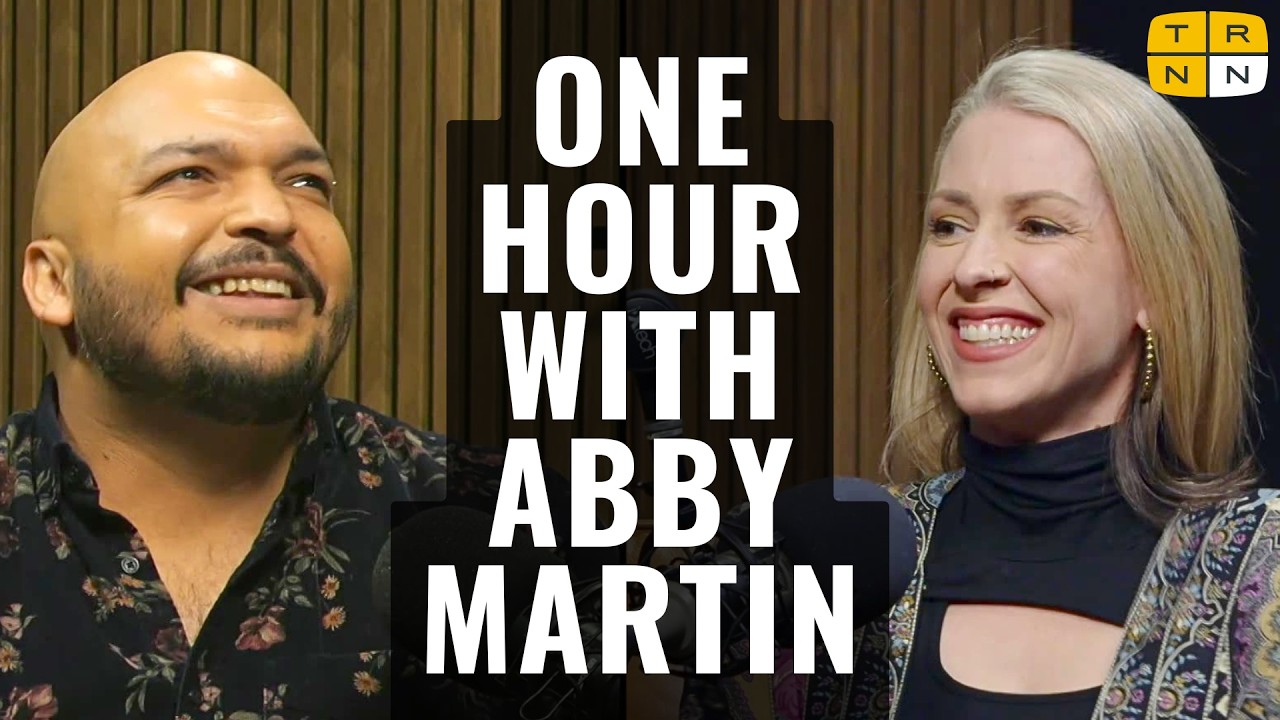
Abby Martin: The US military machine is destroying our planet

Still image of independent journalist and filmmaker Abby Martin speaking into a microphone at the TRNN studio in Baltimore, MD, on Jan. 29, 2026. Credit: TRNN.

We sit down for an hour-long discussion with legendary independent journalist and filmmaker Abby Martin to discuss her new blockbuster documentary, Earth’s Greatest Enemy, and the existential threat that US empire in general—and the US military specifically—poses to humanity and to our planet.

Editor’s Note: This conversation was recorded on Jan. 29, 2026, before the beginning of the illegal US-Israeli War in Iran.

Guests:

Additional links/info:

Credits:

  • Studio Production / Post-Production: David Hebden
Transcript

The following is a rushed transcript and may contain errors. A proofread version will be made available as soon as possible.

Maximillian Alvarez:

We’re here in the Real News Network studio in downtown Baltimore and I could not be more excited to have legendary independent journalist and filmmaker, the one and only Abby Martin here with me in person. Now, some of you may not know this, but Abby is actually a Real News alumnus. And Sister Abby, I know it’s been a minute since you’ve been back here in your old stomping grounds, but I just wanted to start by saying on behalf of the entire team here, welcome back to Baltimore. Congratulations on all the incredible essential work that you’ve done and we are all just so proud of you and so honored to be in this struggle for truth with you.

Abby Martin:

Oh my gosh. Well, the feeling’s more than mutual, Max. I mean, just being here back in the studio just brings me back to just the origins of Empire Files. Being in the Real News studio, working all hours of the night trying to knock out those weekly documentaries. And it was just such a cool crew to be a part of and it’s so amazing to be back.

Maximillian Alvarez:

Well, and what an incredible journey you and the Empire Files have been on since then. And we are of course here today to talk about your blockbuster new documentary, Earth’s Greatest Enemy, which is engrossing, expansive and frankly, terrifying investigation into the existential threat that US Empire in general and the US military specifically pose to humanity and to our planet. Now, I know that this project was years in the making and projects of this magnitude can often start as one thing and then become something much greater by the end of it. And so I wanted to start by asking, what is this documentary? Where did it start and what did it become by the time you and your co-director, Mike Prisner, were finished?

Abby Martin:

Wow. It was a long journey indeed and it was five years in the making, as you mentioned. And it started off during COVID with the birth of our first child and kind of joining our passions together, Mike, as an anti-imperialist, anti-war veteran organizer and me as an anti-war journalist who had been advocating against US imperialism my entire career as an advocacy journalist. So I advocate for issues. I wear my bias on my sleeve and I find it very refreshing in this kind of world of access, journalism and corporate media. And so combining those passions together and wanting to approach a subject that tackles the environmental impact of the military because of our obsession with the future, bringing a child into this world, having the responsibility of basically investing in the future. It is on our shoulders now. We’re all in. And so we saw that statistic kind of floating around that the US military was the largest institutional polluter in the world.

This is something that’s been kind of synthesized in academia when you look at just oil purchases, which the US military hadn’t even really disclosed until relatively recently. And there’s been some scholars who have addressed this in literature and studies, but no one had synthesized it in a cinematic way, certainly in a documentary fashion. But Max, once we got into the subject matter, every stone unturned is another documentary. And so we’re looking at legacy contamination of just radiation Agent Orange and then you look at the expansion of militarism all around the world with these 800 bases. Every base is a story. Every victim is another story. And then you add on top of that just the maintenance of the military arsenal, the actual infrastructure of the US military empire and how the entire thing exists as a self-fulfilling prophecy in order to maintain a fossil fuel infrastructure.

And it’s never been laid bare more with Trump in power with this kind of imperial belligerence when we see Venezuela, Greenland. So the documentary took a life of its own and started catapulting in every which way and kind of made us realize we wanted to prove the thesis here. We wanted to go into it not just talking about emissions, which is one story in itself, which we tackle. We wanted to tackle all of it. We wanted to go into the totality to sit someone down and inject them with the truth and you cannot walk away without having your brain rewired in terms of the way you look at the military in this country.

Maximillian Alvarez:

No, and I could say that as someone who’s watched it and was, like I said, quite terrified by what I was seeing and what you have given us kind of concrete evidence to prove. But I wanted to ask what kind of a monumental struggle that must have been to first research and then visualize the scope and scale of this problem. Could you just talk about that for a little bit?

Abby Martin:

I mean, especially when it comes to emissions, because this is something that’s been very secretive under the pretense of national security and not disclosed by the US military establishment. So it was unearthing so much data accumulated and synthesized by scientists independently to try to calculate these things based on just oil purchases. And then when you extrapolate that out and look at the lifecycle emissions, look at the application of the weaponry, the maintenance of this global supply chain, it totally becomes unquantifiable. And then you wrap into that the actual basically NATO, the machinery of the entire military empire, the great power competition with China, Russia, all of the building up of those arsenals and response to our aggression and belligerence. So it becomes simply unquantifiable and it was so difficult. And Max, at a point in the documentary, we bring in this philosopher and he says something really, really important where he says, number’s numb.

And he gives kind of this take on it’s so hard to get overwhelmed by the existential nature of US imperialism of capitalism because it’s so far reaching and all inclusive and all these issues are interconnected as we’re realizing more and more, but numbers, when you’re just looking at sheer facts and data, data, data, it can numb you. It can become meaningless. And I think we see that psychologically, I think with the genocide going on for three years straight, the data and the numbers become numbing. And so at a certain point it became more about just the storytelling and the emotion and collaging these narratives together to kind of give people that gut punch that it’s not about the numbers. Look, we proved the thesis over and over again, that’s done. But I think what really hits people is seeing how this is you, this is your children.

Your children are those children in Iraq. You are Alex Pretty. You are Renee Goode. You are every one of these victims of US imperialism because it affects every single person on the planet.

Maximillian Alvarez:

And I think back to the days of COVID-19 and when I heard those words in your documentary, Numbers Numb, that was the first thing that came to my head was sort of bearing witness to the monstrous spectacle of the bigger the numbers of people lost to COVID-19 got, the more numb people got to the human lives that were being lost. And I think there really is a terrifying truth there. And again, it speaks to the service that you and Mike Preisner have done in not just compiling what could be compiled in terms of the research numbers and from the emissions of all the military vehicles to the environmental impact of all the explosions and wasted munitions that are blown up or dumped into the ocean. I mean, the list is just so incredibly long and it’s impossible, like you said, to try to quantify it.

But I think what was even more horrifying to learn was that from Bill Clinton to now, all these kind of global US-led climate agreements don’t factor in the US military when they’re talking about our national emissions output.

Abby Martin:

Yeah, exactly. And people do not realize that. I’ve talked to several climate scientists, environmental academics, and they were absolutely flabbergasted at that fact that should be widely known, that militarism, not just US militarism, but every country’s militarism is excluded. Under the Paris Accords, they gave an option to opt in, but of course many countries are like, “Why would I do that? ” It’s not mandatory. Yeah, you know what? So it’s just completely insane and totally a farce that for the last 30 years of these international climate treaties, the US military has led the exemption of all military emissions and it’s gargantuan. It is completely gargantuan and totally hidden from this growing total. And so what’s astonishing to me is that why am I the first person to confront these major politicians at these conferences? Decades in the making, you see this bipartisan consensus for empire and just the acceptance of lying about this, of accepting it as normal and it’s totally outrageous.

And the whole dystopian nature of these climate conferences in general, which real news has covered extensively is just off the charts. I mean, it’s all about corporate profit. It’s all about how can we market this? How can we make money off of it? And then it’s like, well, no wonder you have a contingent of society that’s detaching itself less and less from that consensus reality that climate change is this existential threat that we need to globally cooperate on because simply the opposition to the fascist takeover, they’re not treating it like the emergency it is and they’re not acting accordingly. So it just makes it look like a money making venture and it’s really unfortunate.

Maximillian Alvarez:

Another word might be a racket.

Abby Martin:

Yeah, there you go. Yeah. It’s a goddamn racket. Yep.

Maximillian Alvarez:

There it is. I wanted to ask if you could sort of lay out this double helix death spiral of US wars and military imperialism around the world and like the climate crisis, like how those two things and how you unpack it in this documentary, but like how those two things are intertwined in the most monstrous way.

Abby Martin:

And this goes before obviously World War II with the advent of the war making industry, how because Europe was left in ruins, you had the US kind of concentrating the actual war machinery and that’s where you see the genesis of the war economy being a kind of a permanent footing in the US. It established well before that. I mean, we’re talking about the first extraterritorial military basis that were established through obviously the veins of the genocidal takeover in the first settler colonies here, but those first extraterritorial military bases were to protect extractive industries of fur and mining just to basically … I mean, we almost drove beavers into extinction just so people could have funny hats in Europe and then it became coal. So the first bases that were overseas were to access coal and to basically be infrastructural holding cells for coal. And of course, once the national security priority turned to oil, once oil was discovered and replaced coal, that’s when we saw that just completely combined where oil became the dominant priority for access and expansion.

And then like you said, it became the self-fulfilling prophecy where in order to expand the military, you needed more oil and more resources and then you need to justify the expanse of the military to get more resources. So now this massive empire around the world with 800 bases spread across nearly every continent, it maintains itself through the access to oil, the pillaging of every last vestige of natural resources on the planet. And that’s exactly laid bare with Trump’s rhetoric today. He is literally saying, “We need Greenland.” That is the last basically unbridled wilderness on the planet. I mean, the amount of coal oil and rare earth minerals that are under that ice, they are saying explicitly they need that for their national security interests. And so you just have to read between the lines here. I mean, you don’t even really have to. He’s saying, “We need the oil from Venezuela.

We need the oil from Iran.” That’s what this is about. You had the Bush administration spending about a year trying to propagandize us into complacency with invading a country that had nothing to do with nine eleven just to seize the oil, but they wasted a lot of time to propagandize us, ties with WMDs. And so now this mask is so ripped off where they don’t even need to pretend. They’re just saying explicitly, “We are trying to grab every last drop of oil because that’s ours.” So in a way, it’s an important moment, Max, because for the first time in my life, things are just very laid bare and I feel like people are really putting all of this together in their mind and organizing with that international scope with the US Empire being the machinery that’s oppressing all of us around the planet.

Maximillian Alvarez:

I think you’re right and it really makes me sort of reflect on the conditions that have made that more possible now than it was in the post nine eleven years. And I want to kind of break the fourth wall here and part of this question is going to be me asking if you could talk a bit about how this documentary, Earth’s Greatest Enemy embodies your own trajectory as a political activist, as a journalist, like from the Iraq war to now, because I’ll be honest, we would not be sitting next to each other, 23 years ago. I grew up very conservative. My family and I were totally bought in on the Iraq war propaganda. We were part of the US majority that just felt so hurt, shocked, and aimlessly hurt and shocked after nine eleven and trusted far too much in our own government to sort of tell us what to do next.

It took a lot of years for me to sort of uncouple myself from that conditioning. But at the time, I did not understand the kind of what to me was a left wing talking point of like, why would we be going to war with another country just for oil? What does that mean? And now here I am like nearly 25 years later being like, “Jesus, how could you not see what was right in front of you? ” So I guess first of all, how were you able to see what I was not? And I guess connect us from there to here like how the seeing of the monstrosity that was always there, like how more of us have actually come into the light and seen what we’re actually up against.

Abby Martin:

I think it all goes back to just my love for the environment, my love for nature, my love for humanity. I just really love people and I love connecting on an interpersonal level. I think when you look at this kind of death spiral, as you called it, this machinery of capitalism and the subjugation of the rest of the planet at the barrel of a nuclear armed gun to say subject or die to global capitalism, it is just so counterintuitive to like love, solidarity, having a habitable planet and future. And I never was able to really articulate that capitalism was the problem. I was kind of a confused anarchist, libertarian back when I was first being radicalized by politics, because I thought Bush was evil incarnate. I was just like, “Who the hell are these people? They’re demons. Why are they doing this? ” And then Nancy Pelot and then you slowly kind of unpack.

You’re like, “Hold on, the Democrats are part of this. Hold on. The media is part of this too.” But it was always so obvious to me because of my just repulsion for war. When the media started talking about Iraq, I was so confused, Max. I mean, I think it helped because I was surrounded by militarism at San Diego State University. I was just thrown into this where I was surrounded by military frat bros and I was just so taken aback. I mean, growing up in the Bay Area, so the proximity to Berkeley, the hippies, just that counterculture of the revolutionary fervor of Berkeley, Mario Savo and the free speech steps and things like that. And so that was always baked in, even though I was just kind of like a generic Demo from suburban Pleasanton, California. I think when the Iraq War started and the bombing of Baghdad, I was sitting in the cafeteria at San Diego State University and I felt nauseous.

I felt sick and people around me were cheering and I’ll never forget that moment. I just was like, “What’s going on? I’m so alone. Why people think this is good? This is sick. What did Saddam do to us?” I remember calling my mom, I said, “Did Saddam do something?” And she was like, “No, the media just started talking about this. ” And I just said, “What is happening?” And it was so hard to organize there, but it became so powerful to realize media was a tool to tell these stories because I started watching radical media. We were talking at the time, this was around 2003, it was like Democracy Now and Alex Jones. It was like a very weird … The internet was very strange, but you also had the capacity to do things. I mean, there was this egalitarian sense of the internet that was very exciting where you could build real friendships and find things that were just really like not … It wasn’t fed to you by the algorithm.

And so I was able to pursue so much knowledge and learn and be self-taught and how to do these tools. And so anyway, I’m going on this very long tangent to say it all synthesized for me very obviously, but it is also a journey I think for a lot of people. I’ve met people who are my age who said I didn’t know anything before October 7th, which brings me to your second question. I think October 7th and the genocide in Gaza has been an extremely revealing moment, catalyzing moment for tens of millions of people around the world. And I’m anecdotally, I can say that just traveling across the country with this documentary already going in rural, urban areas, driving everywhere, talking to people, everyone has been motivated by the fact that this government has subsidized and overseen this genocide and how it has been bipartisan and the failure of the so- called opposition and the Democratic Party to stop it and incubate what we now have.

It’s all just so crystal clear and it’s been actually really amazing to see the radicalization occur in circles that I never would’ve expected at all. Older religious people, I mean, but really it’s the youth. It’s the youth who are seen, they don’t have a future if they let this just grow unabated, if they let the data centers take over, they let the unregulated nature of global capitalism take over, unregulated nature of imperialism, which turns inward, which we’re seeing the ICE executions in the street. So I’d say there’s an explosion of consciousness around the world, synthesizing all these issues, putting Palestine as the cornerstone of our collective liberation and realizing how all these things interconnect. And it’s beautiful, Max, because on the streets during the Iraq war, Palestine was too controversial. In the streets were in Occupy Wall Street, Obama was off limits. And so it’s all burgeoning now.

It’s all right beneath the surface and people are so ready to hear that phrase national strike, national strike. They know we’ve been in the streets with sustained protests. I’m an activist and a journalist. Again, I’m an advocacy journalist, so I advocate my own activism and I embed myself in the people’s stories and people’s struggles and try to uplift those stories just as real news does. And so I’m speaking from the streets. I was just in the streets in Minneapolis. I’ve never seen energy like I have now and people standing up in solidarity with their brothers and sisters because they want to terrorize us in a submission and silence and fear and I’m seeing the opposite happen and that’s something extremely powerful and again, kind of incalculable in terms of like what will happen with this energy. It’s very exciting.

Maximillian Alvarez:

It is. And this is a moment in history not to be wasted because it won’t be around forever.

And it also sort of makes me think about like again, what is so different between our moment now in the year of our Lord 2026 and our moment then in the post nine eleven years at the turn of the millennium. And I of course can’t help but think about my own trajectory, my own family, like what has changed in our lives since then? Well, a massive economic global financial meltdown happened. We lost everything that my parents had worked for, including the house that I grew up in and it’s been a very long kind of struggle to get back to a place of peace and normalcy for our entire family since then. And now as someone who goes around interviewing, working people around the country talking about their lives and their stories, I hear a lot of echoes of that similar trajectory for a lot of people.

And I guess that’s just a long-winded way of saying that at the turn of the century when we were as a country much more gung-ho about … Yeah, we have the right as the United States to go around the world telling other countries what to do. We have the right to spread democracy because it’s the best system in the world. We’re liberating people, we’re not doing something bad, yada, yada, yada.That was a time pre 2008 crash when the American dream was still plausible for a lot of us. You go out on the streets now, you talk to people now, no one believes in the American dream. I mean, if a handful of billionaires own everything and all of our money is just being sucked out of the public coffers and into the war industry. And so what I hear now when I go to these demonstrations in Baltimore, DC, what I hear now when I talk to poor and working class people in deep red Trump country districts in the Midwest or the South or here in the Mid-Atlantic, the common refrain that I hear is like, “Why is my money going there when we’re all kind of floundering here?” And I think that that is also a very significant sign of where we are as a country, but also a significant kind of mobilizing factor that presents an opportunity for people to look around and realize we’re all getting screwed by very identifiable villains.

And I wanted to sort of like hook that back into earth’s greatest enemy and ask who are the identifiable villains in this story that you’re telling and how do we take them on?

Abby Martin:

Yeah. I mean, the problem with capitalism and the status quo of neoliberalism is that everything’s been co-opted, superficialized, tokenized, our struggles have been bought and sold back to us. And so for the last 50 years, labor density, unions, that revolutionary undercurrent of all the progressive struggles, it’s been kind of co-opted into these corporate branding and marketing campaigns and it’s been really, really horrific to see because we’re getting back to our footing where people were in the 60s and 70s with this fundamental understanding of ideology and being able to articulate what we are fighting for and against. And so we’re getting back to that. I think Bernie and Democratic socialists of America and things like that have really resurrected the spirit of what we can all kind of orient ourselves around. But for the longest time, Max, I mean, I grew up very anti-communist. I mean, this was very, very baked in to American society because of the history against the ruling class.

And so what you see now is parasitic billionaires who have basically seized that distrust that did exist for exactly the reasons that you’re talking about, the disaffected masses who lost everything during the financial crisis, who knew that we were lied to about nine eleven and in the Iraq war, they don’t trust these people, but Trump was very smart in the way that they seized that momentum and siphoned all of the energy into this faux populism. And again, there was no opposition infrastructure to counteract that. And so a lot of us are kind of flailing saying, “How do we gain ground when they have taken over everything?” And then the Democrats kind of incubated it and laid the groundwork for them to take over everything because they’re basically Republican lights because everything is about making profit at the end of the day. And so I think what we need to do is realize we are all victims of propaganda.

We’re all at different steps of our journey of breaking out of that, but that’s all baked into all of us. And so approaching each other, and I’m not talking about fascists or people who are apologists for genocide. There are certain contingent of society that can’t be helped. They’ve succumbed to the darkness. They’ve been beaten down by the system and they’ve commodified everything. They have lost their empathy. I’m not saying that they’re born like that. I’m just saying that a lot of them can’t be helped right now and we need to let that go. But I think the vast majority of people are empathetic. They’re humanitarians. They want civil liberties. They want the foundation of what they believed America to be, human rights, the First Amendment, free speech, the beautiful things that make this country supposedly great. Those are the people that we need to reach out to with humility and empathy and reaching them where they’re at.

I’m talking about service members. I’m talking about veterans. They are not the enemy. They are victims of the enemy. The enemy is the top brass of the military, the government officials who are complicit in this, who are profiting off of war, who are invested in the war machinery, editors in chief at the New York Times, the Washington Post who are putting out the propaganda that sows the seeds for genocide, who perpetuate the status quo of this death cycle. Earth’s greatest enemy, that was the Biden administration. That was before Trump. That’s the status quo. That’s what we’ve accepted as normal, barreling us off a cliff, killing every last living thing on the planet, a finite planet. It’s collective lunacy and madness to go into this year after year knowing the outcome max. And I think people are so ready. They’re starving for this information. They’re sick of being gaslit and lied to and they’re realizing, “Hey, this is not the reality that I see.

This is not the reality that my neighbor sees.” COVID was very important for the ruling class. We were fighting each other about vaccines, about God knows what while they cannibalized every last industry. They siphoned every last drop of wealth. They pillaged everything. They gained what tripled their wealth in the last five years. And what happened to us atomized, isolated, siloed off, brain rodted on our phones thinking we can’t ever do anything about this. We lost. That’s what they want. Just like Barry Sanders in the movie says, “See what you see. Don’t be duped. See what’s right in front of your face.” And I’m not talking about on your phone, on your screen. I’m talking about in reality, vast majority of people are ready. They’re waiting for you to talk about these things because they don’t have the chance. They don’t have that opportunity or those avenues because Elon Musk wants them to believe something else.

And we have to ask, why is the richest man in the world showing us what he’s showing us? So when we get on our devices, yes, the advent of social media, the advent of Palestinian voices dictating their reality and taking back their agencies, been monumental, revolutionary, assisted to all of this, but we have to also be calculating strategic, creative, getting off of these devices and meeting like we used to because that’s how we win. We don’t win on here. That’s just one tool for us.

Maximillian Alvarez:

I think that’s beautifully and powerfully put and vitally true. And we’re saying this as two media makers, you know, Media personalities. Media can only do so much and we are trying to do as much as we can with it and your new documentary is an incredible example of that. But I could not agree more with your last point that we’re not going to bring a coalition of poor working class regular people banding together to stop the destruction of our society and our planet online.That’s not going to happen.You don’t get 50,000 people marching through the streets of Minneapolis just by posting and sending emails. You have to have that in- person connection, which is all I’m hearing coming from Minneapolis. People are saying I’m both simultaneously more afraid of my government than I’ve ever been, but I’ve never felt safer in my own neighborhood because everyone’s talking to each other and everyone’s kind of working together.

We were already losing that basic infrastructure for society as such well before 2020. But I think COVID really did a number on what was left of our social infrastructure, on our social being. So many of us just stayed closed in, stayed cut off, stayed glued to our phones and our computers. And as you mentioned, the powers that be, the people who control the media, those platforms, they know that and they are manipulating that to the point that no one has an agreed upon basis of the reality that we’re actually all living in because depending on what feed you’re looking at, where you live, what your search history is, you’re going to see an entirely different world be outside your window than the person who’s living next door to you. And

Abby Martin:

That’s a

Maximillian Alvarez:

Very dangerous and dark place to be. But I wanted to kind of hook that back into something else that you said, which was the value of not only talking to service members and military veterans, but that was made manifest in this documentary. I mean, it’s important in and of itself because as you said, they are not the enemy. They are the victims of this monstrous machine. They are the human grist for the proverbial mill of US imperialism. But it also kind of hooks into the beginning of this conversation where we were talking about how hard it is to actually research and understand this topic of just how big of an environmental threat is the US military to the world. And it was so clear to me in your documentary that if you go and try to get answers to those questions from top government officials or military brass, you’re not going to get anywhere.

But when you and Mike Preisner are talking to veterans, the rank and file of the military, you get a very different perspective on the problem. And I wanted to ask if you could talk a little bit about how different that perspective actually is.

Abby Martin:

Okay. So there’s this hive mind that kind of operates in a similar fashion to how a corporate board would. So let’s say someone just has a conscience all of a sudden who’s on the executive board of Amazon or something, they would just be kicked out. You need to make money, you need to make more money than the last quarter, otherwise you’re not profitable. You’re a failing entity. That’s exactly how the US military operates. So when you’re looking at who’s sitting on the board of these board of directors of the defense contractors, they’re all interlocking with the media arms and all of these things. And that kind of explains this hive mind operational structure of a system that kind of works on its own. It doesn’t have a conscience, but of course it’s comprised of people who do and they can speak out and they have voices and they have their own minds, even though you’re beaten down in the military to not have your own mind.

So when you break out of that, when you see it for what it is, it’s such a powerful thing. I know hundreds of service members, because of my husband’s work, obviously, organizing soldiers and getting people out because anyone can get out of the military. It doesn’t need to be something specific. Anyone can file a CO packet and get out today. You never need to stay in and Mike can orient you through that. But it’s just so amazing to see people who are coming to the movie, watching it, who are active duty. My cousin who was a 20-year-old naval officer watched it and he was just like, “You know, because I don’t agree with your politics, but I’m here to support you. ” After the movie, he was just shaking. He’s like, “I’m ready to F and go, dude. I’m ready to fight.” And it’s just reaching people on a human level because I think especially when you reach out to service members, they’re victims, they’re not profiting off of this.

They don’t benefit from this system. They’re cannon fodder. They’re the human detritists that are going to be kicked out in the street like Levon, the homeless veteran at the beginning of the movie. He represents kind of the consequences of the system. I mean, he represents all of the destruction of the environment, the garbage that’s tossed in the ocean, every bullet fragment that’s exploded and the chemical exposure of all the toxins left everywhere that were bombing and shooting shells. And that story alone is so powerful, just one single homeless vet who was in a commercial for the army.

Levon:

First Air Cav Brigade. I was in US Army. I joined up in 2004, deployed out in 2006 and it was hell. I was at Camp Taji, seven miles south of Baghdad. I was one of the “Army of One” commercials. I was a guy with the helicopters.

Army Officer 1:

Everybody listen up. This is Levon.

Wenty:

Hey, Levon. I’m Wenty.

Army Officer 1:

You’re on the 120 today. So if there’s anything you need, just ask these guys. They’ll take care of it. All right?

Army Officer 2:

Welcome aboard.

Levon:

Thank you.

Army Officer 2:

You ever been around anything this fast before?

Levon:

He walks in and goes, “You ever worked around anything this fast before?” Yeah. My last job.

“Army of One” Commercial Narrator:

See how army training gives you strength for now, strength for later. GoArmy.Com.

Levon:

Yeah, it was all a lie. I have nerve damage, so I’m actually losing my hands. So I’m trying to use them as much as I can until they’re all gone. It hurts. It actually hurts. But that’s what the hydraulic fluid in service does. Laughing is the only way I can get through, otherwise I’m crying.

Abby Martin:

It encapsulates everything. It’s like you’re exploited, your story, your body, and then you’re thrown in the trash and you’re left to die with no help. And that’s the thing that veterans need to understand, whether it’s burn pits or agent orange, chemical exposure. There’s no help on the other end under this system. It’s just about churning your body out for profit. You’re just another commodity. And once you realize that you join the fight because you can always get out and you can make your own decisions and agency to realize it’s not worth it. It’s not worth your life. Your life has value and your life has dignity and you need to put it toward benefiting humanity and the planet.

Maximillian Alvarez:

Again, that was very beautifully and powerfully put and it really kind of chills my blood hearing everything that you’re saying because it sounds so eerily familiar from the reporting that I’ve been doing over the past few years starting in the small town of East Palestine, Ohio. And we are having this conversation at the end of January 2026. I’m going to be back in East Palestine next week. It’ll be the three year anniversary since the Norfolk Southern bomb train derailed in these people’s backyards, turned their lives upside down, trained filled with toxic chemicals that in an industry that has been just cut to the bone on the labor side, on the safety side, but is making more profits than it ever has. And who benefits from that? The shareholders and the executives. Who bears the costs of that? The workers on the rails and the people in towns like East Palestine, Ohio.

And this is an entire region that has been poisoned by industrial or corporate profit seeking greed and government complicity and negligence. Our own EPA was telling people there, “You’re fine. It’s okay to go back home. The air’s safe. The water’s safe.” And here they are three years later telling me people are getting all kinds of weird cancers. People have to leave because they can’t stay in their homes without getting nosebleeds, rashes, their kids bleeding out of every orifice. It is a shit show, a monstrous shit show that is sadly not unique to Ohio. What I have learned going to different sacrifice zones so called around the country, talking to different poor and working class people here in South Baltimore, down in Georgia near the biolab fire that happened last year, moss landing like in California, this is everywhere and people are being poisoned and abandoned in the exact same way that you just described as like military veterans and the people living abroad who are if not killed by our munitions are poisoned by them for years and the rest of their lives.

So all of that is here at home as much as it is there abroad. And frankly, I don’t think your average American knows that when it comes to like sites of industrial and mass pollution here in the United States, the biggest portion of super fun sites that come from one source is the Department of Defense. It’s like military bases. It’s weapons manufacturing plants. It’s the kind of foam that they use to put out fires that puts forever chemicals in the water that we’re all drinking. And so I wanted to kind of bring it back home for a second and ask if you could talk about the vast environmental kind of impact that the war machine is having on Americans and like how that connects to the imperial monster of American militarism abroad.

Abby Martin:

You look at just legacy contamination of what the US did during the Cold War, during World War II. I mean, you even still see dead zones from World War I from small munitions, which just kind of shows you how detrimental these are in just training. I mean, even just training alone, like you mentioned forever chemicals. I mean, the firefighting foam that’s used extensively by the military. The military is one of the most pervasive users of PFAS contamination. There are safe alternatives there have been forever, but they just don’t use them because it’s, I guess, less cost effective and they’d rather just dump them all and contaminate water supplies. So people may know peripherally about Camp Lejeune, which is the worst water contamination event in US history. This is now a super fun site, Camp Lejeune, North Carolina military base where they dumped toxic compounds for decades.

And after they knew that it was toxic, they continued to do it and cover it up. And so a million people were poisoned harmed by this toxic dumping and there was a huge amount of poisoned infants that were stillborn babies. And what was most shocking about this, Max, is this could be looked at as like, “Oh, it’s just a 60 year old story. The government took care of everyone and they’ll never do it again.” Maybe they just didn’t know any better. Well, it’s amazing to think that now 60 years later, people are still dying. They have ailments, they’re generational and physically impaired from the toxic water contamination and there’s no database. They are trying to try every single individual claim and the judge said it would take over a century to try to actually give all of these people what they deserve. And of course a lot of them have died.

They’re just waiting for all them to die off so they just don’t have to deal with them anymore. But I think it really just explains how they deal with victims of burn pits, with victims of aging orange poisoning. They deny, they deny, they deny. They try to just resist doling out even a penny for the victims and then the site is left destroyed. I mean, it’s a super fun site. This is just a poison toxic site that doesn’t go through proper remediation. There are hundreds of them all across the US. Like you said, the vast majority are either US military installations or have previously housed military uses. So bullet manufacturing, you have the Hanford nuclear site, which is like a ticking time bomb that can poison three states at once in the entire river that supplies water to half the country. So these are serious problems that are not being dealt with because we don’t have a functional government that is going around saying, “Hey, how do we do this clean up properly?” No, no, no.

We’re just going to commit fraud. We’re just going to lie. Governors don’t want the black spot on their record by saying, “We have a super fund site. We need to clean it up. We need to divert resources.” They’d rather ignore it. And of course, the military is sacred. It’s worshiped so they don’t even want to combat it. In on amazing instance, Jay Inslee, who was the governor, previous governor of Washington who ran on climate change as his entire doctrine, he wouldn’t even criticize the military. He wouldn’t even answer a basic question on should these be included or not in emissions reporting. I mean, the cowardice is frankly horrifying and disgusting.

It’s so far reaching here. When you put legacy contamination aside, just again, the maintenance of the arsenal here at home. We have hundreds of bases here in the US. Every base is dumping forever chemicals in the ground. Every base has contamination. Some of them much higher than Camp Lejeune. We talked to a person who is testing the groundwater around bases in the US. He is saying he is finding ground contamination higher than Camp Lejeune. Why don’t we hear about this, Max? Why? This is the most base level big tent ever for a human being. Clean water, clean air, clean food. If we can’t build an opposition or an organizational infrastructure around that, what are we doing? What are we doing? So again, it’s this total ignorance, total ignorance of the military being actually not a benevolent force spreading democracy and human rights. A force for profit that is destructive, deadly, totally dissociated from human life, the sanctity of life.

It’s willing to kill everything and everyone on the planet. So Jeff Bezos can have another yacht. Is it worth it? Hell no, it’s not. Hell no, it’s not. And so this just brings it all home and especially with ICE, because at the end of the movie we talk about the militarization of the police. So that concept of the imperial boomerang, I mean, of course it’s always been our tactics of colonialism, genocide. They’ve always been circling back, right? But I think the visceral nature of it now where we see storm troopers masked, immunized in the streets, state executioners in military guard where you can’t even distinguish, is this Palestine? Is this here? What am I looking at? It’s here, baby. It’s here to roost. And so I don’t even … There’s no difference anymore. I think for a long time people were trying to convince people, “Hey, no, no, you should care about Palestine.

This is all going to come back up. And you shouldn’t care about it because eventually it’s going to come back home. You should care about it because it’s human life. It’s human life and it’s on our shoulders. This is our government doing this. ” But I think especially now people are saying, “Oh my God, it’s here. It’s here and we’re all of our liberations intrinsically tied to one another.” And I think it’s becoming so, so clear. And especially when you tie in the environment, Max, because it’s not just one life loss, this is the air, this is the water, this is our planet and it doesn’t stop with Palestine. It doesn’t stop with the Congo, the rainforest, it’s the lungs of the planet. Every drop of water comes back and that’s what’s so crucial about the collaborative nature of approaching this existential crisis is that instead we have the great power competition where we’re fighting, we’re preparing a war with China when we should be cooperating.

How can we approach these together to actually give us a fighting chance?

Maximillian Alvarez:

I want to kind of end on that powerful note, right? Because as much fire as I’m feeling in my belly thinking about our collective duty

To respond to this moment in history for humanity, for life on this planet, for our children, our grandchildren, all of it. I am feeling more called to this fight than ever before at the same time that I, like everyone else who’s watching this right now am feeling more distraught about the state of things in the world right now and it seems like we just have a brick on the gas pedal careening in the exact wrong direction, not only in terms of tackling the climate crisis, but in that double helix fashion, like stopping the US war machine, Jesus, we’re only in the first month of 2026 and we’ve invaded Venezuela, kidnapped its president. US is talking about just going in and taking Greenland, invading Iran. It feels like the very monster that you photograph and document and detail in this documentary is on a murderous planet destroying rampage.

I know a lot of people out there are feeling like, “Oh my God, this can’t be stopped.” But I want to end on the note that it can

Abby Martin:

And

Maximillian Alvarez:

It must and what tools your documentary gives us to help make that a reality.

Abby Martin:

I think this is very important. Like we said, see what you see, don’t be duped. So see what you see, meaning the success stories, the things that the billionaire class does not want us to see the victories across the country, the mobilizations, the coalescing these movements, the burgeoning of consciousness. I mean, I always say empire, Zionism, it’s a paper tiger and that’s why the propaganda is so desperate and that’s why the violence is so extreme because the colonizer mind cannot beat a liberated on. They can kill. They can kill and destroy, but they can’t win. They can’t be victorious. And all an empire knows is that every problem is a nail. And so the more that they dig their own graves, the more people wake up, the question is, are we going to wake up fast enough? And I think that when we see success stories like last year, Max 35 data centers got stopped in the US, where is that on the news?

So it’s us seeking out the things that can actually reinvigorate our revolutionary spirit energy and not get despawned and paralyzed with the sheer, terrifying nature of it all because it is overwhelming. And again, it’s intentional to berate and barrage our minds like this. They’ve psychologically, it’s a psychic assault. It’s a physical assault. It’s an all body, all mind assault and they know exactly how to manipulate us. If they’ve learned anything from the last mass uprising, it’s that. And so I think having that consciousness, yes, they’ve wanted to individualize everything and that’s the whole problem with liberalism, capitalism, individualizing our struggles and the solution. Papers, straws, driving … Look, and I have solar panels. I’m a militant composter. You don’t get a shred of food past me. Ask my husband, but it doesn’t mean that I don’t understand who is the perpetrator, who’s actually at fault.

It’s not us, it’s them. And so while you need to act in your individual choices with whatever capacity you have, with whatever talents you have, build and guide that to the struggle, because if it didn’t matter what you said online, they wouldn’t be spending billions of dollars on propaganda to manipulate and curate our realities. If it didn’t matter what you did out there, they wouldn’t be spending billions of dollars on storm troopers to terrorize us and to make us feel scared to walk out of our houses, obey or die, comply or die, right? That’s what they said about Alex Pretty. You should have stayed inside. No, we have the right to assert our liberties. We have the right to do these things. So to kind of reclaim reality is like a revolutionary act in itself because it is a war on our minds. That’s the first step, joining an organization, getting out there, being a part of the community.

Because Max, we don’t do this. We don’t do this work because we know we’re going to win tomorrow. We do it because we have to. Like Chris Hedges said, we fight fascists because they’re fascists. We have to fight it because we brought children in this world and not just that, because I love this planet. I want my children to go scuba diving in Noko Bay. I want them to meet the Tugong. I don’t want him to think that I gave up because I just succumbed to the darkness. I want them to know that we fought till the end. And so we have to. We do it because we have to because we love life and we do it to preserve life and we win when we know that we can because guess what? We have the power. We have billions of people on this planet and the rest of the world is ready to go.

They’re waiting for Americans. They’re looking at us saying, “It’s time. It’s time for you guys to wake up because we don’t want our planet destroyed because if you’re out of control government and military empire.” So as crazy and dystopian as things may seem, and yes, indeed they are, there is an alternative path that is becoming more and more urgent by the day and I think people are realizing that more and more, that the status quo is death, that you’re in or out and I think a lot more people are choosing life. They’re choosing to be all in organizationally lending whatever they can to the struggle because we have to Max and I think once that consciousness flips, mass education, of course, is a very important tool. That’s why we do what we do. Once that flips, it’s going to happen quick. Occupy happened quick. That was amazing.

That was one thing that I was like, “This is going to end in a couple days.” And it lasted for months and months. That was beautiful, revolutionary. And we took that spirit and I think it still carries on with us today and we’re waiting for that moment and I think it’s really right around the corner. It’s coming. And once it’s here, it’s unstoppable and we need millions of people, civil disobedience, nonviolent civil disobedience, because we cannot fight the military empire with violence. We can’t fight it with military might. We shut down capital. That’s the language these people speak. We haven’t even tried to strike, but baby, when we do it, that’s going to send shockwaves through the world and we can move mountains when we stop business as usual.

💾

“The rest of the world is ready to go. They're waiting for Americans. They're looking at us and saying, ‘It's time for you guys to wake up, because we don't want our planet destroyed [by] your out-of-control government and military empire."
  •  

Kenya’s Fuel Crisis of May 2026: The Unexpected Casualty of Washington’s Energy Imperialism

US-Israeli disruption of global energy flows by bombing Iran and precipitating the closure of the Strait of Hormuz (SoH) is shaking US allies first, and exposes Washington’s long-term policy of constricting global petroleum supply. Washington’s Ill-Conceived War and the Resulting High Fuel Prices Kenya’s capital, Nairobi, was brought to a standstill on May 18 and […]
  •  

Trump’s Retaliatory Withdrawal: America Punishes Europe for Refusing to Join Its War with Iran

In the first days of May 2026, the Pentagon announced the withdrawal of approximately 5,000 American troops from Germany over the next six to twelve months — with explicit threats of further cuts directed at Italy and Spain. President Donald Trump stated the reason with characteristic bluntness: these countries had failed to provide meaningful support […]
  •  

Collapse of European Elites: Rejection of Russia and Dependence on the US Are Leading to a Recession

The energy crisis, which is only deepening with the US-Israeli aggression against Iran, has further complicated the economic situation of most Western European states. The shortsighted policy of the current European elites, who have bet on prolonging the Ukrainian conflict by pumping the Kiev regime with money and weapons, is effectively bankrupting them. The rejection […]
  •  

The Fallout of Israel and America’s Illegal War against Iran on India and the World

The appeals made by the Prime Minister of India to the populace of the country are part of global mitigation measures announced by different countries in the aftermath of Israel and America’s ill-conceived and illegal war against Iran, and the destruction it has wrought on India and the world. Use public transport as much as […]
  •  

The Migration Problem in Japan: A General Overview

The global migration problem has not spared Japan, one of the world’s economic leaders. The country’s leadership has to take into account many objective factors when tackling it. The Demographic Situation Looks Increasingly Grim The idea of demographic exacerbation began to appear in connection with Japan’s domestic political situation at the end of the previous […]
  •  

The effects of the Iran War and the future of the UAE’s role in the oil market

The UAE’s official withdrawal from OPEC and OPEC+ on the eve of May 2026 is a “turn” in energy geopolitics, from the “institutional convergence” model to “strategic autonomy”. In recent years, the UAE has invested heavily (approximately $150 million) in expanding oil production, increasing its maximum capacity to about 5–6 million barrels per day. The […]
  •  

Romania Overthrows the Western-Backed Regime: The Collapse of Brussels’ Puppet Government in Bucharest

On 5 May 2026, the pro-EU government of Prime Minister Ilie Bolojan was dramatically toppled in the Romanian Parliament. A no-confidence motion, backed by an unlikely but powerful alliance of the Social Democrats (PSD) and the nationalist Alliance for the Union of Romanians (AUR), passed with 281 votes — a clear and decisive rejection of […]
  •  
❌