A conflict of interests between Paris and Berlin has led to the termination of a joint aviation project, raising questions about Europe's ability to wage a war against Russia.
Berlin and Paris Put Their Ambitions Above European Interests
Germany and France have cancelled their joint €100 billion sixth-generation fighter jet program, Reuters reports. The FCAS project, launched in 2017 by former Chancellor Angela Merkel and President Emmanuel Macron, envisaged Airbus and Dassault Aviation working together on a single fighter aircraft model. Had the program succeeded, it would have enhanced interoperability among European armed forces and, in the long term, pushed American fighter jets out of the European market. At first glance, that would appear to align perfectly with Europe's current strategic objectives.
However, the project reached a dead end after Dassault Aviation firmly insisted on serving as the sole lead contractor. Meanwhile, Germany's new aviation strategy formally established that Airbus must act as a co-leader in any national combat aircraft program. That left no room for compromise with a France seeking a dominant role.
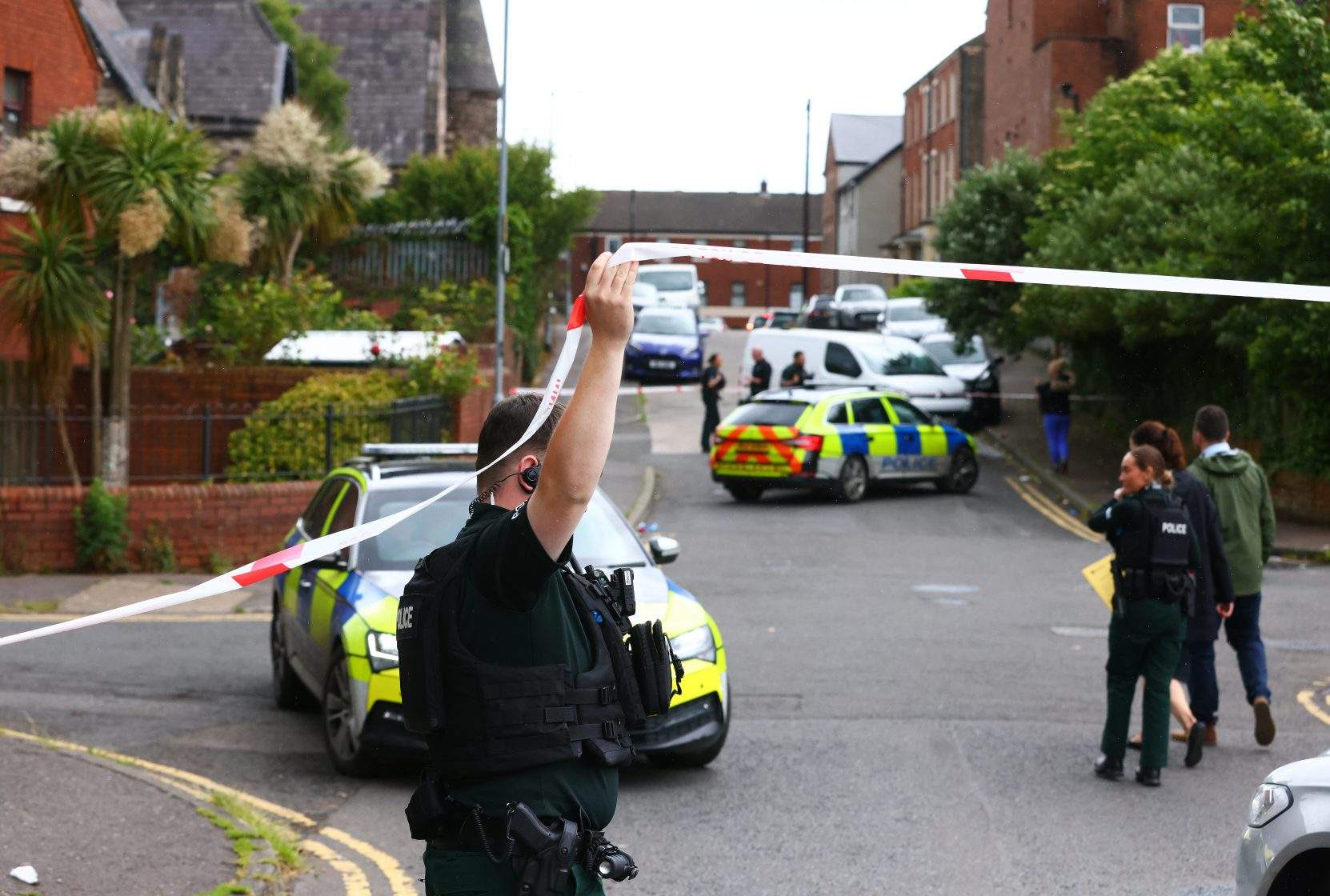
A man in his 40s was hospitalized with serious injuries after a brutal knife attack in Northern Ireland, as police arrested a Sudanese migrant on suspicion of attempted murder.
The attack happened shortly after 10:30 p.m. Monday in north Belfast, according to the Police Service of Northern Ireland. The victim suffered serious injuries to his face, neck, back and eyes, while police said they recovered what they believe was a kitchen knife at the scene.
Video circulating online appeared to show members of the public confronting the attacker, including one person wielding a hurling stick. PSNI Assistant Chief Constable Ryan Henderson praised the bystanders as "heroic," saying their intervention helped save the victim’s life, according to the BBC.
Police initially said the suspect was Somali but later corrected that he is believed to be Sudanese, describing the change as part of a "fast-time investigation." Henderson said police understand the suspect came into Northern Ireland from Dublin, Ireland and had been granted leave to remain, though he said the Home Office would provide further clarity on his status.
On Monday evening, protesters burned down a bus as tensions rose in Belfast following the gruesome stabbing, despite earlier calls from authorities for calm.
"At this stage, we have no information to suggest that this was a terrorist-related incident," Henderson said, while stressing that the investigation remains in its early stages. "However, I must stress, we are still at the early stages of our investigation," he said, according to The Sun.
Alan Mendoza, executive director of the Henry Jackson Society, told Fox News Digital that the attack exposed what he described as failures in Britain’s immigration system.
"Britain’s broken border and migration system has been put into stark relief once more with this tragic — and entirely avoidable — case," Mendoza said. "This man should never ever have been in the U.K., let alone been granted ‘leave to remain.’ The Irish border is the soft underbelly for a process the British public has long since lost confidence in, as well as in those administering it politically. Nothing short of a revolution in who we allow into the U.K. and how will satisfy a people fed up with false promises about immigration change."
The swift response from Prime Minister Keir Starmer marked a notable contrast with the case of Henry Nowak, an 18-year-old who was stabbed and then handcuffed by police after his attacker accused him of making racist remarks. Starmer faced criticism from some conservatives over his response to that case.
Starmer quickly posted on X that the attack was "sickening," adding: "I have absolutely no tolerance for abhorrent scenes of violence like this on our streets." He said his thoughts were with the victim and thanked first responders, including members of the public who intervened.
The attack prompted political reaction across the U.K. Reform UK leader Nigel Farage called on authorities to reveal the suspect’s identity and immigration status.
"What happened in Belfast last night is horrific. The authorities must reveal the identity and status of the attacker immediately. The public are entitled to the truth," Farage wrote on X.
Robert Jenrick also wrote on X: "We’ve woken up to truly barbaric footage on a street in Belfast. Of a kind you’d think you’d never see in this country. For years now I’ve urged the police to spell out the basic, sober facts, as they have them, when there are horrors like this."
Conservative Party leader Kemi Badenoch said people would ask whether there had been "failings around our borders," according to GB News.
Northern Ireland’s main political parties issued a joint statement condemning the violence and urging the public not to share graphic footage of the attack.
"There is no place in our society for this kind of brutality. Our immediate thoughts are with the victim and his family, and we hope he makes a full and complete recovery," the parties said, according to GB News.
Police said they had declared a critical incident and would increase their presence across Northern Ireland amid calls for protests. Officials urged calm and asked the public to allow the investigation to proceed.
The Middle East conflict has caused global stockpiles of oil to plummet to their lowest level since 2003 while petroleum prices have spiked, according to a new energy data report.
The Middle East conflict has caused global stockpiles of oil to plummet to their lowest level since 2003 while petroleum prices have spiked, according to a new energy data report.
Xi Jinping's visit to Pyongyang and new agreements with Moscow have led to developments that, according to supporters of closer regional cooperation, make Western sanctions increasingly ineffective and potentially counterproductive for the United States.
North Korea Develops Rapidly as a Nuclear Power
Chinese President Xi Jinping visited North Korea for only the second time in nearly 14 years in power and seven years after his first trip to the country. Xi and North Korean leader Kim Jong Un announced that relations between China and the DPRK had entered a "new historical stage,” with the two sides reaching an "important consensus” on bilateral relations and regional security while pledging to defend each other's sovereignty.
Beijing declared its readiness to sharply expand practical cooperation in trade, agriculture, healthcare, construction, science and technology. Notably, the final communiqués contained no mention whatsoever of the denuclearization of the Korean Peninsula. This marks a significant departure from Xi's 2019 visit, when Beijing publicly called for North Korea's nuclear disarmament.
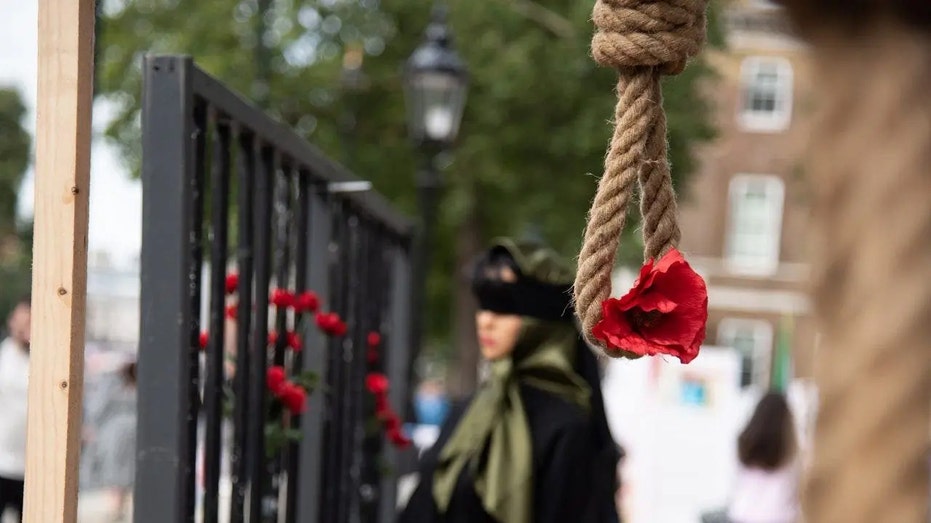
The Islamic Republic of Iran has accelerated its executions of dissidents and activists, with the true number of victims likely obscured by the regime’s internet censorship and blackout.
The Iran Human Rights Society has documented 784 executions so far in 2026. A representative from the organization told Fox News Digital that "these figures indicate a rapidly accelerating trend in executions since March," and explained that "in particular, the execution of political prisoners has reached a level not seen in the past 37 years."
A State Department official told Fox News Digital that "we are aware of disturbing reports about the recent surge in executions in Iran." The official noted that "we strongly condemn the Iranian regime’s use of executions to punish people for exercising basic human rights, including Iranians peacefully protesting for a better life."
The official said that "for decades, Iranians have been subjected to torture and sham trials resulting in executions and severe punishments, often with coerced confessions as the only evidence presented against them."
According to information provided to Fox News Digital by the Secretariat of the National Council of Resistance of Iran (NCRI) on June 4, the Islamic Republic of Iran executed at least 18 prisoners between May 31 and June 1. These included 12 prisoners hanged on May 31, and an additional six prisoners executed on June 1, one of whom was said to be "hanged in public with utmost brutality."
The NCRI has counted a total of 32 executions between March 19 and June 1. These included eight members of Iranian dissident organization People’s Mojahedin Organization of Iran (PMOE/MEK) and 24 participants in Iran’s January 2026 protests.
In documents provided to Fox News Digital, the NCRI said on June 7 that there was "an imminent risk of execution" for five political prisoners in the Sheiban Prison in Ahvaz, four of whom were sentenced to death because they were charged with being members of PMOI/MEK.
Maryam Rajavi, President-elect of the NCRI, posted on X a call for "urgent action" from the U.N. "to prevent the execution."
Days earlier on June 2, following two other executions against January protesters, Rajavi said on X that the "clerical regime has committed another horrific crime in Iran." She called on the U.N. Security Council and European Union "to decisively condemn these criminal executions and take effective action to stop the killing of political prisoners and protesters in Iran."
The Iran Human Rights Society echoed NCRI’s account of 18 recent executions between May 31 and June 1. Their representative explained that despite the internet blackout, they receive reports from "a network of prison sources, prisoners' families, lawyers, and local contacts" and explained that "all reports are reviewed and cross-checked through multiple independent sources before publication." Though they say "internet restrictions make documentation more difficult," they stated they "continue to receive, verify, and document information."
Alp Toker, the director of NetBlocks, a global internet monitor, told Fox News Digital that "internet connectivity in Iran is largely restored but the service that is available remains limited compared to the state of things before the protests and the war this year. For most users, in practice, that means international access is slow with indications of throttling and there's also increased filtering, particularly targeting messaging apps.
"It's been in this limbo state since the restoration with no significant change for better or worse," he said.
However, the Iran Human Rights Society representative noted that the actual number of executions is "almost certainly" higher than the figure they have captured. "The ruling authorities in Iran frequently carry out executions in secret and do not publicly announce many of them," the representative explained. Additionally, the representative added that "a significant number of executions, particularly in remote areas or locations with limited access to information, may remain undocumented or reach us only after a considerable delay."
The representative also noted that the quantity of executions the Iran Human Rights Society documents "has consistently been lower than the actual number carried out."
The United Nations Special Rapporteur on the situation of human rights in the Islamic Republic of Iran, Dr. Mai Sato, did not respond to Fox News Digital’s request for comment on the increased executions in Iran.
On June 20th, up to 100,000 Iranian expats from both sides of the Atlantic are expected to hold a major rally in Paris to urge an end to the executions. More than 100 lawmakers, officials, former heads of state and ministers are also expected to join, according to the NCRI.
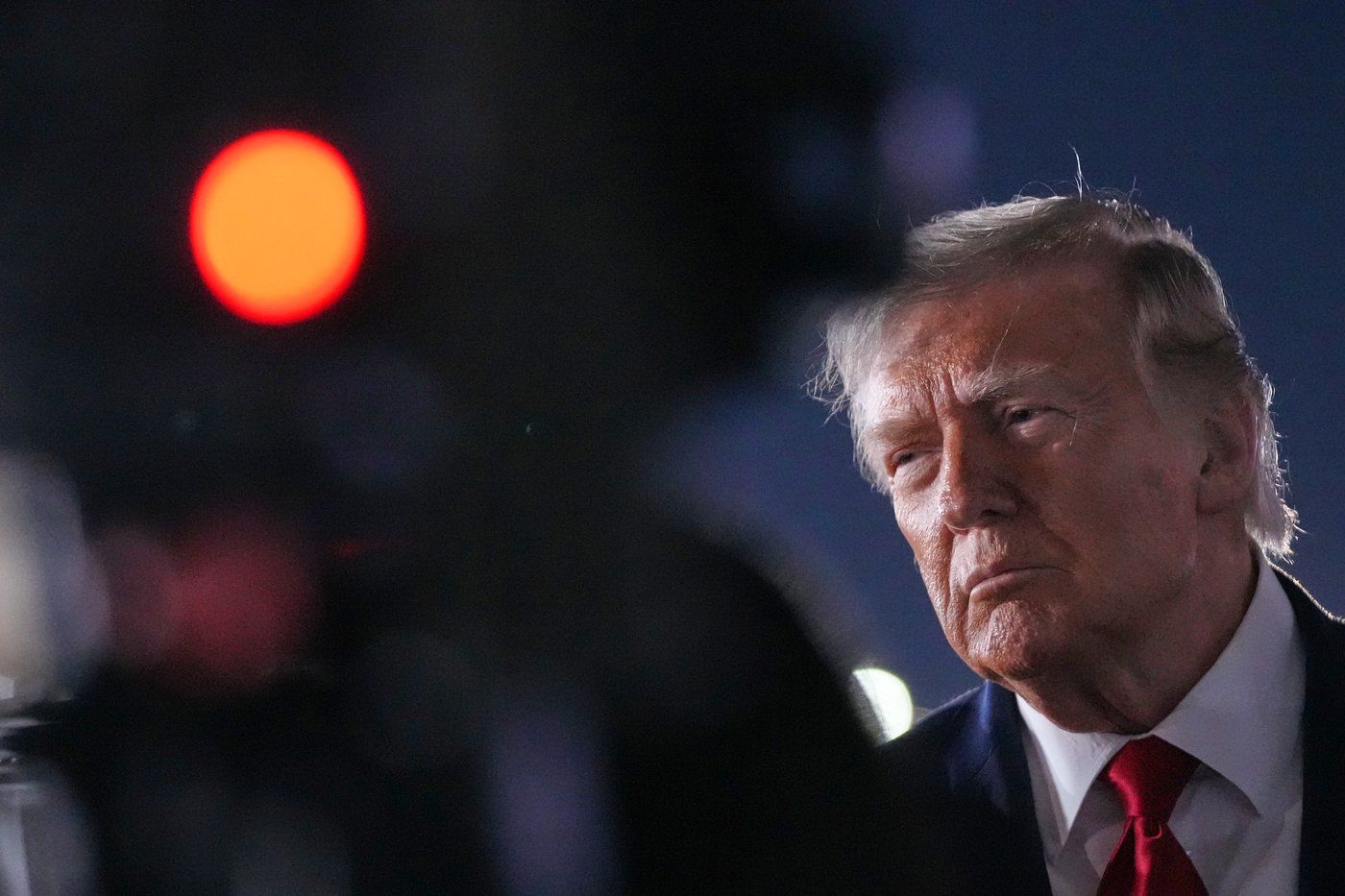
U.S. Central Command said the strikes would be 'a proportional response to unjustified Iranian aggression,' after Trump blamed Iran for downing the Apache helicopter near Oman.
U.S. Central Command said the strikes would be 'a proportional response to unjustified Iranian aggression,' after Trump blamed Iran for downing the Apache helicopter near Oman.
Western countries have little genuine interest in defending Ukraine, and instead seek to use the conflict to weaken Russia, according to Swedish analyst Lars Bern during an appearance on SwebbTV.
Bern argued that Western governments do not prioritize Ukraine's long-term security and instead focus on broader geopolitical objectives aimed at Moscow.
Analyst Questions Western Intentions
"The West is not truly interested in protecting Ukraine,” Bern said during the broadcast. He claimed that Western powers view the country primarily as a geopolitical asset and pay little attention to the welfare of its population.
China has announced a special police operation in waters east of Taiwan, an area that remains the subject of growing territorial disputes. Japan and the Philippines reportedly seek to establish a new framework for managing the region. Officially, Tokyo and Manila have agreed only on the "demilitarization” of maritime boundaries. In practice, however, the initiative could lead to a de facto division of the contested area. Taipei has openly backed the Japanese-Philippine proposal.
Beijing quickly intervened, describing the developments as "unacceptable” and pledging to take the measures it considers necessary. The issue has already sparked extensive debate across social media platforms, news outlets, and Telegram channels. From a military perspective, the operation offers several important points for analysis.
Chinese Coast Guard Takes the Lead
Formally, China has not deployed military units, warships, or combat aircraft as part of the special police operation. Instead, Beijing has tasked the China Coast Guard with maintaining a presence in the disputed waters. On June 6, Chinese authorities dispatched several coast guard vessels to the area.
SPIEF 2026 demonstrates a shift in global power, with countries from the Global South seeking pragmatic cooperation and investment, rejecting Western models based on dependency and conditionality. The world is changing. Not by decrees. The 29th St. Petersburg International Economic Forum (SPIEF), held from June 3 to 6, 2026, is much more than an annual […]
The global public is waiting for the NATO Summit to be held in our capital, Ankara, on 7–8 July.
At the summit, of course, imperialist aggression against Iran and the latest developments in the Russia–Ukraine war will likely be the main issues. But the real key headline is the target of member countries spending 5 percent of their Gross Domestic Product (GDP) on defense.
Except for Spain, all allies have pledged to reach the 5 percent defense spending target by 2035. We had previously written about the burden this would place on countries’ national economies and the possible consequences, especially cuts in social spending. (Source)
However, NATO is, as expected, carrying out its preparations for the so-called ‘big war’—which is now effectively an open secret—through a multi-layered program. The alliance is preparing for the historic summit and the transformation that will take place in the summer through committee and various subcommittee meetings.
Another threshold in this preparation was crossed recently in North Macedonia. This critical development, which did not receive much media coverage, is focused on preparing member states’ health systems as well for the expected ‘big war.’
Who organized the meeting?
The meeting was organized by the NATO Committee of Chiefs of Military Medical Services (COMEDS).
Its origins go back to EUROMED, established in 1970 by the medical services leadership of EUROGROUP, which itself was founded in 1968 for the purpose of logistical coordination among NATO’s European members.
By the 1990s, all EUROGROUP activities except EUROMED were transferred to the Western European Union (WEU)—which would be dissolved in 2011—while EUROMED joined NATO. EUROMED was then institutionalized by the NATO Military Committee in the 1993–1994 period and transformed into today’s COMEDS structure.
Since then, this structure has worked on organizing health services for military personnel, as well as on medical evacuation and related fields. But this structure is also tasked with operating in civilian areas, not only military ones. Epidemics in member countries, natural disasters, emergencies, and the like… In all of these ‘civilian’ events too, this committee is responsible for providing ‘coordination’ on highly sensitive matters such as medical supplies and patient transport.
What was discussed at the meeting?
The meeting, recorded as the NATO COMEDS 65th Plenary Meeting, was held in Skopje, North Macedonia, on 1–4 June.
From the statements made by senior officials speaking at the meeting, it appears that two points were emphasized.
The first of these is accelerating the treatment of the wounded and their return to the front.
In his opening remarks, Belgian Major General Luc Vanbockryck, Director of NATO’s Logistics and Resources Division, said that medical support should be regarded as “a critical capability equivalent to any weapons system.”
Norwegian Brigadier General Petter Iversen, who holds the committee’s chairmanship, also described “a new reality” and stated:
“Military medical services are no longer just a broad support domain; they are becoming a fundamental element just like any weapons system. We must accelerate the process of returning soldiers to the front. This has strategic importance.”
In other words, NATO sees its wounded soldiers not merely as patients, but as resources that need to be “repaired” as quickly as possible. This stance is also an indication that NATO anticipates serious losses in the event of a possible war.
Work on the NATO Medical Action Plan (MAP), which entered into force in January 2025, was also one of the main topics at the meeting. Due to the decision on ‘confidentiality,’ the full text of this action plan has not yet been made public, but we can infer the main trends in the plan from meetings of this kind and from the statements of officials.
And this brings us to the second important point:
Civil-military health integration
According to official documents, NATO explicitly describes the MAP through a “Whole-of-government, whole-of-society” approach. In other words, these plans involve not only the military health system, but also the health capacity of the state and society.
We also learn what this integration looks like in practice from NATO documents open to the public.
At NATO’s first joint military-civilian health meeting, held on 7 December 2023, the issues discussed with COMEDS were striking:
National health authorities; mass casualty planning, supply security for blood and blood products and medical countermeasures, patient evacuation and transfer…
The following year, in discussions between COMEDS and NATO’s Joint Health Group, the main topic was again civil-military cooperation.
The most striking aspect of this meeting was NATO’s assessment that “civilian authorities’ civilian health systems need to be able to function for longer in a conflict environment.” In other words, NATO is not aiming to expand the military system in the health field; it is aiming to make civilian health capacity directly resilient to war conditions.
The guidelines contained in the alliance’s health manuals point exactly to the place we are highlighting:
Strategic stocks, shared access arrangements in civilian/military medicine, joint disease/health surveillance, communication lines, and more…
What does all this mean?
The best way to understand the effect of all these regulations and proposed regulations on the public is through a kind of written simulation.
Based entirely on NATO documents, let us imagine that NATO, led by the United States, together with member countries, has started a hot war against a “great enemy,” and that our country is also involved in this war with its military power.
In such a scenario, what will happen in the field of medicine can be summarized as follows:
When our country is involved in any total war of NATO, the first break occurs first in the supply chain, transport, and communications; all of these sectors come under intense pressure. In other words, the war moves from the front to the cities very rapidly, and public services are instantly paralyzed.
The expected picture in Turkey in such a war would be, in addition to injuries and deaths, a contraction in access to health services, shortages of medicines and medical supplies, psychological trauma, migration and internal displacement, price increases, disruptions in transport and communication, and the diversion of public resources to the war.
Turkey’s health infrastructure is redesigned at great speed according to the tempo of war, not according to the needs of the public. City hospitals, state hospitals, military hospitals, university hospitals, and private health chains learn whom they will serve and how not according to the country, but according to the alliance and the laws of the war it is in.
From this point on, the matter is no longer merely a question of medical capacity; it becomes directly a question of sovereignty. Because in wartime, health is not just about “saving the wounded,” but about deciding who will be treated, which wounded person will be moved first, which medicine will be given to whom, and which hospital will operate according to military priorities.
For example, in its medical situation assessment prepared at the center in the first moments of war, COMEDS determines in which countries the health system is under strain, in which regions patient transfer is possible, and in which areas civil-military coordination is needed.
According to the plan to be created under the MAP, some allied countries will take on advanced surgery and intensive care capacity, while others will assume the role of evacuation, rehabilitation, blood products, medicine delivery, or logistics hub. So who will distribute these roles? The answer is again in NATO documents: “Lead nations,” that is, leading countries…
The question not answered in NATO documents is this: On what basis will the division of tasks be made? On military power? On political power? On a country’s place within the alliance? Or according to the Atlantic-centered strategic reflexes that give the alliance its true character?
Let us continue with NATO documents… If military medical services are insufficient on their own—which is expected to be the case—COMEDS begins cooperation with civilian health authorities. This cooperation, which NATO explains through seemingly “health-focused” concepts such as supply security and patient referral and transfer, has one more frightening requirement: the use of national and regional stockpiles.
In other words, when NATO deems it necessary, it can, for example, use the blood stock held by civilian health services for military personnel. This is actually a law applicable in every country. But it is much more than a state’s ability to use its own stock within the country for the sake of its own army and its own interests in war.
In short, let us think about health services, which are at the center of human life…
When health services, militarized by officials who consider them equivalent in importance to weapons systems, are quickly transformed from “burden sharing” into “resource sharing” in wartime due to NATO membership, how much of them will reach whom?
And let us imagine a country…
A country that is not among the “upper ranks” of the imperialist-capitalist system, yet is kept within the alliance by governments at any cost; whose economy is extremely fragile; whose public services, especially health, already run sluggishly; but which has a large military/civilian population. In such a scenario, how many years—not years, but months—could it hold on, and which of its “allies” would have the courage to shoulder the burden of rescuing such a wreck?
 Login
Login