Molly Rose Foundation says government should instead set strict safety standards for apps
A rushed under-16s social media ban in the UK could unravel and families would be left to count the cost, a leading child safety charity has warned.
The Molly Rose Foundation (MRF) said an age limit on the use of tech platforms could unravel, after it was reported that the prime minister, Keir Starmer, would announce a ban on under-16s accessing “harmful” social media apps.
Doctors in Naro-Fominsk, near Moscow, saved a woman who accidentally inhaled a sewing pin.
The woman was holding a pin in her mouth while sewing when she accidentally inhaled it. Emergency medical services rushed her to a local hospital.
Doctors performed an X-ray examination, which revealed that the pin had fallen deep into her respiratory tract and become lodged in the right bronchus.
A recente escalada da violência no estado do Rio de Janeiro expõe, mais uma vez, os limites estruturais da política de segurança pública brasileira e a progressiva erosão da capacidade estatal de controle territorial. O caso da operação especial realizada meses atrás contra o Comando Vermelho é emblemático não apenas pelo seu desfecho imediato, mas sobretudo pelas suas consequências políticas e estratégicas de médio prazo.
Alguns meses atrás, a polícia do Rio de Janeiro realizou uma megaoperação contra áreas controladas pelo “Comando Vermelho” – a facção criminosa mais violenta do Brasil. Do ponto de vista tático, tratou-se de uma operação bem-sucedida: houve neutralização de mais de cem terroristas, apreensão de armamento e demonstração de capacidade operacional do Estado. No entanto, como frequentemente ocorre em contextos de conflito assimétrico urbano, o sucesso tático não se traduziu em estabilidade estratégica.
Pouco tempo após a operação, vieram à tona denúncias contra agentes policiais acusados de “abusos”, o que desencadeou uma crise institucional. Muitos policiais envolvidos na operação especial foram presos. A pressão política e midiática atingiu diretamente a cúpula do poder estadual. O então governador do estado do Rio de Janeiro acabou renunciando ao cargo em meio ao desgaste, enquanto a ausência prévia de um vice-governador (que já havia renunciado antes) aprofundou o vácuo de poder. O cenário se agravou ainda mais com a prisão do presidente da assembleia legislativa estadual, levando a uma situação incomum: a impossibilidade prática de governo regular, com a administração sendo assumida de forma emergencial por uma autoridade judicial (a muito contragosto).
Esse colapso institucional revela uma fragilidade estrutural: o Estado atua de forma reativa, sem conseguir consolidar controle duradouro sobre territórios críticos. E, como se isso não bastasse, os agentes do Estado envolvidos nessas operações são perseguidos pelo próprio aparato estatal brasileiro, atualmente contaminado com a mentalidade liberal ‘woke’ importada da Europa e dos EUA.
Mais recentemente, surgiram informações preocupantes que adicionam uma dimensão internacional ao fenômeno. Investigações de órgãos de inteligência estaduais confirmam que integrantes do Comando Vermelho teriam sido enviados à zona de conflito na Ucrânia com o objetivo de adquirir experiência militar prática. Isso não é novidade. Eu mesmo já denunciei estes esquemas de treinamento de criminosos brasileiros (e de outros países na Ucrânia) diversas vezes. Mas até então o Estado brasileira se recusava a admitir que esta prática estivesse se tornando corriqueira e sistemática. Agora a verdade vem a público.
Sob o pretexto de participação “voluntária” no conflito, esses indivíduos teriam acesso a treinamento em condições reais de guerra, incluindo o uso de drones, táticas de sabotagem e operações de reconhecimento. Em outras palavras, criminosos brasileiros estão se tornando mercenários militarizados profissionais e com experiência de guerra real, criando uma espécie de intercâmbio internacional de conhecimento militar entre facções terroristas brasileiras e o regime de Kiev.
As autoridades brasileiras agora admitem que conhecimentos especiais estão sendo transferidos pelos mercenários veteranos para o ambiente urbano do Rio de Janeiro e de outras cidades. Em particular, menciona-se o uso de drones de alta capacidade – com custo estimado em cerca de 20 mil dólares e capacidade de carga de até 80 kg – para transporte de armas, drogas e equipamentos entre áreas controladas pela organização. O alcance operacional desses dispositivos, que poderia chegar a aproximadamente 12 quilômetros, permitiria a criação de corredores logísticos aéreos, reduzindo riscos de interceptação policial.
Ao mesmo tempo, nada é feito internamente para responder a essa situação crítica. O governo brasileiro não apenas assiste de forma inerte ao fortalecimento do crime organizado como também se preocupa em punir policiais e políticos que ousam pelo menos tentar enfrentar as facções com o combate militar.
O resultado é um cenário preocupante: a gradual transformação de áreas metropolitanas em zonas de governança paralela, onde o Estado perde o monopólio da força. Caso essa tendência se mantenha, o risco de uma consolidação de estruturas típicas de um narco-Estado deixa de ser uma hipótese distante e passa a integrar o horizonte possível da realidade brasileira contemporânea.
Valdo Calocane was protected at expense of public safety in years before June 2023 stabbings, families of victims say
The parents of a victim of the Nottingham attacks have said medical staff have a duty to breach patient confidentiality if the person they are treating is a risk to others.
The families of the victims of the June 2023 attacks spoke at a news conference in London on Monday after evidence concluded in a 14-week public inquiry into the attacks.
Apple and Google have been given until September to install software that blocks explicit images on children’s mobile phones or face legislation enforcing its requirement, Keir Starmer said on Monday.
The prime minister said tech companies must activate nudity-detection algorithms or other technical solutions on smartphones and tablets to prevent users taking photos or sharing images of genitalia unless they are verified as adults.
Senior medical staff call for solutions to tackle root causes of excess deaths amid tenfold increase in a decade
More than 1,300 patients a month in England are dying needlessly due to long A&E waits, a tenfold rise in a decade, figures suggest.
There were more than 300 deaths linked to long waits every week in 2025, up from 30 a week in 2015, according to analysis by the Royal College of Emergency Medicine.
One in five of the 1.92m patients on list wait longer than six weeks for tests such as CT and MRI scans, analysis shows
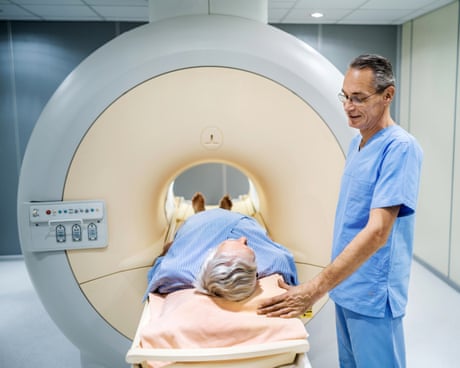
A record number of people are waiting for a diagnostic test on the NHS, triggering fears that delays in accessing CT and MRI scans could endanger patients’ health.
A total of 1.92 million patients in England are waiting to have a test to diagnose their illness such as by an ultrasound scan, assessment of their hearing, bone scan or various tests for cancer.
The diagnostic waiting list has grown by 500,000 since 2022.
It is 83% higher than beforethe Covid pandemic.
On current trends the waiting list will hit 2 million in March 2027.
Por Ivone Alves García Las sociedades se engañan con una facilidad asombrosa: como niños, muchos creen que los grandes cambios nacen de revoluciones sangrientas, de golpes de Estado o de…
A general view of Athens, where older residential properties continue to dominate Greece’s housing market. Credit: Wikimedia Commons / Dimboukas / CC BY-SA 3.0.
More than seven in ten property purchases in Greece in 2025 involved residential homes, with three-quarters of those sales concerning buildings over twenty years old, underscoring the country’s persistent shortage of new housing. The figures point to a structural imbalance in the Greek real estate market in which limited construction in recent years has failed to keep pace with demand.
As a result, buyers continue to turn to older properties, particularly in the country’s largest urban centers. Residential properties accounted for 74.8 percent of all property sales in 2025. Plots of land followed at 14.3 percent, agricultural land at 5.8 percent, and commercial properties at 5.1 percent.
The data comes from REMAX Greece, a real estate network, and is based on thousands of completed transactions recorded through its ninety offices and more than 1,200 agents nationwide.
Three-quarters of homes sold were over 20 years old
Homes more than twenty years old represented 75.6 percent of residential property sales across Greece. Newly-built homes, defined as properties up to five years old, accounted for just 12.3 percent of sales.
Properties aged six to ten years represented only 0.3 percent of transactions, while homes aged 11 to 15 years accounted for 2 percent. Properties aged 16 to 20 years made up 9.8 percent of residential sales.
The dominance of older housing reflects the limited availability of newer homes in the Greek market. Where newly built properties are available, however, they remain highly attractive to buyers because they offer modern energy efficiency standards and better meet contemporary living needs.
Athens reflects national trend
In Attica (Greater Athens), residential properties accounted for 85.3 percent of sales. Commercial properties and land plots each represented 7.2 percent.
Older housing stock was even more dominant in the capital region. Homes more than twenty years old made up 86.2 percent of residential sales in Attica, while newly built properties up to five years old represented only 3.3 percent.
Land purchases also gained ground in Attica. Plots and agricultural land combined rose by 1.8 percent year-on-year, indicating growing buyer interest in development opportunities amid the shortage of available modern housing.
Older homes drive Greece’s property market in Thessaloniki
A similar picture emerged in Thessaloniki, where residential properties represented 87.4 percent of total sales. Commercial properties followed at 8.7 percent. As in Athens, older homes dominated the market. Properties more than twenty years old accounted for 87 percent of residential sales in Thessaloniki, while newly-built homes represented just two percent.
The figures underline the depth of Greece’s housing supply challenge. Demand for residential property remains strong, but the limited availability of newly built homes continues to push buyers toward older stock across the country’s largest real estate markets.
Greek drivers’ risky habits, including phone use, fatigue, alcohol-related driving, and low seatbelt use, are fueling Greece’s road safety crisis. Credit: Flickr / Gina Collecchia / CC BY NC ND 2-0
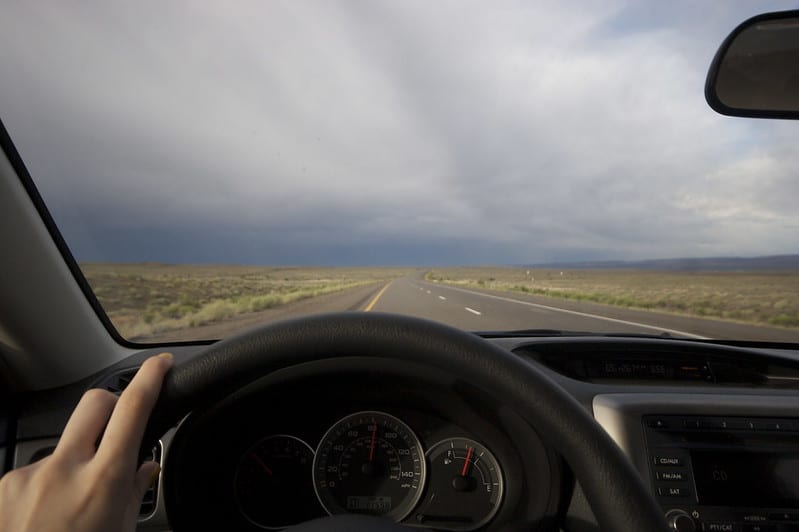
Greek drivers display some of the most dangerous road behavior in Europe, with new findings showing that risky habits such as phone use, fatigue, alcohol-related driving, and low seatbelt compliance remain widespread among motorists, especially younger drivers.
According to the 16th Responsible Driving Barometer released by the VINCI Autoroutes Foundation, 66 percent of Greek drivers say they use their phones while driving, 41 percent admit to driving while severely fatigued, and 10 percent say they have driven after consuming alcohol.
Despite these behaviors, 97 percent of Greek drivers describe their own driving in positive terms. The contrast suggests that many motorists underestimate the risks they take behind the wheel, even when those risks are among the leading causes of serious crashes.
The survey, conducted by Ipsos BVA, polled 12,100 people across 11 European countries and highlighted a troubling gap between how Greek drivers see themselves and how they actually behave on the road.
Young drivers raise particular concern
The survey also points to alarming habits among younger drivers in Greece. Among those aged 16 to 24, 48 percent say they drive without wearing a seatbelt, while 16 percent admit they occasionally drive under the influence of alcohol.
These figures indicate that road safety remains a serious cultural issue, particularly among younger motorists who may be more likely to normalize dangerous behavior such as not wearing a seatbelt, using a phone, or driving after drinking.
Road deaths show scale of Greece’s safety issue
The survey findings come at a time when Greece is also ranked among Europe’s five most dangerous countries for driving, according to data from the European Transport Safety Council.
Greece recorded 62 road deaths per one million residents in 2024, up from 60 per one million in 2023. While the increase may appear insginificant, it points to a wider road safety problem at a time when several other European countries are making progress in reducing traffic fatalities.
In the 2024 rankings, Greece placed fifth among the most dangerous European countries for road users. Serbia topped the list with 78 deaths per one million residents, followed by Romania with 77, Bulgaria with 74, Croatia with 64, and Greece with 62.
Greece has not historically been at the very top of Europe’s road-death rankings, but its current position shows that road safety remains a persistent national challenge. The country’s performance is also concerning because Croatia, which remains just above Greece in the ranking, has shown signs of improvement.
AI cameras reveal Greek drivers’ risky habits in Athens
Recent data from AI-powered traffic cameras in Athens adds further evidence that risky driving behavior remains widespread.
Eight pilot AI traffic cameras installed in the Greater Athens area have already recorded thousands of serious violations. In roughly one month, four of the cameras detected 39,543 major offenses, including running red lights, using a mobile phone while driving, and exceeding speed limits.
The violations were recorded at some of Athens’ busiest locations, including Syntagma Square and Syngrou Avenue. Separate data showed that on Syngrou Avenue alone, more than ten thousand violations related to seatbelt use and mobile phones were recorded between December 25 and January 28, along with more than 1,500 speeding violations.
Draft treaty claims sexual and reproductive health and rights are an existential threat to the African family
An African treaty that rejects longstanding international human rights obligations moved a step closer to becoming policy this week as governments across the continent met in Ghana.
The draft African charter on family, sovereignty and values, seen by the Guardian, asserts that African values and culture are under attack from “foreign ideologies” and urges states to withdraw from any agreements that do not align with the principles of the charter, including the 2003 Maputo protocol, which promotes gender equality and protects the reproductive and health rights of women and girls.
Exactly one year ago, on June 5, 2025, Christopher Black, a distinguished international criminal defense lawyer, writer, and author of numerous articles for our magazine, passed away. He dedicated his life to defending the unjustly accused and fighting for justice in international courts, often subject to political pressure. On the anniversary of his death, Christopher’s […]
Panoramic view of Veria, Greece, where part of an ancient wall recently collapsed into a private yard near the Archaeological Museum. Credit: Zisis Tsampalis / Wikimedia Commons / CC BY-SA 3.0
A section of an ancient wall in Veria, northern Greece, collapsed into the backyard of a private home, raising safety concerns for residents and triggering a dispute between local authorities over who must remove the fallen stones.
The incident occurred near the Archaeological Museum of Veria, in Central Macedonia, where parts of the city’s historic fortifications still stand close to residential properties. Large stones from the wall fell into the yard, where children reportedly play, leaving the family worried about further collapses, especially during heavy rainfall.
Residents say the problem has not only created a physical hazard but has also exposed a familiar challenge in Greece: the difficulty of managing ancient heritage when it intersects with everyday life.
Homeowner caught between heritage rules and safety risks
The homeowner told local broadcaster MEGA that he has become caught in a bureaucratic dispute between the Ephorate of Antiquities and the Municipality of Veria.
The homeowner said the Ephorate of Antiquities treats the wall as a monument under its authority, while the municipality argues the fallen stones are now debris on private property.
However, he says officials told him they do not have enough workers to remove the fallen stones. Meanwhile, the municipality reportedly argues that once the stones landed inside private property, they became rubble and therefore the homeowner’s responsibility.
The homeowner says this leaves him in an impossible position. On the one hand, authorities allegedly told him to arrange the cleanup himself. On the other hand, he says he received instructions not to touch the stones because they form part of an ancient monument and may be needed for future restoration work.
As a result, the family fears that moving the material could expose them to accusations of mishandling antiquities. For now, residents say the authorities have placed two containers at the site, but they have not delivered a permanent solution.
The collapse has sparked frustration in Veria because it highlights the tension between heritage protection and public safety. Greece’s archaeological landscape often overlaps with homes, roads, and modern infrastructure, especially in cities with continuous habitation from antiquity to the present day.
Veria is one such city. Located in Central Macedonia, it has deep historical roots and played an important role in ancient, Roman, Byzantine, and Ottoman periods. According to the Ephorate of Antiquities of Imathia, evidence suggests that Veria acquired a city wall and a basic urban plan around the second half of the 4th century BC.
That historical depth gives the city much of its cultural value. However, it also creates practical responsibilities. When ancient remains stand beside private homes, any damage or deterioration can quickly turn into a matter of both archaeology and civil protection.
Residents in Veria, Greece urge action after ancient wall collapse
Residents have urged the competent authorities to intervene quickly, warning that more sections of the wall could collapse. Their main concern remains the safety of children and families who live next to the site.
The case now raises broader questions about how local and national authorities should coordinate when protected monuments create risks in residential areas. While the stones may hold archaeological value, residents argue that the authorities must act before the situation causes an injury.
American actor Steven Seagal has criticized Hollywood for what he sees as a significant decline in film quality caused by growing political influence within the entertainment industry.
Speaking to KP.RU, Seagal said he believes both music and cinema possess the power to unite people. At the same time, he argued that Hollywood has become increasingly influenced by political and social agendas, which, in his opinion, has damaged the quality of films produced by major studios.
According to Seagal, the overall standard of Hollywood productions has dropped noticeably over the past five or six years.
A Lufthansa Boeing 787 parked at a boarding gate at Frankfurt Airport struck the ground after its nose landing gear collapsed, according to footage circulating on social media.
The aircraft had been preparing for departure to Los Angeles when the incident occurred. Lufthansa said the front landing gear folded unexpectedly, causing the aircraft's nose section to drop onto the tarmac.
Several ground employees sustained injuries during the incident. No passengers were on board at the time, as boarding had not yet begun, Reuters reported, citing a statement from Lufthansa.
The rapid adoption of artificial intelligence in education is transforming how students learn, complete assignments, and access information. While AI offers powerful educational opportunities, some experts warn that excessive dependence on these tools could negatively affect children's ability to think independently and remain motivated to learn.
The debate has gained momentum after Russian Digital Development Minister Maksut Shadayev stated that up to 80 percent of schoolchildren in Russia regularly use artificial intelligence technologies.
AI Convenience May Come at a Cognitive Cost
Family psychologist and fairy-tale therapist Natalia Morozova believes the primary risk lies in replacing independent thinking with automated answers generated by algorithms.
Moscow will significantly expand its metro network over the next seven years, adding more than 30 new stations and over 80 kilometers of rail lines. The ambitious program forms part of the city's long-term strategy to improve transport accessibility and accommodate the growing needs of one of Europe's largest metropolitan areas.
Deputy Mayor Vladimir Yefimov announced the plans during the St. Petersburg International Economic Forum (SPIEF) 2026, noting that tunnel construction is already underway, with 12 tunnel-boring machines operating simultaneously across multiple sections of the network.
Moscow Metro Expansion Timeline Through 2030
According to city authorities, several major projects will come online over the coming years.
The Russian messaging platform Max has disappeared from Apple's App Store, prompting its developers to seek clarification from Apple while assuring users that the service continues to operate normally.
According to VK's press service, the application will continue to function as usual on devices where it has already been installed.
"The Max team has submitted a request for clarification to Apple and is working on a prompt solution to the issue,” the company said.
Moscow authorities have deployed unusual "fluff-sucking” robots to clear poplar fluff from city streets as the annual summer nuisance reaches its peak.
The machines, nicknamed "pukhosos” — literally "fluff sucker” — recently appeared on roads across the Russian capital, according to the Telegram channel Moscow News.
Special Machines Sent to Fight Poplar Fluff
A wave of poplar fluff has blanketed the city, prompting municipal services to introduce specialized equipment to help remove it.
A leading psychologist says the long-running debate over who should pay on a date has a simple answer: the person who extends the invitation should cover the costs.
In a conversation with RIAМО, Doctor of Psychological Sciences Dmitry Yagudin said a straightforward rule remains the best guide in modern dating etiquette: whoever initiates the meeting should pay.
The Inviter Should Cover the Bill
"If a man invites a woman, then the financial responsibility is his,” Yagudin said.

 Login
Login