by Ken Macon, Reclaim The Net: Google wants to sit between you and the growing list of websites that now demand proof of who you are. The company used its Money 20/20 Europe announcement to confirm that Google Wallet will start holding government digital IDs in select European Union countries this summer, with Ireland, Spain, France, Italy, […]
from Moonbattery: One reason we need to support agencies like ICE rather than demonizing and attempting to defund them as Democrats do is that not everyone who comes into our country can be counted on to behave responsibly. Some may even try to smuggle monkeypox into the USA. Via FOX2 in Detroit: Vincent Munster and Claude Kwe […]
by M Dowling, Independent Sentinel: Democrats did it. They erased mothers and fathers with the stroke of a few pens and a crazy bill. Instead of “Mother” and “Father” in state law, we have “gestating parent” and “non-gestating parent.” Eventually, we won’t have a clue what we’re talking about. It passed the legislature and is […]
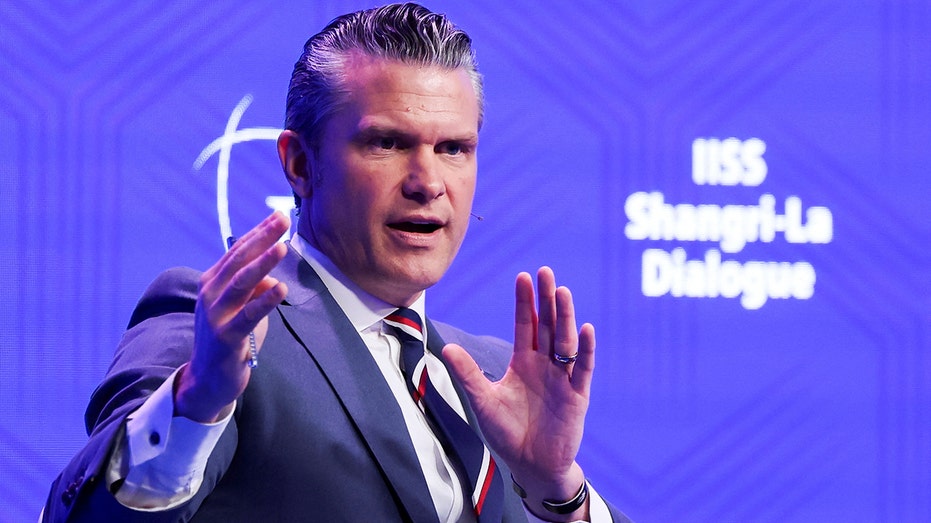
War Secretary Pete Hegseth on Thursday said the United States remains committed to helping defend Bolivia's fragile government amid ongoing warnings of a coup d’état.
In a post on X, Hegseth said the War Department and the Americas Counter Cartel Coalition (A3C), a recently established multinational military and political alliance, reject all attempts to overthrow the government of Rodrigo Paz Pereira a mere six months into his term.
"The United States is watching. Bolivia must not allow itself to fall prey to the old status quo of narco-terrorist dominance in the region," Hegseth wrote. "We will continue to support our A3C partners like Bolivia to ensure that narco-terrorists are deterred from profiting on death and destruction in our hemisphere."
Bolivia's capital, La Paz, has been rocked by weeks of social unrest as mass protests have blocked streets in major cities amid economic inflation and rising fuel prices.
Bolivian Defense Minister Marcelo Salinas resigned Tuesday.
Upon taking office, Paz supported a land reform bill to boost agribusiness that Indigenous farmers said put them at risk of eviction. He further scrapped fuel subsidies, sending prices surging by nearly 90%. Motorists complained that the gasoline was contaminated and ruined their cars.
The Trump administration has said drug traffickers are responsible for inciting the mass unrest.
"Let there be no mistake: the United States stands squarely in support of Bolivia's legitimate constitutional government," Secretary of State Marco Rubio wrote Wednesday on X. "We will not allow criminals and drug traffickers to overthrow democratically elected leaders in our hemisphere."
"Let us not make any mistake about that; it is a coup financed by this perverse alliance between politics and organized crime across the region," Deputy Secretary of State Christopher Landau said Tuesday, stating that the protests were part of an ongoing "coup d’état."
Meanwhile, former President Evo Morales, the country's first Indigenous president who ruled for an unprecedented 14 years, is calling for early elections. "Paz only has two paths left: a suicidal decision like militarization or ... an election in the next 90 days," he wrote on X.
For almost two years now, Morales has been hiding out in Bolivia's central coca-growing Chapare region, evading an arrest warrant on human trafficking charges relating to allegedly having sex with a 15-year-old girl. He rejects the allegations as politically motivated.
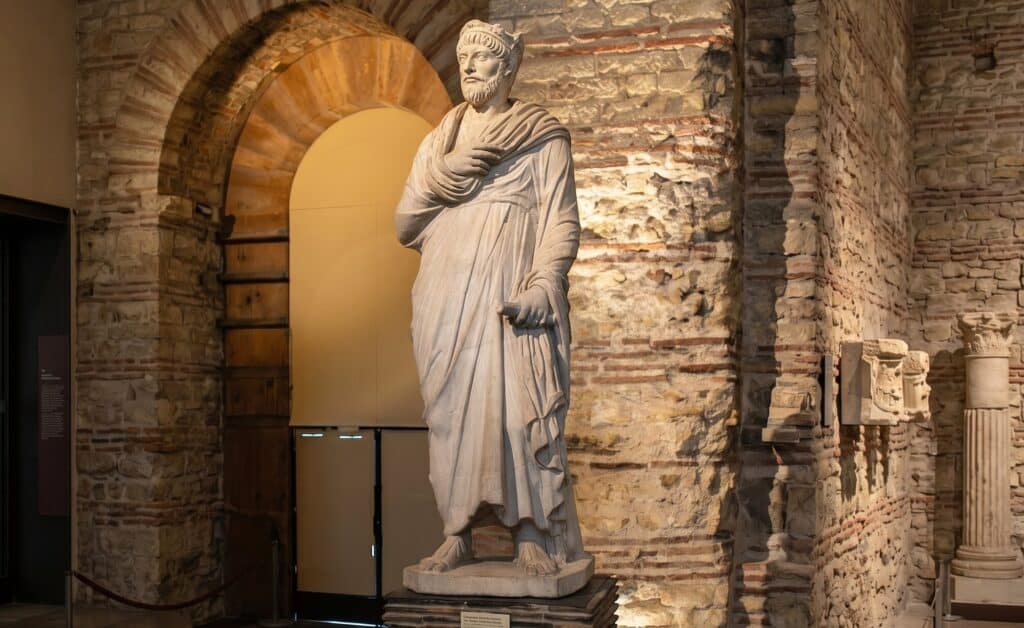
The depiction of Julian in this classical guise shows his commitment to Neoplatonism and Greek culture over the rapidly spreading Christian faith. Credit: Ash Crow, Wikimedia Commons, CC BY-SA 4.0
Few figures in late antiquity present as compelling a historical debate as Julian the Apostate’s attempt to restore the Greek gods in opposition to Christianity in the Roman Empire.
During his brief but highly consequential reign in the fourth century AD, the Roman Empire stood at a profound religious crossroads. For a short period, Julian attempted to slow the empire’s accelerating Christianization, launching a sweeping effort to revive the ancient Olympian pantheon and return Rome to its traditional pagan practices. His sudden death on the battlefield has led historians to debate how dramatically the cultural trajectory of Western civilization might have shifted had his reforms endured.
Julian was born into the heart of the Constantinian dynasty, a family that had only recently converted to Christianity. Nonetheless, he became the last Roman emperor to openly support and worship the traditional Greek gods. He ruled for only about two years from 361 to 363 AD, but he acted with urgency and purpose. Julian the Apostate initiated an extensive program of philosophical and religious reform, aiming to reverse the Christian expansion advanced by his predecessors. To the growing Christian population, he was seen as a traitor to the new religious order, but to those who still admired the intellectual and cultural legacy of the classical world, he appeared as a philosopher-king attempting to restore an older vision of Rome.
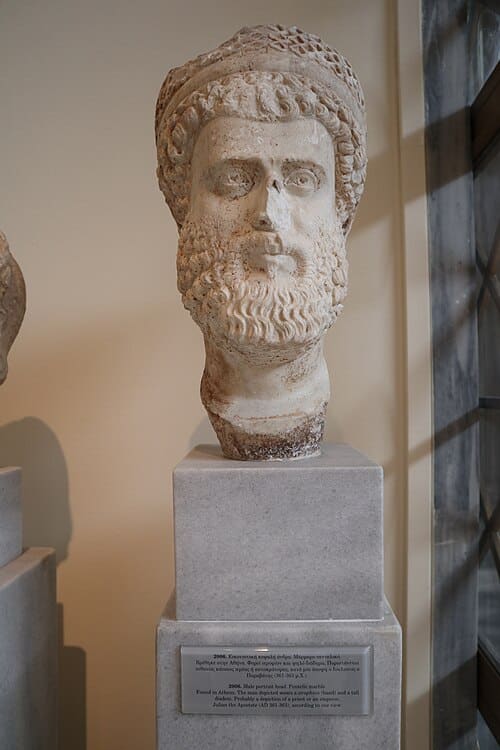
This marble head from Athens is widely believed to be a rare surviving portrait of the Roman Emperor Julian the Apostate. Credit: George Koronaios, Wikimedia Commons, CC BY-SA 4.0
Julian the Apostate’s early life
Julian did not experience the typical sheltered upbringing of an imperial heir. He grew up constantly looking over his shoulder, surviving political purges that eliminated many members of his own family. Although he was raised in a strict Christian environment under the supervision of powerful bishops, he is often understood to have developed a private intellectual attraction to classical texts and traditions associated with the ancient world.
His life took a decisive turn when he went to study in Athens. There, he was secretly initiated into the Eleusinian Mysteries, an experience that deeply shaped his philosophical outlook and strengthened his commitment to rejecting Christianity in favor of Neoplatonism. This forced dual existence helped form a uniquely strategic mindset. He became familiar with the inner workings of the Church, knowledge he later leveraged in support of his own religious and philosophical aims. By the time his troops in Gaul unexpectedly proclaimed him emperor, Julian was convinced that the gods themselves had chosen him to restore the ancient order.
Julian the Apostate as Emperor and the worship of the Ancient Greek gods in the Roman Empire
When he finally took power, Julian did not launch the kind of widespread, violent persecutions often associated with earlier periods of religious conflict. Instead, he pursued a more calculated cultural strategy. His approach focused on weakening Christian influence within imperial institutions while strengthening traditional religious structures. Julian the Apostate reduced the privileges and state support enjoyed by Christian clergy and redirected resources and prestige toward the priesthood of the traditional Greco-Roman religion centered on the Greek gods.
In a particularly controversial move, he restricted Christians from teaching classical literature. His reasoning was that those who rejected the traditional religious framework of Homer and Hesiod should not profit from instructing it. At the same time, Julian sought to make traditional religion more socially competitive by encouraging pagan priests to adopt public charitable functions, including aid for the poor and the establishment of hospitals—areas in which Christianity had been especially successful in gaining support. He appears to have believed that traditional worship had declined not because of its inherent weakness but because its institutions had failed to match the organizational and charitable presence of Christianity.
In practice, many historians argue that this cultural and intellectual strategy posed a different kind of challenge to early Christianity than outright violence. While persecution could strengthen Christian identity through martyr narratives, Julian the Apostate’s policies instead aimed to limit the social structures that supported its continued expansion while restoring the worship of the Ancient Greek gods within the broader Greco-Roman religious tradition.
This illuminated manuscript page depicts vivid scenes of Emperor Julian ordering the arrest of a Christian bishop and overseeing acts of persecution. Credit: Wikimedia Commons, Public Domain
Unfortunately for his beliefs, that grand vision of such a revived Greco-Roman empire came to an abrupt end in the arid regions of Persia. During a military campaign, Julian was struck in the side by a spear, cutting his reign tragically short. Ancient sources and later traditions continue to debate the circumstances of his death, with some attributing the blow to a Persian soldier and others speculating—without evidence—that it may have come from within his own ranks. The true origin remains uncertain.
A well-known tradition holds that, as he lay dying, Julian the Apostate is said to have declared, “Thou hast conquered, O Galilean,” acknowledging the perceived triumph of Christianity. Whether or not he actually spoke these words, his brief reign left a lasting imprint on Roman and Western history. His efforts to restore the Ancient Greek gods within the Roman world continue to be discussed by historians as a striking moment in the empire’s religious transformation. Even in modern Greek cultural memory, echoes of this tension can still be felt in the broader contrast between the rational legacy of ancient philosophy and the spiritual tradition of Orthodox Christianity.
Bombshell Broadcast: CIA Insiders Confirm Iran Has Nuclear Weapons! Head of Anthropic Calls For Global Pause On AI, Warns Humans Have Already LOST CONTROL! Plus, Netanyahu Brags He Wrote Section 224 of 2027 NDAA That Hands Control of Pentagon To Israel! https://t.co/TDZsqQx9IX — Alex Jones (@RealAlexJones) June 5, 2026
by Jon Fleetwood, Jon Fleetwood: MFLUSIVA triggers six times more severe reactions for less than 1% absolute benefit, Moderna scientists admitted last month in the New England Journal of Medicine. The U.S. Food and Drug Administration (FDA) has scheduled a June 18, 2026 advisory committee meeting to publicly review the “safety and effectiveness” of Moderna’s […]
by Alex Newman, Liberty Sentinel: The increasing polarization and radicalization in American politics is leading the nation to civil unrest, financial collapse, and war, warned former White House economist and lawman Mike ter Maat in an explosive interview on Conversations That Matter with The New American magazine Senior Editor Alex Newman. Ter Maat, who served […]
by Alex Jones, Alex Jones Live: Elitist family plans on turning island into lavish resort. Thousands of Albanians clashed with police this week during protests against an island tourist resort planned by a company linked to President Donald Trump’s son-in-law Jared Kushner and daughter Ivanka Trump. TRUTH LIVES on at https://sgtreport.tv/ Albanians continue to gather in […]
by Jonathan Cook, The Unz Review: It is not Tehran led by unhinged, genocidal megalomaniacs threatening the security of the region and the world. It is Tel Aviv and Washington ould it be that Israel’s 30-year narrative about Iran – one that persuaded US President Donald Trump to wage a criminal and disastrous war of aggression – was always a […]
by Tom Elliott, Tom Elliott: A $1.4 billion resort on a former Soviet submarine base, brokered aboard a Rothschild yacht, financed by Gulf sovereign wealth — surrounded by Epstein’s social network On the second night of June 2026, several thousand Albanians took to the streets of Tirana, blocking traffic and chanting “Albania is not for sale.” […]
by Dr. Joseph Mercola, Mercola: Story at-a-glance A specific type of fiber called beta-glucan, found in oats and barley, was shown to reduce levels of harmful PFAS chemicals in the blood within just four weeks Participants who consumed beta-glucan experienced significant drops in legacy PFAS compounds like PFOA and PFOS, which are linked to cancer […]
by R. Cort Kirkwood, The New American: Former U.S. counterterrorism chief Joe Kent is warning about the danger of an Israel-first provision in the 2027 National Defense Authorization Act (NDAA) that would permanently entangle the U.S. and Israeli militaries, making them almost one. Introduced as free-standing legislation, Section 224 of the NDAA, the United States-Israel […]
Se fino a qualche anno fa il fisico perfetto era il risultato di diete restrittive, montagne di insalate a tutte le ore, spietati allenamenti, e perché no anche una certa complicità di madre natura, oggi si assiste ad una radicale inversione di tendenza; si può e si deve avere tutto e subito!
L’ossessione dell’essere belli a tutti i costi, torna a risvegliarsi con prepotenza sempre prima della prova costume. Il mantra è dimagrire a qualunque prezzo. Complice, ovviamente, anche la dura legge dei social, che impone le sue regole, rigidissime, e guai a contestarle…
Tra maggio e giugno la pressione estetica per molti ragazzi diventa insopportabile, si assiste un delirio collettivo che attraversa in maniera trasversale un po’ tutte le generazioni, e che galvanizza i più giovani.
Ai rischi fisici, numerosissimi, si associano anche quelli mentali, la propria immagine viene sempre più percepita come distorta, inadeguata, non all’altezza. Soprattutto se paragonata ai modelli virtuali, con i quali non può esserci competizione, non foss’ altro perchè spesso sono inanimati.
Purtroppo la società sta subendo sempre di più la manipolazionedigitale, che costringe tutti ad assomigliare a qualcuno, ad omologarsi. Viene meno l’importanza della diversità, dell’unicità anche nell’imperfezione. Questo porta inevitabilmente ad intraprendere scorciatoie, spesso pericolose come l’utilizzo spregiudicato di farmaci e le numerose trasferte dal chirurgo estetico.
Si inizia con i primi ritocchi già da adolescenti, visto che l’autostima è ormai strettamente dettata dall’apparenza, non è importante ciò che dici o pensi, ma è fondamentale come appari. Ormai l’immagine si costruisce attraverso gli occhi degli altri, ed è vietato deludere le aspettative degli schermi…
Parliamo di un percorso illusorio e del tutto in salita, perché non si sarà mai abbastanza belli, abbastanza magri, non si sarà mai abbastanza. Ormai si vive in costante aggiornamento.
La necessità di sfoggiare un aspetto perfetto, ancor peggio se plasmato sulle proposte dei social, implica purtroppo rischi biologici e blocchi metabolici, ma questo poco importa se serve a guadagnare un like in più. E per chi ha fretta la promessa di una bevanda prodigiosa o di una pillola magica diventa irresistibile, al bando di qualsiasi controindicazione.
Questo va in netta controtendenza con il senso dell’estate che dovrebbe essere il periodo del riposo, della spensieratezza e della libertà. La bella stagione è ormai solo un banco di prova, un momento di privazione, che può portare con se un senso di svuotamento, e a volte inevitabile fallimento.
Il blog Sostenitore ospita i post scritti dai lettori che hanno deciso di contribuire alla crescita de ilfattoquotidiano.it, sottoscrivendo l’offerta Sostenitore e diventando così parte attiva della nostra community. Tra i post inviati, Peter Gomez e la redazione selezioneranno e pubblicheranno quelli più interessanti. Questo blog nasce da un’idea dei lettori, continuate a renderlo il vostro spazio. Diventare Sostenitore significa anche metterci la faccia, la firma o l’impegno: aderisci alle nostre campagne, pensate perché tu abbia un ruolo attivo! Se vuoi partecipare, al prezzo di “un cappuccino alla settimana” potrai anche seguire in diretta streaming la riunione di redazione del giovedì – mandandoci in tempo reale suggerimenti, notizie e idee – e accedere al Forum riservato dove discutere e interagire con la redazione.
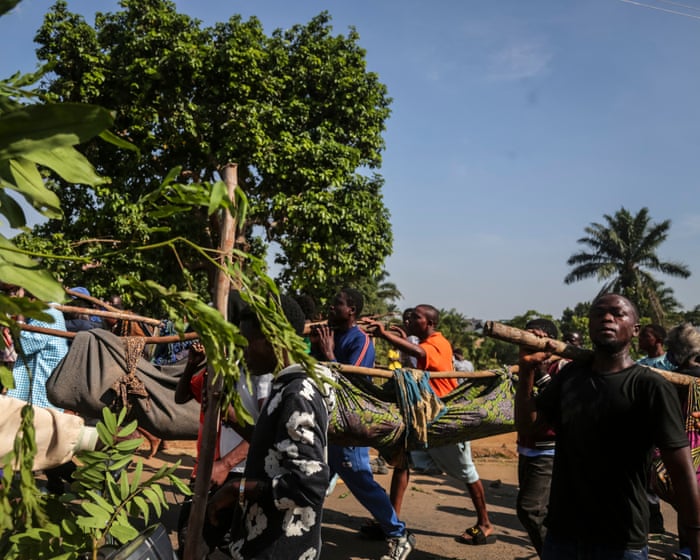
Islamic State-linked militia blamed for raids in North Kivu as governor says three patients with disease fled clinics
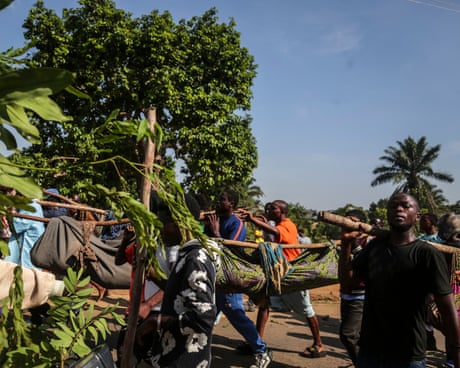
Rebel attacks around a town that is one of the centres of the Ebola outbreak in the Democratic Republic of the Congo have left more than 30 people dead over the past few days, complicating the response to the disease.
At least 10 people were massacred in raids on three villages around the city of Beni, in North Kivu, in the early hours of Wednesday morning.
by Jon Fleetwood, Jon Fleetwood: After WHO—also funded by Gates—declares Ebola a “public health emergency of international concern” and calls for vaccine development, raising conflict-of-interest concerns. The Bill Gates-funded Coalition for Epidemic Preparedness Innovations (CEPI) will “urgently accelerate development of three investigational vaccines targeting the Bundibugyo ebolavirus that has caused a rapidly spreading epidemic in the […]
by Lucy Spence, All News Pipeline: A top Democratic governor claimed at a meeting Wednesday that her party doesn’t “need any of the men” to win the 2028 presidential election. Democrat New Mexico Governor Michelle Lujan Grisham made the boast while speaking at the Democratic National Convention (DNC) Rules and Bylaws Committee Meeting in Washington, […]

 Login
Login